THE COLLECTORS ART PRIZE recognizes outstanding achievements in contemporary art by celebrating the work of extraordinary artists whose practices are among the most innovative and influential of our time.

THE COLLECTORS ART PRIZE recognizes outstanding achievements in contemporary art by celebrating the work of extraordinary artists whose practices are among the most innovative and influential of our time.
My engagement with photography has rekindled my relationship with both nature and my inner world. My work revolves around nature, urban settings, macro subjects, abstract forms, and fine art photography. Rather than seeking out the extraordinary, I am drawn to the hidden, quiet, and often overlooked aspects of daily life. I seek to uncover beauty, wonder, and poetry within the ordinary, shaping what I call "my little mundane world."
Ash Arash Bigdeli (pronounced: âraš, IPA: [ʔɒːˈɾæʃ]) has been working as a jeweler, sculptor, and later as a prop and set builder in the film industry across various countries since the 1990s. With over three decades of experience in wood carving, jewelry-making, pottery, and sculpture, his artistic journey has resulted in the creation of many large and small 3D forms and sculptures, some of which are held in private collections or featured in public art projects worldwide. Since 1992, he has participated in four solo exhibitions and eleven group pottery and sculpture exhibitions, both nationally and internationally.
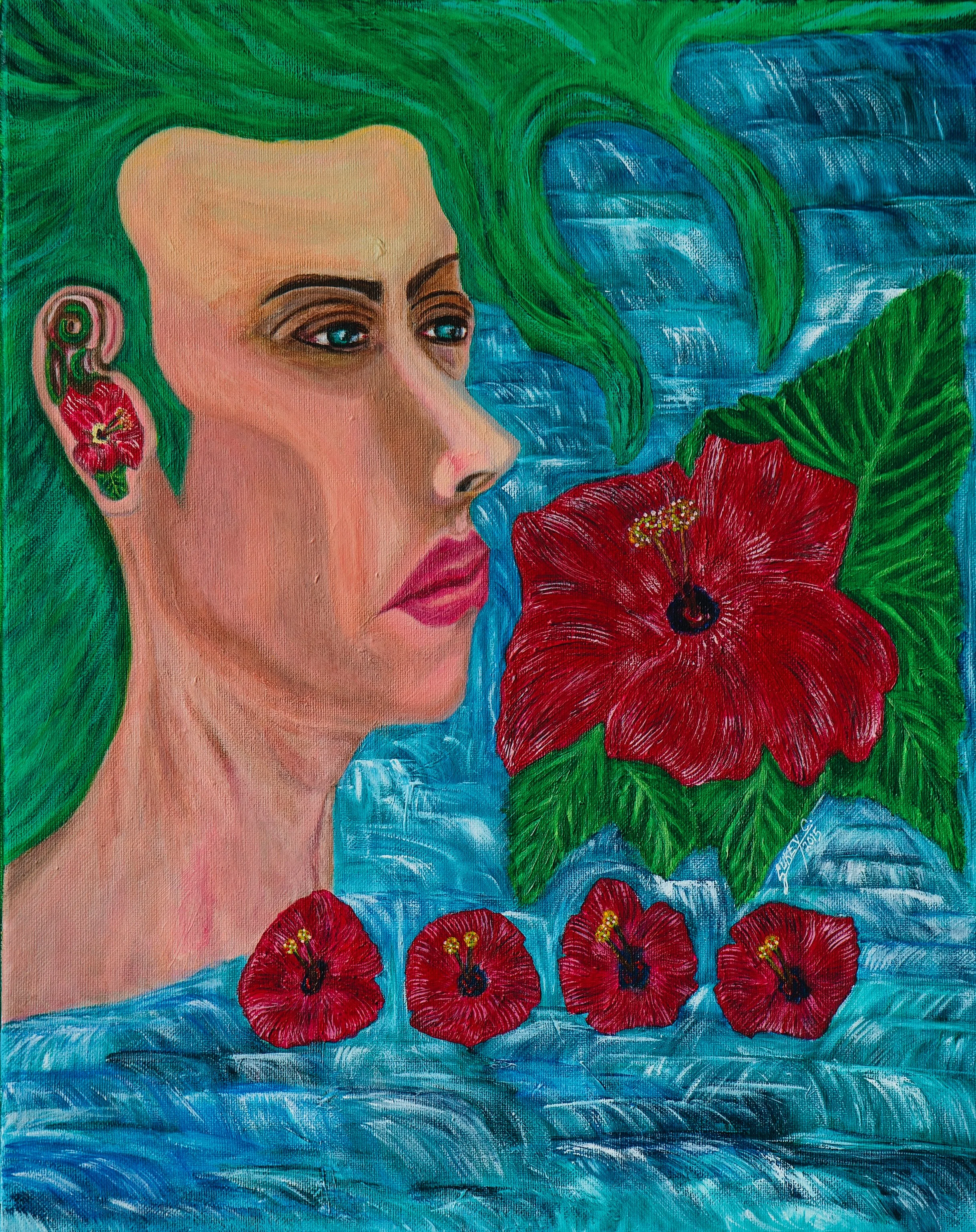
Sukey Camacho It’s a self taught Artist and, She is Born in Mexico and Currently living in United States of America. Studied Classical European Art for 4 years at a private school in Sofia Art Academy in Dallas Texas and now she’s winning a Multiple International Awards with the most prestigious Elite Certifications Titles and with the most highly degree Diploma from the Royal court of the “ Duke "of Chania, Greece. And she’s was selected for the important award and recognized Globally for ”Art Legend of Our Time”in the prestigious Art Contemporary Art Collectors Magazine.
Marcelle Mansour’s contribution to contemporary art extends beyond her technical achievements. Her oeuvre embodies a new model of artistic consciousness one that merges intellect with intuition, individual expression with universal message. In a cultural climate often dominated by irony and detachment, Mansour reasserts the sacred function of art: to restore wonder, to provoke reflection, to heal. Her work invites viewers to look beyond surfaces to perceive with what she calls “the third eye,” that inner faculty of vision capable of discerning the invisible truths beneath appearances.
I (un)borrow images and recompose them. This concerns representations of concepts that are regularly discussed in our contemporary visual world, but through manipulation, context-alienation, an associative reference yield a new visual meaning. Since then (1995) I have made conceptual work with various subjects to address a critical note with regard to human functioning. In addition to the technical integration, it also gave me the inspiration to shape my intellectual objective. In this, applications of electronics, LED and neon light are also included as a possibility to achieve visual expression.
My photography is a depiction of how I see the natural world and all the mystery it holds. Sometimes bright and colorful in its beauty or dark and ominous, but beautiful just the same. Although I do feel that I'm more drawn to what exists in the shadows. A dreamlike entity that resides at the fringes of perception, a mystical presence that dances between reality and imagination.
My images are the process of self-discovery, of many elements which help to create our inner world. Nature and its symbols are represented in some of my works. I take fragments of images from landscapes and use those memories, which are very important, to create an abstraction and provide my art with a new vision.
In Will Wilford’s ‘The 11th Hour’, the artist’s exploration of ‘human absence’ – a theme that remains a source of constant exploration – is wholly realised. Long, tapered tree trunks eerily pierce the horizontality of the compositional space. Wilford beautifully renders the distinctive shapes and lines of a palm tree’s trunk in his subtle personification of their non-human form.
I work from my inner view and connection with the subjects of my artworks. Sometimes they tell a complete story- sometimes they just show some details of the complexity of all existence. Artworks change whenever the observer changes. I am just trying to explain why I choose to be an artist and what it means to me.
As a traditional, non-digital painter (just oil on canvas), I’ve been commissioned by many publications from The New York Times to The Village Voice. Since 2001, I’ve concentrated on gallery work with an editorial, satirical slant..... essentially larger oil paintings with conceptual content reminiscent of my illustration years. Lampooning politicians, pundits or spiritual leaders who specialize in alternative facts, manufactured outrage, false equivalents, convoluted conspiracy theories and tunnel-visioned tribalism (whew) is my form of protest and provides a satisfying outlet.
Stefan Fransson, a contemporary artist from Sweden, is known for his innovative approach to artistic expression, skillfully combining digital collage, sculpture and organic forms. His works embody an intricate layering of abstract compositions, characterized by the interplay of soft tones and sharp contrasts, enhanced by transparency and depth. This unique blend results in visual structures that invite the viewer to explore themes such as space, memory and perception.
Upon becoming the artist involves admitting that you are not yourself
You become something else
The discussion has been to separate the art from the artist
I have come to the realization that we are two different entities
The me that is the artist
The me that is the self
Susan N. McCollough’s art matters because it insists on freedom. Freedom not as chaos, but as disciplined openness to the unknown. Each canvas begins as a site of possibility, and through her labor of love, her brushstrokes, her colors, her embrace of space, it becomes a site of revelation. She reminds us that art is not about depicting what already exists, but about bringing into being what has not yet been seen.
In the shifting constellation of contemporary art, Jeong-Ah Zhang emerges as a singular voice whose works transcend categorization. Though most often celebrated as a painter, her practice extends far beyond the canvas into photography, sculpture, and hybrid experiments that defy medium in pursuit of philosophical inquiry. Born in Seoul in 1966, Zhang’s life trajectory has been marked by a restless search for truth, a profound questioning of existence and non-existence, and a commitment to creating art that resonates beyond the surface of reality. Her oeuvre is a sustained meditation on breath, time, and the paradox of being, a space where visibility and invisibility coexist, where creation and extinction are not opposites but cyclical companions
To enter the recent work of Giora Carmi is to stand before a practice that is, at once, playful and deeply metaphysical. His paintings, executed in watercolor, gouache, pencil, and other intimate mediums, are not simply images placed upon paper. They are meditations made visible. They unfold as maps of inner states, constellations of color and line that seem to trace both the subconscious and the act of becoming conscious.
To enter the world of Elke Bügler is to encounter painting as both an act of surrender and of assertion. It is an art that begins in the void on the blank, unyielding surface of the canvas and moves forward not by premeditated strategy but through an unfolding dialogue between hand, pigment, and surface. Her approach resists linear narrative and predetermined form; it is, in her own words, “non-specific,” and yet this very refusal of the literal opens a field in which emotion, intuition, and thought may find their most direct articulation.
Subodh is a diversified international artist who tells stories through landscapes, florals, abstracts, miniatures, and symbolic art. Her art fuses Eastern symbolism and Western composition, influenced by 16th and 17th century Rajasthani art, accented by poetry, passages, and phrases in Hindi, Sanskrit, and English. She admires Georgia O'keeffe for her floral influence, and Frida Kahlo for her courage.
The subject of death is often of particular interest and intrigue for artists, and for Japanese photographer Makotu Nakagawa it is something he approaches with particular intimacy and clarity; depicting his late father and his body through numerous stages of life, death and the spaces in-between.
I usually begin with an idea, but often, as I paint, a vivid and living dialogue unfolds between me and the artwork. My experiences, moods, and impressions find their way onto the canvas through color and form – a fascinating process that allows each painting to grow into something truly unique.