In her painterly practice, Naomi Okubo develops beautiful and seductive images that mask darker themes relating to her adolescence and that are connected to greater problems and inconsistencies in society.

All in Painting
In her painterly practice, Naomi Okubo develops beautiful and seductive images that mask darker themes relating to her adolescence and that are connected to greater problems and inconsistencies in society.
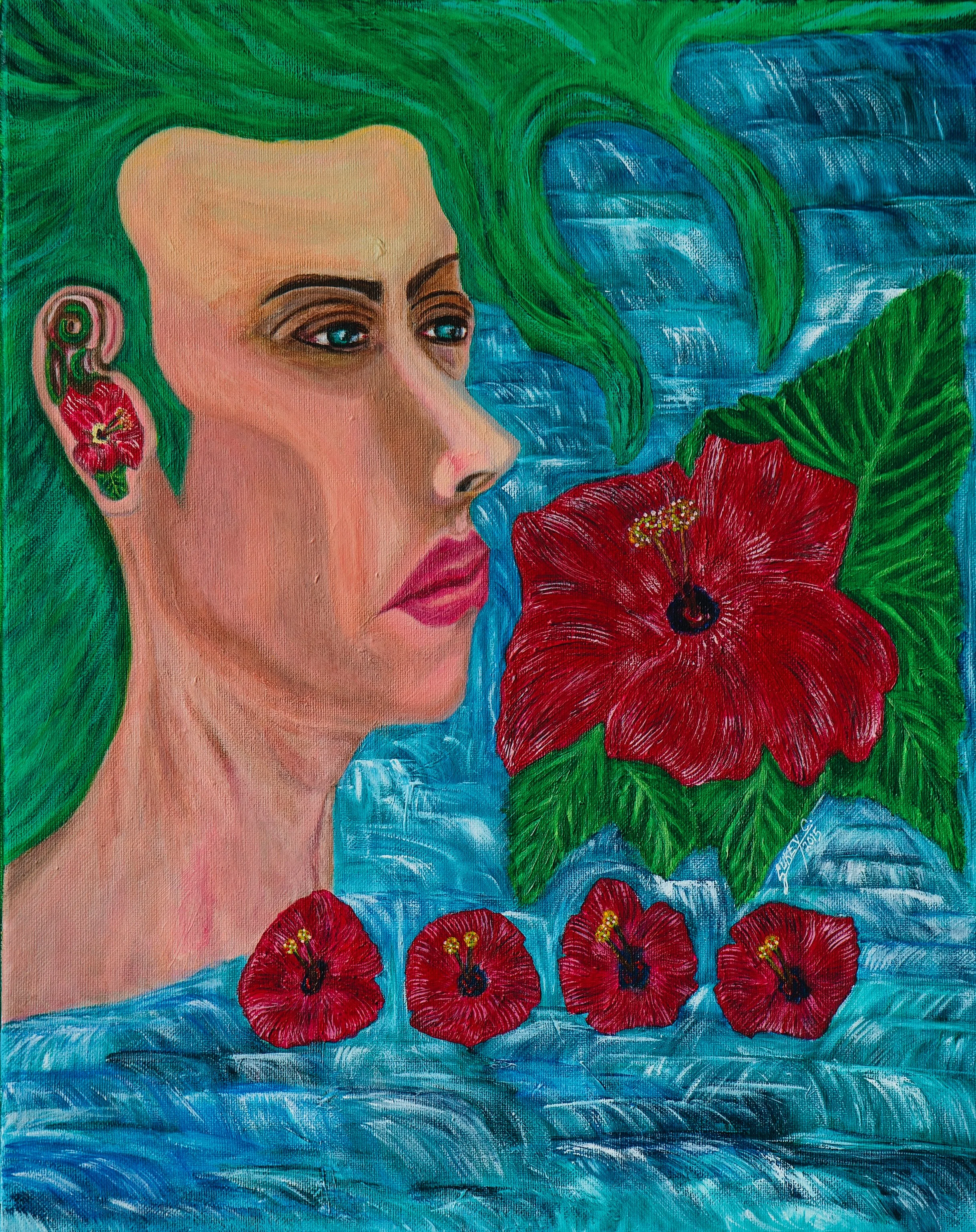
Sukey Camacho It’s a self taught Artist and, She is Born in Mexico and Currently living in United States of America. Studied Classical European Art for 4 years at a private school in Sofia Art Academy in Dallas Texas and now she’s winning a Multiple International Awards with the most prestigious Elite Certifications Titles and with the most highly degree Diploma from the Royal court of the “ Duke "of Chania, Greece. And she’s was selected for the important award and recognized Globally for ”Art Legend of Our Time”in the prestigious Art Contemporary Art Collectors Magazine.
Marcelle Mansour’s contribution to contemporary art extends beyond her technical achievements. Her oeuvre embodies a new model of artistic consciousness one that merges intellect with intuition, individual expression with universal message. In a cultural climate often dominated by irony and detachment, Mansour reasserts the sacred function of art: to restore wonder, to provoke reflection, to heal. Her work invites viewers to look beyond surfaces to perceive with what she calls “the third eye,” that inner faculty of vision capable of discerning the invisible truths beneath appearances.
My images are the process of self-discovery, of many elements which help to create our inner world. Nature and its symbols are represented in some of my works. I take fragments of images from landscapes and use those memories, which are very important, to create an abstraction and provide my art with a new vision.
I work from my inner view and connection with the subjects of my artworks. Sometimes they tell a complete story- sometimes they just show some details of the complexity of all existence. Artworks change whenever the observer changes. I am just trying to explain why I choose to be an artist and what it means to me.
As a traditional, non-digital painter (just oil on canvas), I’ve been commissioned by many publications from The New York Times to The Village Voice. Since 2001, I’ve concentrated on gallery work with an editorial, satirical slant..... essentially larger oil paintings with conceptual content reminiscent of my illustration years. Lampooning politicians, pundits or spiritual leaders who specialize in alternative facts, manufactured outrage, false equivalents, convoluted conspiracy theories and tunnel-visioned tribalism (whew) is my form of protest and provides a satisfying outlet.
Upon becoming the artist involves admitting that you are not yourself
You become something else
The discussion has been to separate the art from the artist
I have come to the realization that we are two different entities
The me that is the artist
The me that is the self
Susan N. McCollough’s art matters because it insists on freedom. Freedom not as chaos, but as disciplined openness to the unknown. Each canvas begins as a site of possibility, and through her labor of love, her brushstrokes, her colors, her embrace of space, it becomes a site of revelation. She reminds us that art is not about depicting what already exists, but about bringing into being what has not yet been seen.
In the shifting constellation of contemporary art, Jeong-Ah Zhang emerges as a singular voice whose works transcend categorization. Though most often celebrated as a painter, her practice extends far beyond the canvas into photography, sculpture, and hybrid experiments that defy medium in pursuit of philosophical inquiry. Born in Seoul in 1966, Zhang’s life trajectory has been marked by a restless search for truth, a profound questioning of existence and non-existence, and a commitment to creating art that resonates beyond the surface of reality. Her oeuvre is a sustained meditation on breath, time, and the paradox of being, a space where visibility and invisibility coexist, where creation and extinction are not opposites but cyclical companions
To enter the recent work of Giora Carmi is to stand before a practice that is, at once, playful and deeply metaphysical. His paintings, executed in watercolor, gouache, pencil, and other intimate mediums, are not simply images placed upon paper. They are meditations made visible. They unfold as maps of inner states, constellations of color and line that seem to trace both the subconscious and the act of becoming conscious.
To enter the world of Elke Bügler is to encounter painting as both an act of surrender and of assertion. It is an art that begins in the void on the blank, unyielding surface of the canvas and moves forward not by premeditated strategy but through an unfolding dialogue between hand, pigment, and surface. Her approach resists linear narrative and predetermined form; it is, in her own words, “non-specific,” and yet this very refusal of the literal opens a field in which emotion, intuition, and thought may find their most direct articulation.
Subodh is a diversified international artist who tells stories through landscapes, florals, abstracts, miniatures, and symbolic art. Her art fuses Eastern symbolism and Western composition, influenced by 16th and 17th century Rajasthani art, accented by poetry, passages, and phrases in Hindi, Sanskrit, and English. She admires Georgia O'keeffe for her floral influence, and Frida Kahlo for her courage.
I usually begin with an idea, but often, as I paint, a vivid and living dialogue unfolds between me and the artwork. My experiences, moods, and impressions find their way onto the canvas through color and form – a fascinating process that allows each painting to grow into something truly unique.
Barbara Palka Winek occupies a singular place in contemporary art because she resists reduction. She is neither purely abstract nor purely figurative, neither wholly formalist nor narrative. Instead, she inhabits the in-between, the interstitial space where body dissolves into color, where cosmos enters form, where paint becomes both material and metaphysical.
To stand before the canvases of Amartya (Joëlle Zioga) is to encounter a field where material facture dissolves into an atmosphere of apparition. In her “Blue Collection,” a body of work she confesses is closest to her heart, color is not merely pigment but ontology: a register of being that presses beyond the retinal into the metaphysical. Blue and green, her chosen chromatic poles, are not incidental hues but coordinates of psychic orientation, elemental substances through which memory, dream, and infinity are refracted.
Maria Aparici’s oeuvre invites us not merely to look but to undergo an experience, a confrontation with the layers of truth that painting, when honest, can still uncover. Her canvases remind us that painting remains one of the few languages capable of resisting the anesthetizing effects of modern life. In a cultural moment obsessed with surface, Aparici’s work insists on depth; in a world that celebrates speed, she slows vision down to the viscosity of oil paint. Each brushstroke seems to demand accountability not only from the viewer but from the history that shaped our eyes.
Erna Klaus paints as one who listens to silence, to color, to the slow unfolding of form. In doing so, she reaffirms painting’s most essential truth: that the canvas is not a mirror of the world, but a field where the world is rediscovered anew.
My work explores the transpersonal: states of consciousness that move beyond the boundaries of the individual and into the shared spaces of spirituality, memory, and the natural world. I see art as both a healing practice and a symbolic language — one that allows us to translate emotions, intuitions, and experiences that cannot be captured by words alone.
Karen Bjerg Petersen is a Danish artist whose practice spans painting, bronze, ceramic, and concrete sculpture. With a long artistic career and formal education in the arts, she combines deep material exploration with a reflective approach shaped by her background as a researcher in pedagogy at Aarhus University, Denmark.
Through vibrant tones, layered surfaces, and the fluid dialogue between water and pigment I explore the reality of matter and “what lies beyond its veil”. Reality, to me, is a stratified space. I’m drawn to the most subtle, distant layers — the ones that whisper rather than shout — My work is an attempt to open doors within consciousness, to find entry points into these hidden dimensions.