Anki Immler
In a cultural moment often defined by crisis, acceleration, and skepticism toward beauty itself, the paintings of Anki Immler offer something increasingly rare within contemporary art: a visual language grounded in narrative, empathy, and possibility. Her canvases are populated by characters that feel both ordinary and archetypal, figures caught in moments of humor, reflection, rebellion, or quiet triumph. Through vivid color and expressive figuration, Immler constructs images that do not merely depict people but reveal the emotional structures through which contemporary life is experienced.
What distinguishes Immler’s work is the way it embraces storytelling without abandoning painterly experimentation. Her paintings exist within a territory that might be described as impressionistic expressionism, a field where gesture and color remain visible as physical traces of the artist’s hand while still forming recognizable narratives. These narratives unfold slowly. At first glance, the viewer encounters a vibrant portrait or scene. Yet with sustained attention, deeper questions emerge concerning identity, aging, individuality, power, vulnerability, and hope.
Central to Immler’s practice is the conviction that art possesses the capacity to shape emotional realities. Her guiding question, which appears repeatedly in her reflections on painting, is deceptively simple: what if art could give hope back to the world? Within the broader discourse of contemporary art, such a question might appear almost radical. Over the past decades, many artistic practices have leaned toward critique, deconstruction, or irony. Immler, by contrast, approaches painting as a constructive gesture, a means of visualizing futures that remain open rather than predetermined.
This orientation toward possibility is inseparable from the artist’s unusual path into the art world. It may be noted that Immler began painting only five years ago and is entirely autodidactic, coming from a management background rather than formal academic training. Her earlier career involved overseeing construction sites and collaborating with architects, experiences that sharpened her sensitivity to structure, perspective, and spatial thinking. The transition from management to painting might appear abrupt, yet it reveals a continuity of curiosity. Just as architecture organizes physical environments, painting organizes emotional and imaginative spaces.
Freed from institutional expectations, Immler developed her visual language intuitively. The early stages of her practice included animals, which formed an important part of her journey as she explored expressive gesture and narrative symbolism. Over time, however, her attention shifted increasingly toward human portraiture. The newer works represented here demonstrate this evolution. They retain the energy and bold color of her earlier paintings while focusing more intensely on human stories and psychological presence.
The narrative dimension of Immler’s work deserves particular attention. Within the history of modern art, narrative painting has often been regarded with suspicion, particularly during periods when abstraction dominated critical discourse. Yet narrative has never disappeared from painting; it has merely transformed. In Immler’s practice, narrative does not operate as linear storytelling but as an open field of symbolic relationships.
Her figures rarely exist in neutral spaces. Instead, they inhabit environments charged with color and atmosphere. Backgrounds dissolve into gradients of orange, pink, green, or pale gray, creating emotional climates that shape the viewer’s perception of the subject. These color fields function almost like musical chords. They establish tonal structures within which the figures perform their roles.
Music, indeed, plays a central role in Immler’s creative process. Many of her paintings draw inspiration from song titles or emerge from late-night painting sessions accompanied by music. The rhythm of brushstrokes, the repetition of color accents, and the balance between spontaneity and structure all echo musical composition. Her studio practice often unfolds during nocturnal hours when distractions disappear, and concentration deepens. The moment of “waking up from the flow” at three in the morning, as she describes it, becomes part of the creative ritual.
Although Immler’s path has been self-directed, her paintings reveal an awareness of multiple artistic traditions. The clarity of her figures and the boldness of her color palette resonate with aspects of Pop Art, particularly the work of Roy Lichtenstein, whose graphic sensibility left a lasting impression on her early artistic imagination. At the same time, the emotional expressiveness of her portraits recalls the psychological intensity found in the drawings of Egon Schiele.
Another historical influence appears in the Renaissance tradition, especially the work of Michelangelo, whose sculptures and frescoes revealed the expressive potential of the human body. Immler’s figures may not exhibit classical anatomical idealization, yet they share Michelangelo’s conviction that the human form can function as a carrier of profound emotional meaning.
Street art and contemporary visual culture also play a role in shaping her imagery. The presence of graffiti-like accents, strong outlines, and symbolic motifs reflects the aesthetic environment of modern urban life. Immler openly acknowledges that fashion, design, architecture, and street art shape contemporary visual consciousness. By integrating these influences into painting, she acknowledges that artistic language today must remain fluid rather than confined to a single style.
One of the most memorable works in this group is “Catlady” (2025). At the center of the canvas stands a woman dressed in a cat-inspired costume, her face framed by a mask with pointed ears. Four cats gather around her, each rendered with careful attention to individual expression. Their gazes converge outward, forming a silent chorus of witnesses.
The composition is anchored by an intense background of glowing orange and pink. This chromatic field transforms the portrait into something almost mythological. The woman becomes both an individual and an archetype. In contemporary culture, the term “cat lady” has often functioned as a stereotype, sometimes used humorously but often dismissively. Immler’s painting reclaims this figure with dignity and subtle humor.
The cats themselves serve as companions rather than accessories. Their presence introduces an atmosphere of loyalty and emotional intimacy. The painting suggests that identities imposed by society can be transformed into forms of empowerment when embraced authentically.
In “Enjoy the Ride” (2025), the narrative shifts toward a moment of personal indulgence. A woman wearing oversized sunglasses tilts her head backward as she drinks from a large glass of wine. Her body is rendered in expressive greens and pinks, colors that seem to vibrate against the pale background.
The painting captures a gesture that might initially appear frivolous, yet it quickly reveals deeper undertones. The figure’s relaxed posture and unapologetic enjoyment challenge social expectations that often regulate behavior, particularly for women. The image becomes a declaration of autonomy. Pleasure is presented not as excess but as a rightful part of human experience.
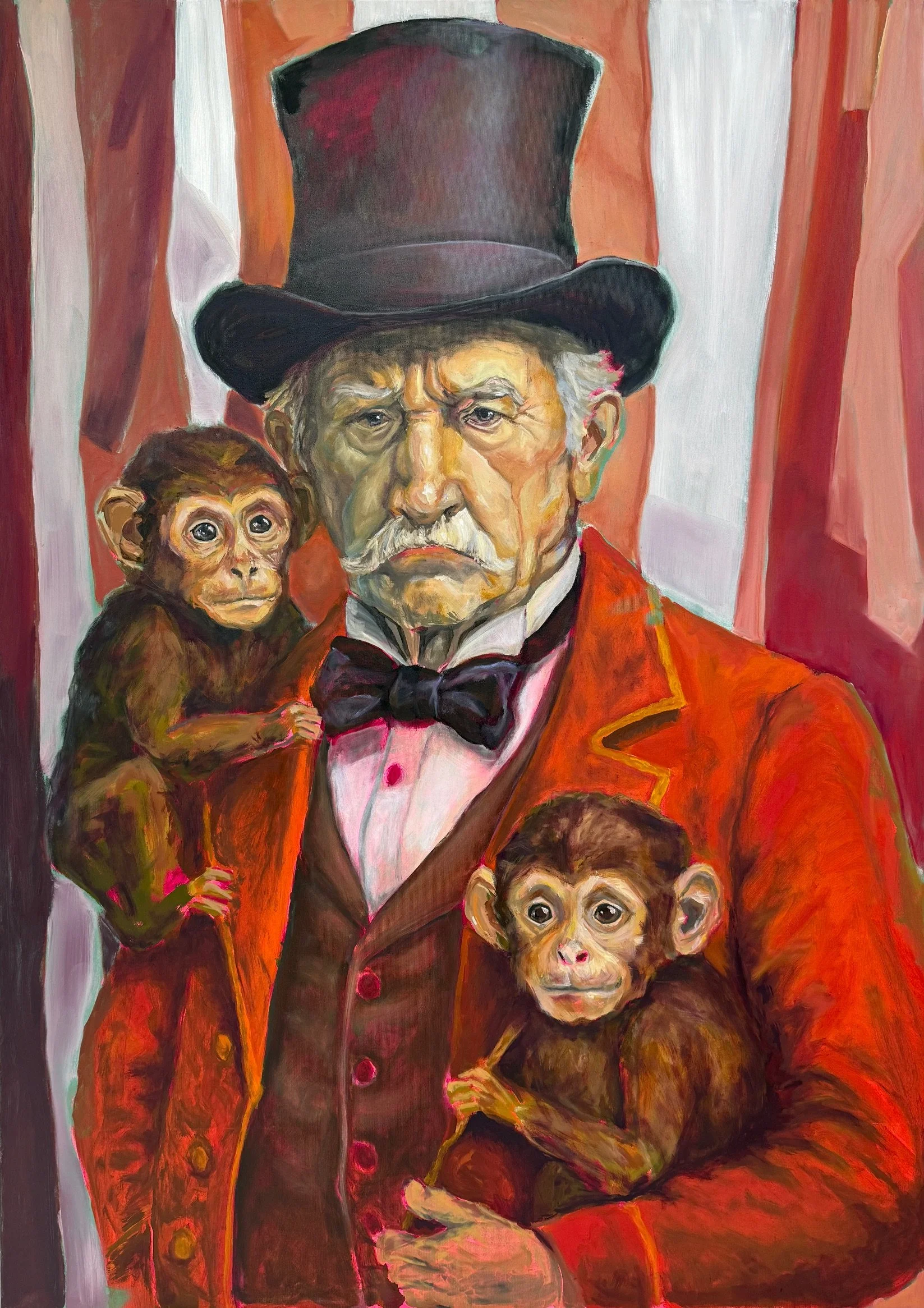
The painting “My Circus, My Monkeys” (2025) introduces a theatrical allegory. An elderly man wearing a top hat stands, accompanied by two monkeys perched on his shoulders and arms. The title refers to the familiar phrase acknowledging responsibility for chaos.
Immler transforms this phrase into a visual metaphor. The man’s serious expression contrasts with the lively curiosity of the monkeys, whose presence disrupts the formal dignity of the portrait. The striped background reinforces the sense of spectacle.
Yet beneath the humor lies an exploration of authority and responsibility. The painting reflects the tension between control and unpredictability that characterizes many aspects of contemporary life.
In “Skater Heart” (2025), an elderly man with a long white beard sits beside a skateboard. Dressed in a pastel suit and casual sneakers, he embodies a striking juxtaposition of generations. The skateboard, traditionally associated with youth culture, becomes here a symbol of continuity.
The painting challenges cultural narratives about aging. Instead of presenting old age as withdrawal from life, Immler depicts it as an accumulation of experiences that continue to evolve. The man’s calm gaze suggests wisdom rather than nostalgia.
The figure in “You Better Run” (2025) resembles Cupid, yet the familiar mythological figure is transformed into something far more ambiguous. Armed with a bow and arrow, the character stares outward with determination.
Love here appears as both promise and danger. The arrow represents emotional vulnerability, the unpredictable impact of affection and desire. Immler reinterprets myth not as a distant legend but as a metaphor for contemporary emotional dynamics.
“Crossroads” (2025) presents three elderly men laughing together. Their relaxed bodies and expressive faces convey a moment of shared joy. The patterned background introduces decorative rhythm, echoing the flow of conversation between them.
The painting celebrates friendship and collective memory. In a culture often focused on youth, Immler’s attention to older figures offers a refreshing counterpoint. Age becomes not an absence of vitality but a reservoir of experience.
The painting “Dance” (2025) depicts a ballerina figure emerging from a radiant orange background. Unlike traditional ballet imagery, the dancer’s body celebrates fullness and strength rather than fragile delicacy.
Through this image, Immler expands the definition of beauty. Movement becomes an act of freedom rather than conformity to classical standards. The dancer’s gesture conveys joy, confidence, and liberation.
In “Seen That, Done That, Been There” (2025), an elderly woman lifts a glass while looking outward with knowing amusement. Her expression suggests a lifetime of experiences distilled into quiet wisdom.
The painting explores the dignity of lived experience. Rather than presenting age as decline, Immler portrays it as perspective. The figure becomes an embodiment of resilience and self awareness.
The mixed media work “Silence” (2025) introduces a different visual atmosphere. A contemplative face rendered in grayscale is surrounded by fragments of printed text arranged in a circular formation. Bright yellow accents cut across the composition like sudden flashes of thought.
This piece reflects on the relationship between information and introspection. The textual fragments evoke the overwhelming presence of language in contemporary life. Yet the closed eyes of the central figure suggest the possibility of retreating into silence as a form of clarity.
In “Style Is the Answer” (2025), an elderly woman wearing sunglasses leans forward while holding a red object toward the viewer. The composition emphasizes her commanding presence.
Style here becomes a metaphor for personal philosophy. The figure’s confident posture suggests that identity is not fixed by external expectations but shaped by individual choice.
What ultimately distinguishes Anki Immler’s paintings is their ethical orientation. They operate on the belief that representation itself carries responsibility. By choosing to portray characters with empathy, humor, and dignity, she contributes to a broader cultural conversation about how society views individuality and difference.
Her figures are rarely idealized in conventional terms. They appear with wrinkles, unconventional body types, eccentric clothing, or unexpected attitudes. Yet each is presented with warmth rather than judgment. The paintings remind viewers that humanity’s richness lies precisely in its diversity.
Within the contemporary art scene, Immler occupies a compelling position. Her work bridges multiple traditions: expressive portraiture, narrative painting, pop-influenced visual culture, and socially engaged storytelling. At a time when digital images circulate endlessly, her paintings reaffirm the power of the hand painted figure to generate emotional connection.
The question that motivates her practice remains quietly radical. What if art could make the world a better place? Her paintings do not claim to solve global crises. Instead they perform a more subtle transformation. They encourage viewers to imagine kindness, humor, and hope as legitimate artistic subjects.
In doing so, Anki Immler reminds us that painting still possesses the capacity to expand the emotional vocabulary of contemporary life. Her canvases become small utopian territories, spaces where the imagination is free to envision realities that have not yet fully emerged.
To understand the significance of Anki Immler’s work within the contemporary art landscape, one must consider not only the formal characteristics of her paintings but also the broader cultural atmosphere in which they appear. The early twenty-first century has been marked by an unprecedented saturation of images, the rapid acceleration of communication technologies, and a pervasive sense of uncertainty regarding the future. Within such a climate, artistic practices often respond through critique, irony, or conceptual distance. Immler’s work, however, moves in another direction. It approaches painting as an act of imaginative construction, one that insists on the possibility of emotional connection and renewed optimism.
Her paintings propose that storytelling remains one of the most powerful tools available to visual art. In each canvas, the viewer encounters a figure whose presence suggests a life beyond the frame. These characters are not anonymous models but individuals who appear to carry histories, contradictions, humor, and resilience. Through expressive color and confident brushwork, Immler constructs portraits that feel both immediate and symbolic. They are portraits of specific personalities, yet they also operate as reflections of broader human experiences.
This narrative impulse aligns her with a lineage of artists who have used portraiture not merely to record appearances but to investigate the deeper structures of social identity. What distinguishes Immler’s approach is the warmth with which she treats her subjects. Even when humor or irony enters the composition, the underlying tone remains empathetic. The viewer senses that these characters are not being judged but celebrated in their complexity.
The emphasis on portraiture in her newer works marks an important stage in her artistic evolution. While animals played a significant role in her early paintings, functioning as symbolic companions and narrative devices, the recent shift toward human figures indicates a growing interest in psychological storytelling. These portraits invite viewers to reflect on how individuals shape their environments and, in turn, how social contexts shape personal identity. Such themes echo the artist’s central conceptual concern: the reciprocal relationship between human beings and the world around them.
This relationship extends beyond the depicted figures to include the audience itself. Immler’s paintings often appear approachable at first glance, their bright colors and recognizable scenes inviting immediate engagement. Yet this accessibility should not be mistaken for simplicity. The paintings reward sustained attention, revealing subtle tensions between humor and introspection, individuality and collective experience. The viewer becomes an active participant in interpreting the stories embedded within each composition.
In this respect, Immler’s work engages with an important philosophical question concerning the role of art in contemporary society. If modern life is increasingly mediated by digital images that circulate rapidly and often without emotional depth, what possibilities remain for painting as a slow, reflective medium? Immler’s answer lies in the physical presence of the painted image itself. The visible brushstrokes, layered colors, and tactile surfaces remind the viewer that these images have been constructed through sustained human attention. The act of painting becomes a form of resistance against the fleeting nature of digital visual culture.
Another significant dimension of Immler’s practice is her commitment to utopian thinking. In an era frequently dominated by narratives of crisis and limitation, the very act of imagining alternative futures acquires political and philosophical significance. Immler’s paintings do not propose grand ideological solutions. Instead, they operate on a more intimate scale, suggesting that hope begins with small gestures of empathy, humor, and imagination.
Her recurring question, what if things could be different, resonates quietly throughout her work. The canvas becomes a site where such possibilities can be tested without fear of failure. The anarchy symbol she uses as a signature reflects this concept. It represents not chaos but the absence of domination, a symbolic reminder that on the surface of a painting, alternative social relationships can be envisioned.
This openness to possibility also reflects the artist’s personal journey. Beginning her artistic career only five years ago and developing her practice outside traditional academic institutions, Immler embodies the spirit of autodidactic exploration that has historically shaped many important artistic movements. Her management background, far from being unrelated to art, contributes a pragmatic understanding of systems and structures. Painting, in her hands, becomes another form of building: constructing visual environments where emotions, stories, and ideas intersect.
Within the contemporary art scene, such a trajectory is increasingly significant. As artistic production becomes more global and interdisciplinary, the boundaries between professional domains continue to dissolve. Artists no longer emerge exclusively from academic art schools; they arrive from architecture, design, engineering, activism, and countless other fields. Immler’s career illustrates how diverse experiences can enrich artistic language, introducing perspectives that might otherwise remain absent.
The influence of music on her creative process further expands the multidimensional nature of her work. Painting at night while immersed in sound creates a rhythm that permeates the compositions. Color contrasts echo musical harmonies, while the repetition of gestures resembles the structure of melodic phrases. The resulting images carry a sense of movement and vitality, as though each canvas were the visual equivalent of a song.
What ultimately defines the power of Immler’s paintings is their capacity to balance optimism with honesty. They do not ignore the complexities of contemporary life. Themes of aging, responsibility, love, self-doubt, and social identity appear throughout the works discussed here. Yet these themes are approached with a spirit of curiosity rather than despair. Humor often becomes a bridge between critique and empathy, allowing viewers to confront difficult subjects without feeling overwhelmed by them.
In this sense, Immler’s work contributes to a broader reconsideration of beauty within contemporary art. For many years, beauty has been treated with suspicion, sometimes dismissed as superficial or decorative. Immler challenges this assumption by presenting beauty as a deliberate strategy. In her paintings, color harmony, expressive gesture, and engaging composition function as entry points through which deeper reflections can unfold. Beauty becomes not an escape from reality but an invitation to reimagine it.
The significance of this approach extends beyond individual paintings. It suggests a renewed understanding of the social role of art. If artistic practice can encourage viewers to see the world with greater sensitivity and imagination, it may contribute, even in subtle ways, to cultural transformation. The act of looking at a painting, slowing down, and engaging with the narrative of another person becomes a small but meaningful exercise in empathy.
For this reason, Anki Immler’s work occupies an increasingly relevant position within contemporary figurative painting. Her canvases remind us that art need not choose between emotional accessibility and conceptual depth. It can inhabit both realms simultaneously, speaking to viewers on multiple levels at once.
Standing before these paintings, one senses that the artist is not simply depicting scenes but proposing an attitude toward life itself. The characters who populate her canvases laugh, dance, drink wine, confront responsibility, or gaze thoughtfully into silence. They embody resilience, individuality, and humor in the face of uncertainty.
Through them, Immler quietly reaffirms a belief that has accompanied art for centuries: that the act of creating images can expand the horizon of human imagination. In the luminous spaces of her canvases, the possibility of hope does not appear as an abstract concept but as a tangible presence. Painting becomes a way of asking questions about the future while simultaneously demonstrating that alternative visions are already within reach.
By Marta Puig
Editor Contemporary Art Curator Magazine

catlady, 2025, oil and acrylics on canvas, 120*100 cm
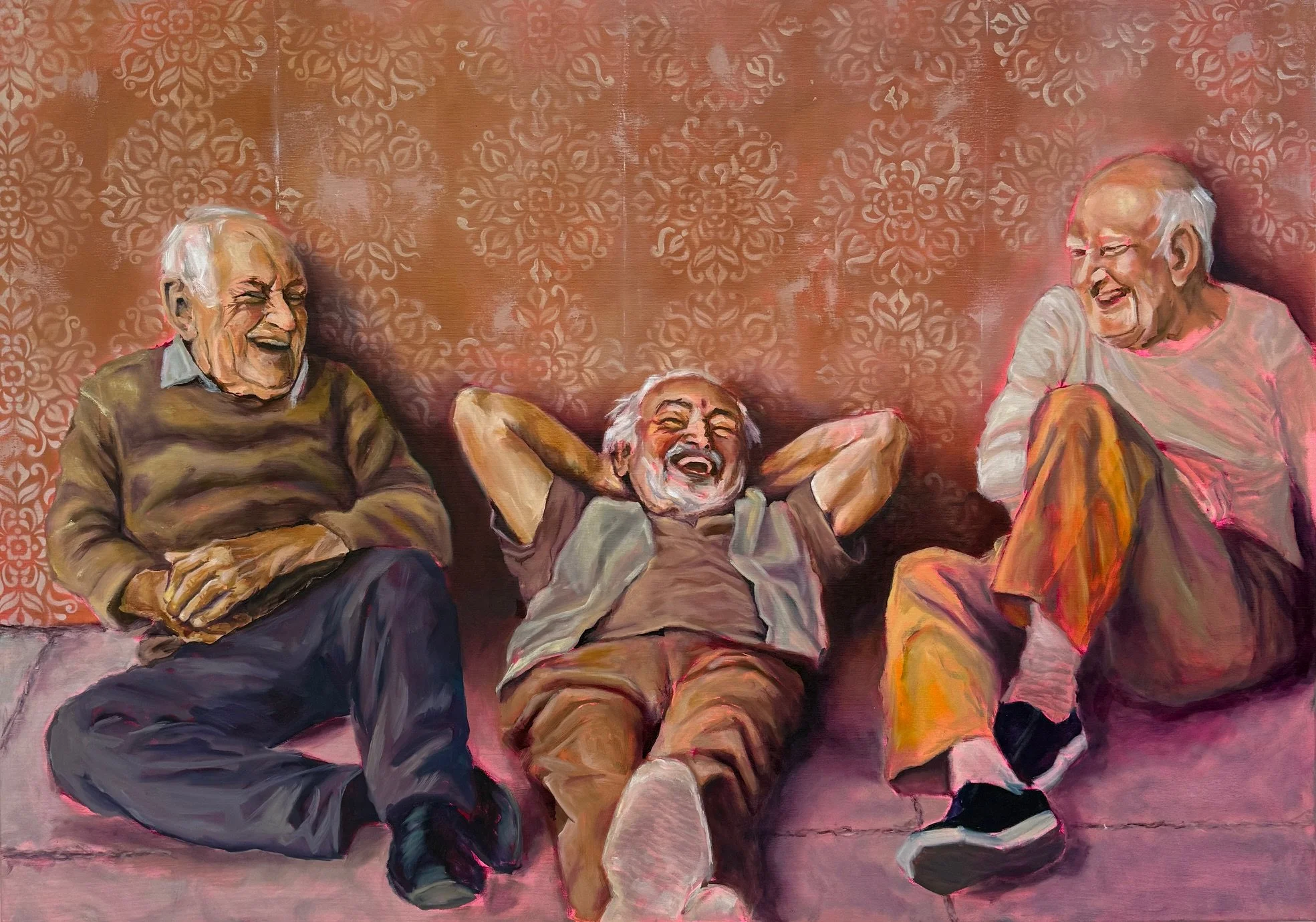
crossroads, 2025. Oil on canvas, 100x140 cm.
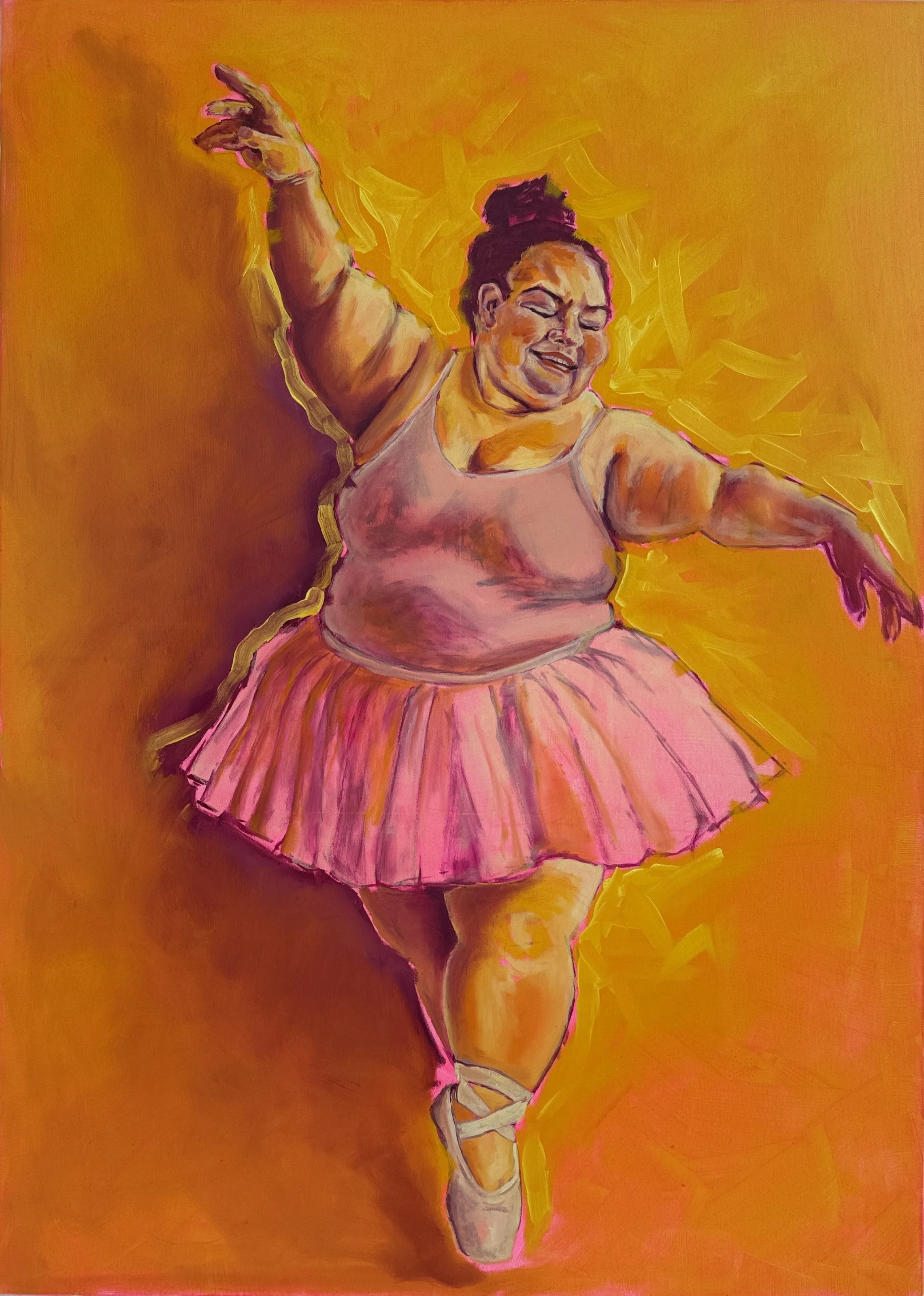
dance, 2025. Oil on canvas, 140*100 cm
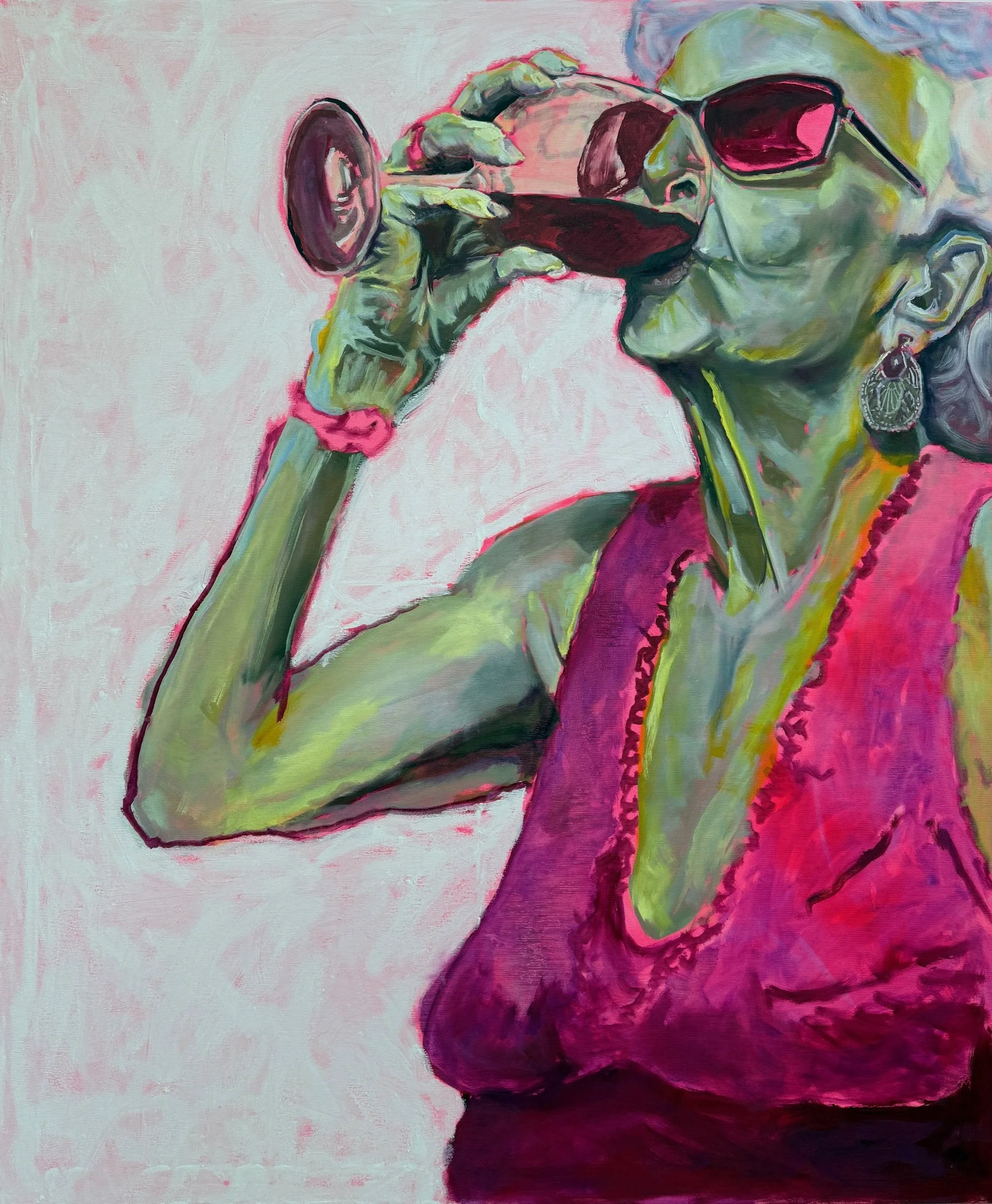
enjoy the ride, 2025. Oil and acrylic on canvas, 120*100 cm
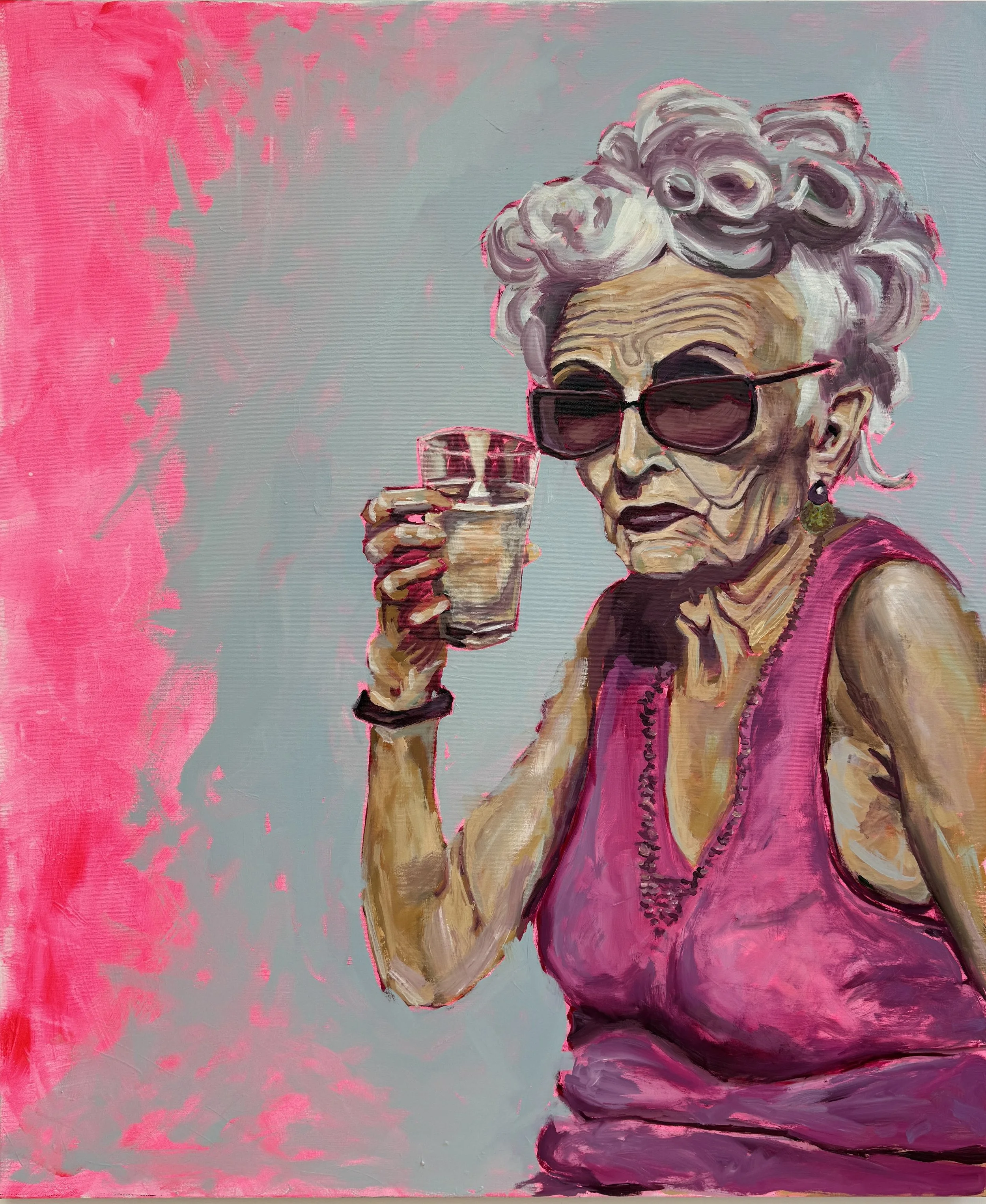
seen that, done that, been there, 2025. Oil & Acrylic on canvas, 120*100 cm
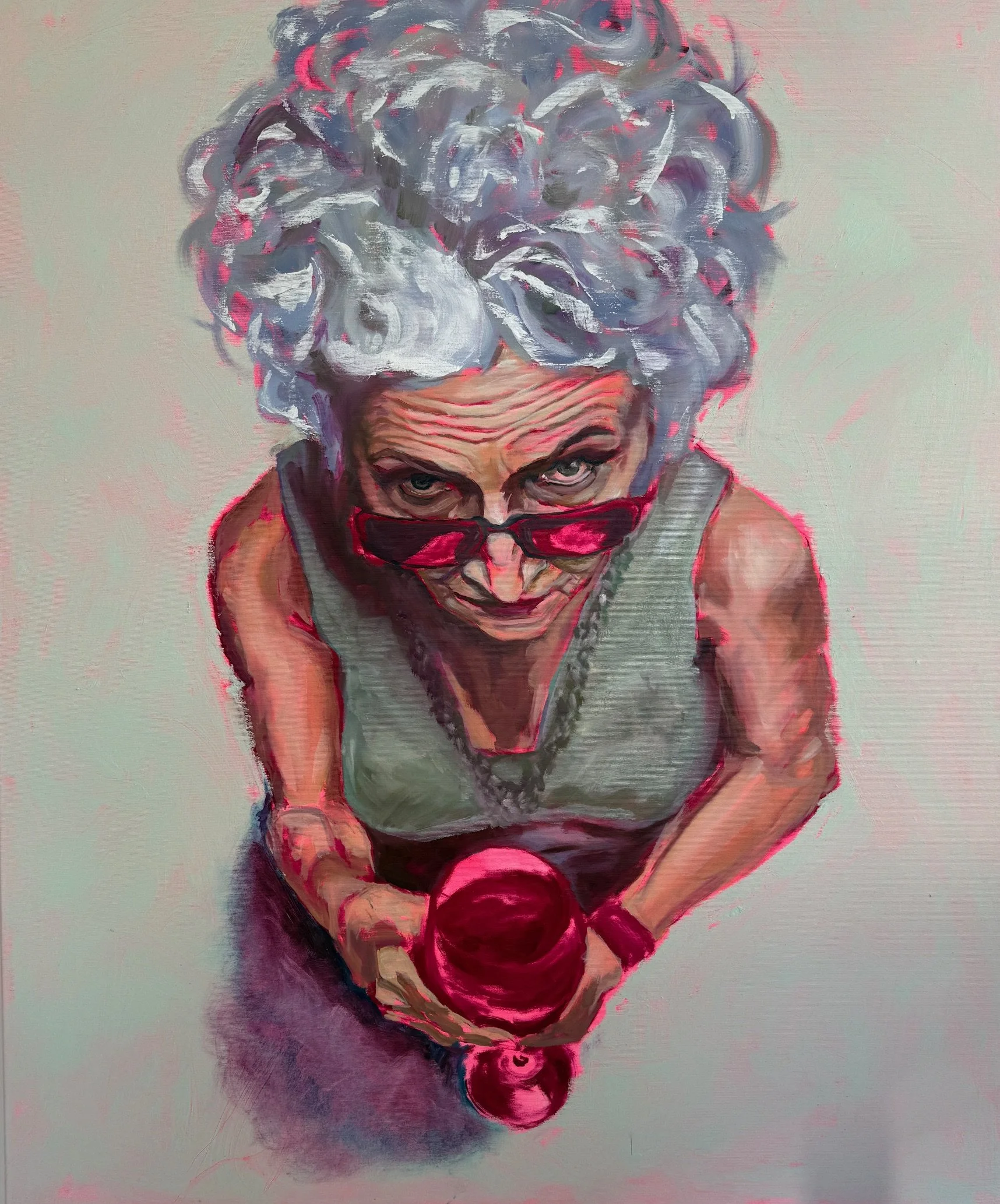
style is the answer, 2025. Oil and acrylic on canvas, 120*100 cm
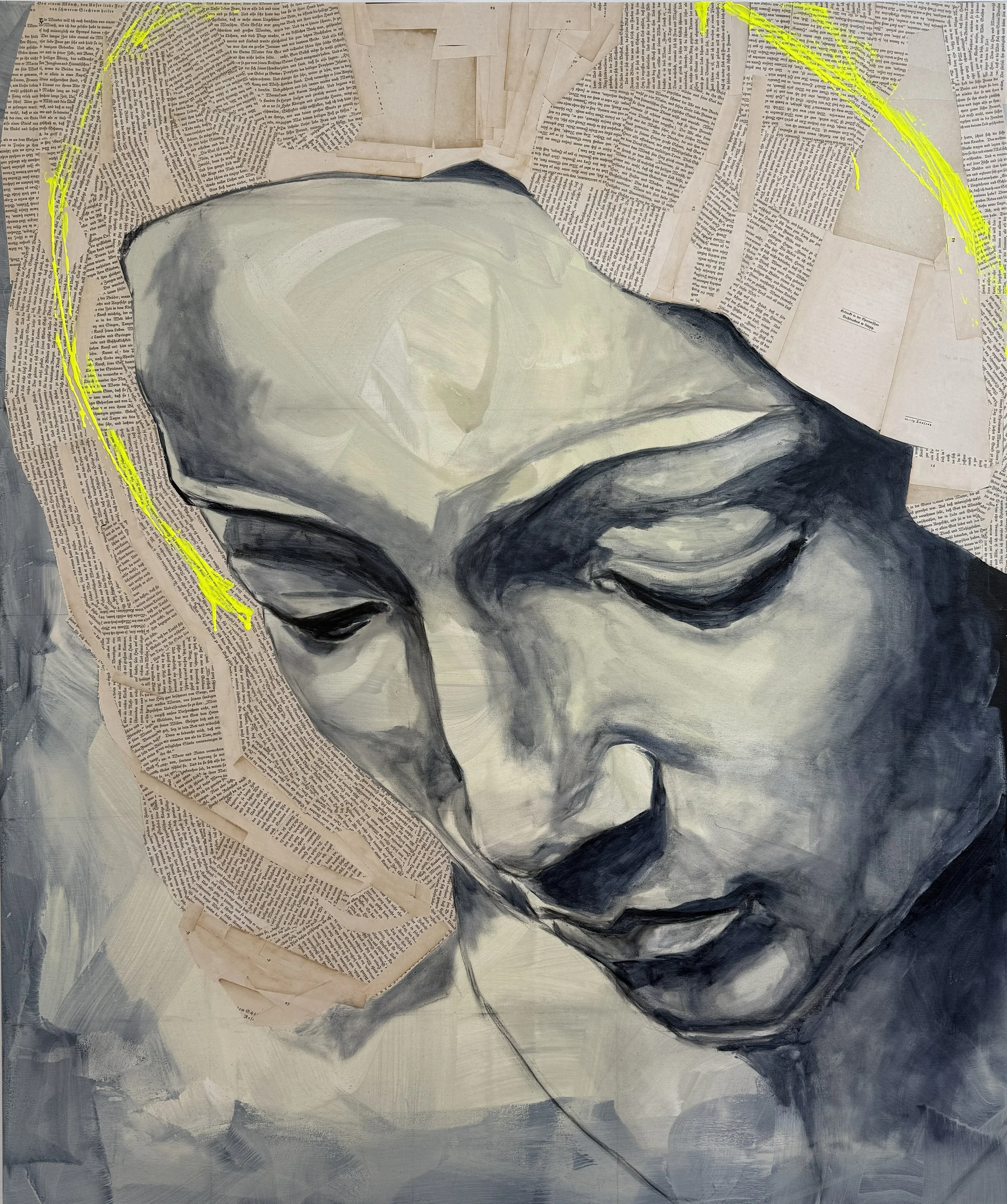
Silence, 2025. mixed media on canvas, 120*100 cm
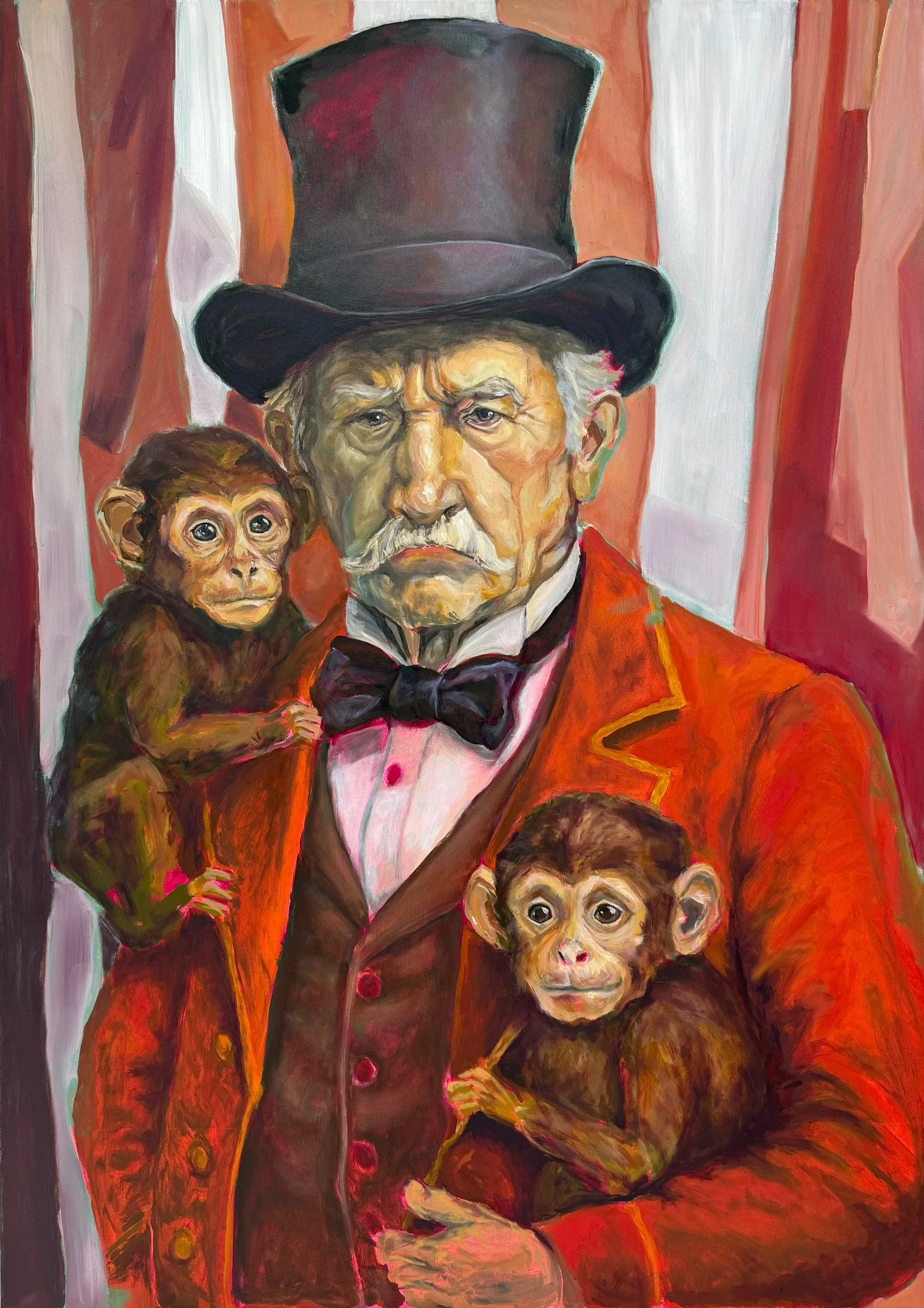
my circus, my monkeys, 2025. Oil on canvas, 140*100 cm
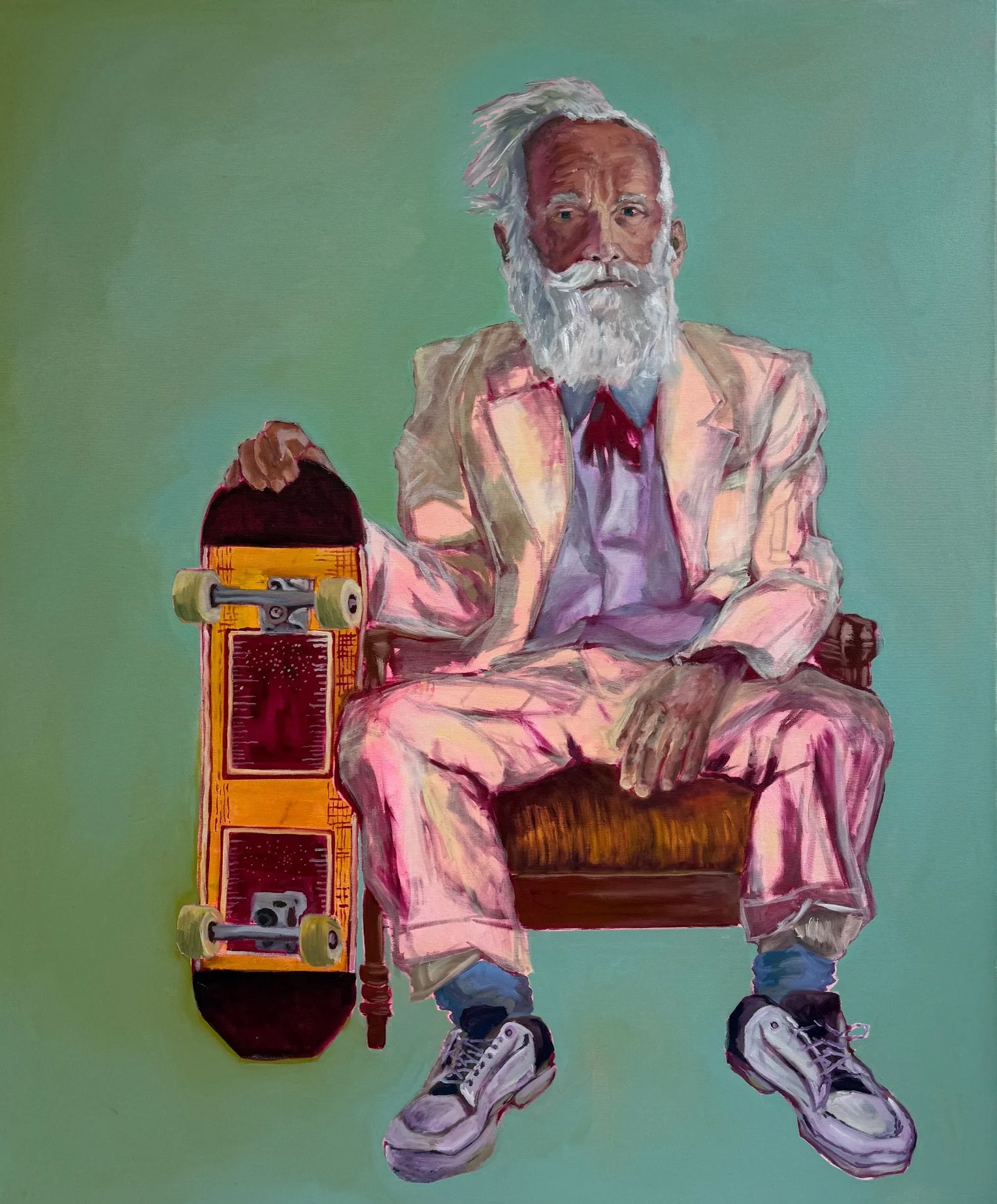
skater heart, 2025. oil on canvas, 120*100 cm
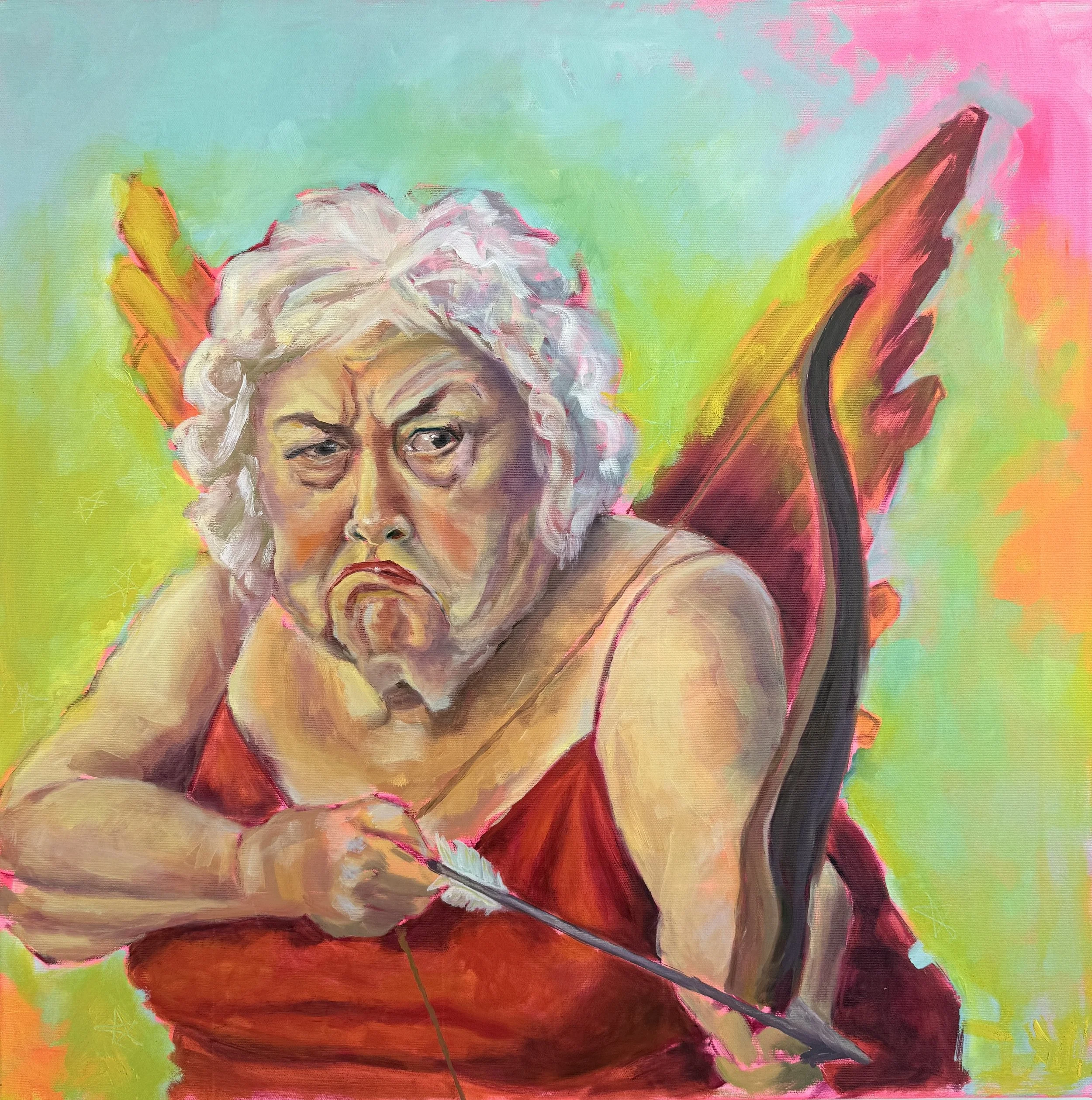
you better run, 2025. oil and acrylic on canvas, 80*80 cm