George Tkabladze
http://www.georgetkabladze.com
In the sculpture of George Tkabladze, form emerges not as a fixed representation but as a site of negotiation between matter, memory, and the philosophical imagination. His works resist the conventional division between abstraction and figuration, instead occupying a conceptual territory where bodies become signs, gestures become structures, and materials themselves assume the role of thought. Within this sculptural field, Tkabladze constructs objects that function simultaneously as aesthetic presences and as meditations on the conditions of human existence.
Born in 1971 in Kutaisi, Georgia, and educated at the Tbilisi State Academy of Fine Arts and the I. Nikoladze Art College, Tkabladze belongs to a generation of artists whose formative years unfolded during the profound political and cultural transformations of the late twentieth century. The dissolution of the Soviet Union produced not merely geopolitical change but a radical reconfiguration of cultural identity and artistic language. For sculptors trained within rigorous academic traditions, this moment created a complex tension between inherited forms and newly emerging freedoms of expression.
Tkabladze’s response to this historical condition has never been reactionary. Rather than rejecting tradition, he treats it as a structural foundation upon which new sculptural possibilities may unfold. His practice demonstrates a deep understanding of classical sculptural discipline while simultaneously interrogating the philosophical assumptions embedded within it. Sculpture, in his hands, becomes less a medium of representation than a language through which questions about perception, identity, and cultural memory may be articulated.
Material plays a central role in this language. Marble, alabaster, bronze, wood, and mixed media appear throughout his work, each carrying its own historical and symbolic weight. Marble invokes the long lineage of Mediterranean sculptural traditions, where stone becomes the medium of permanence and philosophical contemplation. Wood introduces a different sensibility, one tied to organic growth and the temporal rhythms of nature. Bronze, historically associated with monumentality, becomes in Tkabladze’s work a vehicle for expressive nuance and psychological resonance.
Yet it is not simply the presence of these materials that defines his sculpture, but the manner in which he manipulates them. Surfaces are polished to a quiet luminosity or left textured and irregular. Volumes expand into elongated forms or collapse into compact architectural structures. Negative space becomes as significant as solid mass, creating a dynamic interplay between presence and absence.
This interplay recalls the sculptural investigations of Constantin Brâncuși, whose pursuit of essential form transformed twentieth-century sculpture. Like Brâncuși, Tkabladze often reduces the human figure to a series of simplified volumes and rhythms. Yet where Brâncuși sought the purity of archetypal form, Tkabladze introduces narrative ambiguity and psychological tension. His sculptures retain traces of human experience, even when the figure dissolves into abstraction.
The result is a body of work that oscillates between poetic suggestion and structural clarity. Each sculpture appears less as a static object than as a condensed philosophical proposition.
The marble and sandstone sculpture Birth of Adam unfolds as an exploration of emergence, both physical and metaphysical. The elongated vertical form rises from its base with a sense of quiet inevitability, as though the stone itself were gradually awakening to consciousness.
Rather than depicting the biblical narrative in literal terms, Tkabladze abstracts the concept of creation into a sculptural movement. The upper portion of the sculpture opens into cavities and curved recesses, allowing light to penetrate the interior structure. These voids create a visual dialogue between solid mass and empty space, suggesting that the act of creation involves not only the formation of matter but also the opening of possibility.
The smooth marble surface emphasizes the tactile intimacy of the material. The sculpture invites the viewer to imagine the slow geological processes through which stone itself comes into being. In this sense, the “birth” referenced in the title extends beyond the human figure. It becomes a meditation on the emergence of life from the depths of material existence.
In Cain and Abel, carved from wood, Tkabladze transforms one of the most enduring narratives of human conflict into an abstract structural relationship. Rather than presenting two recognizable figures, the sculpture condenses the drama of the biblical story into a series of intersecting volumes and directional tensions.
The wooden surface retains the visible grain of the material, reinforcing the sculpture’s connection to organic life. Yet the forms themselves introduce a subtle instability. Curves bend toward one another before diverging sharply, creating a sense of unresolved tension within the composition.
This structural imbalance evokes the psychological fracture at the heart of the story. The sculpture suggests that conflict does not arise from external forces alone but from internal divisions within the human condition. The forms appear simultaneously connected and estranged, as though they were fragments of a once unified structure.
In this way, the sculpture transforms a narrative of violence into a meditation on the fragile architecture of human relationships.
The vertical sculpture Her Highness, carved from wood and finished with a deep blue surface, evokes the symbolic authority of ancient ceremonial figures while remaining firmly within the language of contemporary abstraction.
The elongated proportions of the figure emphasize vertical movement, creating an impression of spiritual elevation. The head, crowned by a stylized architectural form, introduces a visual echo of historical regalia without directly referencing any specific tradition.
This ambiguity allows the sculpture to function as a broader reflection on the nature of power. Authority appears here not as domination but as presence. The figure stands with quiet composure, its elongated body suggesting an internal stability that transcends external circumstances.
The blue patina intensifies the sculpture’s contemplative atmosphere. Blue, often associated with introspection and distance, transforms the figure into a symbol of inner sovereignty rather than political hierarchy.
In Knight’s Dream, carved from alabaster and supported by wood, Tkabladze constructs a sculptural object that operates simultaneously as landscape, architecture, and psychological metaphor.
The alabaster block retains the irregular contours of its natural origin, yet within this raw material the artist carves a precise geometric cavity. The square void becomes the central focal point of the composition. It appears as a portal embedded within the stone, suggesting an interior space of imagination.
The wooden element inserted between the stone fragments introduces a subtle mechanical articulation. The sculpture seems poised between stability and movement, as though the dream of the “knight” exists within a suspended moment between past and future.
Here the sculpture becomes a reflection on the role of imagination within cultural memory. The medieval knight, though absent as a figure, lingers as a symbolic presence within the architecture of the object.
The bronze sculpture Queen of Sarcasm introduces a more overtly figurative vocabulary while retaining the conceptual subtlety characteristic of Tkabladze’s work.
The figure appears suspended in a moment of theatrical gesture, her arms raised in an ambiguous expression that oscillates between triumph, questioning, and irony. Sarcasm, by definition, operates through a dual structure of meaning. It expresses one thing while implying another.
Tkabladze translates this linguistic complexity into sculptural form. The body arches gracefully, its proportions elongated in a manner reminiscent of mannerist sculpture. Yet the upward gesture of the hands introduces a note of tension within the composition.
The textured bronze surface reinforces the figure’s expressive quality. Light interacts with the uneven patina, creating shifting tonal variations that animate the sculpture’s surface.
The marble sculpture Mystery represents one of Tkabladze’s early explorations of abstract figurative language. The sculpture’s curved surfaces fold inward and outward, creating a continuous interplay between concealment and revelation.
From certain angles the form suggests the presence of a human head or torso, while from others it dissolves into pure sculptural rhythm. The ambiguity is deliberate. The sculpture resists definitive interpretation, inviting the viewer to participate in the process of meaning-making.
The marble’s subtle translucency enhances this effect. Light penetrates the stone, creating a gentle internal glow that reinforces the sculpture’s enigmatic presence.
The small marble portrait Natia demonstrates the sculptor’s capacity to move between abstraction and classical portraiture with remarkable sensitivity.
The face is rendered with quiet precision, its surfaces polished to a luminous clarity. Yet above the head emerges a small sculptural intervention in the form of a bird-like figure. This unexpected element transforms the portrait into a symbolic composition.
The bird may be understood as an emblem of imagination, memory, or spiritual ascent. By integrating this form into the structure of the head, Tkabladze suggests that thought itself is a form of flight.
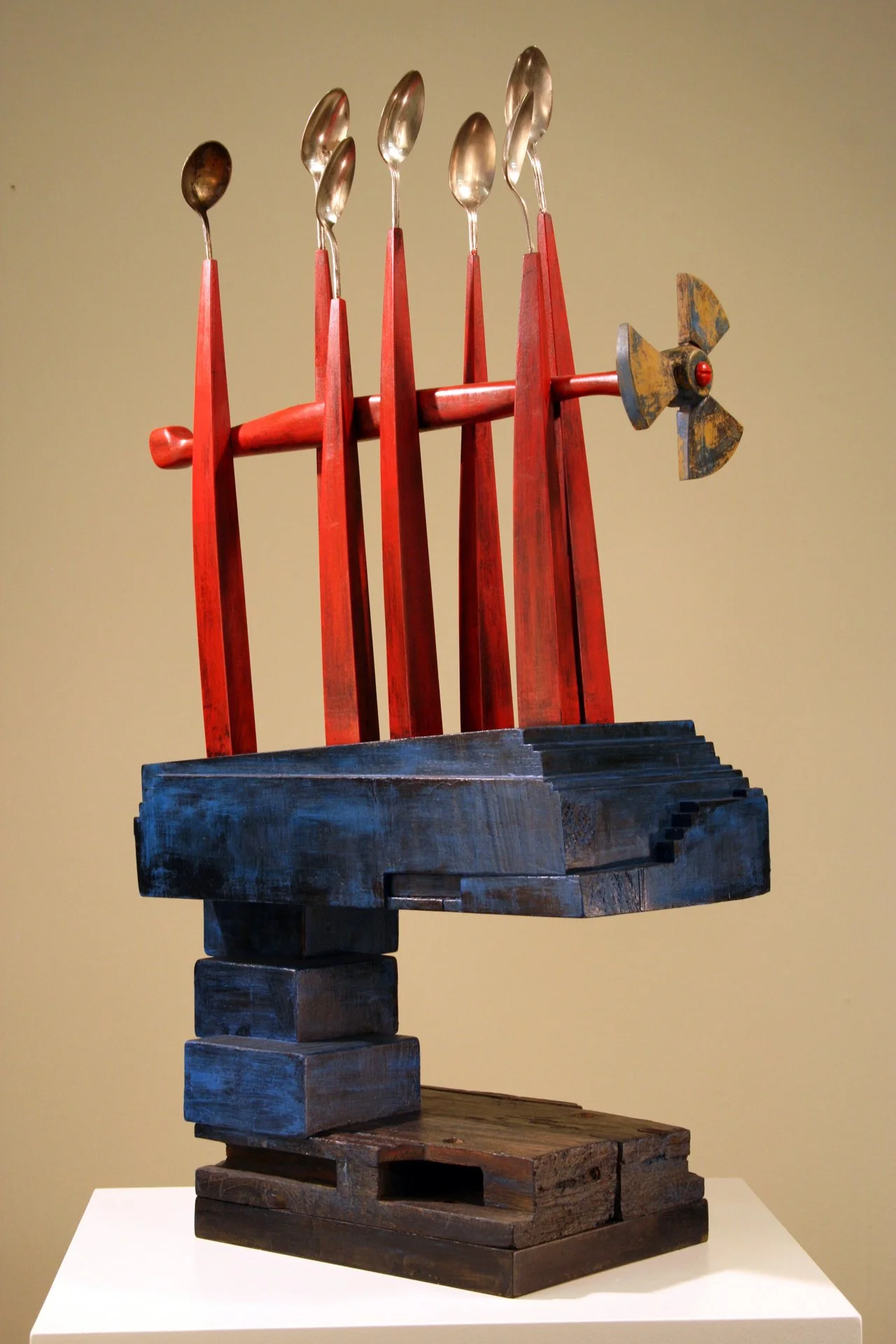
In On the Edge, constructed from wood and metal spoons, Tkabladze introduces an element of playful conceptualism into his practice.
The vertical red elements resemble stylized human figures, each crowned by a spoon that reflects light like a miniature mirror. These figures appear to participate in a collective mechanism balanced precariously upon a layered wooden platform.
The sculpture evokes the delicate equilibrium of social systems. Each element depends upon the stability of the others. The title reinforces the sense that the structure exists at the threshold of collapse.
Yet despite its conceptual implications, the sculpture retains a subtle humor. The use of everyday utensils transforms the work into a reflection on the ordinary rituals that structure daily life.
The bronze sculpture Pelagia offers a more intimate meditation on memory and identity. The elongated neck and simplified facial features evoke the elegance of classical portraiture, yet the textured bronze surface introduces a contemporary expressive dimension.
The engraved text on the base transforms the sculpture into a hybrid object situated between portrait and monument. Language becomes part of the sculptural structure, extending the meaning of the work beyond the physical form.
The figure’s contemplative expression suggests introspection rather than public declaration. The sculpture appears to inhabit a space of quiet reflection, inviting the viewer to consider the relationship between personal memory and collective history.
The mixed media sculpture She Seemed So Pure presents perhaps the most overtly symbolic composition in Tkabladze’s body of work.
The figure is constructed from multiple materials, including polished surfaces, metallic textures, and a small clock mechanism embedded within the structure. The smooth white head contrasts with the richly layered body, which resembles a ceremonial garment.
Time becomes an essential conceptual element of the sculpture. The clock detail introduces a temporal dimension, suggesting that purity, like identity itself, is shaped by the passage of time.
The work thus reflects on the cultural narratives through which innocence and virtue are constructed. What appears pure on the surface may conceal complex histories beneath.
Across these diverse works, a consistent philosophical concern emerges. Tkabladze’s sculptures investigate the fragile equilibrium between individuality and universality. Each object embodies a particular narrative, yet simultaneously gestures toward broader questions about human existence.
In a contemporary art world increasingly oriented toward digital media and ephemeral experience, Tkabladze’s commitment to sculpture reaffirms the importance of material presence. His works insist that thought can inhabit matter, that philosophy can be expressed through form.
Rather than seeking spectacle, his sculptures cultivate attentiveness. They ask the viewer to slow down, to observe the subtle relationships between surface, volume, and space.
In this sense, George Tkabladze occupies a distinctive position within contemporary sculpture. His work bridges multiple traditions without becoming confined to any single historical category. It speaks simultaneously to the classical heritage of sculpture and to the conceptual inquiries that define contemporary art.
Ultimately, his sculptures remind us that form itself can be a mode of thinking. Through stone, wood, bronze, and assembled materials, Tkabladze constructs objects that operate as quiet yet persistent reflections on what it means to inhabit the world as human beings.
What ultimately distinguishes George Tkabladze’s sculptural practice is not only its formal sophistication or its mastery of materials, but the quiet philosophical depth that underlies every object he creates. His sculptures exist within a rare category of contemporary art that resists both the spectacle of visual excess and the purely conceptual detachment that has characterized much of late twentieth and early twenty-first century art discourse. Instead, Tkabladze’s work returns sculpture to a territory that is at once ancient and urgently contemporary: the terrain of reflection on the human condition.
At the center of his practice lies an enduring belief that art functions as a universal language. This conviction is not expressed through didactic narratives or overt political statements, but through form itself. His sculptures address themes that belong to the shared psychological architecture of humanity: birth, conflict, memory, authority, identity, aspiration, and vulnerability. These are not subjects that can be confined to a single culture or historical moment. Rather, they constitute the underlying grammar of human experience.
In this sense, Tkabladze’s work participates in a sculptural lineage that stretches from classical antiquity through modernism and into the present moment. Yet it does so without nostalgia. The past in his sculpture does not appear as imitation or stylistic quotation. Instead, tradition functions as a structural memory embedded within form. The discipline of classical sculpture becomes a point of departure rather than a final destination.
This relationship to tradition is particularly significant in the context of contemporary art. Over the past several decades, sculpture has often been pushed toward conceptual dematerialization or toward monumental spectacle designed for public spectacle and institutional visibility. Tkabladze’s work takes a different path. His sculptures remain committed to the intimate scale of human encounter. They invite close looking, slow perception, and thoughtful interpretation.
Such an approach carries profound cultural significance. In a world increasingly shaped by accelerated digital communication and fleeting visual consumption, objects that demand patience and reflection acquire renewed importance. Sculpture, by its very nature, resists the speed of contemporary image culture. It requires physical presence, spatial awareness, and sustained attention. Tkabladze’s work embraces this quality of sculpture and transforms it into a philosophical proposition: that contemplation remains an essential dimension of human life.
Another dimension of the social relevance of his work lies in its subtle engagement with empathy. Many of his sculptures address the emotional interiority of human experience rather than its external drama. The elongated figures, contemplative portraits, and symbolic forms that populate his oeuvre are not heroic monuments or declarations of power. Instead, they function as quiet witnesses to the complexities of being human.
This sensitivity to psychological depth reflects the broader intellectual climate in which Tkabladze developed as an artist. Growing up and working within a society undergoing profound transformation inevitably sharpened awareness of instability, resilience, and adaptation. Rather than responding to these conditions through overt political imagery, Tkabladze translates them into sculptural metaphors. His works suggest that human identity itself is a process of continual reconstruction.
Such an approach aligns with a broader philosophical understanding of sculpture as a medium capable of embodying existential questions. The human figure, when treated with subtle abstraction, becomes more than a representation of the body. It becomes a site in which questions about consciousness, memory, and vulnerability can be explored.
In Tkabladze’s work, the figure often appears elongated, simplified, or partially dissolved into abstract form. This transformation does not diminish the presence of the human body. On the contrary, it emphasizes its symbolic capacity. The body becomes a structural framework through which emotional and intellectual tensions can be expressed.
His work also demonstrates a remarkable ability to integrate humor, irony, and poetic ambiguity into sculptural form. Pieces such as On the Edge introduce everyday objects into sculptural composition, creating moments of subtle playfulness that coexist with deeper philosophical reflections. This capacity for tonal complexity is one of the defining characteristics of mature artistic practice. It allows the work to operate simultaneously on multiple levels of meaning.
Within the broader landscape of contemporary sculpture, Tkabladze occupies a distinctive position. While many artists pursue radical experimentation with materials or large-scale installations that dominate architectural space, his work emphasizes refinement, balance, and intellectual clarity. His sculptures maintain a dialogue with historical sculptural traditions while addressing the conceptual concerns of contemporary art.
This synthesis places him within a lineage of sculptors who view form not merely as an aesthetic problem but as a mode of thinking. Sculpture becomes a way of organizing philosophical ideas within material space. The viewer, encountering these objects, participates in the unfolding of that thought.
Perhaps the most profound contribution of Tkabladze’s work lies in its quiet insistence that art can still function as a moral and cultural compass. Without preaching or moralizing, his sculptures remind viewers of the fragile interconnectedness that defines human existence. Works such as Cain and Abel or Birth of Adam evoke archetypal narratives not as religious dogma but as symbolic frameworks through which contemporary life may be understood.
In this respect, Tkabladze’s sculptures operate within a humanistic tradition that regards art as a means of cultivating awareness. They encourage viewers to consider their place within larger histories, cultural systems, and emotional landscapes.
The physical presence of these sculptures reinforces this philosophical dimension. Stone carries the memory of geological time. Wood contains the traces of organic growth. Bronze preserves gestures across generations. By working with these materials, Tkabladze situates his sculptures within a temporal continuum that extends far beyond the moment of their creation.
In doing so, he affirms the enduring relevance of sculpture as a medium capable of bridging past and present, matter and meaning, individual experience and collective memory.
George Tkabladze’s work therefore, stands as a testament to the continuing vitality of sculptural thought in contemporary art. His sculptures remind us that form, when approached with intellectual rigor and poetic sensitivity, can become a language through which the deepest questions of human existence are explored.
In an age often defined by fragmentation and acceleration, such work possesses a rare and necessary clarity. It does not attempt to overwhelm the viewer with spectacle. Instead, it offers something far more enduring: the possibility of reflection.
Through the disciplined transformation of material into meaning, Tkabladze demonstrates that sculpture remains one of the most powerful ways in which art can engage the philosophical, emotional, and ethical dimensions of human life.
By Marta Puig
Editor Contemporary Art Curator Magazine
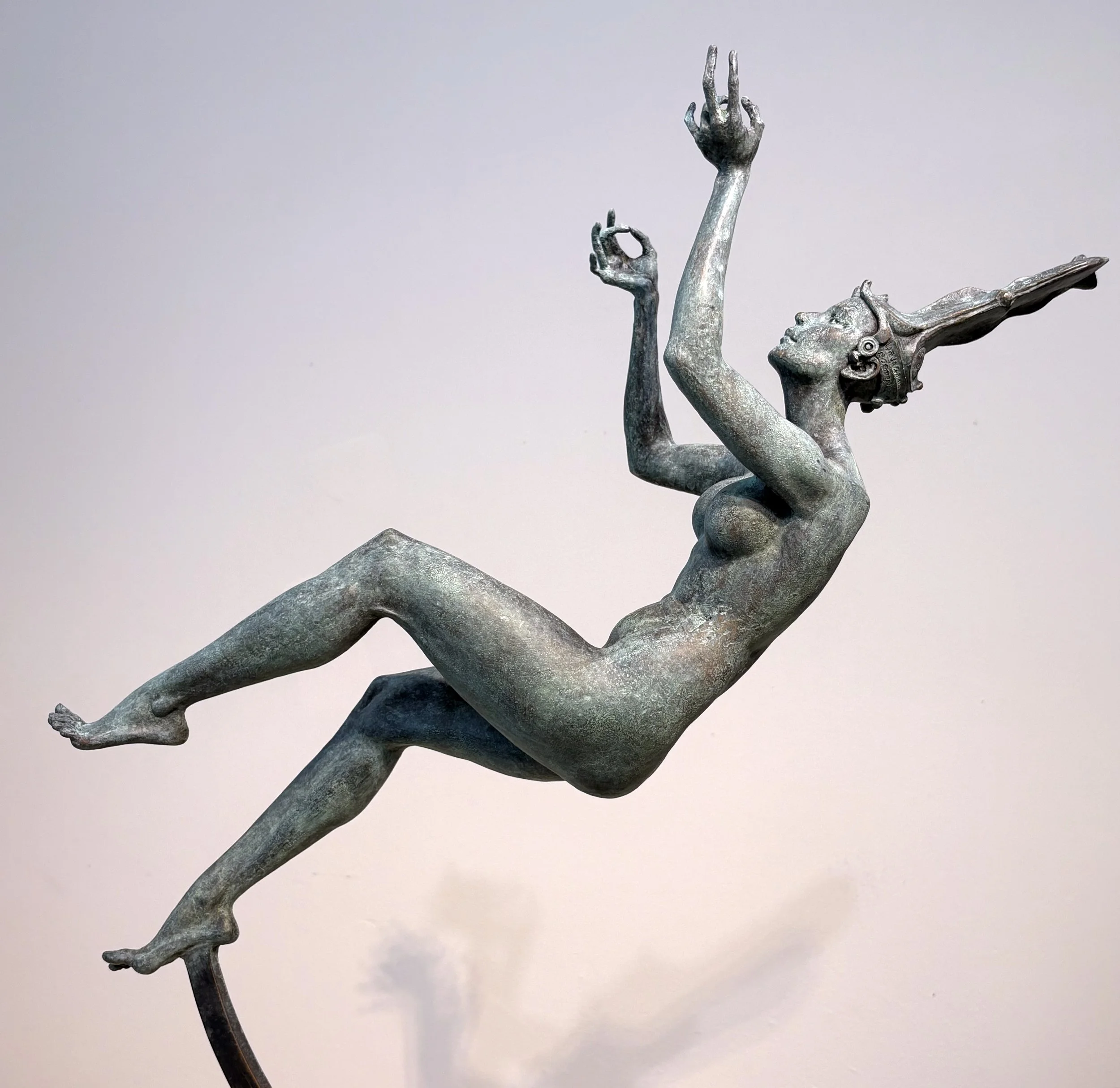
Queen of Sarcasm - Bronze, 74X56 X20 cm 2025
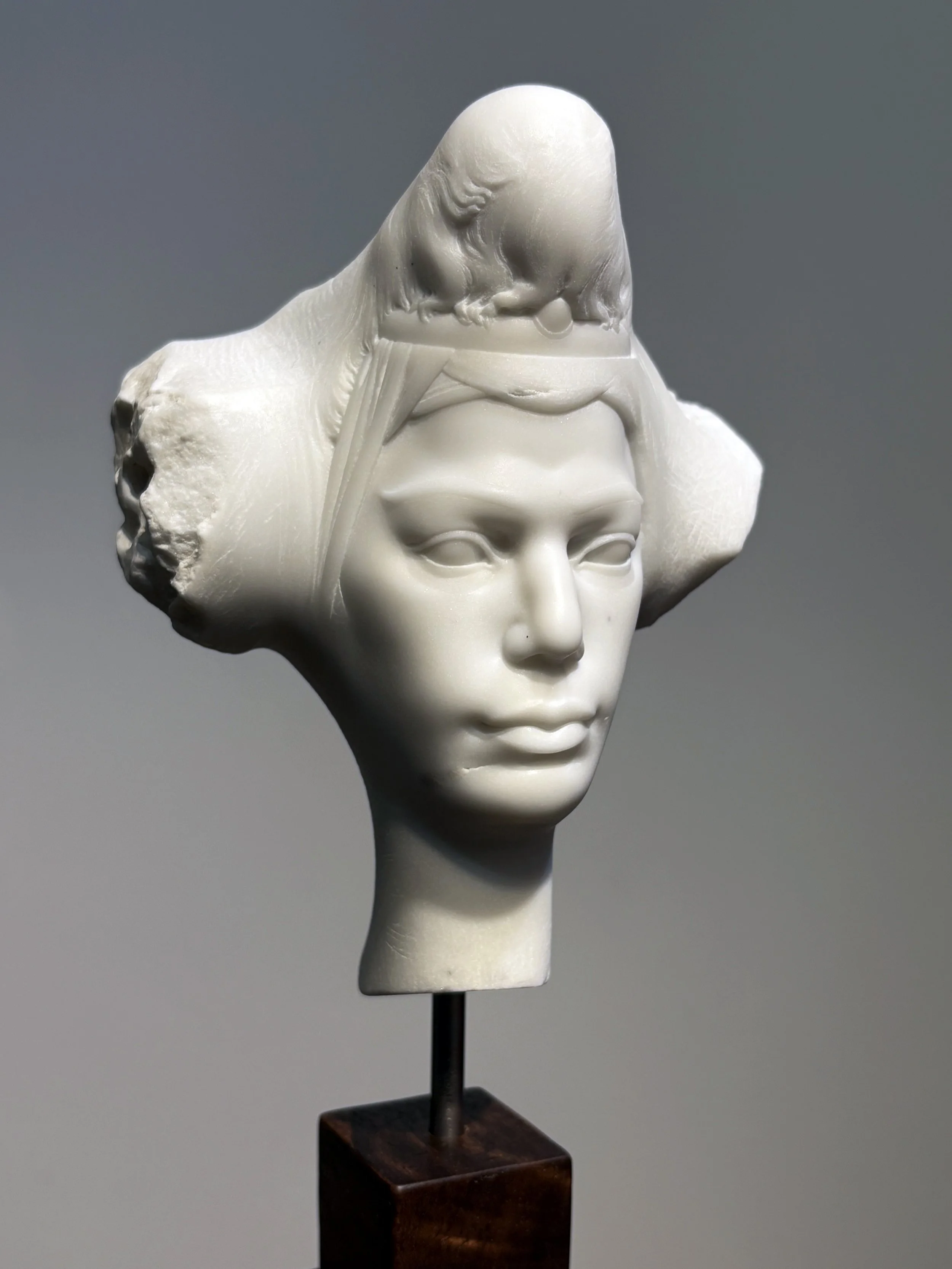
Natia - Marble, 10X7.5X11 cm, 2025
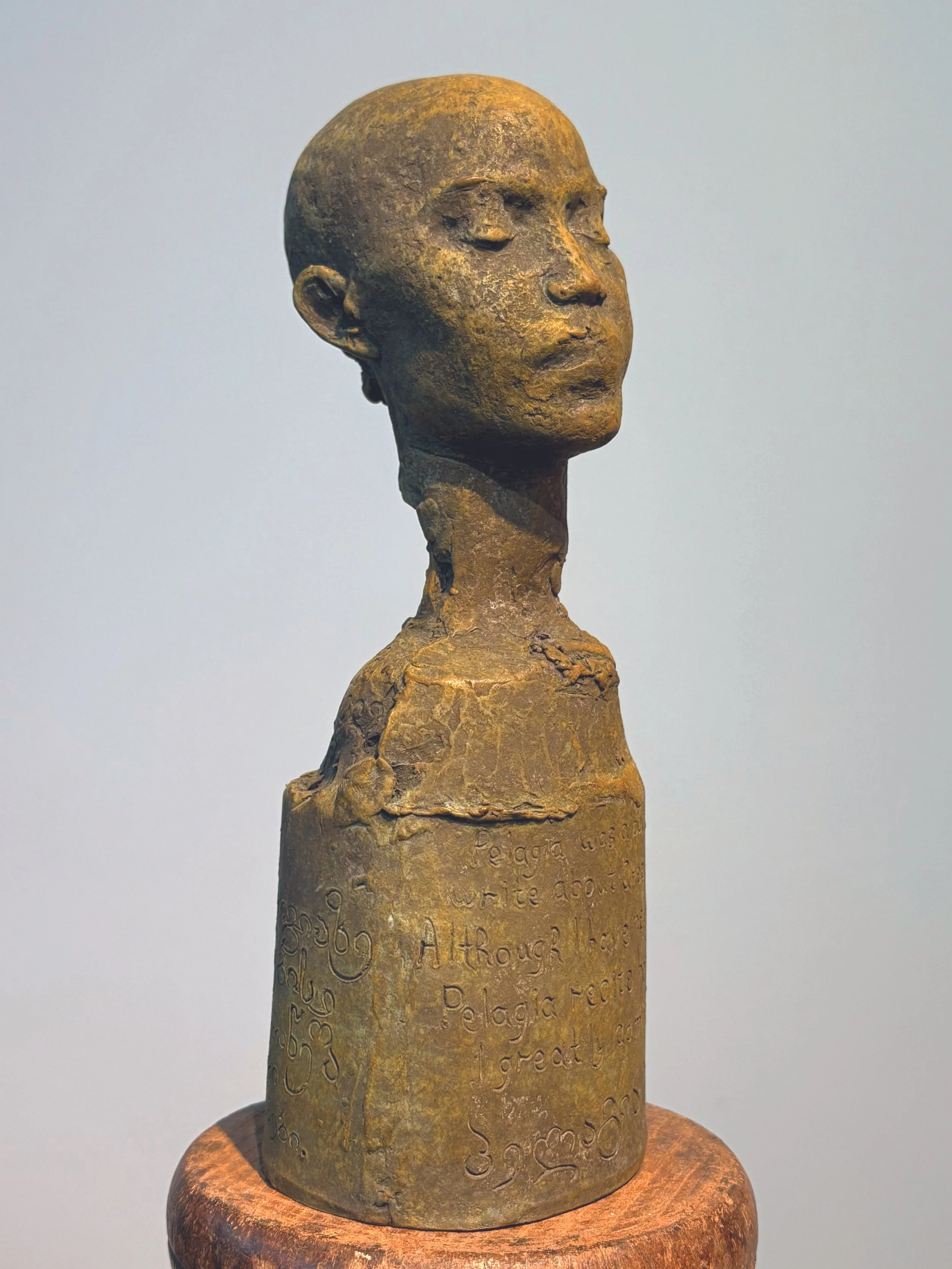
Pelagia - Bronze, wood, 21X10X7.5 cm, 2025
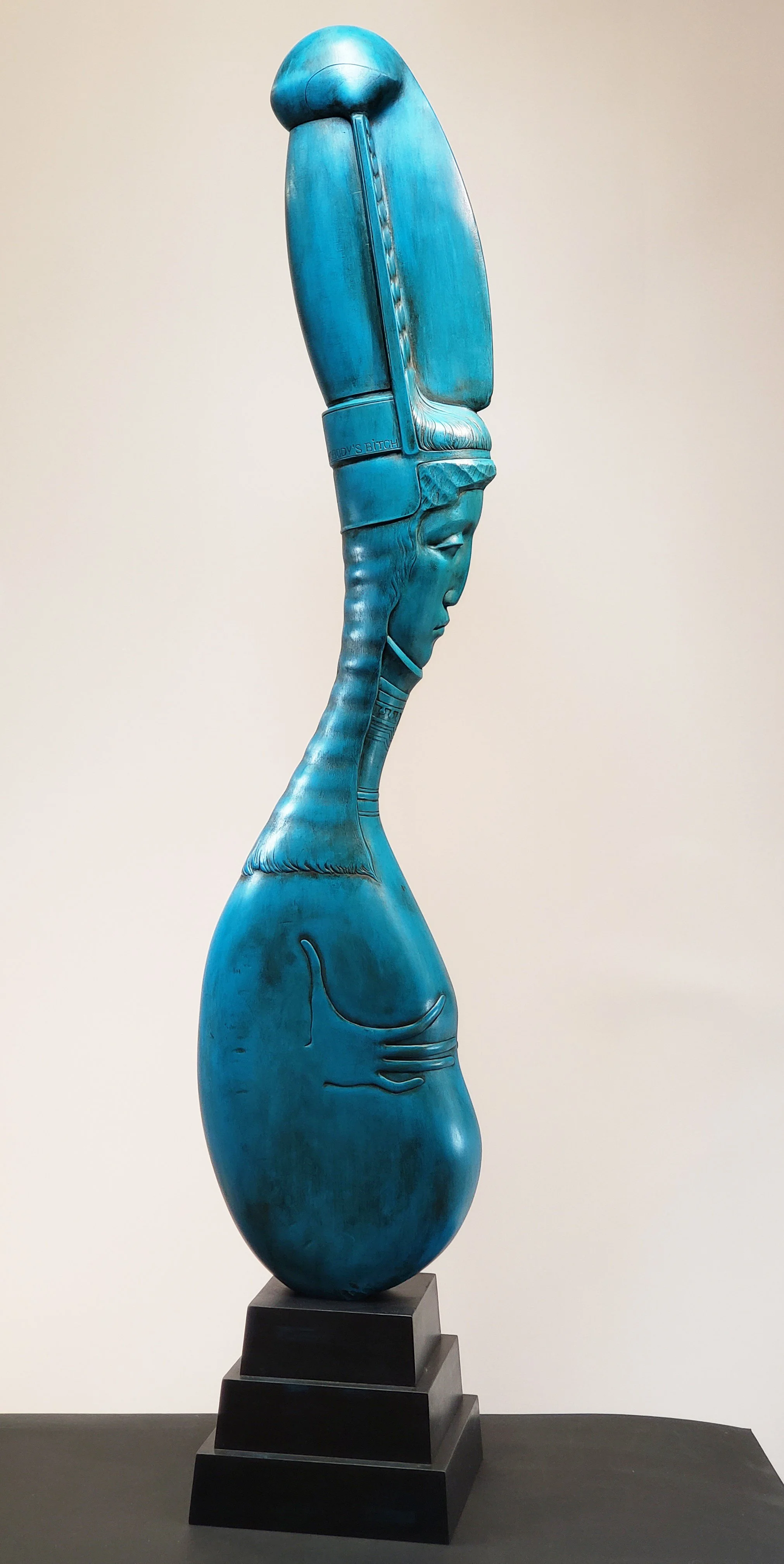
Her Highness - Wood, 130X26X23 cm, 2021
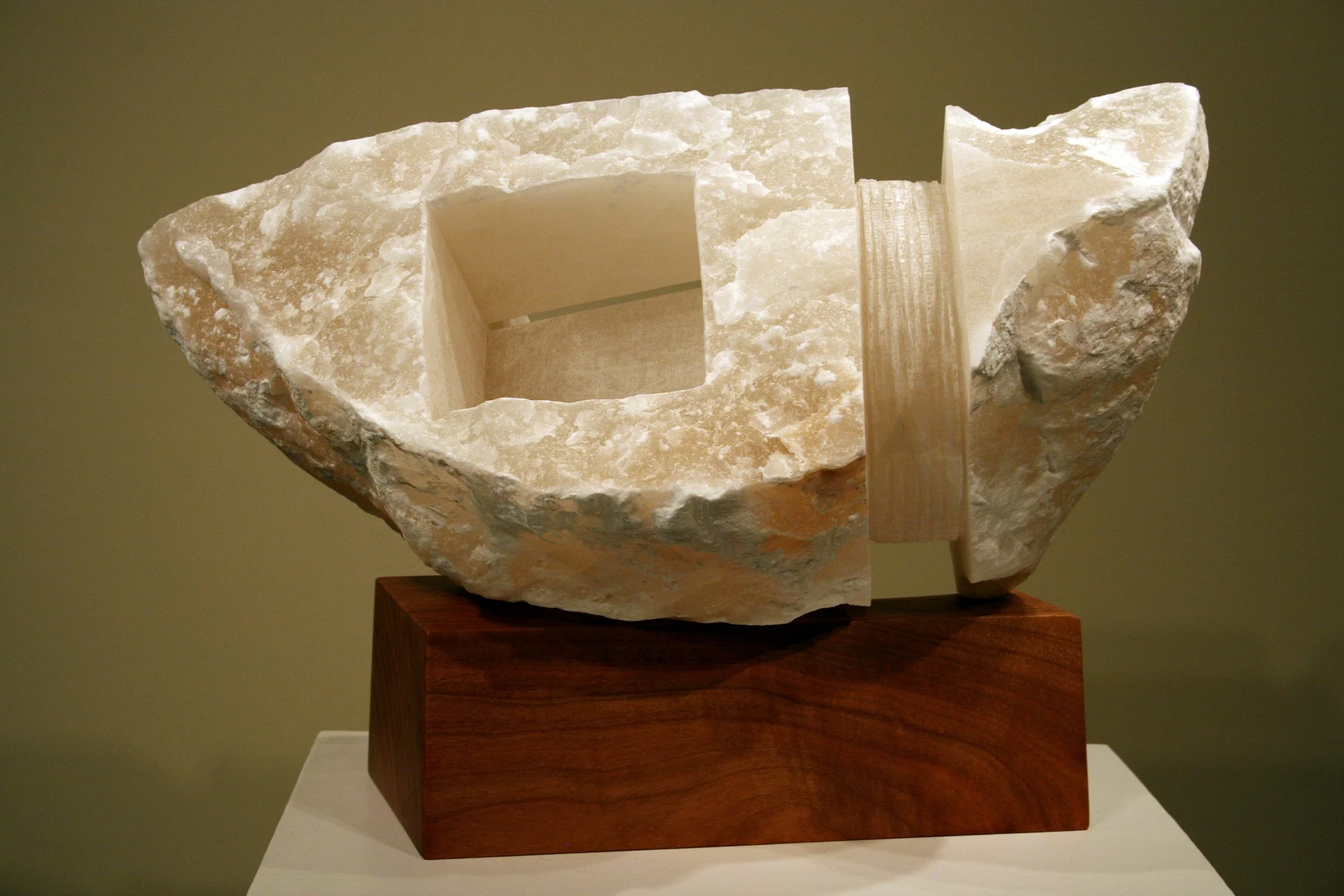
Knight's Dream - Alabaster Stone, Wood, 33X48X41 cm 2018
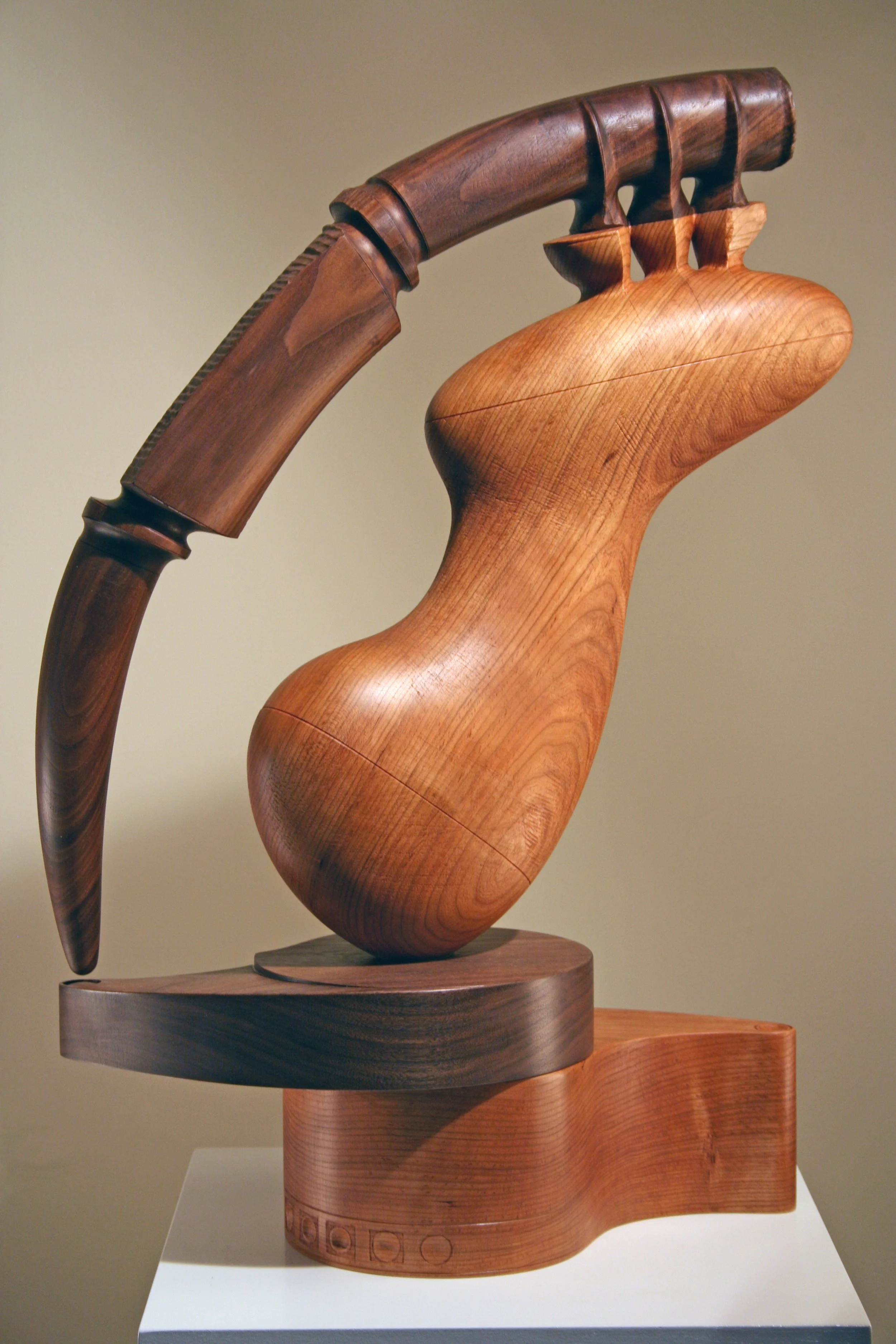
Cain and Abel – Wood, 61X40X20 cm, 2015
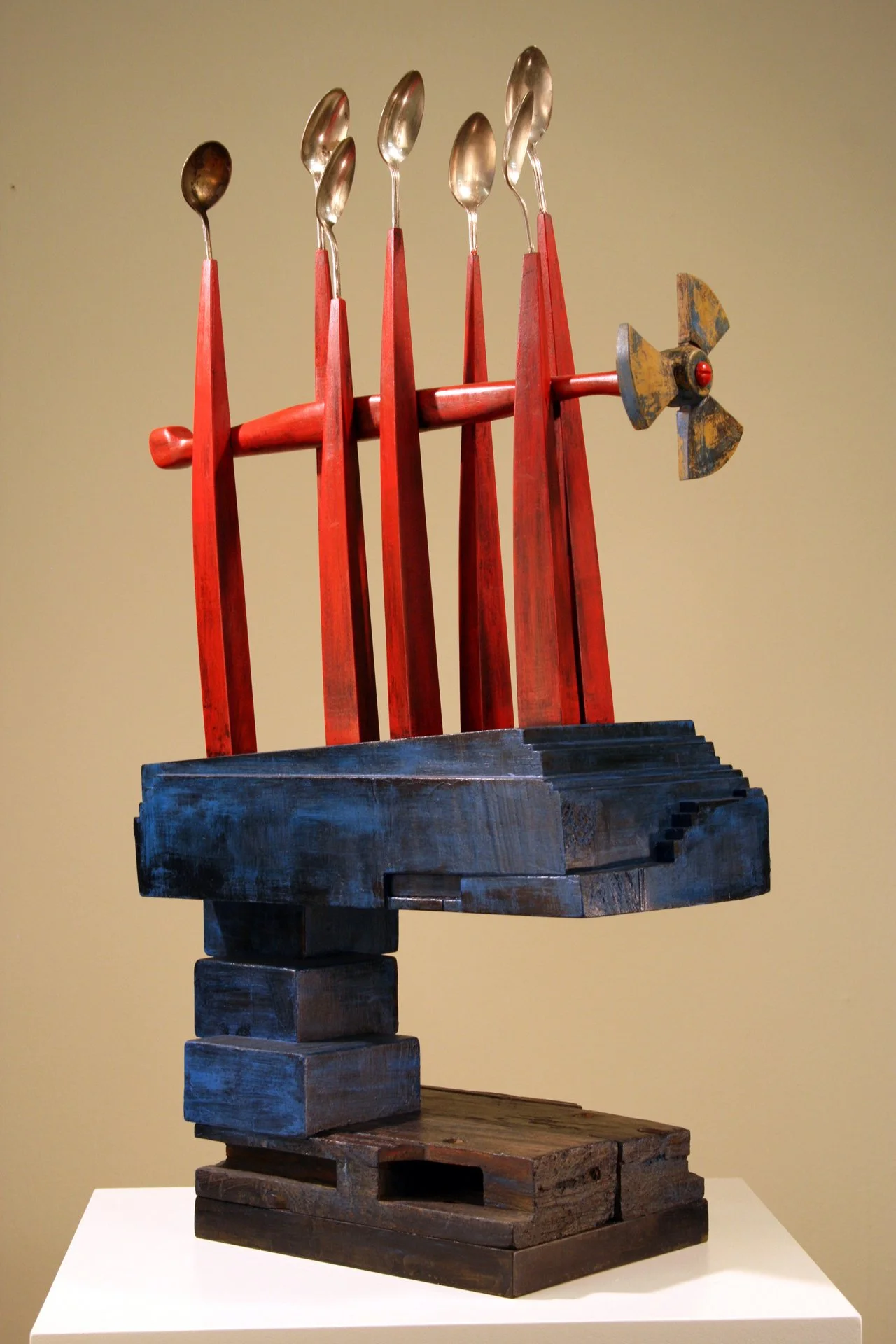
On The Edge - Wood, Metal, 62X38X17 cm, 2012
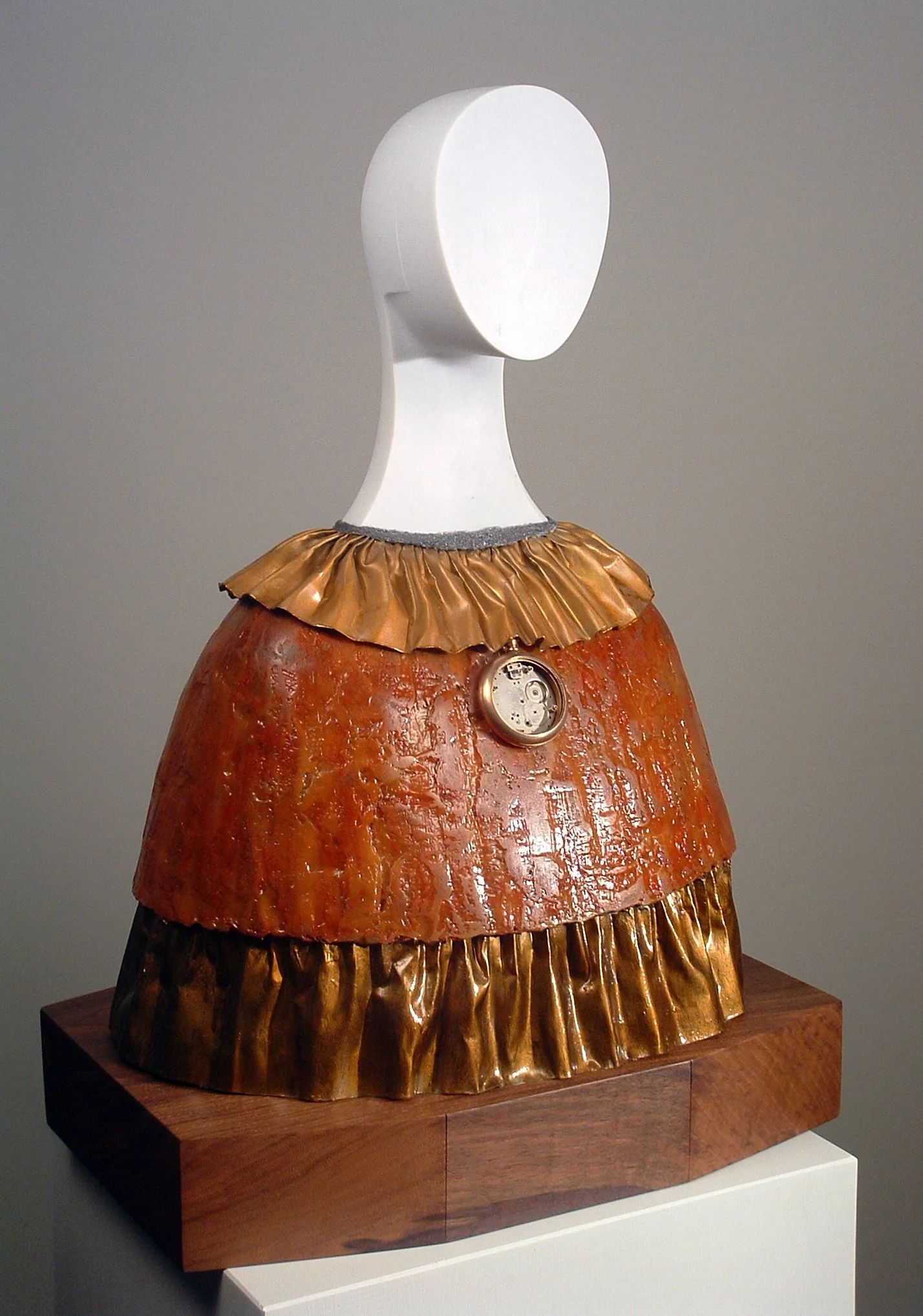
She Seemed so Pure - Mixed Media, 61X43X29 cm, 2007
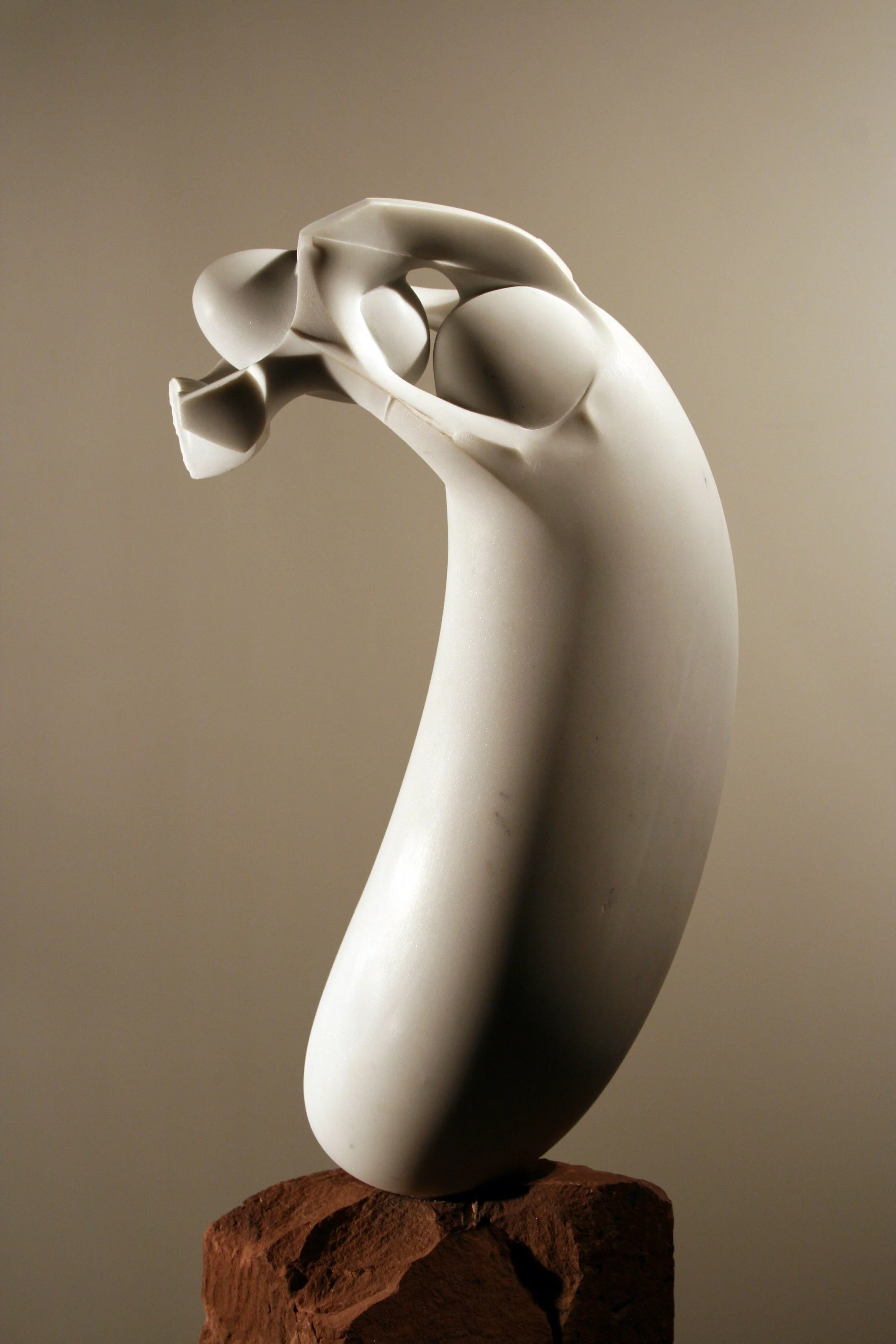
Birth of Adam - Marble, Sandstone, 70X30X27 cm, 2006
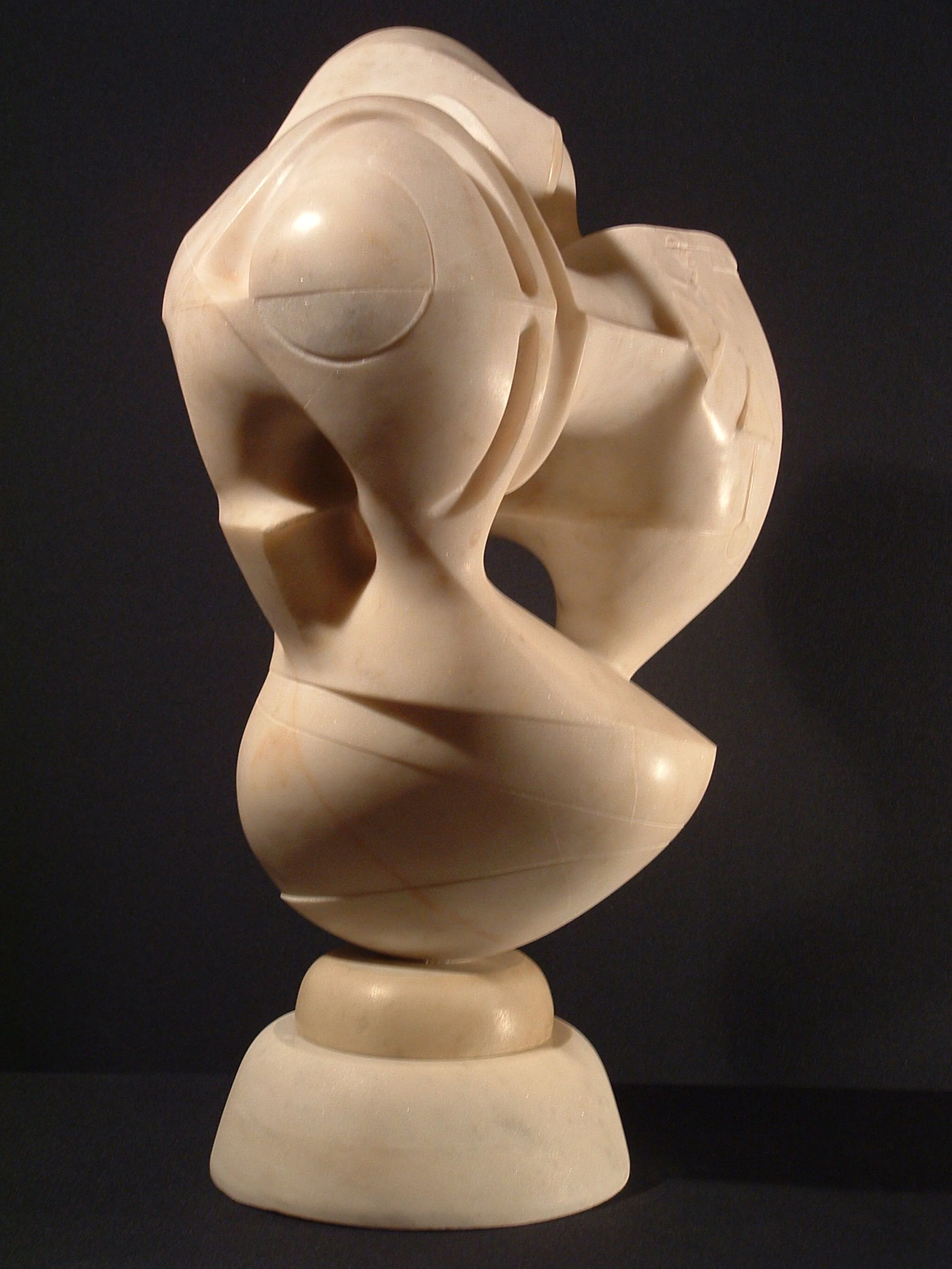
Mystery 2 - Marble, 6X25.5X23 cm - 2000