Interview with Bea Last
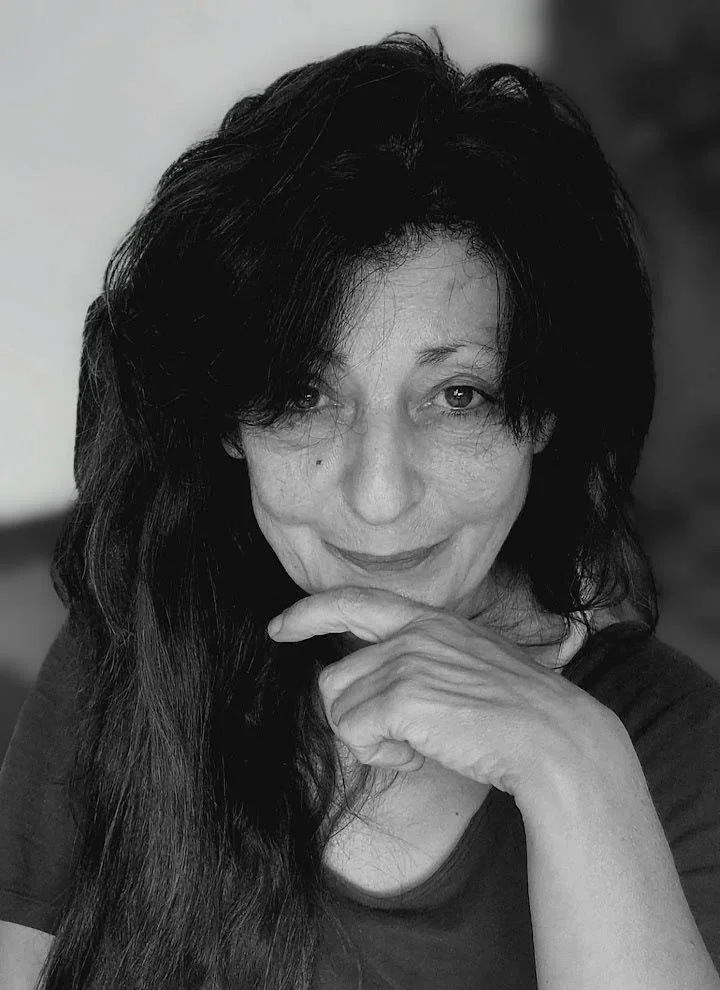
BEA LAST – Artist/Educator/Mentor
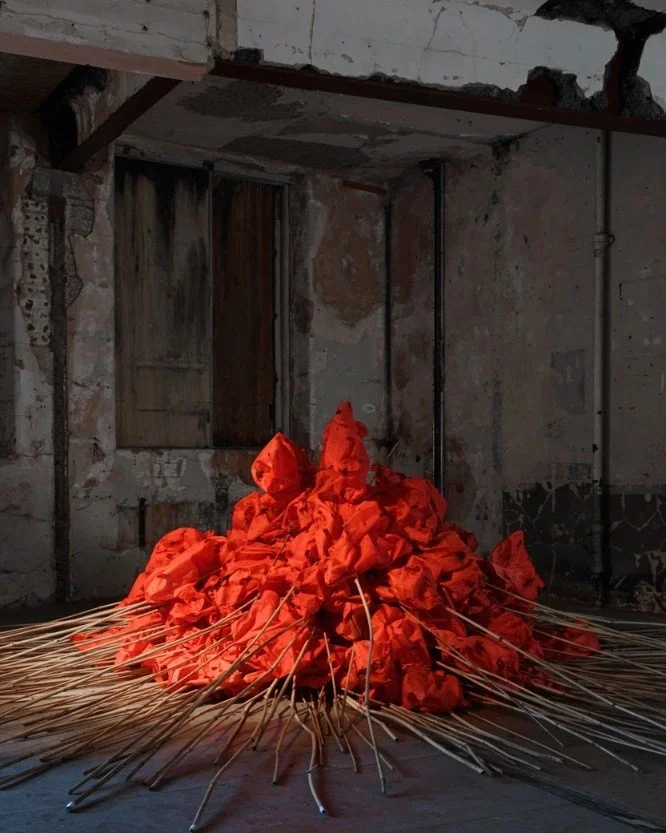
Currently based in Scotland, UK, my creative practice is deeply rooted in the creative process and a drive to respond to global issues, personal trauma and the human condition. My work, particularly the installation ‘’The Red Bags’’ showcases the transformation of discarded and recycled materials into powerful statements on fragility, resilience and hope.
Personal experiences and emotions are embedded in my art as a reflection of my inner world, drawing inspiration from life including feelings of displacement and not belonging. I hope to evoke reflection and empathy in the viewer encouraging them to consider the human cost of conflict, displacement and environmental degradation. Despite exploring dark themes, the art is ultimately about hope and the human capacity for endurance. In the face of adversity there is always the possibility for renewal and connection.
I tend to approach life with a philosophical mindset, recognising that everything is transient and impermanent. This helps me to find meaning and beauty in the imperfect and ephemeral nature of life. It is witness and testament to the transformative power of art. With my emotional connection, I hope that it is evident in the care and attention brough to each piece created.
The Red Bags for example is a piece that will continue to grow whilst also exploring Deconstruction, transformation and the repurposing of materials to explore recycled transitions, metamorphosis, and transformation. They are a symbolic and multifaceted element left open to interpretation whilst representing transformation and the impact of time and travel on the installation. The use or repurposed and recycled materials also highlight the importance of sustainability and creative reuse. The Red Bags can serve as a metaphor for the stories and emotions they evoke in the viewer. Their role as a dynamic and thought-provoking art element invites viewers to reflect on the themes of conflict, the human experience, sustainability, transformation and hope.
Selected exhibitions:
VAO: ( Visual Arts Association Open)Finalist : The Minster Building London UK 2025
VAA (Visual Arts Association) Artist of the Year 2024
The Laguna Arte Prize – Venice: Finalist: Arsenalle Norde 2024
Aesthetica Art Prize Finalist York England UK 2023
Cluster: The Oxo, Southbank, London 2023
SPUDworks New Forest England 2020
The Crypt, Euston, London 2019
GEUZENMAAND: 10dence gallery artist The Netherlands 2017-2026
THE ANATOMY LESSON: CCA Berigen Belgium 2024
SELECTED EXHIBITIONS
VAO – VISUAL ARTS OPEN 2025 FINALIST
VAA – Visual Arts Association ARTIST OF THE YEAR AWARD 2024/5
D&G ARTISTS LIFE AWARDS ARTIST/ MAKER OF THE YEAR 2024
WOMEN IN ART PRIZE – SHORTLISTED ARTIST 2025
LAGUNA ARTE PRIZE -VENICE FINALIST NOVEMBER 2024 Arsenalle Nord Venezia
AESTHETICA ART PRIZE FINALIST 2023- YORK ART GALLERY April 24 – June 4 ENGLAND UK.
THE ANATOMY LESSONY REVISITED; 10DENCE GALLERY, DORDRECHT, NETHERLANDS / CULTUURHOEK. DRIEBERGEN-RIJSENBURG/ CENTRE FOR CONTEMPORARY ART BERINGEN, BELGIUM.2023-24
THE OXO TOWER WHARF; SOUTHBANK LONDON UK NOVEMBER 2022
SPRINGFLING22- (Invited Artist-20TH ANNIVERSARY PAST AND PRESENT) Landscape installation June October GRACEFIELD ART CENTRE, DUMFRIES, SCOTLAND 2022
GEUZENMAAND 2021/2022 (Invited Artist), WAD, DELFT, The Netherlands 21/22
HYSTERICA – M.A.D.S GALLERY Milan, Fuerteventura 2021
GET OUT OF YOUR SKULL; 10dence Gallery Netherlands. Touring exhibition, Belgium, France, Amsterdam 2021/2022
GEUZENMAAND2020 Vlaardingen Museum and WAD Delft, The Netherlands Feb 2020
PLACEING OBJECTS SpudWORKS Sway New Forest England Feb.2020
PAST & PRESENT TENSE- The Crypt Gallery, Euston London with White noise Projects September 2019
NICHES: Invited artist CONTEMPORARY ART INSTALLATION #lOSTVOICES-, Midsteeple Quarter DUMFRIES SCOTLAND. Feb/March 2018
SURGE; (Selected Artist for curated show) – PATRIOTHALL GALLERIES, (Upland) Edinburgh, SCOTLAND UK 2017
DRAW THE LINE; Selected Artist – THE SURFACE GALLERY Nottingham England U.K 2017
LIMINAL; Drawing Exhibition. Invited artist at CUPAR ARTS FESTIVAL, Fife, Scotland 2016
MANIFEST MOSAIC INSTALLATION- Selected Artist. 1/50 artists working on collaboration project to tour ART EXPO MILANO-Art expo2015 with ARTMEET Gallery, East End Studios, Spazio Progetto www.artmeet.eu
ART up CLOSE: Virtual representation at Art Expo- ARTIFACT GALLERY NY. 26-18April 2015 www.artifactnyc.net
'THE SKETCHBOOK PROJECT’: Brooklyn Library, New York. (Touring U.S.A) April 2012
'SKETCH 2011': National selected sketchbook exhibition: Rabley Drawing Centre, Wiltshire England.
'THE MOMENT OF PRIVACY HAS PASSED’; Sketchbooks by contemporary artists, architects & designers. Usher Gallery, Lincoln, England.2011
WILLS ART WAREHOUSE: London, England 2000/2001
'ART FIAD INTERIOR ART & DESIGN': Beirut 2000
'SION': Rennes, France
'THE LIME GALLERY': Laguna Beach, California, U.S.A.
'FRAGMENTS OF EUROPE': Touring exhibition. Italy, France, Scotland 1999
'AFFORDABLE ART FAIR'; London 1999-2006
'GLASGOW ART FAIR': Scotland 1999-2006
LINENHALL ART CENTRE,’’AMORPHOUS’’ COUNTY MAYO, IRELAND 2013
GRACEFIELD ART CENTRE,’’MARKING TIME’’ DUMFRIES, SCOTLAND 2010
BIO
VAA -Visual Arts Association Invited selection panel member – Artist of the year Awards 2025
Visual Arts Association-Invited panelist ‘Life after art school 2025
DGUnlimited - Keynote speaker for CREATE Conference, Easter Brooke Hall Dumfries 2025
UPLAND/SPRING FLING OPEN STUDIOS- Invited panel member 2024/25
VAS Upland ARTS – Educator/Facilitator- Visual Arts Studio Portfolio Preparation course 2022/23/24/25
GLASGOW SCHOOL OF ART – Widening Participation portfolio prep. Course. Invited Tutor.2017- 2022
BETTER LIVES AUTISM NETWORK- Professional Creative Practitioner 2021/22/23
Upland ARTS Dumfries – BRIGHT SPARKS- Creative Scotland, Selection Panel member 2021
Upland ARTS Dumfries – Mentor/Peer Mentor 2021/22/23/24/25
CONVERGE – Upland Artists Conference – Invited Speaker 2016
VACMA Selection panel member: (Visual Arts and Craft Maker Awards. CABN 2014/2015/2016
DGU Vice Chair 2014- PRESENT www.dgunlimited.com
FRESH START: VISUALARTS & MAKERS AWARD :( CABN- Creative Arts & Business Network) 2015/16 selection panel member.
DG Unlimited - Board member of trustees www.dgunlimited.com 2014- present day
FRESH START:VISUAL ARTS & MAKERS DEVELOPMENT AWARDS(CABN):Selection panel member.DG Council/Creative Scotland 2015 www.freshstartforthearts.com
FRESH START:VISUAL ARTS & MAKERS DEVELOPMENT AWARDS: selection panel member: DG council/Creative Scotland.2014
SPRING-FLING OPEN STUDIOS 2014:MENTOR
CABN(Creative Arts Business Network) PEER ADVISOR 2013
HND ART & DESIGN STUDENTS: Chrichton University, Dumfries./Spring Fling 2010
HND PHOTOGRAPHIC STUDENTS: Chrichton University, Dumfries./Spring Fling 2010
GRANTS AND AWARDS
VAO Visual Arts Open FINALIST 2025
VAA ARTIST OF THE YEAR 2024
D&G LIFE ARTIST OF THE YEAR 2024
LAGUNA ARTE PRIZE FINALIST – VENICE 2024
LA PROVIDENCE CENTRE CATALAN D’ART VARIENT PERPIGNON FRANCE. 2 WEEK SUPPORTED INTERNATIONAL ARTISTS RESIDENCY AUGUST 2023 www.10dencegallery.com
AESTHETICA ART PRIZE FINALIST 2023- YORK ART GALLERY, ENGLAND www.aestheticamagazine.com
https://youtu.be/8chu7dz90hc?si=2m-vgPu5anqXUkpp
VACMA AWARD 2019/20 CABN SCOTLAND
COVE PARK VISUAL ARTS DEVELOPMENT AWARD – SUPPORTED ARTS RESIDENCY: Argyll and Bute Scotland Awarded by Upland www.UpLand.com 2016
SPRING-FLING OPEN STUDIOS 2014:MENTOR AWARD to YOUNG ARTISTS BURSARIES/RECENT GRADUATES
CABN(Creative Arts Business Network) PEER ADVISOR 2013
THE SCOTTISH ARTS TRUST: 2012/13
VISUAL ARTS DEVELOPMENT AWARD: CABN 2011/12
VISUAL ARTS DEVELOPMENT AWARD: Creative Scotland in partnership with Dumfries & Galloway Council 2009/10
VISUAL ARTS DEVELOPMENT AWARD: Creative Scotland in partnership with Dumfries & Galloway Council 2006
ARTS & CRAFTS MARKETING AWARD: Scottish Enterprise Dumfries & Galloway 2006
TRANS NATIONAL TOURING EXHIBITION AWARD: Leader II European Community Initiative 2000
INTERNATIONAL POETRY SOCIETY: Semi Finalist: 1997
STYLUS BOOK AWARD FOR POETRY: Porter House Smith. 1989
PROJECTS
THE MIDDLE EAST PROJECT, CORMAN ARTS;BAKKU, 2017 CORINTHIA HOTEL PENTHOUSE, London, U.K 2014
THE CORINTHIA HOTEL PENTHOUSE, London, U.K 2013
PRESTIGIOUS PRIVATE RESIDENCE, LONDON W1.2012
'THE BRITISH ART PROJECT': Corinthia Hotel London. 2011
'THE DOKKAE PROJECT': Jeddah.2010
'FULL CIRCLE ART CONSULTANCY': U.S.A/London2009
'CLUB QUARTERS HOTEL': Chicago, Illinois ,U.S.A 2008
'BALLYMORE PROPERTIES': Canary Wharf, London 2007
'LOGICA'(MICROSOFT) 2004
'REUTERS' 2003
'DUMFRIES & GALLOWAY ROYAL INFIRMARY': Scotland 2003
CORMAN ARTS:LONDON 2000-
'SUMA INTERIORS’: Abbey Road, London 1999
Bea, how do you theorise “drawing in its broadest sense” within your practice, not as an expanded medium in the familiar postmodern sense of boundary breaking, but as a method of thinking that converts line, trace, and mark into spatial propositions, and what does that conversion reveal about how perception is structured when the viewer is no longer reading drawing as image but encountering it as an environment?
Rather than treating drawing as a graphite – on – paper position it becomes a cognitive and spatial act. I use drawing as a way of structuring thought through spatial articulation. Lines become traces of movement, a record of lived movement, rather than representation. In this context, line is not a depiction, it is an event. “Drawing” becomes the structuring intelligence of the work, converting material contact into spatial thought.
What appears as installation or assemblage remains fundamentally a drawn negotiation of gravity, fragility and endurance. This positions drawing as a cognitive, spatial, structure. Not decorative, not boundary breaking—but foundational. Given that I create work responding to Migration, Conflict, Fragility using salvaged materials, drawing as a memory Trace can imply Passage, Absence, Survival and contact.
When salvaged plastics, newspaper, fabric, iron, and wood enter the work already bearing prior histories of use, disposal, and circulation, how do you approach their material memory as something to be edited rather than simply exhibited, and how does this editorial stance complicate conventional ideas of authenticity, aura, and the ethics of recontextualization in contemporary sculpture and installation?
When salvaged materials enter the studio they carry, wear, damage, industrial histories, circulation economies and implied human contact. Many contemporary practices treat this prior history as inherently meaningful, almost untouchable. The risk is that the material becomes a documentary rather than an artistic proposition . I tend to frame material memory as raw narrative, not final in meaning. This shifts the role of the artist from archivist to editor which is an important distinction.
Editing implies, Selection, redaction, compression reorientation and reframing. Rather than preserving the objects biography intact, I cut, tension it, stich, suspend and reweigh it. By doing this I am refusing nostalgia and moving away from romanticism often associated with found materials especially in the traditions of the readymade.
By using this approach authorship is intensified through editorial decision.
Salvaged materials enter the work bearing prior histories of use and circulation. I approach this material memory as something to be edited rather than exhibited. Through cutting, reorienting and re balancing the work neither preserves or erases origin but compresses it into structural form. Authenticity resides not in the intact biography of an object but in the precision of its reconfiguration. This positions me as neither activist nor recycler, neither nostalgic nor purely formal but as an editor of matter. With my focus on migration, displacement, fragmentation and reassembly, the sculpture does not represent, it enacts it materially.
Your statement suggests a deliberate insistence on aesthetic refinement and craft even when addressing difficult global and societal issues, so how do you negotiate the philosophical tension between beauty as a potentially disarming surface and beauty as a rigorous formal discipline, and what do you hope beauty makes possible that a more abrasive or didactic visual language might foreclose?
I insist on aesthetic refinement not as consolation but as discipline. Beauty for me is a rigorous calibration of tension, proportion, and relationship. While my work engages difficult global conditions, I resist the assumption that urgency must appear abrasive. Refinement sustains attention, it delays quick moral resolution and allows complexity to unfold. Beauty becomes a strategy of duration rather than seduction- a means of holding viewers within structural vulnerability, long enough for ethical reflection to emerge. Perhaps the real tension is not between beauty and politics but more as beauty between immediacy and duration, instruction and encounter, shock and sustained perception, then beauty for example, is not a softening but a demand to look carefully, stay longer, do not resolve this too quickly.
In installations that must be created or reinvented according to each site, how do you understand authorship as distributed between your intentions, the contingencies of place, and the agency of materials, and to what extent do you see the work as a stable conceptual score versus a situation that continually revises its own meaning through spatial and social conditions?
I approach authorship as distributed across intention, material behaviour and site contingency. Each installation operates as a conceptual score – a set of structural propositions, enacted differently, according to architectural and social conditions. While the core of the work remains stable, its meaning is continually revised through spatial negotiation and public encounter. The work is neither fixed object nor pure event, but an evolving situation, structured by disciplined parameters. This avoids romanticising, claiming total control and collapsing into relativism. Given the themes in my practice - migration, displacement, adaptation, structural negotiation, the installations behave in the way the subject matter behaves. It survives by recalibration.
Many artists who address political or uncomfortable subjects risk converting complexity into legibility, so what strategies do you use to sustain productive ambiguity, ensuring that “conversation and dialogue” does not become a euphemism for neutrality, and how do you measure whether an encounter has generated ethical attention rather than mere aesthetic contemplation?
I resist converting political complexity into visual legibility, instead I structure the work around tension, imbalance, and withheld resolution. Ambiguity operates with disciplined parameters refusing both illustration and neutrality. I understand ethical attention not as agreement but as a sustained encounter- when the viewers movement slows, when the interpretation remains unsettled, when space feels charged rather than resolved.
The direction of your work as simultaneously monumental and fragile is a powerful paradox, but what precisely constitutes monumentality for you when it is produced through reclaimed and often lightweight matter, and how does fragility operate not as weakness but as a structural condition that implicates viewers in questions of care, vulnerability, and responsibility?
I understand monumentality not as mass or permanence but as the capacity to reorganise space and bodily orientation. Working with reclaimed, lightweight materials I construct structures that command scale while retaining visible vulnerability. Fragility operates as a structural condition rather than a weakness, balance is a contingent, tension is legible and the viewer becomes implicated in questions of care and responsibility.
The work holds – but never absolutely. Its monumentality is conditional. Given my themes of migration, conflict, Endurance and structural instability, this paradox becomes deeply coherent. The work behaves like bodies and the systems it quietly references. Large scale yet precarious. Present yet contingent. A holding together through tension. In this way it becomes an anti – monument that still occupies space monumentally.
How do you think about time in your process led methodology, particularly the difference between time as duration in making and time as an experiential quality in viewing, and how do movement, development, and “the journey” become legible in the finished installation without being reduced to a romantic narrative of process?
There is a philosophical distinction between historical time, material time and experiential time, when it was made, weathering and stress and how long one stays. Fragility and tension in my work makes material time always active. Plastics carry histories of circulation, fabric sags and fades, wood warps and the weight shifts. This is not represented time, this is ongoing. Studio time distinguishes between duration and temporality in viewing. It accumulates through repetition, revision, and material negotiations yet I resist romanticising process as visible authenticity. Instead, time becomes structural, embedded in spatial progression. The finished installation operates as a temporal field in which movement, density and threshold, choreograph the viewers experience. Development is not narrated but enacted – the work does not tell a story of becoming but sustains the condition of becoming.
Your practice emphasizes relationship, connection, and community, yet community is never a neutral category, so how do you conceptualize “community” beyond conviviality as a contested field shaped by inclusion, exclusion, power, and belonging, and how does your work invite participation without presuming a shared set of values or experiences among those who encounter it?
I understand community not as a neutral or harmonious collective but as a contested field structured by power, Inclusion, exclusion and belonging. My installations do not presume shared values, instead they construct spatial, conditions in which differences are expected. Through tension, fragility and interdependence the work stages community as a structural negotiation rather than a sentimental unity. Participation emerges through movement, proximity and attention- allowing viewers to position themselves without requiring consensus. I am not aestheticising community, I spatialise it. In respect of my work I see it not as togetherness but as interdependence under pressure.
You describe a sense of not belonging and yet belonging everywhere, which suggests a complex phenomenology of place, so how does this condition affect the way you read landscapes both inner and outer, and in what ways does the work translate this lived contradiction into form, scale, and spatial arrangement rather than leaving it as biographical context?
I seem to experience belonging as as an oscillation rather than a fixed state. – both situated rather than a fixed state. This double orientation shapes the way I read landscape as conditional rather than stable. This lived contradiction translates into structures that occupy space. Scale asserts presence while material fragility resists permanence. The work does not narrate displacement, it spatialises it. Belonging becomes a question of negotiation rather than rootedness. This removes it from memoir and embeds it in form.
Given your trajectory from painting toward sculptural drawing, what aspects of painting remained indispensable and what had to be relinquished, and how do you understand the shift not as a change of medium but as a reconfiguration of pictorial logic, where surface becomes volume and composition becomes choreography within space?
In a sense I haven’t abandoned painting I am displacing its logic. The shift from painting to sculpture could be understood as a reconfiguration of pictorial intelligence into spatial intelligence. In painting, the composition, balance, tension, and surface sensitivity, remains foundational, but it is translated into volumetric and choreographic structures. Surface becomes volume, composition becomes movement ,depth becomes inhabitable space . The fixed frame dissolves, replaced by a spatial field in which viewers negotiate proximity, balance and tension. What was once contained within the picture plane now operates out with that.
How do you locate your use of found and reclaimed materials within longer historical arcs, including traditions of assemblage, Arte Povera, feminist material politics, and ecological art, while also resisting the comfort of art historical validation, and what genealogies do you consciously claim or refuse when framing your work’s relationship to these precedents?
I work within a long lineage of artists who have reconfigured discarded or marginalised materials yet my concern is less with the symbolic charge of poverty or waste than with structural negotiation. Reclaimed matter enters the work as edited material, memory rather than documentary evidence. While my practice intersects with traditions of assemblage, Arte Povera and feminist material politics, it resists nostalgic or moral validation. The genealogy I claim is one of spatial calibration rather than stylistic inheritance.
Installation often risks overwhelming viewers through scale or theatricality, so how do you design for perceptual intimacy, ensuring that small decisions in joinery, tension, edge, and suspension remain readable, and what does it mean for you to treat viewing as a form of close reading where the eye must move slowly through a field of relations?
Large scale installation can easily slip into spectacle through overwhelming scale, dramatic lighting, singular focal points and instant legibility. This kind of theatricality collapses time. It turns the work into a staged experience rather than a sustained perceptual encounter. Perpetual intimacy is not about the smallness but about the scale of attention. Instead of one dominant gesture, micro decisions are embedded in for example slight asymmetries, subtle tensions in suspension, visible stress points and hand calibrated edges.
There is no privileged viewpoint, therefore the viewer must move, meaning comes through proximity. This slow way of looking opens up breathing spaces and compressed structural knots. This creates perceptual rhythm rather than theatrical climax and a way of viewing as close reading. This requires slowness, repetition, attention to relation and sensitivity to nuance . The installation becomes a text in space allowing the viewer to read, edge against void, weight against suspension , line against gravity, fragility against scale. As such the eye does not consume the work, it navigates it.
In works intended to stimulate dialogue around present global issues, how do you avoid the moral pressure to be topical, and instead develop a language capable of addressing the deeper structures that produce recurring crises, such as extraction, precarity, disconnection, and the politics of attention in contemporary life?
While my work engages contemporary global conditions, I resist the moral pressure to be overtly topical. Rather than illustrating specific events, I address deeper structures – extraction, disconnection, relationship, commodification of attention. Through spatial tension, material editing and choreographed slowness, the installations open as structural propositions rather than political slogans. Dialogue arises not from didactic clarity but from the sustained encounter.
Your engagement as an educator and creative practitioner suggests that making is also a social practice, so how has your work with widening participation and autism support reshaped your assumptions about communication, perception, and sensitivity, and how do these experiences enter the studio not as separate outreach activities but as epistemologies that alter what you consider an artwork to be?
Working alongside support-based practices will have recalibrated my understanding of communication and perception. Teaching portfolio development courses are focused on creative process while work in autism support, questions unsettled assumptions about normative sensory and cognitive participation. These engagements inspire how I structure space, pace encounter and conceive participation . The artwork becomes a site of negotiated attention rather than a resolved declaration. Quality of encounter proceeds clarity of message.
If your installations are simultaneously reactions and statements, how do you understand the difference between responsiveness and agency in artistic practice, and what philosophical stakes emerge when an artwork insists on being both a witness to the present and an independent form with its own internal necessities, constraints, and demands for meaning?
In short, responsiveness suggests that the work answers something, that it reacts to political, social, spatial conditions, that it is shaped by context and remains permeable to contingency. Agency, by contrast, suggests the work initiates, sets terms rather than merely answering them, it possesses internal logic and constraint and resists being reduced to commentary.
Responsiveness without agency risks illustration. Agency without responsiveness risks autonomy as insulation. Given my engagement with fragility, migration, extraction, and place, I hopefully operate in the charged middle space somewhere. Witnessing is not the same as reporting, witnessing in sculptural terms means refusal to erase, holding tension without resolution, allowing materials to bear historical weight. The work becomes a structure that says ‘ this happened ‘ without prescribing how it must be interpretated.
My installations emerge responsively from contemporary conditions – conflict, migration, extraction but they are not illustrative responses. Each work develops according to internal structural necessities, gravity, tension, fragility, spatial rhythm. I understand the artwork to be both witness and agent – a form that registers the present while asserting its own constraints and demands. By doing so, the work resists instrumentality and insists on being encountered as an independent configuration of meaning.
BEA LAST 2026
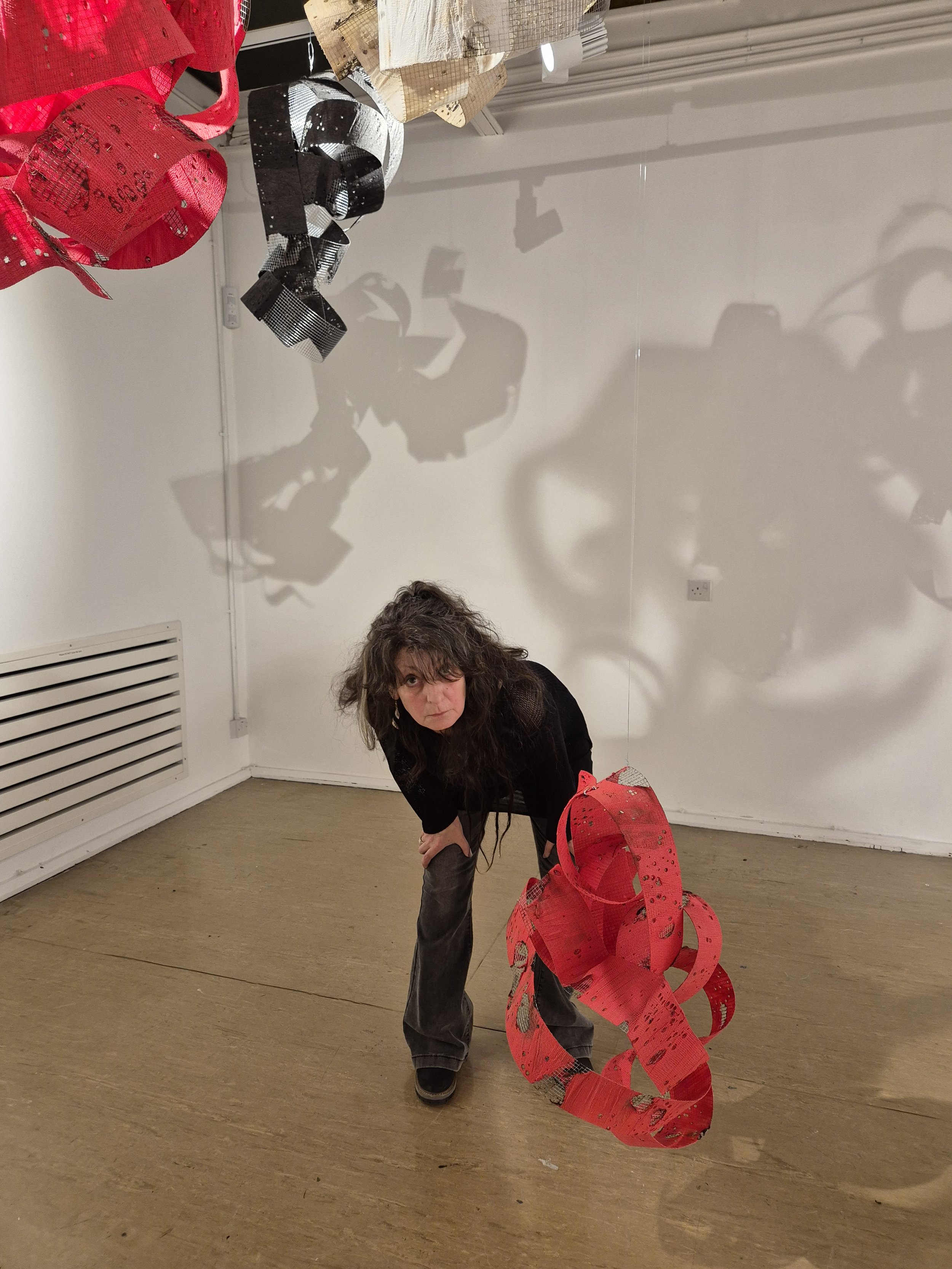
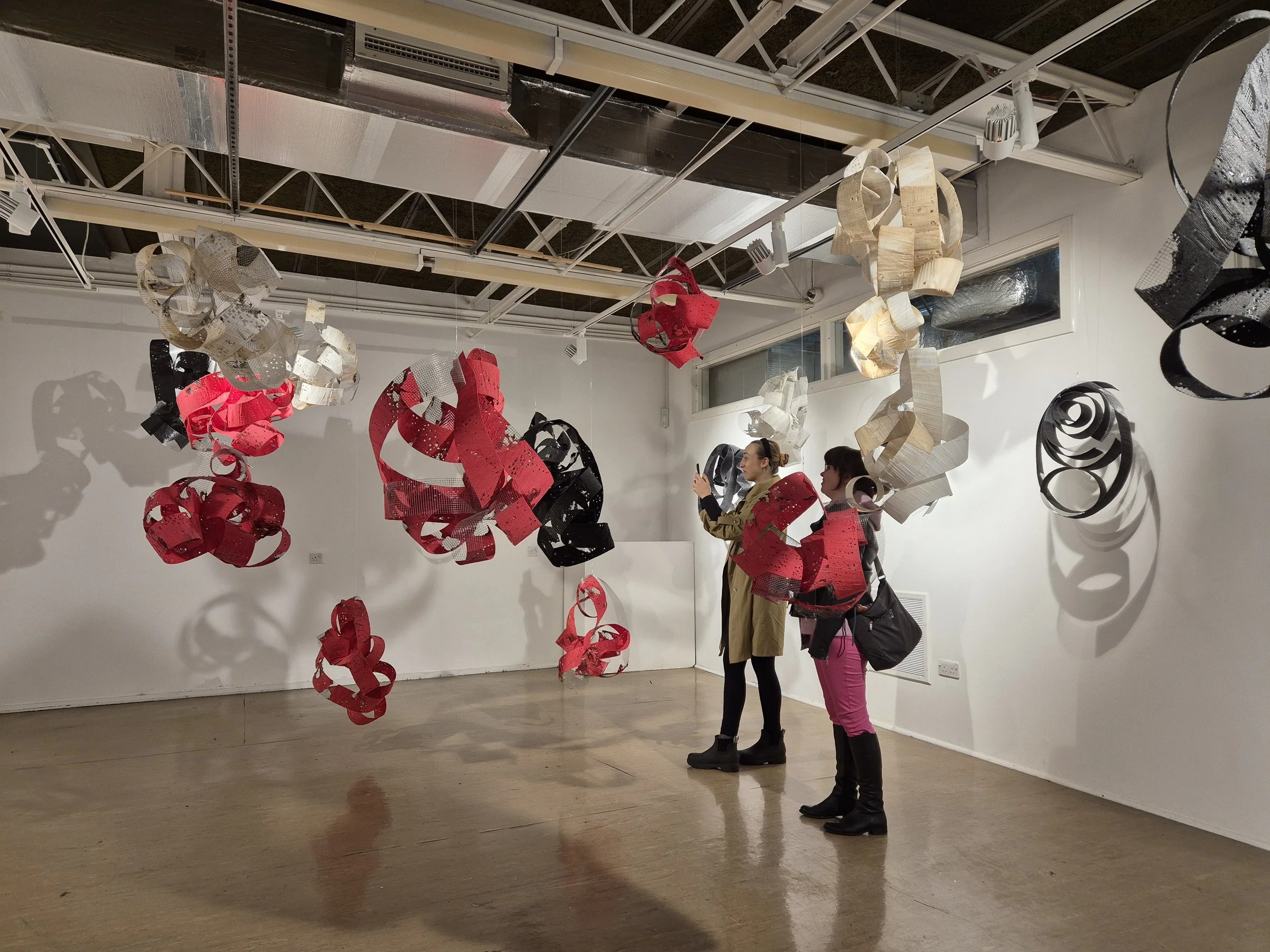
Bulletts and Bandages 204
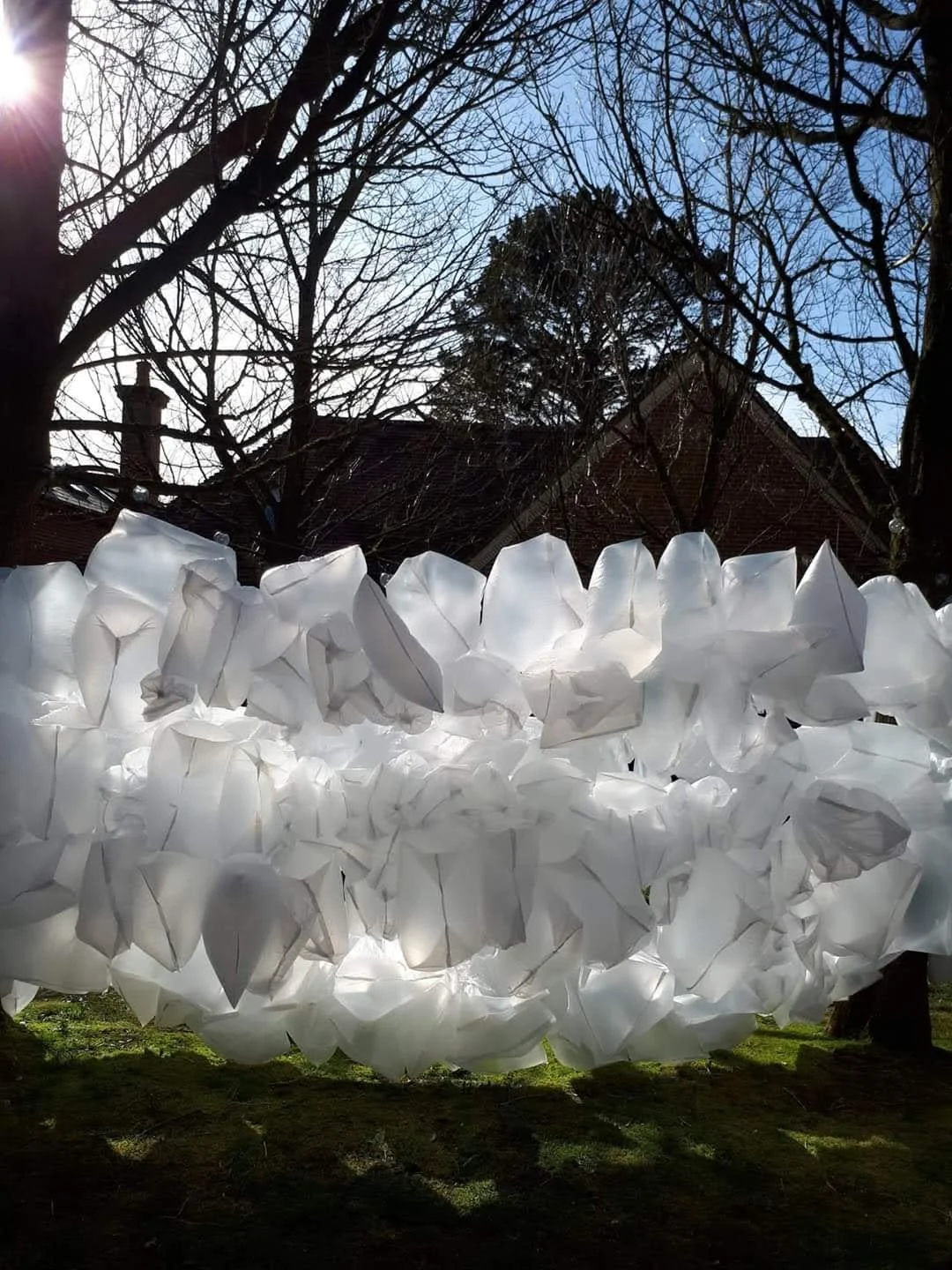
The White Bags New Forest
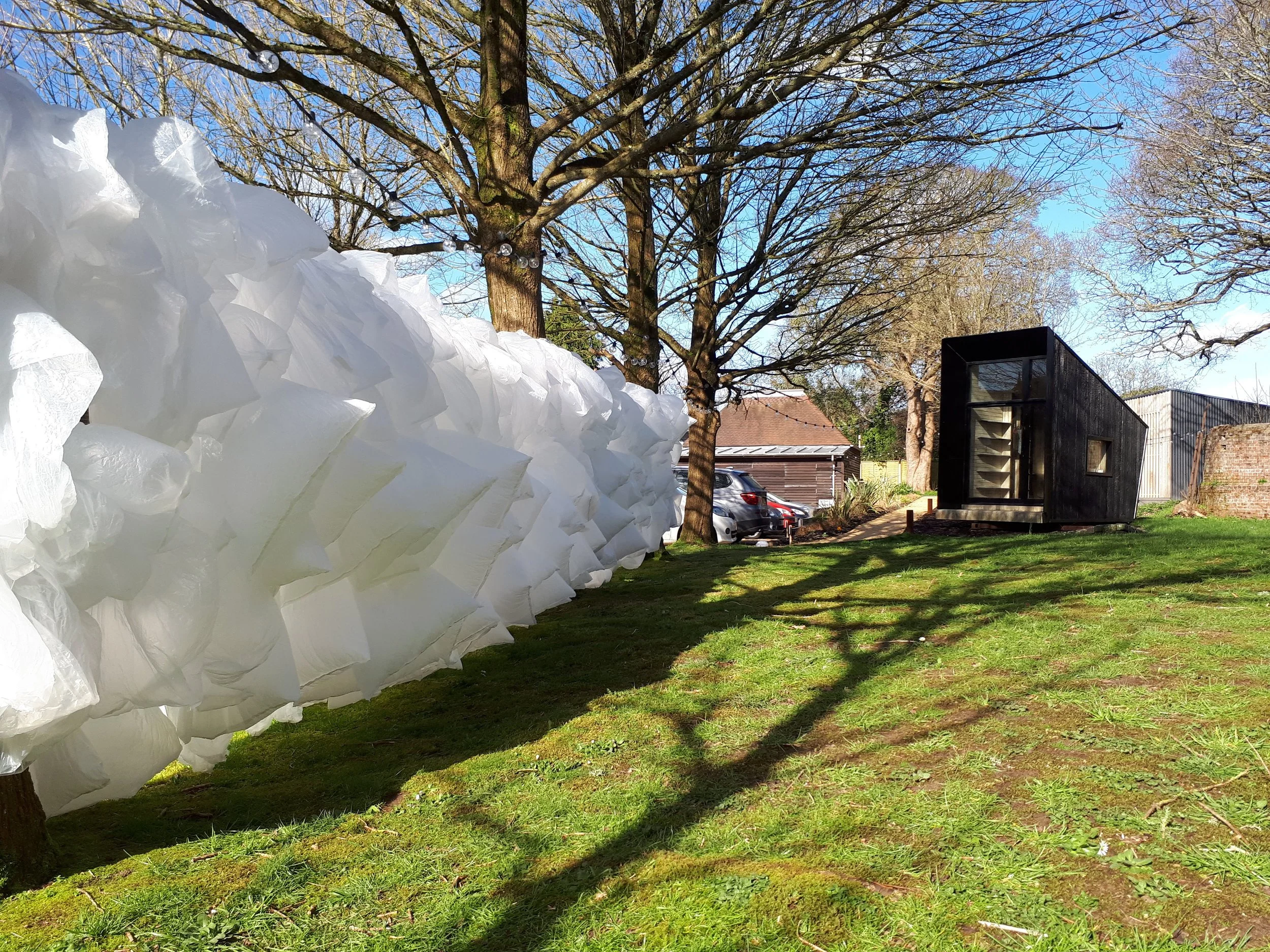
The White Bags New Forest
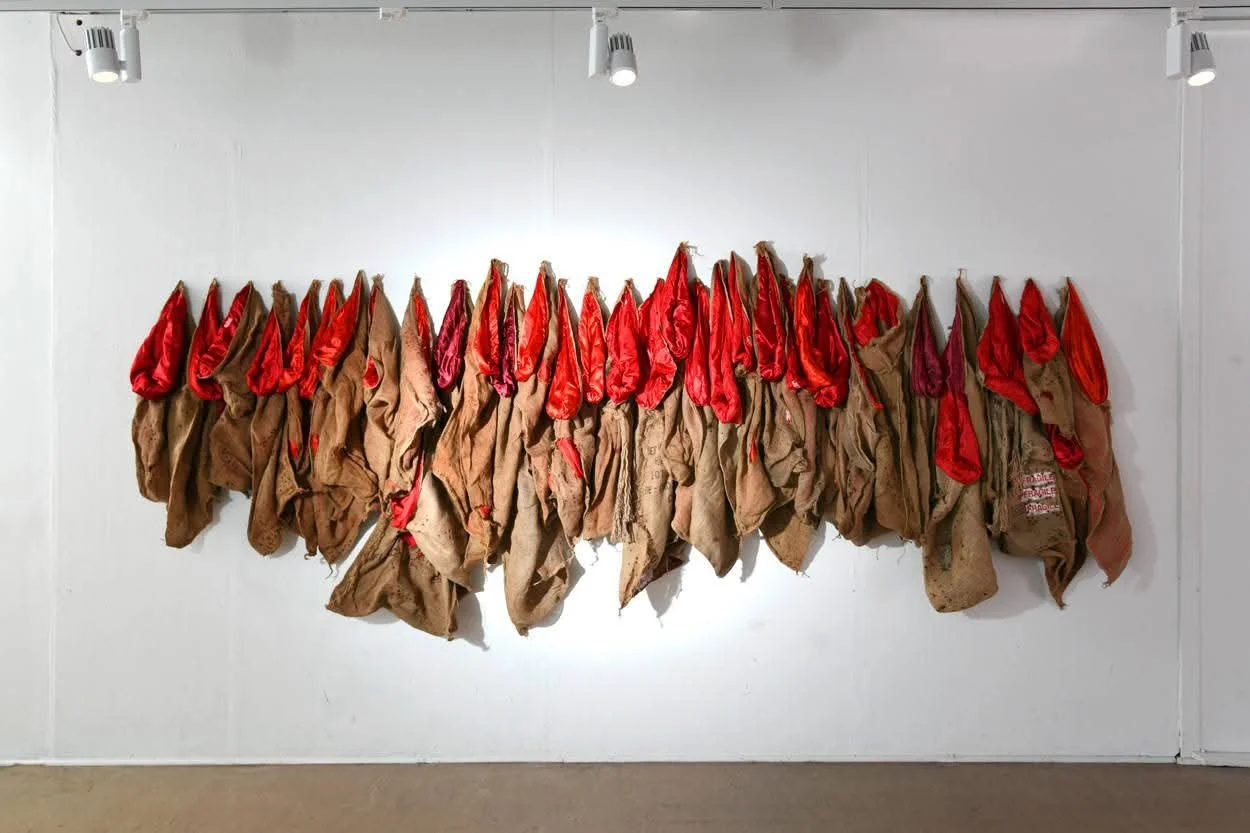

The 124 DETAIL
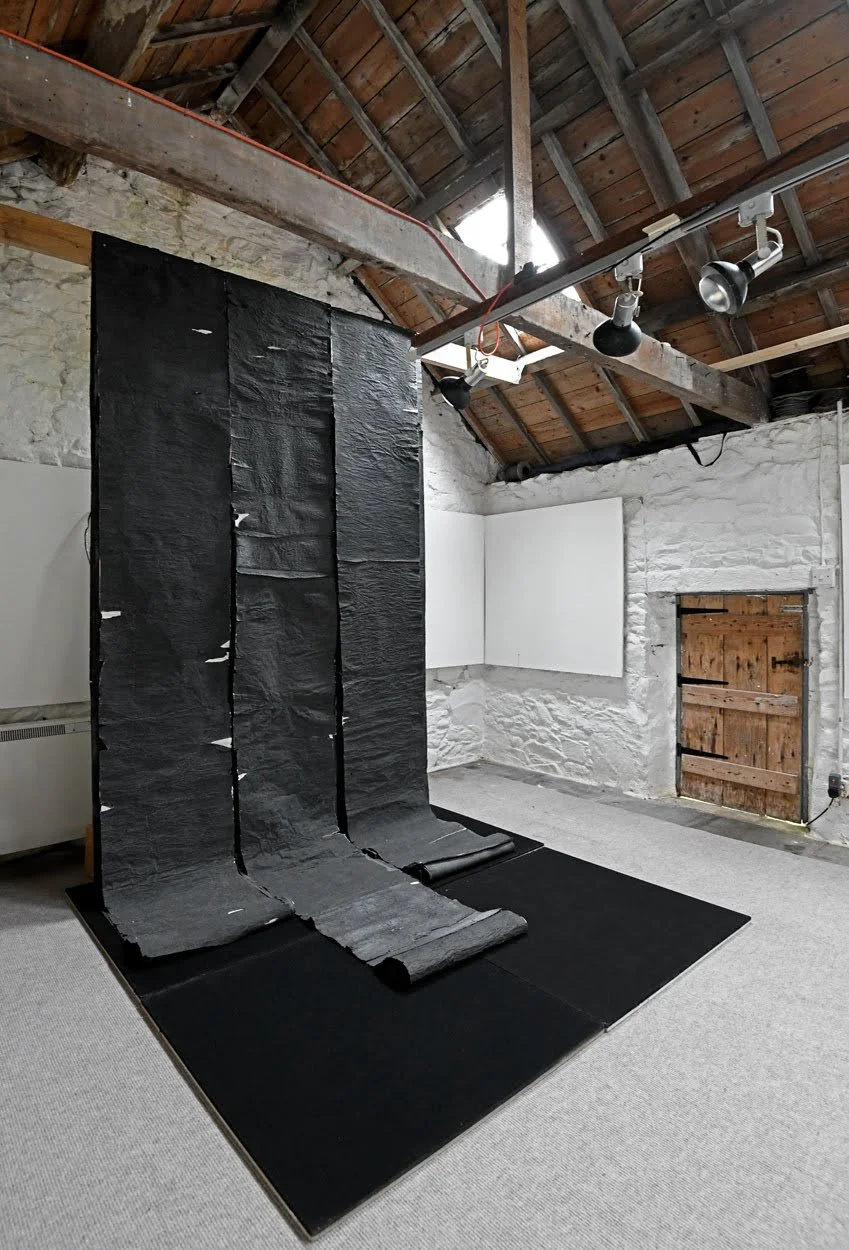
Descent of Man
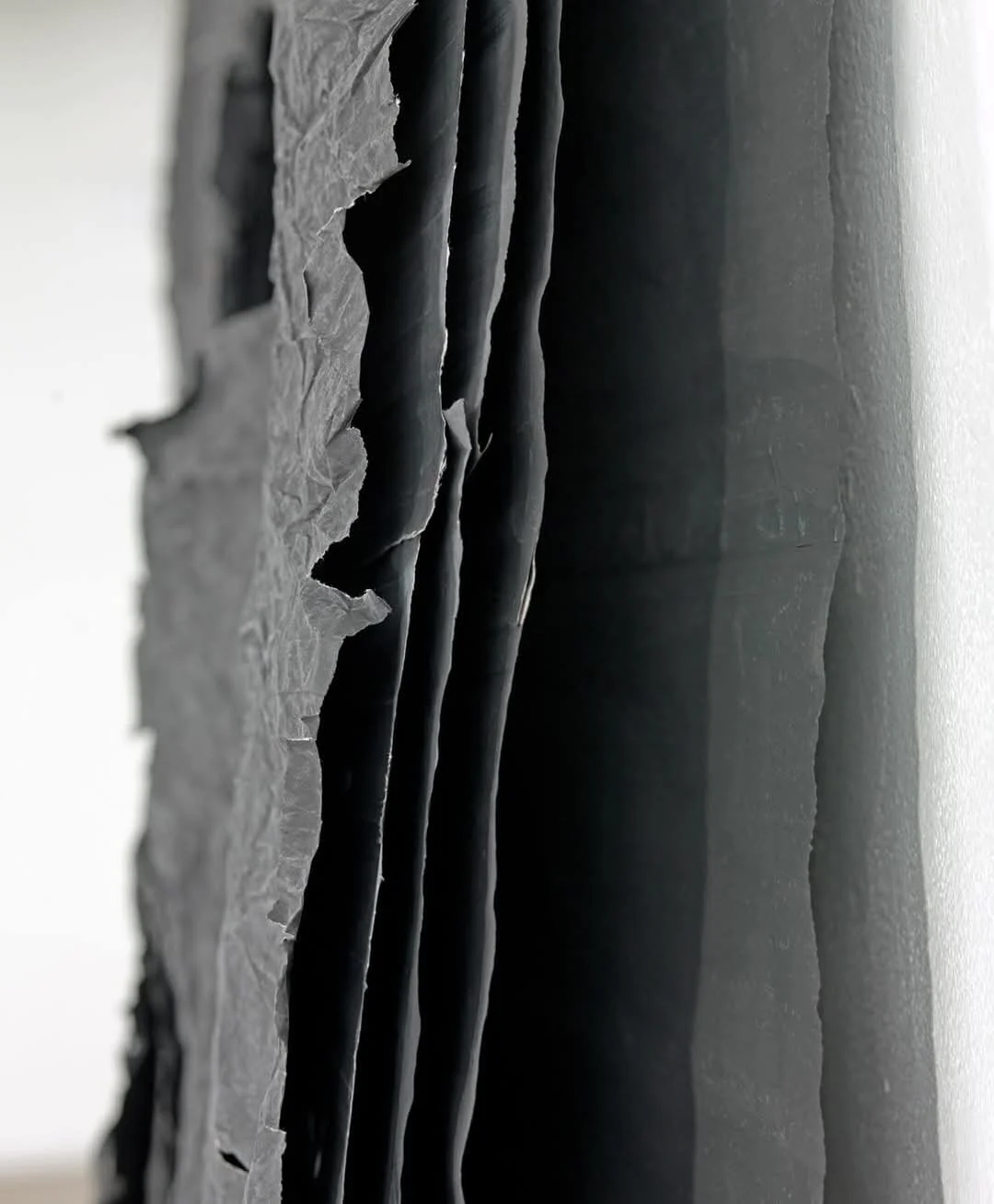
Descent of Man
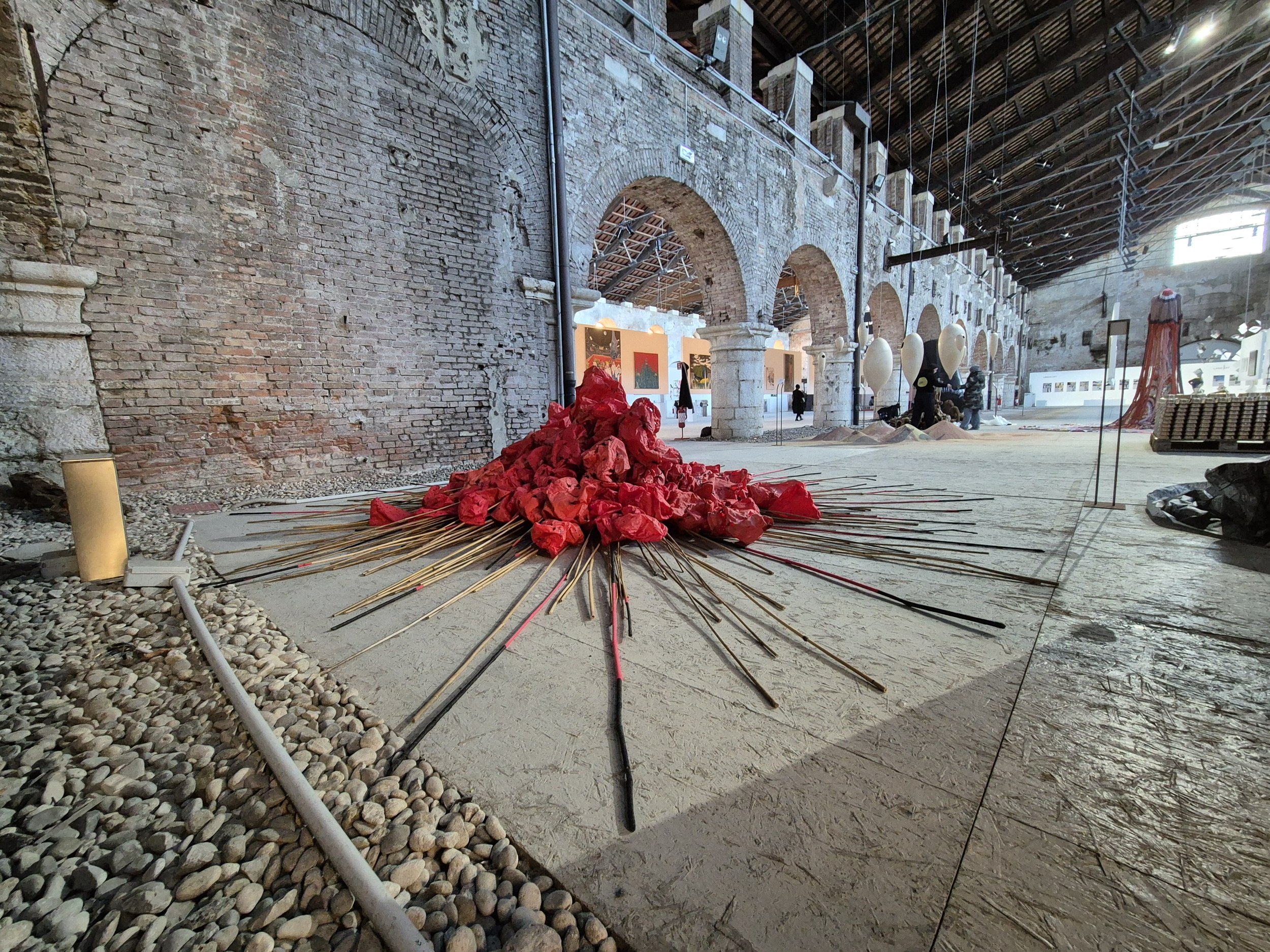
The Red Bags Laguna Arte Prize Venice
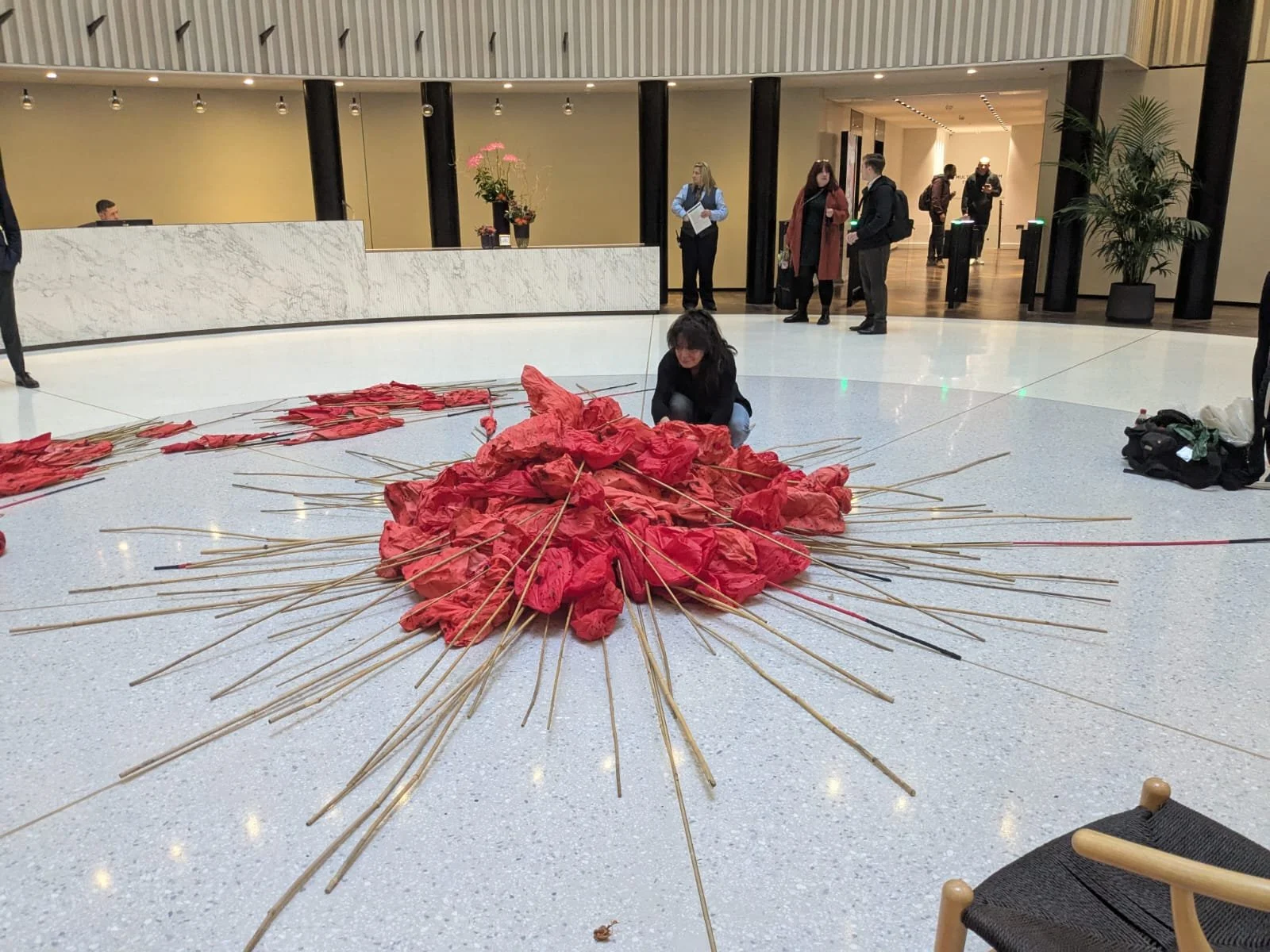
Setting up the Red bags VAO 2025
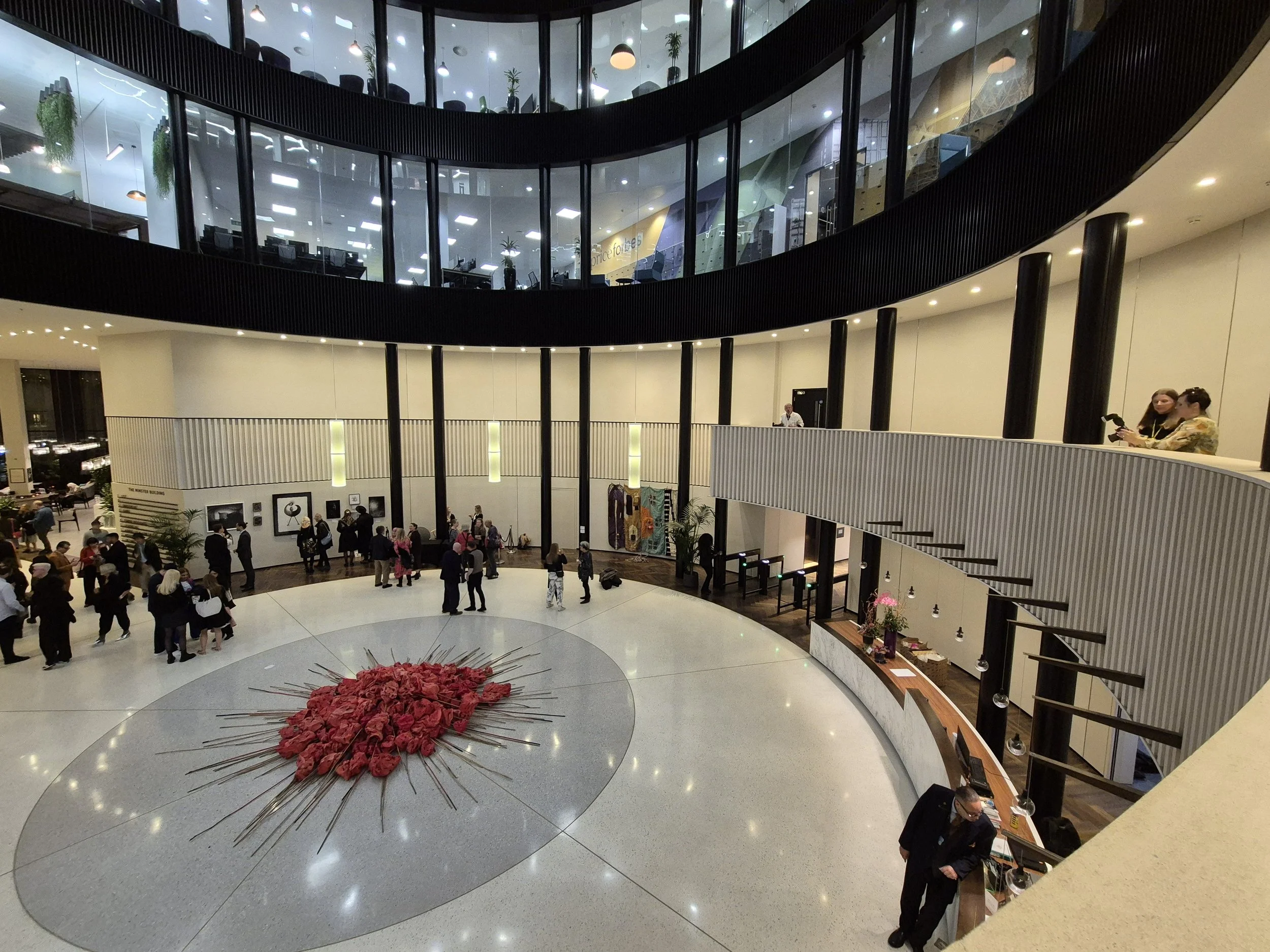
Red Bags VAO 2025
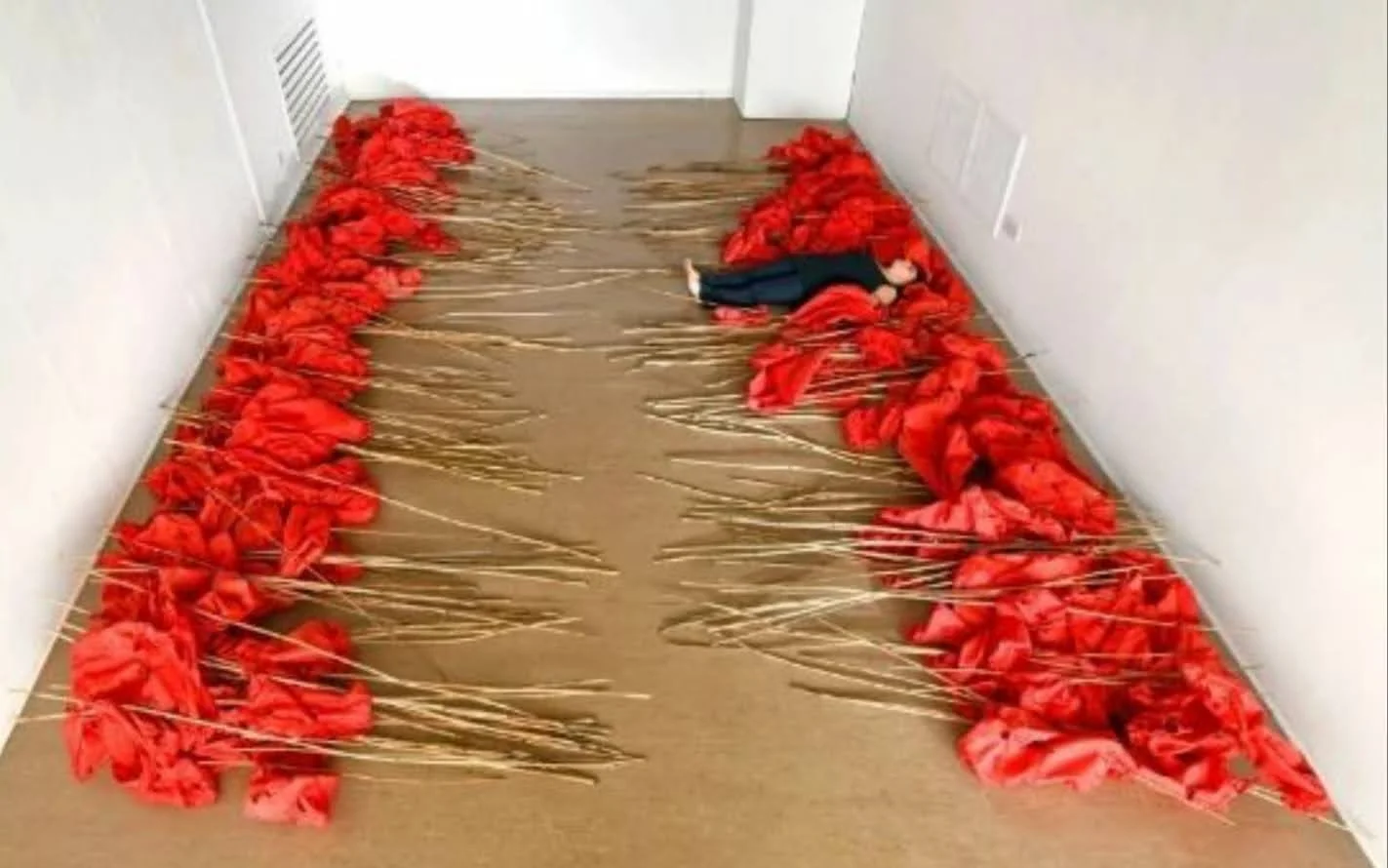
The Red Bags Gracefield Arts Centre
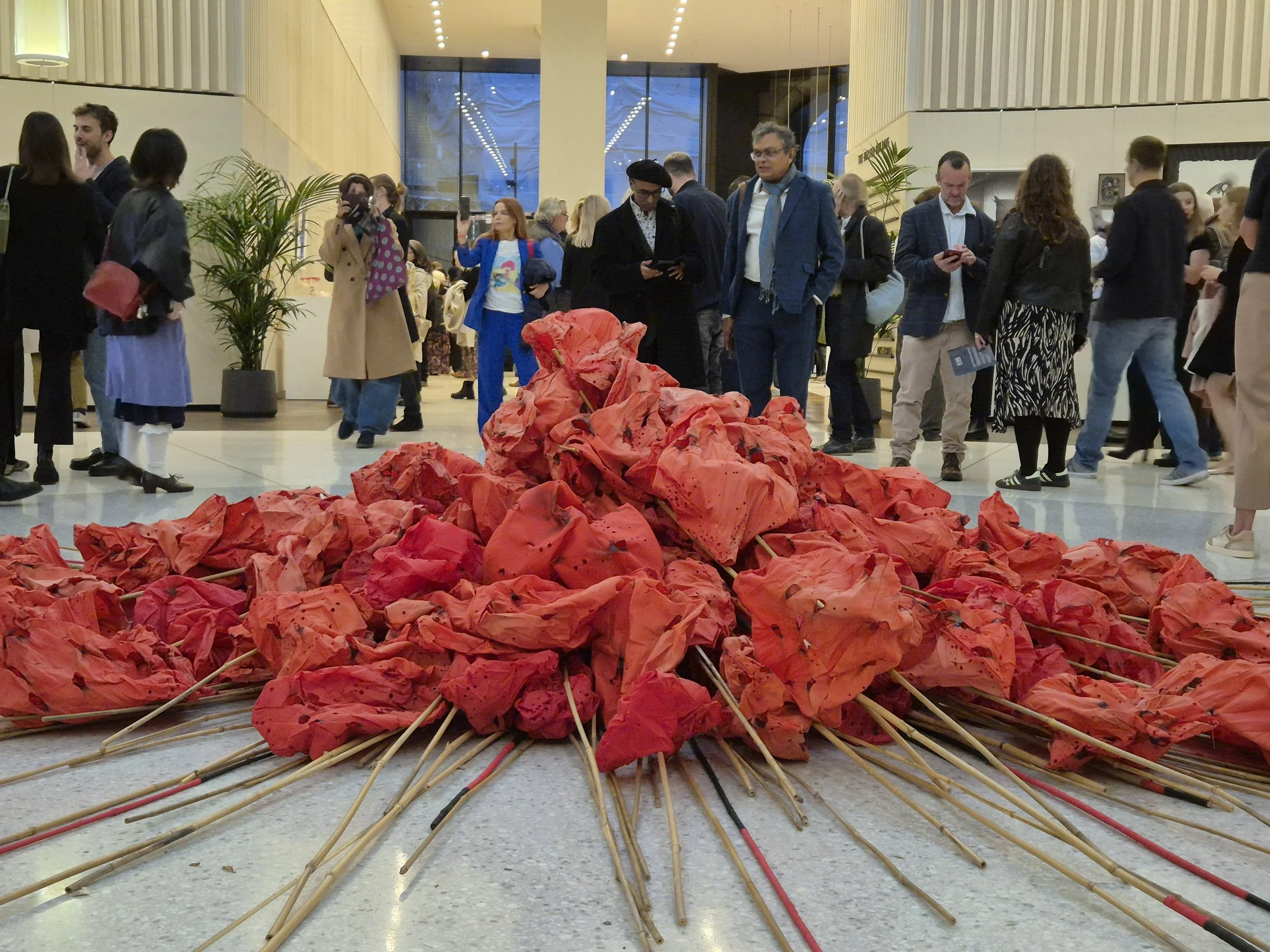
The Red Bags Minster Building London 24
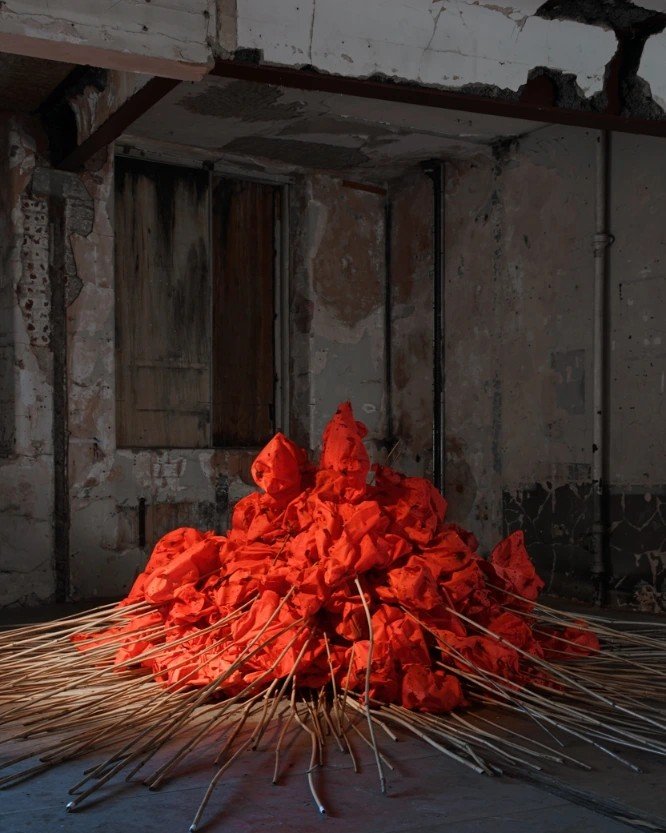
The Red Bags Oxo Tower
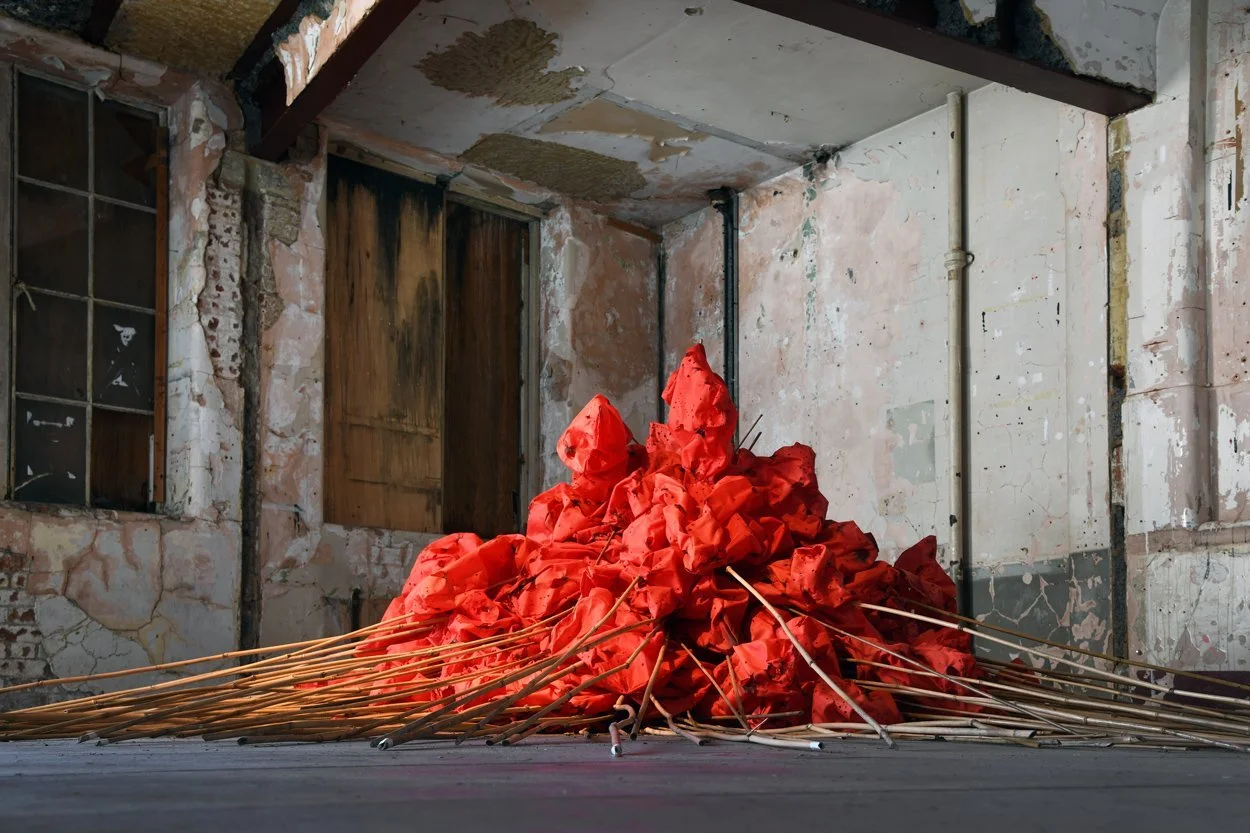
The Red Bags Oxo Tower
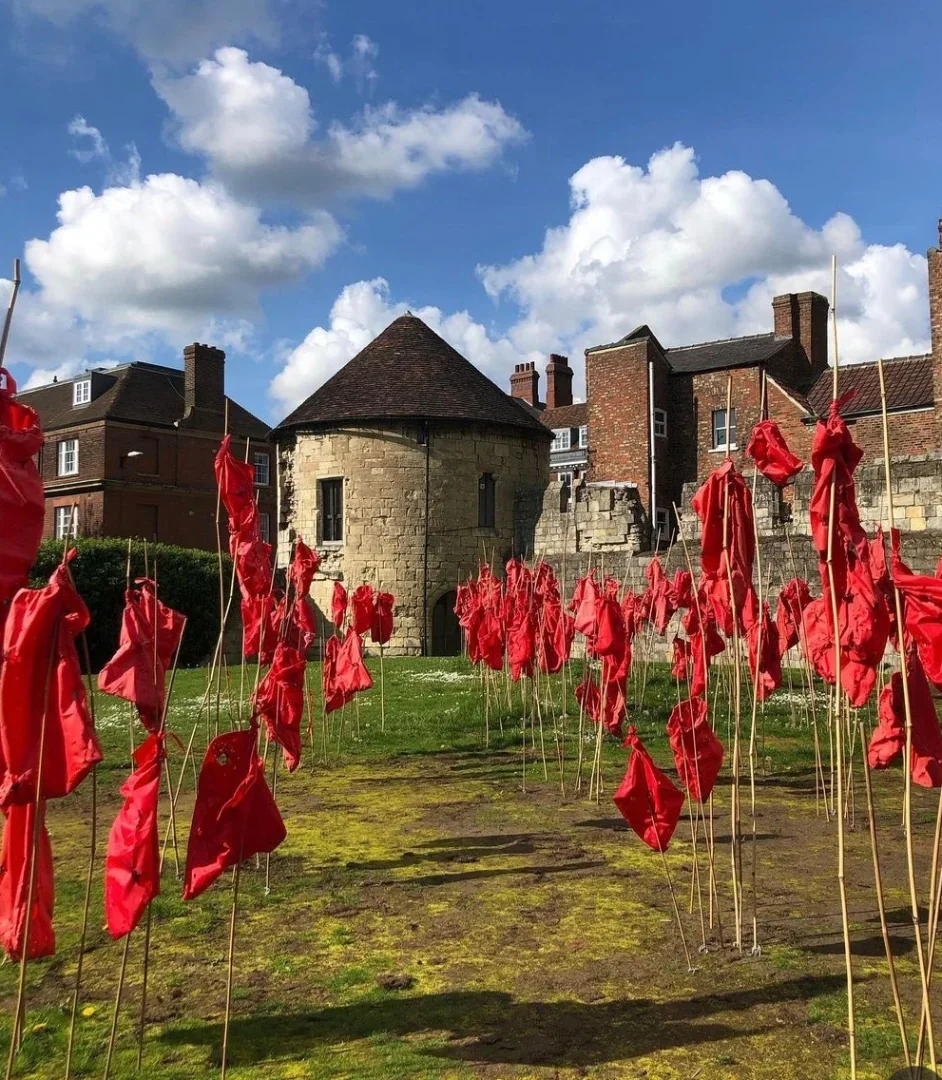
The Red Bags York
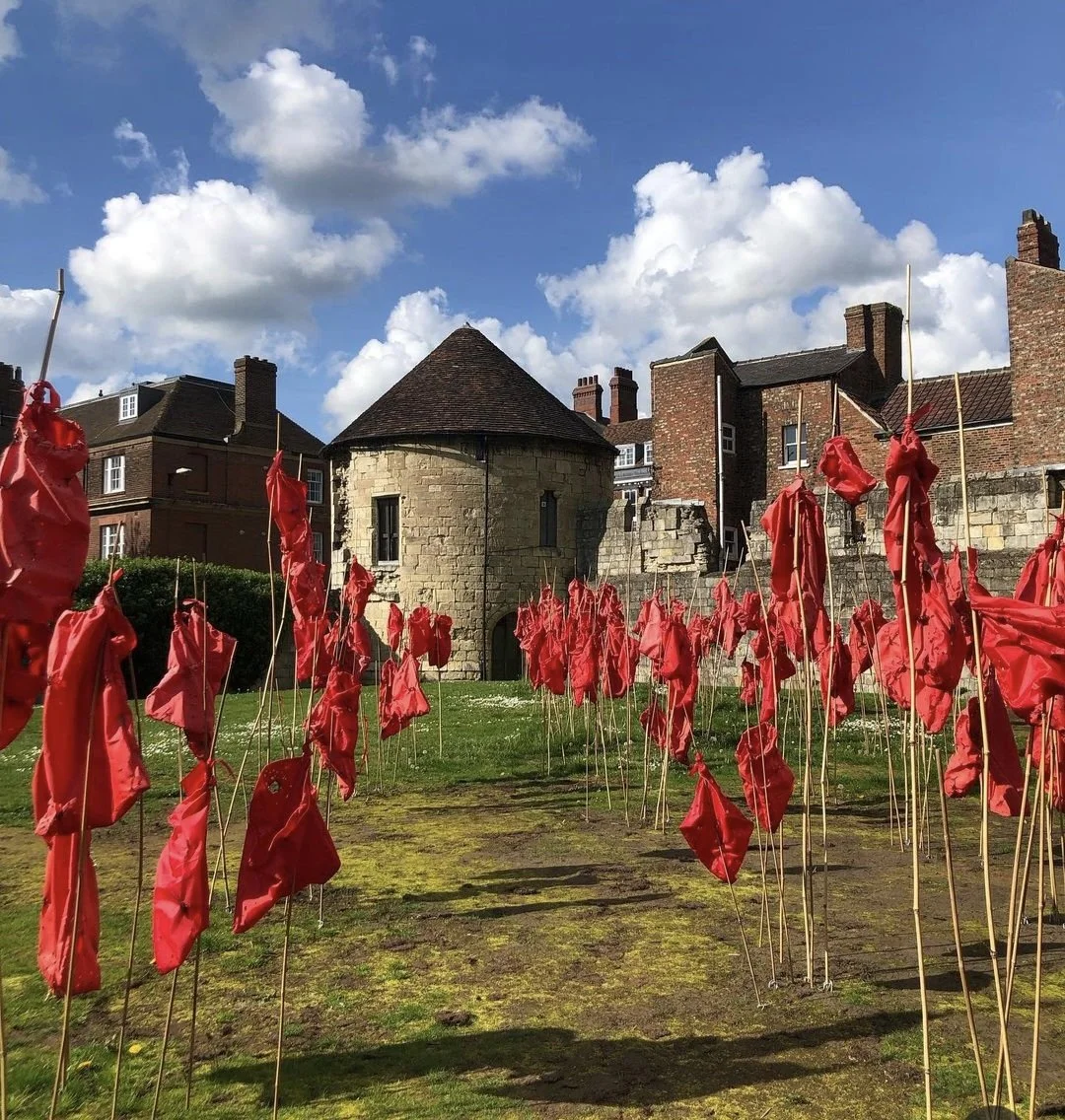
Red Bags York Aesthetica 2024