Interview with Aline Pouget
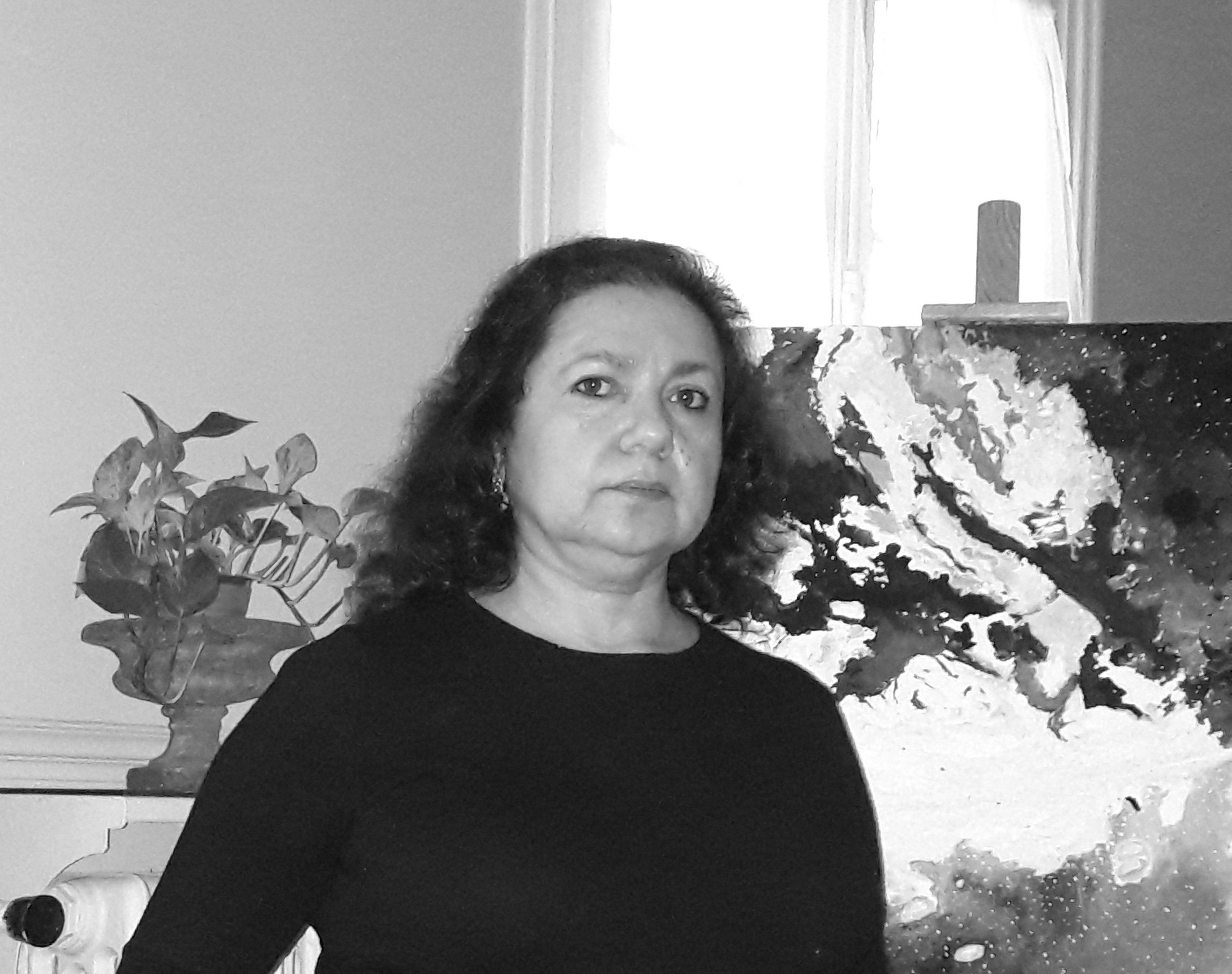
http://alinepouget-artiste.net/
My happiness and my fulfillment are to share my passion, my love of life, the universe, the colors, the light and my multiple emotions with others through my work.
Aline, your paintings inhabit a fluctuating space where the terrestrial and the celestial, the urban and the organic, seem to collapse into a single perceptual field. In a moment when contemporary painting is often pressured toward either narrative clarity or conceptual opacity, how do you cultivate this interstitial zone, this atmospheric “between” in which the recognizable emerges from dissolution and the imaginary recalibrates the real?
For me, we are part of a whole in which everything is connected. In this universe, where everything exists in symbiosis, in movement, and in perpetual change, I place myself at the intersection between the real and the imaginary dimensions of our universe, capturing the distinct and opposing atmospheres of these two realms within a single whole.
Your chromatic strategies, radiant pigments, layered luminosity, and densely emotional tonalities operate almost as autonomous grammar within your compositions. To what extent does color function for you as an epistemological tool, a way of knowing the world, rather than simply depicting it? And how do these chromatic intensities mediate the oscillation between abstraction and the vestiges of figuration that recur in your work?
I have an all-consuming passion for color. It allows me to describe and decipher the world and also to express my intense emotions. It also helps to unveil our world and our universe as a musical orchestration. It pushes us to reveal the real and the imaginary according to its intensity and the infinite choice of its nuances.
Having exhibited in such symbolically charged sites as the Vatican Chancellery, the Whitney in New York, and major biennials across Europe, your work consistently enters conversations shaped by spiritual, historical, and cultural gravitas. How do these contexts inflect your understanding of painting as both a personal act of introspection and a public gesture of aesthetic responsibility?
My work reflects my sensitivity to the beauty of nature and the universe. My passion for colors allows me to manifest, through my paintings, all my thoughts on life and all my feelings. I try to convey through them all my complex ideas and sensations about our universe. The power of colors reveals real and infinite meanings and messages of universal existence.
Your canvases often stage a dynamic interplay between dissolution and structure, gestural expanses that threaten to break apart, countered by axial forces or “lines of flight” that reorient the gaze. Could you speak about this tension as a philosophical proposition? Does this oscillation reveal a worldview, perhaps even an ethical stance, on instability, order, and the fragile architecture that underpin human experience?
Our human existence, like the material existence of all things, has a limited duration within the infinite temporal dimension. Every structure in our universe has a life, a brilliance, and then dislocates and disappears. The transience of life challenges us about the fundamental reasons for our existence, our birth, our actions, and then our disappearance. Our ephemeral existence shows both the fragility and the importance of human experiences, as well as the usefulness of every universal element.
The motif of duality, especially the ethical tension between good and evil, appears as a conceptual engine in works such as Infinite and Peace and Universal Conscience. In your practice, how do you navigate the challenge of rendering metaphysical or moral forces visible without succumbing to symbolic literalism? What visual strategies allow these ideas to remain open, porous, and interpretively alive?
For me, justice and the duality of good and evil are intrinsic vectors of my own conscience. I associate my ideas with colors and pictorial forms. I use certain shapes as well as colors, whether neutral, such as white or black, or very bright and intense.
Your painting demonstrates an insistence on reconciling natural, urban, and cosmic lexicons within a unified pictorial ecology. Do you consider your canvases a form of cosmopoetics, where disparate ontologies converge? And if so, how does this triadic relationship, nature, city, cosmos, mirror your own lived negotiation between rural sensibility, metropolitan experience, and a broader universal consciousness?
I consider my paintings as a hymn to the universe that makes up this triadic relationship within it. I am as sensitive to the pictorial beauty of nature and the exuberant and changing constitution of cities as I am to the moving magnificence of the cosmos. All these realities that contribute to our refuge shelter us, amaze us, and help us realize ourselves as much in our actions as in our states of mind.
Despite the magnitude of your international recognition, including distinctions such as the Golden Lion and inclusion in significant institutional archives, your process appears deeply rooted in solitude, intuition, and emotional transparency. How do you maintain the integrity of that inner space of creation while navigating the external expectations, mythologies, and cultural narratives that inevitably follow such acclaim?
I continue to follow my vision, my instinct, and my happiness in sharing my feelings. I am very solitary in my work despite a great deal of international expectations placed upon me. In front of my canvas, with my brushes in hand, all that counts is my concentration and my revealed intuitions.
Much of your work seems propelled by a desire to restore wonder, an affective state that contemporary visual culture often treats with suspicion or dismisses as naïve. In your view, what role does enchantment play in contemporary art today? Can an aesthetics of beauty and emotional resonance still function critically in a world marked by fragmentation, acceleration, and existential instability?
For me, it is precisely beauty and sensitivity that are and will always be vectors of balance and absolute pursuit. All the more so in our accelerated, fragmented, and unstable world. It is beauty that will save the world and that is the backbone of existence. Beauty and art neutralize differences, hatred, and human violence.
Your paintings often convey a sense of motion suspended, energetic brushwork that suggests both emergence and disappearance, as if the image were caught in the act of forming itself. How does temporality operate in your work? Are your compositions attempts to fix a particular emotional instant, or do they instead aspire to visualize the continuum of sensation, perception, and memory as it unfolds?
All of this at the same time, like the existence of each entity, which includes birth, life, and then disappearance. All these temporal passages, with their emotional meanings, leave traces—perceptible traces that enrich memory and universal history.
You have described painting as a transposition of intimate emotions shaped by life’s events, yet your compositions feel neither confessional nor diaristic. How do you transform the deeply personal into something that aspires toward the universal? What mechanisms, formal, chromatic, or intuitive, allow your private consciousness to become a shared space of collective reflection?
The colors, the cosmos, the light, and the beauty of nature intuitively allow me to express my thoughts, my sensations, and my most intimate emotions on my canvases. My great sensitivity and my states of mind certainly allow my works to touch individual and collective consciences.
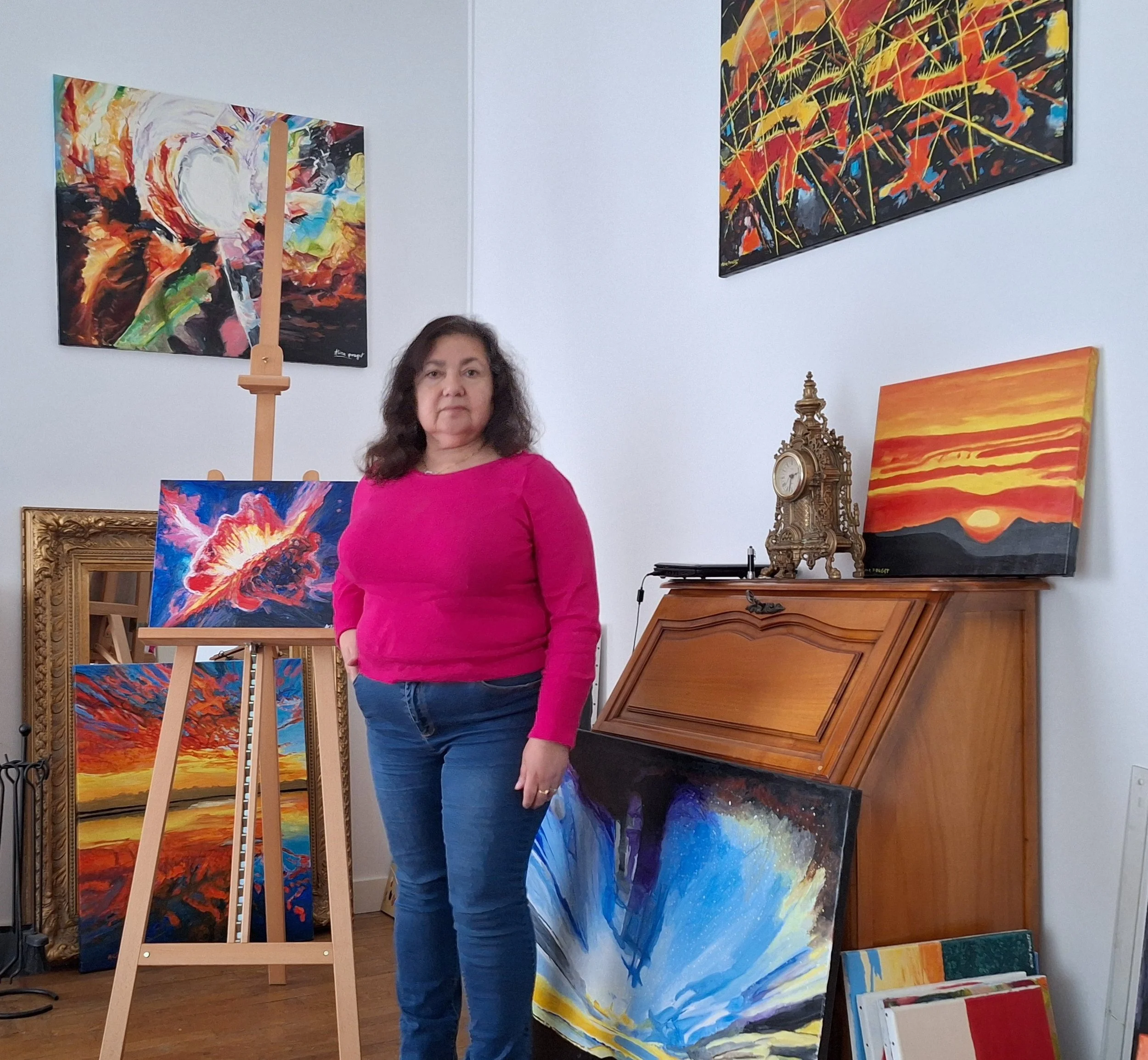
Aline Atelier
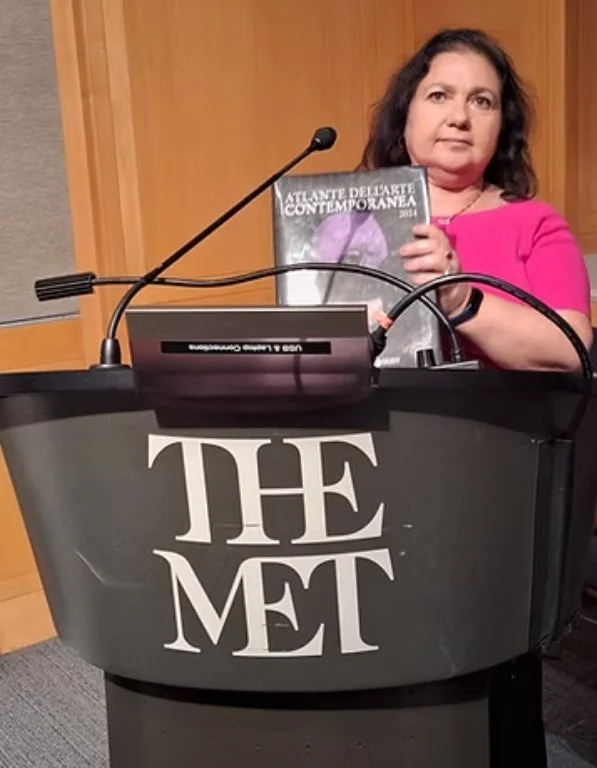
Aline MET
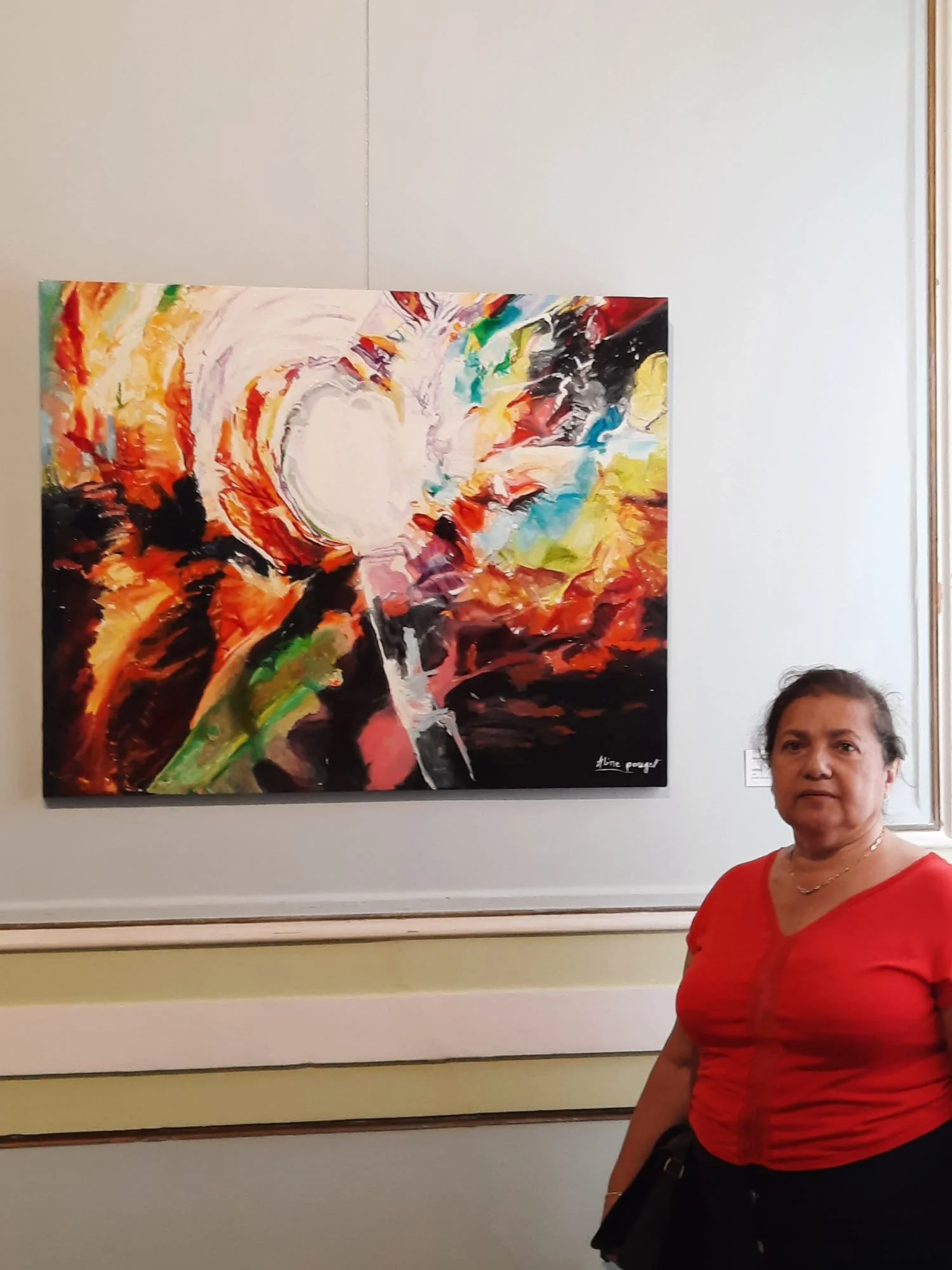
Biennale de Venice 2023
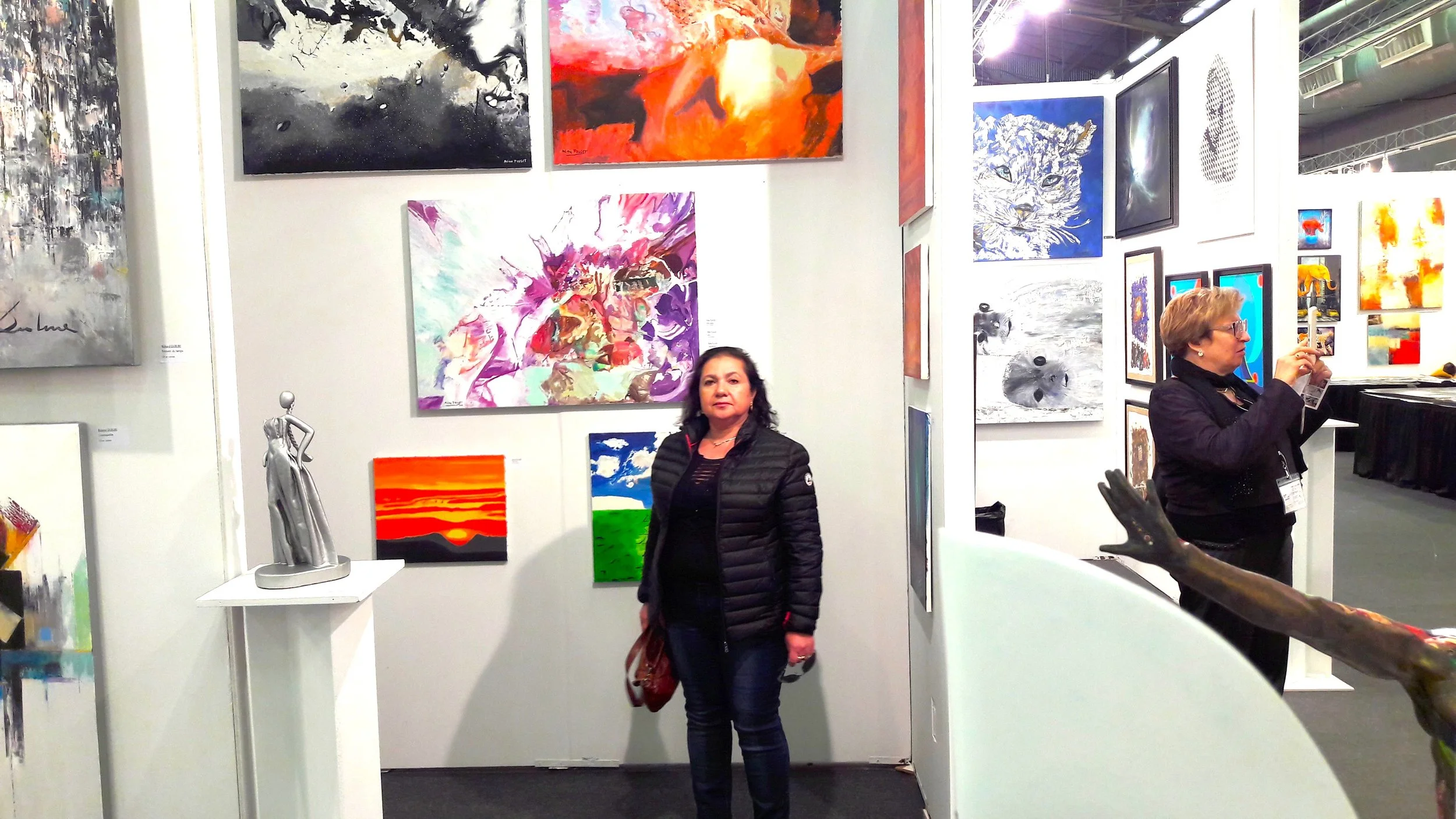
Artexpo New York
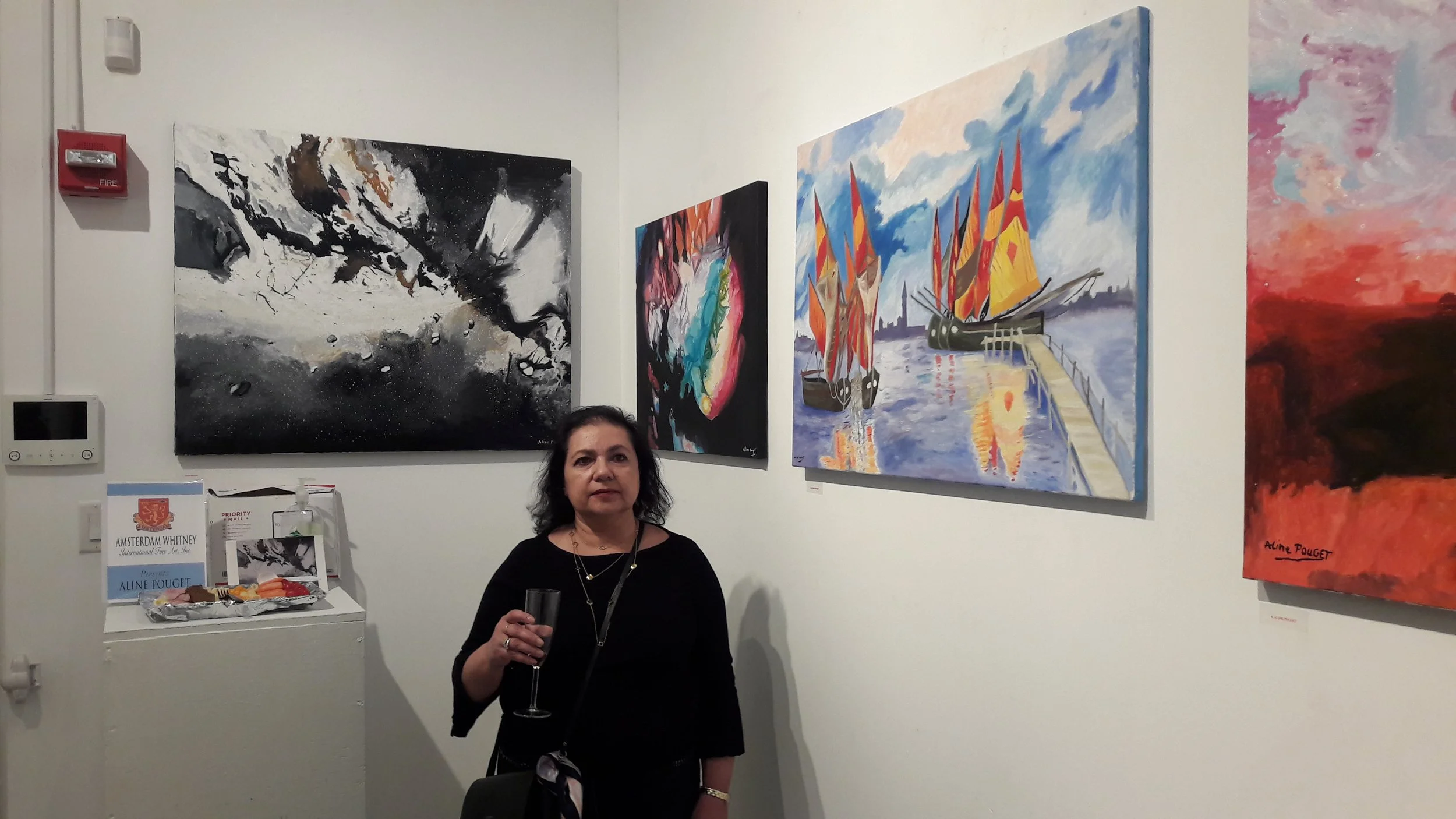
Whitney Gallery
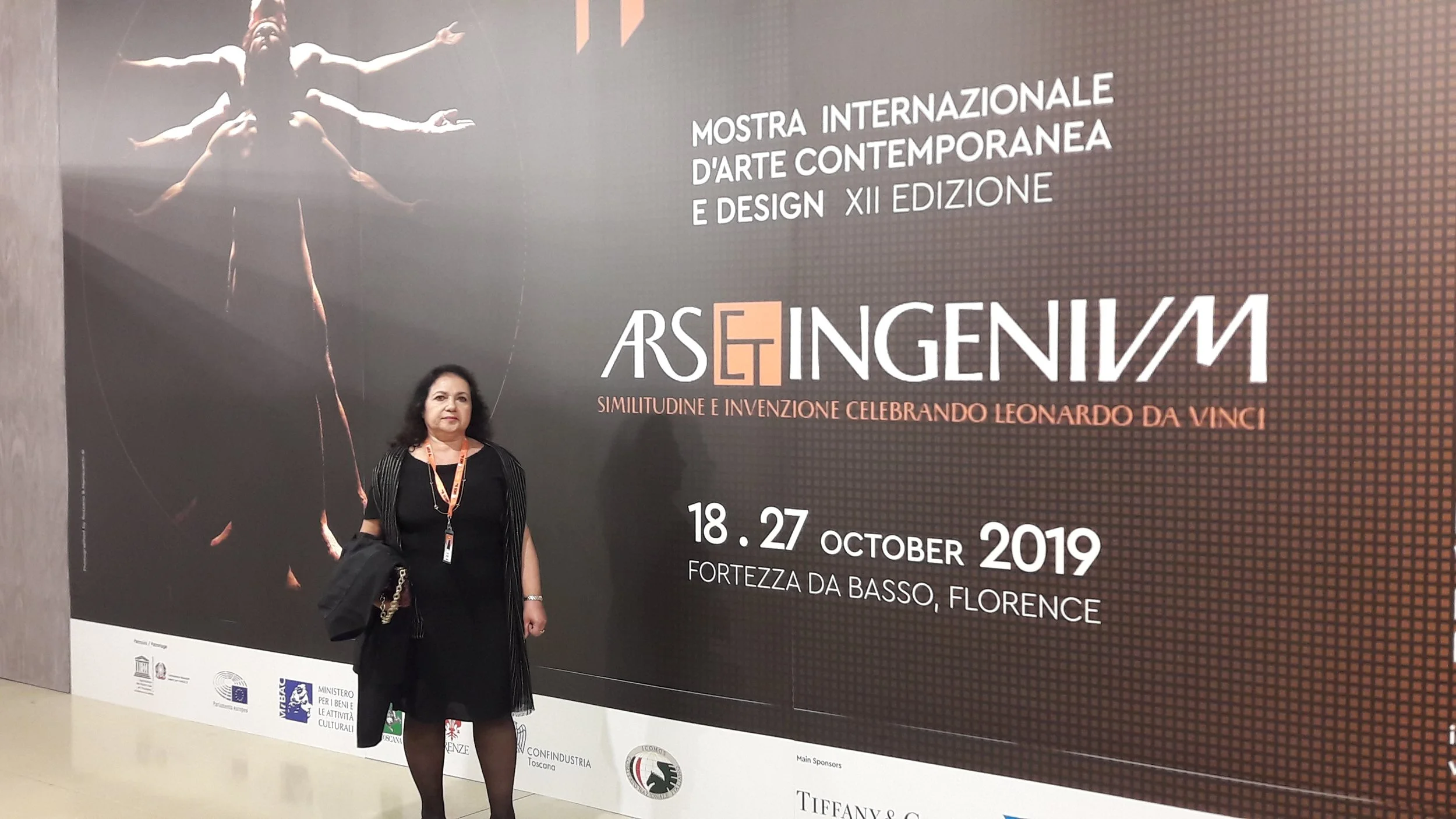
Biennale Florence
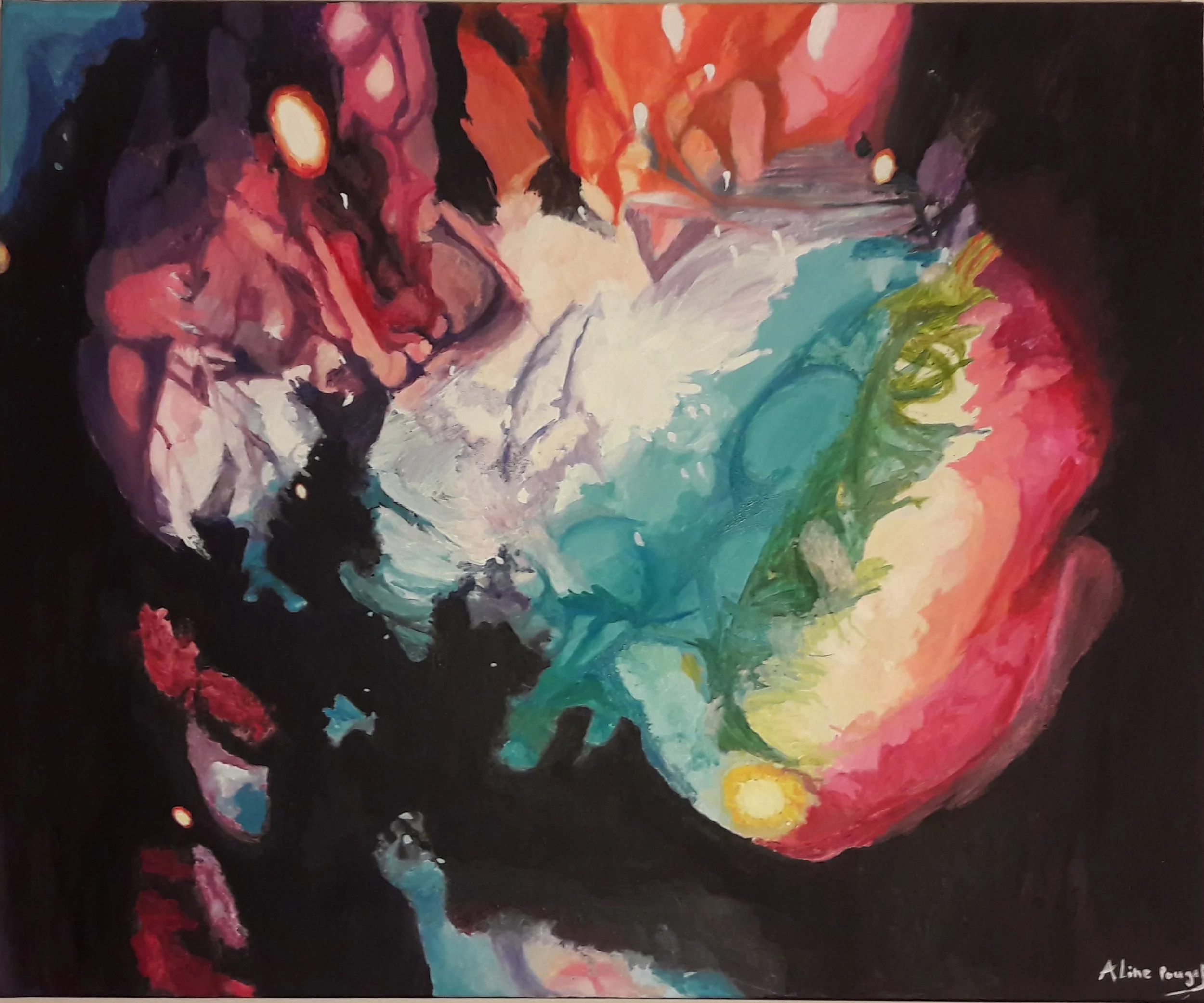
Couleurs dans l'espace, oil on canvas, 60 x 73 cm, 2018
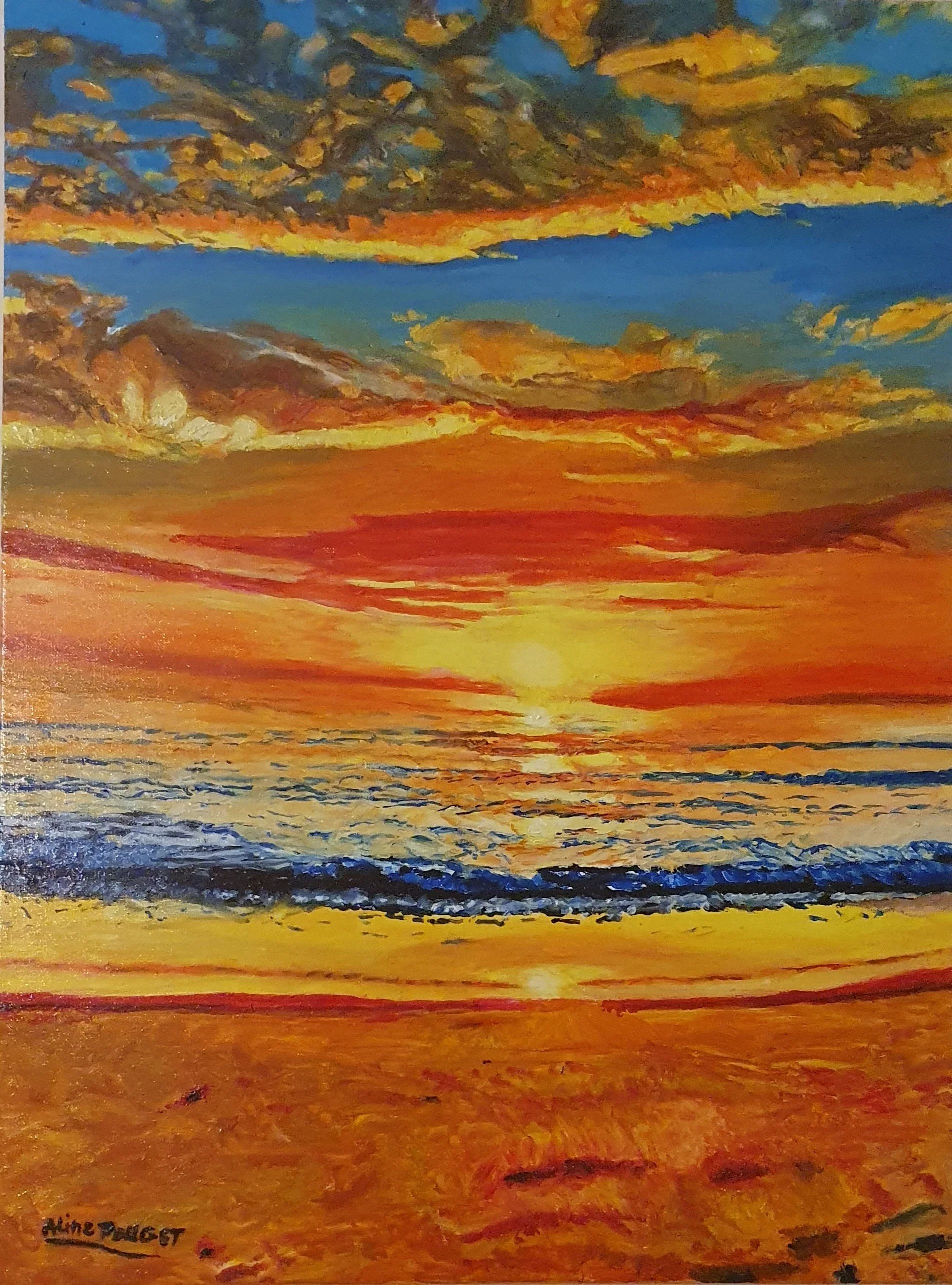
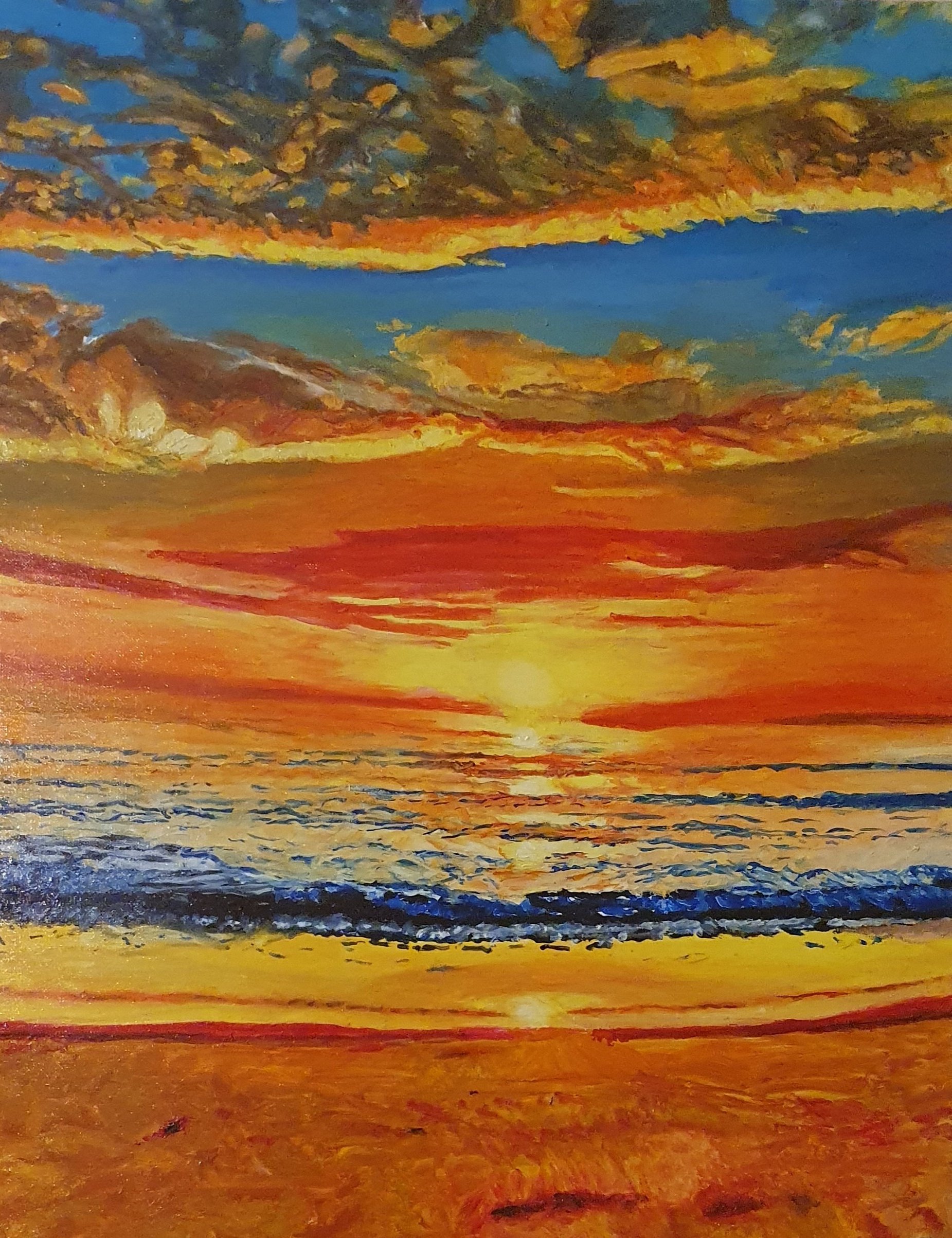
Etude d'un coucher de soleil, oil on canvas, 60 x 80 cm, 2023
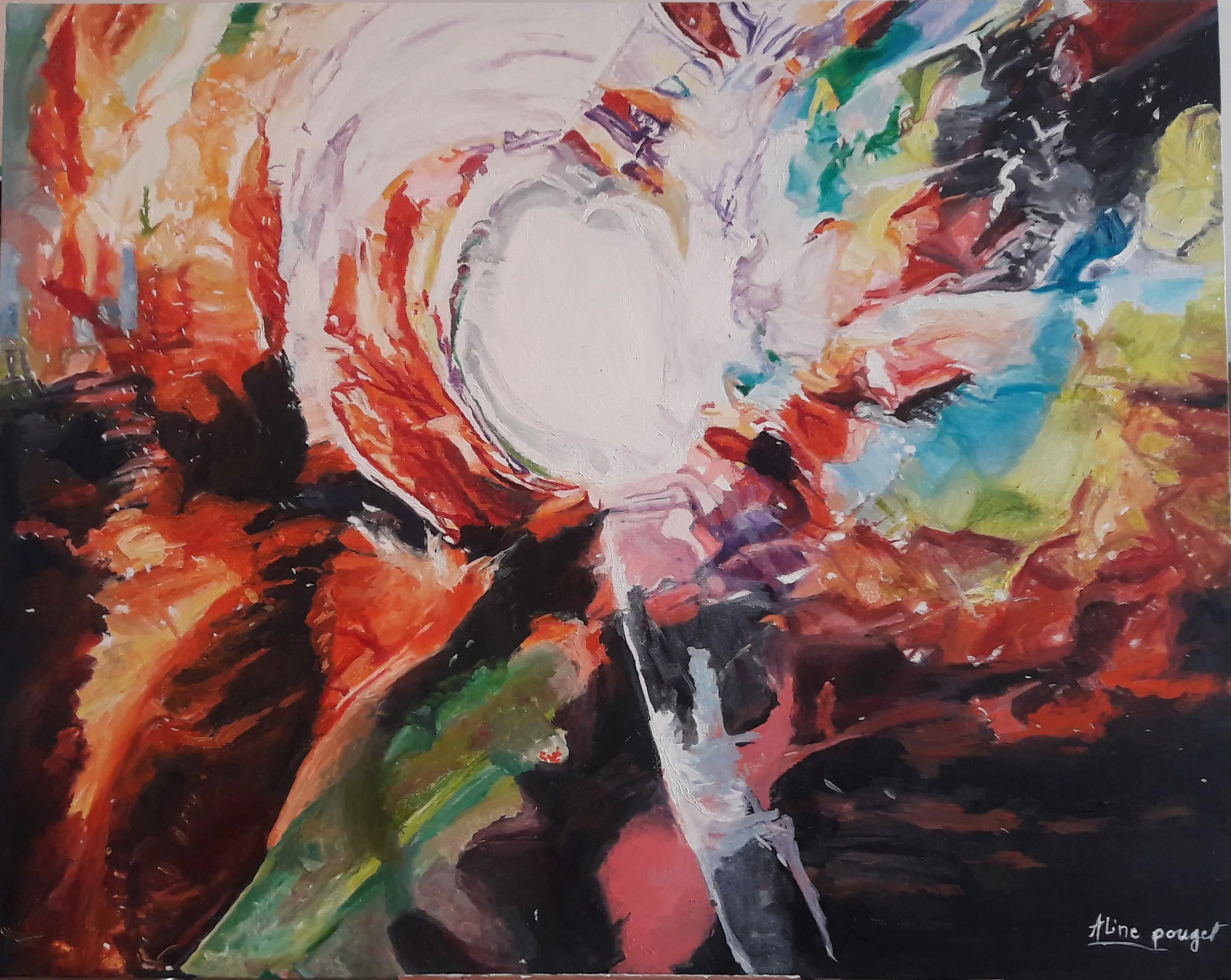
Tourbillon cosmique, oil on canvas, 92 x 73 cm, 2020
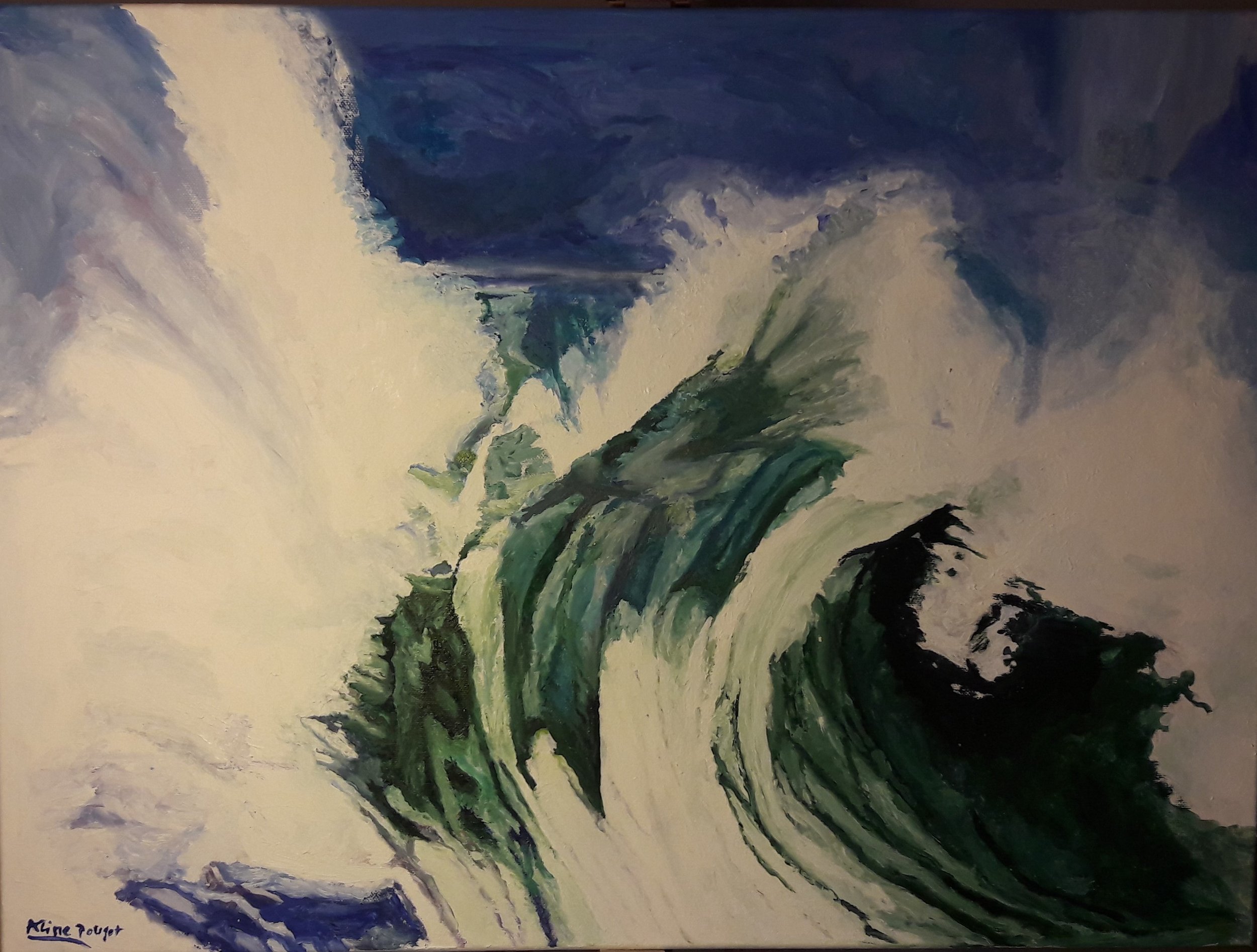
Vagues, 73 x 54 cm, 2019