Dr Natalia Jezova
In the most recent chapter of her artistic evolution, Dr Natalia Jezova arrives at a visual language that is at once intimate and archetypal, fragile and structurally rigorous. The series Dialogue and Double Vision do not merely represent a new direction in her practice; they constitute a convergence. Years of classical training, theoretical inquiry, and personal transformation coalesce into a body of work that meditates on perception as both a physiological condition and a philosophical state. Here, vision becomes subject and method simultaneously. The eye is not only the organ of sight but the site of questioning.
Educated within the disciplined traditions of painting and composition, and later fortified by doctoral research at the University of East London, Jezova’s practice has long been grounded in an engagement with art history. Her admiration for the Old Masters extends beyond reverence for their technical precision. She is drawn to their chiaroscuro, their compositional gravitas, their symbolic orchestration of colour and gesture. Yet what truly compels her is their coded subtext: the silent inscriptions of power, gender, myth, and morality embedded within seemingly stable images. In Dialogue, she does not simply quote these canonical works. She reopens them.
A decisive turning point in Jezova’s life occurred when her vision began to deteriorate. What might have marked an artistic crisis instead became a generative rupture. She now perceives the world through blurred and doubled silhouettes. This optical shift initiated a conceptual breakthrough. Superimposition emerged as her primary technique, not as stylistic flourish but as structural necessity. Layered transparencies mirror the way she sees. Overlapping forms materialize the instability of perception itself. The visual distortion becomes metaphorical: a meditation on the coexistence of clarity and ambiguity, presence and absence.
In this sense, Dialogue and Double Vision operate as complementary investigations. The former looks outward toward cultural memory and art historical inheritance. The latter turns inward, transforming personal visual limitation into aesthetic philosophy. Together, they articulate what Jezova describes as a new visual grammar. It oscillates between revelation and concealment. It asks how images construct identity and how memory is both preserved and eroded through representation.

Fig. 1, Dialogue series, 2025. Mixed media on canvas, 110 x 140 cm
Fig. 1, Dialogue series, 2025. Mixed media on canvas, 110 x 140 cm
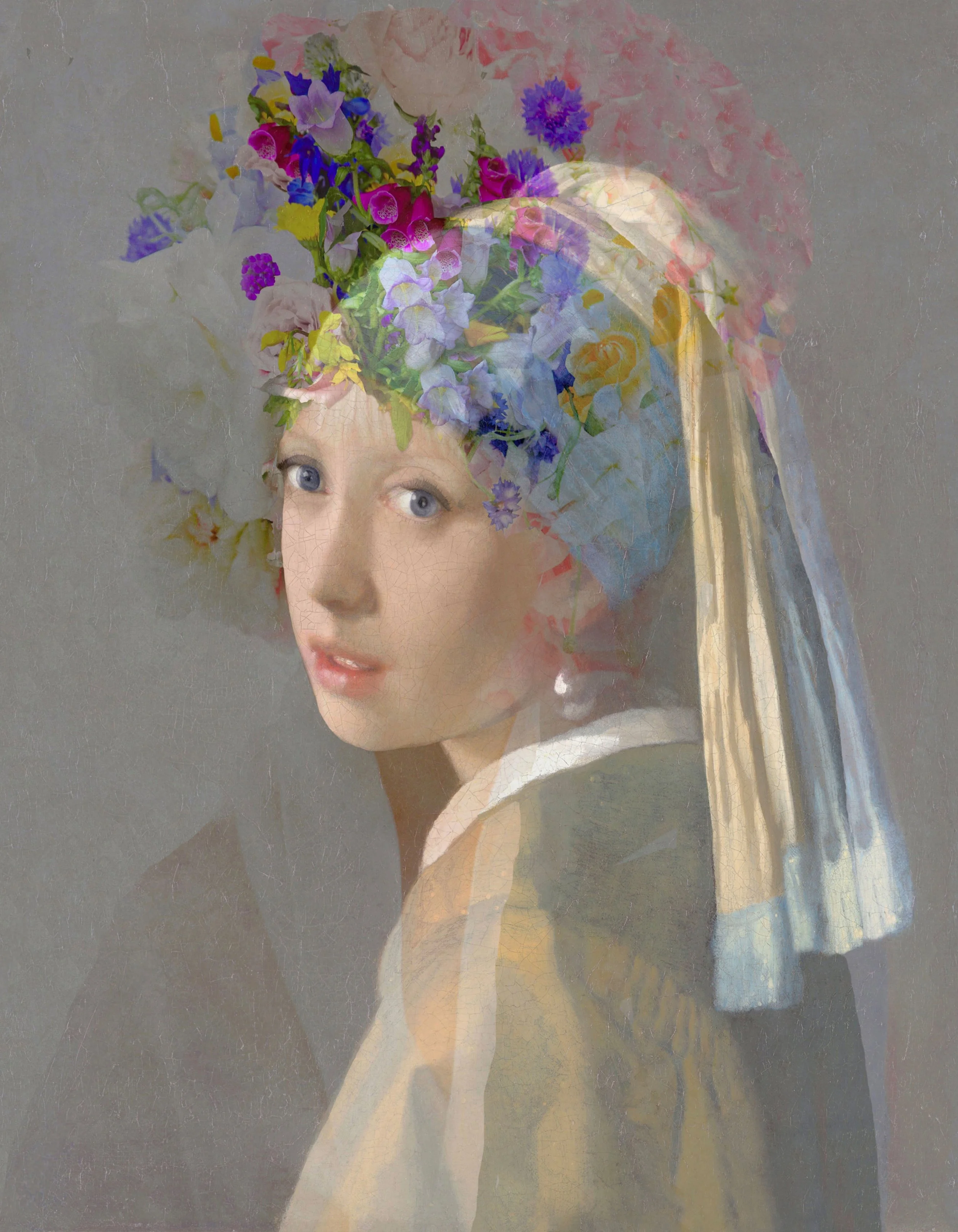
In this work, a female portrait reminiscent of Dutch Golden Age painting emerges from a mist of floral superimposition. The compositional reference to Vermeer’s Girl with a Pearl Earring is unmistakable, yet destabilized. A wreath of vibrant blossoms overlays the headscarf, transforming it into a contemporary crown. The face appears both historical and newly embodied. Jezova subtly inserts her own presence into the canonical framework. The translucent layering produces a palimpsest effect. Identity is neither singular nor fixed; it is negotiated across time.
The flowers are not decorative embellishments. They function semiotically. Their chromatic saturation interrupts the muted tonality of the original reference. Life intrudes upon stillness. The historical muse is no longer silent. She becomes a site of rearticulation. Jezova does not erase the authority of the Old Master. She converses with it. In doing so, she interrogates the encoded passivity traditionally assigned to female portraiture.
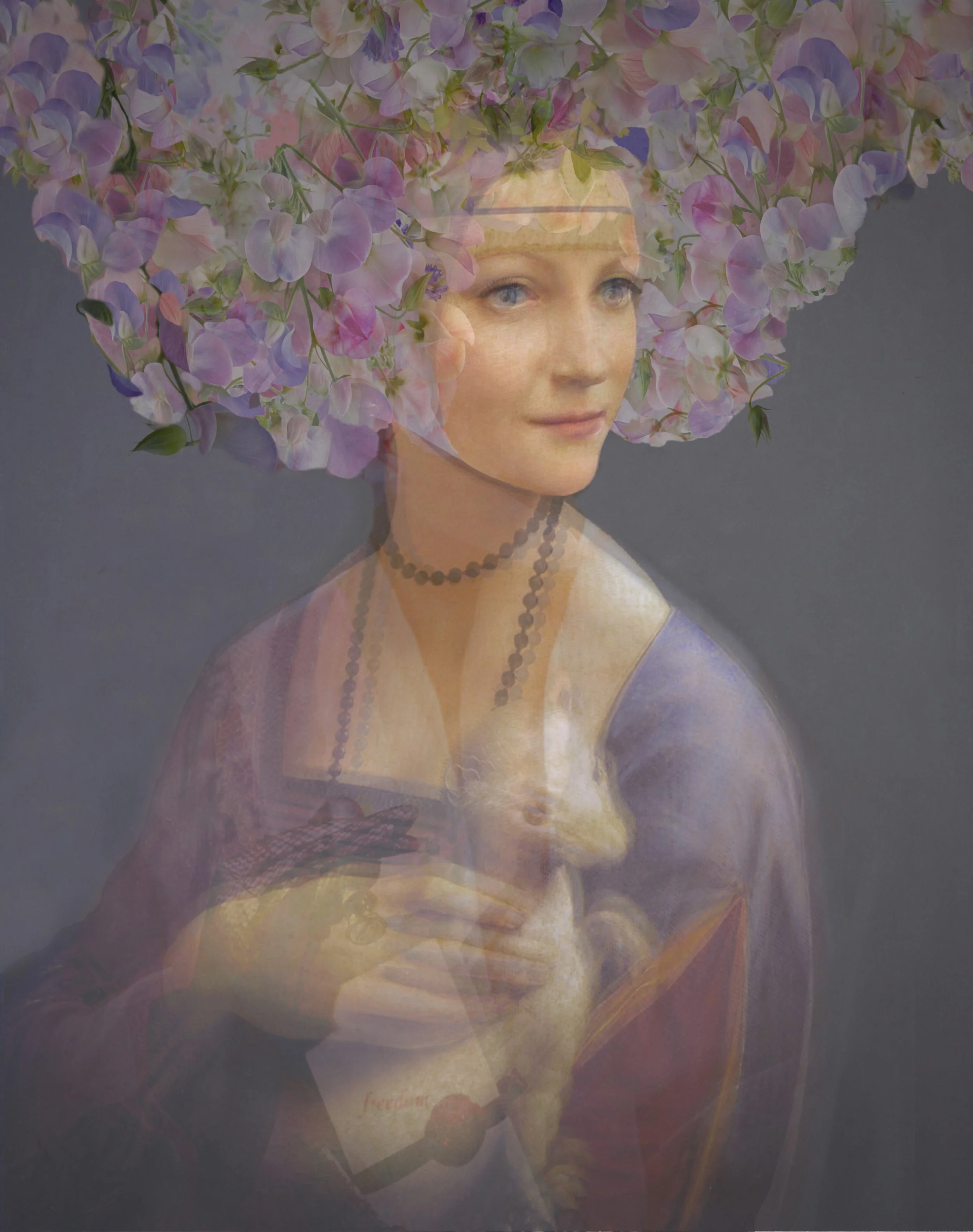
Fig. 3, Dialogue series on Leonardo da Vinci, Mixed media on canvas, 114 x 145 cm
Fig. 3, Dialogue series on Leonardo da Vinci, Mixed media on canvas, 114 x 145 cm
This reconfiguration of the Mona Lisa intensifies the strategy. A luxuriant halo of blue hydrangeas envelops the iconic face. The atmospheric sfumato of Leonardo’s background remains visible, yet it is filtered through translucent botanical overlays. The sitter’s expression, historically read as enigmatic, acquires a new ambiguity. The floral mass expands the cranial space, almost suggesting a blossoming of interiority.
Here, Jezova’s engagement with Renaissance composition becomes dialogic rather than imitative. The pyramidal structure persists, but its stability is softened. The flowers function as both adornment and interruption. They destabilize the notion of fixed identity. The Renaissance ideal of female virtue is reexamined through a contemporary feminist lens. The subject is no longer confined to the gaze of history. She participates in it.

Fig. 7, Dialogue series, 2025. Mixed media on canvas, 110 x 155 cm
Fig. 7, Dialogue series, 2025. Mixed media on canvas, 110 x 155 cm
A woman in red drapery, adorned with pearls and crowned with peonies, occupies this canvas with aristocratic poise. The reference to nineteenth century portraiture, particularly the Pre Raphaelite inflection of Dante Gabriel Rossetti, is evident in the opulence of colour and ornament. Jezova overlays the figure with soft botanical translucencies that blur the boundaries between textile and petal.
The red garment operates symbolically. It evokes both power and vulnerability. Through layering, Jezova fractures the singularity of the subject. The portrait becomes a site of negotiation between archetype and individual. The historical codes of femininity, luxury, and status are gently unsettled. Beneath the polished surface, multiplicity vibrates.
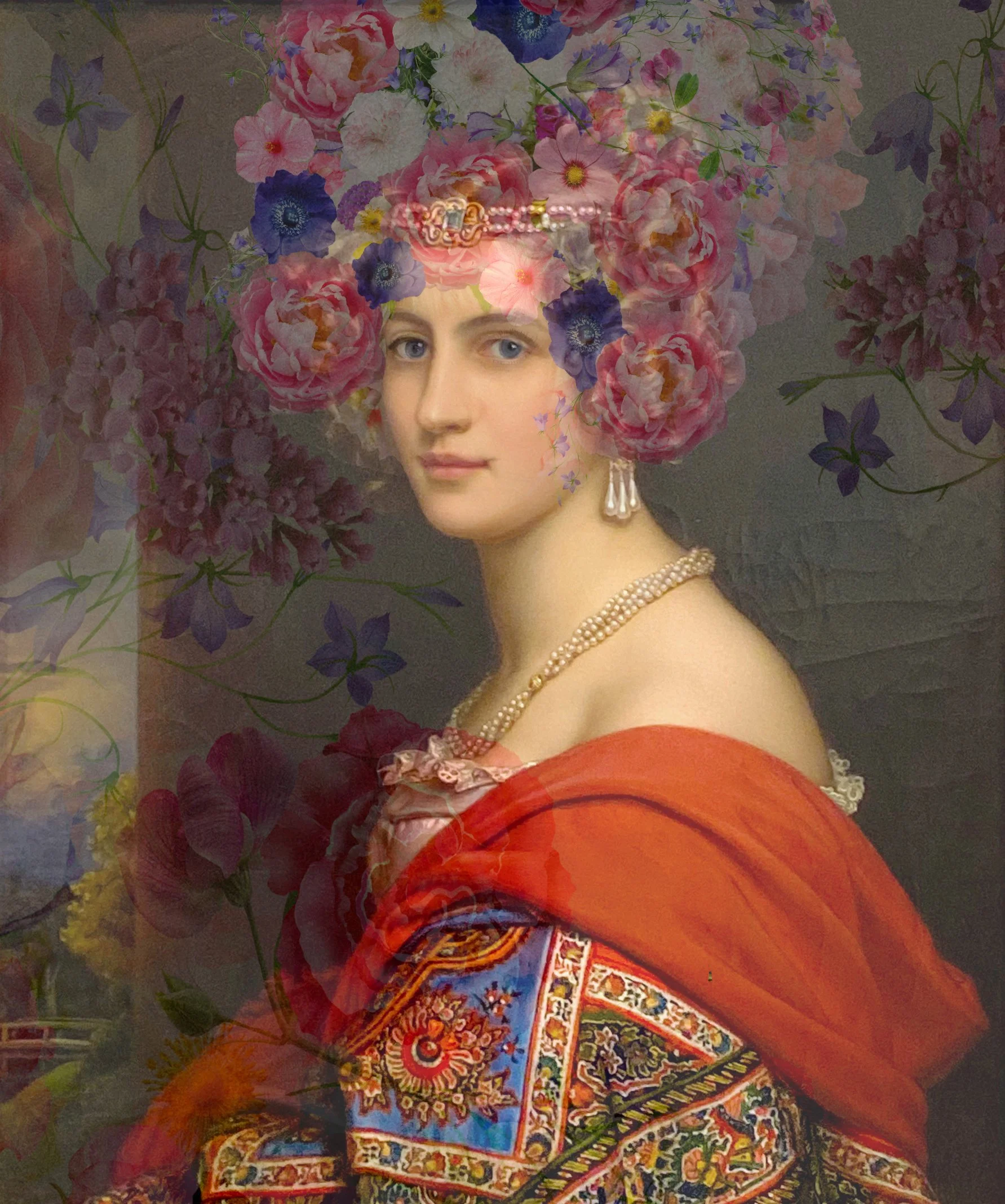
Fig. 9, Dialogue series, 2025. Mixed media on canvas. 96x115 cm.
Fig. 9, Dialogue series, 96 x 115 cm.
This composition presents a softer palette. A female figure, dressed in pale fabric, is crowned with daisies and wildflowers. The simplicity of the floral motif contrasts with the more elaborate previous works. Here, the superimposition is subtler. The doubling effect produces a slight displacement of contours, as if memory itself were gently misaligned.
The work reads as an exploration of innocence and pastoral myth. Yet Jezova resists nostalgia. The blur introduces temporal instability. The past is not idealized; it is refracted. The daisies suggest renewal, but their repetition through layering hints at fragility. Identity, once again, appears provisional.

Fig. 10, Dialogue series on Dante Gabriel, Mixed media on canvas, 114 x 145 cm
Fig. 10, Dialogue series on Dante Gabriel, Mixed media on canvas, 114 x 145 cm
A red haired woman holding a harp anchors this image. The allusion to Rossetti’s medievalist romanticism is explicit. Jezova overlays the figure with a dense field of red poppies. The botanical forms seem to erupt from the crown of the head, merging with the sitter’s hair. The harp, emblem of artistic harmony, becomes partially veiled.
The poppy carries layered symbolism. It speaks of memory and loss, of beauty and mortality. Jezova’s superimposition creates a tension between the Pre Raphaelite idealization of feminine muse and the contemporary insistence on female agency. The subject’s gaze is direct, unyielding. The floral overlay does not silence her. It amplifies her presence.
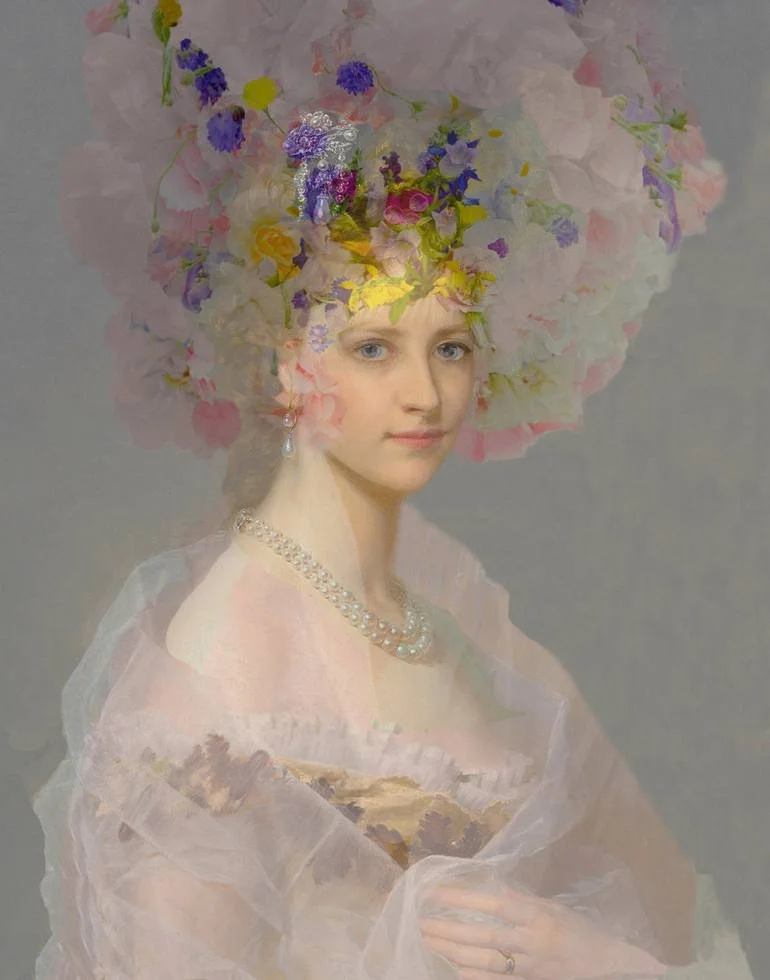
Fig. 16, Dialogue series, 2025. Mixed media on canvas. 110x140 cm.
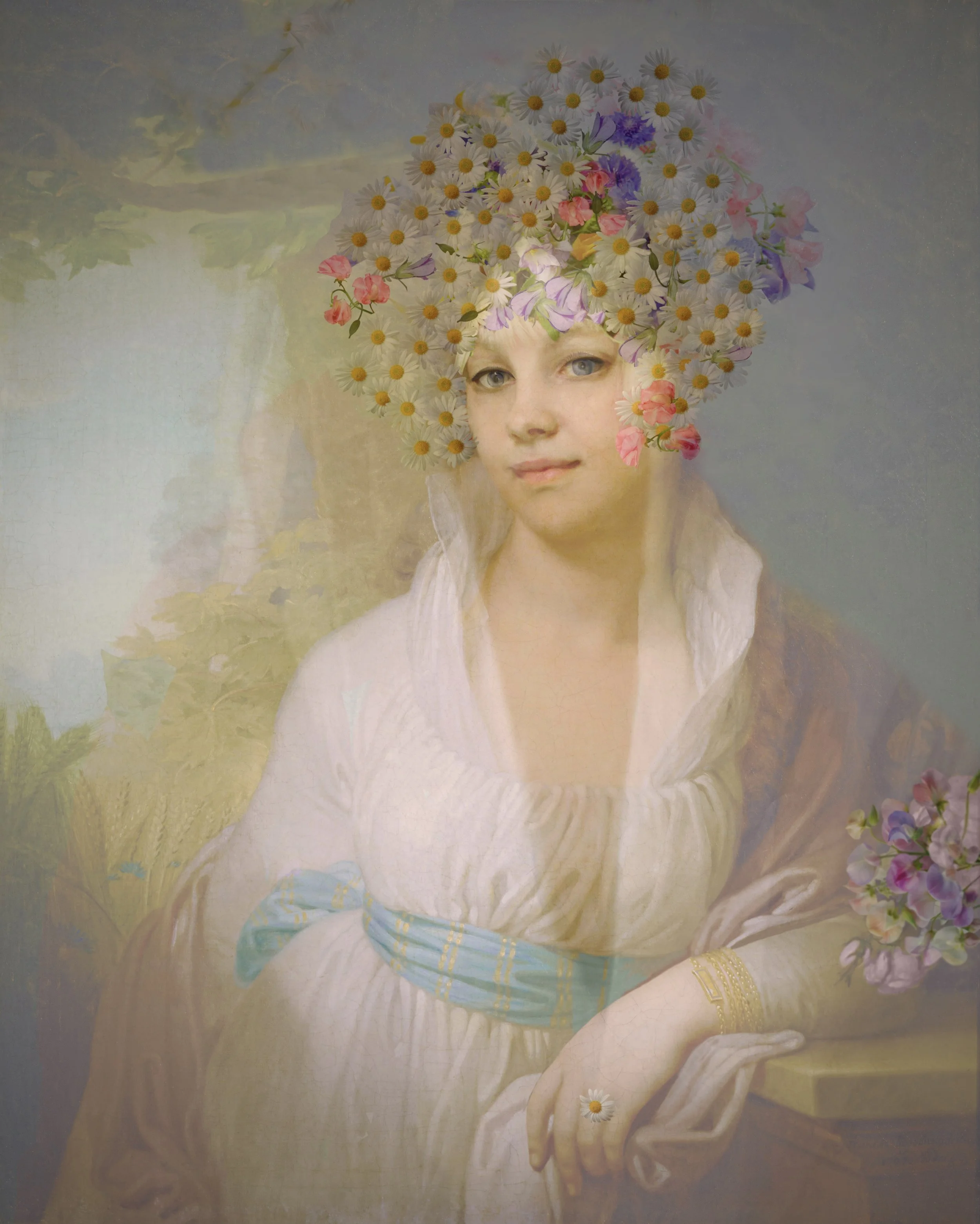
Fig. 17, Dialogue series, 2025. Mixed media on canvas. 112x141 cm.
Fig. 16 and Fig. 17, Dialogue series, 2025
These works extend the motif of superimposed portraiture into increasingly ethereal territory. Faces appear through veils of translucent petals. The layering becomes denser, almost atmospheric. Figures hover between apparition and embodiment. The viewer is required to adjust focus, to navigate between planes.
In these canvases, Jezova’s personal experience of double vision becomes more pronounced. Edges soften. Contours duplicate. The image refuses immediate legibility. Seeing becomes an active process. The viewer participates in the oscillation between clarity and blur. The act of looking mirrors the artist’s own perceptual condition.
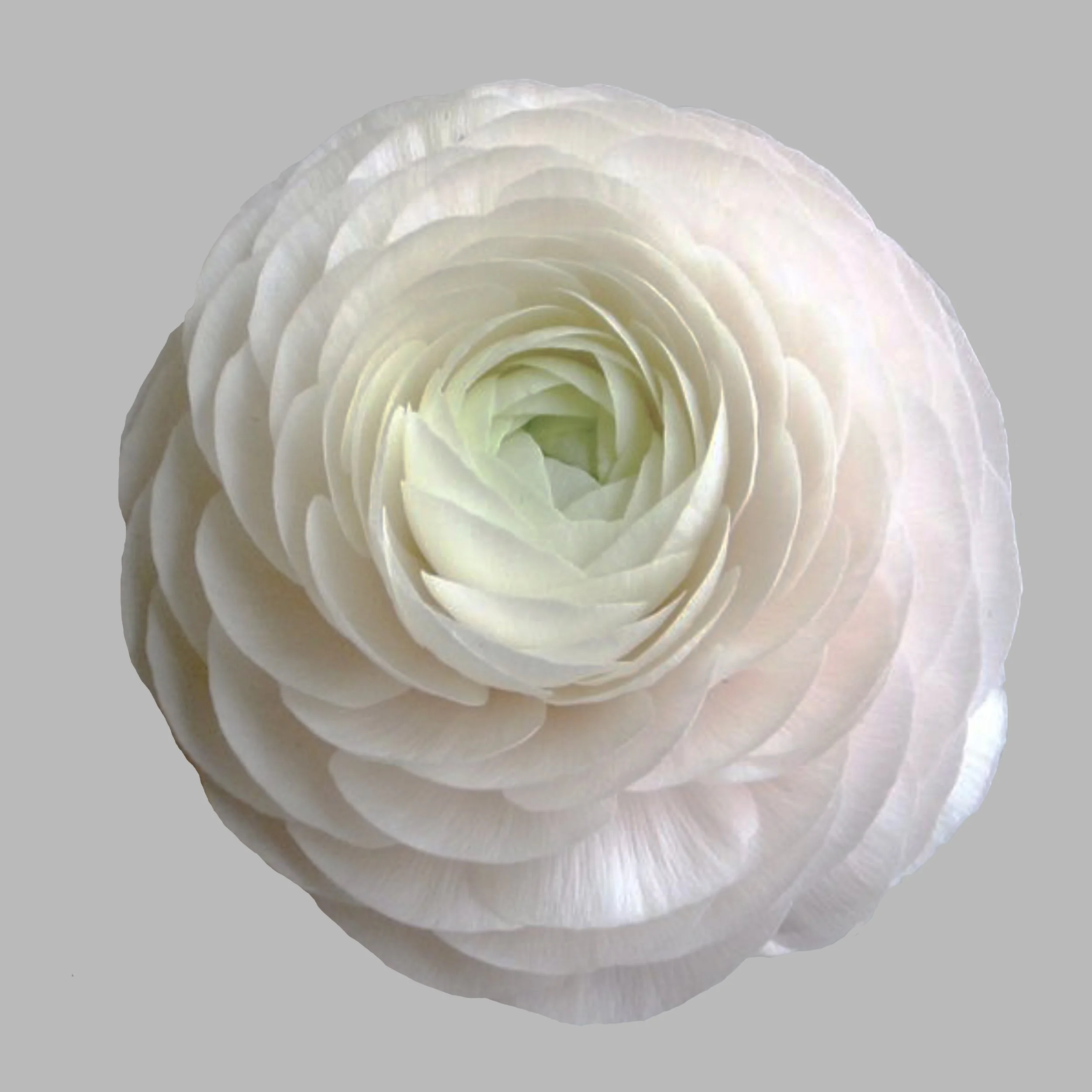
Ranunculus, Double Vision series, 2025. Mixed media on canvas, 145 x 145 cm
With Ranunculus, Jezova turns to pure floral form. A white bloom fills the square canvas. Petals spiral inward with almost sculptural precision. Yet a faint duplication creates a subtle echo. The flower appears to vibrate.
The whiteness suggests purity, but the doubling introduces instability. The bloom is both singular and multiple. This image operates as a meditation on perception stripped of narrative. The flower becomes an abstract study in repetition and difference. Through minimal means, Jezova transforms botanical still life into an ontological inquiry.
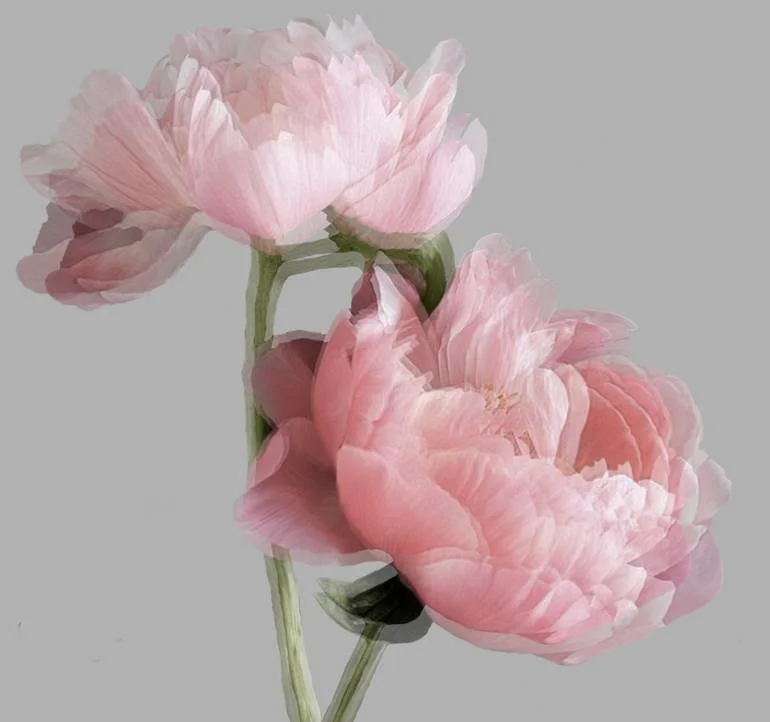
Peonies, Double Vision series. 2025. Mixed media on canvas. 95x90cm.
Peonies, Double Vision series.
Here, pale pink peonies overlap in translucent layers. Stems intersect. Petals dissolve into one another. The composition resists fixed orientation. It is difficult to determine which bloom occupies foreground or background.
The work exemplifies Jezova’s transformation of limitation into revelation. The blurred doubling is not a defect. It is structure. The peonies appear suspended between blooming and fading. The image embodies ephemerality. Beauty is fleeting, yet intensified through multiplicity.
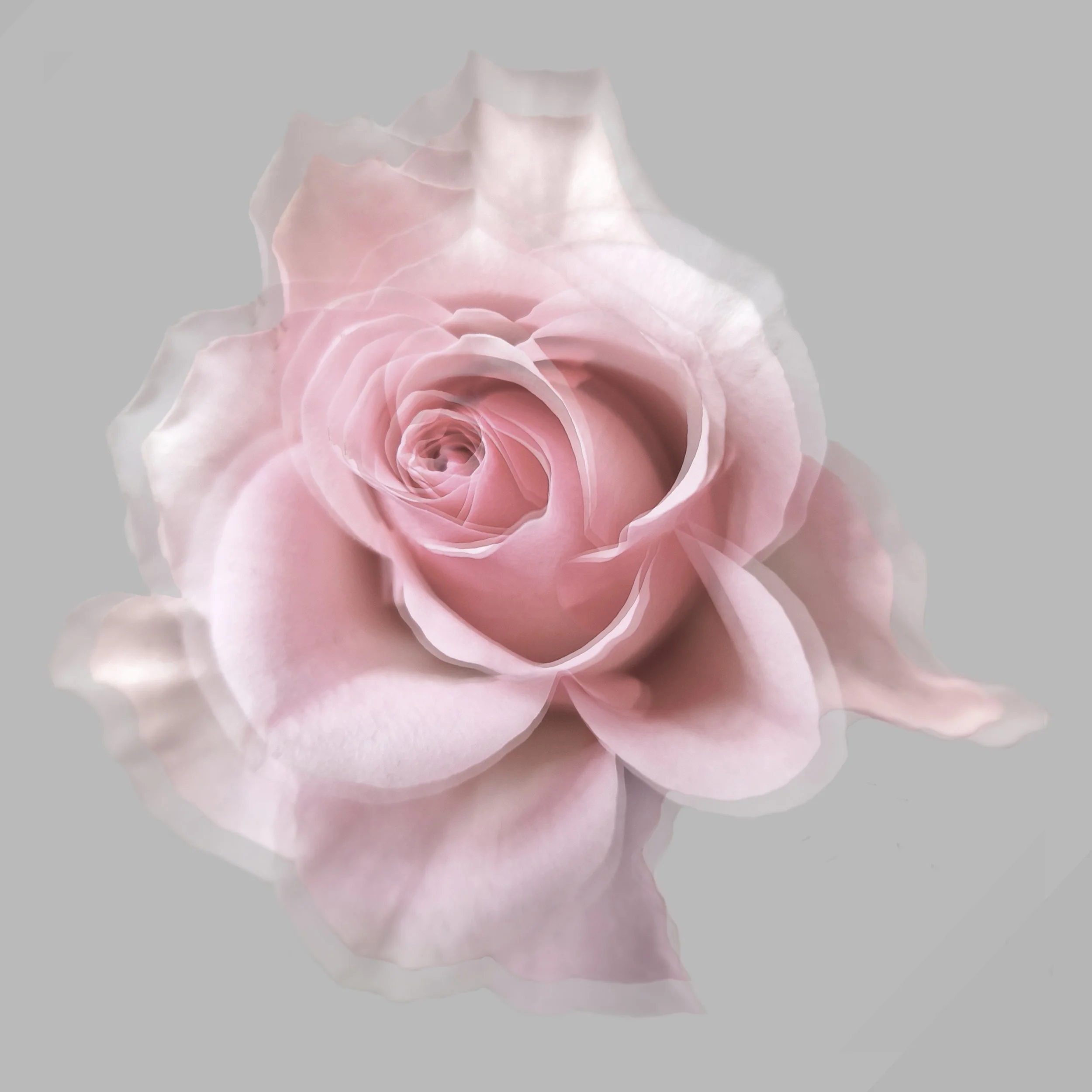
Rose, Double Vision series, 2025. Mixed media on canvas, 145 x 145 cm
Rose, Double Vision series, 2025. Mixed media on canvas, 145 x 145 cm
The rose, icon of romantic symbolism, becomes in Jezova’s hands a study in layered perception. Pale pink petals spiral inward, yet their edges ghost outward in faint echoes. The duplication produces a sensation of motion.
The rose here is not sentimental. It is philosophical. It speaks of fragility and persistence. The repetition of form suggests the coexistence of presence and memory. Each petal appears both now and not now. The viewer confronts the instability of the present moment.
Across these works, Jezova situates herself within a lineage that might recall Leonardo’s atmospheric sfumato or Rossetti’s symbolic density. Yet her practice diverges fundamentally. Where the Old Masters sought to stabilize illusion, Jezova foregrounds instability. Where they encoded subtext beneath surface coherence, she exposes multiplicity through visible layering.
Her contribution to contemporary art lies precisely in this ethical engagement with seeing. In an age saturated with images, she slows perception. She insists that looking is neither passive nor neutral. It is an interpretative act shaped by memory, culture, and bodily condition.
The transformative dimension of her journey cannot be overstated. Vision loss, rather than silencing her practice, catalyzed a radical reconfiguration of her language. The double vision effect became metaphor for duality itself. Self and archetype. Past and present. Light and obscurity. Her canvases inhabit the threshold between them.
Culturally, Jezova’s work interrogates how feminine identity has been constructed through visual history. By embedding her own image within canonical frameworks, she performs a visual archaeology. She excavates the silences of female representation. She rewrites them through translucency and repetition.
Philosophically, her practice suggests that perception is always partial. We see through layers of memory and inheritance. Images are never singular. They are accumulations. Jezova materializes this condition. Her surfaces shimmer with temporal complexity.
In the broader context of contemporary art, her work occupies a distinctive space between painting and digital intervention, between historical homage and conceptual inquiry. She demonstrates that technological layering can deepen rather than dilute painterly tradition. Her canvases are not pastiche. They are propositions.
Dialogue and Double Vision stand as meditations on what it means to see. They reveal that clarity is not the absence of blur but the awareness of multiplicity. In transforming personal limitation into aesthetic principle, Dr Natalia Jezova affirms that vision is not merely optical. It is ethical, cultural, and profoundly human.
To consider these works more expansively is to recognize that Dr Natalia Jezova’s practice does not merely reinterpret art history; it recalibrates the conditions under which art history is seen. The layered superimpositions that structure Dialogue and Double Vision resist the singular, authoritative viewpoint that has long underpinned Western pictorial tradition. Instead of the stable monocular perspective perfected during the Renaissance, Jezova offers a fluctuating optic. Her canvases operate through simultaneity. Multiple temporalities and identities coexist within a single frame. The image becomes a field of negotiation rather than resolution.
This shift is particularly significant in relation to the representation of women. For centuries, female portraiture functioned within rigid frameworks of virtue, decorum, and idealized beauty. The sitter’s interiority was implied but rarely foregrounded. Jezova’s insertion of her own blurred or ghosted presence into canonical compositions subtly disrupts that paradigm. She occupies the space once reserved for the passive muse. Yet she does so without aggression. The intervention is translucent rather than confrontational. Authority is neither demolished nor blindly upheld. It is placed in dialogue.
In several works from Dialogue, the layering produces a sensation akin to looking through aged varnish, as though time itself were a visible medium. The surface appears slightly veiled, echoing the patina of museum paintings. Yet beneath that veil, contemporary chromatic intensities pulse. This oscillation between aged tonality and vibrant overlay creates what might be described as hybrid temporality. The works are neither purely historical nor entirely contemporary. They inhabit a threshold state. In doing so, Jezova addresses the persistence of cultural memory. The past does not vanish. It hovers. It informs. It complicates.
Her approach recalls the intellectual discipline of visual archaeology. Rather than excavating physical artifacts, she excavates iconographic codes. Flowers become recurring signifiers throughout both series. In Western art history, floral motifs have carried layered meanings: purity, transience, eroticism, martyrdom. Jezova does not assign singular symbolism. Instead, she allows these associations to coexist. A peony may suggest abundance and fragility simultaneously. A rose may evoke romantic idealization while quietly signaling mortality. Through doubling and repetition, she multiplies interpretative possibilities.
In Ranunculus, the almost minimalist concentration on a single white bloom becomes emblematic of her philosophical inquiry. The spiraling petals recall Renaissance geometry, yet their duplication destabilizes symmetry. The eye attempts to settle on a center, but the faint echoing contours produce gentle disorientation. This work can be read as a metaphor for consciousness itself. There is always more than one layer of seeing. Beneath the apparent center lies another.
Similarly, in Peonies, the superimposed stems and petals dissolve spatial hierarchy. Foreground and background merge. The viewer cannot easily determine depth. This ambiguity challenges the conventions of perspectival illusion. Instead of guiding the gaze into a rationally constructed space, Jezova allows the gaze to hover. Perception becomes fluid rather than linear. Such fluidity mirrors her lived experience of vision loss, yet it also gestures toward broader philosophical concerns. How do we distinguish memory from imagination? How does one layer of experience overlay another?
The rose from the Double Vision series perhaps encapsulates this inquiry most poignantly. The flower is universally recognizable. Yet its duplication introduces a tremor. It appears to breathe, to shift slightly within itself. The viewer is compelled to linger. In that lingering, the image becomes meditative. The rose is no longer simply botanical. It is temporal. It suggests the simultaneity of blooming and fading. The work quietly articulates the ephemeral nature of existence without resorting to overt symbolism.
In considering Jezova’s relationship to the Old Masters, one might draw a productive comparison with Leonardo da Vinci. Leonardo’s sfumato dissolved contours in order to evoke psychological depth and atmospheric unity. Jezova extends this dissolution into the digital realm. Her superimpositions create a contemporary sfumato, one born not of smoky glazing but of layered transparency. Yet unlike Leonardo, who sought to unify the image into seamless illusion, Jezova foregrounds the seams. The layering remains perceptible. The viewer is aware of construction. This awareness aligns her practice with contemporary semiotics. The image acknowledges itself as image.
At the same time, her dialogue with Dante Gabriel Rossetti underscores her engagement with Pre Raphaelite symbolism. Rossetti’s women were often enveloped by floral abundance, their identities intertwined with mythic or allegorical references. Jezova appropriates this lush iconography but reframes it. In her reinterpretations, the floral overlay does not confine the female figure within decorative excess. Instead, it becomes an extension of interior subjectivity. The flowers appear to emanate from within rather than adorn from without. The muse becomes originator.
It is also crucial to recognize the ethical dimension of Jezova’s work. In transforming personal visual impairment into artistic method, she resists narratives of loss defined by limitation. The blur becomes generative. The double image becomes structural principle. Such transformation carries cultural resonance. It challenges normative assumptions about perception. Vision, often equated with certainty and authority, is revealed as partial and contingent. Her work invites viewers to reconsider the privilege of clarity. Perhaps ambiguity offers its own form of truth.
Within the broader contemporary art scene, where digital manipulation is ubiquitous, Jezova’s approach is distinguished by its conceptual coherence. Superimposition is not an effect added post hoc. It is embedded in her lived experience and theoretical research. Her doctoral background informs the intellectual rigor of her practice. The works are visually seductive, yet they are underpinned by sustained inquiry into representation, gender, and memory. This integration of sensory beauty and conceptual depth situates her within a lineage of artists who bridge aesthetic refinement and critical reflection.
Furthermore, her multidisciplinary fluency in painting, film, photography, and installation enriches the painterly surface of these canvases. Even when working in mixed media on canvas, there is a cinematic quality to the layering. Frames seem to dissolve into one another. Time unfolds not sequentially but simultaneously. One senses that each work could expand into moving image or immersive installation. The canvas becomes a concentrated site of broader exploration.
Jezova’s practice speaks to a moment in which historical narratives are being reexamined and recontextualized. By revisiting canonical portraits and inserting her own presence, she enacts a quiet reclamation. She does not reject tradition. She inhabits it. This inhabitation is transformative. It allows for multiplicity within what once appeared singular. The image becomes a site of shared authorship across centuries.
Dialogue and Double Vision suggest that seeing is both aesthetic and ethical. How we look shapes how we understand. Jezova’s blurred overlays remind us that perception is never neutral. It is filtered through memory, culture, bodily condition, and inherited imagery. Her work proposes that acknowledging this complexity is not a weakness but a strength. To see doubly is to recognize nuance.
The significance of Dr Natalia Jezova’s recent series lies not only in their visual sophistication but in their redefinition of vision itself. Through layered digital superimposition, she constructs a new visual grammar grounded in oscillation rather than certainty. Dialogue reopens art historical canons, allowing female identity to emerge from beneath their surfaces. Double Vision transforms personal visual transformation into universal metaphor. Together, these bodies of work articulate a practice that is intellectually rigorous, emotionally resonant, and culturally urgent.
Her art affirms that images are never static relics. They are living structures, capable of absorbing new meanings and revealing hidden subtexts. In an era dominated by instantaneous consumption of visual content, Jezova asks us to slow down, to adjust our focus, to accept ambiguity. She reminds us that what we see is inseparable from who we are. And in that gentle yet profound insistence, her work secures a vital place within contemporary art history.
By Marta Puig
Editor Contemporary Art Curator Magazine