IRIS FLUIDISM
In the work of IRIS FLUIDISM, the image does not begin as a contour but as current. Before line, before likeness, before even the face announces itself as subject, there is flow. A chromatic tide moves across the paper, swelling into bands of color that fold, spill, gather, and reassemble into the recognizable architectures of human and animal presence. It is within this tension between dissolution and form that her practice finds its distinctive authority. IRIS does not paint figures; she releases them from the liquidity that already inhabits them.
Born in Romania and long resident in Austria, trained in industrial and furniture design, IRIS carries into her artistic practice a rigorous understanding of structure, proportion, and functional coherence. Yet this structural intelligence does not confine her work. Rather, it undergirds the daring fluidity of her visual language. The discipline of design, with its insistence on balance between aesthetics and function, becomes in her art an invisible armature supporting chromatic improvisation. The organic forms that course through her compositions are not arbitrary. They are intricately organized systems, calibrated with the precision of someone who understands how lines must coexist, how volumes negotiate space, how a shift of contour can alter expression. Fluidism is not an abandonment of structure; it is structure liquefied.
Since 2018, the artist has articulated this vision under the name IRIS Fluidism, a style she defines as a tribute to water. Water, for her, is not simply motif but ontology. It is both material and metaphor, both substance and spiritual principle. The premise is deceptively simple: if human bodies, animals, and the planet itself are composed in large part of water, then what would it mean to render the liquid component of existence without annihilating form? How might one depict a portrait in which character persists, yet flesh is reimagined as current? The answer unfolds across the works presented here, each of them executed in color pencil, sometimes combined with acrylic, each confined to the intimate scale of 29.7 by 21 centimeters, yet conceptually expansive.
The seven colors of the rainbow, deployed consistently throughout her oeuvre, function as both palette and philosophical statement. They recall not only the natural spectrum but the idea of unity in diversity, the prism as mediator between white light and multiplicity. In IRIS’s hands, red, orange, yellow, green, blue, indigo, and violet do not remain discrete. They bleed into one another, generating intermediary tones that feel like gradients of emotion. She has described these colors as states of happiness, as carriers of inner joy. But beyond their affective dimension, they operate as structural agents. Color is what binds the fluid fragments into coherent bodies. It is the adhesive of becoming.
In “LADY DIANA” from 2022, the iconic visage is both preserved and transformed. The familiar coiffure appears not as hair but as a cascade of lilac and cerulean currents, streaked with green and edged in gold. Her face dissolves into bands of turquoise, lemon, vermilion, and emerald, yet the softness of her gaze remains intact. The eyes, rendered in lucid blue, anchor the composition. They seem to float within the chromatic turbulence, as if consciousness itself were the calm eye of a storm. Tears appear as droplets, reinforcing the aquatic theme without descending into literalism. What is striking here is not merely the stylization of a public figure but the reconstitution of memory as fluid. The portrait does not monumentalize Diana; it refracts her through a spectrum of emotional currents, suggesting that identity itself is a river shaped by empathy, vulnerability, and resilience.
“Leonardo da Vinci Does Not Like Time Travel” from 2025 stages a different kind of dialogue. The Renaissance master, archetype of scientific curiosity and artistic innovation, is reimagined through the very principle of flux. His beard and hair, in saturated blues and greens, flow like subterranean streams. Yellow and orange bands traverse his forehead and nose, mapping thought as circulation. The title introduces irony, yet the image proposes something subtler: that genius is itself fluid, perpetually renegotiating past and future. The chromatic segmentation of his face echoes the fragmentation of historical narrative. Yet the overall cohesion affirms continuity. Leonardo becomes an emblem of eternal becoming, his skepticism toward time travel undercut by his own transformation into liquid time.
In “Mr. PRESIDENT” from 2023, the fluid strategy assumes a more ambiguous tone. The portrait’s face is divided into bold, asymmetrical color fields. Blues and greens occupy one side, yellows and oranges the other, while violet and magenta trace the furrows of the brow. The eyes, alert and almost piercing, suggest vigilance. Here, fluidity does not dissolve authority but complicates it. Power appears as a confluence of currents, some warm, some cool, some harmonious, others in tension. The portrait refrains from caricature. Instead, it proposes that leadership is not a monolith but a dynamic equilibrium of forces, susceptible to the same fluctuations as water itself.
“PABLO PICASSO” from 2023 presents an intriguing self-reflection within the lineage of modern art. Picasso, who once fractured the face into geometric planes, is here dissolved into chromatic streams. The cubist impulse toward multiplicity finds a counterpart in Fluidism’s emphasis on flow. Yet whereas cubism foregrounded angular fragmentation, IRIS privileges curvature and liquidity. The features remain legible, but they are enfolded in sinuous bands of color. It is as though Picasso’s analytic dissection has been rehydrated, softened, returned to organic continuity. The dialogue with modernism is respectful yet distinct. Fluidism does not negate the avant-garde; it absorbs and transforms it.
In “SALVADOR DALI” from 2024, surrealism encounters fluid ontology. The elongated face and iconic mustache are maintained, yet the surrounding chromatic environment destabilizes fixed reality. Bands of yellow and green ripple across the forehead, while violet and turquoise contour the cheeks. The eyes glint with a dreamlike intensity. Dali’s own fascination with melting forms and subconscious imagery resonates here, but IRIS’s approach is less about dream distortion than about elemental unity. The melting is not of clocks but of ego boundaries. The portrait suggests that imagination itself is a form of liquidity, seeping through rational structures.
“The Joy of Being” from 2025 shifts focus from celebrity to existential affirmation. The face, composed of vibrant blues, pinks, greens, and yellows, radiates outward. The symmetry is looser, the forms more playful. The eyes, encircled by luminous hues, seem to gaze directly at the viewer, inviting participation in the chromatic celebration. Here, Fluidism becomes an ethics of affirmation. The joy is not naïve but grounded in the acceptance of flux. To be is to flow. The work proposes that happiness is not stasis but participation in perpetual transformation.
“When Giants Bow to Gentleness” from 2025 introduces a poignant narrative dimension. A large blue elephant bends its head toward a small girl in pink. A golden band of color flows between them, like a shared current. The scale difference underscores vulnerability and strength, yet the fluid connection erases hierarchy. The elephant’s massive body is rendered in cool blues, its contours softened by yellow streams that suggest inner warmth. The child stands calmly, her presence unthreatened. This is Fluidism as relational philosophy. Water, as symbol of interdependence, manifests in the connective ribbon that unites the two figures. Gentleness becomes the highest form of power, the capacity to bend without breaking.
“ALOKA. Some Souls Are Born to Inspire Peace” from 2026 portrays a dog adorned in red beads, set against a background that incorporates elements of national flags. The animal’s face is composed of flowing color fields, yet its expression is serene. The inclusion of symbolic backdrops situates the portrait within a geopolitical frame, but the fluid treatment transcends division. The dog, emblem of loyalty and innocence, becomes a vessel for peace. The rainbow palette dissolves national boundaries into shared chromatic essence. Fluidism here articulates a quiet political statement: that beneath constructed identities, life is sustained by the same aqueous substrate.
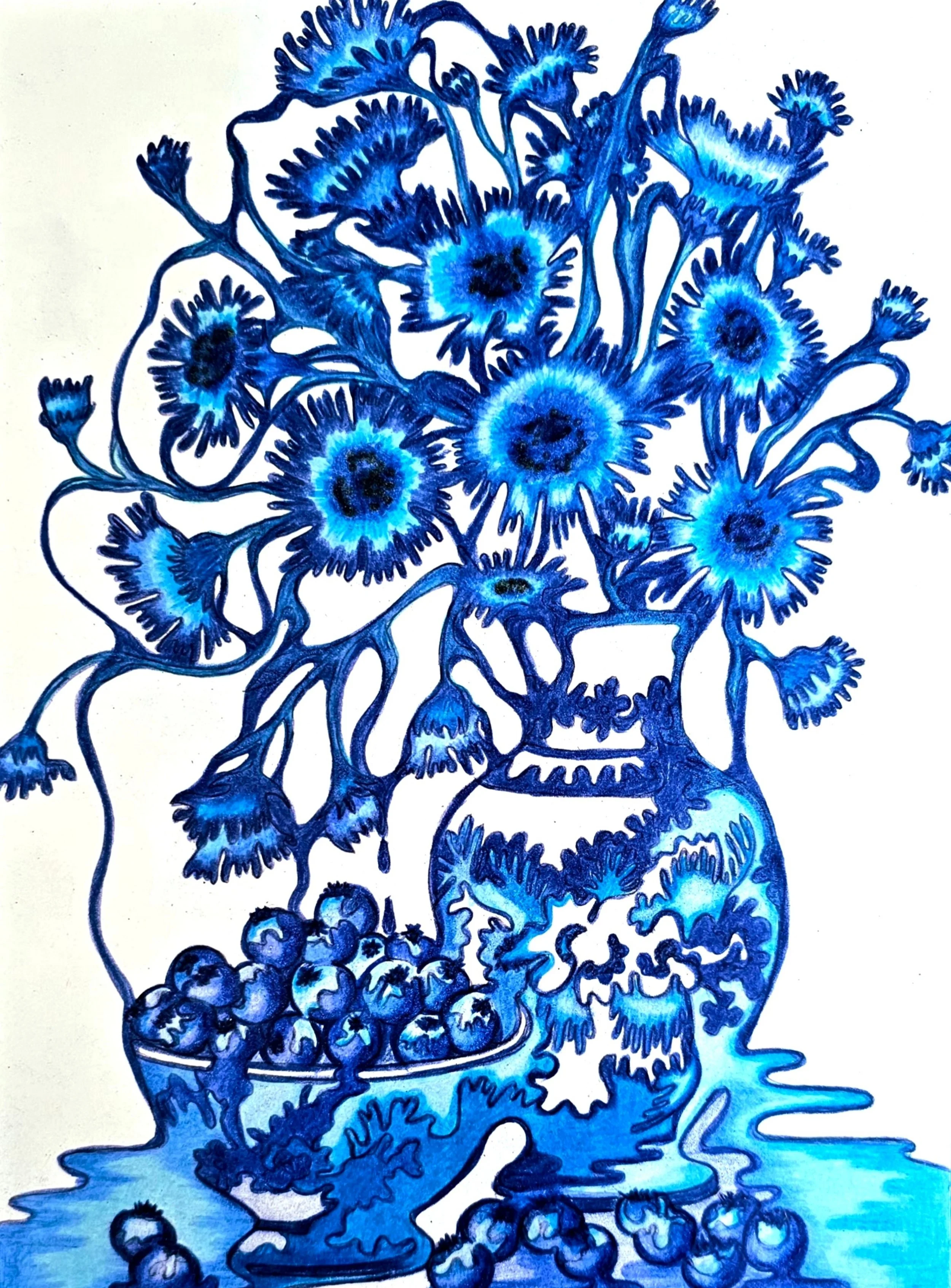
“Connections in Blue” from 2025 departs from portraiture to explore still life. A bouquet of blue flowers spills from a vase, accompanied by a bowl of grapes. The monochromatic emphasis on blue intensifies the aquatic theme. The flowers appear almost marine, like anemones or coral forms, their petals radiating outward in intricate tendrils. The grapes glisten as droplets. The composition is dense yet harmonious. Blue, often associated with depth and contemplation, saturates the scene. This work underscores Fluidism’s capacity to extend beyond figuration into botanical and material realms. The interconnected stems and blossoms evoke neural networks or river deltas, suggesting that even stillness is a form of movement.
“The Lion King is Back: Noble and Powerful” from 2025 combines color pencils and acrylic, intensifying the chromatic drama. The lion’s mane erupts in fiery reds and oranges, interwoven with greens and blues. The face, though stylized, retains regal gravity. The eye, ringed in bright yellow, commands attention. Fire and water coexist in the palette, yet the fluid bands unify them. Nobility is not portrayed as rigidity but as vibrant dynamism. The lion’s strength derives from its integration of multiple currents. The work affirms the dignity of animal life, aligning with the artist’s broader ecological sensitivity.
Across these works, one discerns the persistence of certain formal strategies. The contour is rarely a single line; it is a boundary negotiated between color bands. The interior of the figure is segmented, yet the segmentation does not fracture identity. Instead, it reveals multiplicity within unity. The faces are masks of liquidity, reminding the viewer that beneath the epidermis lies circulation. The emphasis on water as sacred substance situates Fluidism within a lineage of artists who have sought elemental foundations for their practice. Yet IRIS’s approach remains distinctly her own, grounded in personal ritual and revelation.
Her formative moment in 2018, when an accidental mixture of water and flour yielded a fragmented face, reads almost as origin myth. The image that obsessed her, that demanded translation, became the catalyst for a new visual language. This narrative reinforces the centrality of water not merely as theme but as collaborator. Fluidism is less about representing water than about thinking with it, about allowing its logic of adaptation and regeneration to guide form. The ritual gratitude she directs toward water imbues the practice with spiritual resonance. Yet the works avoid overt didacticism. The reverence is embedded in structure, not proclaimed.
In the broader context of contemporary art, Fluidism occupies a space that bridges figuration and abstraction. While many current practices oscillate between hyperrealism and conceptual dematerialization, IRIS stakes a claim for an alternative synthesis. Her portraits are recognizable, yet they resist naturalism. Her abstractions are organic, yet they refuse total dissolution. This in between position recalls certain aspects of expressionism, particularly in the use of color to convey inner states. One might draw a parallel with the chromatic audacity of Wassily Kandinsky, who also associated color with spiritual vibration. Yet whereas Kandinsky moved toward non objective abstraction, IRIS retains the figure as anchor. The comparison illuminates both affinity and divergence. Fluidism is not a retreat into pure abstraction but a reinvention of figuration through elemental flow.
The ecological dimension of her philosophy resonates strongly within a contemporary moment marked by environmental crisis. By foregrounding water as sacred and indispensable, IRIS situates her art within a discourse of care. Yet she does so through beauty rather than alarmism. The rainbow palette, far from trivializing the issue, functions as a reminder of life’s fragility and splendor. In an age of fragmentation, her insistence on interconnectedness offers a counter narrative. The fluid bands that traverse faces and animals become visual metaphors for shared vulnerability.
Her background in Austria, with its rivers, lakes, and alpine landscapes, subtly informs the chromatic coolness of many works. Blues and greens dominate, punctuated by warmer hues. The dialogue between Romanian origin and Austrian residence may also be read as a form of cultural fluidity, an identity shaped by migration and adaptation. Fluidism, in this sense, extends beyond aesthetic principle into lived experience. To flow is to cross borders, to integrate multiple contexts without losing coherence.
Importantly, the scale of her works invites intimacy. These are not monumental canvases but drawings that require proximity. The viewer must approach, must enter the chromatic currents at close range. This intimacy reinforces the philosophical premise. Water, after all, is not only oceanic vastness but the fluid within our cells. By working on paper, by maintaining a human scale, IRIS aligns macrocosm with microcosm.
Each artwork thus becomes a meditation on the same essential question: what does it mean to be constituted by flow? In “LADY DIANA,” the answer lies in empathy refracted through color. In “Leonardo da Vinci Does Not Like Time Travel,” it lies in genius as temporal current. In “Mr. PRESIDENT,” it lies in the mutable nature of power. In “PABLO PICASSO” and “SALVADOR DALI,” it lies in dialogue with art history, acknowledging predecessors while liquefying their legacies. In “The Joy of Being,” it lies in the celebration of existence as vibrant circulation. In “When Giants Bow to Gentleness,” it lies in relational humility. In “ALOKA,” it lies in peace as shared essence. In “Connections in Blue,” it lies in the organic networks of life. In “The Lion King is Back,” it lies in strength integrated with elemental vitality.
To view IRIS FLUIDISM’s oeuvre is to experience a consistent yet evolving investigation into the metaphysics of water. Her art insists that identity is not fixed architecture but dynamic system. It proposes that beauty emerges from interdependence. It affirms that color, when organized with precision and allowed to flow with freedom, can articulate a philosophy of unity without collapsing into sentimentality.
In an international contemporary art scene often dominated by irony or detachment, IRIS offers something unapologetically affirmative. Yet this affirmation is not superficial. It is rooted in the recognition of fragility, of the necessity of care. Water, as she reminds us, is both resilient and vulnerable. It can regenerate, yet it can also be contaminated. By rendering faces and animals as liquid mosaics, she visualizes the permeability that binds us. The viewer is invited to reconsider the boundaries of self, to perceive the body not as sealed container but as porous conduit.
Fluidism thus contributes to contemporary art history by reasserting the figure as site of elemental inquiry. It bridges design discipline and spiritual exploration, chromatic exuberance and structural rigor. In dialogue with modernist precedents yet responsive to current ecological and philosophical concerns, IRIS FLUIDISM establishes a coherent and compelling artistic identity. Her works flow across the paper, but they do not drift. They are guided by a steady conviction: that everything flows, and in that flow resides both our vulnerability and our hope.
In considering the arc of IRIS FLUIDISM’s practice, one begins to understand that her work is less about representation than about recalibration. She recalibrates the way we perceive the body, the portrait, the animal, the flower. She recalibrates our understanding of color, not as decorative excess but as ontological statement. And above all, she recalibrates the relationship between art and the elemental forces that sustain life. Water, in her hands, is not merely symbol but structuring intelligence, an invisible architecture that shapes every contour, every chromatic transition, every expressive inflection.
What distinguishes her contribution within contemporary art is precisely this synthesis of technical discipline and spiritual conviction. The legacy of her industrial design background remains palpable in the coherence of her compositions. Nothing is arbitrary. Each band of color is placed with deliberation. Each curve negotiates balance. Yet within this structure there is freedom, a surrender to the logic of flow that resists rigidity. This tension between control and release becomes a metaphor for existence itself. Life requires form, yet it unfolds through constant transformation. IRIS captures that paradox with remarkable clarity.
Her insistence on the seven colors of the rainbow, reiterated across all works, acquires cumulative force. Over time, the palette becomes a signature, a chromatic oath. It signals not repetition but continuity of belief. The rainbow, a natural phenomenon born of light and water, becomes an emblem of reconciliation between opposites, between spectrum and unity. In a fractured world, this visual consistency reads as quiet resistance. It proposes that diversity need not entail division, that multiplicity can coexist within a shared luminous field.
Furthermore, the ethical undercurrent of her work grows more significant as ecological awareness intensifies globally. By centering water as sacred, regenerative, and indispensable, she does not preach but visualizes interdependence. The viewer cannot look at her fluid faces without being reminded that seventy percent of our own bodies are composed of the same substance. The boundary between image and observer subtly dissolves. We are implicated in the flow.
IRIS FLUIDISM affirms that art can still aspire to beauty without relinquishing depth. Her practice demonstrates that joy and seriousness are not mutually exclusive. Through disciplined color, organic structure, and philosophical coherence, she has forged a visual language that feels both contemporary and timeless. In the flowing bodies she renders, we glimpse not only portraits and animals, but the deeper current that binds all life into a single, luminous continuum.
By Marta Puig
Editor Contemporary Art Curator Magazine
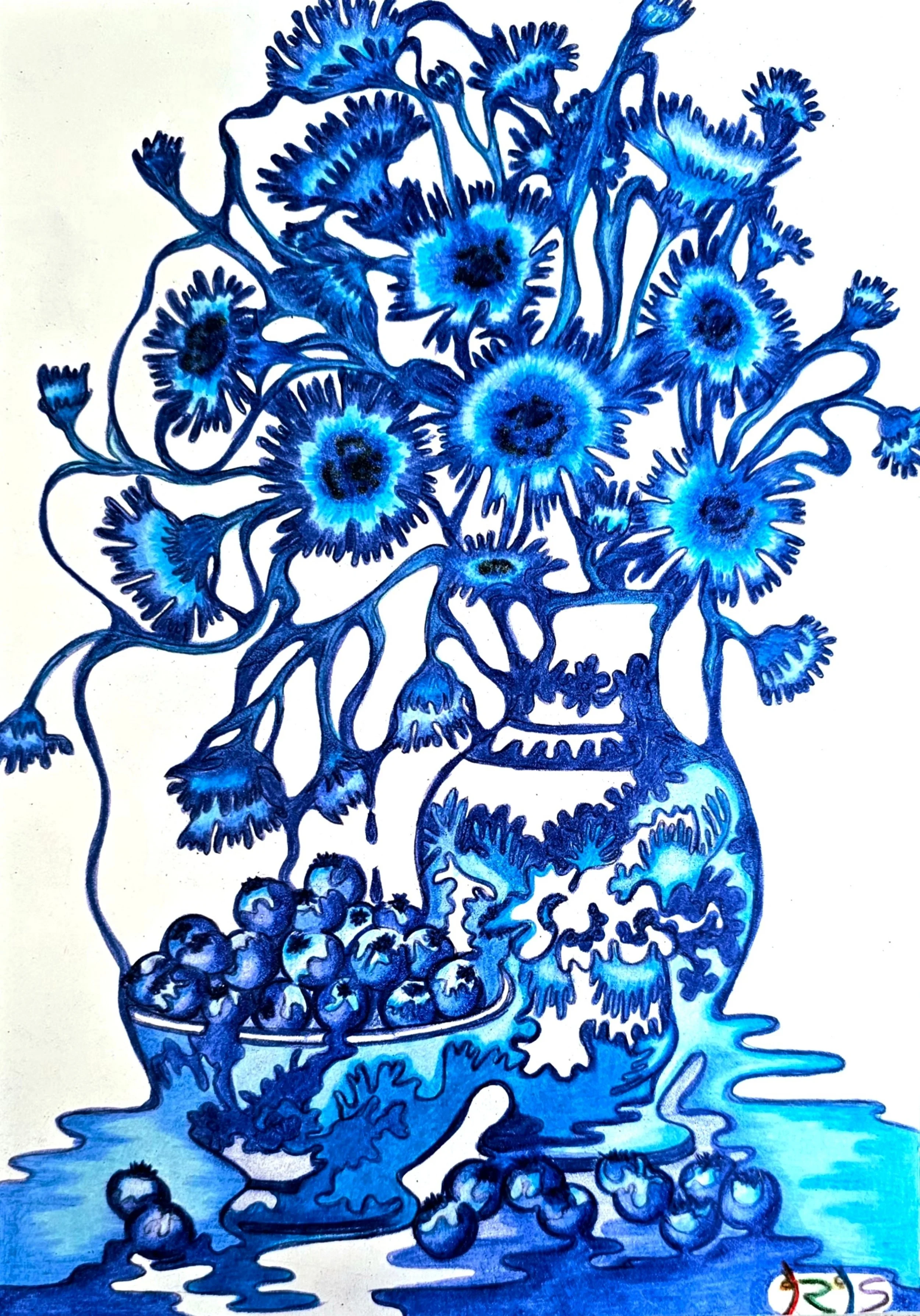
Connections in Blue,2025, color pencils on paper, 29,7x21cm
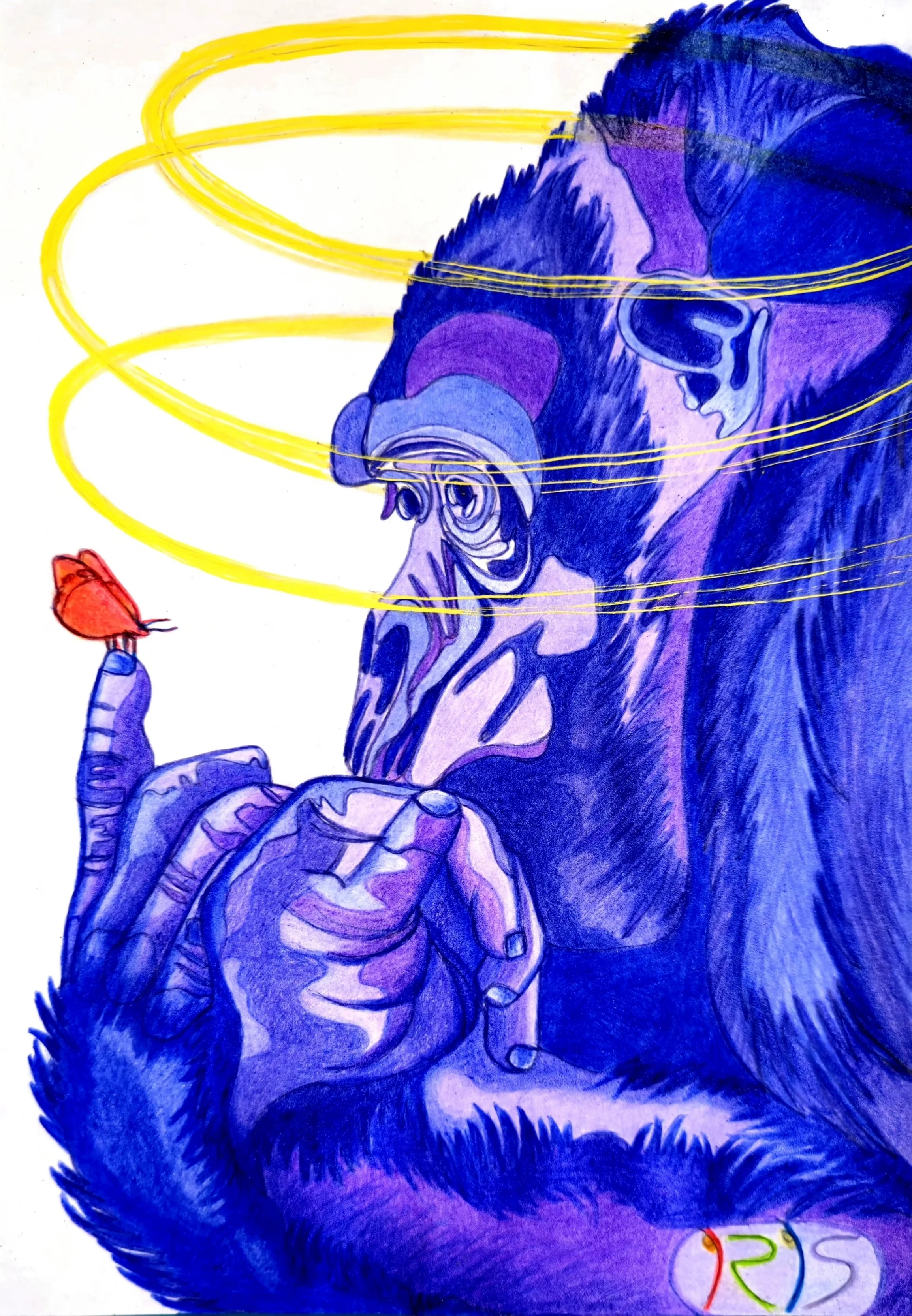
The Joy of Being, 2025,color pencils on paper, 29,7x21cm
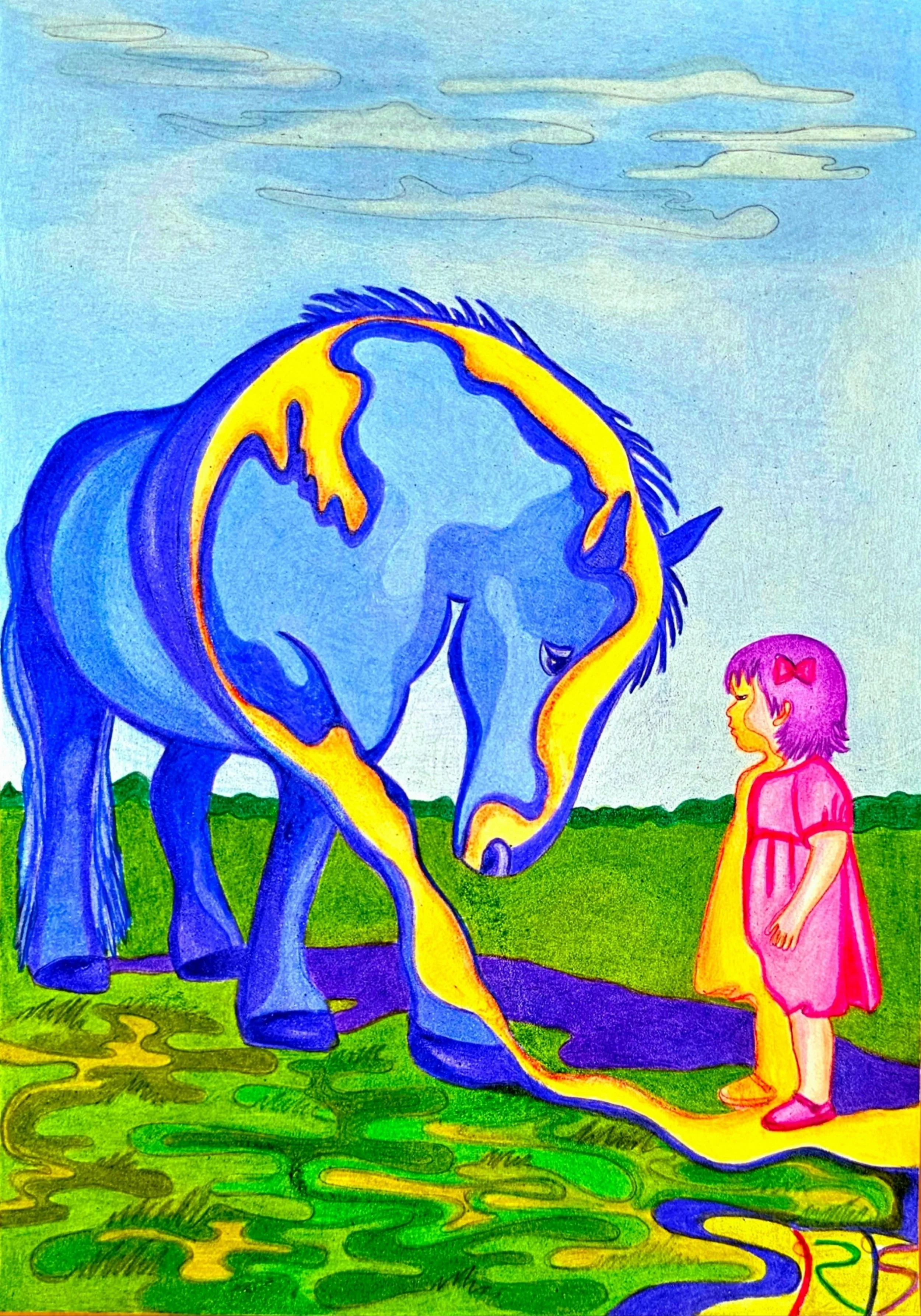
When Giants Bow to Gentleness, 2025, color pencils on paper, 29.7x21cm
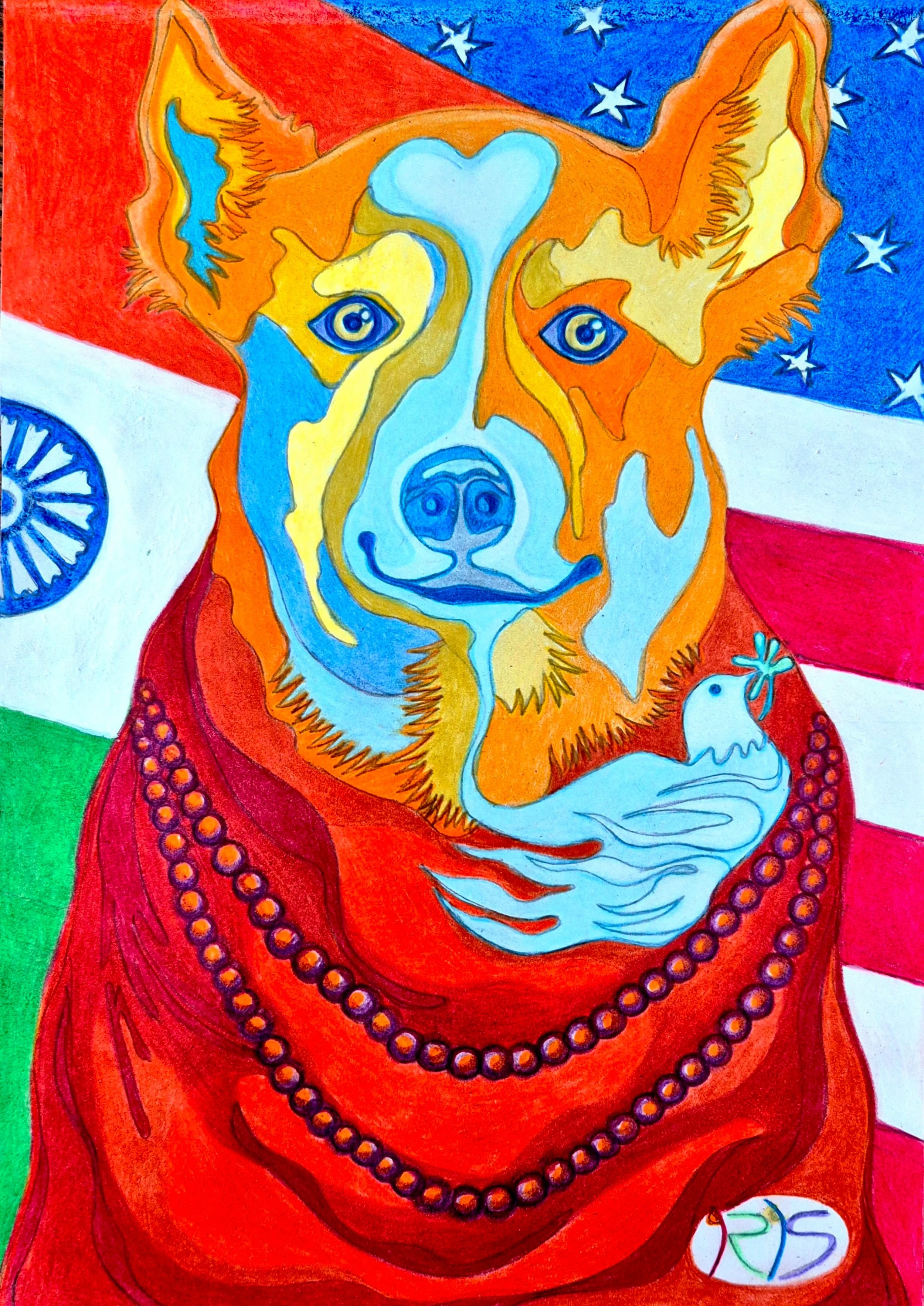
ALOKA.Some souls are born to inspire peace, 2026, color pencils on paper, 29,7x21cm
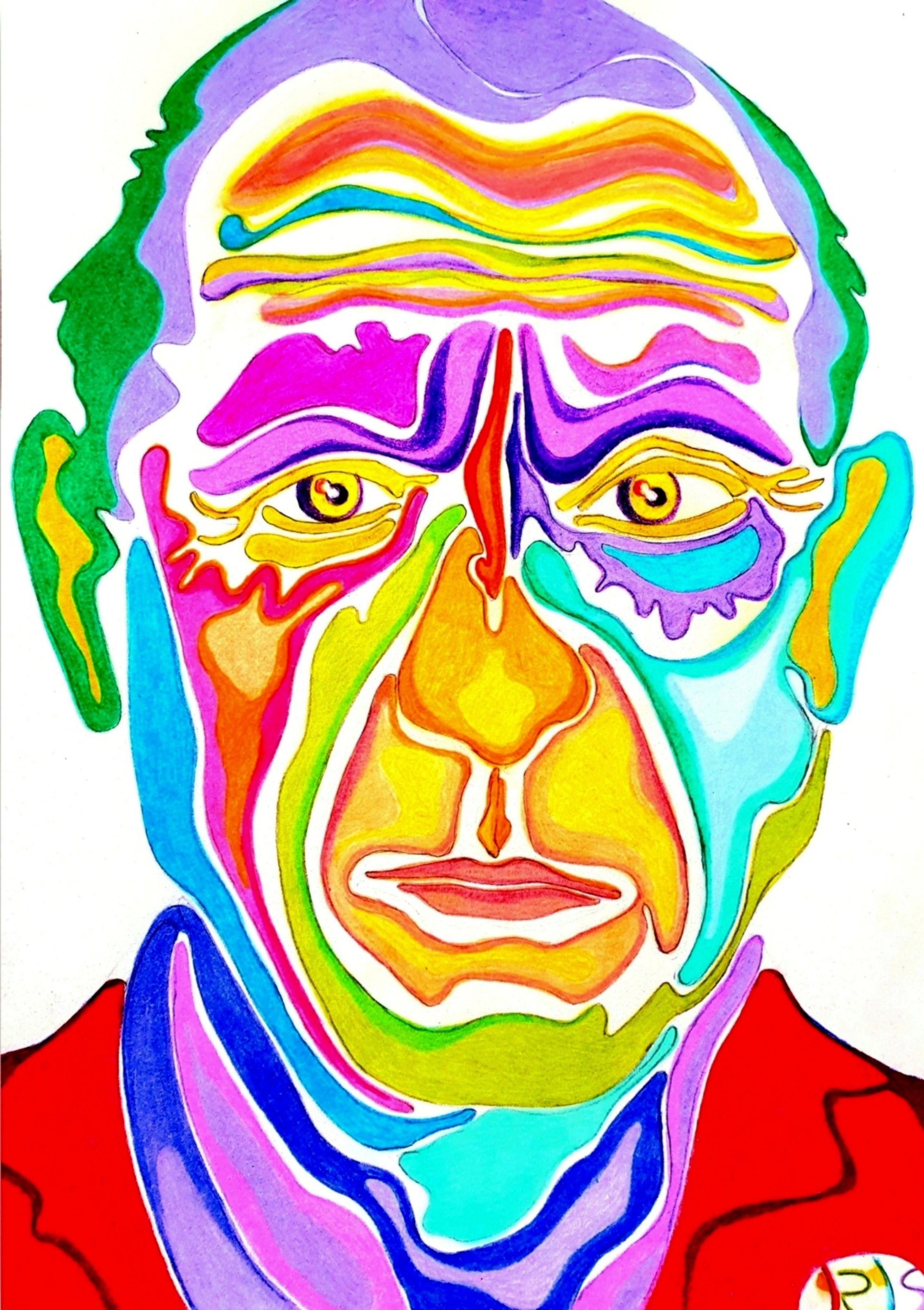
PABLO PICASSO, 2023,color pencils on paper, 29,7x21cm
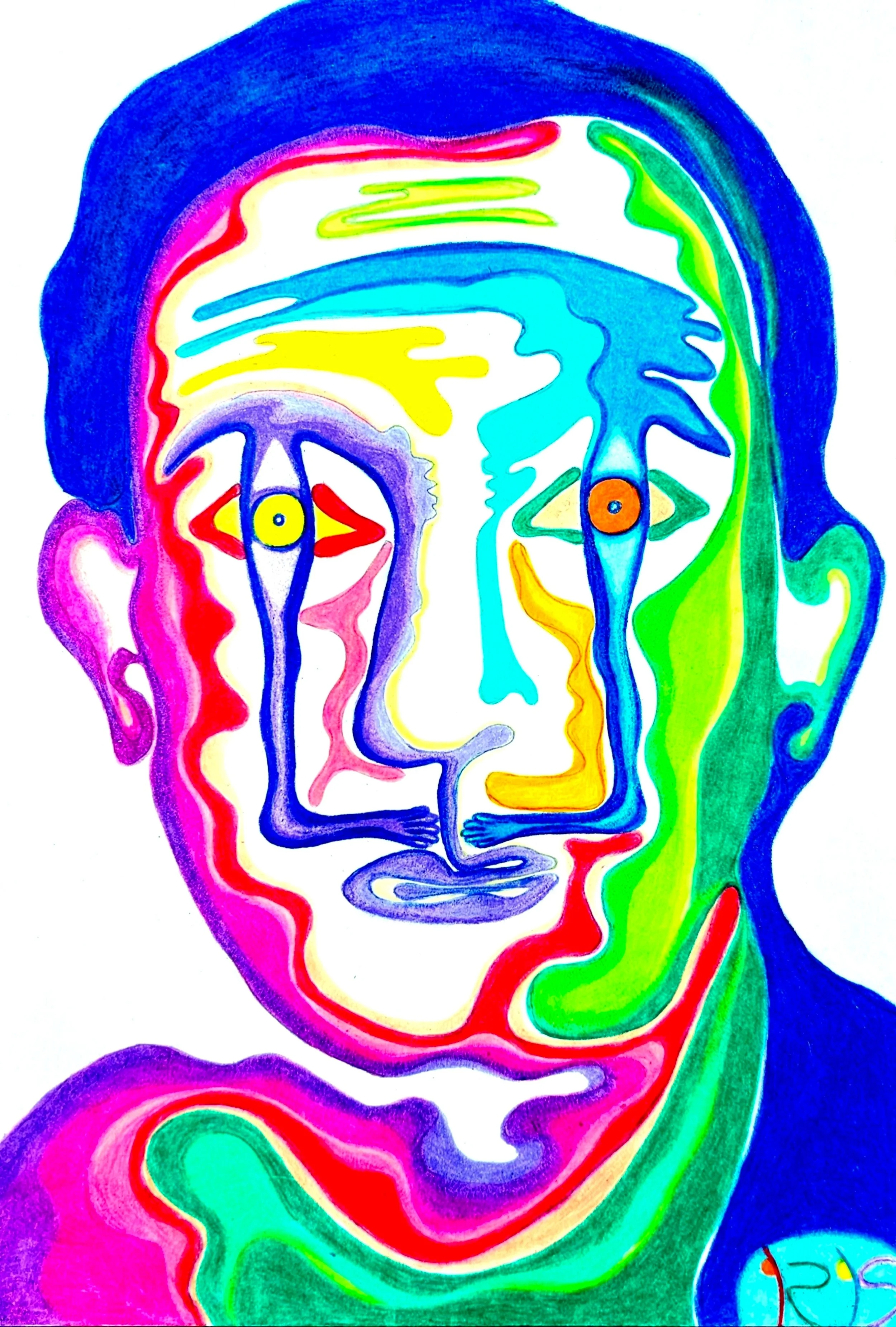
SALVADOR DALI,2024,color pencils on paper, 29,7x21cm
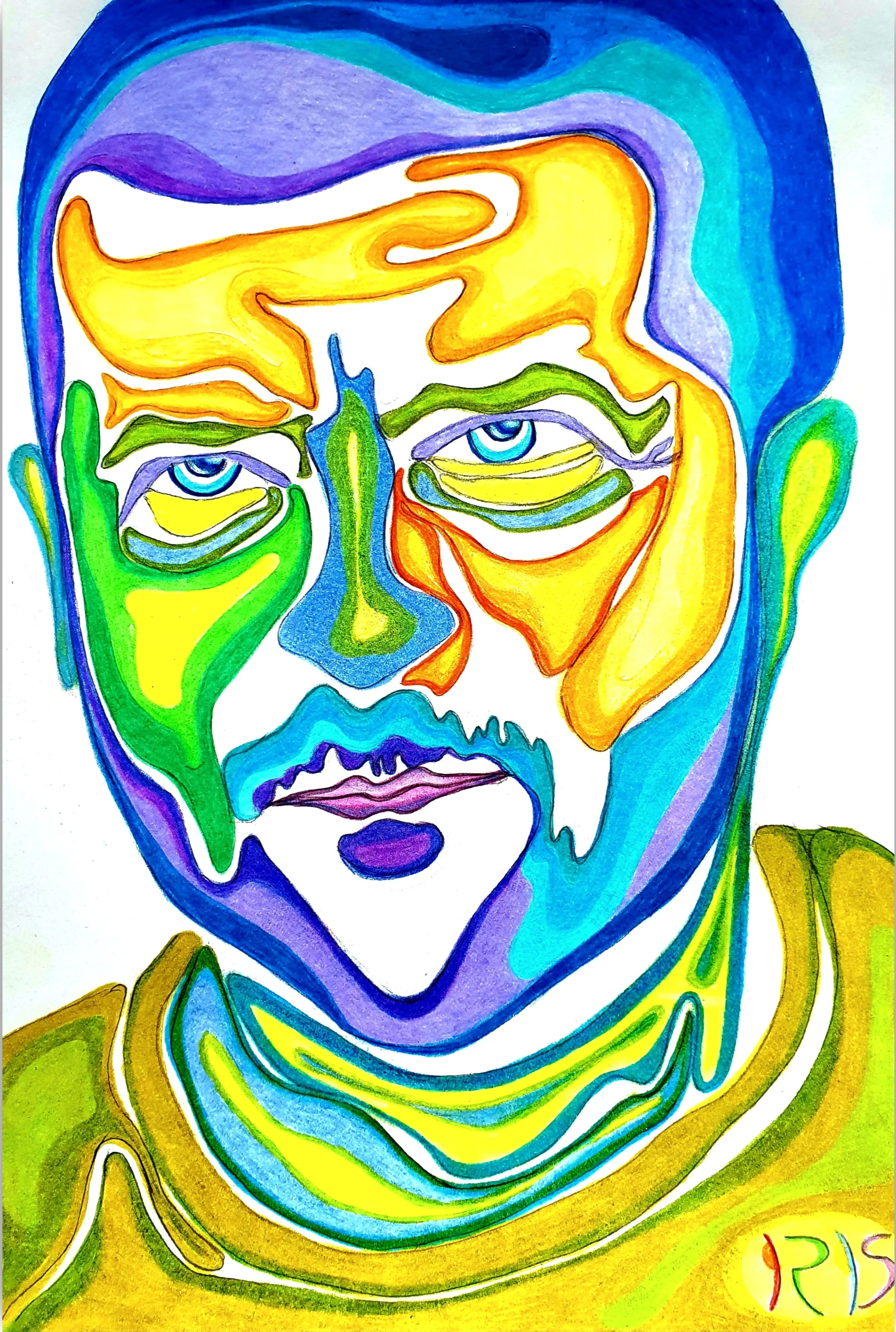
Mr.PRESIDENT, 2023, color pencils on paper, 29,7x21cm
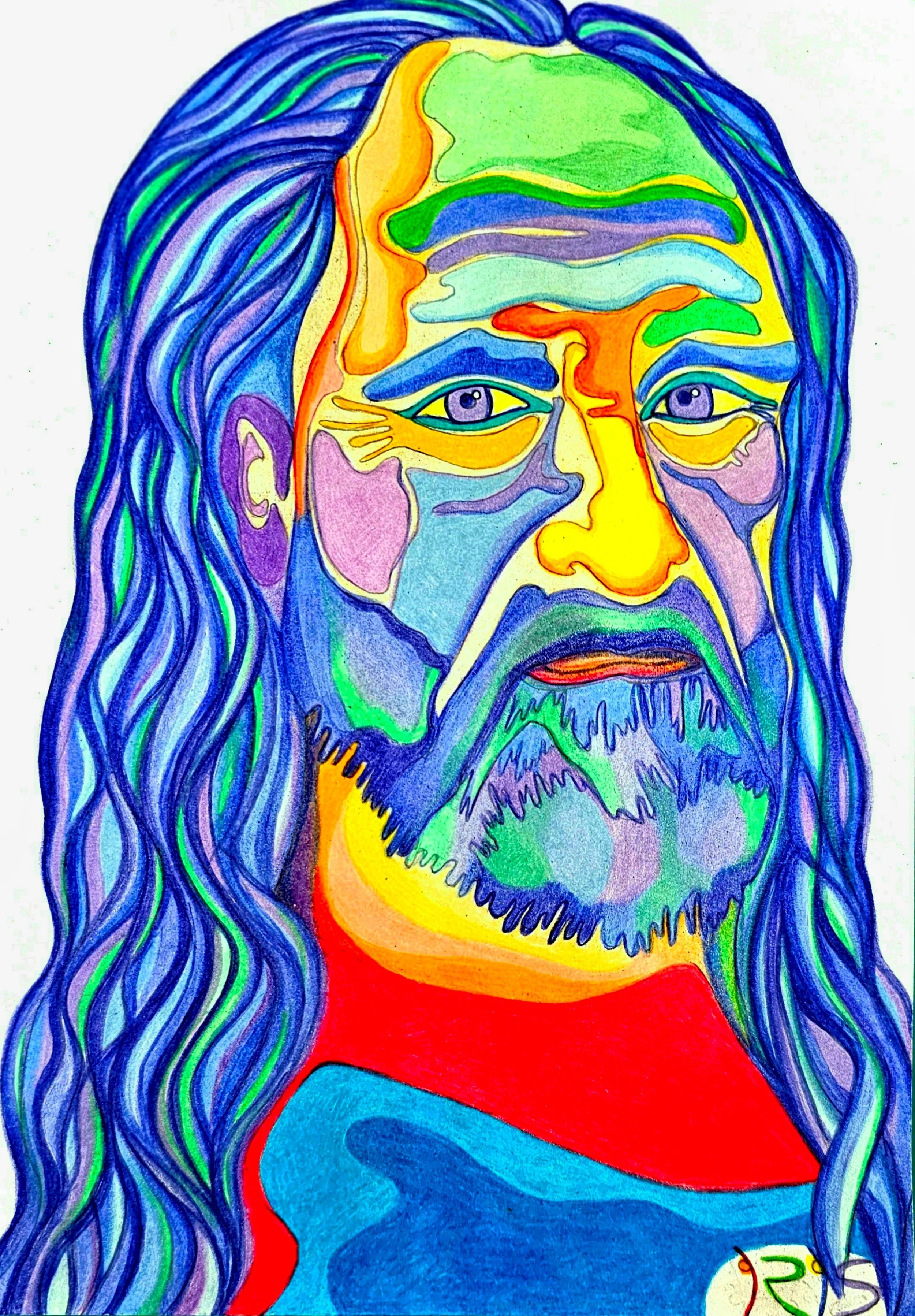
Leonardo da Vinci Does Not Like Time Travel,2025, color pencils on paper 29.7x21cm
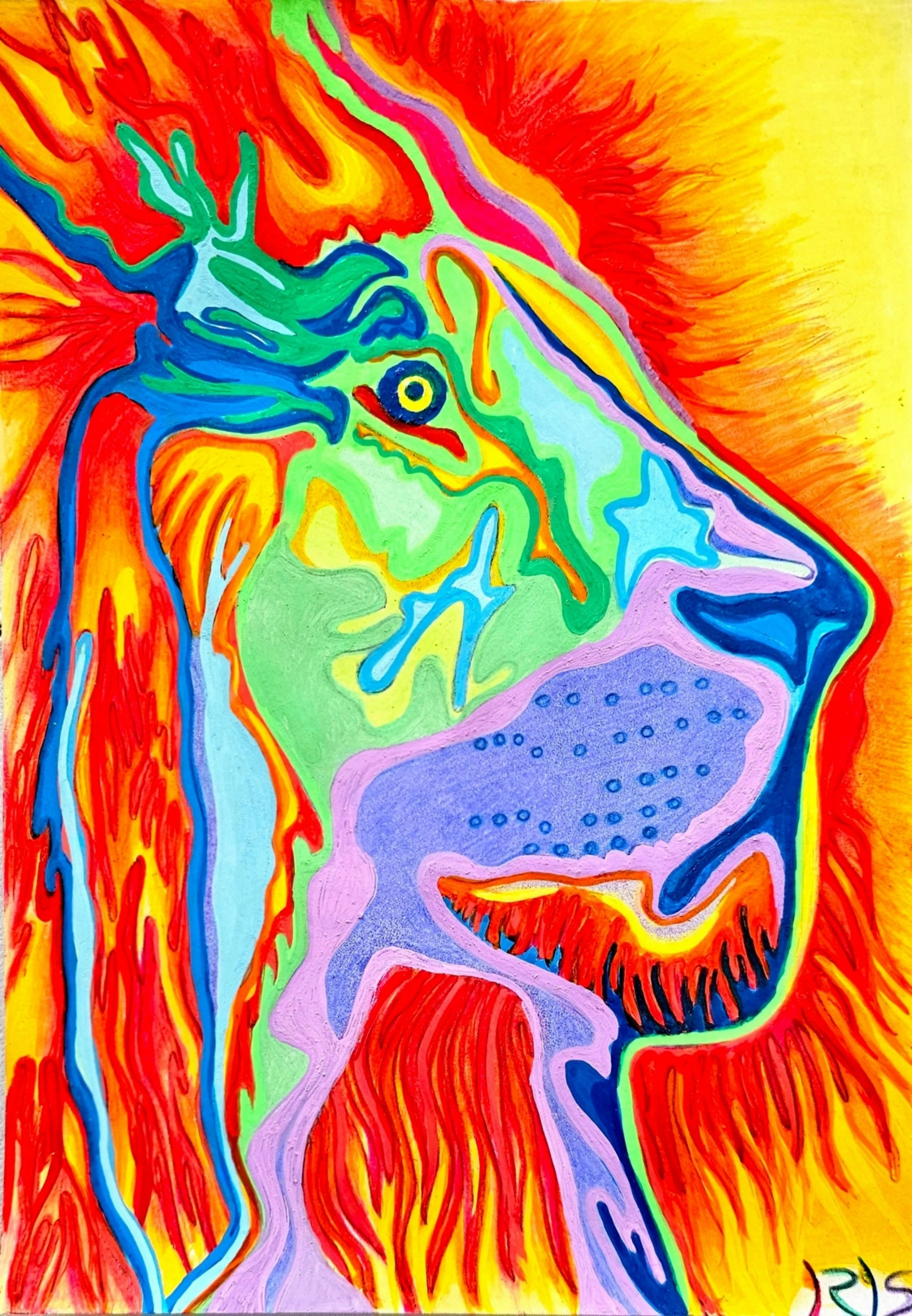
The Lion King is back: Noble and Powerful,2025, color pencils and acrylic on paper, 29,7x21cm
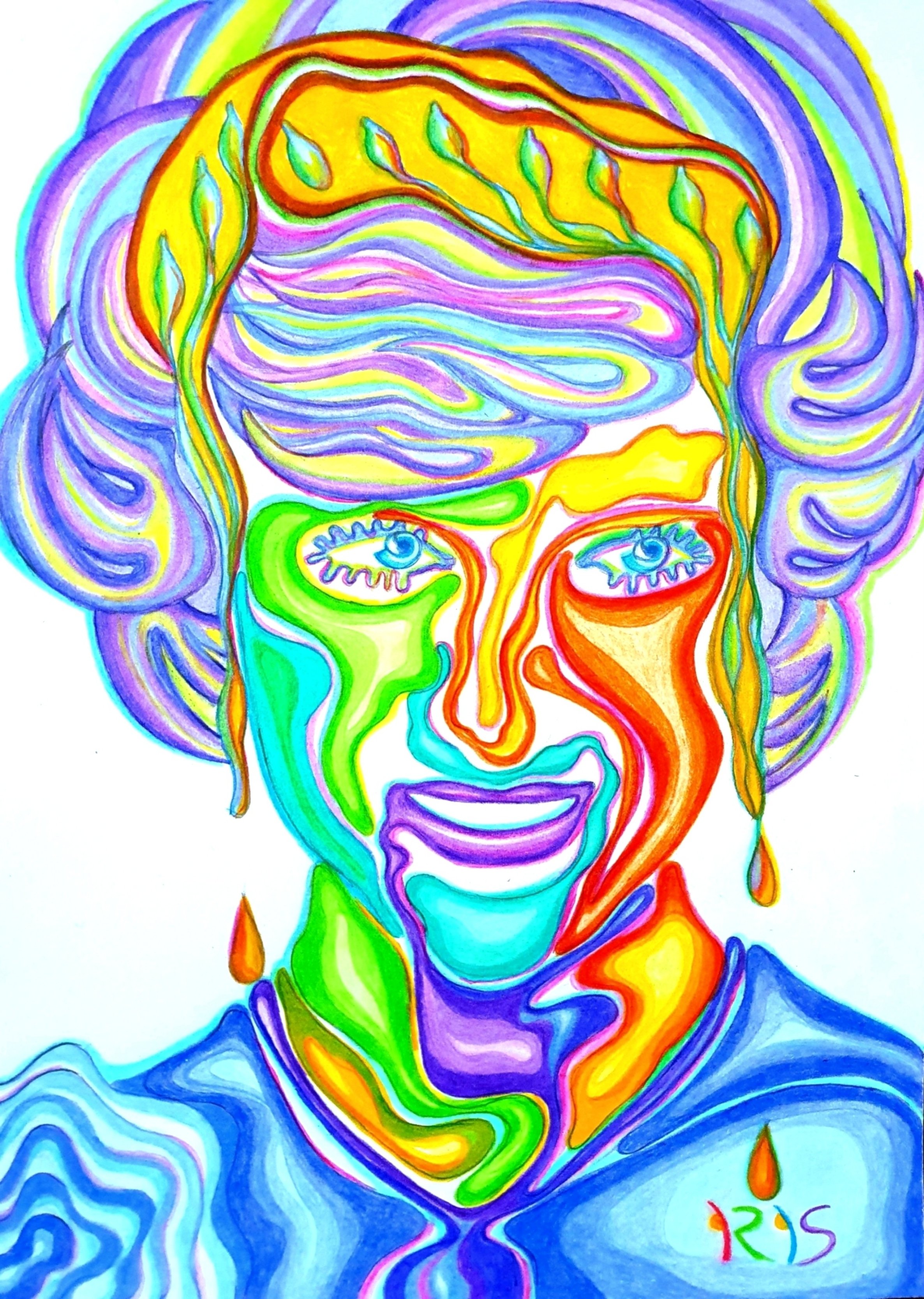
LADY DIANA, 2022, color pencils on paper, 29,7x21cm