Rose Masterpol
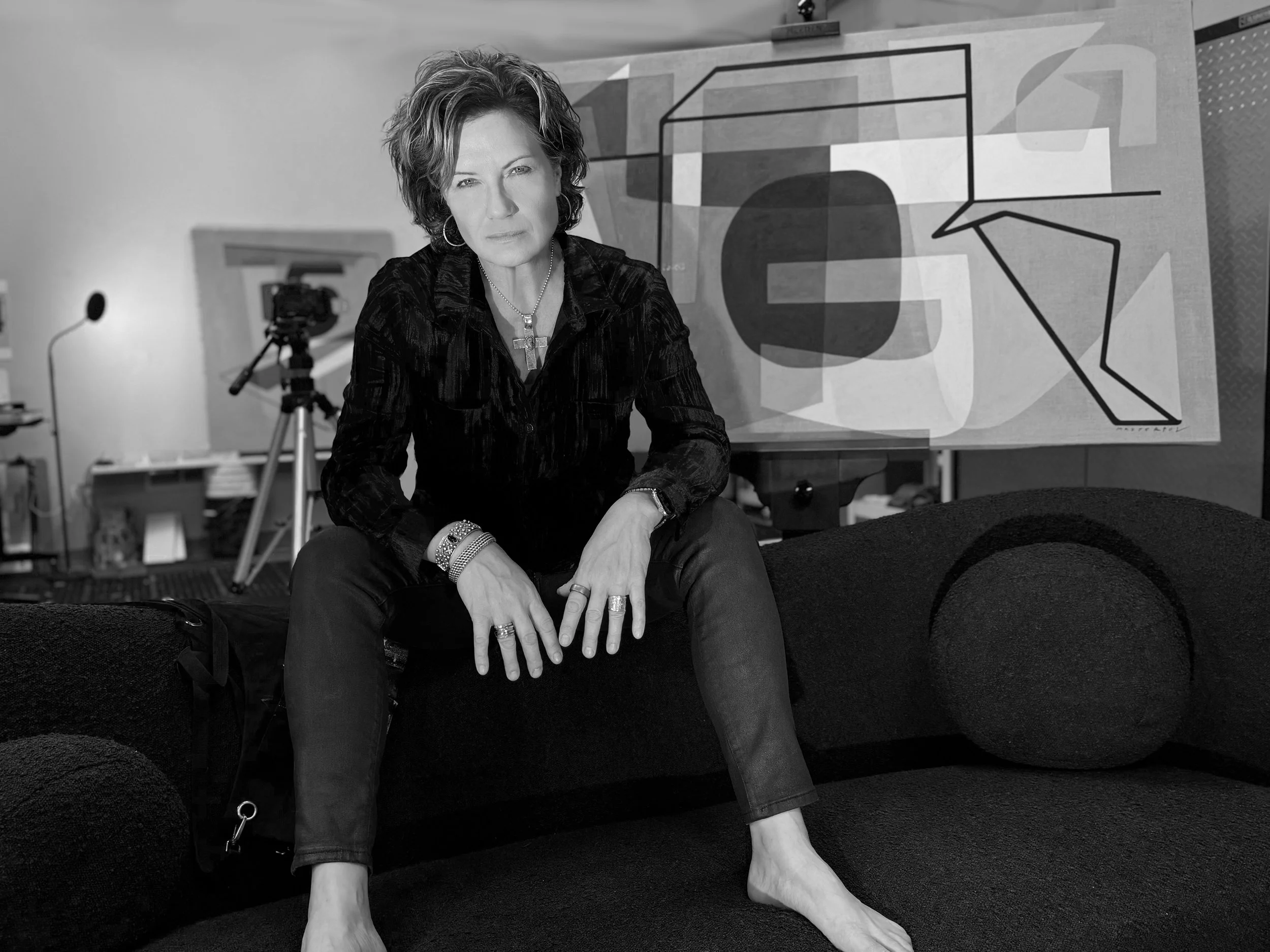
In the vast terrain of contemporary abstraction, where the language of geometry has been repeatedly rehearsed, dismantled, and reassembled over the last century, Rose Masterpol’s work stands as an act of renewal rather than repetition. Across a career spanning more than three decades, she has cultivated a painterly vocabulary that is both deeply informed by the history of modernism and resolutely anchored in the urgencies of the present. Her canvases do not quote the past as ornament. They inhabit it, metabolize it, and release it into a new field of formal and emotional resonance.
Masterpol describes her practice as the “language of non objective, organic, and pure painting.” The phrase is not rhetorical. It names a commitment to abstraction as a mode of thinking, a means of structuring experience beyond the anecdotal and the illustrative. Educated at the California Institute of the Arts with a BFA in graphic design, and having studied at Syracuse University and Onondaga Community College, she carries into her studio a rare confluence of disciplines. Poetry, music, sculpture, landscape photography, and decades of graphic design practice feed her imagination. Yet as a painter she is self taught, and that paradox is essential. The discipline of design sharpens her sense of structure, proportion, and edge, while her autodidactic immersion in painting preserves an intuitive, unfiltered engagement with color and form.
The Geometrix Series marks a decisive crystallization within this long trajectory. In these works, geometry is not cold or doctrinaire. It is animated, porous, almost sentient. Shapes overlap and migrate across the canvas like tectonic plates drifting into contact, their intersections creating zones of translucency and tension. Lines arc, loop, and traverse the pictorial field, binding disparate elements into relational networks. The result is not a static grid but a living architecture, a choreography of interdependence.
Masterpol designs her compositions digitally before committing them to canvas, describing the process as a marriage between the virtual and the physical. The digital sketch becomes a generative matrix, but it is in the translation to acrylic or oil on linen that the work acquires its sensuous authority. Paint is layered in translucent skins, wafted over one another in subtle gradations, and then anchored by sharply defined opaque forms. The crispness of her edges recalls the clarity of mid twentieth century design, yet the compositional dynamics remain indebted to the gestural legacy of the New York School. Pollock’s all over expansiveness, de Kooning’s muscular line, Kline’s graphic decisiveness, and Motherwell’s gravitas echo within her surfaces, though transmuted into a calmer, more architectural key.
To understand the importance of The Geometrix Series, one must recognize that Masterpol is not simply reviving a modernist idiom. She is interrogating its promise. The optimism of De Stijl, the chromatic liberation of Fauvism, and the existential charge of Abstract Expressionism are not treated as relics but as living propositions. At a moment when social fragmentation and digital alienation threaten the coherence of shared experience, her canvases stage a counter argument. They propose connection as both formal principle and ethical imperative.
The series opens with Geocentric (2020), a work in which a dominant vertical axis in pale blue bisects the canvas, intersecting with a constellation of rounded and rectilinear forms in red, olive, plum, and charcoal. The composition pivots around this central column, yet refuses symmetry. Semi transparent layers overlap like Venn diagrams, creating subtle chromatic modulations where colors intersect. A looping black line snakes through the field, at once binding and destabilizing the structure. The title suggests a worldview centered on the earth, but the painting complicates any singular center. Instead, it offers a dynamic equilibrium in which multiple focal points coexist. The geometric vocabulary here is architectural, yet the forms remain supple, organic in their curvature. The work articulates a philosophy of balance that is never static, always negotiated.
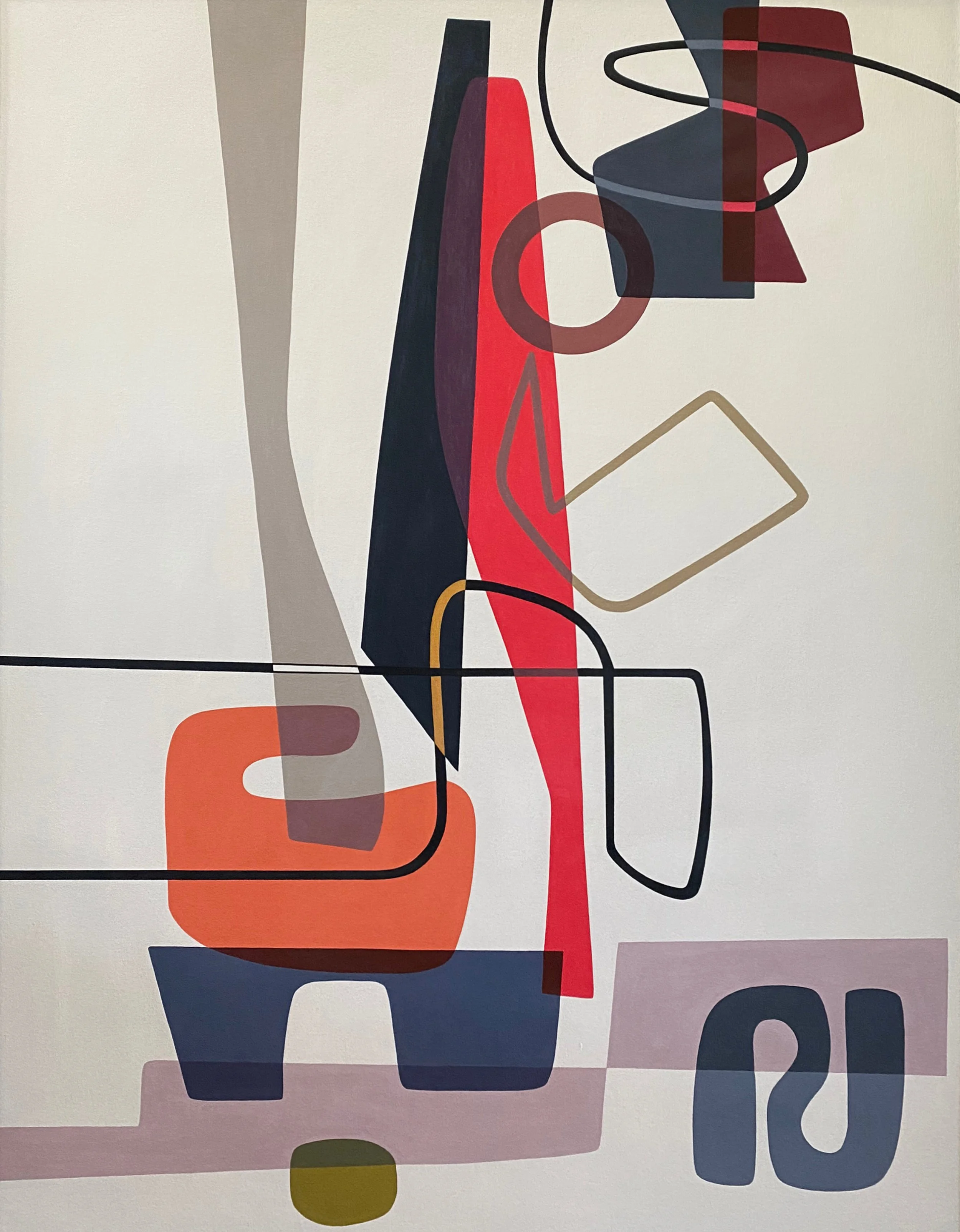
Balance (2021) intensifies this inquiry. Against a pale ground, a tall red vertical form anchors the composition, flanked by deep navy and charcoal shapes that lean and counter lean. An orange, almost chair like form rests low in the picture plane, while looping black and white lines traverse horizontally, creating a sense of suspended motion. The painting enacts a precarious poise. Each element appears contingent upon the others, as though a slight shift might alter the entire configuration. Yet the whole holds. In a world marked by instability, the work does not deny tension; it demonstrates how tension can generate harmony. Masterpol’s layering of translucent planes allows light to permeate the composition, softening its graphic rigor with atmospheric depth.
In Corbusier (2021), the architectural reference becomes explicit. The painting nods to the modernist architect whose modular forms and faith in rational structure reshaped the twentieth century built environment. Here, a large red circular form hovers near the top, intersected by a sweeping white line that arcs across the canvas. Olive and blue shapes interlock beneath, while delicate linear frameworks in white outline rectangular zones. The composition suggests a constructed space, perhaps even a facade, yet it resists literal representation. Instead, it abstracts the logic of architectural design into painterly syntax. The forms are both structural and lyrical, recalling the biomorphic curves of mid century furniture as much as concrete edifices. Masterpol situates herself in dialogue with modernist architecture, yet her emphasis on translucency and overlap introduces a softness absent from the monumentalism of her namesake.
Elevate (2021) shifts the tonal register. Here, muted grays and blues dominate, punctuated by a vertical streak of electric yellow that slices through the composition. Large, rounded shapes in charcoal and slate hover against a pale ground, their edges crisp yet softened by layered translucency. The yellow element acts as a conduit, a visual lift that draws the eye upward. The title resonates not only formally but spiritually. Elevation here is not transcendence in the romantic sense, but an incremental rising through relational interplay. The painting embodies Masterpol’s conviction that abstraction can serve as an invitation to awareness, a visual meditation on ascent through connection.
In Avant Garde (2021), she engages more overtly with the historical avant garde. A black oval anchors the lower center, pierced by a horizontal band of pale yellow. Above, irregular shapes in olive, coral, and teal float against a warm ground. A black line arcs across the surface, looping and curving in an almost calligraphic gesture. The painting acknowledges the radical ruptures of early modernism, yet it refuses rupture as spectacle. Instead, it integrates the avant garde impulse into a cohesive field. The black oval reads as a void, a pause, perhaps even a moment of introspection amid the surrounding activity. Masterpol’s avant garde is not iconoclastic; it is integrative.
Aria (2021) introduces a musical metaphor. The canvas vibrates with a syncopation of forms in muted greens, blues, and soft reds. A black shape at the center curves like a note, while white lines weave through the composition in looping arcs. The layering of translucent planes creates a rhythm of reveal and conceal, akin to melodic variation. Masterpol’s background in music finds visual analog here. The painting sings without sound, its geometry unfolding like a score. The interplay of tension and release, density and openness, mirrors musical structure, reinforcing her belief that abstraction can articulate emotional states beyond language.
In Geocentric and Balance, geometry functioned as a stabilizing force. In Aria, it becomes lyrical. Yet the series is not monolithic. Red Jasper (2019), a precursor to the more fully realized Geometrix works, saturates the canvas in deep reds and maroons. A large circular form dominates, intersected by looping lines in crimson and gold. The composition is denser, more saturated, and less airy than later works. Here, Masterpol grapples with the gravitational pull of color itself. The red field exerts an almost tectonic pressure, suggesting both intensity and interiority. The painting reads as a threshold between her earlier gestural canvases and the more architectonic clarity of Geometrix. It retains the emotional charge of Abstract Expressionism while foreshadowing the compositional discipline to come.
Geocentric and Red Jasper together chart a movement from painterly density to structural lucidity. That lucidity reaches a stark culmination in Rubicon (2025), a black and white composition that strips away chromatic exuberance in favor of dramatic contrast. Large black shapes interlock with white negative spaces, forming a bold, almost cut paper geometry. Thin linear elements slice through the field, suggesting fracture or decision. The title invokes a point of no return. In formal terms, the painting represents a crossing from chromatic layering to austere clarity. It confronts the viewer with a binary structure, yet within that binary lies nuanced asymmetry. The black and white planes do not settle into predictable symmetry; they push against one another, generating dynamic tension. Masterpol here demonstrates that her vocabulary is not dependent on color alone. The structural intelligence of her compositions can sustain even the most reduced palette.
Humanitarium (2024) reintroduces warmth and narrative resonance. Against a coral ground, a central black form anchors the composition, surrounded by translucent yellow and pink planes. A white looping line threads through the painting like connective tissue. There are subtle gestural marks in the lower left, suggesting a human trace. The title implies a space dedicated to humanity, a sanctuary or refuge. In formal terms, the painting constructs such a space through overlapping geometries that cradle rather than confront. The coral ground bathes the composition in warmth, while the black form provides stability. The interplay of translucent and opaque elements evokes vulnerability and protection. In a world fractured by division, Humanitarium offers an image of coexistence without didacticism.
Cathedral (2020) returns to the metaphor of architecture with spiritual inflection. Vertical elements rise from the base of the canvas, intersected by horizontal bands and curved forms in muted earth tones, blues, and reds. The composition suggests buttresses and arches, yet remains resolutely abstract. The layering of translucent shapes creates a sense of depth, as though light filters through stained glass. The painting constructs a sacred space without iconography. Its geometry becomes devotional through proportion and light. In this work, Masterpol’s belief in abstraction as a vehicle for transcendence finds eloquent expression.
Across these works, one perceives a consistent formal strategy: the overlay of translucent planes, the anchoring of opaque shapes, and the weaving of linear elements that both bind and disrupt. Yet the emotional register shifts subtly from canvas to canvas. Some works emphasize equilibrium, others tension, others lyrical flow. The series format allows Masterpol to explore this range without abandoning her core vocabulary. Each painting is a variation within a larger symphonic structure.
To situate Masterpol within art history, one might compare her to Piet Mondrian, not in terms of surface resemblance, but in philosophical orientation. Mondrian sought a universal harmony through the reduction of form to vertical and horizontal lines and primary colors. He believed abstraction could reveal a higher order underlying visible reality. Masterpol shares this conviction in abstraction as a conduit to deeper connection. Yet where Mondrian pursued strict orthogonality and chromatic purity, she embraces curvature, translucency, and chromatic nuance. Her geometry is less ascetic, more embodied. If Mondrian’s canvases aspire to metaphysical equilibrium, Masterpol’s articulate relational dynamism. She extends the modernist project by infusing it with contemporary sensibility and digital mediation.
Her place in the contemporary art scene is thus distinctive. In an era dominated by conceptual strategies, identity politics, and digital spectacle, she reaffirms the potency of formal abstraction without retreating into nostalgia. Her work acknowledges the digital age through its design genesis, yet insists on the tactile authority of paint. It engages mid twentieth century design not as retro chic but as living grammar. Collectors across the United States and internationally have responded to this synthesis, recognizing in her canvases both historical depth and present urgency.
The importance of her work for society lies in its insistence on connection as structure. In her artist statement, she speaks of a harsh world marked by division and alienation. Her paintings respond not by depicting conflict but by modeling relational harmony. Through color, form, and spatial interplay, she constructs visual analogues for shared humanity. The viewer navigating her canvases experiences interdependence in real time. Shapes overlap without annihilating one another. Lines traverse boundaries without erasing difference. Transparency allows coexistence. These formal operations carry ethical resonance without didactic proclamation.
Moreover, her practice embodies a philosophical stance toward creation. She describes working in the space between existence and non existence, relinquishing conscious thought to allow something else to emerge. This openness to the unknown aligns her with a lineage of artists for whom abstraction is a spiritual endeavor. Yet she tempers mysticism with structural rigor. The digital predesign stage introduces deliberation and precision. The canvas becomes the site where intuition and calculation converge.
Masterpol’s evolution from gestural expansiveness to the poised clarity of Geometrix does not represent a repudiation of her past but a distillation. The floating lines and biomorphic shapes that once struggled within painterly tumult now emerge with articulate definition. Time in these paintings feels less marked by the artist’s hand and more by an internal rhythm, a calm unfolding. The canvases breathe.
In reviewing each work individually, one encounters not isolated statements but chapters in a sustained inquiry. Geocentric establishes a grammar of layered centrality. Balance tests equilibrium under pressure. Corbusier dialogues with architectural modernism. Elevate meditates on ascent through vertical intervention. Avant Garde integrates historical radicalism into compositional unity. Aria translates musical rhythm into visual cadence. Red Jasper explores chromatic density as emotional field. Rubicon confronts binary tension with stark clarity. Humanitarium constructs sanctuary through relational geometry. Cathedral sacralizes structure through light and proportion.
Together, these works articulate a manifesto of vital symmetry, to borrow her phrase. Symmetry here is not mirror image but balanced dialogue between harmony and tension. The viewer is invited not merely to look but to inhabit these spaces, to feel the oscillation between form and void, opacity and translucency, stability and movement.
Rose Masterpol’s contribution to contemporary art lies in her ability to render abstraction both intellectually rigorous and emotionally accessible. She navigates the legacies of De Stijl, Fauvism, and Abstract Expressionism with informed passion, neither mimicking nor dismissing them. Instead, she extends their idealism into a contemporary register, one attuned to digital hybridity and global fragmentation.
In a time when the visual field is saturated with images clamoring for attention, her paintings offer a different tempo. They ask for sustained looking, for attunement to subtle chromatic shifts and spatial negotiations. They remind us that abstraction remains a fertile ground for exploring what binds us beyond language and ideology.
The Geometrix Series is not merely a formal experiment. It is a philosophical proposition rendered in paint. It suggests that from overlapping differences, from intersecting trajectories, a higher order of coherence can emerge. Masterpol’s canvases do not impose harmony; they construct it through dialogue. In doing so, they reaffirm the enduring relevance of abstraction as a means of thinking, feeling, and connecting within the complexities of contemporary life.
In tracing the arc of Rose Masterpol’s practice through The Geometrix Series, one arrives at a realization that extends beyond stylistic assessment. What unfolds across these canvases is not simply a sustained engagement with form, nor merely a contemporary revision of mid twentieth century abstraction. It is a meditation on how structure itself can become an ethical proposition. Geometry, in Masterpol’s hands, is not an abstract system divorced from lived experience. It is the visible trace of relationship.
Her lifelong immersion in multiple creative disciplines has sharpened this insight. The poet’s attention to cadence, the musician’s sensitivity to rhythm, the designer’s precision of edge, the photographer’s awareness of framing, and the sculptor’s understanding of mass all converge in a painting practice that refuses fragmentation. Each canvas becomes an arena where disparate sensibilities are reconciled without erasure. The formal decisions, whether the calibrated overlap of translucent planes or the decisive arc of a line, are never arbitrary. They are gestures toward coherence.
The Geometrix Series, in particular, stands as a testament to maturation without closure. It does not abandon the emotive urgency of her earlier gestural works; rather, it distills that urgency into poised configurations. The agitation of expression has evolved into compositional lucidity. Yet the pulse remains. Beneath the measured edges and architectural silhouettes lies the same instinctual drive she describes as surrendering to the abyss between existence and non-existence. The digital prefiguration of her paintings does not constrain this drive. It clarifies it. The translation from virtual blueprint to painted surface becomes a ritual of embodiment, grounding abstraction in the material presence of pigment and linen.
Within the broader field of contemporary art, Masterpol’s work occupies a vital space. It reclaims the modernist belief in abstraction as a communicative force capable of addressing both intellect and soul, while remaining fully aware of the historical weight such belief carries. Her paintings neither retreat into nostalgia nor capitulate to irony. They engage the present with seriousness and optimism, proposing that connection remains possible, even necessary, in a world defined by division.
The enduring significance of Rose Masterpol’s Geometrix lies in its quiet conviction. These paintings do not shout. They construct. They assemble forms into relationships that feel at once deliberate and alive. In doing so, they offer viewers a model of renewal: a visual reminder that harmony is not the absence of tension but the choreography of it. Through geometry made lyrical and color made architectural, Masterpol affirms that abstraction continues to be a language of shared humanity, a living grammar for the complexities of our time.
By Marta Puig
Editor Contemporary Art Curator Magazine
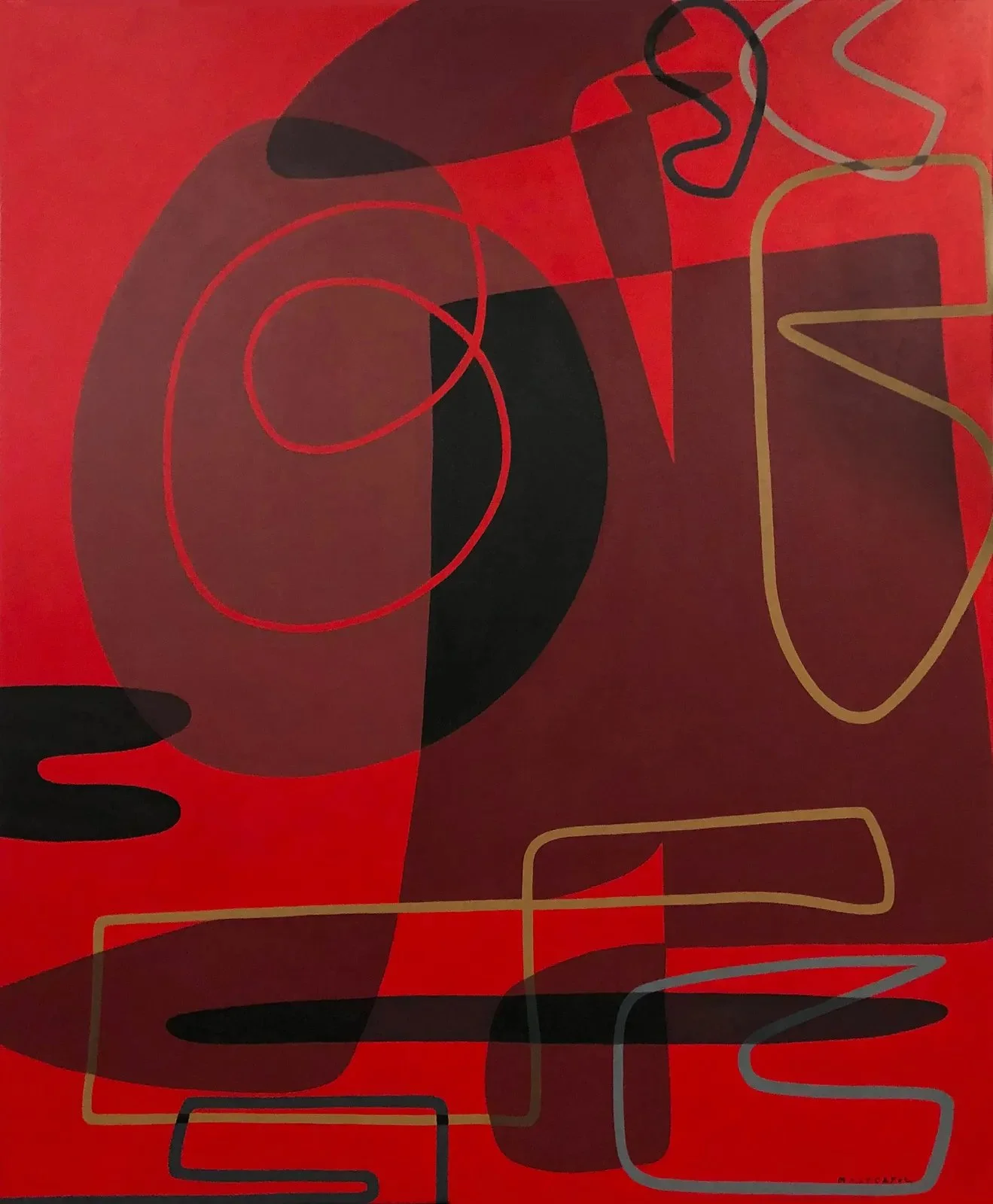
Red Jasper 2019 acrylic 152.4x121.92
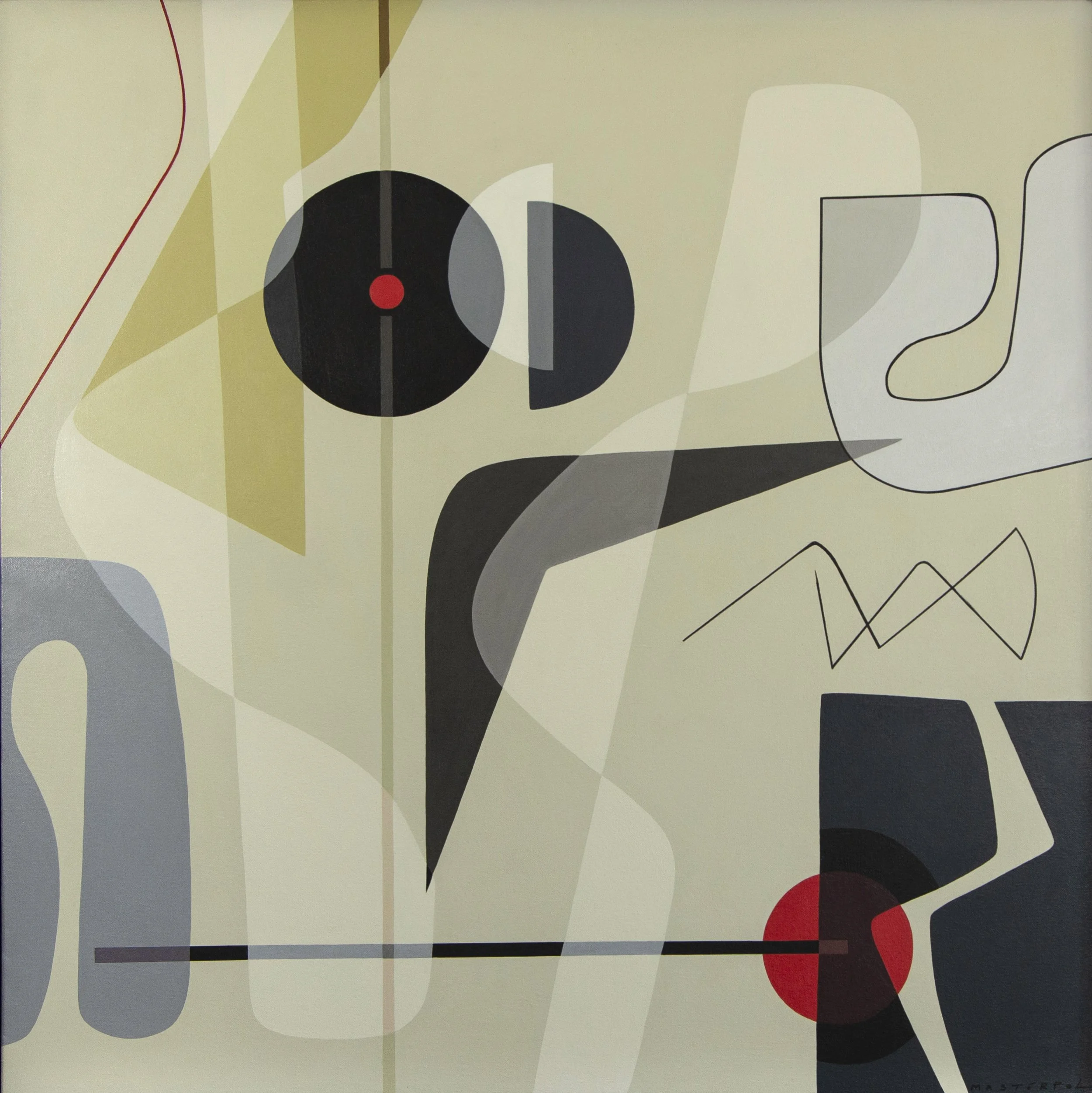
AVANT GARDE 2021 acylic 76.2x76.2
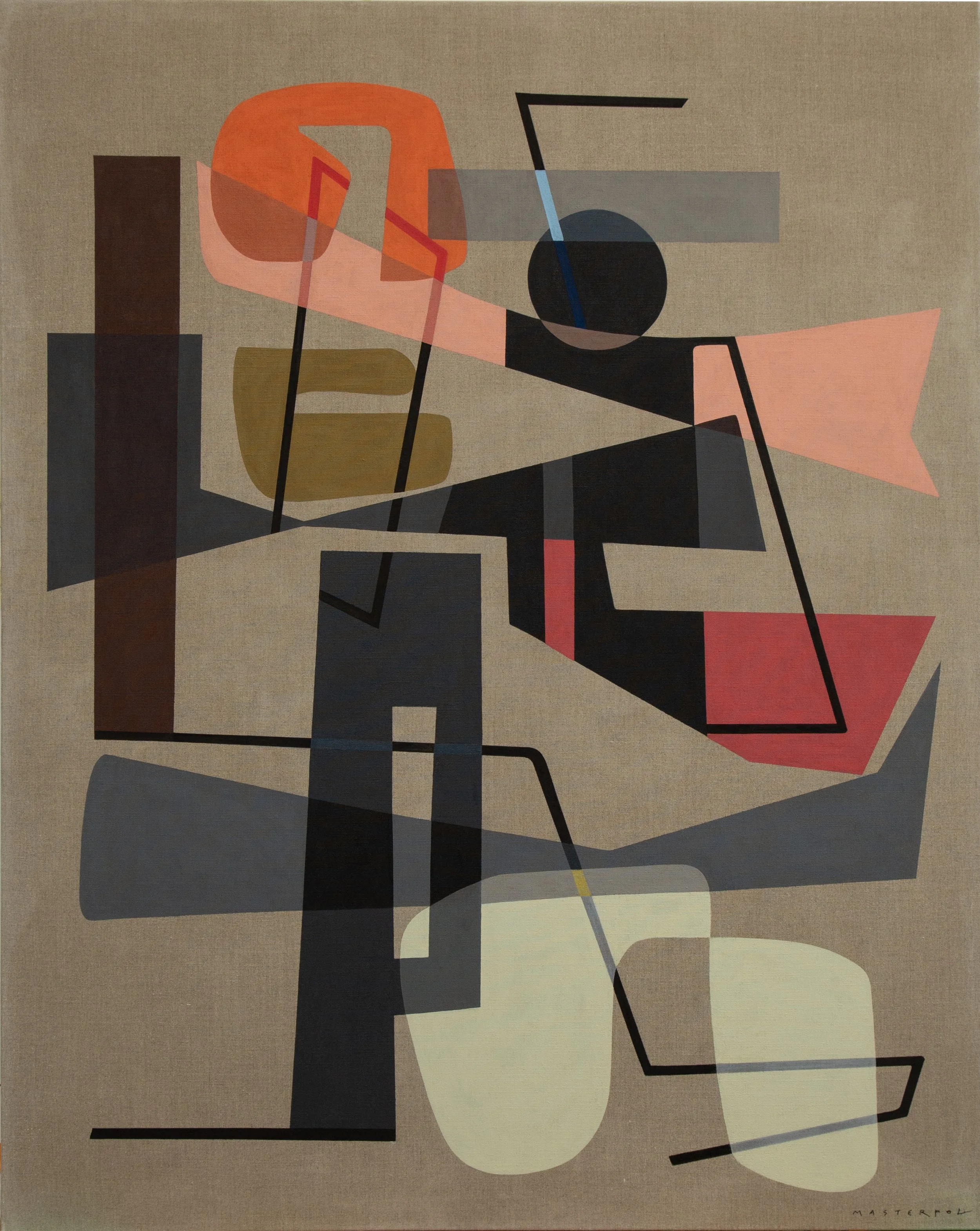
HUMANATARIUM 2024 acrylic 152.4x121.92HELIUM
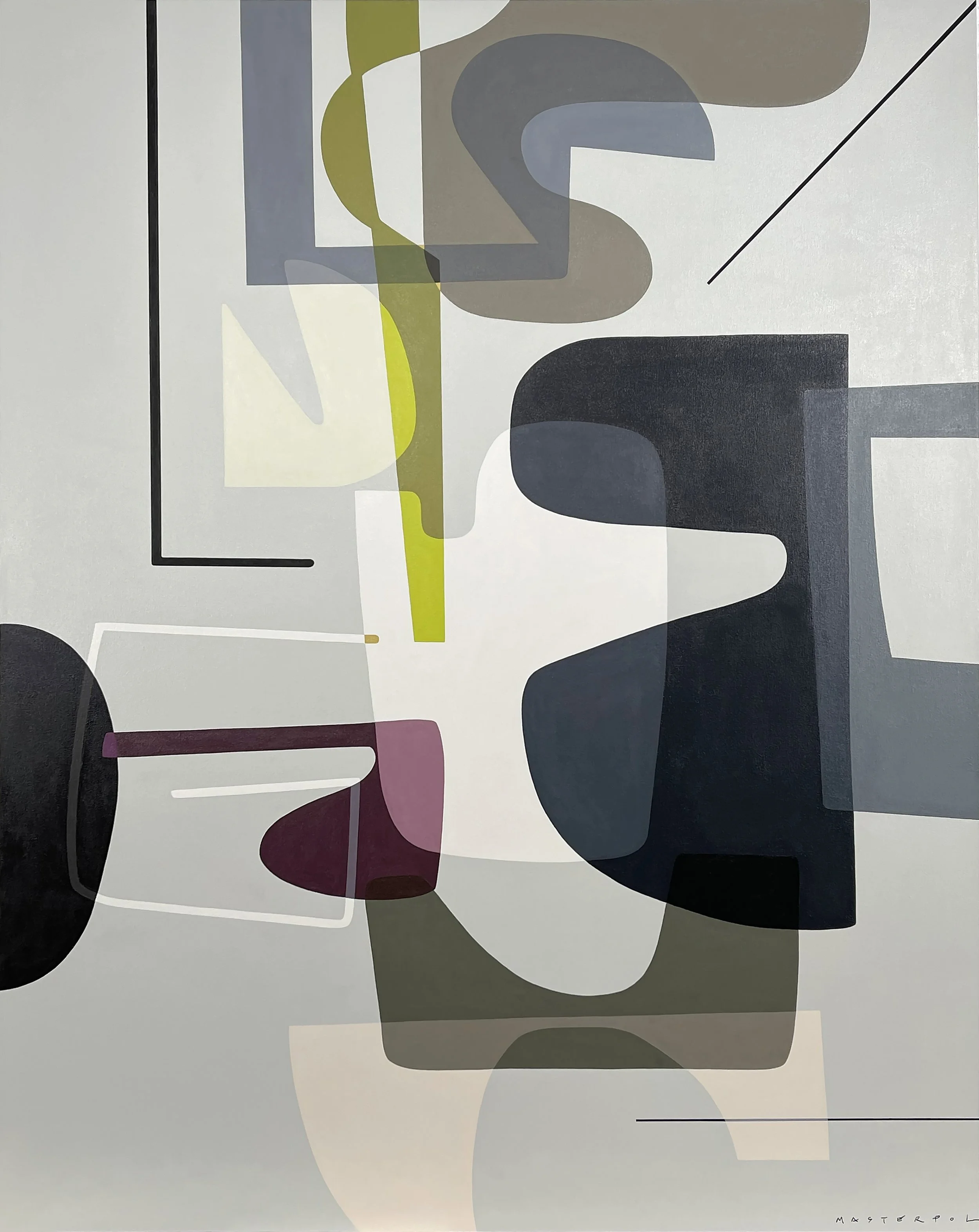
ELEVATE 2021 acrylic 152.4x121.92
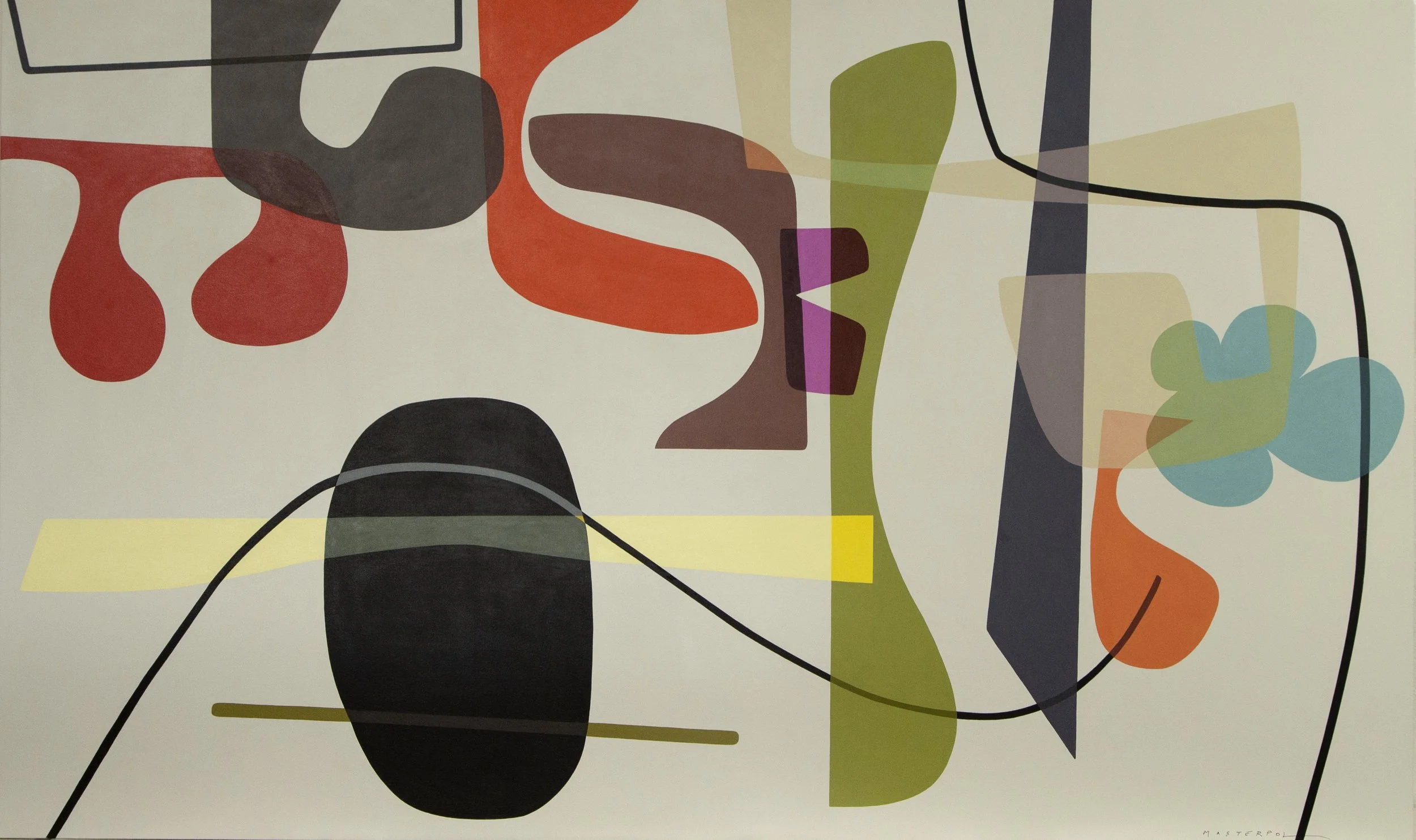
ARIA 2021 acrylic 127x213.36CORBUSIER 2021
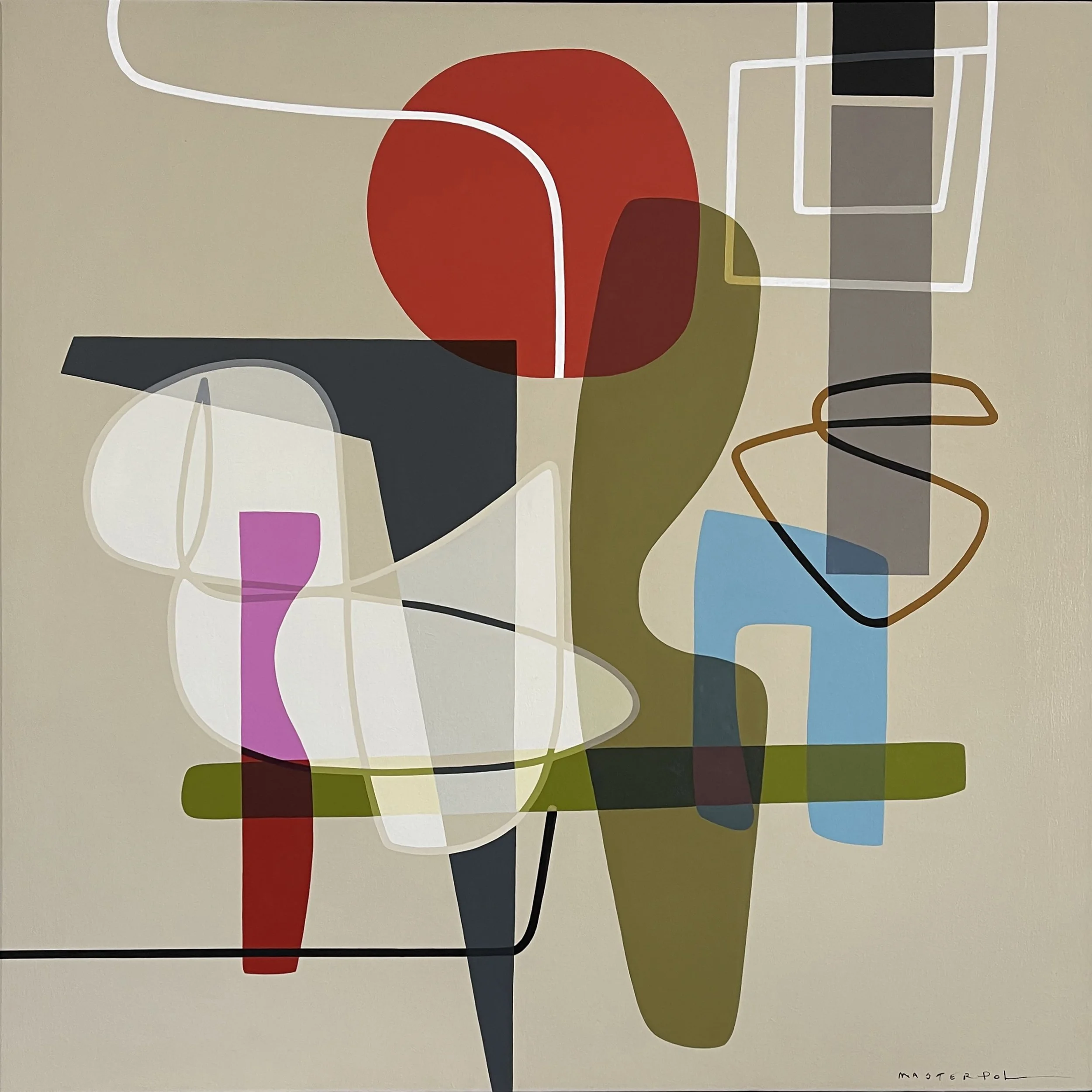
Corbusier 2021 acrylic 99.06x99.06
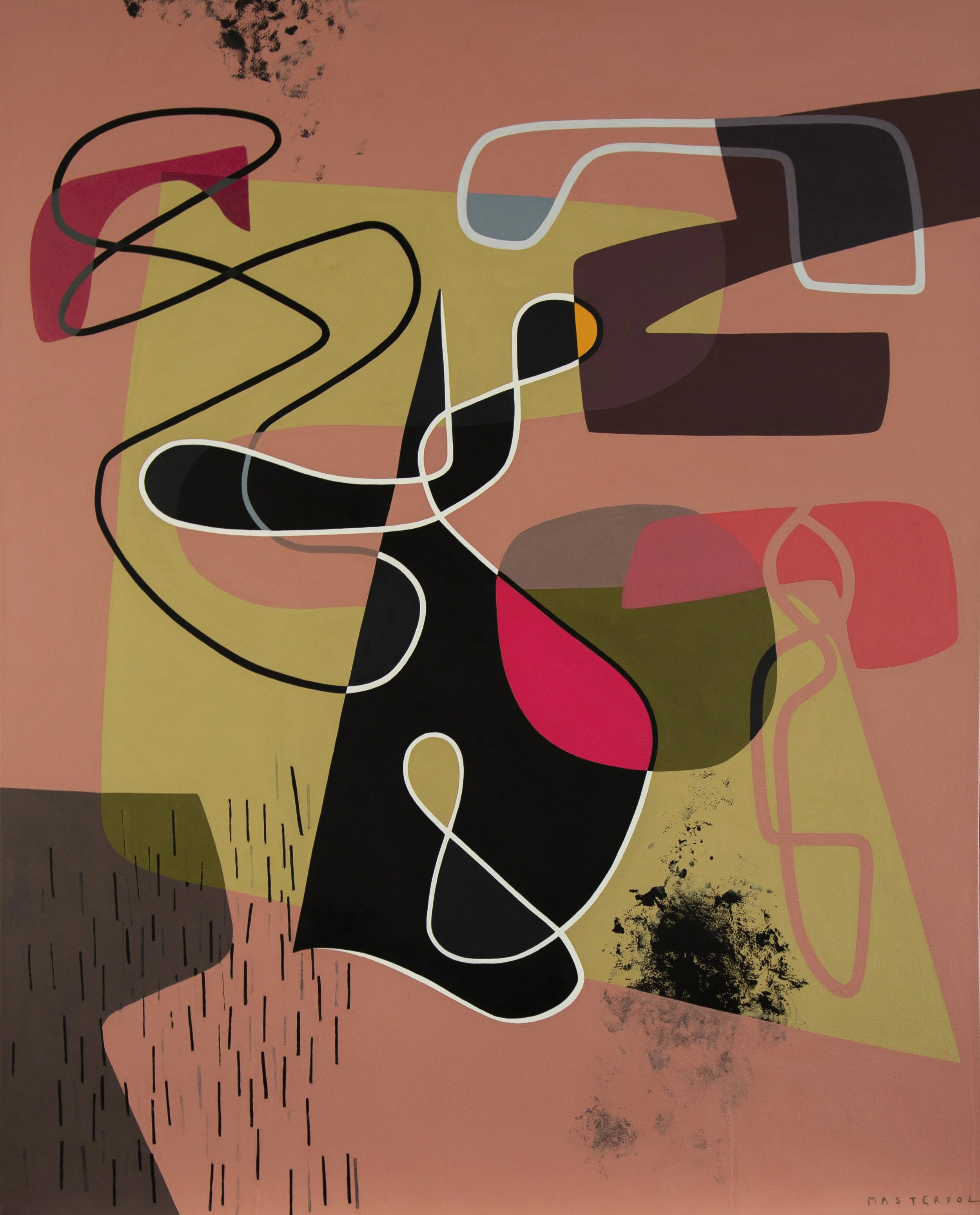
GEOCENTRIC 2020 acrylic 152.4x121.9
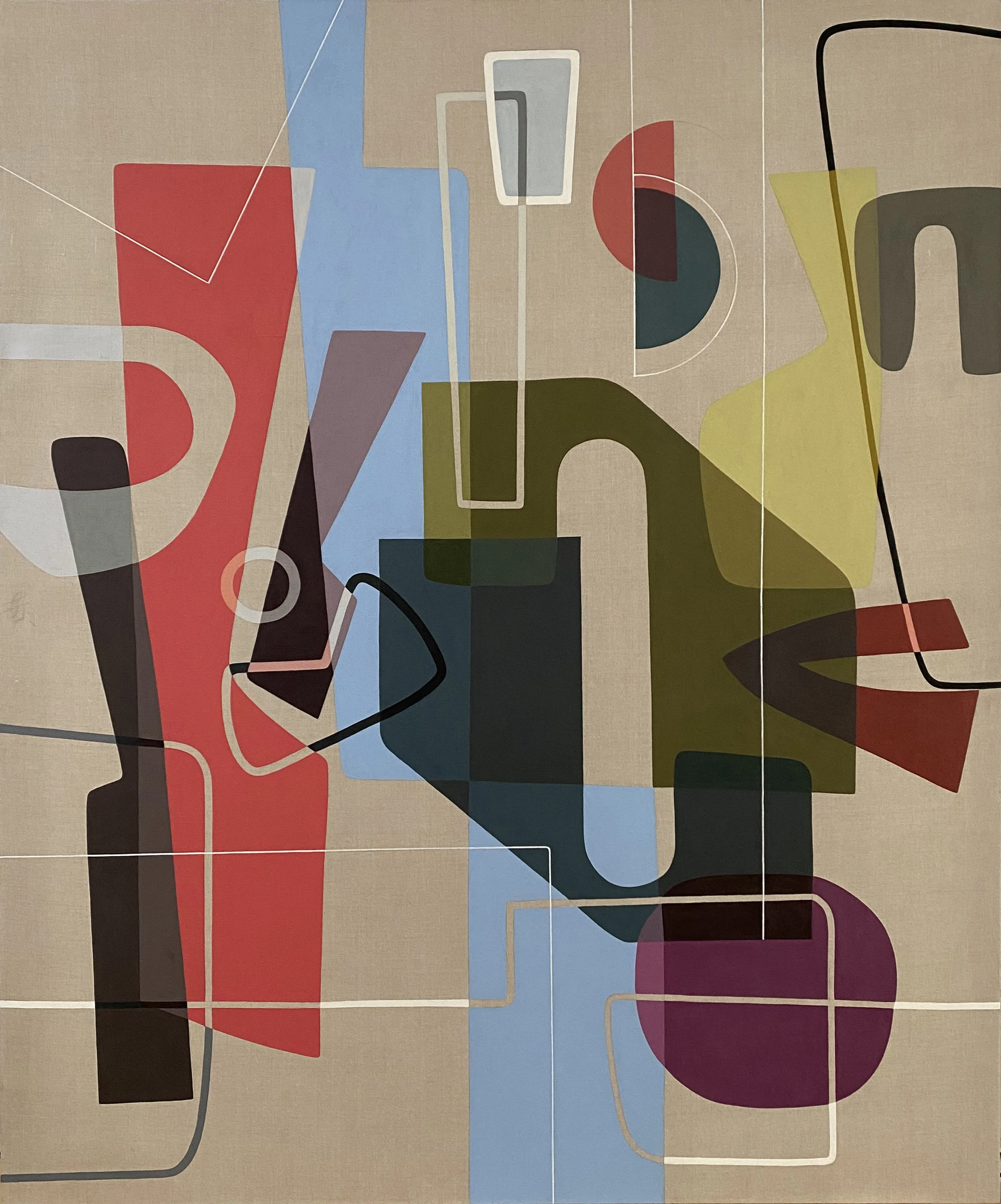
CATHEDRAL 2020 acrylic on linen 182.88x152.4BALANCE
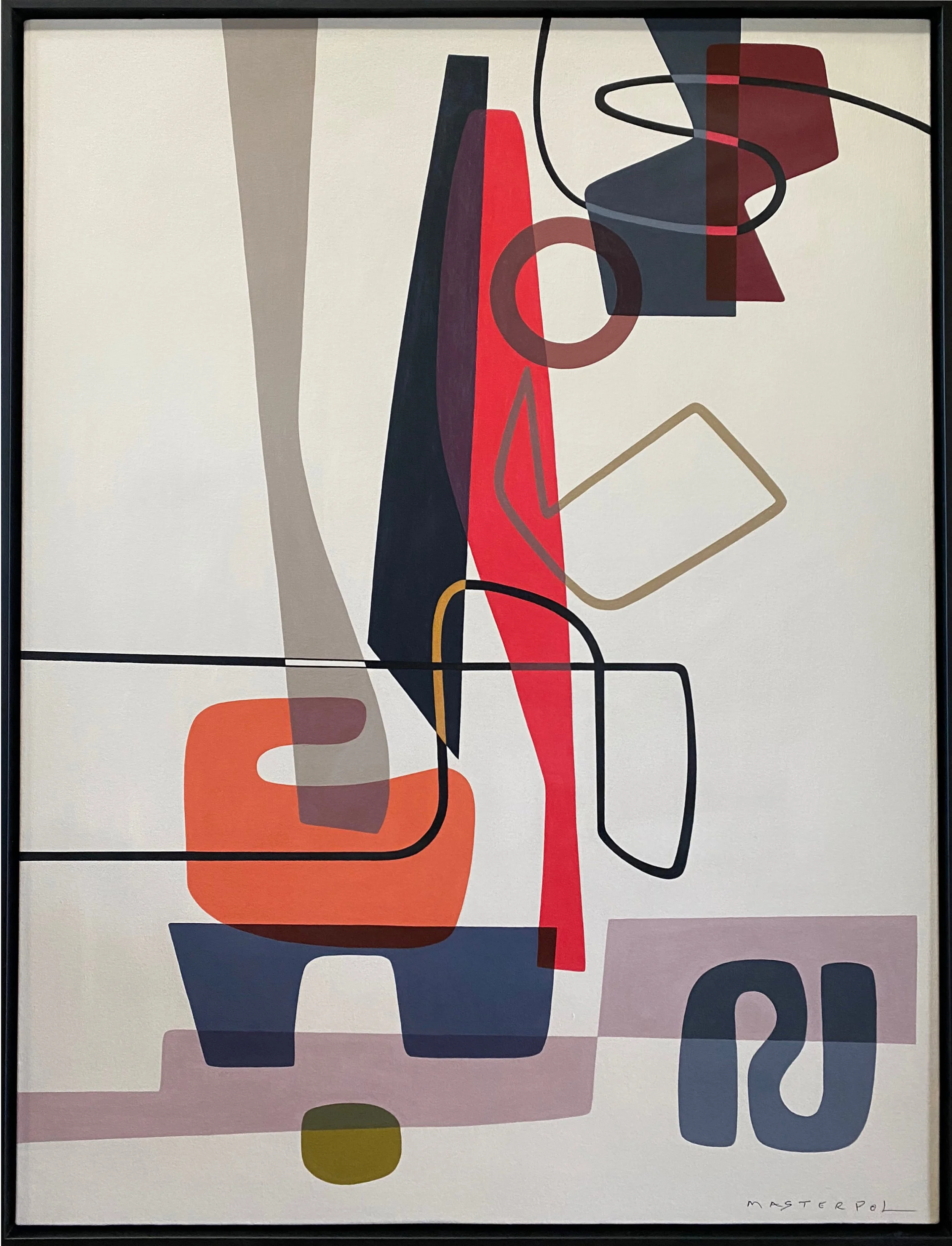
BALANCE 2021 acrylic 121.92x91.44
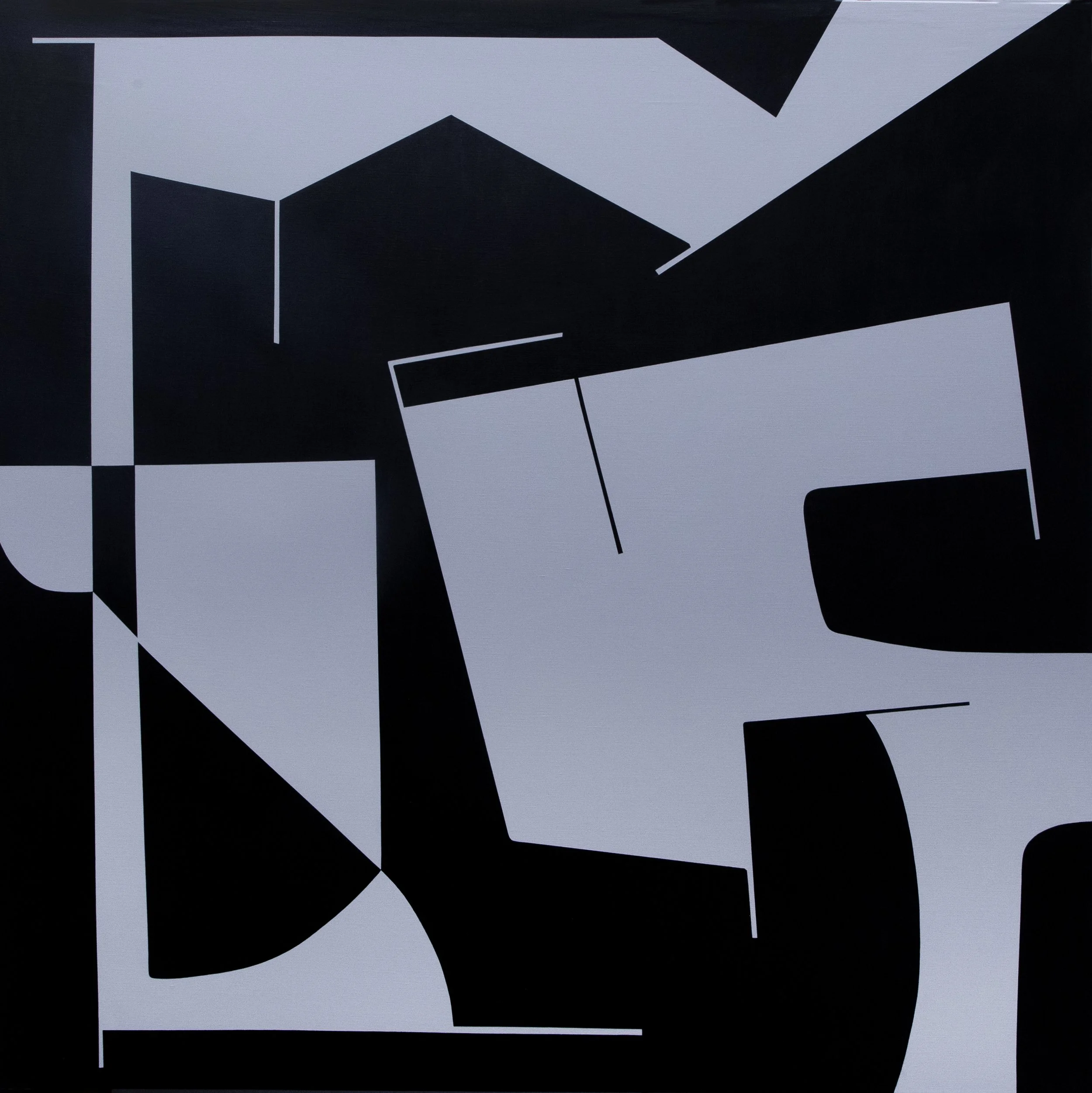
RUBICON 2025 acrylic 182.88x182.88