Vinci Weng
Entering Vinci Weng’s recent work feels less like arriving at an image than like stepping into a constructed situation that is already underway. The first sensation is not simply visual plenitude, though plenitude is everywhere, but a peculiar certainty that what one is seeing has been staged into existence with the deliberation of cinema and the density of painting. Weng’s pictures do not present themselves as windows, nor as documents, nor as the familiar persuasion of photographic immediacy. They behave instead as tableaux with rules, as fictional worlds whose internal physics are established through scale, depth, and chromatic climate. The viewer’s eye is recruited into a traversal that feels at once intimate and infrastructural, moving across crowds, props, animals, balloons, fireworks, architectural fragments, and improbable transitions between night and day, between pastoral and amusement park, between terrestrial gravity and airborne drift. In this sense, the series titles are not ornamental but diagnostic. My Wonderlands, created from 2012 to 2020, and The Enchanted Joylands, begun in 2021 and continuing to the present, announce what the works deliver: not simply fantasy, but a disciplined construction of wonder as an operative mode of seeing.
Weng’s practice, developed over nearly four decades, arrives at these “wonderlands” through a set of transformations that are crucial to understanding the ambition of the recent projects. His early work from 1995 to 2004 navigated the traffic between Chinese aesthetic lineages and Western modernity, particularly Surrealism and contemporary painting. The cursive calligraphic impulse, translated into ink like marks and symbolic strokes, was never merely decorative. It operated as structure, as an articulation of movement that could organize a field without submitting it to conventional perspectival hierarchy. In what he termed “Mysterious Beauty,” the line is not a contour around things but a generative event, a way of producing relations between pigment and imagined landscape. This period matters because it establishes a persistent question that the later digital work does not abandon: how can an image be made to feel as if it is thinking, as if its space is not simply depicted but continuously formed?
Between 2005 and 2011, Weng’s attention shifted to the technologies of image making themselves, not as neutral tools, but as historical regimes to be tested, re-examined, and made unstable. Sixteen Episodes stands here as an experimental hinge: a project derived from a form of artist animation, yet grounded in pictorial ideas and cursive structures. It is also the moment in which the influence of Joan Miró becomes more than a citation. Miró’s automatism, understood not as improvisation for its own sake but as a method of allowing unconscious gesture to generate form, becomes a model for Weng’s digital experimentation. What emerges is a kind of digital automatism: the computer not as a machine for perfecting the visible, but as a field in which gesture, surreal form, and algorithmic process negotiate. The consequence is not a surrender of authorship but an expansion of what authorship can mean when the image is assembled rather than captured.
From 2012 onward, with My Wonderlands, Weng commits to digital composite photography at large scale, and the commitment is not simply technical. It is conceptual and ethical because it insists that the composite is not a shortcut but a labor of construction. Each piece is produced over months through a deliberate process: weeks of observation in different environments, hundreds of high resolution photographs made on location, and a prolonged period of post production in which those images become the structural foundation of an invented world. Weng’s insistence that the works are created without AI generation and without stock images is not a defensive note. It clarifies the status of the source material. These pictures are not assembled from the anonymous circulation of the internet. They are built from a personally generated archive, then transfigured through editing into a pictorial fiction. The viewer is thus confronted with a paradox: a world that feels utterly fantastical, yet is constructed from the stubborn concreteness of photographic capture. The real is not denied. It is repurposed.
The notion of the “cinematographic” picture is central to Weng’s own articulation of these series, and it offers a productive entry point. Cinema is not invoked here as narrative in the conventional sense, but as glamour, staging, and visual construction. A cinematographic image is not simply one that resembles a film still. It is one that carries within it the logic of mise en scène, the choreography of attention, and the sense that an event is unfolding across time even when the frame is fixed. Weng’s images operate like cinematic pictures precisely because they refuse the punctuality of the snapshot. They are time thick. Their temporality is distributed across the frame through gestures of motion blur, through layered atmospheres of smoke and fireworks, through crowds whose actions do not resolve into a single storyline but proliferate into micro narratives. The image becomes a field of episodes. One looks, then looks again, and discovers that the act of looking has itself generated a new sequence.
Consider Games on Water from 2015, a panoramic work whose elongated format already signals an ambition beyond the conventional photograph. The scene appears as a nocturnal aquatic festival, a shallow expanse of water populated by figures wading, standing, and negotiating small floating platforms anchored by vertical posts. Balloons and inflatable toys punctuate the surface like drifting punctuation marks, while warm points of light flicker across the field, as if fireflies or sparks have been suspended within the air. The image performs an extraordinary balancing act between the legibility of a public event and the unreality of its arrangement. The repeated posts and platforms establish a grid like rhythm, an infrastructural order that recalls urban planning more than leisure. Yet the human actions remain casual, playful, and intimate. Here, Weng’s East and West synthesis is not announced through overt motifs but through spatial thinking. The water field reads at once as a perspectival recession and as a flattened plane of patterned repetition, a pictorial surface that could be read as painting. The result is a world in which play is not the opposite of structure but its inhabitant. The utopia is not the absence of order. It is the transformation of order into a space of communal improvisation.
Night Paradise from 2019 intensifies the theatrical impulse. A deep black sky hosts a full moon, fireworks, and a constellation of floating objects that hover between carnival and dream. Below, a built environment resembling an amusement park facade stretches across the horizon, lit like a stage set, punctuated by towers and whimsical architectural forms. In the foreground, crowds gather, sit, dance, and watch. Oversized inflatable figures float above the scene, not as mere pop icons, but as markers of scale that destabilize the usual hierarchy between human and object. The image is saturated with choreographed light: neon glow, warm highlights, and the smoky bloom of fireworks. Yet the true achievement is compositional. Weng constructs the scene so that depth is not a single recession into space, but a layered stacking of zones: sky, architecture, trees, crowds, and scattered props. This is the Eden Weng proposes: a fictional paradise in which the natural and the artificial coexist, not as a critique of commodification, but as a sincere reimagining of how wonder can be culturally produced. The work does not deny spectacle. It dignifies it through craft.
Night Plays from 2016 pushes spectacle toward its most chaotic and most controlled edge. The frame is dense with bodies, costumes, smoke, fireworks, and bright chromatic collisions. A crowd surges in the foreground as figures in performance attire animate the center, while amusement rides and architectural fragments glow behind. The sky erupts in multiple bursts, and the air itself seems thick with particulate light. This is not merely a depiction of festivity. It is an image about the politics of attention in contemporary visual culture. The contemporary subject lives in an economy of distraction, yet Weng’s work converts distraction into method. The viewer cannot take in the whole at once, and the inability becomes productive. One is compelled to scan, to return, to discover new pockets of action. In this sense, Weng’s cinematographic picture rethinks montage. Instead of cutting between shots, he compresses cuts into a single frame. The editing is spatial. It occurs through the arrangement of events across the surface. The still image becomes an apparatus for sustained viewing in a time that often resists it.
The Humorous Delights from 2017, by contrast, relocates the carnivalesque into daylight and into a rural setting, where banana trees, clouds, animals, and a parade of performers coexist with balloons and whimsical props. The sky is bright, the forms crisp, yet the scene remains fundamentally implausible in its density and juxtaposition. Clowns and costumed figures share space with cows and children, with a vehicle at the edge, with large floating balloons that interrupt the agricultural horizon. What might in another context become satire here becomes a carefully tuned affirmation. Humor is not used to deflate the image’s ambition. It becomes an epistemology, a way of allowing dissimilar registers to coexist without collapsing into irony. Weng’s fantasy is never nihilistic. It is generous. The work suggests that contemporary life, despite its fractures, still contains the possibility of shared play, of communal performance, of a world in which the symbolic and the literal can mingle without violence.
If My Wonderlands establishes the artist’s method, The Enchanted Joylands demonstrates how that method can be expanded into a more explicit post-photographic aesthetic, one that brings painting, photography, and film into a single continuous negotiation. The New Fantasyland from 2024 is exemplary. Here, night returns, but as a cosmic theater. A castle-like structure rises at the center, framed by roller coasters and fantastical architecture. Above, futuristic ride vehicles hover and streak, their motion rendered as blur, as if the image were exposing multiple moments at once. The scene is populated by figures and props that recall theme park culture, yet the totality reads as an invented metropolis of amusement, a city built from desire. Importantly, Weng does not treat popular iconography as a cheap hook. He treats it as contemporary mythology, as the shared symbolic vocabulary through which collective fantasy is organized. The picture’s true subject is not the theme park. It is the social function of enchantment. In an era marked by ecological anxiety, political volatility, and image saturation, Weng’s Joylands do not retreat into escapism as denial. They offer escapism as a parallel layer of reality, one that can merge with the physical rather than negate it.
The Secret Garden I and The Secret Garden II, both from 2024, shift the Joylands toward a more intimate and uncanny register. The format tightens into square compositions that feel like portals rather than panoramas. In The Secret Garden I, the viewer encounters a rocky foreground that drops like a cliff, while beyond it a surreal space opens: oversized leaves tower above, birds wheel through mist, and figures gather around a capsule marked with national insignia. A man stands atop the capsule, binoculars raised, as if surveying the terrain of a new world. The scene is at once playful and oddly solemn, staging exploration not as conquest but as curiosity. The capsule is a prop, a citation of space travel, but also a metaphor for the image itself: a container that has landed, carrying the promise of another reality. Weng’s garden is not a botanical refuge. It is a constructed ecology where scale is fluid and where the boundary between natural growth and human staging is porous.
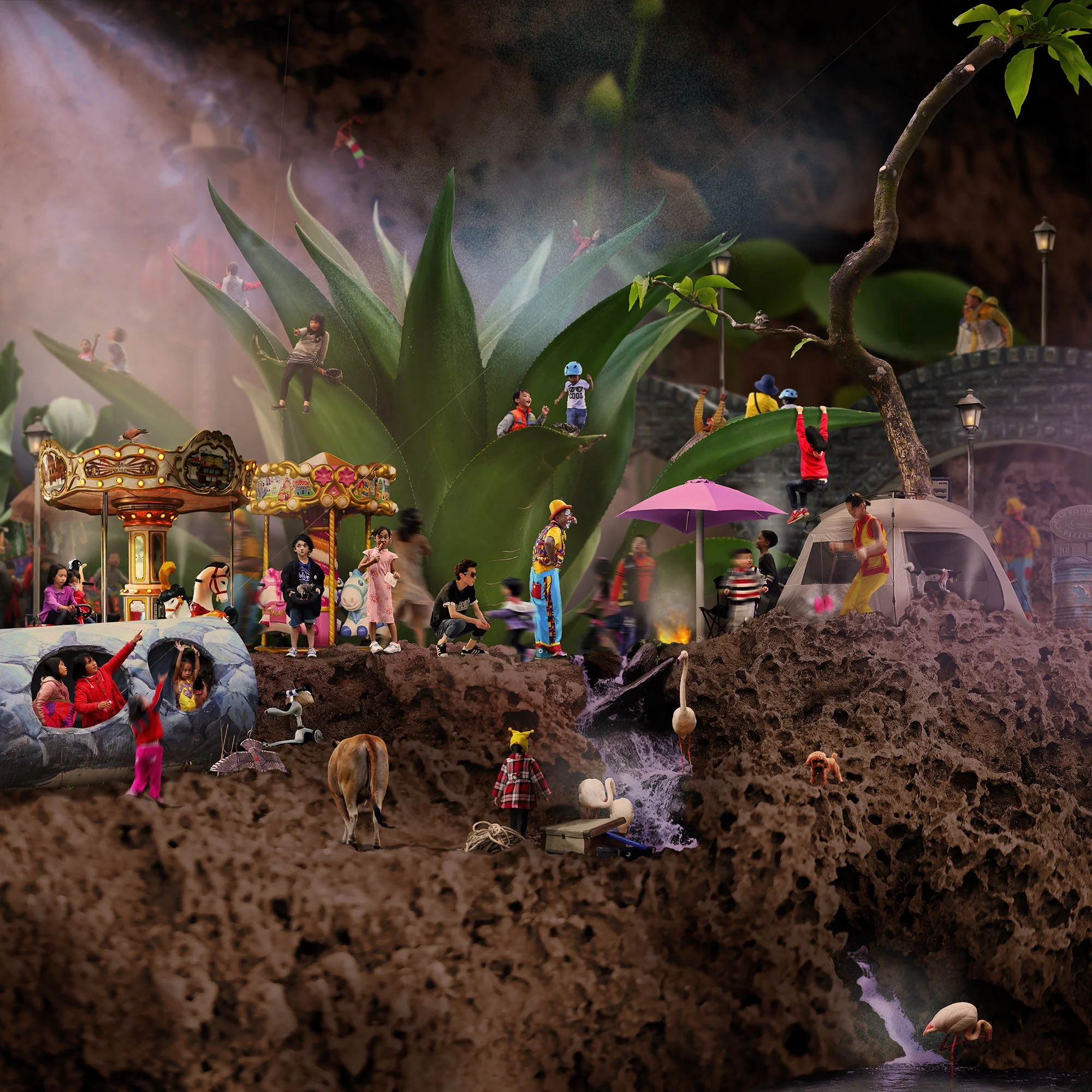
The Secret Garden II elaborates this ecology through a richer collage of elements: a carousel, a tent, children perched on leaves, a small cascade of water cutting through rock, animals wandering, and figures performing everyday gestures. The giant plant becomes both landscape and architecture, a structure to climb, sit upon, and inhabit. Here, Weng’s painterly sensibility is unmistakable in the way color and texture guide the eye. The rock surface carries a tactile weight, while the plant surfaces feel glossy and monumental. The image invites the viewer to linger, to let imagination generate shifting realities as one explores details. This is one of Weng’s most profound contributions: the pictures are not only worlds to look at, but engines for world-making in the viewer’s mind. The utopia is not solely depicted. It is co-produced.
The earlier works within My Wonderlands deepen the sense that Weng’s project is not an occasional spectacle but a sustained inquiry into the construction of fictional universes. A Wonderful Picnic from 2014 presents a verdant park scene teeming with people, animals, balloons, and birds. The space reads like a public commons, yet it is also populated by improbable presences: flamingos at the bottom edge, a striped animal in the foreground, clusters of balloons that punctuate the trees. The effect is not simply surreal. It is architectonic. Weng organizes the crowd across multiple slopes and planes, producing a sense of layered depth that recalls historical panoramic painting while remaining unmistakably contemporary. The picnic becomes a metaphor for social life as choreography, for the way bodies and desires gather in spaces of leisure. Yet, crucially, nothing is cynical. The image honors the everyday as a site where wonder can be recovered.
Oceanic Garden of Delights from 2015 makes the art historical dialogue explicit through its title, and it opens the path for a meaningful comparison with a major artist of the past: Hieronymus Bosch. Bosch’s great triptych of earthly delights is often read as moral allegory, a cosmology of pleasure and consequence. Weng’s oceanic garden transforms that inheritance. He retains the panoramic density, the teeming multiplicity of figures, and the sense of a world organized by episodic clusters. But he replaces Bosch’s anxious eschatology with a contemporary utopian impulse. In Weng’s coastal landscape, a rocky expanse stretches toward lighthouses and sea, while hot air balloons float above and small groups populate the terrain like wanderers in a benign epic. The lighthouse, a classical symbol of guidance, becomes a quiet anchor amid the proliferation of events. Where Bosch stages the instability of desire, Weng stages the possibility of desire without punishment, desire as communal curiosity. The work is historically intelligent. It does not quote Bosch as pastiche. It absorbs the panoramic logic and recodes it for a world in which the moral frame has shifted from theological judgment to cultural survival. In our present, the question is less about sin than about how to sustain imagination within systems that exhaust it. Weng’s answer is a garden not of warning, but of renewal.
Wonder in the Fields from 2020 extends the panoramic crowd scene into a festival of flight, with birds sweeping across the sky, balloons rising, and figures gathered in performance. A dinosaur-like figure appears as an improbable silhouette within the field of play, collapsing prehistoric scale into contemporary leisure. Kites cut across the blue, and the scene’s edges dissolve into motion blur and layered atmospheres. The work exemplifies Weng’s “dreamlike reality” and “physical reality” as parallel layers that merge. One can read the field as a real park, a real gathering. Yet the additions, the scale shifts, and the chromatic orchestration insist that the real is only one layer among others. The picture becomes an argument about reality as composite, not in the banal sense that images are edited, but in the philosophical sense that experience itself is edited by memory, desire, media, and projection. Weng makes that condition visible, and he does so through beauty.
To speak of beauty here is not to retreat into aestheticism. In Weng’s practice, beauty is structural. It is the outcome of painstaking labor and of a deep understanding of pictorial traditions. The East and West synthesis he pursues is not a matter of placing motifs side by side. It is a matter of reconciling different concepts of pictorial space. Western perspectival depth, cinematic staging, and the logic of the tableau meet the planar rhythms, calligraphic structuring, and atmospheric thinking associated with Chinese ink aesthetics. The result is a hybrid visual language in which depth is simultaneously recession and surface, simultaneously stage and scroll. One feels, in the best of these works, that the image could be traversed like a landscape and read like a painting.
The material fact of the works as giclée fine art prints on top-grade archival papers matters as well. It signals an insistence on permanence, on the image as an object meant for sustained encounter rather than fleeting consumption. The scale of many of these works, often extending beyond the human body’s immediate grasp, contributes to their cinematic effect. They function as screens, but not the backlit screens of everyday devices. They are reflective surfaces that demand the viewer’s bodily presence. In a culture of rapid scrolling, Weng’s prints are slow technologies. They return the viewer to a mode of attention that the contemporary image economy often undermines.
Weng’s position within the contemporary art scene is thus not only that of a skilled digital compositor, though the technical mastery is undeniable. He belongs to a broader conversation about post-photography, about the status of the photographic image after the collapse of naive indexical faith. Yet Weng refuses the common posture of suspicion that often accompanies post-photographic discourse. Instead of treating manipulation as a problem to be exposed, he treats it as a generative condition to be cultivated. His practice demonstrates that the constructed image can still carry affect, ethics, and even a form of truth, not the truth of what happened in front of a lens at a single moment, but the truth of how imagination organizes the real.
This has cultural and social significance today precisely because contemporary life is increasingly experienced through constructed environments, themed spaces, and mediated narratives. The boundary between public event and staged spectacle has become porous, and many artists respond with critique or withdrawal. Weng responds with a re-enchantment that is neither naive nor cynical. His Joylands and Wonderlands acknowledge spectacle as a contemporary condition, then transform it into a space where viewers can practice a different kind of looking. The works encourage curiosity, patience, and a willingness to hold contradictions: the real and the fantastical, the natural and the artificial, the communal and the private, the humorous and the sublime.
As a practicing artist and professor of fine art, Weng’s sustained development across media strengthens the intellectual authority of the recent projects. The path from ink drawing and contemporary painting to experimental digital image making is not a departure from tradition but an expansion of it. His fascination with cinema, music, and dramatic staging speaks to a multidisciplinary sensibility that is fully at home in contemporary visual culture, yet rooted in long histories of pictorial construction. The most fulfilling point in his process, as he notes, is when a work begins to take shape and its ideas align with its storytelling intentions. That alignment is precisely what the viewer perceives in the strongest pieces: not a collage of effects, but a unified vision in which every element participates in an image that knows what it is doing.
In the end, what makes Weng’s recent projects exceptional is their capacity to propose utopia without sentimentality. These are fictional paradises without geographical reference, yet they feel culturally specific in their attention to Eastern aesthetics, to cinematic glamour, and to the contemporary grammar of play. They do not ask the viewer to believe in a single narrative. They ask the viewer to inhabit a field of narratives, to wander, to discover, to let imagination generate shifting realities. The wonder is not imposed. It is offered.
If one were to locate Weng historically, the comparison to Bosch is instructive, but only as a point of departure. Weng’s achievement is to translate the panoramic, densely populated world picture into the conditions of contemporary image making, while refusing both moral panic and ironic detachment. He has built, through My Wonderlands and The Enchanted Joylands, a distinctive and original practice that expands what digital composite photography can be: not merely an advanced technique, but a philosophical instrument. These works are invitations to think with the image, to feel the world as layered, and to recognize enchantment as a serious cultural resource.
Weng’s wonderlands are not escapes from reality. They are proposals for how reality might be reassembled, how the visible might be re-staged, and how a viewer, standing before a large-scale print, might rediscover the capacity to look as if looking still matters.
It becomes clear that Weng’s achievement is not exhausted by virtuosity, however extraordinary that virtuosity may be. The works do something rarer: they re-authorize wonder as an intellectual category, not merely an emotional effect. In a contemporary field that often equates critical seriousness with disenchantment, Weng insists that enchantment can be rigorous, that pleasure can carry thought, and that utopia can be articulated without naïveté. His fictive worlds do not function as ornamental fantasies floating above history. They are structured propositions about how the image can still operate as a site of public imagination, even after the photographic has been absorbed into the general economy of editing, simulation, and spectacle.
The sustained labor embedded in each work is crucial to this claim. Months of observation, hundreds of source photographs made on location, and an extended compositional construction in post-production together form a kind of ethics of attention. The viewer senses that these images are not opportunistic accumulations but carefully weighted systems in which scale, color, and narrative density have been tested repeatedly until the picture holds. That holding is what permits the works to remain open. They are complete without being closed. They achieve coherence without reducing multiplicity. This is precisely why they reward prolonged viewing, and why they resist the contemporary tendency to treat images as disposable stimuli.
Weng’s wonderlands, then, operate as a counter pedagogy to the visual habits of the present. They train the eye to linger, to move laterally, to accept contradiction, to recognize the co-presence of the physical and the dreamlike as something other than confusion. In that sense, his practice contributes not only to debates around post-photography but also to broader conversations about perception itself: how reality is assembled, how desire and memory edit what we see, and how collective fantasy shapes public life. The cultural significance of these works lies in their capacity to make that assembly visible while keeping it luminous.
If the contemporary image is often experienced as coercive, Weng offers an invitational image. His pictures do not demand belief, nor do they weaponize irony. They propose a space in which viewers can rehearse a different relation to the world: curious rather than defensive, delighted rather than numb, attentive rather than dispersed. The result is a practice of exceptional originality and conceptual depth, one that secures Weng’s place among the most compelling makers of contemporary staged reality, and one that makes a persuasive case for utopia as an ongoing, necessary project of the imagination.
By Marta Puig
Editor Contemporary Art Curator Magazine
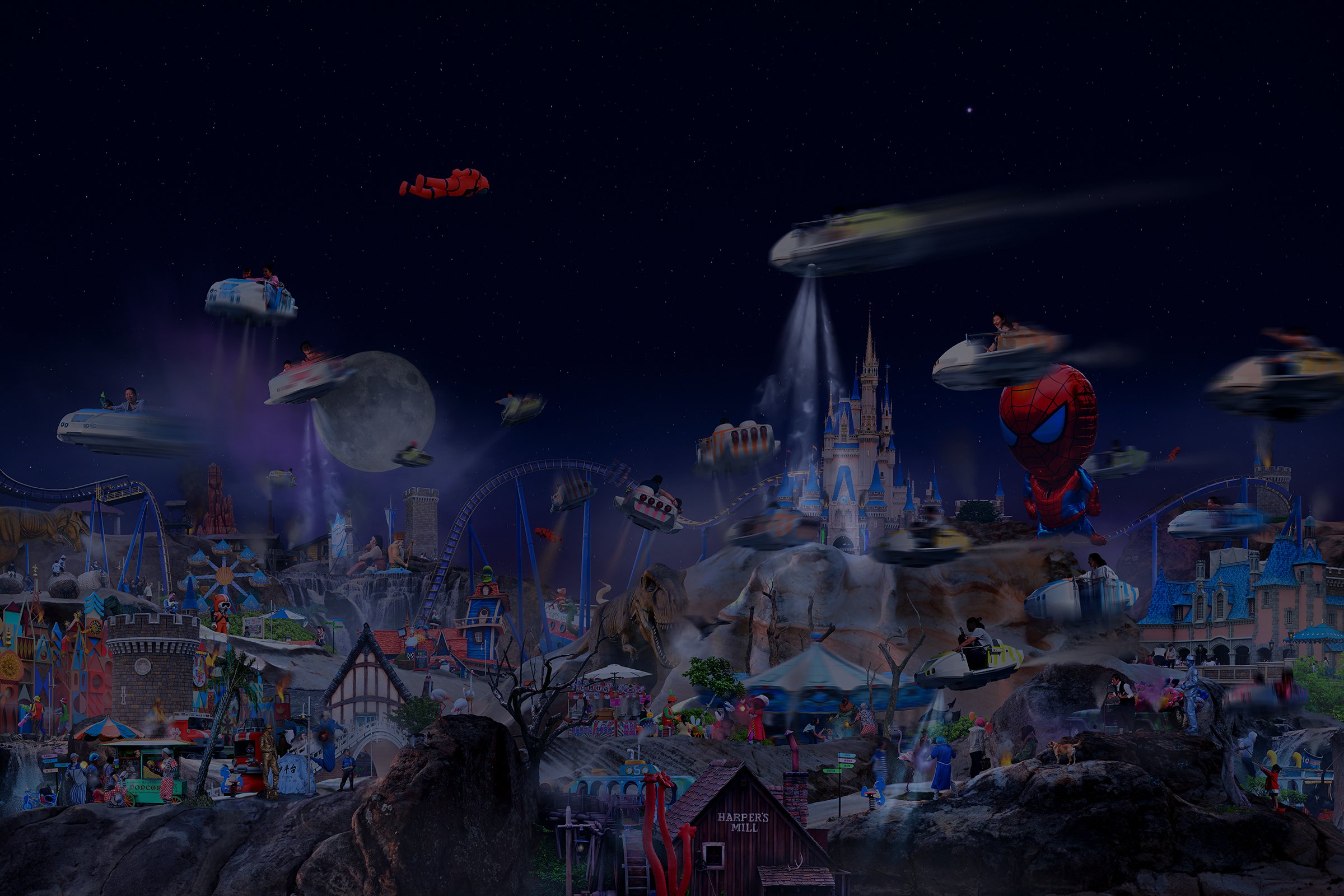
The Enchanted Joylands series - The New Fantasyland, 2024. Digital Composite Photography, 180 x 120 cm.
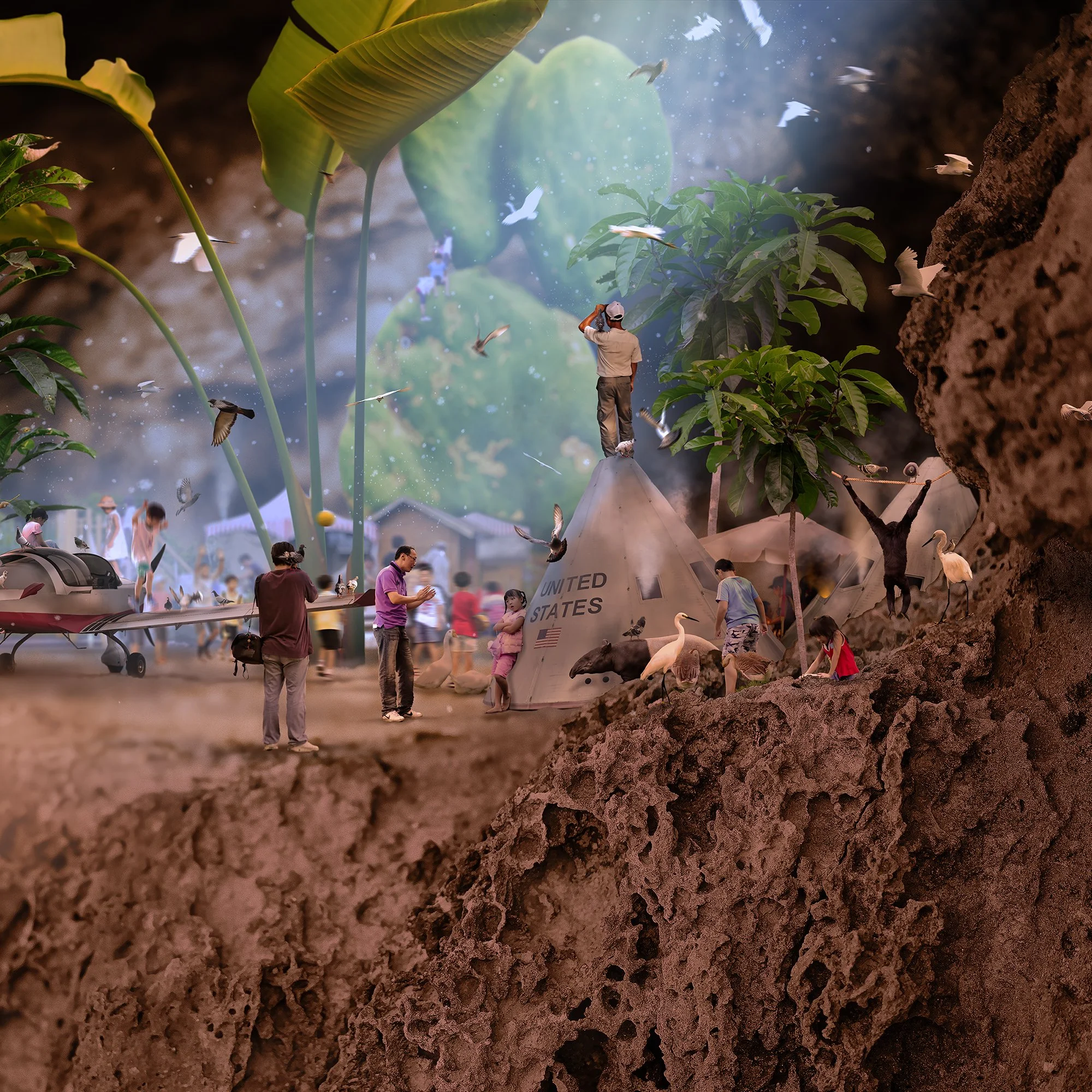
The Enchanted Joylands series - The Secret Garden-I, 2024. Digital Composite Photography, 120 x 120 cm.
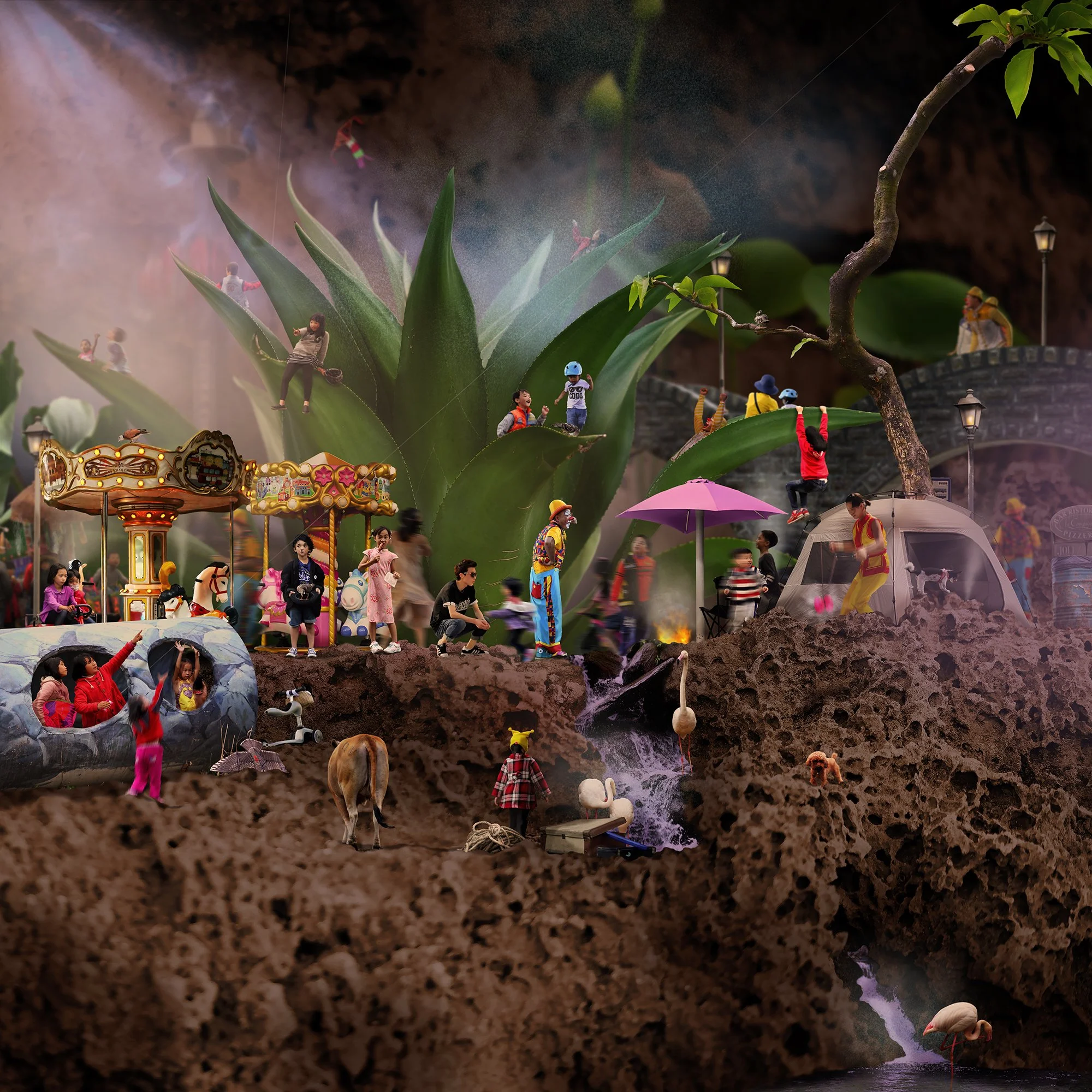
The Enchanted Joylands series - The Secret Garden-II, 2024. Digital Composite Photography, 120 x 120 cm.
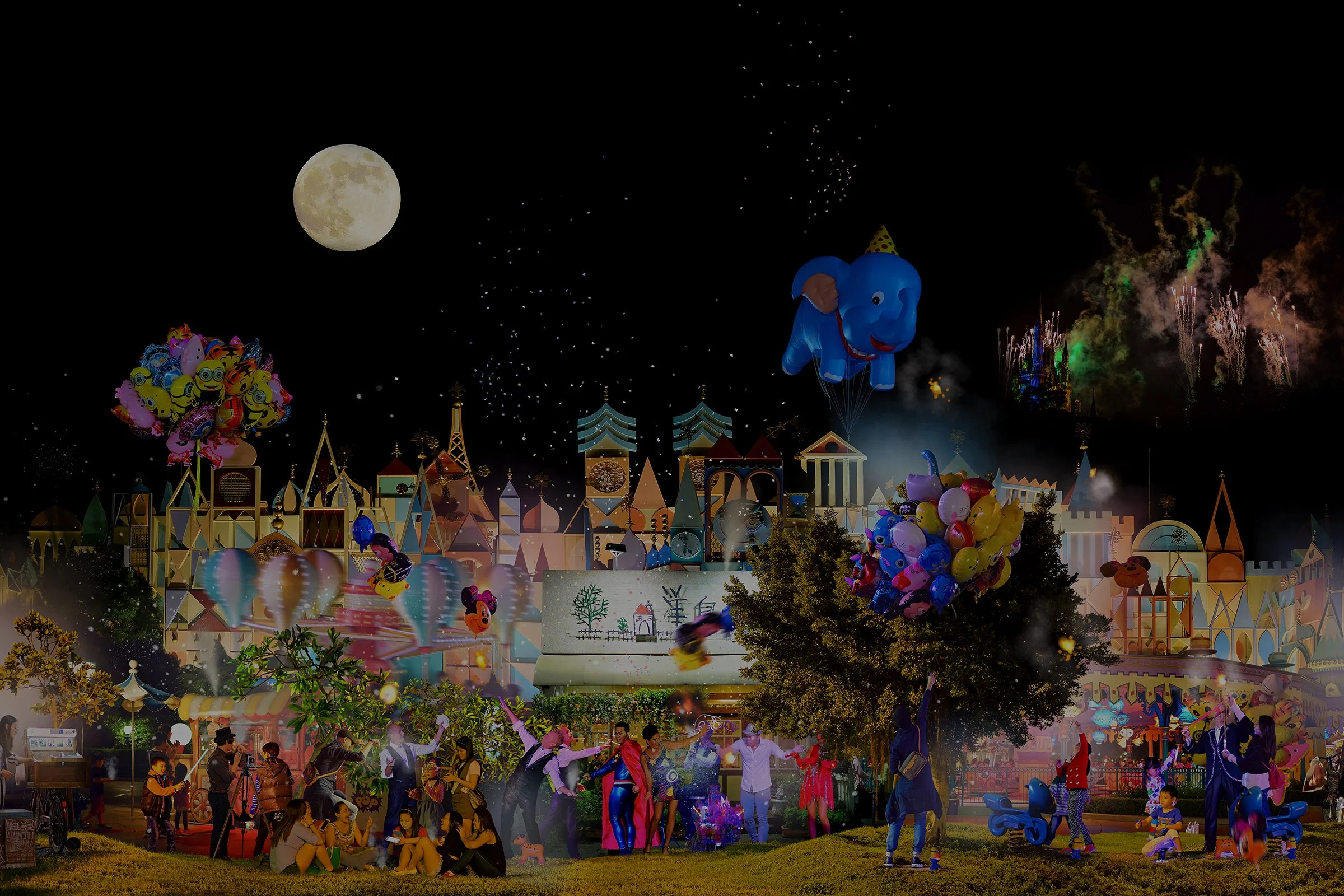
My Wonderlands series - Night Paradise, 2019. Digital Composite Photography, 180 x 120 cm.
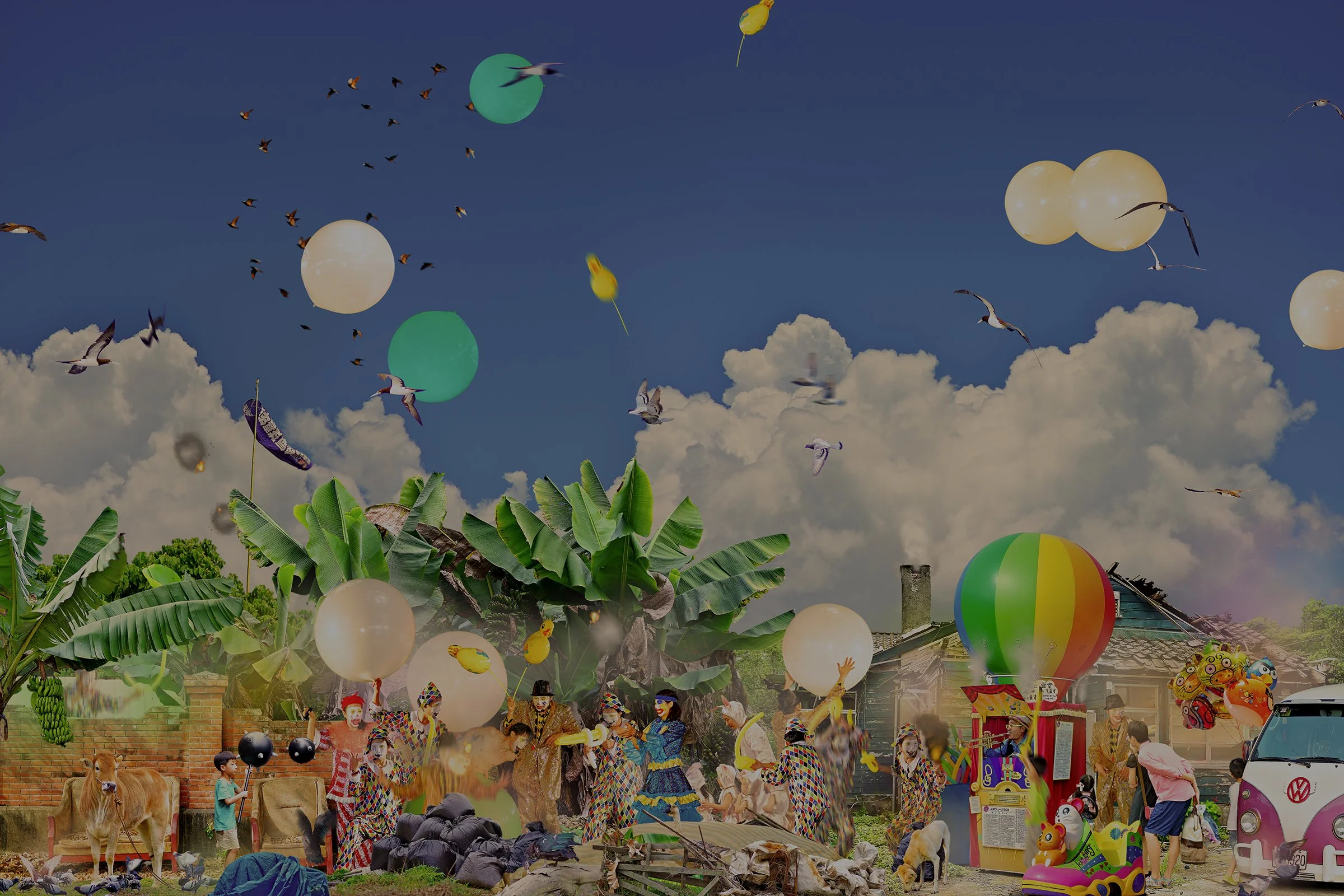
My Wonderlands series - The Humourous Delights, 2017. Digital Composite Photography, 180 x 120 cm.
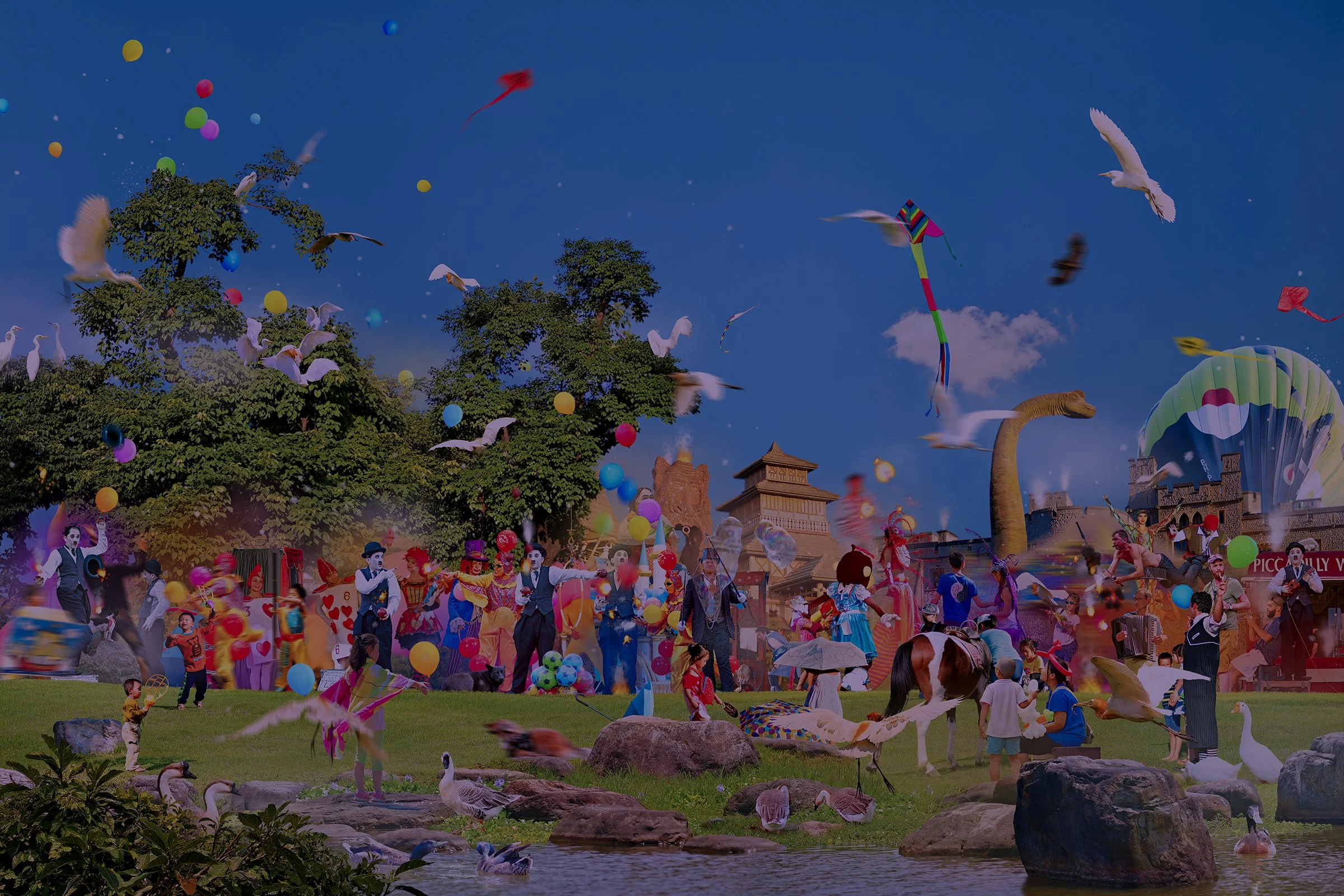
My Wonderlands series - Wonder in the Fields, 2020. Digital Composite Photography, 180 x 120 cm.
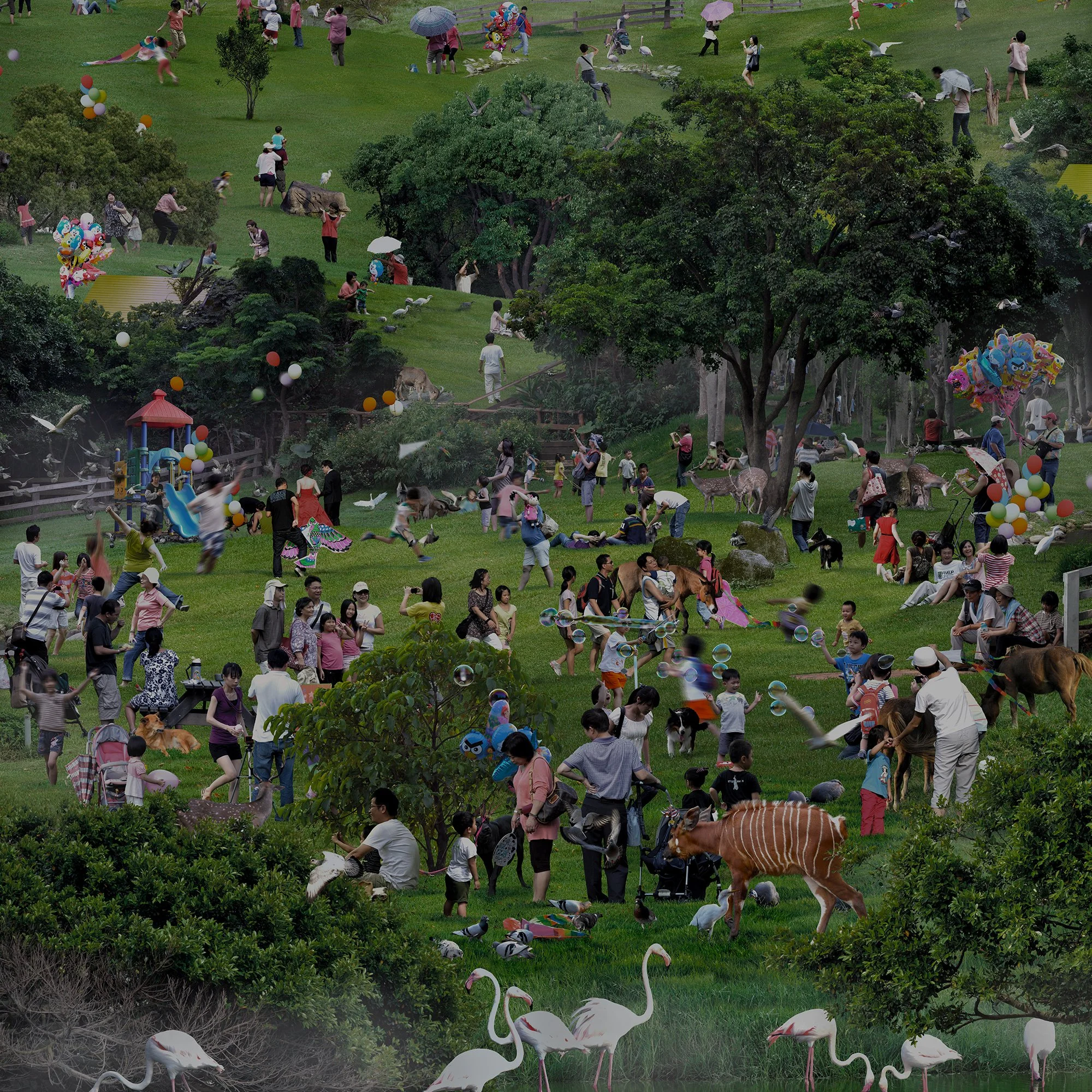
My Wonderlands series - A Wonderful Picnic, 2014. Digital Composite Photography, 120 x 120 cm.
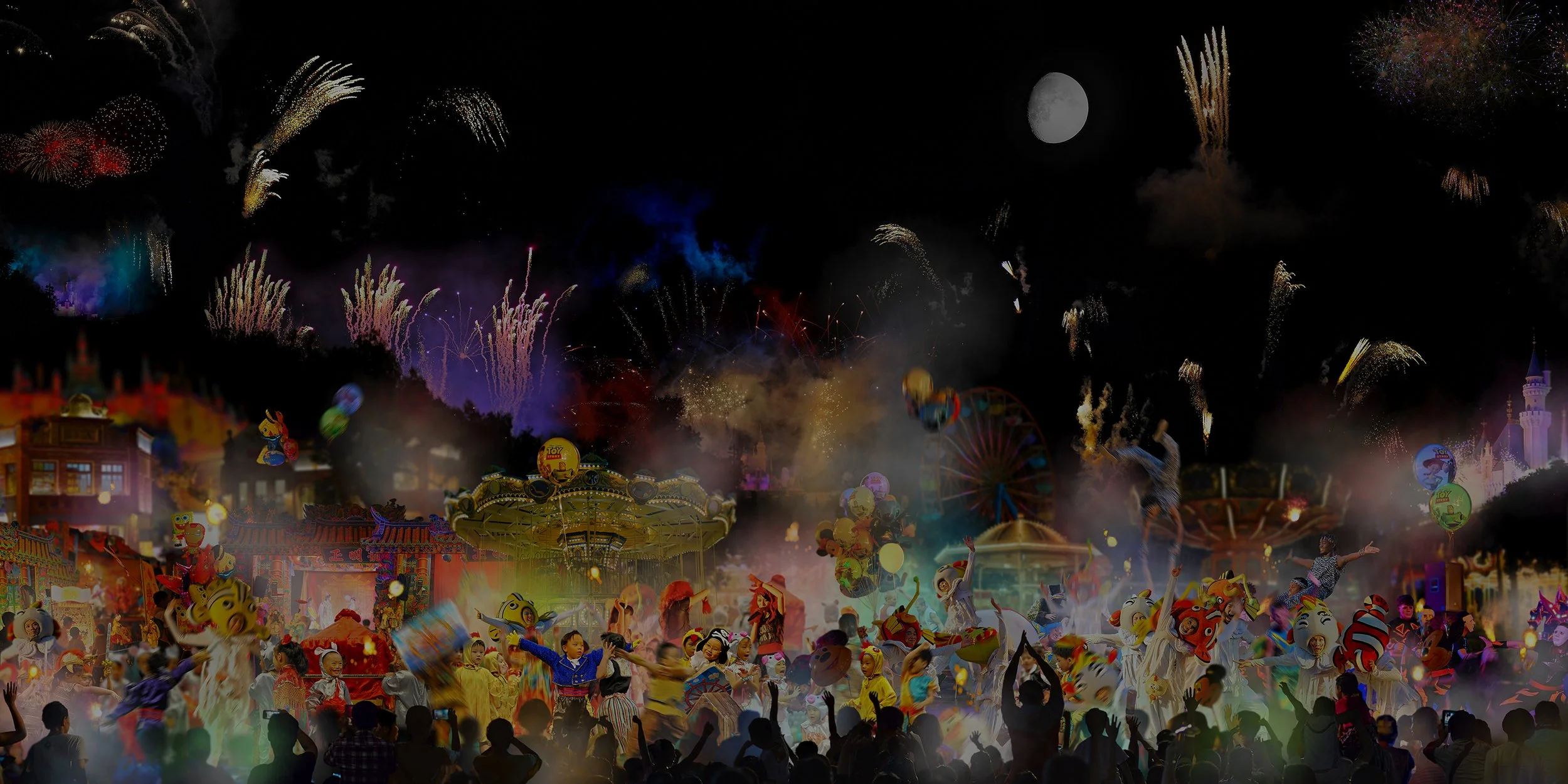
My Wonderlands series - Night Plays, 2016. Digital Composite Photography, 220 x 110 cm.
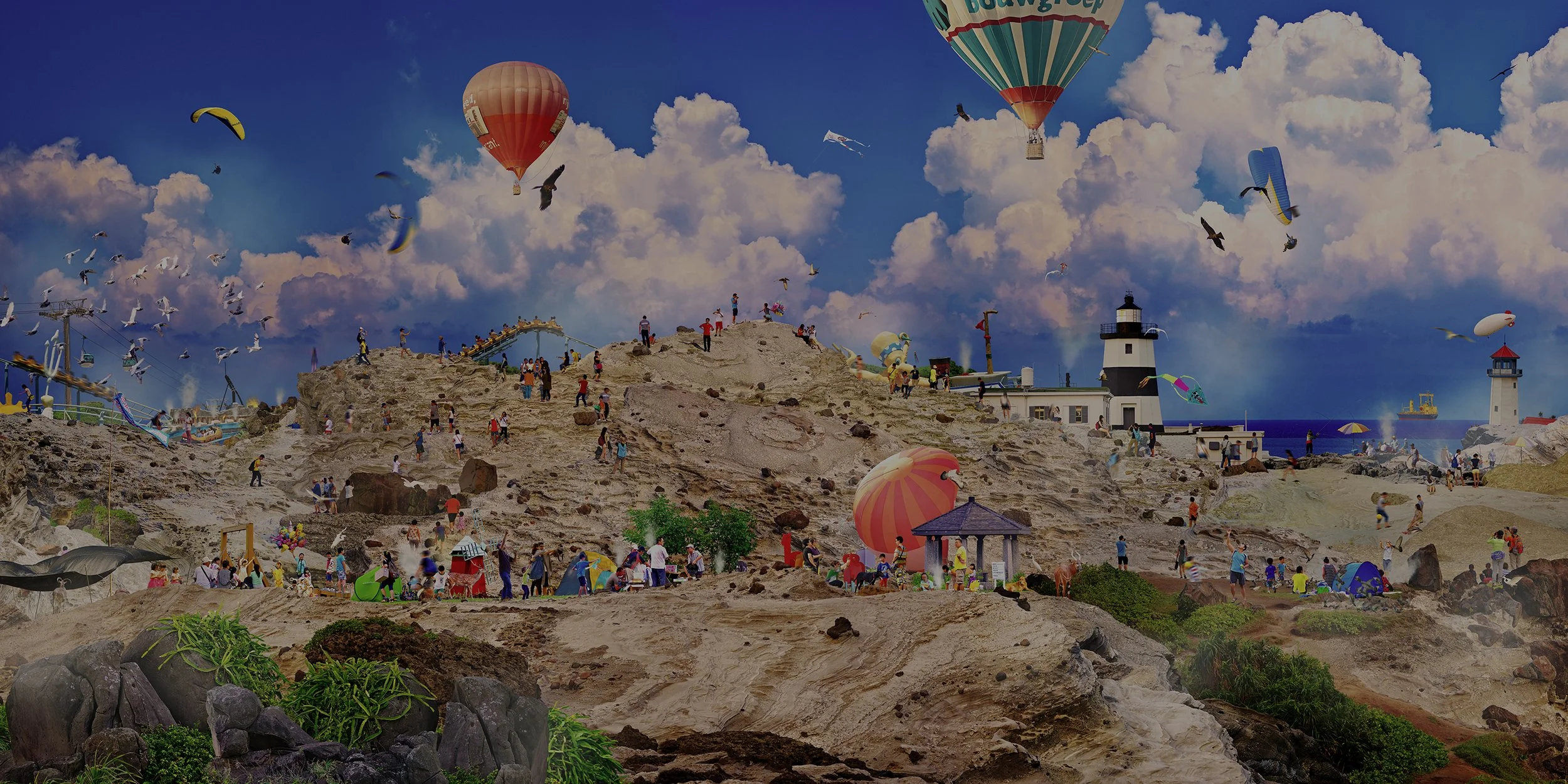
My Wonderlands series - Oceanic Garden of Delights, 2015. Digital Composite Photography, 220 x 110 cm.
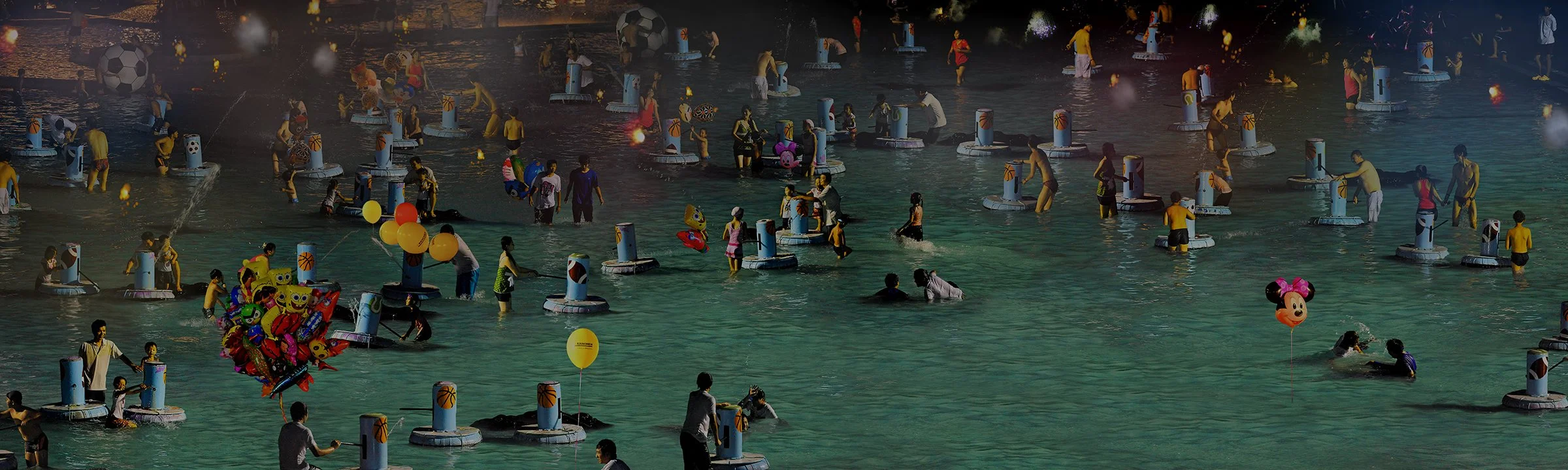
My Wonderlands series - Games on Water, 2015. Digital Composite Photography, 200 x 60 cm.