Ursula Schmidt Krause
https://ursula-schmidt-krause-visual-artist.yolasite.com/
The paintings of Ursula Schmidt Krause unfold as meditations on sensation rather than depictions of objects. They belong to a lineage of abstract practices that understand painting not as representation, but as a register of perceptual and emotional states. Her works appear at first as fragile constellations of marks, soft accumulations of color, and wandering lines that drift across the surface as if guided by breath or memory. Yet this apparent lightness conceals a disciplined investigation into what might be called the phenomenology of color itself.
Over the span of more than two decades, her practice has developed under the conceptual influence of affect transformation, a philosophical theme concerned with how internal states are translated into sensory and expressive form. Within this framework, painting becomes a site of conversion. Emotion becomes color. Movement becomes line. Experience becomes tone. The canvas or sheet of paper functions less as a pictorial field than as a stage than as a membrane, a surface across which internal sensations pass into visible form.
Her own description of the works as “color sounds” offers an entry point into this method. The paintings do not depict musical instruments or scenes of listening. Instead, they embody the logic of resonance. Color is treated as vibration, as pulse, as a temporal event. A red field might operate as a percussive accent, while a diffuse blue cloud suggests a sustained note. The drawing lines that wander across many of the surfaces function like melodic traces, mapping the rhythm of gesture over time.
This understanding of painting aligns her with traditions of abstraction that move from early synesthetic theories to later postwar experiments with gesture and chromatic intensity. Yet Schmidt Krause’s work is less theatrical and less concerned with the heroic mark. Instead, her surfaces feel intimate, almost diaristic. They do not announce themselves. They accumulate quietly, as if the color had simply settled onto the surface through prolonged attention.
Her commitment to a humanistic worldview is evident in the refusal of aggression in her compositions. Even when strong reds or dense pigments appear, they rarely erupt. They hover, glow, or dissolve. The paintings do not dramatize conflict. They explore transformation. The emotional register is contemplative rather than confrontational.
An early work, such as Farbklang Freiburg 2005, presents a dense, circular accumulation of dripped and swung color against a cool turquoise ground. The composition reads almost as a chromatic nucleus, a center of activity from which lines radiate outward. Here, the paint behaves in a physical, almost gravitational manner. The drips and arcs suggest momentum, the traces of motion captured at the moment of suspension. Yet despite the gestural energy, the circular formation introduces a sense of containment. The work becomes a diagram of emotional concentration, where color gathers, intensifies, and forms a temporary center. The turquoise ground provides an atmospheric field against which the warm yellows, reds, and blacks flicker, evoking the sensation of heat against cool air.
A decade later, Farbklang Freiburg 2015 demonstrates a shift toward more delicate spatial structures. The composition is built from small colored nodes connected by faint lines and soft scribbles, resembling a sequence of notations across the surface. The oval contour that encloses much of the composition introduces a new sense of structure, functioning like a membrane that defines an interior zone of sensation. The palette is subdued and the marks are gentle, so that nothing insists and everything suggests. The work reads almost like a whisper of color rather than a declaration.
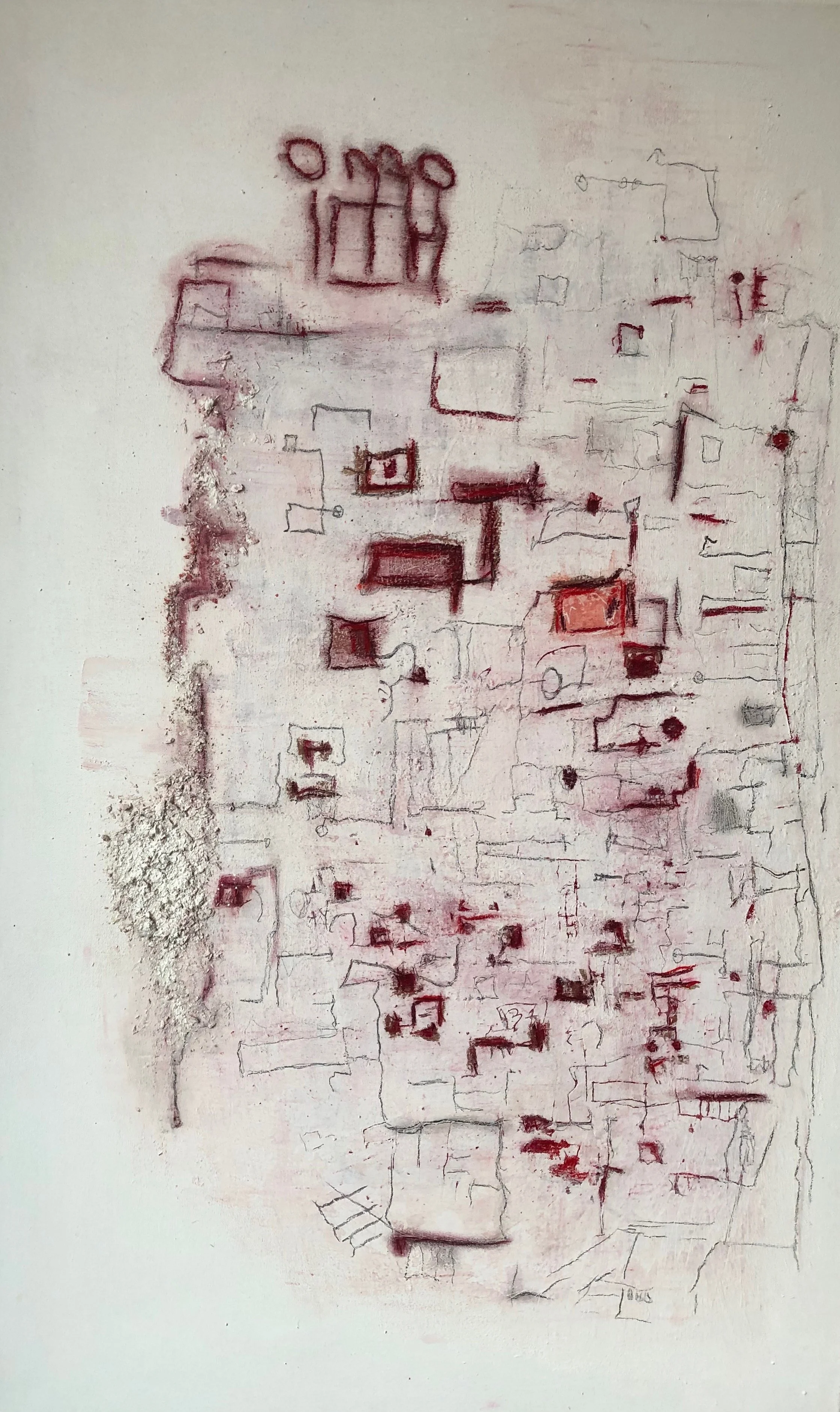
In the extended work Farbklang Freiburg Berlin 2016–2024, the surface becomes more densely populated with lines, nodes, and rectangular shapes. Red accents punctuate the composition like rhythmic beats within a network of gray and brown forms. The painting resembles a map of internal signals, where each mark appears connected to another, forming a system of relations. Yet the network is not rigid or mechanical. The lines remain soft, almost hesitant, suggesting connection without imposing order. The red points operate as emotional intensities, anchoring the otherwise dispersed field.
A stronger chromatic opposition appears in Farbklang Berlin 2018, where cool blues on the left encounter warm reds and oranges on the right. The composition seems divided, yet drawing lines weave through the surface to create subtle bridges between the two zones. The painting can be understood as a study in emotional polarity. The blue area feels introspective and calm, while the red and orange zones pulse with warmth and vitality. Rather than dramatizing conflict, the work proposes coexistence, allowing opposing emotional states to vibrate within the same field.
The surface becomes more layered and complex in Farbklang Berlin 2019, where intense color areas emerge from a ground of faint looping lines. The composition reads like a palimpsest, with multiple temporal layers visible at once. A darker, more saturated area on the right acts as a gravitational center, yet the surrounding zones remain active. The painting refuses a single focal point, encouraging the eye to wander across the surface and trace the paths of the lines. Each mark seems to belong to a different moment, yet all coexist within the same pictorial present.
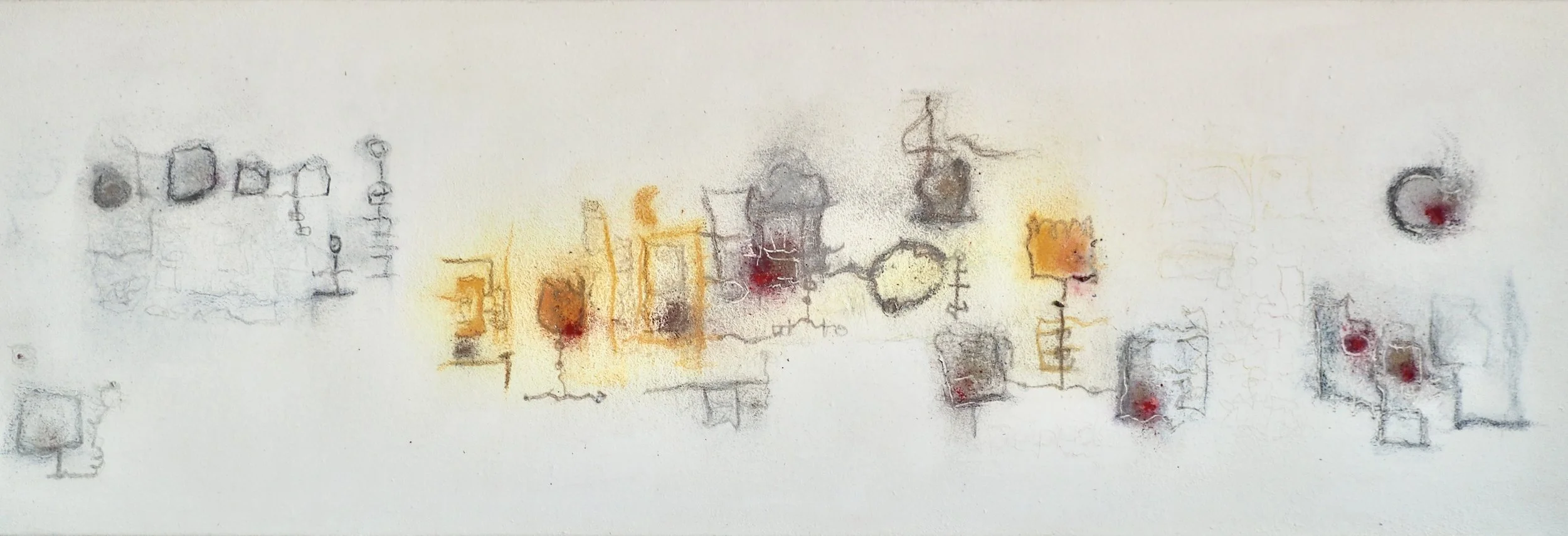
In the large composition Farbklang 1 Berlin 2020, the marks are arranged in a horizontal sequence, almost like a procession of visual events. Each cluster of forms represents a separate chromatic episode, recalling musical notation where notes or chords are placed along a temporal line. The painting becomes a visual score, a record of successive emotional states. The faintness of many marks gives the work a sense of fragility, as though the colors might drift away at any moment.
Farbklang 2 Berlin 2020 introduces more figurative suggestions, especially in the central area where shapes resemble simplified architectural forms or containers. The colors are brighter and the surface more tactile, evoking interior spaces or emotional rooms. Each colored area becomes a chamber of sensation. Yet the forms remain abstract enough to resist narrative, operating as emotional structures rather than objects.
A more concentrated composition appears in Farbklang 3 Berlin 2020, where a large red circular form dominates the surface, surrounded by smaller rectangular shapes. The red circle acts as a central pulse, suggesting both intensity and containment. It could be read as a heart, a sun, or simply a concentration of color. The surrounding rectangles orbit the central energy, creating a spatial dialogue that focuses attention while maintaining movement.
In Farbklang Berlin 2024, the marks are arranged in a subtle grid formation. The colors are soft and the lines delicate. The grid introduces a sense of order, yet it is not rigid. The forms drift slightly, resisting full alignment. The painting becomes a negotiation between structure and intuition, reflecting the artist’s broader practice where spontaneous gesture coexists with underlying compositional awareness.
One of the most recent works, Farbklang Berlin 2025, features a large red form accompanied by smaller geometric shapes. The composition feels more direct and concentrated. The red area dominates the surface, suggesting a moment of heightened emotional presence, while drawing lines cross the shape and introduce movement. The painting reads as an event rather than an object, capturing a moment of intensity preserved like a sonic vibration caught in midair.
Within the contemporary art scene, Schmidt Krause’s work occupies a subtle yet meaningful position. At a time when abstraction often swings between digital precision and expressive excess, her paintings offer a third path. They are neither technological nor theatrical. They are intimate, perceptual, and reflective.
Her emphasis on affect transformation aligns her practice with broader philosophical inquiries into embodiment and emotional experience. The paintings function as records of sensation, but also as invitations. They encourage the viewer to slow down, to notice the subtleties of color, and to experience painting as a form of listening.
In this sense, her work carries a quiet social relevance. It resists the acceleration of contemporary life and proposes a different rhythm, one grounded in attention, resonance, and presence. Her color tones are not merely aesthetic experiments. They are awareness exercises. Each painting becomes a site where perception is sharpened and emotional nuance is given form.
Across the works from 2005 to 2025, Ursula Schmidt Krause has developed a language of color that is both restrained and deeply expressive. Her paintings do not seek spectacle. They seek resonance. They transform emotion into tone, gesture into rhythm, and surface into a field of lived sensation. In an art world often driven by concept or spectacle, her work reminds us that painting can still function as a sensitive instrument, capable of recording the subtle vibrations of human experience. Her color sounds are not metaphors but perceptual realities, moments where color becomes time, and time becomes visible.
In considering the trajectory of her practice, one begins to recognize that the individual works are less important as isolated objects than as moments within a prolonged, almost meditative investigation. Each painting emerges as a tonal fragment within a larger continuum. The notion of color tone in her work is not simply chromatic variation. It is a temporal and emotional condition. A tone is something that unfolds, lingers, fades, and transforms. It cannot be fixed into a single meaning. It exists in relation to other tones, other moments, other gestures. In this sense, her paintings resemble musical compositions that continue to reverberate long after the sound has ceased.
The long development of these tones, stretching across decades, reveals an approach to painting grounded in patience and attentiveness. Rather than pursuing stylistic rupture or abrupt shifts, Schmidt Krause allows her vocabulary to evolve gradually. The changes from one period to another are subtle. The surfaces become lighter or denser, the marks more dispersed or more concentrated, the colors warmer or cooler. Yet the underlying sensibility remains constant. The work is always concerned with the translation of internal states into visual rhythm.
This continuity gives her practice a rare coherence. It suggests that painting, for her, is not a series of projects or themes, but a sustained way of thinking and sensing. Each work becomes a continuation of a conversation that began years earlier. The colors speak to one another across time. The marks echo previous gestures. The surfaces retain the memory of earlier decisions, earlier emotional climates.
Within the context of contemporary abstraction, this commitment to continuity stands in quiet contrast to the pressures of novelty that often dominate the art world. Schmidt Krause’s paintings do not attempt to outshout or outpace their surroundings. They operate on a slower frequency. They invite sustained looking rather than immediate impact. Their meaning unfolds gradually, through prolonged attention.
This slowness is not a retreat from contemporary concerns. On the contrary, it offers an alternative model of engagement. In a world saturated with images and accelerated by digital rhythms, the act of standing before one of her paintings becomes an experience of recalibration. The eye is encouraged to linger, to follow the faint lines, to notice the transitions between tones. The viewer becomes attuned to subtle shifts, to the delicate interplay between presence and absence.
Such an experience carries ethical as well as aesthetic implications. It proposes a form of attention that is gentle, patient, and receptive. The paintings do not demand interpretation. They offer a space in which perception itself can become more refined. This emphasis on sensitivity aligns with the artist’s humanistic worldview, in which emotional awareness and perceptual nuance are valued as fundamental aspects of human experience.
The concept of affect transformation, which has guided her work from 2000 to 2025, becomes particularly significant in this light. It suggests that emotions are not fixed states, but processes that move, change, and take form. In her paintings, this transformation is made visible. A color may begin as a faint haze and gradually intensify. A line may wander across the surface, hesitating, turning, and finally dissolving. Each gesture records a moment within a larger process of becoming.
The paintings therefore operate as both documents and catalysts. They document the artist’s internal states at specific moments, yet they also catalyze new experiences in the viewer. The tones continue to transform in the act of looking. What begins as a red field may become a pulse, a warmth, a memory, or a sensation of pressure. The meaning is never fixed. It shifts with the viewer’s perception.
Over time, this open, resonant quality has allowed her work to maintain a quiet but persistent relevance within the international art scene. Her participation in cross-border exhibitions and thematic projects reflects the universal accessibility of her visual language. Color, after all, speaks across cultural and linguistic boundaries. The emotional tones embedded in her surfaces do not require translation. They are immediately perceptible, even if their deeper resonances take time to unfold.
Looking at the full arc of her practice, one senses that the paintings are less about individual statements and more about the creation of an ongoing field of resonance. Each canvas or sheet of paper becomes a node within this field, a point at which color, emotion, and time intersect. The works accumulate like notes in a long composition, forming a quiet symphony of tones that extends across decades.
In this sense, Schmidt Krause’s art offers a model of painting as a sustained act of listening. It listens to the internal rhythms of the self, to the tonal shifts of emotion, to the subtle vibrations of the surrounding world. The resulting images are not representations, but echoes. They are traces of moments in which color, sensation, and time briefly align.
Her paintings remind us that abstraction need not be grand or dramatic to be meaningful. It can be intimate, attentive, and quietly transformative. Through her long dedication to the development of color tones, Ursula Schmidt Krause has created a body of work that invites viewers into a space of resonance, where perception slows, emotions soften, and the present moment becomes visible in the gentle vibration of color.
The paintings of Ursula Schmidt Krause exist within a lineage of abstraction that extends back more than a century, yet they resist simple classification within any single movement or historical framework. Her works emerge from an intuitive process grounded in affect, perception, and resonance, and in this sense they recall certain foundational figures of modern abstraction. Among these, the most relevant comparison is with Wassily Kandinsky, not because of formal similarity alone, but because of a shared belief in the spiritual and emotional capacities of color.
Kandinsky’s early theoretical writings proposed that color possessed an inner sound, an ability to affect the human psyche directly. He described painting as a form of visual music, where hues, shapes, and rhythms functioned as notes and harmonies within a larger composition. Schmidt Krause’s idea of “color sounds” echoes this principle, yet her approach is notably quieter and more intimate. Where Kandinsky’s canvases often present dramatic tensions and dynamic compositional forces, her paintings seem to hover in a softer register. They do not proclaim the spiritual power of color through dramatic orchestration. Instead, they suggest it through subtle shifts, gentle accumulations, and delicate lines that move across the surface like faint echoes of melody.
Both artists treat color as a living phenomenon rather than a decorative or descriptive element. In Kandinsky’s work, color was linked to spiritual awakening and the search for a universal language of feeling. In Schmidt Krause’s paintings, color becomes the medium through which internal emotional states are transformed into visible tones. The connection lies not only in their shared belief in the expressive autonomy of color, but also in their understanding of painting as a time based experience. For both artists, the act of looking unfolds gradually, like listening to a piece of music.
Yet the differences are equally significant. Kandinsky’s abstraction emerged at a moment of radical cultural and technological change in the early twentieth century. His work sought to create a new spiritual language that could replace traditional forms of representation. Schmidt Krause, working in the twenty first century, does not seek such revolutionary rupture. Her paintings do not announce a new order. Instead, they cultivate a space of attentiveness within an already accelerated world. Where Kandinsky’s art often points forward with visionary intensity, hers turns inward, toward subtle emotional states and the quiet rhythms of perception.
A second historical comparison can be made with Paul Klee, whose work also explored the relationship between line, color, and musical structure. Klee’s drawings and paintings frequently resembled notational systems, as if they were visual scores for internal melodies. His delicate networks of lines and colored shapes bear a conceptual affinity to Schmidt Krause’s compositions, particularly in works where faint linear structures connect small chromatic nodes across the surface.
Klee approached painting as a process of growth, comparing it to natural phenomena such as the unfolding of leaves or the branching of roots. Schmidt Krause’s paintings share this organic quality. Her marks do not impose rigid structures. They seem to emerge gradually, as if the composition were growing from within. The lines wander, pause, and shift direction, suggesting the rhythms of thought or the movement of breath.
What distinguishes her practice from Klee’s, however, is the philosophical framework of affect transformation that underlies her work from 2000 to 2025. While Klee was deeply interested in nature, rhythm, and the internal logic of form, Schmidt Krause’s paintings are explicitly concerned with the transformation of emotional states into visual tones. Her surfaces function as sites where inner sensations are translated into color and gesture. This emphasis on emotional process gives her work a contemporary relevance that extends beyond historical comparison.
In terms of contemporary art history, her practice occupies a subtle but important position. Much of recent abstraction has been shaped either by digital aesthetics, conceptual strategies, or large scale gestural spectacle. Against this backdrop, Schmidt Krause’s paintings offer a different model. They are neither technological nor theatrical. They are intimate, perceptual, and grounded in lived experience.
This emphasis on affect and perception aligns her with broader philosophical and artistic currents that have emerged in recent decades. The renewed interest in embodiment, emotional intelligence, and sensory awareness across fields such as philosophy, psychology, and art theory reflects a cultural shift toward more holistic understandings of human experience. Her paintings participate in this shift by offering visual forms that are rooted in feeling rather than concept alone.
The social importance of her work lies precisely in this capacity to slow down perception. In an era defined by speed, distraction, and constant visual stimulation, her paintings invite a different mode of engagement. They do not overwhelm the viewer. They ask for patience, for attentive looking, for a willingness to follow faint lines and subtle tonal transitions. This act of attentive viewing becomes a quiet form of resistance against the acceleration of contemporary life.
Her concept of color tone as an immediate, intuitive expression in resonance with music, emotions, surroundings, and color itself positions painting as a temporal and experiential medium. Each work becomes a record of a particular moment, a visual trace of the artist’s internal and external environment. In this sense, her paintings function as emotional documents. They preserve the atmosphere of a moment in color and line.
Such an approach has broader implications for contemporary art. It suggests that abstraction can still operate as a deeply human practice, one that reflects emotional nuance rather than conceptual spectacle. Her work reminds viewers that painting can serve as a space for reflection, sensitivity, and emotional awareness. It does not need to shout in order to be meaningful.
Within the context of contemporary abstraction, this quiet intensity gives her work a distinctive voice. While many artists pursue visual impact through scale, technological effects, or conceptual frameworks, Schmidt Krause’s paintings derive their strength from restraint. They do not impose themselves on the viewer. They unfold gradually, revealing their tonal complexities over time.
Her art also contributes to a broader understanding of abstraction as a process rather than a style. The long development of her color tones, extending over decades, demonstrates that abstraction can function as a sustained investigation into perception and emotion. Each painting becomes a moment within an ongoing continuum. The works are connected not by formal similarity alone, but by the underlying process of affect transformation that shapes them.
In this sense, her practice can be understood as a contemporary continuation of the spiritual and perceptual ambitions that animated early abstract pioneers. Like Kandinsky, she treats color as a living force capable of affecting the human psyche. Like Klee, she approaches painting as a rhythmic, almost musical process. Yet her work is firmly situated in the present, shaped by contemporary concerns about emotion, perception, and the pace of modern life.
Ultimately, the importance of Ursula Schmidt Krause’s art lies in its ability to create spaces of resonance within the visual field. Her paintings do not seek to dominate or astonish. They seek to connect. They offer viewers a chance to experience color as tone, gesture as rhythm, and painting as a form of listening. In doing so, they reaffirm the enduring relevance of abstraction as a language of feeling, one that continues to evolve while remaining deeply rooted in the human experience.
By Marta Puig
Editor Contemporary Art Curator Magazine
Farbklang Berlin 2025, Pastellkreide auf Leinwand.
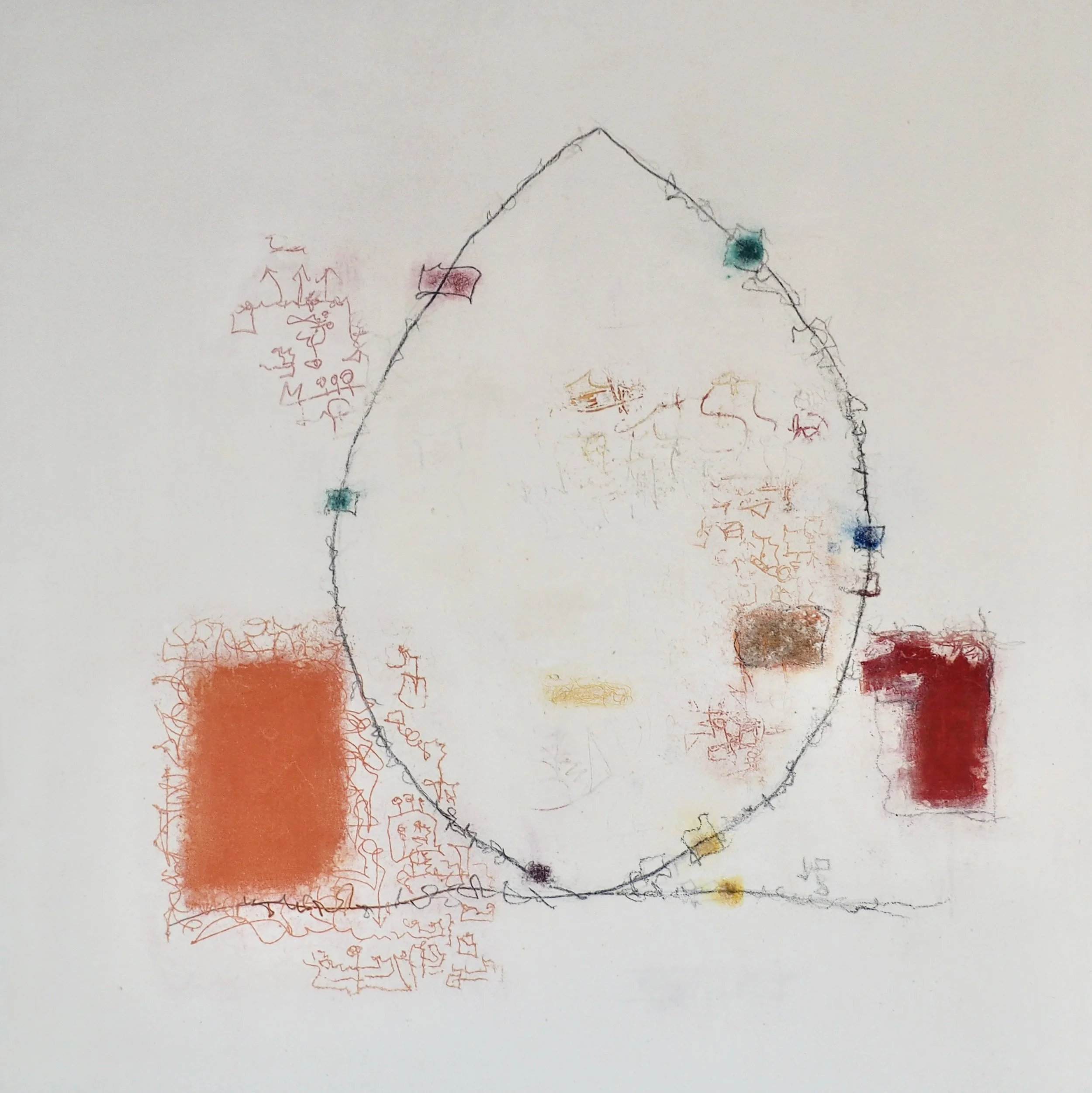
Farbklang Berlin 2024, 92 x 92. Pastellkreide auf Leinwand
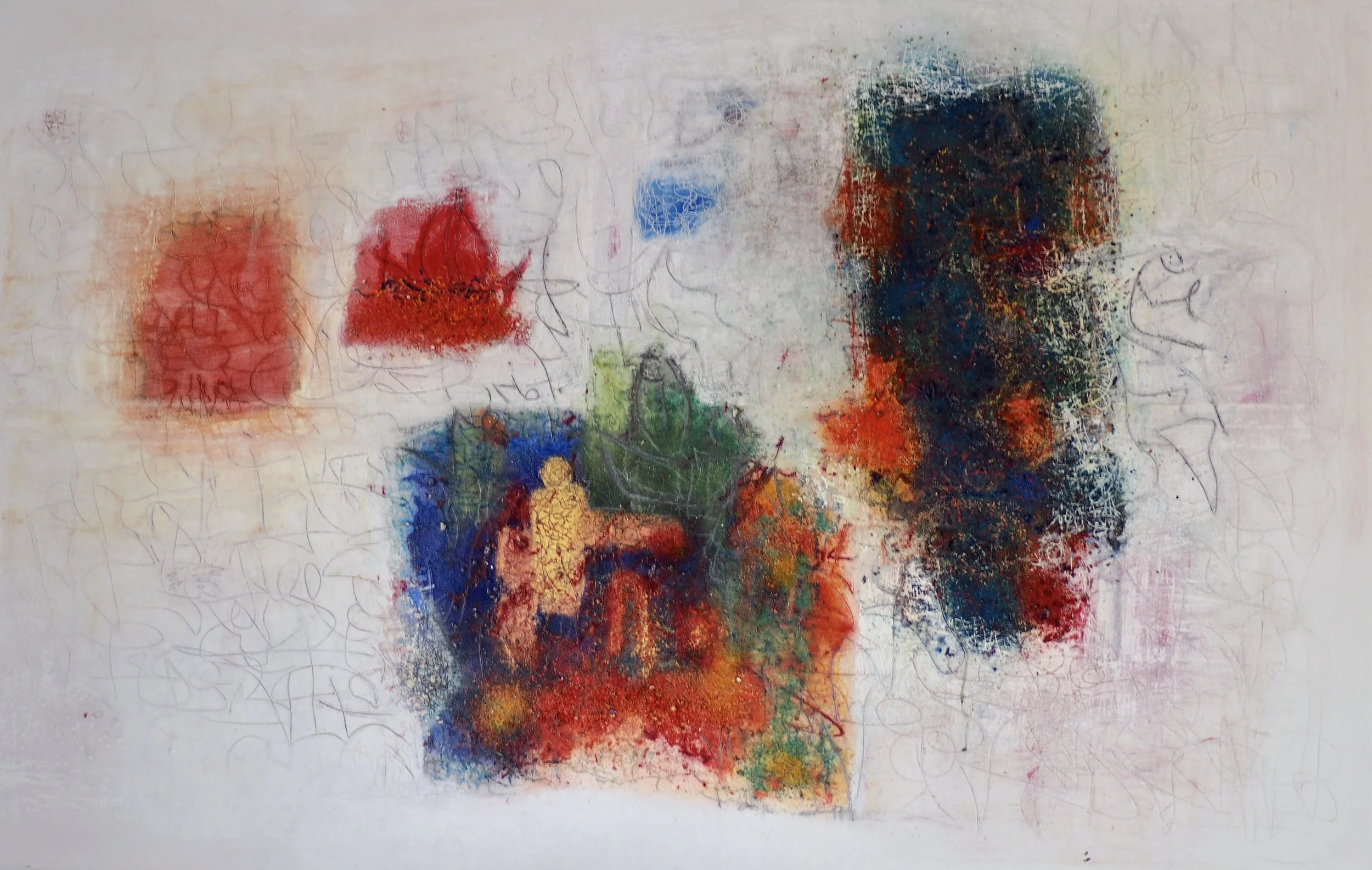
Farbklang 1 Berlin 2020, 90 x 150, Pastellkreide, Ölkreide auf Leinwand mit Gesso, bearbeitet mit Metallnadel, fixiert mit Acrylbinder.
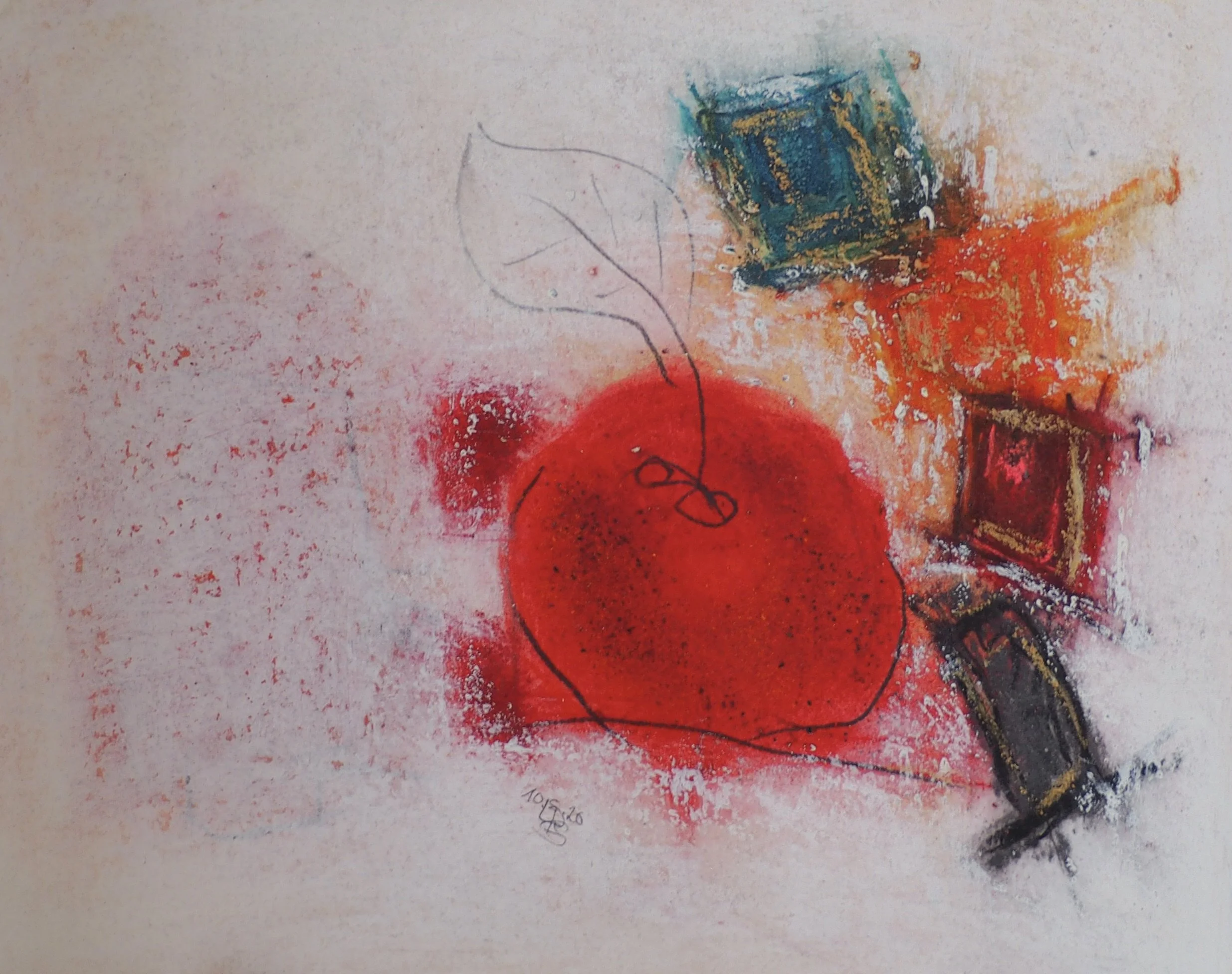
Farbklang 2 Berlin 2020, Papier, Acrylmalblock, 360g/qm säurefrei und alterungsbeständig, 29,8 x 39,8 cm. Farben: Kreide bunt, Ölkreide weiß , Fixativ: Acryl Binder
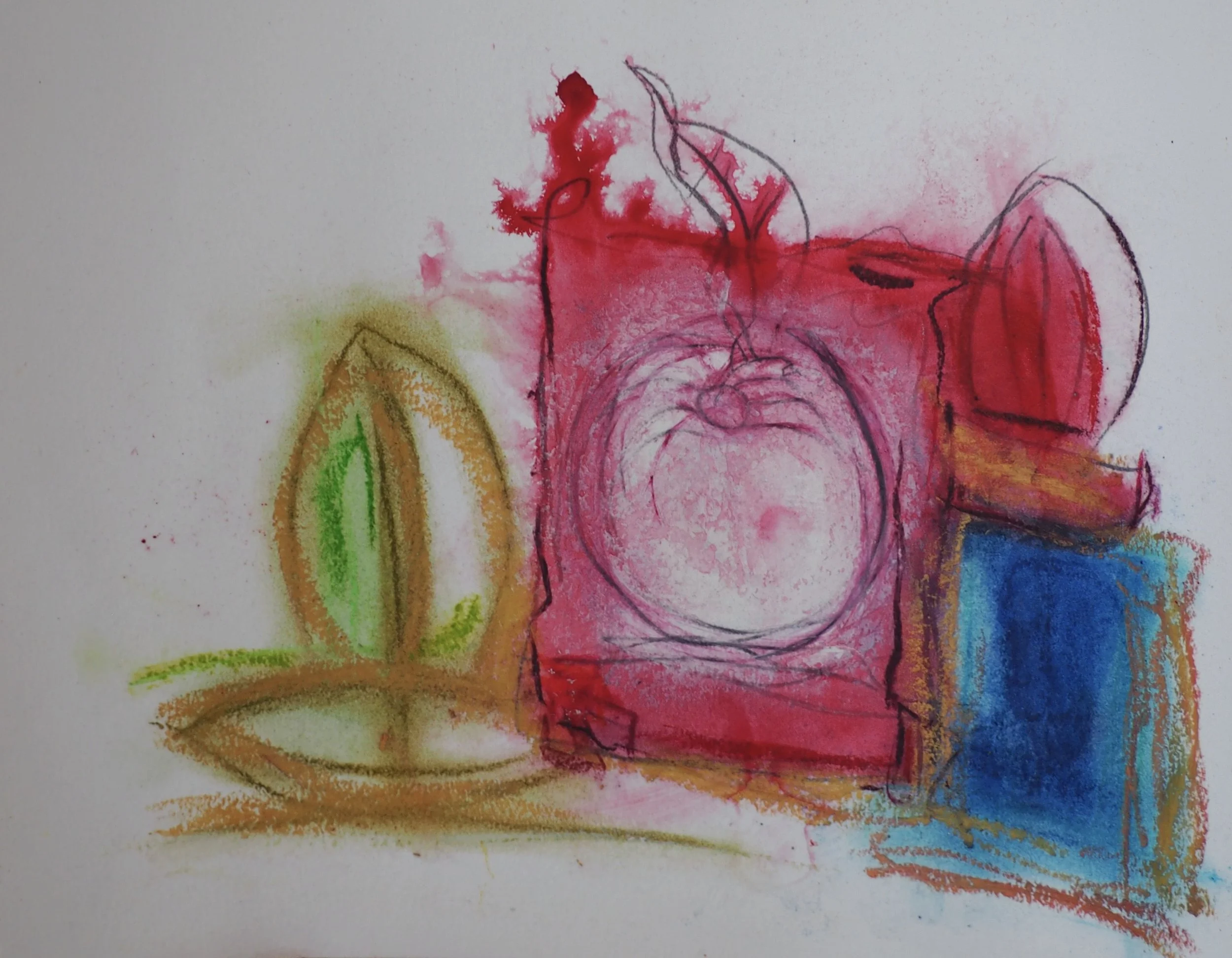
Farbklang3 Berlin 2020,Papier, Acrylmalblock, 360g/qm säurefrei und alterungsbeständig, 29,8 x 39,8 cm. Farben: Kreide bunt, Ölkreide weiß , Fixativ: Acryl Binder
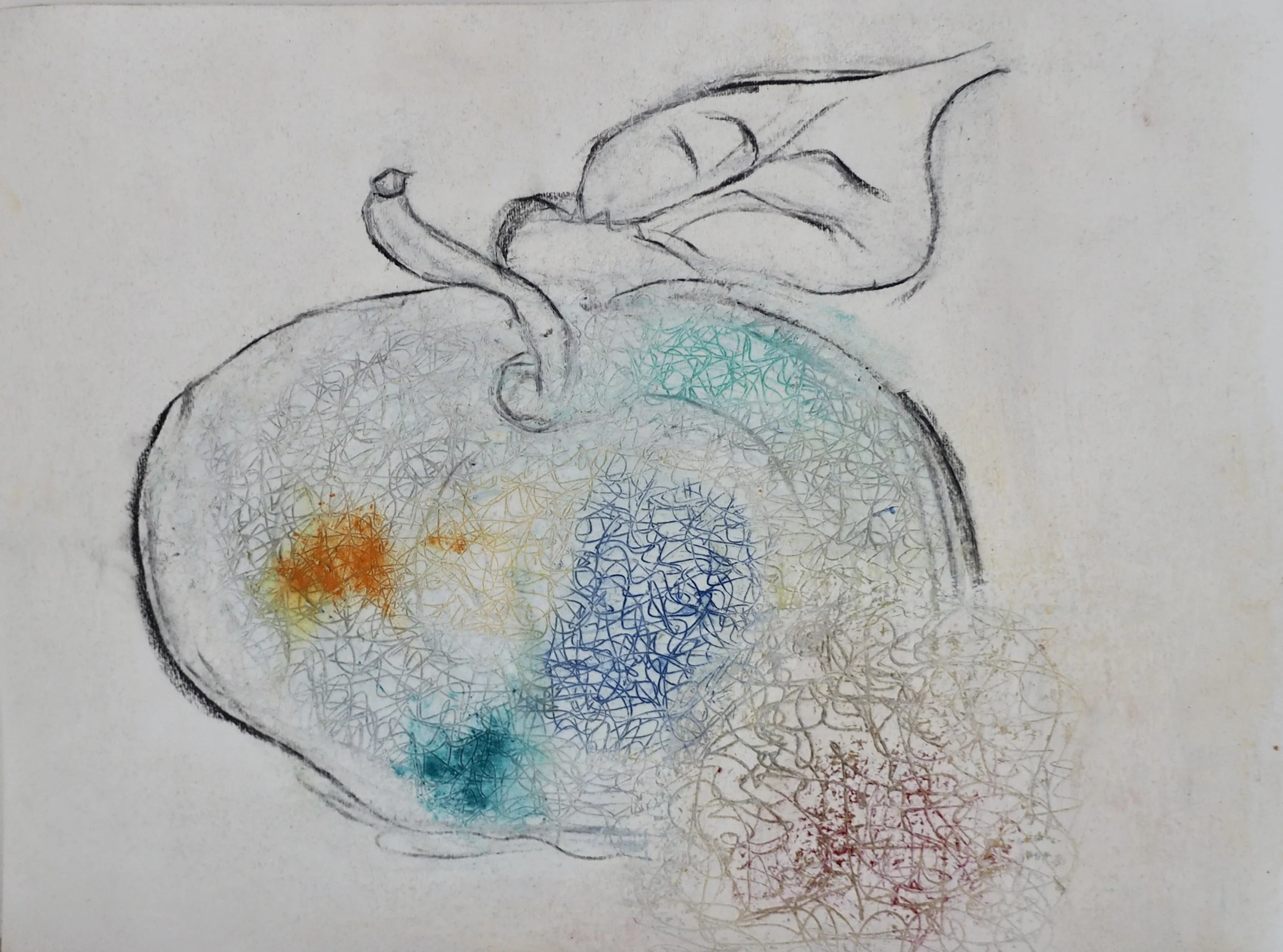
Farbklang Freiburg 2015, Papier, Acrylmalblock, 360g/qm säurefrei und alterungsbeständig, 48 x 36 cm. Farben: Kreide bunt, Ölkreide weiß , Fixativ: Acryl Binder
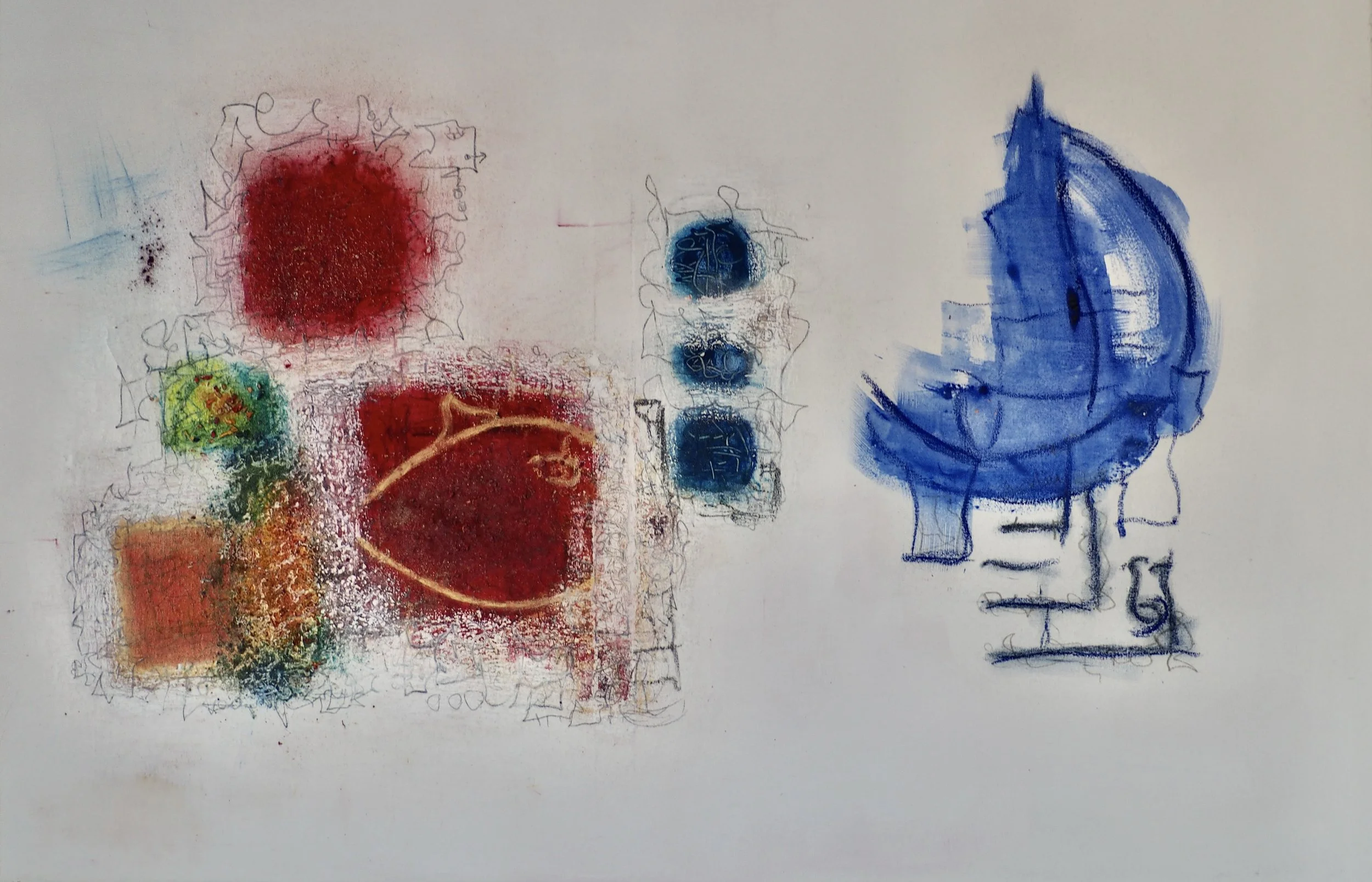
Farbklang Berlin 2019, Leinwand grundiert mit Gesso, auf Holzkeilrahmen 100 x 150, Pastellkreide, Pigmente pur, Bleistift, Ölkreidestift, bearbeitet mit Metallnadel. Fixiert mit Acrylbinder.
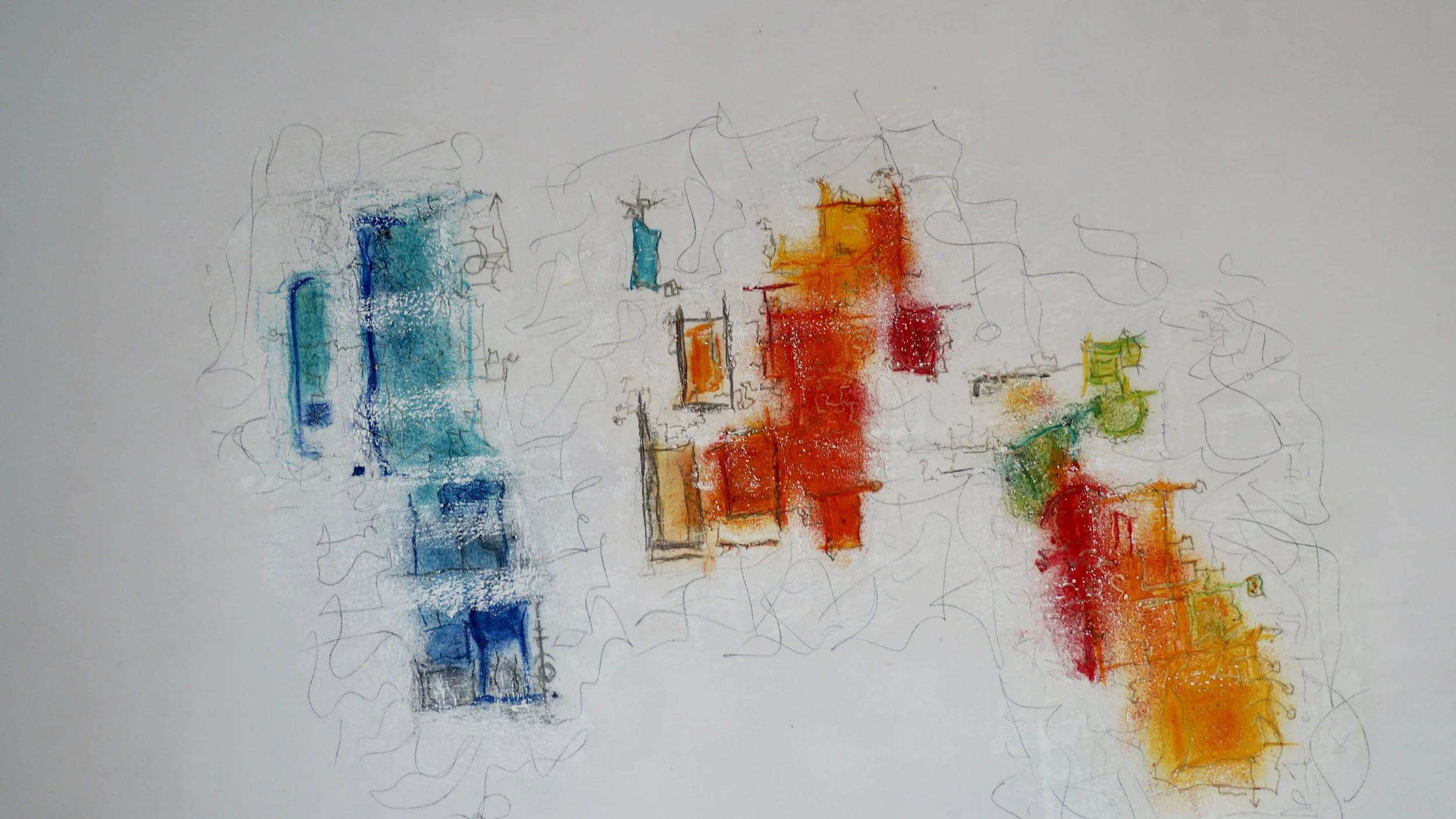
Farbklang Berlin 2018, Leinwand grundiert mit Gesso, auf Holzkeilrahmen 150 x 100 x 2cm. Medium: Kreide bunt, Ölkreidestift weiß, Bleistift. Fixativ: Acrylbinder.
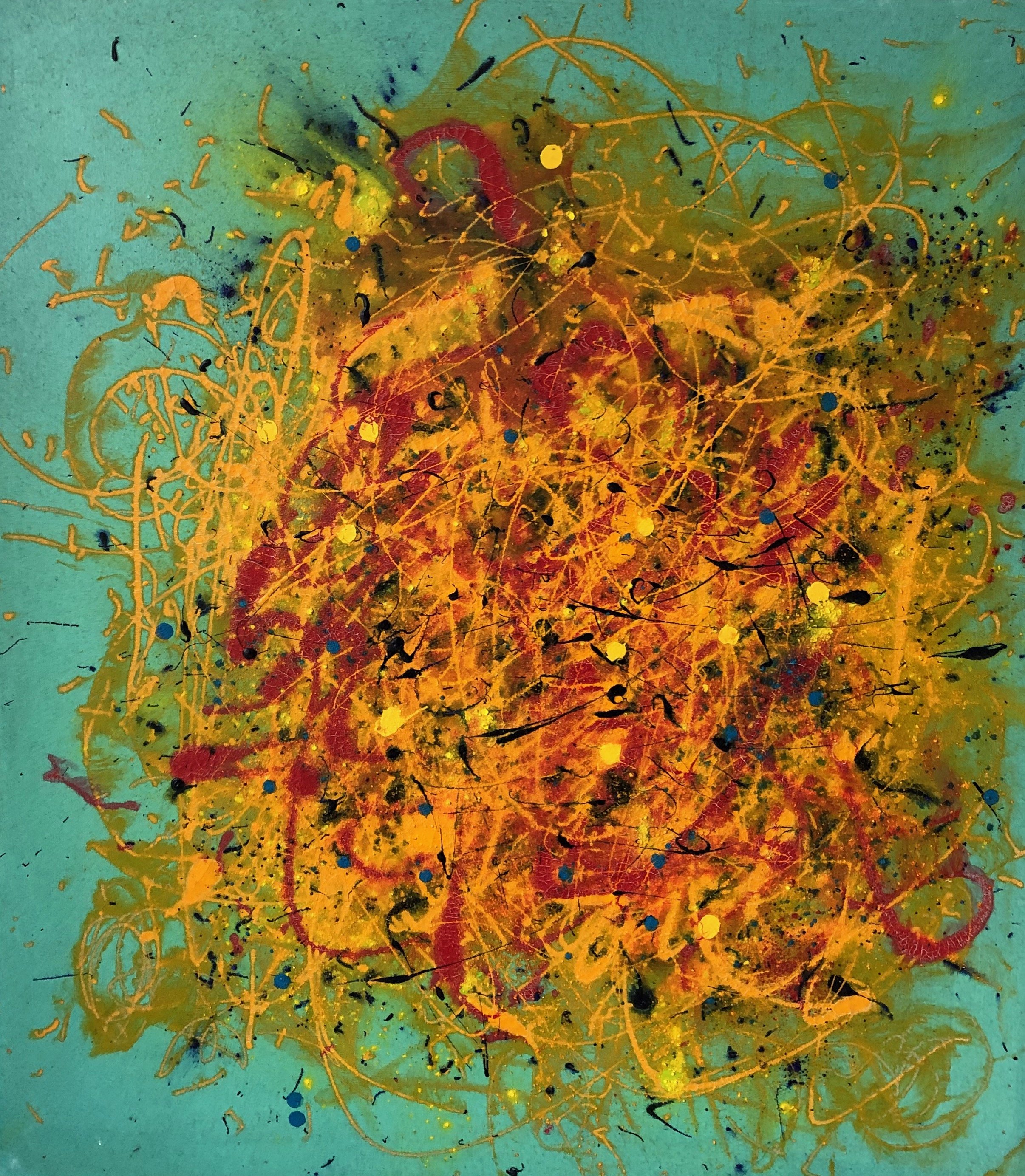
Farbklang Freiburg 2005, Leinwand grundiert mit Gesso auf Holzleisten 70,5 x 80,5. Aquarellfarbe, Auftrag mit Pinsel, Tropf und Schwungtechnik. Fixativ: Acrylbinder.
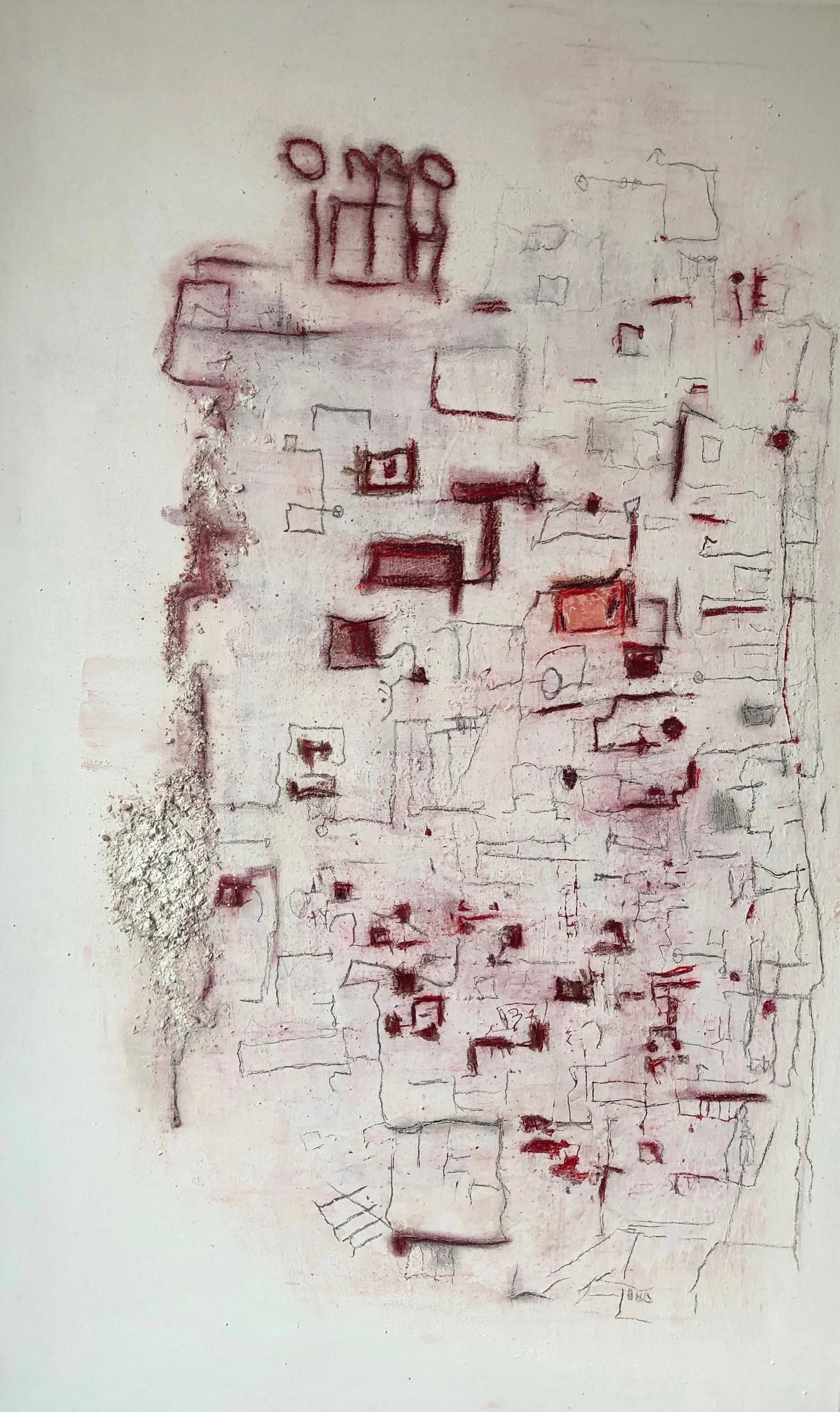
Farbklang Freiburg Berlin 2016-2024, 65,7 x 105,5. Leinwand grundiert mit Gesso auf Holzkeilrahm. Medium: Kreide rot, Ölkreidestift weiß, Bleistift. Bearbeitet mit Metallnadel. Fixativ: Acrylbinder.