Interview with Tinamaria Marongiu
www.compactart.it
www.artecompatta.it
TINAMARIA MARONGIU
forerunner of the Artistic Movement "COMPACT ART"
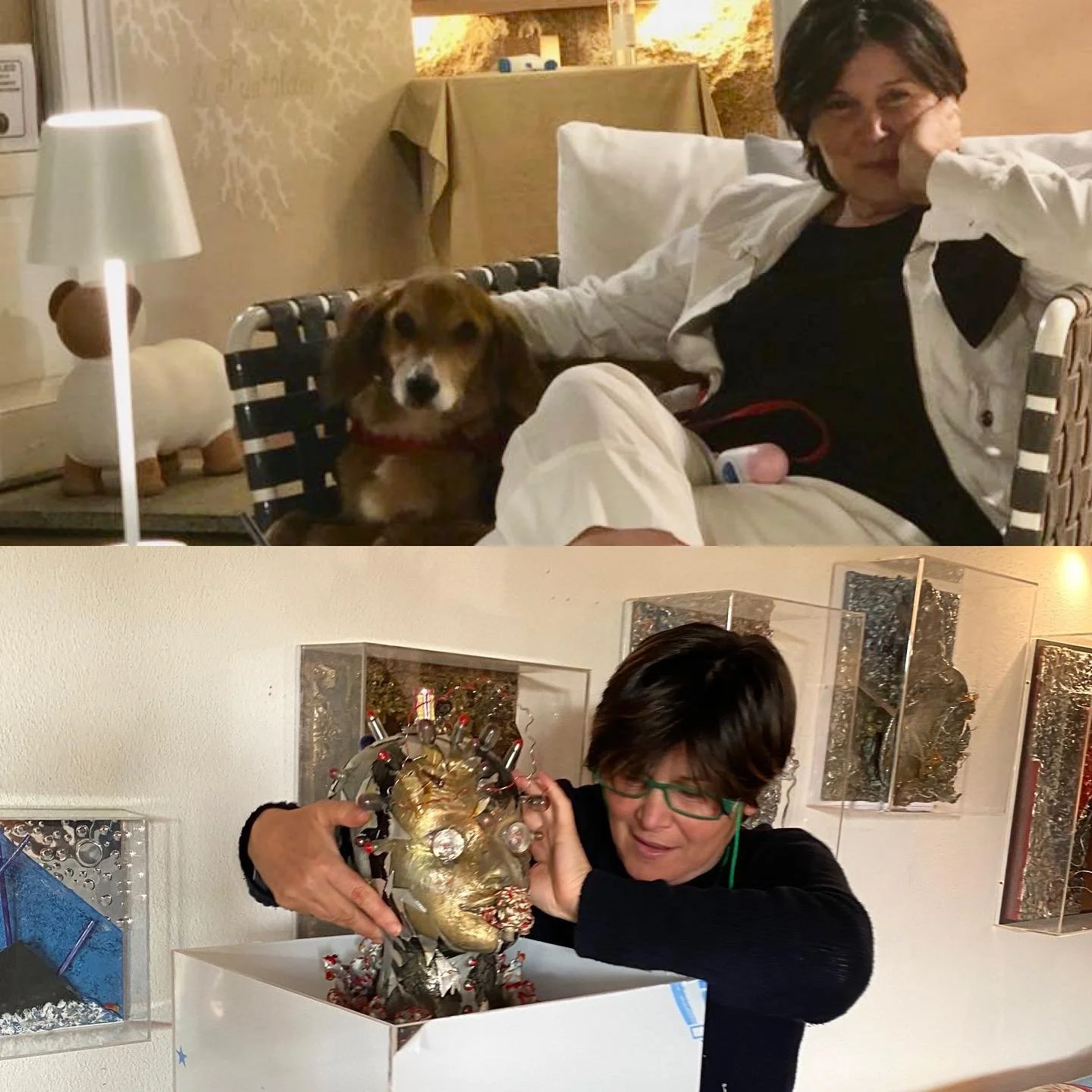
Born in Cagliari on October 21, 1961, Tinamaria Marongiu, baptized as Maria Cristina, entered the world of art at a very young age as a pop music performer. In 1977 she moved to Rome, where for several years she attended the only workshop for emerging artists, “il Cenacolo,” created by “RCA Italiana” at the behest of president “Ennio Melis.” It was a place of experimentation and meeting between young talents and established artists, where research, cultural and human exchange were fundamentally important for her artistic growth. In 1979, under the pseudonym “Babi,” produced by Paolo Dossena and distributed by Polygram, her first 45 rpm record was released: “Maschere,” composed by Maurizio Monti and Aldo Tamborrelli. In the early 1980s, she performed, under her baptismal name “Cristina,” the song “La Lettera”: the opening theme of one of the first and most famous telenovelas broadcast in Italy, “Gli Emigranti.” The same song would later be included in the LP “Contremano.” Presented at the Cannes Midem music fair and reviewed in the world’s most important music magazine of those years, “Billboard,” the “Contremano” LP was released throughout Europe, distributed by Virgin, it achieved great success. The single “Soli,” written by Riccardo Cocciante and performed by “Cristina,” ranked among the top spots in the German radio hit parade for over eight months. Tinamaria participated, as the Italian representative, in one edition of the "Malta International Festival." Also in the early 1980s, she acted and sang in a comedy by the ETI (Italian Theatrical Organization) in a leading role, together with actors “Emi Eco” and “Valerio Isidori.”
At the end of the 1980s she moved for a short period to the USA, California, where she attended a singing course. She graduated as a “Pop Music Performer” at “CET” (the music university founded and directed by Giulio Rapetti, known as "Mogol"). In the early 1980s Tinamaria began to try her hand as a songwriter and registered with SIAE (Italian Society of Authors and Publishers), but her artistic and songwriting vein emerged insistently in the very early 1990s. In 2004 Tinamaria participated with two of her compositions in the competition "L’ALTRA MUSICA," organized by "IMAIE," ranking among the winners. In 2005, on the occasion of the competition "Gli Italiani nel Mondo," held between Paris and Sanremo, alongside the festival, she won the critics' prize with her song: "Madreterra." In 2007, Tinamaria left for Havana – Cuba, where, with the help of the extraordinary Cuban flutist Jose’ Luis Cortes, she produced her first singer-songwriter CD "Dal Poetto al Malecòn," released under the Interbeat label and distributed by CNI (Compagnia Nuove Indie).
In July 2008 she was a guest at the “Premio Lunezia.” With some tracks from her latest musical project “Passepartout,” Tinamaria was a semifinalist at the “Premio Musicultura” 2010.
In 2023, within a CD entitled “Sanremo Famosi” by various artists, published by Dino Vitola, her song “ATTIMI” was also included. Her great curiosity and need for new expressive modes will be the driving force for incessant research and experimentation. Author of her songs, poems, photographs, up to Visual Arts.
A three-year Master’s in Art-Counseling, obtained in Rome in 2009, through which she experimented with various artistic techniques, would be the push that projected her into the world of Visual Art.
Her great curiosity and constant search for new expressive languages will be the engine of an incessant work of experimentation.
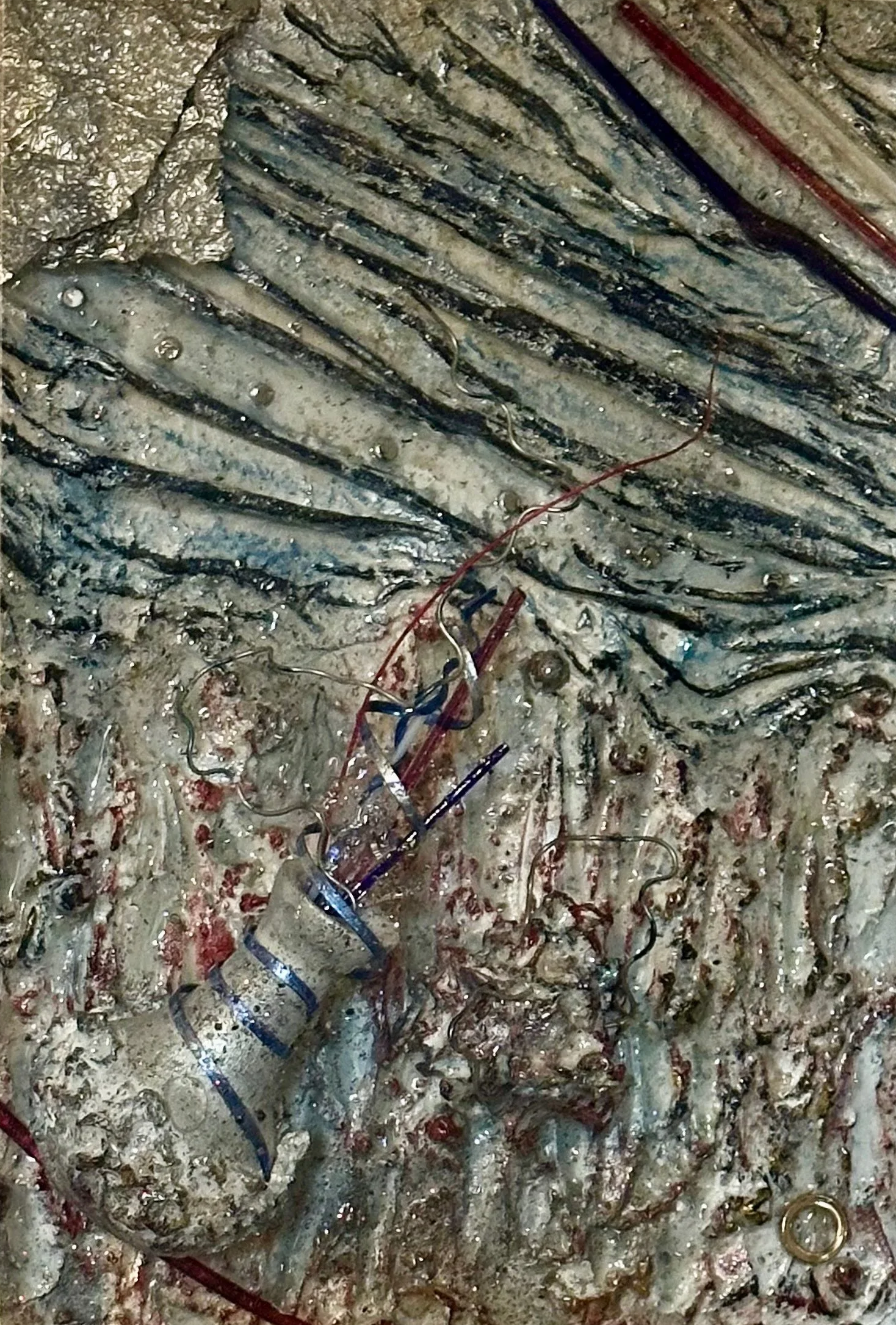
In 2010 she created her first Box-Es works, material creations without predetermined planning, born from the desire to express herself freely in a standardized and conformist society. Three-dimensional works made with organic, inorganic materials and recycled parts, mixed with colors and resins and enclosed in plexiglass cases. Among the materials she constantly includes the “medicine,” symbol of the “ease and unease” of man and the world.
In 2011 she participated in the Biennale di Chianciano and won the 3rd "Leonardo Prize" in the "Applied Arts" section. Also in the same year she was present, with some of her Box-Es, in one of the collateral events of the Venice Biennale, and moreover, she was present with a solo exhibition, for the first time in Miami, Florida USA.
In 2013, responding to the need to define and frame a precise creative paradigm, Tinamaria Marongiu coined the term Arte Compatta, in which she inserted a strong Social concept summarized in five words: Uniqueness - Universality - Union - Humanity - Equality - establishing herself as its conceptual creator.
This artistic mode is distinguished by the assembly of heterogeneous materials – organic, inorganic, and recovered fragments – integrated into unitary three-dimensional compositions, subsequently enclosed in plexiglass cases. Her works represent a synthesis between material experimentation and formal coherence, challenging the conventional boundaries between art, artifact, and ecological consciousness. ***Arte Compatta / Compattismo
In 2025, the theoretical framework underlying this practice is officially codified with the publication of the Manifesto of Arte Compatta in issue 366 of the Bologna quarterly magazine I MARTEDÌ. This publication marks the official launch of a new International Artistic Movement, proposing Arte Compatta as an aesthetic and Socio-Cultural response to contemporary materiality.
In October 2020, at the 43rd International Medusa Aurea “AIAM” Prize, she ranked 1st place, gold medal, for sculpture.
In June 2021 she participated in the "London Art Biennale." Winner of the "Gagliardi Gallery Award" (4th prize ex aequo), she was also among the 25 artists selected for an exhibition in London from November 3 to 12, 2022.
In 2022 she participated in the Biennale di Chianciano, where she won 1st Prize in the Applied Arts section.
Present since 2018 in the Catalog of Modern Art (CAM) published by Giorgio Mondadori (formerly Bolaffi) and with several publications in the magazine "Arte" Mondadori and others.
The notoriety and originality of her Box-Es have led her to exhibit successfully in Europe, the United Kingdom, the United States, and worldwide.
In 2025 she also obtains certification as a "Ceramist"
2025 - The Bologna cultural quarterly I MARTEDÌ, published by the publishing house “I Persiani”, opens the first issue of the year with the official publication of the "Manifesto of Compact Art", with the supervision of journalist and writer "Domenico Segna" and the magazine's Director "Father Giovanni Bertuzzi"
Tinamaria, how has the long arc of your journey from voice and stage to object and material informed the very grammar of Compact Art, and in what ways does the memory of performance life echo in the silent pressure of assemblage, rhythm, pause, and enclosure that we meet inside the plexiglass case?
My journey from voice and stage to object and matter has profoundly shaped the grammar of Compact Art. I was born in Sardinia and began singing even before I could walk.
At the age of five, I made my debut on stage, and already in my adolescence I was performing at local festivals accompanied by a band. At seventeen, I moved to Rome to pursue the dream of becoming a professional singer, entering the International world of the recording industry.
Music has always lived within my soul, accompanying every step of my artistic life until the age of forty. At a certain point, however, a powerful need emerged to express myself through other creative languages as well, naturally leading me toward visual art and a direct engagement with matter.
Today, music is no longer only sound; it continues to live within my work in a transformed form: in the gestures that shape materials, in the silences that separate fragments, in the pauses and tensions that build a new, tangible harmony.
When the creative moment arises, the process unfolds freely, instinctively, and without preconceived planning. The assembly happens spontaneously, guided by an inner rhythm made of gestures, pressures, and resonances. Structure is not imposed; it emerges naturally, like a score taking shape directly within the material—through the same approach with which I have always composed my musical pieces or written the lyrics of songs and poems.
The memory of a performative life does not disappear; rather, it grows stronger. It translates into the silent pressure of assembly, into inner tension and harmony, into the musicality of gestures. Each fragment has its own rhythm, each pause its own value, each closure its own meaning. In this way, the memory of the stage continues to resonate within the display case, transforming the performative experience into a silent presence that lives on in the material.
Compact Art arises from five principles that seem at once ethical and formal: Uniqueness, Universality, Union, Humanity, and Equality. Could you describe how these concepts function as real forces within the studio when you confront raw material, and not merely as slogans, but as tensions that shape choice, gesture, accident, and final form?
If I were selling a perfume or a cutting-edge car, I would probably use a more catchy slogan…
but Compact Art is not conceived as a product: it is a journey that takes shape from the soul, a constant search, an awakening of awareness toward oneself, toward the other beyond us, and toward the world we inhabit.
Object-based works are born through the collection of fragments and discarded materials that capture my gaze and activate inner sensations. Forgotten objects, abandoned in their apparent uselessness, seemingly stripped of any role or function. It is precisely from this marginality that their strength emerges: each fragment preserves a story, a memory, a potential for connection. In time, these fragments come into contact with mixtures of pigments and materials, shaped and fixed through the use of resins, to be reborn and give life to new narratives.
In this gesture, Uniqueness is revealed: each element is irreplaceable, like every living being. Even what has been discarded regains dignity and significance. Recognizing this uniqueness, respecting it, and listening to it is the first creative act, just as it should be the first human act in society. The irreplaceable alone generates new value.
From this arises Universality. Just as we all belong to the same Universe, art must speak a universal language, capable of crossing borders, telling the story of our planet and our social world. Simple, everyday materials become a shared voice, a bridge between different experiences and cultures.
The work is realized through the Union of different elements which, when integrated, take on a new form. Just as a human being grows and transforms through interaction with others, the materials generate new meanings in relation. The whole becomes greater than the sum of its parts, and the work becomes a metaphor for dialogue and evolution.
Humanity emerges in the imperfect gesture, in the unexpected, in the time required for creation. Fragility is not hidden but embraced as part of the form, just as in social life shared vulnerability fosters authentic bonds and the possibility of mutual understanding.
Equality, finally, is practiced within the relationship itself: no material dominates another, no presence is marginal. Each element has an equal right to shape the final form. The work thus becomes a single entity, composed of many, all distinct yet equal in their diversity.
Compact Art is the projection of a thought born from the desire to raise awareness about an increasingly fragile planet and from the need to rebuild cohesion among people, including those living on the margins of a society more attracted to appearing than to Being.
Creating in this way means transforming matter and, at the same time, transforming ourselves: giving voice to what was forgotten and allowing, through gesture and form, the harmony of a living, fragile, and shared Universe to emerge.
The Box-Es carry with them a persistent symbolic element, the “pharmaceutical”, a sign of comfort and discomfort, vitality and fragility. How does this recurring element evolve across works and through time? Does it remain a metaphor for the human condition, or has it become something more personal, like a pulse that you can hear from within the materials themselves?
The “pharmaceutical” in my Box-Es arises as a deeply ambivalent symbol: comfort and discomfort, vitality and fragility. Initially, it served as a universal sign, capable of immediately speaking to the human condition—the ease and unease of people and the world, the need for care, and the precariousness that permeates existence.
However, the pill does not represent only care. It also symbolizes the human desire to go beyond, to never settle, to constantly push forward in search of new balances, new possibilities, new horizons. In this sense, the drug becomes a metaphor for the ongoing tension between limits and transcendence, between vulnerability and the aspiration for the immortality of Being.
In 2013, the pharmaceutical element physically disappears from the works. It is not an absence, but a transformation. The space left by the recognizable sign allows Compact Art to emerge as a concept: the “pharmaceutical” is no longer a visible object, but an internal presence, a pulse that runs through the material. It remains as a memory, as a silent rhythm beating within the fragments, the materials, and the forms.
Today this element continues to serve as a metaphor for the human condition, but it has become more intimate and personal. It is an internal vibration, a breath of the material, something that can only be perceived by approaching the work with attention and listening. It does not heal, nor promise salvation: it connects fragility and strength, discomfort and vitality, transforming the object into a living, shared experience.
In this sense, the “pharmaceutical” does not disappear: it internalizes. It becomes the beating heart of the Box-Es, an invisible sign that tells of my relationship with the materials and, at the same time, our relationship with the world and with humanity.
You were born into a world of sound, voice, and interpretation, and later created a movement made of matter, volume, and compression. If one listens carefully to your works, there is a sense of musical structure. Does Compact Art retain a musicality in its composition — something like phrasing, refrain, crescendo, silence — that organizes material events beyond their visual appearance?
Yes, musicality is an intrinsic dimension of my work. I was born into a world of sounds, voices, and interpretations, and that inner ear continues to guide my practice even when I engage directly with matter.
In Compact Art, fragments function like notes, and colors and volumes act as chords. The creative gesture—instinctive and unplanned—unfolds through an internal phrasing: elements relate to one another, approaching or moving apart, generating rhythm, tension, and resonance. The composition builds like a musical structure, made of fullness and voids, of accumulations and pauses, in a movement that becomes a harmonious unison.
Within each Box-Es, crescendos and moments of suspension naturally emerge, with recurring elements acting like refrains, and silences that allow the material to breathe. The musicality is not an external reference, but an intrinsic quality of the form, perceptible in the balance of volumes, the pressure of the assembly, and the way space is inhabited.
The memory of the performative life does not disappear: it translates into a sensitive discipline of gesture, a respect for timing and closure, and the ability to listen to what unfolds during the process. In this sense, Compact Art preserves a musical structure that organizes material events beyond their visual appearance, transforming the composition into a silent score that manifests within the matter.
The plexiglass vitrine seems to both reveal and protect the interior world of the work, a threshold between seeing and touching, between life and stasis. How do you think about this boundary? Does it become a metaphor for our contemporary condition, where intimacy is constantly mediated by screens, transparencies, and controlled distances?
The Box-Es was conceived from the very beginning as a conceptual device inspired by the Freudian Id, the realm of primary impulse and the unconscious. Conceptually, the creative process can be likened to a child’s play: free, spontaneous, guided by instinct and curiosity, without predetermined design.
The plexiglass display is neither a simple container nor a barrier, but an integral part of the Box-Es concept: it is conceived from the outset as a defined space that embraces the freedom of the creative gesture and makes visible what is already complete. It marks the transition from the intimate dimension of the creative process to the space of encounter with the viewer, while preserving the original energy of the work.
Even when complete in its meaning, the work becomes a new expression through the interpretation of the viewer, making the artistic experience alive, dynamic, and shared—similar to a musical performance where the performer enters into synergy with the audience, generating new sensations, emotions, and meanings.
The case transforms distance into an opportunity for connection: it invites the viewer to replace gesture with sight, touch with imagination, activating other levels of perception. The eye lingers, the mind builds connections, and inner listening intensifies. In this way, the Box-Es becomes a bridge between material, creator, and viewer—a metaphor of freedom, openness, and interaction.
At the same time, the case reflects our contemporary condition: intimacy mediated by transparency and controlled distance, closeness and separation, exposure and protection. It does not freeze the work, but keeps it in a state of active suspension—between presence and contemplation, between life and apparent stillness—transforming the encounter with the viewer into an experience of attentive, respectful, and conscious listening.
In the Manifesto of Compact Art you write that contemporary art does not live only in the act of creation, but in the breath of social ideas capable of awakening the heart of humanity. How do you imagine this awakening occurring? Does art speak to the collective through image alone, or does the viewer become necessary as collaborator, witness, participant in a larger ethical project?
In the Manifesto of Compact Art, I state that Contemporary Art does not live solely in the act of creation, but in the breath of social ideas capable of awakening the heart of humanity. This awakening is neither immediate nor imposed: it occurs silently, through a process of recognition and awareness.
The work does not convey a single message, nor does it offer answers. It is a meeting point, a threshold that invites the viewer to pause, reflect, and engage with what they see and feel. In this sense, art speaks not only through the image, but through the experience it activates.
The viewer is never a passive subject: they become a witness and an active participant in a broader ethical process. Their presence, their time, their attentive gaze complete the work. It is in the relationship between the artwork and the viewer that the piece opens to the social dimension, transforming into a space of shared reflection.
The awakening of the heart occurs when the viewer recognizes, in the fragments and their relationships, something of themselves and the world they inhabit: fragility, interdependence, and the uniqueness that coexists with equality. In that moment, the artwork ceases to be merely an aesthetic object and becomes a human experience.
Compact Art positions itself as an open ethical project, one that asks not for adherence but for attention. It is an invitation to engage with sensitivity, to care for the gaze, the material, and the relationships. It is within this shared space that art can generate a real awakening—slow but profound—capable of shaping the way we relate to others, to the planet, and to ourselves.
Recycling fragments, organic and inorganic, while enclosing them in harmony forms a paradox between the wild and the composed, the broken and the whole. How do you navigate this friction? Do you allow chaos to enter before discipline, or does discipline emerge first as a kind of internal law that organizes the raw world around you?
My work arises from the friction between chaos and order, between what is wild and what seeks a form. The gathering of fragments — both organic and inorganic — is an instinctive act, free from any preconception: discarded, broken, forgotten materials that catch my eye for their resonance. In this primordial phase, chaos is total, a raw world without rules or hierarchy. The use of mixed pastes and colors, combined with the fragments, shapes them and begins to weave connections between the elements, like a melody gradually taking form.
When the creative impulse arises, the gesture remains instinctive, yet enters a dimension of deep listening. The hands relate the fragments, following tensions, weights, attractions, and breaths. It is in this moment that an internal discipline emerges—not imposed, but revealed by the material itself, through its dialogue, suggesting balances, pauses, and compressions.
The broken is not fixed, the wild is not tamed. Each fragment retains its own identity, fragility, and history. The “whole” arises from the integration of these differences, not from their erasure: harmony is not the absence of conflict, but conscious coexistence.
Discipline, therefore, neither precedes chaos nor dominates it: it emerges from it like a natural law. It is a form of respect and attentiveness, a way of engaging with the material without forcing it. In this sense, Compact Art becomes a metaphor for the social realm: an equilibrium possible only when disorder, unpredictability, and diversity are embraced as necessary elements in the creation of a common body—alive and in constant transformation.
Your work refuses violence and insists on peace, yet the world is filled with conflict, rupture, dislocation, and despair. Can art still intervene in the real, or is its intervention subtler, like planting seeds in the cultural soil, waiting for slow transformation rather than immediate change? How do you position Compact Art in this political horizon?
My work does not deny conflict, rupture, or despair: it recognizes them as part of our time, but consciously chooses not to respond with violence. Compact Art is born precisely within this tension. We live in a fragmented world, marked by social, environmental, and emotional wounds, and it is from these fragments that my work takes shape—not to amplify the clash, but to transform its meaning.
I believe that today art cannot—and perhaps should not—intervene in reality with immediate or decisive actions. Its influence is more subtle and profound: it resembles an act of sowing. Planting seeds in the cultural soil means generating attention, respect, and listening. It is a slow work, one that does not yield immediate results, but acts over time, gradually shaping collective perception and sensitivity.
Compact Art positions itself within this horizon as a silent political act. Political not because it proclaims, but because it practices. It practices unity instead of separation, integration instead of exclusion, dignity instead of discard. Recovering abandoned materials, treating them with care, and integrating them without erasing them is already an ethical and political stance: it is a gesture that speaks of coexistence, of possible peace, of living together amid differences.
I do not believe in art that provides answers or solutions, but in art that provokes questions. Art capable of revealing fragility without sensationalizing it, of making wounds visible without exploiting them. In this sense, Compact Art does not stand against reality, but reflects and reworks it, opening a space of imagination in which to envision alternative ways of relating—both socially and within the world.
Its intervention may be slow, yes, but radical. Because it acts deeply: in the way we see, in the way we assign value, in the way we recognize the other. And it is in this invisible yet shared space that authentic and lasting transformation can emerge.
Having exhibited globally and received significant awards, you have seen your works resonating across different cultural contexts. Did any particular audience respond in a way that surprised you, revealing an interpretation you had not anticipated? If so, did that moment expand your own understanding of what Compact Art can become beyond Italy, beyond Europe, beyond your personal history?
Exhibiting internationally has shown me how artworks, once released, cease to belong solely to my story and begin to enter that of others. On several occasions, the audience has responded in unexpected ways, reading meanings in the Box-Es and in Arte Compatta that I had not anticipated, yet I recognized them as profoundly authentic.
In contexts far from Europe, what struck her was the immediate reading of the material as a social body—a collection of fragments coexisting despite wounds, differences, and fractures. Without knowing her personal journey or the Manifesto, some viewers perceived the work as a metaphor for community, resilience, and shared survival. This both surprised and confirmed her: Arte Compatta speaks a universal language, not tied to a specific place, but to a shared human condition.
These encounters have broadened my awareness: Compact Art can exist beyond my biography, beyond Italy and Europe. It can adapt, resonate, and transform in dialogue with different cultures, because it arises from material, fragility, and the need for connection—elements common to every human being.
In those moments, I sensed and realized that the work no longer told only my creative journey, but became an open and shared space, where every gaze adds a new layer of meaning. Compact Art thus affirms itself as a living organism, capable of growing through encounter, listening, and the interpretation of others.
The Manifesto has now been published and the movement codified; theory and practice stand side by side. What becomes urgent for you now? What remains unresolved or still searching in your studio? Is there a future chapter for Compact Art that you already sense, like a pressure beneath the surface, or is the movement itself designed to remain in motion, adapting and transforming as new materials, new stories, and new human needs arise?
Now that the Manifesto of Compact Art has been published and the Movement codified, the urgency is not to set rules, but to open possibilities, ensuring that Compact Art does not remain merely a creative model, but grows as a space for artistic and social sharing, both virtual and, in some contexts, real, indoors or outdoors, capable of welcoming, exchanging, and developing skills through new expressive modalities.
Theory and practice intertwine like threads of energy in motion, where every gesture, fragment, and intuition contributes to weaving relationships, stimulating dialogue, and opening unexpected horizons, making the experience alive and participatory.
Compact Art thus becomes a laboratory of research, discovery, sharing, and transformation, aspiring to become an ever-widening chorus of voices, each with its own uniqueness yet in unison; a living experience that encourages reflection and guides toward a more conscious, harmonious, and authentically human existence.
In my studio, the possible intersections between techniques, materials, and other expressive modes remain unresolved. I am drawn toward paths yet unexplored, to experiment and incorporate them, because Compact Art is born from accumulation, not subtraction: “each fragment integrates and enriches the previous one, generating the new,” just as the dialogue between the artwork and the observer allows the unexpected to guide the form and create connections between matter and sensibility.
Compact Art lives in a continuous dialogue, waiting to transform through new stories, new voices, and new interpretations, always keeping alive the tension between creative freedom, introspection, and form, between personal experience and dialogue with the outside world. In this dialogue, the work grows, evolves, and transforms without losing the strength of the original gesture.
Every new creative mode—whether light, sound, performative gesture, or untested material—becomes new lifeblood, amplifying the expressive possibilities of the Movement, adding meaning, energy, and making the artistic experience increasingly alive, shared, and open to encounter, observation, and new interpretations.
Beneath the surface pulses a future chapter, still without form. Within me, the genuine, stimulating, captivating, and spontaneous curiosity—similar to that of a child, with senses constantly alert—towards new voices, different sensitivities, and untested materials, which will forcibly emerge along the journey.
The future of the Movement, as Compact Art was conceived, is not simplification, but integration: listening to the matter, restoring dignity to what has been discarded, valuing differences.
The Movement remains in becoming, adapting to the world, its urgencies, and the possibilities of authentic relationships. Every creative gesture, every material or performative choice, every embraced fragment becomes a game, a new creative experience, and an invitation to reflection and awareness: because the change of the world is never automatic, but arises from the very will of humans to engage, observe, understand, and act with responsibility, sensitivity, love, and respect towards others and the world within and outside of us.
Materials identify and narrate the passage of humanity. Just as we ourselves are passengers on this beautiful and fragile planet, too often mistreated and in need of care, on a journey of limited time. Passengers destined to be remembered through small fragments of snapshots, shared and relived by our loved ones. Reminding us that, just as our ancestors did with us, what we leave behind, for better or worse, will be the future imprint for generations to come.

ARTE COMPATTA Box-Es n.1117 a world inside a plate - 2019 cm.39x43x17
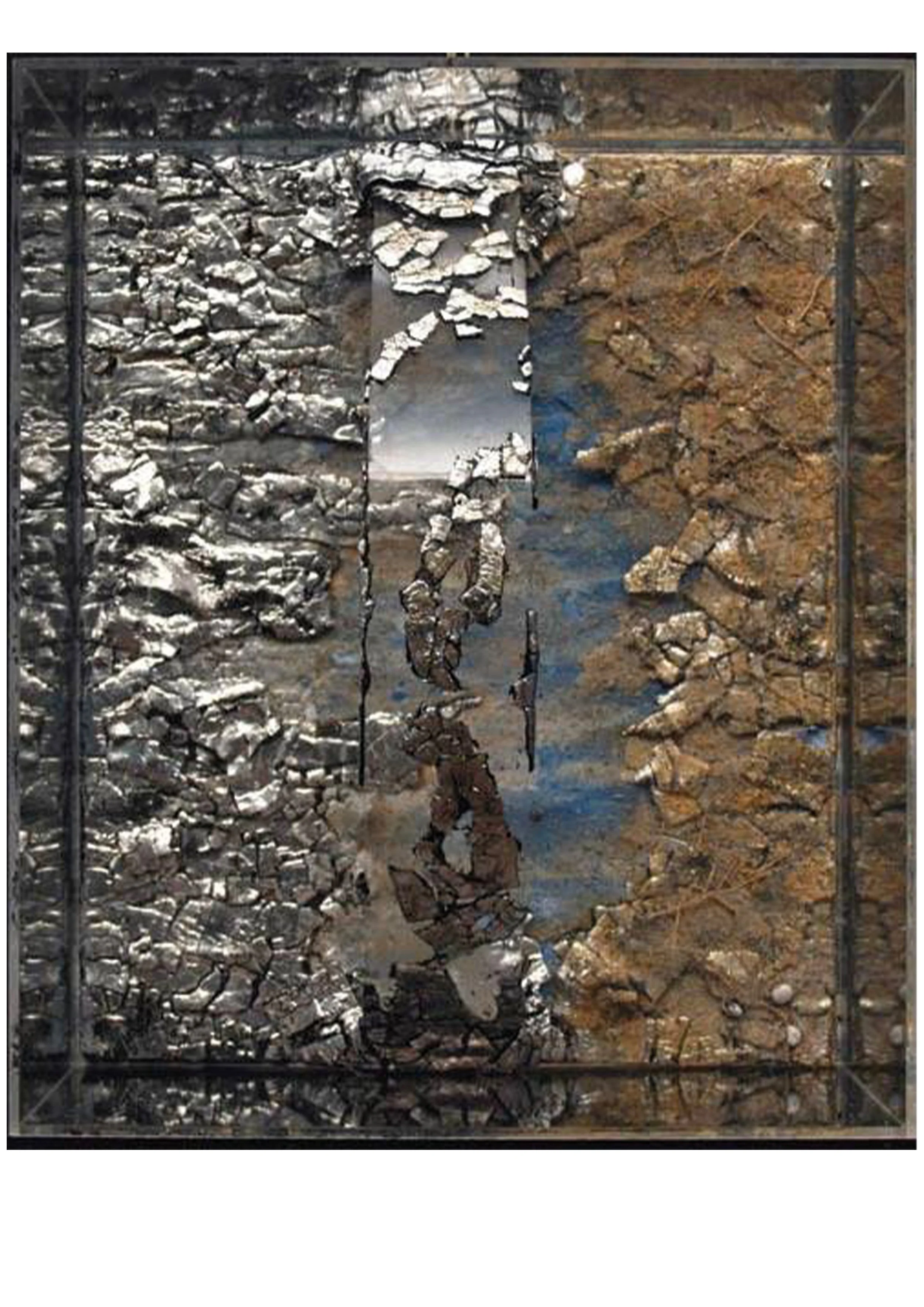
Box-Es n.1086 the bridge - 2013 cm.26x31x13
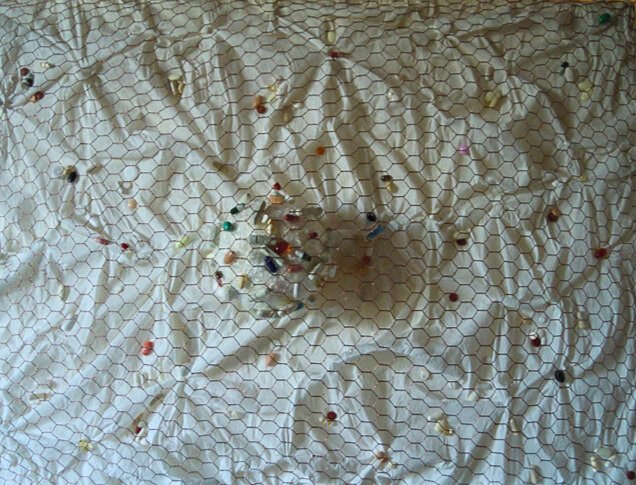
Box-Es-n.1023-the-world-in-the-net-2010-cm.83x60x15

COMPACT ART Box-Es n. 1152 the eye - 02-2025 cm.82X102X24

COMPACT ART Box-Es n.1105 the key to power - 2015 cm.70x60x17

COMPACT ART Box-Es n.1134 the long arms of nature - 02-2022-cm26x24x18
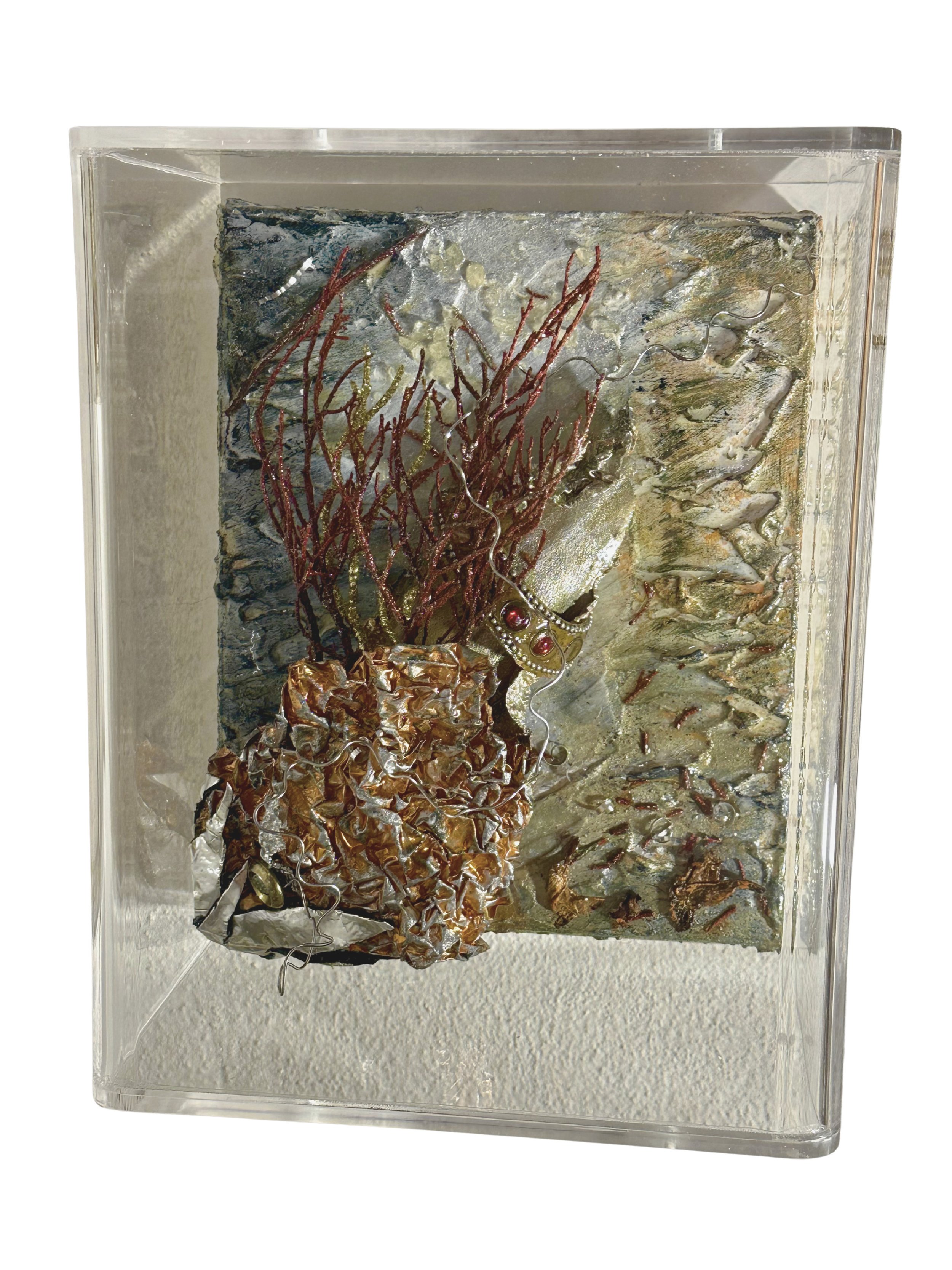
COMPACT-ART-Box-Es-n.-1148-cuttlefish-bones-07_2024-cm.23x29x17
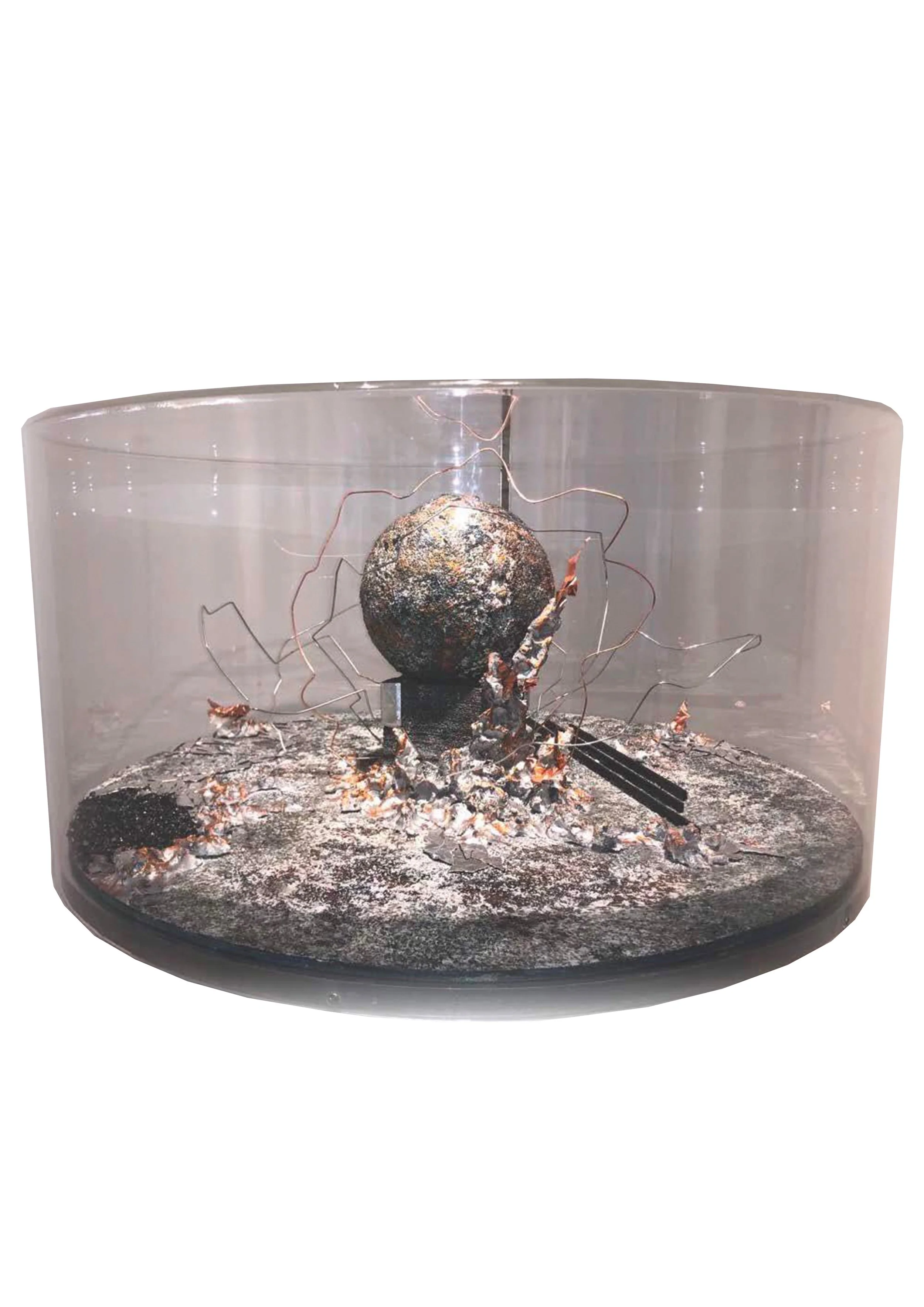
COMPACT-ART-Box-Es-n.1115-the-world-2018-_table
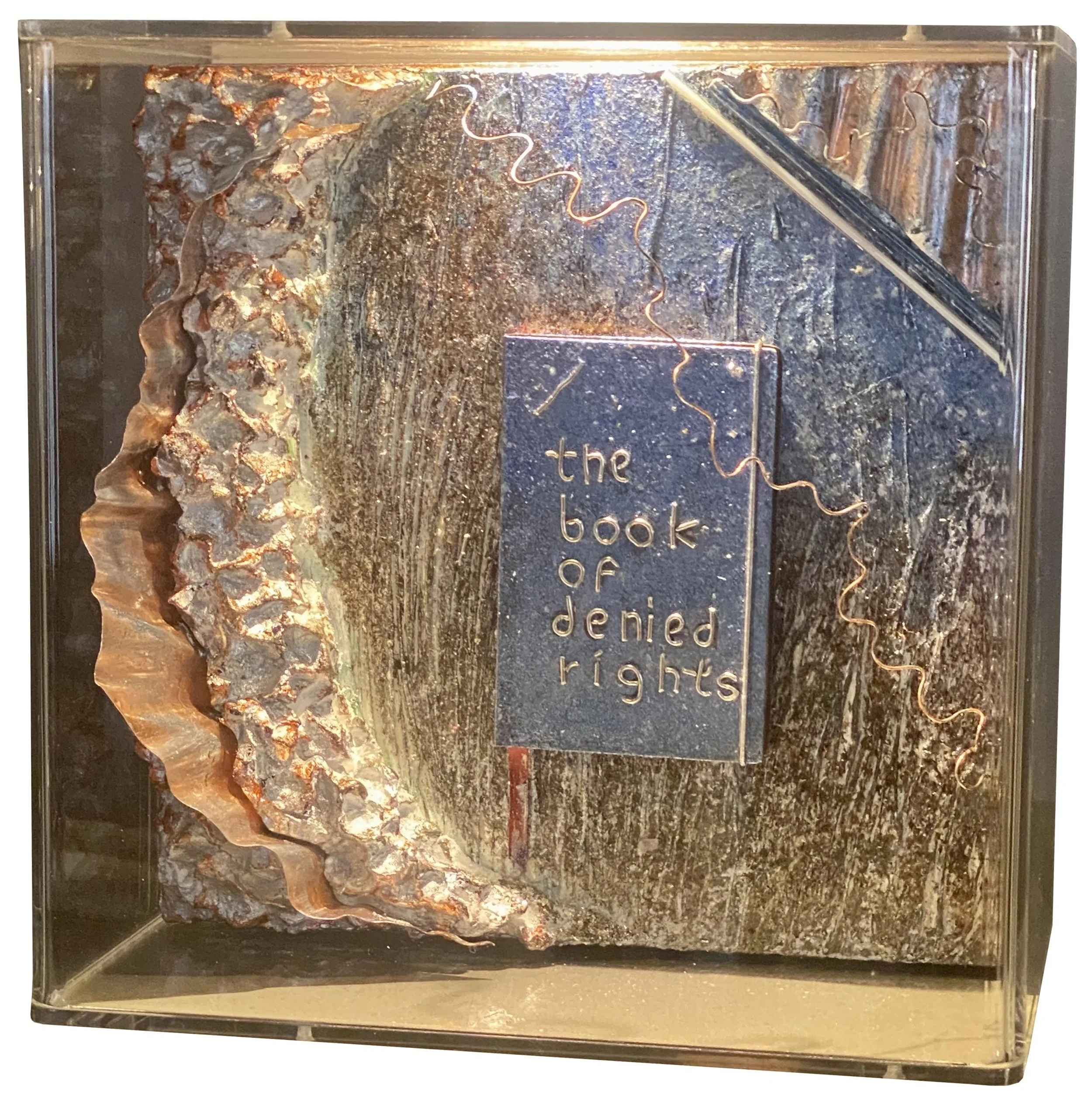
COMPACT-ART-Box-Es-n.1132-the-book-of-denied-right-12_2021-cm.-32x32x12
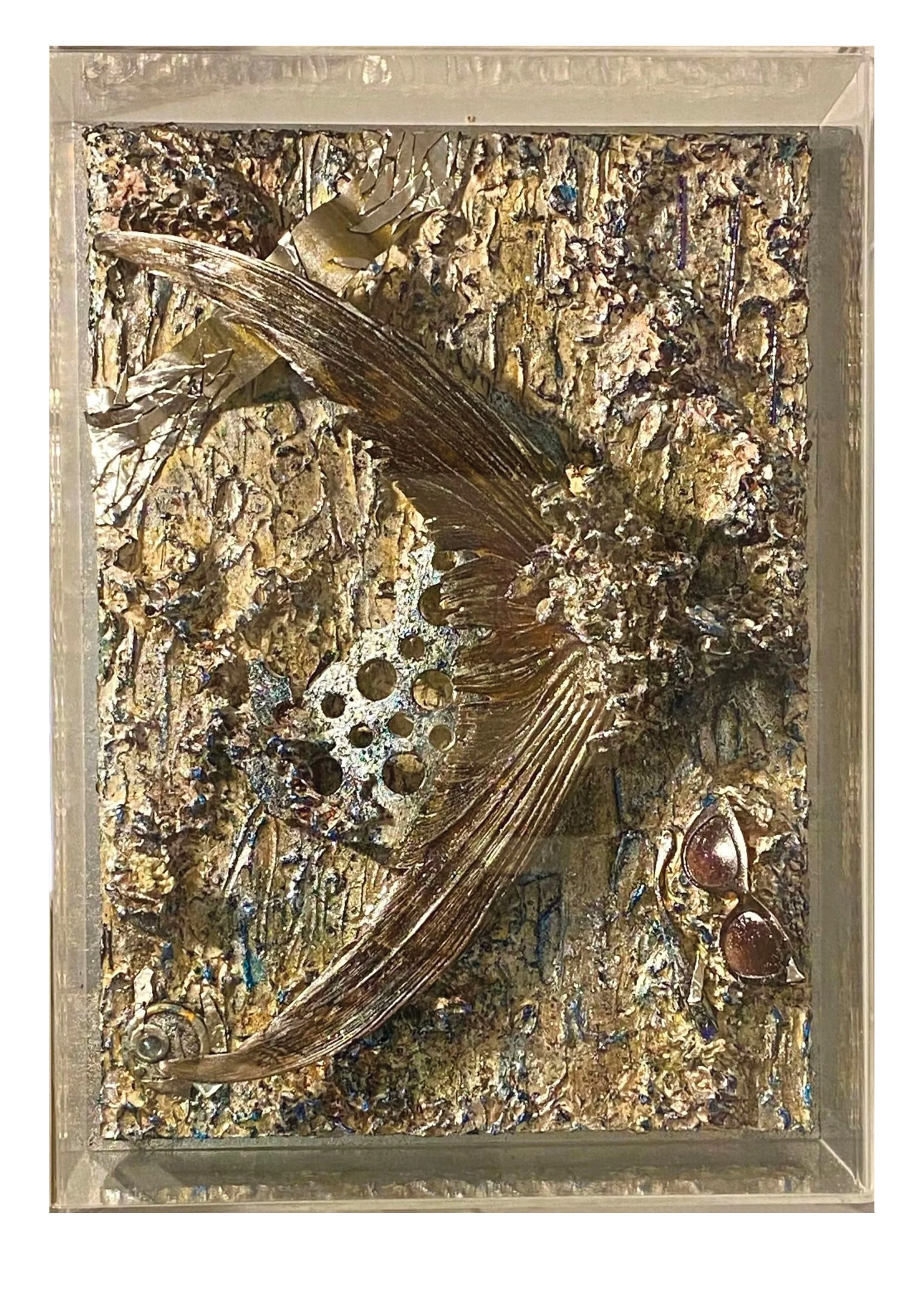
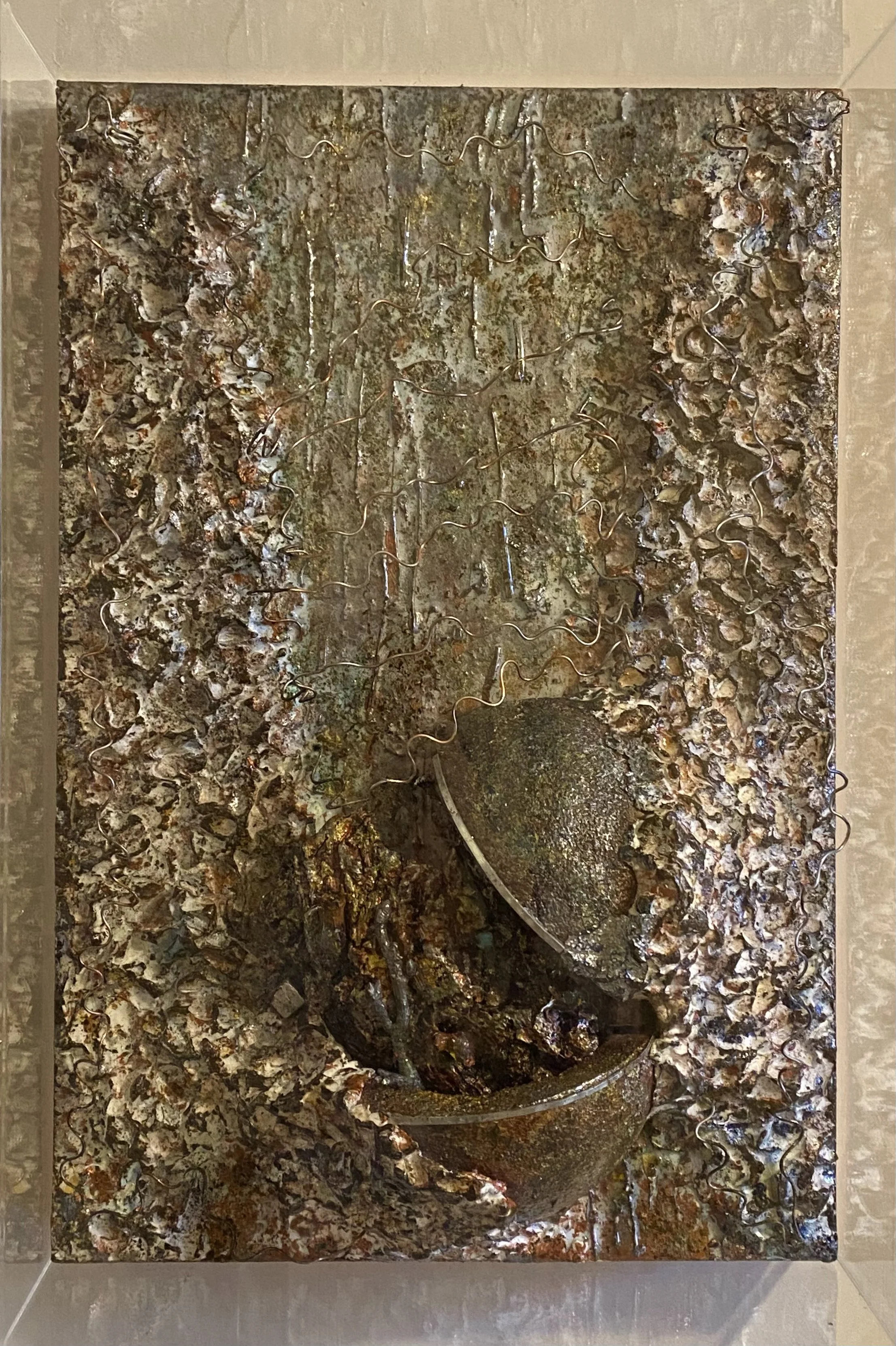
COMPACT-ART-Box-Es-n.1141-the-threads-03_2023-cm.40X60X20
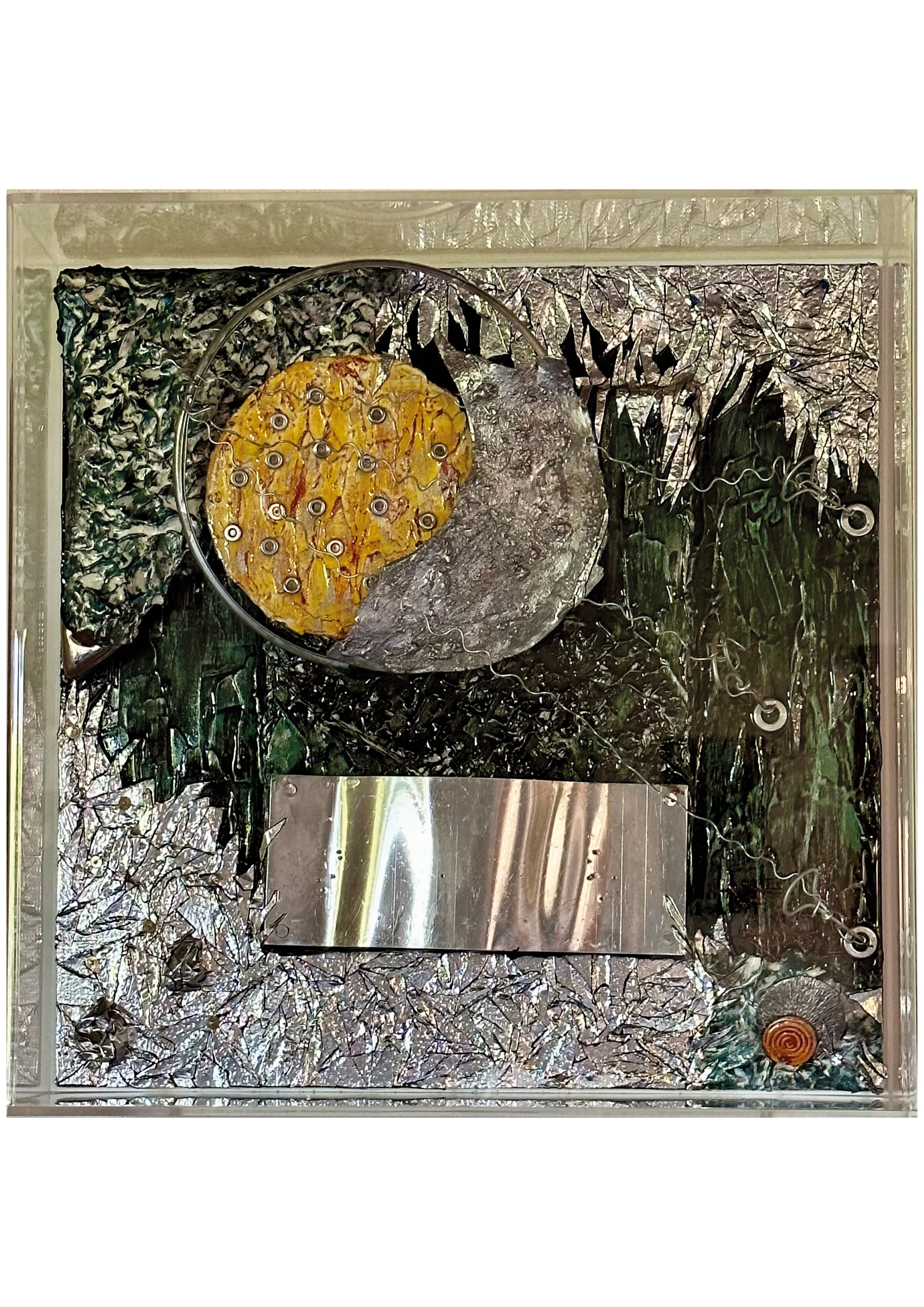
COMPACT-ART-Box-Es-n.1143-the-frozen-planet-09_2023-cm.61x61x20
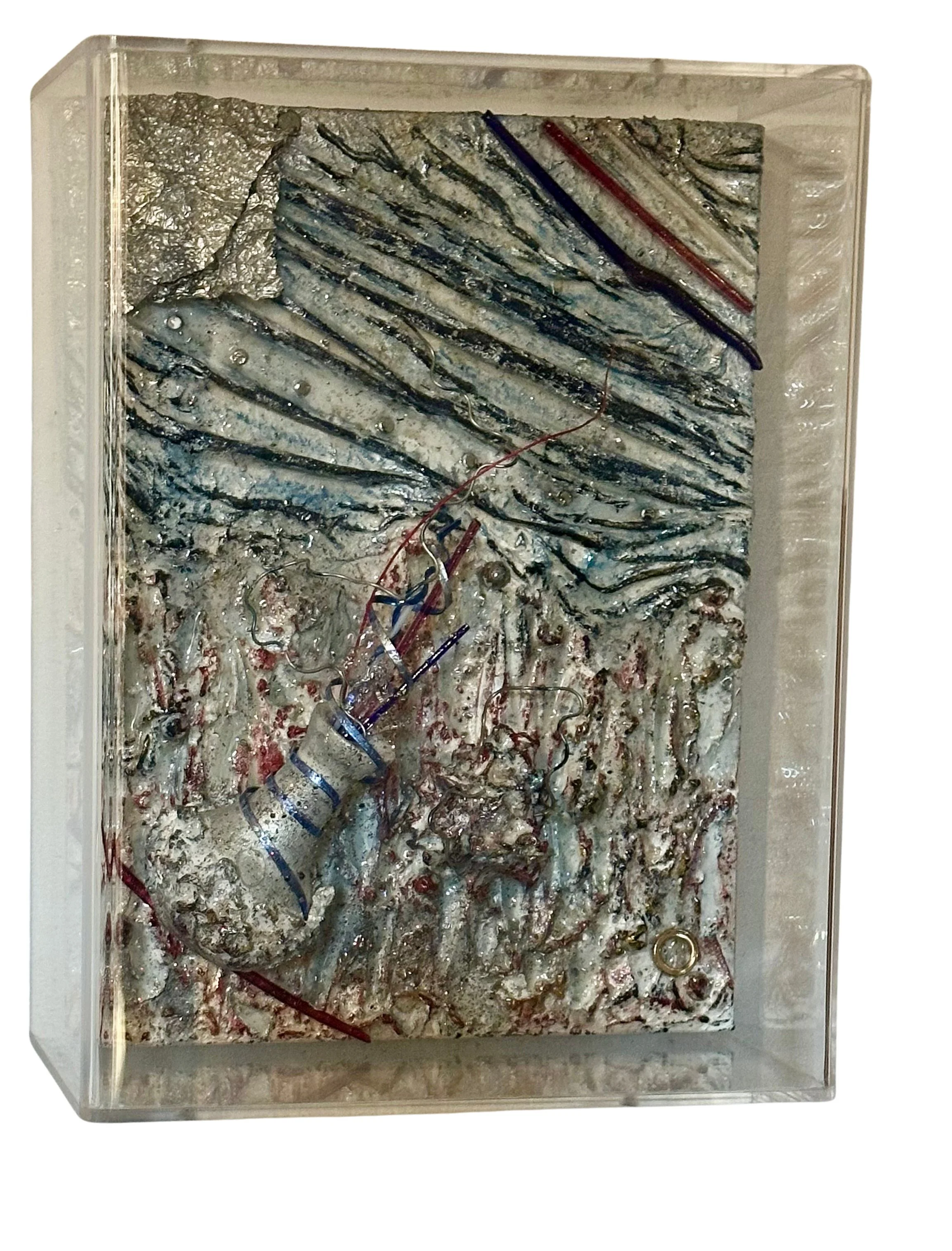
COMPACT-ART-Box-Es-n.1154-split-blood-06_2025-cm.31x41x15
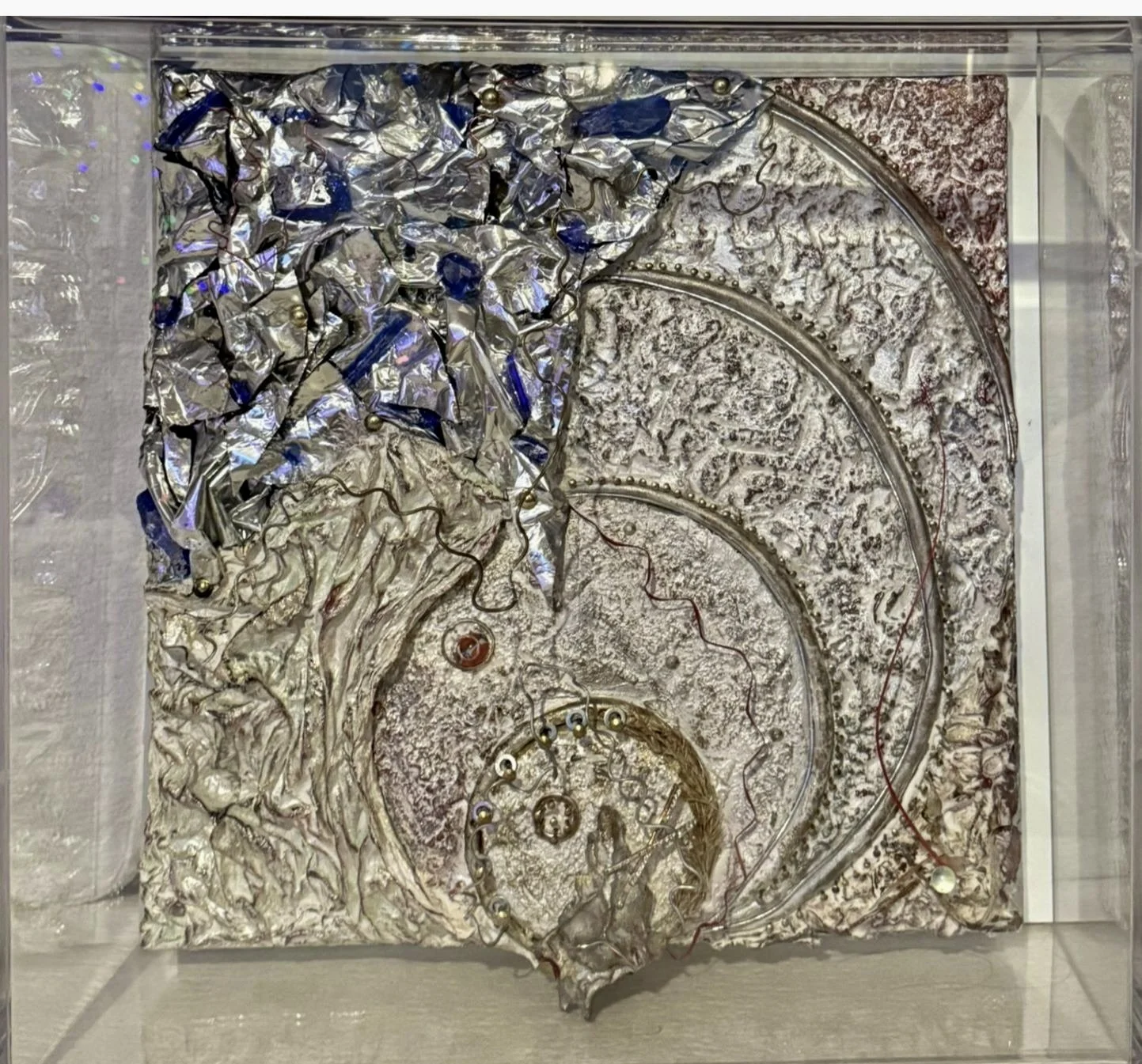
COMPACT-ART-Box-Es-n.1154-split-blood-06_2025-cm.31x41x15