Sandy Coburn
https://sandycoburnphotography.com
In an age saturated with images, where the visual field is constantly accelerated by digital circulation and algorithmic attention, the question of what constitutes a meaningful photographic experience becomes increasingly urgent. Within this environment, the work of award-winning fine art photographer Sandy Coburn emerges as an arresting counterpoint to the noise of contemporary visual culture. Her photographs do not compete for attention through spectacle alone. Rather, they invite stillness. They ask the viewer to slow down, to inhabit the image, and to rediscover the quiet emotional resonance that can arise when colour, place, and perception align.
Coburn’s artistic practice is rooted in a profound reverence for the natural and cultural environments she photographs. Landscapes, wildlife, and architectural spaces are not treated as subjects to be conquered or catalogued. Instead, they appear as living presences, each image forming a moment of encounter between the artist, the environment, and the viewer who ultimately completes the work through contemplation. The photographs are therefore less about documentation and more about transformation. A landscape becomes a field of colour and atmosphere. A bird becomes a luminous embodiment of presence. An architectural corridor becomes an unfolding meditation on space and infinity.
Her artistic journey began in Jiuzhaigou, China, where vivid autumn foliage reflected against glacial waters revealed to her the emotional power of colour in photography. That moment did not simply inspire a career. It established the conceptual framework that continues to guide her practice. Colour, in Coburn’s work, is never merely decorative. It functions as an emotional language through which landscapes and environments communicate their internal rhythm.
From that point forward her work developed through extensive travel across Asia, Africa, Latin America, and Europe. These journeys provided not only geographical diversity but also a layered understanding of place and cultural context. Having previously worked in global communications and humanitarian storytelling, Coburn approaches photography with a sensitivity to narrative structure and human experience. Yet her fine art practice does not replicate the documentary tradition of humanitarian photography. Instead it transforms storytelling into something more contemplative and poetic.
Within the contemporary art scene Coburn occupies a compelling position. She belongs to a generation of photographers who have moved beyond the binary divide between documentary realism and conceptual abstraction. Her images remain anchored in the real world. The mountains, caves, animals, and architectural spaces exist as physical locations. Yet through colour, composition, and atmosphere these places become almost dreamlike. Reality is not rejected. It is heightened.
This ability to balance fidelity to place with aesthetic transformation situates Coburn within a long lineage of artists who have sought to reveal the poetic potential of landscape. One historical parallel can be drawn with the nineteenth century master landscape painter J. M. W. Turner. Turner’s paintings transformed the landscape into a theatre of light and colour where atmosphere dissolved solid form. Coburn performs a similar operation through photography. Light becomes substance. Colour becomes structure. The landscape is no longer simply seen. It is felt.
However, Coburn’s work diverges from historical romanticism through its deep ecological awareness. Her images communicate a reverent respect for the environments they depict. They are not expressions of human dominance over nature. Instead they reveal humanity’s place within a larger network of interconnection.
This philosophy becomes visible when examining the individual photographs that together form her evolving portfolio.
The photograph titled Beneath a Sleeping Giant introduces the viewer to Coburn’s capacity for contemplative spatial composition. The image depicts a vast circular agricultural amphitheatre carved into the earth, its concentric terraces spiralling inward toward a central point. Above this geological architecture rise distant mountain peaks whose presence dominates the horizon.
The photograph is rendered in black and white, a choice that immediately alters the viewer’s relationship to the scene. By removing colour Coburn directs attention toward form, texture, and scale. The terraces resemble geological rings or ripples frozen in time, suggesting the passage of centuries through human interaction with the land.
The title hints at a deeper metaphor. The mountain range looming in the distance becomes the “sleeping giant,” a reminder of geological forces far older than human civilization. Within this context the circular terraces appear as an act of dialogue between humanity and the earth. Agriculture becomes sculpture. The landscape becomes architecture.
Coburn’s decision to include small human figures along the terraces introduces a subtle narrative element. These figures emphasize scale while also reminding the viewer that human presence remains temporary within the larger continuity of the land.
What emerges from the photograph is not a sense of domination but of coexistence. Humanity shapes the landscape yet remains dwarfed by it. The image therefore becomes a meditation on time, humility, and the delicate balance between culture and nature.
In Blue Light on Miocene Spires, Coburn returns to colour with breathtaking intensity. The photograph captures the monumental peaks of Patagonia rising above a glacial lake, their jagged silhouettes piercing a sky alive with shifting clouds.
The palette is dominated by luminous blues. The lake reflects the sky while the distant mountains appear almost sculptural in their icy clarity. The photograph operates through a powerful horizontal structure. Water, land, and sky create three visual strata that extend across the frame.
Yet what gives the image its emotional impact is the quality of light. Coburn photographs the scene at a moment when clouds open just enough to illuminate the peaks, allowing them to emerge from shadow like monumental statues carved by geological time.
The spires themselves originate from Miocene era rock formations, meaning the landscape embodies millions of years of planetary history. Coburn’s photograph therefore captures a moment in which deep time becomes visible. The viewer encounters not simply a mountain range but the accumulated history of the earth itself.
The photograph resonates with the tradition of sublime landscape imagery. Yet unlike traditional romantic landscapes, Coburn avoids dramatic exaggeration. Instead she allows the natural structure of the place to speak through clarity and restraint.
The result is an image that evokes both awe and serenity. It reminds the viewer that the planet’s most extraordinary formations exist quietly, beyond the rhythms of modern life.
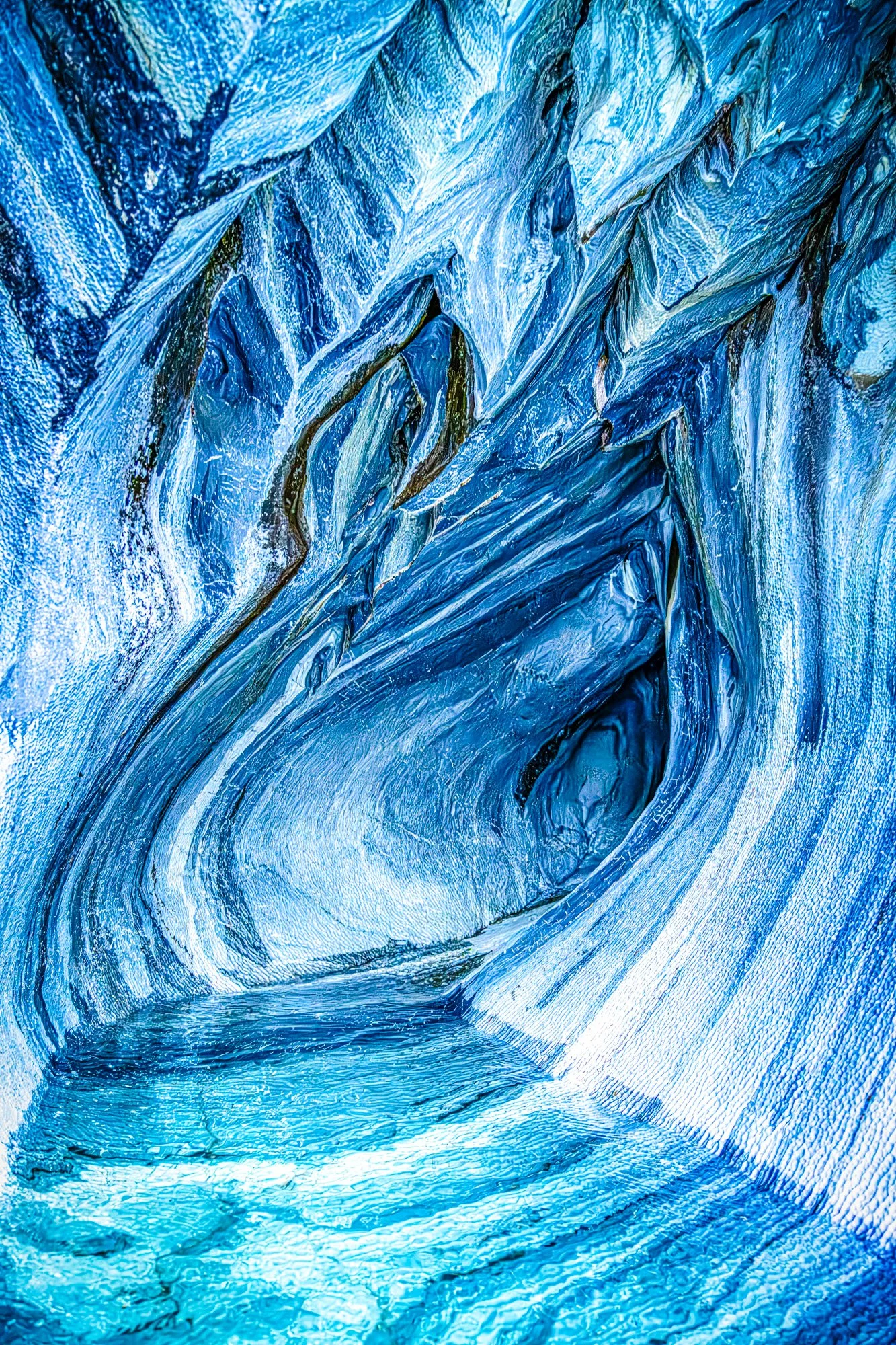
Coburn’s series exploring Chile’s Marble Caves reaches a remarkable level of visual abstraction in Hollow of Light and Water. The photograph depicts an interior cavern formed by centuries of glacial erosion. Marble walls swirl around the viewer in layered patterns of turquoise, grey, and ivory.
At first glance the photograph appears almost painterly. The mineral surfaces resemble brushstrokes suspended in stone. Water at the base of the cave reflects the surrounding textures, creating a doubled world of light and colour.
The composition invites the viewer into the cavern’s interior, guiding the eye toward a central opening where darkness deepens. This spatial movement transforms the photograph into an experiential environment rather than a static image.
Coburn’s fascination with glacial water becomes particularly evident here. The turquoise tones that dominate the photograph originate from mineral particles suspended in the lake’s water. These particles scatter light in ways that produce the surreal colour palette for which glacial lakes are known.
The image therefore embodies a collaboration between geological processes and optical phenomena. Coburn does not impose colour onto the scene. She reveals the colour that already exists within it.
Philosophically, the photograph evokes the idea that beauty often arises from slow transformation. The cave’s interior is the result of thousands of years of erosion, water gradually sculpting stone into fluid shapes. Coburn captures this process not as a scientific curiosity but as a visual meditation on patience and time.
In Cliffs Written in Stormlight, Coburn turns her attention to the rugged textures of a mineral rich landscape where stone formations rise dramatically above a forested valley.
The photograph captures the cliffs at the precise moment when storm clouds break and sunlight cuts across the rock surface. This contrast between dark sky and illuminated stone produces a striking chromatic tension. The cliffs glow in warm orange tones while the surrounding vegetation deepens into shadow.
Coburn’s framing emphasizes the vertical structure of the rock formations. The cliffs resemble monumental tablets carved by geological forces. Their surfaces appear almost inscribed with ancient patterns.
The title reinforces this perception. “Written in Stormlight” suggests that the landscape itself carries a form of visual language. Geological layers become lines of text, recording the earth’s long history.
This idea reflects a broader theme in Coburn’s work. Landscapes are not passive scenery. They are archives of planetary memory. By photographing them with such clarity and respect, Coburn encourages viewers to read the land as a form of narrative.
Among Coburn’s cultural photographs, Doorway to Color offers a vivid exploration of architectural beauty. The image captures a narrow street in a Moroccan town where cobalt blue walls frame an intricately tiled doorway.
Colour dominates the composition. Deep blues contrast with warm sunlight that spills across the stone pavement. The tiled archway reveals geometric patterns that speak to centuries of Islamic artistic tradition.
Coburn’s photograph highlights the relationship between architecture and human experience. The doorway becomes a threshold between worlds. The viewer stands at the intersection of shadow and light, interior and exterior.
What distinguishes the photograph is Coburn’s ability to treat architecture with the same reverence she brings to landscapes. The building is not merely documented. Its colour, symmetry, and textures become expressive elements within a visual narrative.
The photograph therefore suggests that cultural spaces, like natural environments, possess their own atmosphere and emotional presence.
The wildlife photograph Hollow Echoing Cry introduces an entirely different register within Coburn’s portfolio. Here the subject is a vividly coloured bird perched on a branch within a rainforest environment.
The bird’s plumage shimmers in iridescent greens and blues, with flashes of yellow along the underside. Its eye catches the light, producing an almost jewel like intensity that immediately draws the viewer’s attention.
Coburn photographs the animal at close range, isolating it against a softly blurred background of green foliage. This shallow depth of field transforms the bird into a luminous presence suspended in space.
What makes the image particularly compelling is the expression captured in the bird’s posture. Its beak is slightly open as if in mid call, suggesting communication within the forest canopy.
The photograph therefore becomes a portrait rather than a scientific record. The animal appears as an individual presence with its own personality and vitality.
Through such images Coburn reveals her sensitivity to wildlife as subjects worthy of empathy and attention. The photograph invites viewers to recognize the emotional intelligence and beauty present within non human life.
Closely related to the previous work, Jewel of the Rainforest intensifies Coburn’s exploration of colour within wildlife photography. The bird’s feathers reflect emerald and turquoise tones that shimmer against the soft green environment.
Coburn’s composition positions the bird diagonally across the frame, following the natural line of the branch. This dynamic structure gives the image a sense of movement even within its stillness.
The photograph’s title captures the essence of the image. The bird appears like a living gemstone within the forest. Its colours echo the surrounding foliage while simultaneously standing apart from it.
Through careful attention to light and proximity, Coburn transforms the moment into a quiet celebration of biodiversity. The photograph reminds viewers that the natural world contains forms of beauty that often remain unnoticed.
In Tethered to the Wind, Coburn photographs a field of Tibetan prayer flags stretching across a mountainous landscape. The flags form sweeping bands of red, blue, green, yellow, and white that ripple through the air.
The photograph captures the tension between movement and stillness. Although the flags appear frozen within the frame, their angled lines suggest the invisible presence of wind.
The surrounding mountains provide a subdued backdrop against which the colours of the flags glow with almost spiritual intensity. Written prayers and symbols are visible on the fabric, reminding the viewer that these objects serve both cultural and spiritual functions.
Coburn’s photograph transforms this cultural practice into a visual meditation on connection. The flags symbolize the transmission of prayers across space. As wind moves through them, it carries these intentions into the surrounding world.
Within the photograph this symbolic movement becomes visible through colour and form.
Coburn’s architectural photograph Toward the Infinite returns to monochrome imagery. The photograph depicts a grand corridor of arches within a monumental mosque. Repeating columns extend toward a distant doorway where light softly enters the space.
The composition relies on perfect symmetry. Each arch frames the next, producing a visual rhythm that leads the viewer deeper into the architecture.
The use of black and white emphasizes the geometry of the structure. Light and shadow articulate the surfaces of stone while the patterned floor guides the viewer’s gaze along the corridor.
A solitary figure stands within the space, adding a human presence that emphasizes the scale of the architecture. The figure appears small within the vast structure yet also essential to the photograph’s emotional resonance.
The image evokes the philosophical idea of infinity. The repeating arches suggest an endless progression beyond the visible frame. Coburn transforms architectural design into a visual metaphor for spiritual contemplation.
While each of Coburn’s photographs depicts a different environment or subject, they function together as a cohesive artistic portfolio through several recurring themes.
First is the role of colour as emotional language. Whether through glacial waters, rainforest plumage, or painted architecture, colour operates as a central structural element in her images.
Second is the idea of reverence for place. Coburn approaches landscapes, animals, and cultural sites with equal respect. Each photograph becomes a moment of encounter rather than exploitation.
Third is the interplay between stillness and presence. Coburn’s images often capture environments at moments when movement pauses just long enough for perception to deepen.
These themes unite the photographs into a broader meditation on wonder. In a world characterized by speed and distraction, Coburn’s work offers viewers the opportunity to rediscover the emotional depth that can arise from attentive looking.
Sandy Coburn’s emergence within the contemporary art scene reflects a broader shift in photographic practice. As environmental awareness grows and global interconnectedness reshapes cultural perception, artists increasingly seek ways to represent the world that emphasize relationship rather than control.
Coburn’s photography embodies this shift. Her images remind viewers that landscapes are not empty spaces but living systems. Animals are not symbols but individuals. Cultural sites are not relics but ongoing expressions of human creativity.
By combining vivid colour, contemplative composition, and a deep respect for place, Coburn creates photographs that function as portals into the world’s quiet beauty.
In doing so she reaffirms one of the most enduring roles of art. To remind us that the world is richer, deeper, and more alive than we often notice.
Through her lens the ordinary becomes luminous, the distant becomes intimate, and the fleeting moment becomes a lasting work of art.
In considering the broader implications of Sandy Coburn’s photographic practice, one recognizes that her work ultimately operates within a philosophical framework concerned with perception itself. Photography, since its invention, has oscillated between two roles: that of documentation and that of artistic interpretation. Coburn situates herself in the fertile territory between these traditions, where the camera becomes not merely a recording device but an instrument for heightened awareness.
Her images suggest that the act of seeing is both aesthetic and ethical. To look carefully at the world is already to acknowledge its value. This principle is woven throughout her portfolio. Whether photographing glacial caves, remote mountain ranges, rainforest wildlife, or sacred architectural spaces, Coburn approaches each subject with an attentiveness that resists the extractive tendencies often associated with global travel imagery. The landscapes are not exotic spectacles but environments with their own integrity and presence.
This sensitivity reflects the artist’s earlier professional experiences in international storytelling and humanitarian communication, where cultural respect and collaboration were essential. In her fine art practice, these values translate into a photographic language that honors place rather than appropriating it. The camera becomes a means of listening as much as seeing.
At a time when contemporary society is confronted by ecological fragility, rapid urban transformation, and an increasingly mediated relationship with the natural world, Coburn’s work carries a quiet but significant cultural relevance. Her photographs remind viewers that wonder remains one of the most powerful forms of awareness. To feel awe before a mountain range, a glacial cavern, a luminous bird, or a centuries-old architectural corridor is to recognise the depth and complexity of the world we inhabit.
This capacity to evoke wonder situates Coburn’s work within a long continuum of artists who have used visual language to restore the viewer’s sense of connection with the environment. Yet her contribution is distinctly contemporary. Through the clarity of photographic precision and the intensity of colour that defines her visual signature, she offers a renewed vision of the planet as both fragile and extraordinary.
Sandy Coburn’s photographs do more than present beautiful scenes. They cultivate a mode of seeing that is patient, attentive, and open to discovery. In this sense, her art becomes an invitation. It encourages viewers to slow down, to observe more carefully, and to rediscover the emotional richness that exists within the world’s landscapes, cultures, and living creatures.
In an era defined by speed and distraction, such an invitation carries profound significance. Coburn’s work reminds us that beauty is not merely something to be consumed but something to be encountered with reverence. Through her lens, the act of looking becomes an act of belonging within the living world.
By Marta Puig
Editor Contemporary Art Curator Magazine
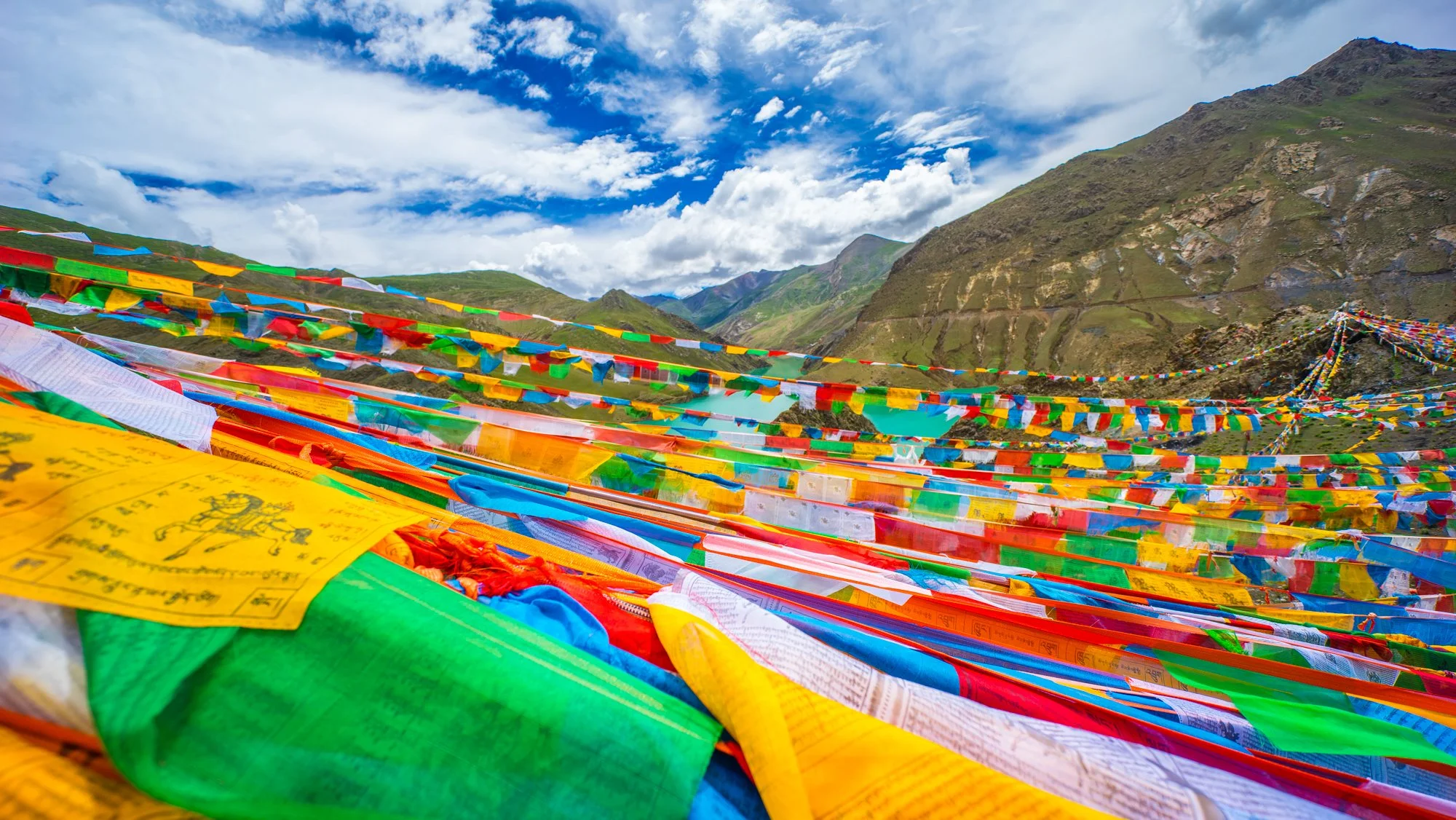
Tethered to the Wind, 2018. Photography Limited Edition Fine Art Print, 100 x 50 cm
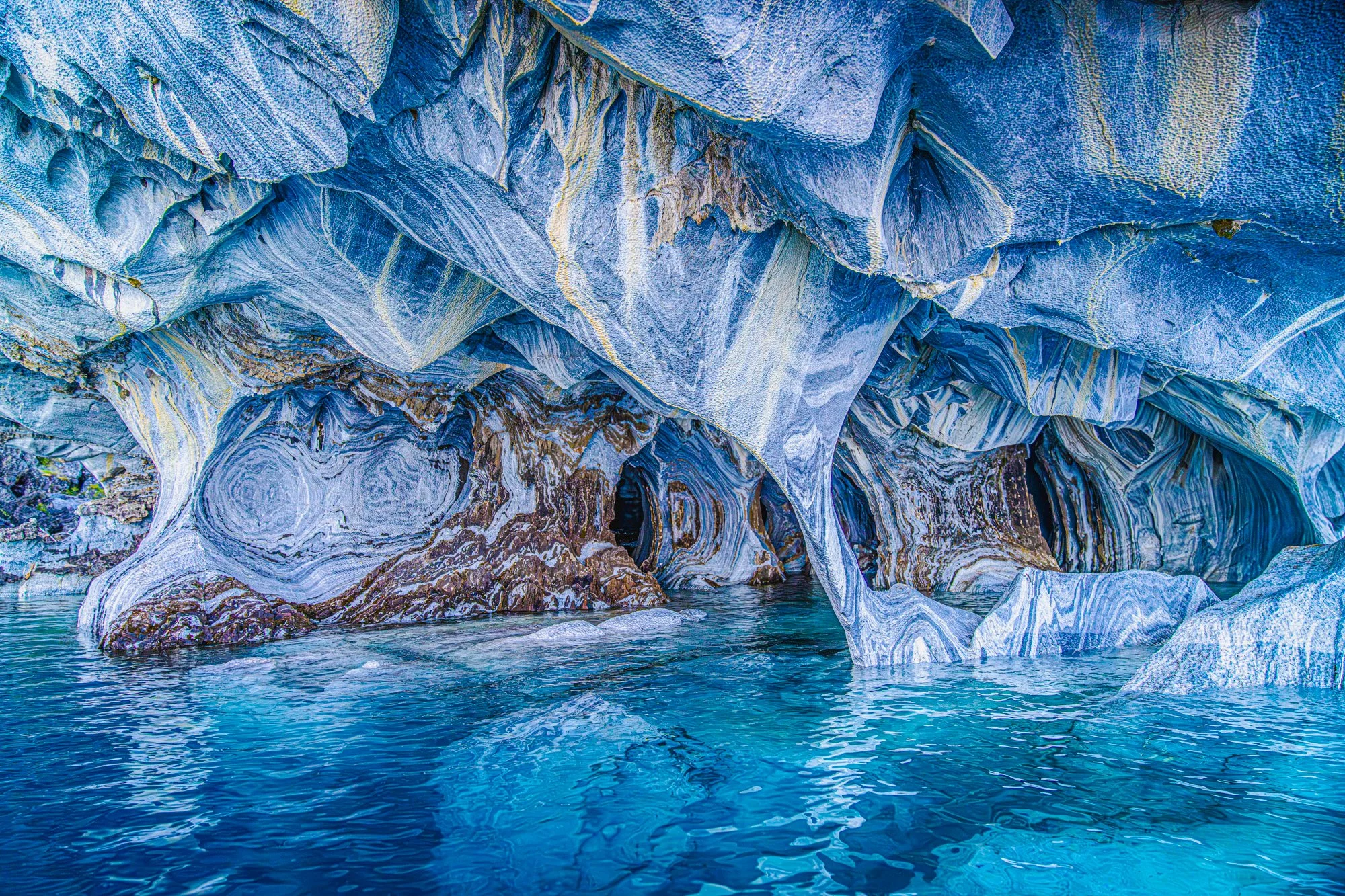
Hollow of Light and Water, 2023. Photography Limited Edition Fine Art Print, 120 x 80 cm
HollowEchoing Cry, 2023. Photography Limited Edition Fine Art Print, 60 x 90 cm
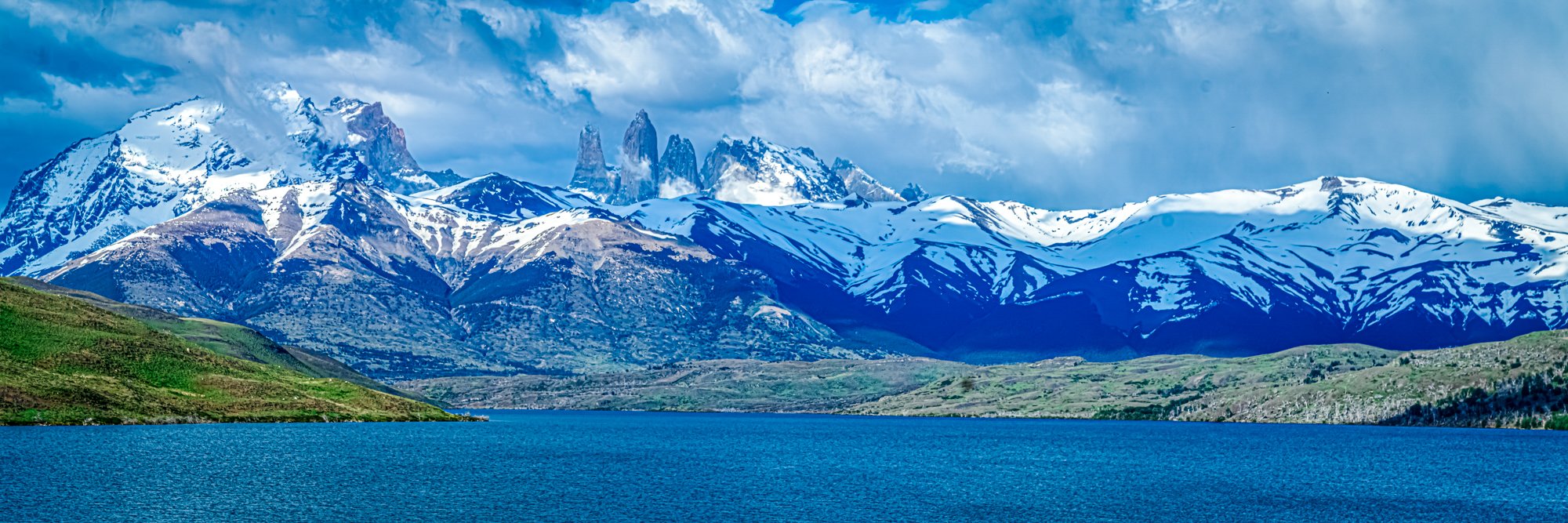
Blue Light on Miocene Spires, 2023. Photography Limited Edition Fine Art Print, 140 x 70 cm
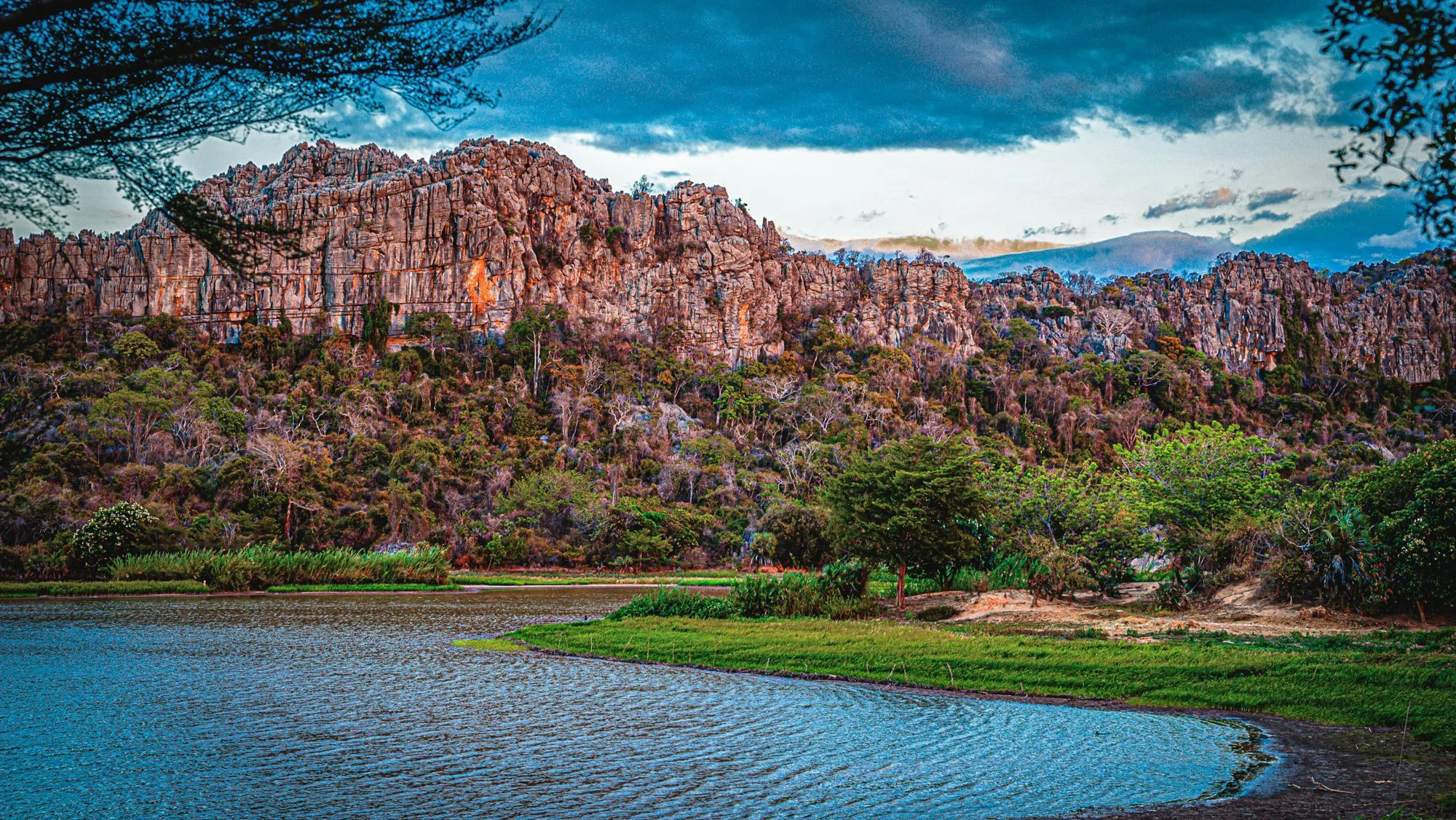
Cliffs Written in Stormlight, 2019. Photography Limited Edition Fine Art Print, 80 x 45 cm
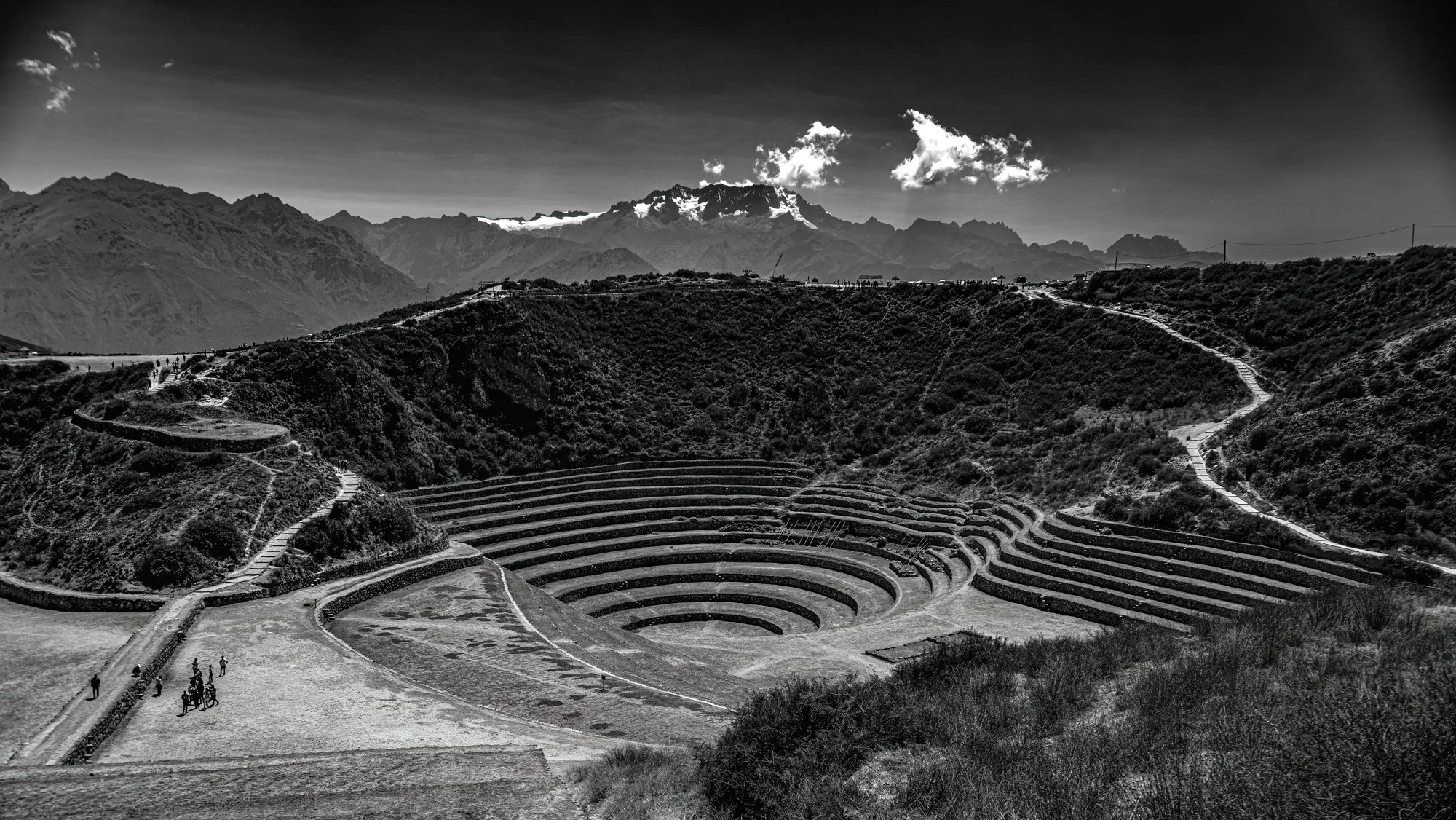
Beneath a Sleeping Giant, 2017. Photography Limited Edition Fine Art Print, 80 x 45 cm
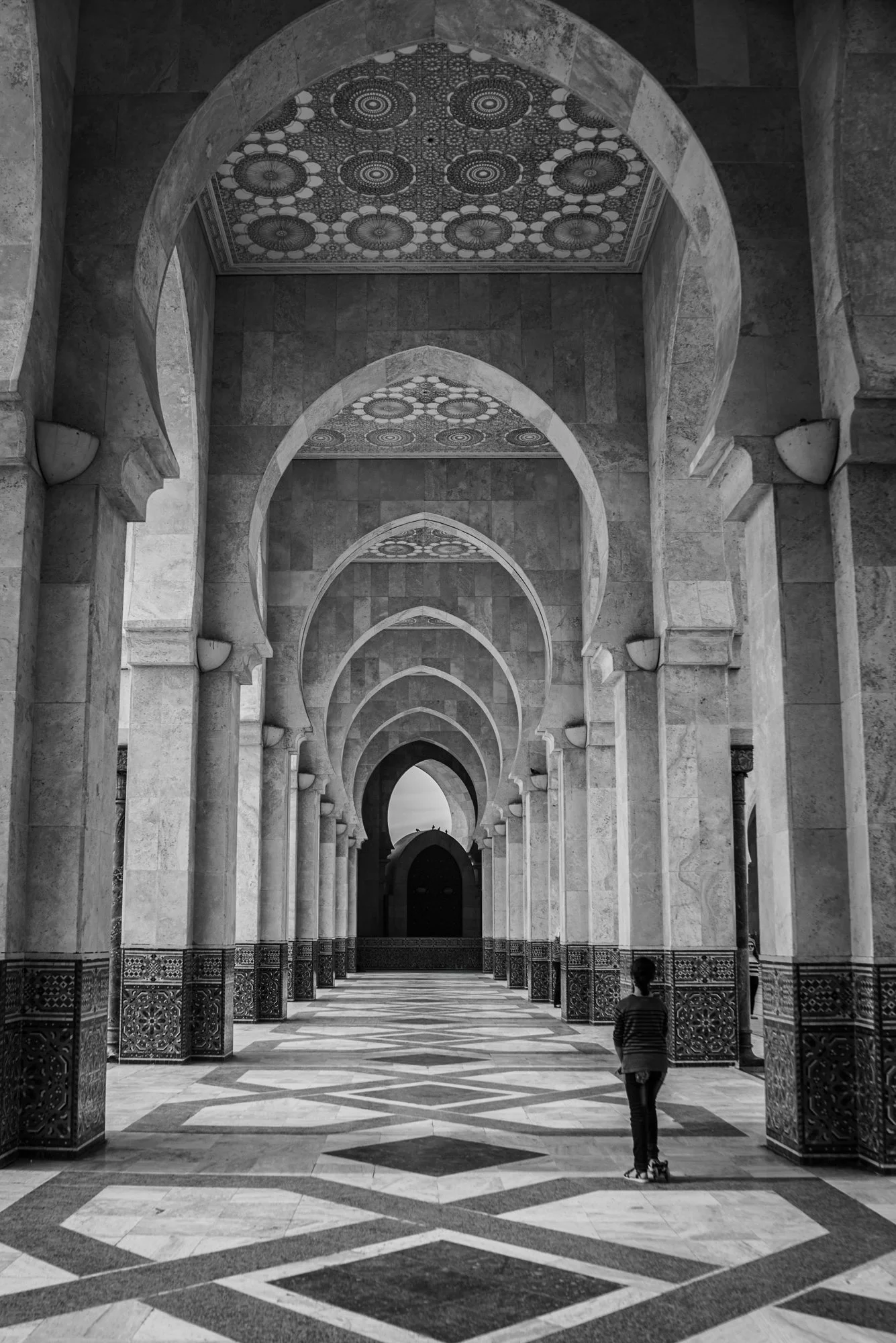
Toward the Infinate, 2016. Photography Limited Edition Fine Art Print, 60 x 90 cm
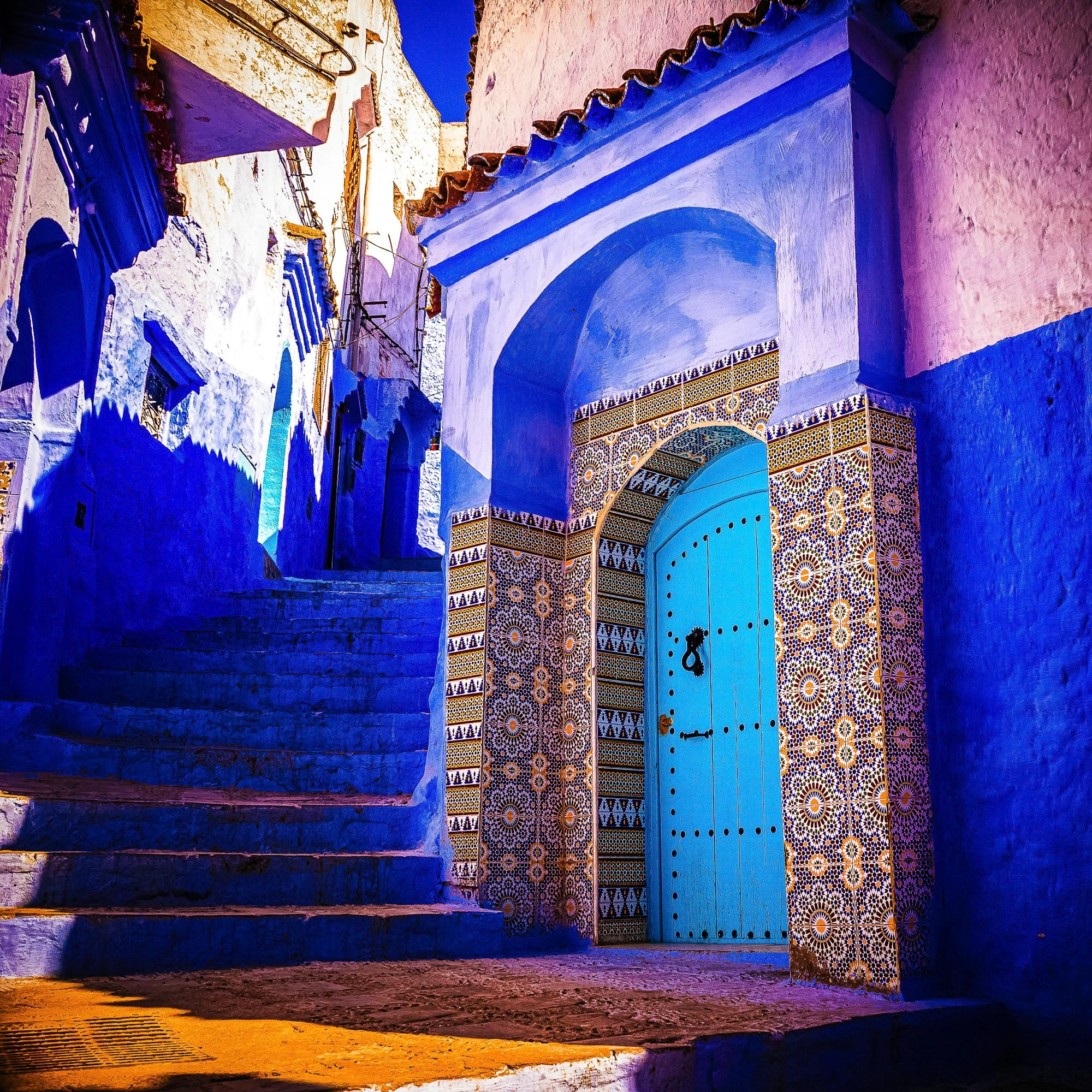
Doorway to Color, 2016. Photography Limited Edition Fine Art Print, 60 x 60 cm
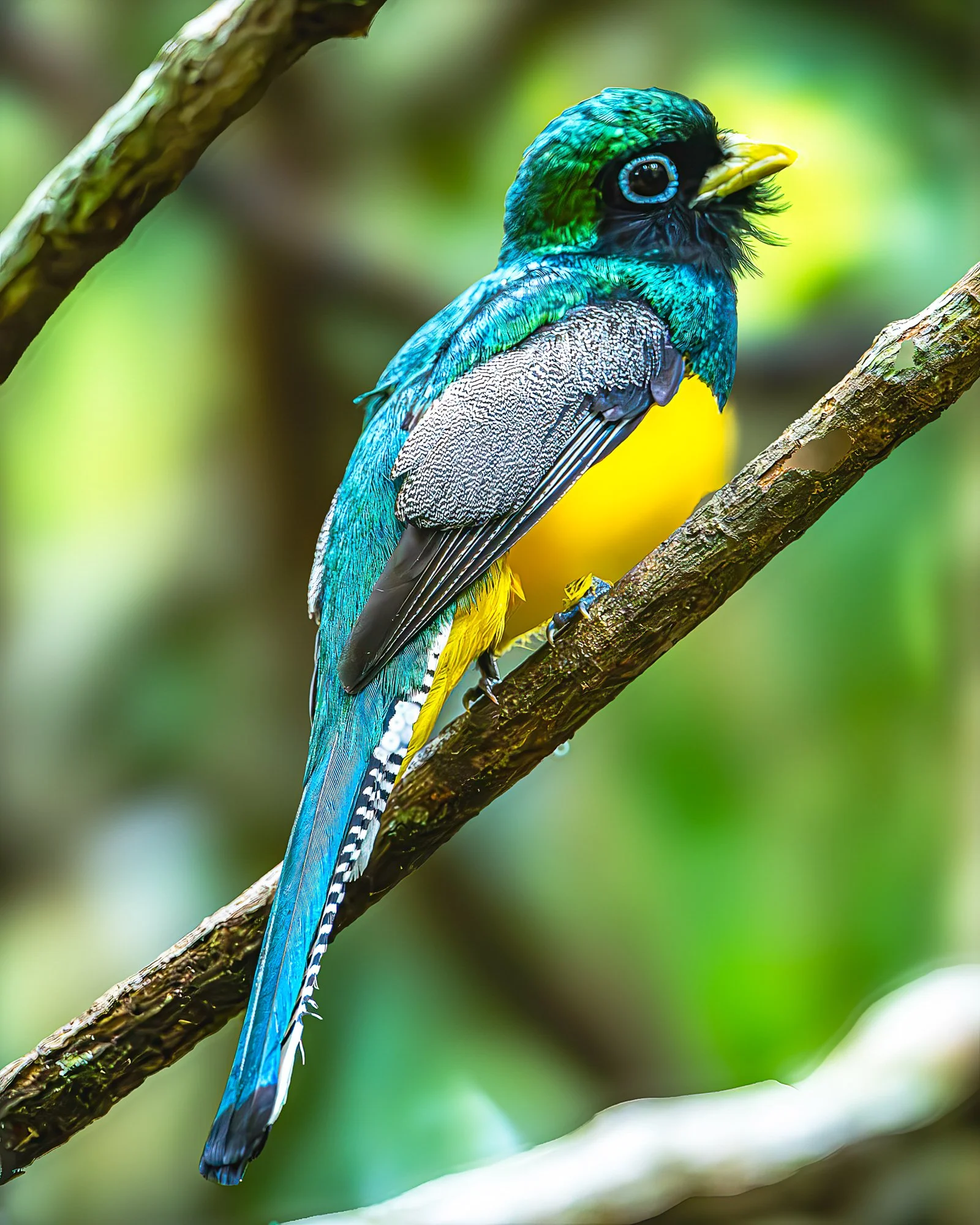
Jewel of the Rainforest, 2024. Photography Limited Edition Fine Art Print, 60 x 75 cm