
Interview with Petra Mattes
Petra, your oeuvre is often situated at the juncture between geometric austerity and gestural volatility, a synthesis that critics have described as a new species of abstraction emerging from the context of German Neo Expressionism. In works such as N.Y.C. or Heart Beat, this friction between restraint and eruption appears to operate as both structure and subversion. How do you negotiate this tension in your practice? Do you consider geometry and gesture as oppositional forces that must be reconciled, or as interdependent systems through which abstraction can articulate a wider philosophical inquiry about perception, emotion, and form?
To me, I have always tried to unify a free gesture and, at the same time, stay focused on austerity. If you don’t synthesize, it ends in chaos. Every single brush movement has to be at the right place and time spontaneously. Otherwise it is, for me, just design and has not much to do with art, which comes from inside and is not artificially designed. So you have to be focused on the process, while using the brush and feeling free, and letting go in one gesture. Every stroke has to sit in that moment and cannot be corrected. In this process you get a balanced picture. It is a risk. Every single time. You have to be courageous, vivid and focused at the same time. There are no pre-drawings. The philosophy is to let go and see what happens.
Your statement that art has nothing to do with ideology, policy, religion, everyday life, society, or context seems to align with a radical belief in the autonomy of the artwork, an almost modernist insistence on purity. Yet your paintings inevitably carry emotional charge, historical undercurrents, and traces of lived experience, from N.Y.C. to more recent works. How do you understand this apparent paradox between your categorical refusal of context and the unavoidable embeddedness of painting in time, history, and personal biography? Is this claim a provocation toward the viewer, a protective framework for your process, or a precise philosophical position on what art should and should not be asked to do?
You are right: my statement that art has nothing to do with ideology, politics, religion society, every-day life and context is my strong belief in the independence of every single moment of life. Only art survives the centuries and may tell some stories which don’t necessarily have to do with the time it was produced and brought into the world. There are eternal truths which exist through time.
If an artist is playing on a canvas or other medium, these are moments which are gone some seconds later and, for me, cannot be interpreted as a reality, For example, archeologists often interpret artifacts they find to make them fit in the time. But it could also just be a suggestion and the reality was totally different. Imagine archaeologists finding current artifacts. How would they interpret contemporary times? Would they suggest current artifacts are signs of the vanished society and how they’d may have lived? If, in the future, archaeologists found a plastic bag, would they consider it as art and describe our world as a plastic world?
Humans want to understand each other, and, more difficultly, themselves, and mostly fail at this willing. We all walk on two legs on this planet, not having a clue as to what is going on in the head of the person next to us; what intentions they may have. They could be a murderer or a saint. They look the same. This makes it difficult to assume we are talking to somebody like us. I know this sounds provocative, like my statement. And these are the thoughts to it. Nothing lasts forever, so how can I locate art into society, religion policy, ideology, or the context of everyday life?
And more, I believe that life itself is contradictory. We try to find unity, but it does not exist. There is light and darkness, good and bad, the night cannot exist without the day. We have to accept the contradiction.
In works such as Lost in Brazil, Insecure, and Mind Blow, we see you moving between restrained, muted tonalities and more exuberant chromatic intensities, almost as though each painting channels a different emotional climate. To what extent do you experience color as a language with its own syntax and grammar, as an affective atmosphere, or as a structural force that organizes the entire composition? When you decide upon a palette for a given work, do those decisions emerge primarily from intuition in the moment, or from a longer internal dialogue about memory, sensation, and visual rhythm?
To explain the painting process, it is necessary to go with me on an inward journey. As it is complicated to understand somebody else, it is even more complicated to understand oneself. What I can say is, it is both; a conscious decision about what I want to express combined with an intuitive choice of color and composition. This process can be very fast, as it was in Mind Blow, which took a few minutes. On the other hand, others like Lost in Brazil, took me a few weeks or months of constantly renewing** it until I decided - “let it go and finish it” (which it never is).
The surfaces of your paintings often read like archaeological sites, composed of scumbled layers, incisions, scratches, and even additions of crushed stone, which create a dense, tactile skin. This material depth suggests that the canvas itself becomes a place where time accumulates and is inscribed. How do you conceive of surface in your practice? Do you think of it as a field of inscription, a site of erasure and re-inscription, an arena of resistance where the material pushes back, or an echo of psychological or temporal depth? In what way does this physical layering mirror the inner processes that accompany the making of a painting?
Most of my chosen canvases and surfaces are conscious decisions. It begins with the size of the canvas and then the structure. This decision is very important. The painting process is a constant making of choices which influence, enormously, the result. Sometimes I struggle with the surface and ask it what it wants. To work against the surface is contradictory. For example, I chose a very plain canvas surface for the painting -love- , as I wanted the black color to drop down on it, to express the fluid existence of love. According to the philosopher Heraclitus, “Everything flows…”
Your path into art, beginning with self-directed study after academic training in economics and law, introduces a fascinating intersection between rational structure and intuitive freedom. Legal thinking often depends on systems, codification, and the interpretation of rules, whereas your abstract painting seems to embrace ambiguity, contradiction, and openness. How have your earlier studies and professional formation shaped the conceptual architecture of your work, if at all? Do you feel that your paintings are in quiet dialogue with ideas of order, regulation, and transgression that come from your background outside the traditional art academy?
Of course it seems like academic studies in law and economics contradict a life dedicated to making art. But art has always interested me and aligned more to my strong search for freedom and independence of living and thinking out of the box. Especially with a family it is much easier to combine. I found more sense in it. Through the early loss of my brothers and father I really felt I had to do something useful, as life can be so short.
Your sustained visibility in major international contexts, including the Venice Biennale on multiple occasions and your presence in important publications such as Atlanta dell Arte Contemporanea, situates you with a transnational discourse on contemporary abstraction. Yet your own statements suggest a strong insistence on inwardness, solitude and artistic autonomy. How do you negotiate the relationship between the intimate space of the studio and the highly mediated space of global. Exhibition circuits? Does Institutional recognition and critical framing influence the way you think about your work, or do you consciously bracket those external narratives when you paint?
When I started doing art, especially painting, I worked privately for a long time until my friends begged me to show my pieces in public. They organized my first exhibition in a mayor’s house, and it was so much fun and a great success! I never thought anyone would be interested in my work, but the opposite was true. This encouraged me to build a website and wait to see what would happen next. I decided I would take opportunities if they were offered. That this would take me through many continents and capital cities was far beyond what I ever thought possible.
This still feels a bit unreal.
But besides traveling around with my artworks, what I love the most is working alone in my studio. I need to work alone and follow my inner way. It has no impact if just one person observes or many. My goal is to become better every day.
Your use of acrylic allows for rapid decisions, revisions, and layered complexity, creating an interplay between immediacy and accumulation. In an era where digital tools and virtual images often dominate visual culture, your commitment to the physical act of painting on canvas appears almost insistently material. Do you perceive your process as a form of resistance to dematerialized images, as a continuation of a painterly tradition, or simply as the most honest extension of how you think and feel? How do speed, drying time, gesture, and bodily presence factor into the way a painting arrives at its final state, and do you ever consider a work truly finished?
The traditional way of making art gives experiences of originality and a special haptic that cannot be copied easily. I also think that the typical natural appearance of color offers a more vivid quality that does not feel designed or too perfect, compared to digital makings. And no, I never consider it as finished. I just do what I do without questioning it too much. As Gerhard Richter once said, “Painting is another form of thinking”.
The imperfection is the mystery and charm in every physical painting to me, beyond the impression of being “fallen out of time”. But for sure, painting will be, sooner or later, replaced by AI or digital prints.
Besides that, I also do installations and land art, such as “dem Hummel so nah”, “ist-das-KUNST-oder-KANN-das-WEG”, or “Slavery”, which emphasizes with the role of women in different societies.
Across your extensive exhibition history, from Beijing and New York to Venice and Mantua, your work has consistently resisted easy classification within a single school or national style. Critics have linked you to traditions ranging from German expressionist legacies to international abstraction, yet your visual language remains resolutely personal. How do you relate to art historical lineages and labels? Do you embrace certain genealogies, quietly argue with them, or consciously step aside from them to maintain a sense of independence from the canon and its expectations?
As my main goal has always been freedom and independence, your question is answered in a way already. I always went my own way apart from expectations, fashion, styles or schools. Of course I carefully study historical, traditional and contemporary developments. This is necessary to follow your inner path.
Your paintings often appear as self-contained universes, structured yet volatile, inviting yet enigmatic. They seem to demand that the viewer slow down and inhabit them rather than straightforwardly decode them. In a contemporary art world that frequently asks artists to provide explanatory narratives, social positions, or explicit messages, what role does mystery play in your work? Do you consider ambiguity and open interpretation to be ethical choices, aesthetic necessities, or both? And what, in your view, is the ideal mode of attention that a viewer should bring to a painting of yours to really encounter it?
External views and validation of my paintings and artwork are out of my hands and influence. I paint, I publish and get recognized. However, I am very pleased and feel honored to be regarded as a master. This is a sign of the quality of my work and makes me happy.
But this has little to do with my inner critic, who is constantly pushing me to do better. Every new plain white canvas I stand in front of is a challenge and battle I fight with, but, at the same time, there is the promise of an exciting journey that will take me to the appearance of a new artwork.
As your work increasingly enters institutional and canonical spaces, from Atlante dell’Arte Contemporanea and major international prizes to the permanent presence of your paintings with the Metropolitan Museum in New York, you are no longer only a practitioner of abstraction but also, in a sense, one of its grand masters. How do you experience this process of canonization in relation to your insistence that art has nothing to do with ideology, policy, religion, everyday life, society or context? Does being framed as a master by institutions and critics influence your own perception of your practice, or do you view these external recognitions as parallel narratives that remain separate from the solitary act of painting?
First, to clarify, my publication in the Atlante dell’Arte Contemporanea remains in the Metropolitan Museum of Art in New York, not the physical painting itself. This is the same with my work in the Venice Biennale’s Padiglione del Libro.
The international recognition makes me very happy and it feels great that a little part of me remains in Art History. But, for me, it also feels surreal as my inner critic forces me every day to become better despite all of the outer honors. I feel with Michelangelo, without comparing myself to him at all, when he said after having finished the Sistine Chapel: “Please God, forgive me my mediocrity”.

Heart beat , 70 x 80 , 2021

O.T. , 170 x 150 , 2023

Unintentional, acryli on canvas, 80 x 80 , 2021

Mind blow - acryl on canvas, 80 x 80 , 2020
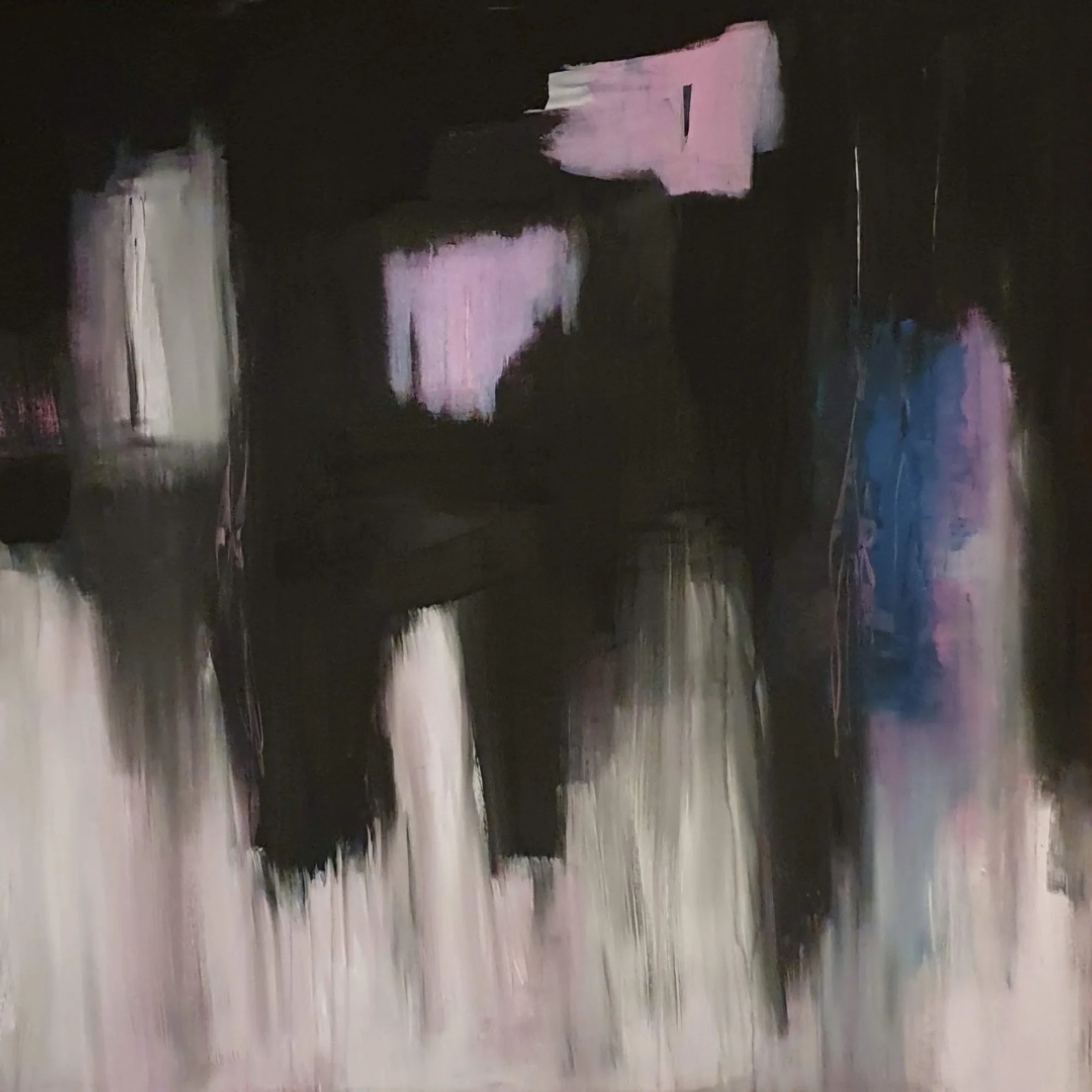
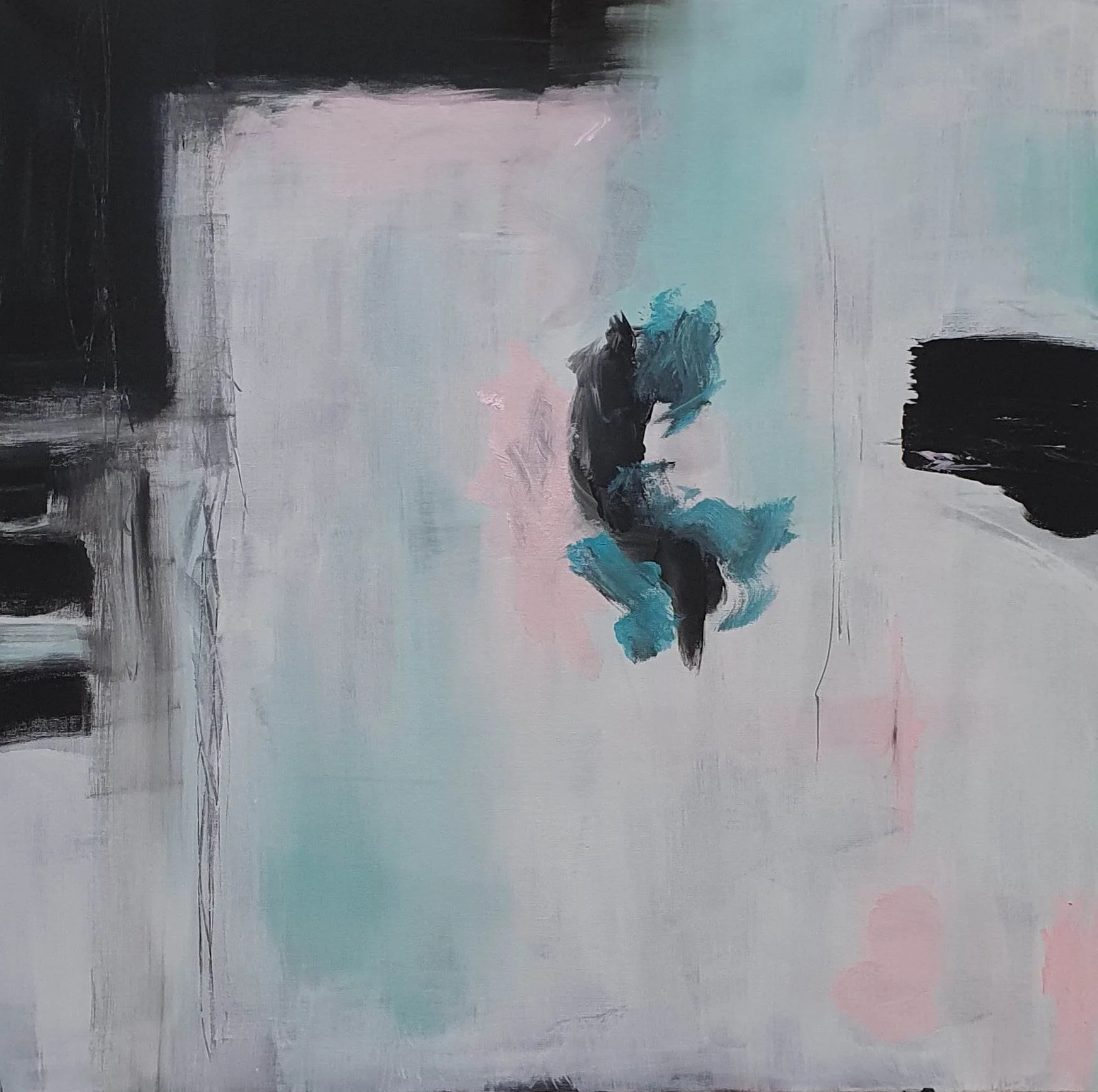
Why- 80 x 80 , acryl on canvas, 2020
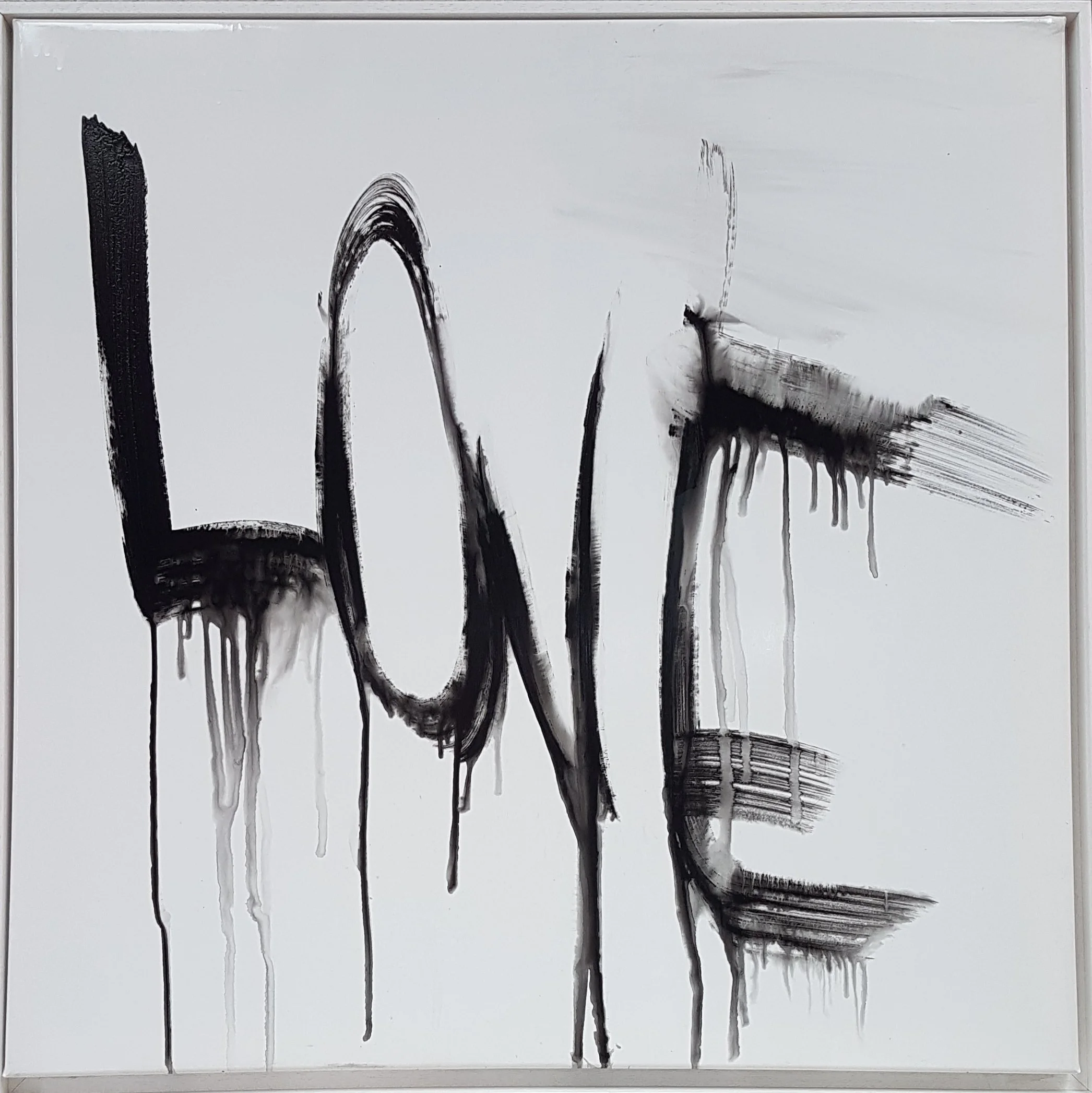
Love- 80 x 80 , acryl on canvas, 2020

Just another day- acryl on canvas, 80 x 80 , 2019
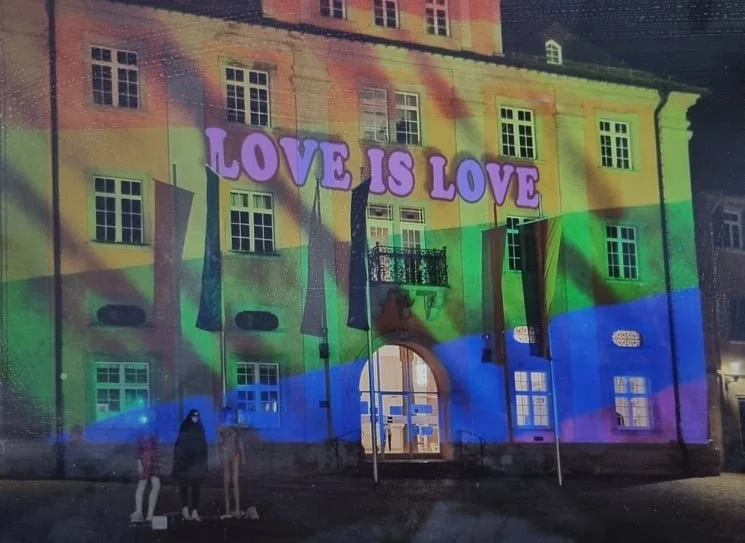
Slavery - 4 , 2022

Let´s talk about it- 80 x 80, acryl on canvas, 2019

Insecure, 80 x 80, acryl on canvas, 2021
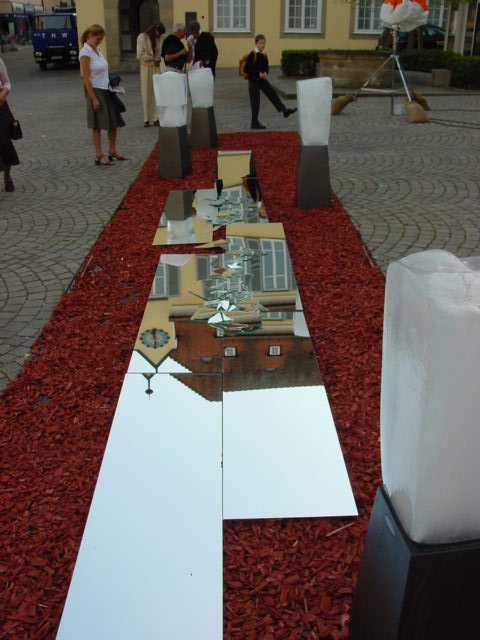
Kulturnacht 2007, Spiegelweg

Interruption , acryl on canvas, 80 x 80 , 2021
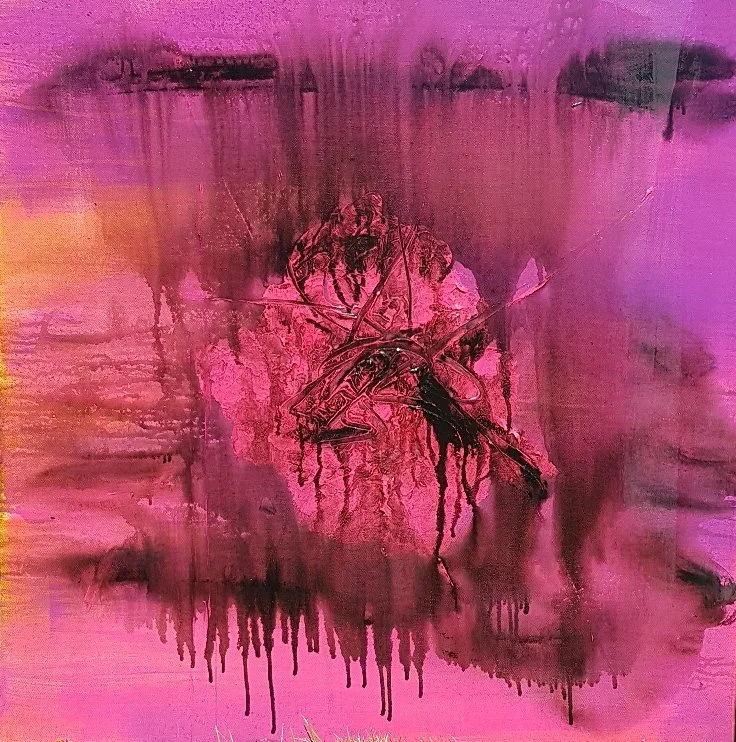
Broken heart- , 80 x 80, acryl on canvas, 2020

Just a mood - acryl on canvas , 200 x 150 , 2021
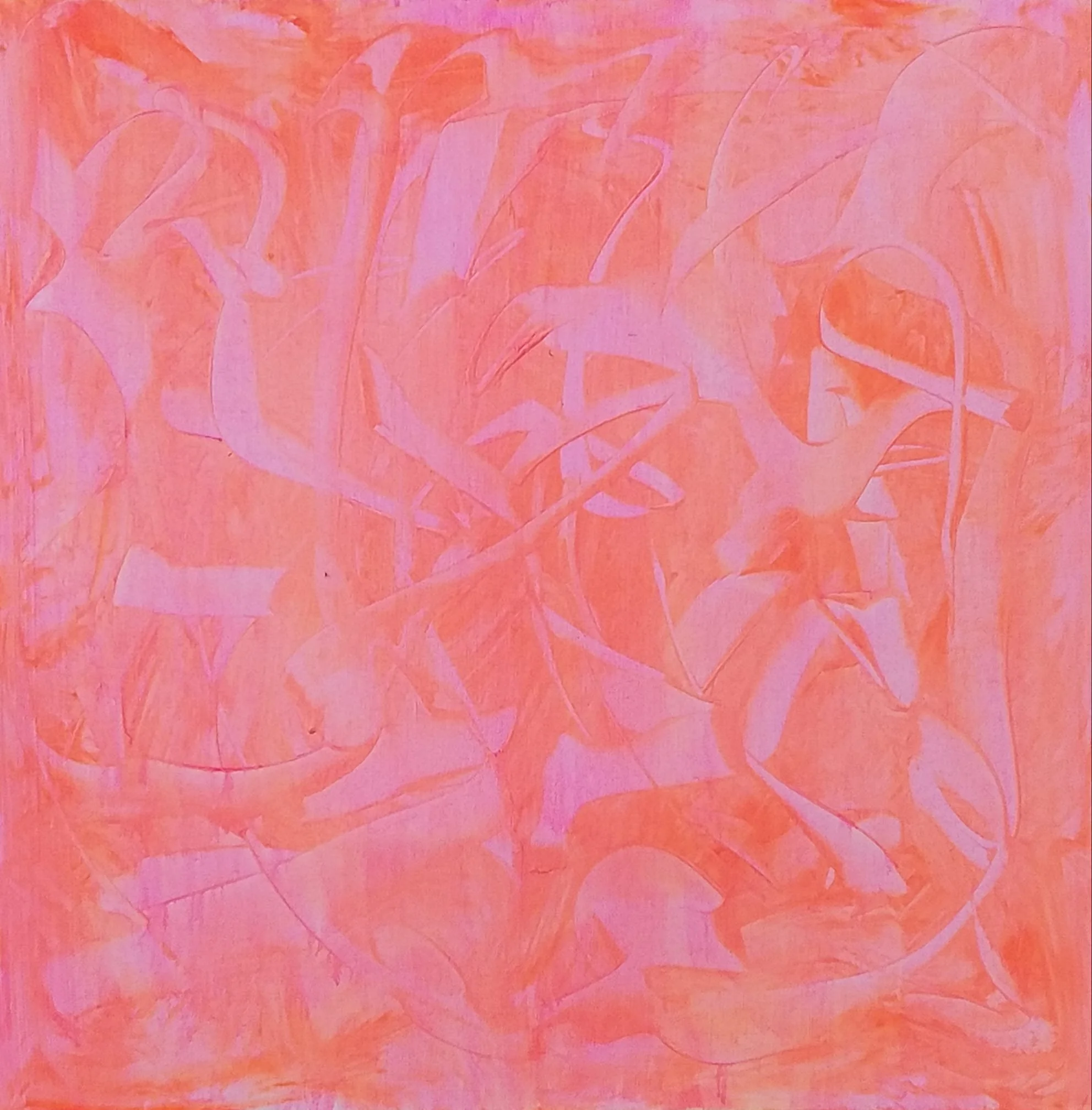
020