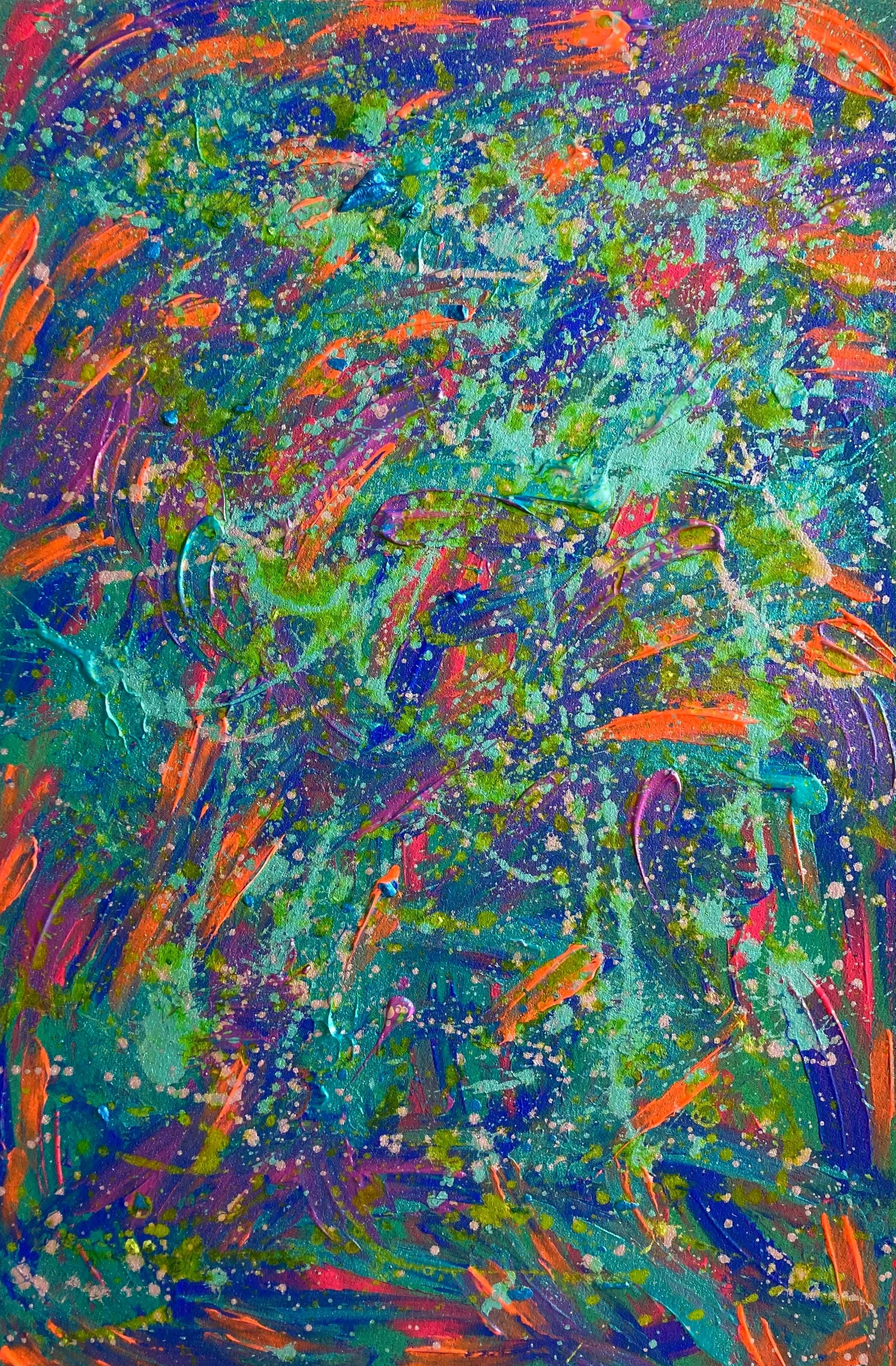
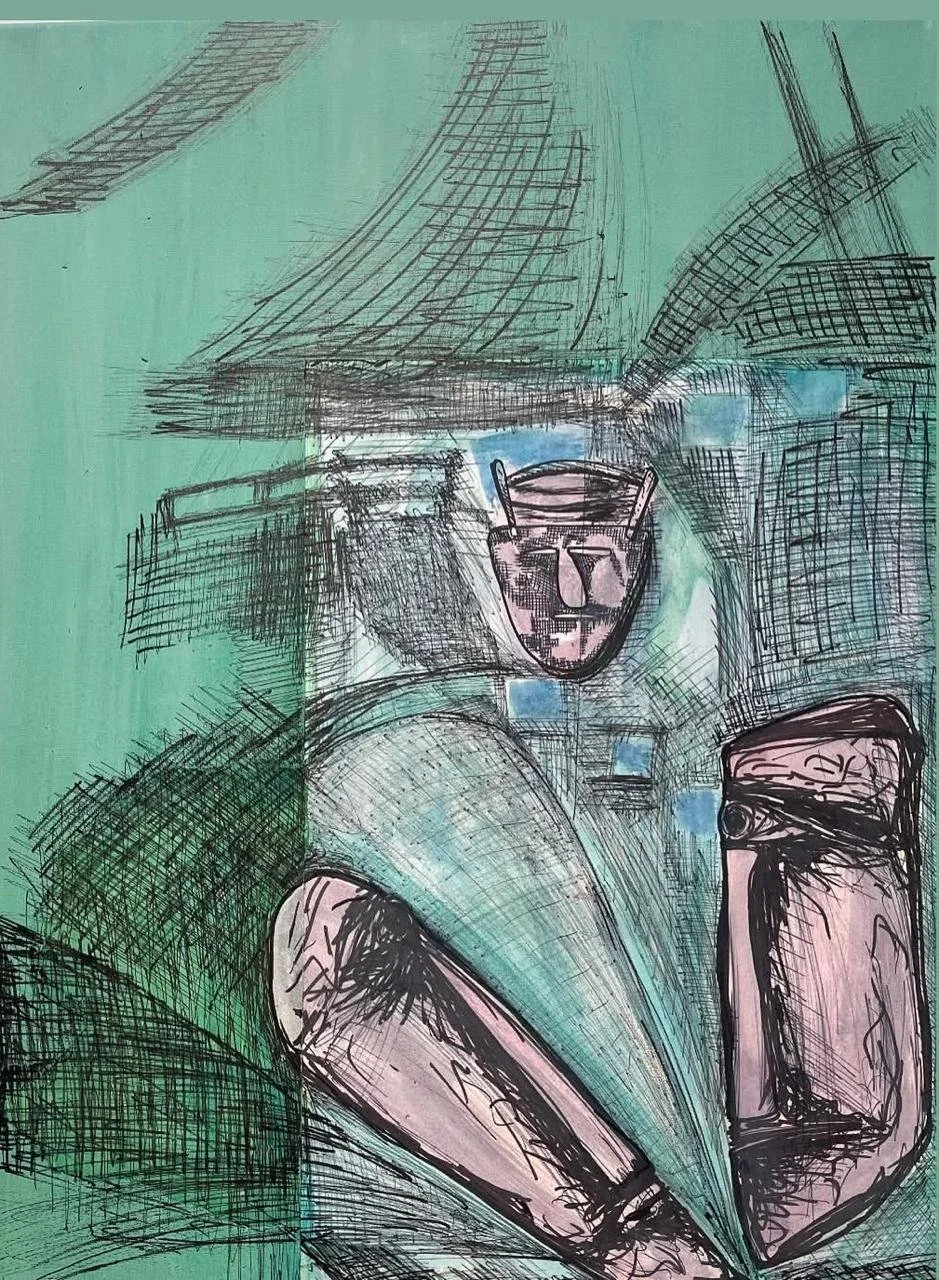
Interview with Iyad Almosawi
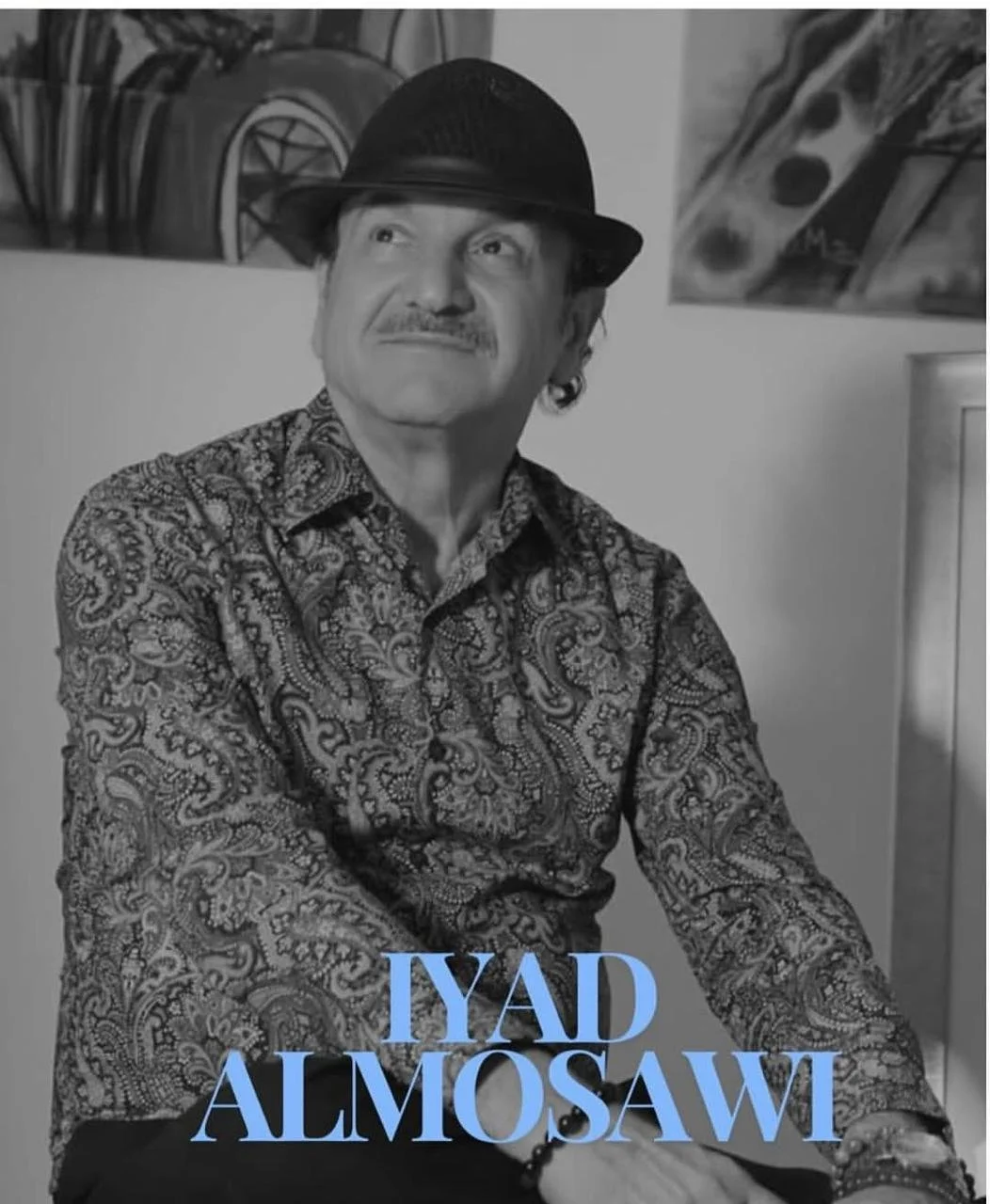
Iyad Almosawi at his studio
https://www.instagram.com/iyadalmosawi.art/
Iyad ALMOSAWI is a versatile and talented artist with award-winning works across various genres. He masterfully blends technique and vision in his paintings, sculptures, murals and installations, exploring inner energies and emotions. His murals, which bring color and life to public spaces reflect his love for nature. Through his art, he transforms spaces, making them accessible and inviting for people to admire and engage with.
Iyad, over more than four decades, you have continuously experimented with new styles, materials, and visual languages, refusing to settle into a single signature aesthetic. How do you understand this long-term commitment to experimentation as part of your identity as an artist, and what inner or external forces keep pushing you to reinvent your approach with each new body of work?
From my earliest years, art has been the center of my daily existence, an instinctive force that shaped my life rather than a profession I chose. My journey as an artist has unfolded through constant movement, a childhood in Baghdad, formative years in Kuwait and Beirut, time spent in Cairo and London, then decades across Montreal, Toronto, Banff, and now Dubai. Each geography carried its own emotional structure, its light, rhythm, silence, colors, architecture, and temperament, and each entered my work like a new alphabet.
These transitions did more than influence my art. they renewed me as a person. The crystalline luminosity of Canadian winters, the golden sands of Morocco, the humid Mediterranean air of Beirut, the sharp desert horizon of the Gulf, each place reoriented my vision and expanded my creative vocabulary.
And yet, through all these shifts, a recognizable “DNA of Iyad Almosawi” remains, an insistence on movement, a deep emotional charge, and an intuitive geometry that emerges before thought. My creativity evolves as life evolves, through transformation, risk, time, and a restless curiosity. I follow my heart first and allow the intellect to refine what emotion has already revealed.
You can see this spirit of reinvention in my geometric canvases, triangular, circular, and hybrid, in my desert-inspired abstractions, and in the feminine silhouettes that explore internal energy rather than external form. For me, experimentation is not an artistic choice, it is a mode of existence, a way of breathing. Creation and transformation are inseparable.
Much of your work speaks of freedom, discovery, and “untapped lands” both literal and metaphorical. When you begin a new series, how do you enter these uncharted spaces? Do you see them as psychological terrains, spiritual territories, or new material frontiers waiting to be transformed by your vision?
A fascinating question. I never approach a new series with a predetermined style or theme. Instead, I enter each new body of work through a moment of emotional urgency, something internal that insists on being translated into form. My memories, the geography around me, and the energies that inhabit a particular time and place all ignite this initial impulse.
I stand before the canvas not as a planner but as an explorer. Intuition chooses the first gestures, the rhythm of lines, the mood of colors. Only later, when the emotional turbulence settles, do I begin to articulate the structure, researching materials, refining process, defining the series, and shaping the visual language.
Many of my works, whether the landscapes of my “Untapped Territories” series or the abstracted mask-forms, were born from this spontaneous emotional state. For me, the unknown is not something to fear, it is the birthplace of authenticity, a territory where new visions are born before they are understood.
The feminine presence in your practice appears not only as a subject but as a vital energy, intuitive, healing, and generative. How has the influence of women, feminine archetypes, or feminine intuition shaped your artistic vocabulary, and in what ways does this energy become a source of motivation or emotional depth within your compositions?
The feminine is one of the most powerful renewable energies in my life. It is a source of intuition, emotional clarity, sensitivity, mystery, and healing. The world of women, their inner landscapes, silent strengths, fragility, resilience, and profound sense of rhythm, has shaped my imagination from the beginning.
This influence emerges in many forms, abstract feminine silhouettes, mask, like faces, gentle curving lines, and soft geometric tensions that echo the movement of the feminine body and spirit. But it is never about literal representation. It is a visual language of empathy, emotional resonance, and intuitive connection.
Feminine energy guides my palette, softens my geometry, and expands the emotional atmosphere of my compositions. It creates a sense of longing, questions without answers, and an ongoing dialogue that keeps the work alive. It is a source of motivation, balance, and renewal in my studio and in my life.
You describe nature as your (first teacher) a source of color, rhythm, unpredictability, and revelation. When you translate natural forces, movement, silence, light, and sudden surprises into visual form, what elements of nature’s behavior guide your choices in geometry, texture, or composition?
Nature gave me my earliest lessons in color, rhythm, structure, and surprise. Living in Canada exposed me to the dramatic theater of the sky, the northern lights, the shifting clouds, the powerful stillness of winter, the explosion of spring, and the golden descent of autumn. These experiences expanded my palette far beyond what I could have imagined.
Likewise, Morocco’s intense blues and ochres, Egypt’s sunburnt landscapes, and the Gulf’s minimalist desert horizons entered my visual vocabulary as profound emotional experiences rather than mere scenery.
In series such as “Forest Colors” or my desert abstractions, nature becomes a conversation, the geometry of branches, the architectural logic of dunes, the texture of stone, the silence of night, and the sudden movement of wind. I seek synergy with the environment around me, nature remains the engine that drives my imagination and anchors my artistic rhythm.
Your career spans Baghdad, Montreal, Morocco, Dubai, London, Toronto, and many cities in between. How has this global journey shaped your artistic identity? Do you feel your work now speaks from a place of multiple cultural inheritances, or from a new hybrid language that transcends geography?
My artistic identity is an accumulation of cultural inheritances and a transformation of them. My Mesopotamian roots, childhood memories, the feminine intuition that surrounds my life, the teachings of nature, and the diversity of global cultures I encountered have all shaped a hybrid language that is uniquely mine.
I do not belong to a single geography or tradition. My work speaks with multiple accents, the symbolic depth of Mesopotamian reliefs, the lyrical movement of Arab calligraphy, the structural clarity of European modernism, and the chromatic power of North American landscapes. These influences do not overlap as a collage; they merge into a new visual dialect that transcends borders and speaks of an identity in motion.
You have presented more than twenty solo exhibitions across the world, and your works are held in major public collections, including the Canada Council Art Bank and the Museum of Modern Art in Ottawa. How do you see the role of international visibility in your artistic mission, and what does it mean to you that your work is recognized and collected by institutions across continents?
International visibility allows me to share essential ideas, that art should be accessible, functional, and integrated into the fabric of public life. I believe art must inhabit not only galleries and museums but also streets, squares, universities, hospitals, places where people live, feel, and dream. Through my exhibitions, I advocate and promote for murals, public sculptures, and interactive works that invite dialogue and foster a sense of communal experience.
The presence of my work in institutions such as the Canada Council Art Bank and the Museum of Modern Art in Ottawa affirms this mission. It reinforces my belief that art not limited to these venues , but art has the power to shape public consciousness and that it belongs to everyone, across cultures and continents.
Your monumental charcoal works, especially the recent black and white exhibitions, reveal a deep reduction of visual elements. What compelled you to return to such essential materials, and what does charcoal allow you to express about memory, identity, or human resilience that other mediums cannot?
Charcoal began as a tool for sketches, but at a certain moment I felt compelled to elevate it to monumental scale. I wanted to confront the rawness of the human condition without the mediation of color. Black and white liberated me from visual noise and forced me, and the viewer to face the emotional core of the work.
These large charcoal pieces often depict fractured faces, broken silhouettes, or abstract emotional landscapes. They became a loud silent scream, a response to war, displacement, trauma, and the resilience of the human spirit. Charcoal reveals vulnerability and strength simultaneously, it behaves like memory itself, fragile, smudged, powerful, and persistent.
No other medium allows me to express this intersection of pain and endurance with the same intensity.
Your earlier experience as an art critic in Kuwait gave you daily exposure to artistic movements in the Arab world and beyond. How does this analytical background influence the conceptual foundations of your practice today? Do you find yourself still engaging with your work through a critical, historical lens, or has your relationship to critique transformed through your evolution as an artist?
My years as an art critic in the 1980s sharpened my ability to analyze artistic movements and to understand historical and conceptual frameworks. However, there came a moment when I chose to abandon critique and dedicate myself entirely to creation. That decision liberated my energy and allowed me to build the momentum that has sustained my career.
Today, I remain informed about contemporary global trends, but I do not approach my work through a critical or historical lens. Instead, I work through intuition, emotional resonance, and internal dialogue. Critique has transformed into introspection; analysis has softened into reflection.
Many of your artworks move fluidly between figuration and abstraction, between recognizability and dissolution. When working with motifs such as faces, masks, or landscapes, how do you determine the point at which the image remains visible and the point at which it dissolves into pure gesture or emotional architecture?
I paint not to depict reality but to reinvent it. When working with faces, masks, landscapes, or geometric forms, I search for that fragile threshold where representation dissolves into emotion.
This threshold emerges instinctively, a face may break into rhythm, a landscape may fracture into gesture, a feminine silhouette may dissolve into movement. In series such as my abstract faces or dissolved landscapes, this pursuit of originality is evident, the desire to create new territory, a fresh aesthetic space that expands the possibilities of contemporary visual language.
I seek a moment where the viewer recognizes something familiar, but is immediately carried beyond it into a deeper emotional architecture.
After four decades of continuous research into material, identity, memory, and transformation, what questions are you now most compelled to explore? Are there philosophical, spiritual, or artistic territories you feel your work is only beginning to touch, areas that may shape the next chapter of your artistic journey?
At this stage of my life, I am increasingly compelled to explore the idea of love, love as human connection, as natural force, as spiritual wisdom, as creative energy. I believe love is the greatest instrument of healing, the antidote to conflict, the bridge between differences, and the deepest expression of our humanity.
My recent works aim to express this universal emotion, to create a visual language of hope at a time when the world is increasingly threatened by division and war. Through color, gesture, silence, and emotional resonance, I want to remind us that love is the vessel that can carry humanity toward a more peaceful and compassionate future.
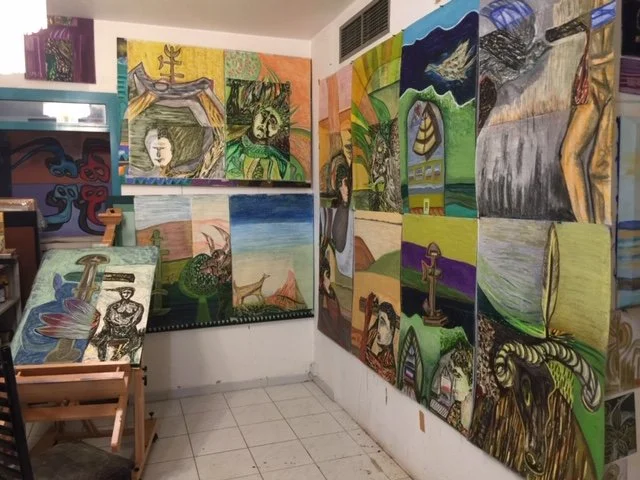
A corner of my studio
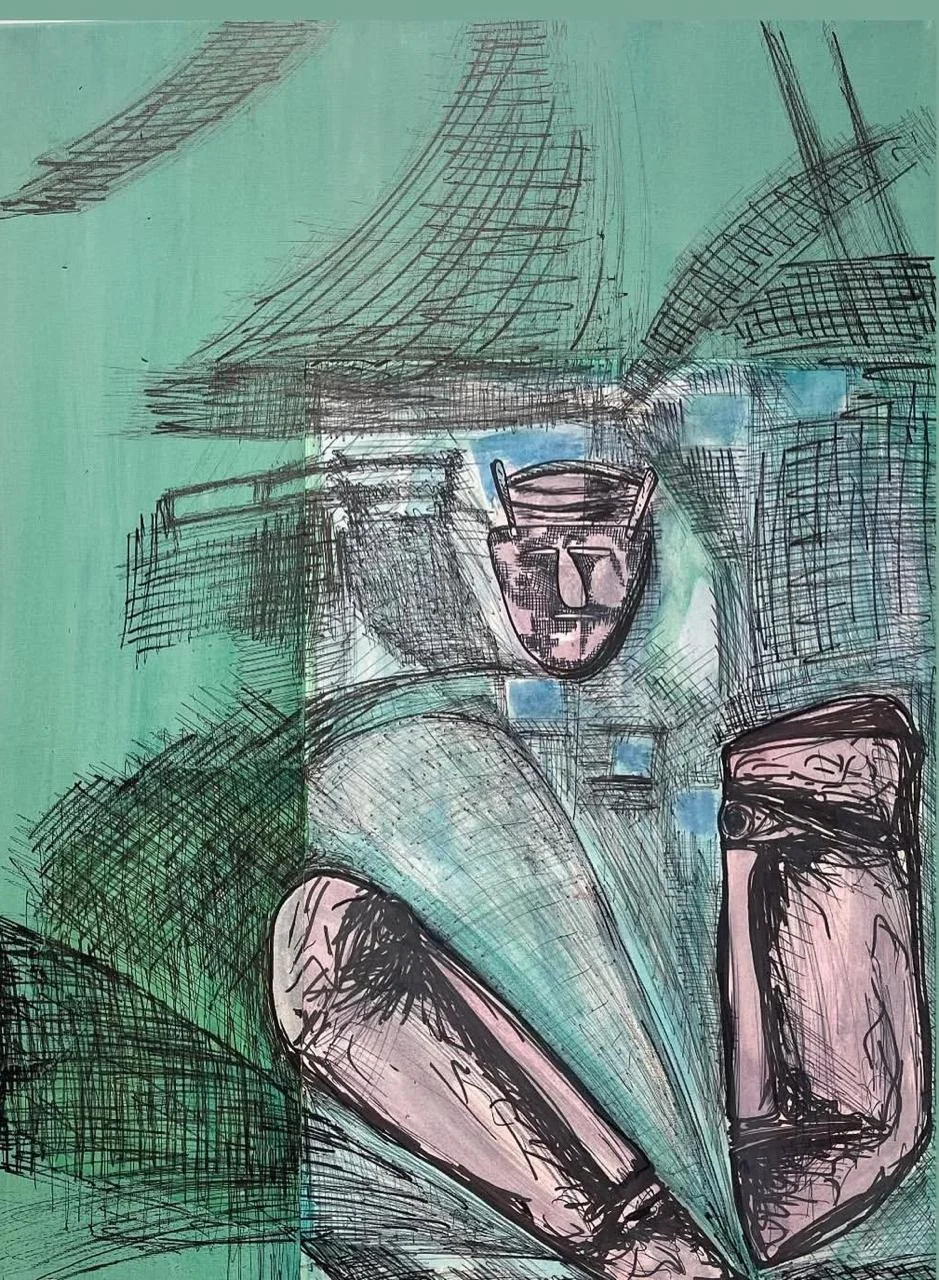
Ambivalence of desires acrylic on canvas 80x60 cm 2024
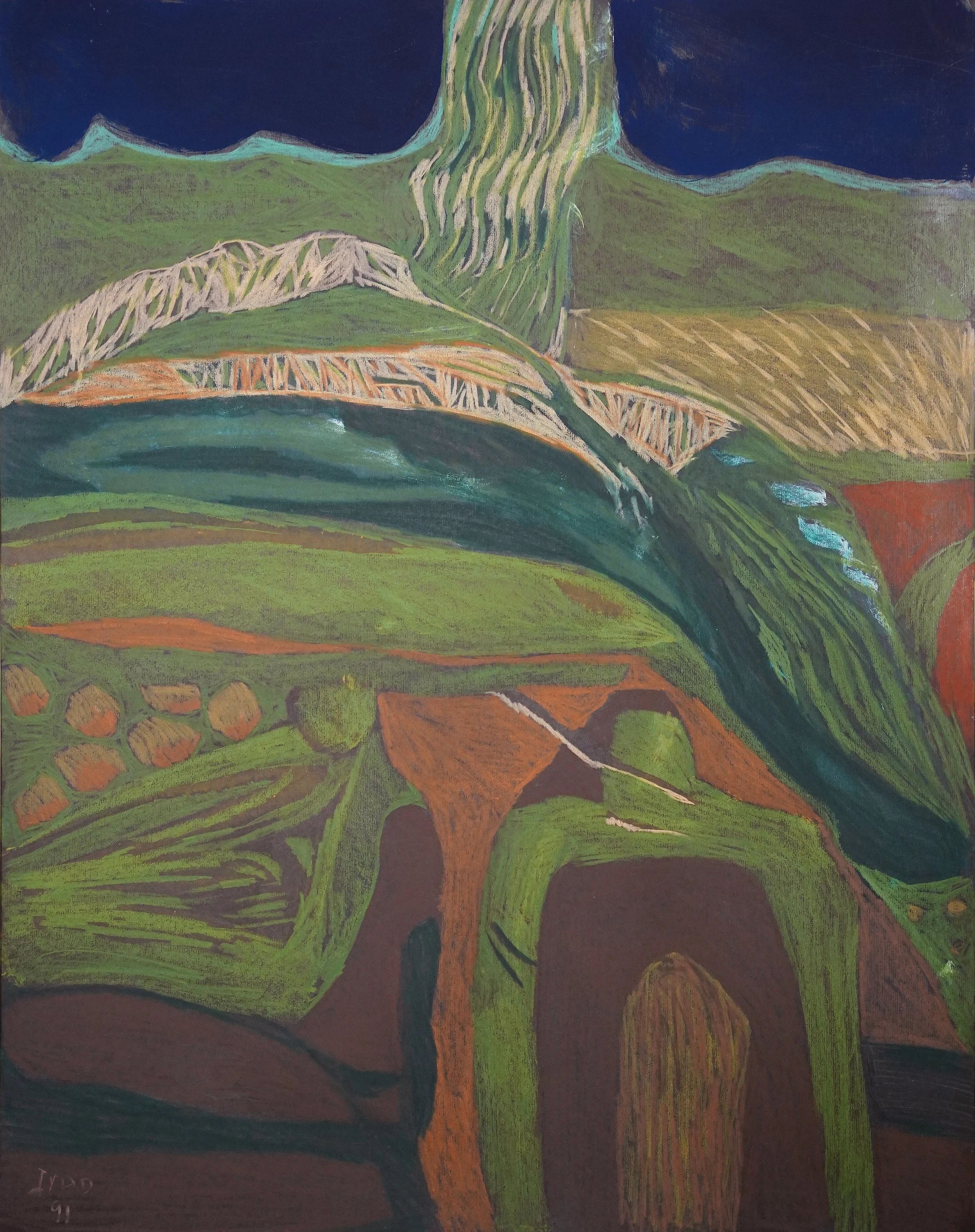
Banf 1991, size 70x90 cm, oil pastel on hard board
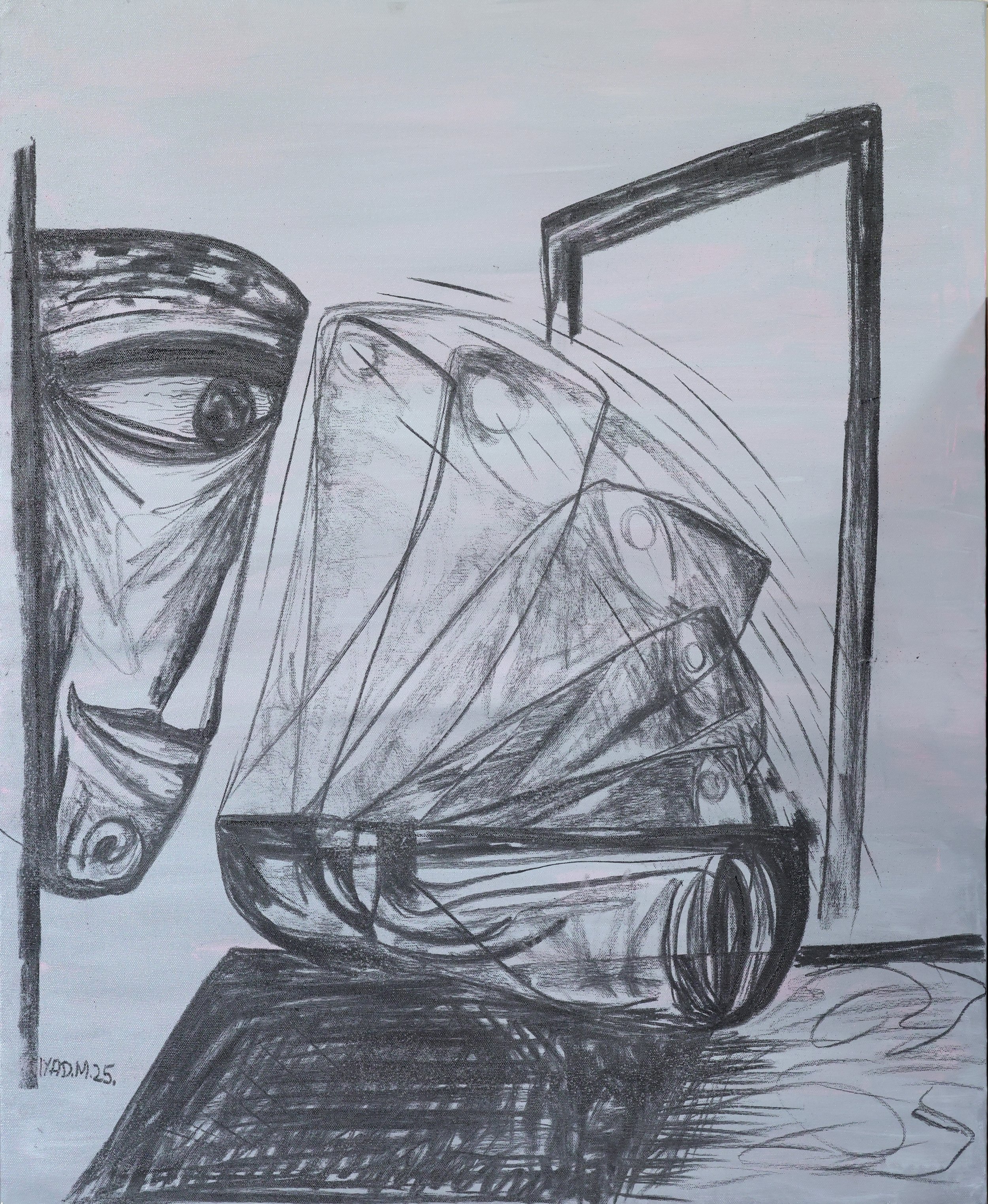
Cognitive collision

Confect 24, opening ceremony, Rabat, Morocco, November 24
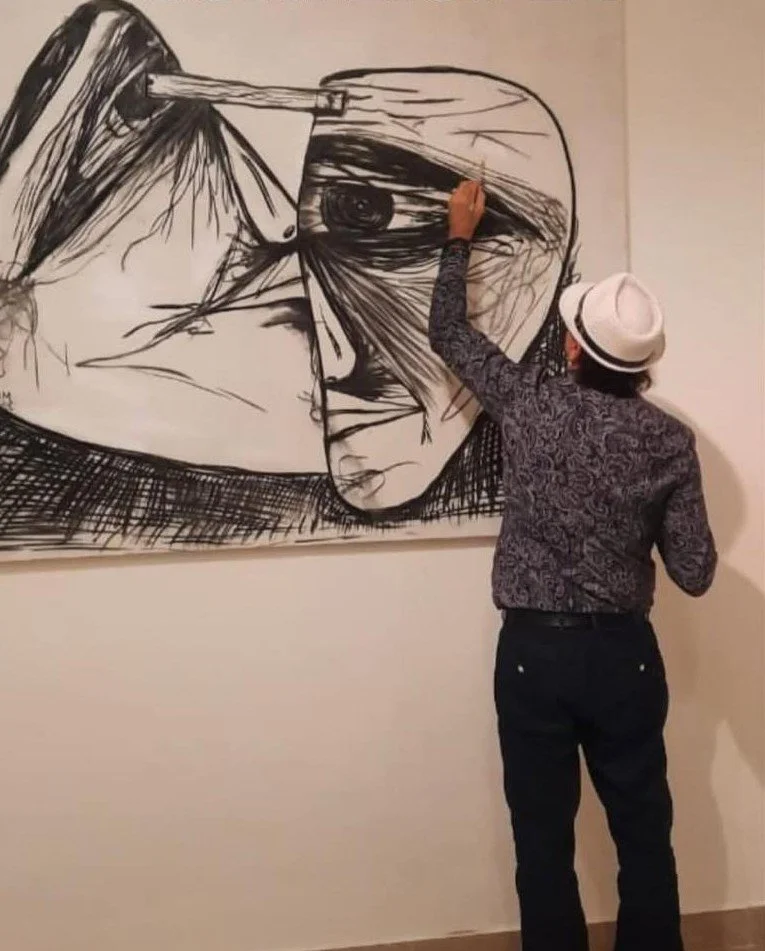
Couple charcoal on canvas 2023
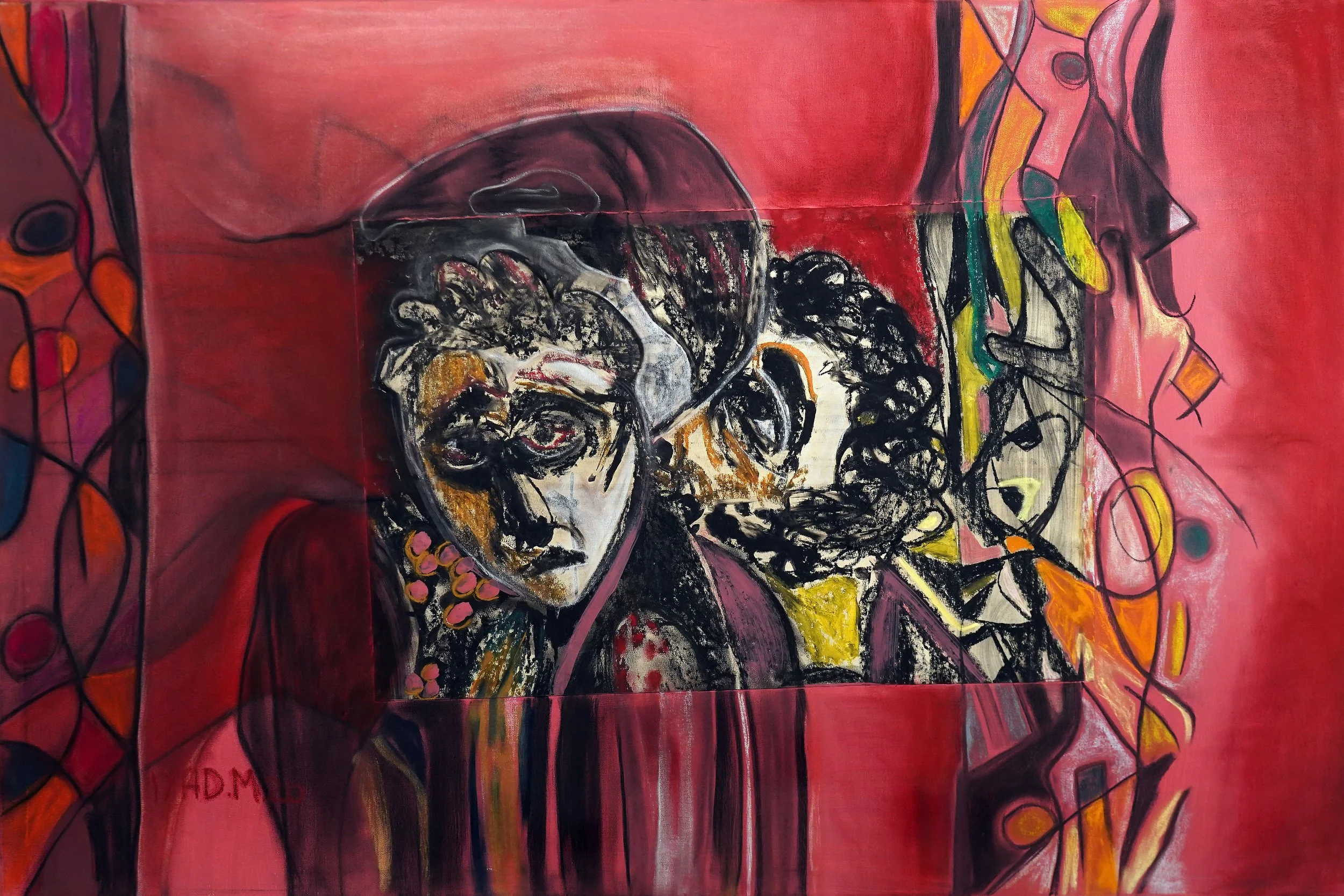
Distraction 120x100 cm collage & acrylic on canvas 2022

Dream island, eching on steel plate 1990 40x60 cm 1988

Montreal 1991, oil pastel on hard board, size 60x80 cm
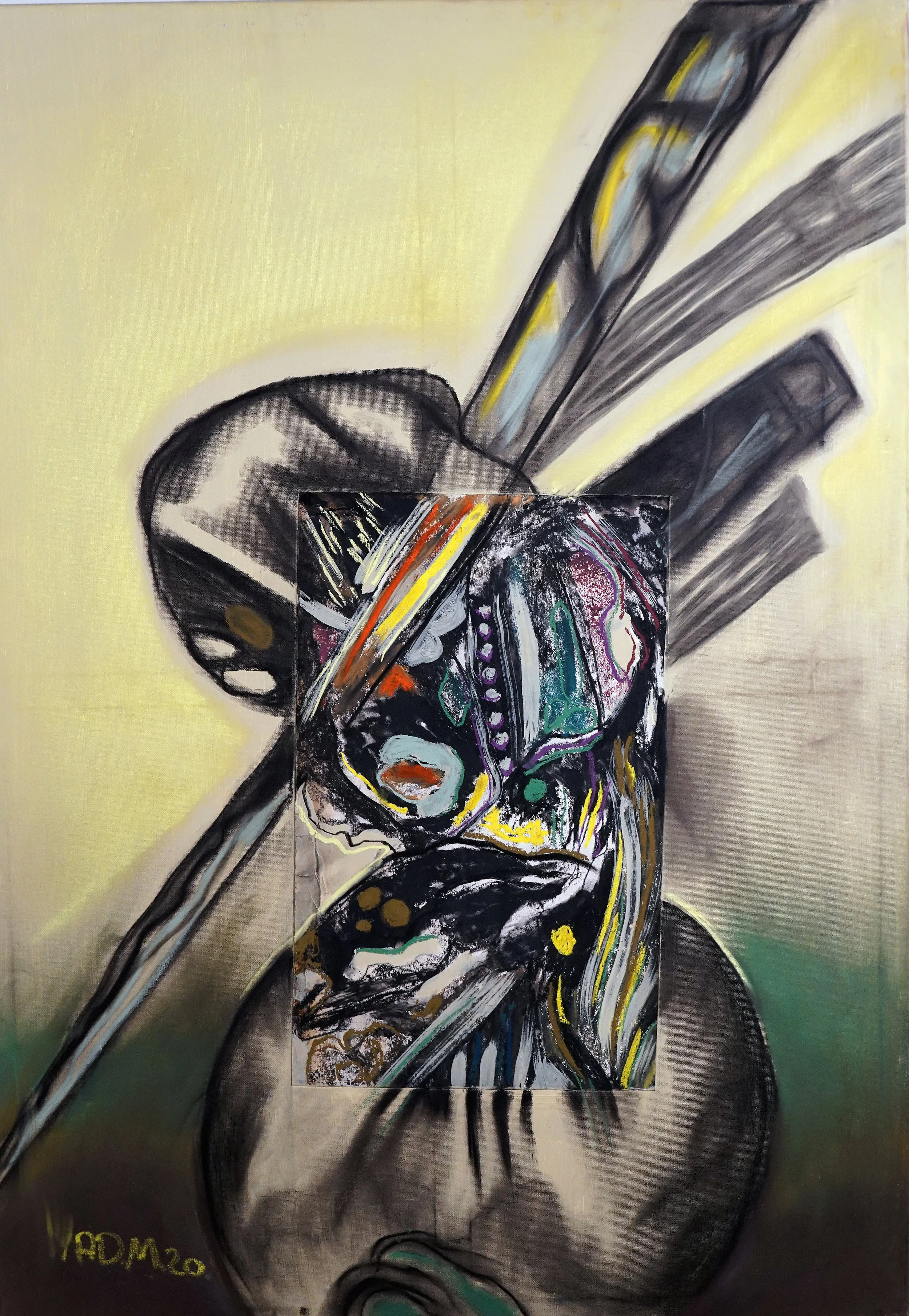
Planet control acrylic & charcoal 60x80 cm 2022
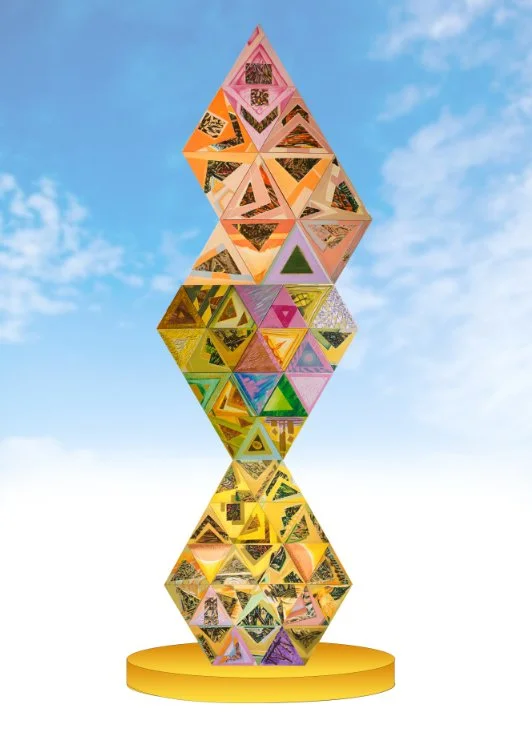
Proposed mural, central bank of iraq, size height 14m x 8m 2024
Mural description
I created a vibrant mural capturing the artistic Iraqi history. It features rotating colorful pyramids, radiating beauty and energy and standing tall inside the unique architecture of the central bank of Iraq new head quarter, displaying an explosion of energy and color, engulfing the surroundings in a revers of beauty and bliss, and elevating Baghdad’s aesthetic appeal and bringing joy and inspiration to all.
A 12 meters high (expandable to final design) and 6 meters wide structural unit composed of multi-sided triangles and shapes externally lit mural, with a tiangular base in steel structure, with high definition (HD) external lighting system to expose the triangles movements. External multi colored building materiel adapted to the environment will be used.

Water dry land 160x110 cm oil pastel on hard board 1992
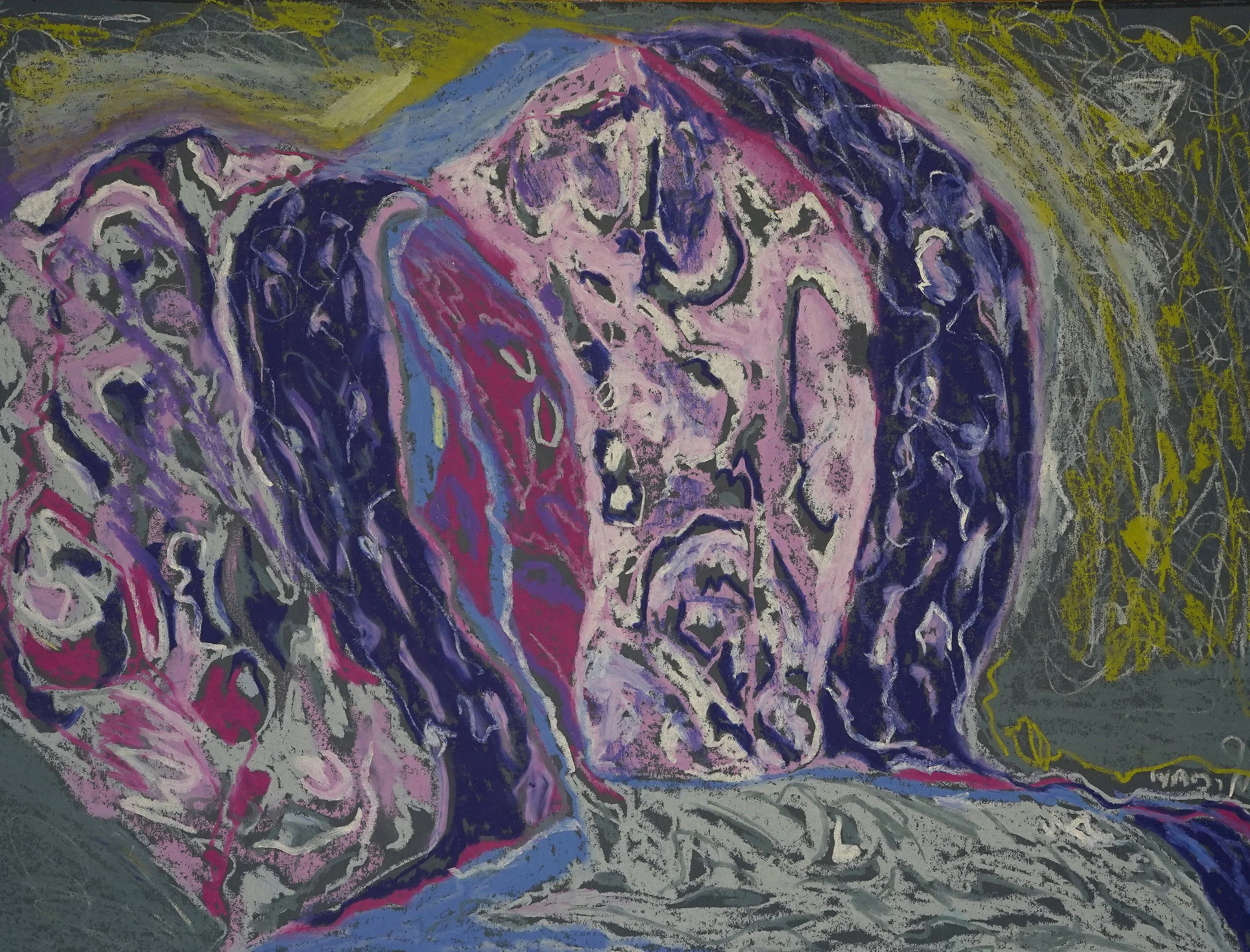
Two in one, oil pastel on hard board size 60x80 cm 1998
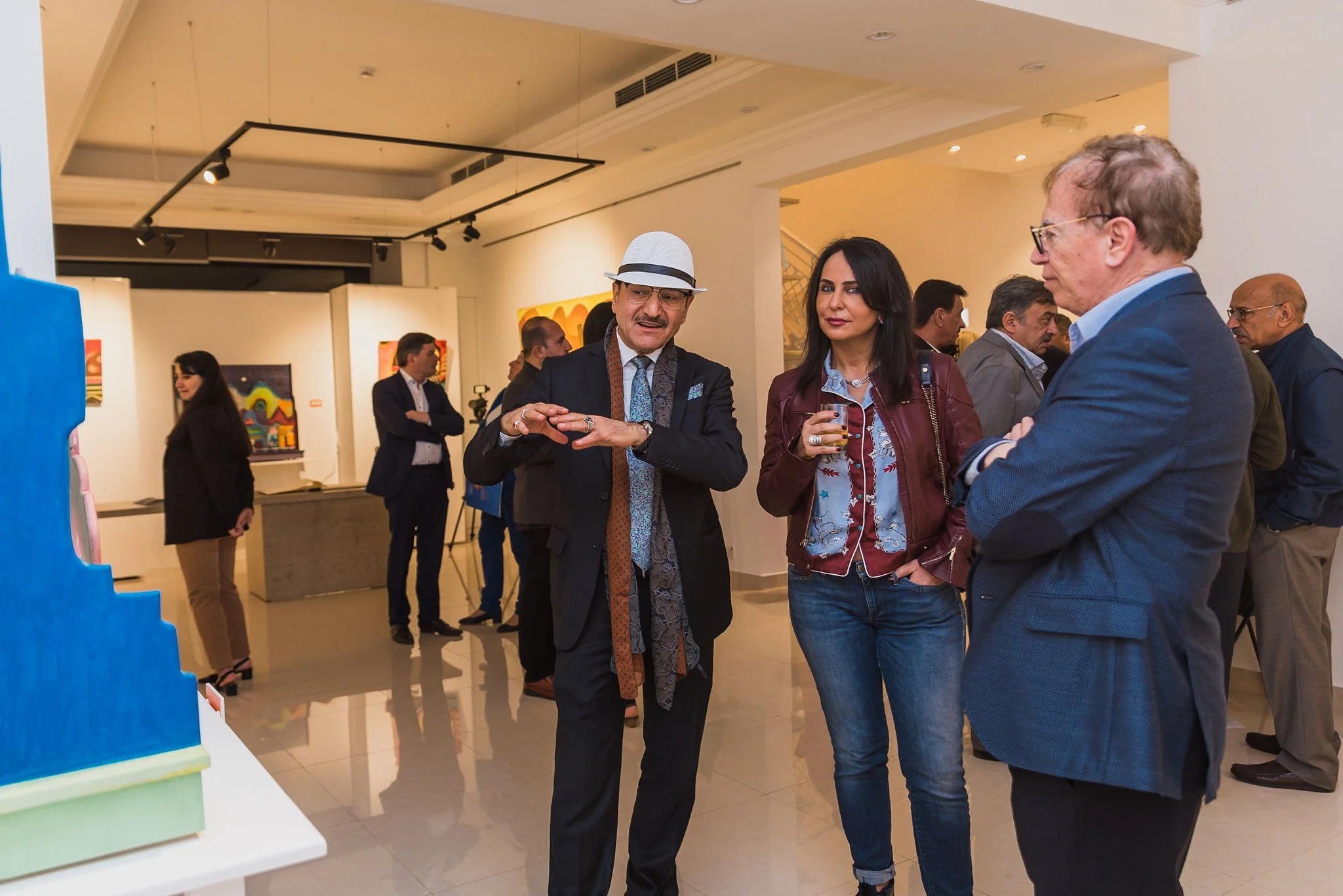
simzy gallery Dubai 2020
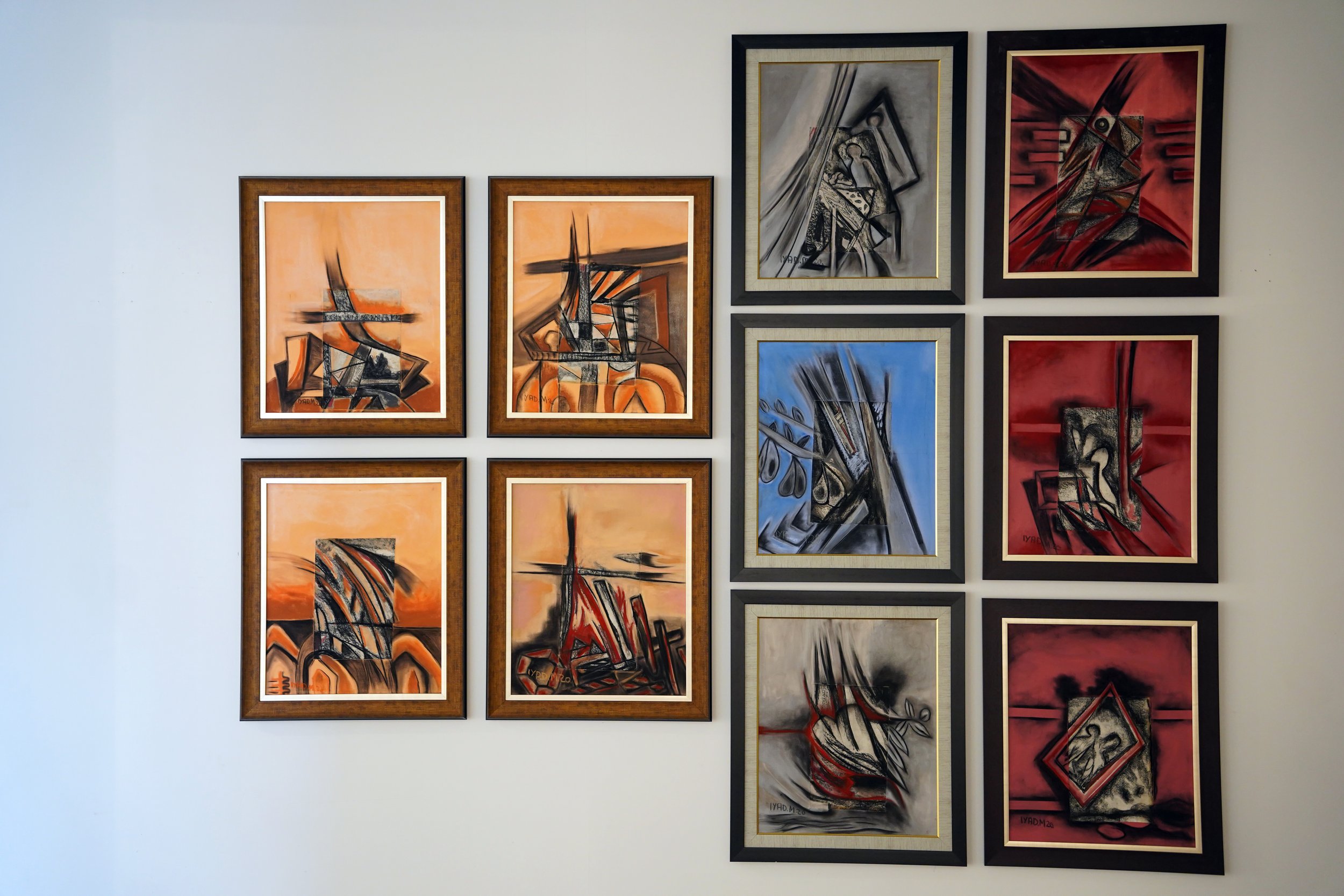
nostalgia exhibition, part
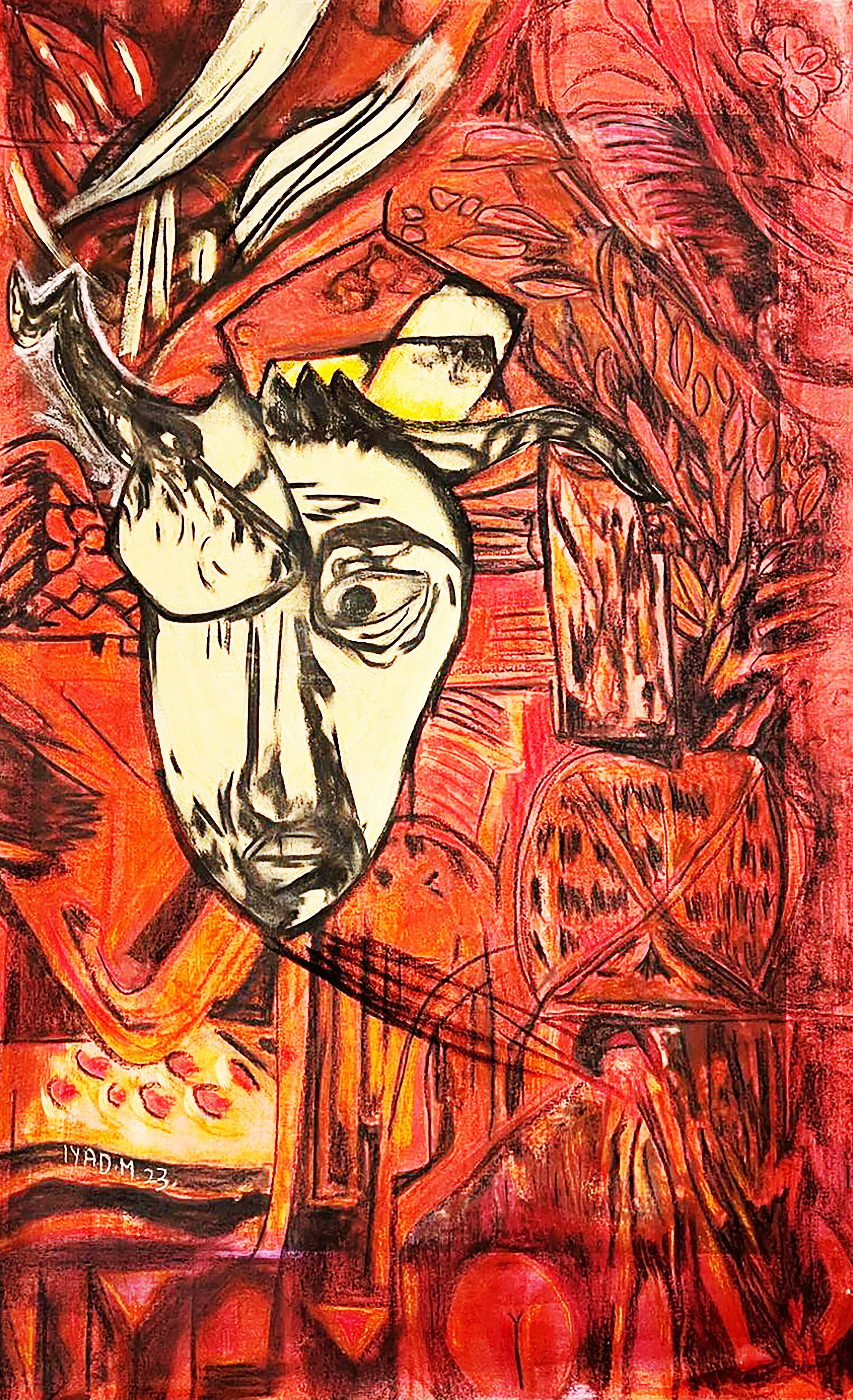
red land 150x120 cm acrylic on canvas and black charcoal