Interview with Charlotte Baqai
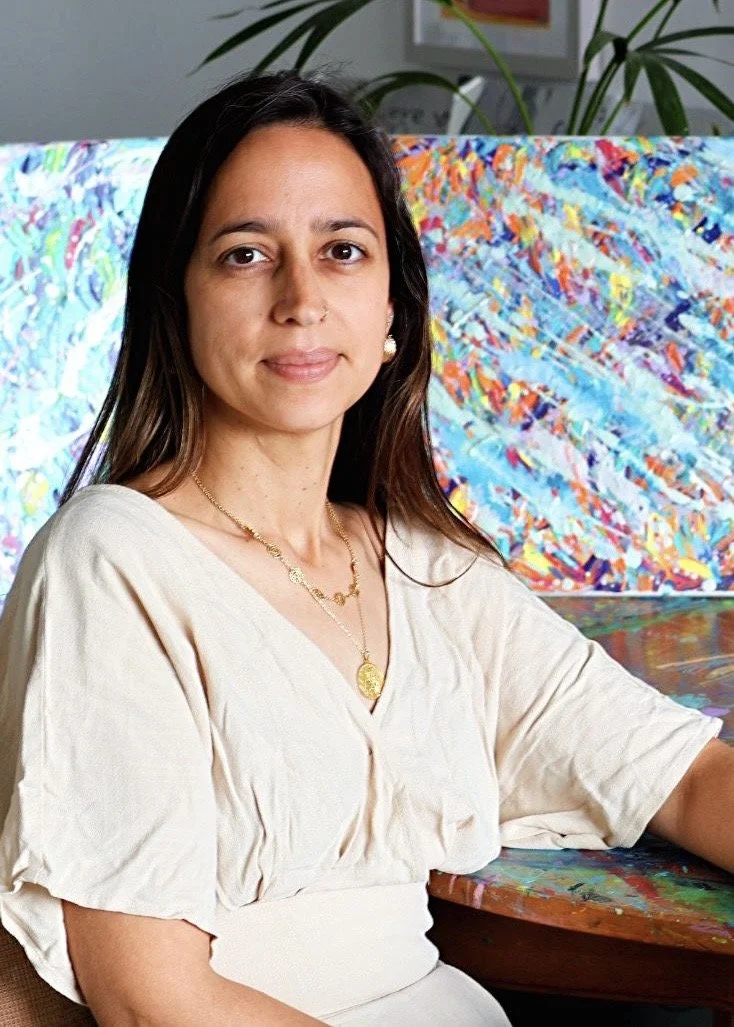
https://www.instagram.com/lovekaraya/
Your practice is rooted in a tactile immediacy, working exclusively with your hands in acrylics and inks, an approach that dissolves the traditional separation between body and medium. Could you speak about how this direct contact becomes a conduit for energetic transmutation and whether you consider your paintings to be documents of an embodied healing ritual rather than simply visual compositions?
I had never heard my work described as an embodied healing ritual before but that feels like exactly what it is. There is no planning stage, no premeditation, my paintings come to be purely on the basis of the need for an emotional release that cannot be achieved for me in any other way. In those moments that I am drawn to paint, there are no words, no other physical movements, no other energy practices that can achieve the release I need, only painting.
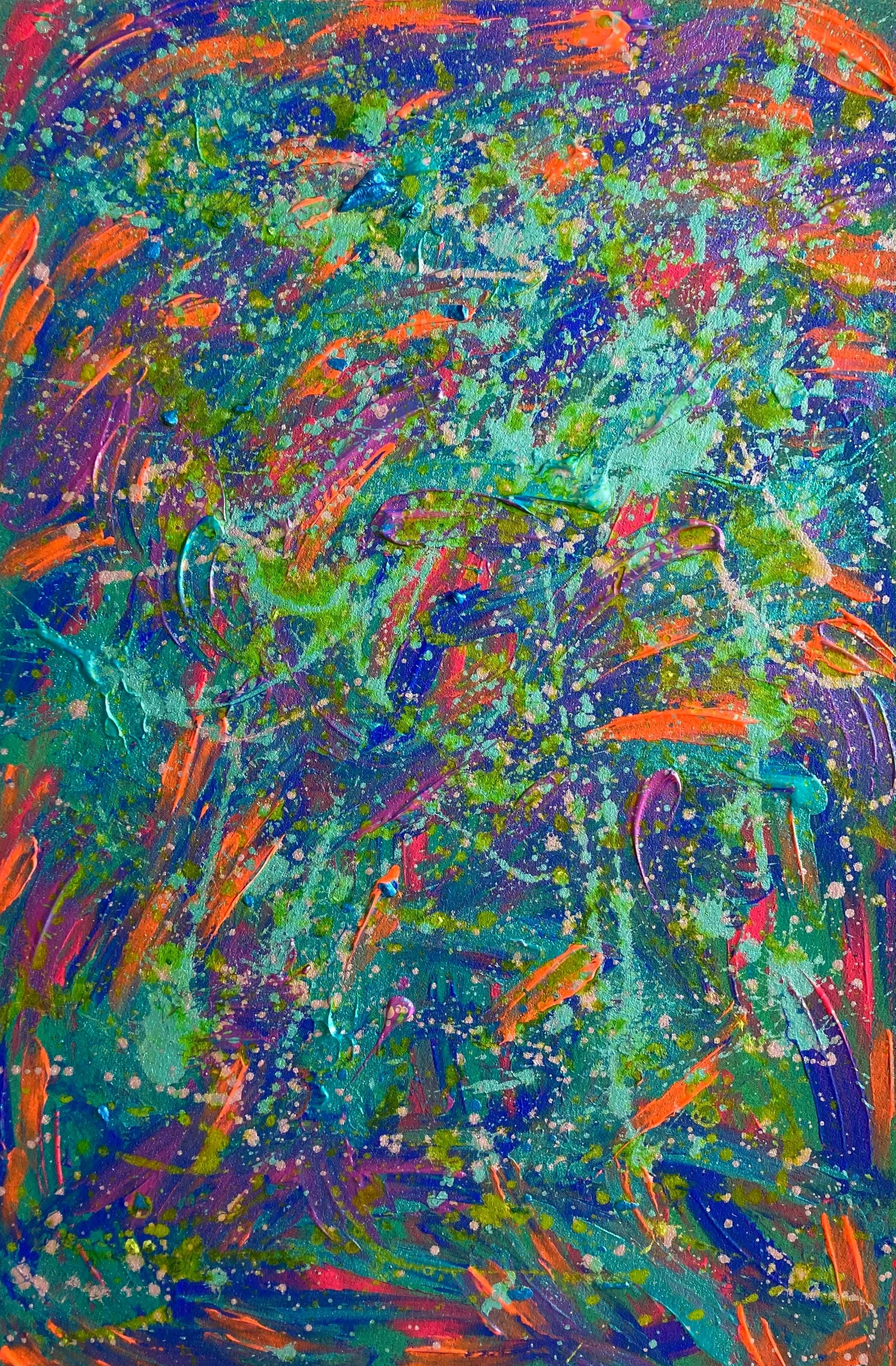
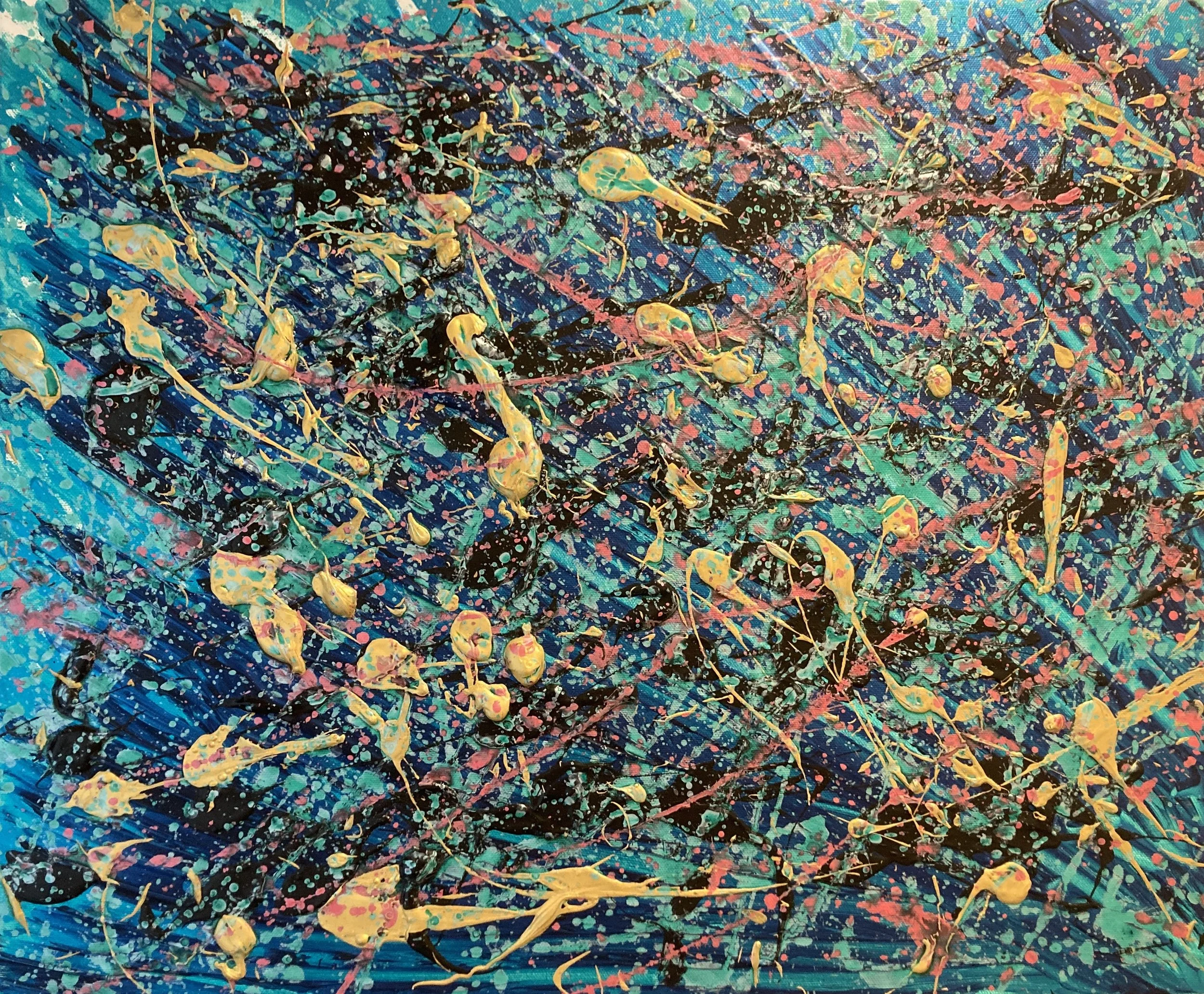
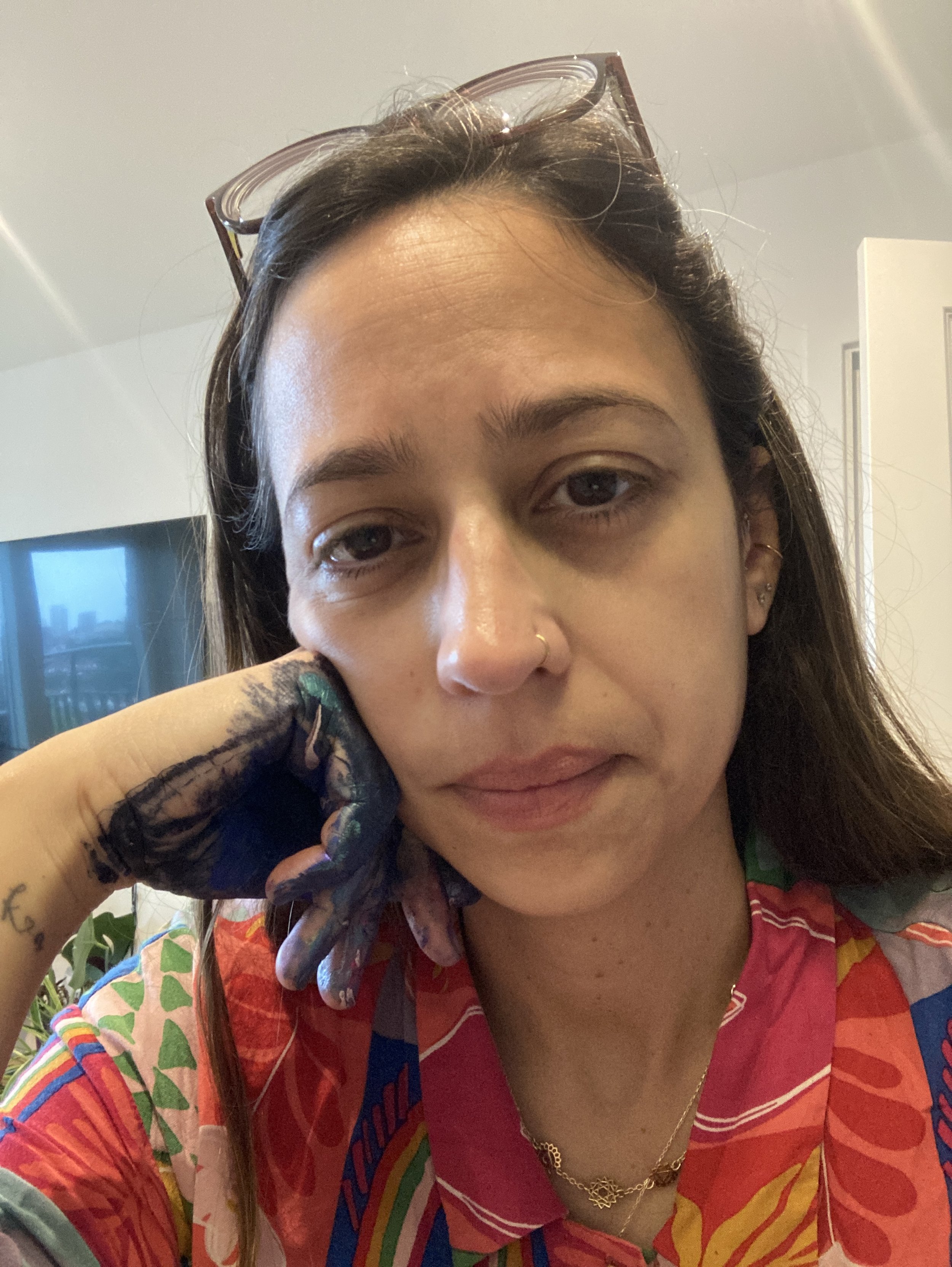
I did begin with paintbrushes back in 2021, but as I progressed through my Reiki training, I felt absolutely compelled to use my hands. They are key in all of my healing work and self-expression. I have always been a very tactile person and there is something so powerful about physical touch for me. When it comes to painting, the energy that is being released from within is infused into the paint through my hands, which then intuitively dance across the canvas applying different layers with an array of hand movements and velocities that allow the transmutation to occur effectively. The painting absolutely becomes a document of this, a visual representation of the transmutation and I continue to be surprised each time at the colours and vibrancy of what I create because I know it mostly comes from dark, heavy and painful emotions.
Many of your works articulate a movement from density toward radiance from opacity toward luminosity. In formalist terms, this might be understood as a play of chromatic tension, yet in the context of your own journey, it becomes an allegory for survival and personal transfiguration. How do you negotiate the boundary between autobiographical catharsis and universal symbolism when constructing these fields of colour?
Once I feel the need to release, it is colour that is the starting point of my expression. Sometimes I see the colours in my mind first and then I am drawn to use each one in turn intuitively. Colours are absolutely infused into our everyday life but we are often blissfully unaware of their symbolism and how we connect with them. Each colour has its own vibration, frequency, meaning and relation to our chakras or energy centres so the use of colour is not merely aesthetic but also holds a deeper symbolism and meaning that is Universally felt even if it is not understood.
As my work is purely intuitive, I feel I cannot say that I consciously negotiate a boundary between the cathartic process and universal symbolism, I believe it is intertwined in my expression and any balance achieved is because what was required came through me.
As both a Reiki Master and an artist, you operate at an intersection where somatic knowledge, spiritual consciousness and creative intuition inform one another. How do you understand the artwork as an energetic organism, an extension of the healing exchange you cultivate with your clients and what does this imply for the viewer’s role within your aesthetic system?
Any healer works by inspiring meaningful change within another that comes from within. In my case with Reiki, this is achieved by channeling Universal energy into an individual, they receive and release, but it is also my own personal experiences and my own journey of self-healing that allows me to help others in the way that I do. As my paintings are a documentation of my own healing journey, they capture moments that will be relevant to others passing through similar experiences on their path.
Say that someone is experiencing grief from separation or loss and they encounter one of my paintings that captures my own personal release of grief, they will resonate with this on an energetic level, even if they are not consciously aware of this. It may translate as a sense of being drawn to the painting, feeling emotional when looking at it, a sense of recognition or knowing or even chills. They are resonating with the energetic frequency of the painting and therein it becomes a portal for their own healing release.
The art historical canon has often privileged the eye over the body, reducing painting to the realm of the optical. Your work, however, reintroduces touch, breath and presence as active agents in the creation of meaning. How do you situate your hand-based process within the broader discourse of post-medium art and do you see your practice as challenging the modernist separation between the sensory the spiritual and the intellectual?
I believe my work aligns with post-medium art not just in the way I use my hands in different ways to apply paint and ink instead of traditional brushes or tools but also in my choice to use certain natural materials to paint on such as tree slices, tree root sections, leaves and slate which can blur the line between painting and sculpture.
I would love my work to challenge sensory, spiritual and intellectual separation because I believe everything is connected and intertwined within us. It is separation that causes us to look for answers externally that already exist within and it is the disconnect from our true selves that causes problems for ourselves and others. We are a beautiful, complex interplay between our sensory, spiritual, intellectual experiences, they are not distinctly separate from one another.
Your paintings frequently read as maps of internal states, cartographies of vibration ruptures, releases, and recalibrations. To what extent do you consider your creative process a form of psychic archaeology, excavating layers of emotional sediment and in what ways does the viewer participate in this excavation when encountering your work in a gallery space?
My creative process is absolutely an excavation of my internal landscape on all layers, mental, emotional, physical and spiritual in that given moment and to use the archaeology reference, some things are easier to excavate than others depending on how many layers it is buried beneath. This is reflected in my work, the deeper the emotion, the memory or experience, the more layers of paint, the more activity and energy is required to achieve the release.
The viewer is an observer of this process and they will be drawn to whatever is relevant for them within the painting. They may notice the surface paint first, the lightness, the resolution, the surrender, the hope and trust or they may notice the deepest, darkest layers, the struggle, the turbulence, the unrest. This will all depend on where they are in their own journey. They become the validation for the excavation, the reason it needed to be brought to light and shared, like a historical relic being discovered and displayed in a museum, it finds its purpose in its exposure and experience by others.
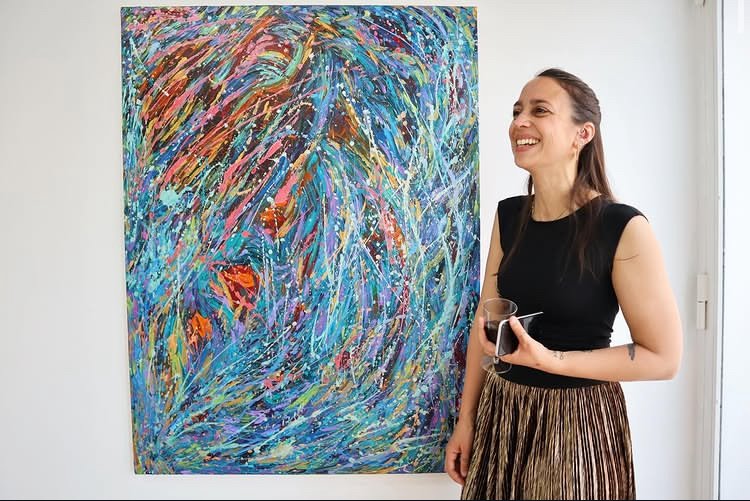
Having exhibited across major artistic capitals, including Barcelona, Rome, Madrid, Miami, Amsterdam, Los Angeles, and Cannes, your work exists within an international circuit of visibility. How has this global trajectory influenced the evolution of your visual language,and do different cultural contexts alter the energetic reception or even the interpretive frequency of your paintings?
I think that the beauty of art in general is that there is no need for a common spoken language in order to connect with it. If I speak particularly to my work, emotions are emotions and we all have experienced them and had emotional releases in our lives and it doesn’t matter where you are in the world, we will share similar experiences, trauma and conditioning. I believe my paintings go where they are supposed to and are seen and felt by those that are meant to experience them. The specific energetic reception of the paintings in another city or country depends still on the individual and their life experiences but I appreciate that certain communities or cultures will resonate more with my personal back story, not just communicated in my words but from experiencing my paintings and they will be subconsciously receiving from them what it is that they need.
I myself come from a multi-cultural background and having lived in London for 23 years, cultural diversity is absolutely normal for me. I believe that my own personal experiences throughout my life related to culture, religion, ethnicity will already be interweaved through my work as it informed such a large part of my journey especially as a lot of my healing has been of ancestral wounds and this will be relatable to individuals across the world.
Your artistic statement speaks of transmuting darkness into light, which resonates both with alchemical traditions and contemporary trauma theory. When the work is initiated through emotional release, how do you prevent the painting from becoming didactic, ensuring instead that it operates as an open system, one that invites viewers with varied personal histories to project, decode and heal?
Each painting of mine captures a moment on my healing journey. They are visual, visceral, energetic imprints of emotional releases that are often multi-layered, complex and often spanning lifetimes. They serve as a tool for the observer to look into, feel and connect with. There are no obvious words, lessons or teaching, what’s happening is on a much deeper level, a soul recognition if you will that the piece in front of you is a record of someone else’s journey through what you might be experiencing and it’s a guide for how to navigate your way through too. This is highly personal to the observer and they will resonate with the frequency of the layer or layers of the painting that they are currently at. Something will open or shift within them that was necessary.
The same painting can evoke completely different imagery and emotion from one observer to the next. What they experience is exactly what they are meant to at that time.
In your Reiki practice, you guide others to unlock creative energy as a pathway toward trauma release. Could you elaborate on the parallels you observe between the moment an individual feels their energy shift and the moment a painting reaches its own state of equilibrium? How do these two modes of healing inform and mirror one another?
Yes, I use meditation and Reiki to help others creatively express themselves freely and then if they wish, I interpret the deeper meaning of what they create. It is often a message from their higher self or an expression of their current mental, physical, emotional status communicating something that they may not have been consciously aware of because it had been suppressed.
I love these ‘Creative Release’ sessions because following the Reiki, each individual moves with determination towards the medium of their choice and expresses without thinking about it, which would not have been the case if we had started as soon as they walked through the door. It is as if the block to that expression has been removed and I have the honour of witnessing the release and the positive effect it has on them. I observe a similar release in them that mirrors my own experience when painting, where the act of the creative expression brings up emotions and experiences that have been buried or suppressed and I feel the benefit of that release immediately.
Much of your imagery appears to emerge from the pre-verbal gestures, movements and flows that precede language itself. Your work often seems to inhabit a space where categories dissolve and new hybrid forms arise, merging the therapeutic with the aesthetic the intuitive with the abstract. How do you position your practice within this expanded field of healing performance and abstraction, and what do you feel this hybridity reveals about the emotional and psychological landscape of contemporary life?
For me, the abstraction is absolutely key as my work depends on the individual interpretation and experience of the observer. It is meant to be felt and connected with on all levels and it is purely my intuition that allows each piece to be created. So for me, the merging is inevitable.
I completely relate to the comment about it being pre-verbal as this is exactly what I feel. I have felt the need for an emotional release many times and tried the ways I know to assist this but I feel clearly when it gets to a point where the release can only be achieved by painting. Words cannot express the depth and complexity of the emotions and experience but the paint, the colours, the movement and the textures can, they can hold and convey the energetic expression.
I think so many of us were brought up completely misinformed about the interconnectedness between our emotions and our mental and physical health and that this is what’s lead to so many crises on personal and global scales. I think my work is a call back to the truth that expression is key to our well-being. Expression of emotions, speaking our truth, releasing our trauma and conditioning, all of these are essential for physical and mental well-being and in turn our ability to create the life that we want, that we can love, embrace and enjoy.
Given your extensive exhibition history and increasing international recognition, along with features in publications such as Vogue Manhattan, Artventurous, and Artio, how has visibility affected the conceptual stakes of your work? Has the growing audience intensified your desire to communicate the healing potential of creative expression, or has it challenged you to renegotiate the private, intimate nature of your process?
It’s interesting because I would say I am a private person and I have a very small inner circle but when it came to sharing these incredibly personal experiences and emotions, I knew I had to do it. The only thing that has changed as time has gone on is that I no longer video myself actually painting, I only record the finished piece now. This allows me to retain the intimacy and privacy of some of my releases in the moment, even if I then go on to share what was happening for me in the caption accompanying the painting.
I have been incredibly lucky to receive the offers and exposure that I have had over the past couple of years and I am very grateful for this. The more people that see and connect with my work, the better it is for them, for the wider population and for me. It only takes one person to be touched by my artwork and message, for it to alter something within them and for that to then send out positive ripples to the people in their life and beyond. The thought of that happening on a global scale is quite unreal for me at times but it also fills me with happiness, a sense of purpose and determination to keep going because I really believe in my work and the message behind it about the healing power of creative expression. It saved me during my darkest times, helped me heal from widespread inflammatory arthritis and completely transformed my life so if I can help just one person in that same way then it will all be worth it.
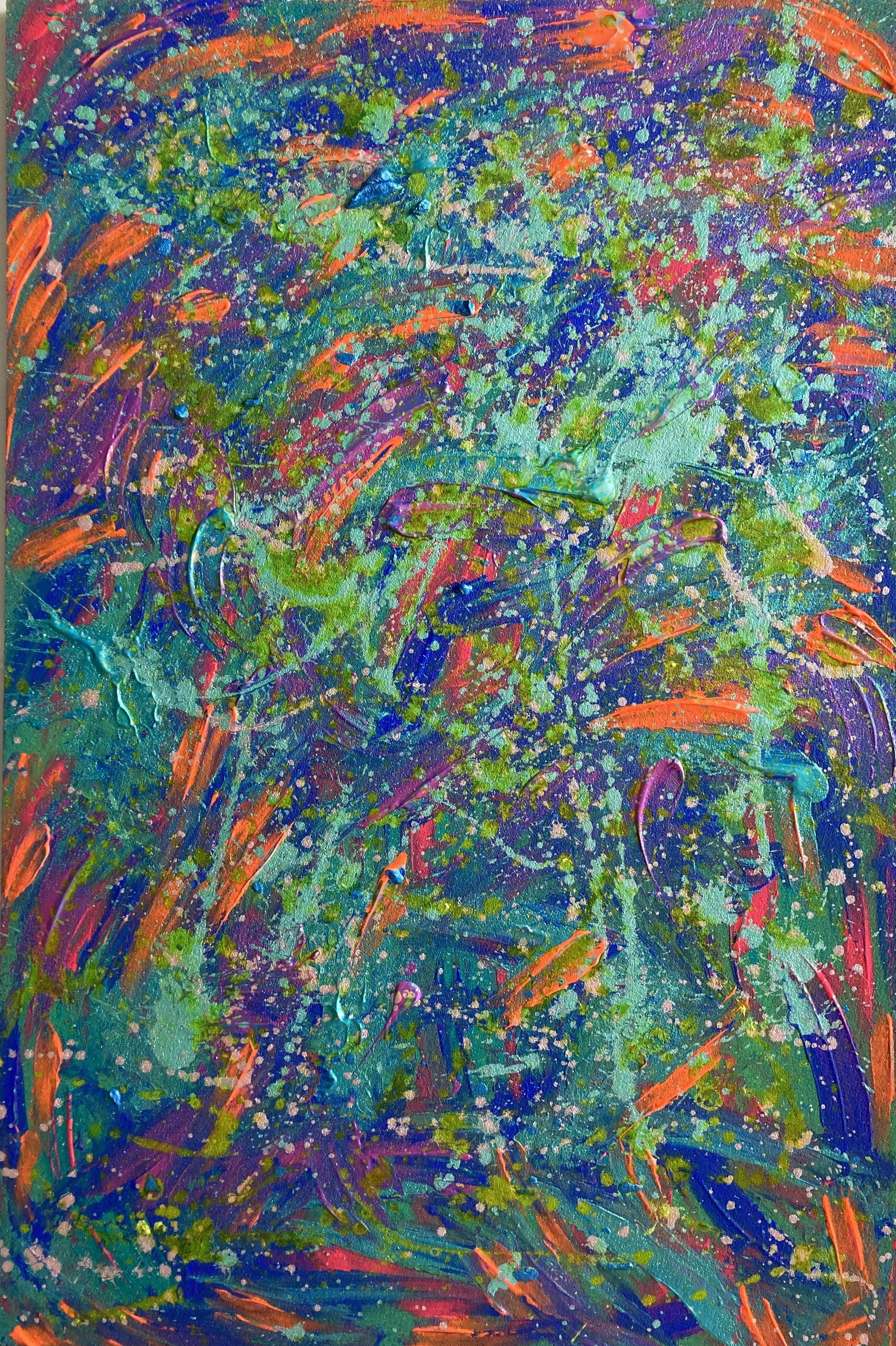
Home
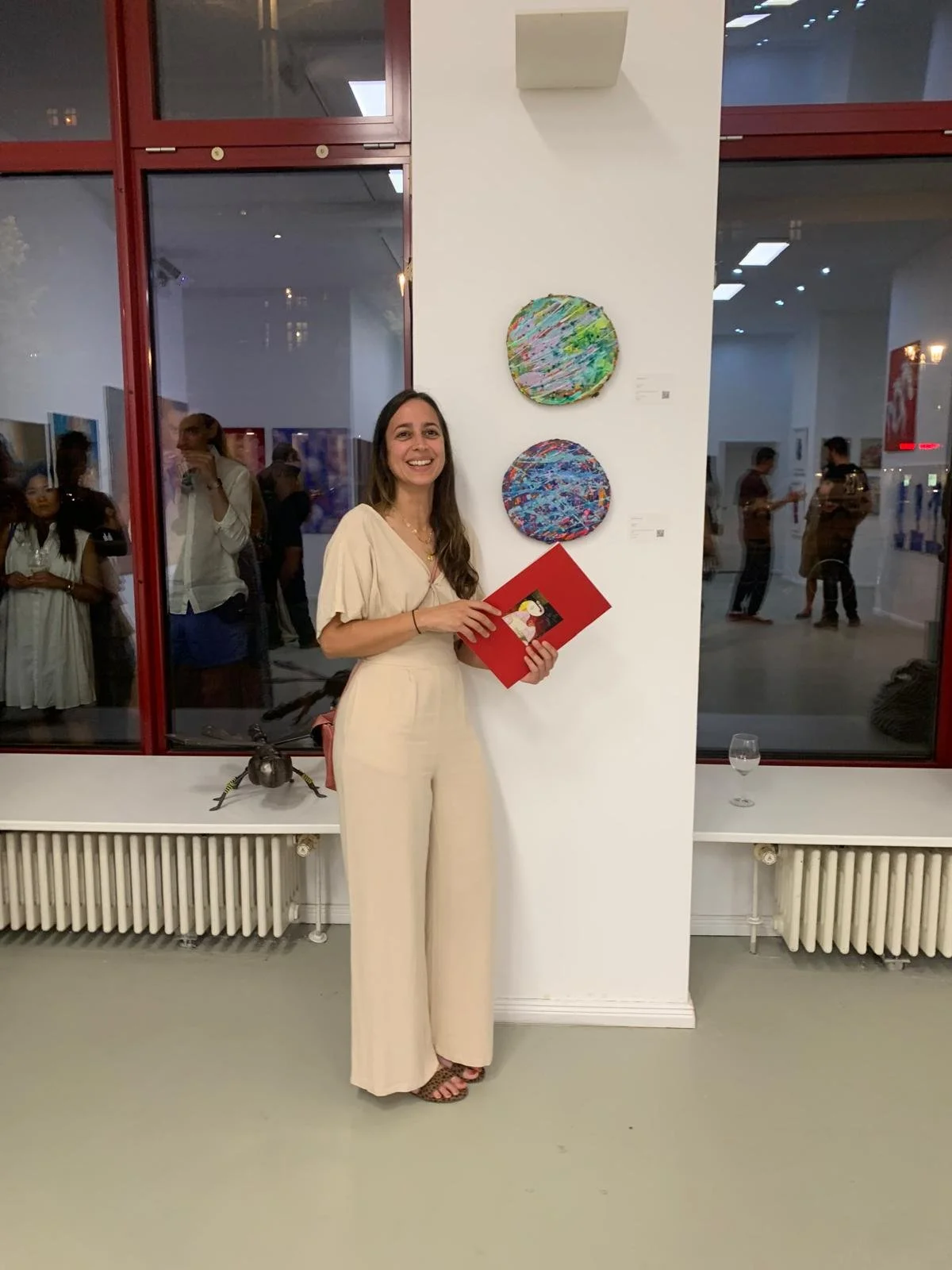
Berlin
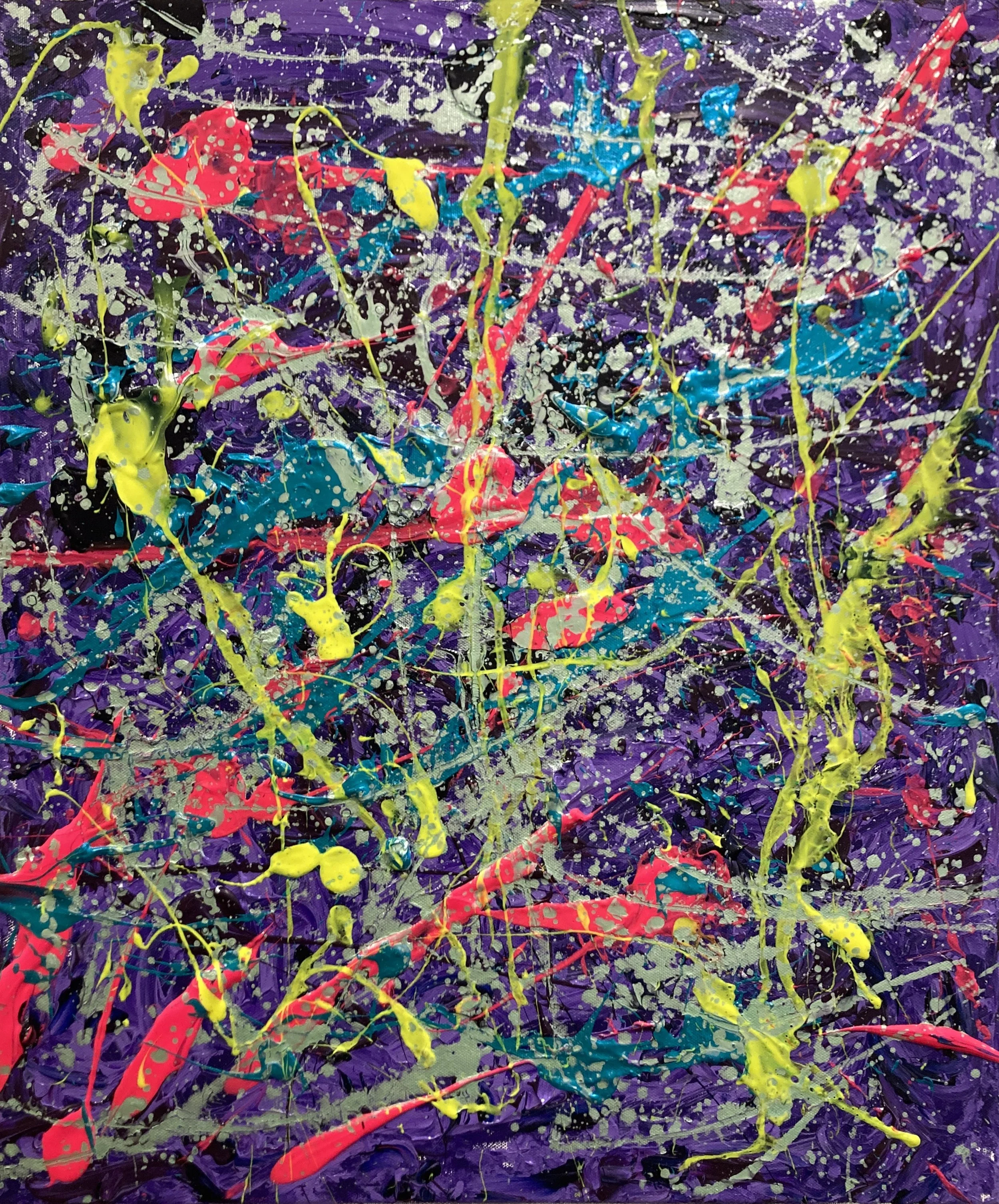
If I lose myself, I lose it all copy
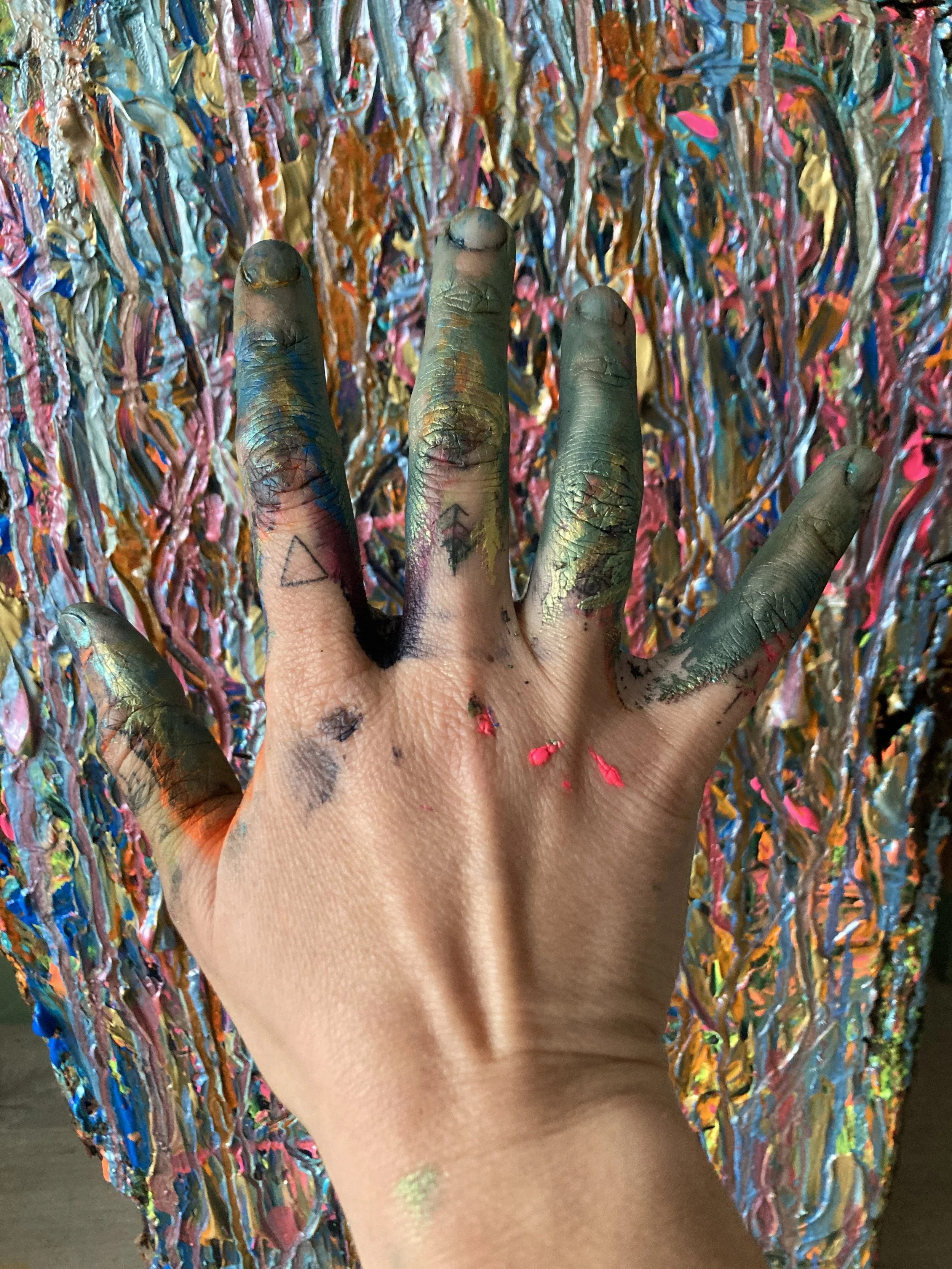
Live Edge Tree Slice
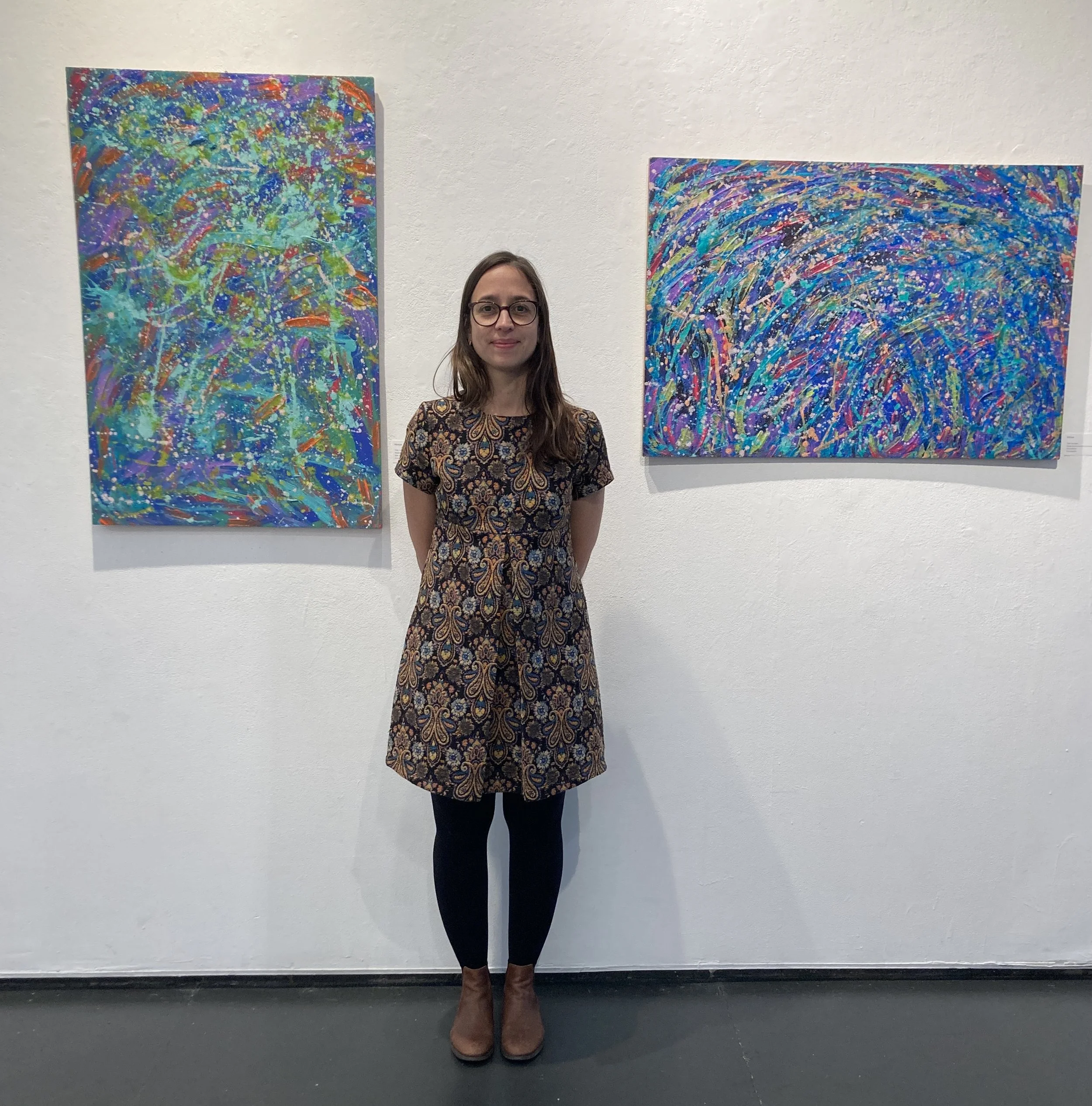
New York
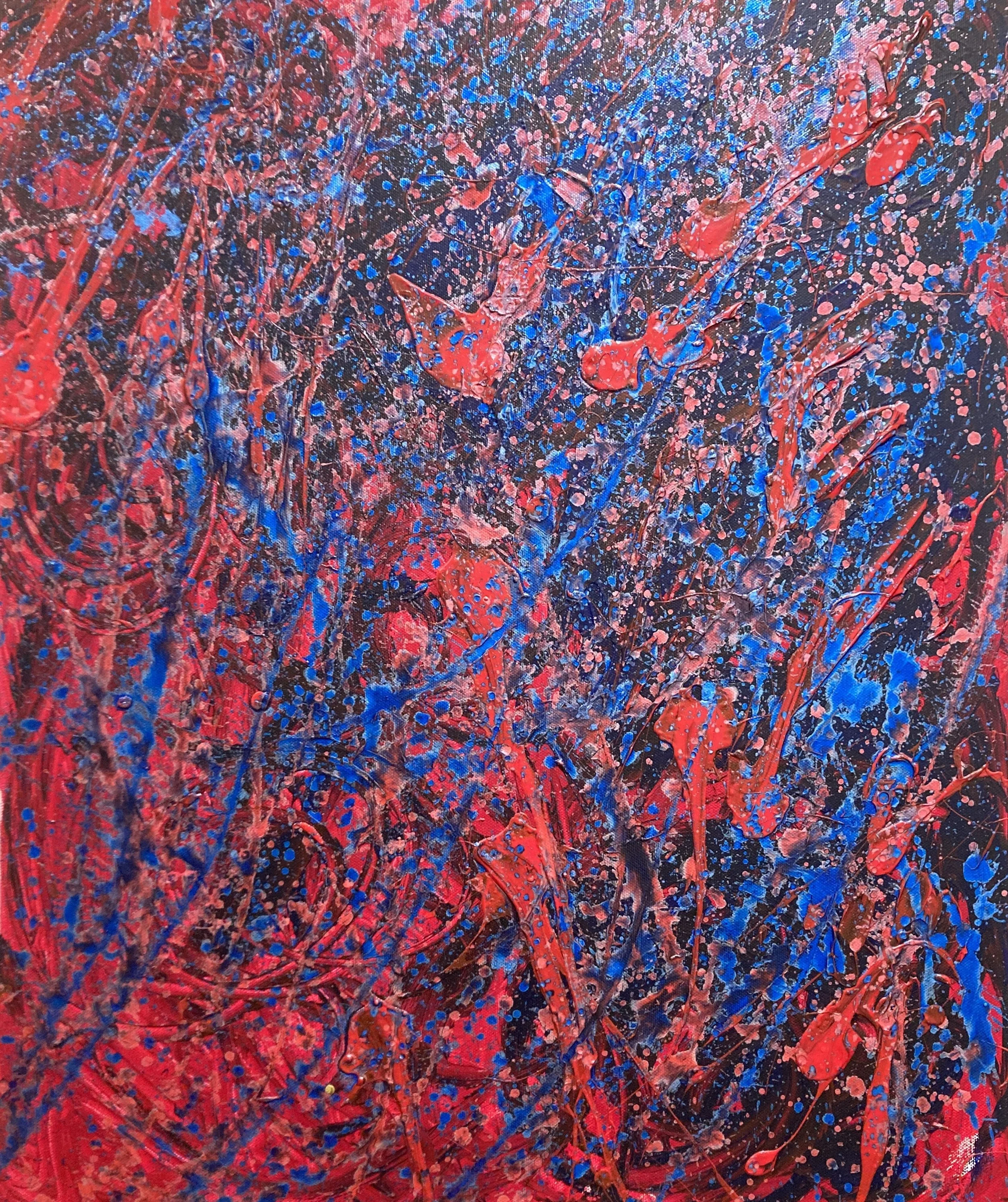
Rebirth
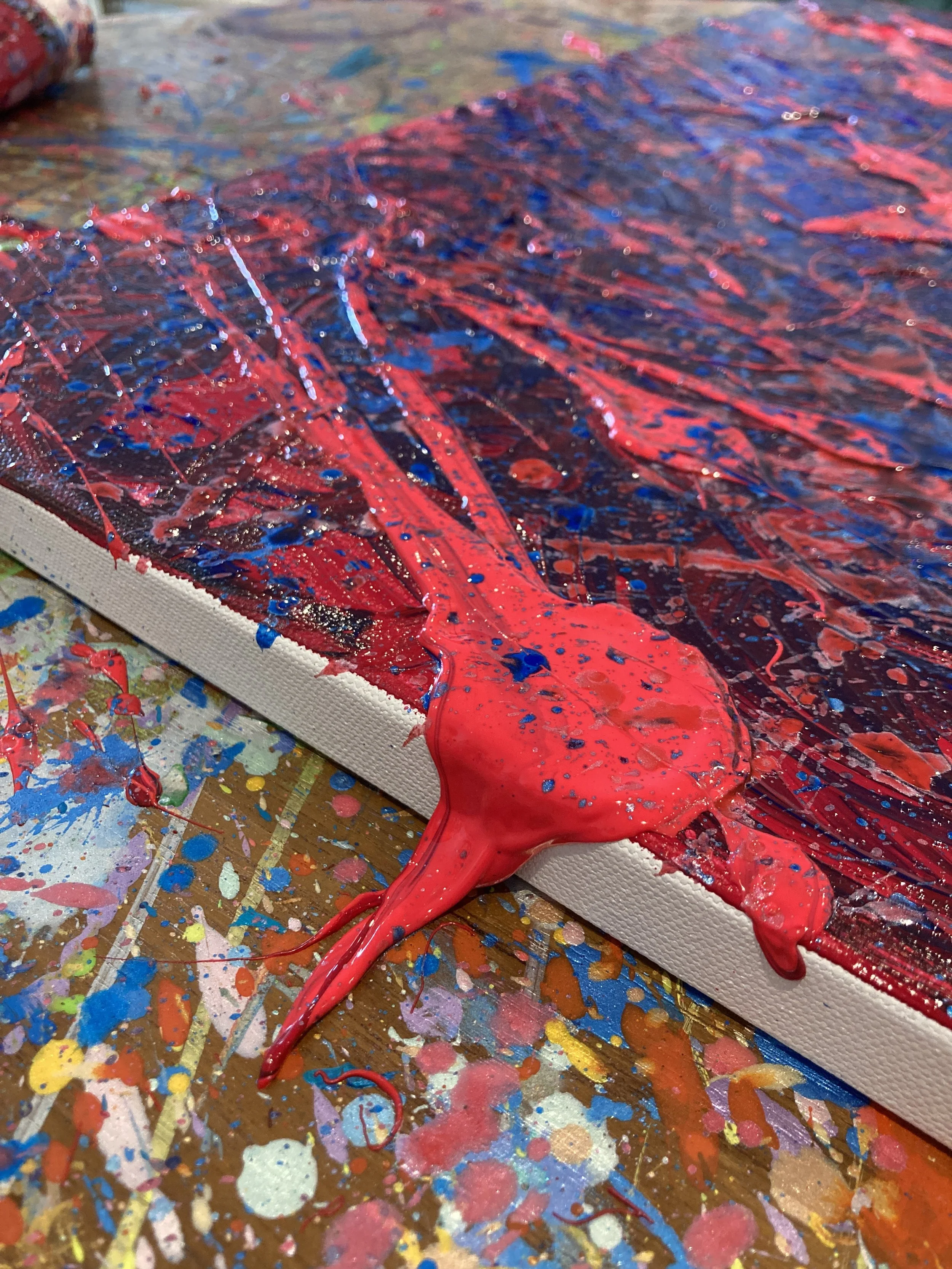
Rebirth close up
Silenced
Solo show
Stillness after painting
Studio
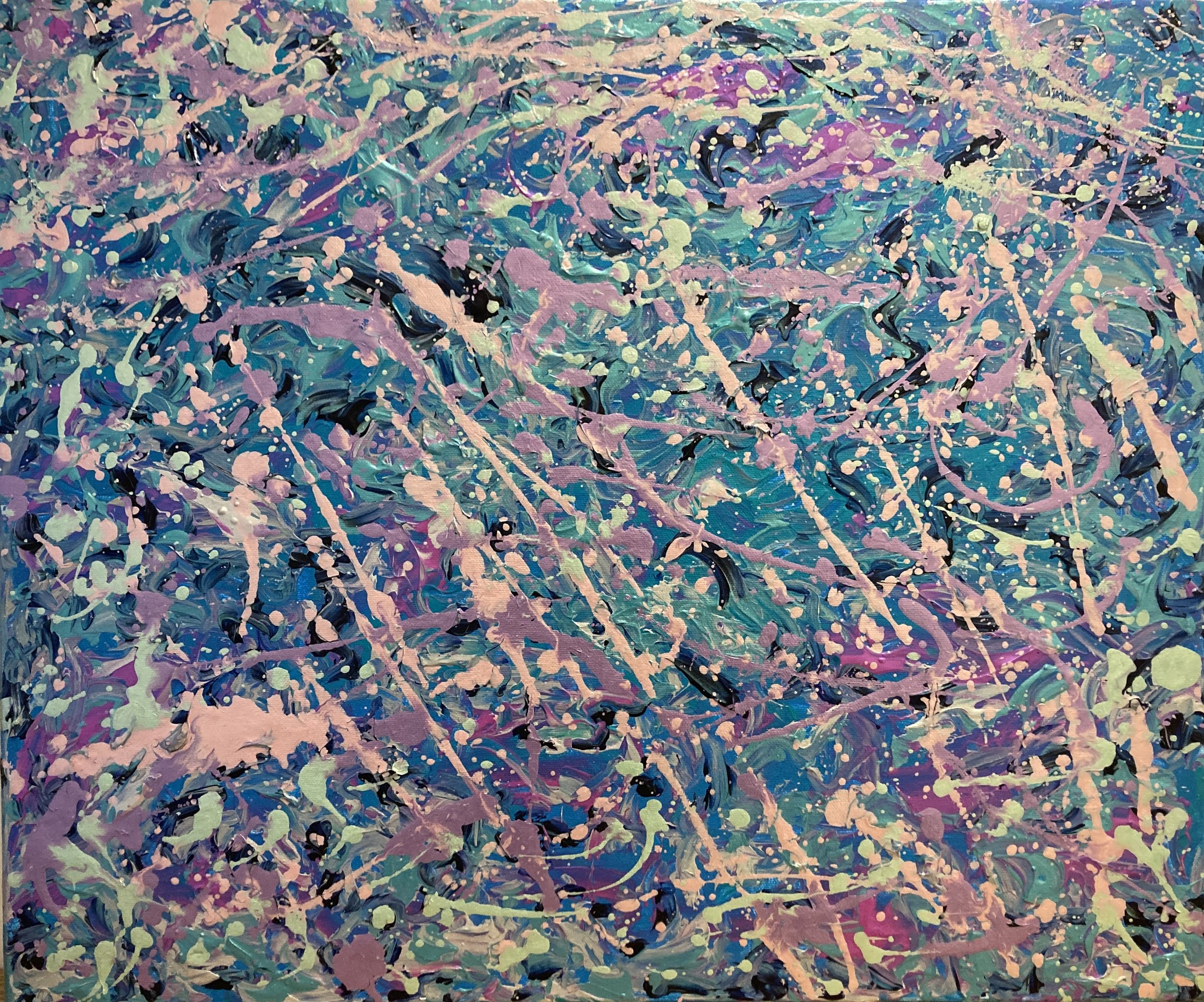
Union part 1 - The Feminine
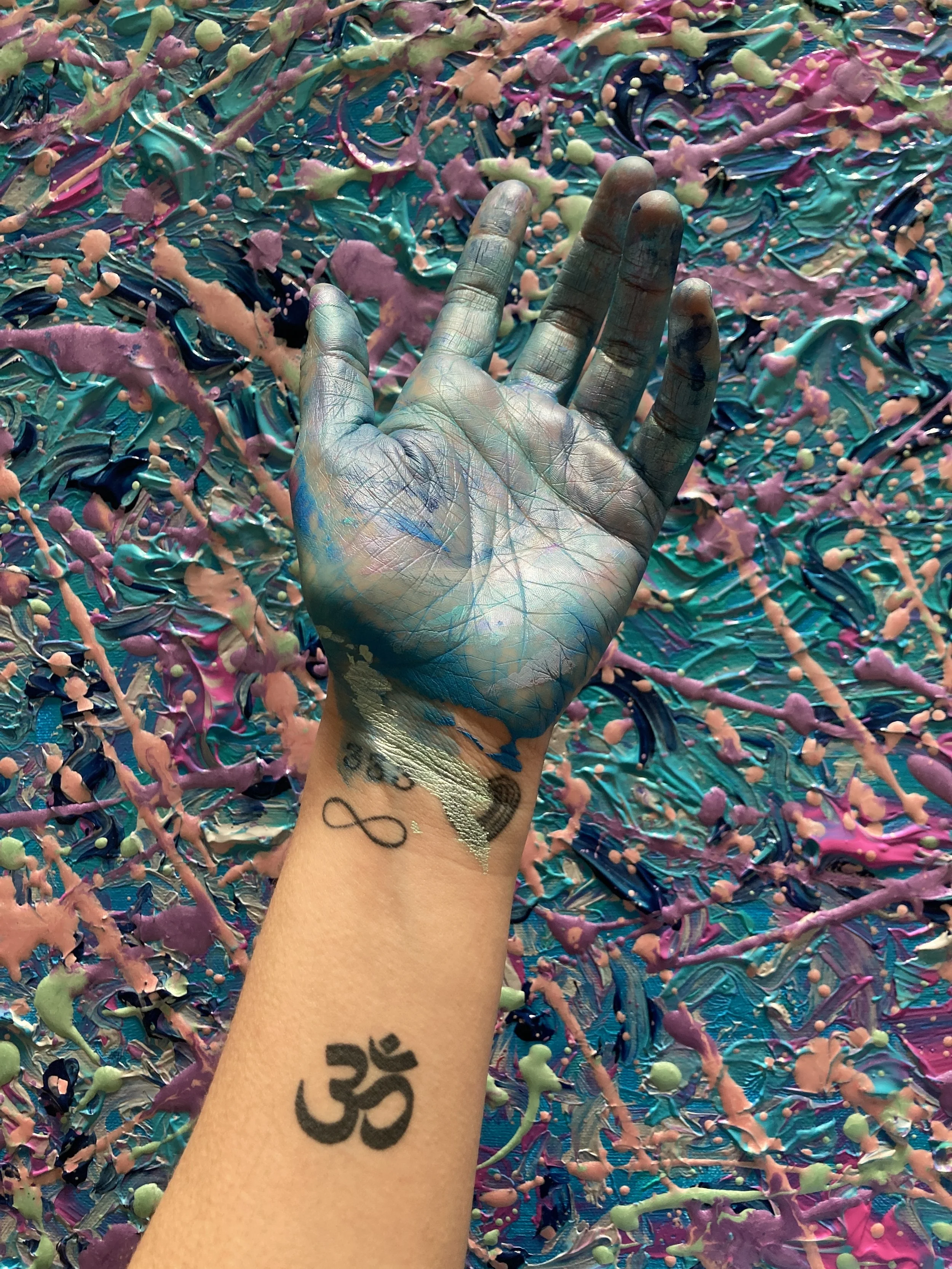
Union Part 1 - The Feminine close up
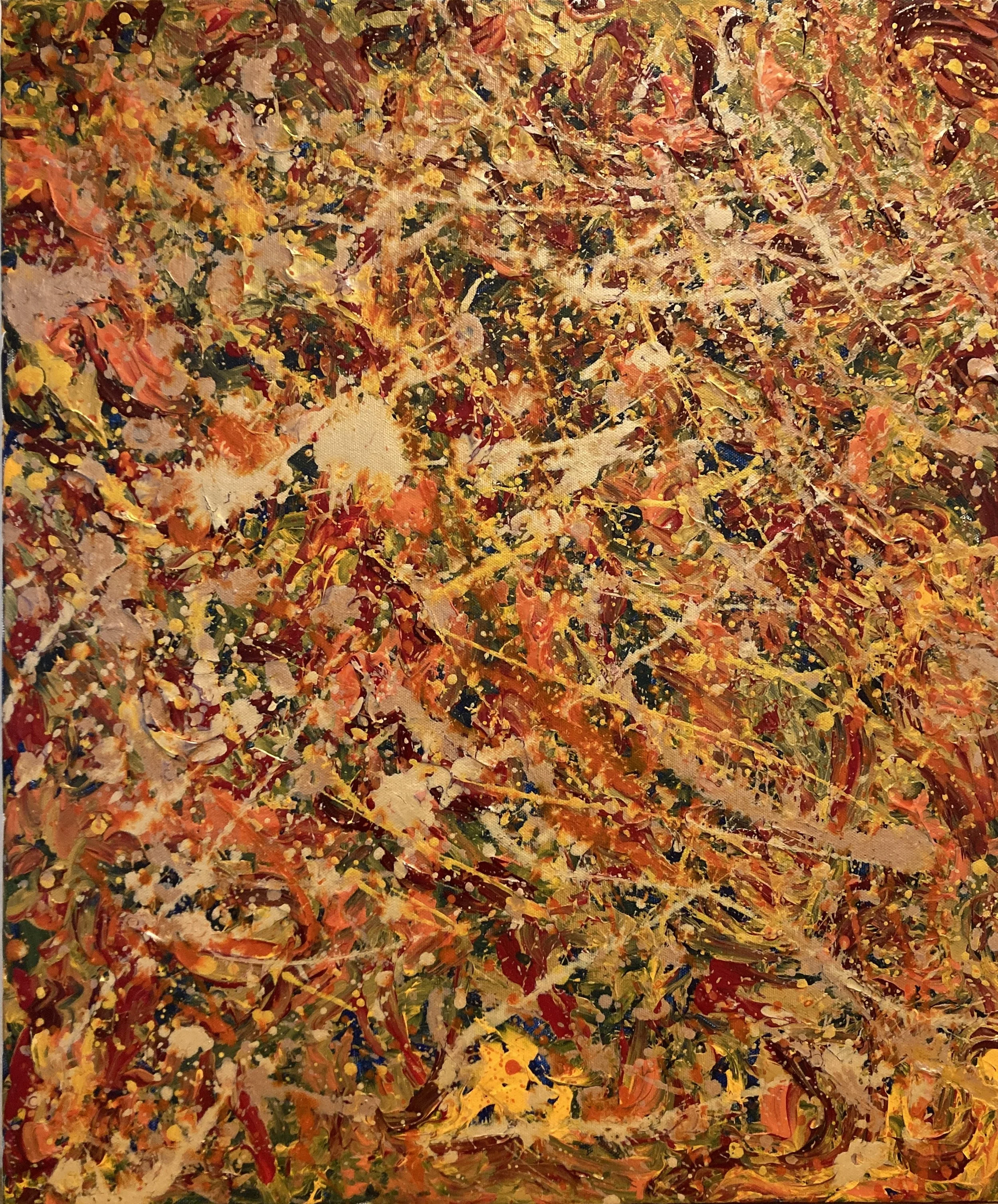
Union part 2 - The Masculine