Interview with Lynne Douglas
Introduction
Lynne Douglas is a Scottish-based photographic artist working from the Isle of Skye and the outer Hebrides, internationally recognised for her atmospheric photography and large-format seascapes. Her practice moves between representation and abstraction, using long exposure and camera movement to create calming yet moody coastal works that prioritise atmosphere over description. Rather than documenting landscape, she constructs immersive visual experiences rooted in light, duration and emotional resonance.
Grounded in the elemental forms of sea and sky, her calming seascapes are intentionally composed to dissolve fixed geography, allowing collectors to experience the work as both place-specific and universally contemplative. Subtle tonal gradations, restrained colour palettes and expansive scale position her large-format works as immersive focal points within interior spaces — from private residences to hospitality and healthcare environments.
A self-taught artist with an early passion for drawing and painting, and later a career as a senior research scientist, Lynne brings both intuitive sensitivity and disciplined experimentation to photography. Her deep engagement with painterly traditions informs her compositional approach, while her attention to archival materials and museum-standard printing reflects a commitment to craftsmanship and longevity. The resulting works balance moody atmospherics with quiet optimism, offering collectors and interior designers museum-quality photographic art that carries emotional depth and enduring presence.
Lynne, working from the Isle of Skye and the remote edges of the Hebrides, your practice is deeply anchored in specific geographies, yet your images often dissolve place into something approaching abstraction. How do you negotiate the tension between photography as an index of a particular location and your desire to produce images that function as timeless, almost placeless meditations on light, movement, and memory?
Everyone longs for refuge, whether in the physical world or in the quiet interior landscape of the mind. We need spaces that allow us to step away from urgency. For me, that place is the Hebrides and the scattered island edges of Scotland. Here, I drift without agenda, knowing any turn in the road or curve of shoreline will lead to quiet beauty. I am anchored in these islands, yet the “here” I speak of is not fixed to a map; it is a state of being.
The deserted beaches, muted sea and sky, the vast sand and shifting light hold profound solitude. In that quiet there is space to think clearly and see without distraction. In this atmosphere I create images that move beyond geography and transcend place and time. I rarely dwell on mechanics; I respond instinctively, guided by emotion rather than calculation. Through this, I hope others may enter that stillness and find sanctuary within the work.
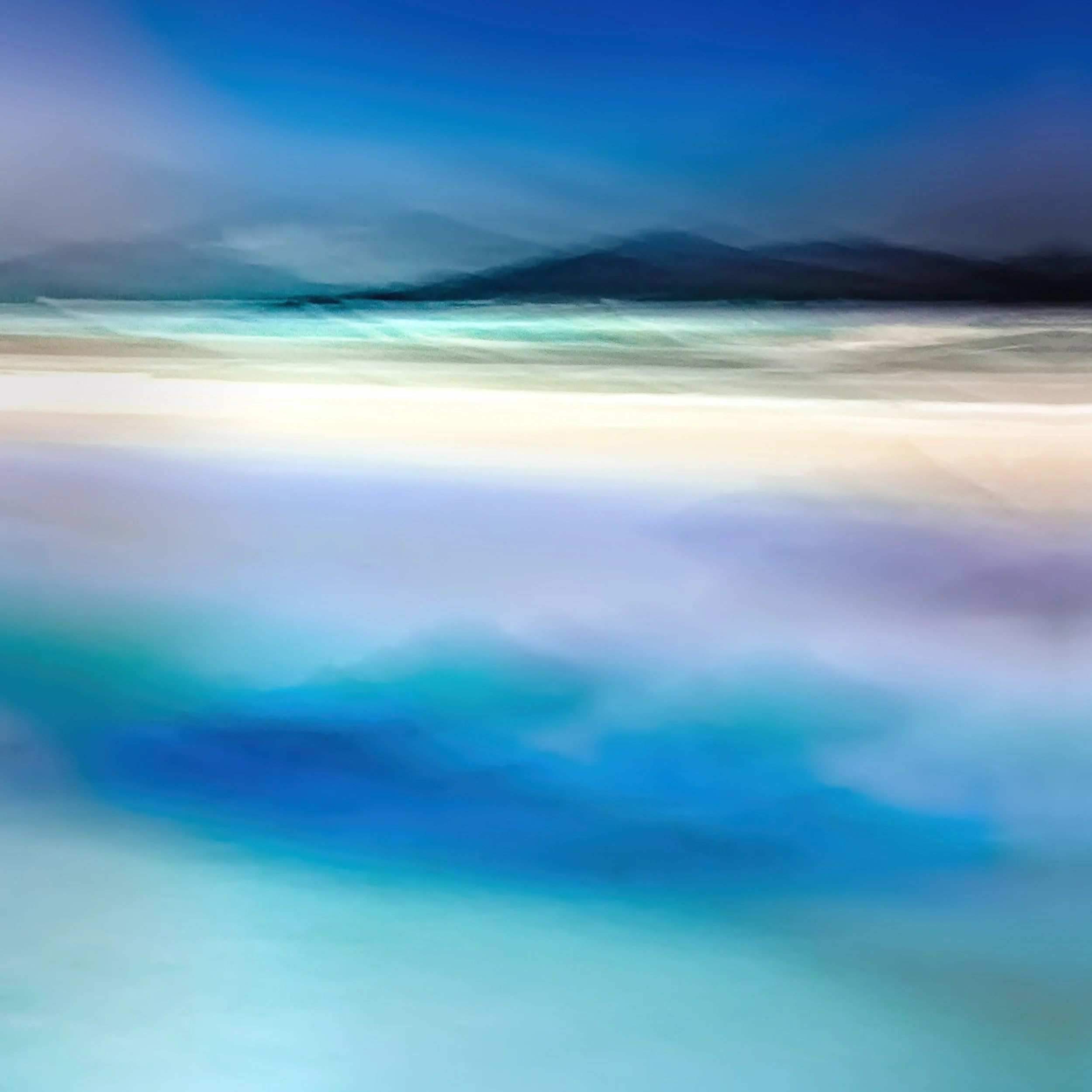
A Touch of Heaven
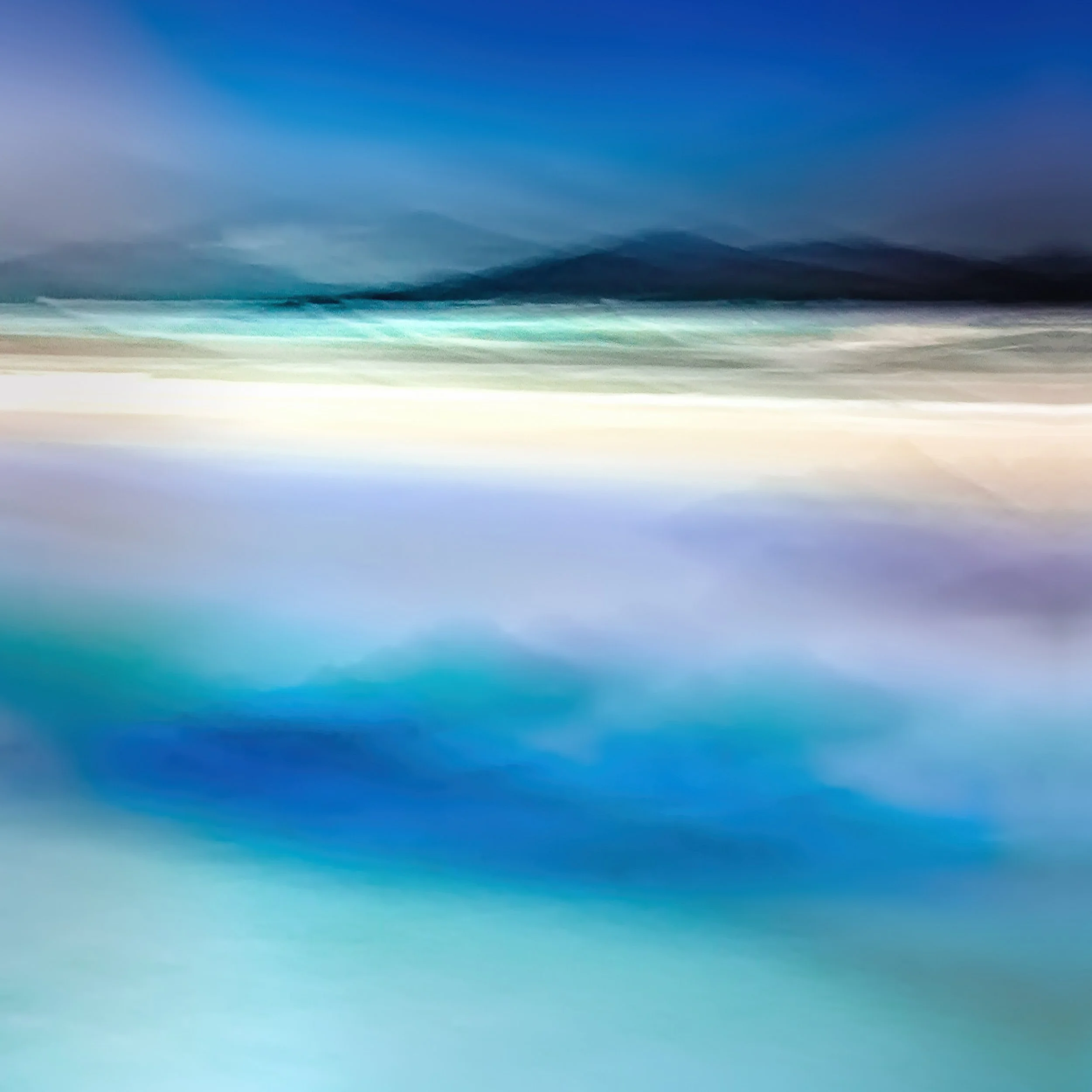
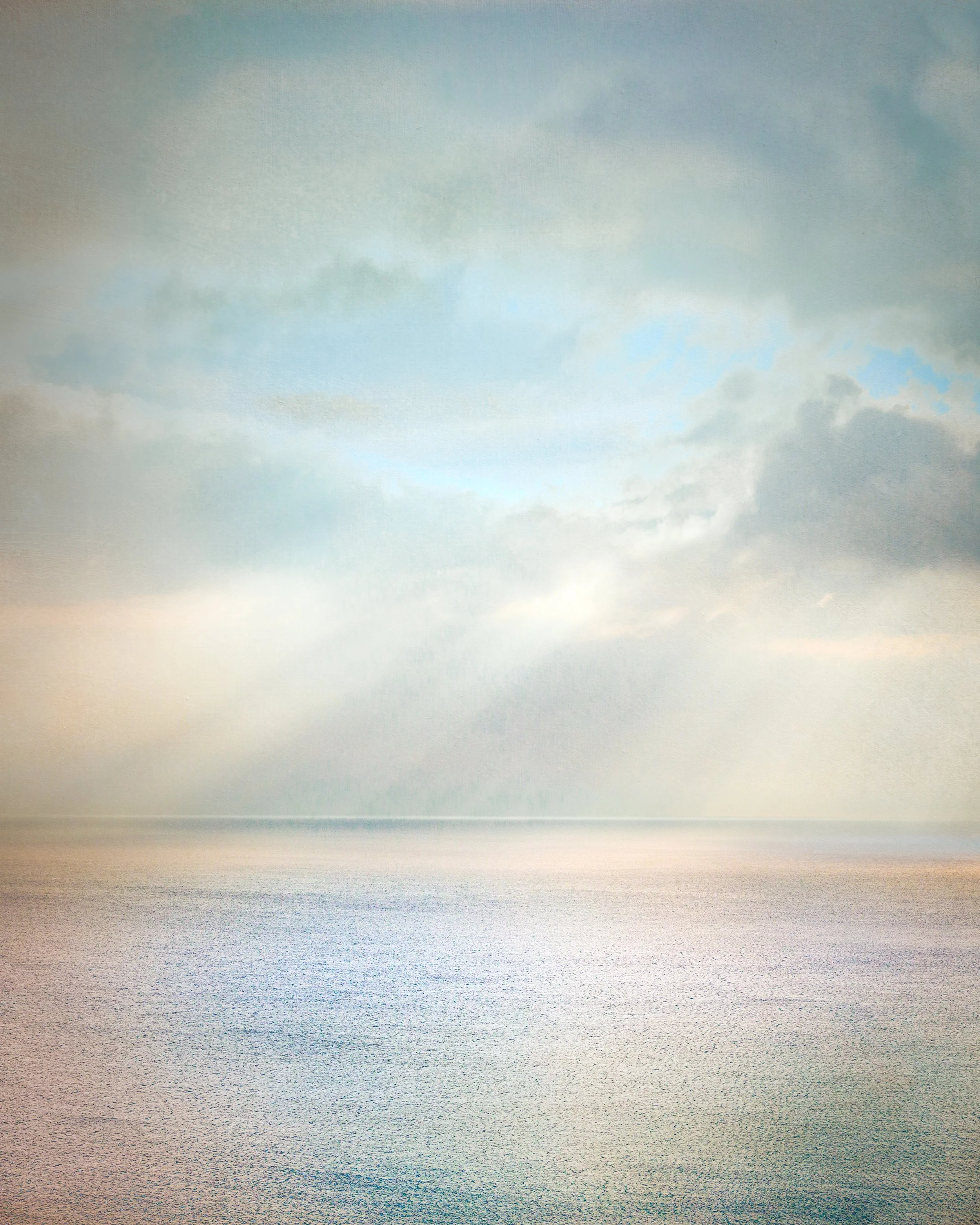
Hebridean Silk
Your work frequently invokes the language of lyrical abstraction, a term more commonly associated with painting than with photography. How do you understand abstraction operating within a photographic medium that is historically tied to representation, and what conceptual risks or freedoms emerge when photography deliberately loosens its allegiance to descriptive fidelity?
Back in 2012, when I first stumbled upon camera movement, photography was still firmly shaped by traditional expectations: pixel-sharp precision was paramount, and anything outside that narrow definition was often dismissed. The deliberate blurring of a landscape across the frame was considered a complete taboo. Most landscape magazine editors and competition judges gave little credence to lyrical, abstract imagery. Working beyond those conventions meant stepping away from the mainstream; I was rarely published and never entered competitions, choosing instead to follow the work where it wished to go.
From early on, my love of Impressionist and abstract painting quietly guided my direction. As I researched my “moving pictures,” I realised the drifting water, dissolving horizons and flowing colour aligned closely with the lyrical abstractionists of the 1960s — the vast canvases, the atmosphere, the bold chromatic fields. The image of Helen Frankenthaler seated among her expansive, flowing paintings became a lasting touchstone. Gradually my practice grew more intentional: how to hold movement, how to translate that sense of immersion into large-scale works that release the mind. I invested in a substantial printer, unwilling to be confined to the small formats favoured in photography. I wanted — and still seek — to create images expansive enough for the eye to wander, like a window opening onto elsewhere. In quietly setting aside photographic orthodoxy, more ground revealed itself, and with it, greater freedom.
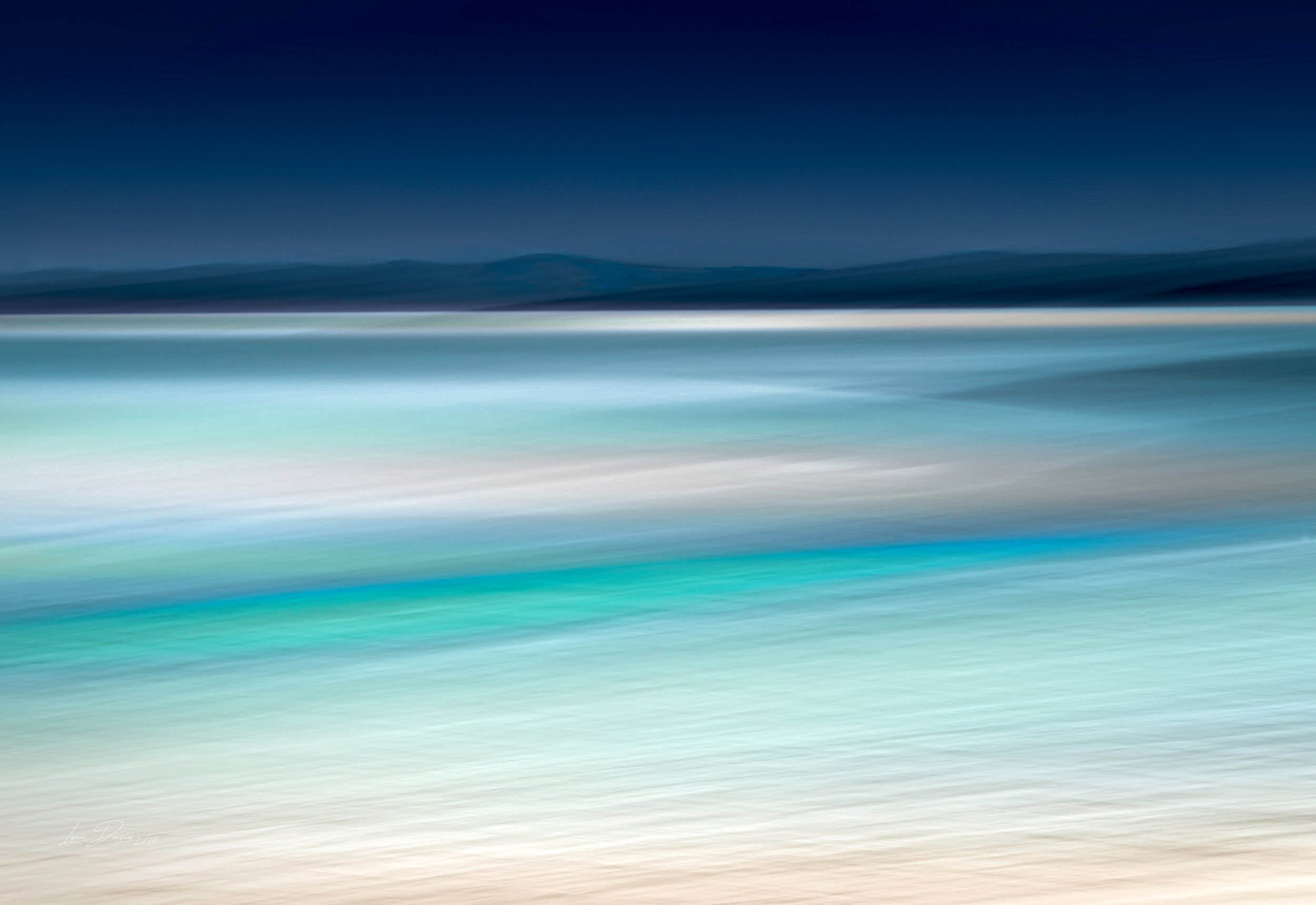
Tidal Blue
Long exposure and movement are central to your visual vocabulary, allowing wind, water, and time itself to become active collaborators in the image. To what extent do you consider these elements as authors within the work, and how does this shared authorship complicate conventional ideas of artistic control, intention, and mastery?
I often work from the cliff tops near my studio, where wind, tide and shifting light are not passive conditions but active forces. The movement of air and water guides the camera as much as conscious intention does. In that sense, the image is never entirely mine; it is negotiated.
On windy days, when clouds race across the sky, the collaboration becomes especially evident. A sudden gust can move the camera in the wrong direction; unexpected raindrops on the lens can ruin the image. The work emerges through this dialogue with the environment — shaped as much by unpredictability as by design.
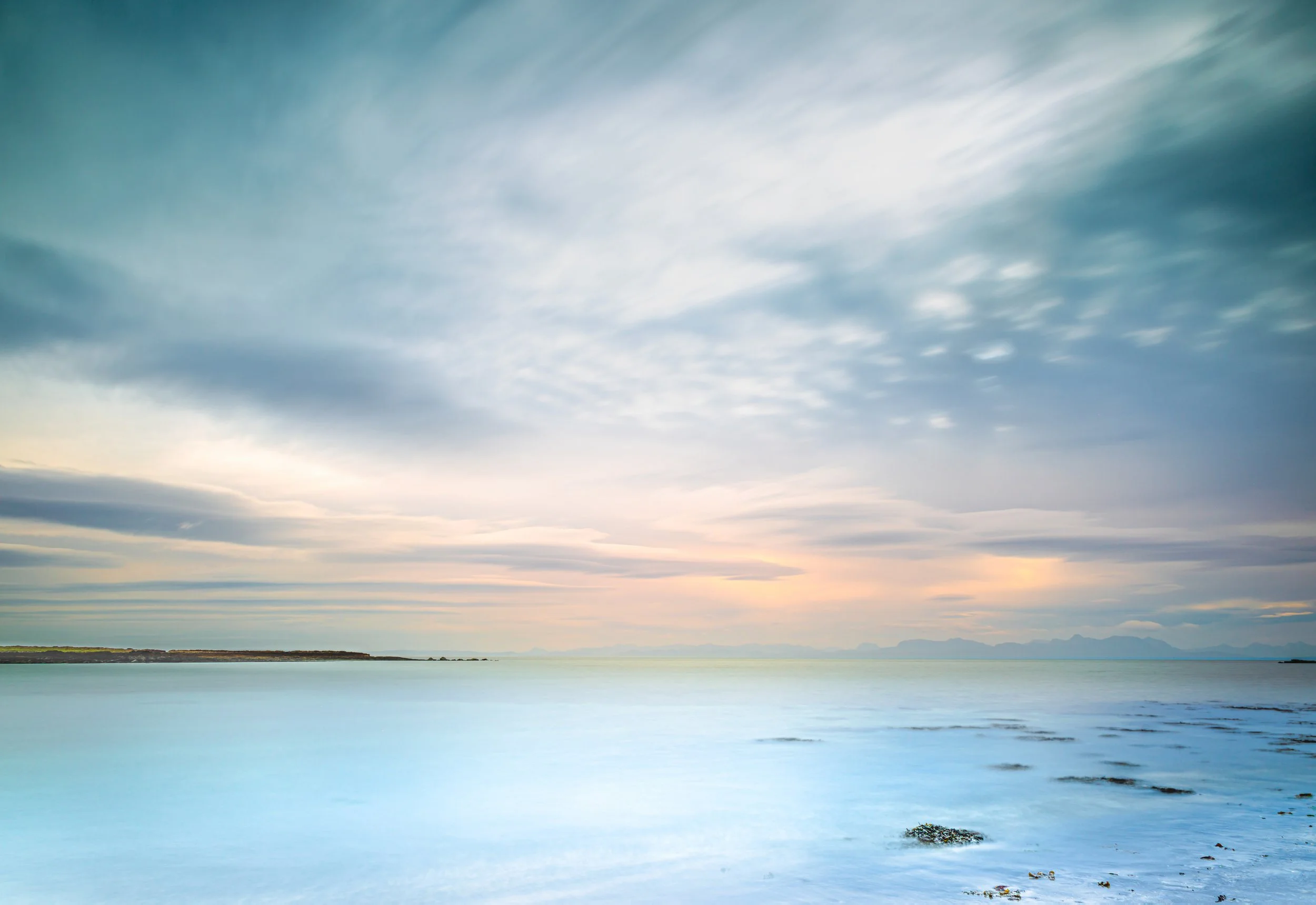
Where the Sea Meets the Sky
You describe your images as visual poems rather than documents. In what ways do you think photography can function poetically rather than narratively, and how do rhythm, silence, and pause operate within a single frame to produce an experience closer to reading a poem than observing a landscape?
I do not see my images as single frames but as a weaving of sound, movement and colour — wind, sea and shifting light held in one sensation. The Scottish islands are alive with poetry and song, and that cadence finds its way into the work. Each image carries a quiet rhythm beneath its surface.
I read poetry alongside my practice, not as illustration but as accompaniment — a parallel language that sharpens sensitivity to tone, pause and resonance. Titles often surface intuitively, as though they were already present within the landscape, waiting to be articulated. The oral traditions of the Scottish islands — their ballads, laments and myths — create an undercurrent that subtly informs the work. In this way, the photograph becomes less a statement and more an echo — shaped as much by cultural memory as by light itself.
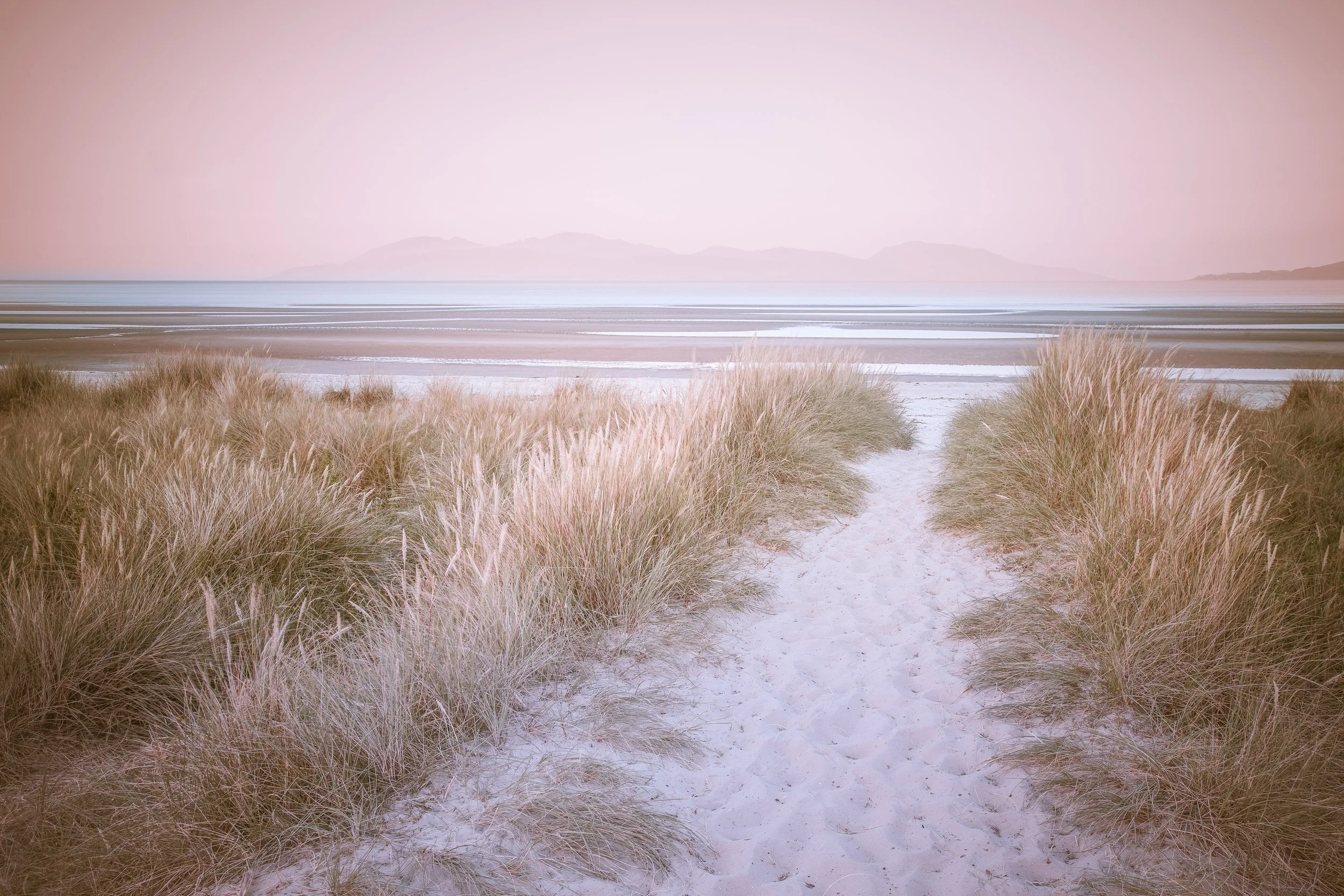
The Secret Beach
Your early training in drawing and painting, alongside your admiration for impressionist approaches to light and atmosphere, continues to shape your photographic practice. How do painterly histories persist within your work at the level of composition, color modulation, and surface, and where do you consciously resist or depart from those traditions to assert photography’s distinct material logic?
I have always loved history — from Egyptology to the layered stories of the islands. As a teenager I immersed myself in Michelangelo and Leonardo, studying how light guides the eye and how colour and shadow create drama. I was equally drawn to the Dutch masters and the Impressionists — disciplined in composition yet willing to loosen its rules.
My work gathers threads from these traditions: the depth or Rembrandt, the lyricism of abstraction, the tonal shifts of Seurat. The Scottish landscape holds these intensities — deep shadow, fleeting light, delicate gradations — and compels me to respond. I use the camera in place of a brush, shaping light and atmosphere into something enduring.
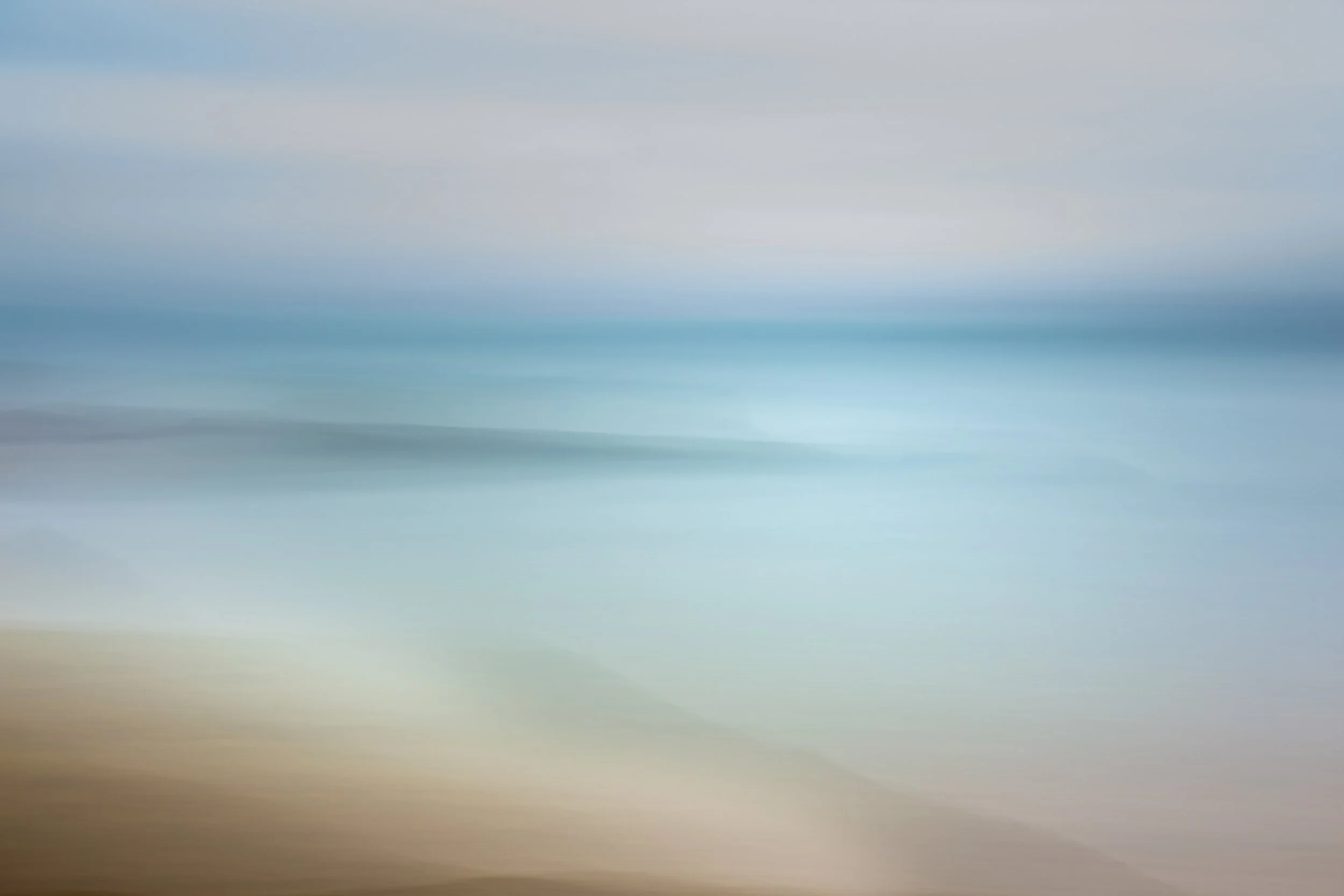
The Timeless Tide
The materiality of the final object appears central to your practice, from archival papers and canvas to museum-standard printing and limited editions. How do you conceptualize the photograph not only as an image but as a physical artifact, and how does material choice participate in the meaning, longevity, and ethical responsibility of the work?
The material that carries an image into tangible form — allowing it to be touched, shared and lived with — is intrinsic to its character. The surface does not merely support the image; it shapes how it is experienced. For me, producing the finest possible rendition is a responsibility to the work and to the collector.
After years of careful testing and comparison, I chose to work with Canson papers and canvases. They demand investment, yet their enduring craftsmanship and responsible sourcing offer what truly matters: fidelity of colour, structural integrity, and longevity. For work intended to last — both materially and ethically — these qualities are not luxuries but necessities.
Your installations in hospitals and clinical environments, particularly the permanent works commissioned for the Mayo Clinic, introduce your photographs into spaces shaped by vulnerability, healing, and time. How has this context influenced your understanding of photography’s affective power, and what responsibilities do you feel when art becomes part of an environment designed for care rather than contemplation alone?
There are moments when the world feels suspended — when time slows and thought becomes heavier than usual. In those spaces, even a subtle shift in attention can matter. If my work can offer a brief sense of steadiness or quiet focus, it has value.
Art, like meditation, has the capacity to restore perspective. Some of my images are installed in an examination corridor at the Mayo Clinic. Having faced health challenges myself, I understand the intensity of waiting — the uncertainty that fills those in-between moments. If a photograph can soften that experience, drawing the eye toward the calm expanse of sea and sky, it becomes more than aesthetic. It becomes supportive. I hope to continue placing work in environments where it can offer that kind of quiet reassurance.
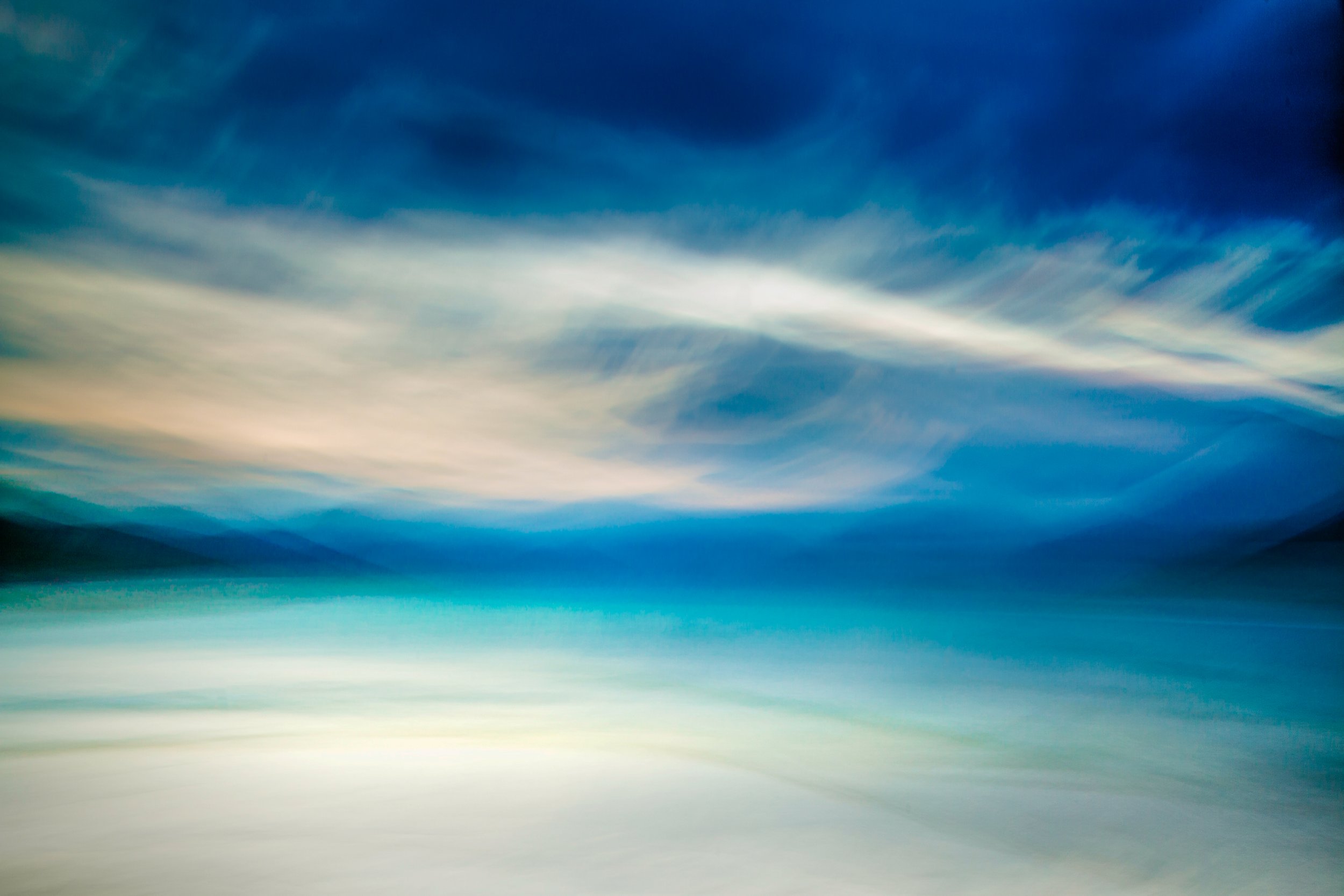
The Singing Hills
Much of your work invites slowness, asking viewers to linger rather than consume images quickly. In an era dominated by accelerated image circulation and digital distraction, how do you position your practice as an act of resistance, and what role does duration play both in the making of your images and in their reception?
I see a drive emerging for caring about provenance, an appreciation of the how and why of the image and a slowing down to enjoy the artisanal qualities of a particular piece. Every image I make tells a story about visiting remote beaches after journeys involving hours in the car and on the ferry then lugging heavy equipment over long stretches of beach in windy rainy conditions. My work is all about slow journeys, slow creation, slow thinking.
The story of an image is important and I encourage all my clients to ask me about the image, where it was taken, what motivated me, all the little anecdotes that they can enjoy and experience every time they look at it. This adds the depth that is missing from the speed dating mentality of much of art that is consumed on social media etc.
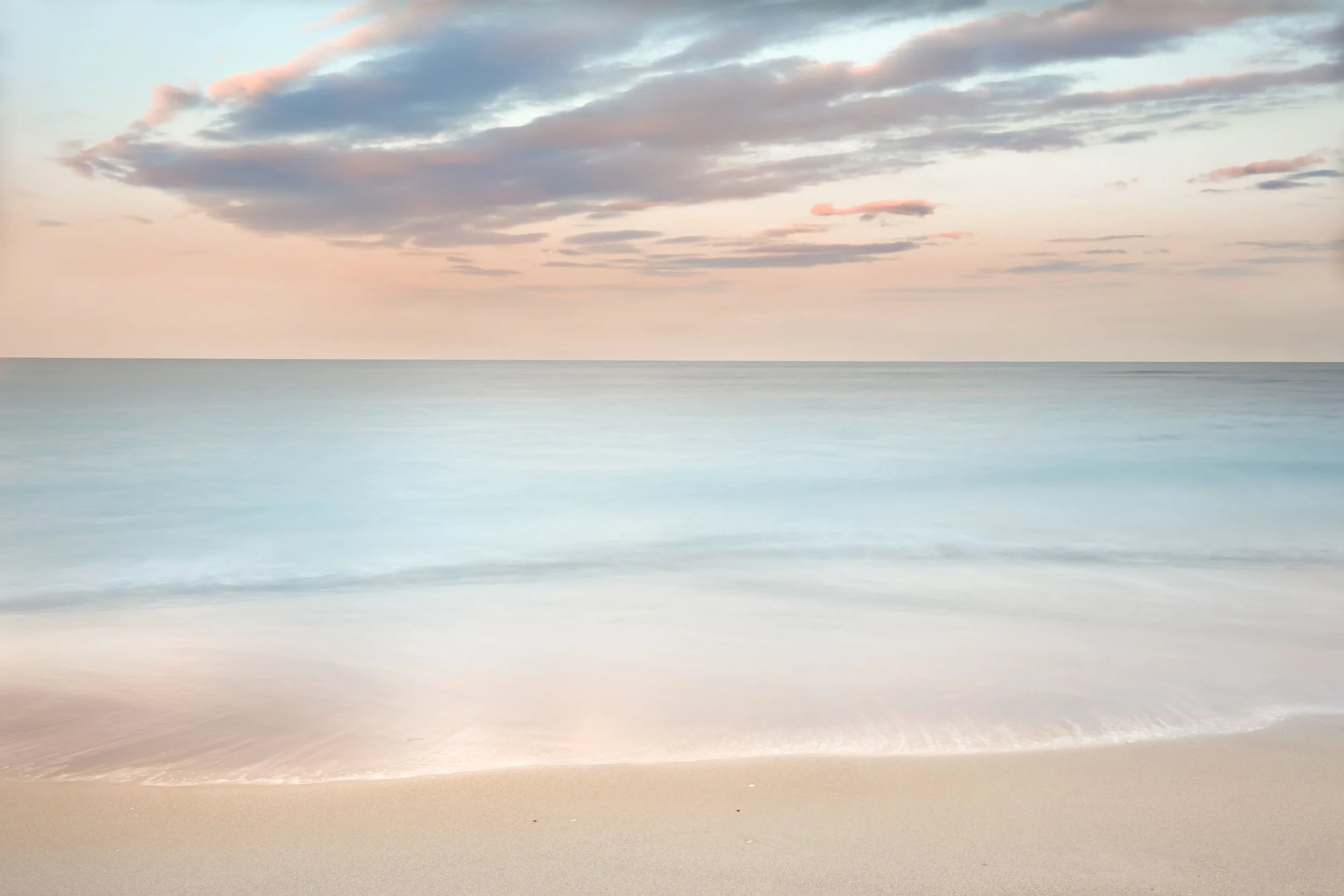
Pearls in the Sea
Having lived and worked in Scotland and Switzerland, and having your work collected and exhibited internationally, how do you understand the cultural specificity of your imagery in relation to its global circulation? Do these seascapes remain rooted in Scottish histories and mythologies, or do they intentionally open themselves to more universal readings of nature and interior experience?
I am deeply drawn to Scotland’s cultural layers, particularly the islands, and those narratives inform the atmosphere of my work. Yet I do not see the images as confined to one geography. Sea and sky are elemental; their moods speak a language that extends far beyond national boundaries.
Collectors often tell me the work reminds them of their own coastlines. At the same time, Scottish clients — especially those living away from the Highlands and islands — are often drawn to the images as a quiet return to homeland, a visual echo of memory and belonging. Though rooted in lived Scottish experience, the works avoid fixed identifiers, allowing them to move beyond documentation toward a more interior and universal encounter.
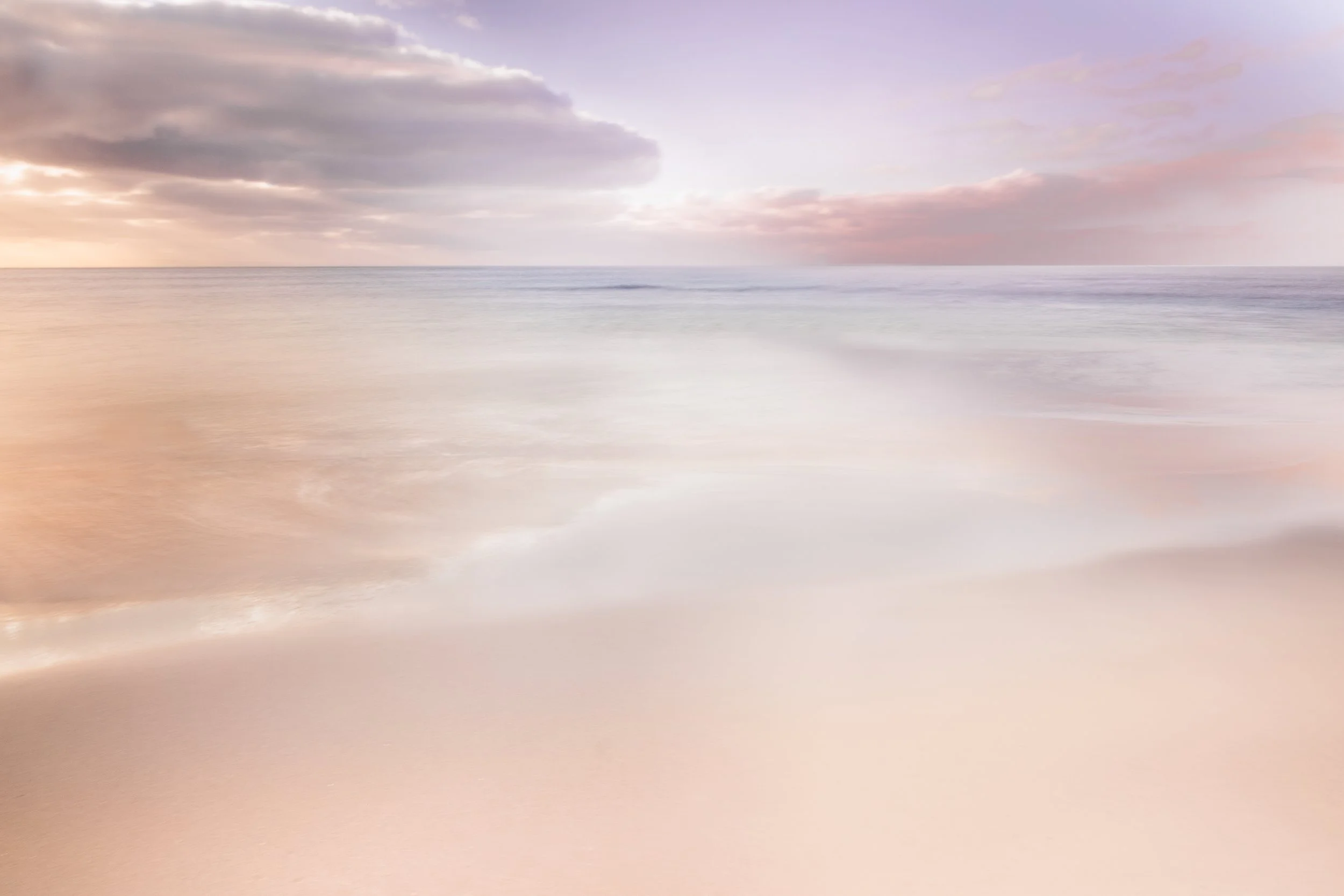
Stairway to Heaven
Your background as a senior research scientist suggests a disciplined engagement with experimentation, observation, and method. How has scientific thinking informed your artistic process, particularly in relation to repetition, testing, and refinement, and where does intuition intervene to disrupt or override analytical frameworks?
Like art, research science begins with questioning accepted truths. Throughout history, artists have experimented — refining perspective, materials and method — always seeking new ways of seeing.
My early images were taken lying on the grass on a windy day trying to figure out how to capture the movement of daisies. It took a lot of trial and error sessions to get anything I liked. The same was true on the beaches attempting to capture the wave movement, those were long sessions with cold fingers and wet feet and only a few images worked out. With time I refined my processes and my success rate improved.
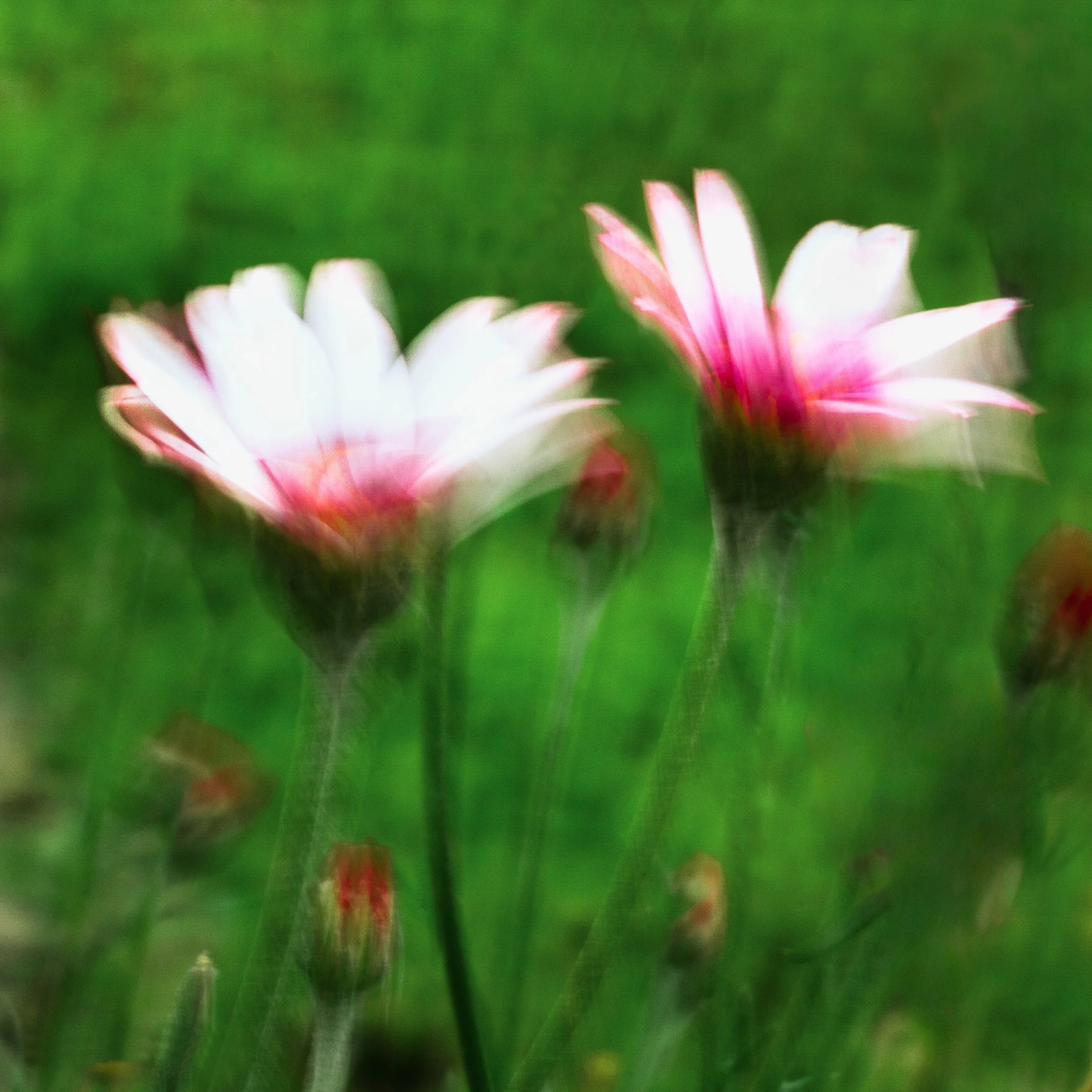
Dancing Daisies
The sea and sky recur as primary motifs in your work, often rendered as thresholds rather than stable forms. How do you think about these elements philosophically, as spaces of transition, uncertainty, or infinity, and what do they allow you to explore that more fixed or terrestrial subjects might not?
To my way of thinking, the sea and sky have no stability, the line of a horizon even on a calm day is moving. Clouds are restless, the sea is never static. A mountain may be blurred by mist, an ocean and a huge snow cloud can be a blend of colours and materials all moving, each needing the other to interpret the scene. Using the camera I can emphasize this movement, create the story, instil the emotion. I do still sometimes take the classic shot without movement and this takes more patience and attention to settings but if I’m honest, I prefer to interpret the scene as I see it in my mind by working with movement.
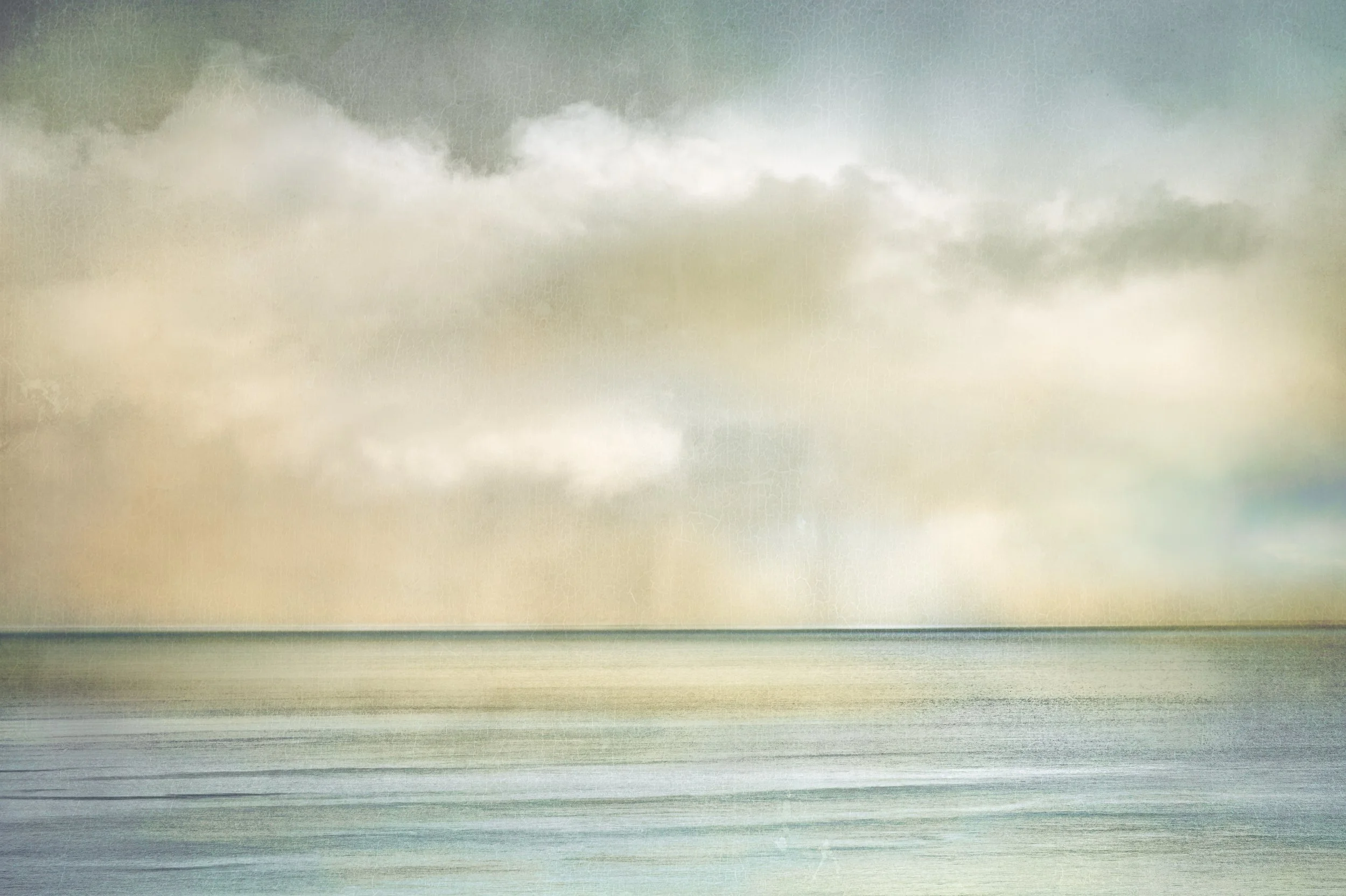
Heaven Below
You frequently speak of memory as an undercurrent in your images, not as personal narrative but as atmosphere or residue. How do you approach memory as something collective, unstable, and subjective, and how do your photographs invite viewers to project their own histories into landscapes that are at once intimate and unfamiliar?
Have you ever opened an old box of family photographs? Before you focus on any single image, there is already a swell of feeling — anticipation, warmth, perhaps a quiet smile. As you lift each photograph and study it, specific memories gather into place, yet the emotion often belongs not just to one picture, but to the presence of the collection itself.
It is that sense of wonder I seek to hold in my work — not a precise record of a location, but a feeling. I like to title an image to suit the emotions and thoughts I had when making it. If the image stirs something intangible, it can meet the viewer’s own inner landscape: a memory of rain, a trace of longing, a moment of loss or tenderness. That emotional depth is what creates connection.
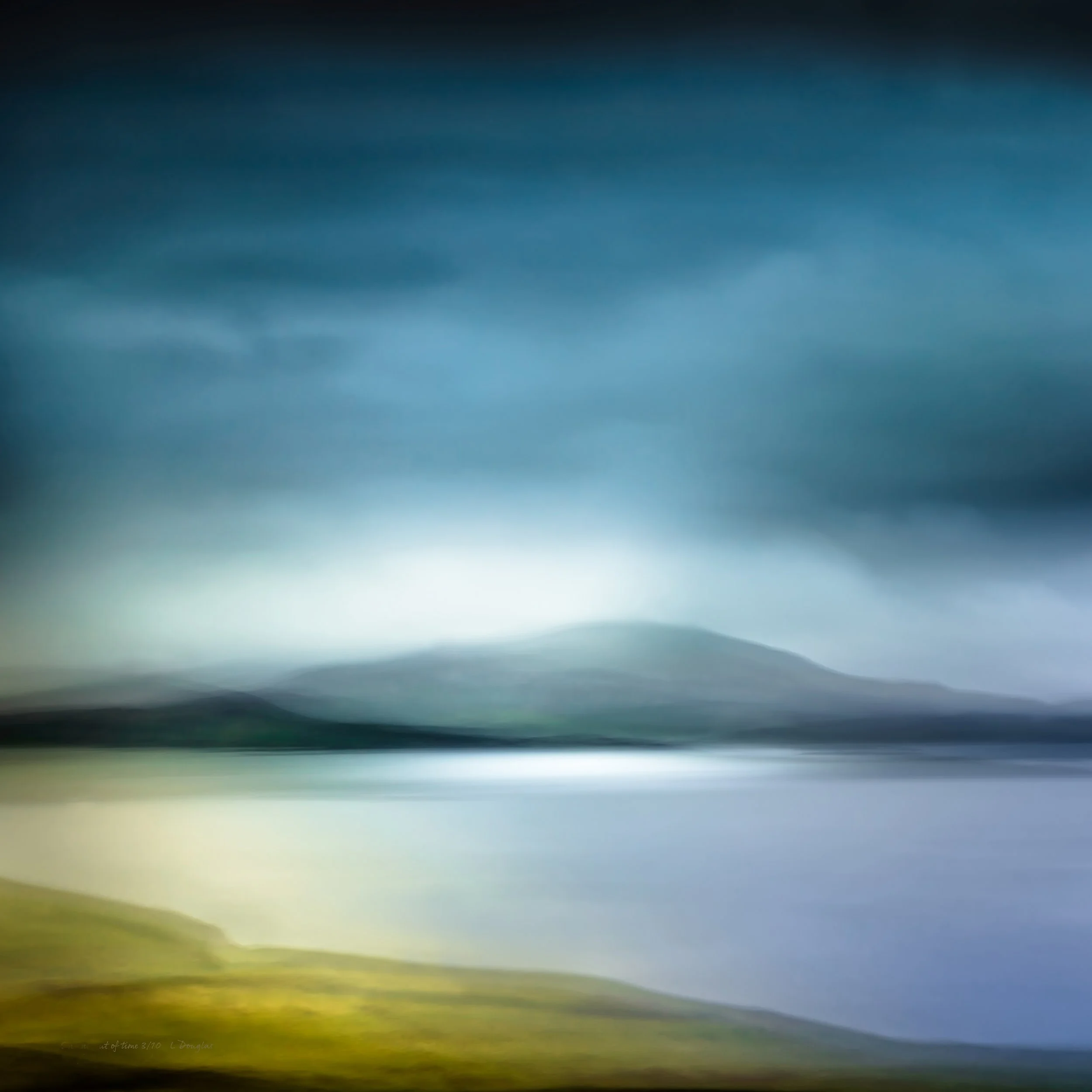
In and out of time
As a largely self-taught photographer who has mastered highly technical processes, how do you reflect on the relationship between technical proficiency and artistic expression? At what point does technique become invisible within the work, and when might its visibility be conceptually necessary rather than merely virtuosic?
Photography requires patience and focus, though I do not claim technical perfection. I have learned the camera well enough that it no longer interrupts flow. I respond intuitively, adjusting without dwelling on settings. Proficiency serves expression.
Certain moments demand precision — complex light, long exposures, large-scale printing — where discipline is essential. But technique remains a means, not an end.
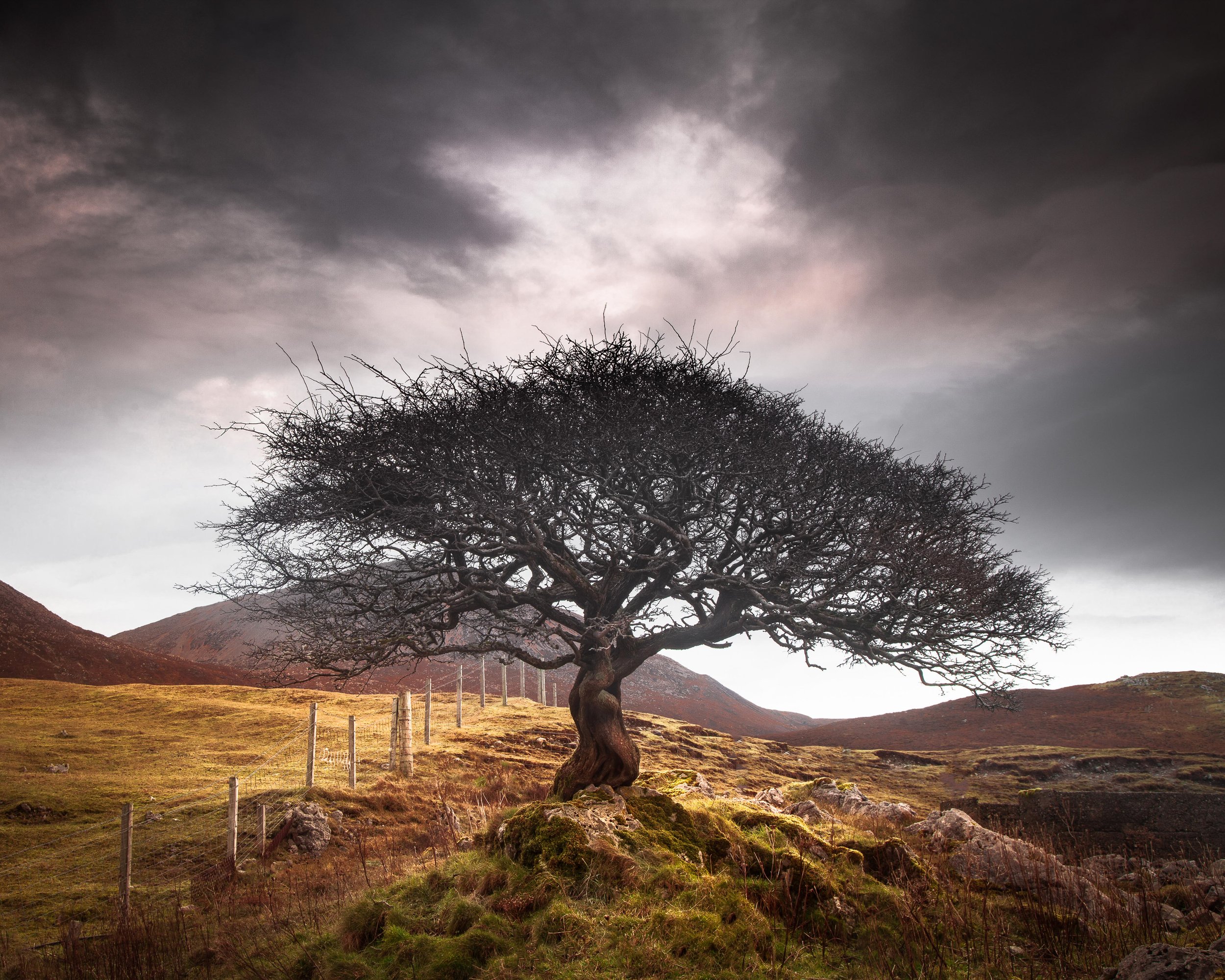
The One Tree
Your use of color is both restrained and emotionally resonant, often evoking calm, melancholy, or quiet optimism. How do you theorize color as an affective force within your practice, and how does it function independently of form to carry meaning, mood, and psychological depth?
Blue has always been my instinctive colour — in all its registers: calming skies, soft seas, mist resting on mountains. It feels endlessly nuanced, capable of holding both stillness and depth. A pale, veiled blue can suggest quiet and distance; a saturated Klein Blue carries intensity; deep navy against wild, white waves evokes wind, sail and movement.
The waters around Skye shift through blue-green tonalities, while on Harris they intensify to almost luminous clarity. These colours are compelling — I find myself longing for them during winter when the landscape turns grey and muted. Autumn introduces rusted browns reminiscent of Rembrandt: grounding, elemental, suggestive of hearth and warmth.
Colour is often the first element that registers when I encounter a scene. I respond to its emotional charge before structure fully forms, allowing the image to evolve outward from that initial tonal sensation.
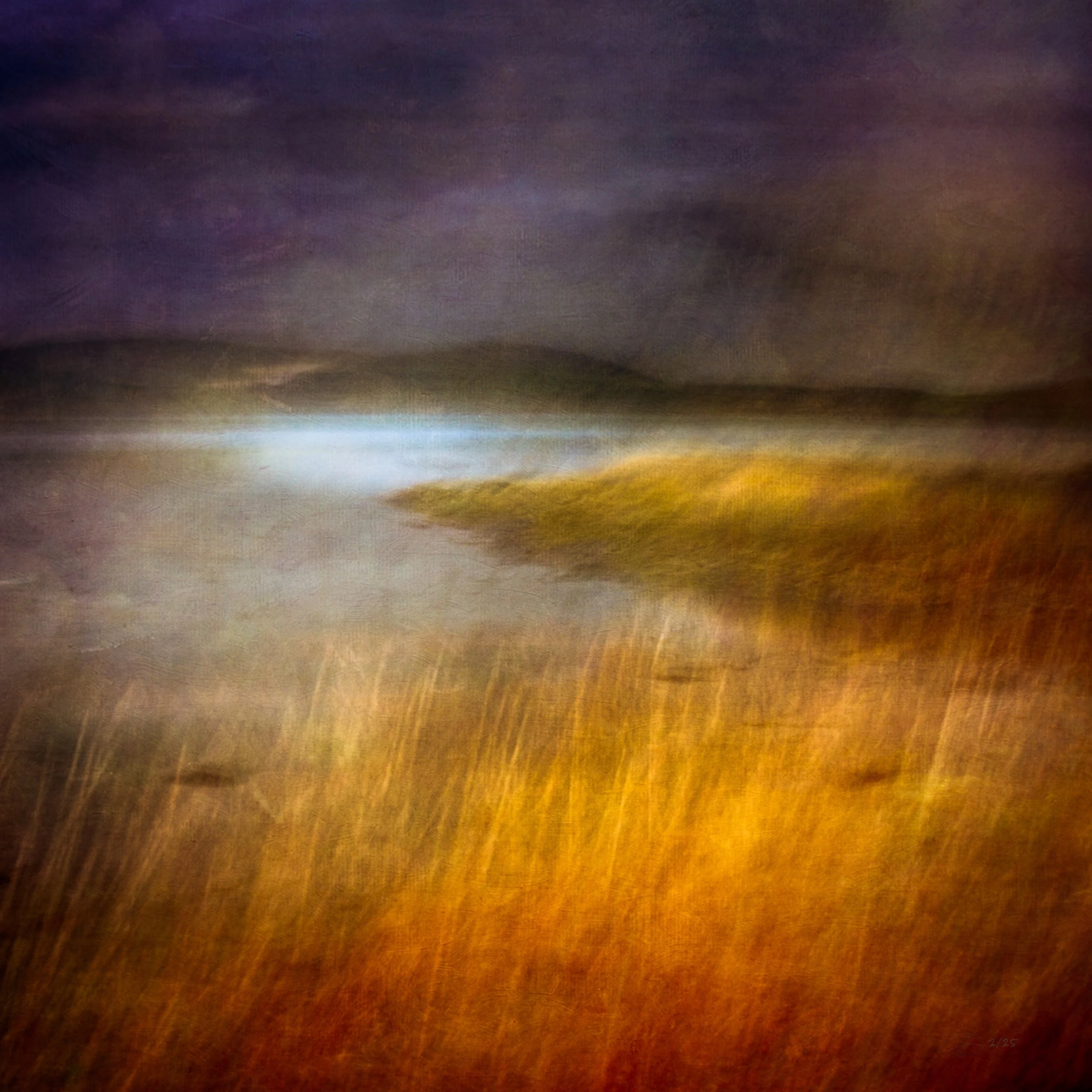
Fabric of the Land II
Looking forward, as your work continues to enter institutional, commercial, and private spaces across different cultural contexts, how do you envision the evolution of your practice without losing its meditative core? What questions are you currently asking of photography itself, and where do you see the medium still holding untapped philosophical or emotional potential for you?
I don’t plan to lose my meditative core but double down on it. Slower working, subtler colours, more poetry. I am moving from fizzing colour toward quieter, more reflective work. I seek more subtlety of form and colour and more exploration of natural forms whether through movement or in the abstract.
On Orkney a few years ago, sitting on sun warmed stones at Dingieshowe, I almost forgot why I was there. My mood was lifted by the feel of the wind, the sound of the sea and the feel of soft sand beneath my boots. My images from that time are filled with hope and light. I seek more of that — greater subtlety, deeper connection to the ancient places on these islands, more depth.
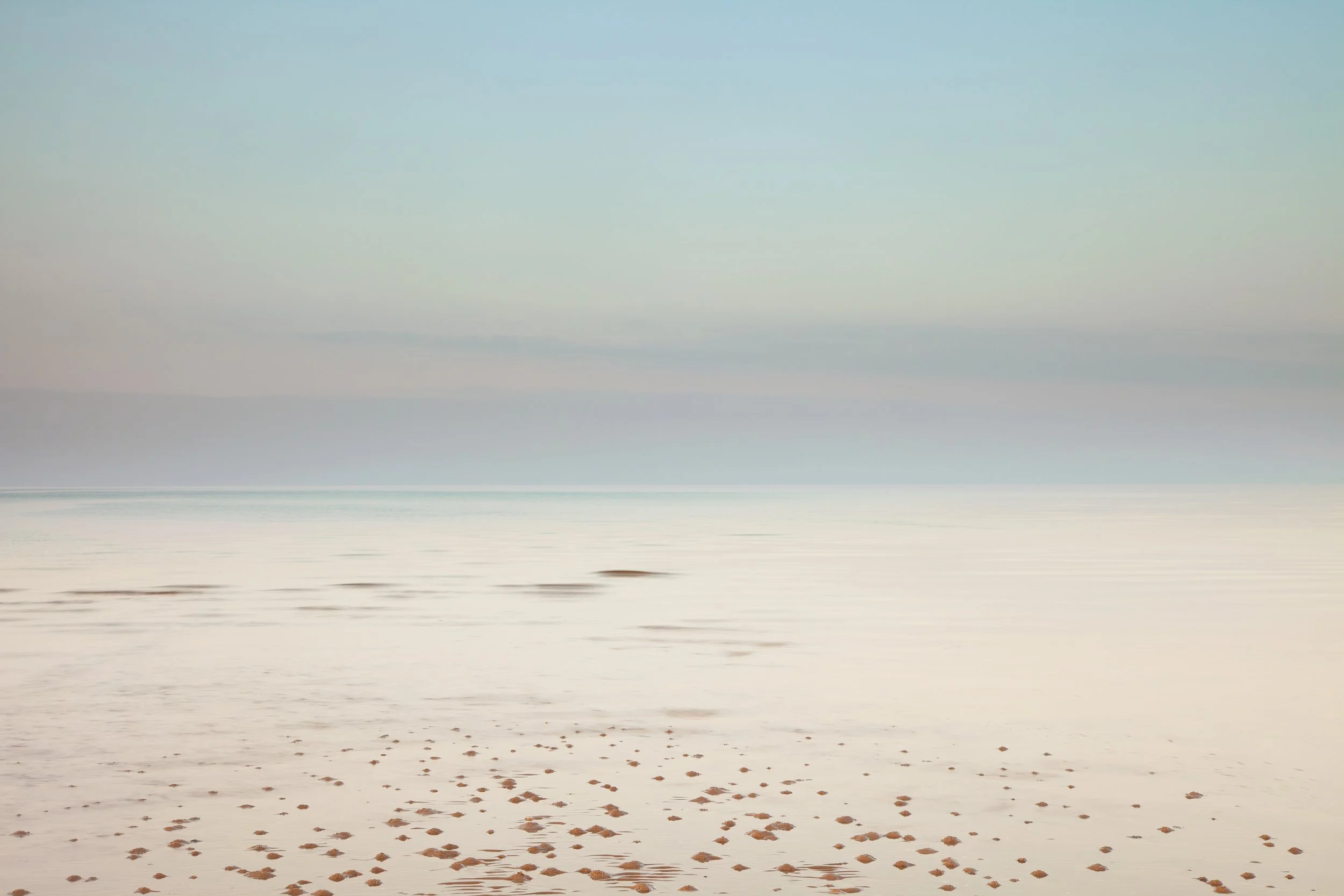
Ostel Bay II