Interview with Jean Cherouny
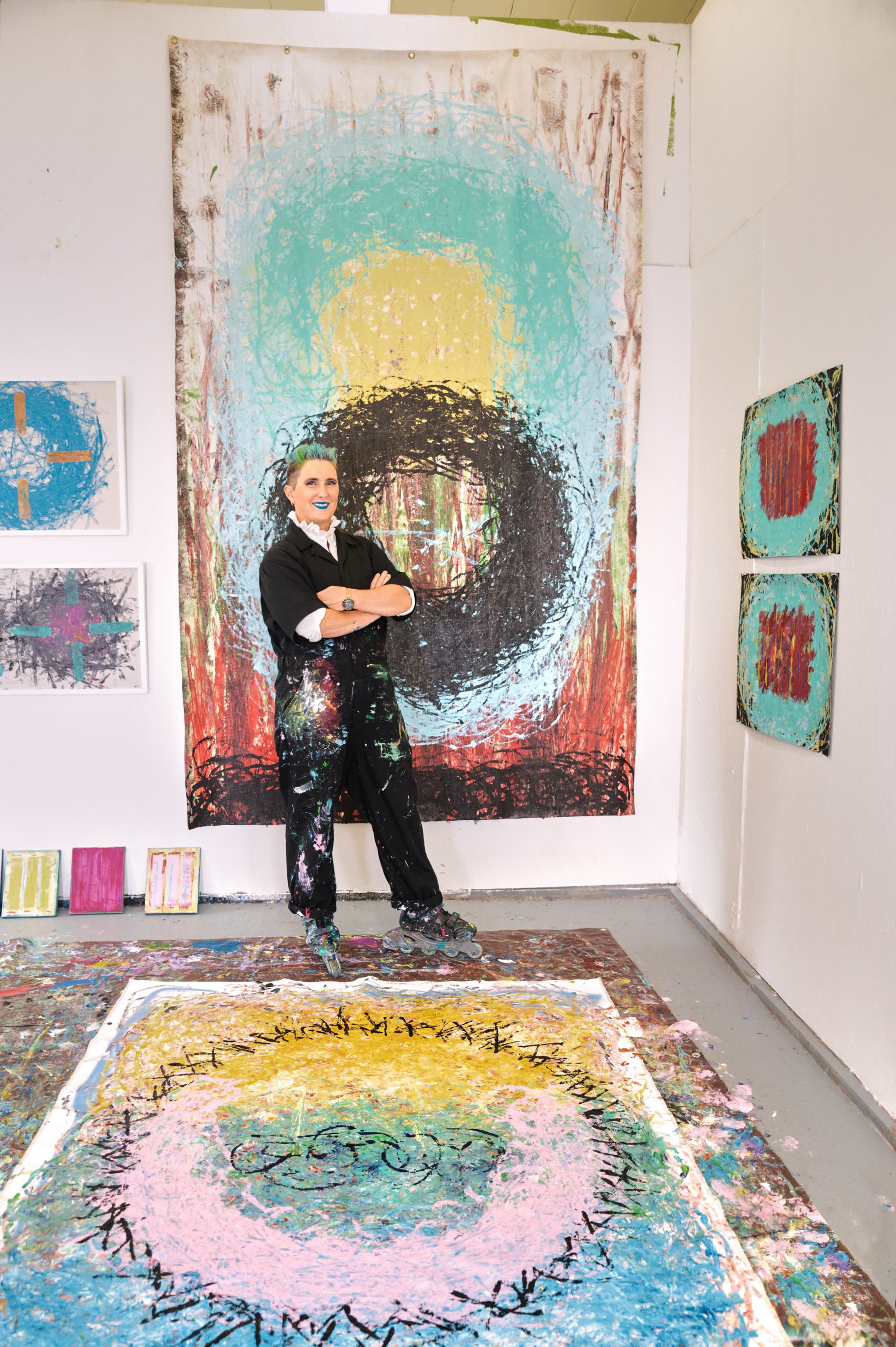
Jean Cherouny, Studio Vermont, USA 2021
http://jeancherounyfineart.com/
Jean, your practice insists on motion as both method and meaning, collapsing the distance between athletic exertion and painterly intention. How do you understand the canvas not as a passive support but as an arena that registers velocity, resistance, and duration, and how does this reframe authorship when the body, rather than the hand alone, becomes the primary instrument of mark making?
In my practice, I view the canvas not simply as a static support but as an active arena that engages with motion, embodying the dynamic interplay between athletic exertion and artistic intention. This perspective allows me to explore how velocity, resistance, and duration are intricately woven into the fabric of my work. Each stroke of the wheel becomes more than just a mark; it is a trace of my physicality and the energy I exert as I engage with the canvas.
By integrating movement into my artistic process, I challenge traditional notions of authorship. When the body takes center stage as the primary instrument of mark making, it reframes the act of painting into an experience of collaboration between the artist and the medium. My movements—whether expansive or controlled—infuse the work with a sense of spontaneity and immediacy that reflects my emotional state and the environment around me.
This approach also acknowledges the canvas as a participant in the creative process, responding to the forces I exert upon it. As I paint, I am acutely aware of how my bodily movements register on the surface, allowing the canvas to capture the nuances of each action. This interplay emphasizes the temporal aspect of creation; the marks I make are imbued with the same energy and fleeting quality as a dance.
Ultimately, by embracing this method, I invite viewers to reconsider the relationship between artist and artwork. The canvas becomes a living testament to my experience, revealing the essence of movement and the shared space between the physical and the conceptual in the act of creation.
Your use of the term Active Expressionism suggests both continuity and rupture within the history of abstraction. How do you see your rollerblade paintings engaging the legacy of Abstract Expressionism while also challenging its inherited assumptions about gesture, mastery, and the myth of the solitary heroic artist?
The term "Active Expressionism" resonates deeply with my approach to art because it embodies both a continuation of and a departure from the rich legacy of Abstract Expressionism. In many ways, my rollerblade paintings engage with the traditions of this movement—specifically, the emphasis on spontaneous gesture and emotional expression. However, I also aim to challenge some of the inherited assumptions that have defined it.
Traditionally, Abstract Expressionism is often associated with the notion of mastery and the solitary, heroic artist who commands the canvas through their individual genius. My use of rollerblading as a painting technique disrupts this idea by incorporating physical movement and a sense of play into the creative process. Rather than relying solely on my hand, I involve my entire body in the act of painting, allowing spontaneity and the external environment to influence my work. The movement of rollerblading introduces an element of unpredictability, where the energy of the moment shapes the outcome on the canvas.
This active engagement with the canvas pushes against the boundaries of what gesture means in the context of abstraction. It’s not just about the marks I make; it's about the experience of movement itself—the rush of adrenaline, the fluidity of motion, and the connection to the space around me. By doing this, I invite viewers to consider how art can be created collaboratively with the medium rather than as a singular triumph of the artist's hand.
In essence, my rollerblade paintings embrace the idea that expression can be dynamic and communal. They reflect my desire to break away from the myth of the solitary artist and celebrate the collective experience of creativity, encouraging others to recognize the beauty of their own movement and expression in relation to the world.
The wheel operates in your work as a tool, extension of the body, and conceptual device. How does its circular motion, its repetition, and refusal of a fixed origin shape your thinking about composition, temporality, and the possibility of narrative or memory within abstraction?
The wheel is an integral part of my work, serving as both a tool and an extension of my body, and it fundamentally influences how I think about composition, temporality, and the nuances of narrative within abstraction. Its circular motion embodies fluidity and continuity, which allows me to explore a spiral of creative possibilities rather than a linear journey.
The repetition inherent in the wheel’s movement mirrors the cyclical nature of art-making; it emphasizes a process of constant engagement and discovery. With each stroke I make while rollerblading, I’m creating a dialogue between the surface of the canvas and the motion of my body, leading to spontaneous forms that evolve organically. This dynamic interaction encourages me to embrace a composition that is not static but rather in perpetual transformation, reflecting the ever-changing nature of both life and creativity.
Furthermore, the wheel's refusal of a fixed origin challenges conventional notions of starting points in artistic practice. It prompts me to think about how narratives and memories aren’t just linear stories to be told; they are layered experiences that can be revisited and reinterpreted. Each mark and gesture becomes a part of a larger narrative tapestry that exists beyond the confines of traditional storytelling.
In this way, my art captures a spectrum of emotions and memories, allowing viewers to engage with them in a non-linear fashion. By integrating the wheel into my work, I create a space where abstract forms can resonate with personal histories, evoking a sense of connection to both the past and the present. Ultimately, this approach invites a more expansive understanding of how abstraction can reflect our experiences and how we relate to our memories as an ever-evolving process.
Your paintings move between chromatic turbulence and moments of measured stillness. How do you negotiate intuition and control when speed accelerates decision-making, and how does your training in color theory intervene when choices must be made through instinct rather than deliberation?
In my paintings, the interplay between chromatic turbulence and moments of measured stillness reflects a dance between intuition and control. This negotiation becomes particularly pronounced when I’m moving quickly, allowing the energy of the moment to inform my choices. There’s an exhilarating rush that comes with speed—each stroke can feel spontaneous and instinctual, yet I’ve learned to embrace this fluidity while maintaining a sense of compositional awareness.
My training in color theory plays a vital role in this dynamic process. The principles of color relationships, contrast, and harmony are ingrained in me, acting as an internal compass that guides my instincts when making quick decisions on the canvas. For example, when faced with the urge to apply vibrant, clashing colors in the heat of creation, I instinctively recall the impact of complementary colors and how they can heighten emotional responses. This knowledge allows me to make choices that feel both spontaneous and harmonious.
At the same time, moments of stillness are equally important in my practice. They provide space for reflection and contemplation amidst the chaos of energetic movement. These pauses allow me to step back and assess the composition, ensuring that the interplay of colors and forms resonates in a way that invites viewers to connect with the work on a deeper level.
Ultimately, my process is a balance between letting go and being present. I strive to honor my instincts while keeping in mind the underlying principles of color and composition that shape my artistic voice. This tension between intuition and control not only enhances the visual richness of my work but also invites a myriad of emotional interpretations, creating an engaging experience for both myself and the viewer.
Your background as a competitive athlete predates your life as a painter. How has this history shaped your understanding of discipline in the studio, and do you see discipline as a form of limitation or as the necessary condition that allows risk, excess, and improvisation to emerge?
My background as a competitive athlete has profoundly shaped my approach to discipline in the studio. Athletics taught me the value of commitment, focus, and the importance of practice—capturing the essence of training that goes far beyond the physical realm. In painting, I see discipline not as a limitation but as a foundational condition that nurtures an environment ripe for risk and creativity.
Discipline in the studio allows me to set the stage for exploration. It’s about creating a structured space where I can push boundaries and embrace excess without fear. Just as I honed my physical skills through rigorous training, I’ve cultivated a disciplined approach to my artistic practice that includes understanding color theory, mastering my materials, and developing techniques that resonate with my unique method.
This structured framework provides me with the confidence to take bold leaps into improvisation. When I approach the canvas with the energy of a competitive athlete—speeding up my movements while rollerblading to create vibrant, spontaneous marks—I find that my disciplined foundation allows my instincts to take over. This interplay between discipline and freedom keeps the process dynamic and ever-evolving, transforming each painting into a unique narrative.
As a collector, you are invited to witness this journey—where athletes' rigor meets the artistic spirit. My art embodies this dialogue, inviting you to explore not just the finished piece, but the exhilarating process behind it. Each work reflects this relationship, encouraging engagement and curiosity about the myriad of experiences that inform my creative process. My paintings are not merely objects; they are reflections of movement, emotion, and the freedom found within discipline, waiting to spark a connection and inspire your own reflections.
The performative dimension of your practice invites public witnessing while resisting spectacle. How do you navigate visibility and vulnerability, particularly as a woman working in a physically assertive mode historically framed as transgressive or aggressive within the canon of modern painting?
My rollerblade paintings inherently embody a performative dimension that invites public engagement while consciously resisting the spectacle often associated with physicality in art. Navigating visibility and vulnerability, especially as a woman working in this assertive mode, is both a challenge and a profound opportunity to reshape narratives around strength and femininity in the art world.
When I paint, I embrace the energy and movement of rollerblading, allowing my body to become an instrument of expression. This approach disrupts traditional expectations—moving beyond the notion of the artist as a solitary creator locked away in the studio. Instead, my practice unfolds in public spaces, inviting observers to witness the interplay between my physicality and the creative process.
However, as a woman in a field where assertiveness can be framed as aggressive or transgressive, I’m acutely aware of how my actions are perceived. My paintings challenge these stereotypes by showcasing strength as a form of vulnerability; it’s about being open and authentic in my expression rather than adhering to preconceived notions of aggression. This shift allows me to redefine what it means to be physically assertive while simultaneously inviting empathy and connection.
Visibility is an integral part of my work—not for the sake of spectacle, but to foster dialogue about the complexities of gender within the realm of physicality in art. In this way, my rollerblade paintings become more than just a reflection of movement; they serve as a platform for exploring themes of empowerment, resilience, and the beauty of being vulnerable in a world that often seeks to box women into specific roles.
I draw inspiration from the legacy of female artists who have embraced the performative aspects of their practice, such as Carolee Schneemann, whose work often blurred the boundaries between the body and art, making her performances deeply personal and politically charged. Similarly, the work of Joan Jonas, who incorporated video, installation, and performance into her practice, emphasizes the role of the body in constructing narratives and exploring identity. In a contemporary context, artists like Ann Hamilton and Jennifer Rubell use performance to create immersive, interactive experiences, furthering the dialogue around the body as a site of artistic expression.
Through my art, I hope to inspire others to embrace their own vulnerability and recognize strength not as a rigid force, but as something fluid and multifaceted. Ultimately, the act of painting on rollerblades becomes a metaphor for navigating life itself—acknowledging both the visible and invisible aspects of our journeys and celebrating the richness that comes from combining physicality and emotional depth. In this continuum of female artists, I aim to contribute to a narrative that empowers and invites reflection, showcasing the interplay between the body and the canvas in a new and vibrant way.
Relocation to Aruba marks a significant shift in your visual language. How has the island’s intensity of light, color, and rhythm recalibrated your palette and sense of scale, and do you consider these works to be forms of situated abstraction that carry the trace of place without representation?
As my work continues to circulate internationally and gain both institutional and market visibility, I envision its future trajectory as an evolving dialogue rather than a fixed path. While Active Expressionism serves as a foundational language in my practice, I see it as an open methodology—one that invites not only my own continuous refinement but also the exploration and experimentation of others.
My relocation to Aruba has significantly influenced my artistic journey. My husband and I felt deeply about the struggles faced by black and brown people in America, and when we landed in Aruba for our honeymoon, we were struck by the sense of peace and community on the island. Aruba is a unique place renowned for its diversity and tranquility, offering a perspective that contrasts sharply with the challenges we observed back home. This setting has profoundly shaped my work, allowing me to explore themes of resilience and connection in a more harmonious environment.
Active Expressionism embodies the principles of movement, interaction, and physical engagement. It encourages artists to embrace their unique experiences and translate those into their creative processes, fostering a sense of community and shared exploration. In this sense, I hope to inspire others to claim space within the expanded field of painting, using movement as a catalyst for their artistic journeys.
As I continue to develop my work, I remain committed to the radical potential of art that emphasizes the body and the act of creation. I envision future projects that invite collaboration and different perspectives, exploring how the principles of Active Expressionism can intersect with diverse artistic practices. The openness in this methodology allows for a rich array of interpretations and experiences, reflecting the fluidity of art as it exists within our continually changing world.
I believe that art has the power to break down barriers and create connections, and my journey as an artist is fueled by the desire to expand that dialogue. As my work gains visibility, I hope it serves as a platform for collective engagement, inviting viewers and fellow artists alike to move, experiment, and redefine what it means to create within the broader landscape of contemporary art. Together, we can explore the potential for shared experiences and narratives that emerge through movement, ultimately enriching our understanding of art and our place within it. Thank you for engaging with my work and this discussion; I look forward to continuing this journey together.
Your work foregrounds kinesthetic intelligence and suggests that knowledge can be generated through movement. How does this embodied way of knowing challenge conventional hierarchies between thinking and making within contemporary art discourse?
In my work, the emphasis on kinesthetic intelligence highlights the idea that knowledge is not solely a cognitive process confined to the mind; rather, it is an embodied experience that emerges through movement. By engaging my body in the act of painting, especially through rollerblading, I tap into a stream of intuition and spontaneity that challenges conventional hierarchies in contemporary art discourse that prioritize the cerebral over the physical.
Traditional art practices often position thinking as the precursor to making, suggesting a clear separation between conceptualization and execution. However, my approach blurs these lines, demonstrating that knowledge can be generated through the very act of movement itself. As I navigate the canvas on rollerblades, I experience a direct dialogue between my physicality and the work, allowing my body to inform my decisions as much as my intellect does. This interplay opens up new avenues for understanding and expression, where ideas are born from action rather than mere contemplation.
This embodied method invites a broader discourse in contemporary art, one that embraces a multiplicity of ways of knowing. It suggests that creativity is not just a product of deliberate thought, but also a dynamic interaction that includes physical sensations, emotional responses, and spontaneous decisions. By foregrounding movement as a source of knowledge, my work encourages viewers and other artists to recognize the value of instinct and the richness that comes from physically engaging with materials and processes.
Moreover, this perspective aligns with an increasing acknowledgment in contemporary art that diverse forms of knowledge—whether embodied, experiential, or intellectual—are all valid and contribute to our understanding of art. It calls for an inclusivity where various methods of making and thinking coexist, reshaping how we perceive and appreciate artistic practices.
In essence, my rollerblade paintings not only embody this philosophy but also serve as an invitation to explore the complexities of creativity and knowledge generation in a holistic manner—recognizing that the path to artistic expression can be as much about the journey of movement as it is about the outcome.
The decision to abandon the brush in graduate school marked a pivotal risk in your career. Looking back, how do you understand the long-term implications of that choice, and what does it mean for you to literally stand on your own within an art history still in formation?
Abandoning the brush during graduate school was indeed a pivotal moment in my career—one that was both risky and liberating. In choosing to step away from traditional methods, I opened myself up to a new realm of artistic expression that resonates with the dynamics of movement and physicality. Looking back, I understand this decision as a fundamental shift that not only redefined my approach to art-making but also positioned me within a continually evolving art history that is still being shaped by contemporary practices.
The long-term implications of this choice have allowed me to explore uncharted territories in my work. By discarding the brush, I embraced alternative tools and techniques, particularly my rollerblades, which introduced an entirely new way of interacting with the canvas. This shift prompted me to think more critically about the relationship between the artist, the medium, and the act of creation itself. I came to understand that art is not just about the finished piece; it’s about the journey, movement, and process that inform the work.
Standing on my own within an art history that is still in formation is both exhilarating and humbling. It calls me to take ownership of my unique voice while simultaneously recognizing the contributions of others in the field. This journey empowers me to redefine what it means to create, allowing me to engage with my environment and my body in ways that reflect my experiences as a woman and an artist.
Moreover, this decision has nurtured a sense of accountability to the emerging narratives within contemporary art. I feel a responsibility to contribute to the discourse by showcasing that innovation may come from breaking away from established norms. By engaging in a practice that prioritizes movement and kinesthetic experience, I aim to encourage others to explore their own boundaries and redefine their relationships with art.
In embracing this risk, I have forged a path that is distinct and unapologetically my own, while my work invites exploration and dialogue within a broader context. I am excited to be part of a generation of artists who are rethinking the conventions of art-making and pushing the boundaries of what artistic expression can mean. Ultimately, this choice has profoundly shaped my identity as an artist, allowing me to claim my space in a story that is still unfolding.
The surfaces of your paintings read as records of action rather than images. How important is legibility to you, and do you want viewers to reconstruct the choreography of your movement, or is opacity a necessary condition for the work’s emotional and conceptual force?
The surfaces of my paintings indeed serve as records of action, and the concept of legibility is a nuanced aspect of my work. While I acknowledge the importance of creating an experience that engages viewers, my primary focus is not strictly on legibility in terms of clear imagery or narrative. Instead, I invite viewers to delve into the emotional and conceptual layers woven into the fabric of each piece.
I do want my audience to feel the choreography of my movement as they engage with the work. The traces of my physicality—how my body interacts with the canvas, the energy of each stroke, and the rhythm of my movements—are integral to the experience. The action of painting becomes a performance, and while there may not be a straightforward visual representation, there is a profound sense of motion and emotion embedded within the surface.
Opacity serves a necessary role in conveying the emotional depth of the work. It allows viewers to approach my paintings with a sense of curiosity and introspection. By not providing a clear, predetermined narrative, I encourage them to explore their own interpretations and feelings in response to the work. This openness creates space for personal connections, inviting viewers to reconstruct the choreography of movement in their own imaginations rather than through explicit visual cues.
Ultimately, I see my paintings as a dialogue that transcends conventional understanding. The layered surfaces embody the complexity of human experience, where the interplay of visibility and opacity invites a deeper emotional resonance. I intend to create a space where viewers can engage with the work on their terms, experiencing the energy of my movements while forging their own connections to the art created in that moment. In this way, both legibility and opacity coexist, driving the work's emotional and conceptual force and inviting participation in the unfolding narrative of movement and expression.
You frequently exhibit in public and non-traditional spaces, from city galleries to international art fairs. How does context alter the reception of work so deeply tied to process, and do you see these spaces as extensions of the studio rather than neutral containers?
Exhibiting my work in public and non-traditional spaces has been a transformative aspect of my artistic journey. The context in which art is presented profoundly influences its reception, especially for work that is so deeply tied to process and the experience of movement. I see these spaces not as neutral containers, but rather as extensions of my studio—vibrant arenas that reflect the dynamic relationship between the artwork, the environment, and the audience.
In city galleries or international art fairs, the energy of the surrounding context becomes part of the conversation with my paintings. Each location carries its own cultural narrative, which can amplify or reinterpret the themes of my work. For instance, exhibiting in an urban setting allows me to connect with the rhythm of the city, while an art fair exposes my pieces to a diverse, global audience. In both situations, the reaction of viewers is influenced by their immediate environment and experiences, which can add layers of meaning to the work.
Because my paintings emerge from a process grounded in physicality, they embody the essence of movement and spontaneity. When viewed in a public space, there’s an opportunity for dynamic interactions—between the work and the viewer, and among viewers themselves. This liveliness injects my work with an urgency that feels alive and participatory, further engaging the audience in a shared experience of art.
I believe that the context of these exhibitions—be it a bustling art fair or a quiet gallery—enhances the dialogue between my process and the audience. These spaces allow my work to step outside the confines of traditional gallery settings, inviting viewers to consider how art functions within everyday life. By placing my paintings in varied contexts, I challenge conventional boundaries and encourage a broader understanding of art as an integral part of our collective experience.
In this way, public and non-traditional spaces become an extension of my studio practice, where the act of creating and exhibiting is intertwined. This connection deepens the impact of my work, resonating with the emotions and energy of both the space and the people who inhabit it, ultimately transforming the reception of my art into a vibrant, communal experience.
Teaching and mentoring are integral to your practice, particularly through workshops and retreats. How do you translate a method so bound to your own body into a pedagogical structure without neutralizing its specificity or radical potential?
Teaching and mentoring are indeed integral to my practice, and I see them as a natural extension of my artistic journey. Translating a method so intricately bound to my own body into a pedagogical structure presents both challenges and opportunities, but I need to retain the specificity and radical potential of that practice.
My approach begins with recognizing the value of movement and physicality in the creative process. Rollerblading has not only informed my artistic expression but has also inspired me to create unique tools that embody that kinetic energy. For instance, I’ve crafted handmade tools similar to Monet’s famous long brush but adapted for my workshops. This tool consists of rollerblade wheels attached to a long stick, allowing students to explore painting in a way that embodies motion and spontaneity—just as I do in my own practice.
By introducing these customized tools, I encourage students to engage with their work from a physical standpoint, emphasizing the connection between their bodies and the act of creation. This not only maintains the specificity of my method but also allows them to experience the radical potential of movement in their art. They are free to experiment, fostering a sense of exploration and play that is essential for creativity.
In structuring my workshops and retreats, I focus on providing a framework that encourages experimentation while also ensuring that the essence of movement remains central to the experience. I guide participants in discovering their unique interpretations of the process, reinforcing the idea that art is not just about the final product but about how it unfolds in real time.
This approach fosters a collaborative learning environment where students can feel empowered to push their own boundaries and engage fully with the act of painting. The radical potential of using the body as a tool for expression is not diminished; rather, it is amplified as they navigate through their own experiences, drawing from my methodology while infusing it with their individuality.
Ultimately, my goal is to inspire a new generation of artists to embrace movement and creativity in their own ways, while keeping the core principles of my practice alive. By incorporating the physicality of rollerblading and the playful use of handmade tools into my teaching, I strive to create a rich, immersive experience that celebrates the intersection of action and art. Please visit my website to book a retreat with me in either Aruba or Italy in 2026. jeancherounyfineart.com
You have spoken about resilience as a lived necessity rather than a metaphor. How do personal histories of loss, endurance, and recovery surface within your paintings, and can abstraction hold such lived intensity without becoming illustrative or confessional?
I’ve mentioned before that my artwork is fundamentally about discovering the unknown, and this idea of resilience is central to that exploration. For me, resilience is not merely a metaphor but a lived necessity—it's woven into the very fabric of my experiences. My personal histories of loss, endurance, and recovery manifest in my paintings, often reflecting the complexities of navigating life’s challenges.
In my work, I aim to capture the emotional intensity of these experiences without resorting to illustration or confessional narratives. Instead, I use abstraction as a means to translate these feelings into a language that resonates on a visceral level. The pulsing energy of movement, the interplay of colors, and the raw, spontaneous marks I create serve as a way to communicate that lived intensity. Each stroke is imbued with the weight of my experiences, yet it remains open to interpretation, inviting viewers to engage with the work in their own way.
The beauty of abstraction lies in its ability to hold multiple meanings and emotions simultaneously. It allows me to distill my experiences into a form that conveys depth without being overly explicit. My paintings become a space where the complexity of resilience can unfold, evoking both struggle and triumph. By focusing on the act of creation itself—embracing movement and the unknown—I create compositions that reflect my journey while leaving room for viewers to project their own narratives and feelings onto the canvas.
Ultimately, I intend to forge a connection that transcends personal history, exploring the intersection of resilience and discovery. Through abstraction, I hope to create a dialogue that resonates with others, allowing them to find their own paths to understanding within the layers of my work. This continuous search for the unknown not only shapes my artistic practice but also fosters a sense of shared experience among those who engage with my art.
In an era defined by digital saturation and immaterial images, your work insists on friction, labor, and physical notice. How do you position your practice in relation to the dematerialization of art, and what forms of resistance are embedded in your commitment to bodily exertion?
In an era marked by digital saturation and immaterial images, my work seeks to ground itself in the tactile, physical experiences that come from labor and the engagement of the body. I position my practice as a deliberate counterpoint to the dematerialization of art—an insistence on the value of friction and the visceral nature of creation.
By embracing physical exertion as a core element of my artistic process, I create a palpable connection between the artwork and the viewer. Each stroke and mark on the canvas is a record of my body moving through space; it embodies the sweat, energy, and commitment that infuse the work with life. This physicality serves as a form of resistance against a culture that often favors the ephemeral and digitized over the tangible and experiential.
My engagement with movement—especially through rollerblading—demands a presence that is deeply rooted in the moment. This choice to use my body actively in the process is a refusal to diminish art to mere images or virtual experiences. Instead, it celebrates the labor and dedication it takes to create something meaningful, emphasizing the importance of the human touch in an increasingly automated world.
In this way, my work becomes a testament to the richness of embodied experiences. The textures, colors, and rhythms within my paintings reflect the intensity of the process, inviting viewers to engage with the physicality of the artwork. By foregrounding the interplay between body and canvas, I resist the tendency towards dematerialization, asserting that art is not only an idea or an image but also an encounter—an experience that requires us to be fully present and engaged.
Through this commitment to bodily exertion, I wish to inspire a deeper appreciation for the labor involved in creating art and to remind us all of the intrinsic value found in the act of making art. In a time when many are drawn to the fleeting nature of digital media, my practice stands as a celebration of the tangible—an invitation to reconnect with the physical world and the artistry that emerges from our embodied experiences.
As your work continues to circulate internationally and gain institutional and market visibility, how do you imagine its future trajectory? Do you see Active Expressionism as a singular language you continue to refine, or as an open methodology that invites others to move, experiment, and claim space within the expanded field of painting?
As my work continues to circulate internationally and gain both institutional and market visibility, I envision its future trajectory as an evolving dialogue rather than a fixed path. While Active Expressionism serves as a foundational language in my practice, I see it as an open methodology—one that invites not only my own continuous refinement but also the exploration and experimentation of others.
Active Expressionism embodies the principles of movement, interaction, and physical engagement. It encourages artists to embrace their unique experiences and translate those into their creative processes, fostering a sense of community and shared exploration. In this sense, I hope to inspire others to claim space within the expanded field of painting, using movement as a catalyst for their own artistic journeys.
As I continue to develop my work, I remain committed to the radical potential of art that emphasizes the body and the act of creation. I envision future projects that invite collaboration and different perspectives, exploring how the principles of Active Expressionism can intersect with diverse artistic practices. The openness in this methodology allows for a rich array of interpretations and experiences, reflecting the fluidity of art as it exists within our continually changing world.
In closing, I believe that art has the power to break down barriers and create connections, and my journey as an artist is fueled by the desire to expand that dialogue. As my work gains visibility, I hope it serves as a platform for collective engagement, inviting viewers and fellow artists alike to move, experiment, and redefine what it means to create within the broader landscape of contemporary art. Together, we can explore the potential for shared experiences and narratives that emerge through movement, ultimately enriching our understanding of art and our place within it. Thank you for engaging with my work and this discussion; I look forward to continuing this journey together. My dream is to work with a troupe of skaters in France someday.
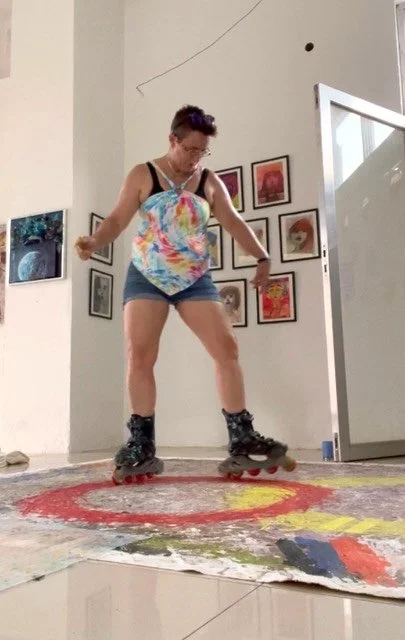
Aruba Performance 2022
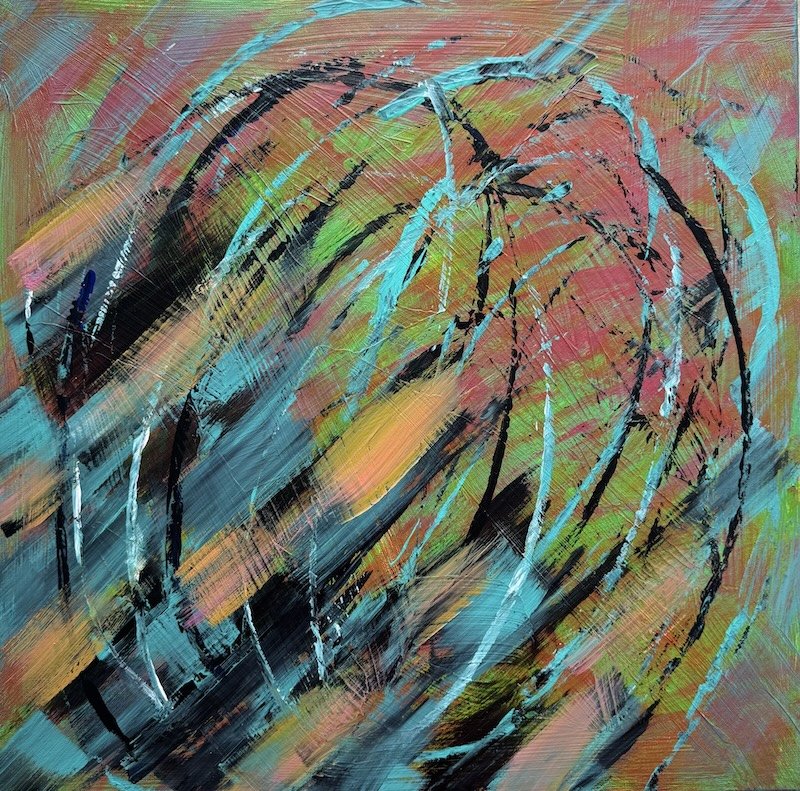
Harvest Whirl
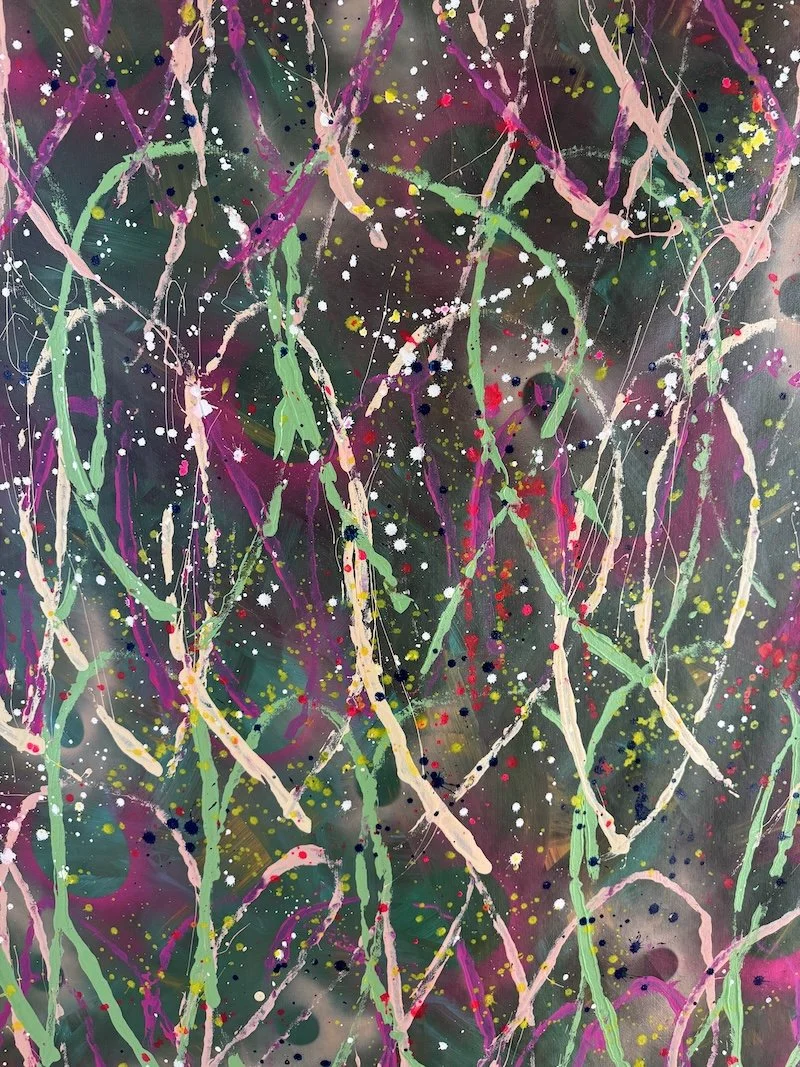
Cactus Craze, Acrylic and spray

Jean Cheoruny teaching abstraction a ArtisA Gallery, 2023, Aruba, Caribbean
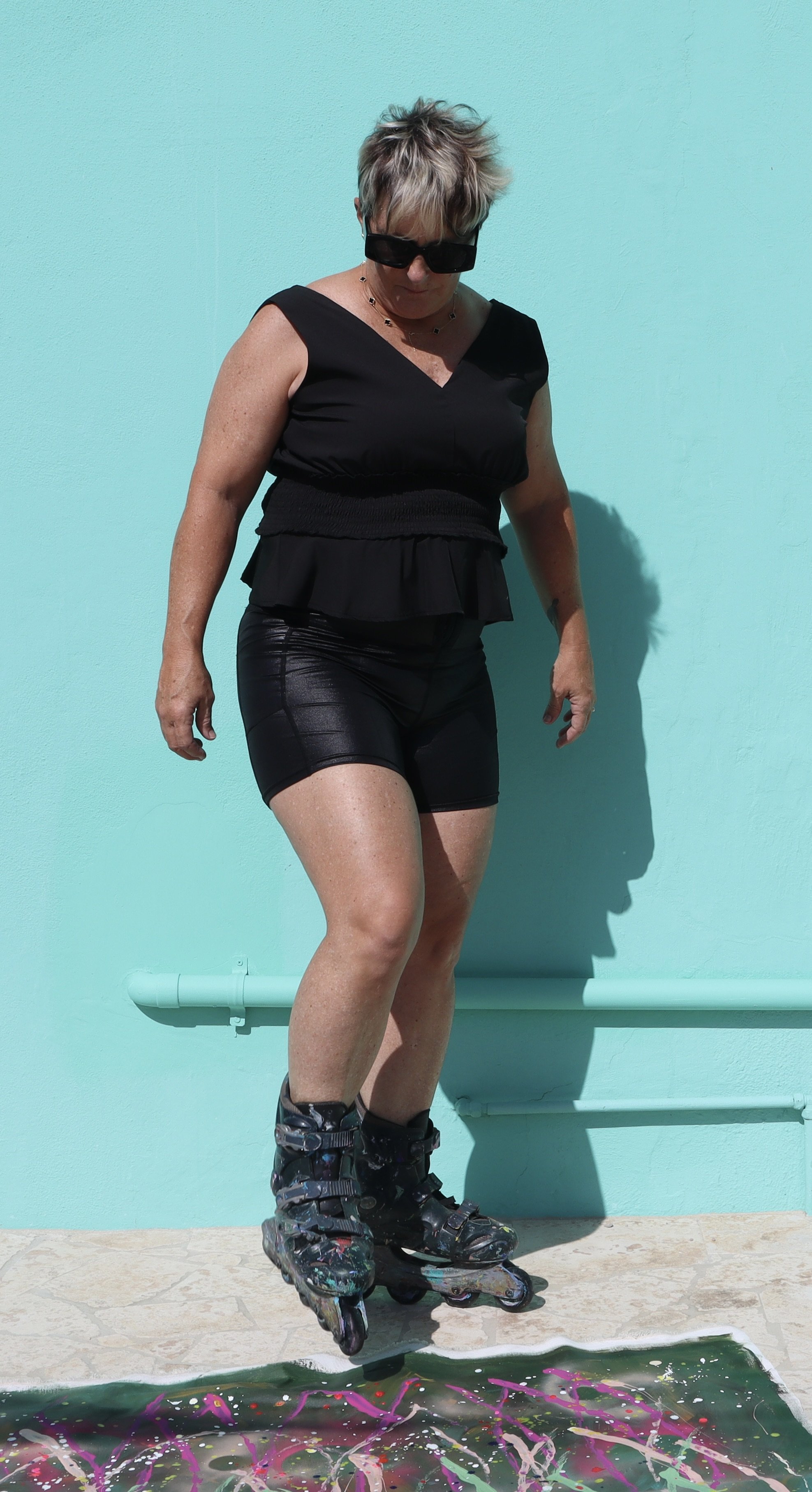
Jean Cherouny, Outside in Aruba Painting.
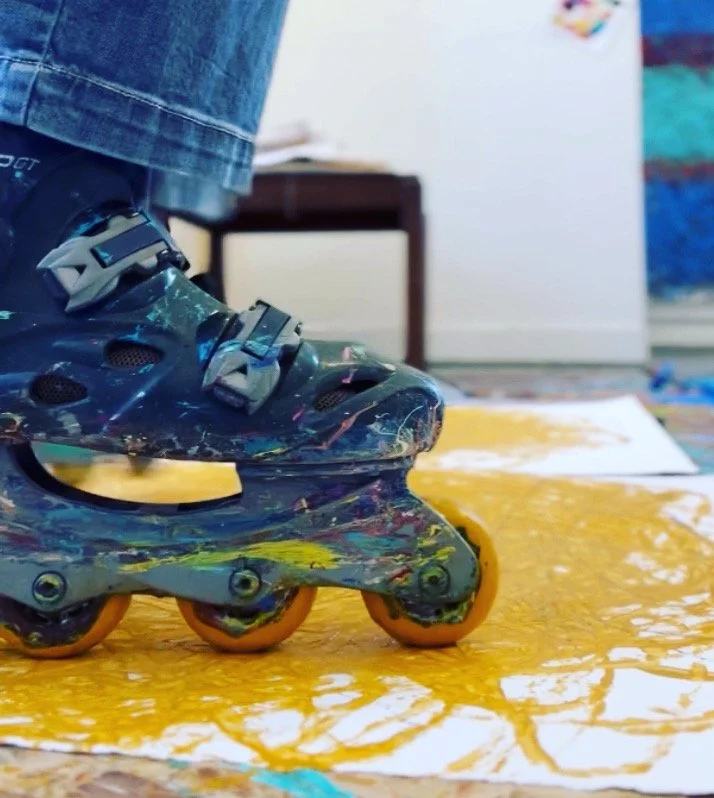
Jean Cheoruny, Studio Vermont, USA, The Skates

Jean Cherouny Teeming Electric, Acrylic on Canvas, 20x25cm
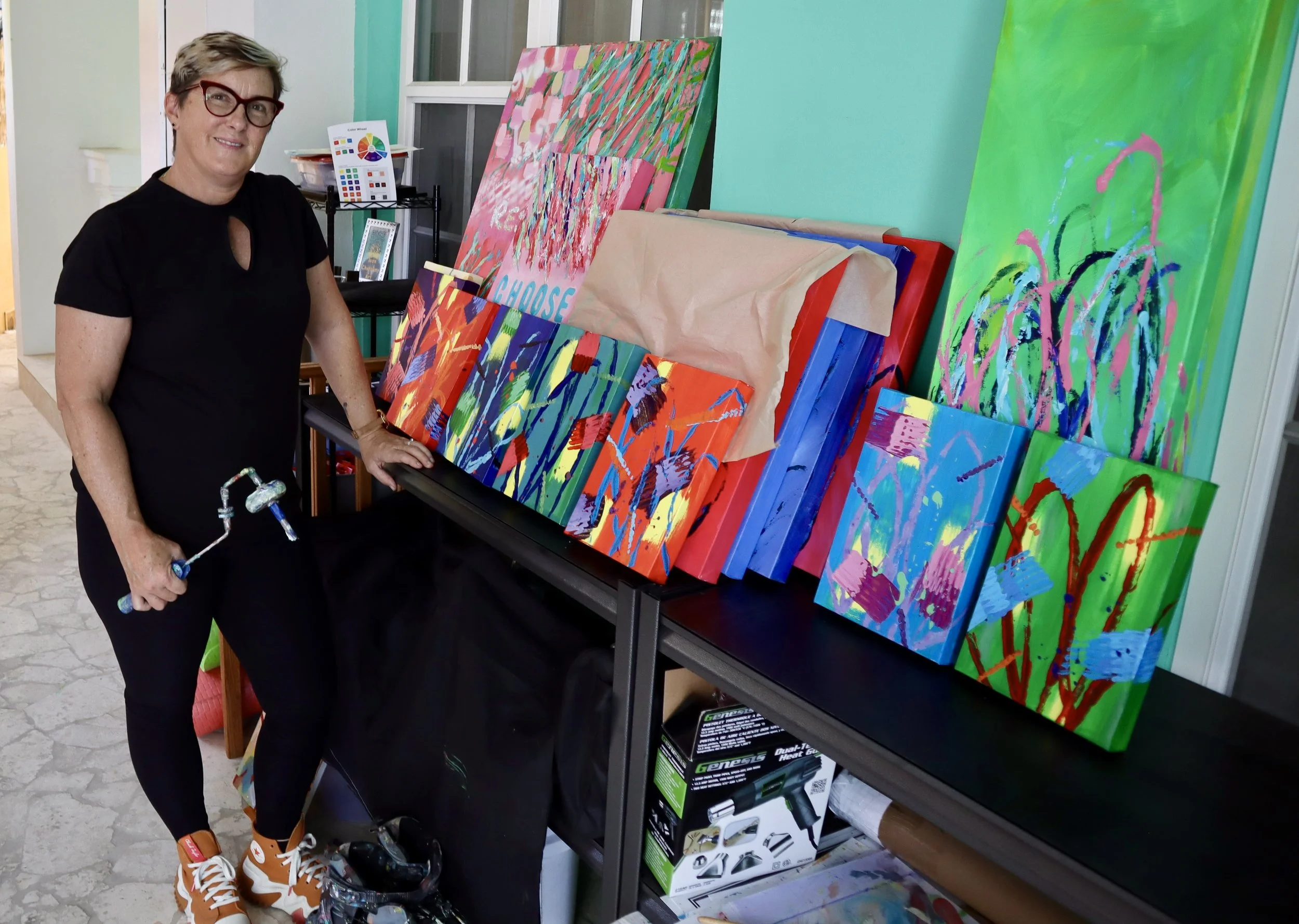
Jean Cherouny, Studio Aruba, Acrribean

Jean Cherouny,Activate Rebel March Change

Jean Cherouny, Aster on Paper watercolor and Acrylic, Vermont USA
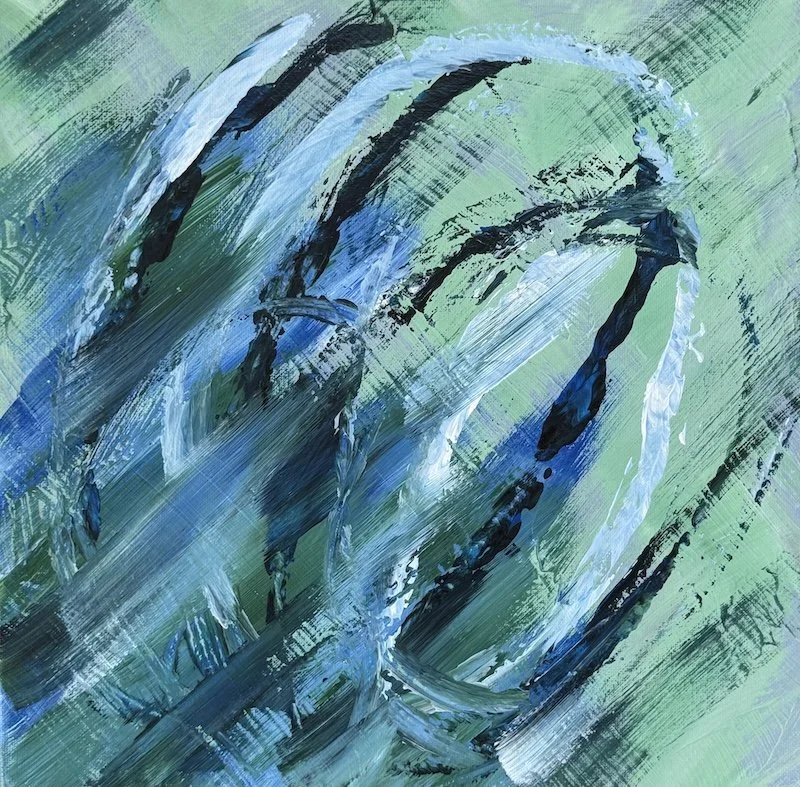
Ocean Swirl
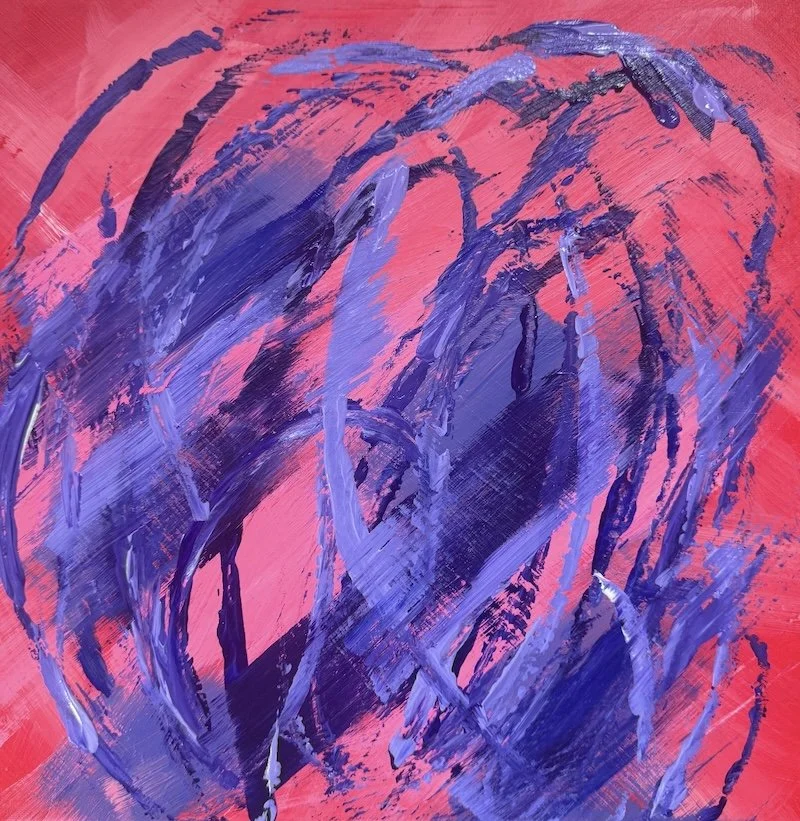
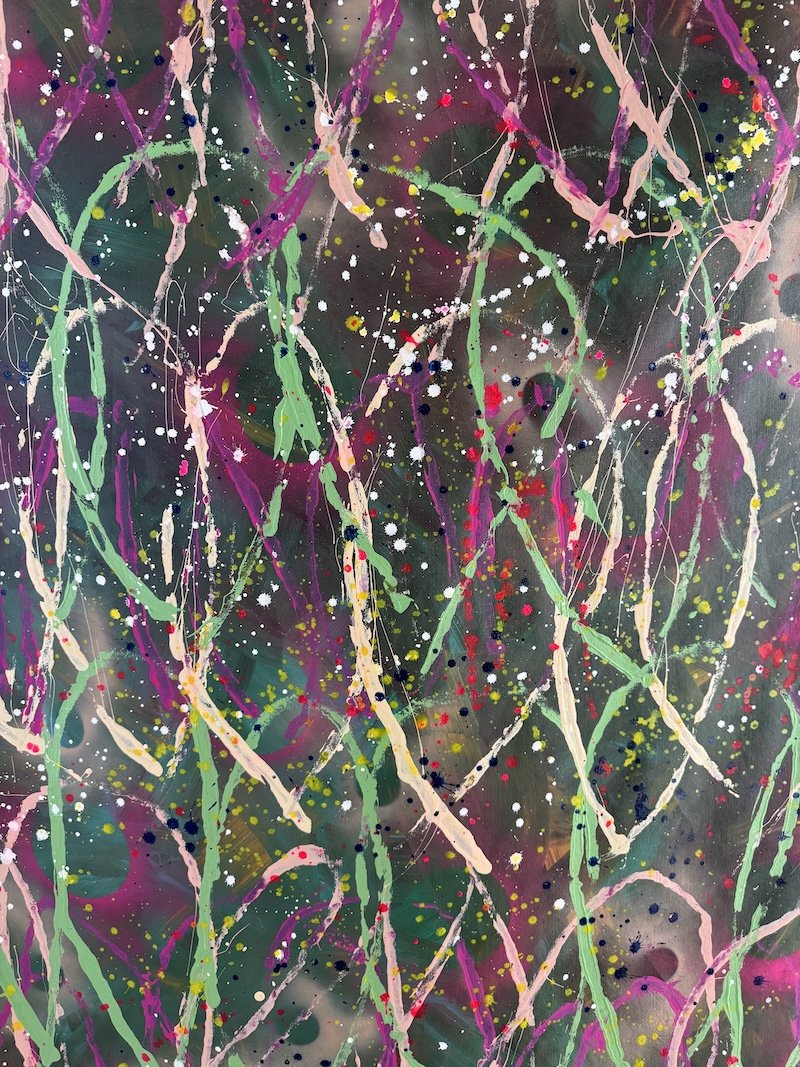
Pink and Purple
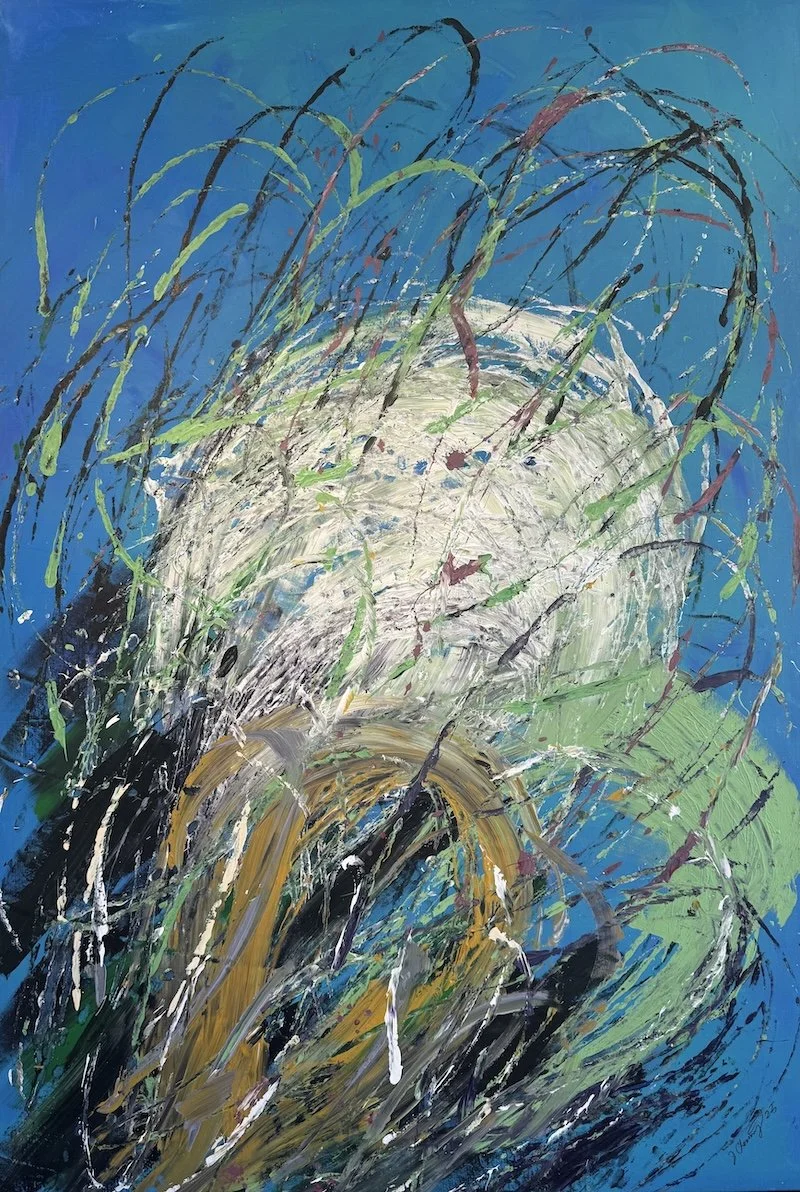
Underwater Dive
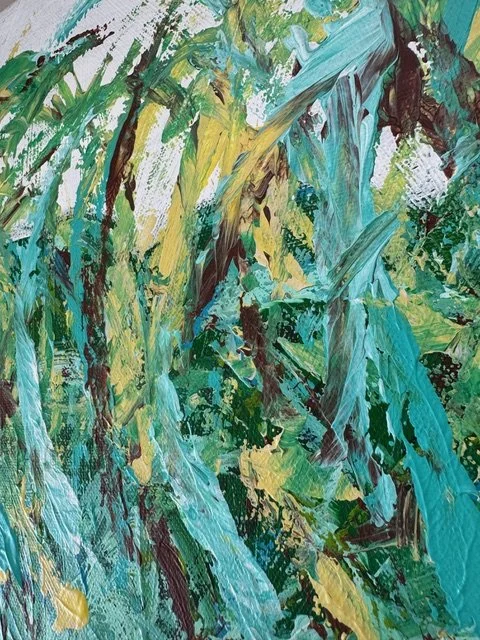
Ocean Swirl