Interview with Kat Kleinman
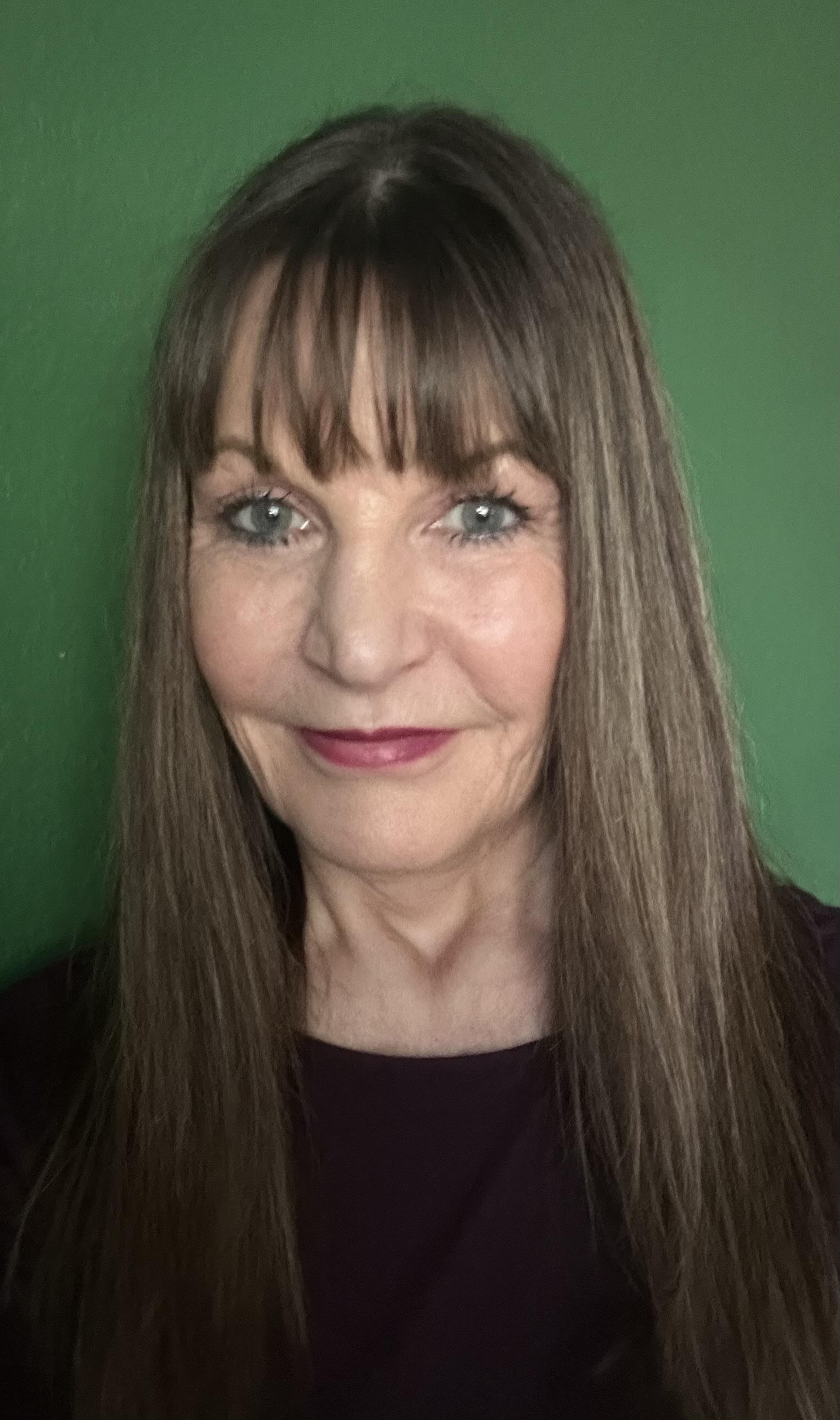
https://www.katkleinmanart.com/
Kat, what conceptual continuities do you perceive between your former life as a psychotherapist working with homeless populations and your current practice as a collage artist, particularly in how care, attention, and ethical responsibility migrate from social space into aesthetic form?
At heart, both my therapy and collage work emerge from the same impulse, a passion for uplifting the human experience. That impulse has evolved from providing a listening space, to my collages now offering a visual space for reflection. The aesthetic form, my collage, holds space for others’ emotions, as I once held space in therapy.
Your collages are often described as radiating hope and encouragement. How do you negotiate the risk of optimism becoming decorative rather than critical, and what formal or material decisions allow hope to remain intellectually rigorous rather than merely emotive?
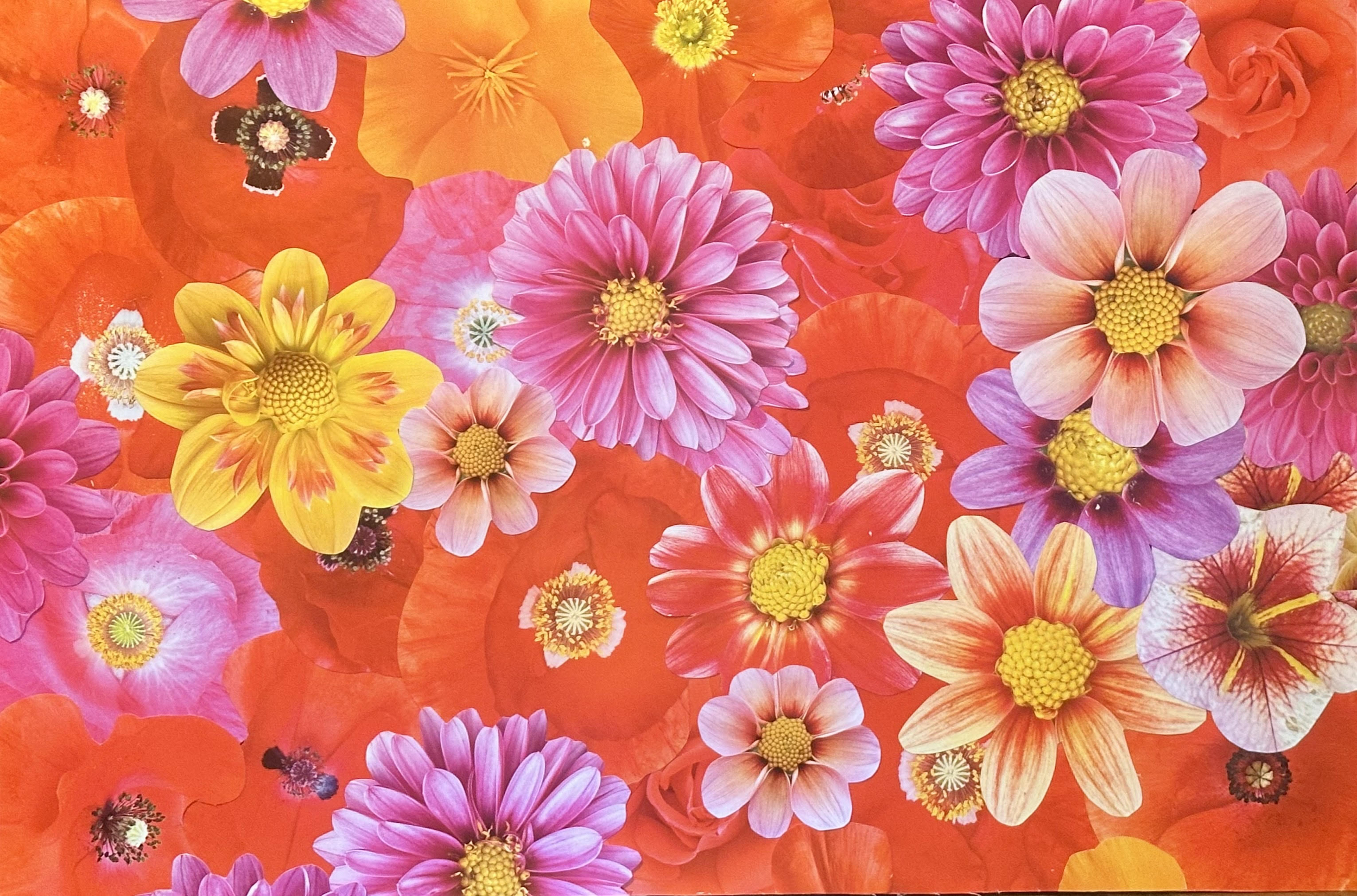
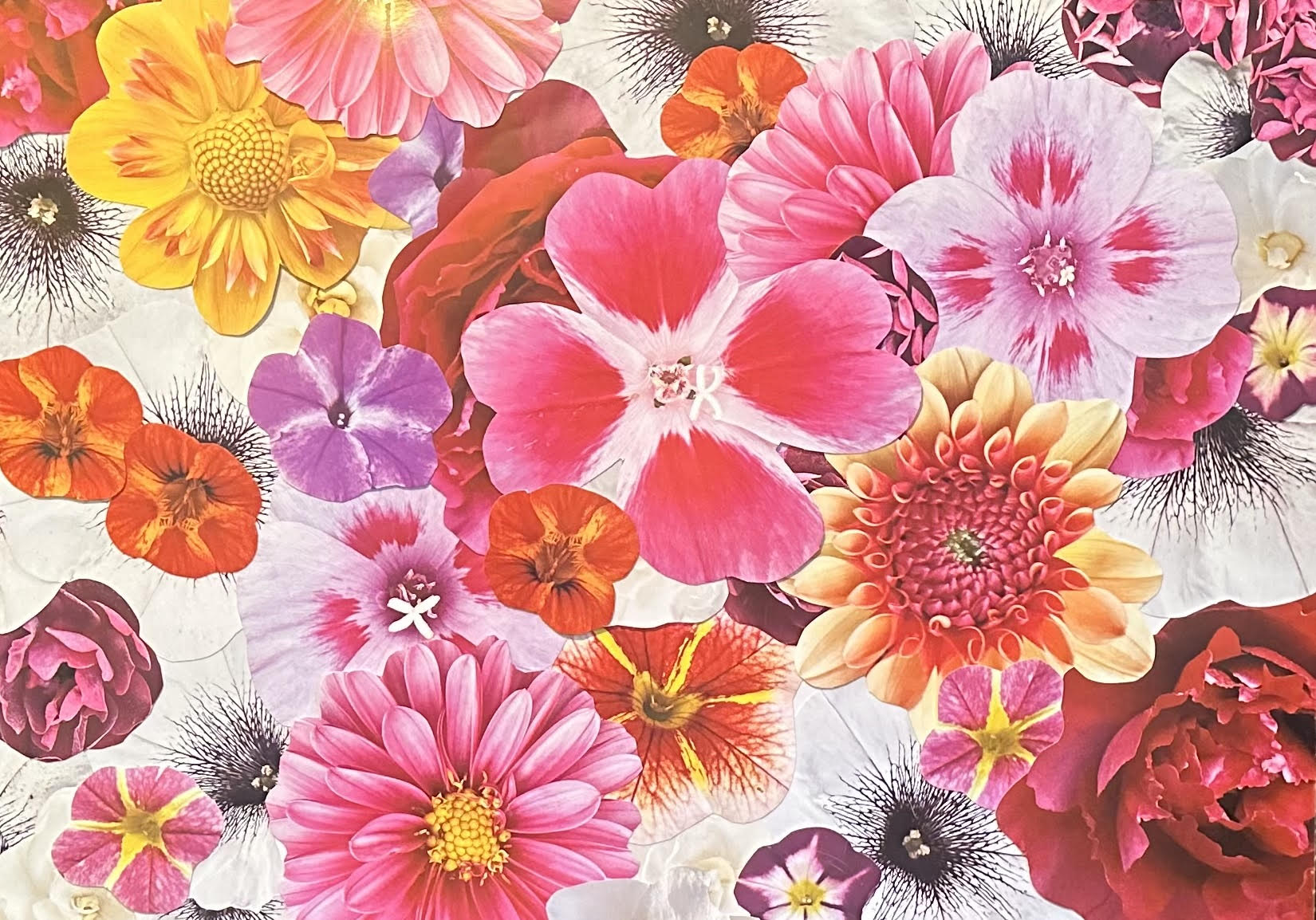
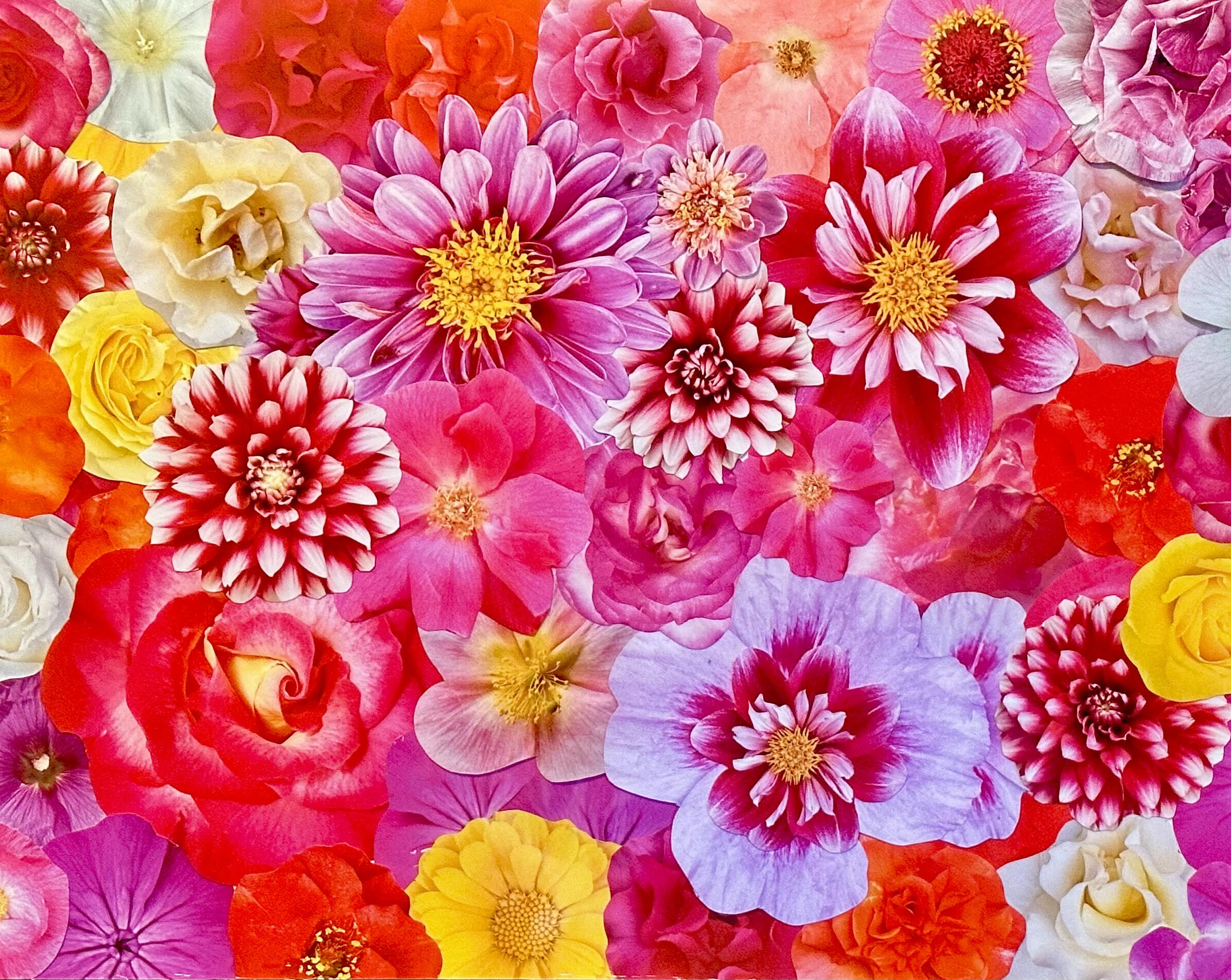
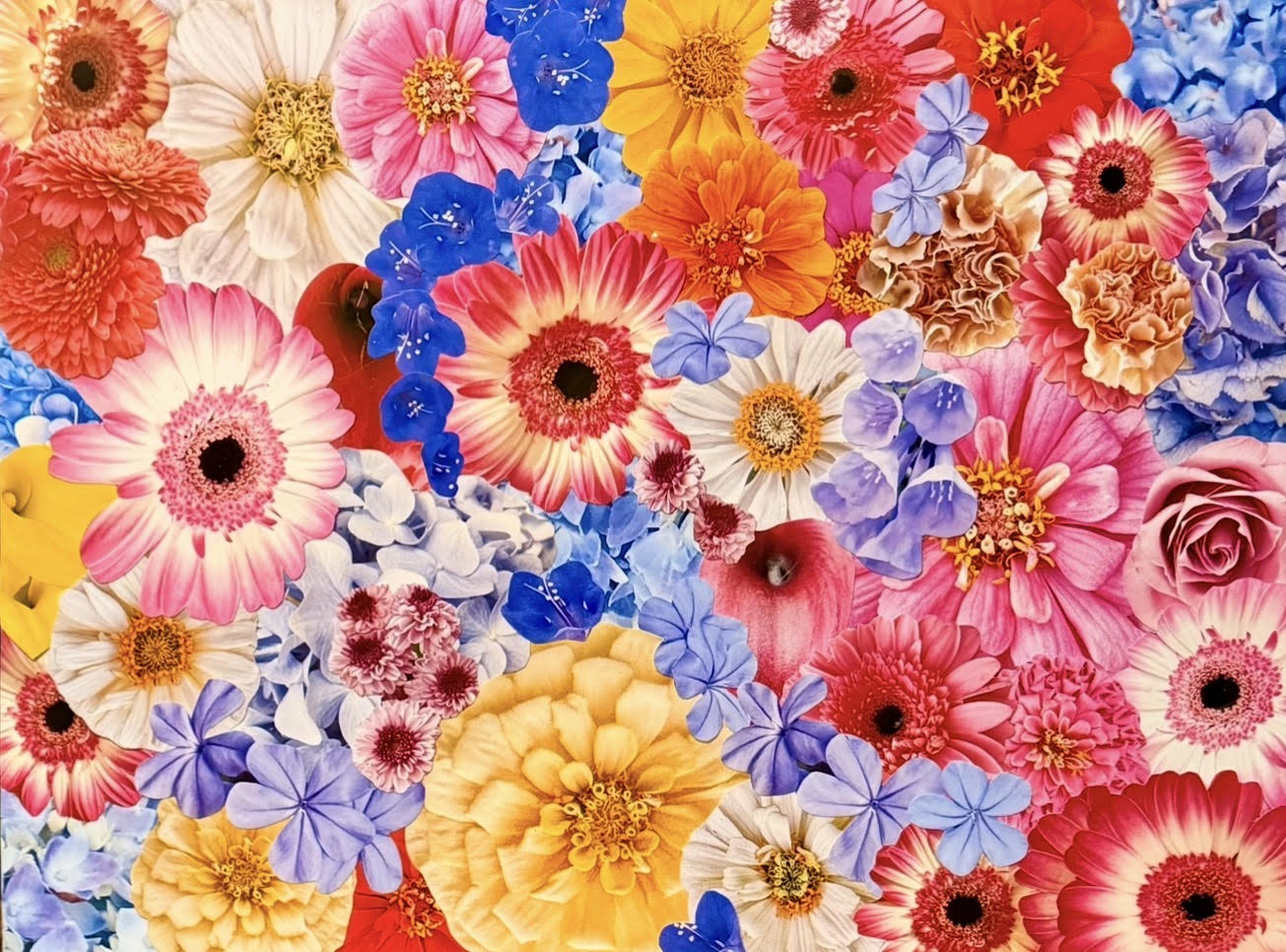
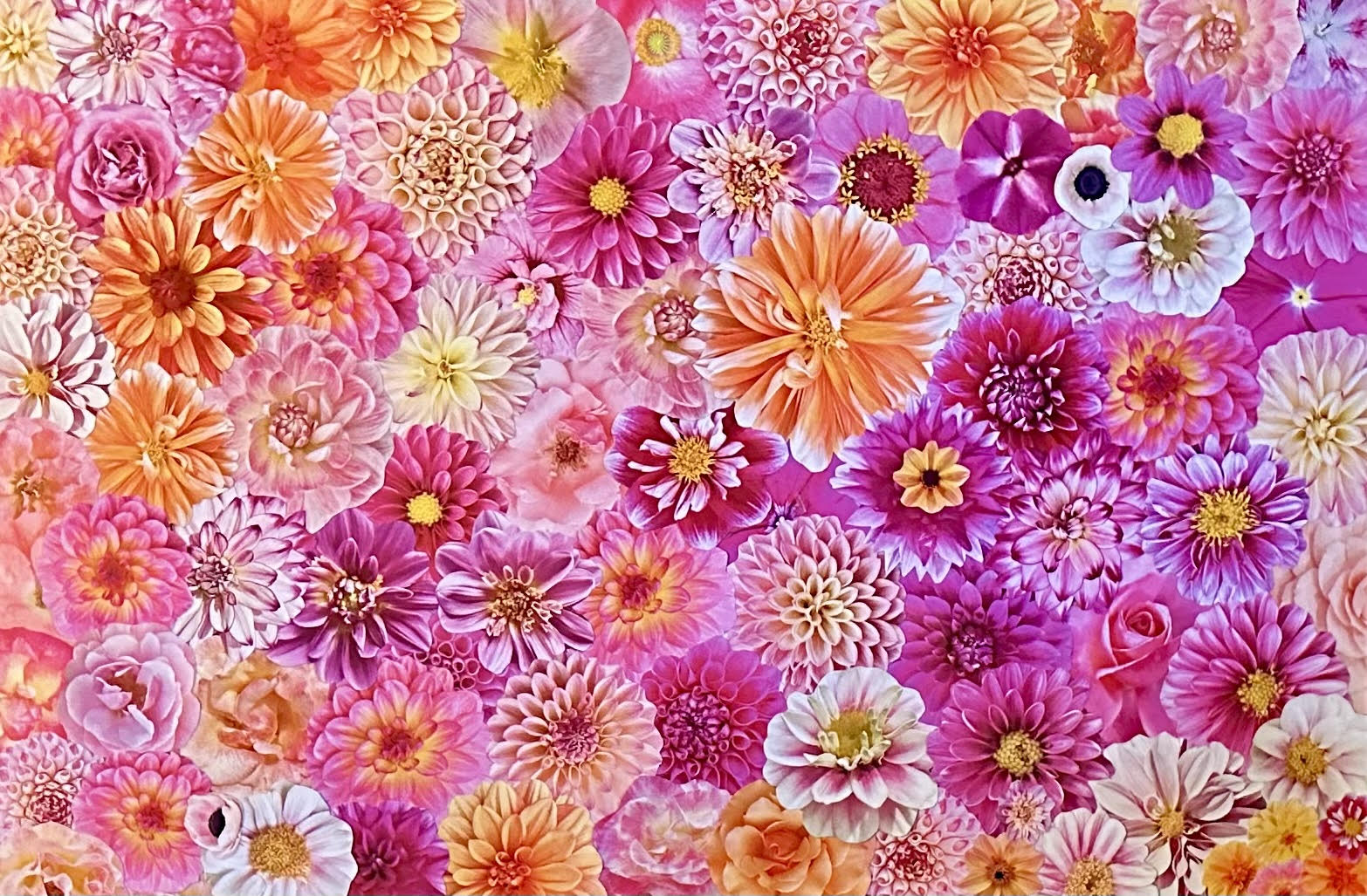
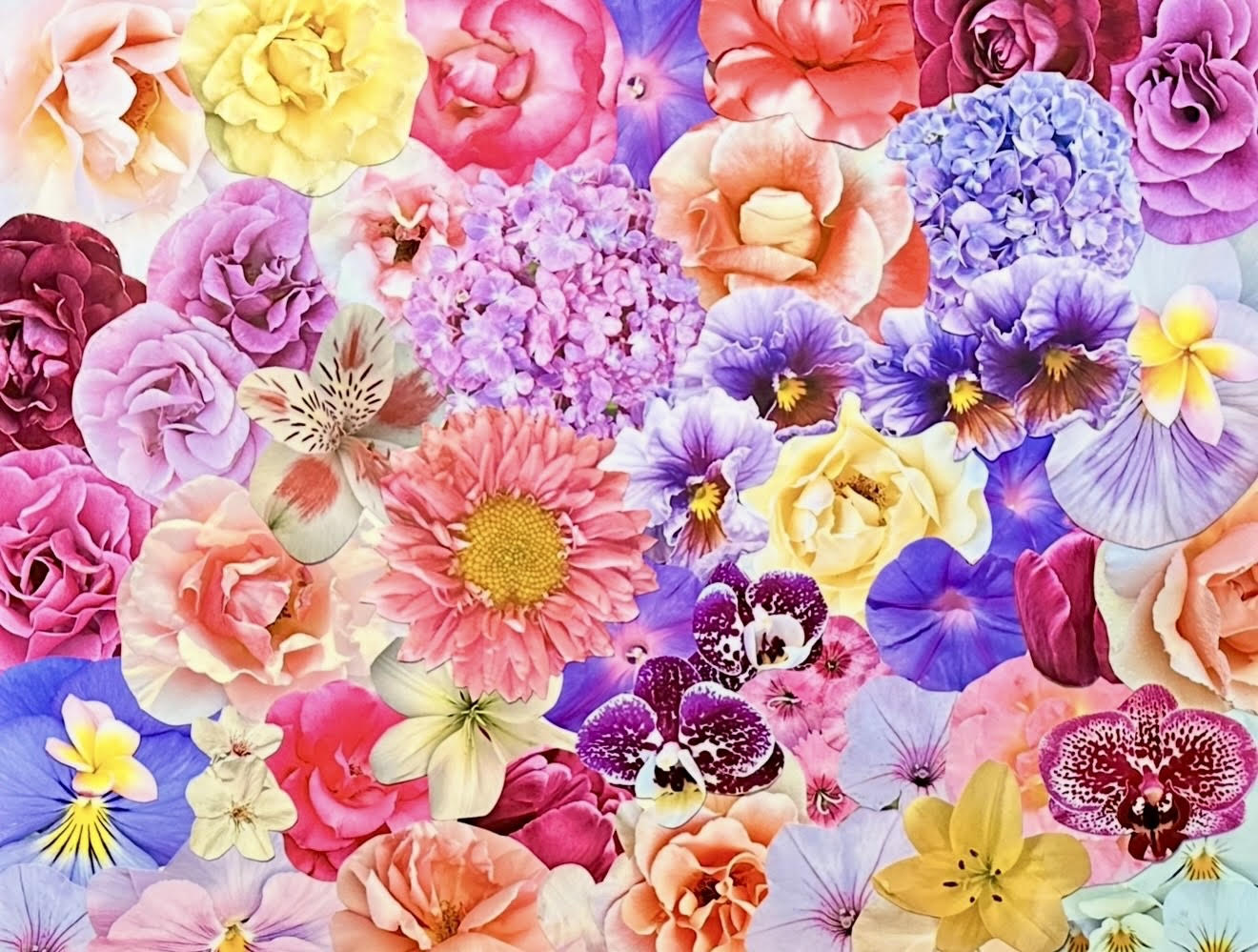
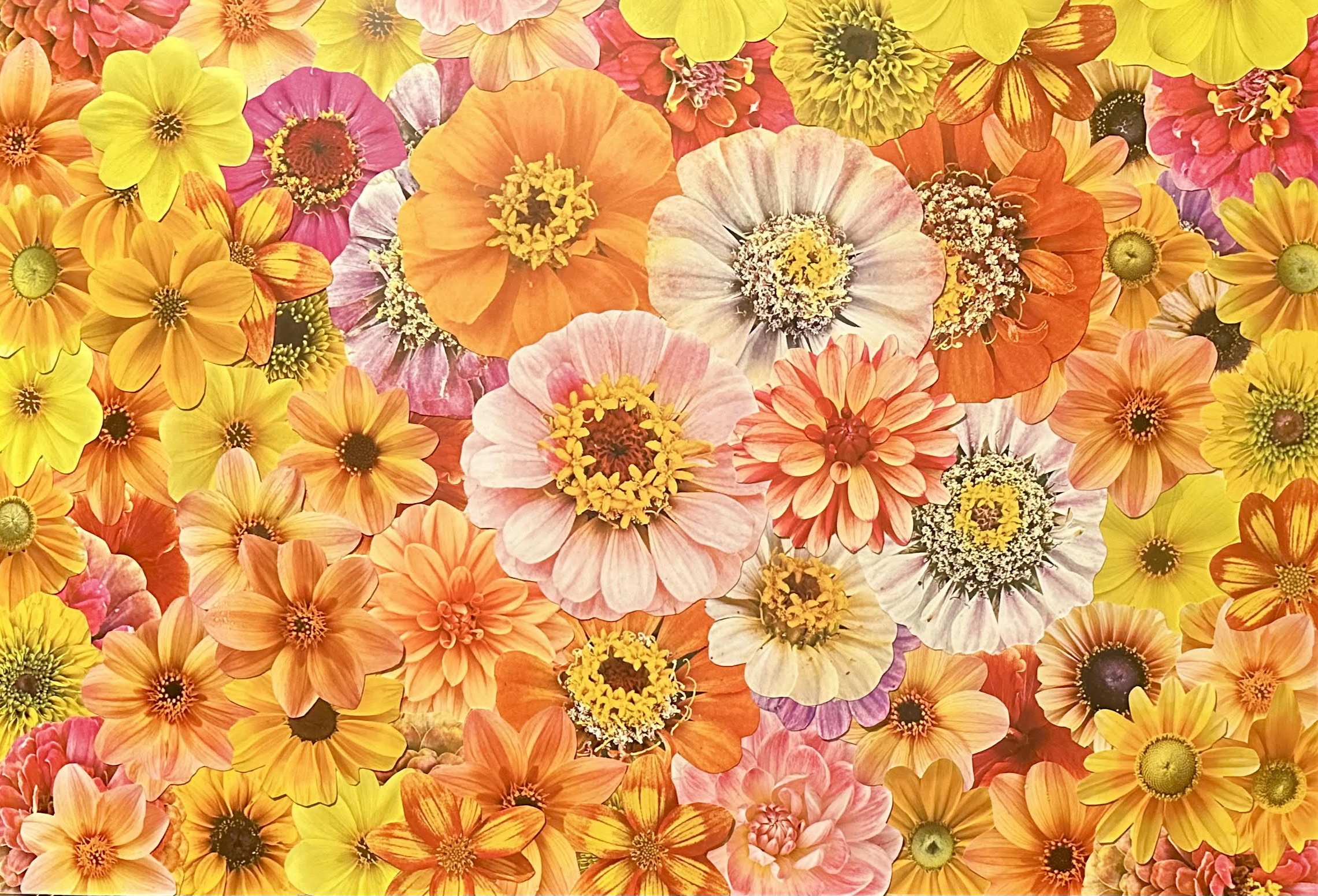
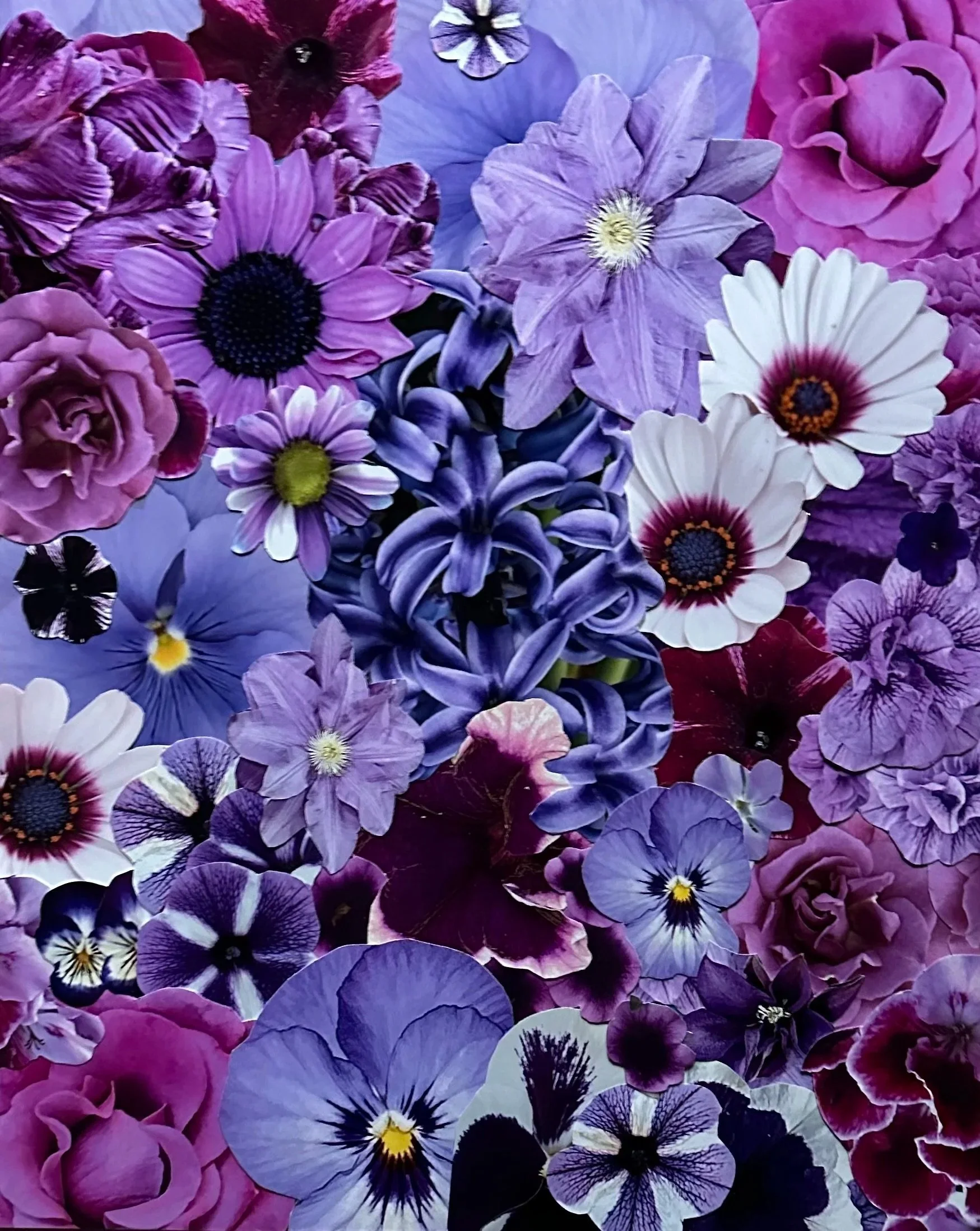
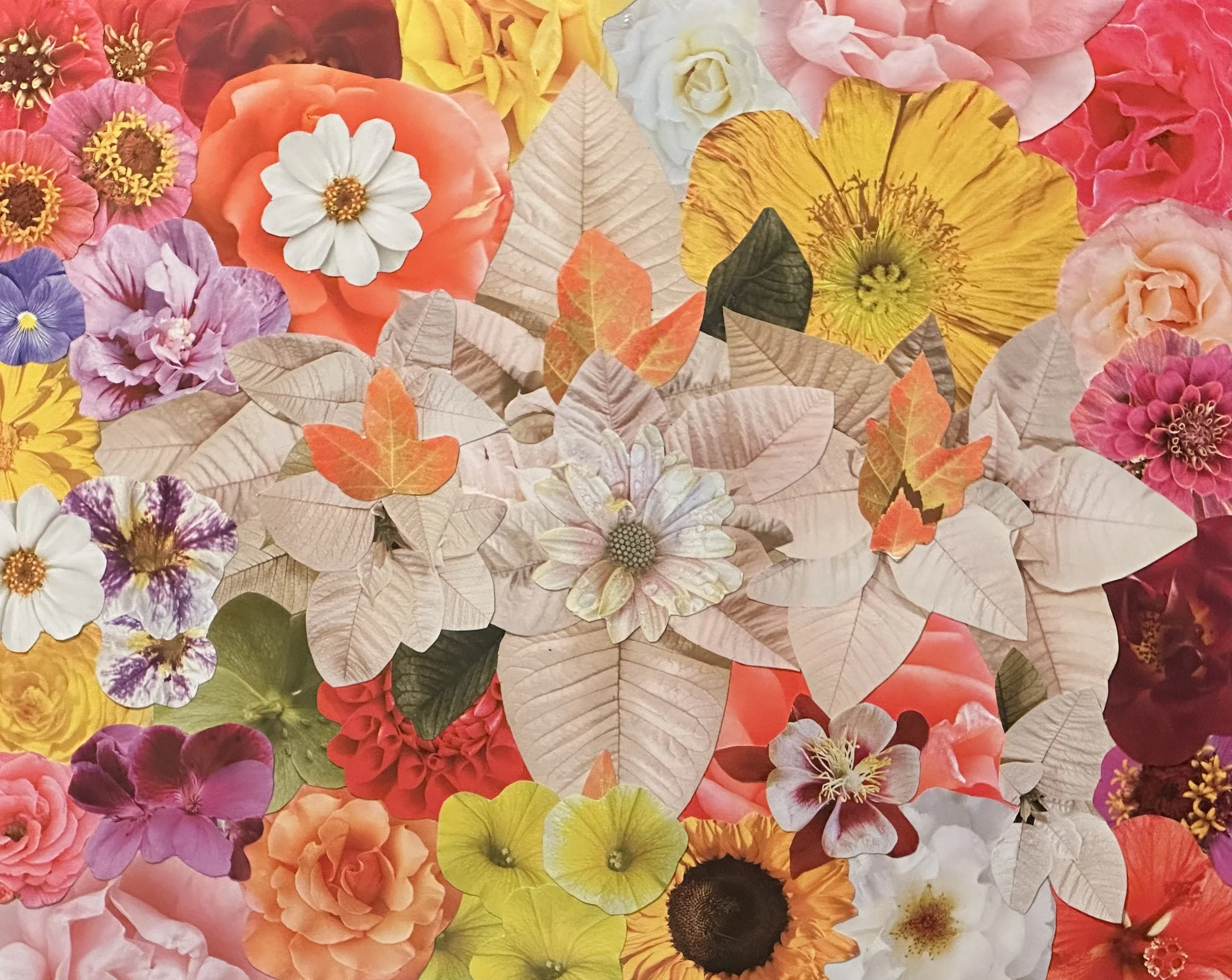
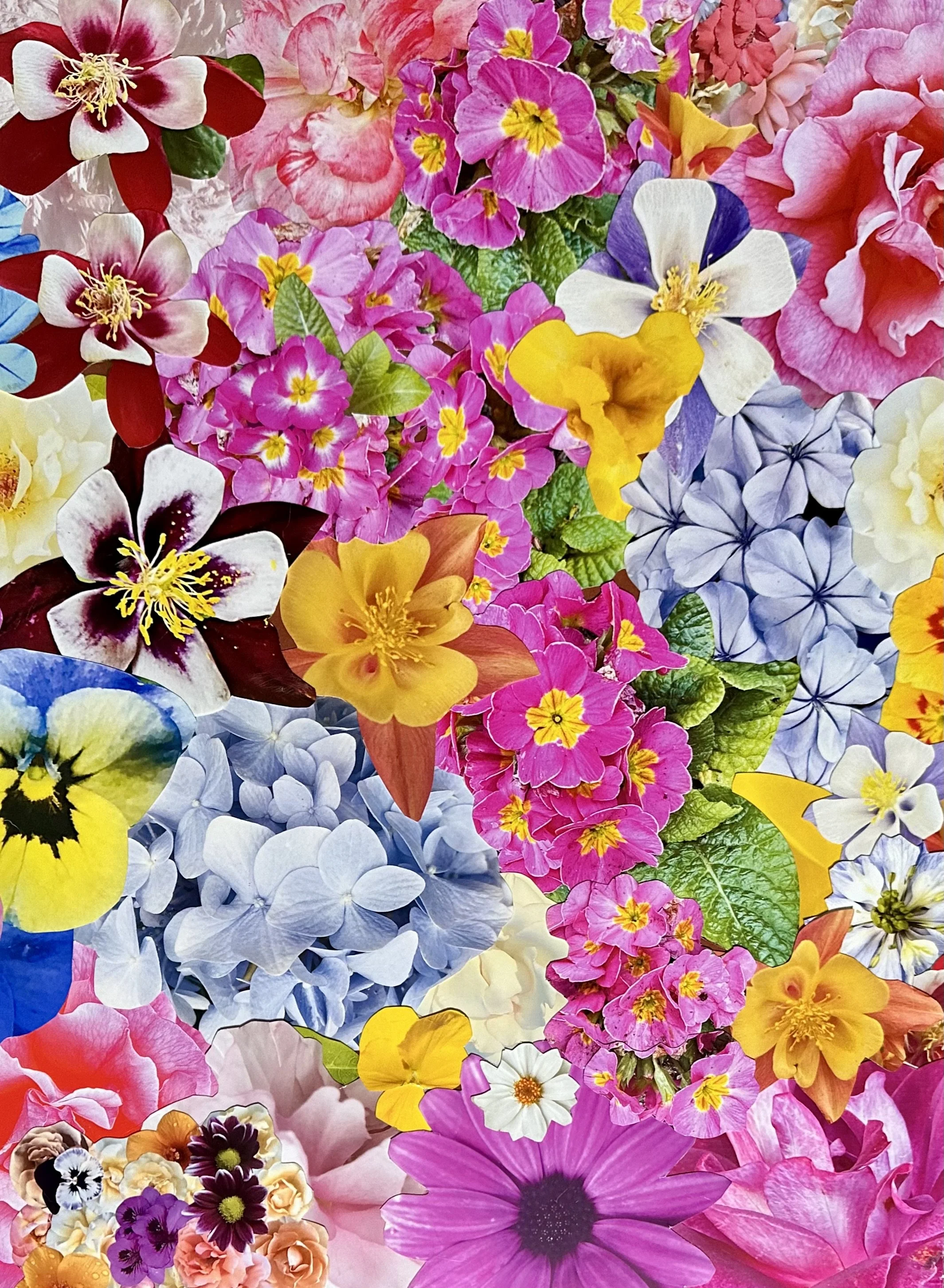
Hope is layered like my collages are. Mixing delicate florals with imperfect shapes echo life’s complexity. My optimism invites thought, and not just comfort. I choose materials carefully to prompt deeper reflection. Every thoughtful choice I make challenges the viewer to look closer, and so hope becomes a dialogue.
In leaving a profession rooted in direct human intervention for one mediated through images, how did your understanding of healing shift, and in what ways do your collages function as a different but no less intentional form of relational practice?
I had to find new ways to express my thoughts nonverbally, so my collages became my voice. They offer a visual form of connection which reaches people in a new way. My collages invite viewers into a shared experience so it’s still relational, just through imagery.
The act of searching for flowers in everyday environments seems central to your process. How does this sustained attention to overlooked beauty parallel your earlier work with marginalized communities, and how does it reshape ideas of visibility and worth within contemporary visual culture?
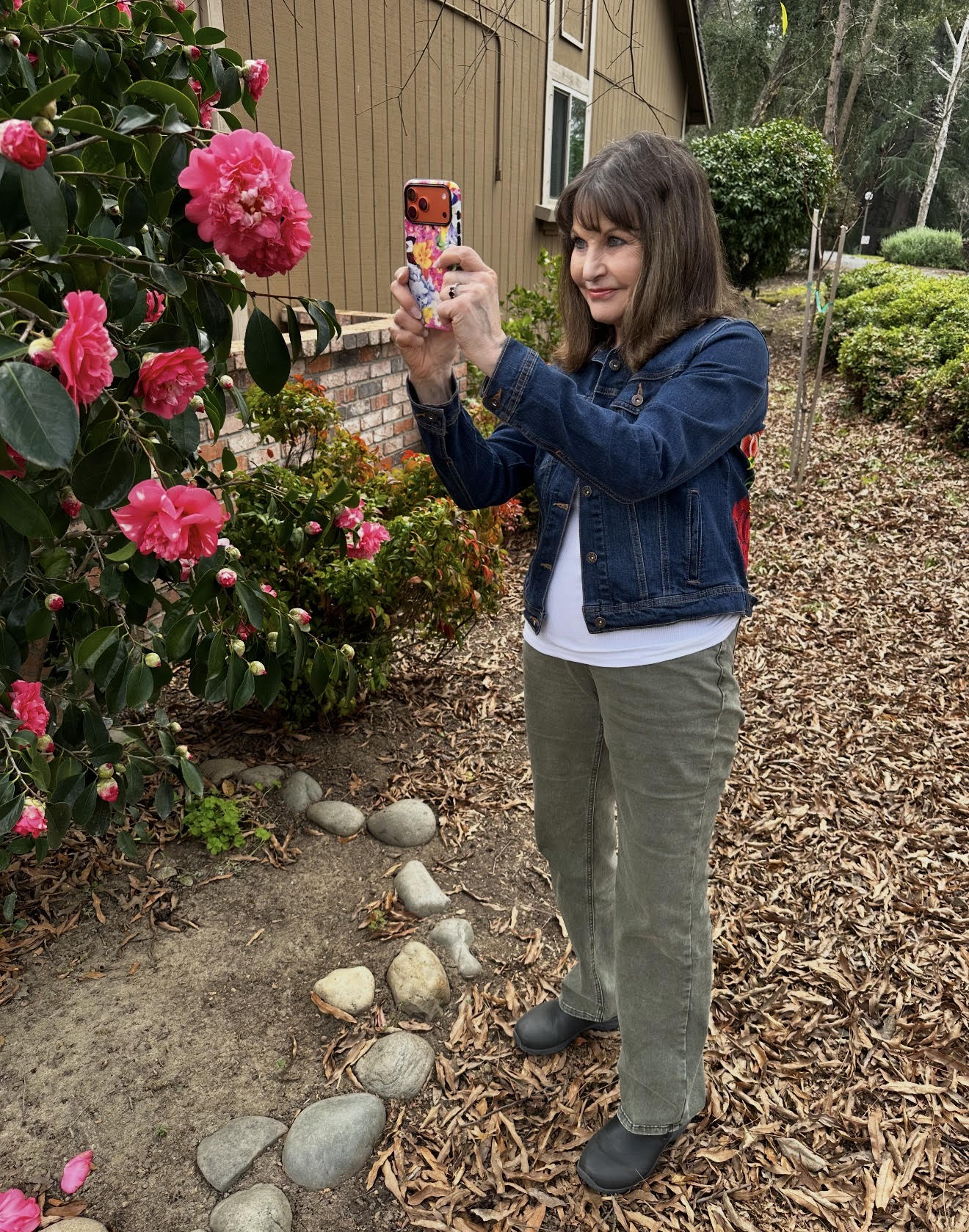
My therapeutic work and my art focus on the overlooked or unseen. Just as I once gave my attention to marginalized people, I now give attention to overlooked natural details, reshaping how we value them. In a world saturated with images, I invite people to find worth in the small, quiet moments, challenging the flashy and the loud.
Your work relies on fragments that are meticulously hand-cut and reassembled into unified compositions. How do you think about fragmentation and wholeness as both psychological states and visual strategies, especially given your background in mental health?
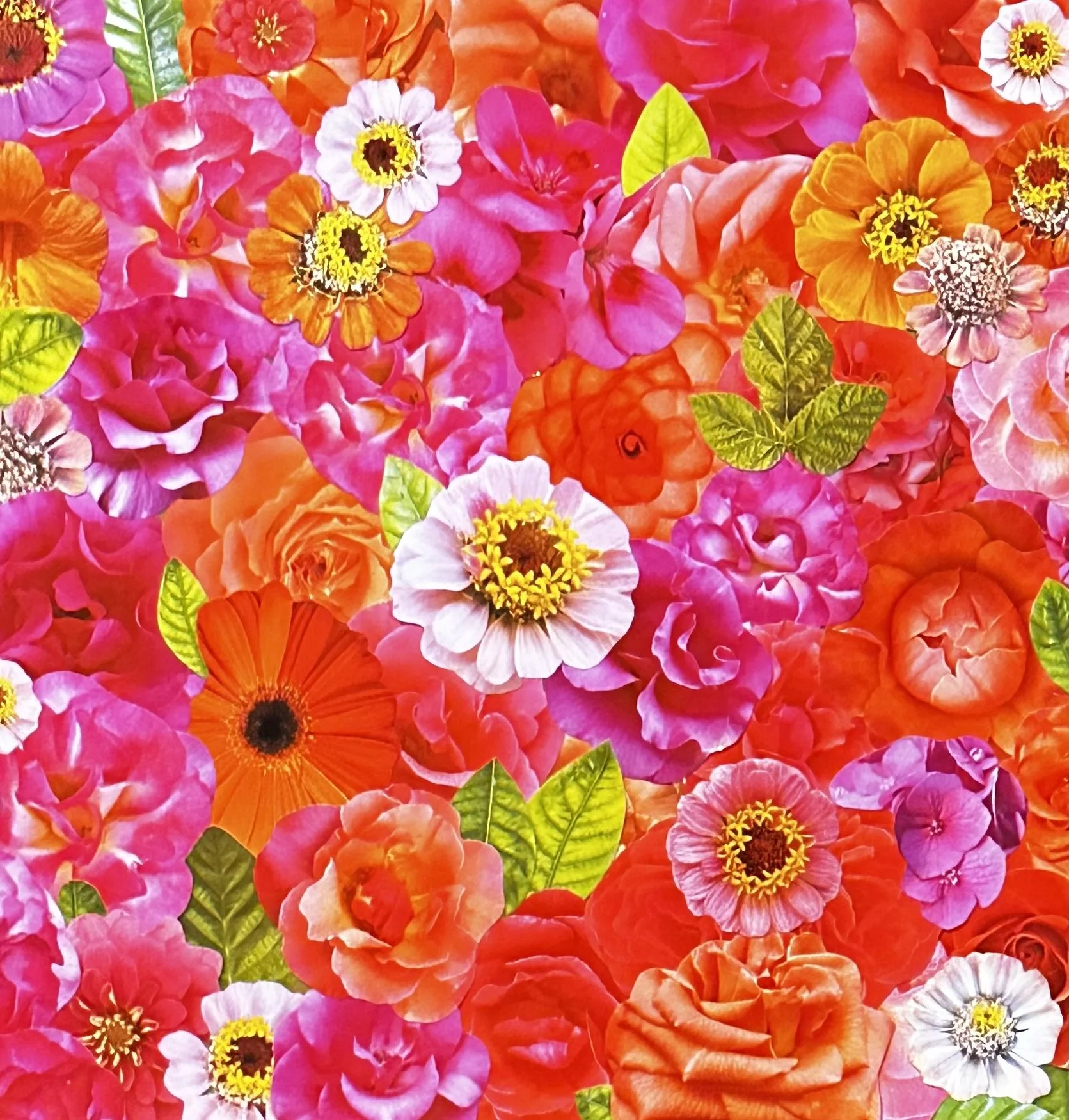
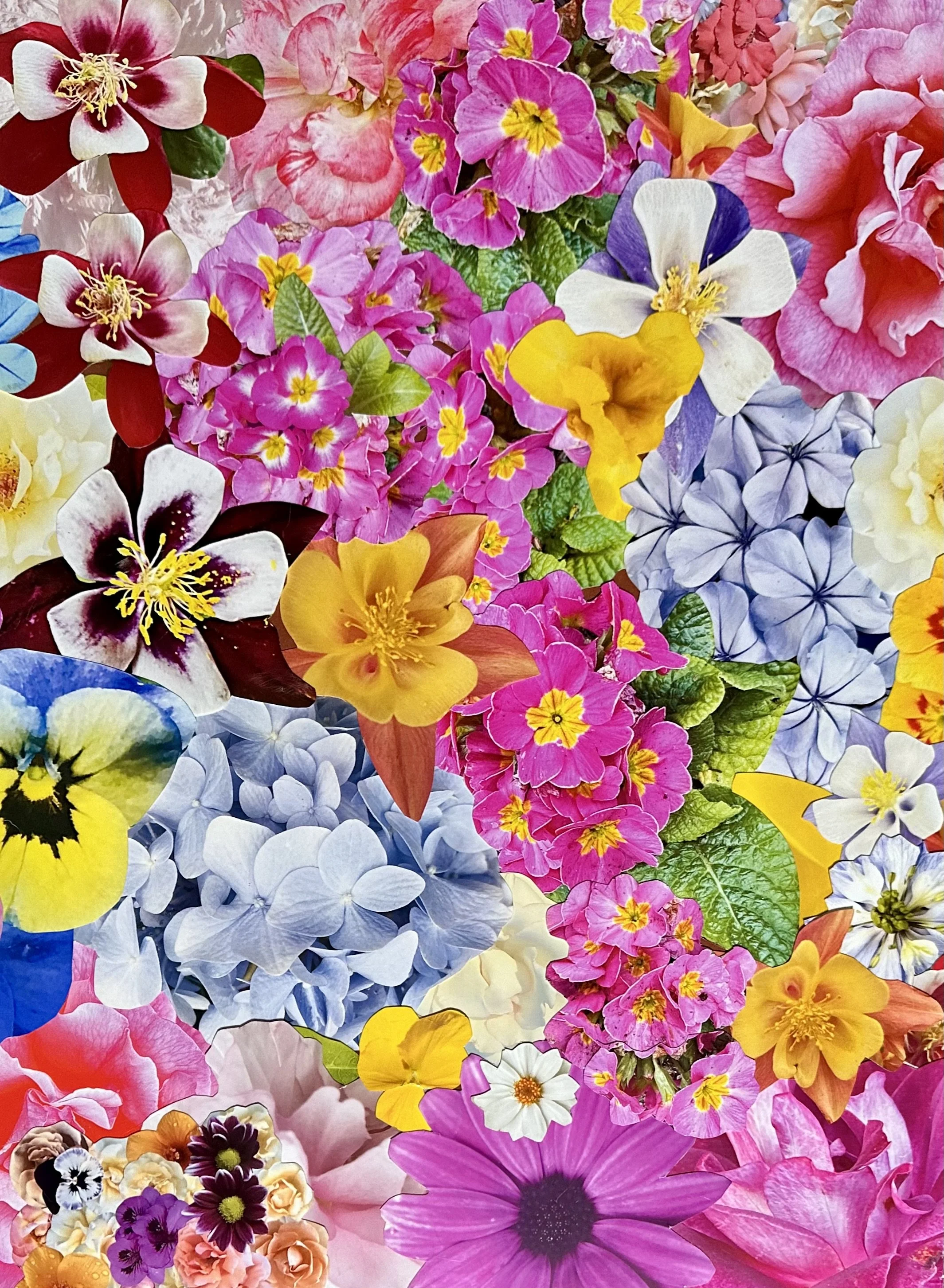
Psychology and art find strength in weaving fragments into meaning. Both mental health and my collages embrace imperfection — wholeness emerges from honoring each piece. Each fragment holds its own story, whether it be in the mind or on the page. Healing and beauty come from intentionally piecing those stories together.
Color operates as both subject and agent in your collages. Can you speak about color not only as an aesthetic choice, but as a therapeutic language that carries affective memory, emotional regulation, and embodied response?
Each color I choose is like a note in an emotional language. The hues I select can carry memories, calming or energizing states, and evoke physical sensations. My use of color invites viewers to experience and process emotions in a new way. Through this shared emotional language, my collages offer a space for healing or reflection.
In an era dominated by digital collage and screen-based manipulation, your insistence on a fully tactile, manual process feels almost resistant. What does slowness, repetition, and physical labor allow you to access conceptually that digital tools might foreclose?
The slowness of my process creates space for mindfulness and presence. Repetition and physical engagement deepen my connection to the work, helping me reflect on time, effort and meaning in ways that quick digital tools might skip. My journey from the digital to a tactile approach has shaped my perspective and my art. That hands-on process mirrors my personal growth and mindfulness practice.
How has your understanding of grief informed the evolution of your practice, from early photographic experiments to increasingly complex floral constellations, and do you see grief as something resolved through the work or continuously re-negotiated?
Grief has shaped my artistic journey, starting with simpler expressions and evolving into more intricate floral arrangements. The personal loss of my mother less than 4 months ago has influenced and deepened my practice, so my own grief is reflected in the evolution of my art.
You often describe your process as meditative. How do you differentiate meditation as a personal coping mechanism from meditation as a formal quality embedded in the finished work and perceived by the viewer?
My personal meditation, like the mindfulness in my process, helps me to navigate my emotions and find calm. That meditative quality translates into the finished artwork, inviting viewers to also experience a sense of peace and contemplation. In this way, the artwork becomes a shared space for reflection, encouraging a quiet, introspective journey for both creator and viewer.
The flowers in your collages are photographed by you, rooted in specific encounters and locations. How important is authorship and origin to the ethical and conceptual grounding of your work, especially in contrast to appropriation-driven collage traditions?
My personal photography grounds each collage in authenticity and connection, reflecting my direct experiences. That authorship ensures an ethical approach honoring the origins and context of each flower. Contrasting this with appropriation, my work remains deeply rooted in personal experience and respect.
Your compositions balance exuberance with restraint. How do you calibrate excess and control so that abundance becomes meaningful rather than overwhelming, and how does this balance reflect your psychological training?
My background in psychology helps me recognize the importance of balance — allowing exuberance to express vitality, while restraint ensures clarity and focus. I intentionally balance those elements so that abundance feels enriching rather than overwhelming. My psychological insights shape my creative vision.
As someone who transitioned from a regulated clinical profession into the art world, how did questions of legitimacy, expertise, and self-trust shape your development as an artist exhibiting internationally?
I embraced the unknown, leveraged my deep experience working with people, and gradually found legitimacy in the authenticity of my creative voice.
Many contemporary practices shy away from overt positivity, fearing sentimentality. How do you position your work within this critical landscape, and what arguments would you make for hope as a necessary contemporary aesthetic stance?
The argument I would make is that hope, far from being naive, is a counterbalance to cynicism. My art stands as a deliberate act of cultivating resilience. This matters in contemporary life. My floral themes offer a meditative space for viewers to reflect or recharge. Offering an emphasis on hope doesn’t mean ignoring reality — it is a lens to imagine what is possible.
How do you imagine your collages functioning within domestic spaces versus institutional or gallery contexts, and does the intention to make people feel better shift depending on where and how the work is encountered?
This is a great reflection on context. In domestic spaces, I envision my collages create an atmosphere of lightness and reflection. When my artwork appears in galleries, they can open a broader dialogue about how beauty and optimism intersect with bigger cultural or emotional themes. The setting amplifies the emotional intention.
Looking forward, how do you envision expanding your visual language while preserving the core ethical impulse of your practice, and what responsibilities do you feel as an artist whose work explicitly seeks to uplift rather than unsettle?
Looking forward, I envision expanding my visual language by embracing collaborations with artists in other mediums — like poets or musicians — whose work can intertwine with my collages. I might incorporate architectural photos or urban textures alongside my organic elements. Yet, as I expand, my responsibility remains clear: to offer work that uplifts with honesty. This means ensuring every new element still respects my core ethos, where growth never dilutes the thoughtful uplifting impulse at the heart of my practice.