Aleksandra Ciążyńska
There is a quiet certainty that runs through the work of Aleksandra Ciążyńska, a kind of poised conviction that painting remains one of the few mediums capable of making visible the perceptual fullness of the world. Her practice does not unfold in the register of confession or spectacle; rather, it inhabits that older, more contemplative territory where looking becomes a way of thinking. In her canvases, observation is not merely a function of the eye but a form of fidelity. She paints because seeing has weight, because the ordinary world carries a thousand unnoticed entrances into wonder. Her art insists that beauty is not an event but a velocity, something that arrives through the daily accumulation of glimpses, textures, shadows, and fleeting architectures. For Ciążyńska, painting is not the staging of an image but the recovery of a world.
Born in Poland in 1987 and academically trained in economics, she moves through painting with the methodological clarity of someone accustomed to working through systems. Yet the logic at play in her practice is never rigid or mechanical. Instead, it is the logic of a mind attuned to the plurality of paths a single image can take. Mathematics, she says, taught her that every problem has more than one route toward resolution; painting taught her that the same is true for the world. She approaches the canvas not as a blank field but as a site of multiple possible beginnings. Sometimes the background arrives first, sometimes the smallest detail; in each case, the image unfolds according to its own internal necessity. Her fidelity is always to the image that arises in the mind before it finds its material counterpart.
Her biography contains its share of refusals, rejections, early discouragements, and long periods of working without institutional recognition. These experiences did not diminish her; instead, they tempered her into someone who understands that the artistic life is sustained less by external approval than by the inner compulsion to continue. The first affirmation came, unexpectedly, from abroad, when a New York gallery selected her works and awarded her one of its top honors. That event did not mark the beginning of her art but rather confirmed what had always been true, that her vision was not local but widely resonant, that her eye was tuned to something fundamentally human.
Her work moves between realism and abstraction, often effortlessly, as though the boundaries between the two were irrelevant. One senses that she is less concerned with categories than with encounters. Whether she paints sunlight caught on an architectural detail, the delicate geometry of a dandelion seed, or the infinitesimal tenderness of hands reaching toward one another, her focus is always on the perceptual intensity of the moment. The world arrives to her as a kaleidoscope of forms, cities, tunnels, meadows, gestures, skies, and she paints them all with the same clarity of attention.
Central to understanding her practice is her belief that art is a form of nonverbal communication. It carries meaning without explanation, transmitting emotion, memory, and thought through form itself. Her lifelong fascination with this silent transmission stems from childhood, when drawing felt as natural as breathing. In the hands series titled Touch, she demonstrated the expressive power of pure gesture, revealing how a single movement can convey an entire emotional architecture, care, longing, affection, loss, without the mediation of language. But in the period of 2023 to 2025, her work turns toward even broader questions of attention and perception, culminating in the ambitious and thematically unified Invitations series, along with the geometric cosmologies of Day and Night and The Magic of the Setting Sun.
The Invitations series forms the conceptual and emotional heart of Ciążyńska’s recent work. These paintings emerge from an insight both simple and profound, that the entrances we pass through daily, tunnels, metro stations, archways, thresholds, are not neutral spaces but portals, structuring our passage through the world. We ignore them precisely because they are constant, but their constancy shapes us. For Ciążyńska, these sites are neither mundane nor functional; they are moments of transition, architectural liminalities where perception shifts. Her goal is not to document these spaces as they appear but to reveal how they operate within the choreography of everyday life.
The first of these works began in Genova, where she encountered the entrance to the town hall. It was a structure of imposing stone and ceremonial stability, yet to the passersby it had become an afterthought, a threshold reduced to utility. Tourists drifted past without looking. Petitioners entered without perceiving the sculptural precision around them. But Ciążyńska saw a world in that entrance, an invitation to enter a space not only physical but psychological. She photographed it, then painted it, translating the overlooked into the central. In her hands, the town hall entrance becomes a theatrical proscenium, a site of unspoken encounters. Light plays against stone, shadows trace historical echoes, perspective draws the viewer inward. She does not embellish the space but reveals its latent drama, as if peeling away the veil of habituation that dulls daily perception.
The Genova tunnel operates through a similar principle. In her painting of this subterranean passage, she captures the way tunnels compress and extend space simultaneously. The eye is drawn forward along the receding geometry of tiles and lights, yet the surface of the painting thrums with detail, reflections, subtle variations of color, architectural rhythms. The tunnel becomes a paradox, a space meant for transit that, in Ciążyńska’s rendering, becomes a place of arrival. Her meticulous brushwork, especially in the reflective surfaces and the interplay between the warm lights and the cool internal shadows, elevates what might otherwise appear banal into something hauntingly luminous.
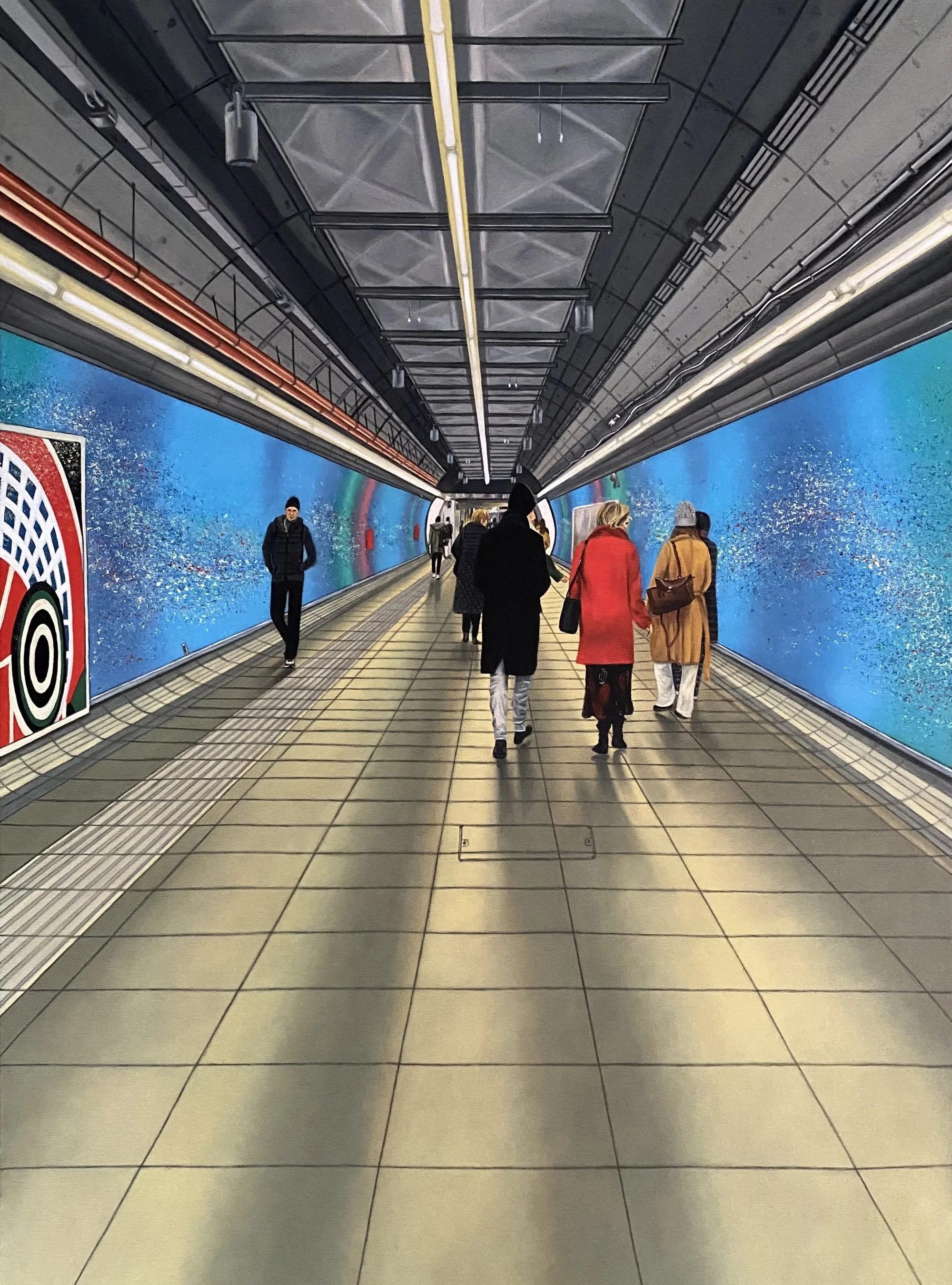
Her paintings of the Rome Metro, particularly the entrances to the Spagna station, are among the most compelling works in the series. Their strength lies not in spectacle but in attention. Ciążyńska registers details that millions overlook, the faint greenish undertone in the blue mosaic walls, the way light arcs across the tiled floor, the quiet rhythm of passengers moving through the corridor. In one canvas, the mirrored ceiling doubles the procession of commuters, transforming everyday hurried steps into a choreographed dance of reflections. The gesture recalls photography’s capacity for capturing the instant, but painting extends that instant, holding it open long enough for viewers to inhabit it. Her Rome paintings are not portraits of a city but of the act of passing through it.
The Invitations series is animated by the paradox that visibility often erases the visible. When a structure becomes too familiar, the eye ceases to see it. Ciążyńska’s paintings restore the perceptual charge of these thresholds. Her canvases function as reactivations, reminders that even the most ordinary passages possess narrative and aesthetic force. What she paints are not entrances but experiences of entering. Through her use of perspective, depth, and richly modulated color, she invites viewers not merely to look at these architectural spaces but to step inside them.
If the Invitations series reconstructs the overlooked world, the geometric paintings Day and Night and The Magic of the Setting Sun reveal Ciążyńska’s deepening engagement with abstraction as a language of essential forms. These works pivot away from the detail laden realism of her architectural and floral paintings and instead embrace reduction, two or three colors, fields of high chromatic contrast, and sections of intricately incised silver texture that function as both surface and symbol.
In Day and Night, an orange half sun confronts a midnight blue crescent, but the opposition is not simply chromatic. The canvas is divided as if along an axis of time, and yet the silver textured core, rich with rhythmic, almost cosmological patterns, binds them. The silver surface is neither flat nor decorative; it is deeply worked, its texture formed through countless small, repeated gestures that accumulate into a tactile field. These incisions carry a temporal dimension. They register the repetition of the artist’s hand, the meditative persistence of her process. In the midst of bold, saturated color, the silver forms operate like a memory chamber, holding undulating patterns that evoke both organic growth and celestial mapping. The painting becomes a study of duality not as conflict but as interdependence. Night does not negate day; the two sustain each other.
The Magic of the Setting Sun extends this exploration of essential forms but transforms its geometry into narrative. Here, a vast orange triangle descends into a deep navy field, suggesting both sunset and reflection. Silver bands traverse the lower half of the composition like drifting tectonic plates or strips of encoded language. The rays of the sun, rendered in silver texture, radiate upward in clean, assertive vectors, splitting the orange field into luminous segments. The painting operates as both landscape and abstraction. It carries the warmth of sunset yet retains the clarity of a constructed form. It is a contemporary reimagining of the sun motif, stripped of sentimentality and rebuilt through geometry, color, and rhythm.
These geometric works mark an important development in Ciążyńska’s practice. They reveal an artist capable of moving from observational realism into symbolic abstraction with ease. The textures, meticulously incised and layered, give the works a sculptural quality, turning the surface of the canvas into a field of tactile meaning. While they differ stylistically from the Invitations series, they share with them a fascination with thresholds. Day and Night contemplates the threshold between temporal states; The Magic of the Setting Sun explores the boundary between light and shadow, ascent and descent, appearance and disappearance. In every case, Ciążyńska is concerned with transitions, not static objects but moments of becoming.
Her floral paintings, such as Diamond Meadow II and Sunny Meadow III, reveal another dimension of her attentiveness. These works are not botanical illustrations but studies of repetition, rhythm, and atmospheric layering. The dandelions, rendered with luminous delicacy, seem to shimmer within floating constellations of circular highlights. The effect is not photorealistic but dreamlike, as if the viewer were seeing the field through a haze of memory. The circles suggest dew, bubbles, pollen, or simply light itself, scattered and refracted through layers of space. In these works, nature becomes a medium for exploring optical abundance. The viewer senses a world on the edge of transformation, where each seed head is simultaneously an individual form and part of a larger vibrating field.
Her urban realism, represented by works like Invitation Genova and Invitation M Spagna, sits in productive tension with the intimacy of the hands series. In Dont Go and Sweet Dreams, the symbolic power of gesture returns. The hands are soft, warm, human; the backgrounds glow with deep blue, a color that recurs throughout her practice as a signifier of calm, depth, and emotional resonance. These paintings distill human connection into the space between fingers. They hold tenderness without sentimentality, intimacy without narrative excess. The gestures themselves carry the entire weight of the moment.
The breadth of Ciążyńska’s subject matter might, in a lesser artist, risk fragmentation. But in her practice, diversity is not dispersal; it is coherence born of a singular way of seeing. Whether she paints a tunnel, a hand, a meadow, or a geometric sun, she treats each subject with the same fundamental question: what is the perceptual truth of this moment? What is its inner architecture? Her approach is less about style than about stance. She looks at the world with the conviction that everything is worthy of attention, entrances, flowers, reflections, shadows. Her work embodies the belief, attributed to Pissarro, that beauty resides in ordinary places, waiting for someone patient enough to see it.
Her training with Professor Pawel Lewandowski Palle played a formative role in this attentiveness. Under his guidance, she learned not only technique but the discipline of looking. In her early years, she experimented widely, pastels, acrylics, clay, mixed techniques, before settling into the oil painting that now forms the backbone of her practice. Yet that early experimentation was necessary. As Picasso famously said, one must learn the rules like a professional in order to break them like an artist. Ciążyńska learned structure so that she could later pursue freedom.
She speaks often of patience, of painting as a practice that tolerates mistakes, revisions, and returns. This patience is visible everywhere in her work. It appears in the steady architectural lines of the metro tunnels, in the countless gestures that form the silver textures of her geometric paintings, in the fine strokes that create the delicate plumage of her dandelion seeds. It is present in the very structure of the Invitations series, where she revisits the same theme, thresholds, entrances, portals, across multiple canvases, each time revealing a new dimension of its perceptual richness.
Her global exhibitions in Italy, France, Austria, China, the United Arab Emirates, and the United States reflect the universality of her vision. Cities, meadows, tunnels, suns, hands, these are subjects that cross cultural boundaries. They do not require translation. They speak through form itself. Ciążyńska’s art does not rely on coded references or insider knowledge; it relies on the viewer’s willingness to look. And in that act of looking, she hopes to offer something akin to what Matisse described, a moment of balance, purity, and calm, a brief respite from the difficulties of life.
It is significant that she views painting as a gift, something she is glad to share. Her paintings often carry an emotional undercurrent of generosity. They do not demand intellectual acrobatics or impose a singular interpretation. Instead, they open a space for the viewer to enter, much like the thresholds she paints. They invite the viewer to slow down, to perceive, to remember the quieter pleasures of everyday life. Her work is not escapist; it is restorative. It cultivates presence.
Her geometric paintings, though formally distinct, share this restorative quality. They offer a visual clarity that feels almost meditative. The silver textures, shimmering with the accumulated marks of her process, anchor the compositions in materiality even as the bold color fields evoke states of mind. Day and Night and The Magic of the Setting Sun are not merely images of celestial phenomena; they are diagrams of emotional rhythms, visual poems about the cyclical patterns that govern human experience.
What unites all her works from this period is a profound attentiveness to thresholds. The threshold between interior and exterior, perception and memory, day and night, realism and abstraction, human intimacy and the vastness of the natural world. Her paintings do not claim to resolve these thresholds; instead, they dwell within them. They explore the beauty that emerges when one stands between states, between worlds.
Aleksandra Ciążyńska’s work from 2023 to 2025 reveals an artist fully inhabiting her mature voice. Her paintings hum with clarity, patience, and emotional intelligence. They testify to her belief that the world is endlessly diverse and endlessly worthy of attention. They remind viewers that beauty is not a distant category but a daily encounter. They offer entrance after entrance, invitation after invitation, each one leading deeper into a world both familiar and newly radiant.
She paints not to illustrate life but to illuminate it. And in doing so, she offers viewers precisely what she hopes for, a moment of recognition, a moment of quiet, a moment of renewed perception. Her art teaches that the world is full of thresholds, and each threshold, when seen with care, becomes a passage into wonder.
In considering the totality of Aleksandra Ciążyńska’s recent work, one arrives at an undeniable truth. Her art is not only visually accomplished but profoundly necessary. She belongs to that rare category of painters who remind society of its own capacity for perception, empathy, and wonder. In a cultural moment often defined by speed, distraction, and the flattening of experience into mere information, Ciążyńska returns us to the primary act of looking. She creates works that do not shout for attention but generate attention through their depth, sincerity, and clarity of vision. They are paintings that restore the dignity of observation.
Her talent resides not in a single gesture or identifiable signature but in a constellation of qualities that together form an artistic intelligence of extraordinary refinement. She combines the analytical discipline of her academic background with the emotional sensitivity of a painter who has spent her entire life learning to see. That combination allows her to achieve something both conceptually rigorous and sensorially generous. In her work, detail is never pedantic, emotion is never sentimental, abstraction is never cold, and realism is never literal. Everything is calibrated toward a state of perceptual equilibrium, where the eye and mind meet on equal terms.
This equilibrium is what makes her art societally valuable. At a time when visual culture is saturated with images designed to overwhelm or manipulate, Ciążyńska offers a different model. She teaches patience. She teaches attention. She models a way of seeing that honors both the complexity of the world and the inner life of the viewer. Her Invitations series encourages the public to acknowledge the beauty and significance of their own daily environments, to recognize that every entrance can be a beginning and every overlooked space can contain meaning. Her geometric works, with their luminous textures and distilled forms, speak to a universal human need for balance and orientation in an increasingly unstable world. Her floral fields remind viewers of the fragility and abundance of nature. Her paintings of hands reveal how deeply human communication can operate without spoken language. In all these works, she elevates the ordinary and restores value to that which modern life tends to neglect.
Artists like Ciążyńska contribute to society by reawakening the senses. They reveal dimensions of reality that are always present yet frequently unseen. Her art fosters a culture in which beauty is not a luxury but a vital form of nourishment. She creates openings where viewers can reconnect with themselves, with their environments, and with their shared humanity. This is not a secondary or decorative contribution. It is essential. For cultures that lose the capacity to see will inevitably lose the capacity to understand, and ultimately, the capacity to care.
Aleksandra Ciążyńska’s paintings, then, are not simply artworks. They are instruments of perception, catalysts for attentiveness, and invitations to dwell more meaningfully in the world. Her talent lies in the rare ability to make viewers feel that the world is worthy of wonder and that they themselves are capable of perceiving that wonder. Her contribution to contemporary art is already significant, and her trajectory promises even greater impact. She is an artist who restores faith in the power of painting and demonstrates, with impressive clarity, that art remains one of society’s most profound tools for illumination and renewal.
By Marta Puig
Editor Contemporary Art Curator Magazine
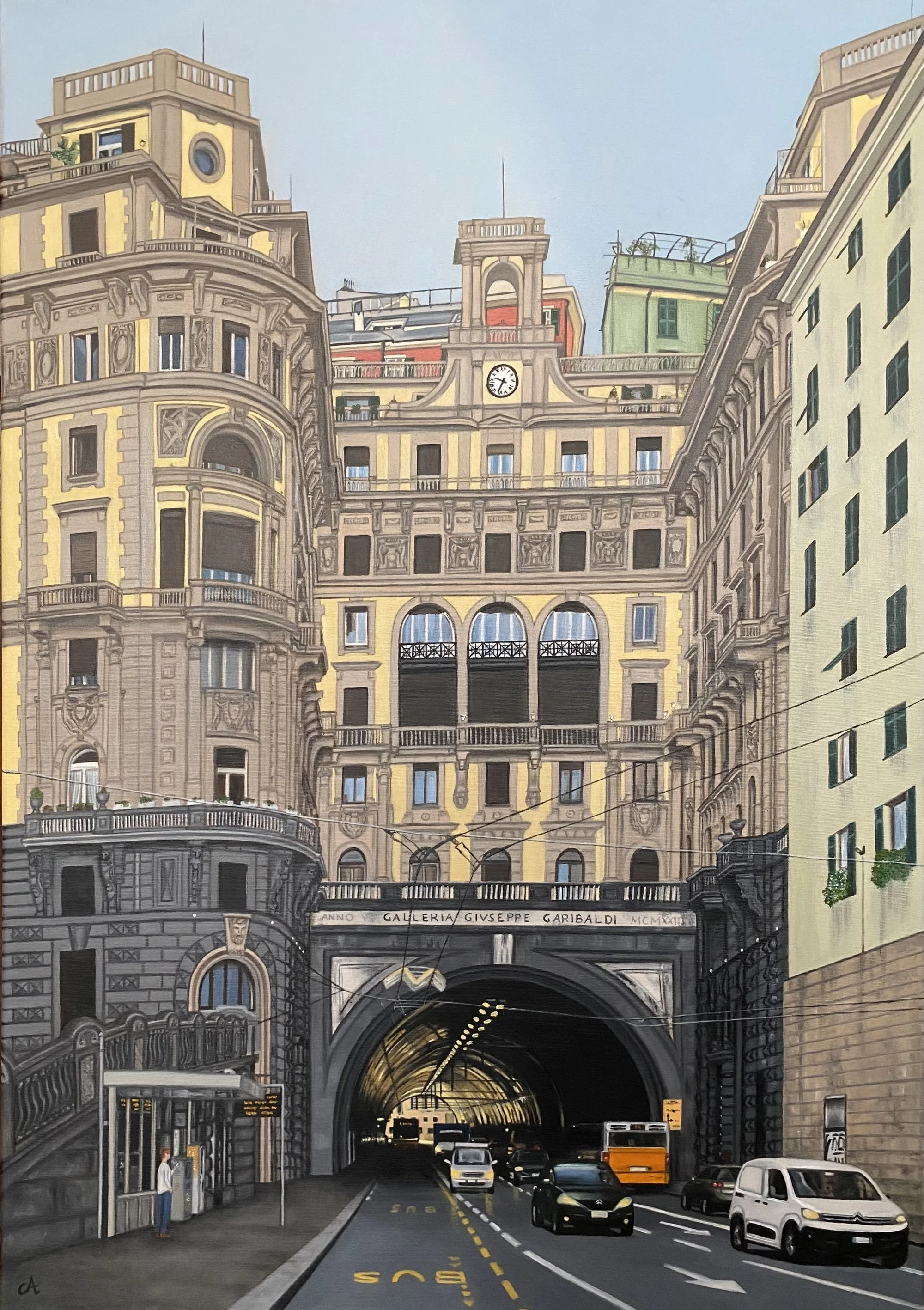
Invitation- Genova 2, oil on canvas, 70x100cm, 2024
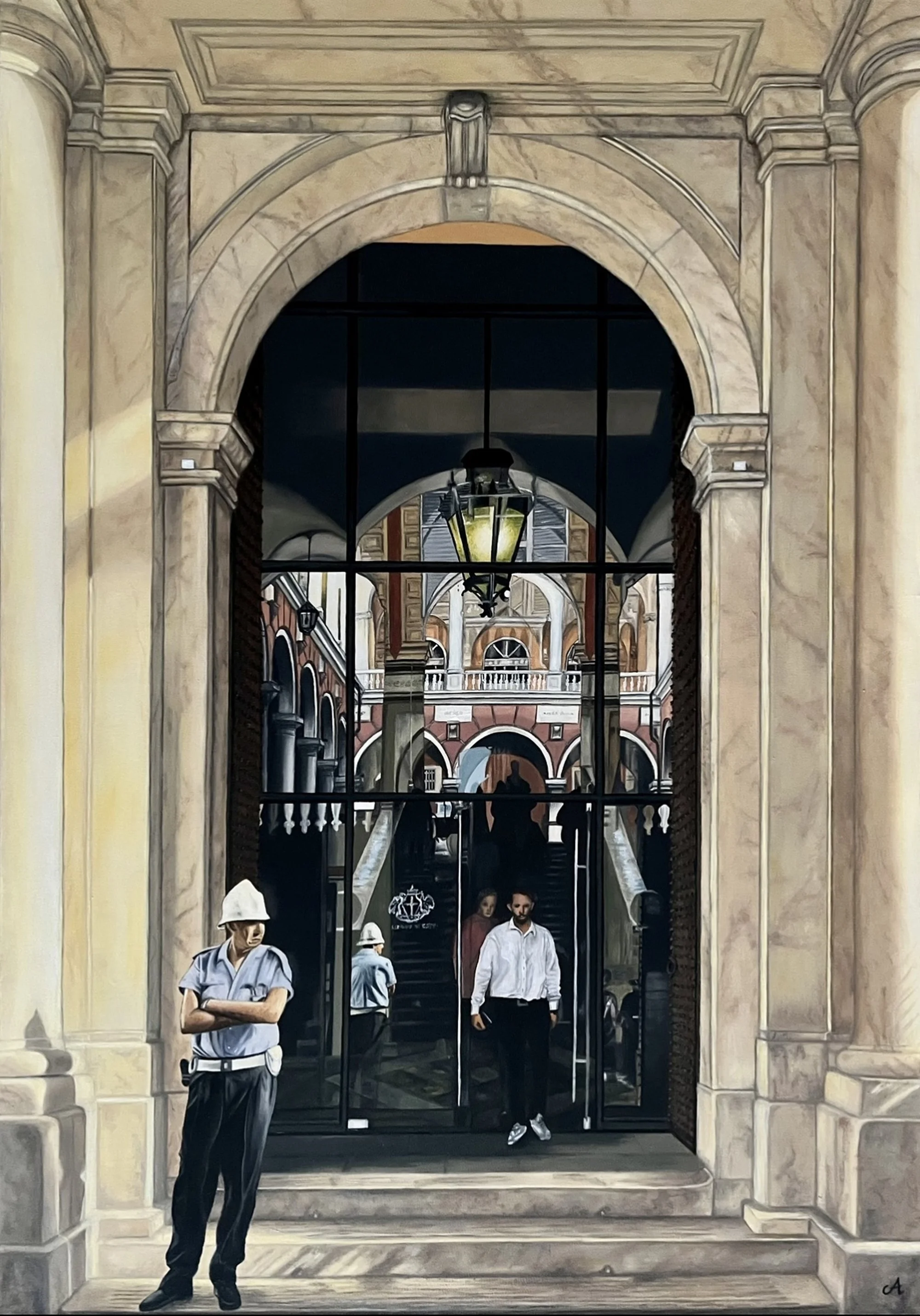
Invitation- Genova, oil on canvas, 70x100cm, 2024
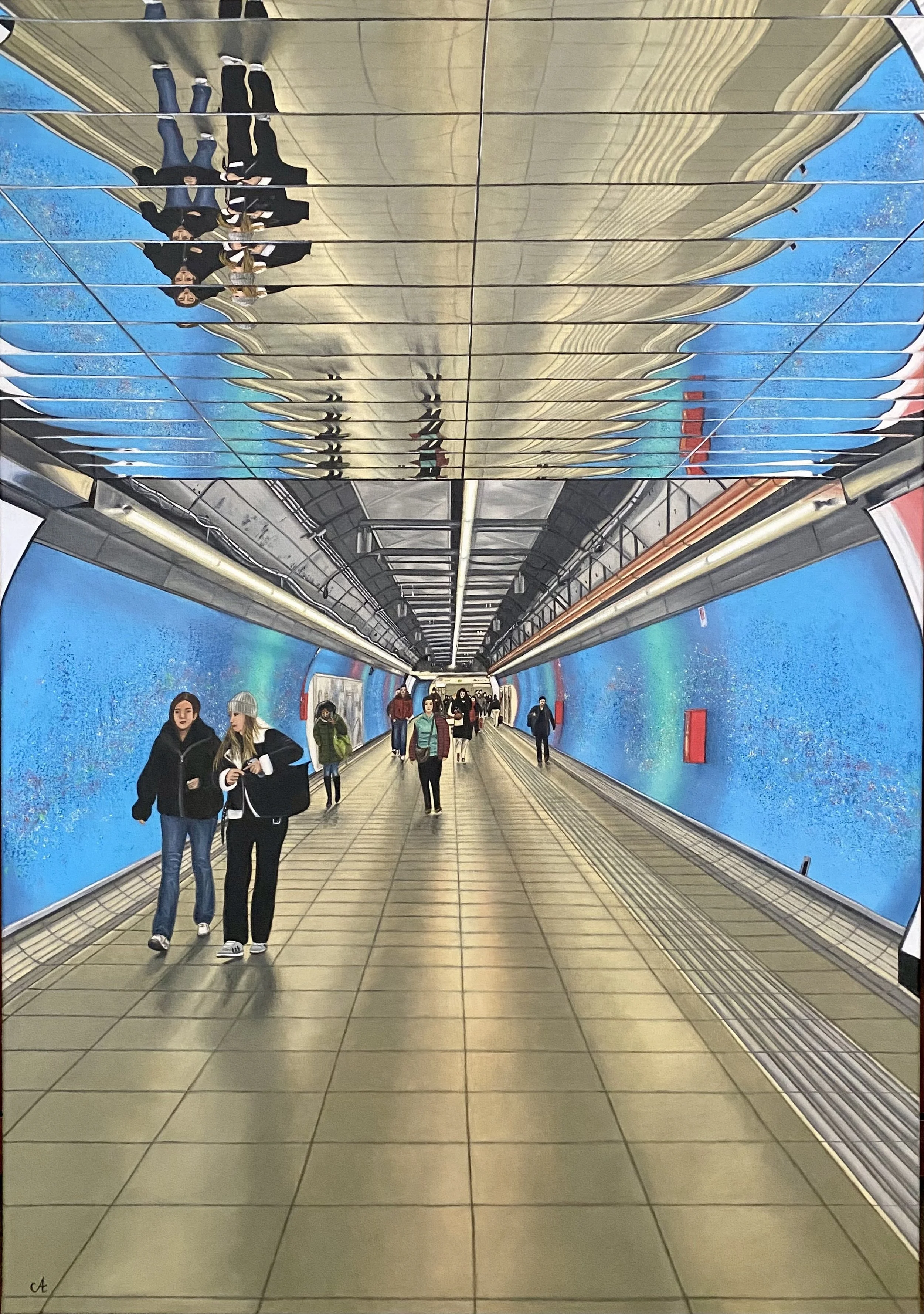
Invitation- M Spagna Rome, oil on canvas, 70x100cm, 2025
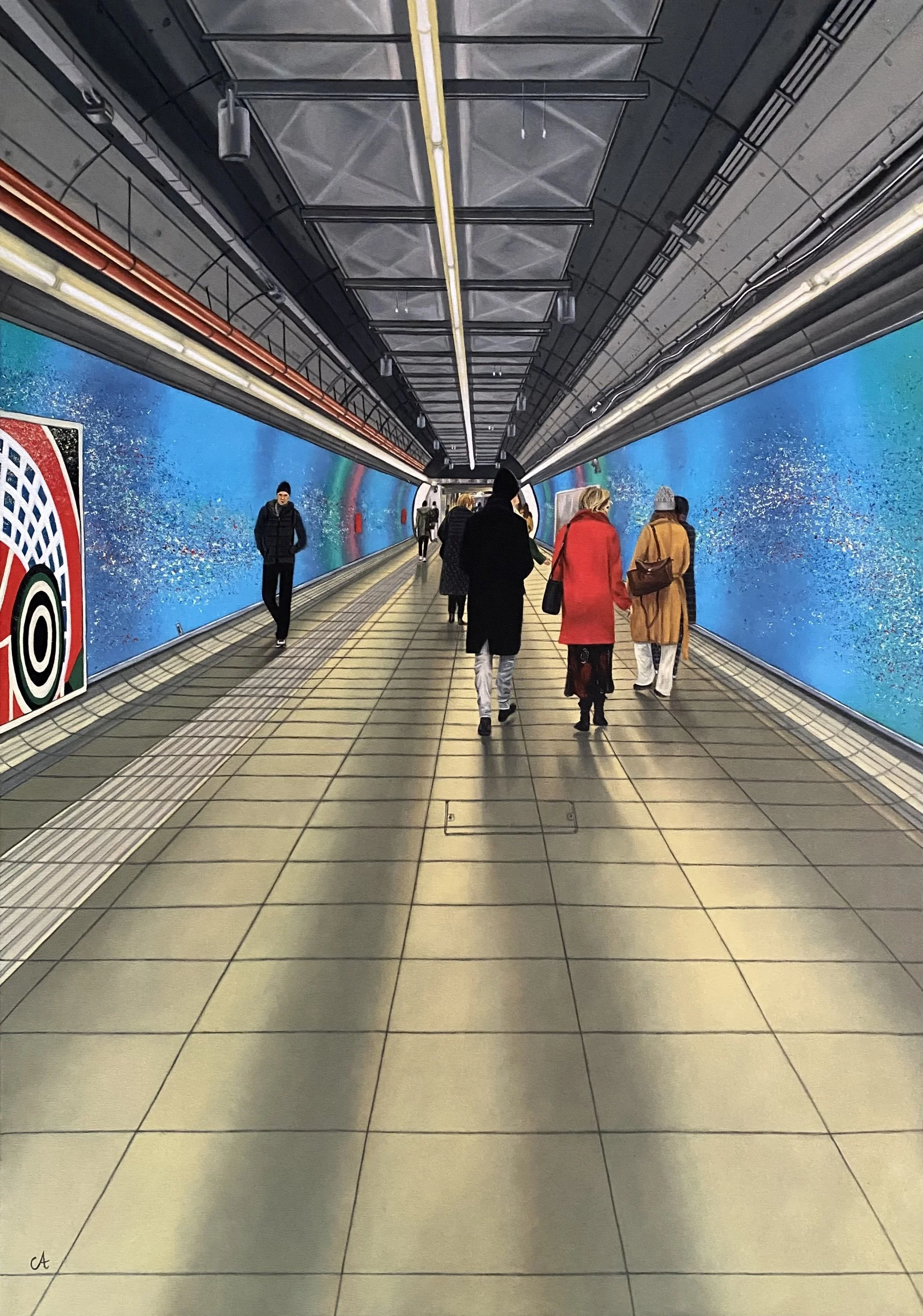
Invitation- M Spagna Rome II, oil on canvas, 70x100cm, 2025
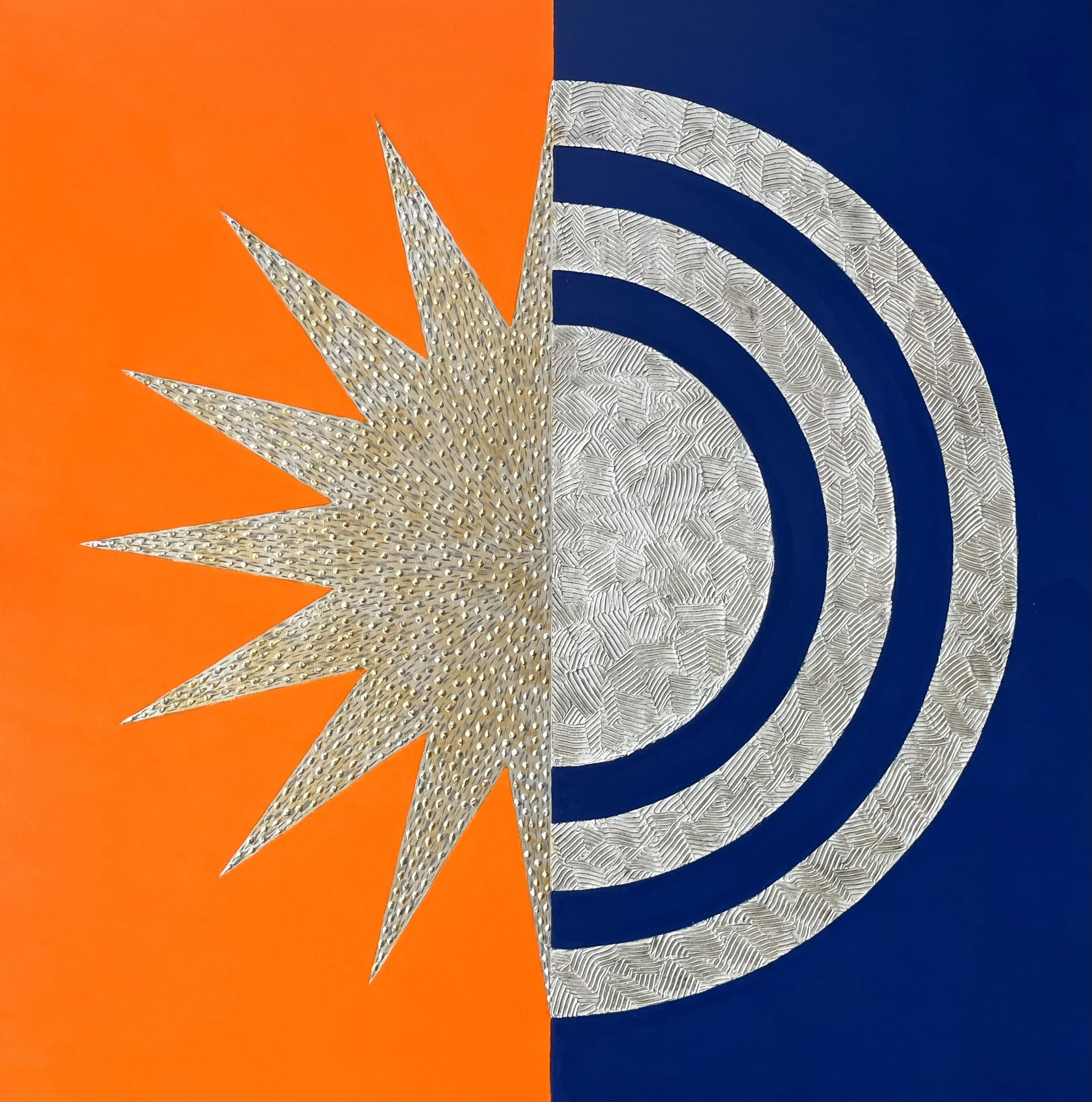
Day and Night, mix media on canvas, 100x100cm, 2024
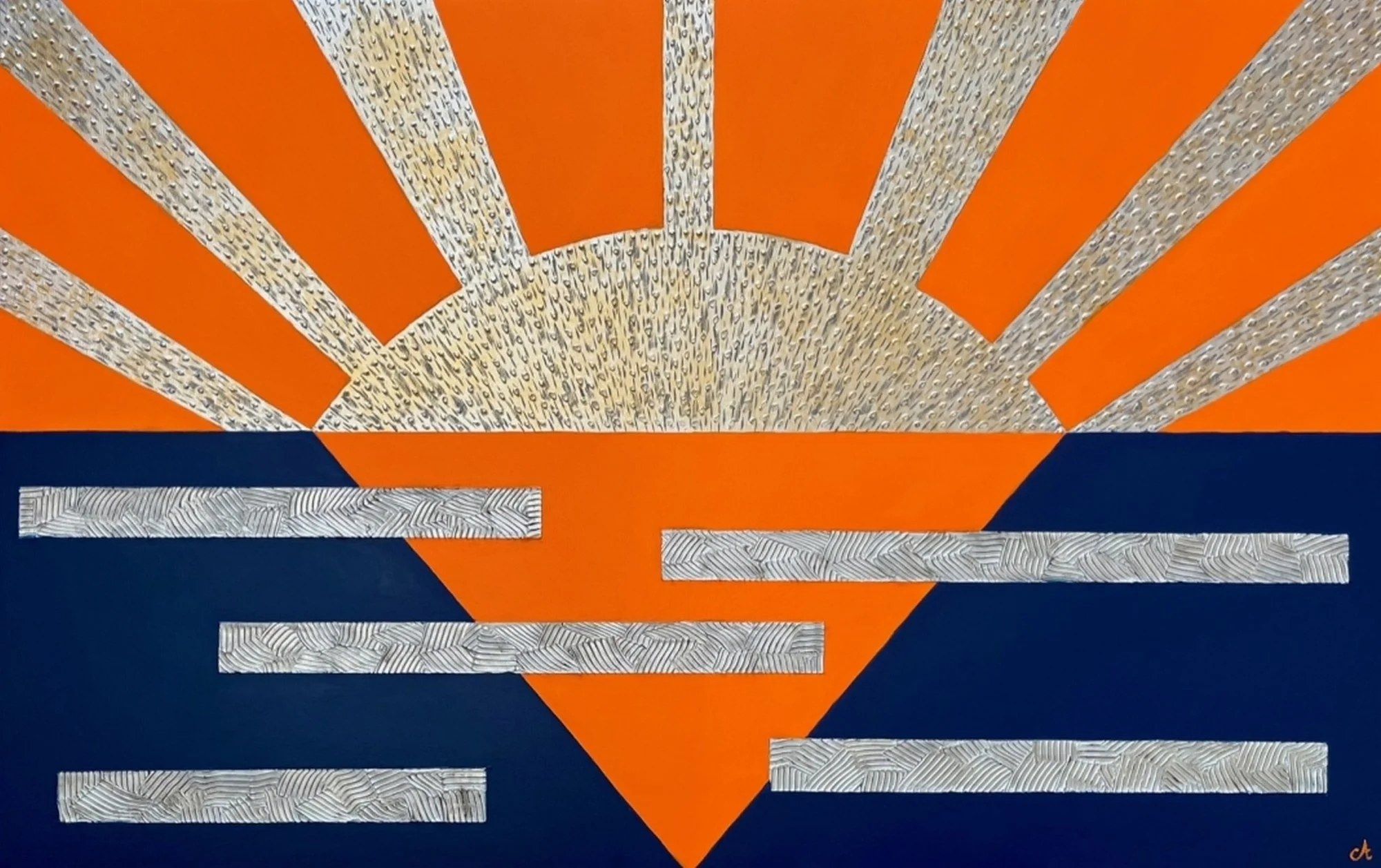
The magic of the setting sun, mix media on canvas, 110x70cm, 2024
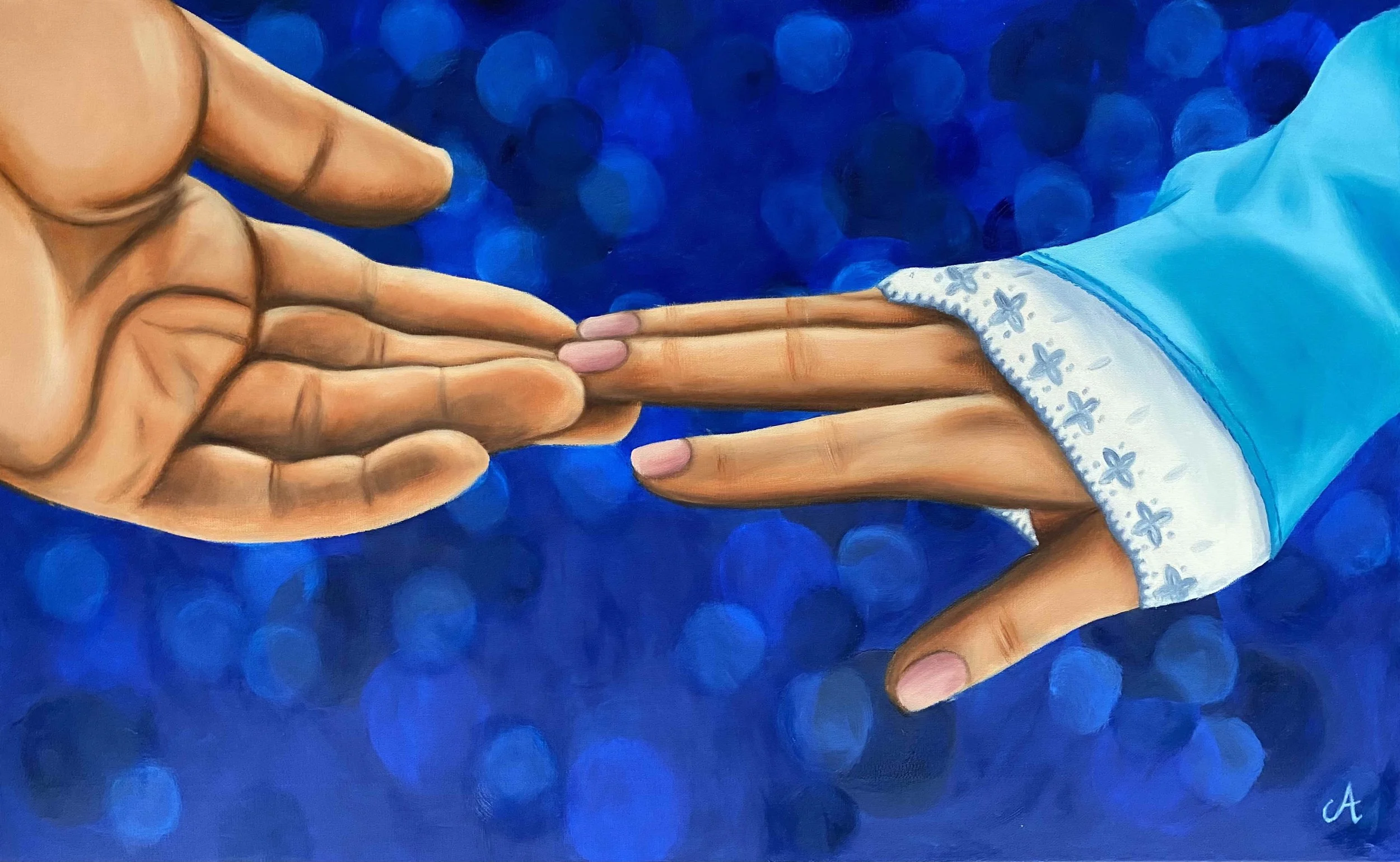
Don't go, oil on canvas, 80x50cm, 2023
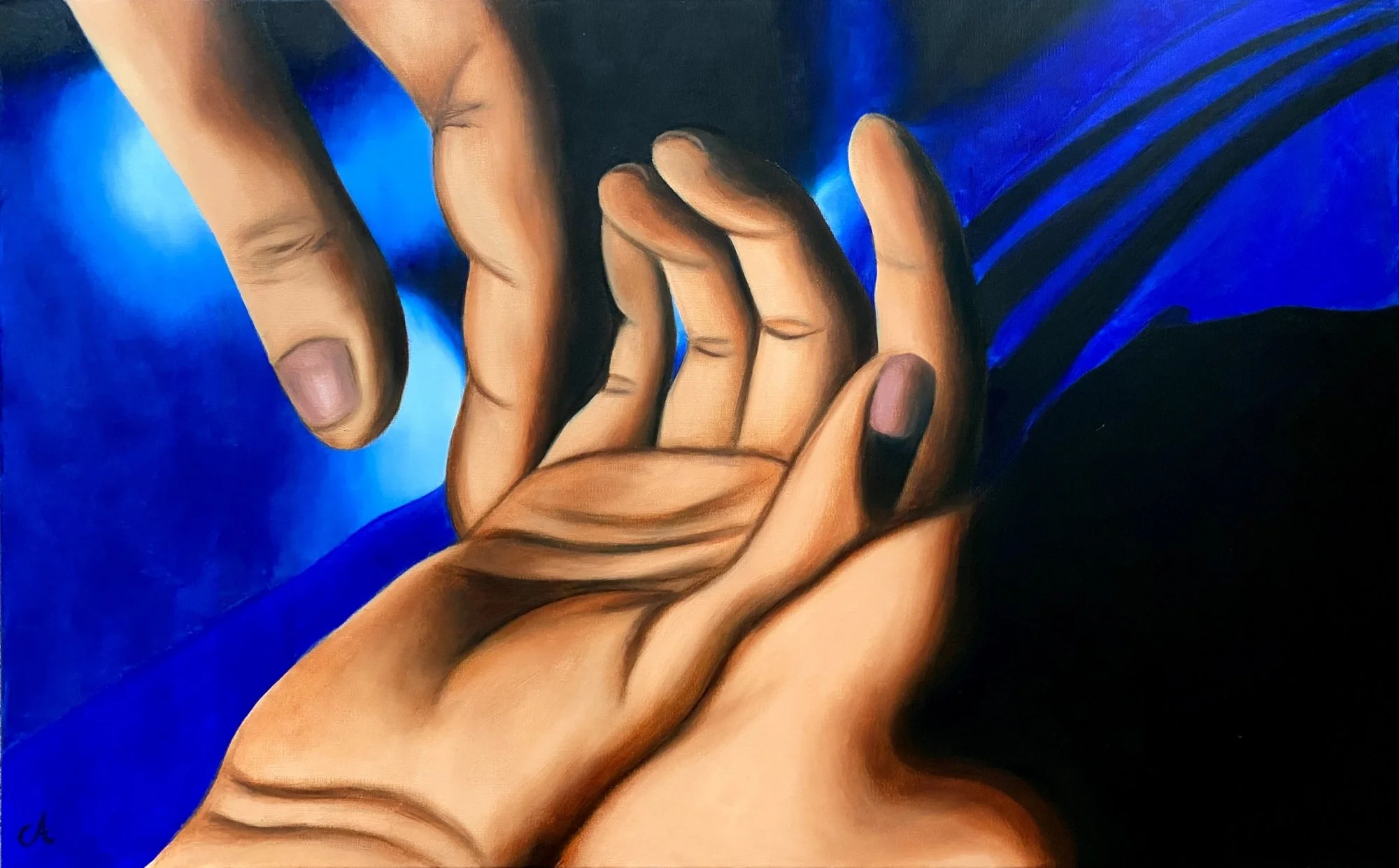
Sweet dreams, oil on canvas, 80x50cm, 2023

Diamond meadow II, oil on canvas, 70x50cm, 2025
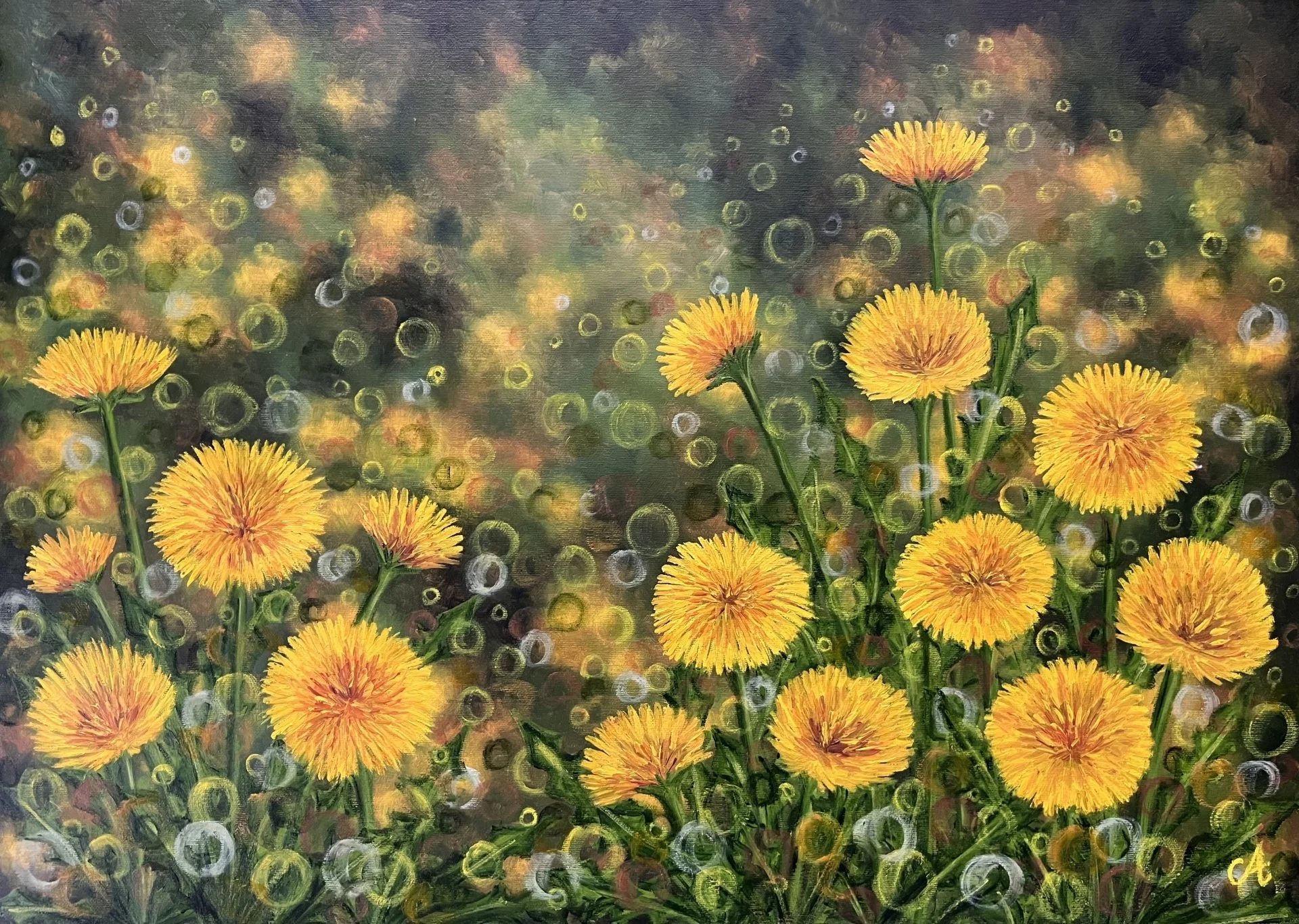
Sunny meadow III, oil on canvas, 70x50cm, 2025