Interview with Ruza Spark
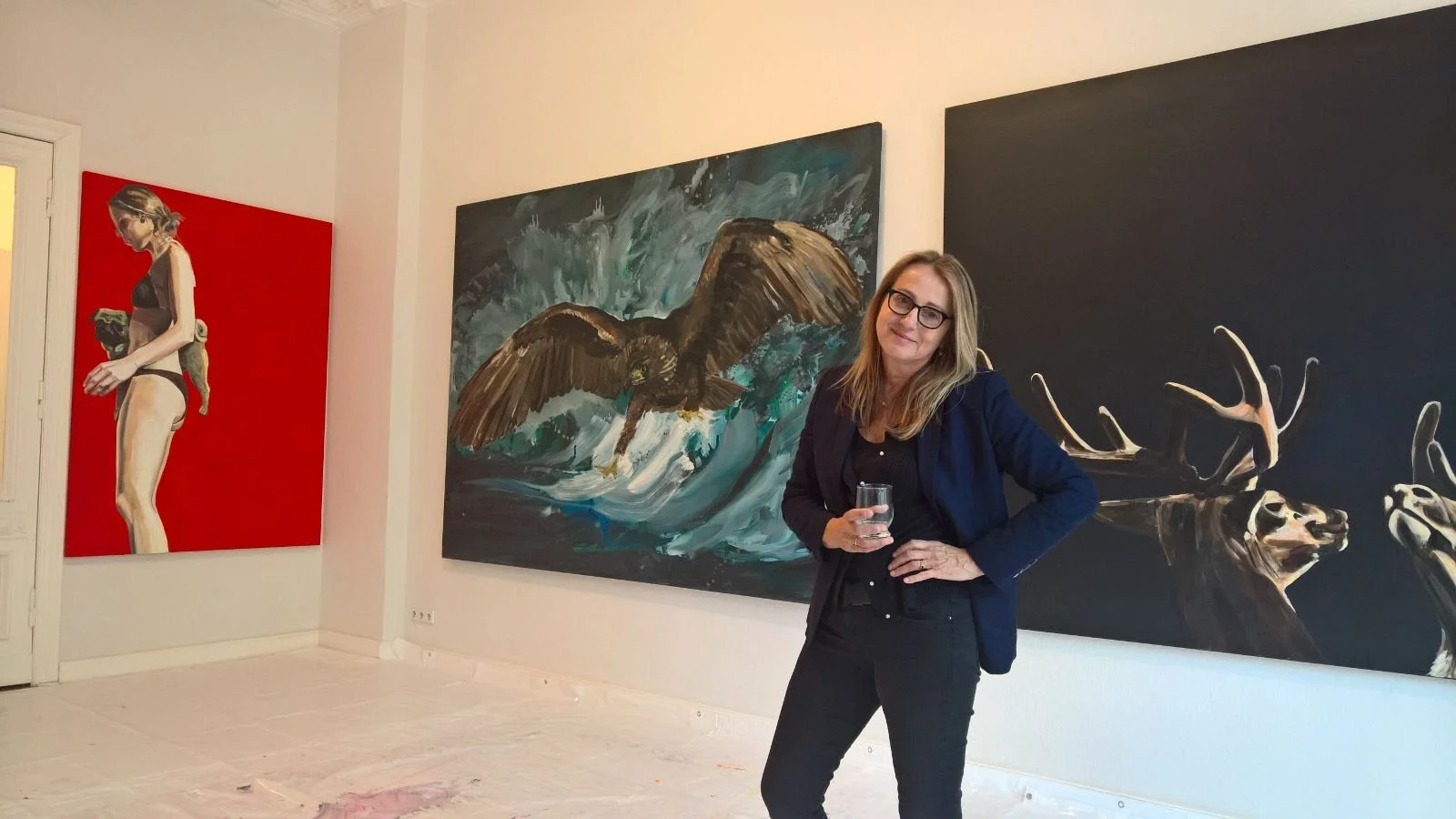
Gellery Week Berlin 2012
Ruźa, your work has long inhabited what Claudio Strinati describes as a Gratwanderung, the razor-thin edge between the figurative and the abstract, yet your recent canvases intensify this threshold by allowing gesture to migrate into representation and representation to dissolve back into pure chromatic motion. How do you conceive this oscillation today? Is it an intentional dialectic that you stage or an emergent condition that arises from the material intelligence of acrylic, linen, and the broad circling brushstrokes that are so central to your visual language?
Yes, that's one way to describe it. A fine line between the figurative and the abstract. A synthesis of both positions leads to a new, higher kind of insight (according to Hegel). Ultimately, this leads to pure gesture, but in a positive, pleasurable interplay with color and brushstroke.
Across your corpus from swirling centrifugal abstractions to weightless freeze frame figuration, there is an insistence on motion that is paradoxically suspended as though the canvas captures the impossible instant between an action and its disappearance. Considering your earlier trajectory in experimental film at Arsenal Berlin, the Goethe Institut London, Hallwalls in New York, and other venues, how has cinematic temporality, such as editing duration or interruption, informed your painting? Do you regard these canvases as singular frames from unseen sequences or as autonomous temporal fields that resist narrative structure?
Aesthetic perception has a great deal to do with ray and mathematics. And then there is untamed human nature, in its search for expansiveness and freedom of spirit. This tendency towards sequences has stayed with me to this day.
Renzo Piano has described your paintings as radiating, shining, and filled with Mediterranean light, yet they also possess a density and gravitational pull that resists any simplistic reading of luminosity. How do you negotiate this tension between chromatic illumination and the profound material opacity present in your sweeping gestures? In other words, what is the relationship for you between color as atmosphere and color as physical force?
Opacity and transparency are secondary. It's always about the moment of inner feeling. Both support each other and merge into a whole. When you've achieved this balance, you're a master!
Your portraits of Angela Merkel and Donald Tusk, created for political and cultural contexts, operate within a visual lexicon distinct from your abstract gestural works, yet both investigate presence psychology and the elasticity of representation. How do you reconcile these divergent modes within your larger practice? Do they serve as parallel inquiries into the same metaphysical terrain, or do they inhabit fundamentally different conceptual registers?
It flows effortlessly from my hand. I don't need to think much about it. But here too, the balance between perceiving human character and the painting itself must be right!
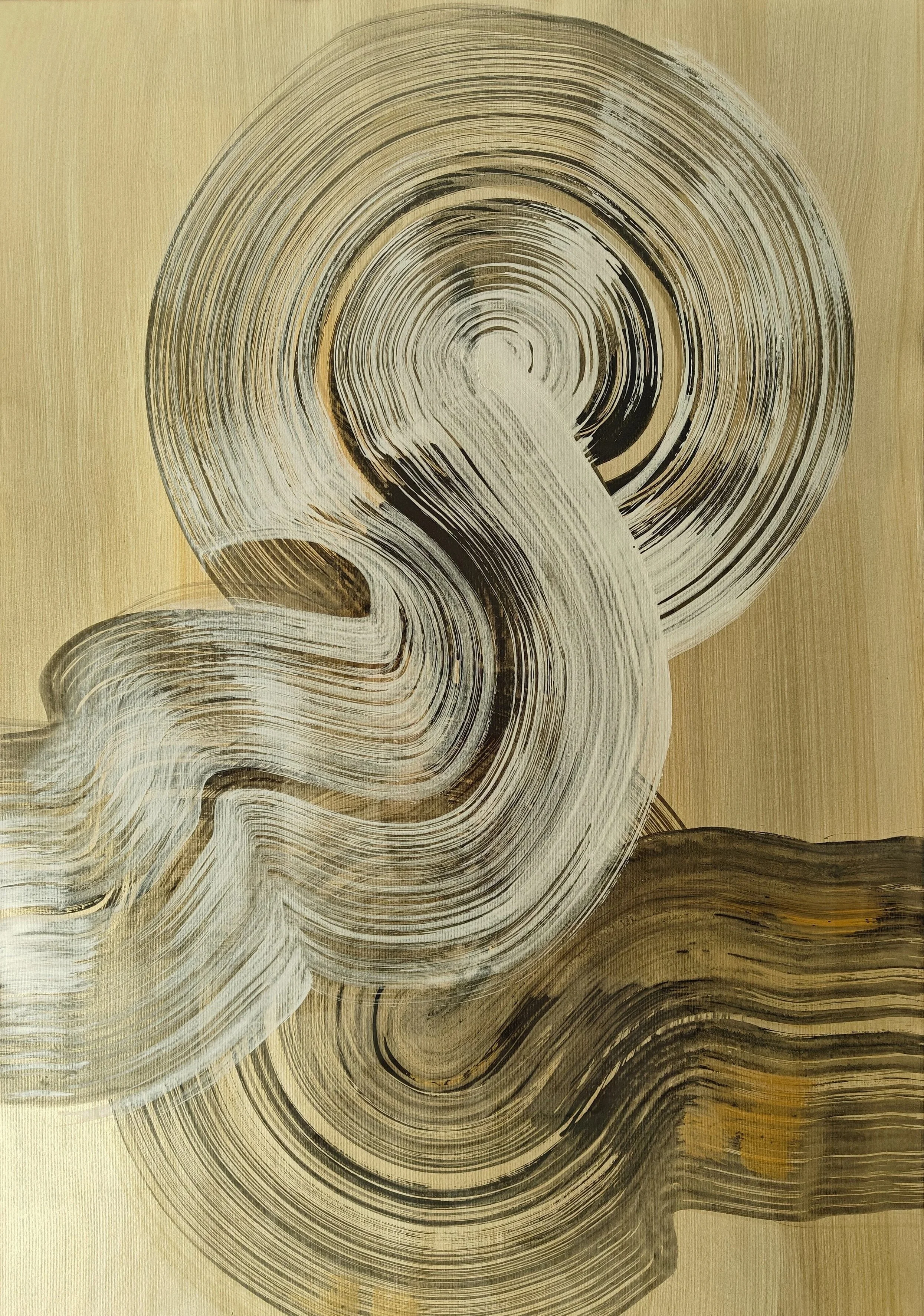
The large circular brushstrokes in your abstract paintings evoke vortices, gravitational eddies, or cosmological diagram forms that feel both primordial and contemporary. To what extent are these gestures premeditated structures or improvisational acts? Do you experience them as a form of embodied calligraphy, a kinetic record of your physical encounter with the canvas, or as attempts to map forces, emotional, spatial, or existential that exceed the boundaries of the body?
Yes, that's a good question. Since this is my current phase, I naturally don't have an objective perception and no clear answer, because I'm right in the middle of it. I've also asked myself...why is it like this? Every time I start a new painting, this balletic movement comes out of me, and because I'm blending the paint into the other fresh paint, I have to hurry each time to maintain the lightness of the movement. The brush with the thick layer of paint on it is crying out for release! You'll have to ask me that question again in a few years. Right now, it's impossible for me to answer it objectively.
Your figurative works often position human and animal bodies within vast, uninterrupted fields of saturated color spaces, devoid of identifiable geography yet charged with psychological and metaphysical depth. How do you conceptualize space in these works? Is it an absence, a dream state, a metaphysical void, or a chromatic arena in which the figure negotiates its fragile conditions of being?
You've summarized that very accurately. It is, of course, a kind of symbolism. Through figuration, it's easier to connect with the viewer and interpret the longings of our souls. And thanks to painterly means, one can project thoughts into the open space (cosmos). I called this phase of my work abstract realism.
Your international exhibition history from Pretoria and Cairo to Seoul, Istanbul, Washington, DC, and Rome suggests a practice that moves fluidly across cultural, political, and aesthetic contexts. How have these geographic and cultural encounters influenced your understanding of painting as a transnational language? Have these experiences transformed your palette, spatial strategies, or the conceptual stakes of your imagery?
I left communist Poland at the age of 13 under difficult circumstances. From then on, I was someone who had to, and could, rely on myself. My belief in the goodness of people has not faded. With these pictures, I try to build a bridge for everyone to the best within us!
A recurring quality in your work is the paradoxical combination of explosive energy and a quiet aura of lassitude, a balance that Strinati identifies as central to your pictorial logic. How do you orchestrate this duality in your studio process? Does it emerge intuitively, or does it arise from deliberate modulation of tempo, layering transparency, and the physical properties of acrylic on linen?
Intuition and experience. The explosive is expressed all the more strongly in contrast to inertia.
Your paintings frequently seem to defy gravity. Figures float, gestures hover, chromatic fields resist depth cues, and objects appear liberated from the constraints of physical law. Do you view this sense of weightlessness as a conceptual motif suggesting metaphysical ambiguity, psychological release, or the instability of memory, or do you see it mainly as a visual strategy for reorganizing perceptual space?
You've summarized that wonderfully. Yes, psychological liberation!
Across your decades of work spanning film portraiture and painting, you have consistently explored the boundary between what is visible and what exceeds representation between the material immediacy of paint and the immateriality of sensation, memory, and time. Looking at your recent work, where do you see your current position along this lifelong path at the edge? Are you moving toward greater abstraction, deeper figuration, or an ever more intricate synthesis in which these categories dissolve into a single expanded field of visual experience?
Yes, on the path to total painterly freedom! The daily encounter with color, letting it guide me, is a kind of prelude in the rhythm of Bach or Chopin. But I must admit that the urge for a dynamic landscape or a tranquil figuration keeps knocking at my door. We'll see what the future holds.
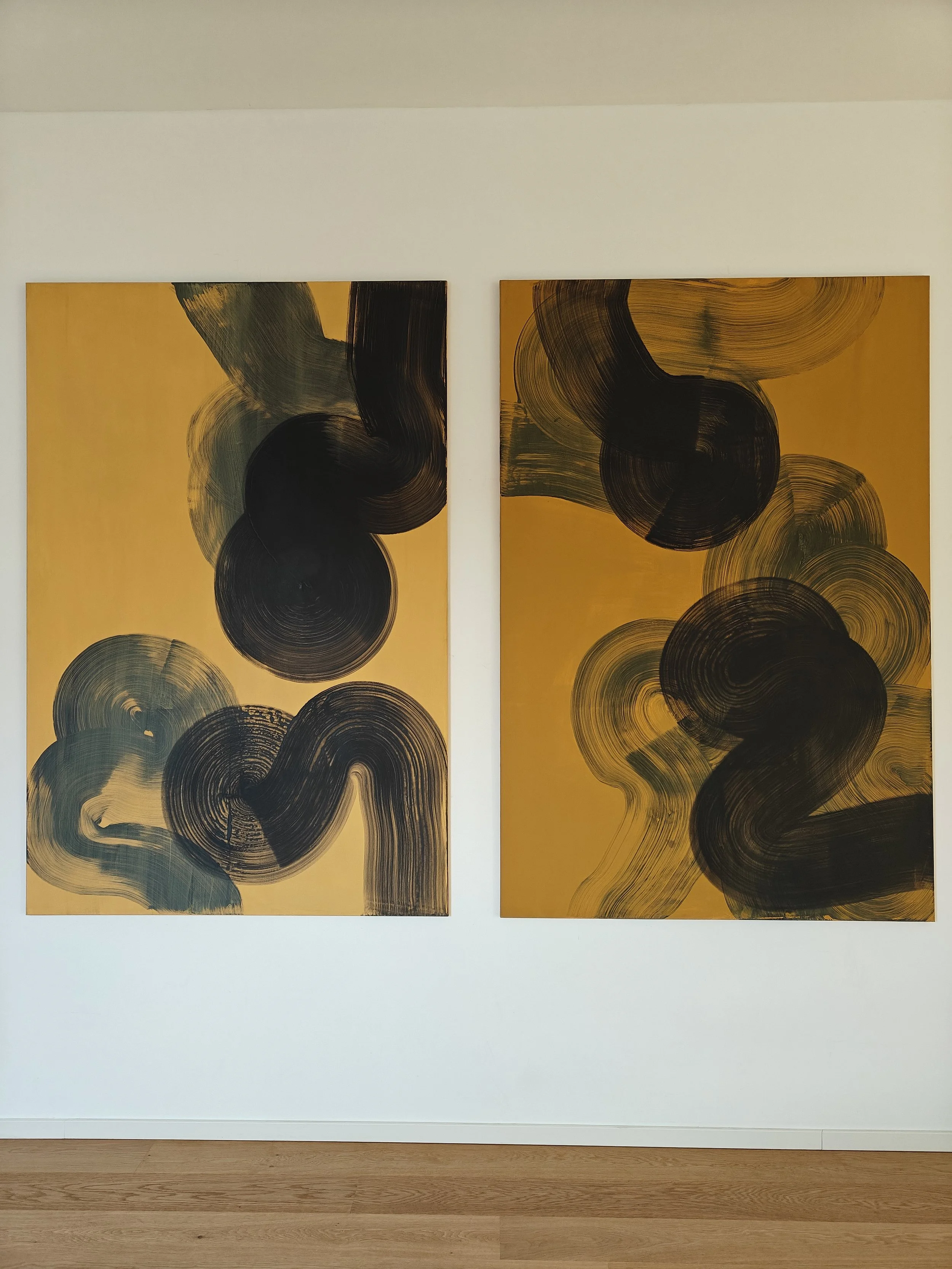
Studio Berlin, 2024,acrylic on canvas 140 x200 cm
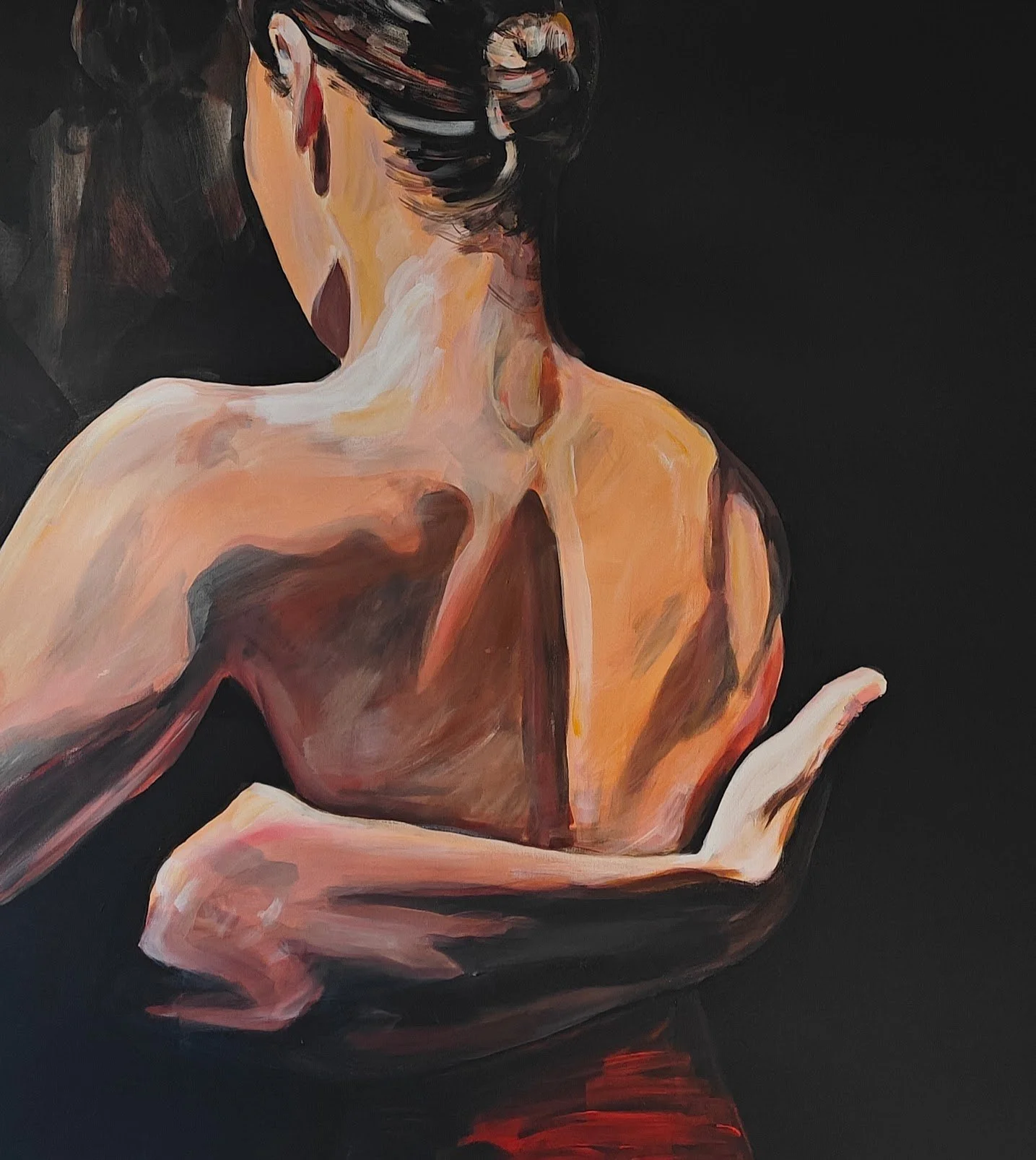
Acrylic on canvas, 140x150cm, 2011
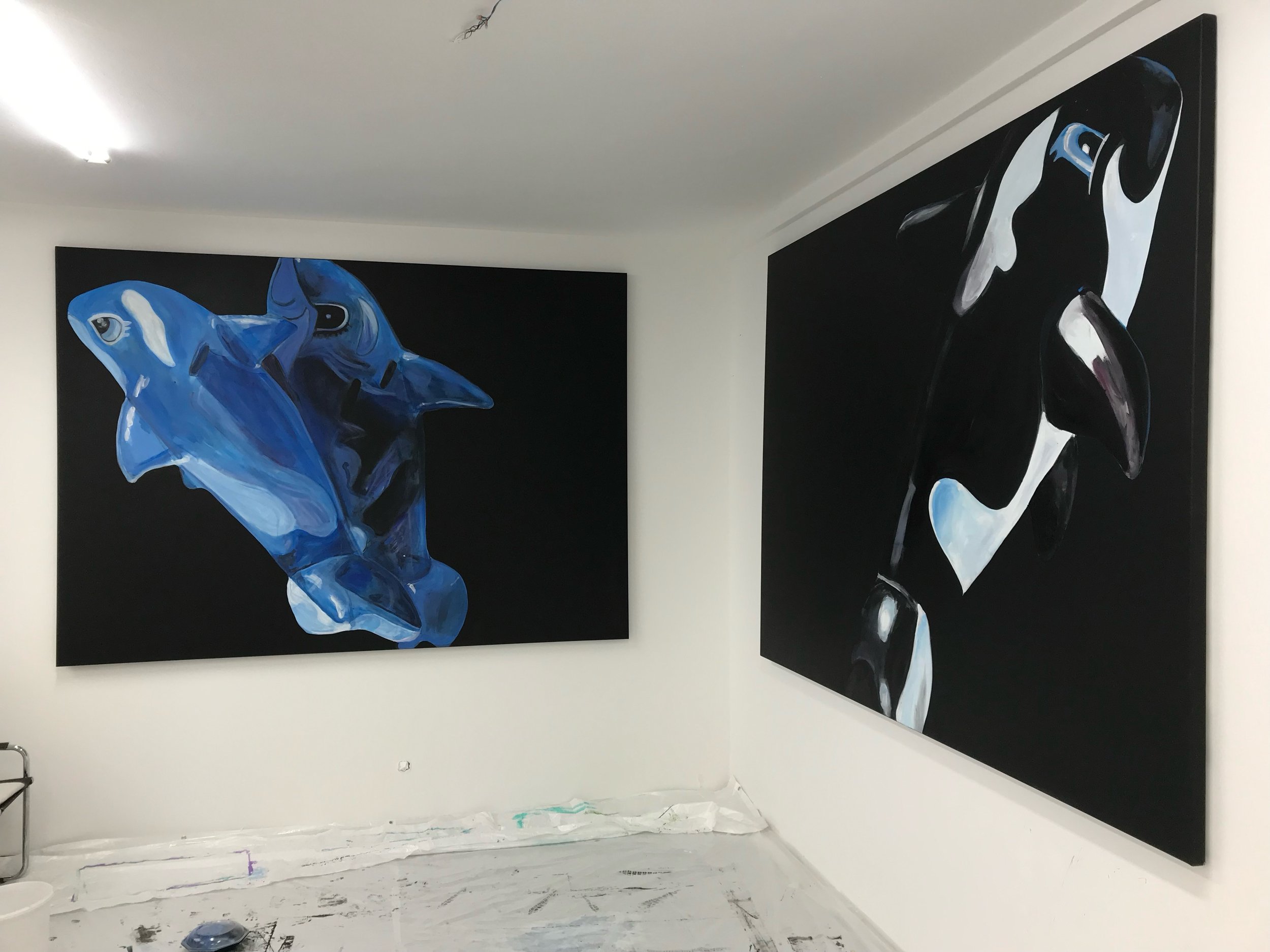
Studio Berlin,acrylic on canvas, 150cmx220cm, 2006
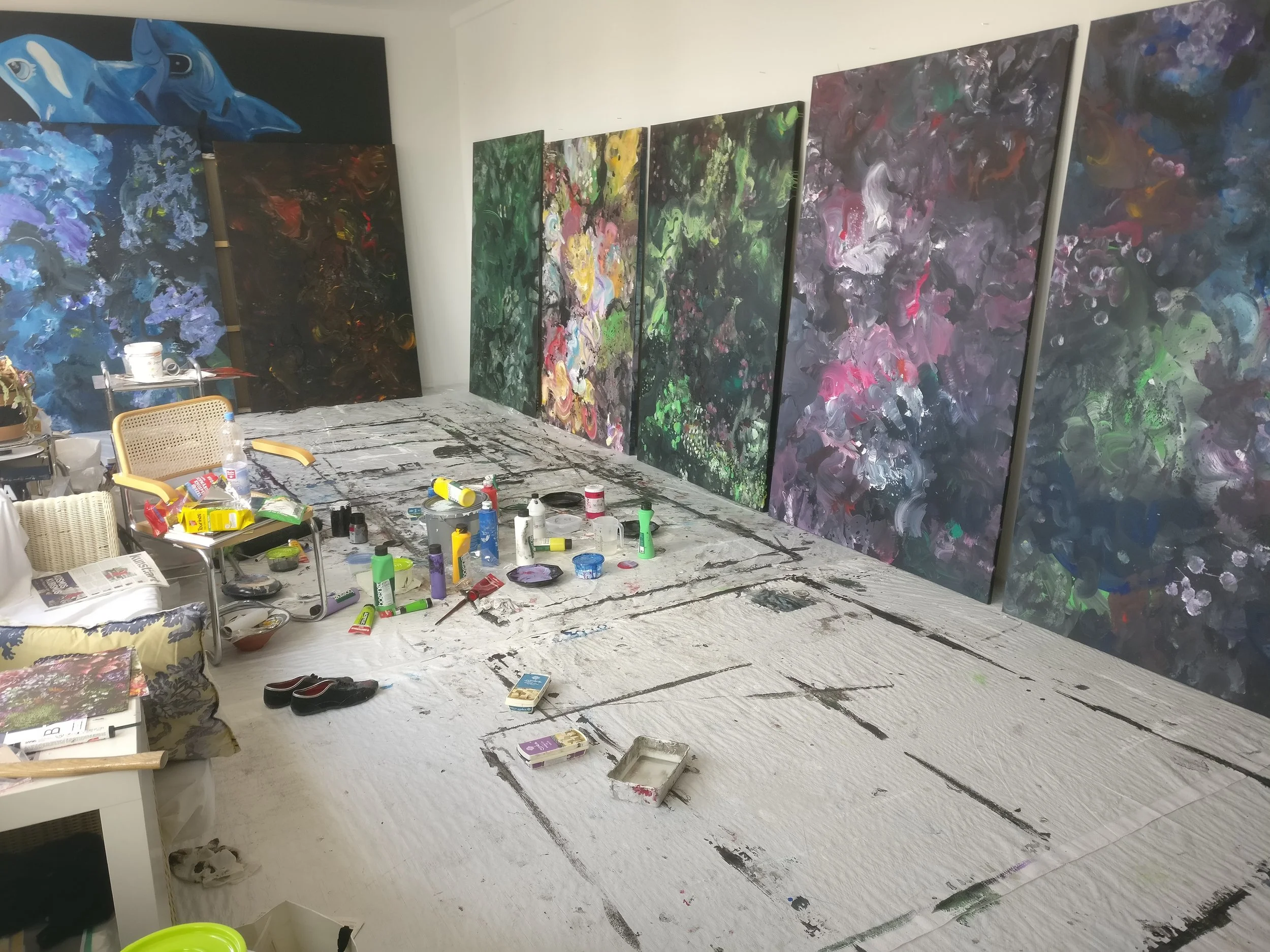
Studio Berlin, 140cm x200cm, 2018
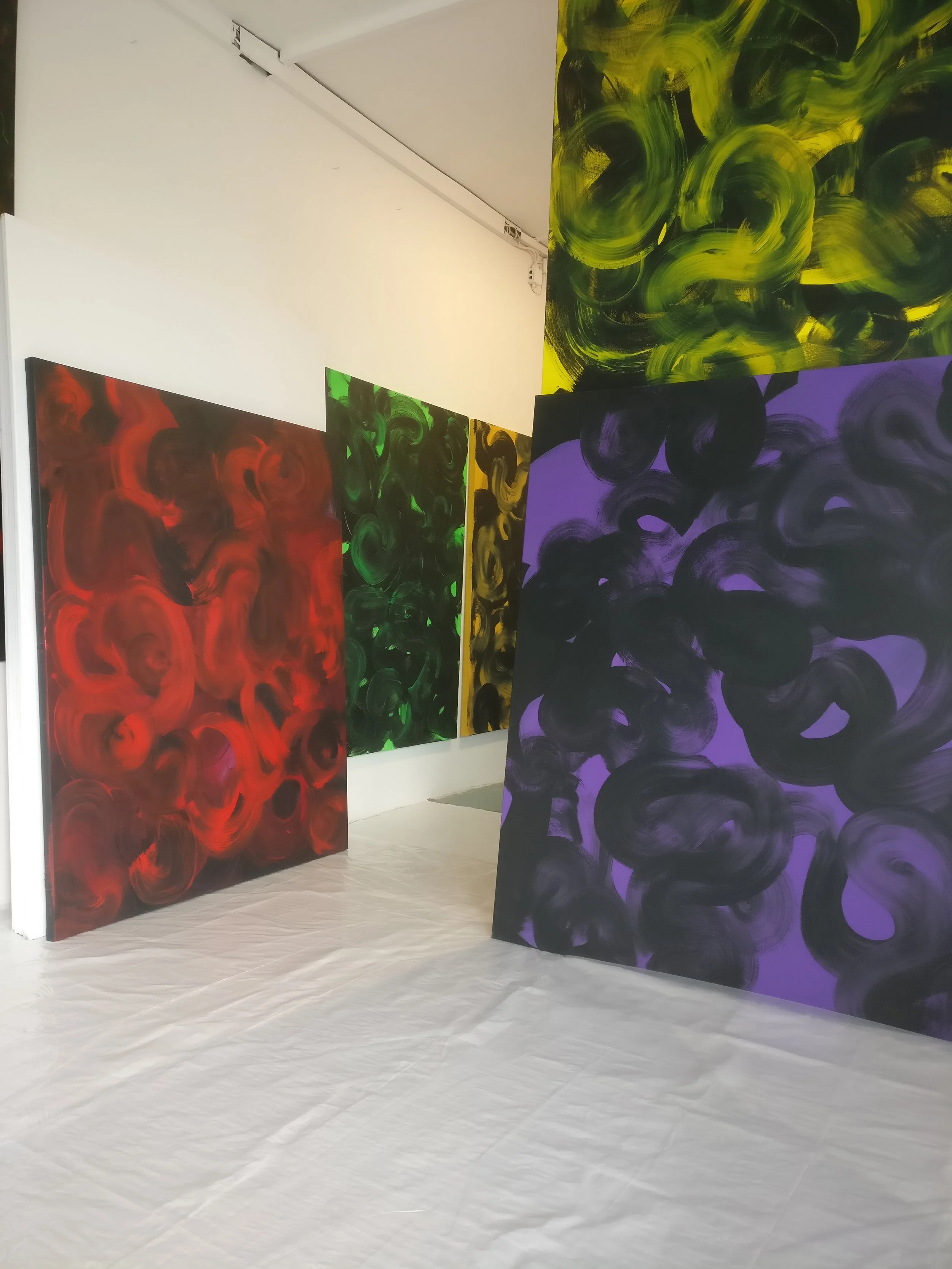
Studio Berlin, 2020
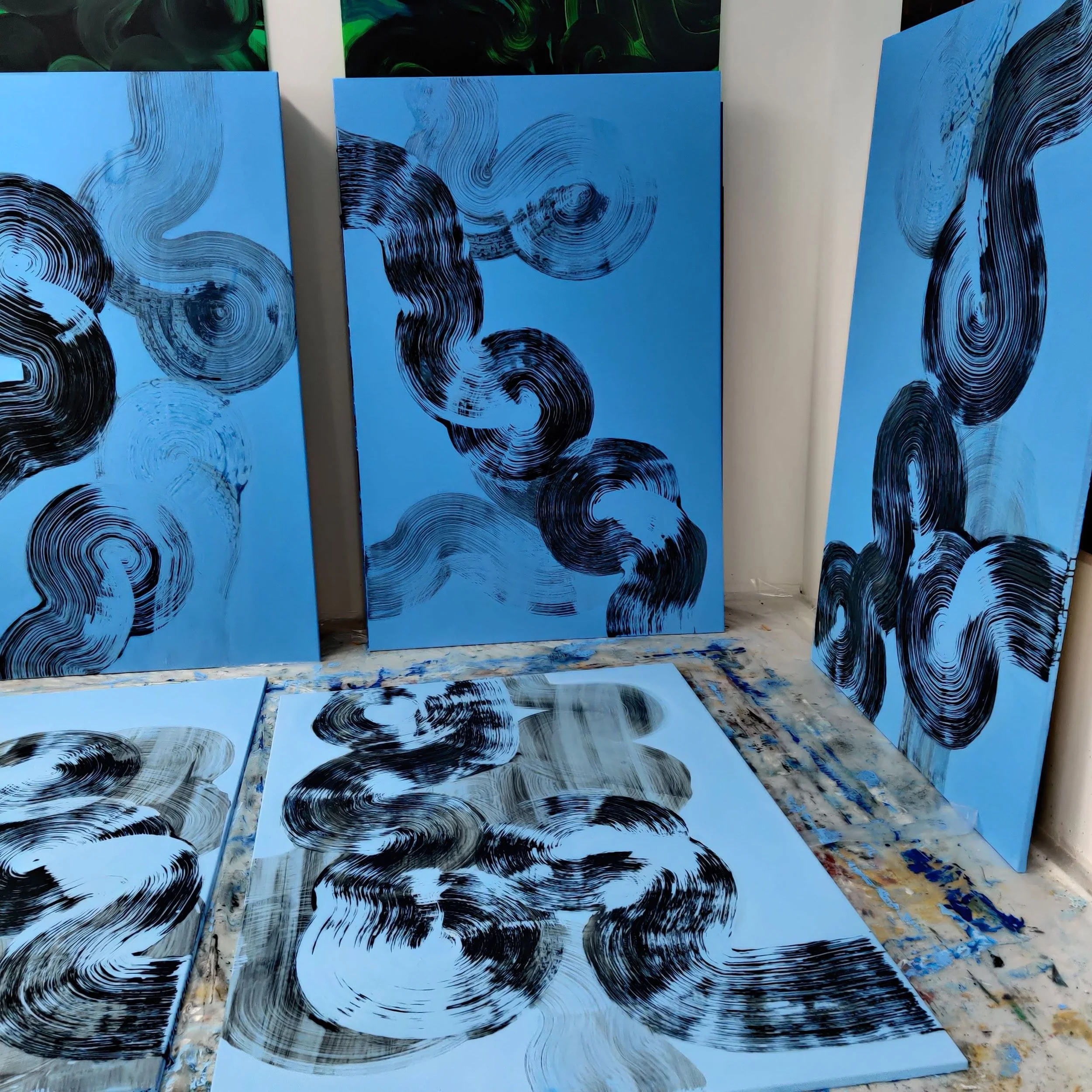
Berlin 2021
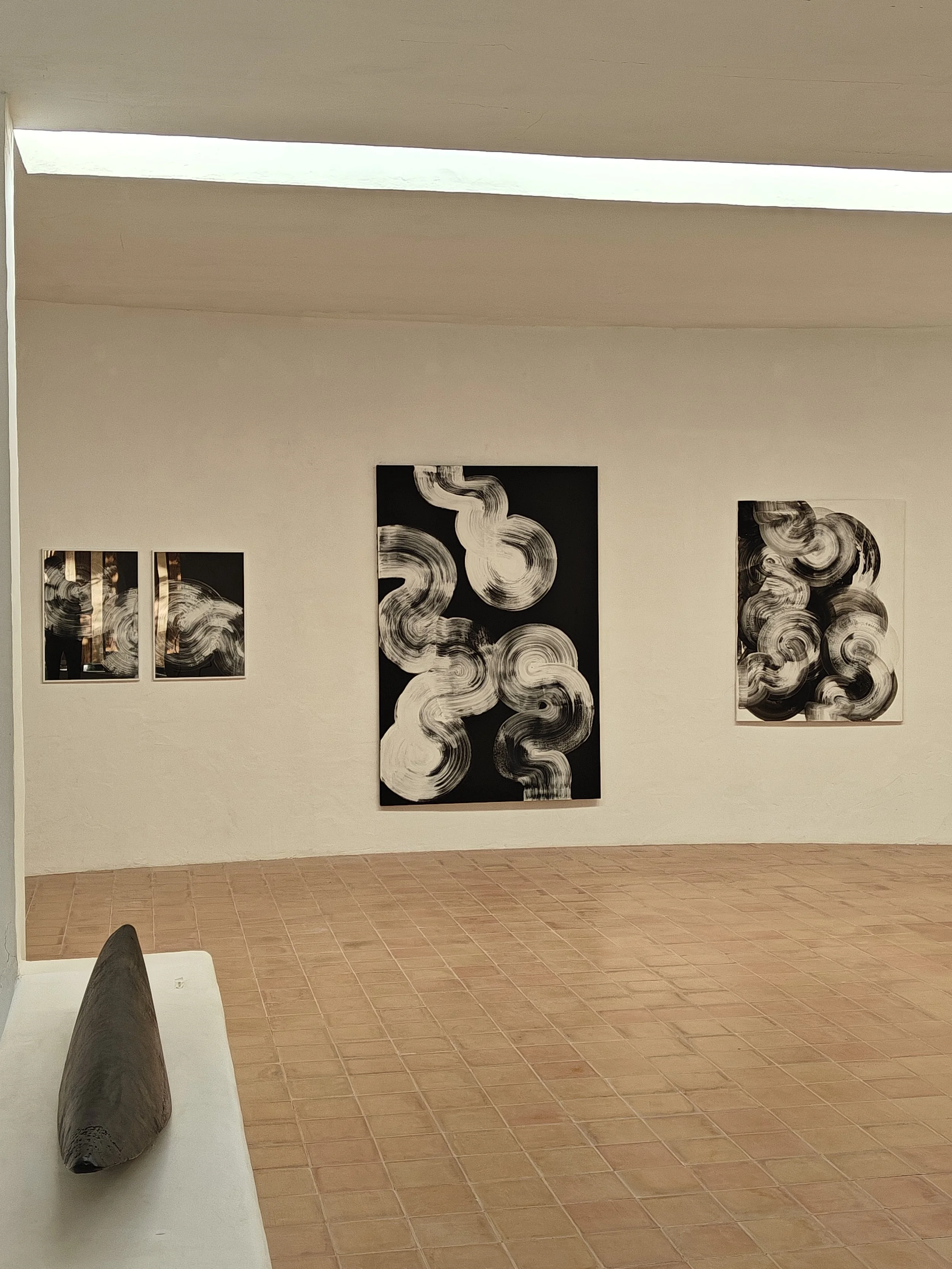
Espacio Micus 2025 Ibiza
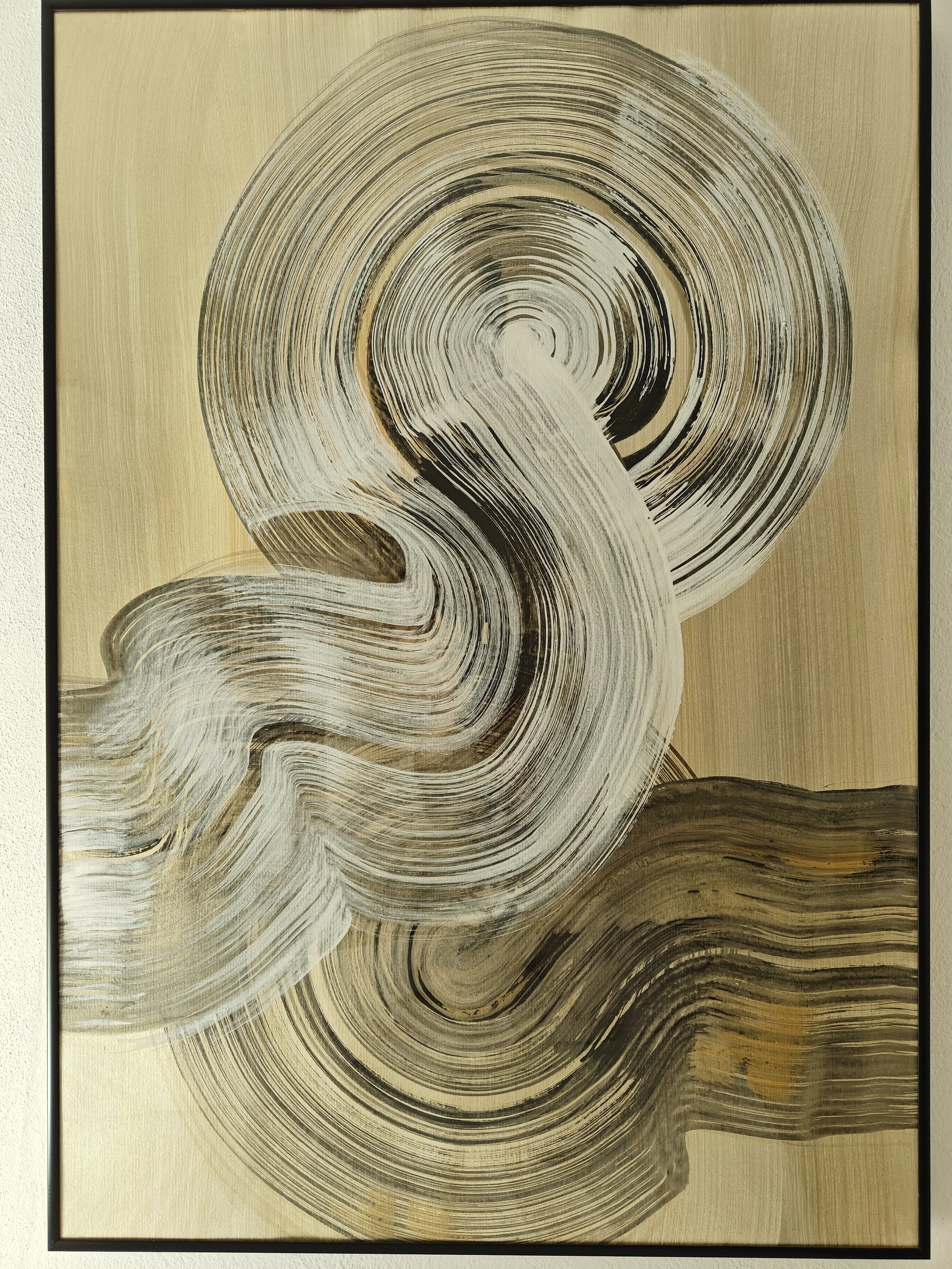
Acrylic on paper,Ibiza 2024