Interview with Margaretha Guberbale
www.gubernale.com
www.margarethagubernale.org
Margaretha, your artistic philosophy suggests that symbolism functions as a universal language capable of bridging the visible world and the metaphysical realm; could you elaborate on how you developed this symbolic vocabulary over the decades, and how it enables you to communicate philosophical and spiritual ideas in a form that remains accessible to viewers from different cultures and intellectual backgrounds?
In the picture “The Widening” you see one DNA emerging from the light from above and a second one emerging from the person's heart and melting into the DNA above. Here the metaphysical realm is united with the visible world. Globally comprehensible and obvious, people communicate from within themselves according to their ideas of size, breadth, strength and power and symbolically seek God above themselves.
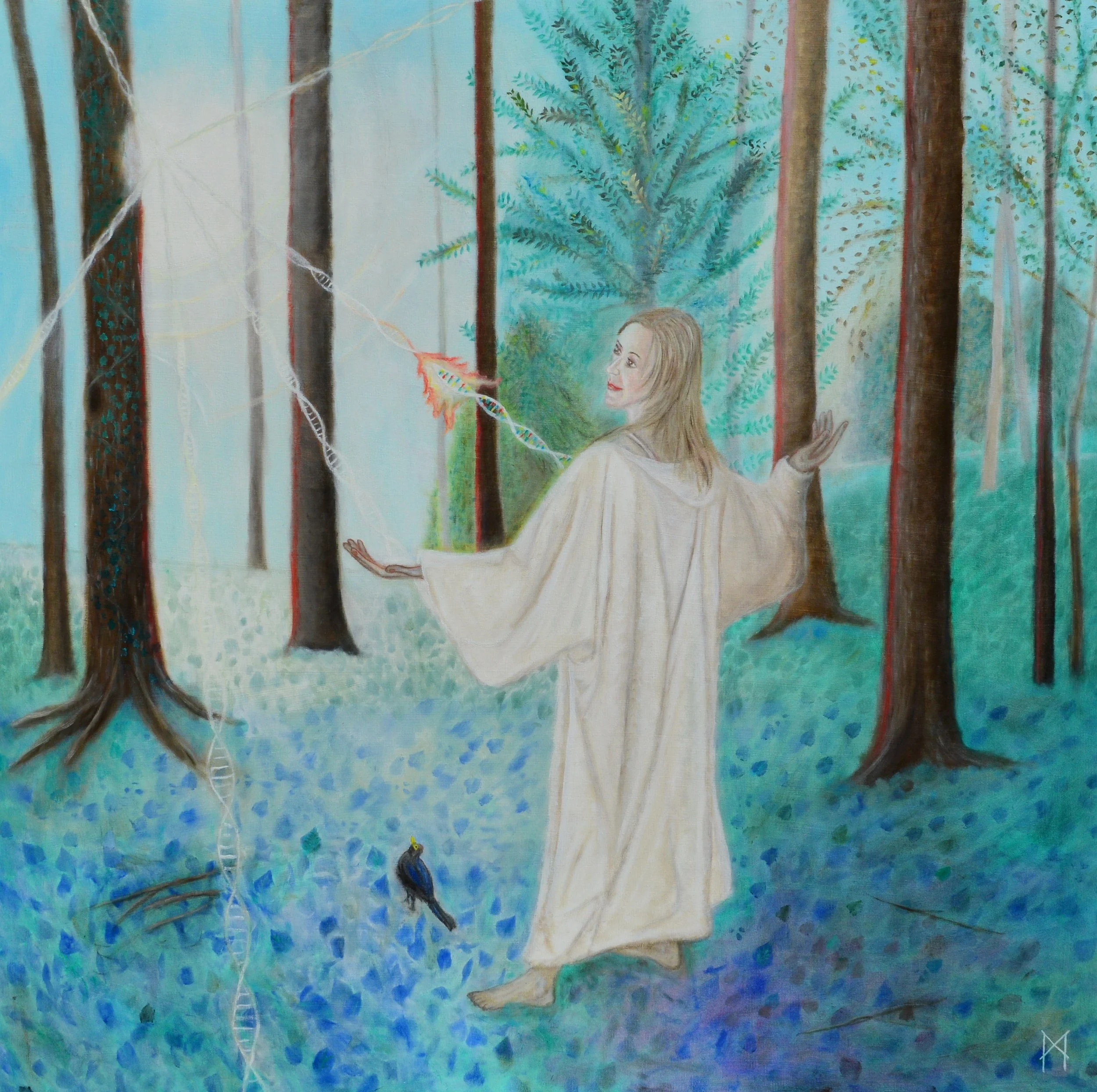
The Widening, 2021, oil on canvas, 100 cm x 100 cm
In your reflections on the historical evolution of art, you describe a trajectory that moves from prehistoric mystical symbolism toward a future art connected to cosmic consciousness; how do you situate your own work within this continuum, and what role do you believe contemporary artists should play in reawakening this spiritual dimension of artistic expression?
The voluntary step back into symbolic thinking, if it goes very far, for example in prehistoric times, gave the powerful impulse for a powerful similar forward spiral into a cosmic consciousness, which on the other hand also imposes many renunciations for reach the goal.
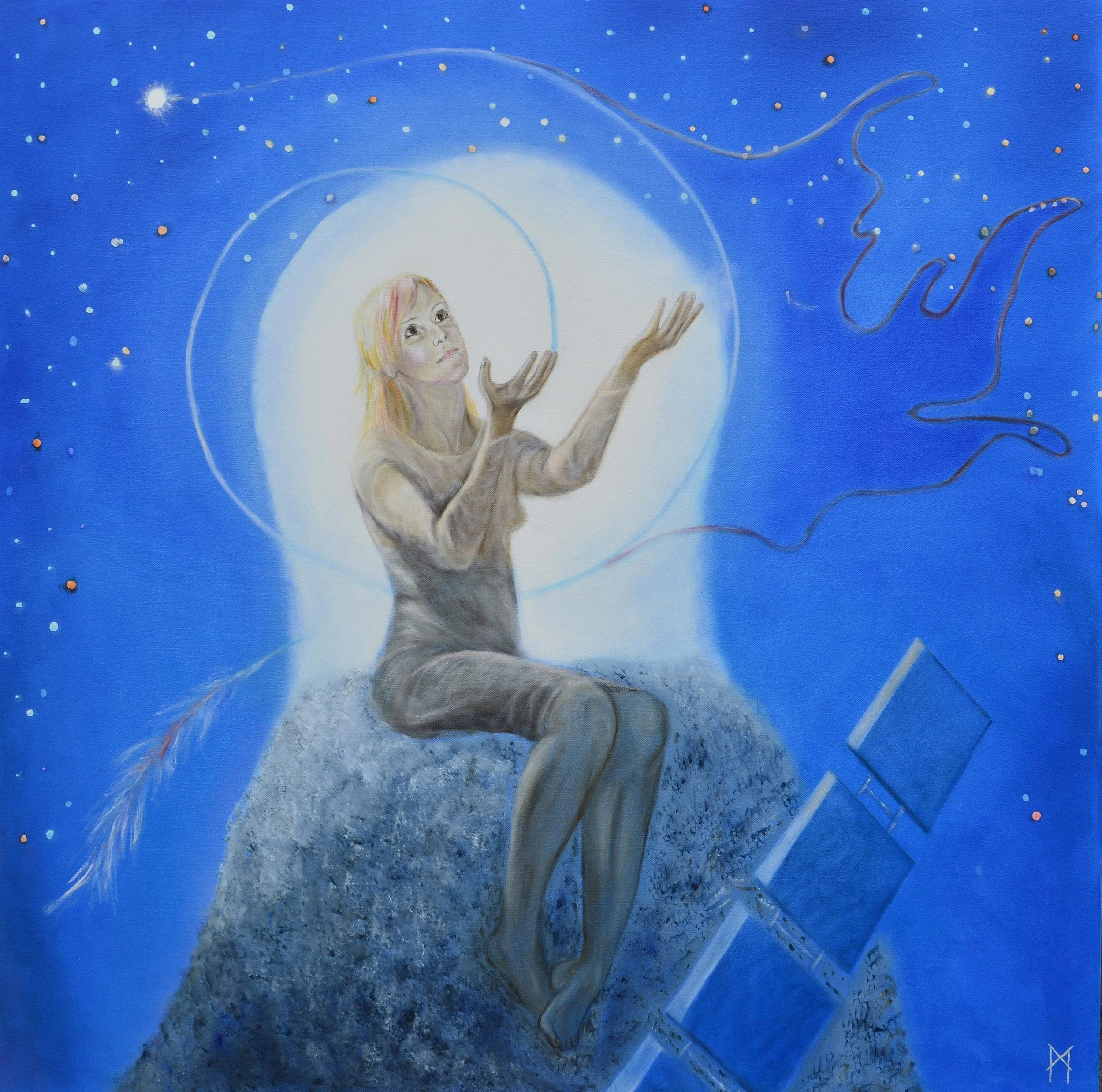
The Spiral of Backward- and Forward speed, 2016, oil on canvas, 100 cm x 100 cm
Your writings often refer to the four classical elements—earth, water, air, and fire—as structural forces that shape both the material and metaphysical dimensions of art; how do these elemental principles influence your creative thinking, and in what ways do they guide the conceptual and emotional architecture of your compositions?
Let’s take the image “Fausta Thinks Humility,” which I created in 2018/19 and is prophetic. In it, the four brazen books are lined up as four elements and are turned over and released for destruction by a figure that emerges from atomic barrels and fuel rods. The four elements are a pattern of thought. I can symbolize air as intellect, water as feeling, earth as material, fire as power and I can also use the four elements in colour wherever I strive for harmony.
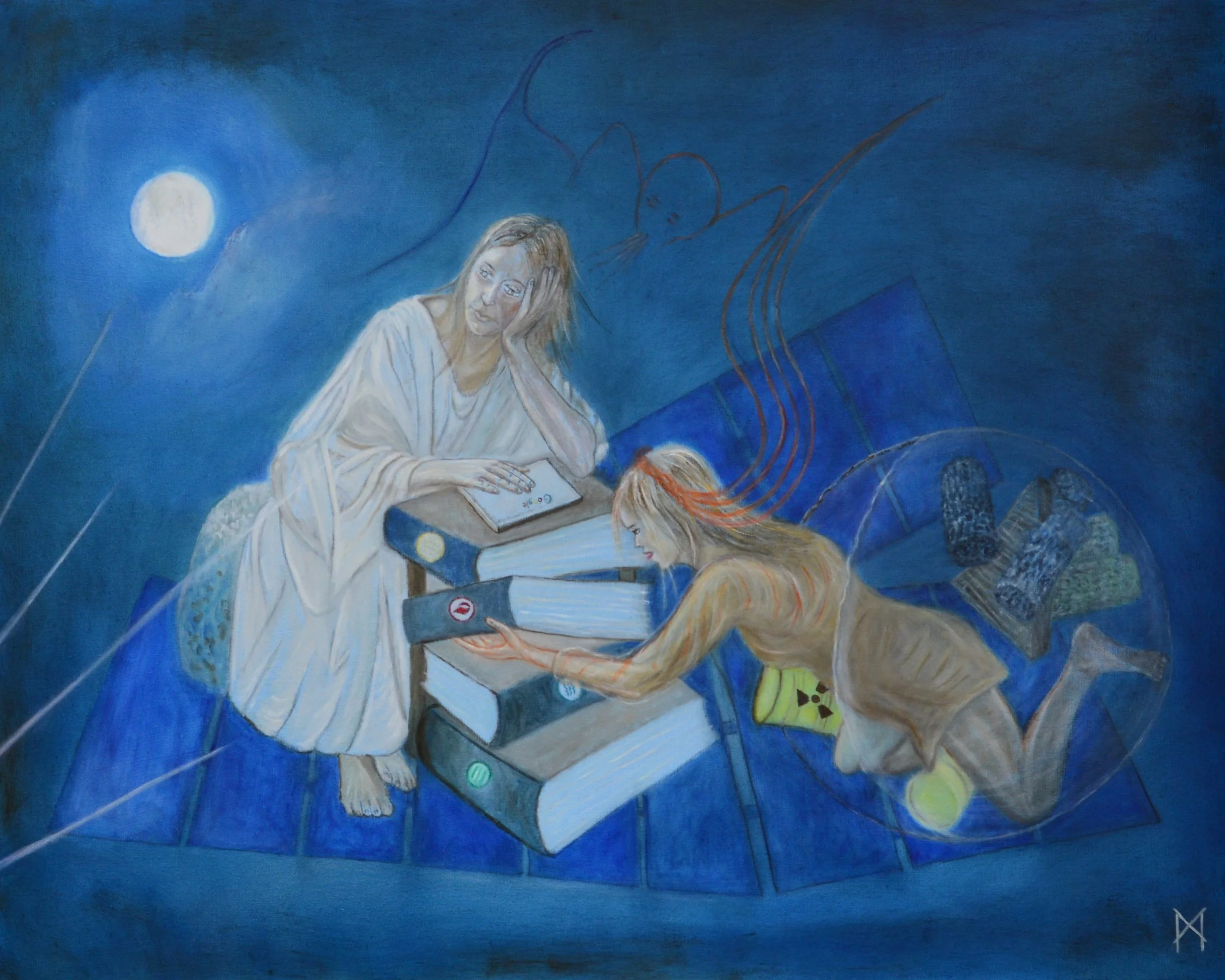
Fausta thinks Humility, 2019, oil on canvas, 80 cm x 100 cm
You describe your artistic approach as a form of “parareality,” a state in which figurative imagery, abstraction, and symbolic thought coexist; could you explain how this concept emerged in your practice and how it allows you to move beyond traditional stylistic boundaries while still maintaining narrative and philosophical clarity?
Everything that comes from feeling can be treated abstractly because it is fluid and imprecise. It finds its way. But the head keeps the narrative clearly defined, like the air that surrounds everything and is one, so that the symbolic parable is understandable. In the picture “Caring for the Forest,” for example, the focus is on water from a well hoarded fountain in the forest. Three women drink. The first woman drinks the water purified with the osmosis device directly from the tap. The second woman draws the used water from the well and the third woman cannot reach the water and stretches out her arm with a cup in her hand.
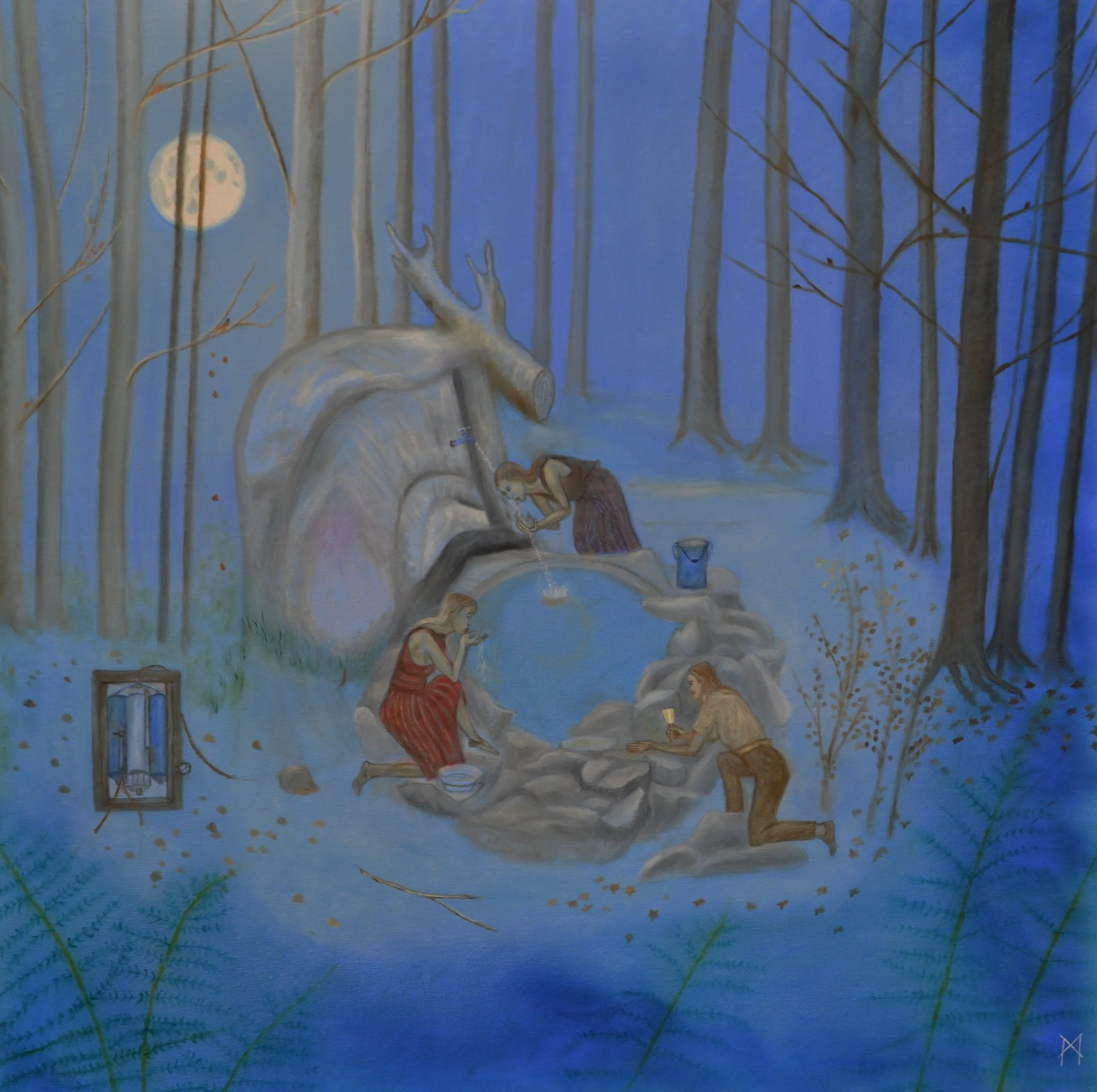
Maintain the Forest, 2025, oil on canvas, 100 cm x 100 cm
Throughout your career you have drawn inspiration from anthroposophy, a worldview that seeks to unite the spiritual and material aspects of existence; how has this philosophical framework shaped your understanding of the role of the artist, and how does it inform the ethical or spiritual aspirations embedded within your work?
As an inner image, it is a striving for harmony and balance. as a framework, the adaptation of the practice of favouring one colour and then adding the second and third colours as a mixture or individually for the sake of completeness and harmony, so that the image is complete and contains all the components of harmony. In the image “Declaration Day of the Square Moon” we have the sulfurized Venus in yellow, the iron Mars in red and the watered-down Earth in blue, in primary colours and round shape, floating brazenly and untouchably in space.And man chisels the romantic moon square and digs it up and takes the last grain of the earth with him as a souvenir to put it in a pot.
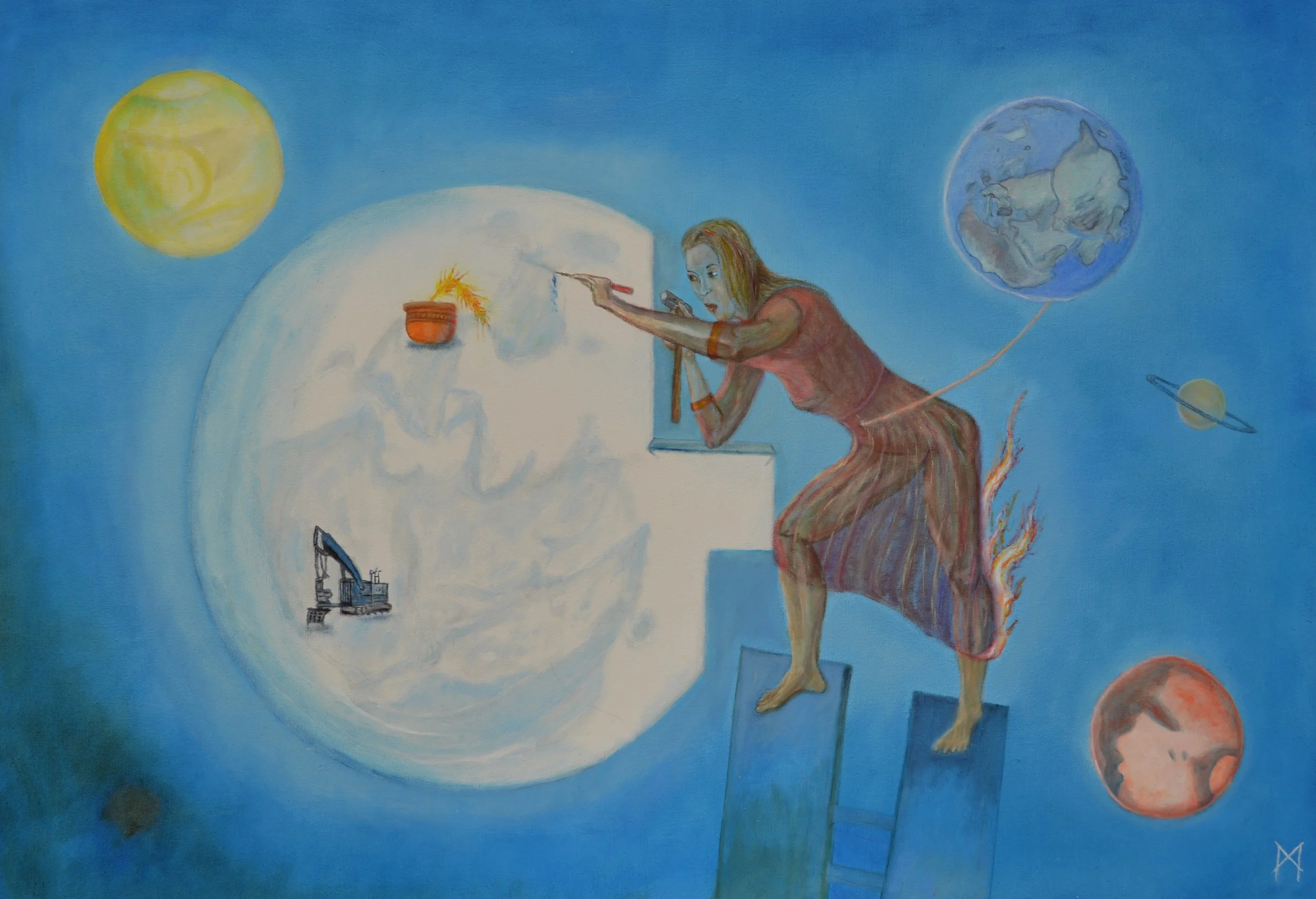
Declaration Day of Angular Moon, 2025, oil on canvas, 70 cm x 100 cm
In many of your theoretical texts you discuss the relationship between form and freedom, suggesting that structure does not limit creativity but rather protects it from dissolving into chaos; how has this belief influenced the way you construct visual harmony and symbolic coherence in your paintings?
The form provides the order, the belonging and the meaning. Everything that exists has a form; the dead loses it and gives it back to the earth. The form collapses into disorder and chaos. Even the abstract is not without form, but this appears throughout.
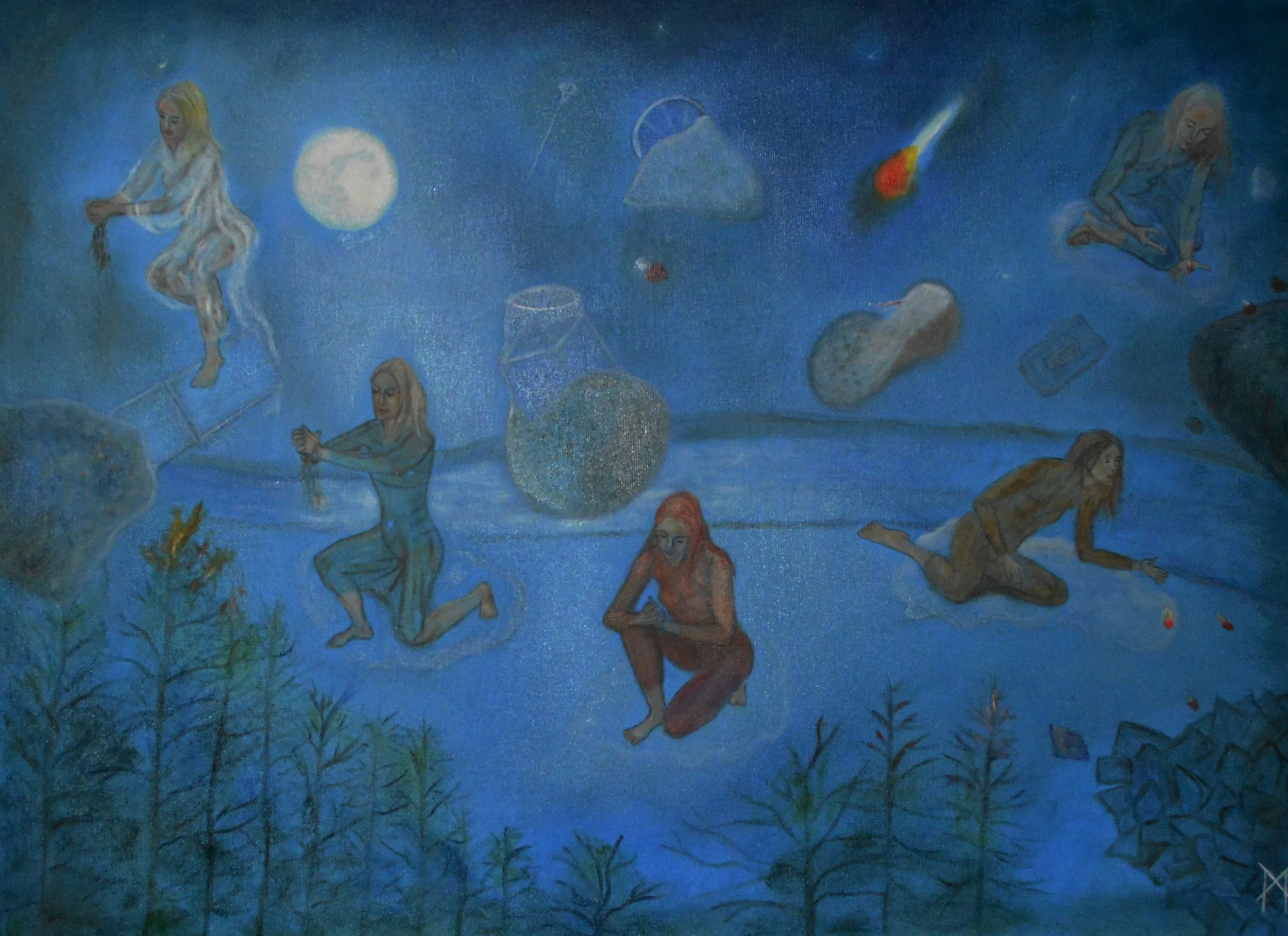
Sword Damocles over our Heads, 2025, oil on canvas, 70 cm x 50 cm
Your career spans more than four decades and includes exhibitions across Europe, North America, and Asia, as well as recognition through numerous awards and distinctions; looking back on this extensive journey, how have these international encounters influenced the evolution of your artistic language and your understanding of art as a global form of communication?
The expected influence was minimal - if anything - the culture-loving audience in Lübeck in the congress hall or the hint of Chinese painting at our OFA exhibition in Beijing, China. In Paris at the Grand Palais, I met French artists from whom I learned something. Finally, in Parma the guard at a museum had to give me a time warning because I was studying a painting by Parmigianino regarding plasticity, which is still useful to me.
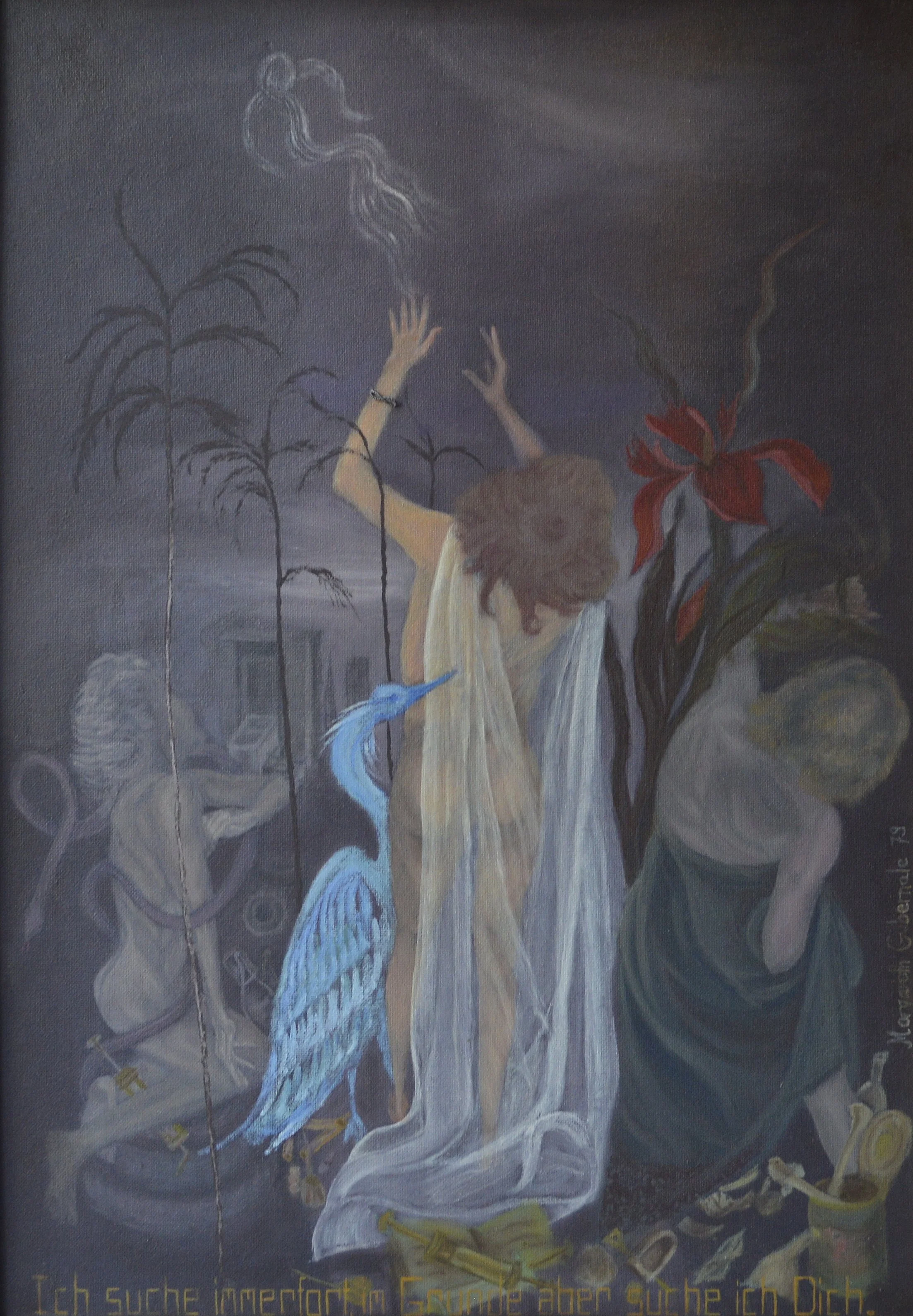
I'm always looking, but basically, I'm seek you, 1984, oil on canvas, 107 cm x 77 cm
In addition to painting, you are also deeply involved with music through your work as a church organist and composer; do you perceive a dialogue between musical structure and visual composition in your practice, and if so, how does the rhythm, harmony, or spiritual atmosphere of music resonate within your pictorial imagination?
Sounds and colours are sensory perceptions that are very mobile. You grab them or you don't. While I'm painting, my record player usually plays George Frideric Handel, but sometimes it bothers me that certain parts of it are very similar to Purcell's music. I also love the harmonious creations of Christoph Willibald Gluck.

Sound from Universe, 2005, oil on canvas, 180 cm x 120 cm
Many artists speak of the tension between intuition and intellectual reflection in their creative process; when you begin a new work, do ideas emerge first as philosophical concepts, symbolic narratives, or emotional impressions, and how do these different impulses ultimately converge into a finished composition?
First the impulse comes, but then I don't sketch for a long time. Every day I think about how I can put this idea on the screen in a way that is generally understandable and hand it over. And when, after careful consideration, I come to a decision and the idea clearly corresponds to the motif, then after a short collection of the raw material, I start executing it.
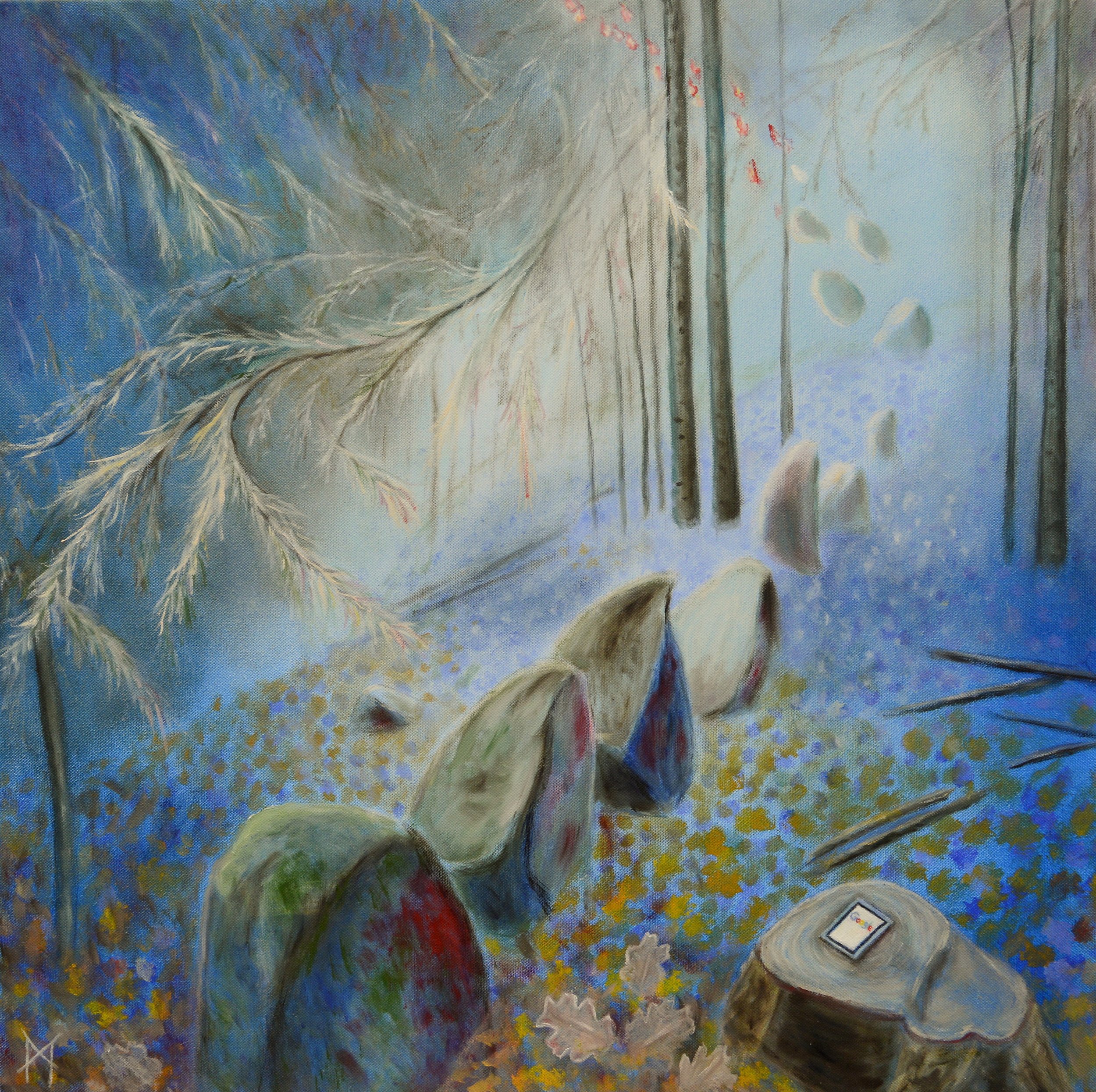
Building Material, 2017, oil on canvas, 60 cm x 60 cm
In an era increasingly defined by rapid technological advancement and digital culture, your work often reflects on humanity’s ethical relationship with knowledge, power, and responsibility; how do you believe art can contribute to a deeper reflection on these issues without losing its poetic and contemplative nature?
Art can achieve the goal of a rethinking interval if it integrates itself as much as possible into nature, where it can find peace. This allows her to keep her distance and assess what and how she wants to say it creatively and why. She will not miss the goal of beauty and will find a viable way to even incorporate technology if the topic allows it.
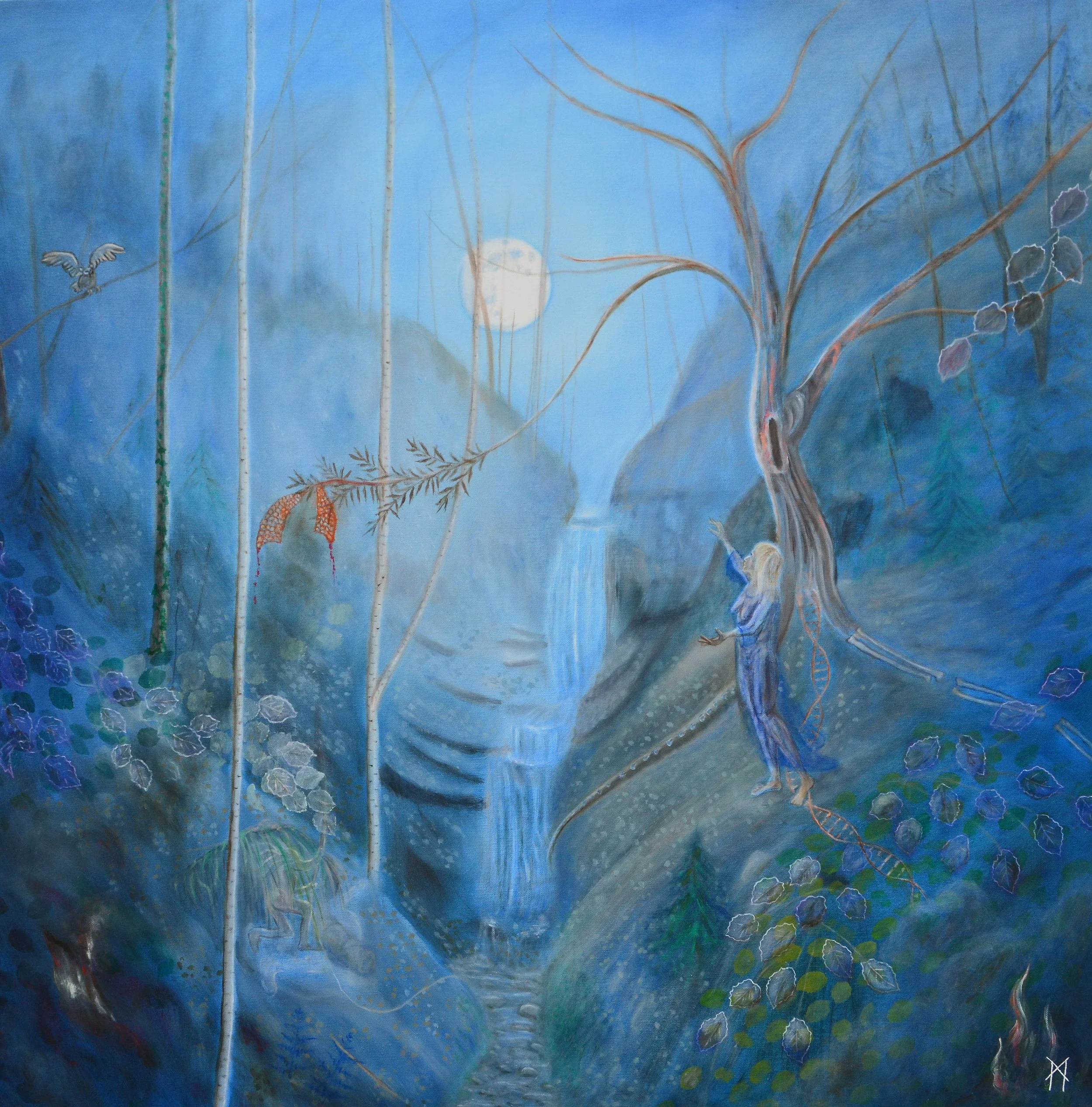
Holy Forest with Yggdrasil, 2014, oil on canvas, 100 cm x 100 cm
As someone who has dedicated an entire lifetime to artistic creation, how has your perception of creativity itself changed over the years, and do you feel that artistic maturity brings you closer to the spiritual or philosophical goals you envisioned at the beginning of your career?
Hardly anything has changed in my basic artistic structure. What has changed is the strength and vehement force to keep my concepts clear and defend them. If I must wade through mud, I know I will surely reach solid ground again.
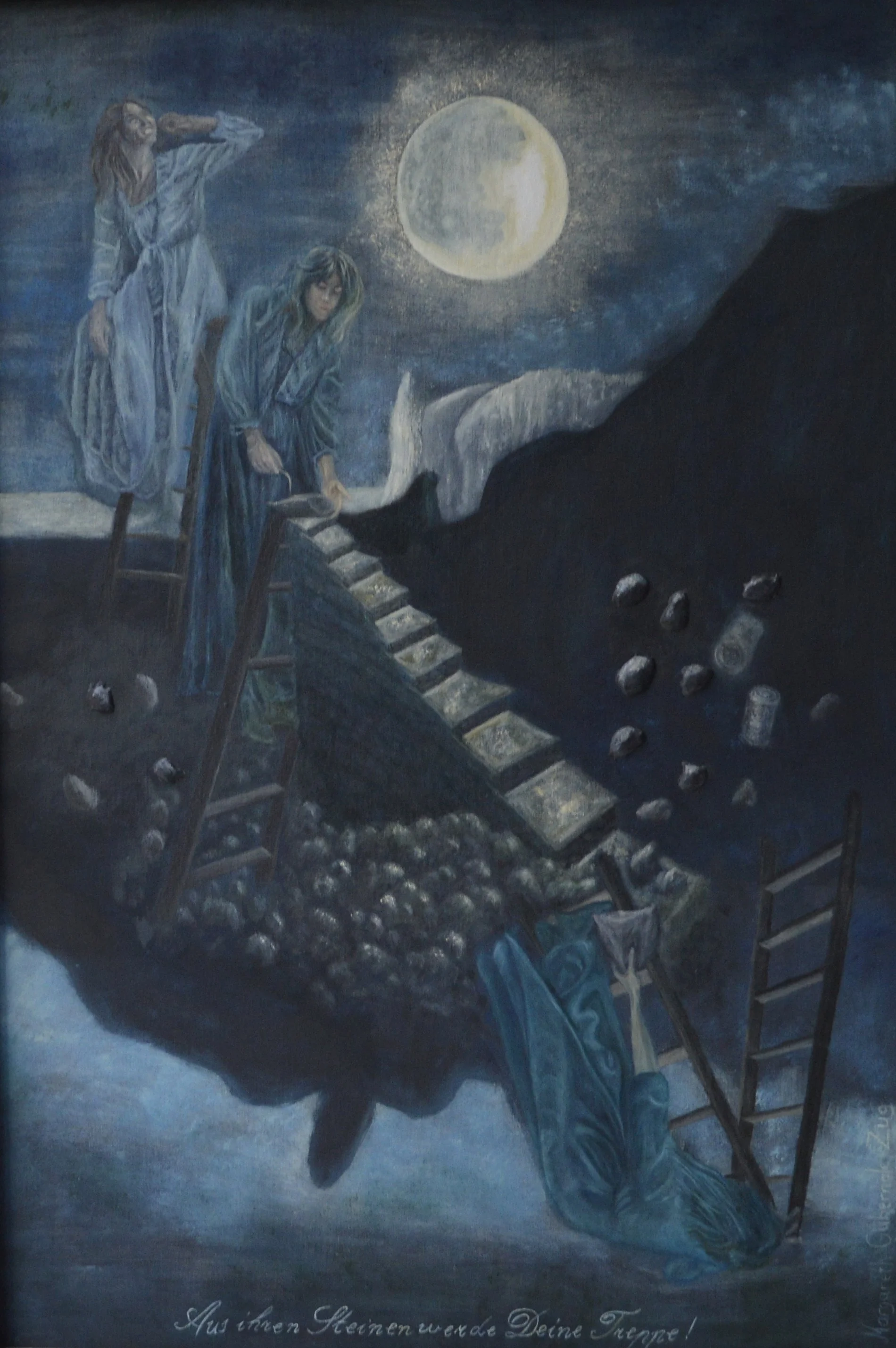
With their Stones will be your Stairs, 1984, oil on canvas, 107 cm x 77 cm
Symbolism historically served as a powerful tool for expressing ideas that could not easily be communicated through literal representation; in today’s contemporary art landscape, where conceptual and digital practices dominate many discussions, what significance do you believe symbolic painting still holds?
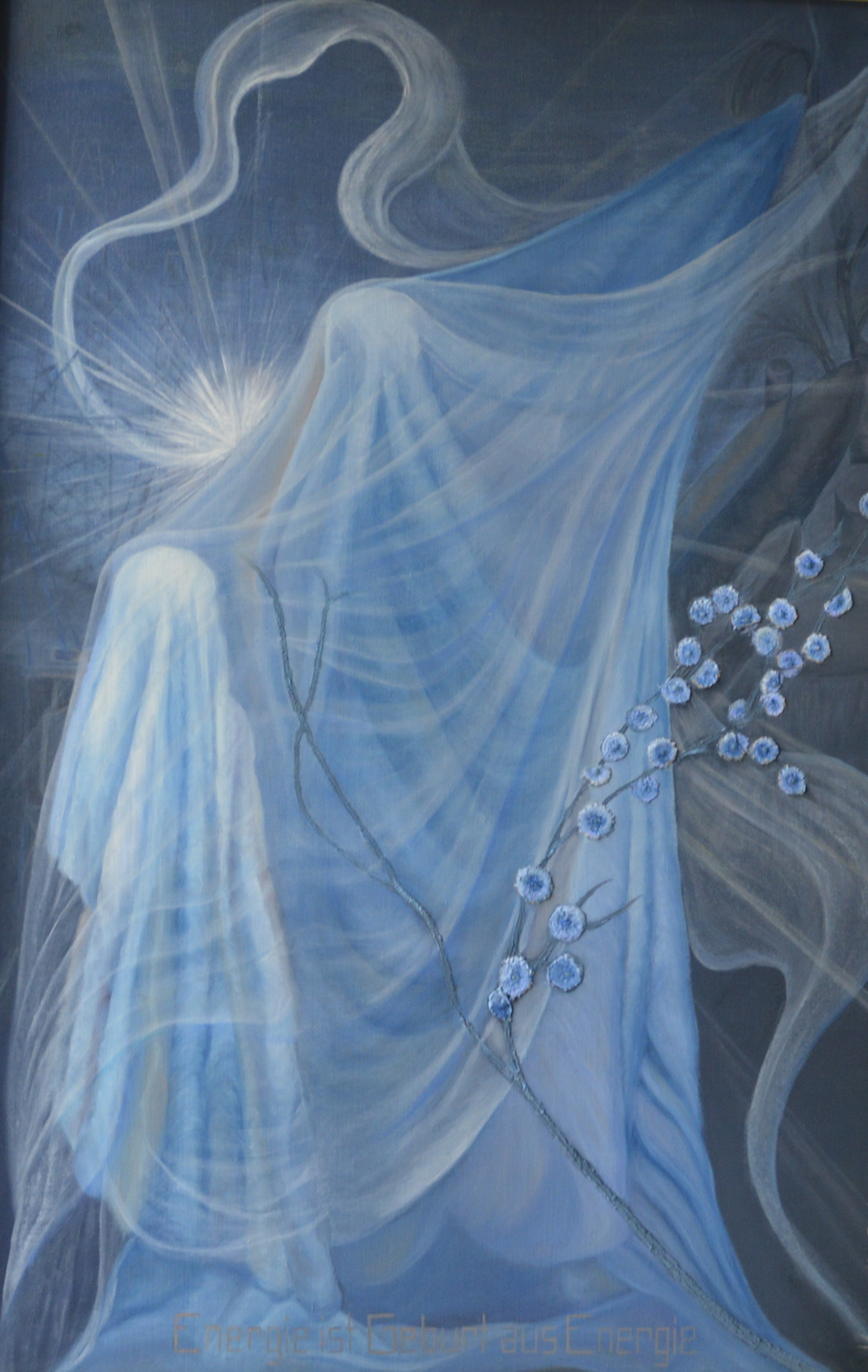
The ability to expand thinking through symbolism is in demand in a time of digital overfeeding. It is the gate of salvation from pointlessly wasted life, which creates nothing but hustle and bustle, profit from profit and brings about nothing but hatred and strife and murder and thereby forgets qualitative humanity. We are constantly entering new territory, where a symbolic description is missing and one must be prepared to do without nothing usual. The future keeps everything hidden.
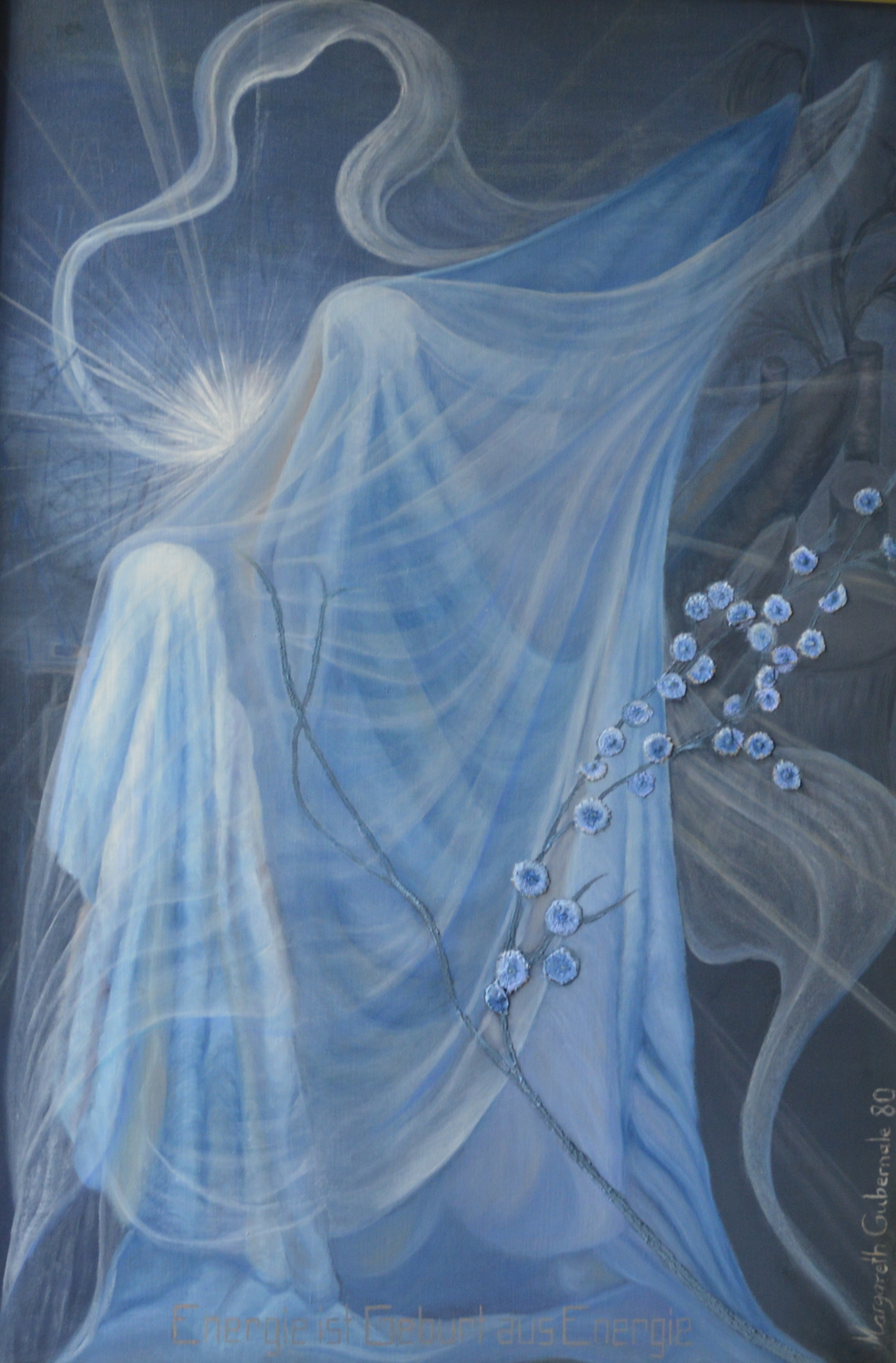
Energy is Birth from Energy, 1987, oil on canvas, 107 cm x 77 cm
Your writings suggest that art has the potential to connect humanity with what you describe as the “Akasha” or the universal cosmic order; how do you approach the challenge of translating such expansive metaphysical ideas into visual forms that can still resonate on an intimate human level?
This is a very difficult undertaking and can also arise from suffering. Heaven opens after overcoming a difficult situation in which you look for a way out and find it because you are of good will. In the picture “To Set a Goal”, I present our problems in the outer area of the picture, while in the inner area we are struggling to find a solution using a compass and algorithms.
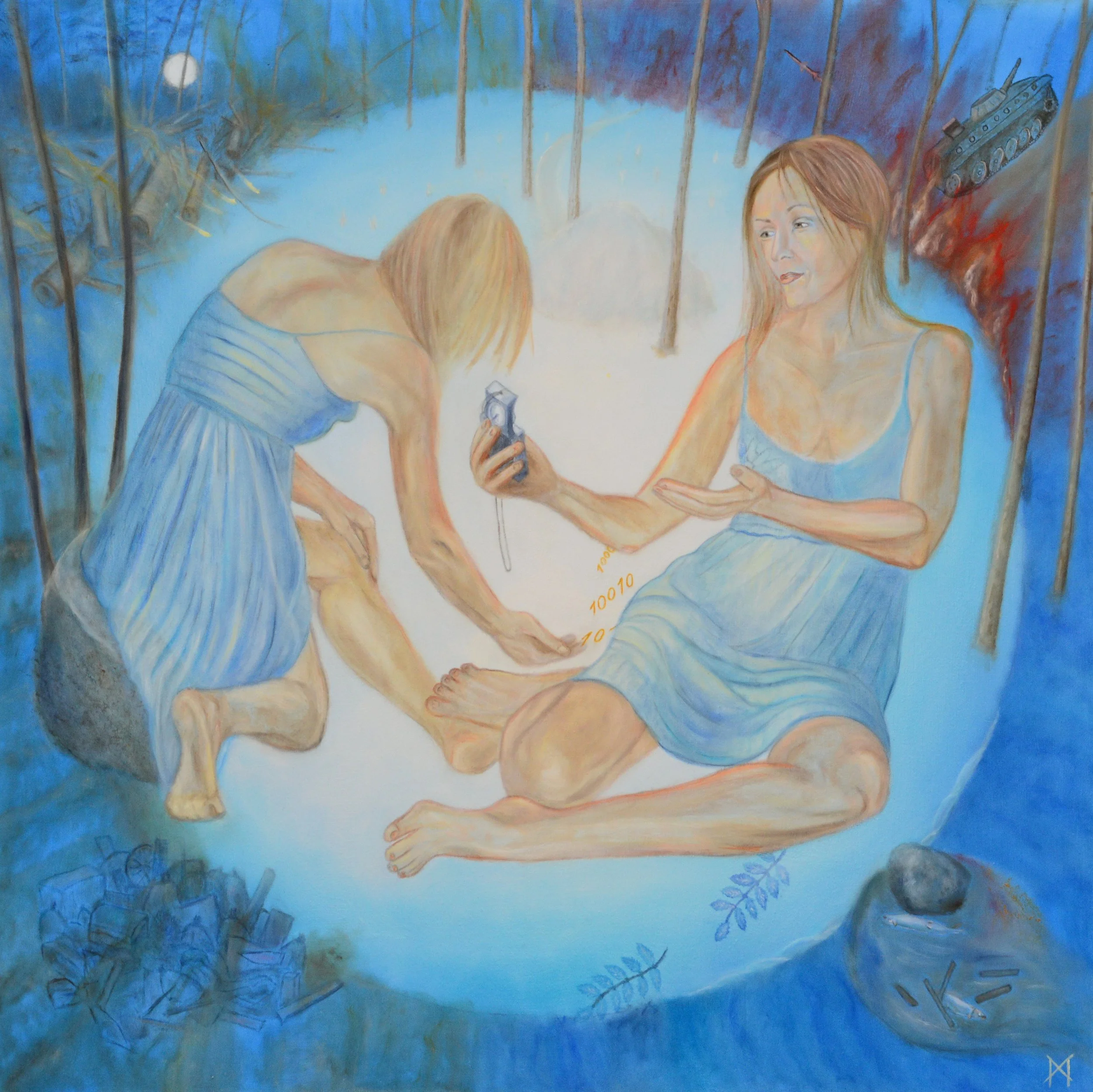
To Set a Goal, 2018, oil on canvas, 100 cm x 100cm
In The Sorcerer’s Apprentice, a dramatic nocturnal scene unfolds in which figures, animals, fire, and the symbol of artificial intelligence converge in a ritualistic atmosphere; could you discuss how this work reflects your thoughts on the complex relationship between ancient wisdom, human ambition, and the unpredictable consequences of technological power?
Since I am also interested in technical achievements in my painting, and I experience a dawn from an ethical point of view, my inner eye alarms and howls at the excrement of the evening, and I think of Goethe's poem, "The Sorcerer's Apprentice", in which the apprentice, in the absence of the master, daringly hoped to carry out the master's magic, whereby everything then got out of hand. In order to shake off his responsibility, the apprentice complained: “It were brooms, brooms”!!! Making diagnoses with AI can also be supportive and helpful for a doctor, but on the other hand it could be more dangerous than Auschwitz, without putting the apprentice in legal chains. We are already seeing how fragile these chains are in times of war.
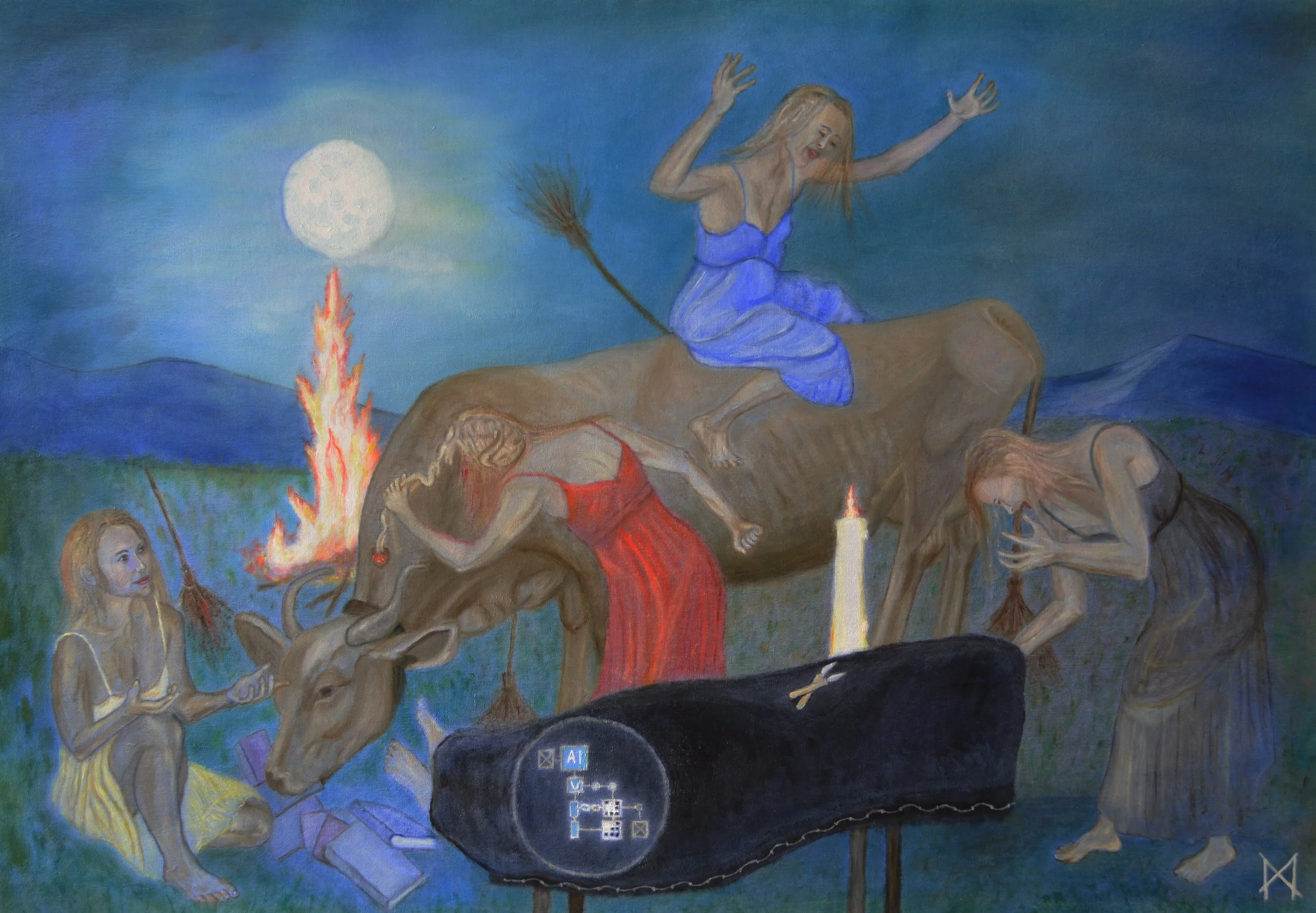
The Sorcerer's Apprentice (with Goethe), 2024, oil on canvas, 70 cm x 100 cm
After decades of exhibitions, awards, and international recognition, what questions or themes continue to drive your artistic exploration today, and what kind of intellectual or spiritual dialogue do you hope your future works will open for the next generation of viewers?
I believe that today's changing world provides me with enough spiritual fuel. But it should lean more towards sustainability and thoughtful development of its technology if it wants to develop global thinking. In this way, I see my legacy as a new world that grows enough grain and irrigates the earth globally. Much more emphasis should be placed on agriculture and crafts. Humans are there to participate in creation. Mainly the artist.
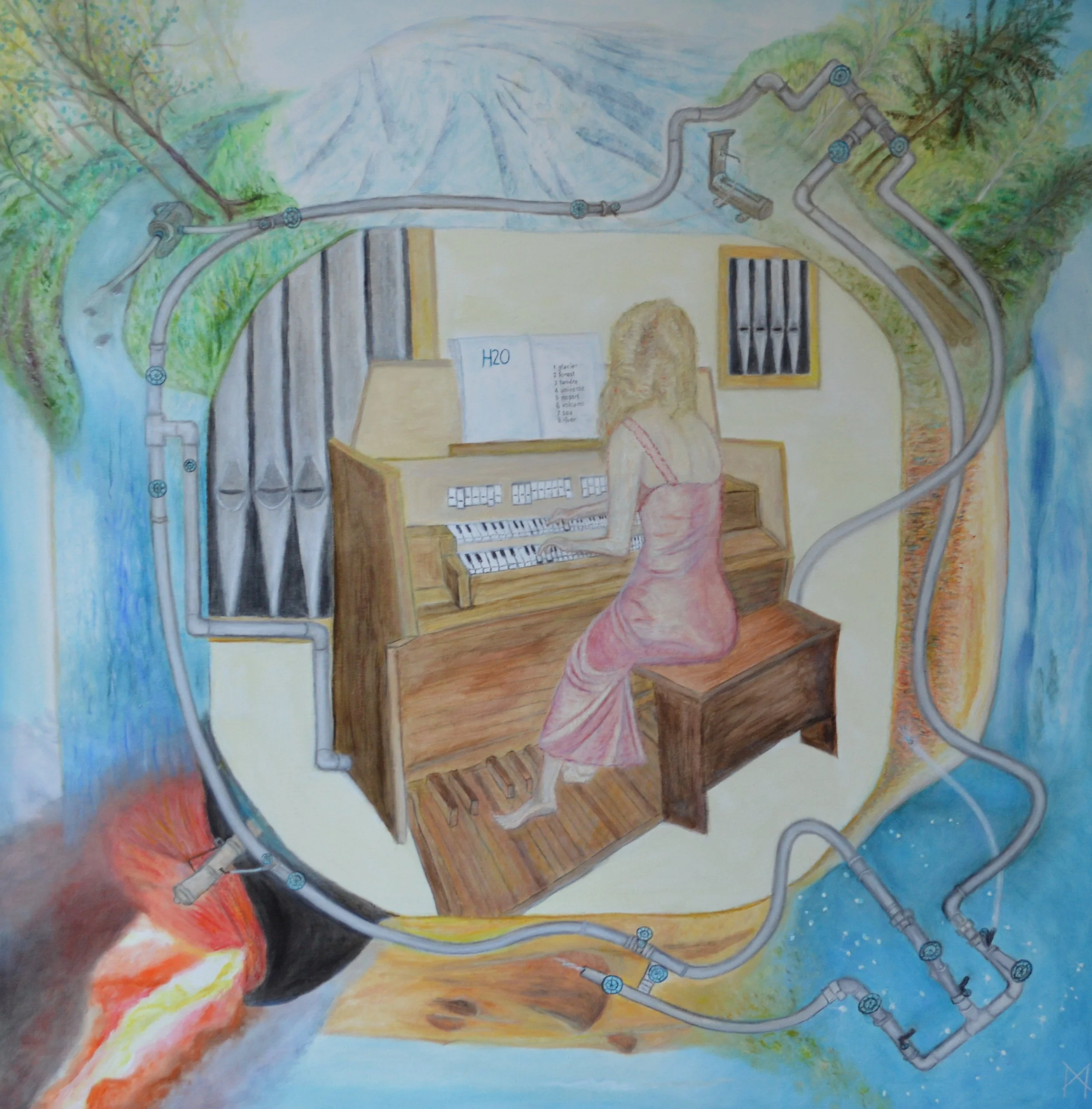
Global Aqueduct-My Legacy, 2021, oil on canvas, 100 cm x 100 cm