Interview with Louise Manzon
Louise, your practice consistently inhabits a space between figuration and abstraction, where form seems sustained by internal logic rather than descriptive anatomy. What does this in-between condition allow you to investigate about embodiment and presence that more fixed sculptural languages cannot?
In my work, the space between figuration and abstraction allows me to move away from literal representation and focus on what makes a form feel alive. Rather than describing anatomy, I build forms according to an internal logic — guided by balance, tension, rhythm, and movement. This gives me the freedom to explore presence as something physical and perceptual, not symbolic or narrative.
Working in this in-between zone lets the body remain open and unresolved. The forms are recognisable, but never fixed. This ambiguity invites the viewer to engage bodily and intuitively, sensing the sculpture before identifying it. Presence emerges through how the form occupies space, how it seems to move, resist, or breathe, rather than through precise detail.
More rigid sculptural languages often define the body through certainty and function. By contrast, my approach allows me to explore embodiment as a process — something mutable, shaped by forces and relationships rather than by clear boundaries. The figure becomes less an object to be read and more a physical experience to be encountered.
Ultimately, this condition between figuration and abstraction reflects my interest in living systems. My forms are not meant to represent specific beings, but to convey states of vitality, transformation, and connection — suggesting that presence is not static, but something that continuously unfolds.
Reduction appears central to your methodology. How do you determine when a form has reached its point of necessity?
Reduction in my work is a process of listening rather than editing. I remove elements until the form can no longer sustain itself if anything else disappears. That point of necessity is reached when every remaining line, volume, or tension is actively contributing to the presence of the sculpture. If an element can be removed without altering the force of the work, then it is not yet essential. When subtraction begins to weaken the internal coherence or vitality of the form, I know the sculpture has reached its limit.
Tension operates as both a formal and psychological structure. How do you understand tension as constructive?
I understand tension as what keeps the sculpture alive. Formally, it emerges through balance, compression, and restraint; psychologically, it creates a state of alertness rather than resolution. Tension holds the viewer in a physical and emotional pause, encouraging proximity and attentiveness. Rather than offering release, the work sustains a quiet pressure that activates the body of the viewer as much as the form itself.
How do your layered cultural and disciplinary influences register beyond narrative identity?
These influences do not appear as references or stories, but as sensibility. They shape how I perceive rhythm, how I distribute weight, and how I think about space and continuity. Different geographies and disciplines inform my sense of proportion, silence, and transition, registering in the work as spatial intelligence rather than symbolic citation. What remains is not biography, but a way of structuring perception.
How do you think about power without aggression or monumentality?
In my practice, power is understood not as dominance or scale, but as the capacity of beauty and empathy to engage the viewer. Strength emerges through forms that move with grace and restraint, held in a state of internal balance. I believe that the elegance of form carries a unique potency, capable of reaching the heart of the viewer directly and immediately. This beauty is not decorative; it functions as a quiet, sustaining force, drawing attention and fostering intimate engagement.
Through rigorous exploration of concept, material, and form, each work is designed to resonate emotively across cultural contexts and generations. The sculpture operates as a bridge, a space where presence, rhythm, and subtlety invite contemplation and empathy, rather than asserting authority or imposing meaning.
How do you conceive stillness as a productive condition today?
Stillness in my practice is an active state, not an absence of movement. It creates a space where attention can deepen and perception can slow down. In a culture driven by speed and excess imagery, stillness becomes a form of resistance. It allows the sculpture to act as a point of suspension, where time feels condensed rather than accelerated, inviting a different mode of engagement.
How do you approach material transformation without fixed moral statements?
I approach material transformation through research and close listening to the material itself. Before choosing a material, I explore its physical behaviour, its limits, and its expressive potential, so that it can remain coherent with the feeling and message I want the sculpture to convey. The material is never neutral, but it is not illustrative either; it participates in the work through sensation rather than declaration.
I am particularly interested in transforming materials beyond their expected status — allowing something perceived as poor, such as PET plastic, to acquire the presence of jewellery, or making a dense material like marble appear light, almost airborne. These shifts do not deliver moral conclusions; instead, they open a space where perception is unsettled. Meaning remains fluid, emerging through the viewer’s experience of transformation rather than through explicit ethical statements.
How do you keep symbolic language open rather than illustrative?
I work with symbols as underlying structures rather than literal signs. Archetypal references, often drawn from a primordial world or ancient cultures, are absorbed into proportion, posture, and balance, never depicted directly. Many of my figures are imaginary, emerging from this layered symbolic field. By avoiding illustration, the symbolic language remains implicit and unstable, allowing viewers to bring their own interpretations. Meaning stays fluid because it is embedded in the form itself, rather than spelled out, inviting personal and emotional engagement.
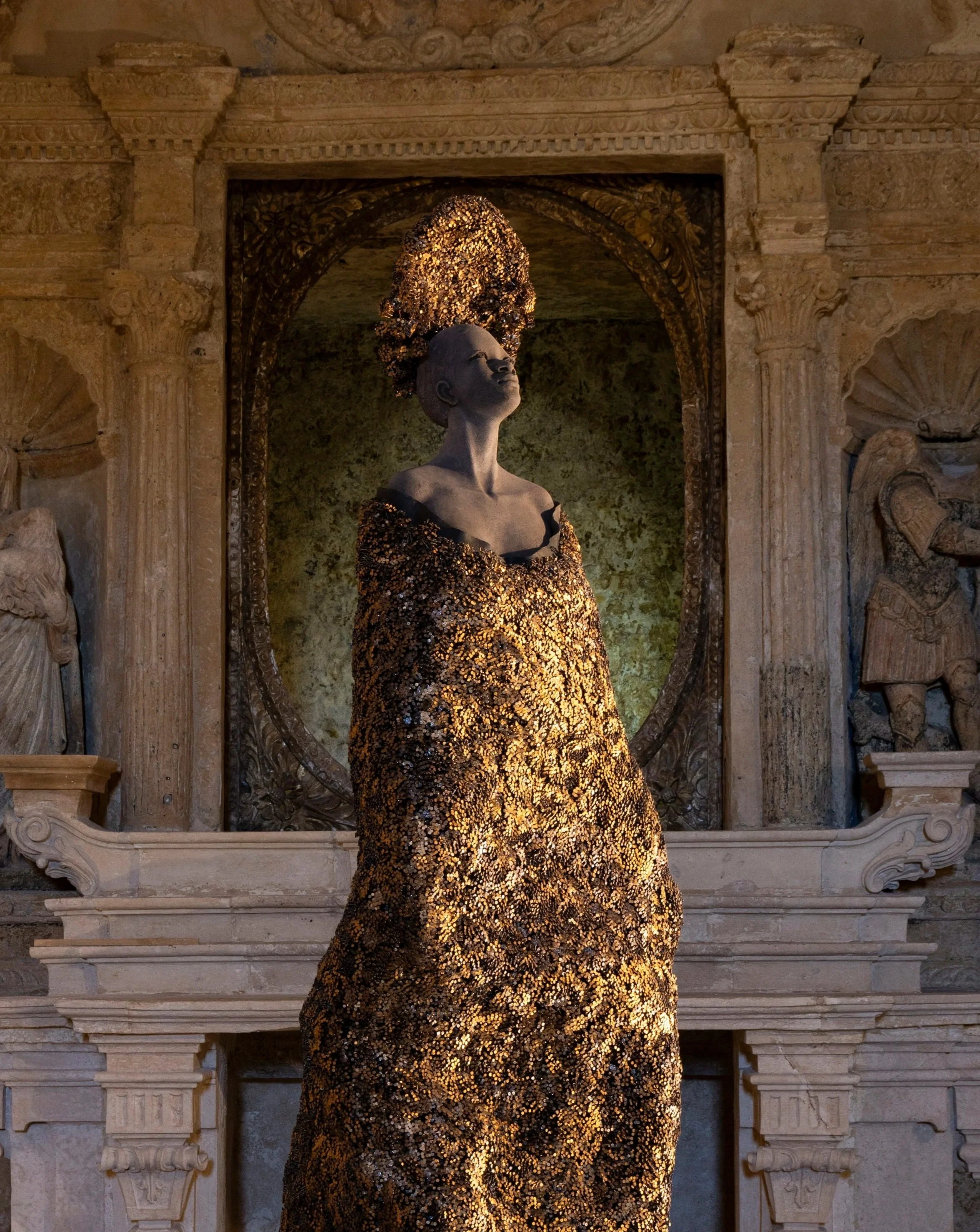
How did you approach guardianship in Guardian of the Soul as a state rather than representation?
In Guardian of the Soul, guardianship is conceived as a condition of presence rather than a literal or narrative depiction. It is expressed through the body’s stance, the distribution of weight, and the internal balance of the form, creating a figure that feels simultaneously anchored and attentive. Rather than showing protection as an action or external gesture, the sculpture embodies vigilance through its own containment — a quiet, self-sustaining authority that suggests readiness without aggression.
Through this work, I aim to transmit a call to return: to invite the viewer toward wholeness, balance, and inward sovereignty. Guardianship emerges as a perceptible state, where protection is felt through the integrity and coherence of the form itself. By focusing on presence, rhythm, and the subtle interplay of forces within the sculpture, it conveys resilience, calm watchfulness, and an empathetic force that exists in harmony with itself and its environment, encouraging the viewer to reconnect with their own inner balance.
How do you see sculpture addressing ecological urgency without becoming didactic in Téthys en Bleue?
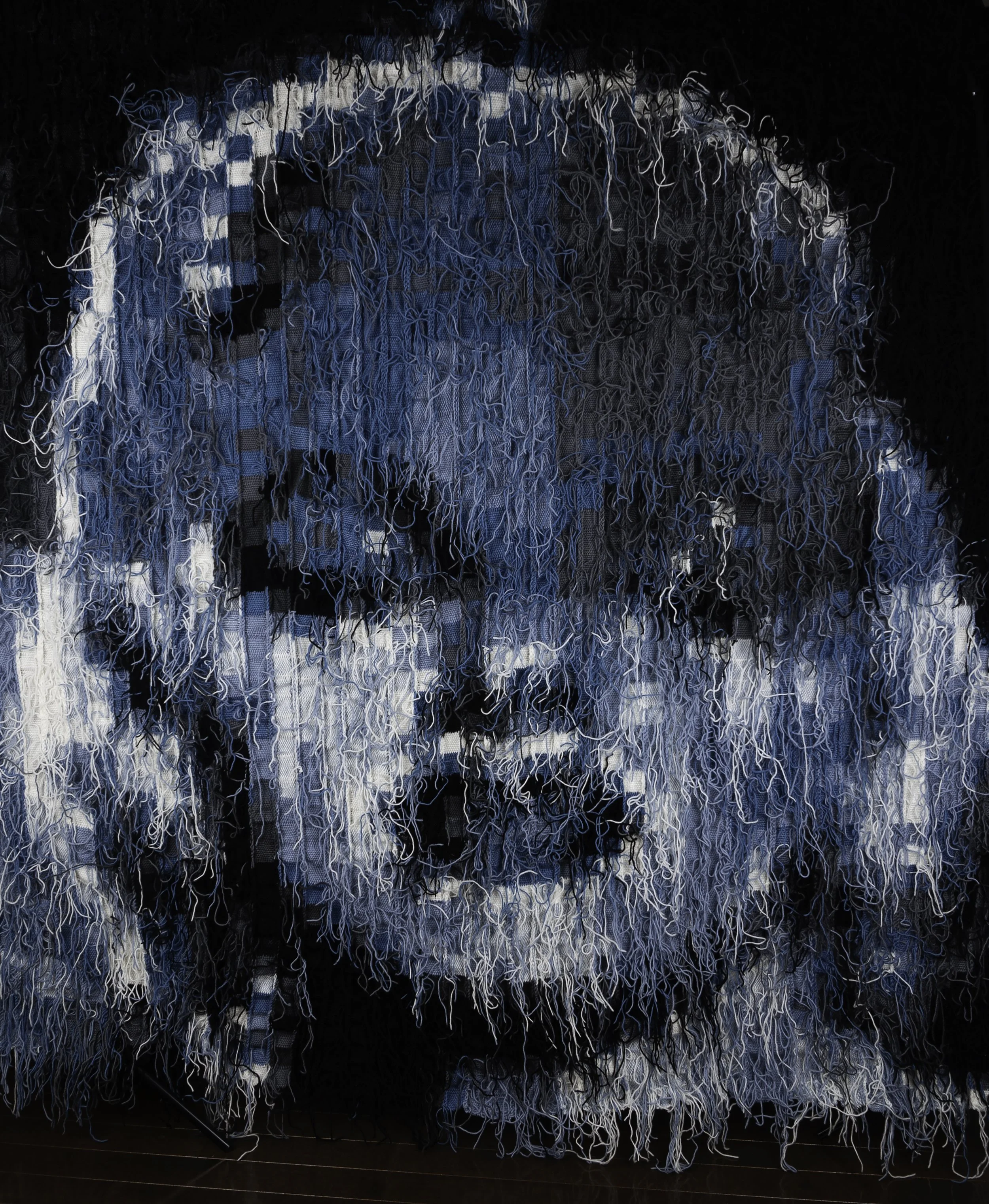
For me, sculpture is a means to make ecological concern tangible and immediate, to communicate the fragility of our environment. In Téthys en Bleue, I confront the urgency of the environmental crisis by transforming materials, Like wather PET plastic bottlesi into poetic forms that evoke life, regeneration, and renewal. Myth and material manipulation allow the threat to marine ecosystems to be sensed directly, while preserving the autonomy and subtlety of the work.
In my poetic vision, the titan Tethys becomes a site-specific sculptural installation: a female figure of great purifying power, metaphorically attracting polluting plastic and transforming it into algae, foam, and pure water. This monumental work, created from reclaimed materials, is accompanied by about twenty sculptures and new estroflessions depicting fantastic marine creatures — witnesses of an ancestral aquatic world suffocating under human neglect. Sculpted in broad spirals of white marble or modeled in vibrant terracotta, these beings accompany the goddess who generated thousands of divinities of seas, rivers, and springs. In the estroflessions, the boundaries of the canvas dissolve, enhancing the illusion of movement.
Through this immersive aquatic universe, I aim to move viewers emotionally, inspiring awareness, empathy, and a sense of responsibility toward our environment without ever preaching, inviting them to reconnect with the fragility and beauty of our natural world.
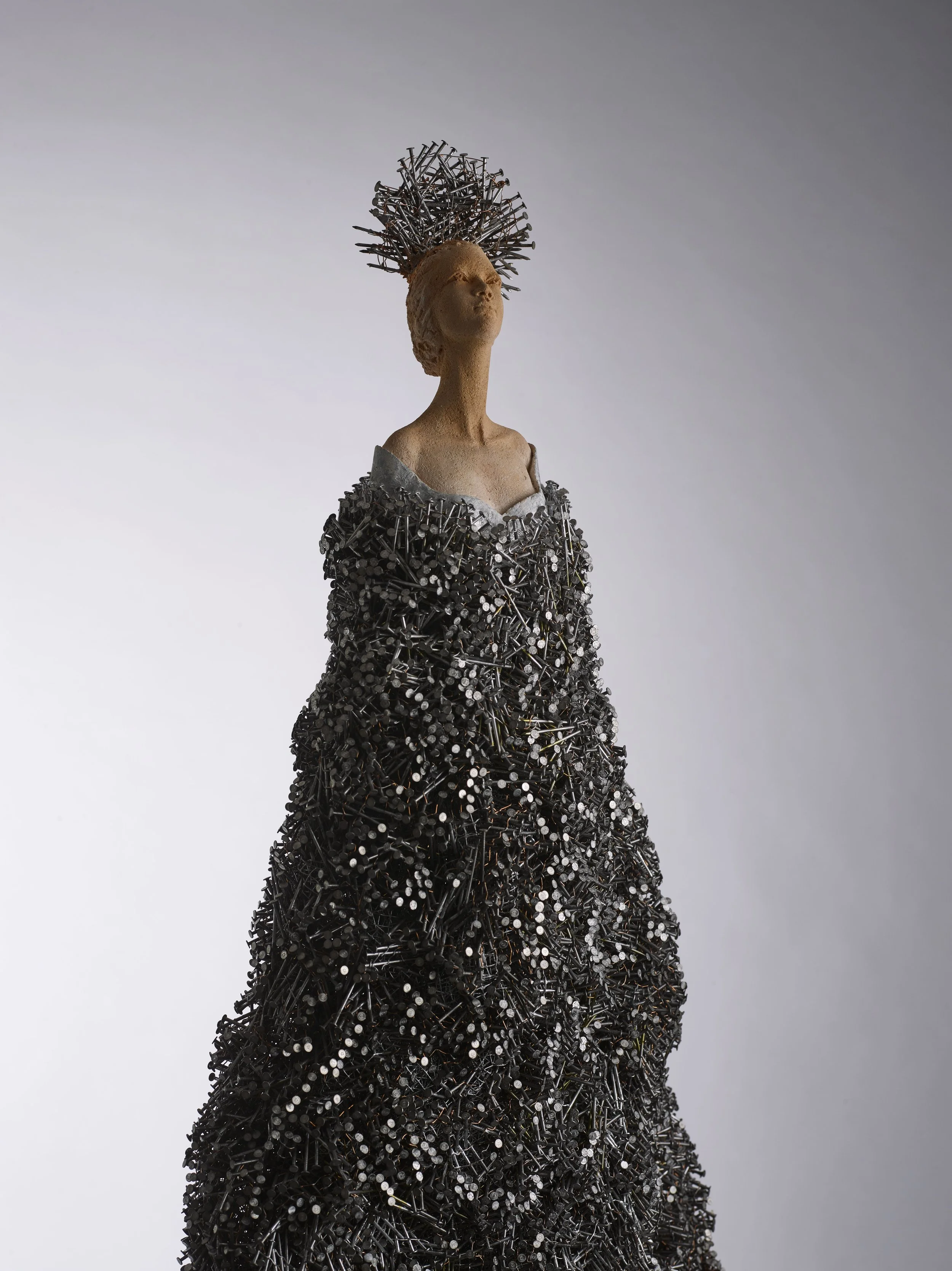
Woman_Illusory Dualism_60x120cm
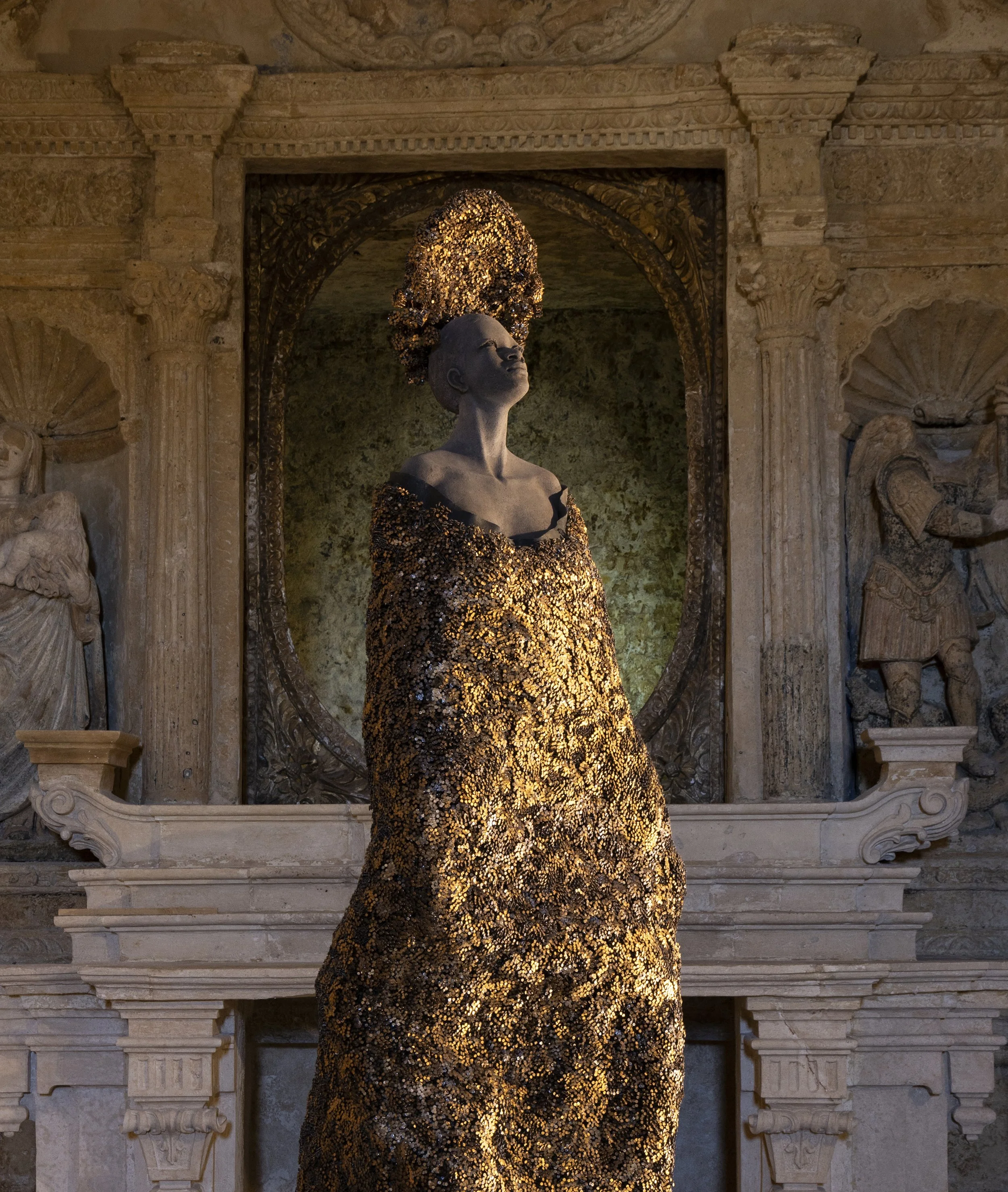
Woman_About 120 Thousand Years Ago_87x250cm
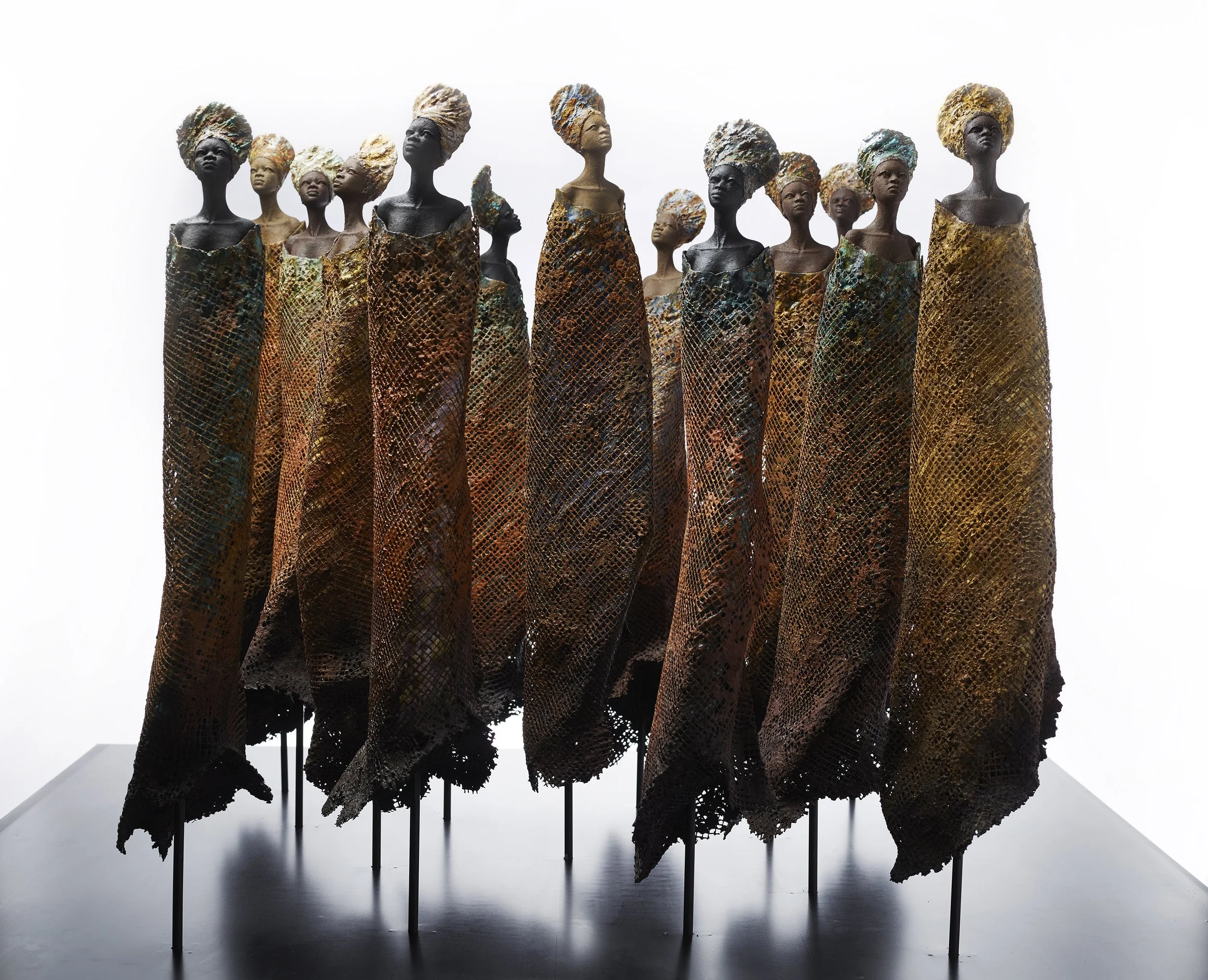
Group of 13 woman_Souls in Waiting_35x90 each
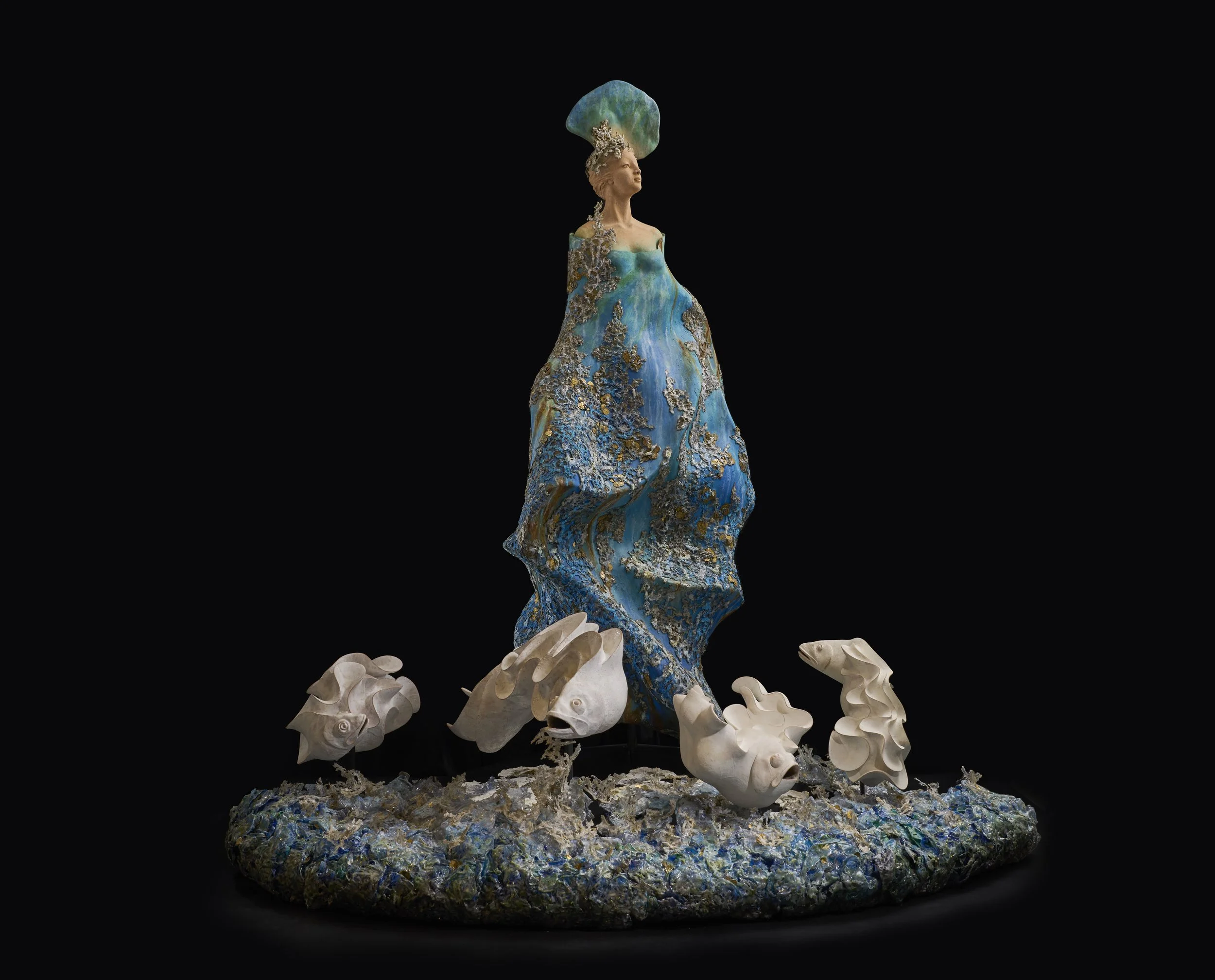
Tethys in Blue with fish_240x200x270
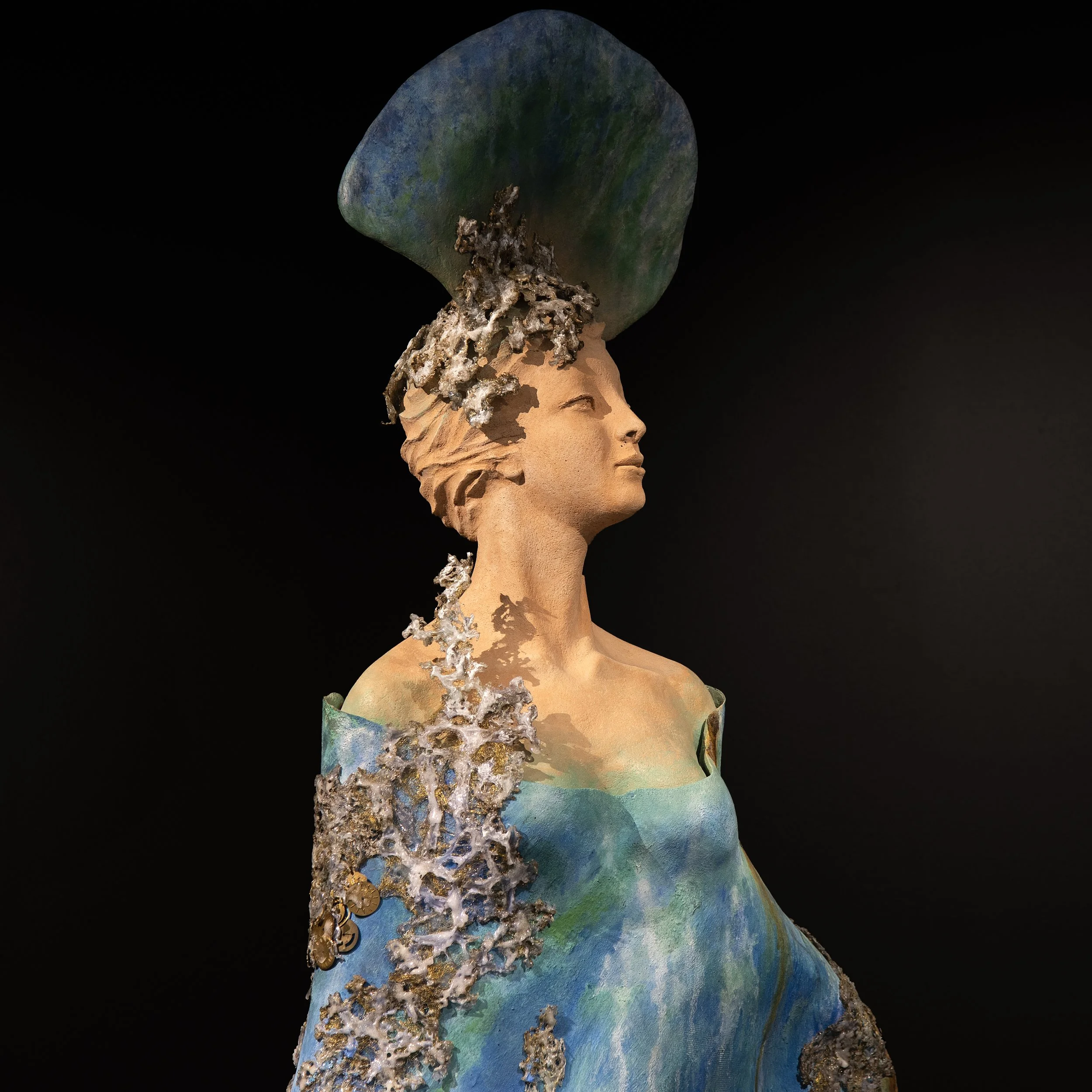
Woman_Tethys in Blue
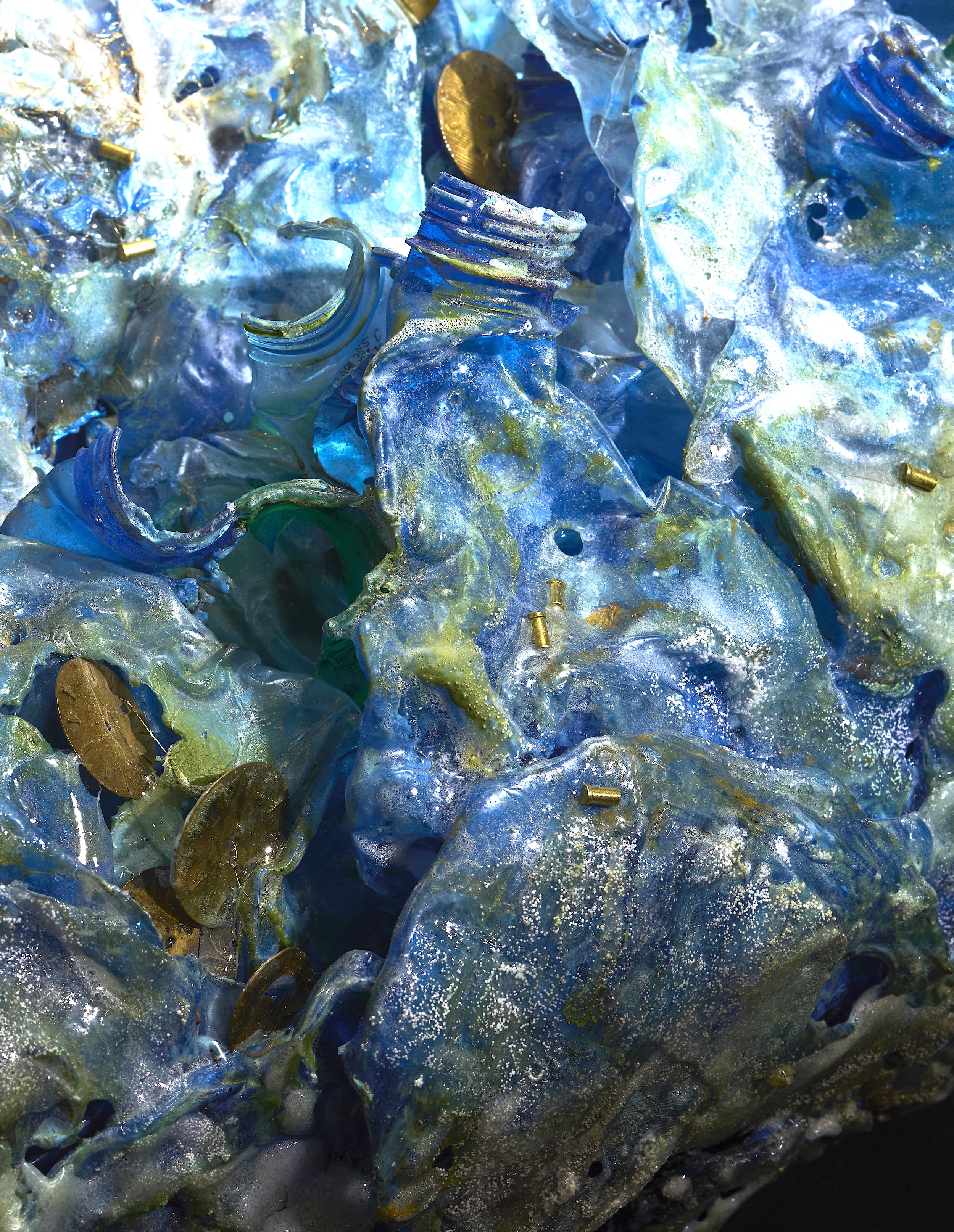
Base_Tethys in Blue_PET water bottles
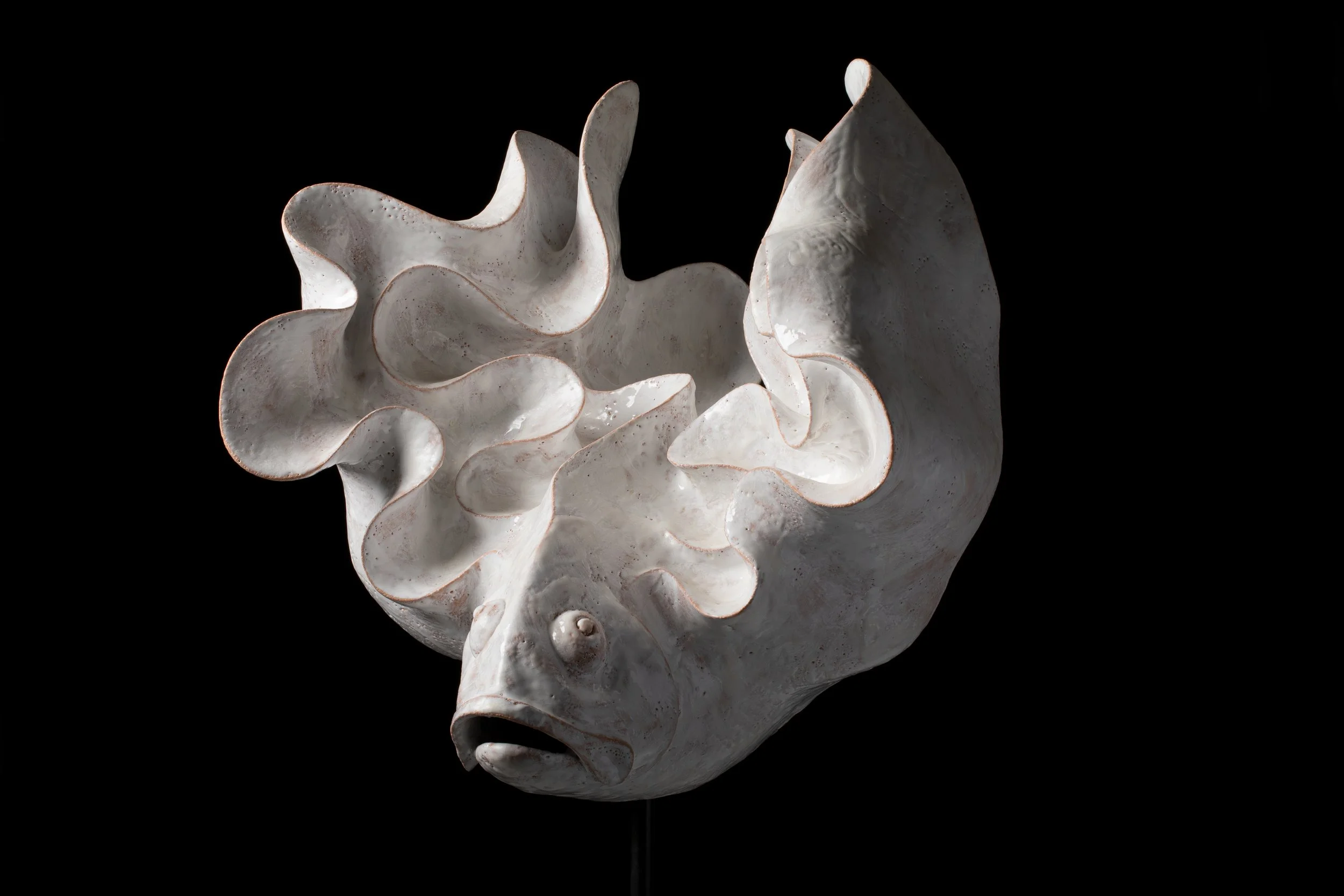
Fish_Grecale_70x68x65h_White marble

Fish_Apo_110x90x54h_Glazed ceramic-cold patina
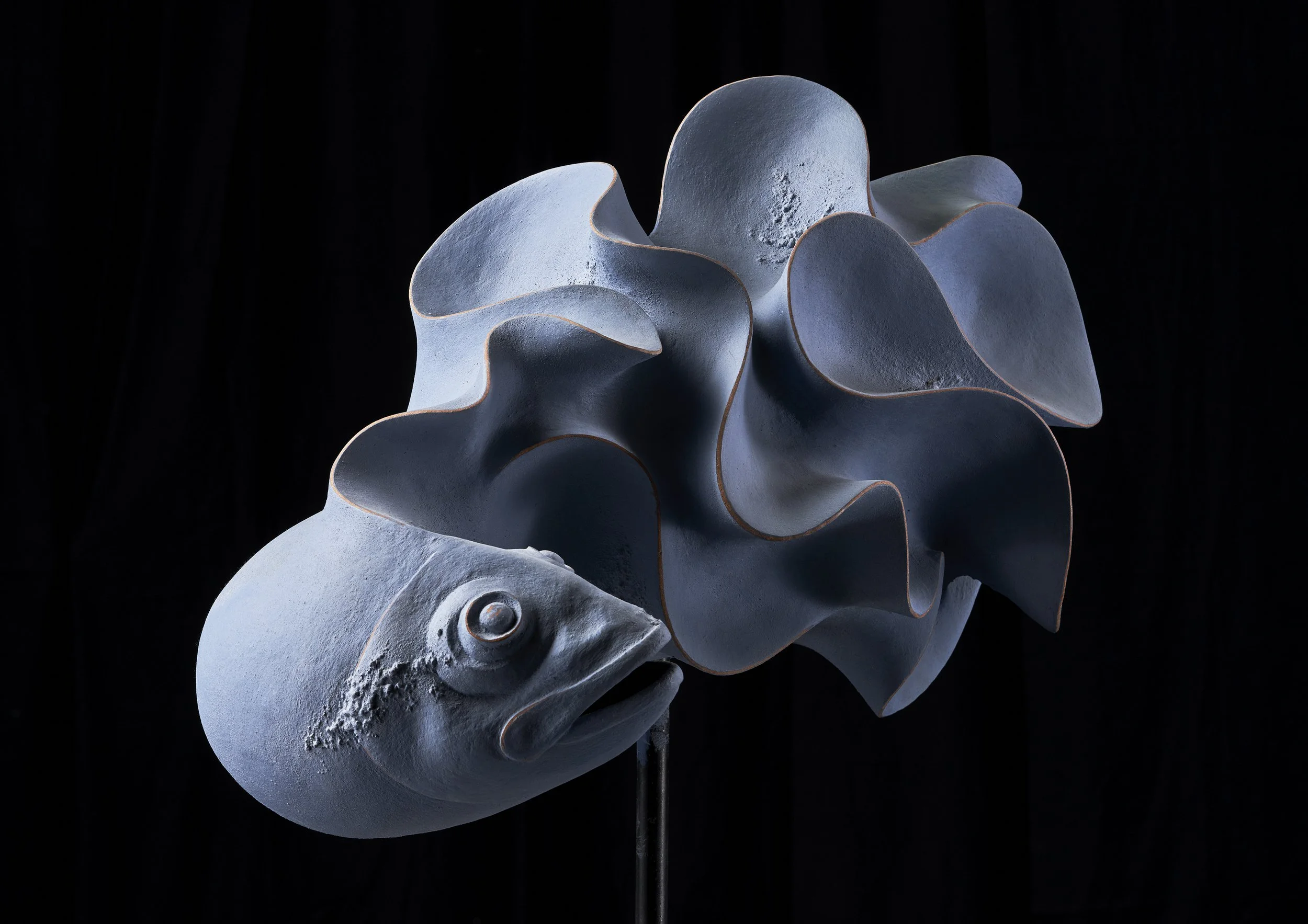
Fish_Lord Howe_68x42h_Glazed ceramic
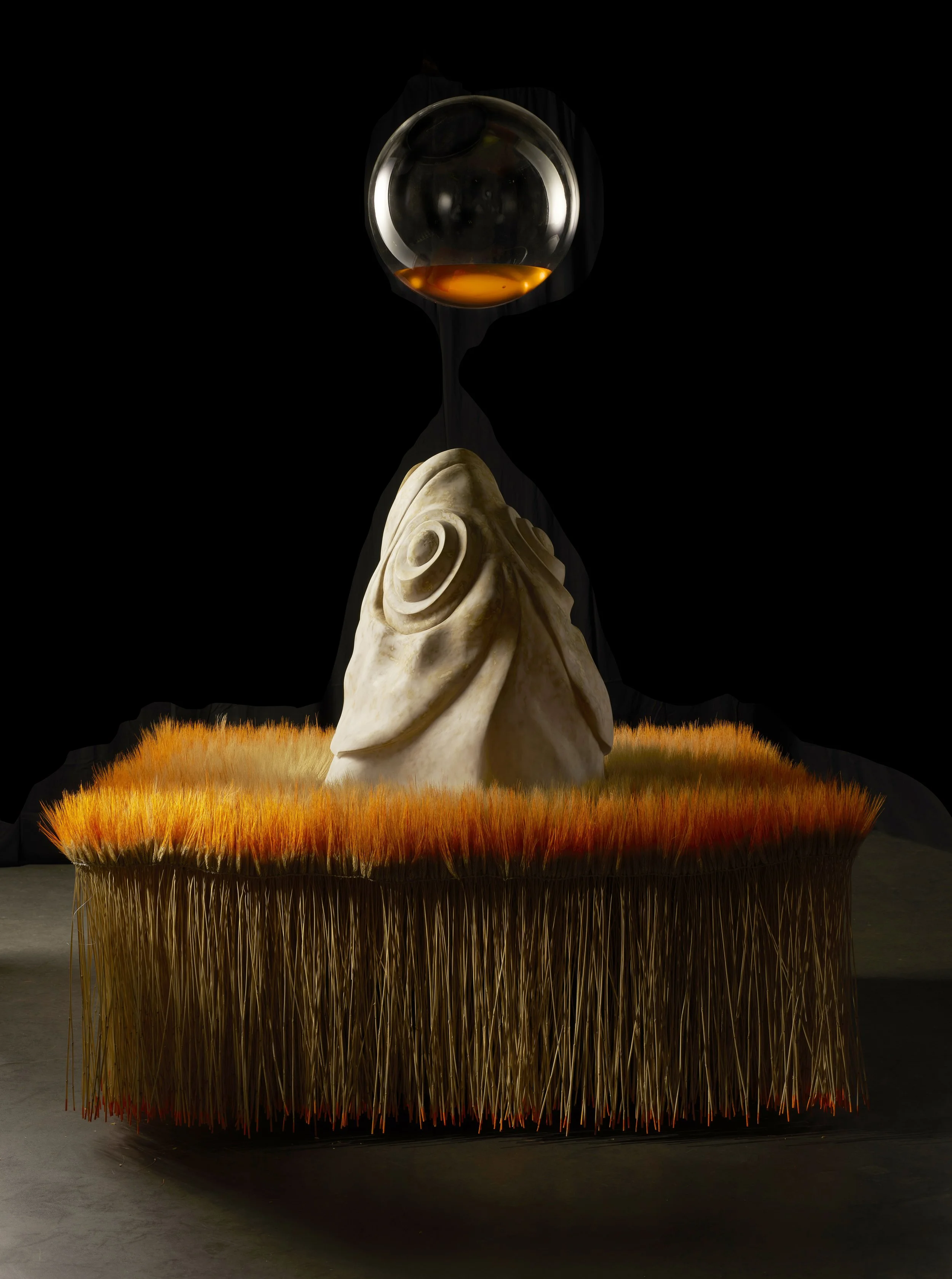
Big fisch_Ujumbe_120x120x140
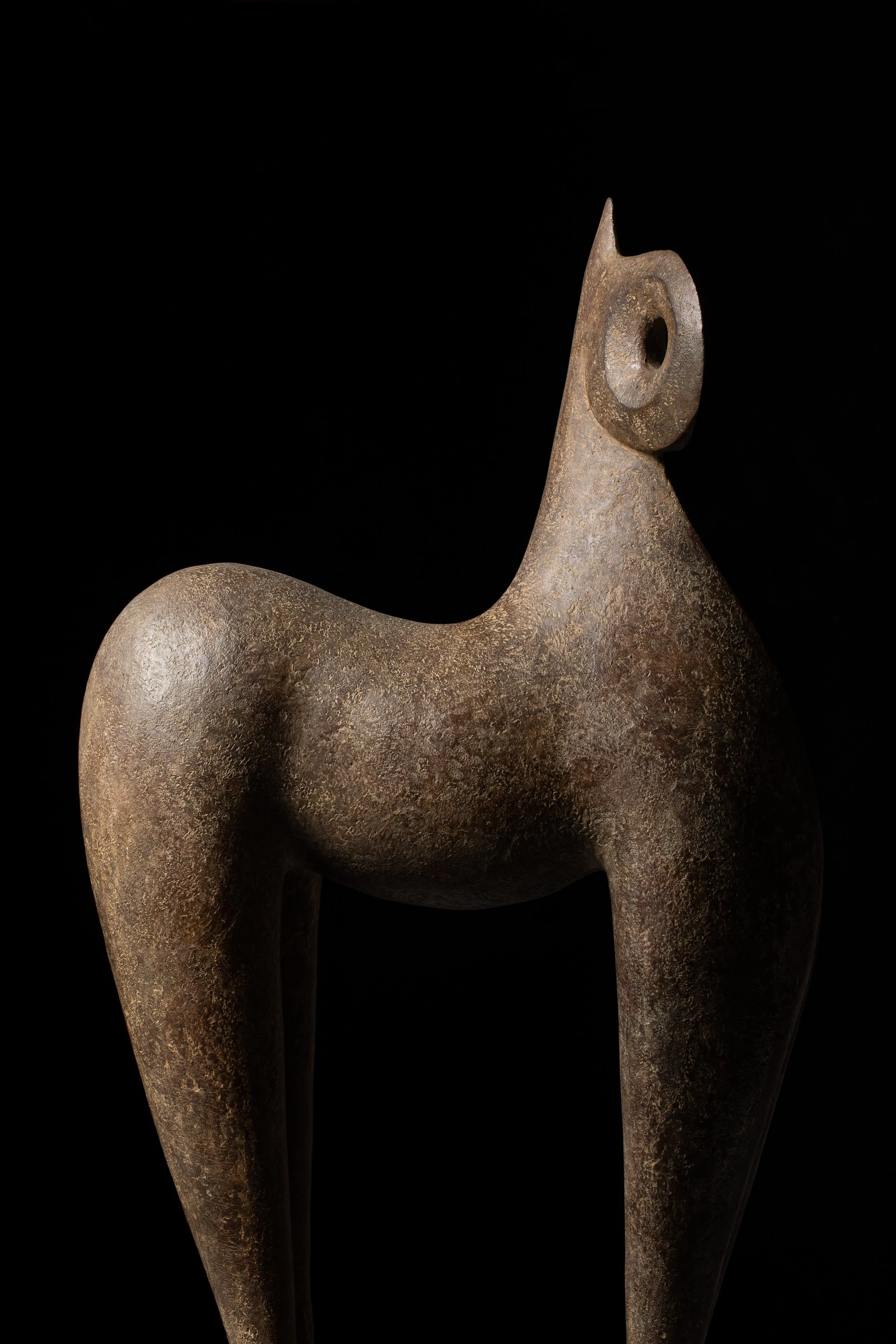
Horse_Meltemi_30x10x50h_Bronze
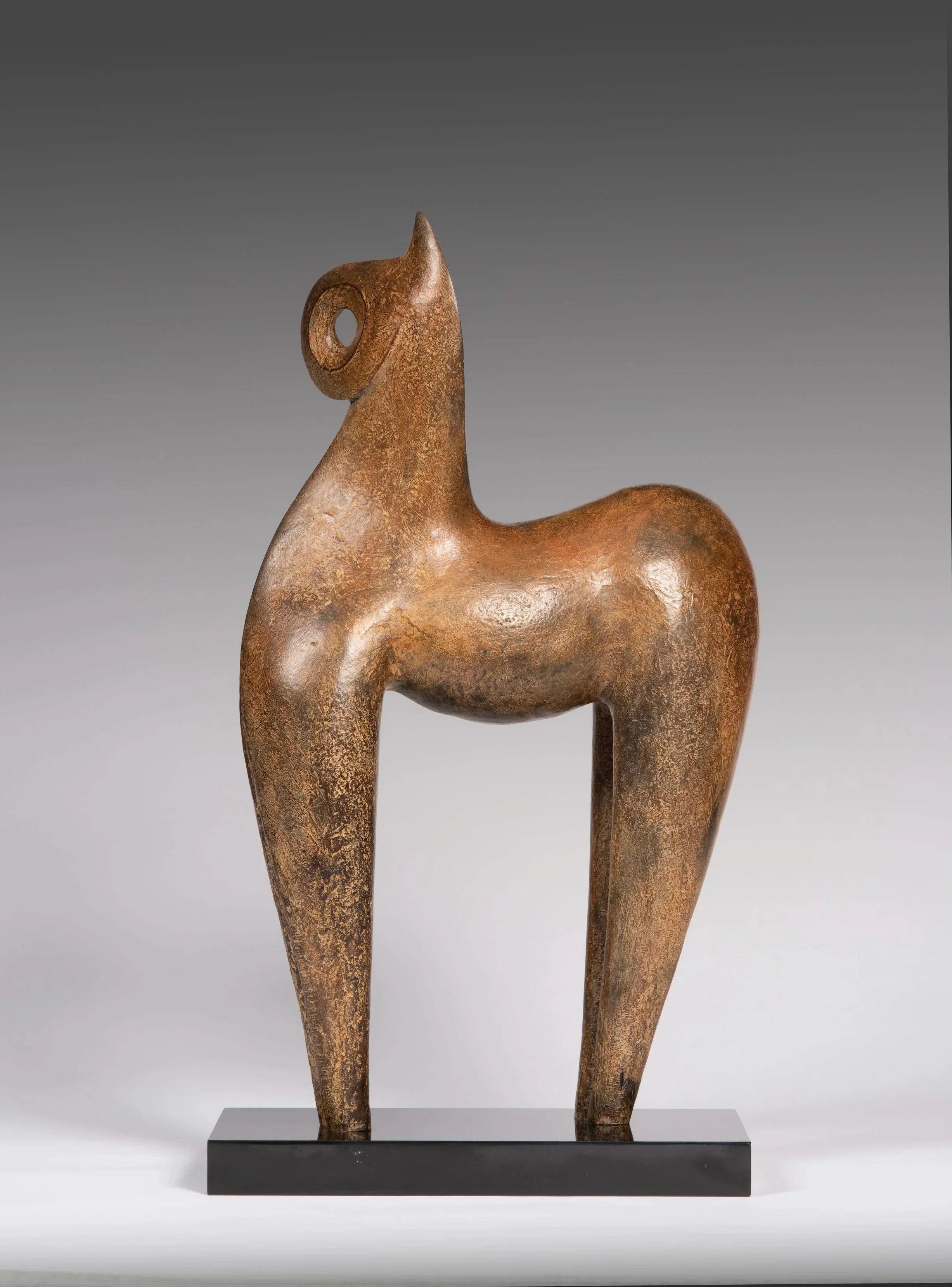
Horse_Tiri_29x10x52h_Bronze
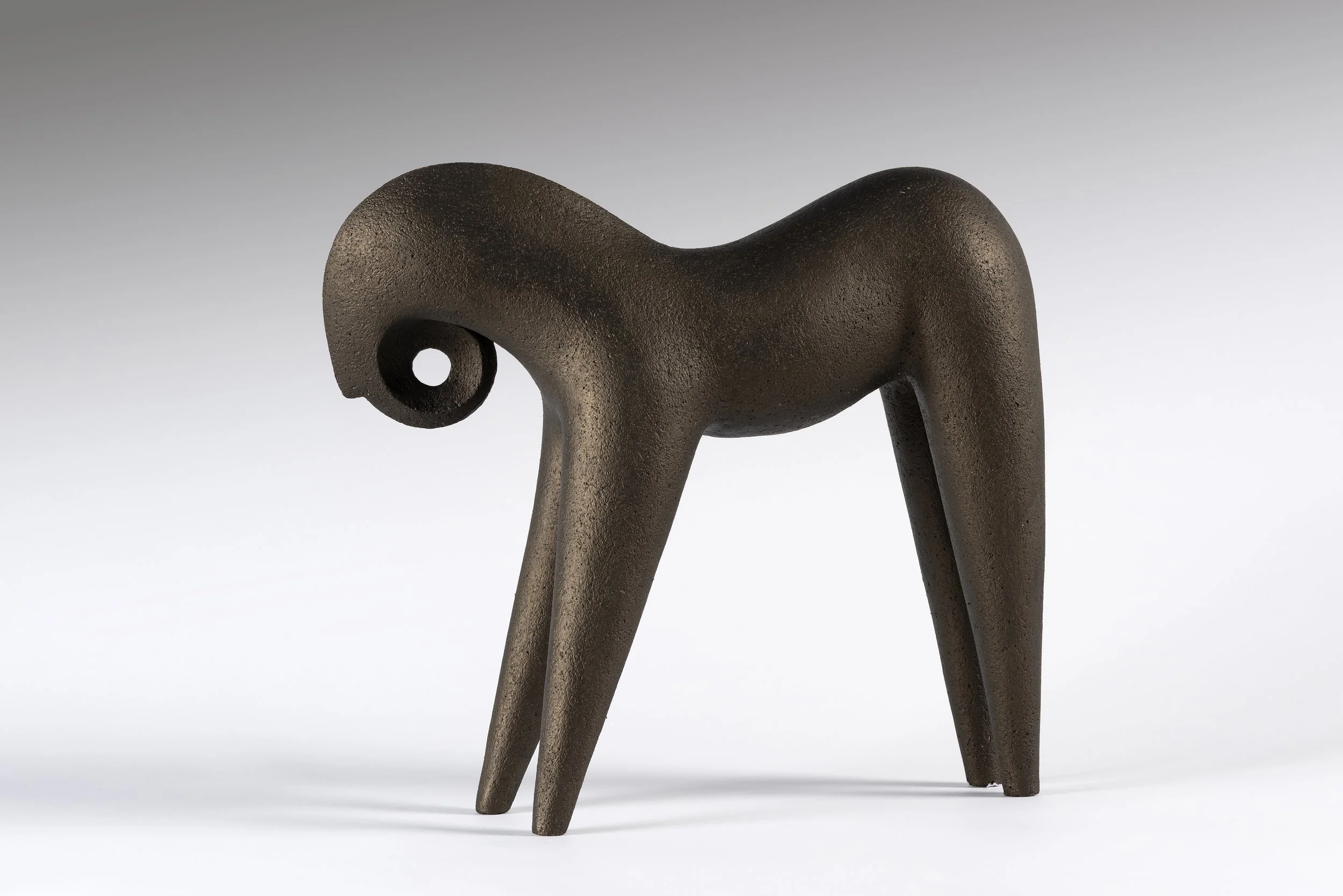
Horse_Jarà_20x9x53_Bronze
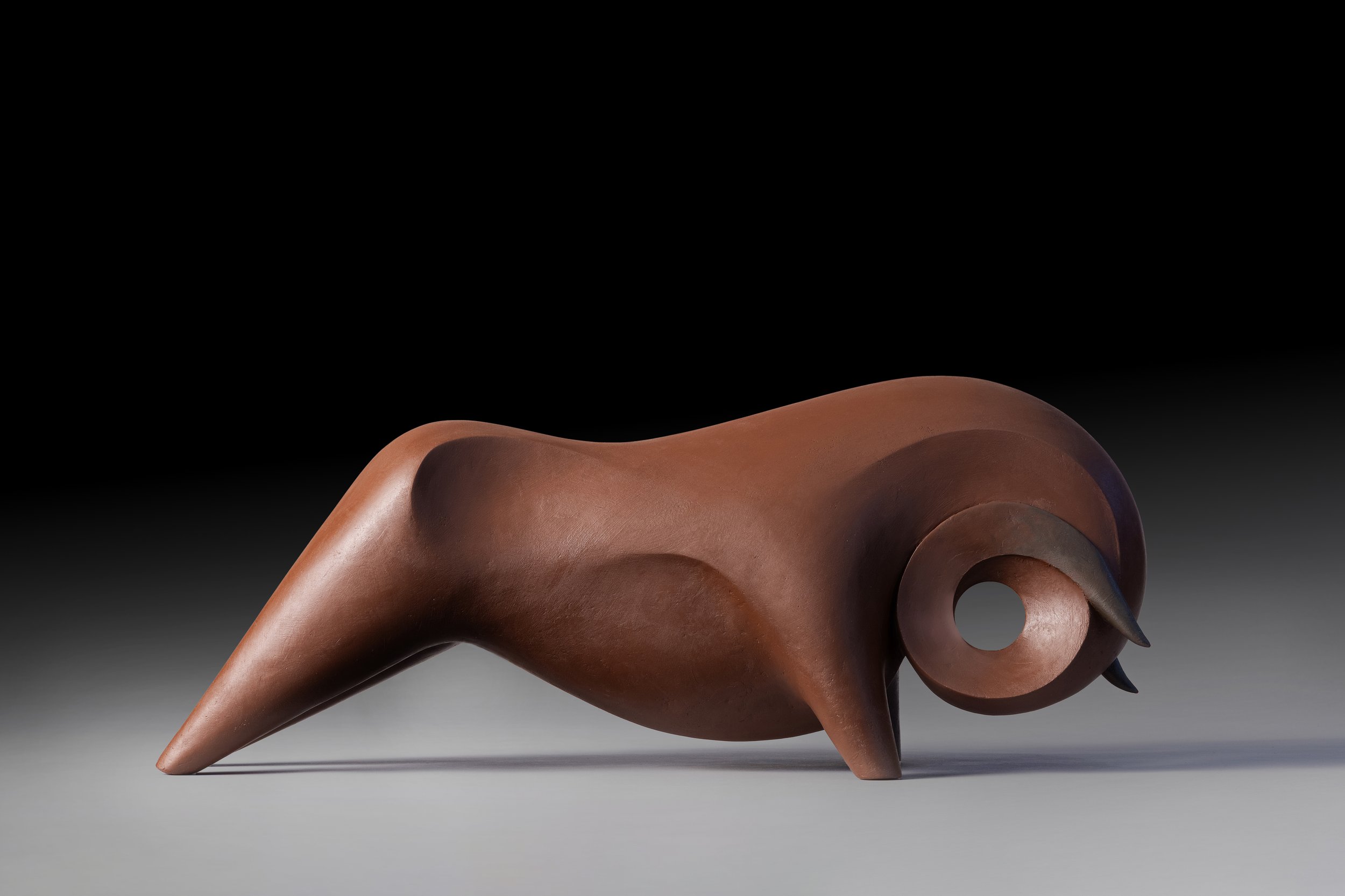
Bull_Eco of the Aurochs_Bronze