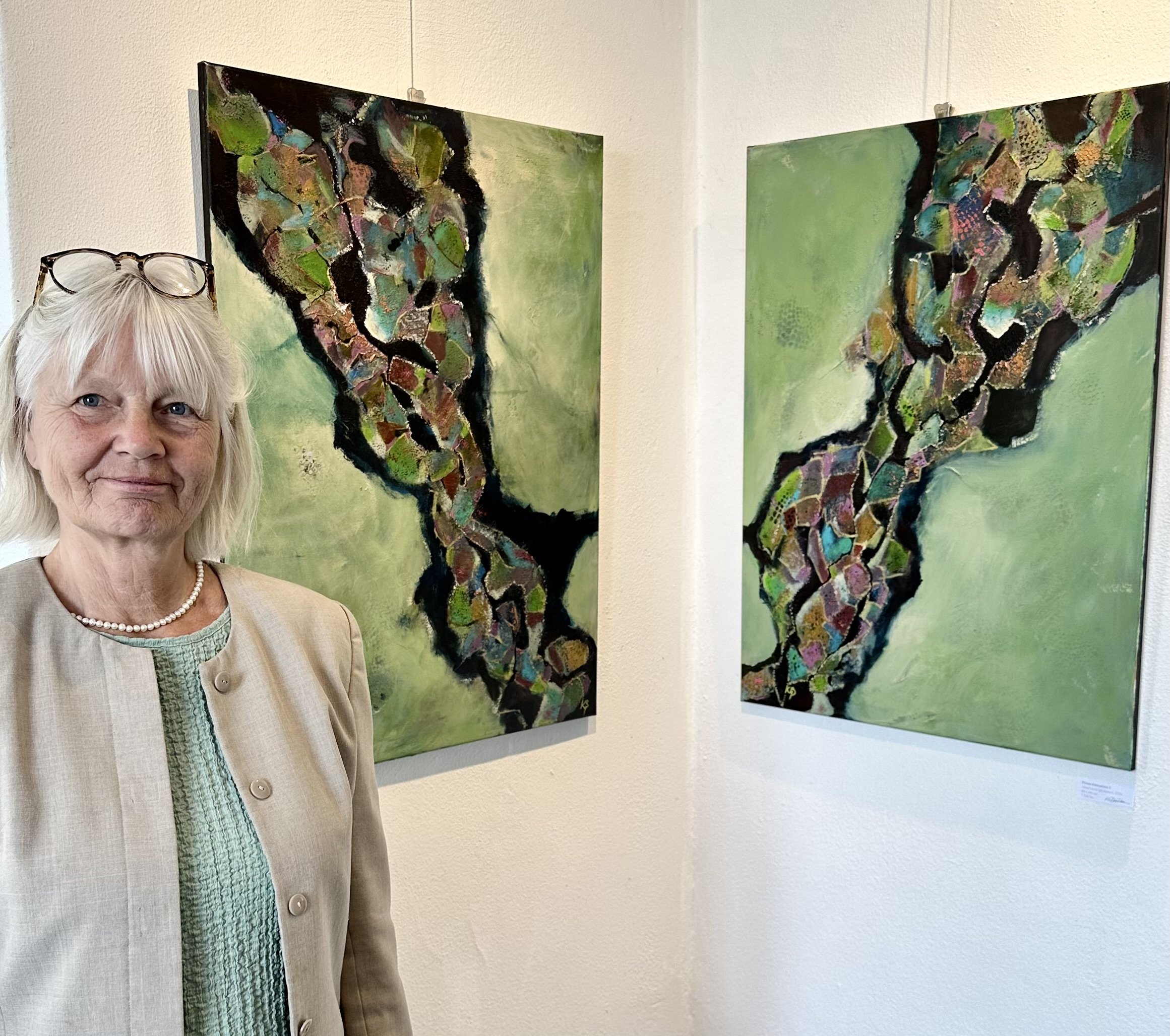
Interview with Karen Bjerg Petersen
@karenbjergp
www.karenbjergart.com
Biography
Karen Bjerg Petersen is a visual artist, and former senior lecturer at Aarhus University, Denmark, whose work bridges contemporary art and, general and language education and educational philosophy. Following a long academic career in pedagogy, ethics, and education, she has developed an artistic practice encompassing painting, sculpture, and ceramics, characterized by an ongoing exploration of form, perception, materiality, and human experience.
Throughout her academic and artistic life, Karen Bjerg has been concerned with questions of formation, responsibility, relationality, and the ways in which human beings come to understand themselves and the world. These concerns continue to inform her artistic practice, where abstract visual languages and sculptural forms become sites for investigating memory, transformation, vulnerability, and becoming.
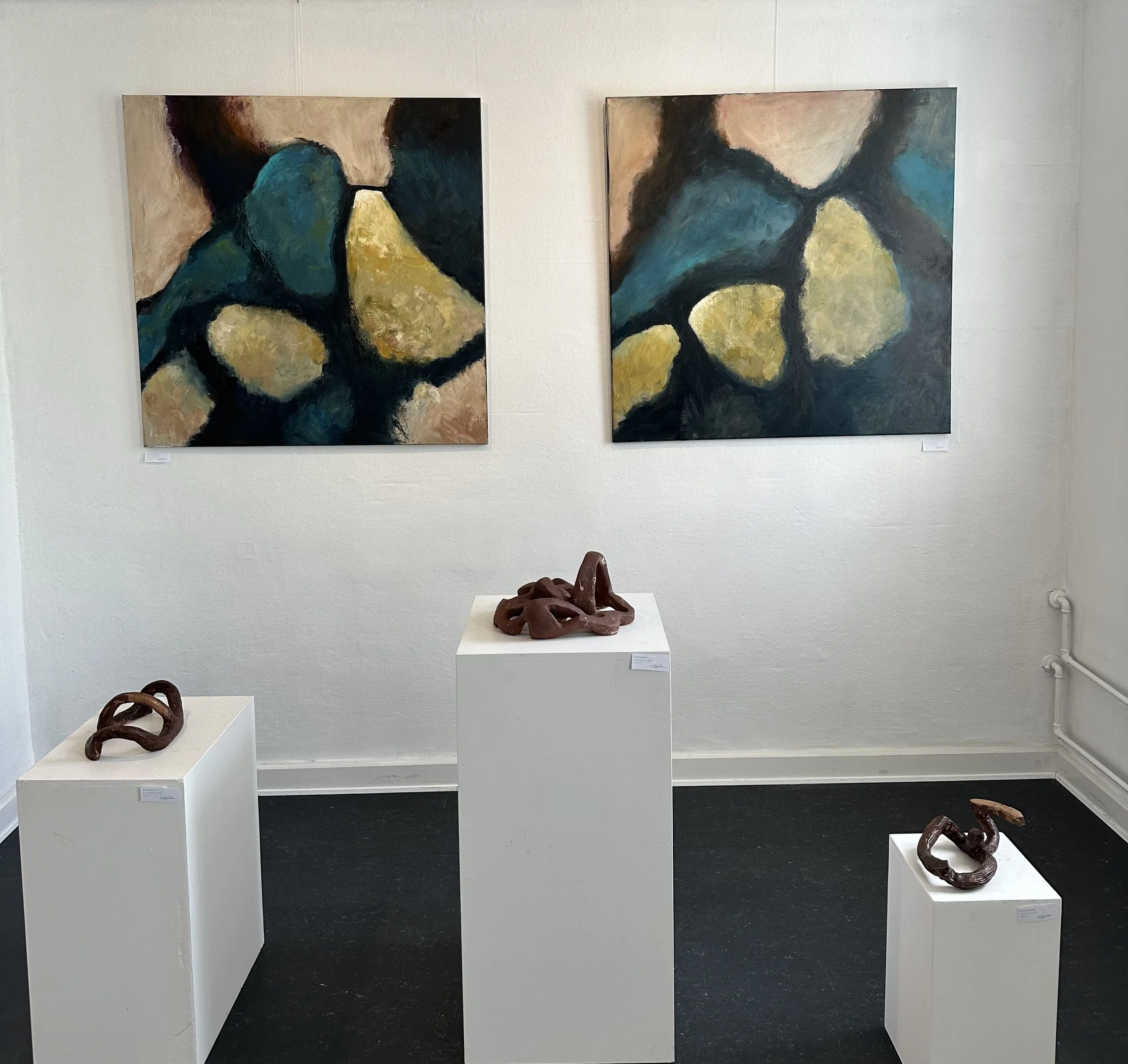
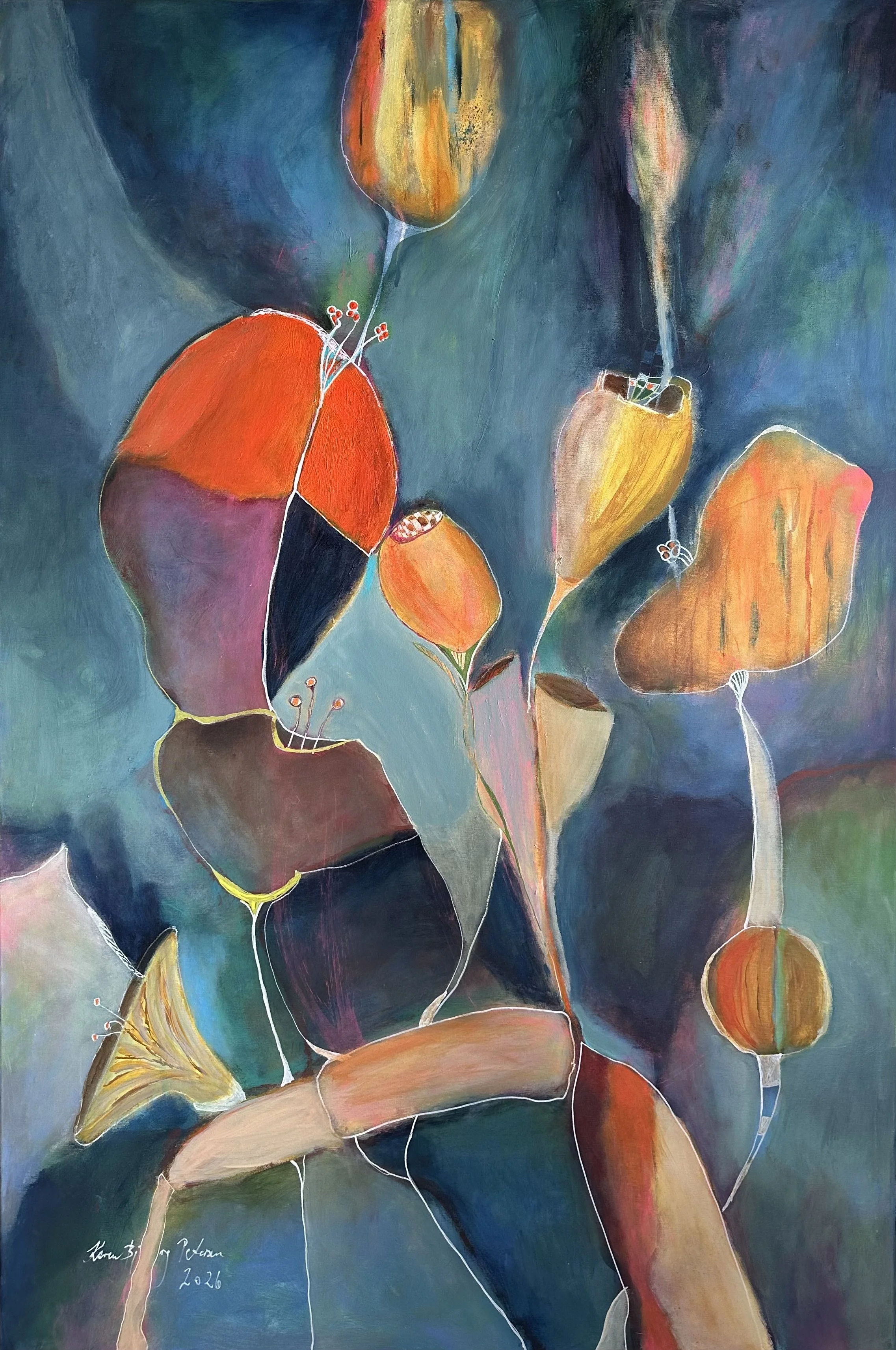
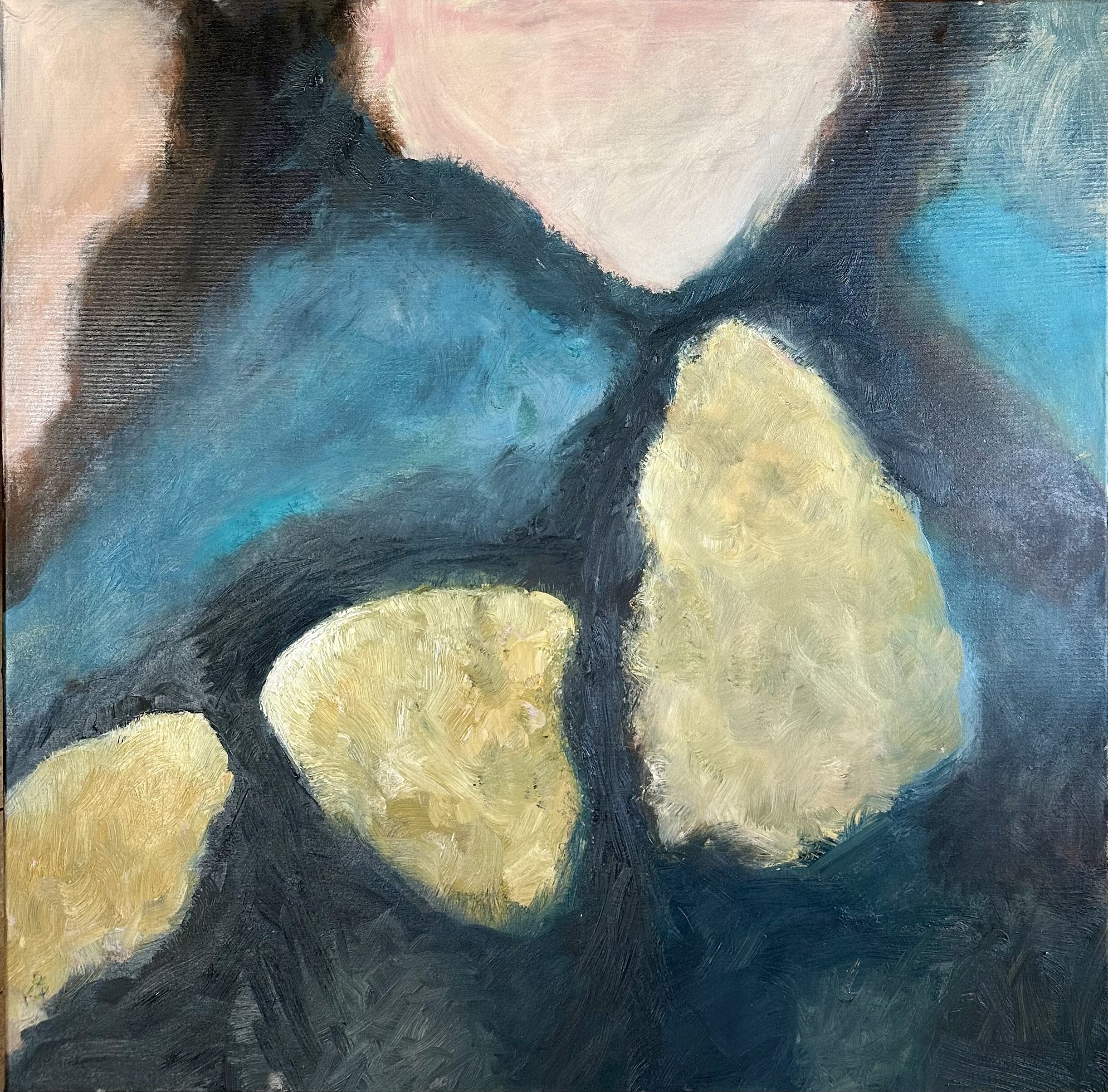
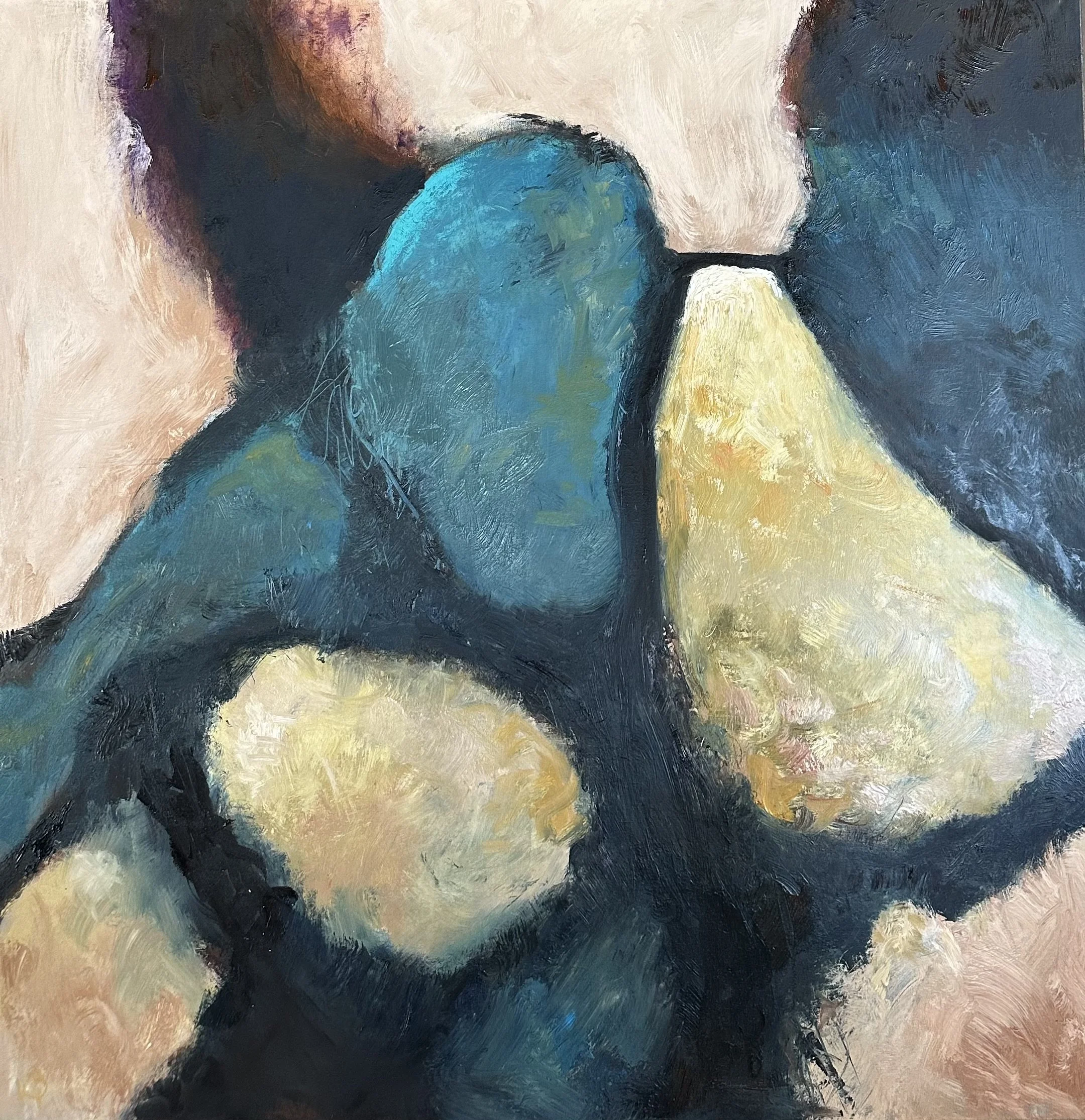
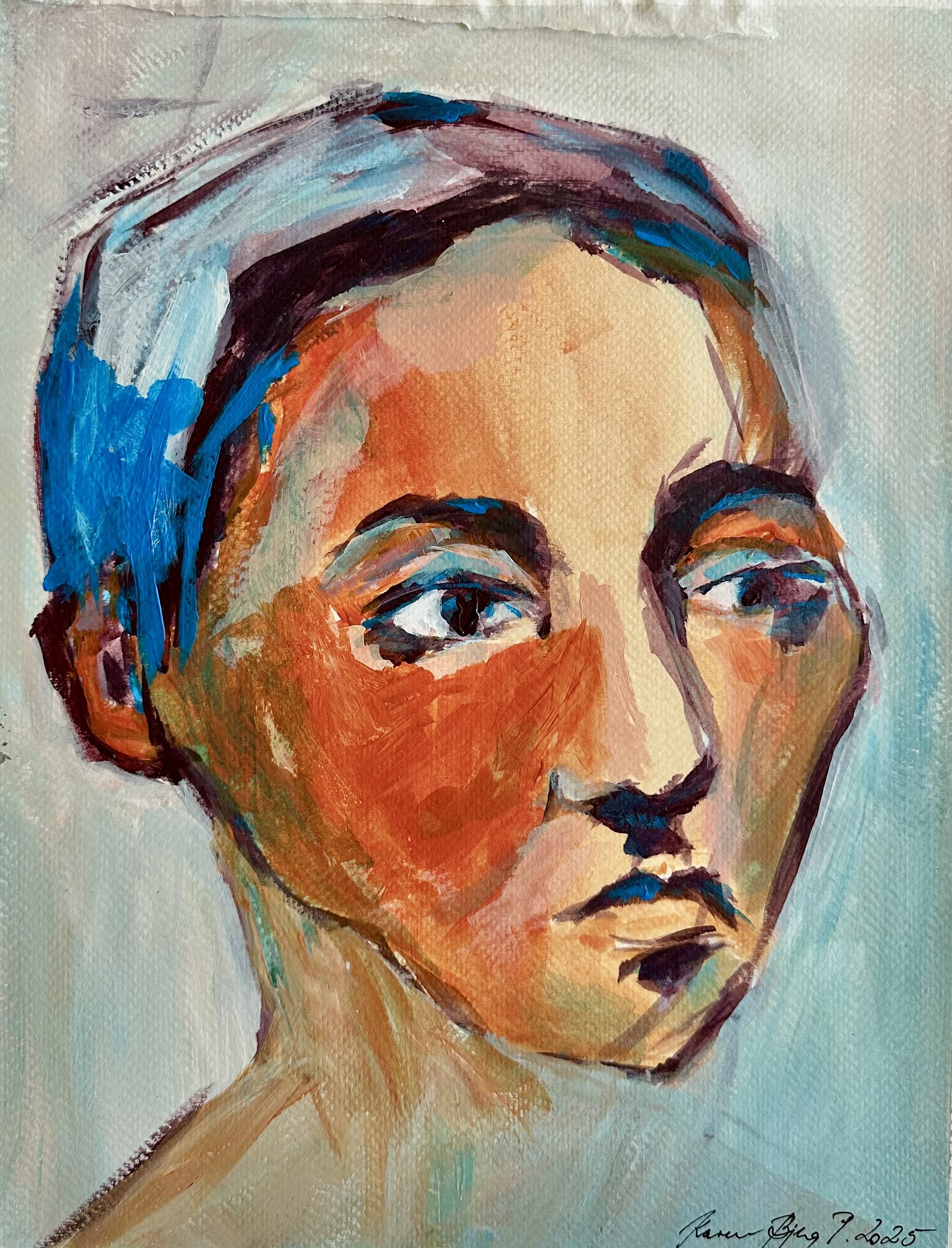
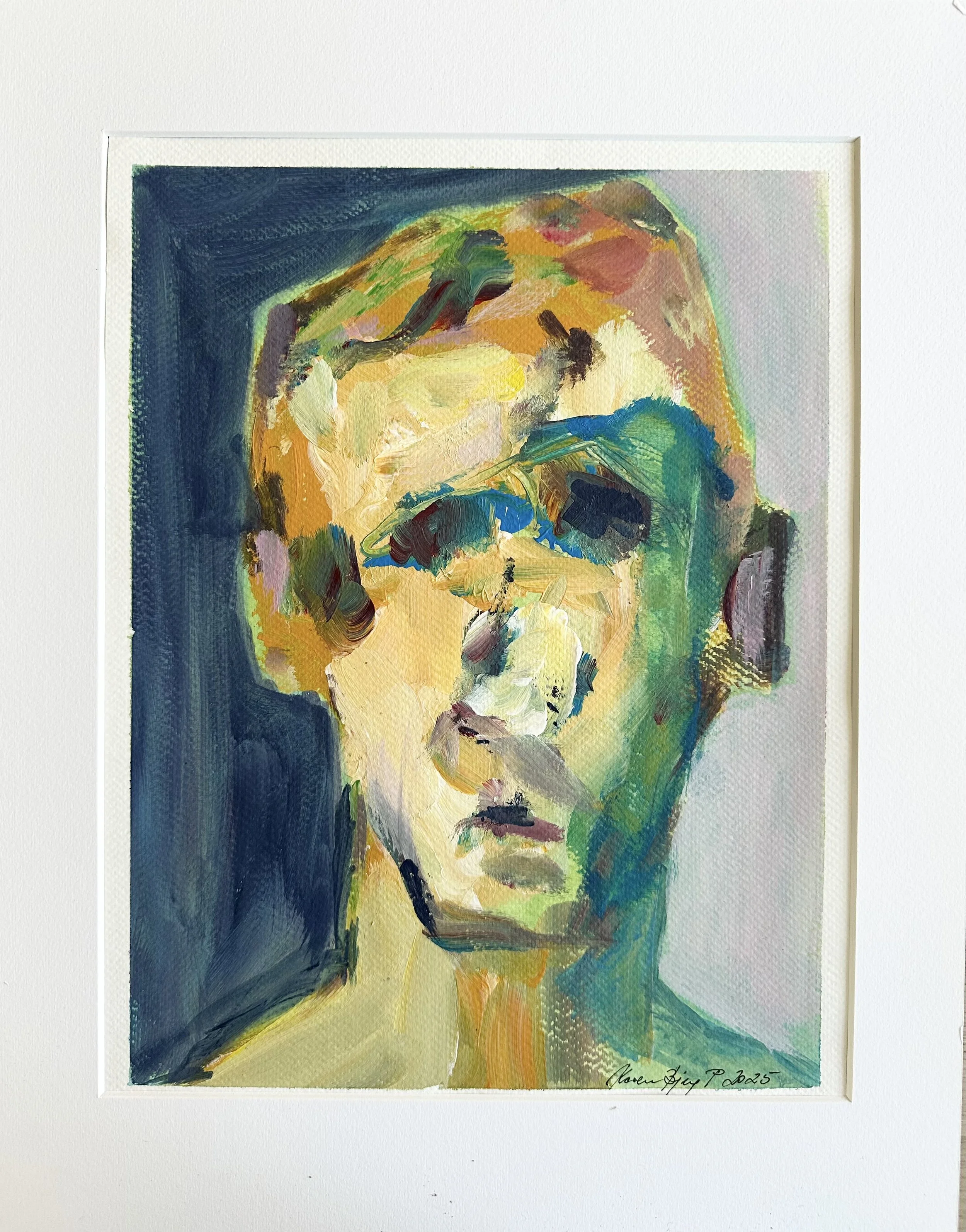
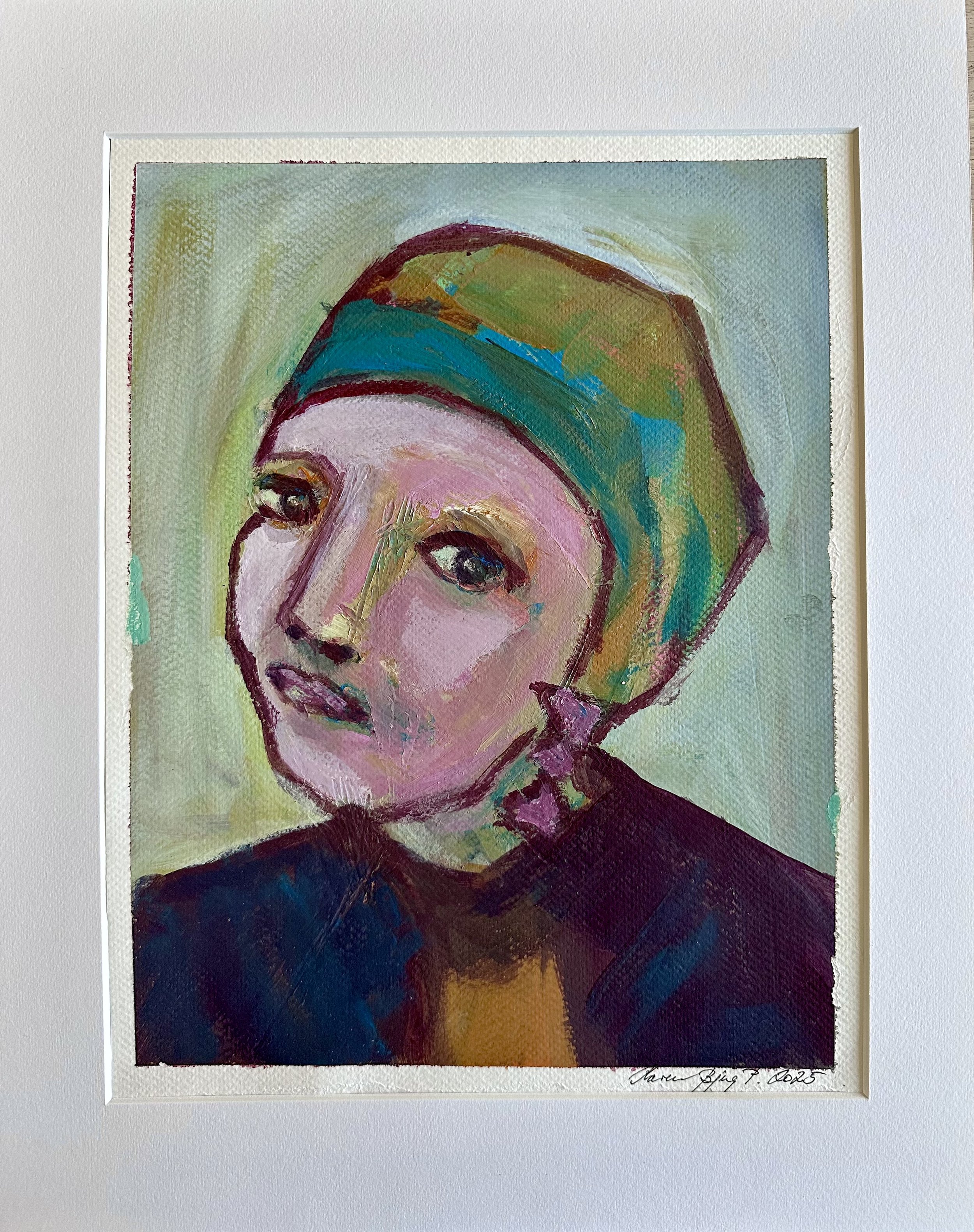
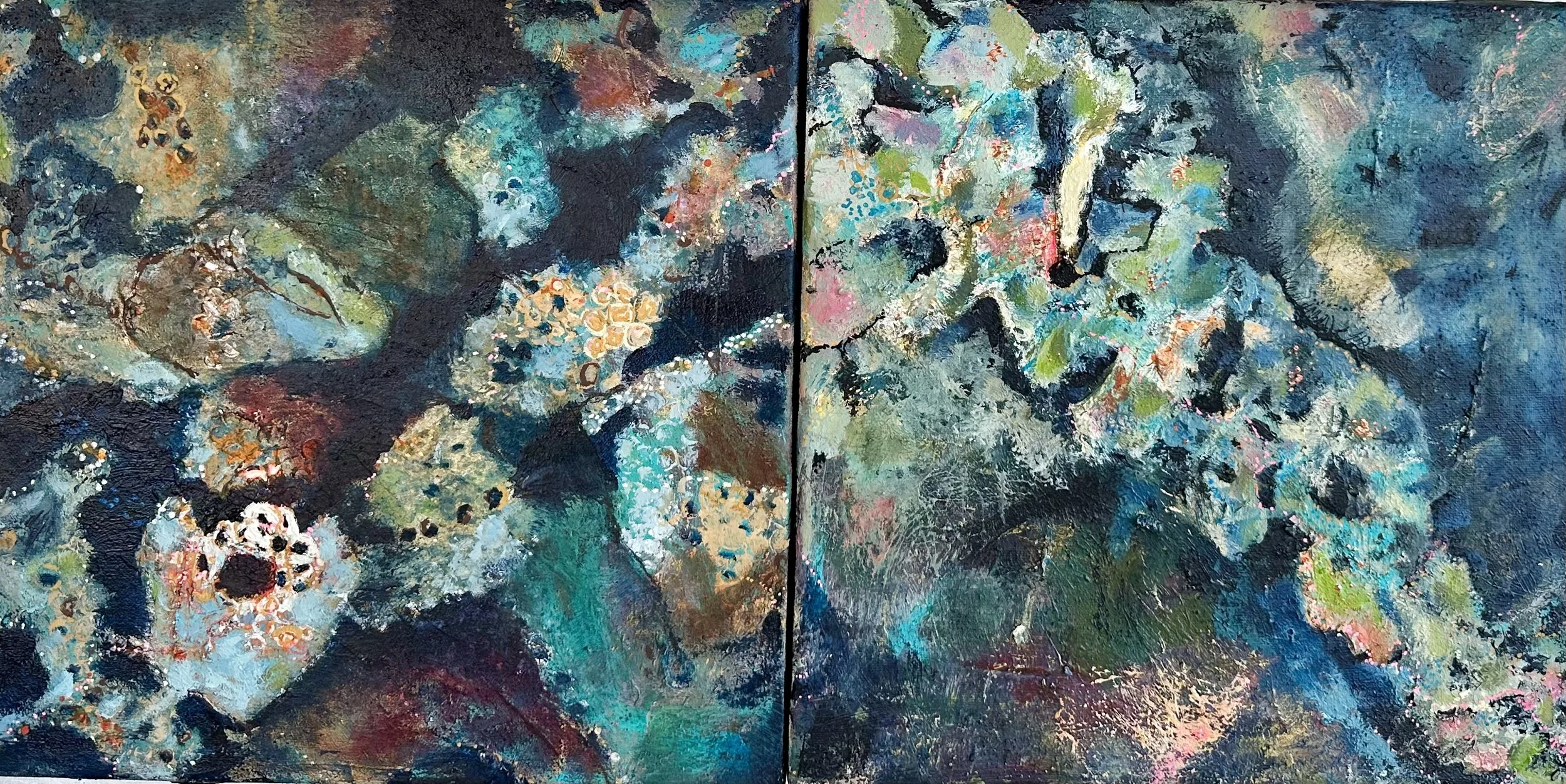
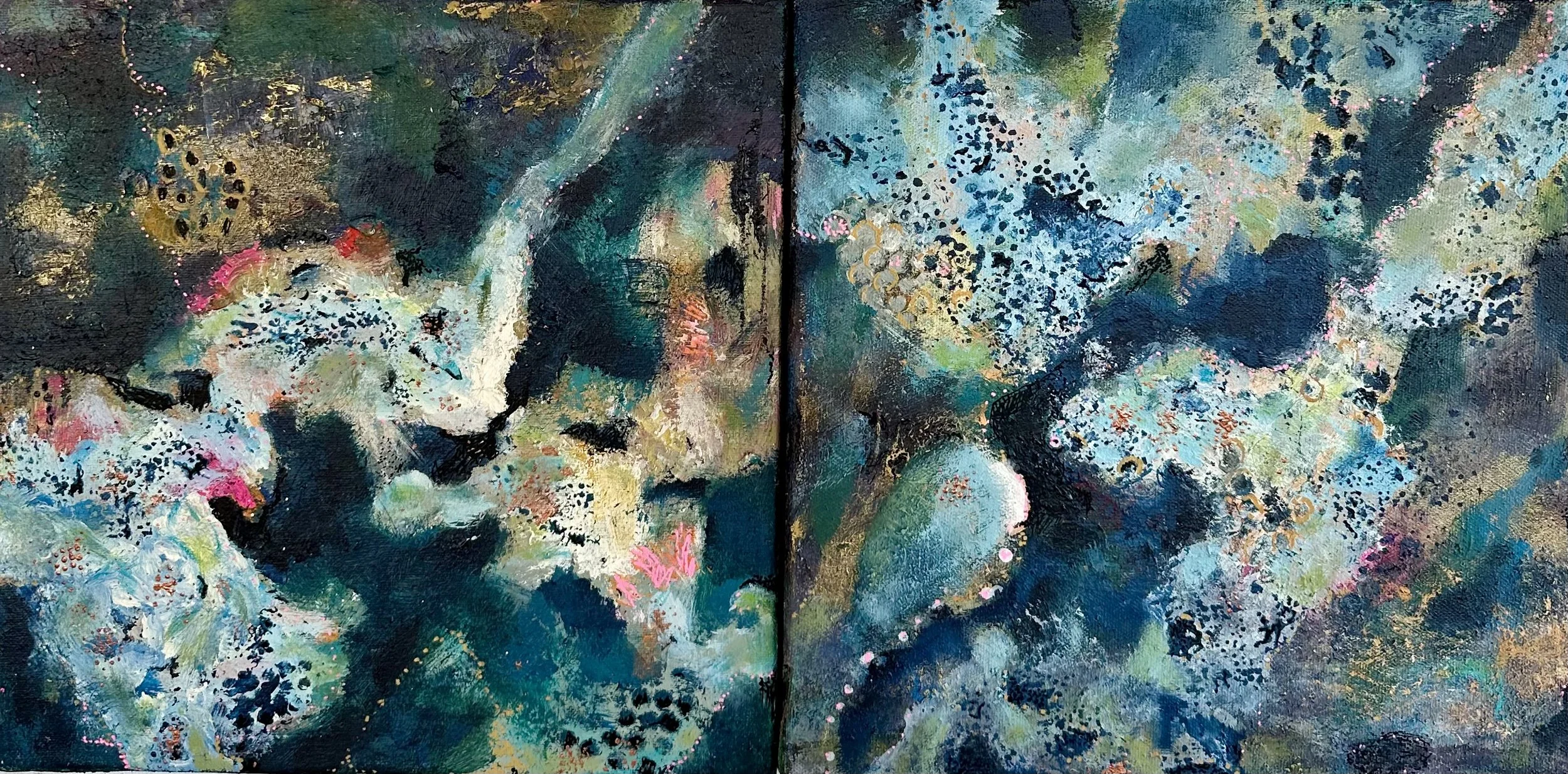
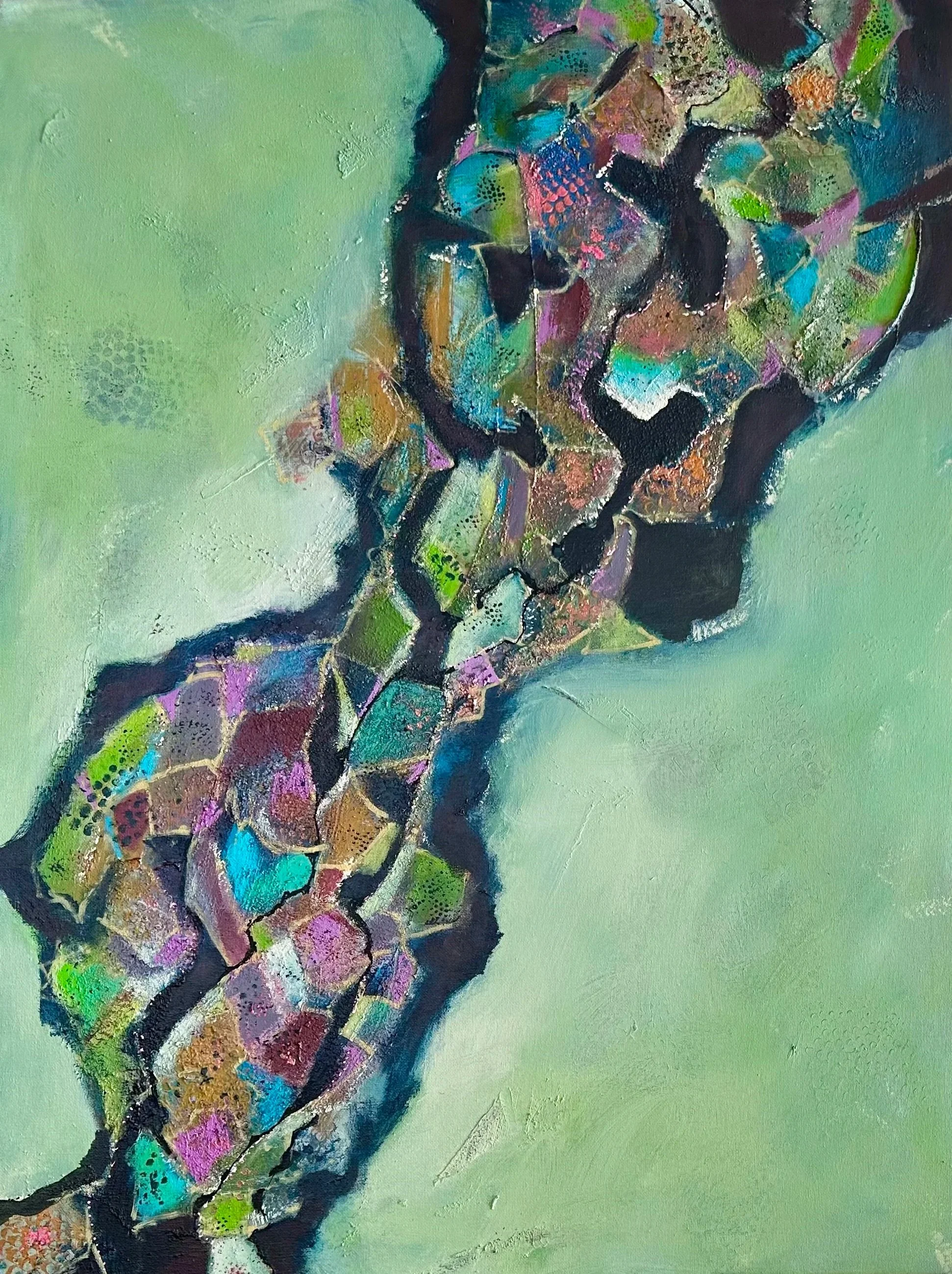
Her paintings, primarily executed in acrylic, are distinguished by layered transparencies, shifting structures, and traces of process that remain visible within the finished work. Her sculptures, created in materials such as bronze, concrete, and clay, explore the tension between solidity and fragility, permanence and change. Across media, she is interested in how material forms can give presence to dimensions of experience that resist direct representation or verbal articulation.
Karen Bjerg Petersen has exhibited her work both in Denmark and internationally. Her practice invites sustained attention and contemplative engagement, positioning art as a form of inquiry as well as expression. Rather than offering fixed meanings, her works create conditions for reflection, perception, and encounter, encouraging viewers to engage with complexity, ambiguity, and the continuous processes through which meaning emerge.
Her work ultimately proposes an education of perception—one that values attentiveness, openness, and the transformative possibilities of seeing.
Karen, your paintings often seem to hover in a charged space between structure and dissolution, where form is never fully stable yet never entirely lost. How do you understand this oscillation as an ethical or philosophical position, especially in light of your long engagement with educational philosophy and questions of responsibility, formation, and openness?
I have always been interested in what exists between certainty and uncertainty. In my paintings, forms emerge, dissolve, and reappear because that reflects how I experience both human existence and the process of understanding. We are never finished beings. We are constantly in formation, shaped by experiences, relationships, memories, and the environments we inhabit.
My background in general education and educational philosophy has deeply influenced this perspective. Education, at its core, is not about producing fixed outcomes but about creating conditions for openness, reflection, and transformation. Similarly, I do not approach painting as a process of imposing predetermined meanings. Rather, I seek to create a space where meanings can unfold and remain in motion.
The tension between structure and dissolution is therefore not merely an aesthetic concern. It is also an ethical one. I am interested in resisting the desire for complete control, certainty, and closure. In both education and art, there is a responsibility to remain attentive to what exceeds our expectations and frameworks. Openness requires a willingness to encounter something that cannot be fully predicted or mastered.
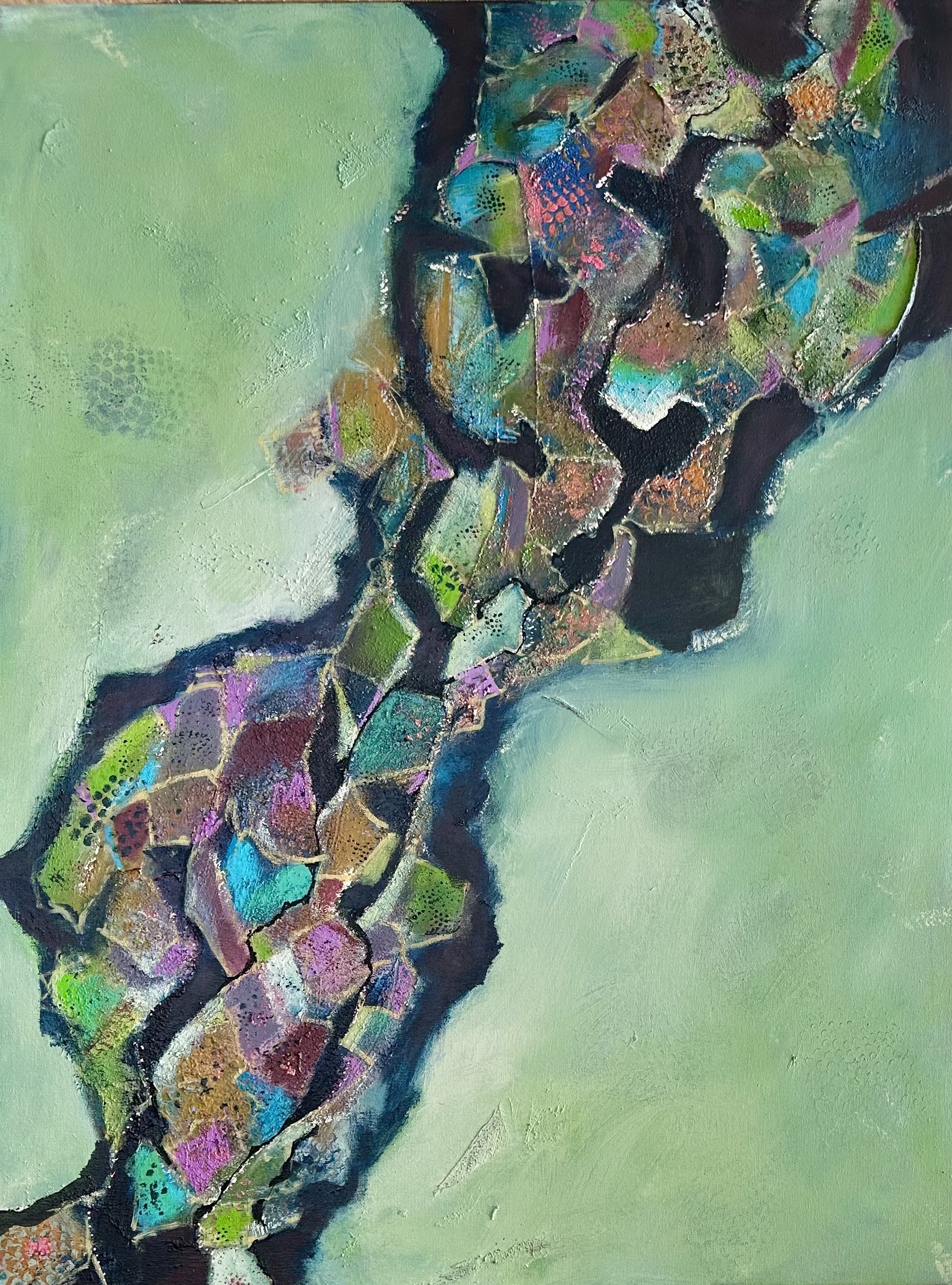
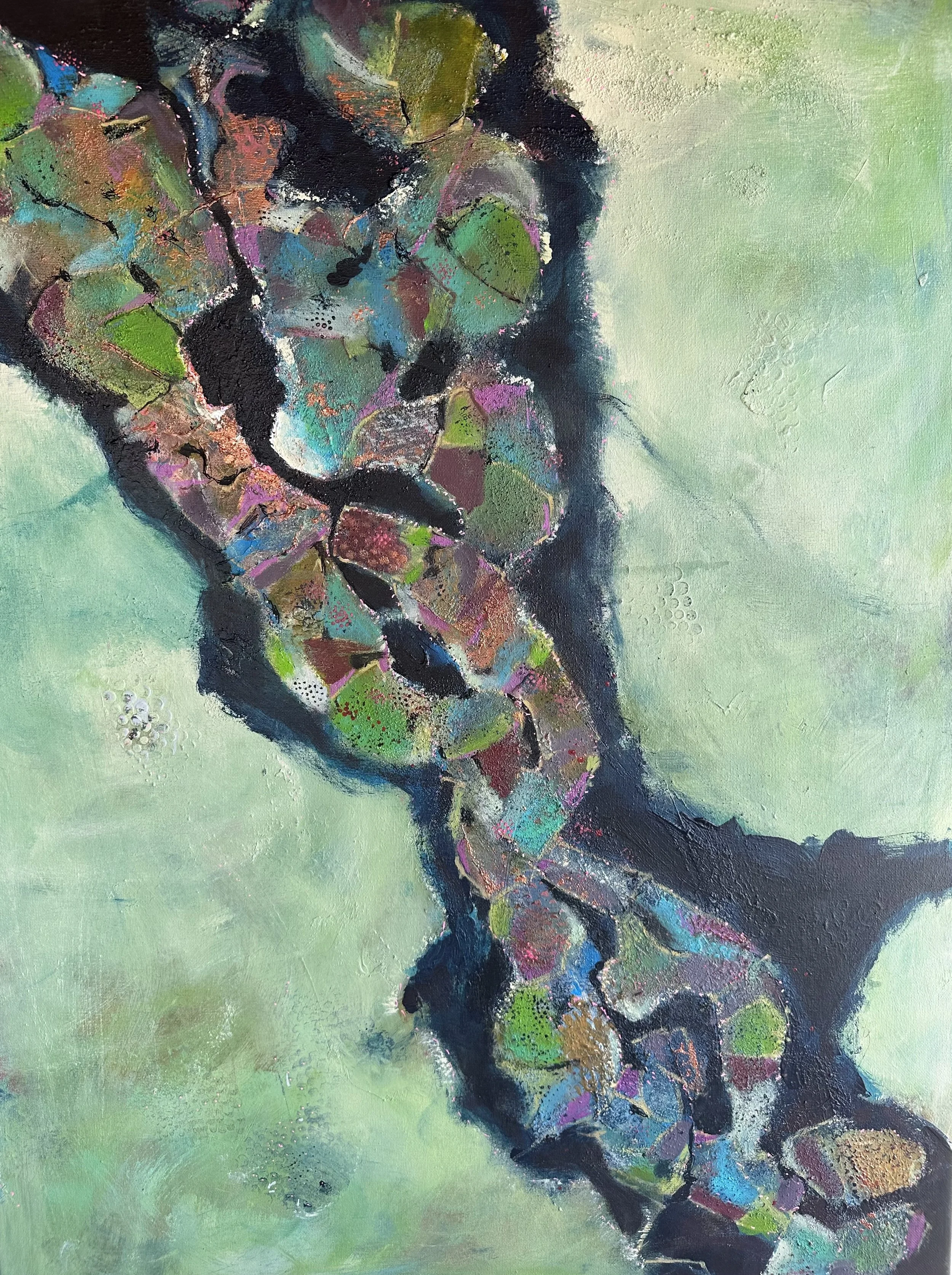
In my paintings, fragments, traces, and shifting forms coexist with more stable structures. This reflects a philosophical understanding of reality as relational and dynamic rather than fixed and self-contained. The unfinished or unstable form becomes a way of acknowledging complexity, vulnerability, and the continual process of becoming.
I see painting as a dialogue between intention and emergence. The work develops through acts of making and responding, much like learning itself. What matters is not arriving at a final truth but sustaining a space where perception can remain active and where viewers can bring their own experiences into encounter with the work.
In this sense, the oscillation between form and dissolution is both an artistic strategy and a philosophical position. It expresses a commitment to complexity, to openness, and to the ethical significance of remaining receptive to what is still in the process of taking shape.
Looking at your acrylic works, one senses a sustained negotiation between intuition and system, between impulsive gesture and underlying compositional intelligence. Do you experience this negotiation as a continuation of scholarly thinking by other means, and in what ways does painting allow you to think beyond the limits of language?
Yes, I believe there is a strong connection between my scholarly work and my painting practice, although they operate through very different modes of inquiry. Both are concerned with understanding complexity, exploring relationships, and remaining attentive to questions that resist simple answers. In that sense, painting can be seen as a continuation of thinking but thinking in a different register.
Academic work requires concepts, arguments, and language. It seeks clarity and coherence, even when dealing with ambiguity. Painting, however, allows me to enter a space where ambiguity is not something to be resolved but something to be inhabited. Through color, texture, rhythm, and spatial relations, I can engage with experiences and perceptions that precede or exceed verbal articulation.
The negotiation between intuition and structure is central to my process. I rarely begin with a fully determined image. Instead, I establish certain conditions—compositional frameworks, chromatic relationships, or material constraints—and then respond intuitively to what emerges. The painting develops through a dialogue between intentional decisions and unforeseen possibilities. In this respect, the process resembles research: one follows a line of inquiry, but one must remain open to discoveries that alter the direction of the investigation.
What painting offers, however, is a form of knowledge that cannot be reduced to propositions. It can hold contradictions simultaneously. It can communicate emotional, sensory, and existential dimensions of experience without translating them into fixed concepts. A painting can suggest multiple meanings at once, allowing tensions and uncertainties to remain active rather than forcing them into resolution.
I often think of painting as a way of engaging with questions that language can approach but never fully capture. Certain experiences—our sense of time, memory, vulnerability, transformation, or connection to the world—contain aspects that remain elusive when expressed solely through words. Visual form provides another avenue for exploring these dimensions.
Rather than illustrating ideas developed elsewhere, my paintings generate their own kind of thinking. They become sites of inquiry where perception, materiality, and imagination interact. What emerges is not an argument but an invitation: a space in which both artist and viewer can encounter something that remains open, dynamic, and not yet fully known.
Your practice moves fluidly between painting and sculpture, from transparent chromatic layers to the resistance of bronze and concrete. How does the shift from pictorial space to physical mass alter your understanding of vulnerability, transformation, and human presence, and what does each medium permit you to articulate that the others cannot?
For me, painting and sculpture are closely connected, yet they engage with fundamentally different dimensions of experience. Painting unfolds through surface, color, light, and spatial illusion, while sculpture exists as a physical presence in the same space as the viewer. Moving between these media allows me to explore similar questions from different perspectives and through different forms of material resistance.
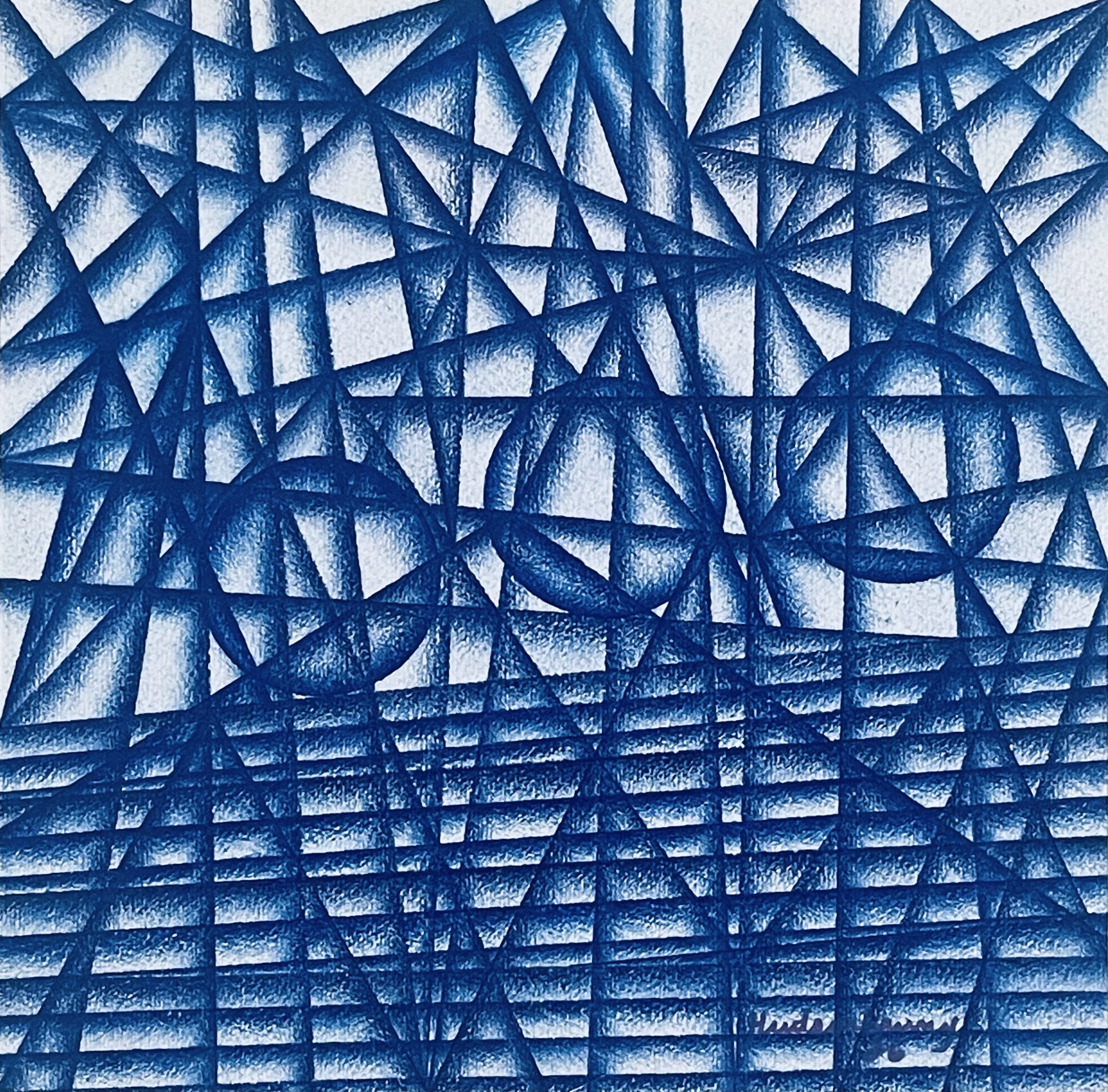
In painting, vulnerability often emerges through transparency, layering, and the instability of form. The image can appear and disappear simultaneously. Shapes dissolve into color fields, traces remain visible beneath later interventions, and the surface carries a history of decisions, revisions, and uncertainties. This creates a space where transformation is experienced as a fluid and ongoing process. Work can evoke states of becoming that are difficult to locate in a fixed form.
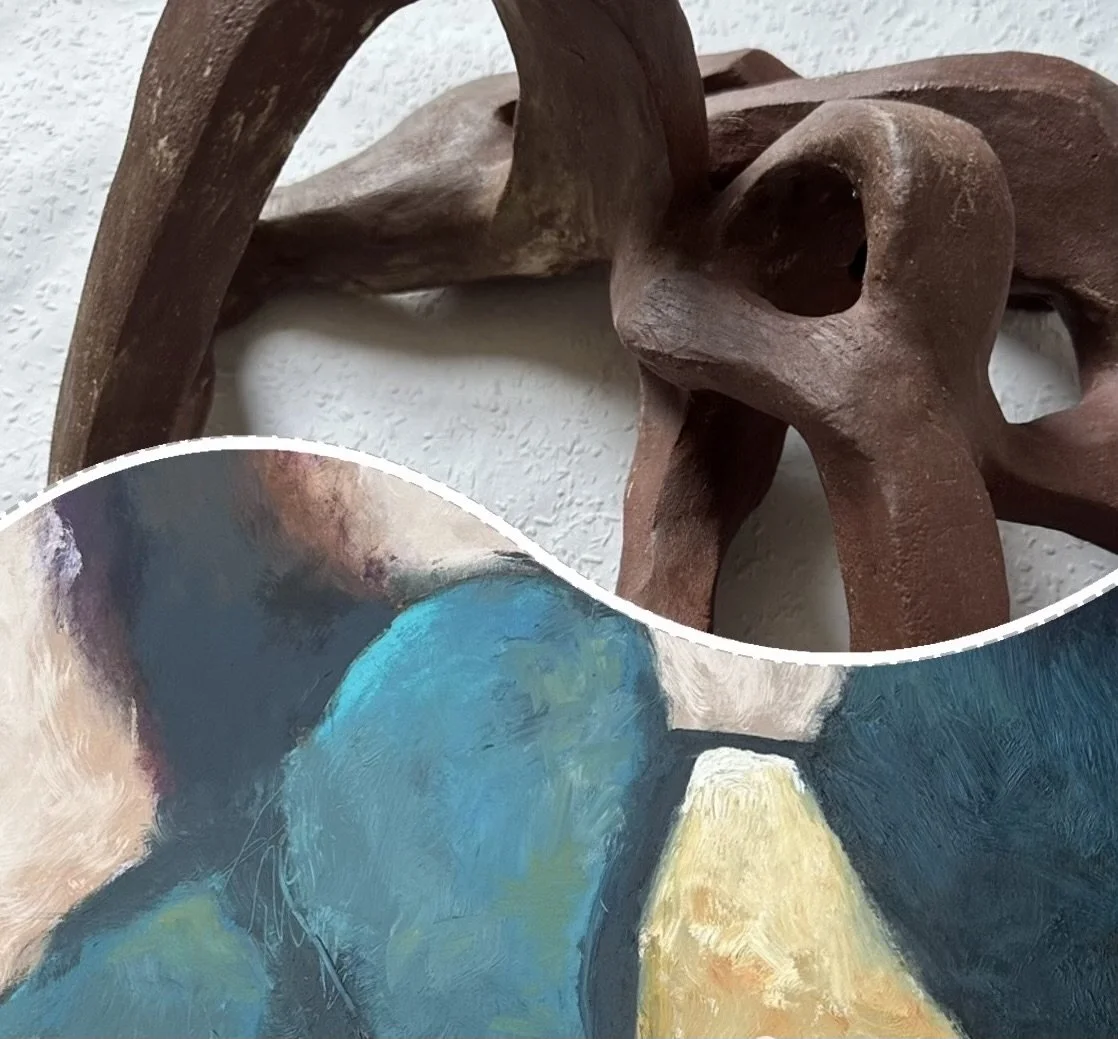
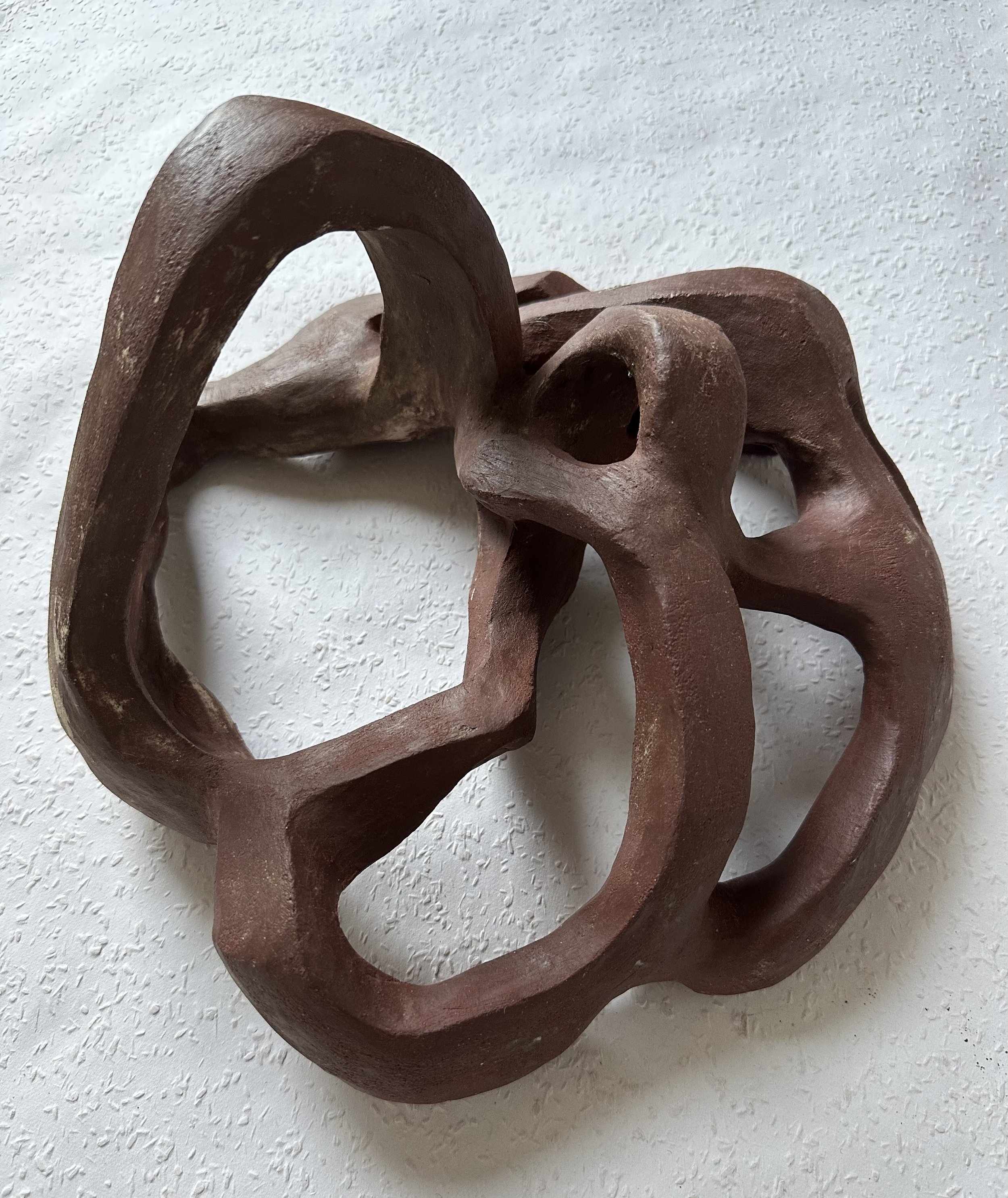
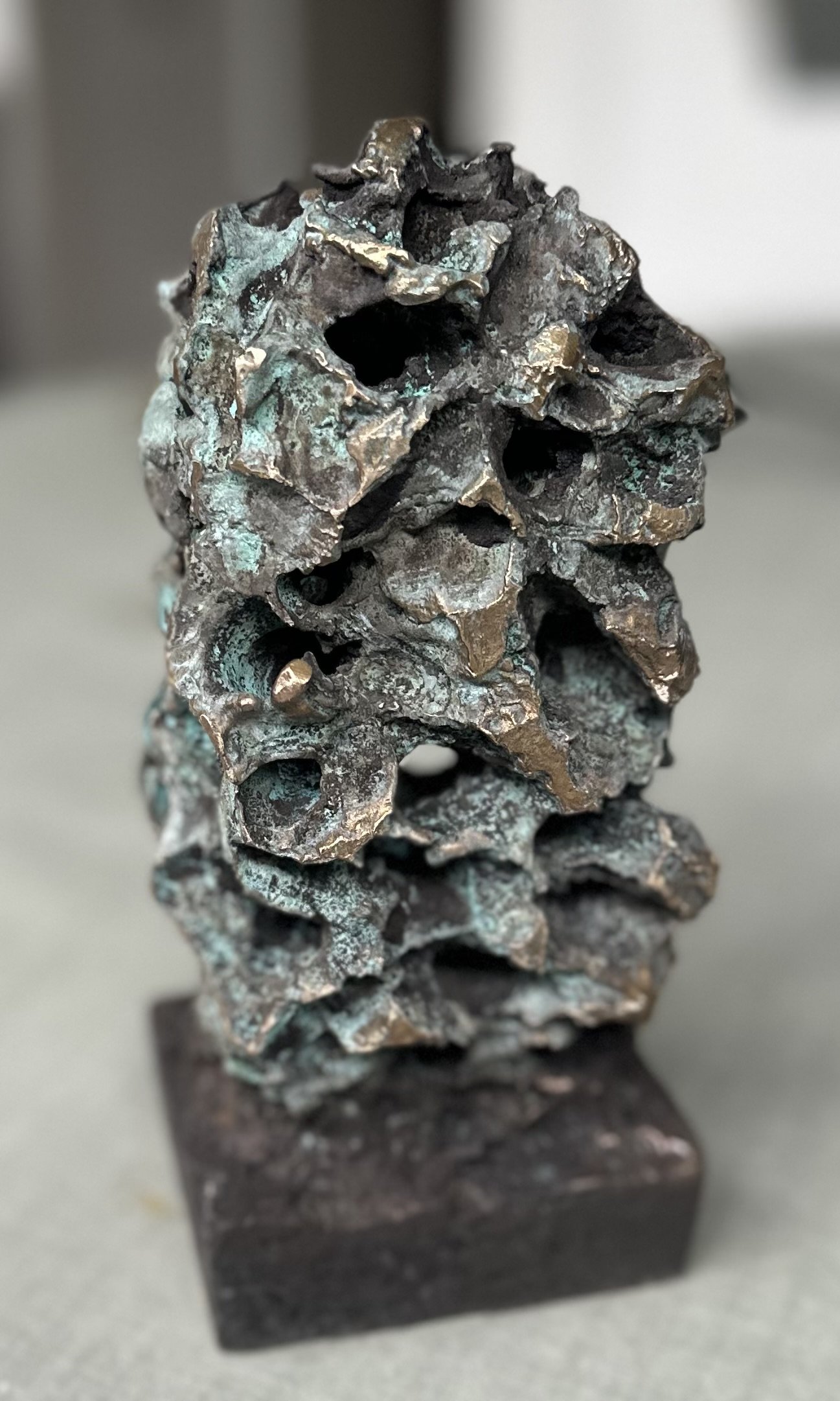
Sculpture confronts vulnerability in a different way. Materials such as clay, bronze, and concrete possess weight, texture, and physical presence. They occupy space and invite a bodily encounter. Yet even the most solid materials contain a sense of fragility. Clay records the pressure of the hand, bronze preserves traces of a temporary model, and concrete can appear both monumental and vulnerable at the same time. I am interested in this paradox—that strength and fragility are not opposites but often coexist.
The shift from pictorial space to physical mass also changes how I think about human presence. In painting, presence is often indirect, suggested through gesture, rhythm, and traces of movement. In sculpture, presence becomes more immediate because the work shares the viewer’s physical environment. One moves around it, experiences its scale, and becomes aware of one’s own body in relation to it. Sculpture therefore creates a more tangible dialogue between object, space, and viewer.
Each medium allows certain questions to emerge more clearly. Painting enables me to explore ambiguity, atmosphere, memory, and the fluidity of perception. It can sustain a delicate balance between appearance and disappearance, inviting contemplation and openness. Sculpture, on the other hand, allows me to investigate materiality, gravity, embodiment, and the physical dimensions of transformation. Through mass and form, it can give presence to tensions that might remain more elusive in painting.
What unites these practices is an ongoing interest in processes of formation and change. Whether I am working with layers of acrylic paint, modeling clay, casting bronze, or constructing forms in concrete, I am exploring how identities, relationships, and meanings are continuously shaped and reshaped. The materials themselves become collaborators in this inquiry, each offering distinct possibilities for articulating the complexities of human existence and our relationship to the world around us.
There is a palpable sense in your work that abstraction is not an escape from the world but a way of remaining deeply entangled with it. How do lived experience, travel, language, and pedagogy sediment themselves into these abstract vocabularies without resolving into narrative or illustration?
I have never understood abstraction as a withdrawal from reality. On the contrary, abstraction allows me to engage with aspects of experience that are often too complex, layered, or ambiguous to be contained within narrative representation. It is a way of remaining attentive to the world without reducing it to a single story or interpretation.
Lived experience enters my work in many ways, though rarely as direct reference. Encounters, conversations, landscapes, memories, emotions, and moments of reflection become sedimented over time. They are absorbed into my sensibility and re-emerge through decisions about color, form, rhythm, texture, and spatial relationships. What appears in the painting is not an illustration of experience but a transformation of it.
Travel has been particularly important in this regard. Moving through different cultural and geographical environments heightens my awareness of perception itself. Changes in light, architecture, language, landscape, and social interaction alter how one experiences space and time. These impressions often remain with me long after the journey has ended, not as images to be reproduced but as atmospheres, rhythms, and sensory traces that find their way into the work.
Language also plays a significant role, although often indirectly. Throughout my academic life I have worked with concepts, theories, and philosophical questions. Language enables analysis and reflection, but it also has limits. There are dimensions of experience that resist conceptual closure. Painting offers another mode of inquiry, one that can hold multiple meanings simultaneously without requiring them to be resolved. In this sense, abstraction becomes a way of thinking alongside language and sometimes beyond it.
My engagement with pedagogy has likewise shaped my artistic practice. Educational thought has taught me to value openness, dialogue, and the unfinished character of understanding. Learning is rarely a linear movement toward certainty; it is often a process of questioning, revising, and remaining receptive to what emerges unexpectedly. I see a similar dynamic in painting. The work develops through an ongoing conversation between intention and discovery, structure and contingency.
Because of this, I am not interested in using abstraction to conceal meaning, nor to create a purely formal language detached from lived reality. Rather, I see abstraction as a way of preserving complexity. It allows experiences, memories, places, and ideas to remain present without becoming fixed into illustration. The painting becomes a field of relations where different layers of perception, thought, and feeling can coexist.
What matters to me is that the work remains open enough for viewers to enter with their own experiences. The abstract image does not tell a story in a conventional sense, but it can create conditions for recognition, reflection, and encounter. In that openness, the art work remains deeply connected to the world—not as a representation of it, but as an active participation in its ongoing complexity and transformation.
Many of your paintings suggest a form of visual thinking in process: lines hesitate, colors seep, shapes appear provisional. How important is it for you that the work retains traces of its own becoming, and do you see this exposure of process as carrying ethical, political, or pedagogical implications?
The traces of becoming are essential to my work. I am rarely interested in creating an image that appears entirely resolved, seamless, or detached from the process that brought it into existence. Instead, I want the painting to retain evidence of its own formation—the layers, revisions, hesitations, interruptions, and unexpected turns that have shaped its emergence. These traces are not merely technical residues; they are integral to the meaning of the work.
I think this reflects a broader understanding of human existence. We are all shaped through processes that remain incomplete. Our identities, relationships, and ways of understanding the world are continually evolving rather than arriving at a final state. The provisional qualities in my paintings—the shifting forms, visible adjustments, and unstable spatial relationships—speak to this condition of ongoing becoming.
There is also a pedagogical dimension to this. My work in general education, language education and educational philosophy has made me attentive to the value of process over product. Contemporary culture often privileges efficiency, certainty, and measurable outcomes, but genuine learning rarely follows such straightforward paths. It involves experimentation, uncertainty, revision, and the willingness to remain open to what has not yet been fully understood. By allowing traces of the artistic process to remain visible, the painting can acknowledge these qualities rather than conceal them.
In this sense, the exposure of process also carries ethical implications. To reveal uncertainty, vulnerability, and revision is, in a way, to resist the ideal of mastery that often dominates both artistic and social narratives. I am interested in forms of practice that recognize the limits of control and remain receptive to complexity. The visible trace becomes an affirmation that meaning is not simply imposed but emerges through engagement, response, and transformation.
There may also be a political dimension to this openness. We live in a time that often demands clear positions, fixed identities, and immediate conclusions. While these demands can sometimes be necessary, they can also reduce the space for ambiguity, reflection, and dialogue. By preserving provisionality within the work, I hope to create a space where uncertainty is not understood as weakness but as a condition for inquiry and imagination. The unfinished gesture invites participation rather than passive consumption.
Ultimately, I see the painting not as a record of certainty but as a living field of thought and perception. The visible traces of its becoming remind us that creation, understanding, and transformation are ongoing processes. Rather than presenting a finished statement, the work remains open—both to its own history and to the interpretations that viewers bring to it. In that openness lies much of its ethical, pedagogical, and artistic significance.
Your background in ethics and education inevitably frames questions of formation, subjectivity, and relation. How do these concerns surface in a practice that resists figuration while still feeling insistently human, almost corporeal, in its rhythms and tensions?
My interest in ethics and education has always centered on questions of how human beings come into being through their relationships with others, with the world, and with themselves. Formation, in this sense, is not the construction of a fixed identity but an ongoing process of negotiation, encounter, and transformation. Although my work largely resists figuration, these concerns remain fundamental to my artistic practice.
I do not feel that the human presence in art depends upon the depiction of the human figure. Although it may, and although I do paint abstract portraits. Human experience can also be expressed through movement, rhythm, gesture, vulnerability, and spatial relationships. In my paintings, traces of bodily action remain visible in the marks, layers, and material interventions. The work records decisions, hesitations, intensities, and moments of response. These qualities carry something of the human condition without needing to represent a recognizable body.
The corporeal dimension often emerges through the physicality of the process itself. Painting is not only a visual activity but also a bodily one. The movement of the hand, the reach of the arm, the pressure applied to a surface, the pacing of decisions over time—all of these become embedded within the work. As a result, the painting can retain a sense of lived presence, even when no figure appears within it.
My ethical concerns surface particularly through questions of relation. I am interested in how forms interact, overlap, interrupt, support, or transform one another. Rarely do I think of a painting as consisting of isolated elements. Rather, it is a field of relationships in which each form acquires meaning through its connection to others. This reflects a philosophical understanding of subjectivity as fundamentally relational. We do not exist independently of our encounters; we are shaped through them.
Educational philosophy has also taught me to value openness and responsiveness. In both teaching and painting, something important occurs when one allows space for what cannot be fully anticipated. The work develops through a dialogue between intention and emergence, much as learning develops through encounters that challenge existing assumptions. This openness creates room for difference, uncertainty, and transformation.
Perhaps this is why the work can feel human despite its abstraction. The paintings do not depict people, but they engage with conditions that are deeply human: vulnerability, change, memory, connection, conflict, and becoming. The tensions within the compositions, the balance between stability and disruption, and the continual movement between appearance and dissolution all speak to experiences that belong to our shared existence.
For me, abstraction is not a departure from questions of subjectivity; it is another way of approaching them. By moving beyond representation, I can focus on the dynamics of relation, the rhythms of experience, and the processes through which meaning and identity emerge. The result is not a portrait of the human figure but an exploration of what it means to be human in a world of continual formation and change.
In your artist statement, you describe art as both inquiry and expression. How do you navigate the productive friction between art as a mode of knowledge production and art as an affective, sensorial encounter that resists conceptual closure?
I do not see inquiry and expression as opposing forces; rather, I experience them as mutually dependent dimensions of artistic practice. The most compelling works of art often emerge precisely from the tension between what can be understood and what can only be experienced. This productive friction has become central to my understanding of both making and viewing art.
My background in philosophy and education has naturally made me attentive to questions of knowledge, interpretation, and understanding. Yet artistic knowledge differs fundamentally from academic knowledge. Research seeks to clarify, define, and articulate. Art, while it may generate insight, often operates through suggestion, ambiguity, and sensory experience. It does not necessarily provide answers; instead, it can open new ways of perceiving and questioning.
When I describe art as inquiry, I mean that it is a process of investigation. Each work begins with questions rather than conclusions. I explore relationships between form and dissolution, order and contingency, materiality and perception. Through the act of painting or sculpting, I encounter possibilities that could not have been fully anticipated in advance. The artwork becomes a site where thinking occurs through materials, gestures, spatial relations, and sensory engagement.
At the same time, I am deeply interested in the affective and sensorial dimensions of experience. Color, texture, rhythm, scale, and material presence affect us before they become concepts. They engage the body as much as the intellect. In many ways, this pre-conceptual encounter is one of art’s greatest strengths. It allows us to experience complexity directly rather than merely reflect upon it from a distance.
The challenge—and the opportunity—lies in preserving both dimensions. If a work becomes entirely conceptual, it risks functioning merely as an illustration of ideas. If it becomes purely expressive without reflection, it may lose some of its capacity to sustain deeper inquiry. I am interested in maintaining a dynamic balance where thought and sensation remain in dialogue with one another.
This is also why I resist conceptual closure. I do not want the work to arrive at a final statement or singular meaning. Human experience is rarely so definitive. The questions that matter most—questions of identity, relation, memory, vulnerability, and transformation—cannot be exhausted by any single interpretation. Art offers a space where such questions can remain open and active.
For me, the artwork becomes a meeting place between knowledge and mystery. It can generate understanding while simultaneously reminding us of what exceeds understanding. It can invite reflection while preserving the immediacy of sensation. In that sense, art is not valuable because it resolves complexity but because it enables us to dwell within it more attentively.
The tension between inquiry and expression is therefore not a problem to overcome but a condition to embrace. It is precisely within that unresolved space that art can produce forms of insight that are intellectual, emotional, sensory, and existential all at once.
Color in your work often operates less as surface and more as a structuring force that organizes space, emotion, and tempo. How do you approach color as an ethical and temporal agent, and how might your use of layered transparency relate to memory, ambiguity, and lived time?
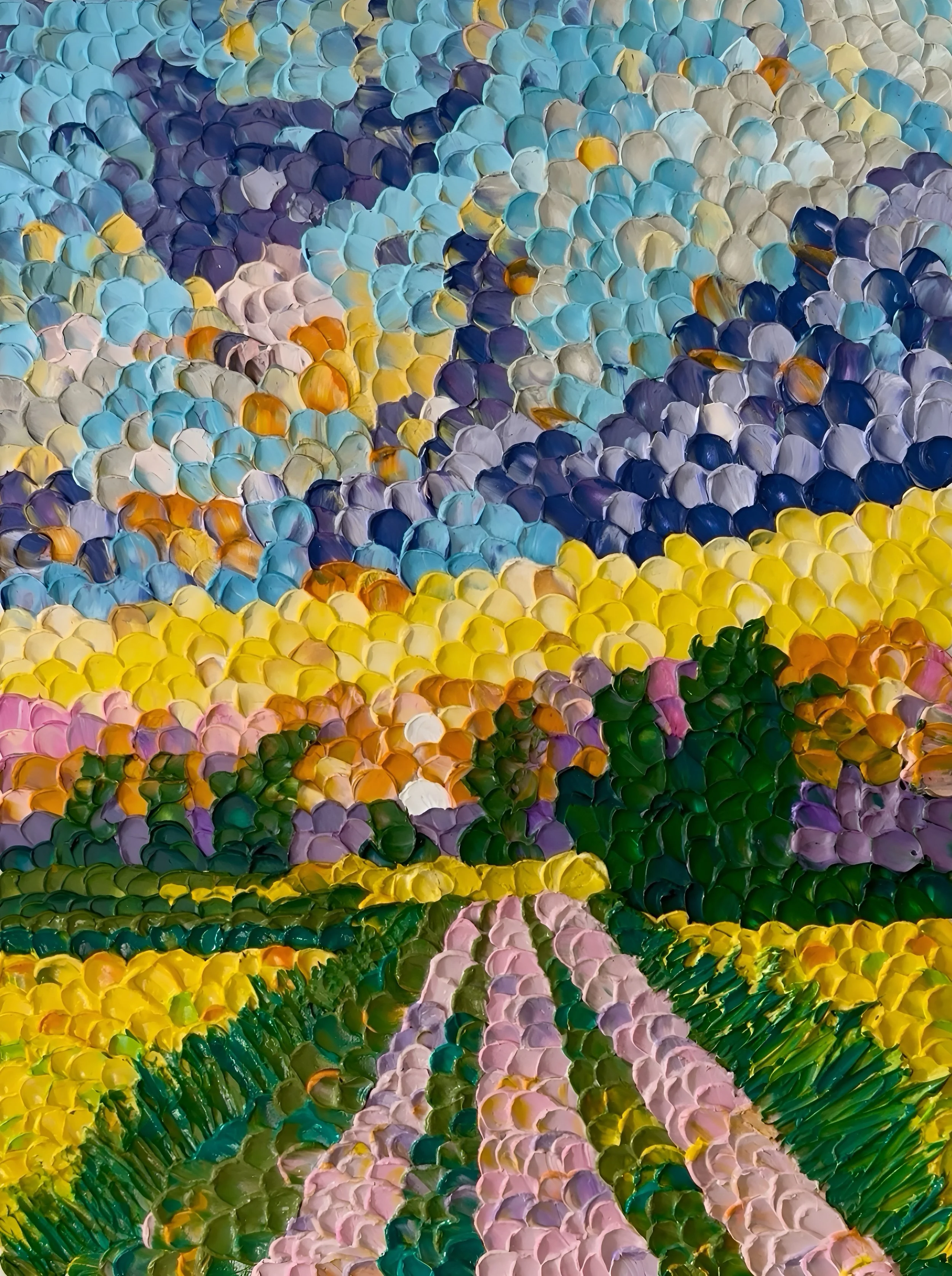
Color is one of the primary ways I think through painting. I do not experience it as something applied to form after the fact, nor merely as an expressive device. Rather, color is a structuring force that shapes the spatial, emotional, and temporal dynamics of the work from the very beginning. It organizes relationships, creates tensions, establishes rhythms, and generates forms of movement that may be more difficult to achieve through line or composition alone.
What interests me most is that color operates simultaneously on multiple levels. It is sensory and affective, but it is also relational. A color never exists in isolation; it acquires meaning through its encounter with other colors, surfaces, and spaces. In this sense, color reflects an ethical dimension that has long interested me—the idea that meaning emerges through relation rather than autonomy. Just as human understanding is formed through encounters with others, color becomes active through interaction, response, and coexistence.
I also think of color as a temporal agent. A painting is not experienced all at once. The eye moves, pauses, returns, and discovers new relationships over time. Certain colors advance while others recede; some create moments of intensity, while others slow perception and invite contemplation. Through these shifts, color contributes to the temporal unfolding of the work. It creates rhythms that shape how the viewer inhabits the painting.
Layered transparency has become particularly important in this regard. Working with acrylics allows me to build surfaces through successive veils of color, where earlier layers remain partially visible beneath later ones. These layers create a sense of depth that is not simply spatial but temporal. The painting carries traces of its own history. What has been covered is not entirely erased; it continues to influence what is seen in the present.
This relationship between visibility and concealment resonates strongly with my understanding of memory. Memory is rarely a stable archive of clear images. It is layered, fragmentary, and continually reshaped by new experiences. Certain moments remain vivid, while others fade or re-emerge unexpectedly. The transparent layers in my paintings often function in a similar way. They allow different temporalities to coexist, creating a visual field in which past and present remain in dialogue.
Ambiguity is also central to this process. Transparency complicates the distinction between what is foreground and background, what is emerging and what is receding. Rather than directing the viewer toward a single reading, it creates spaces of uncertainty and openness. I am interested in preserving these ambiguities because they reflect something fundamental about lived experience itself. Our perceptions, memories, and understandings are never entirely fixed; they remain fluid and subject to revision.
Ultimately, I see color as a medium through which questions of time, memory, relation, and transformation can be explored without becoming reducible to narrative. Through layered transparency, the painting can hold multiple temporal and emotional registers at once. It becomes a space where experiences accumulate, overlap, and remain partially unresolved—a visual reflection of the complexity and richness of lived time.
Your sculptural works, particularly in heavy materials such as concrete and bronze, often carry a paradoxical sense of fragility. What draws you to this tension between weight and delicacy, and how does it reflect your interest in the invisible or poetic dimensions of experience?
I have long been fascinated by the fact that what appears strongest is often inseparable from what is most vulnerable. This paradox lies at the heart of many of my sculptural works. Materials such as bronze and concrete are commonly associated with permanence, solidity, and endurance. They carry cultural histories of monumentality and stability. Yet when I work with these materials, I am less interested in their capacity to assert strength than in their ability to reveal fragility, transformation, and human vulnerability.
Part of this interest stems from my experience that life itself is characterized by this tension. We often seek stability, certainty, and permanence, yet our existence remains marked by change, contingency, and impermanence. What appears solid can prove fragile; what appears fragile can reveal unexpected resilience. Sculpture offers a powerful way of exploring these dynamics because it engages directly with material presence, gravity, balance, and physical space.
When I work with concrete, for example, I am interested in how a material associated with construction and durability can evoke sensitivity, openness, and even tenderness. Its surfaces may carry traces of erosion, fracture, or incompleteness. Similarly, bronze possesses an apparent permanence, yet it originates from a highly vulnerable process of modeling, casting, and transformation. Embedded within the final object are traces of instability and change.
This tension between weight and delicacy also relates to my interest in what cannot be directly seen. Much of human experience is shaped by invisible forces: memory, emotion, desire, loss, imagination, hope, and the countless relational dimensions through which we encounter the world. These realities may lack physical form, yet they profoundly influence how we live and understand ourselves.
One of the challenges of sculpture is how to give presence to such intangible dimensions without reducing them to illustration. I am interested in creating forms that suggest rather than explain, forms that invite contemplation rather than deliver fixed meanings. The apparent solidity of the material becomes a kind of threshold through which viewers may sense something less tangible—an emotional resonance, a remembered gesture, a state of becoming, or a feeling of suspension between stability and change.
In many of my sculptures, balance itself becomes an important element. Forms may appear to lean, fragment, unfold, or rest in a state of tension. These physical relationships create a sense that the work is still in the process of becoming rather than existing as a completely resolved object. The sculpture carries both presence and vulnerability, certainty and uncertainty, mass and openness.
Perhaps this is where the poetic dimension enters. Poetry does not emerge from the elimination of contradiction but from the ability to hold contradictions together. In a similar way, I am interested in sculptural forms that allow opposing qualities to coexist: heaviness and lightness, permanence and transience, strength and fragility. Within that coexistence, the work can evoke aspects of experience that remain difficult to articulate directly but are nonetheless deeply felt.
For me, sculpture becomes a way of making visible the invisible tensions that shape human existence. Through material weight, the work can speak about immaterial realities; through solidity, it can reveal vulnerability; and through physical presence, it can open a space for reflection on the poetic and often elusive dimensions of being in the world.
Having spent many years within academic institutions, how do you reflect on the difference between artistic and scholarly authority? Does your art consciously resist the forms of certainty often demanded by academia, or do you see it as proposing a parallel rigor of another kind?
Having spent much of my professional life within academic institutions, I have developed a deep respect for scholarly inquiry and the forms of rigor that sustain it. Academic work plays a vital role in expanding knowledge, testing assumptions, and cultivating critical reflection. At its best, scholarship is driven not by certainty but by disciplined questioning. Yet academia also operates within frameworks that often require clarity, argumentation, evidence, and conclusions. Ideas must be articulated, defended, and positioned within established fields of knowledge.
Art functions differently. While it can certainly generate knowledge and insight, it does not do so primarily through explanation or demonstration. Its strength lies in its capacity to engage dimensions of experience that cannot always be fully captured by concepts or propositions. As a result, artistic authority is fundamentally different from scholarly authority. It emerges not from the ability to establish definitive claims but from the ability to create meaningful encounters, sustain complexity, and open new ways of perceiving and understanding.
I do not see my artistic practice as a rejection of scholarly rigor. Rather, I see it as pursuing a parallel rigor through different means. The process of making art requires attentiveness, critical judgment, persistence, and reflection. Decisions concerning form, material, color, composition, rhythm, and spatial relationships are not arbitrary. They emerge through sustained engagement and continual evaluation. In that sense, artistic practice demands a discipline every bit as serious as academic research, even though its methods and outcomes differ.
What art allows, however, is a greater tolerance for ambiguity and incompleteness. In academic contexts, uncertainty often functions as a problem to be addressed through further analysis or clarification. In art, uncertainty can become a productive condition in itself. A painting or sculpture can hold multiple meanings simultaneously without requiring them to be resolved into a single interpretation. This openness is not a lack of rigor but a recognition that some aspects of experience exceed the frameworks through which we attempt to understand them.
My background in education, language teaching and philosophy has made me particularly attentive to the limits of certainty. Human existence is complex, relational, and continually evolving. Questions of identity, memory, ethics, vulnerability, and meaning rarely admit final answers. In both education and art, I have been drawn to forms of inquiry that remain open to revision and transformation rather than seeking definitive closure.
For this reason, I would not say that my art consciously resists academia. Rather, it complements and extends modes of inquiry that scholarship alone cannot fully accommodate. Where academic discourse seeks conceptual understanding, art can engage sensory, emotional, embodied, and intuitive forms of knowing. It can reveal dimensions of experience that remain partially inaccessible to language while still offering profound forms of insight.
Ultimately, I see both art and scholarship as valuable ways of engaging with the world. They ask different questions, employ different methods, and produce different kinds of knowledge. What interests me most is not choosing one over the other but exploring the fertile space between them—a space where intellectual reflection and sensory experience, critical analysis and imagination, rigor and openness can remain in productive dialogue.
Across your exhibitions, both local and international, your work seems to invite slow looking rather than immediate legibility. In a cultural moment shaped by acceleration and visual overload, what kind of viewer are you imagining, or perhaps hoping to cultivate, through these works?
I do not imagine a specific type of viewer in a prescriptive sense, but I do hope to create conditions in which a certain quality of attention becomes possible. My work resists immediate legibility not out of obscurity, but because I am interested in how meaning unfolds over time. It requires a kind of looking that is not driven by quick recognition or consumption, but by sustained presence.
We live in a culture where images are often consumed rapidly, where attention is fragmented, and where visibility is frequently equated with clarity or instant impact. In that context, I am interested in what it means to slow down perception—not as nostalgia for a pre-digital mode of viewing, but as a way of reclaiming depth, complexity, and openness in experience.
The viewer I implicitly address is someone willing to remain with uncertainty for a while. Someone who allows perception to shift, return, and reconfigure itself over time. My works often do not offer a single point of entry or resolution; instead, they present layered fields of relations where different elements gradually come into focus depending on how one engages with them. This means that the work is not exhausted in the first encounter. It asks for duration.
Slow looking, for me, is not simply a visual practice but an ethical one. It involves a willingness to resist the pressure to finalize meaning too quickly. In that sense, it mirrors broader questions about how we relate to the world and to one another. To look slowly is to acknowledge that understanding takes time, and that complexity deserves attention rather than reduction.
At the same time, I am not interested in idealizing slowness as such. The point is not to withdraw from contemporary conditions but to create spaces within them where another tempo of engagement becomes possible. Even in accelerated environments, there are moments where attention can deepen, where perception can become more receptive and less governed by immediate interpretation.
I also think of the viewer as a participant in the work’s unfolding. The paintings and sculptures are not complete without this act of sustained looking. They depend on the viewer’s willingness to move through ambiguity, to notice shifts in color, structure, and spatial relation, and to allow associations and memories to arise without forcing them into fixed conclusions.
In this sense, I am less concerned with cultivating a specific kind of viewer than with proposing a certain relationship between viewer and work—one based on attentiveness, openness, and reciprocity. Art work does not demand understanding in a definitive sense; it invites engagement. It asks the viewer to stay with it long enough for perception itself to become more nuanced, more layered, and perhaps more aware of its own processes.
If there is hope underlying this, it is that such encounters might extend beyond the exhibition space. That the experience of sustained looking might resonate with how we attend to other aspects of life, how we listen, how we think, how we relate. In that way, the act of looking becomes not only aesthetic but also reflective of a broader ethical orientation toward attention and presence.
Your compositions frequently suggest fragments, interruptions, and partial forms, yet they never feel unresolved. How do you understand fragmentation as a generative principle rather than a symptom of loss, particularly in relation to contemporary experiences of identity and knowledge?
I understand fragmentation not as a deficit but as a condition of perception and knowledge. What we encounter in the world is rarely complete or unified in a stable sense; rather, it is partial, situated, and continually shifting. My paintings and sculptural works attempt to remain faithful to that condition without turning fragmentation into chaos or dissolution.
Fragments, interruptions, and partial forms allow me to keep the work open. They prevent it from closing too quickly into a single reading or narrative. At the same time, fragmentation in my practice is never random. It is structured through relationships—between color fields, spatial tensions, material contrasts, and rhythmic intervals. It is precisely these relationships that generate coherence, even when no singular form dominates.
In this sense, fragmentation becomes a generative principle because it creates space for perception to remain active. The viewer is not given a complete image to decode but is instead invited into a field where connections must be continuously made and remade. Meaning arises through movement rather than resolution. This aligns with my broader interest in process, both in art and in learning: understanding is not a final state but something that unfolds over time.
I am also interested in how fragmentation reflects contemporary conditions of identity and knowledge. We no longer experience identity as something fixed or singular; it is shaped by multiple contexts, roles, memories, and relations. Similarly, knowledge is increasingly understood as distributed, provisional, and situated rather than absolute. In this sense, fragmentation is not an exception to coherence but one of its contemporary forms.
Rather than seeking to restore a sense of wholeness that may no longer correspond to lived experience, I am interested in how coherence can emerge within fragmentation itself. This involves accepting discontinuity while still cultivating relations between parts. The work holds together not through unity in the traditional sense, but through resonance, tension, and proximity.
There is also an ethical dimension to this. To acknowledge fragmentation is to resist simplifying complex realities into overly stable categories. It allows room for ambiguity, contradiction, and multiplicity. In both artistic and pedagogical contexts, I find this openness important because it reflects a more truthful engagement with how meaning is formed and transformed over time.
Ultimately, I do not experience the fragments in my work as signs of absence or loss. They are active elements within a broader field of relations. They suggest that meaning is always in process, always partially seen, always in the act of becoming. And it is precisely in this state of incompletion that I find both vitality and coherence.
The dialogue between control and spontaneity appears central to your working process. How do you decide when to intervene and when to let the work assert its own internal logic, and do you see this as analogous to ethical decision-making within pedagogical contexts?
The relationship between control and spontaneity is not something I resolve in advance; it is something I work within. Each painting or sculpture develops its own internal logic over time, and part of my task is to learn how to listen to that logic rather than impose a predetermined outcome upon it. At the same time, the work does not simply “make itself.” It requires decisions, interruptions, and sometimes decisive reorientations.
I usually begin with a set of conditions rather than a fixed image: a compositional tension, a chromatic field, a material constraint, or an intuitive sense of direction. From there, the process becomes a kind of sustained attention. I observe what the work seems to be asking for—where it opens, where it resists, where it becomes too fixed or too diffuse. Intervention happens when I sense that the work has lost vitality, when it becomes overly resolved or when its internal tensions are no longer active.
Equally important is knowing when not to intervene. There are moments when the work is still finding its form, and premature correction can close down possibilities that have not yet had time to emerge. In those situations, restraint becomes a form of attention. Letting the work unfold is not passivity, but a way of acknowledging that meaning can arise through processes that are not fully under conscious control.
Over time, I have come to trust this oscillation between assertion and receptivity. It is not a stable balance but a continuous negotiation. Each decision alters the field of possibilities, and each restraint creates space for something unexpected to appear. The work gradually becomes a record of these negotiations.
I do see a clear resonance between this process and ethical decision-making within pedagogical contexts. Teaching, like painting, involves responding to situations that cannot be entirely predicted in advance. One works with structures, aims, and responsibilities, but also with individuals and dynamics that are constantly shifting. Good pedagogical practice, in my experience, requires a similar attentiveness: knowing when to guide, when to step back, when to introduce structure, and when to allow uncertainty to remain open.
In both contexts, there is a responsibility not to over-determine outcomes. In education, this might mean allowing students the space to develop their own forms of understanding rather than directing them toward a single correct answer. In painting, it means allowing the work to deviate from initial expectations if that deviation leads to greater complexity or vitality.
What connects these practices is an ethical orientation toward openness. Both require a willingness to remain responsive to what emerges rather than relying solely on pre-established frameworks. This does not mean abandoning structure or intention but recognizing that structure is most productive when it remains permeable to transformation.
In that sense, control and spontaneity are not opposites but interdependent forces. Control provides the conditions within which spontaneity can emerge; spontaneity, in turn, tests and reshapes those conditions. The work—and perhaps teaching as well—unfolds in that ongoing exchange, where decisions are never entirely final but always part of a larger process of becoming.
You speak of translating the intangible into form. What role does silence, or what cannot be fully articulated, play in your work, and how do you preserve this sense of the unsayable within the material finality of a finished piece?
Silence is not an absence in my work, but a presence that shapes everything else. It is the space in which perception slows down, where something can emerge without immediately being translated into language or explanation. In that sense, silence is closely connected to the idea of the unsayable—not as something mystical or inaccessible, but as a recognition that experience always exceeds articulation.
When I speak of translating the intangible into form, I do not mean that the intangible becomes fully captured or resolved in the artwork. Rather, it is partially approached, suggested, and given a kind of provisional presence. The work does not exhaust what it gestures toward; it holds it in suspension. Silence is what allows that suspension to remain active.
In practical terms, this often means resisting the impulse to over-define a work. In painting, for example, there are moments when additional marks or adjustments would make the image more legible, but also more closed. Choosing not to intervene can be just as important as adding something. These decisions are often subtle, but they are central to preserving a sense of openness within the finished piece.
I am interested in how material form can carry traces of what is not fully articulated. A painting or sculpture is undeniably present—it has boundaries, weight, surface, and structure. Yet within that material finality, there can still be a sense of what lies beyond it. This might be created through ambiguity in spatial relationships, through layered transparency, through hesitation in gesture, or through the coexistence of contradictory visual cues.
Silence, in this sense, is embedded in the work’s structure. It is what prevents the art work from becoming overly declarative. It allows the viewer to enter without being directed toward a single conclusion. Instead of explaining itself, the work offers a field of conditions in which perception can unfold at its own pace.
I also think of silence as something relational. It exists not only within the work, but between the work and the viewer. It is the space of attention, where looking becomes more than recognition. In that space, meaning is not delivered but gradually formed through encounter. What remains unsaid becomes active precisely because it is not resolved.
Preserving this sense of the unsayable within a finished piece is therefore less about withholding information and more about sustaining openness. It is about allowing the work to remain slightly incomplete in its address, so that it can continue to generate thought, feeling, and reflection over time.
In the end, I do not see silence as something that competes with form. It is part of form’s depth. It is what allows material presence to remain porous—to point beyond itself without needing to fully name what lies beyond.
Looking back across your multifaceted career as both artist and scholar, how do you understand the relationship between making art and shaping ways of seeing the world? Do you see your practice as offering not answers, but conditions for attentiveness, an education of perception rather than instruction?
I do understand my practice as shaping ways of seeing, but not in the sense of offering interpretations or directing perception toward a preferred reading. Rather, I am interested in how art can reconfigure attention itself—how it can slow down habitual modes of recognition and open perception to what is usually overlooked, unstable, or not yet formed into language.
In that sense, making art is inseparable from forming conditions for seeing. Each painting or sculpture proposes a temporary framework for attention: a way of moving through color, surface, rhythm, and spatial tension that asks the viewer to adjust their perceptual tempo. I am less concerned with what is seen than with how seeing happens—how it shifts, hesitates, returns, and reorients itself in relation to what is encountered.
This is why I would indeed describe my practice as an education of perception rather than an instruction in meaning. The work does not aim to deliver answers or consolidate knowledge into fixed propositions. Instead, it cultivates attentiveness to complexity, ambiguity, and process. It invites a mode of looking that remains open to revision, much like thinking itself when it is not forced toward premature closure.
My background in philosophy and education inevitably informs this orientation. I have long been interested in how subjectivity is formed through relational processes—how we learn not only concepts, but also ways of attending, interpreting, and being affected by the world. Art, for me, becomes a site where such formation can be both examined and gently disrupted. It allows for an experience of not-knowing that is not deficiency, but openness.
What emerges is not a pedagogical program, but a set of conditions: spaces where perception can become more sensitive to nuance, to hesitation, to the layering of experience over time. In that sense, the work does not stand outside the world commenting on it; it participates in shaping how the world can be seen, felt, and thought in the moment of encounter.
So yes, I see my practice as offering conditions rather than conclusions. It is an attempt to sustain attentiveness in a culture that often privileges speed and resolution. And in doing so, it suggests that seeing itself is not a passive act, but a form of engagement—one that is continually formed, and continually reformed, through experience.
Summary
Synthesis: Karen Bjerg Petersen – Painting as Ethical and Perceptual Inquiry
Across the interview, Karen Bjerg Petersen articulates a coherent understanding of art as a form of sustained inquiry into how meaning, perception, and subjectivity are continuously formed. Rather than positioning painting and sculpture as vehicles for representation or resolution, she frames them as dynamic fields in which thought, sensation, and material process remain in productive tension.
A central thread is the refusal of fixed form—both aesthetically and philosophically. Her works consistently inhabit a space between emergence and dissolution, where stability is provisional and form is understood as something perpetually in process. This oscillation is not treated as uncertainty to be resolved, but as an ethical and existential condition aligned with how human beings actually live and come into being: relationally, incompletely, and over time.
Her practice is deeply informed by educational philosophy and academic thought, yet it does not operate within the conventions of scholarly argumentation. Instead, she proposes a parallel mode of rigor grounded in attentiveness, responsiveness, and sustained decision-making within material processes. Art becomes a continuation of thinking, but one that proceeds through color, rhythm, gesture, and spatial relation rather than conceptual abstraction alone.
A key idea throughout is that abstraction is not an escape from the world but a way of remaining entangled with it. Lived experience—memory, travel, language, pedagogy, and philosophical reflection—enters the work not as narrative content but as sedimented sensibility. These traces are transformed into visual structures that resist illustration while still remaining insistently human in their affective and corporeal presence.
Materiality plays a crucial role in this articulation. Whether in layered acrylic painting or heavy sculptural media such as bronze and concrete, the works carry a paradoxical sense of fragility within solidity. Transparency, layering, fragmentation, and interruption are used not as stylistic devices but as ways of registering time, memory, and the instability of perception.
Color, in particular, functions as a structuring force that organizes spatial, emotional, and temporal experience. Through layered transparency, painting becomes a temporal field in which past decisions remain partially visible, echoing the structure of memory itself: non-linear, revisable, and internally contradictory.
Across both painting and sculpture, process remains visible. Traces of becoming are preserved as an ethical gesture against closure, mastery, and over-determination. This openness is extended into the viewer’s experience, where slow looking becomes a form of participation. The viewer is not positioned as a decoder of meaning, but as a co-constitutor of perceptual and interpretive unfolding.
Underlying these concerns is a sustained reflection on authority, knowledge, and pedagogy. Artistic authority is understood not as the production of definitive statements, but as the capacity to sustain complex, open-ended encounters. In this sense, art resists the closure often associated with academic certainty while still maintaining its own form of rigor—one grounded in sensitivity, precision, and sustained attentional discipline.
Silence, ambiguity, and the unsayable are not external to the work but embedded within its structure. They function as spaces of openness where perception is not exhausted by language. This allows the work to maintain a sense of depth and resonance beyond articulation, preserving what cannot be fully said while still being materially present.
Fragmentation and incompleteness are similarly reframed as generative conditions rather than losses. They reflect a contemporary understanding of identity and knowledge as distributed, relational, and continuously in formation. Coherence emerges not from unity, but from resonance, tension, and proximity between parts.
Ultimately, the practice proposes art as an education of perception rather than instruction. It does not aim to deliver answers but to cultivate attentiveness—to slow down seeing, to open interpretation, and to sustain engagement with complexity. In doing so, it positions art as both inquiry and encounter: a space where knowledge and experience remain inseparable, and where meaning is continually formed in the act of looking.