Interview with Ramón Rivas
BIOGRAPHY AND STATEMENT OF THE ARTIST RAMÓN RIVAS
INTRODUCTION
He was born in the Lands of Don Quixote (Castilla-La Mancha, Spain). His roots are deeply rooted in a land rich in literary and artistic heritage, famous for being the setting for Miguel de Cervantes' literary works. His family environment and the multidisciplinary influence of his professional activity—in engineering, sports, music, inventions, and art—in Castilla-La Mancha and Madrid were decisive in his artistic creation, a very personal and distinctive style called Rivismo, based on the application of Experiential Brushstrokes. Since 2005, he has carried out continuous research work, reinforcing the Concepts and Philosophy that predominate in Rivismo and that have given prominence to material elements to which he has assigned aspects, functions and values of people.
By applying his personal style, he seeks to express himself in ways never before seen, challenging established norms, promoting critical reflection, and using pedagogy to democratize access to knowledge and also encourage viewers' participation in the creative process.
In his compositions, based on creativity, imagination, and innovation, he pays special attention to aesthetics, as this represents a form of attraction that awakens the viewer's interest and initiates their journey through the work's setting, achieving a state of concentration that allows them to create their own story and invites them to reflection, dialogue, and action.
Prestigious art professionals have recognized the exceptional originality and aesthetic appeal of my work, providing the following analysis:
“Ramón Rivas's art is not simply a visual feast; it is a revolutionary act, a space where the imagination is freed and the spirits of both the creator and the viewer merge in a dance of vibrant creativity.”
“His unique vision and exceptional skills have not only captivated audiences around the world but have also contributed significantly to the enrichment of the art world.”
“Ramón Rivas proves to be a master of linguistic plurality in art. His greatest realization comes, however, at the exact moment when, realizing that he has developed his own unique artistic language, he decides to create a true artistic movement that he calls Rivismo.”
“His remarkable contributions not only elevate the art world but also establish him as a true pioneer in the global artistic community.”
His talent has been recognized through exhibitions held in several countries, including Spain, China, Japan, South Korea, Italy, Denmark, Netherlands, France, England, Portugal, Philippines and the United States. He has actively participated in art fairs in the United States, and his art is proudly displayed in museums in Spain, Denmark, and South Korea. Ramón Rivas's artistic contributions have also been featured in numerous books, magazines, catalogs, interviews, and reviews of his work, consolidating his presence in the contemporary art world. Furthermore, this exceptional talent has been honored with prestigious international awards, further cementing his reputation as a distinguished artist.
Throughout the interview, you will learn more about the work of Ramón Rivas and his personal artistic project called Rivismo, whose philosophy and concepts are protected by the Intellectual Property Registry. The answers, based on these concepts and on evaluations by prestigious art professionals, are complemented by a selection of my works that will help you better understand my artistic approach.
Ramón, your formation as an industrial engineer, inventor, and strategist seems inseparable from your pictorial thinking. How does Rivismo operate as a system rather than a style, and in what ways do you understand the canvas as a site where engineering logic, artistic intuition, and lived experience negotiate with one another rather than seeking resolution?
Although I consider Rivismo my personal pictorial “style,” I must clarify that it functions as a system of artistic creation with its own philosophy, internal rules, and conceptual mechanisms, resulting in work with a unique identity that distinguishes it from the work of other artists. A traditional artistic style focuses primarily on formal visual characteristics: brushstroke type, color palettes, aesthetic influences, etc.
Analyzing the representational space of the work, Rivismo understands the canvas (or pictorial space in general) in a radically different way from conventional painting tradition, as it presents a novel way of understanding and making art, and not just a way of painting or composing. It is based on the application of Experiential Brushstrokes in which human concepts and values are assigned to materials, elements, devices, etc., such as: Weakness and Strength, Experiential Balance, Experiential Equality, Reassignment of Roles, and Experiential Empathy, among others.
Thus, instead of viewing the canvas as a surface where a composition is resolved, a style is imposed, or a harmonious aesthetic solution is achieved, this workspace is conceived as a field of forces, an experiential habitat, or a scenario of coexistence where at least three main dimensions interact -without a resolving hierarchy:
Engineering logic (or technical-constructive/organizational logic), which doesn't seek to solve engineering problems, but rather allows that logic to engage in dialogue with (and sometimes challenge or contradict) the other layers.
Artistic intuition (nourished by professional experience, imagination, and creativity), which doesn't compete to overcome engineering logic, because it coexists with it, sometimes challenging it and other times complementing it.
Lived experience (Experiential Brushstrokes – the core of Rivismo), which doesn't seek to tell a linear story with experiential elements, but rather allows its stories to touch, overlap, cancel each other out, or reinforce one another.
Considering these dimensions, the canvas becomes a space of ongoing negotiation, resulting not in the creation of a "finished work," but rather in the creation of a field of active tensions in which the viewer can become the protagonist, completing "their own work" through dialogue with the elements included in the experiential brushstrokes, in conjunction with their personal experiences, knowledge, and imagination.
Rivismo introduces Experiential Brushstrokes as carriers of memory, energy, and material biography. How conscious is the threshold at which lived experience becomes pictorial gesture, and do you perceive this passage as an act of authorship, mediation, or a deliberate yielding to the agency of matter itself?
I consider Experiential Brushstrokes not as mere strokes of color in the traditional sense, but as vectors of accumulated memory, latent energy, and a material biography that transcends the purely aesthetic to reach a state where lived experience materializes into art.
In Rivismo, the threshold at which lived experience becomes a pictorial gesture does not appear to be a blurred or accidental boundary, but rather a deliberately explored space where awareness is heightened. It is a conscious threshold in the sense that it requires the artist's intention and knowledge of the material, who "listens" to the object before incorporating it into the narrative space of the work.
The materials that carry fragments of history are integrated into the work not as subordinates, but as protagonists with "experiential equality," "reassignment of roles," and empathy among said material.”
Regarding my perception of the transition; Authorship, mediation, or surrender to the material's agency—I can say that in this step, these three elements intervene harmoniously, perhaps giving more importance to mediation and the deliberate surrender to the agency of matter.
It is not a purely authorial act, since as an artist I do not have total control over the material. Most of the experiences embedded in the materials are not "created" by the artist; rather, they are discovered, amplified, and facilitated. However, in my case, I also "fabricate experiences" by using acids, soap bubbles, and other products on material samples to provoke new experiences.
With the selected experiential elements, I create a dialogue, and by using concepts such as "From Part to Whole" and "From Whole to Part," among others, I complete the composition and establish balance in the work. Regarding whether this is a deliberate surrender to the agency of matter, I can confirm that it is indeed an intentional "surrender," since I provoke energy transfers and organic mutations where the material is not passive, but an active agent that "mutates" the work. It is a conscious surrender to my creative process, allowing matter to dictate part of the result.
Your work repeatedly grants materials a form of dignity and voice, positioning them almost as ethical subjects rather than neutral supports. How did this sensitivity toward the inner life of matter develop, and in what ways does it disrupt traditional hierarchies between artist, medium, and viewer?
To begin, I need to recount an event from my childhood that decisively influenced my interest in experiential materials. One morning, while walking to school, I saw a large vehicle—a beverage delivery truck—reversing and brutally hit a small, properly parked car. The truck driver glanced in the rearview mirror and, without getting out, sped away. I was very close and witnessed the entire incident. The small car's doors were dented, and one of the windows was broken. Thanks to my proximity, I was able to memorize the license plate of the fleeing vehicle. I took a notebook from my school bag, tore out a page, and wrote down the truck's details and how the accident unfolded. Then, I slipped the page through the broken window to inform the car's owner of what had happened.
That event left a mark on me and prompted me to reflect, imprinting on my mind what would later help create the concepts of "Strong and Weak," "Pain and Feelings in Materials," "Experiential Empathy," and so on. I couldn't understand how the Strong had crushed the Weak. I wondered if the damaged vehicle had suffered any damage. There was no communication from the fleeing driver, and therefore, no empathy. Perhaps out of childlike innocence, I thought that if certain balancing transfers had occurred between the two vehicles—what we now know as Balance of Forces, Empathy, and Role Reassignment—then equality would have been established, and the event would have had no consequences.
My sensitivity to the "inner life" of matter began with this event, followed by growing up in a family environment that fostered curiosity about the material world and its hidden potential. This sensitivity was subsequently developed and refined throughout my personal and professional journey, marked by a multidisciplinary influence that fused art, engineering, inventions, music, and sports. My work in engineering and inventions, where I observed how objects and substances interact, transform, and "live" molecular or energetic processes, was crucial in creating Rivism in 2005 as an art form that assigns inherent dignity to matter, treating it as an ethical subject with its own voice. Each "experiential brushstroke" is not just paint, but a container of experiences of organic and inorganic materials, devices, and mathematical or physical expressions that fill the space of the canvas at a molecular level.
This approach radically alters traditional hierarchies in art. In conventional art, the artist is the dominant creator, the medium (matter) is a neutral and passive support, and the viewer is a distant observer. In Rivismo, however, materials are elevated to active protagonists: concepts such as "From Part to Whole and from Whole to Part," "Experiential Equality," and "Empathy between Materials" promote an "Experiential Exchange," where energies are transferred between elements, generating a dynamic and empathetic movement.
The artist becomes a facilitator or mediator who reveals these internal narratives, rather than imposing their absolute will. The viewer, for their part, ceases to be passive and becomes a participant who connects with the ethical "voice" of matter, questioning their own relationship with the material world and fostering a deeper empathy. By applying these concepts, Rivism democratizes the creative process, erasing borders and proposing an equality where matter is not exploited, but honored as a co-author of the work.
Conceived predominantly for large formats, your paintings require physical movement and duration from the observer. What does it mean for you to transform the viewer into a temporary performer, and how does this spatial activation alter the temporality and ontology of painting today?
The application of Experiential Brushstrokes in my work demonstrates my commitment to ensuring that the content of my pieces evokes a positive reaction in the viewer, breaking free from the traditional passivity of pictorial observation. This approach transforms the viewer into a temporary interpreter by incorporating the accumulated experiences of everyday materials, objects, and elements into the artwork, imbuing the painting with energetic and emotional meaning. In this way, the observer not only contemplates the piece but becomes an active decoder of memories, emotions, and associations triggered by these elements, temporarily interpreting the narratives implicit in the painting, as if reliving experiences transferred molecularly through the brushstrokes and applying them to their own experience.
Spatial activation occurs through the application of Experiential Brushstrokes, which establish a balance between the weak and the strong, reassigning traditional roles and endowing inanimate materials with empathy. These materials take on the forms of “faces and masks” to express feelings, gaining a voice as protagonists and witnesses of lived experiences. This generates a visual and conceptual depth charged with density, textures, and colors.
With this process, Rivismo alters the temporality of contemporary painting by introducing inter-relational flows that transmute the static time of the work into a dynamic process, where the past of the materials intertwines with the viewer's present and even with their own past, creating a pedagogical and surprising experience that oscillates between reality, unreality, and even fantasy.
Regarding the ontology of contemporary painting, Rivismo redefines it by transmuting the organic and inorganic on diverse supports (such as canvas, metal, or video), elevating materials to entities with their own agency that channel energies and emotions. This generates a new form of creative plastic expression, free from conventions, which prioritizes the tangibility of abstract concepts and empathetic interaction, transforming the ontology of painting from a passive object to a living and relational entity, accessible to all audiences and full of surprise, mystery and transferred experiences
Balance between the weak and the strong, the organic and the technological, is a recurring principle within Rivismo. Do you approach this balance as an aesthetic strategy, a philosophical position, or a social metaphor shaped by your experience in systems thinking and sport dynamics?
In Rivismo balance is primarily addressed as a central philosophical stance, permeating both the aesthetic strategy and a social metaphor, all shaped by my experiences in systems thinking (derived from my training as an industrial engineer) and sports dynamics (as a national tennis coach). The philosophy of Rivismo based on Experiential Brushstrokes, establishes a balance and equality between the weak and the strong, redefining the roles of materials and elements in the artwork. This is not only an aesthetic tool for creating compositions with textures, colors, and contrasts that generate visual depth and surprise, but also a social metaphor that promotes empathy towards inert matter, giving it a voice and fostering interrelational flows that reflect civic participation and the reassignment of roles in society. My multidisciplinary background, including the systemic observation of processes (as in engineering) and the dynamics of movement and strategy in sports, has directly influenced this vision, where material elements "live" experiences and integrate into a harmonious whole, oscillating between reality and fantasy.
Primarily, I define Rivismo as a philosophical stance, since considering its concepts and philosophy as the driving forces behind its creation, the content of which is registered with the Intellectual Property Registry, I can explain that:
Rivismo assigns lived experiences to materials, objects, and elements (inorganic, organic, devices, etc.), which are incorporated molecularly and energetically through experiential brushstrokes. From there, it seeks to establish equality and balance between the strong and the weak, reassigning roles and functions among the participants in the work until total compensation is achieved. Other key concepts such as Experiential Empathy, Role Reassignment, and Organic Transmutation converge in this balance as an ethical-aesthetic ideal: weak elements (e.g., an egg / fragile) can be transmuted into (a steel wheel / strong), and vice versa, through energetic and empathetic exchanges. This reflects a worldview that questions rigid hierarchies and promotes a redistribution of power and values, very close to a philosophical stance on equality, empathy between the non-human and the human, and interdependence.
Balance is also an aesthetic strategy because it manifests itself visually and compositionally (in the distribution of forces, colors, volumes, textures, and incorporated real elements), but always as a consequence of applying this philosophy. It is not an end in itself, but the inevitable result of treating materials as entities with history and agency that displace the human from the ontological center and recognize that matter acts, resists, transforms, and narrates alongside us. It is a participant with a trajectory and the capacity to make a difference in the world.
Strongly, it can be considered a social metaphor because in Rivism, very human dynamics are assigned to inanimate elements: empathy, oppression, suffering, liberation, exchange of power, solidarity among unequals, etc. This creates a clear social metaphor for the rebalancing of forces in unequal societies, the reassignment of traditionally hierarchical roles, and empathy towards the "weak" or marginalized. Considering my experience in systemic thinking and sports dynamics, I can summarize that the balance between the weak and the strong, the organic and the technological, reveals itself as a conceptual bridge between the aesthetic, the philosophical, and the socio-systemic.
Your background in elite sports management and national coaching introduces discipline, repetition, and embodied intelligence into your artistic practice. How have these principles informed your understanding of rhythm, tension, and release within the painted surface?
My background in elite sports management, as a national tennis coach and director of sports centers, as well as my involvement in organizing committees for the Davis Cup and Fed Cup, has been fundamental in instilling principles such as discipline, repetition, and body intelligence into Rivismo. These elements, derived from the world of sports, where constant training and physical precision are key to optimal performance, translate directly into my artistic practice.
Discipline, which is also present in my work as an Organizational Engineer, allows me to approach the work surface with a methodical, precise, and orderly approach, similar to the strategic planning of a tournament or training session. In Rivismo, this manifests as the precise supervision of execution and composition, using tools such as mathematical formulas (Fourier series, Fibonacci sequences, or Gaussian triangles) to structure the works. This discipline influences my understanding of rhythm as a structured flow that activates the viewer's senses, allowing a "journey" through the painting where superimposed images and material experiences create a dynamic movement, like the swing of a racket, the movement of feet in multiple displacements, or the flow of a match.
Repetition, essential in sports for perfecting techniques and building endurance, precision, power, and confidence, is reflected in the repeated application of the Experiential Brushstroke, where material elements (such as everyday objects, devices, or textures) are repeated and accumulated to generate depth. This affects the tension on the painted surface, creating visual densities and layers that generate a provocative conflict, evoking memories and mysteries, similar to the build-up of pressure in a high-level sporting event.
Finally, bodily intelligence, which in sports involves an intuitive awareness of movement and space, introduces an imaginative liberation into my art that translates into an enhancement of my creativity. Once tension is established through rigor and other characteristics, liberation emerges in creative freedom, where materials acquire human functions and compositions resolve into a balance that evokes peace, surprise, and a profound sense of novelty. On the worked surface, this translates into an act of liberation that invites the viewer to actively participate, transforming the work into a tangible and multisensory experience, allowing them to contribute their own experience, memories and imagination in an unconventional setting and performance.
In summary, these sporting principles make Rivismo a movement that not only applies pictorial concepts, but also "trains" perception, balancing rigor and freedom for a deeper understanding of art as a transfer of life experiences, creating a work that pulsates, vibrates and moves from within, creating an immersive and emotional experience for the viewer.
Scientific, mathematical, and energetic references appear throughout your work without ever becoming illustrative. How do you maintain conceptual density while resisting didactic clarity, allowing complexity to remain sensorial rather than explanatory?
In Rivismo, the integration of scientific, mathematical, and dynamic references stems from a philosophy that prioritizes lived experience and the interconnection of material elements, without aiming to be an illustrative or pedagogical manual, nor, of course, to deliver a masterclass on these subjects.
I maintain this conceptual density through key concepts such as "Experiential Brushstrokes," which act as vehicles for merging complex ideas—such as Einsteinian relativity, Leonardo da Vinci's inventions, abstract geometric structures (cubes, jars), or dynamics of transformation and equilibrium—into compositions that evoke multiverses or unicellular foundations, but always from an immersive and non-linear perspective.
I place didactic clarity in the background, prioritizing empathy between materials and "Experiential Equality," where elements are not explicitly explained but allowed to interact on a sesory level:
the viewer perceives the tension between parts and the whole (from "Part to Whole and Whole to Part"), the harmony within imbalances, or the fusion of historical influences (such as Da Vinci and Einstein) without interpretive guides. This allows complexity to remain a tactile and emotional experience, inviting a personal interpretation that evolves with the observer, rather than imposing an explanatory narrative that dilutes its depth. In this way, the work becomes a living, dynamic, molecular, and energetic ecosystem, where science and mathematics are suggestive presences, not lessons.
You describe painting as a passable space, one that invites traversal rather than contemplation from a fixed point. How do you construct the internal architecture of a work so that it remains methodical and precise while still open to emotional drift and perceptual uncertainty?
In Rivismo, painting is effectively conceived as a traversable space that encourages the viewer's active exploration, rather than mere static contemplation. This vision arises from a philosophy that integrates lived experiences into the materials and elements, transforming the canvas, preferably large-format, into a dynamic and pedagogical stage.
To construct the internal architecture of a work that is methodical and precise, yet simultaneously open to emotional drift and perceptual uncertainty, the starting point is "Experiential Brushstrokes" as its structural foundation. The construction begins with an intentional and precise selection of materials, objects, and elements (such as organic and inorganic matter, devices, or mathematical and physical expressions) that incorporate their "lived experiences" into the painting. This creates a molecular and energetic charge in the pictorial space, where each brushstroke is not just a stroke of paint, but a container of accumulated narratives and energies.
The methodology is maintained through the application of Rivismo's key concepts: "Balance and Equality" between the weak and the strong, "Reassignment of Roles," "From Part to Whole," "From Whole to Part," and the application of empathy and the feelings of the experiential materials involved in the process. This pedagogical and conceptual methodology ensures that the work is precise, like an experiential mosaic where each element is placed intentionally, similar to an engineering system.
Regarding achieving architectural precision, I apply a methodical approach consisting of observing and selecting interrelational flows between materials, a process facilitated by my multidisciplinary experience in fields such as engineering, music, sports, invention, and even my knowledge of mind control.
Although this is a deliberate and precise process, this rigor does not close the work; On the contrary, it opens the viewer to emotional drift by evoking memories, experiences, unease, mystery, emotion, and surprise.
The perceptual uncertainty arises from the invitation to "participate and become a creative artist during the journey through the pictorial landscape," where the viewer's personal associations generate multiple and fluid interpretations, without a fixed point of contemplation. In this way, the work maintains a captivating density and a depth that interacts with the viewer's retina and mind, allowing for unpredictable explorations and constituting a dynamic and educational space true to the philosophy I apply in my work.
Rivismo is articulated as a language rather than a style. What constitutes its grammar, and where do you intentionally allow for ruptures, errors, or improvisations that prevent it from becoming a closed or self-referential system?
Considering the reviews of my work and the timely critiques provided by prestigious art professionals, I can attest that they give a positive assessment of my artistic proposal and also agree that this proposal truly presents itself as a unique and incomparable language, rather than a mere pictorial style. Its philosophy lies in the fusion between the artist and the viewer, between the material and the spiritual, liberating the imagination and fostering a symbiosis that transcends conventional aesthetics. This language is constructed through "Experiential Brushstrokes," which assign human aspects, functions, and values to material elements, connecting form, light, color, and energy to evoke emotion and sensory development in the observer. In this way, the grammar of Rivismo is constructed, developed through years of study and research.
Its main components include:
- A free and unrestricted personal style, where creativity fuels innovative artistic expressions that surprise and move, incorporating scientific and social themes (matter, environment, or politics) in a balanced way and within a framework of positivity.
- Balanced composition and narrative: A conceptual balance is sought between human and non-human elements, with textures, colors, and narratives that generate a resonant energy.
- A walkable space for the viewer: The painting becomes a space to be explored, where the observer can "walk" and become a co-creator, in a setting that highlights precision in execution, surprising density, and captivating visual depth.
- Equal participation of the material and immaterial: Tangible and intangible elements interact equally, reassigning roles and fostering empathy, thus establishing a harmonious balance between reality and unreality.
This grammar is not rigid, but rather based on meticulous planning and orderly execution, yet always open to innovation to maintain Rivism's singularity and identity. To prevent Rivismo from becoming a closed or self-referential system, its creator deliberately incorporates elements that break with convention and foster openness.
As for improvisations, these arise from the use of imagination to develop creative and innovative works that interact positively with the viewer's gaze, ensuring that the work remains open and does not close in on itself. This improvisation allows for creative deviations that enrich the process, such as the integration of mixed techniques (traditional and digital) and diverse materials (iron, wood, oxides, paints), avoiding rigidity and promoting constant evolution. In this way, Rivismo remains a living, participatory, and perpetually transforming language, where potential errors, intentional ruptures, and deliberate improvisation become opportunities for innovation and emotional connection.
Your roots in Castilla La Mancha, a territory shaped by literary imagination and wandering figures, resonate subtly within your experiential approach to abstraction. How does this cultural inheritance continue to inform your understanding of movement, myth, and irony in contemporary painting?
First, I want to emphasize that the literary imagination that has permeated my birthplace is due to the publication of Don Quixote by Miguel de Cervantes Saavedra, which has resulted in it being among the four most read/sold books in the world and the most read novel.
This cultural heritage, shaped by the myth of idealism versus harsh reality, the irony of frustrated dreams, and the perpetual movement of the quest, permeates my experiential approach to abstraction and other manifestations. However, analyzing the positive and negative qualities of this illustrious Knight of the Sorrowful Countenance, I prefer to incorporate the positive aspects of his actions into my work, which, in general terms, coincide with my principles, supported by my extensive academic, athletic, and musical training, as well as my multi-professional experiences.
The principal qualities of Don Quixote (Alonso Quijano the Good), as presented in Miguel de Cervantes' novel, are what make him one of the most complex and emblematic characters in world literature. Among his most prominent traits are: radical idealism; unwavering faith and courage; boundless imagination and the ability to transmute reality; kindness and moral nobility; individual freedom and rebellion against the established order; melancholy and intermittent lucidity; and human contradiction.
The application of the philosophy and concepts of Experiential Brushstrokes to the incorporation of lived experiences into everyday materials, objects, and elements, which come to life and tell their own stories, establishing empathy, equality, and a reassignment of roles between the weak and the strong, revitalizes the legacy of Don Quixote, a Manchegan icon of world literature, transforming him into a vehicle for exploring timeless themes in contemporary art. Through works such as "Magnetismo Manchego. Quijote y Rivismo" (2007), I reconstruct the knight using an obsolete welding machine transformer, cables that form his melancholic face, and elements like a flying dragon on his helmet (a barber's basin) fueled by Manchego cheese, or a modern shirt emblazoned with Einstein's equation of relativity. This reconstruction not only honors Don Quixote's Manchegan origins—with direct references to Cervantes, Dulcinea del Toboso, and Quixotic madness—but also makes him contemporary, projecting him as an eternal traveler through galaxies and generations, healing sorrows with symbols of idealism. This heritage influences my understanding of movement in contemporary painting by emphasizing the molecular and energetic dynamics of materials.
In Rivismo, "movement" is not merely visual or kinetic, as in Futurism or Expressionism, but experiential: objects "change" roles, transferring accumulated energies and experiences (like the welding and conversations of the technicians working in the transformer), evoking Don Quixote's wandering adventures tilting at windmills. This leads me to see contemporary art as an interrelational flow, where the static is animated with hidden stories, incorporating invisible narratives to generate surprise and emotion. As for the myth, Rivism perpetuates that of Don Quixote as an archetype of personal reinvention: a "failed Quixote" who invents an artistic future by fighting against reality with sheer courage, not through enchantments, but through ingenuity. By clothing Don Quixote with experiential brushstrokes, I mythologize mute materials as witnesses to humanity, endowing them with soul and voice. This enriches my vision of contemporary painting.
Finally, the irony in Rivismo is accentuated through striking contrasts: a discarded transformer, witness to working-class scripts that rival Cervantes, becomes the sad face of Don Quixote; a cardboard suit of armor repaired with pages from the author himself; or a pin with Dulcinea's heart that "cures" madness and rekindles love. This Cervantine irony—the blurring of reality and fantasy—makes me appreciate how contemporary painting uses subversive humor to dismantle existing canons. In Rivismo, the irony lies in empowering the obsolete to critique the ephemeral nature of modernity, not by moralizing, but by celebrating the empathy between humans and materials.
In short, while Don Quixote's qualities belong to the literary and philosophical realm (idealism, courage, nobility, transformative imagination), Rivismo takes them as visual and conceptual inspiration for its artistic language: an attempt to make matter "live" intense human experiences, just as the Manchegan knight, Alonso Quijano, transforms the everyday, the gray and prosaic aspects of his existence (a forgotten village, a pot with more beef than mutton, a scrawny nag) into the stuff of pure epic, of chivalrous deeds, of giants, princesses, and wrongs to be righted.
This Quixotic legacy in Rivismo invites us to see my current painting as a space of experiential equality, where myth, movement, and irony converge to humanize the inanimate and question the established order.
Despite their density and energetic charge, your compositions avoid visual chaos. What role does order play in your process, and how do you negotiate the productive tension between control and excess during the act of making?
In Rivismo, order plays a fundamental role in the creative process as a structuring element that harmonizes the density and energy inherent in its compositions, thanks to a philosophical approach centered on balance and equality. Based on "Experiential Brushstrokes," this specific style assigns human attributes such as emotions, functions, and values to material elements, generating works that convey vitality and complexity without falling into visual disorder. Order acts as an organizing principle that integrates these brushstrokes into a coherent narrative, where each stroke represents accumulated experiences, but is intentionally arranged to create balance and fluidity, preventing the accumulation of elements from becoming overwhelming and leading to disorder, instead resulting in a harmony that evokes memories, feelings, and emotions in the observer.
I begin the creative process with detailed mental planning: I visualize and balance shapes, sizes, textures, colors, and distributions before execution. I study alternatives, oversee the development as if it were an engineering project, and incorporate scientific themes to ensure precise, elaborate images with an impressive density. This order transforms the painting into a "travelable space," where material and intangible elements synchronize to achieve total compositional harmony. Without this order, the experiences incorporated into the brushstrokes could not redefine roles or generate the characteristic balance of Rivism.
I manage the productive tension between control and excess through a conscious and multidisciplinary approach, influenced by my background in engineering, music, sports, and invention. During the creative act, I exercise selective control over the application of brushstrokes, regulating their intensity and distribution to maintain innovation and surprise without descending into chaos. Control doesn't limit creativity, but rather enhances it, transforming Rivismo not only into a highly specific style, but into a unique artistic language that excites and surprises the viewer. I have achieved this balance through continuous research into the concepts and philosophy of Rivismo, where the excess energy (stemming from textural and conceptual density) is channeled through compositional rules that prioritize the unique identity of the work.
Rivismo has been described as deeply pedagogical and directed toward all citizens. In a contemporary art context often marked by opacity and exclusivity, how do you reconcile accessibility with philosophical and conceptual rigor?
If we pause to observe the current art scene, we find a great deal of conceptual opacity, with works requiring elitist knowledge for their interpretation and limited to specialized circles. Rivismo breaks down these barriers, achieving an effective reconciliation between accessibility and philosophical rigor through an inherently pedagogical approach, designed to be understandable and appealing to all citizens without sacrificing depth.
Rivismo works are preferably created in large formats, allowing for the incorporation of a multitude of elements that create narratives, prompting the viewer to explore the entire work in a space that becomes a place for walking.
The application of Experiential Brushstrokes, with the inclusion of experiential materials and elements, evokes immediate emotional associations in the observer (memories, unease, surprise, joy), transforming abstract ideas into tangible and relatable experiences. This plastic, colorful, and creative expression democratizes art by prioritizing the selective observation of material life and its relational flows, fostering a universal empathy that requires no academic prerequisites but invites rigorous philosophical reflection on equality, roles, and inherent energies. The application of Rivismo's philosophy and concepts to materials, such as "Strong and Weak," "Experiential Equality," "Role Reassignment," and "Experiential Empathy," among others, guarantees a convergence of the non-human with the human. In this way, it fosters a connection and a rapprochement between the material and the human, allowing the viewer to find themselves in a "friendly" space. Together, they visually journey to interpret and create their own story by contrasting relatable experiences such as memories, emotions, or everyday associations. These experiences evoke surprise, mystery, or joy in the observer, democratizing art by transforming the abstract into the tangible. The process culminates in the viewer's mental "editing" of a video that recreates the experience of the journey.
In short, Rivismo not only counteracts opacity and exclusivity but transforms them into an inclusive tool for conceptual exploration. Furthermore, it achieves an effective reconciliation between accessibility and philosophical rigor through an inherent pedagogy that makes the work "accessible to all citizens."
The El Greco Fine Arts Award situates your work within a lineage of expressive radicalism. How do you engage with historical figures and artistic legacies without falling into reverence or quotation, and how does this recognition recalibrate your sense of responsibility as a contemporary artist?
First, let's clarify that the El Greco Fine Arts Prize 2025 is an international award organized by ICM Gestora Cultural to commemorate the visionary legacy of El Greco, the Greco-Spanish master whose bold, expressive, and deeply personal style transformed the language of art.
According to the prize's organizers, more than four centuries after his death, El Greco continues to inspire generations of artists with his emotional intensity, elongated forms, and dramatic contrasts. This prize seeks to honor contemporary creators who embody that same spirit of individuality, innovation, and artistic courage.
The El Greco Fine Arts Prize is more than just recognition: it is a celebration of the bold and independent artistic voices that perpetuate the spirit of one of history's most radical and enduring masters.
This award not only validates Rivismo as a bold contemporary movement, system, or language, but also invites us to explore how this specific style engages with historical artistic legacies in a subtle and transformative way by interacting with historical figures and artistic legacies.
Unlike approaches that pay direct homage to or explicitly quote past masters, my working method, Rivismo, engages with historical legacies implicitly and non-reverentially, and moreover, does not quote them.
I incorporate stylistic influences from movements such as Futurism (in its emphasis on dynamism and transformation), Expressionism (in emotional intensity and distortion), Surrealism (in its exploration of the unconscious and the dreamlike), and Abstract art (in its abstraction of forms), and yet I do not seek them out, quote them, or revere them. Instead, I metabolize them into my own innovative language. For example, while El Greco elongated figures to convey radical spirituality, my Rivismo assigns human "vibrations" to inert materials, creating an organic mutation that prompts the viewer to actively participate, making them a co-creator without the need for explicit references. This interaction creates a subtle dialogue that absorbs the expressive radicalism of figures like El Greco or the Italian Futurists, but recalibrates towards a contemporary proposal that prioritizes novelty, surprise and interaction with the public, avoiding mere imitation or passive tribute.
The result is an art that "speaks" an incomparable language, where historical legacies serve as an invisible foundation for radical innovation, not as idols to be worshipped. This recognition, which places me in a line of "expressive radicalism" alongside El Greco—an artist who fused Byzantine, Venetian, and Spanish traditions into a unique and controversial vision—recalibrates my sense of responsibility as a contemporary artist.
Returning to the impact of this award, I can confirm that my work already emphasized continuous research to reinforce the philosophy of Rivismo, focusing on creativity as an act of provocation and material empathy. Although receiving this award might give the impression that I should intensify my commitment, I can affirm that receiving international awards only indicates that I am on the right track, but to clarify, my commitment to continue moving forward is independent of the recognition received. I will continue to use my creativity, my meticulous work, and all my lived experiences to pursue perpetual innovation and the transmission of human values through materials, rejecting commercial complacency as my primary goal and, in seeking novelty, guiding my work without falling into repeated historical formulas. I will continue on this path as a "pioneer," not as a guardian of legacies, but by assuming an independent and progressive responsibility to inspire future generations in the fusion of art, experience, and humanity.
Your recent presentations in public urban spaces, art fairs, and digital environments extend painting beyond traditional institutional frames. How does Rivismo respond to scale, velocity, and visual saturation, and what transformations occur when experiential brushstrokes migrate into the city or the screen?
Rivismo innovatively adapts to the contemporary challenges of scale, speed, and visual saturation, while transforming its experiential brushstrokes by migrating them to urban and digital environments. It addresses scale through large formats, designed to generate immersive spaces that invite the viewer to "traverse" or "walk" through the painting, making them an active collaborator. This simultaneously explores the macro and the micro, allowing for multidimensional compositions that connect cosmic phenomena with cellular structures, where fractured forms create a dizzying effect that unites the universal with the personal. In this way, scale is not only physical but also conceptual, reassigning roles among elements to achieve experiential balance. Therefore, this art is not limited to a fixed frame but adapts to massive urban or digital scales, such as projections in public squares or interactive screens.
Regarding speed in a world accelerated by technology and the constant flow of information, Rivism responds by incorporating the dynamics of energy and experiences in motion. Experiential brushstrokes capture and transmit rapid flows of energy—for example, through elements such as parts of car accidents that retain traces of impacts, walls deteriorated with graffiti, weathered wood, and human presences. This transmission is achieved without physical "wires," allowing a persistent and rapid flow of emotions and memories within the composition, evoking surprise, mystery, and joy in the observer. In digital contexts, this speed is amplified through media such as video, where experiences are superimposed in real time.
Regarding the overload of visual stimuli in today's society, Rivismo intentionally saturates works with dense layers of emotional and testimonial information, constituting a tool for etching images onto the viewer's retina, fostering interaction and experiential empathy between material elements. Materials such as oxidized metals, organic sweets, or electronic components act as "unseen guests" that bear multiple marks of evidence (time, weather, maintenance, sensory experiences), reducing the role of conventional paint and prioritizing experiential depth. This saturation is not chaotic; it is balanced, generating an empathy that invites reflection without overwhelming, thus enriching perception.
When experiential brushstrokes move beyond traditional institutional frameworks (such as museums or galleries) into urban public spaces, art fairs, or digital environments, transformations occur that democratize and update art, aligning with Rivismo's pedagogical philosophy aimed at all citizens.
By migrating experiential brushstrokes to urban contexts through the use of the "screen" (digital contexts), the brushstrokes undergo a hybridization of traditional and digital techniques, employing technological tools to complement creativity without losing the personal touch. Rivismo has adapted to exhibitions on large screens, such as in Times Square or Big Screen Plaza in New York, where density and depth are enhanced in digital formats, allowing for a symbiotic interaction with the viewer through the symbiosis of art and aesthetic sensibility.
While these exhibitions constitute an ephemeral experience, they achieve a massive reach for the artist's work. Thousands (or millions) of people passing through areas like Times Square see the works on large-format LED screens, often with dynamic effects, amplifying the reach of Rivism's conceptual message beyond traditional galleries or museums. By moving beyond the elitist circuit of conventional art, it allows a very diverse public (tourists, citizens, passersby) to unexpectedly encounter "faces of matter" or experiential compositions amidst the urban bustle, thus democratizing art. This innovative approach to artistic dissemination, utilizing advertising technology and urban screens, reinforces a unique philosophical perspective.
In summary, Rivismo has achieved a remarkable impact by bringing its experiential and humanizing approach to art to large-scale public screens, especially in New York, becoming an innovative way to deliver conceptual art to mass audiences in everyday, highly visible environments. This represents a positive contribution to the integration of art into the digital urban landscape.
Regarding the digital screens at the numerous exhibitions and fairs in which Rivismo has participated, a similar response to urban exhibitions is produced, but with a more intimate connection between the artwork and the viewer. This allows for a more efficient visual "journey" by enabling viewers to identify and follow the experiential elements that contribute to the composition. On a positive note, in addition to serving as platforms for buying and selling art, these displays revitalize neighborhoods, generate economic and cultural impact in the host cities, and foster knowledge and exchange of contemporary art.
Looking forward, do you envision Rivismo as a system that progressively refines itself, or as an open framework capable of absorbing future technologies, social transformations, and new experiential conditions without losing its ethical and conceptual core?
Rivismo, as I've stated in previous questions, can be considered more of a system than a style, but above all, a language that remains alive, participatory, and in perpetual transformation, prioritizing innovation and emotional connection. It constitutes an innovative proposal that transcends traditional brushstrokes to incorporate lived experiences of materials, organic and inorganic elements, and concepts such as "Strong and Weak," "Experiential Equality," and "Empathy between Materials." Grounded in a philosophy that merges art, science, human perception, and multidisciplinarity (from engineering to sports, music, and inventions), it is built as an open and adaptable framework, avoiding the rigidity that would prevent it from achieving Rivism's objectives. It rejects the notion of being a closed set of techniques and fosters the dynamic exploration of the interaction between the artist, the viewer, and the material and conceptual environment.
In the future, it could absorb emerging technologies such as artificial intelligence to generate digital or interactive "experiential brushstrokes," virtual reality for immersion in multisensory scenarios, or even biotechnology to integrate living materials into works that evolve over time.
Social transformations, such as the emphasis on environmental sustainability or cultural diversity, could enrich it by incorporating global narratives and collective experiences, expanding concepts like "experiential exchange" to collaborative networked contexts.
However, this openness would not dilute its ethical and conceptual core: the appreciation of the material as an entity with its own "life," the search for balance between reality and unreality, and the rejection of hierarchies in favor of universal equality and empathy. By using these new technologies in a controlled manner and with just the right amount of prominence, they would act as a catalyst for Rivismo, created by Ramón Rivas, to be nourished by the new and evolve organically, maintaining, and even increasing, its capacity to surprise and captivate, reinforcing its relevance in a constantly changing world, as has been its hallmark since its creation at the beginning of the 21st century.
Web page: http://www.rivismo.com/
Blog: https://ramonrivas-rivismo.blogspot.com/
Facebook: https://www.facebook.com/ramonrivismo
Twitter: https://twitter.com/rivismo
Instagram: https://www.instagram.com/ramonrivas_rivismo/
LinkedIn: https://www.linkedin.com/in/ramon-rivas-962487102/
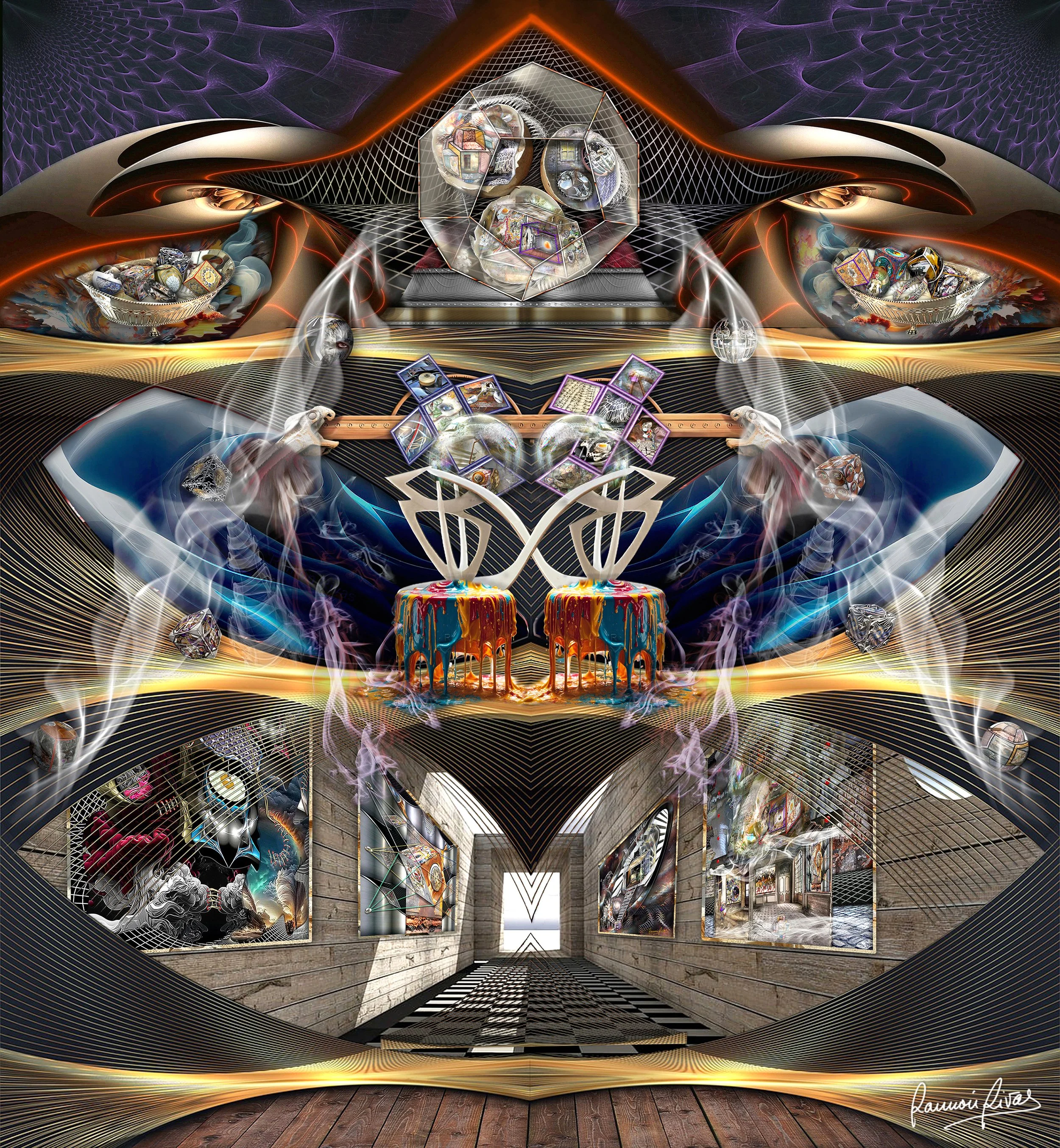
“Expo-Park of Experiential Art” Mixed media-Rivismo 180 x195 cm 2024
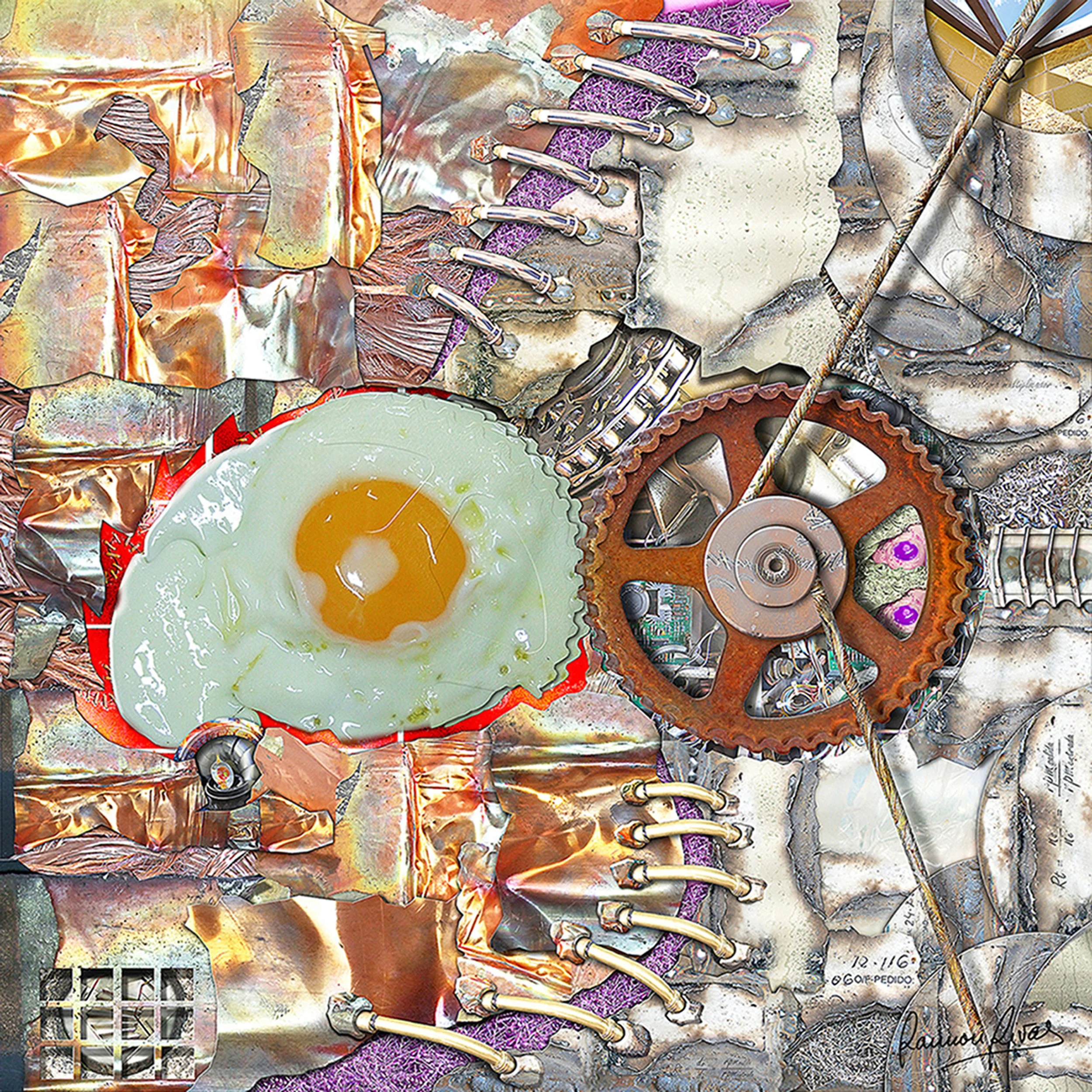
“Organic Transmutation” Mixed media-Rivismo 195x195 cm 2009
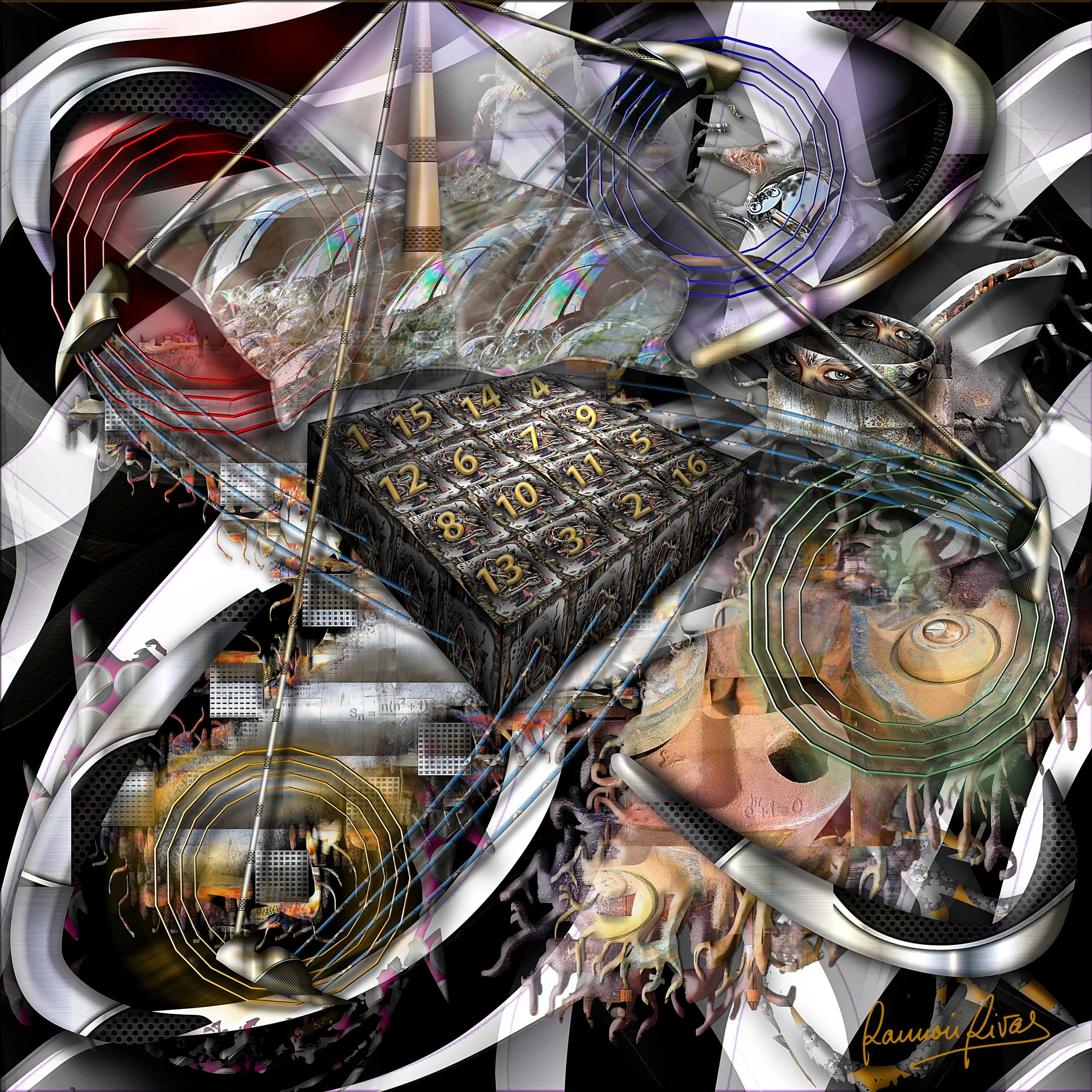
“Magic Square between 17-sided Gauss Polygons” Mixed media-Rivismo 195x195 cm 2018
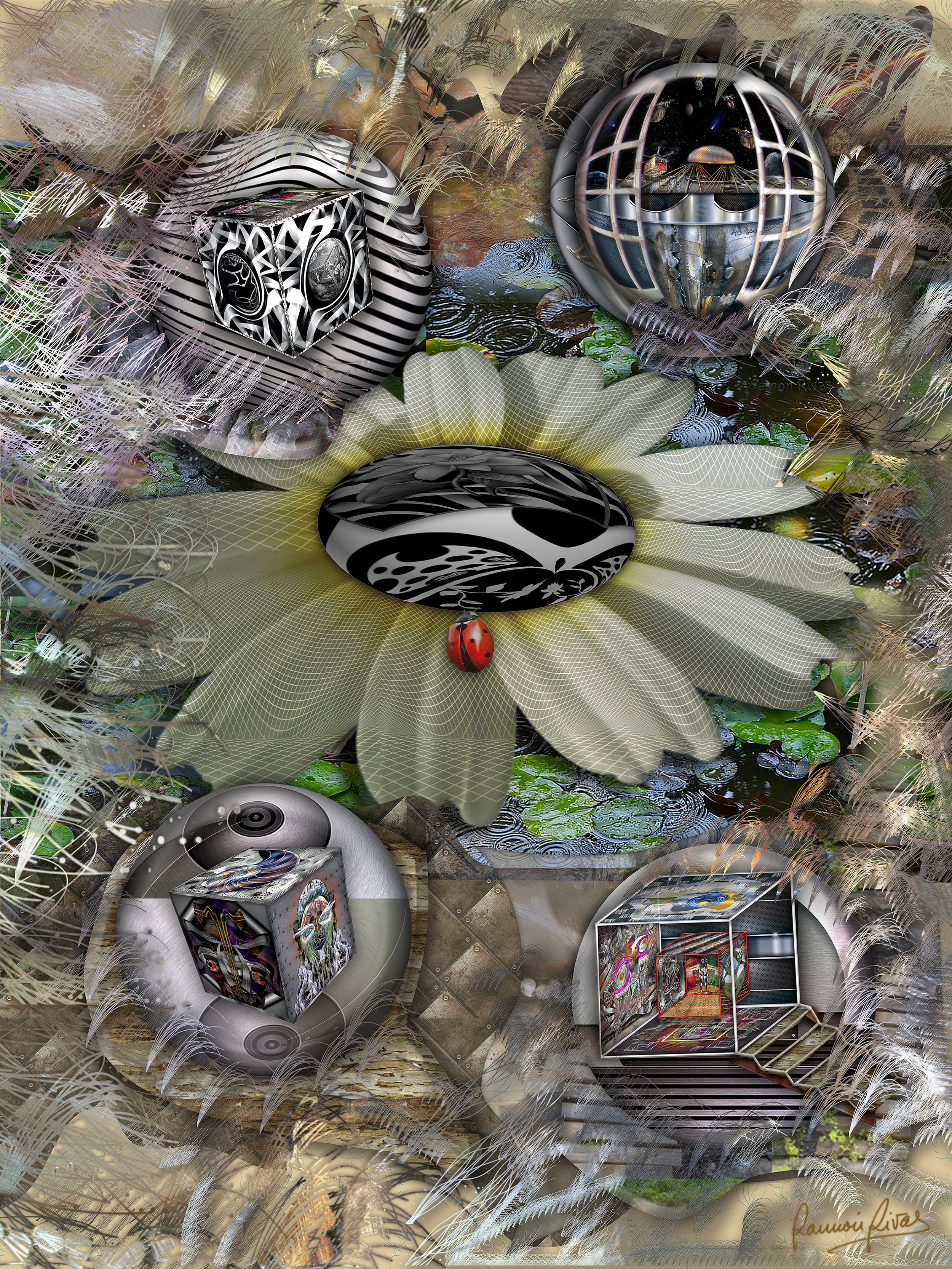
“Experiential Paradise” Mixed media-Rivismo 150x200 cm 2021
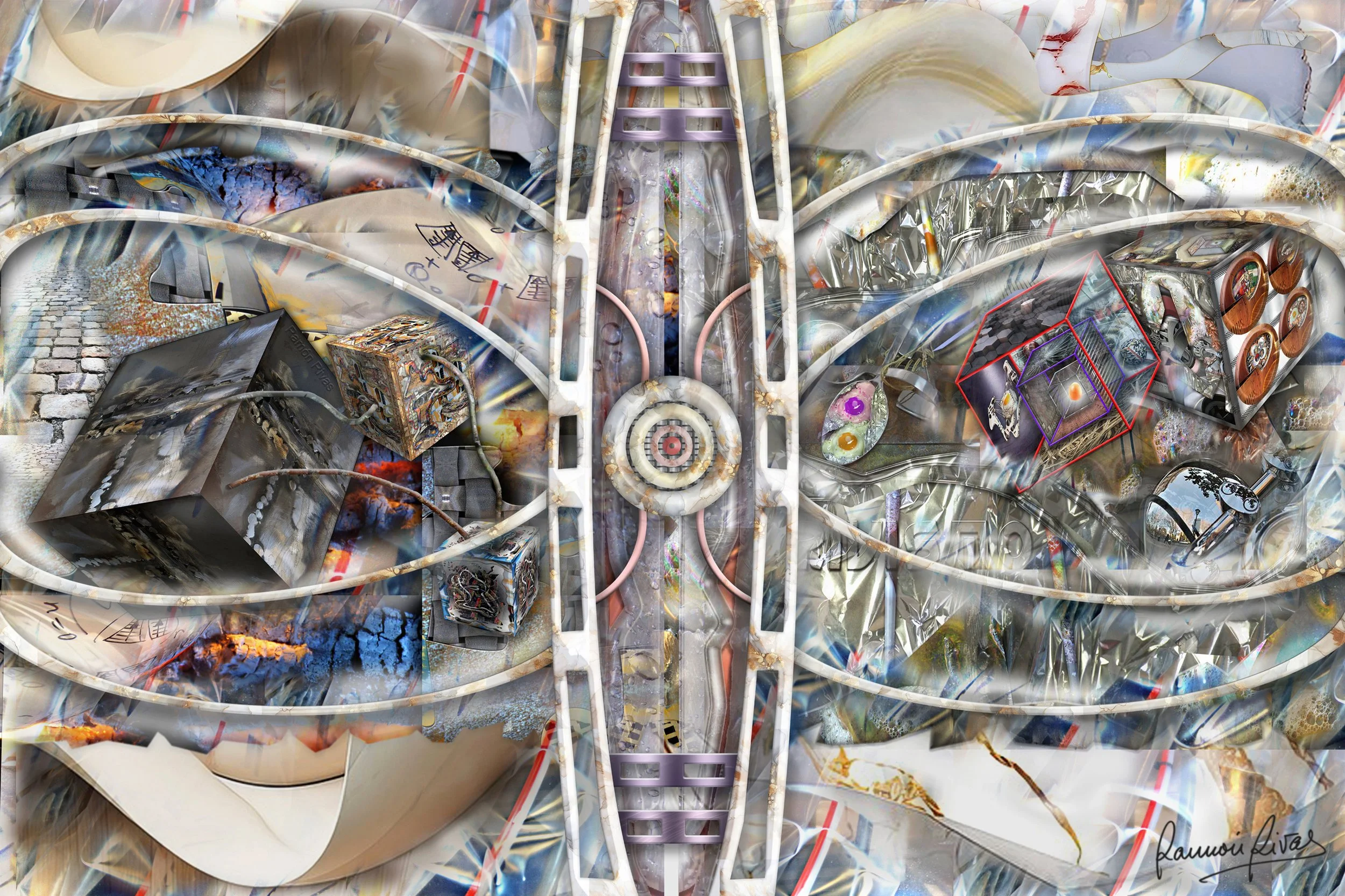
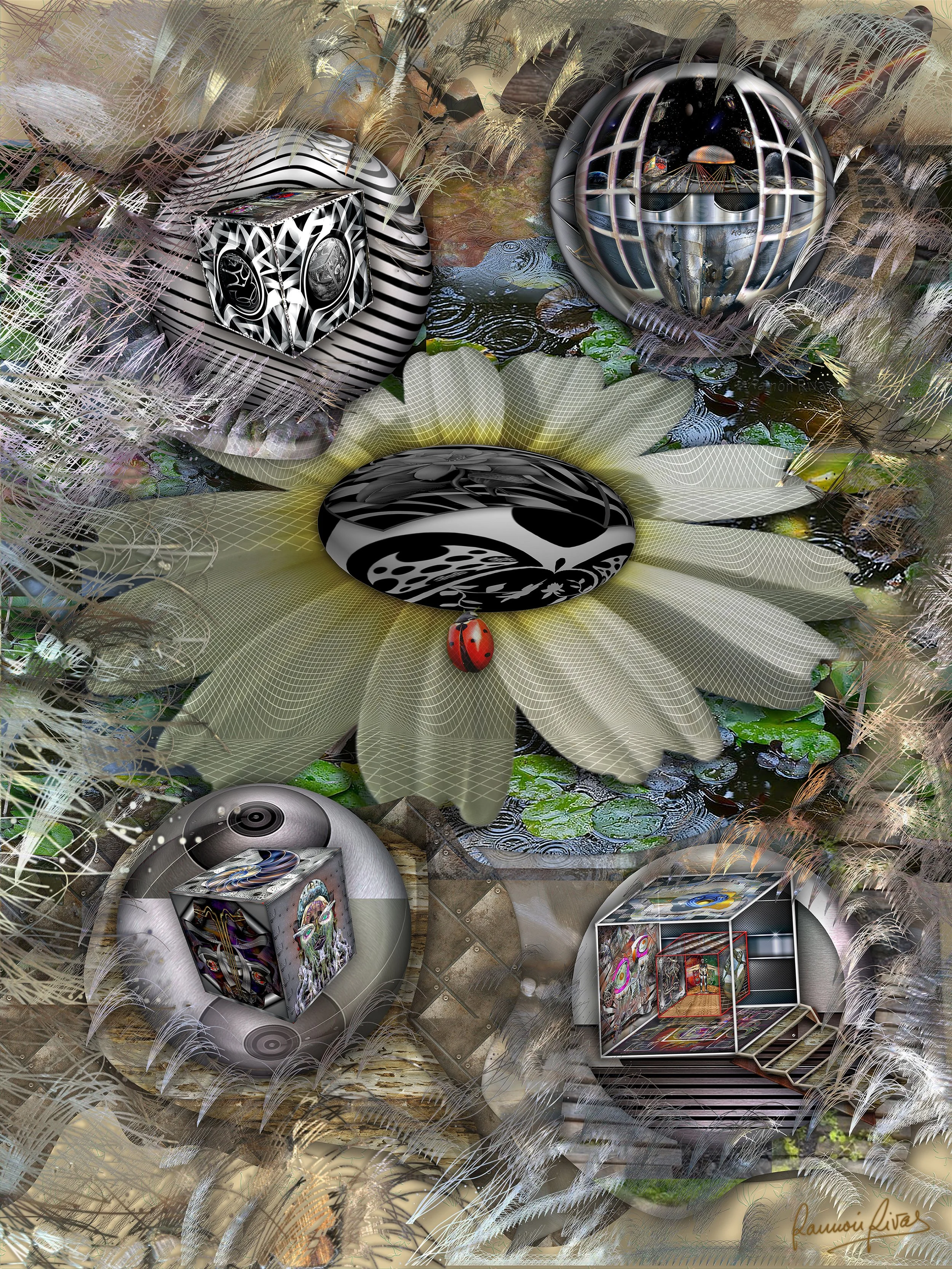
“Great Experiential Garden I” Mixed media-Rivismo 130x195 cm 2024
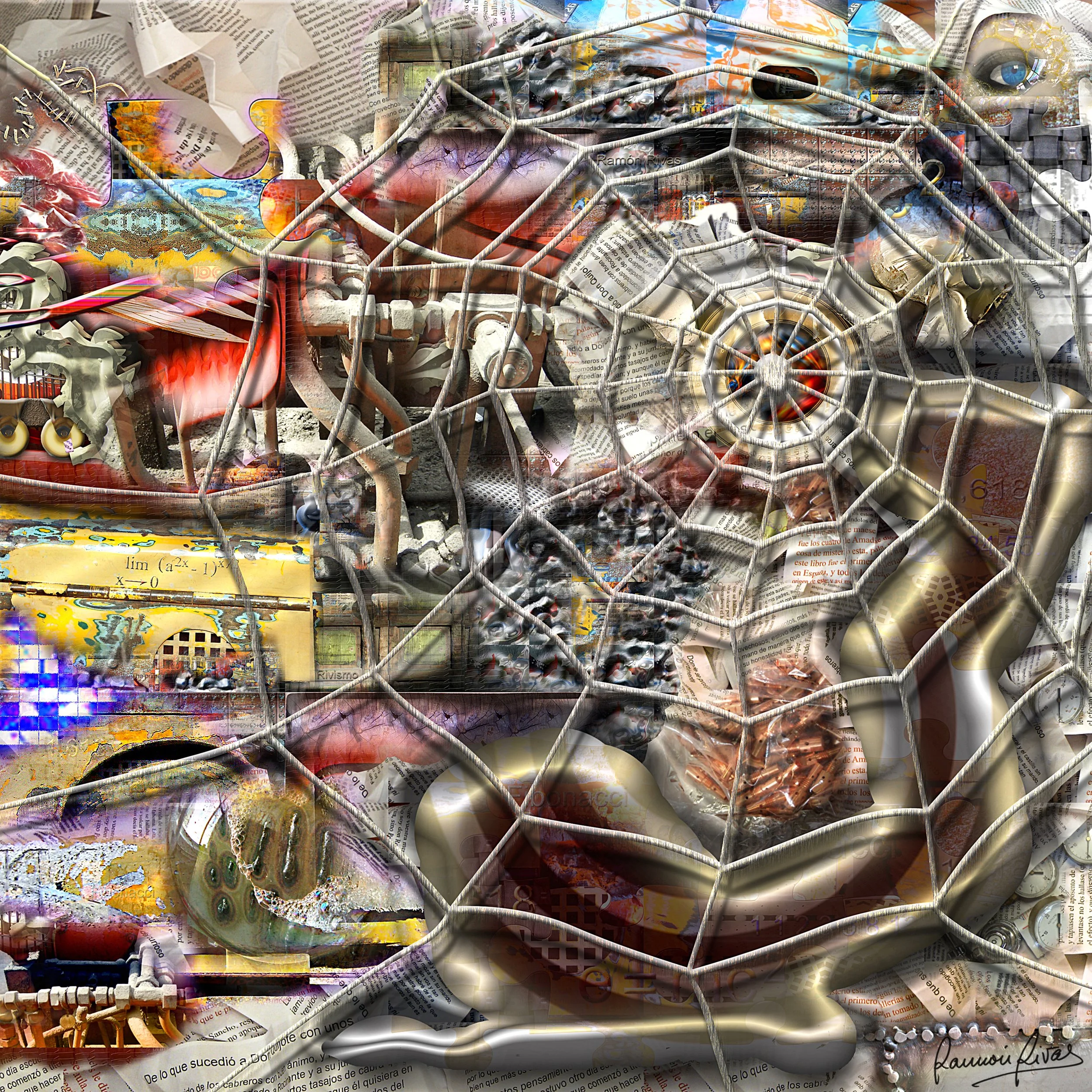
“Experiential Entrapment” Mixed media-Rivismo 195x195 cm 2012
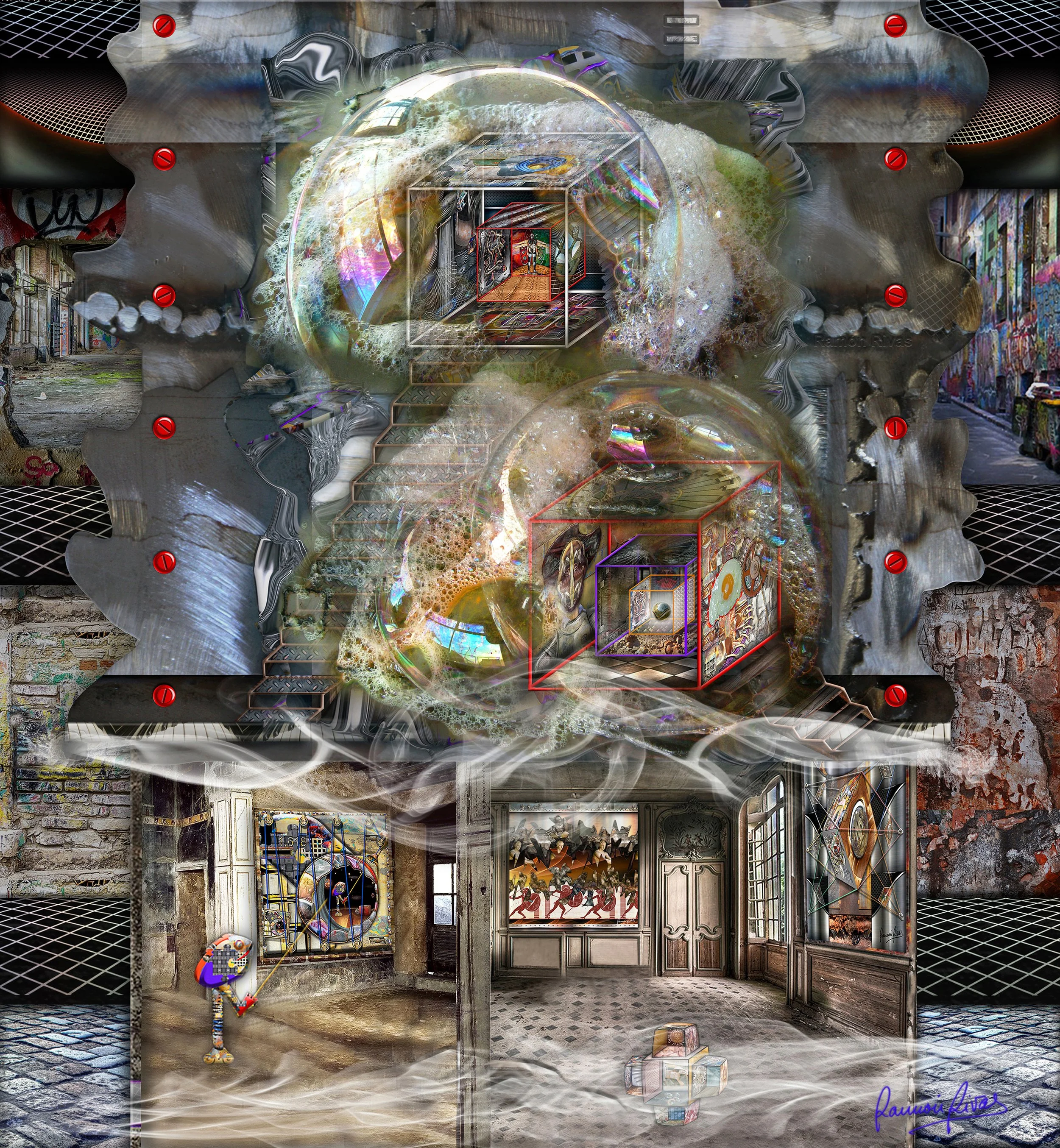
“Art Explosion In-Out” Mixed media-Rivismo 180x195 cm 2022 195x195 cm 2022
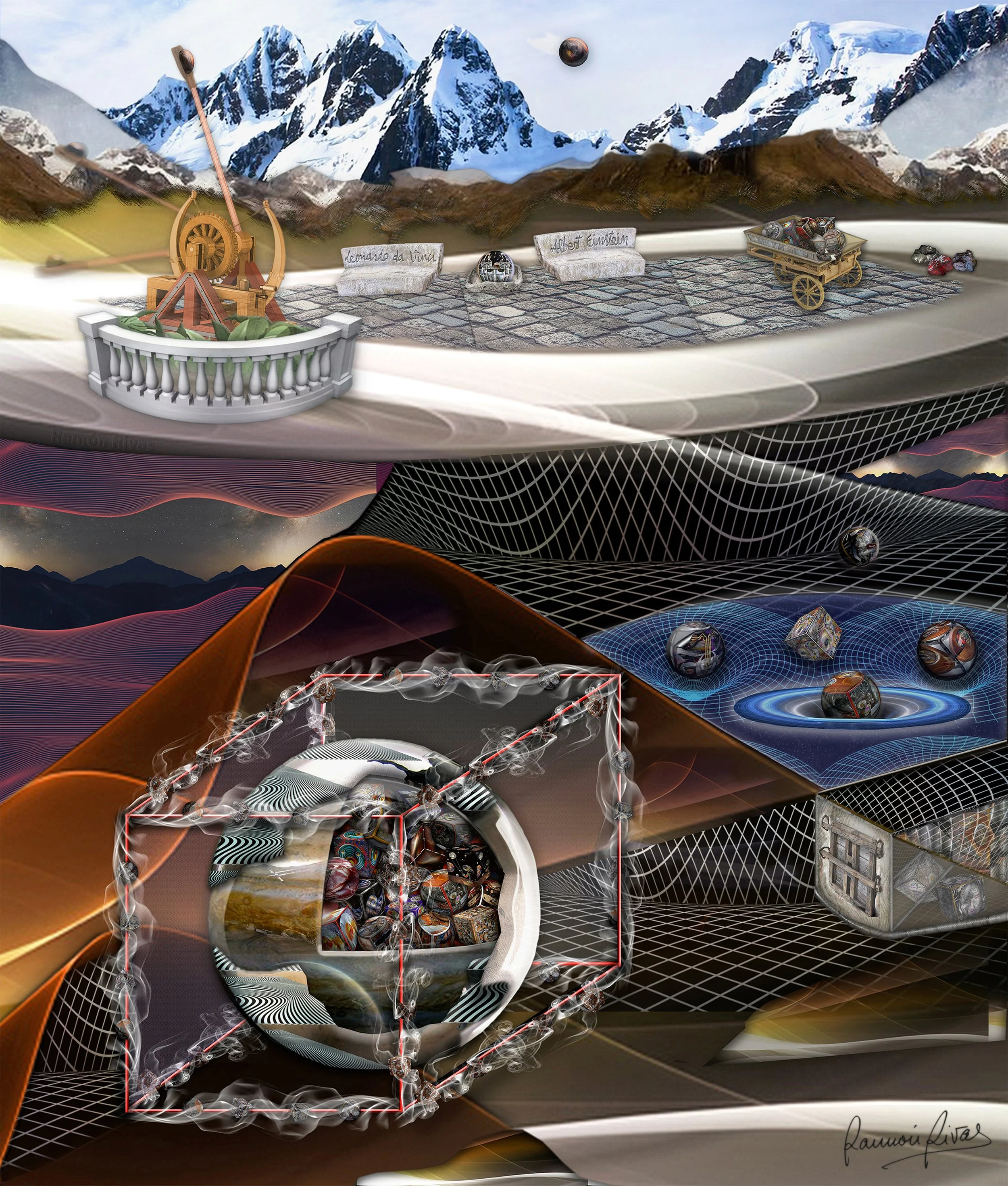
“Art between the Catapult and Relativity. Da Vinci & Einstein” Mixed media-Rivismo 170x200 cm 2022
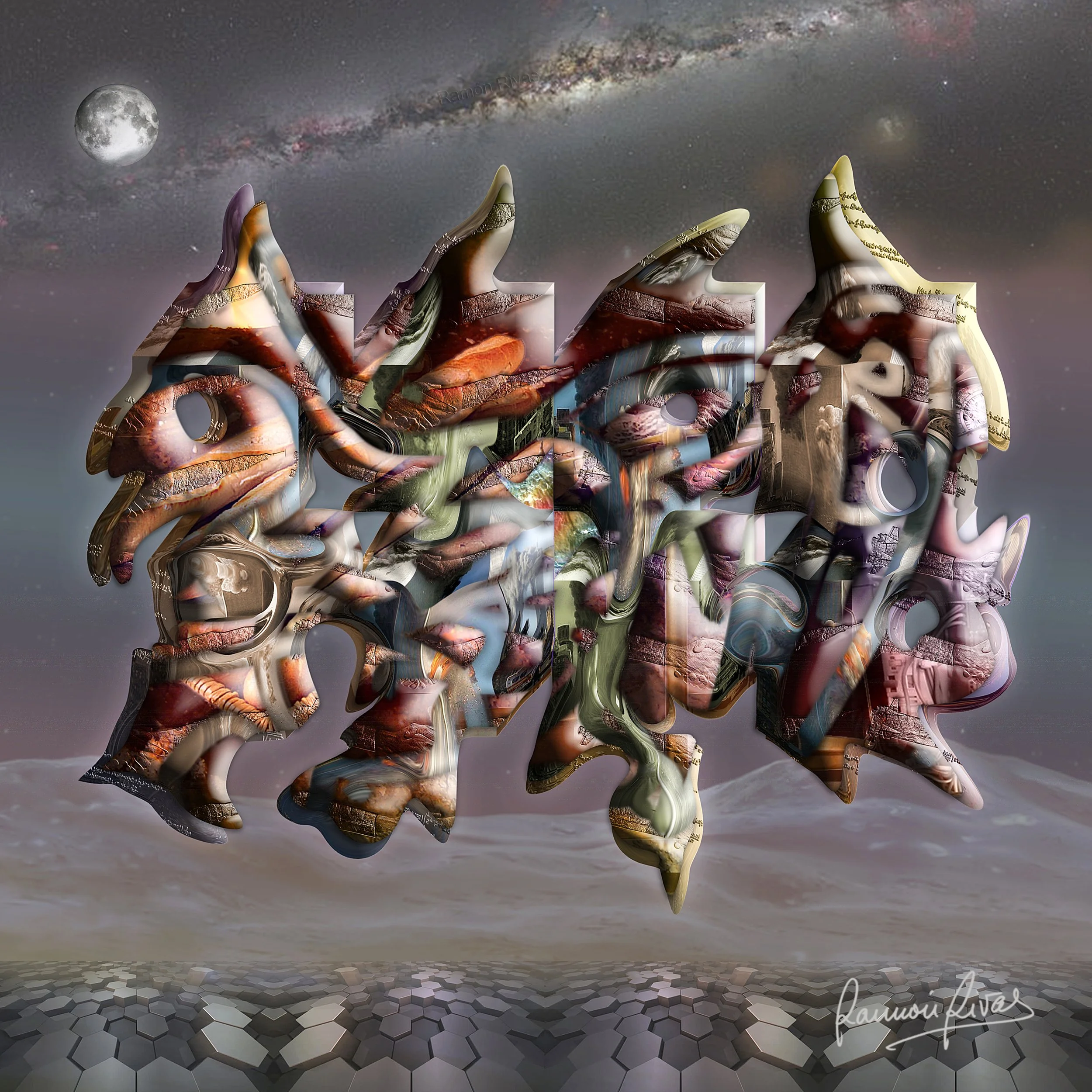
“Riding to the rhythm of a moonlight sonata” Mixed media-Rivismo 195x195 cm 2020
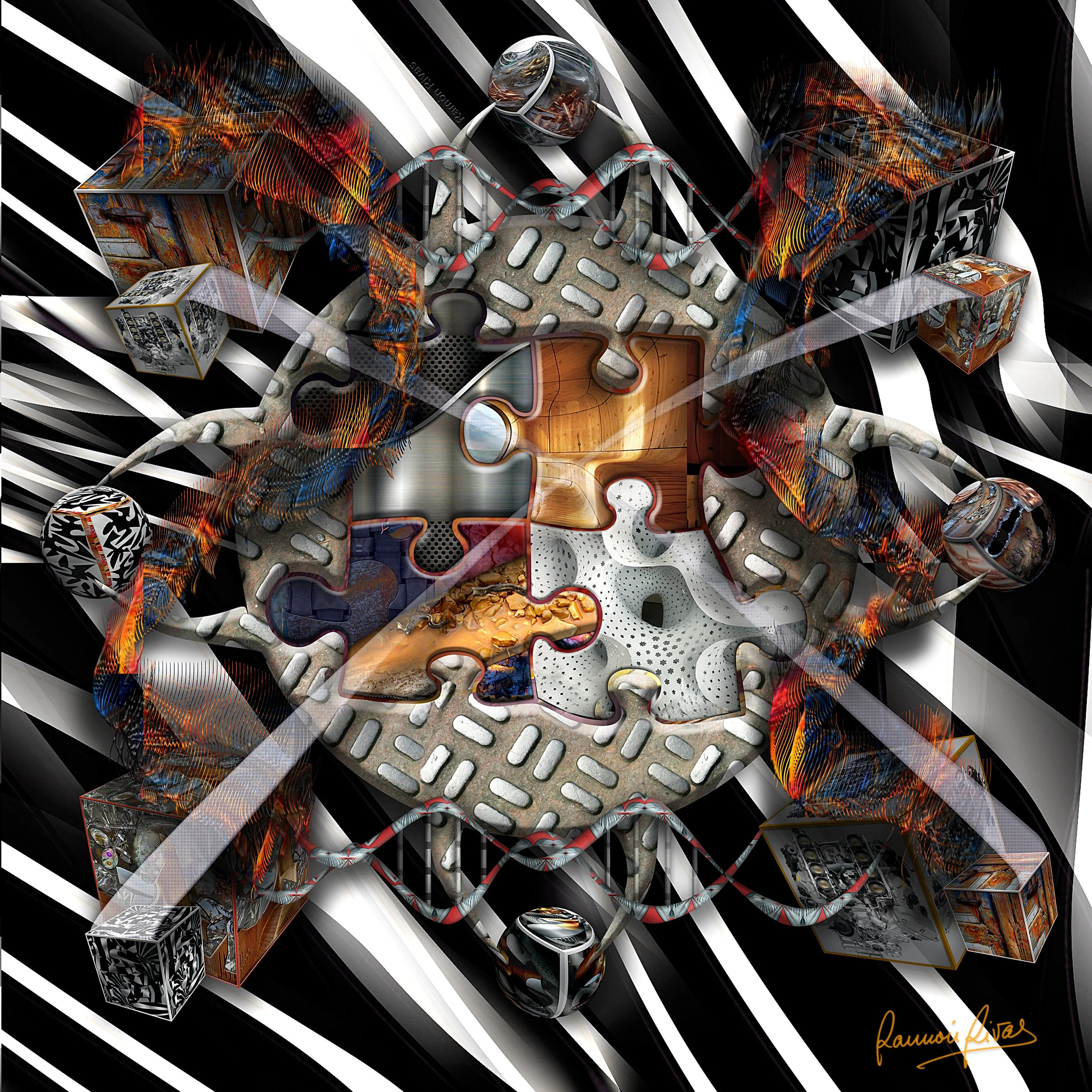
“Experiential Puzzle” Mixed media-Rivismo 195x195 cm 2018
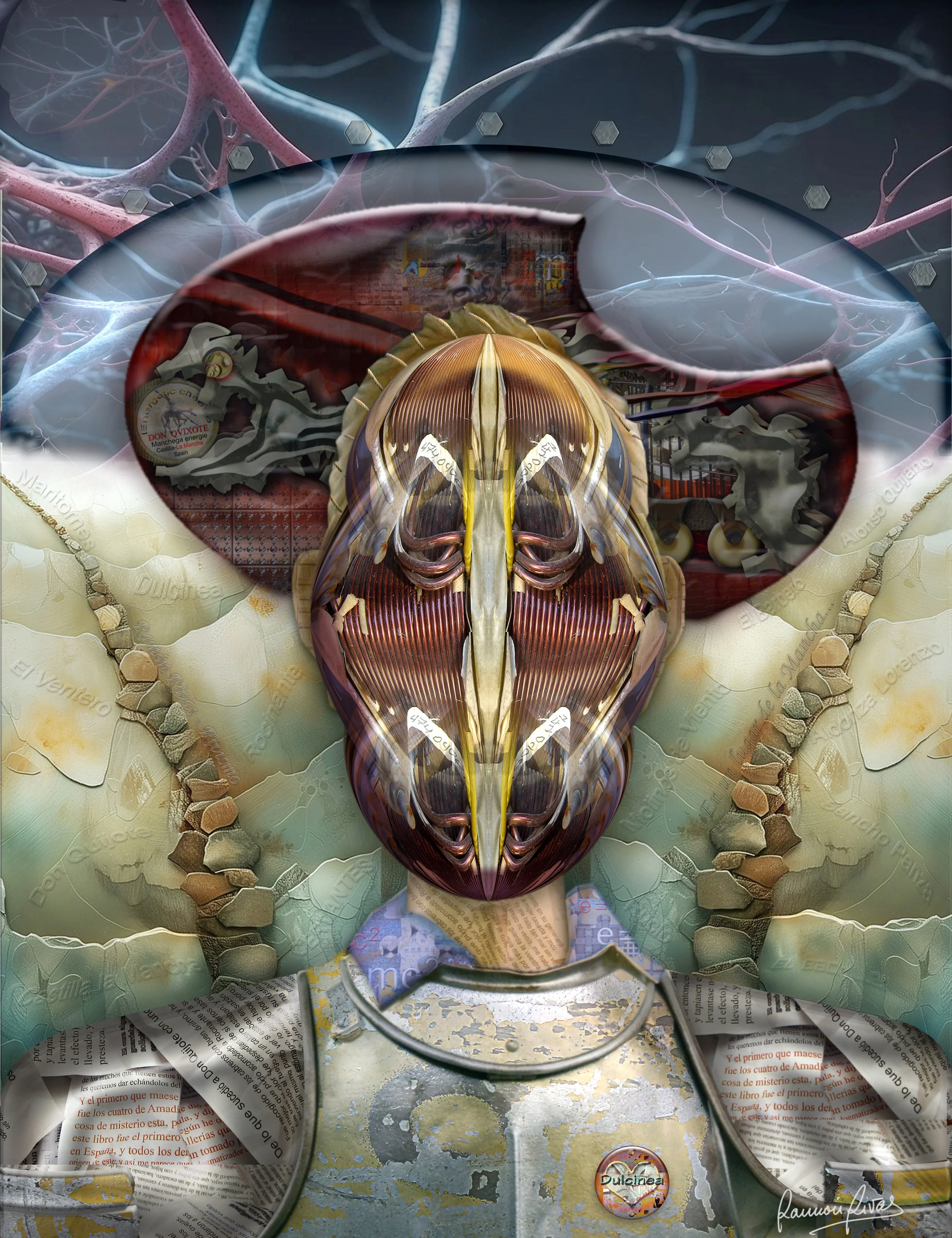
“Magnetism Manchego. Tribute to Don Quixotee” Mixed media-Rivismo 150x195 cm 2025
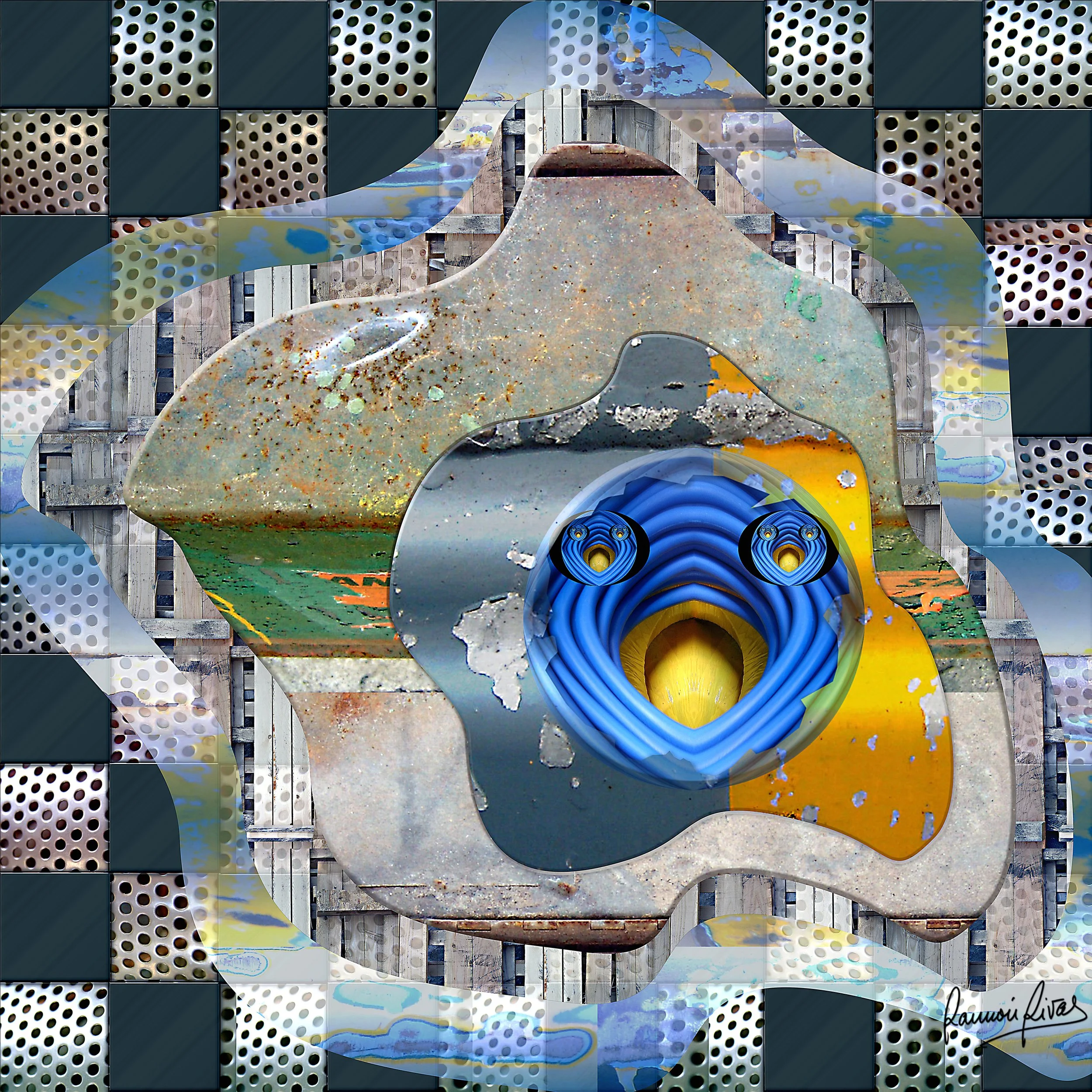
“The Egg's Scream” Mixed media-Rivismo 195x195 cm 2006
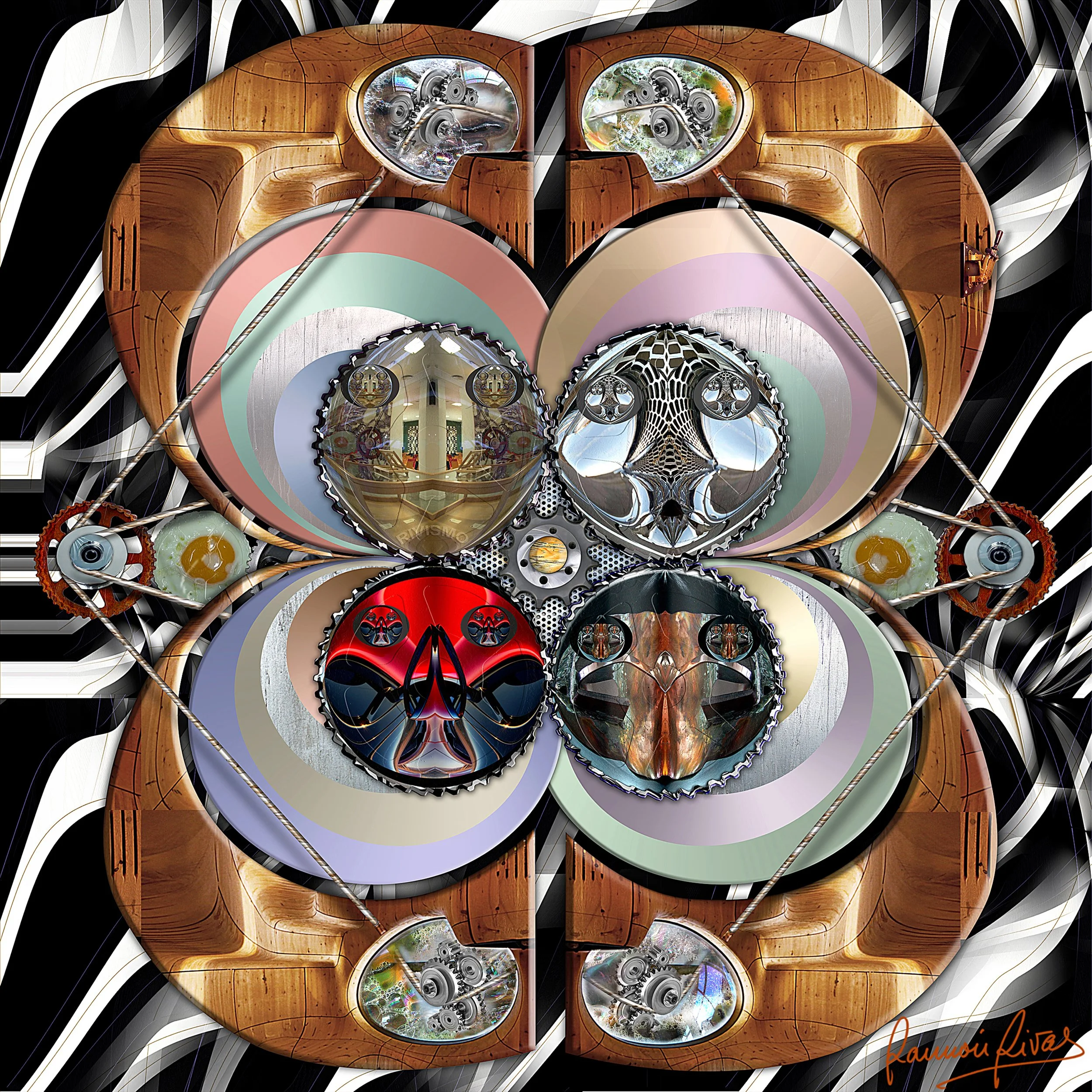
“Experiential Machine” Mixed media-Rivismo 195x195 cm 2019

“Seams for Concord and Peace in the World” Mixed media-Rivismo 195x195 cm 2022

“The Protector of the Universe II” Mixed media-Rivismo 180x195 cm 2023