Interview with Carol Wates
https://www.artbycarolwates.co.uk/
Carol Wates is a British artist who creates iPad pictures using the Brushes app. Carol trained at the Chelsea University of Art. After graduating, she worked as a Visualiser in an Advertising Agency. Most of her pictures are done “En Plien Air”, because she loves being close to nature.
Carol, how do you conceive the act of working en plein air with an iPad as a continuation, or perhaps a transformation, of the historical tradition of landscape painting, particularly when the tactile immediacy of pigment and surface is replaced by the luminous interface of a screen, and in what ways does this technological mediation reshape your perception of atmosphere, temporality, and the fleeting conditions of light that have long preoccupied artists from the Impressionists onward?
When I started working on the iPad using the Brushes App, fear and frustration were my dominant feelings, but with perseverance and practice, I overcame these feelings, and fascination took over. I was ready for an adventure.
Although I learned how to draw and paint, in the traditional way. I quickly realised that doing it on the iPad was a truly exciting experience, full of diversity and opportunities. I usually rely on first impressions. For instance, weather conditions, positions of the sun, light and dark spaces, soft and hard, rearranging objects etc. All these things can be captured so quickly on the iPad. Nature seldom stands still.
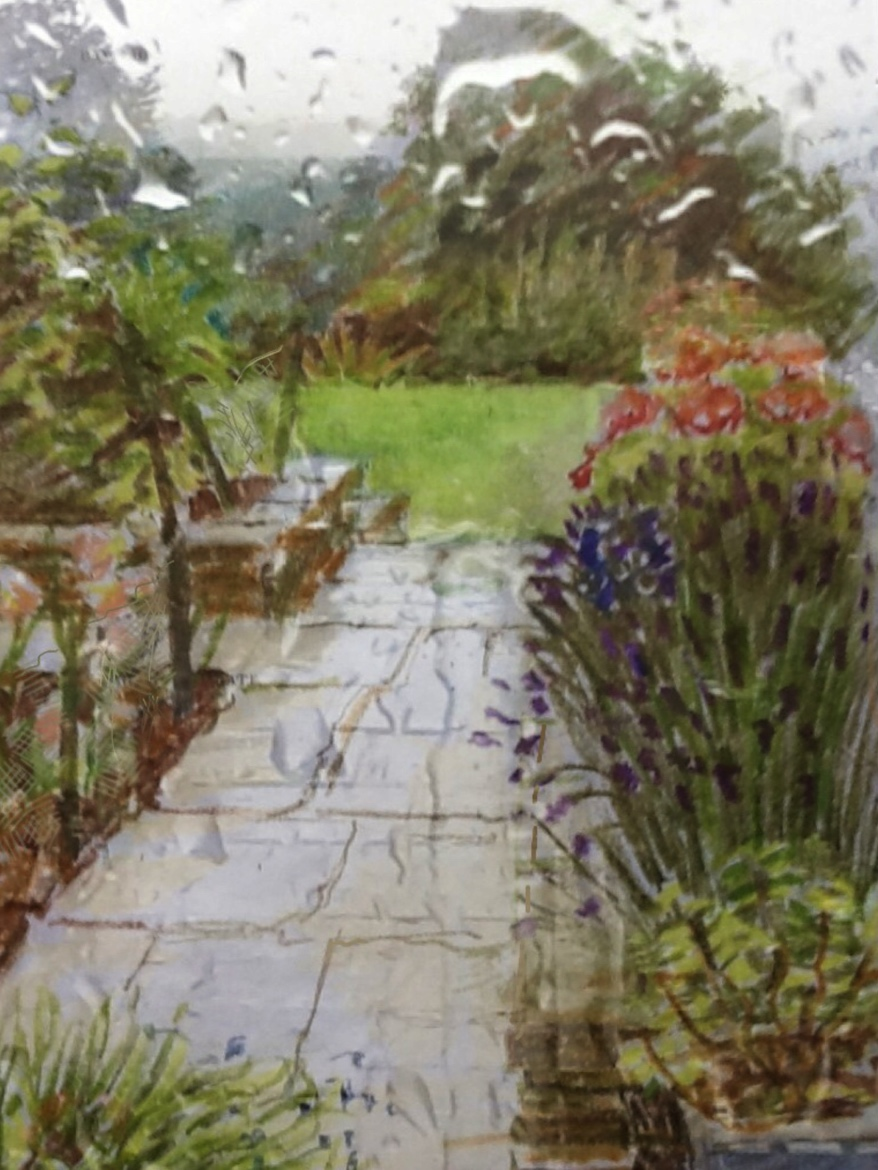
Soaking Wet Day.
Your practice unfolds at the intersection of nature observation and digital technology, a meeting point that might once have seemed paradoxical. Could you reflect on how the digital surface of the iPad becomes a site where organic phenomena such as shifting clouds, reflections on water, and the subtle choreography of shadows are translated into a visual language that remains both responsive and interpretive rather than merely descriptive?
I am a strong believer in first impressions. Within that first impression, I have to hold onto what matters most. Like shifting clouds reflected on the water. This would be the whole point of the picture, and the surrounding area would fit in, and fall into place.
Often it is important to distort, crop, and delete things, so that what remains really makes the finished picture work, therefore making the picture far less descriptive. All this can be done far more effectively on the iPad.
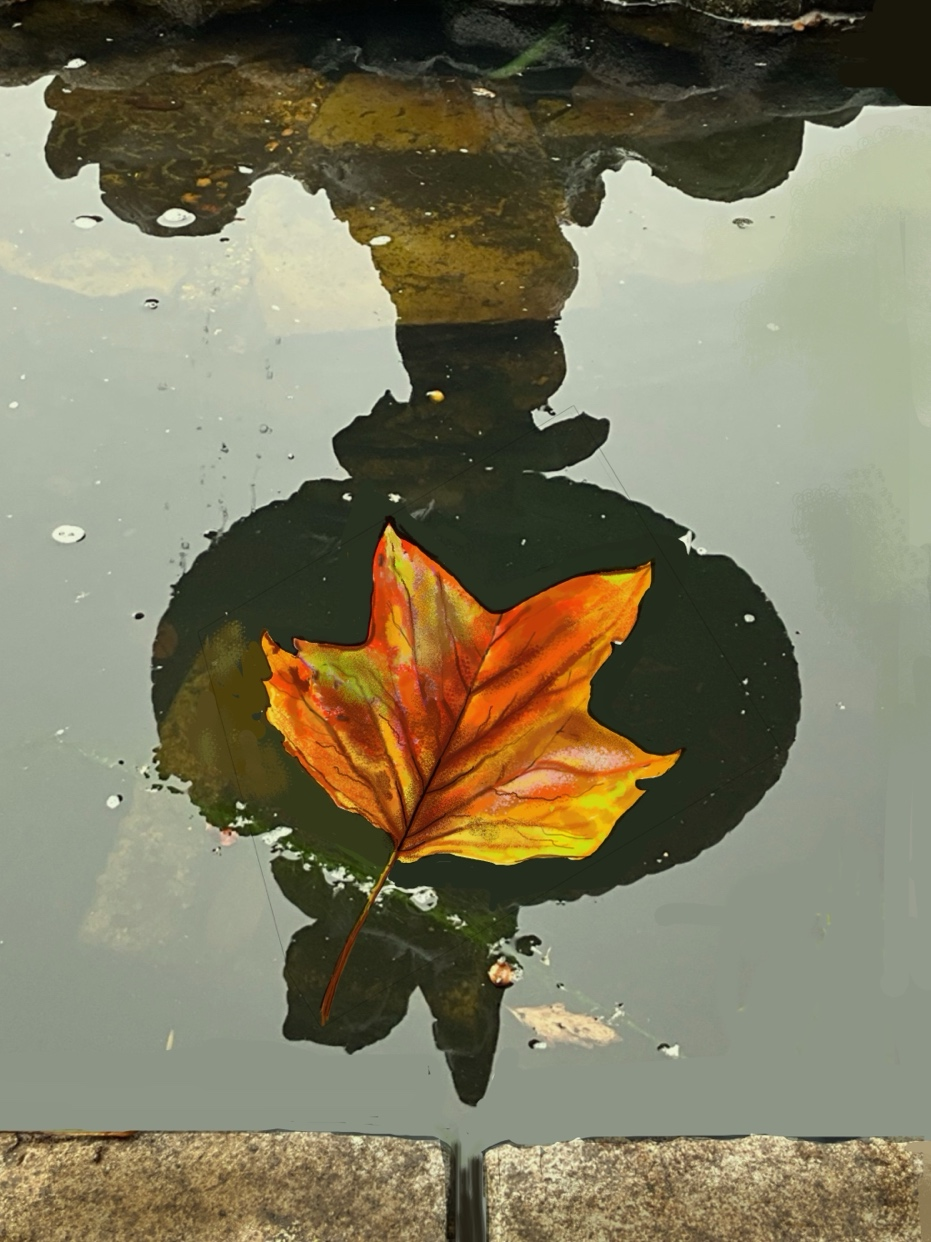
Leaf on the Fountain Pool.
Given your background in illustration and visual communication, how does your compositional thinking evolve when you approach a landscape digitally in real time, and to what extent do the principles of design, typography, and spatial organization learned during your years in advertising subtly structure the visual rhythm and clarity of your natural scenes?
I think visual communication is an essential part of the picture. My ideas always start with strong idea/image, for example, a tree, object, flower, reflection, rain, mist, etc, and keeping that memory as the most important message. I fit it into a space that enables it to be powerful and dominant. Often rearranging and deleting, to make the message work.
Advertising is all about selling the product, and the visual image of the product has to be eye catching, strong, and well placed i.e. a good design.
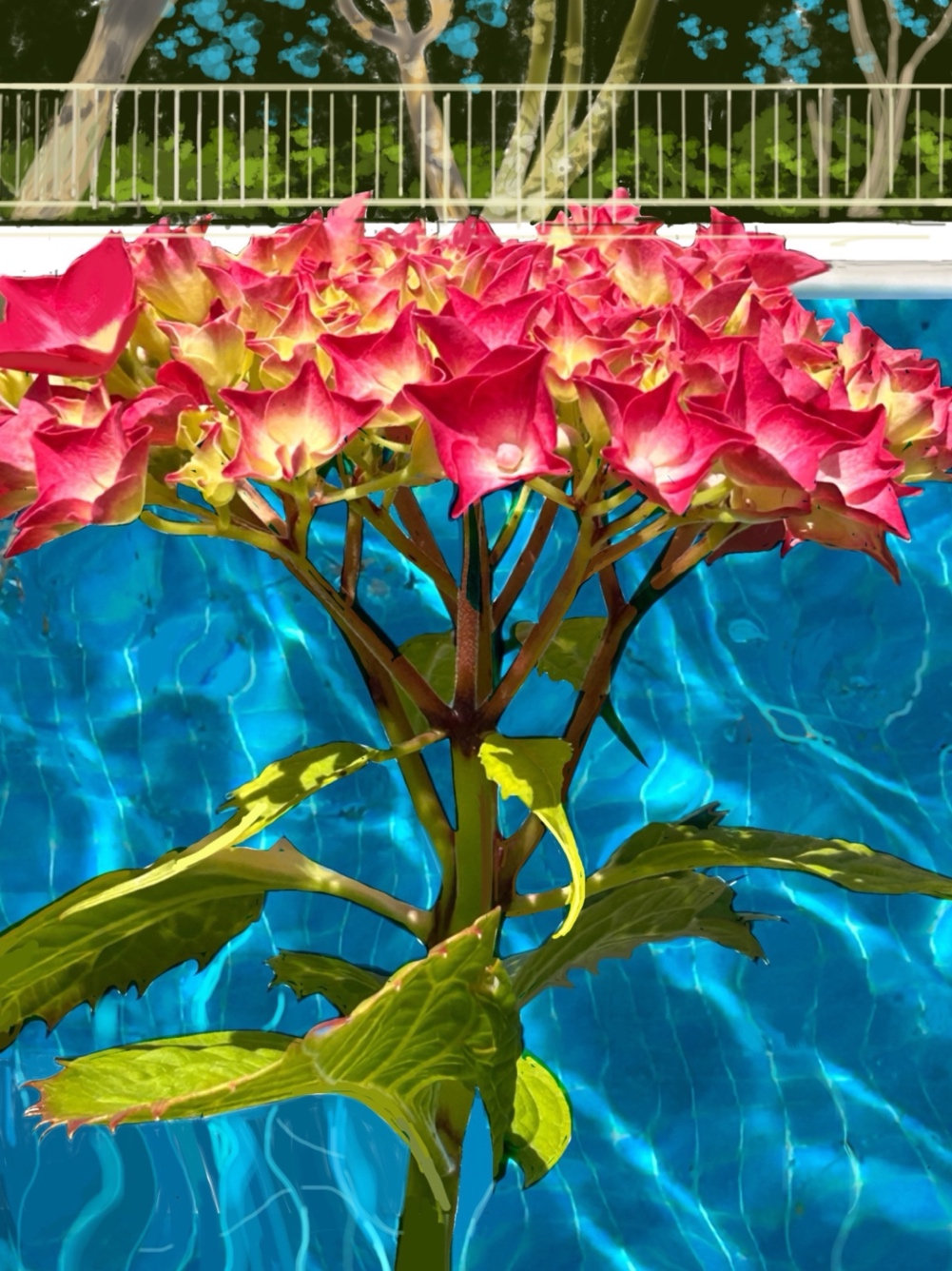
Hydrangeas against the Pool.
In many ways, the tradition of plein air painting historically demanded a negotiation between the slowness of observation and the urgency of changing conditions. With the speed and adaptability offered by digital tools, how do you navigate the tension between immediacy and contemplation, ensuring that the work retains a sense of depth, sensitivity, and perceptual richness rather than becoming merely instantaneous?
The visual image, as I want to see it, is always static. I try to be fluid around the static image. For example, a landscape is always there, but the weather conditions often change, so to adapt, I have to change colours, blur or strengthen lines, and change shadows, all very easily and quickly done on the iPad.
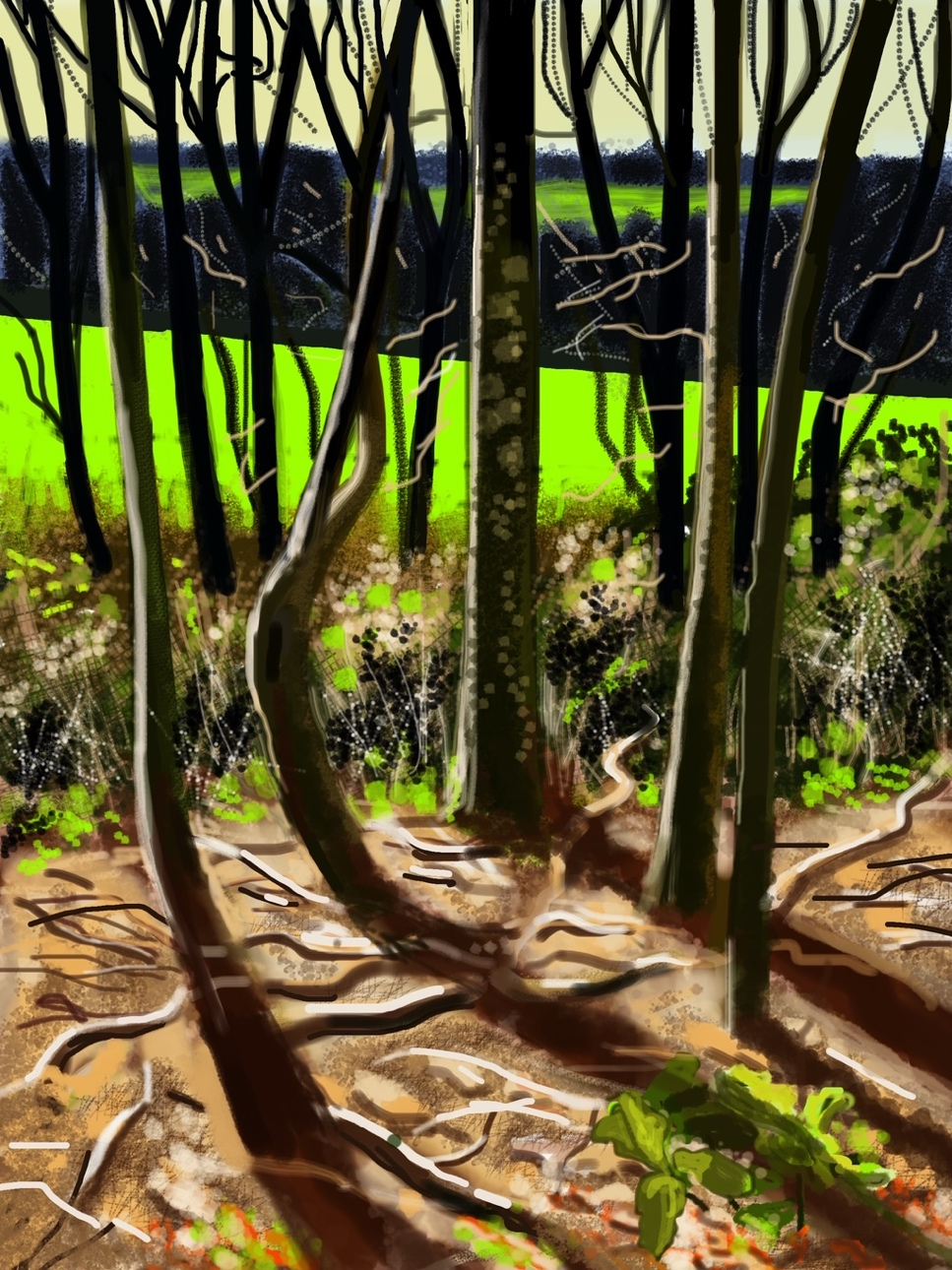
Pale Spring Shadows, and little Green Shoots.
You have spoken about your admiration for David Hockney and his pioneering use of the iPad as an artistic tool. Yet your work seems to occupy a distinct territory shaped by your own training and sensibility. How would you describe the conceptual or aesthetic territory that differentiates your landscapes from Hockney’s digital explorations, particularly in your treatment of atmosphere, compositional structure, and the quiet observational intimacy of nature?
It has to be remembered that David Hockney is not only an artist who works solely on the iPad. He is a superb artist who works in various disciplines i.e. Stage Design, Photography, Drawing, Oil Painting, and Watercolour. All this adds up to him being nothing less than a genius.
As for myself, obviously having trained to be an artist, I’ve had experience in designing and all that goes with it as a visualiser in an Advertising Agency. Design and Drawing is at the root of all I do. I have to hold onto the essence, the idea, and the nuances of whatever I first see before starting a picture. This involves light, colour, reflections, and how I feel about the whole composition.
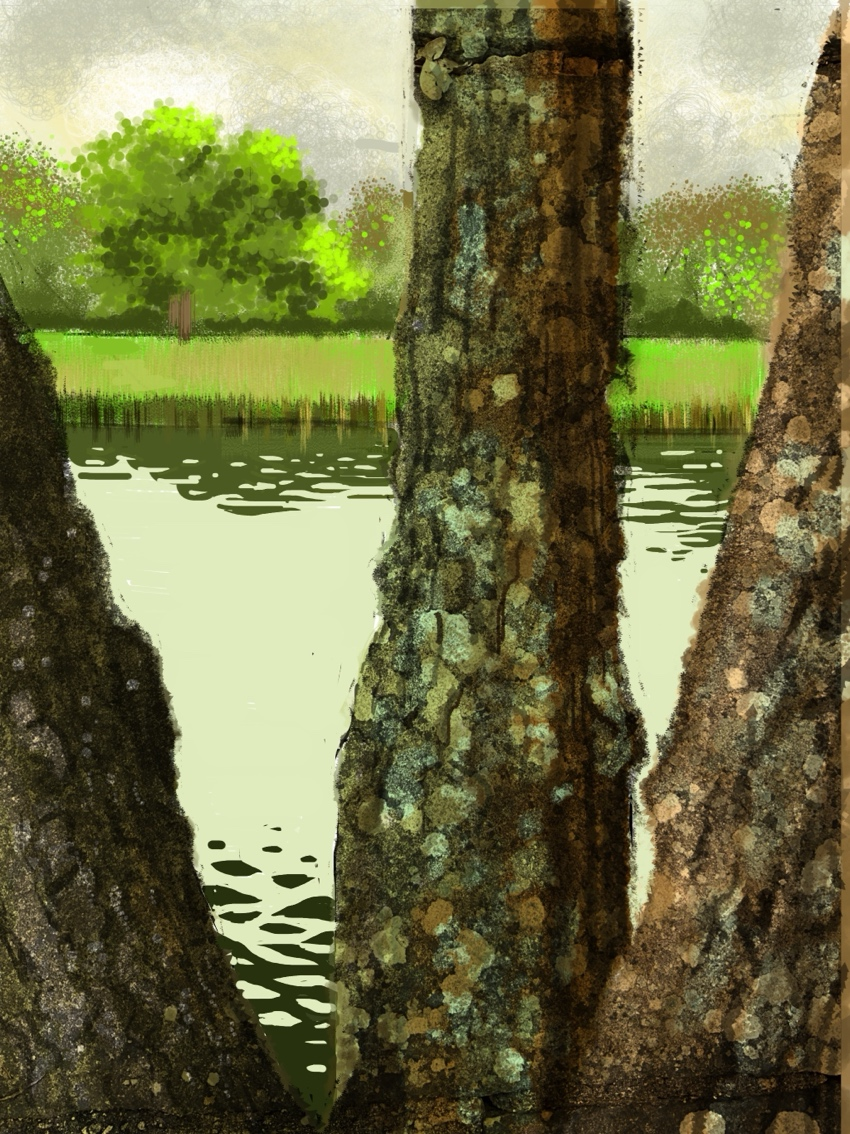
Glimpse of the River.
The landscapes and trees that appear in your work often carry an almost meditative stillness, despite being produced in environments where light and weather change rapidly. How do you reconcile the restless temporality of the natural world with the compositional stability required to construct a coherent image?
The compositional stability to construct a coherent image, is part of my training as an artist, this is a given, and I don’t think too much about it. Now the meditative stillness is part of the sort of person that I am. At the same time, I think it is essential to be aware of what is going on, to rock the boat, push the boundaries, and get excited about what I am seeing in front of me.
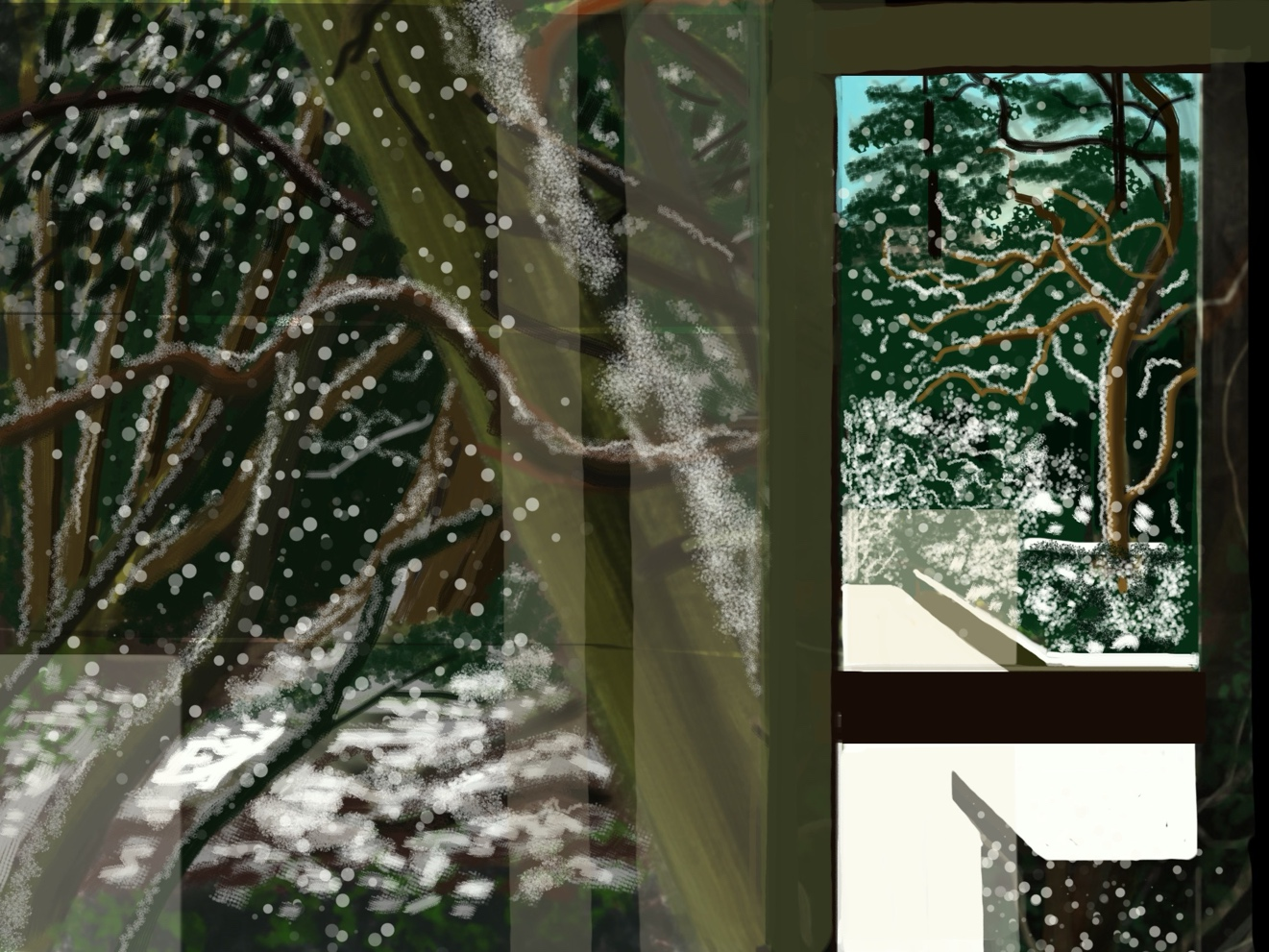
Winter View from my Studio.
In the broader discourse of contemporary art, digital painting is sometimes positioned as a technological novelty rather than a continuation of painterly inquiry. How do you situate your own work within this conversation, and do you see your practice as expanding the historical language of painting or as inaugurating a fundamentally different mode of visual thinking?
The answer to the first part of the question is, that I regard the iPad as being an exciting tool that explores new possibilities. That is to say that the end result is as any other traditional picture, but the way it is achieved is basically different. Technology takes me down a diverse path which embraces creative tools like, photography, templates, symbols, and a whole range of design techniques. This way of doing things is not going to change the historical language of painting, but I do think that it is a gateway to an entirely new way of visual thinking.
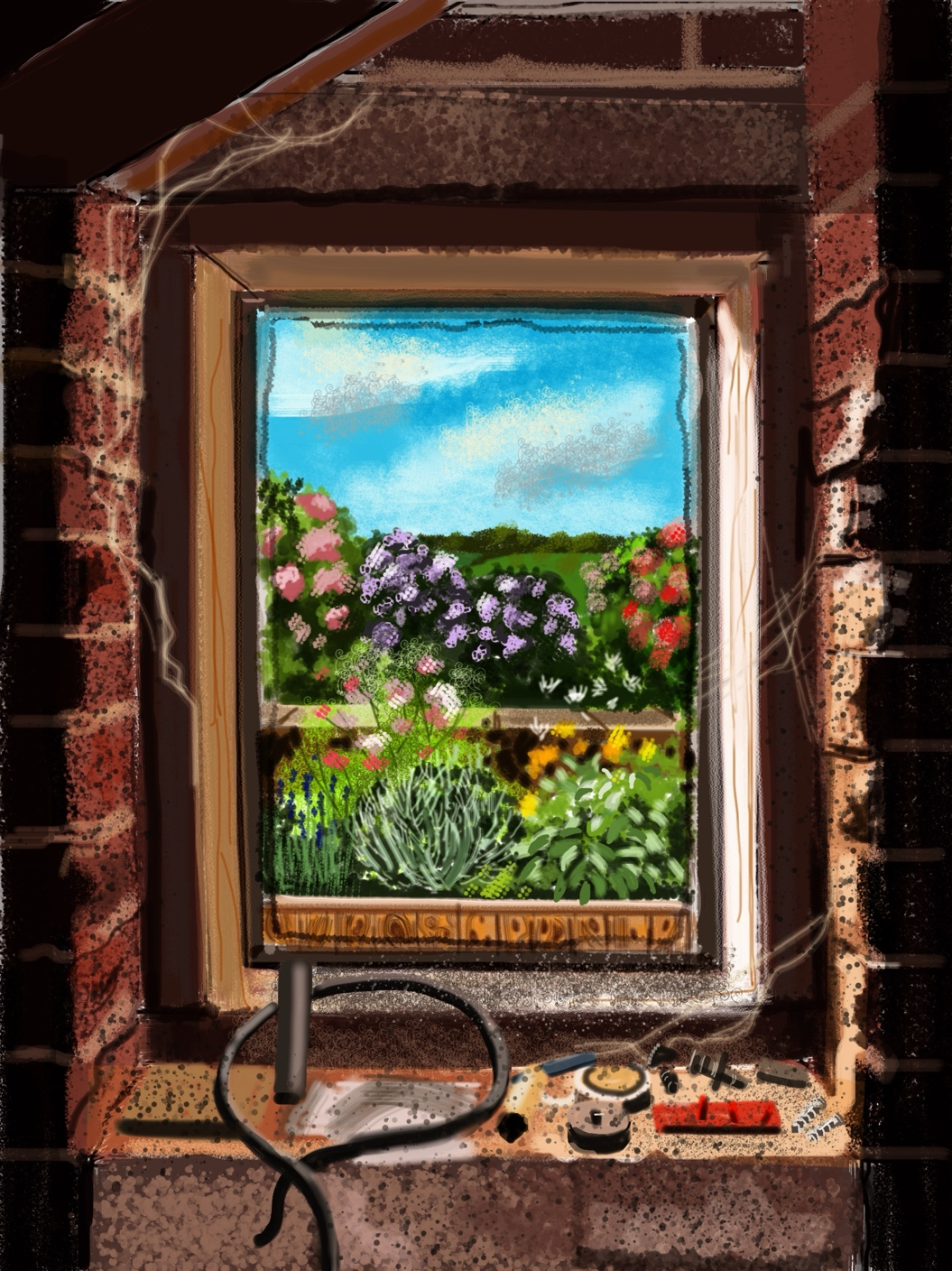
Summer View from the Boiler House.
Your choice to produce limited edition prints introduces a fascinating tension between the infinite reproducibility of digital imagery and the traditional art market’s emphasis on scarcity. Could you elaborate on how this decision reflects your philosophical position regarding authenticity, ownership, and the value of a digital artwork within contemporary cultural economies?
I suppose producing limited prints, titled, dated, and signed, is the traditional procedure which gives each picture its provenance. I have explored various ways of producing NFT’s, but with moderate success. It is a very complicated way of doing things, and I have had experience of questionable people trying to exploit me, because they know full well that I am inexperienced. Ignorance is where the devil wallows.
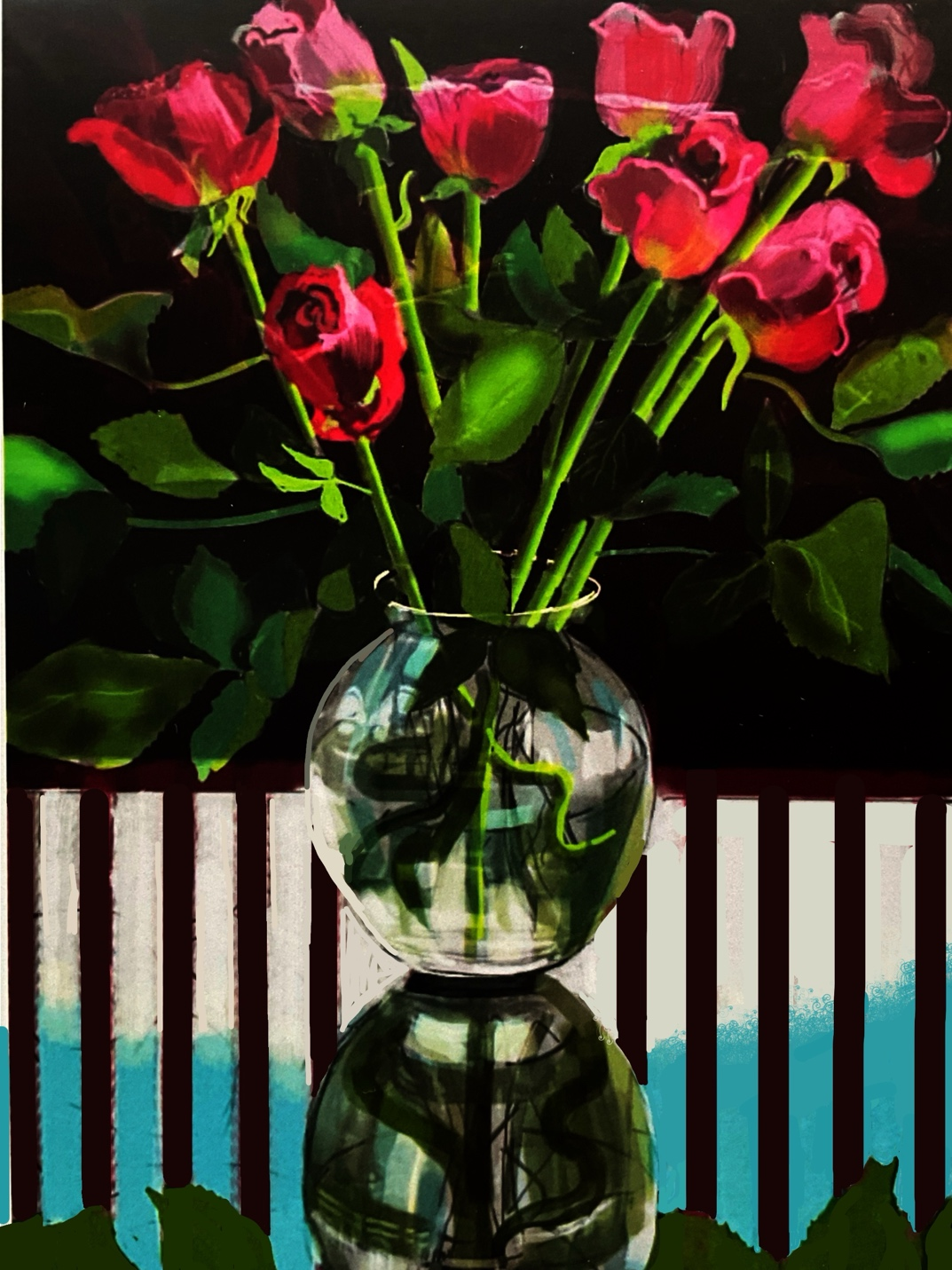
Roses on a Glass Table.
The act of drawing trees and landscapes outdoors often involves an intense form of looking, one that moves beyond representation into a deeper attentiveness to structure, pattern, and movement. When you observe nature through the lens of your digital practice, what kinds of visual phenomena most consistently capture your attention, and how do these observations shape the formal language of your work?
I believe that most visual artists, have, from an early age, the ability to memorise vividly everything that they have previously seen. These memories become so important, that they have to be marked down to become a drawing or painting. Eventually your mark making becomes quite good, so at this point you think you might become an artist.
Once trained, it is an easy step into looking intensely, and knowing how to convert your way of doing things into an artwork. Looking intensely involves not only seeing, it also involves answering a lot of questions, like, what is the dominant colour and shape, what to add and subtract, why have I chosen this, what feelings do I have about it all, and why does it matter so much to me.
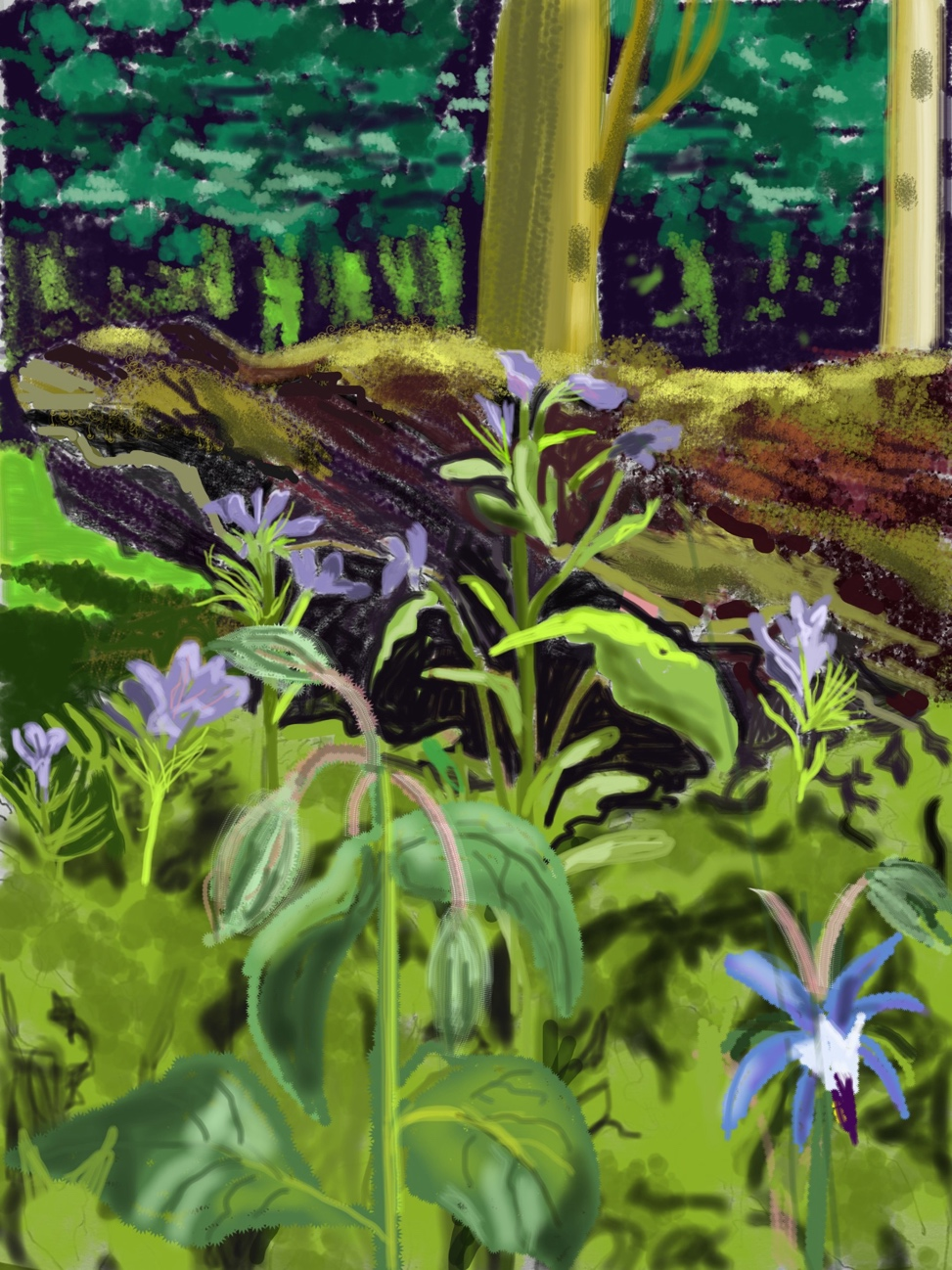
Dead Tree Horizontal, Alive Plant Vertical.
Your admiration for artists as varied as Henri de Toulouse Lautrec, M. C. Escher, Gustav Klimt, and Camille Pissarro suggests a remarkably diverse constellation of influences. How do these seemingly disparate traditions, ranging from graphic line and decorative pattern to atmospheric landscape and spatial illusion, converge within your digital landscapes?
I admire these artists for various reasons. Each one of them has a particular skill, that I would like to possess. Lautrec - Line drawing and movement, Escher - Design and construction, Klimt - Decorative pattern and colour, Pissarro - Atmosphere and sensitivity. To get all these elements successfully into one picture is enormously difficult, and rarely happens.
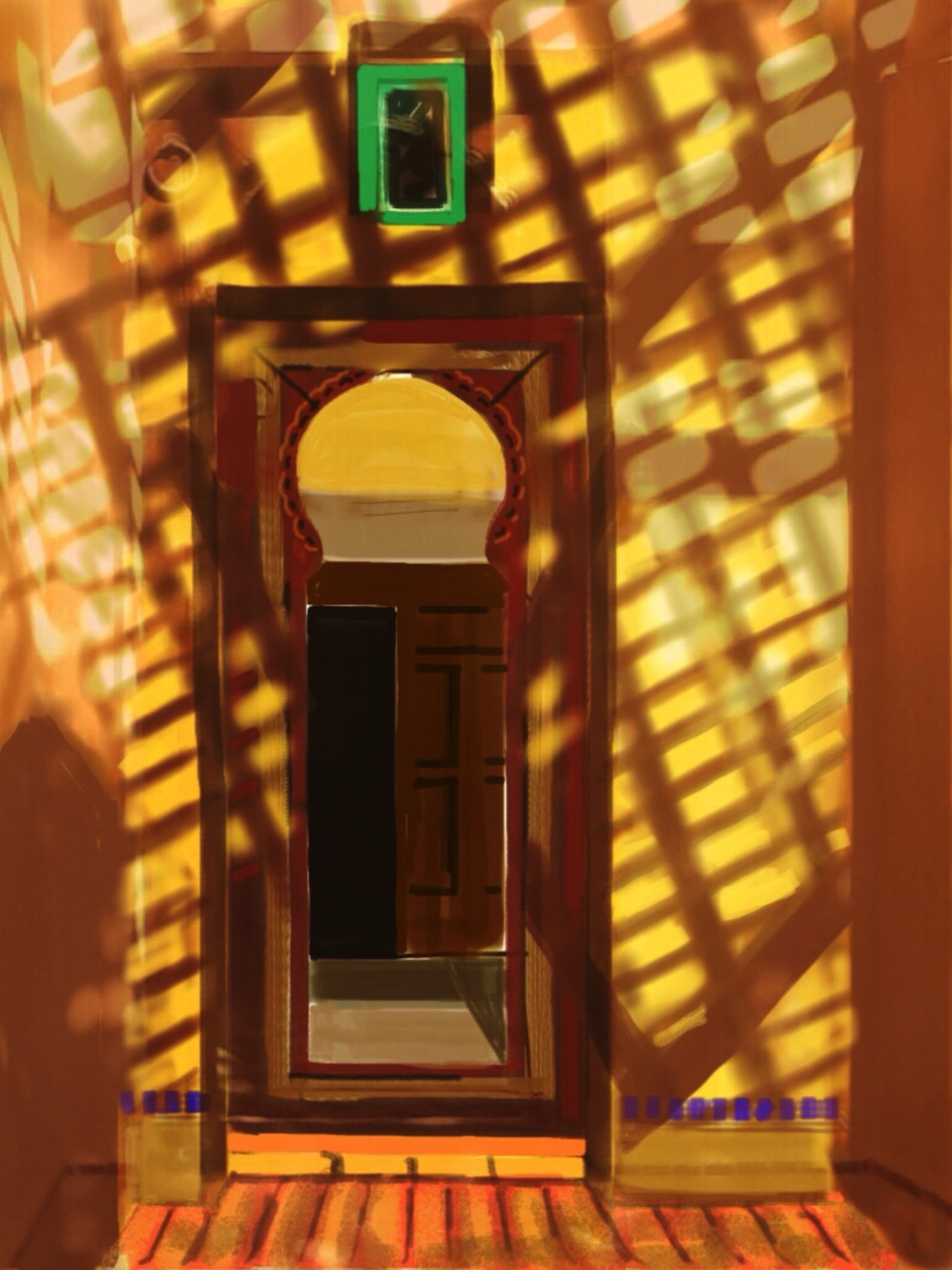
Moroccan Door in the Sunlight.
The iPad, as both a tool and a surface, fundamentally alters the physical gesture of drawing and painting. How has this shift affected your relationship to mark making, particularly in terms of the expressive qualities of line, touch, and rhythm that historically defined the artist’s hand?
When drawing on the iPad, there are endless choices available for various kinds of mark making. Very often I prefer to rely on my own line drawing skills, because it provides an opportunity for expression and rhythm. I think the same applies to colour. Now you cannot touch or feel a drawing or painting on an iPad. Touching a painting could be regarded as a necessity belonging to the past.
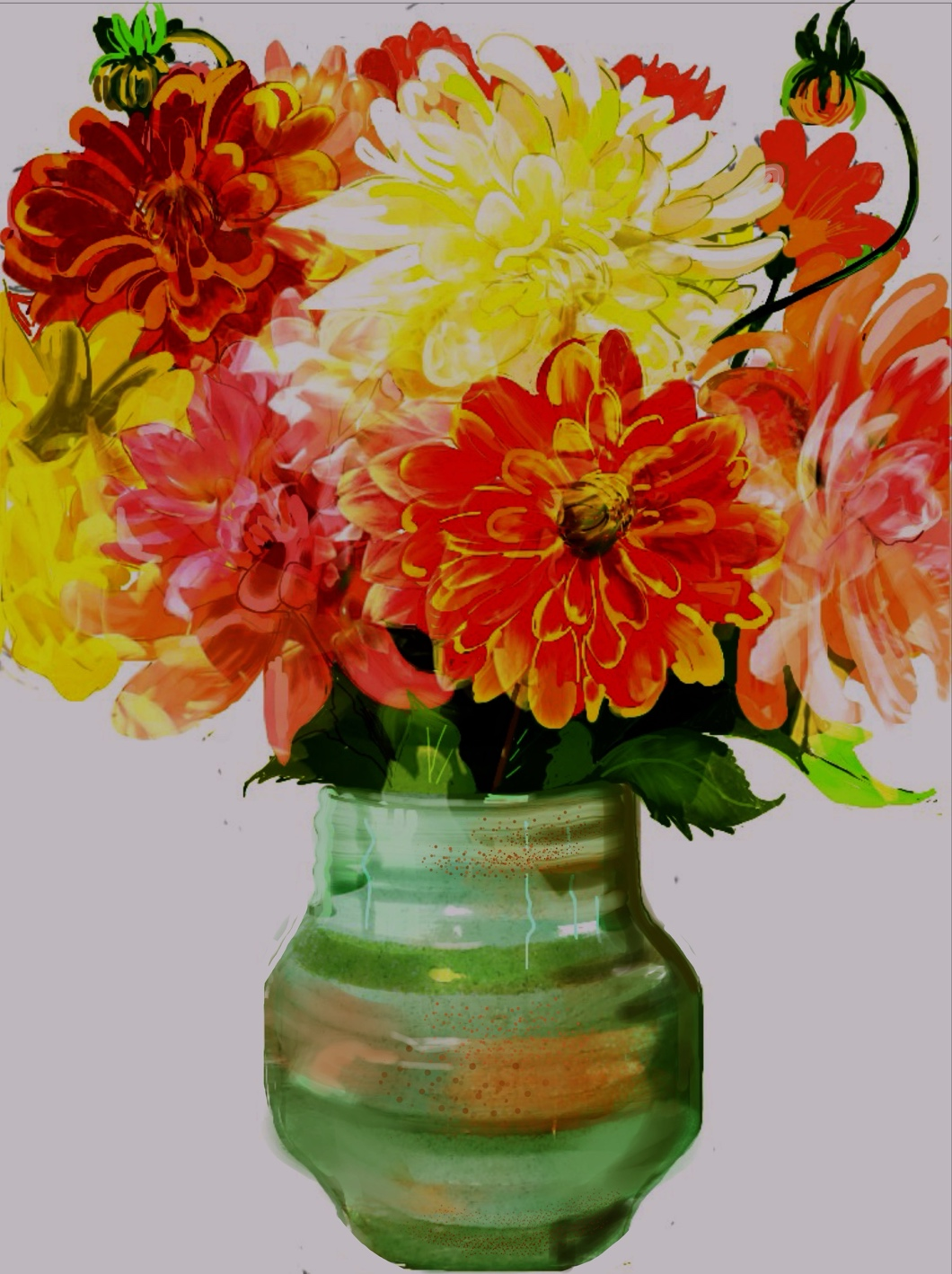
Dahlias.
When working outdoors with digital technology, you occupy an intriguing hybrid position between observer, painter, and documentarian. To what extent do you see your images as records of a specific moment in time, and to what extent do they function as interpretive constructions that reshape reality through compositional choice and digital manipulation?
Whenever I start working, it is because I have seen something significant, which lodges in my mind and won’t go away. At this point, I try to keep open to changes in light and atmosphere, which often enhances and improves the original concept. It is not just about seeing; it is about how I see it. The iPad technology makes it much easier to make these changes as I go along. It is such a fast responsive tool.
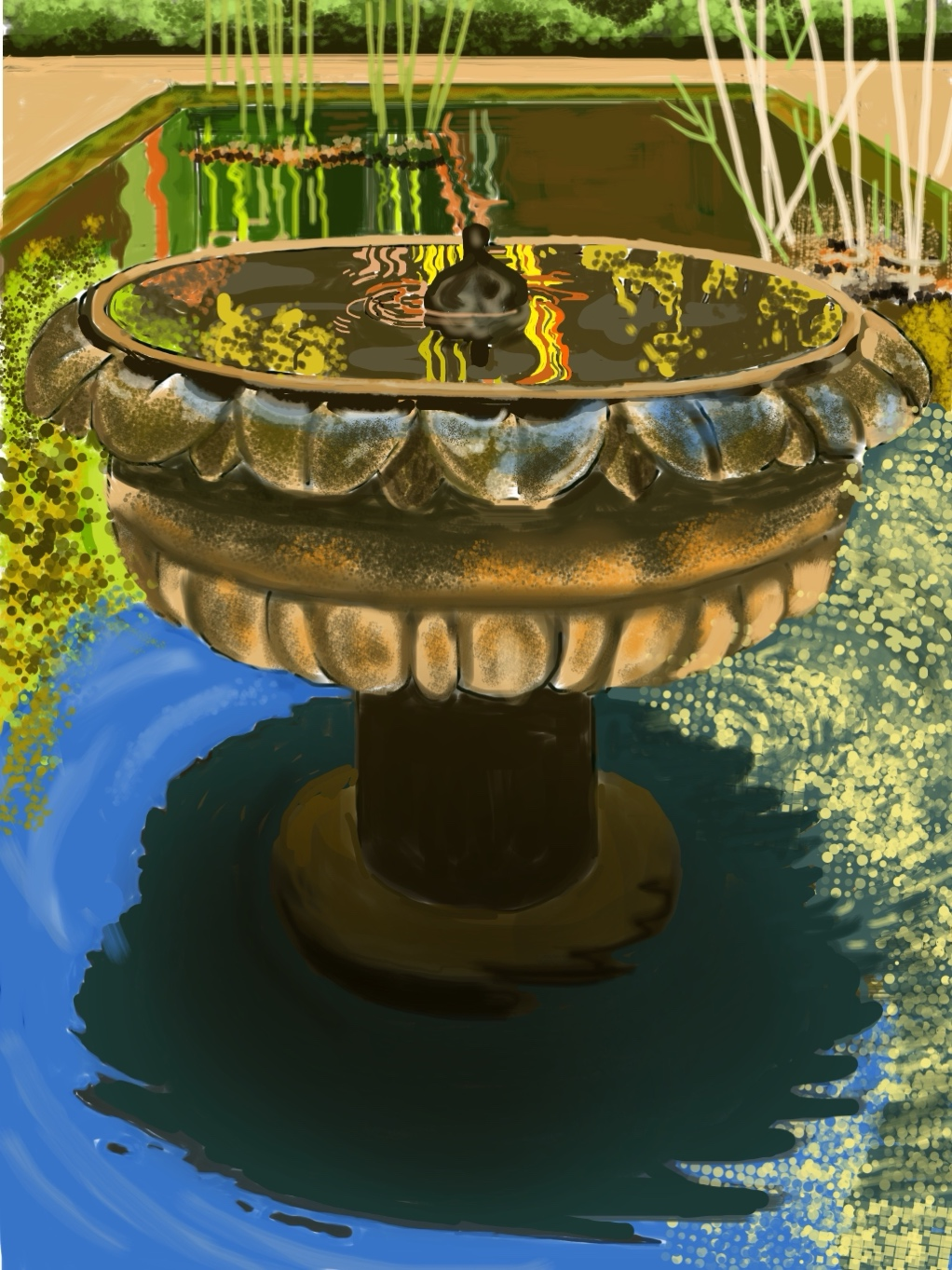
Fountain Reflections at Sunset.
The motif of the tree appears repeatedly in your work, often standing as both a structural element and a symbolic presence within the landscape. What draws you to this subject, and how does the act of repeatedly depicting trees allow you to explore broader questions of form, growth, and the rhythms of the natural world?
As far as I am concerned, the tree represents the living universe, with all its complexities. It is a miraculous construction that continually gives life to the natural world. Drawing a tree always gives me a sense of awe, which leads to the desire to investigate and explore every aspect of its being.
I love the challenges of drawing every nuance, the trunk texture, the way the branches are formed, leaf shape, shadows, light and subtle colours. It is almost like getting into the character of a human being. I am reminded of Van Gogh’s picture of tree roots, how angry and robust they are, almost to the point, whereby I can almost guess how the rest of the tree looks. Now that is the essence of a picture painted by a genius.
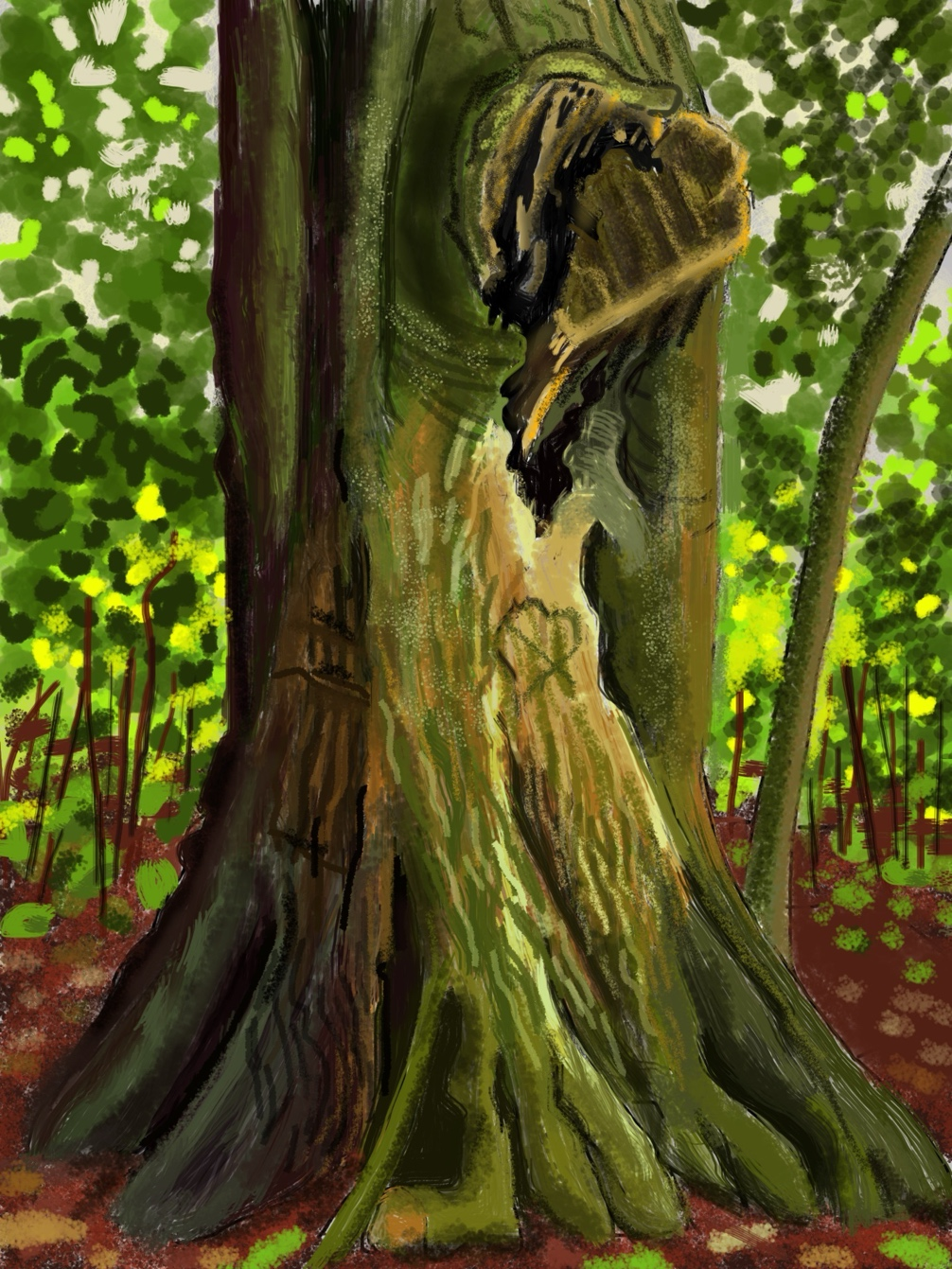
Tree with a Heart.
Throughout art history, landscape has often served as a site where artists negotiate the relationship between human perception and the vastness of the natural environment. In your own practice, do you see the digital interface as distancing the artist from nature, or does it paradoxically allow for a more intimate and responsive form of engagement with the world around you?
I have never felt distanced from my subject using the iPad. It is a very interactive tool, mainly because of its responsiveness, and the ease of adding and subtracting. Landscapes are always in motion, you have to embrace it, and adapt, often ending up with an improvement of the original concept.
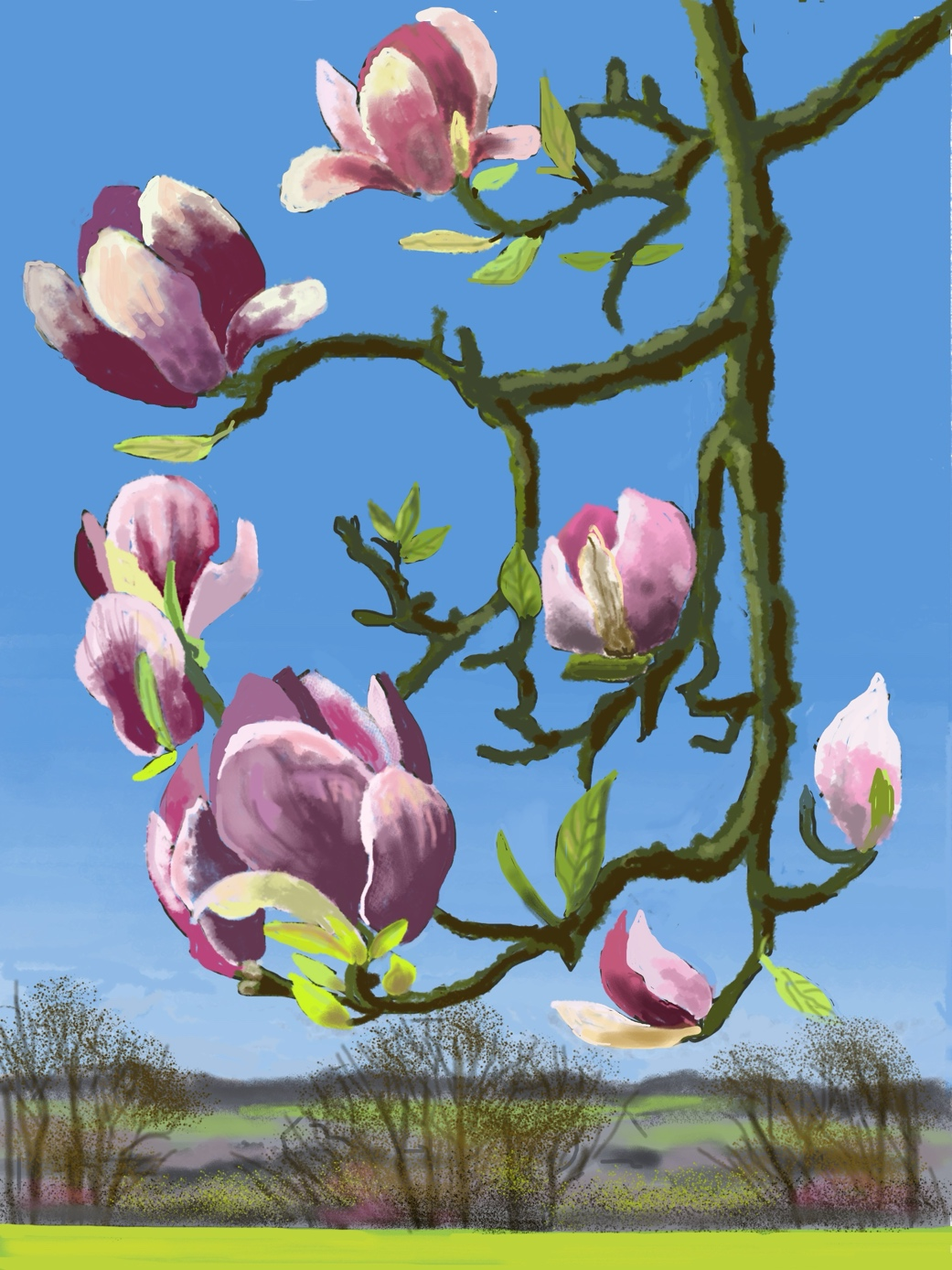
Magnolia Spring.
Looking toward the future, as digital technologies continue to evolve and new tools emerge for image creation, how do you imagine your practice developing, and do you see these technological shifts as expanding the conceptual possibilities of landscape painting rather than merely refining its technical execution?
It depends how much you embrace change, and how you use it. I think it’s just a matter of selecting the innovations that suit your work. I can think of many ways for improvement in the technology. Sometimes I find this frustrating, but importantly it keeps me open to change, and a hope for improvement.
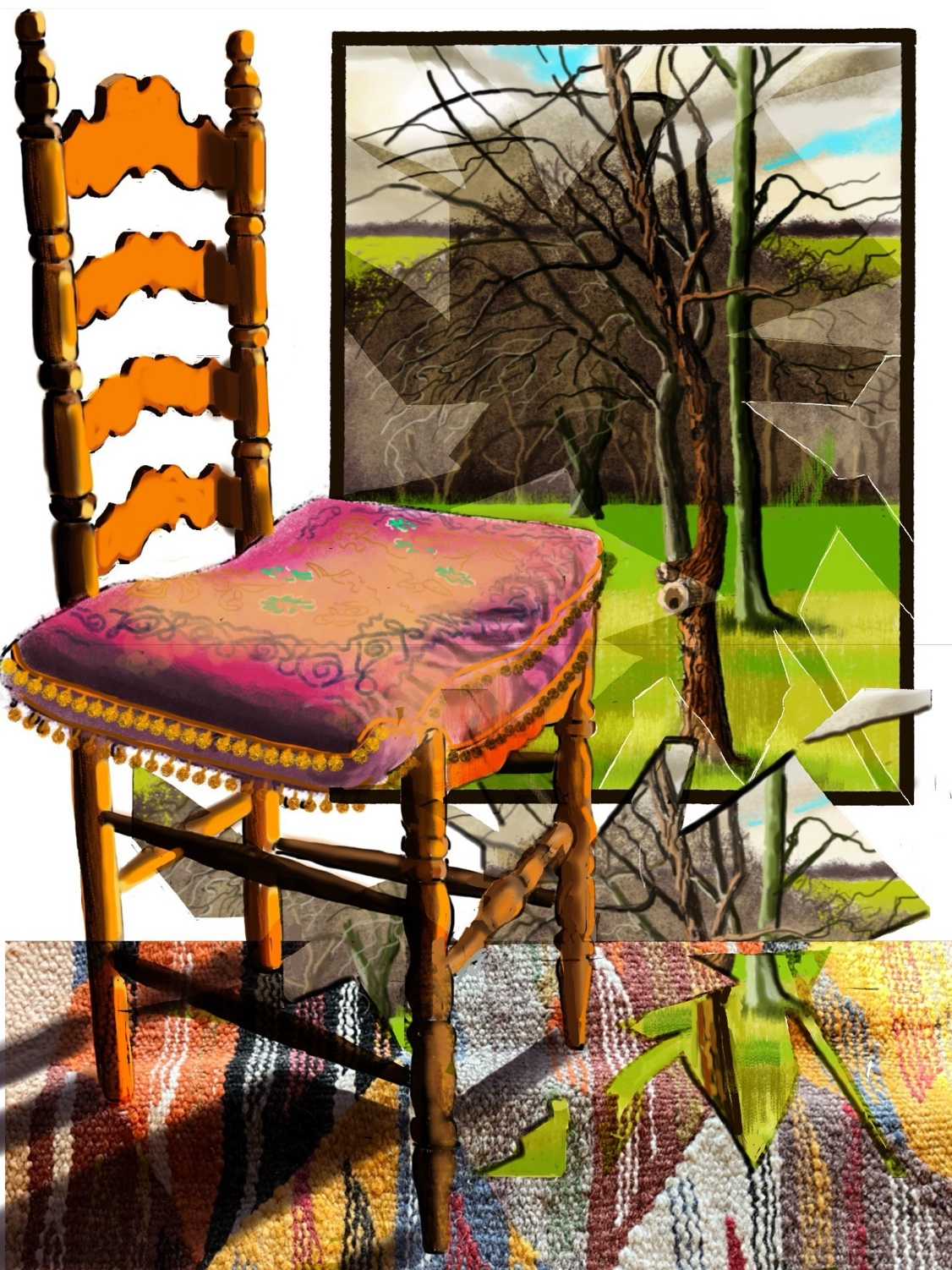
Goodbye Winter.