Interview with Flo Dinis Klopries
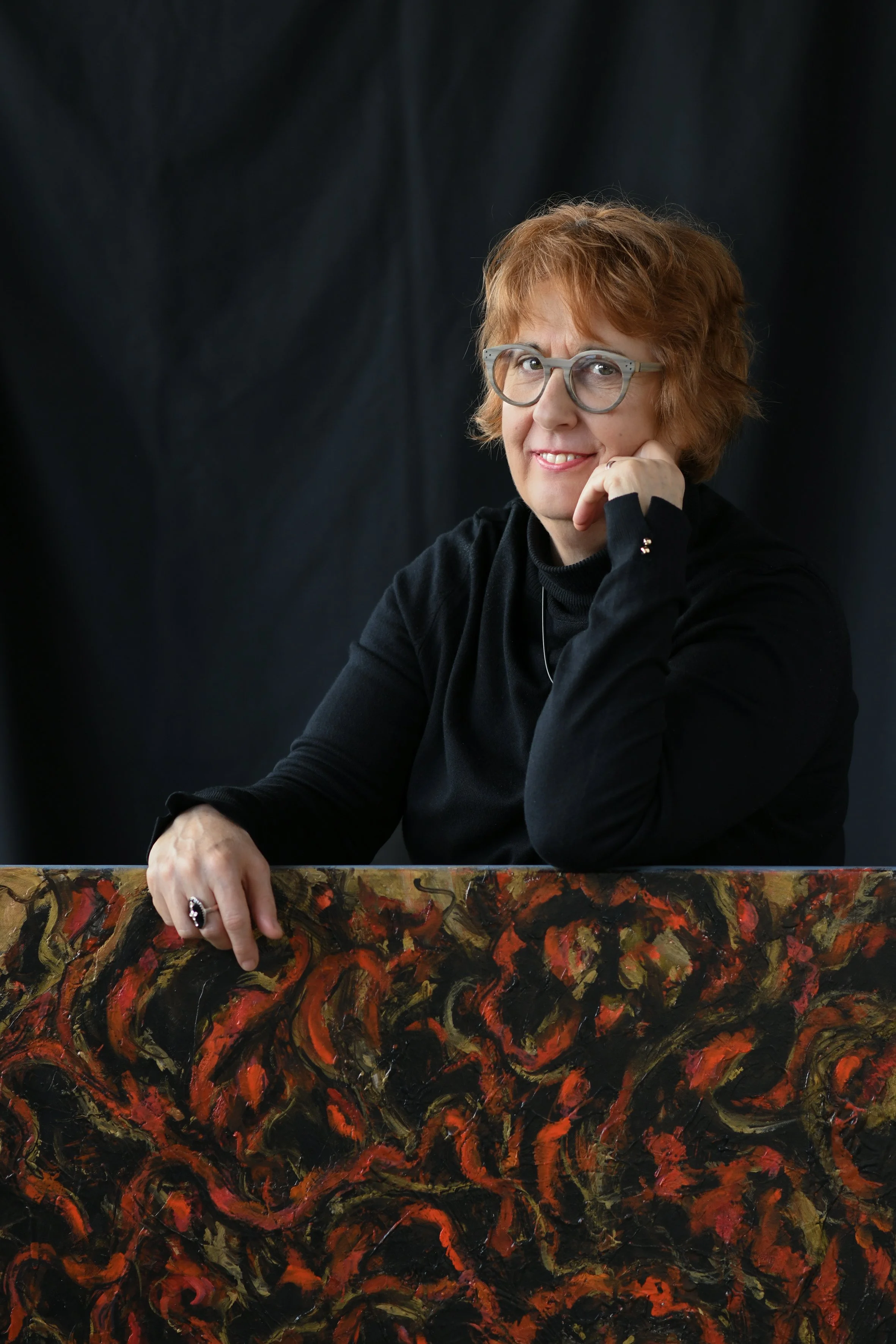
Flo Dinis Klopries is a female interdisciplinary contemporary artist born in Porto, Portugal, and currently living and working at the french/german border. Her academic and artistic training spans multiple disciplines, including fine arts, philology, and music - reflecting her relentless pursuit of knowledge and self-expression- each leaving an indelible mark on her creative output.
Her foundational studies in classic painting techniques and her later immersion in modern and abstract art practices laid the groundwork for her stylistic versatility. Under the tutelage of several renowned visual artists she acquired the discipline and precision associated with old master techniques, while also embracing the experimental spirit that defines contemporary art. This duality is a hallmark of her work, allowing her to traverse a spectrum of styles and themes with remarkable fluidity.
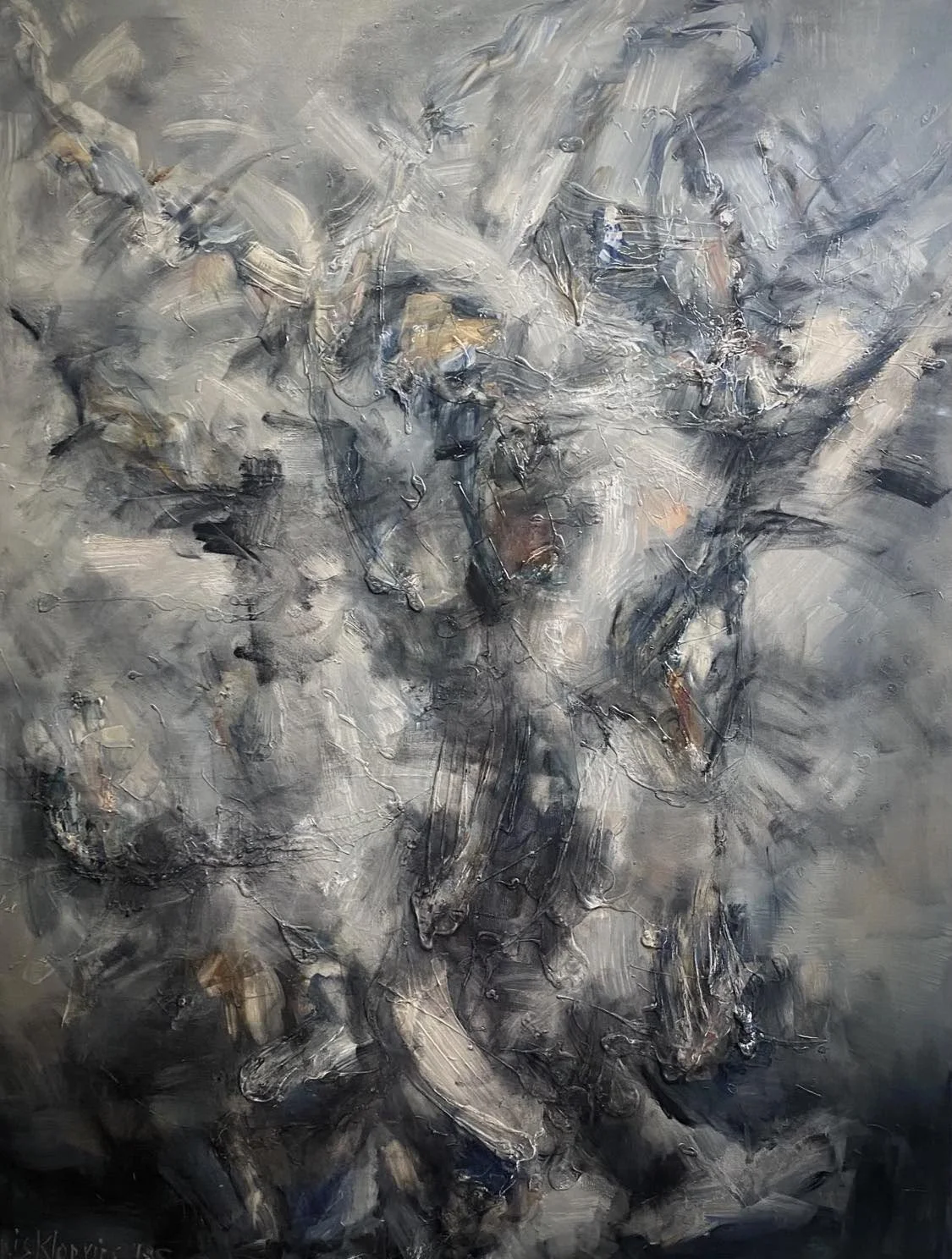
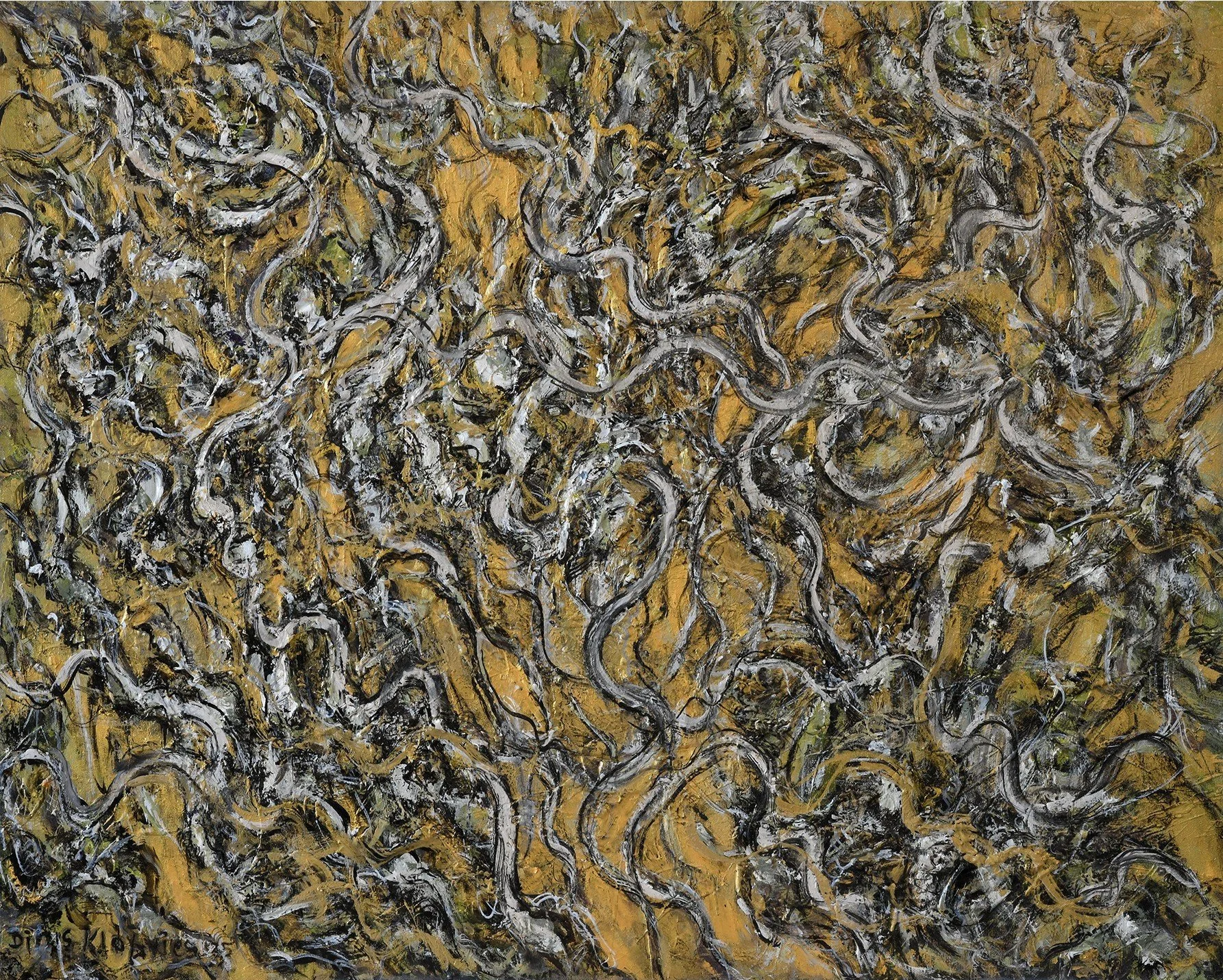
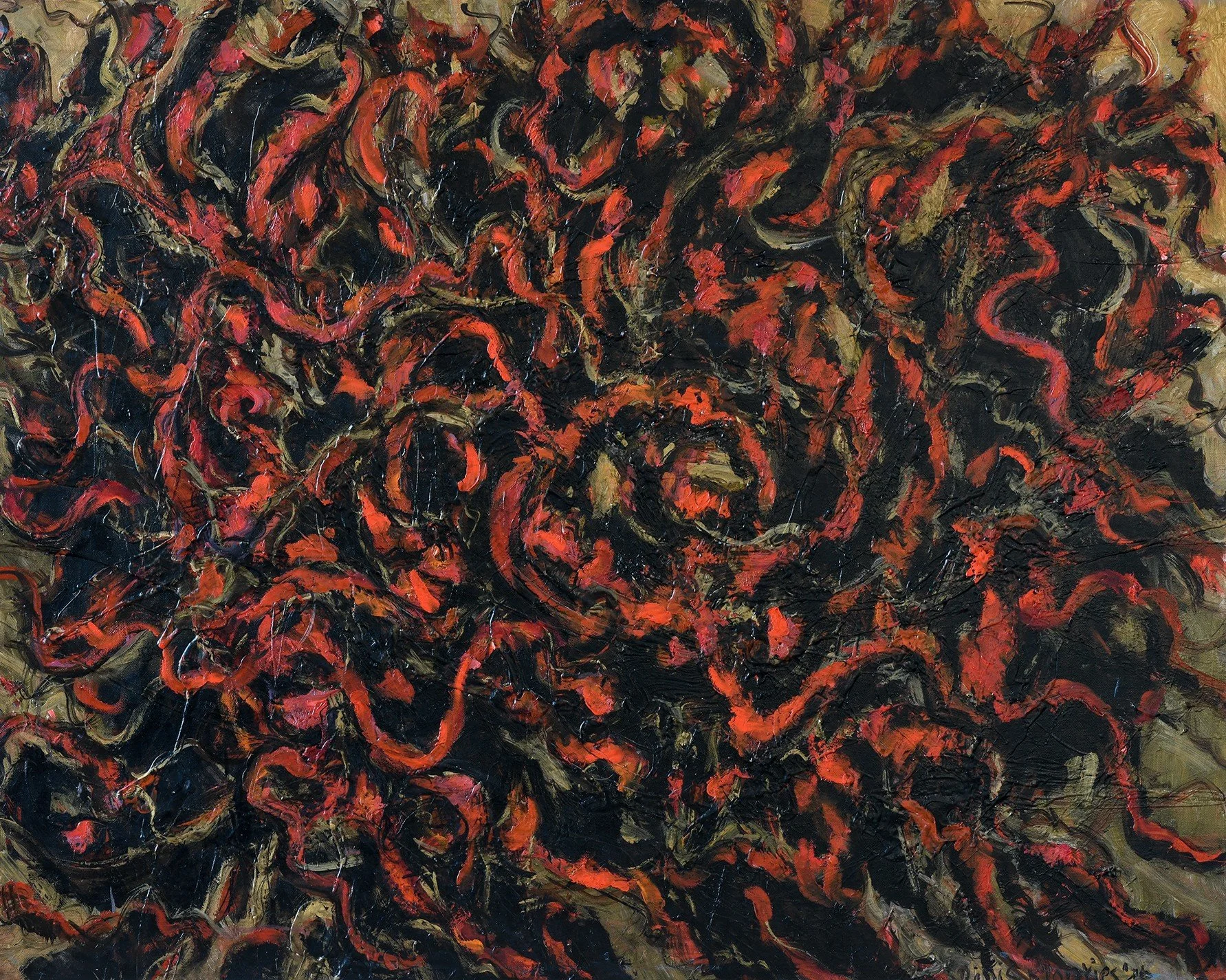
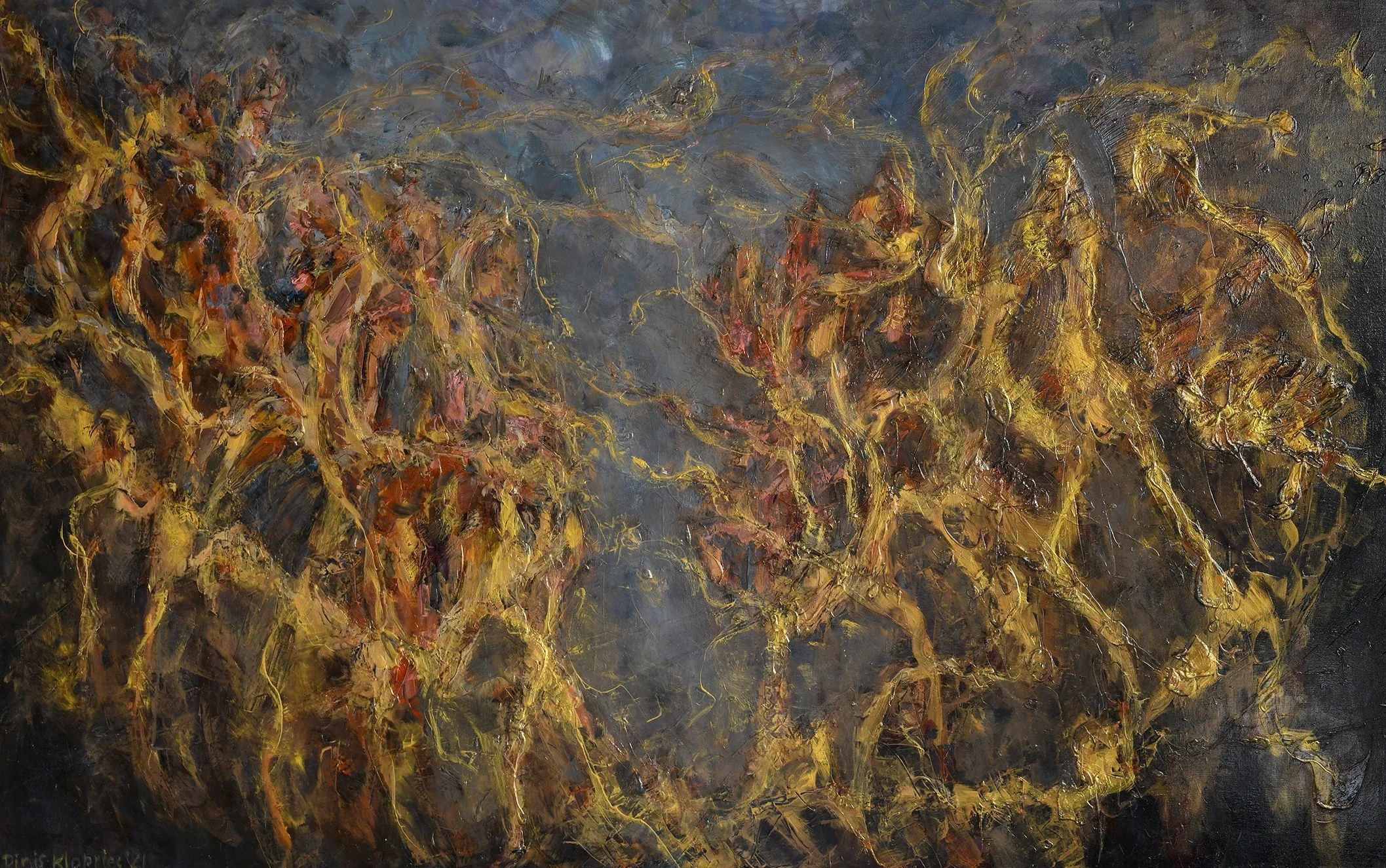
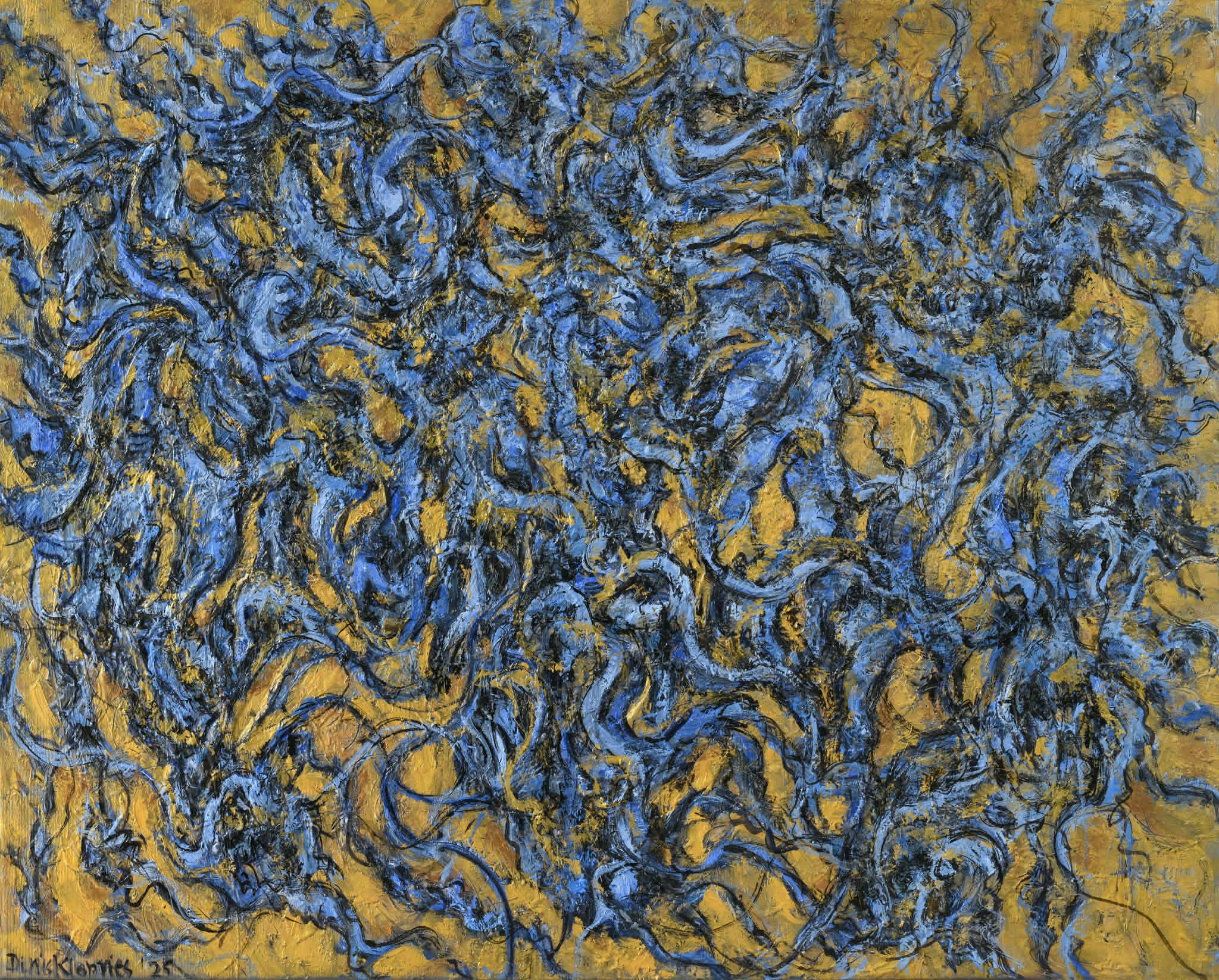
Her dynamic oeuvre, at once enigmatic and profoundly resonant, is situated between figuration and abstraction – blurring the line between both but emphasizing abstraction over representation – wants to build a bridge between the inherited past, her subjective vision of the present and her own exploration of what might be the future. The influence of her mentors from the Moscow Art Academy (now living in France!) is evident in her technical precision, while her abstract explorations owe much to her engagement with modernistic aesthetics.
She is an artist who does not shy away from complexity, embracing it as a necessary aspect of both creation and existence. Her work invites viewers into a space of reflection, where the tactile and the transcendental converge, and it is as much about emotion as it is about form - both the product of her spontaneous feelings and emotions and the philosophical reflections of her intellect.
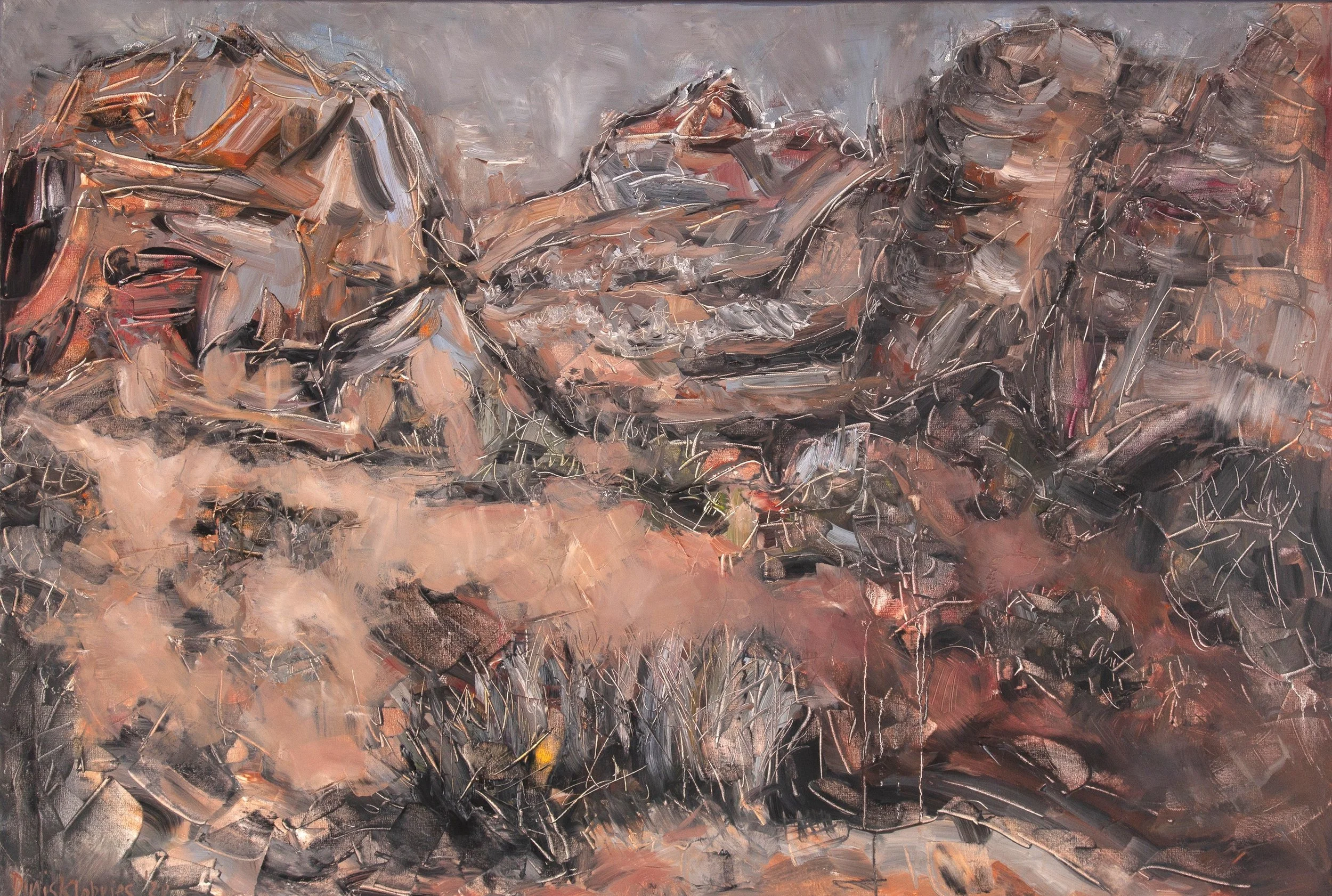
Her preferred subjects are the timeless exploration of the human condition between the universal and the personal, the abstract and the concrete, but also i.e. the dipicting of the fleeting beauty of natural spaces aiming to underline their eternal qualities. Dinis Klopries art is deeply informed by her sense of place.
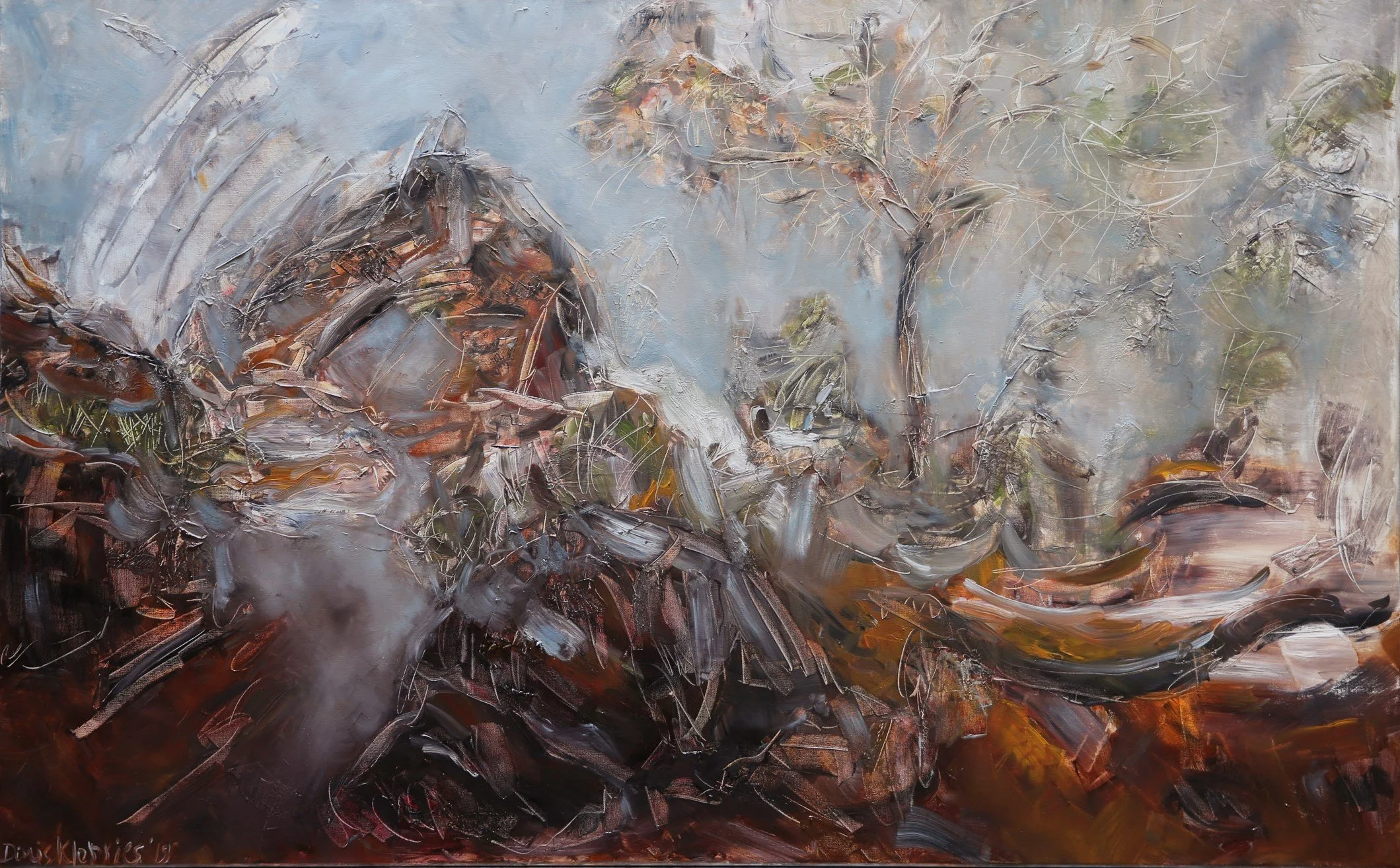
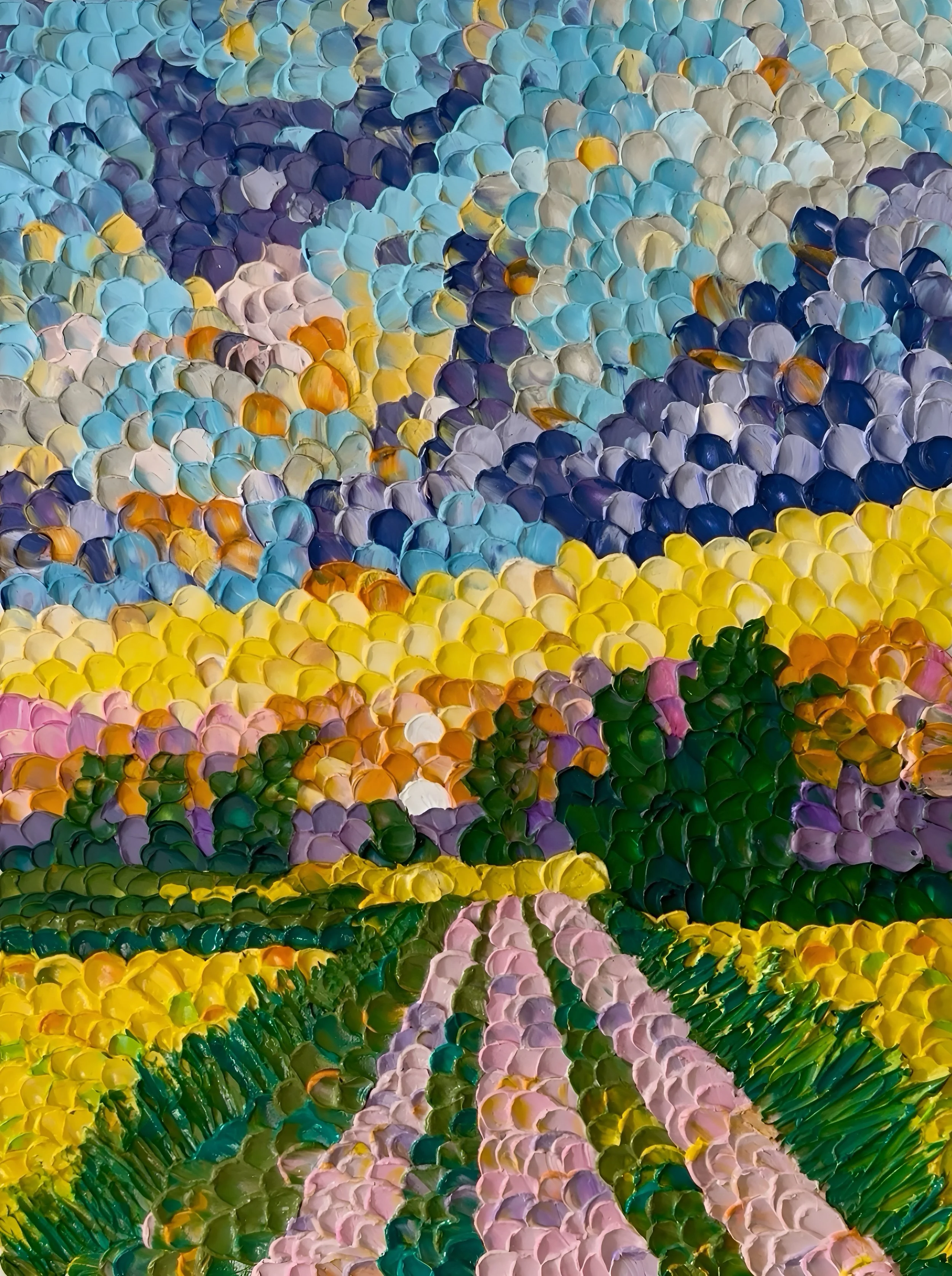
Her landscapes are not mere representations but emotional cartographies, mapping the interplay of internal and external worlds. Nature serves as both a mirror and a catalyst for human emotion. Flo Dinis Klopries is not content to simply depict the world. She seeks to capture its essence, to distill its fleeting beauty into something eternal.
Her exploration of themes like fragility, resilience and the passage of time resonates deeply in our contemporary moment offering a space for reflection and renewal where the tactile and the transcendental converge. In a world increasingly dominated by spectacle and immediacy, Dinis Klopries´art stands as a counterpoint. It reminds us of the enduring power of painting as a medium for profound expression.
Her career is marked by regular exhibitions in Paris participating in prestigious international salons such as Art Capital/Salon des Artistes Francais, the Salon d´Automne ou le Salon des Beaux-Arts de la Société National des Beaux-Arts,... These venues, stepped in history provide the perfect context for her work.
Flo, could you speak about the way your work inhabits that delicate threshold between figuration and abstraction, where recognizable forms seem to dissolve into atmospheres of gesture, color, and material density? In this oscillation between the visible and the ineffable, how do you conceive of the painting as a site of negotiation between representation and abstraction, and do you experience this boundary as something to be resolved or as a productive space in which meaning remains intentionally open and unstable?
Well, I would rather say that my paintings are a site where different pictorial languages are allowed to coexist side by side, just as in my daily life, where constant interaction in more than one language with my family, friends and the outside world is normal, and I change from one language to another frequently without even noticing it. My brain seems to have learned to switch from one language to the other automatically, without giving it much thought.
Thus, the specificities of figurative and abstract languages have both found their own place in my work and somehow complete one another. Figuration helps me tell all kinds of stories and makes them clearly understandable to the viewer, because it allows an exhaustive description with many details.
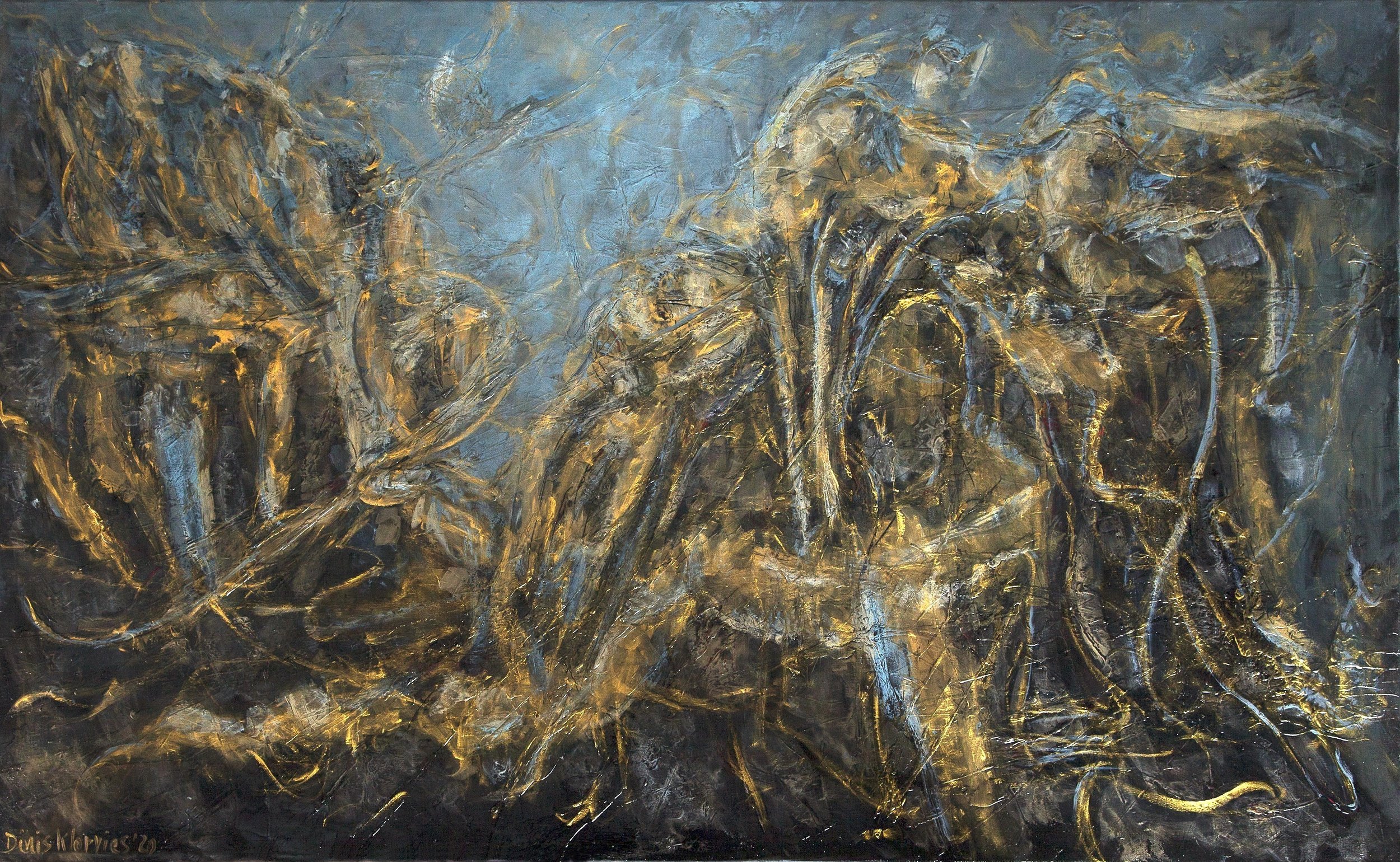
Abstraction, on the other hand, is a language that allows me to go deeper, behind the curtain, and express what is hidden in me and in the reality outside. So yes, in this case meaning remains intentionally open, since I often feel that I’m not able to grasp the whole picture, but only a fragmentary part of a much vaster reality, the contours of which my mind can only vaguely sense. In such moments during the act of painting, forms start to dissolve because certainty has been lost. Atmospheres, colour and material density, for instance, are then the only means left to speak about those hidden secrets, the deep – sometimes unconscious – states of the soul, about difficult emotions, and this peculiar and uncertain state of “unknowing”, which mystics have called for hundreds of years the “deep night of the soul” – a strange and most frightening state, because you’ve lost the certainties that had guided you so far and you don’t know where you’re going anymore.
As far as gesture is concerned (another word for creative energy), I consider it to be a fundamental aspect of my work – and of all works of art in general – since it is the basis of creation itself, no matter if figurative or abstract. Gesture has created the world: blowing life (breath) into matter. This is what I feel art should be, and without this energy, no matter how aesthetic an oeuvre may be, it will always feel empty and dead. Perhaps aesthetically perfect and pleasing, but intrinsically dead.
Having undergone rigorous academic training in drawing from life and classical painting techniques before moving toward a more abstract visual language, your practice appears to sustain an ongoing dialogue with art historical tradition. How do you situate your work within this lineage of painting, and in what ways does the discipline of old master techniques continue to inform or challenge the more experimental and intuitive dimensions of your contemporary practice?
I’ve indeed undergone very methodical and intense training in academic drawing and painting with my teacher Stefan Beiu for almost eight years as a member of his art studio. Stefan Beiu is a former docent at the Moscow Art Academy Wassily Surikov and a renowned artist. This art training included life model drawing and painting, old master techniques such as glazing techniques in oil painting and sfumato techniques in drawing and painting, and much more.
These practices strongly influenced my debut as a professional artist, and it was a very difficult process, taking several years, to free myself to some extent from its rules and principles in order to find my own voice. My work is frequently the place where, on the one hand, the painting tradition that was transmitted to me and, on the other hand, the quest for new, fresh, unique ways of expression fight a pitiless battle, where each side tries to impose its reasons and to dominate. Compromises with art tradition have been made, it’s true, whenever this doesn’t hinder the progress and freedom of my work and my quest for unknown paths in art.
Your paintings often possess a remarkable tactile intensity, particularly through your use of layered gesso, oil, and mixed media, which transforms the canvas into a surface that feels almost sculptural. Could you elaborate on the role of materiality within your work, and how the physical resistance or unpredictability of the surface participates in shaping the conceptual and emotional trajectory of the painting?
Since the beginning of my work as an artist I’ve very often used layered gesso and other media in order to create multidimensionality in my paintings. Volume is an another essential element in my work.
The initial work process is to create different volumes of different sizes and degrees of thickness (shapes and lines) through energetic movements, using at first large brushes, gesso and acrylic paint, which I throw, following a certain rhythm, all over the canvas, usually in my garden on a dry and sunny day. This is the first underlying, concealed composition in each of my paintings, the “structure within the structure”, conveying a certain energy of movement and rhythm – musicality – as the very ground for the pictorial message, which is organised afterwards in a figurative or abstract composition (drawing and/or painting, etc.).
Volume and its specific organisation influence the later visible composition as a structural element. Therefore, each of these works can only be completely felt and understood by the viewer if they are able to understand the specific language used in each of these simultaneously coexisting levels. Rhythm, as I’ve already mentioned, but also unpredictability are both essential characteristics of this first stage. At a later stage the main concern is the coherent organisationof signs, shapes and colours and the relevance of the pictorial message in its role as the leading voice, musically speaking.
The subtle orchestration of color within your compositions, especially your use of camaïeu palettes punctuated by restrained complementary tones, suggests an almost musical sensitivity to tonal relationships. Considering your background in classical singing and musical studies, do you perceive color as analogous to sound or rhythm, and might your paintings be understood as visual compositions structured through a kind of internal musical logic?
As far as my use of colours in painting is concerned – their specific choice, the tonal relationships between single colours and/or colour groups, their organisation as a whole – this certainly has a lot to do, not always consciously, with my musical experiences in the past, since these fields have unmistakably shaped my thinking, my sensibility and even my body, given the fact that singers don’t sing with their phonation organs alone (vocal cords and vocal folds) but with their whole body, which with the right vocal training becomes their resonance body/instrument – one of my teachers used to compare the body of a singer to a cello.
Singing as a soloist taught me the importance of tonal nuance and dynamic phrasing and the capacity to distinguish the finest sound modulations, whereas as a choir singer I learned the importance of the harmonisation of vocal ranges and the dynamic, harmonious interplay of the different voices as a main concern. No doubt both aspects became relevant to my work.
I often describe the process of choosing a colour palette and using colours in my paintings as a process of intentionally putting them together like the voices and voice groups in a choir, where each range is expected to listen to and interact with the other ranges in a way that allows rigour, harmony and a dynamic whole – certainly not a bunch of uncontrolled screaming “singers”/colours, which would be too much for the sensitive eyes and ears to bear.
Nature appears in your work not as a literal subject but as a conceptual and emotional framework through which states of consciousness and perception are explored. When elements such as water, deserts, or atmospheric landscapes emerge within your paintings, do they function primarily as symbolic structures, psychological landscapes, or phenomenological encounters with the natural world?
As a matter of fact, my landscapes so far were never intended to be a faithful representation of nature, of natural outer spaces. I would rather describe this painting process as a spontaneous procedure where conscious and unconscious states of mind meet and are filtered and projected onto the canvas by using a metaphorical language of shapes and colours, organised in a way which helps create a certain atmosphere.
This practice allows me to approach difficult feelings and emotions in a given moment without getting too near, by creating a safe distance – you could call it a defence mechanism – but also a space between me and the spectator. A glimpse of the soul, not the whole picture.
However, nature means much more than this to me. It is the sacred place where the Divine can be encountered and where Divine and human come together. A mystical place where you can find God at work and find yourself, your deepest truth – in outer silence but in inner dialogue. A temple, a Holy Grail. A mystical place of deep silence and of Divine revelation where the forces of creation are unchained and deep ancestral secrets can be revealed – and the element WATER embodies this mystical experience like no other.
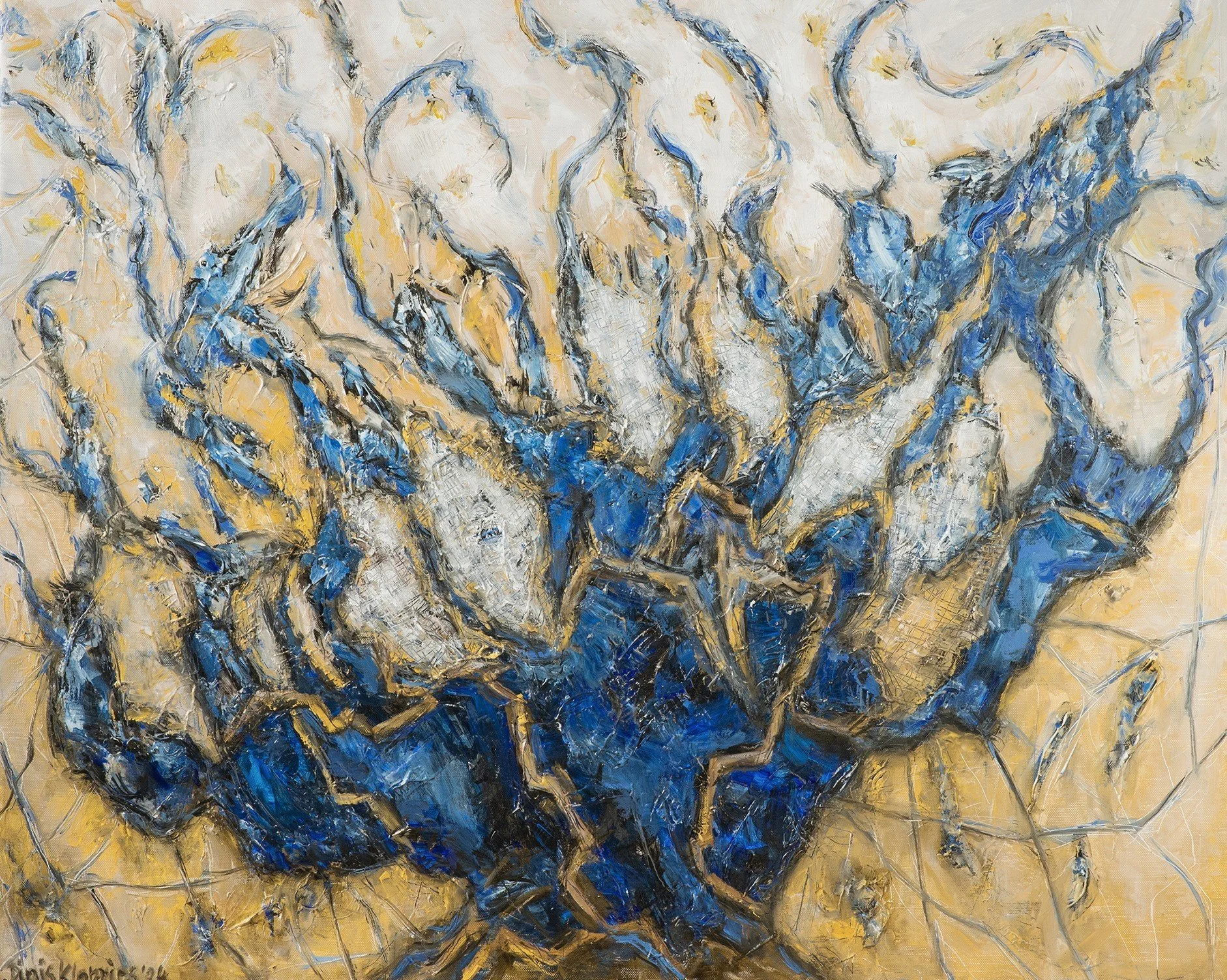
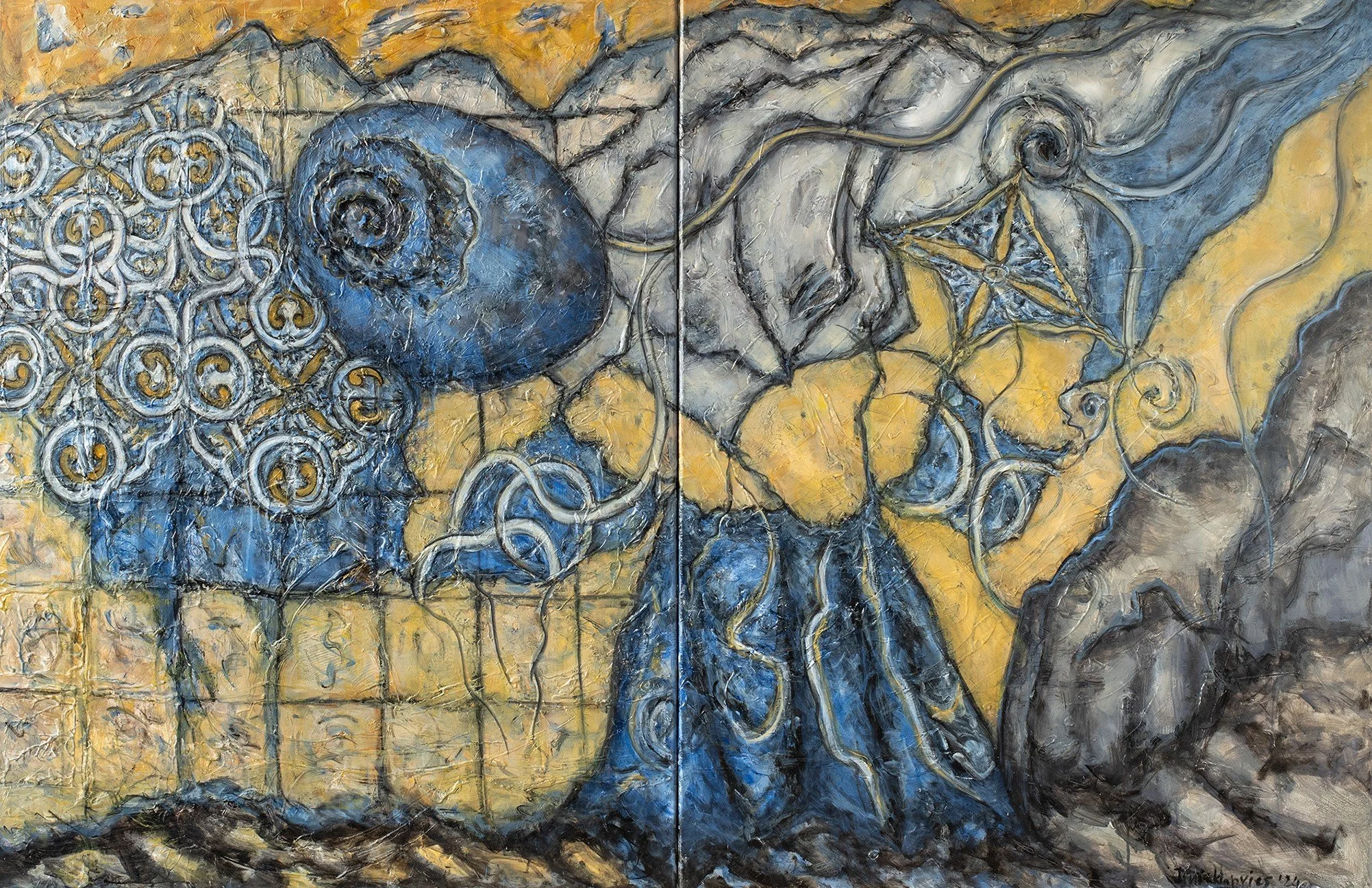
In your Kintsugi series, the metaphor of repairing fractures with gold introduces a powerful meditation on fragility, rupture, and transformation. Within the language of abstraction, how do you approach the visual articulation of damage and repair, and do you see these gestures as reflecting personal experiences, philosophical reflections on human resilience, or broader cultural narratives of healing?
The message I wanted to convey with this series has been validated by life itself – it is more than a simple theory or a philosophical reflection, but the fruit of deep inner processes of death and rebirth, darkness and coming to light, pain and joy, suffering and healing – a narrative of resilience and hope, individually and collectively, telling the spectator that our pain, our scars, our fragility are not something to be ashamed of or to be hidden. Life stories have shown me that our brokenness is precious and part of our unique beauty, and that healing of our scars is not easy but possible. This philosophy is best embodied by “Kintsugi”.
“Kintsugi” is the ancient technique of “repairing broken pottery by joining pieces back together and filling cracks with lacquer dusted with powdered gold, silver or platinum, thereby highlighting the flaws in the mended object”, which is related to the socalled “wabi-sabi” aesthetic: the Japanese art of impermanence, which emphasises the “flawed”, imperfect beauty of objects. But it can also be related to the human condition and to landscapes.
I have the strong conviction that the Western world needs to learn from other ancient cultures how to see better, to attain a more differentiated view and to finally understand that imperfection and socalled weakness – pain, failure and all those other “cracks” and scars of human existence – should not be associated in a superficial and cruel manner with ugliness, shame or fault, neither in nor outside of us. I would even dare say that we need a new culture that values these experiences as an integral part of human development – a culture of respect and tolerance in which people at last find the courage to stand proud and upright in spite of, or rather because of, the visible and invisible scars they have been inflicted with by life.
Your intellectual formation spans several disciplines, including philology, literature, music, and visual art, creating a uniquely interdisciplinary foundation for your practice. How do these different fields of knowledge intersect within your artistic thinking, and do you perceive painting itself as a kind of translation between linguistic, musical, and visual modes of expression?
Each of these disciplines – from my early youth until today – (like all the books I’ve read, all the music I’ve listened to or practised, all the sounds, words and pictures I’ve stored in my brain…) have undoubtedly left a mark on my way of thinking and creating. Each of these fields of knowledge and practice offers different possibilities of expression which, in the best case, may complete one another.
At some point of our personal development our mind might create unexpected crossroads of multiple possibilities, where new “synapses”, new connections are built which lead to new mental associations, new ways of expression, new visions and new insights. My paintings offer the place where this process is allowed to happen freely. Searching for this new land of possibilities is one of the priorities of my work. This is what the word “future” means to me.
There is often a sense within your paintings that the image emerges gradually through an intuitive and exploratory process rather than through strict premeditation. Could you speak about this moment within the act of painting when control begins to give way to discovery, and when the work itself seems to guide the direction of its own development?
During my painting training many years ago my teacher never ceased to repeat, as he passed by and took a look at my canvas to see how it progressed: “You’ve finished your composition. Now forget that picture and throw it away! Just let your painting show the way!” – I still cherish this piece of advice today.
No matter whether I use a photo, one of my sketches or nothing, I try to avoid a fixed, concrete plan and to let the creative process guide me. I don’t try to reproduce this or that accurately. The process is intended to be free, even if it follows certain rules. My painting contains suggestion rather than explicit depiction and, since I don’t expect a certain development or result but look for a general direction, it takes some time until the image gradually appears. Then, at some point, all of a sudden it reveals itself and I finally begin to understand in which direction the way might go, and I try to allow it to develop, as freely as I can, as long as the path feels coherent and seems fitting.
Living and working at the intersection of multiple cultures—Portuguese by origin and shaped by life between France and Germany—your artistic practice seems to embody a condition of cultural and geographical in-betweenness. Do you feel that this experience of existing between different contexts has influenced the openness, fluidity, or hybridity within your visual language?
The confluence of several cultures in my life has certainly had a strong impact on my way of thinking in general. My days unfold between these three countries in one way or another on a daily basis. This is the interesting part of it.
The negative side is the fact that my cultural and geographic situation brings about an unpleasant feeling of not fitting completely into any of these cultures, since although each of them has strongly influenced my way of living, none of them has done so completely. Sometimes I find myself comparing typical behaviours and mindsets of each of them and trying to sort them out – somehow like outsiders often do – even in my native culture. This leads to a feeling of, as you said, “inbetweenness” (finding yourself between different scenes and, in the end, not belonging to any of them) and even loneliness, which is not always easy to bear.
In spite of the inherent difficulties of this situation, I need this special feeling of living at the border – “in between” – not belonging entirely to one country or the other, I confess. Otherwise I’d miss the enormous possibility to come and go as I wish. That’s the reason why I live in France but work in Germany, and also one of the reasons I have regular stays in my hometown Porto. As if I could not bear the feeling of being only here or only there, in one and the same place, forever. In fact, I need all these places in my life at the same time in order to feel free and happy.
In several bodies of work, particularly those inspired by aquatic atmospheres, there is a striking interplay between turbulence and stillness, between opacity and translucency. How do you approach the challenge of evoking such atmospheric states within abstraction, and what role does memory or sensory experience play in constructing these immersive environments?
The presence of opposites like turbulence and stillness in my work somehow reflects my own temperament. As a woman, I can be both loud and extroverted or quiet and reserved. I don’t really believe in duality anyway. Opacity and translucency are different degrees of transparency. Both are important. To show or not to show, to show more or to show less – these are artistic choices.
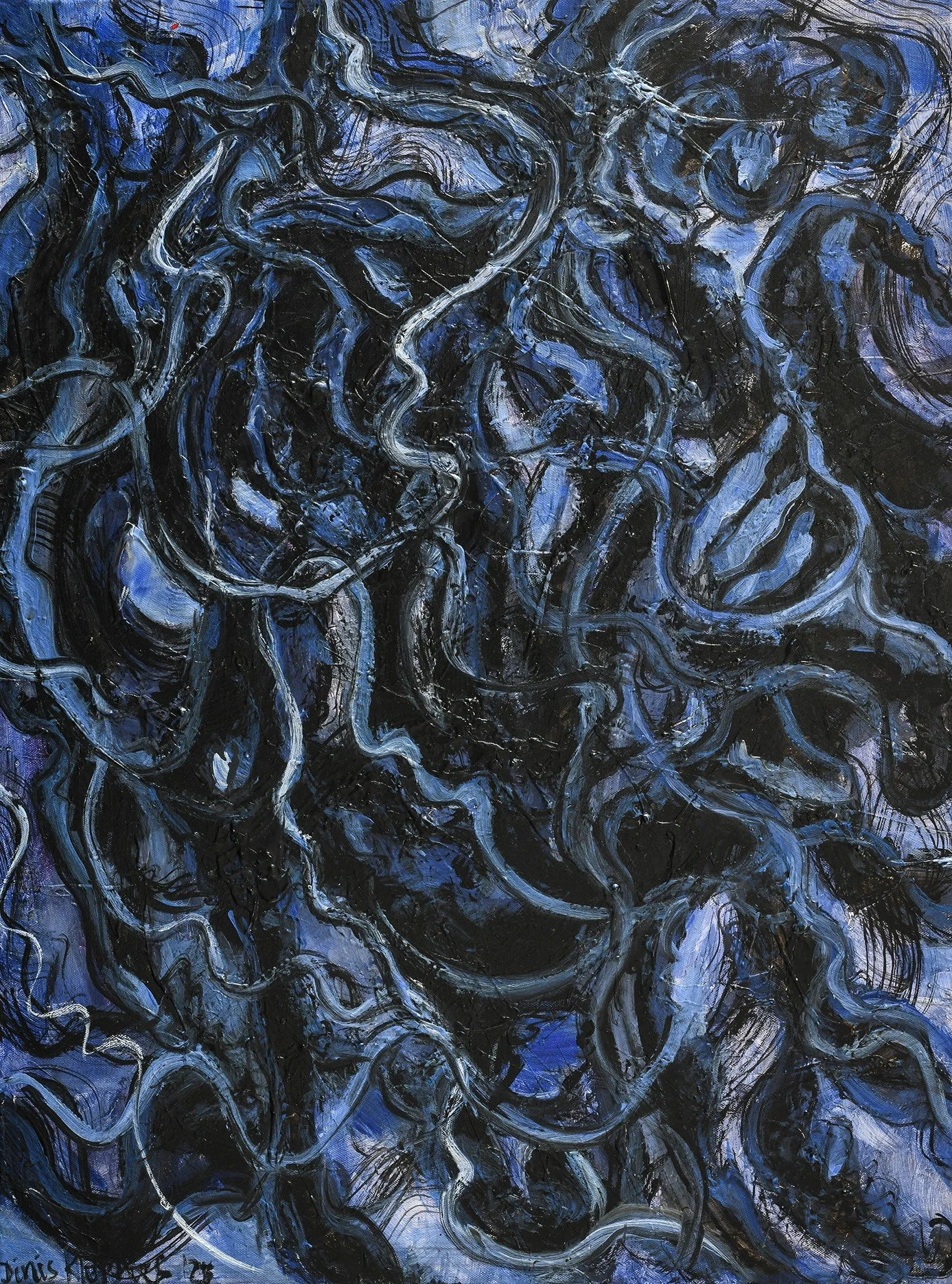
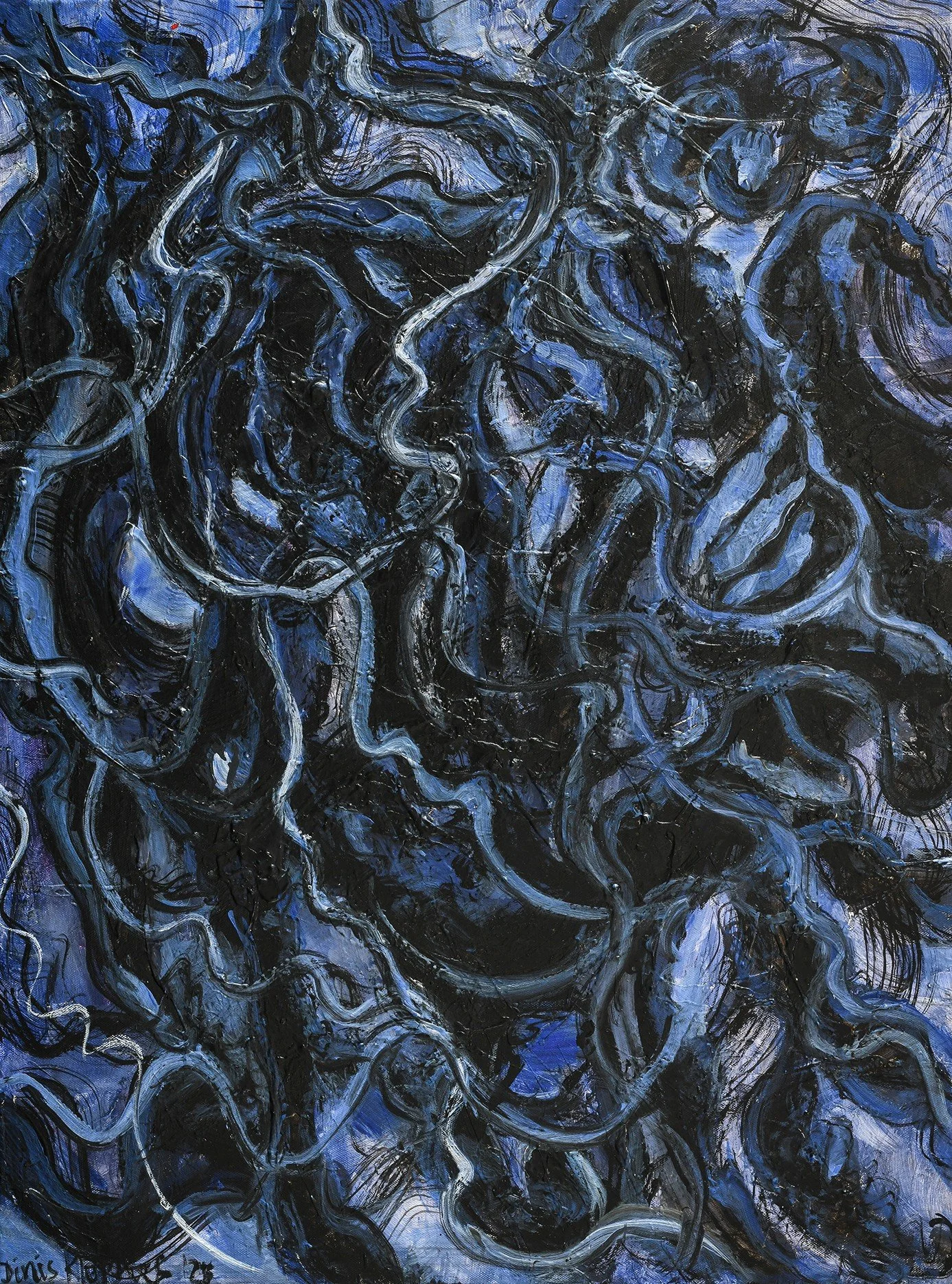
On the other hand, these different qualities are typical attributes of water as an element, very much depending on light and shadow, depth and surface… This is what makes its mystery. I grew up near the Atlantic Ocean and therefore water is a very relevant element to me. As a child, but also later, I spent hours sitting by the water, looking at the reflections of the sun on the water or at the dark, cold blue of the deep, or the emerald surface of the sea on hot summer days, listening to the waves or looking for seashells. And I still miss it every single day of my life.
The “immersive environments” in my water paintings, as you call them, are like body and mind bathing in the mysteries of the deep sea.
You have spoken about the importance of bridging past, present, and future within your artistic practice. Could you elaborate on how this temporal consciousness manifests within the act of painting itself, and whether the layered surfaces of your work might be understood as visual metaphors for accumulated time and memory?
I see time not as accumulation, but as a dynamic system. When I speak of the past I mean, first of all, cultural heritage and tradition (cultural tradition, artistic tradition) and history (personal history, world history, art history). The cultural environment, the land of our ancestors, for instance, has a deep influence, consciously or unconsciously, on each of us.
This influence may be positive when it helps you clearly find the typical aspects of your identity, and negative if this cultural heritage contributes to narrowing your mind or to confining your freedom or the uniqueness of your being. The same with art history or art tradition: they can help you find your artistic path as long as they don’t contribute to narrowing your practice or limiting your capacity to see further and innovate.
The present is the NOW where everything converges, in life as in art. Living is living now, since the past has gone forever and the future is not there yet. From Buddhism (although I am not a Buddhist as such) I’ve learned the importance of staying in the now, in the present moment. These teachings have deeply influenced my artistic practice in recent years. Painting and drawing have since then become more than an artistic practice, i.e. a place of meditation and revelation. They offer me, like other forms of meditation, the possibility of listening to the inner voice and putting its silent message onto a canvas.
Future is tomorrow. It is, as I’ve already said, not here yet. It belongs to the realm of possibilities and visions, of quest and discovery. An invisible reality in spe, a new reality to come. My artistic work takes place in the present, searching already for what might be the unknown paths of the future, without demeaning the knowledge and insights of past generations of artists before us.
While your work shares affinities with traditions such as lyrical abstraction and gestural painting, it also retains a contemplative and almost meditative quality that resists purely expressive spectacle. How do you navigate the balance between emotional intensity and reflective restraint within your compositions?
Both artistic movements have caught my attention from the beginning of my practice as an artist, and I feel deep admiration for the work of artists such as Zao WouKi, Chu TehChun or Georges Mathieu, as well as for Pollock’s genius. The work of these artists showed me possible paths on my way to abstraction which my own sensibility could relate to.
It is a fact that I find some difficulty in appreciating geometry or geometric forms because of this very subjective feeling of an underlying aggressiveness or even coldness in sharp forms and straight lines. Allow me to quote Friedensreich Hundertwasser: “The straight line is godless and immoral” – a concept which works for me. As far as my own practice is concerned, I feel comfortable in using a lot of curves, curvy lines and round forms because of their movement and their softness. They somehow feel “feminine”, if you like, and this aspect has been a very important subject in my trajectory as a female artist.
I consider the act of painting as being both action (creative energy, gesture, movement) on the one side and contemplation (stillness, going to the inner source of creation) on the other, and neither could exist without the other. My artwork lives in the tension between these two poles. Emotional intensity appears first as the fruit of action, whereas reflective restraint is related to a meditative state, but in reality things happen on a much deeper level, where you cannot really separate both fields, since they seem to be intertwined.
In a contemporary cultural environment increasingly dominated by rapid image consumption and digital immediacy, your paintings appear to invite a slower, more contemplative mode of viewing. Do you see your work as intentionally resisting this accelerated visual culture, perhaps encouraging viewers to rediscover the experience of sustained looking?
In our time everything is accelerating and the art world is no exception. Taste in art is constantly changing and it’s getting louder and louder, bigger and bigger. Sometimes you can feel overwhelmed by too much colour (and colour can be unbearably loud at times!) or by standing in front of gigantic canvases! I have the feeling that such massive, impressive sizes don’t really fit human measure.
As far as I’m concerned as an artist, I increasingly feel like staying within certain limits/boundaries and dimensions, but I am the one who determines how big and how far – nobody else – following my own instinct, even if the answer may change. When things get quicker I just need to decelerate so I can keep my own path without being pushed or distracted by others and their concepts.
It surely takes time and many moments of silence to find what is worth painting and what is worth living. I’ve decided to follow my own pace and my own measure, not external rules. There’s always the risk you might come too late – too late for career, for success, for money. But who cares? In the end, what remains of all this anyway?
I think the most important thing is simply to do your very best and do it your own way. This comforting and irrevocable decision to never cease to look for the truth of who you really are – your true identity as an artist and as a woman, no matter how difficult or unpleasant – and your commitment here and now to search for fresh ways in art and to look at reality with curiosity and expectation, no matter your age, and for new languages to translate these experiences, could become the artist’s most truthful companions along the path.
The themes of vulnerability, fragmentation, and transformation that appear within your work resonate strongly with broader existential questions about the human condition. To what extent do you see the act of painting as a philosophical practice, one that allows both artist and viewer to confront uncertainty, fragility, and renewal through the language of form and material?
The act of painting, like other forms of creation, should allow a space where reflection about the essential aspects of human existence – including identity, fragility and strength, death and renewal, and even the act of creation itself – is made possible. My, as you call it, philosophical practice is deeply rooted in the liminal experiences which have marked my own life again and again.
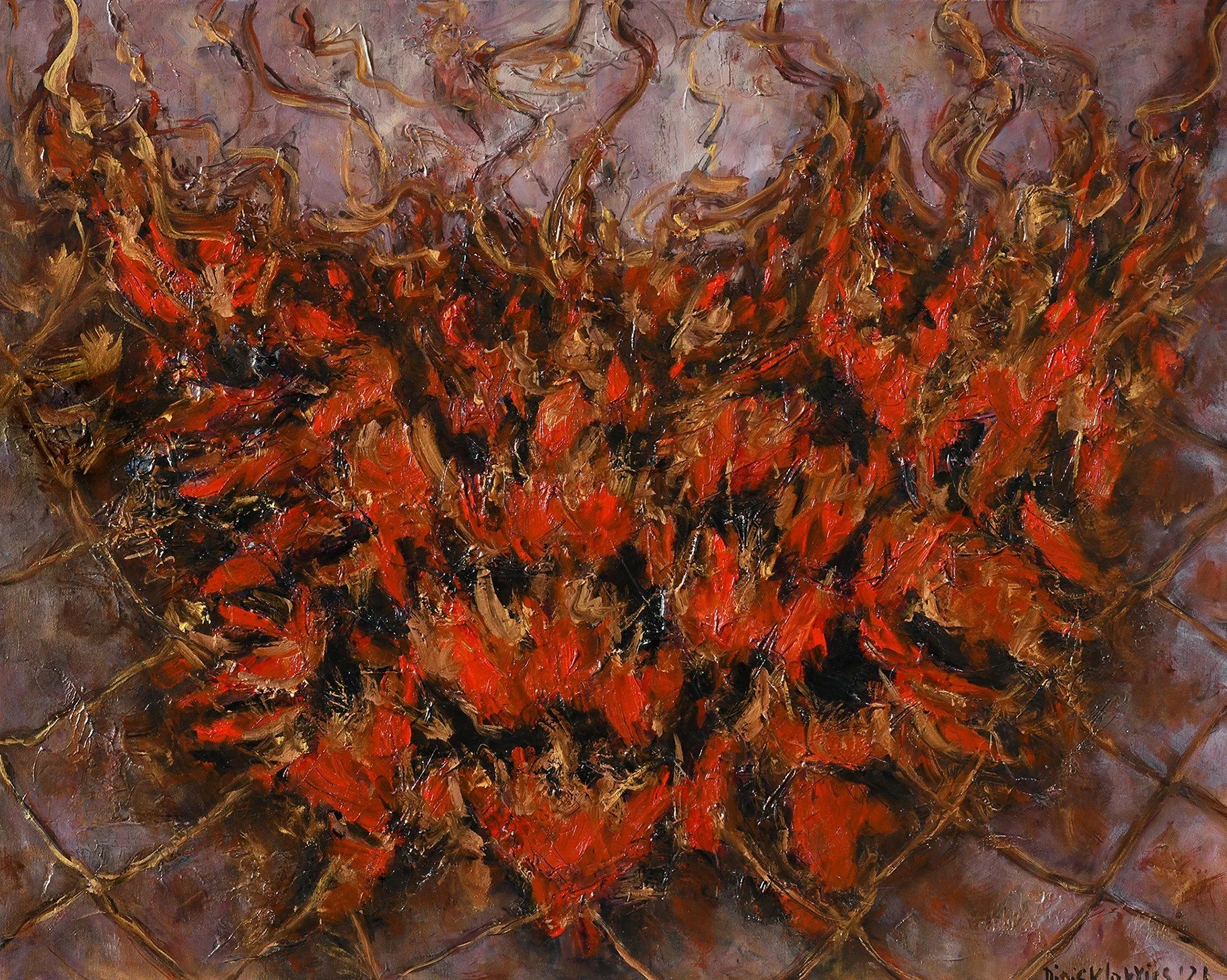
Therefore my paintings speak a very subjective, thoroughly humanistic message which cannot always be directly approachable from the outside, but in spite of this fact still seeks to engage in a quiet dialogue with the viewer. This message can be conveyed from a formal perspective through the organisation of colours (opaque as well as transparent colours, colour gradation), different colour palettes, different mediums or mixed media such as gesso or other materials, volume alternating with flat surfaces, lines (especially curvy lines) and shapes (which usually are not geometric in a narrow sense), light and shade.
As your artistic career continues to expand through international exhibitions, institutional affiliations, and growing recognition within the contemporary art scene, how do you envision the future evolution of your practice? Are there conceptual, material, or spatial directions that you feel compelled to explore as you continue to push the boundaries of your artistic language?
This is indeed the case! Currently I’m working on a larger series of smaller paintings (most of them no larger than 60 × 80 and 80 × 100 cm) which I called “FEMINA”, around the theme of the “feminine” energy which impregnates creation at all levels, trying to explore its numerous different facets.
Another new direction which has been calling for my attention for a long time would be to explore old Eastern painting practices, especially sumie, and later integrate these new insights and methods, in some modified form, into my own practice. This might bring about new, original interactions between my work and space, and I already have concrete plans.
Sumie is a technique of “drawing with black ink on paper” and it comes originally from China. This technique requires both strong selfcontrol and a lot of spontaneity. It is an art of meditation, a quest for inner harmony and therefore has a strong connection to my own artistic practice.
I’m also convinced that other directions will reveal themselves when the time comes and I am ready to explore. Future will tell. I’ll try to be ready!