Interview with Edita Åbrink
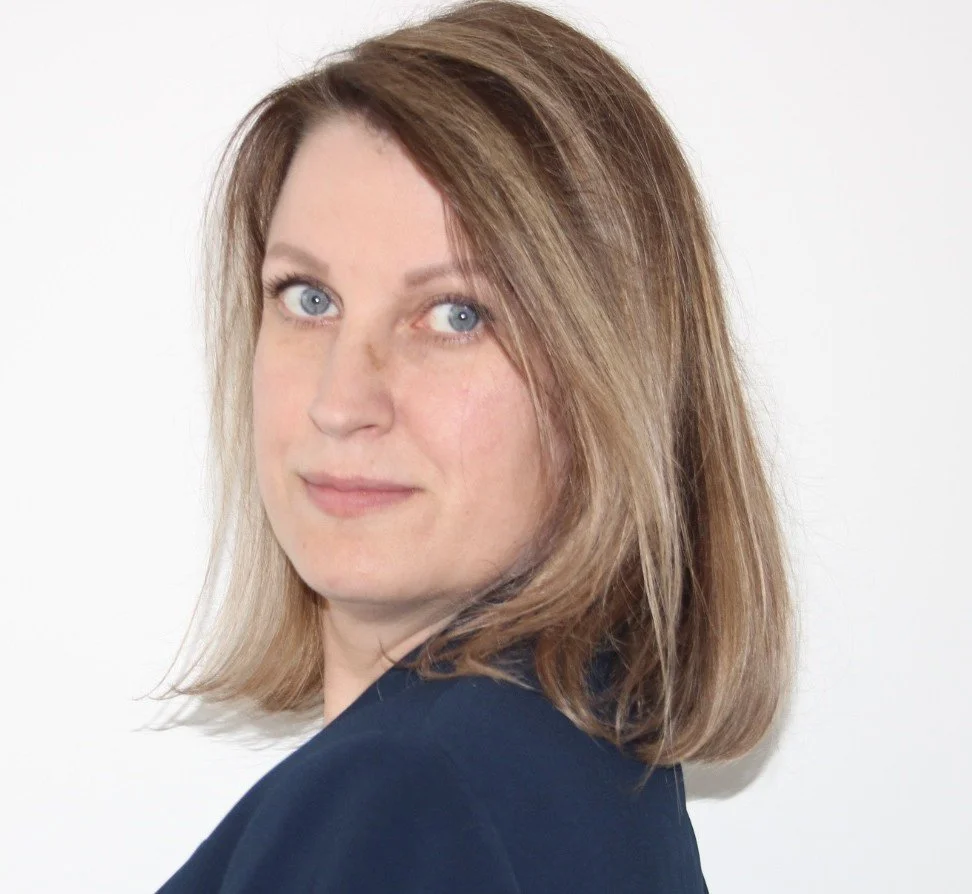
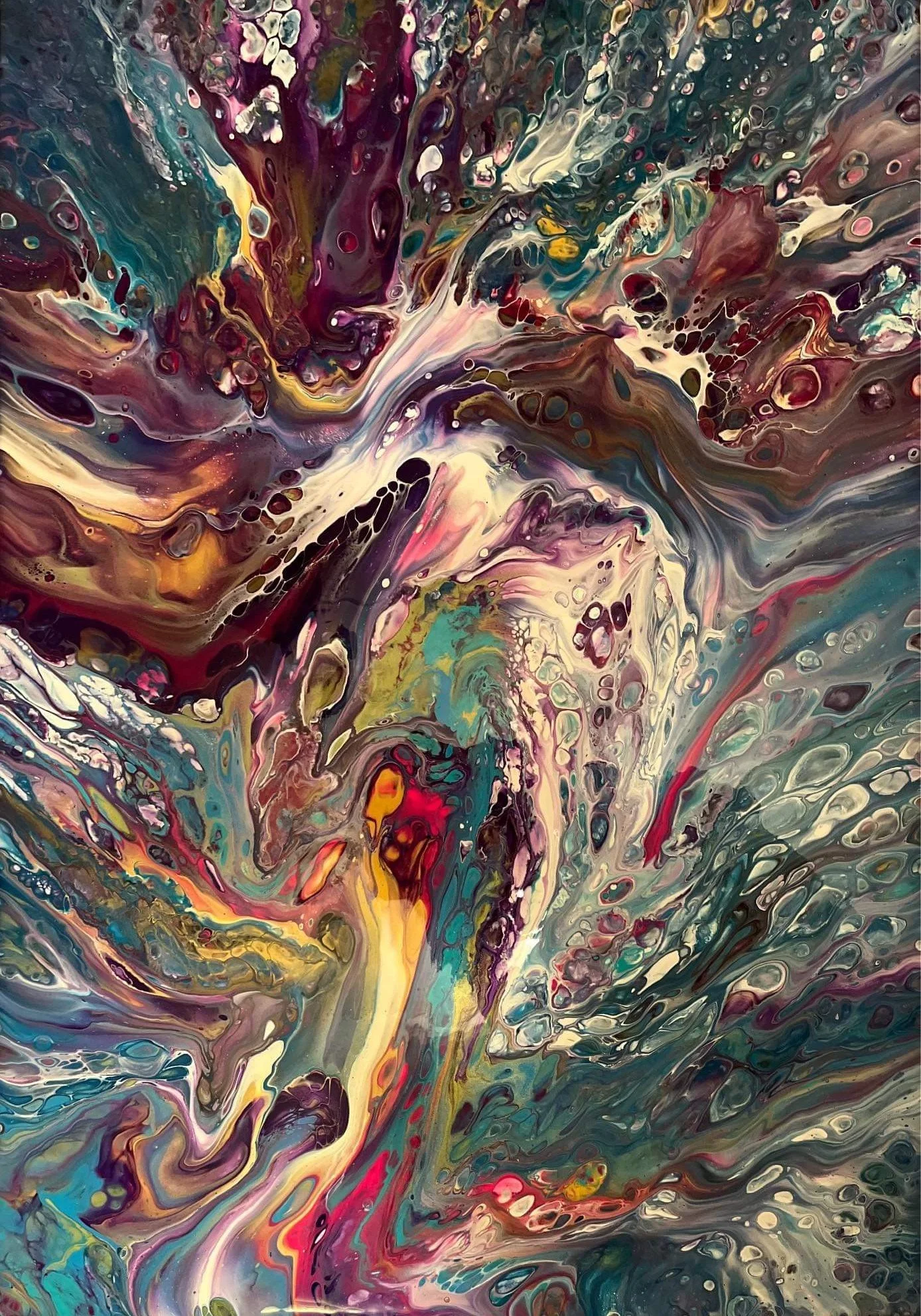
Edita is a Sweden-based abstract artist whose practice is rooted in emotional truth, inner freedom, and spiritual presence. Working intuitively with fluid techniques, she creates without premeditation, allowing paint, movement, and feeling to unfold organically. Her process is guided not by rules or plans, but by lived experience, sensitivity, and trust in what emerges from within.
Her paintings are shaped by life in its full spectrum — sorrow and joy, struggle and resilience, darkness and light. Rather than representing the visible world, her work translates inner states and life experiences into color, flow, and rhythm, offering abstraction as a space for reflection and emotional connection.
For Edita, art is a way of honoring what cannot be bought or controlled: health, love, and time. Through her work, she seeks to inspire others to feel, to pause, and to reconnect with the deeper values of living. Her paintings invite viewers into an open, contemplative space where personal experience and shared humanity quietly meet.
Edita, your fluid paintings often emerge without premeditated composition, allowing gravity, viscosity, and chromatic interaction to guide form. How do you understand authorship within this process: do you see yourself as directing the work, collaborating with material forces, or witnessing an event unfold between intention and contingency?
For me, authorship is deeply connected to freedom. When I paint, I step into a space without rules, expectations, or external pressure. I do not plan the composition in advance, and I do not carry an image in my mind of how the painting should look. Everything begins from within me – from emotion, memory, intuition, and lived experience.
In this process, I do not see myself as someone who controls the work, but neither am I completely passive. I collaborate with the material while also surrendering to it. The paint has its own movement, weight, and rhythm, and I listen to what it wants to do. My role is to be present, sensitive, and honest. The painting unfolds as an event, a moment where inner feeling and material force meet.
Fluid art has historically occupied a contested position between control and chance, often read through the lens of abstraction’s relationship to nature. In your practice, how does the natural world operate as a visual reference, an internalised memory, or a structural logic embedded in the behaviour of paint itself?
Nature in my work is not something I try to depict visually. I am not interested in painting landscapes or recognizable natural forms. Instead, nature exists as sensation, energy, and movement. It lives in the way the paint flows, resists, collides, and transforms on the surface.
Life and nature are not always calm or beautiful. They can be chaotic, heavy, fragile, and powerful at the same time. I feel this deeply, and I allow those qualities to appear through the behavior of the paint. Nature becomes a structural logic rather than an image – something that is felt rather than seen.
As a self-taught artist who learned techniques through digital platforms rather than institutional frameworks, how do you situate your practice in relation to traditional narratives of artistic legitimacy, and what forms of knowledge or sensitivity do you believe emerge specifically outside academic training?
Being self-taught has allowed me to stay close to my intuition and inner truth. I did not learn through academic systems or formal rules, but through experience, experimentation, and emotional awareness. This path gave me freedom to develop my own language without feeling restricted by expectations.
Outside academic training, I learned to trust myself. I developed sensitivity – to color, to movement, to emotion, and to silence. This kind of knowledge is not easily taught; it grows through listening inwardly and through lived life. For me, this has become a strength rather than a limitation.
Your paintings are described as intuitive and emotionally driven, yet they result in compositions that feel formally resolved. How do you reflect on the relationship between intuition and structure in your work, and where do you locate meaning in the emotional impulse, the physical process, or the finished image?
Intuition is the starting point of every painting. Emotion opens the door. But structure appears naturally when I remain fully present in the process. I do not force balance; it emerges when I listen carefully to what the painting needs.
Meaning does not belong to only one stage. It exists in the emotional impulse that initiates the work, in the physical act of pouring and moving the paint, and in the finished image that remains. The painting holds the memory of this journey.
Having lived and worked across different cultural and social contexts, from Lithuania to Sweden, from manual labor to artistic creation, how do these lived experiences shape the affective or ethical dimension of your paintings, even when they remain non-representational?
My life experiences are deeply embedded in my work, even when they are not visible as images. I have lived through moments of sorrow, struggle, disappointment, and exhaustion, but also joy, love, growth, and strength. Life is not only light – it is everything.
These experiences shape the emotional depth of my paintings. I believe in honesty, and that honesty carries an ethical dimension. The work does not tell stories directly, but it carries the emotional weight of lived reality.
Fluid art foregrounds materiality in a particularly visible way. How conscious are you of paint as a physical substance with its own agency, and how does this awareness inform your decisions during the act of pouring?
I am very conscious of paint as a living substance with its own will. Each color behaves differently, each movement carries its own energy. I respect this and work with it rather than against it.
During the pouring process, I remain emotionally and physically present. I respond to what happens instead of forcing an outcome. This respect for material mirrors my respect for life – listening rather than controlling.
Your practice unfolds largely in the margins of time. How does this temporal condition influence the urgency, intimacy, or emotional density of the work you produce?
Creating art in limited time makes each moment precious. Painting becomes something sacred – a moment that is claimed, not given. This brings intensity and intimacy into the process.
The work becomes emotionally dense because it carries the value of time. I deeply believe that time is one of the most important things we have, and this belief lives inside the paintings.
You have spoken about painting as a space of inner freedom and authenticity. How do you protect the sincerity of this inner space while offering the work to a public audience?
Painting is my space of inner freedom. I protect this space by never creating for expectations, trends, or markets. The work must remain honest and true to my inner world.
Once the painting is finished, I allow it to be seen and shared. But its origin remains untouched. This separation helps me protect sincerity while still opening the work to others.
How do you imagine the role of the viewer in completing the work?
I believe the viewer completes the work through their own feelings and experiences. My paintings are open spaces. I do not want to control interpretation.
My responsibility is to leave room for emotional freedom. When viewers connect to the work in their own way, the painting becomes alive again.
How do you negotiate the boundary between self-expression and collective resonance?
Although my paintings are deeply personal, they are created with the intention of connection. I want people to feel life through my work – both pain and beauty, struggle and hope.
When something personal becomes shared, it becomes healing. Art then moves beyond the individual and enters a collective emotional space.
Do you see your process as reflecting a broader philosophical stance toward life?
Yes, very much so. I do not plan my paintings because life itself cannot be fully planned. Life requires trust, openness, resilience, and acceptance of uncertainty.
Painting is a way for me to practice these values. It is a spiritual exercise as much as an artistic one.
How do you think about abstraction as a way of accessing nature beyond representation?
Abstraction allows me to express nature as energy, rhythm, and transformation. It is not about seeing nature, but about feeling it.
Through movement and flow, abstraction becomes a spiritual language that connects inner and outer worlds.
How has beginning your artistic practice in adulthood shaped your relationship to ambition and growth?
Beginning later gave me clarity and freedom. I am not driven by comparison or speed. I value depth, authenticity, and inner growth.
Artistic becoming is a lifelong journey for me, rooted in honesty rather than ambition.
How do you reflect on the tension between ephemerality and permanence in fluid art?
Fluid art captures fleeting moments and transforms them into something lasting. This reflects memory and personal history.
Moments pass, but emotions remain. Each painting preserves a fragment of lived time.
What questions feel most urgent in your practice now?
My most urgent questions are spiritual and emotional. How can I remain truthful to myself? How can I inspire others to value life, health, love, and time?
My work will continue to evolve through honesty, sensitivity, and presence.
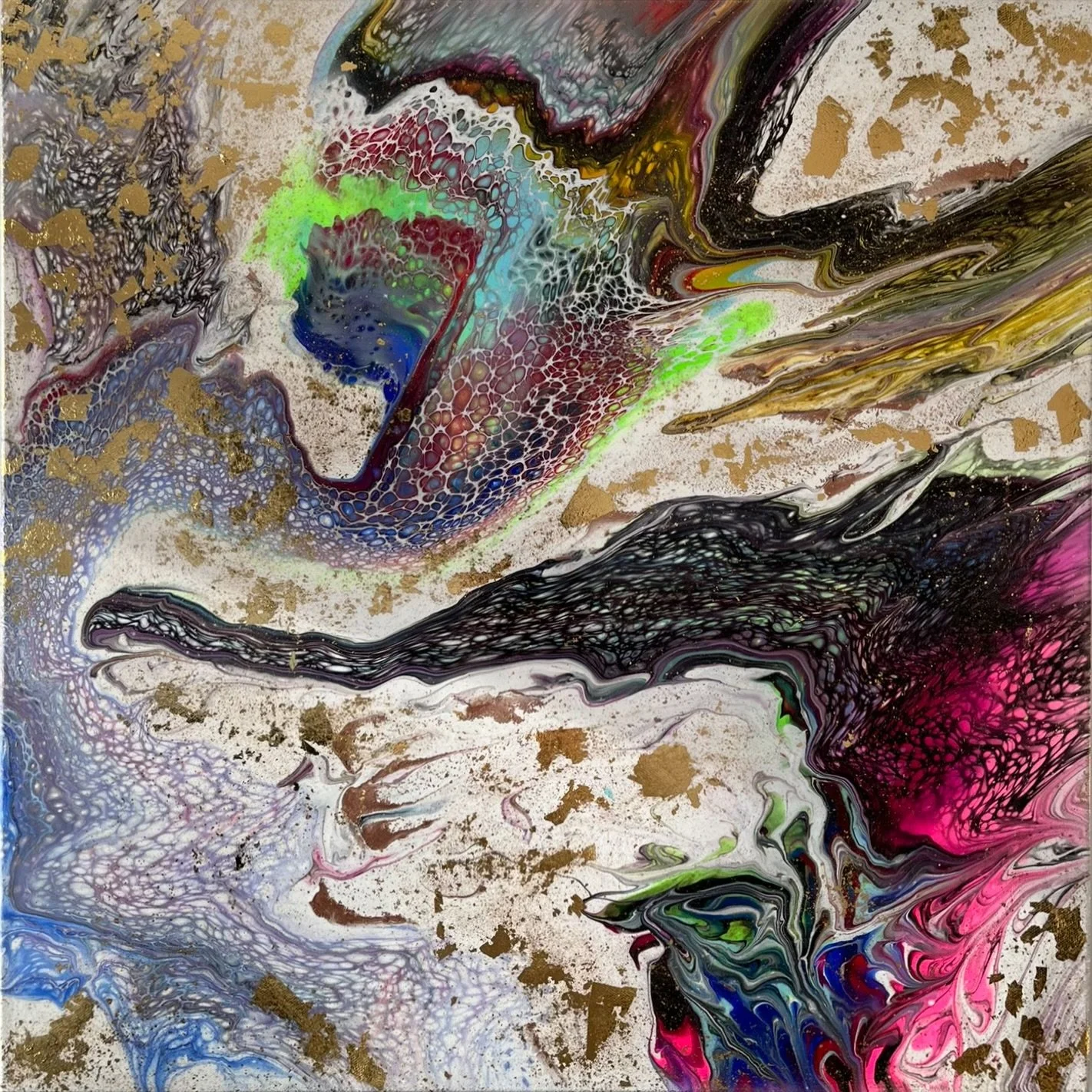
Take Your Power, Shine Like Gold, 2025, Mixed media, 60 × 60 × 3
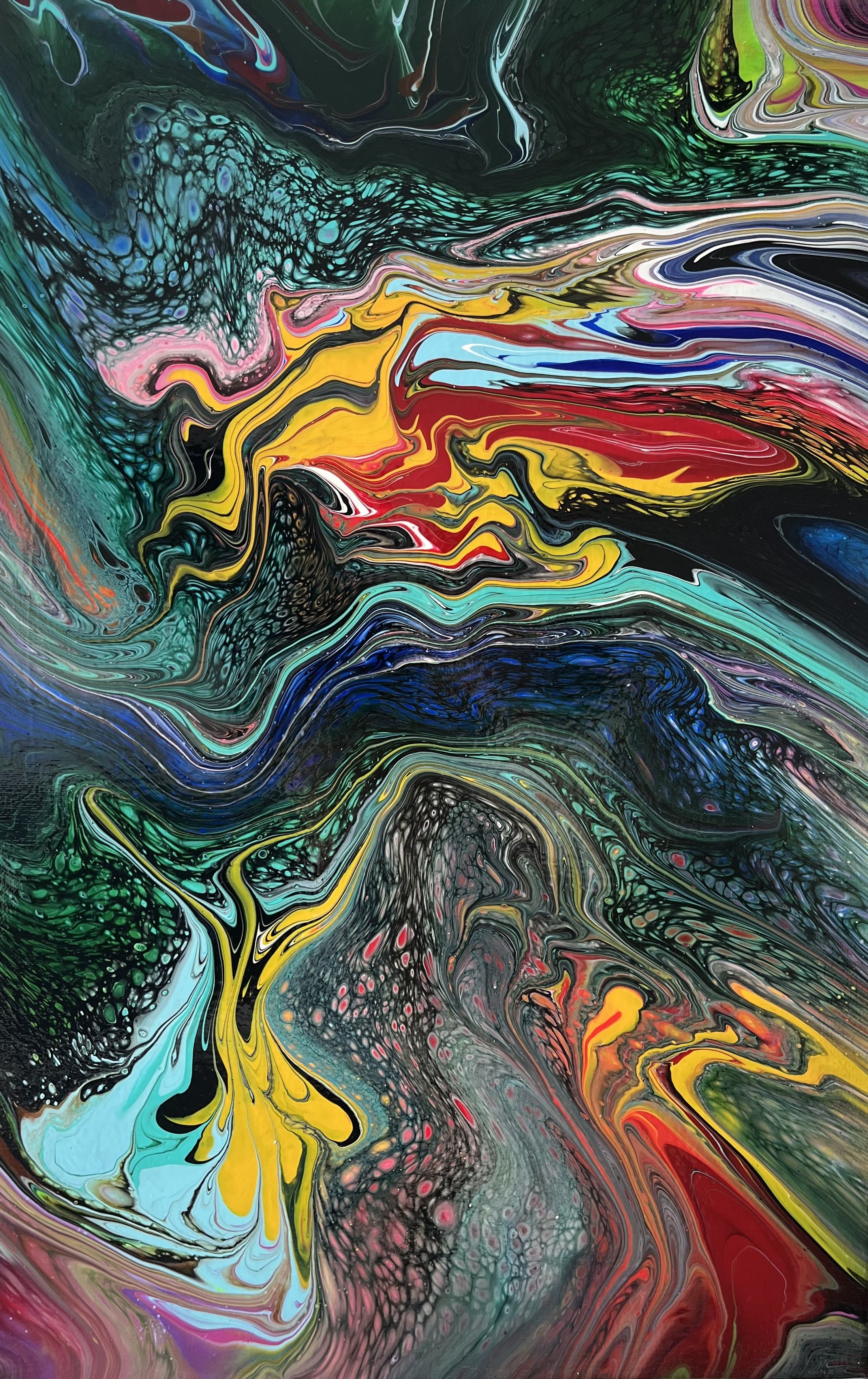
New Beginnings, 2025, Mixed media, 40 × 60 × 1.5
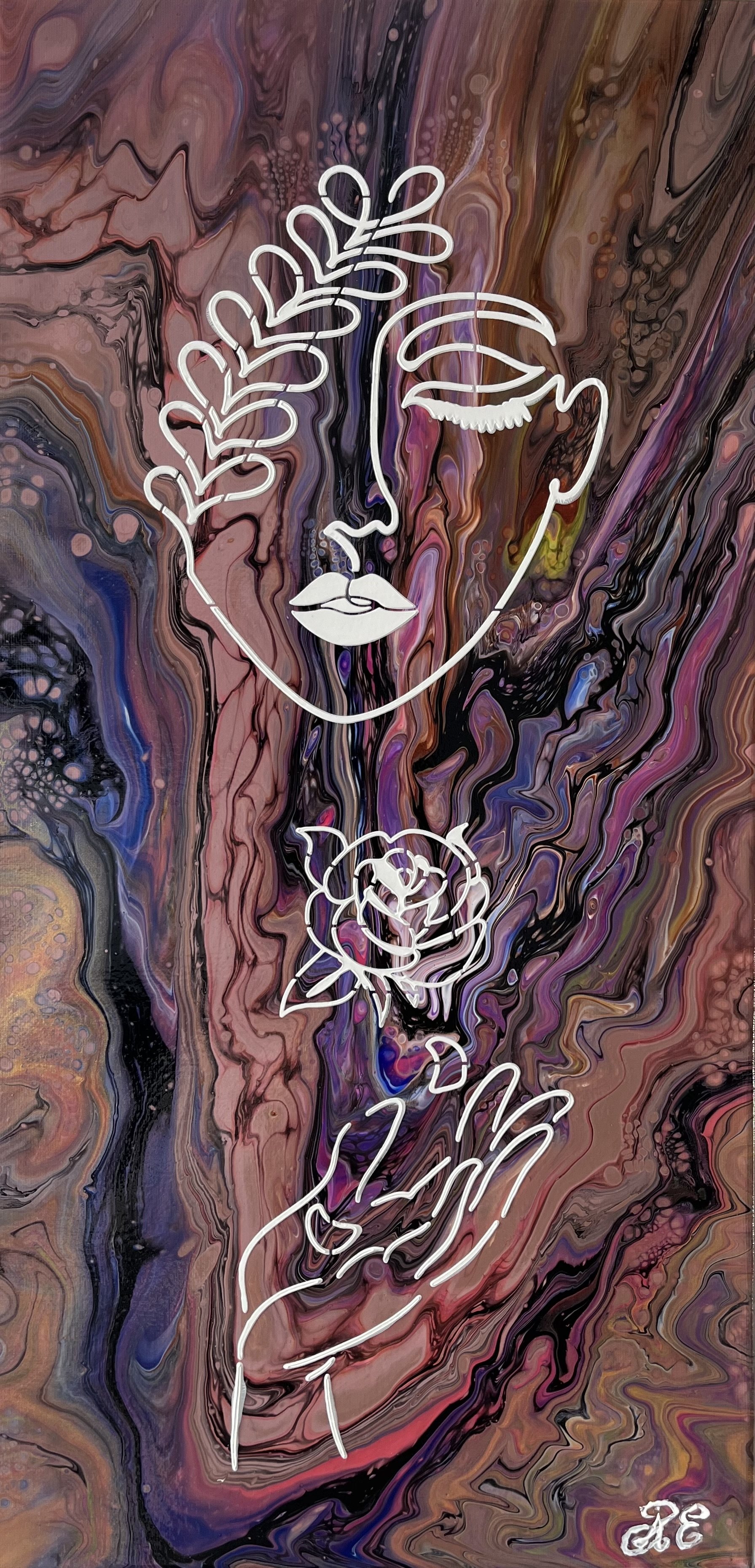
Take Your Time, 2025, Mixed media, 30 × 60 × 1.5
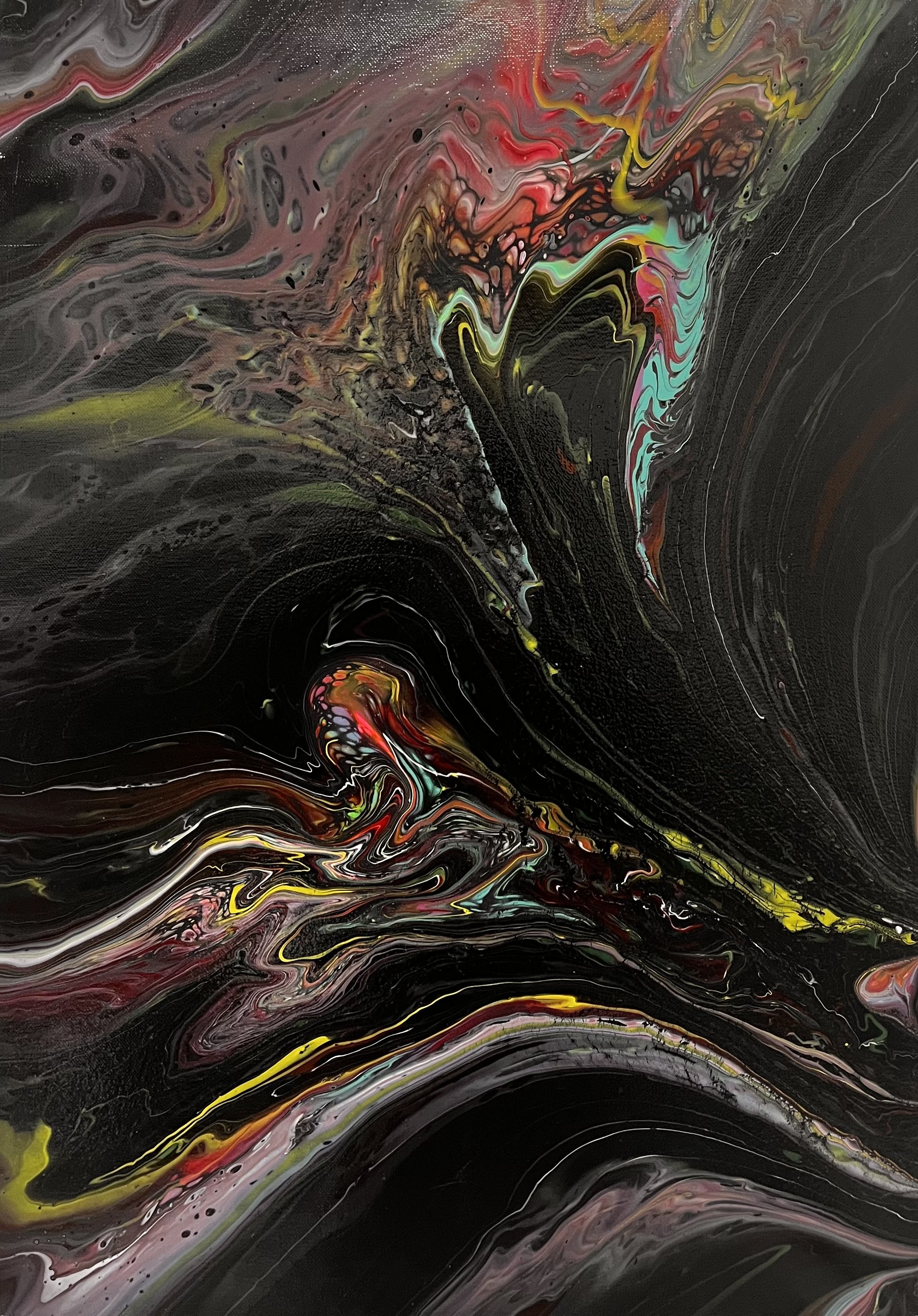
Light in the Darkness, 2023, Mixed media, 50 × 70 × 1.5
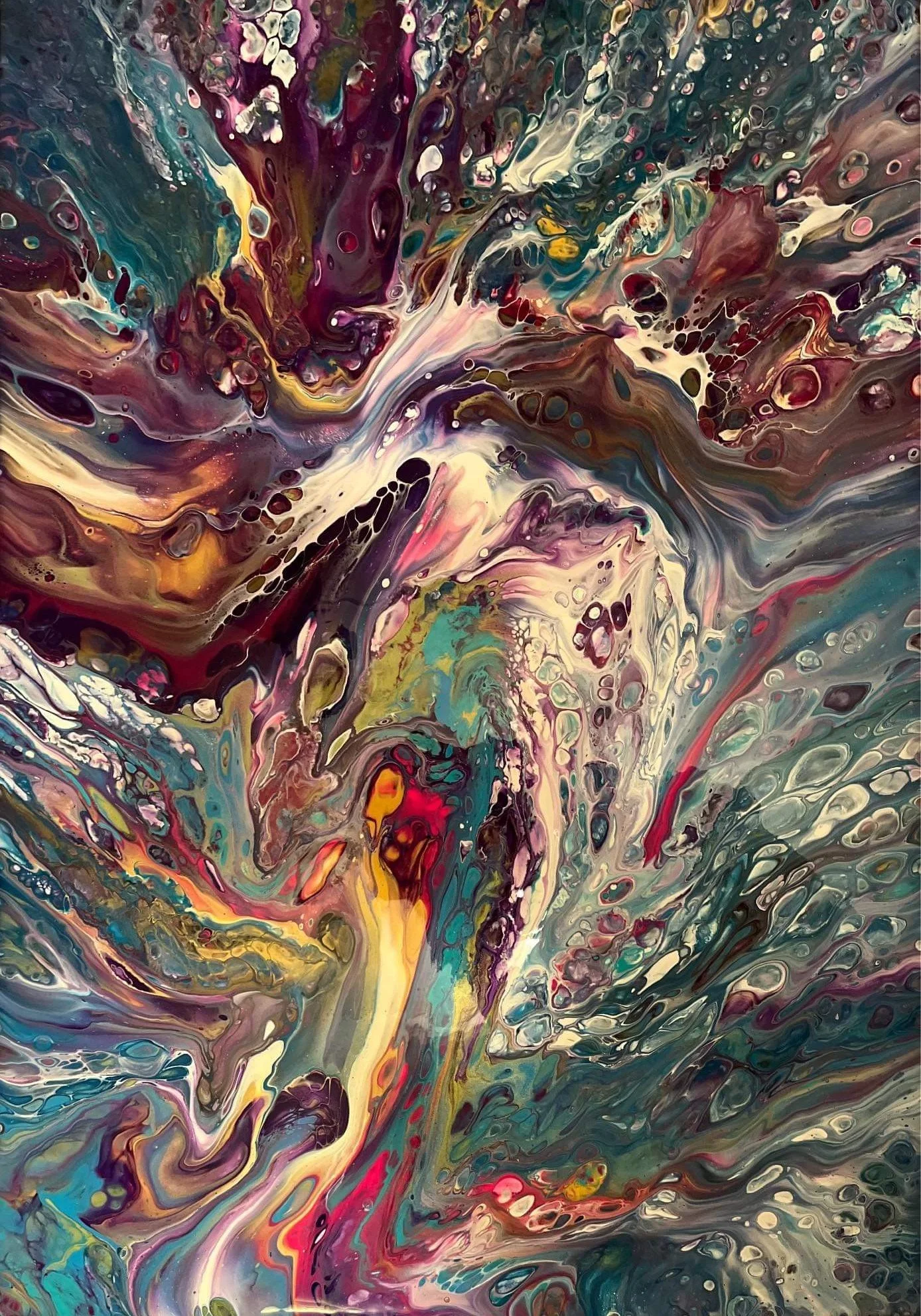
Dragon on Fire, 2023, Mixed media, 50 × 70 × 1.5
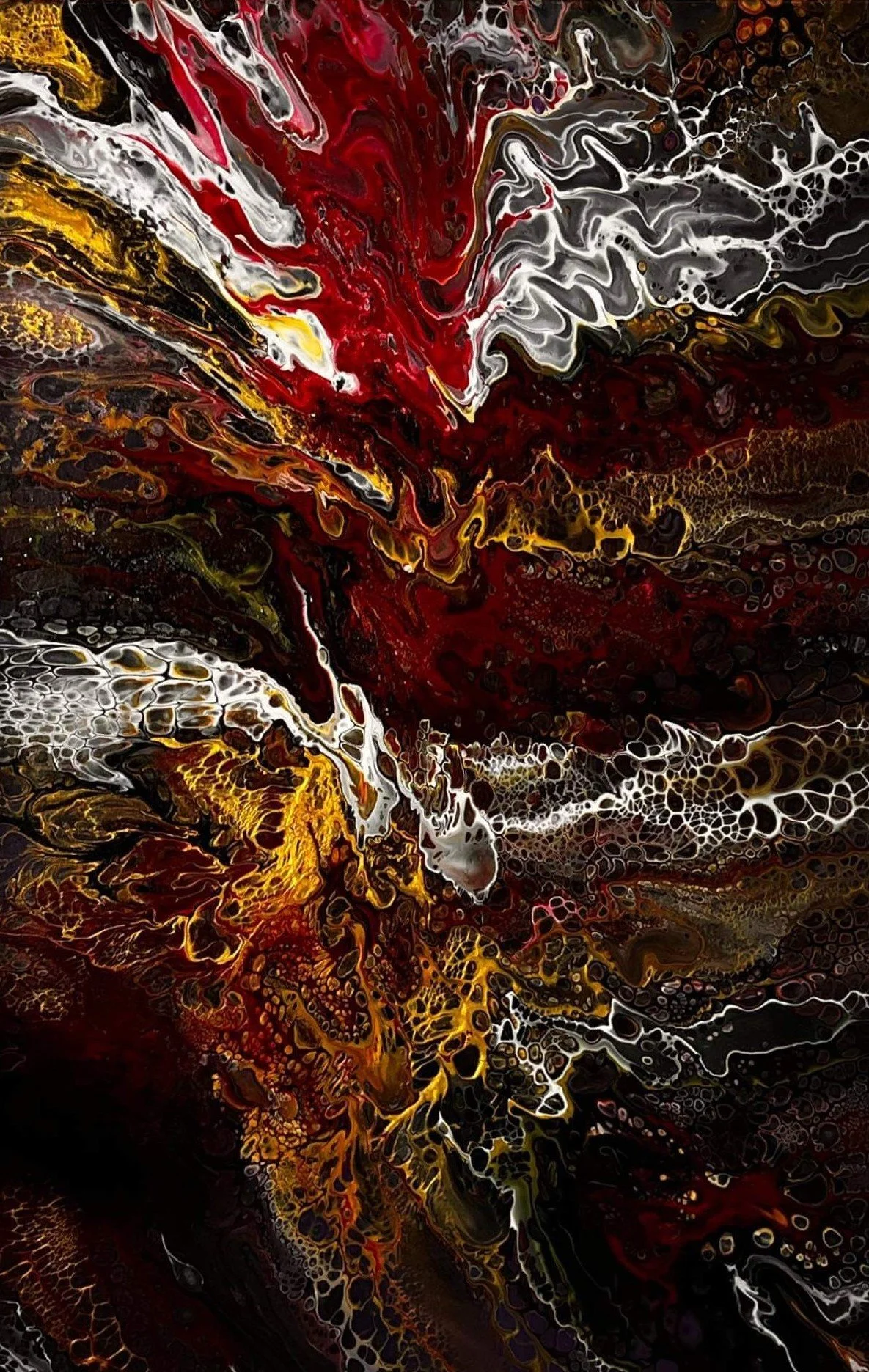
Explosion, 2023, Mixed media, 40 × 60 × 1.5
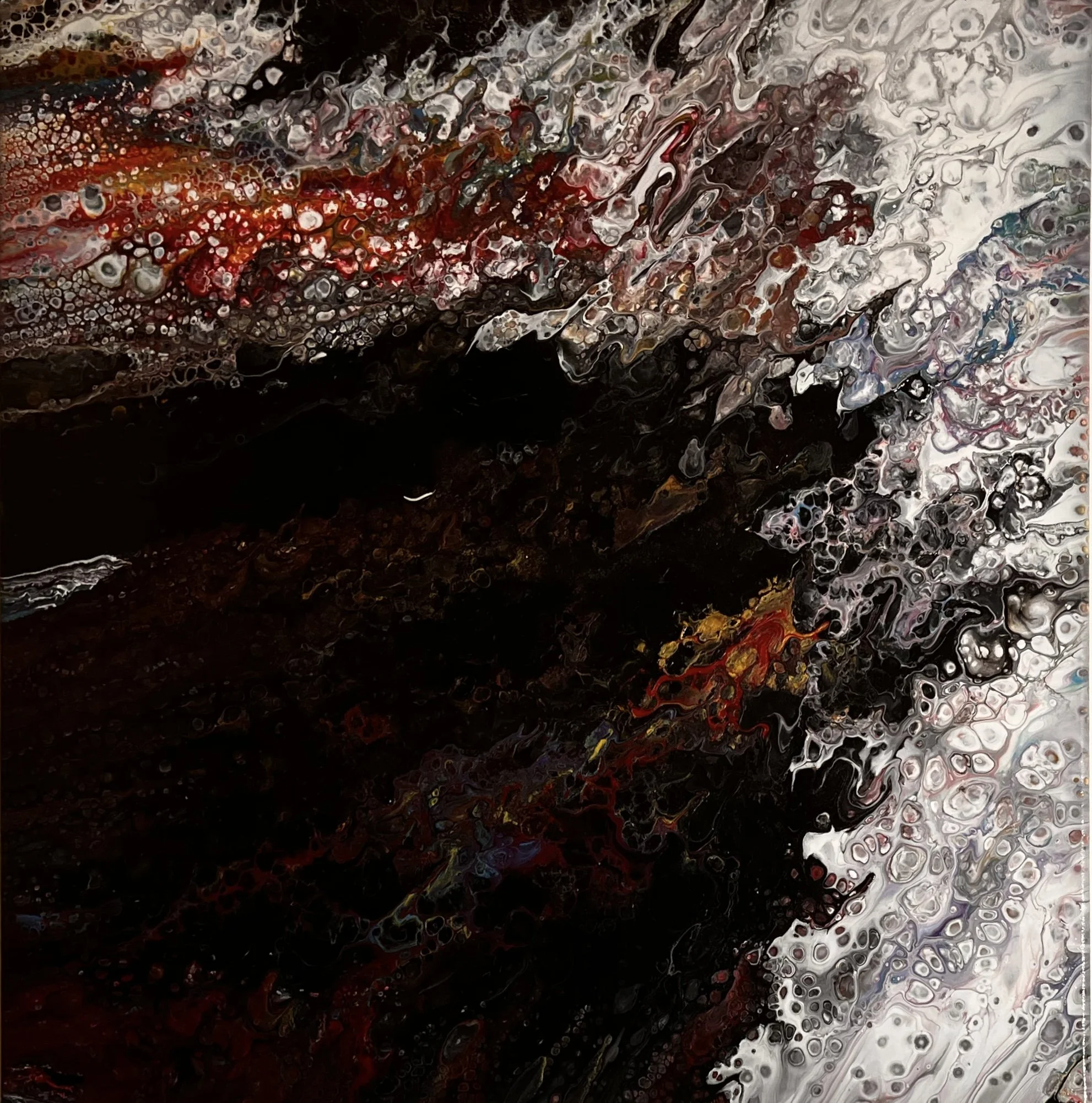
Ocean After Darkness, 2023, Mixed media, 80 × 80 × 3.5
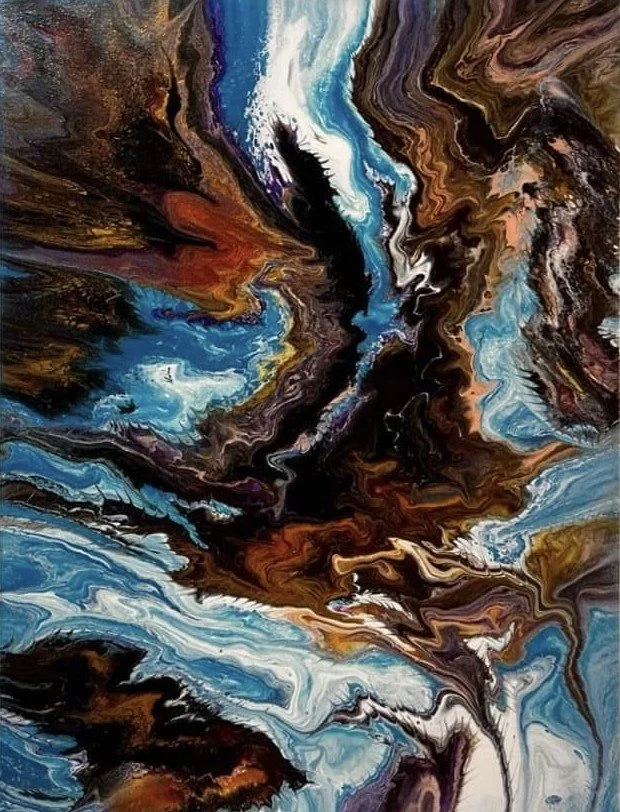
River Through Canyon, 2023, Mixed media, 60 × 80 × 1.5
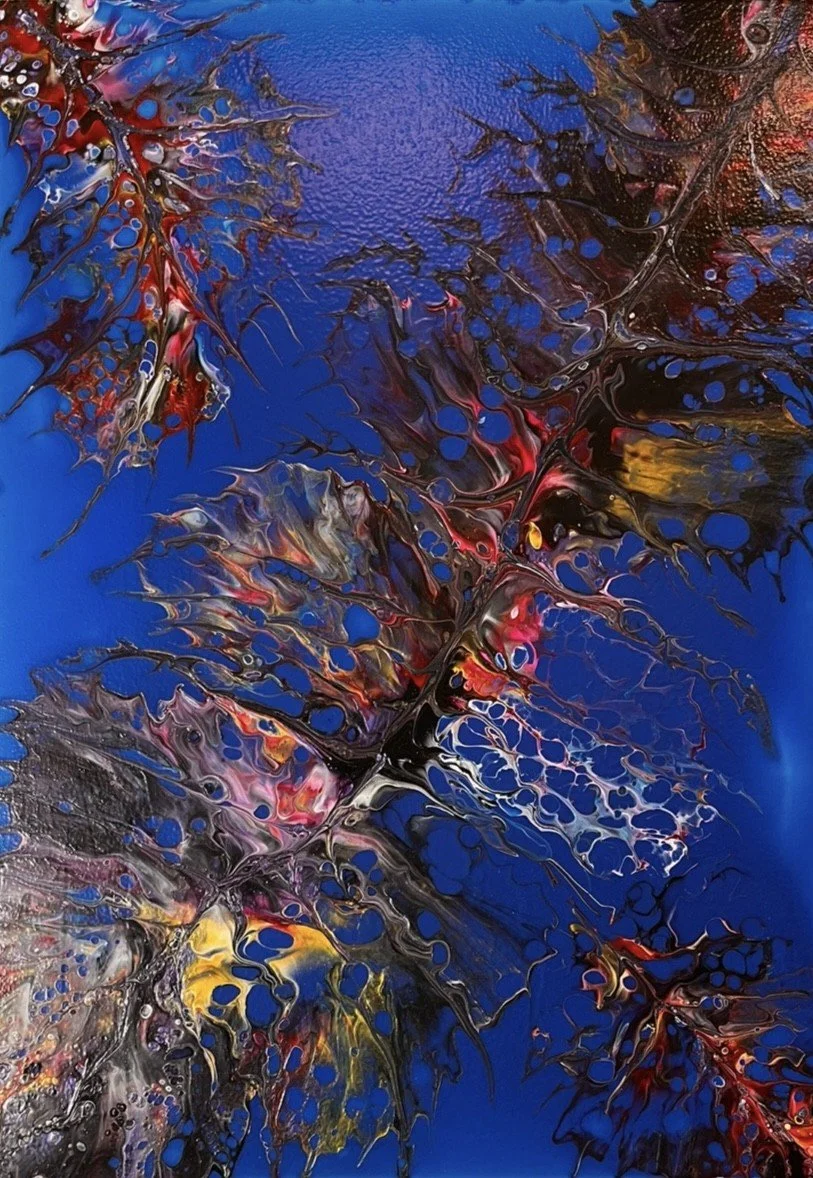
Coral, 2023, Mixed media, 50 × 70 × 1.5
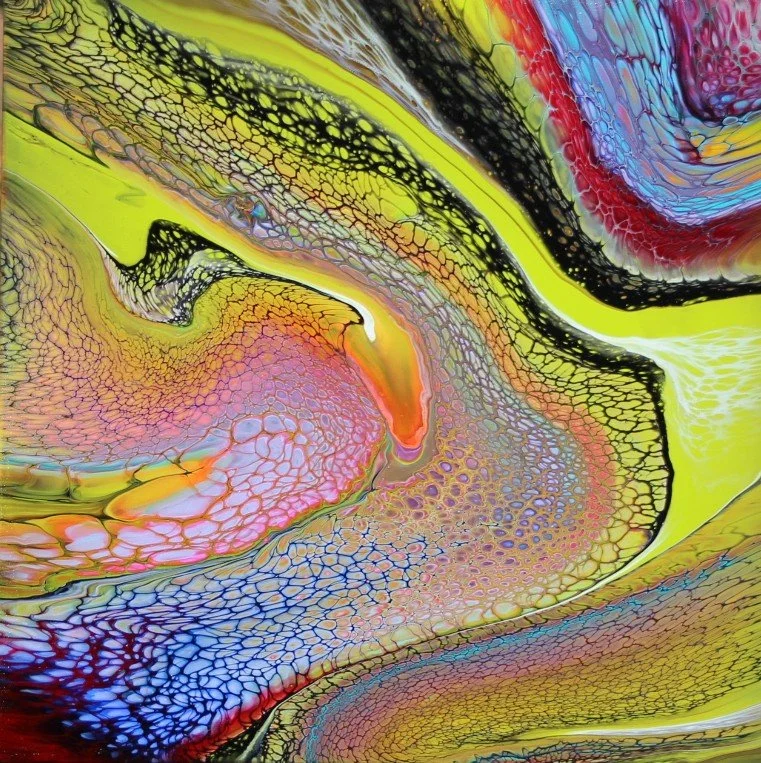
The Beauty of Summer Vibes, 2025, Mixed media, 50 × 50 × 3.5
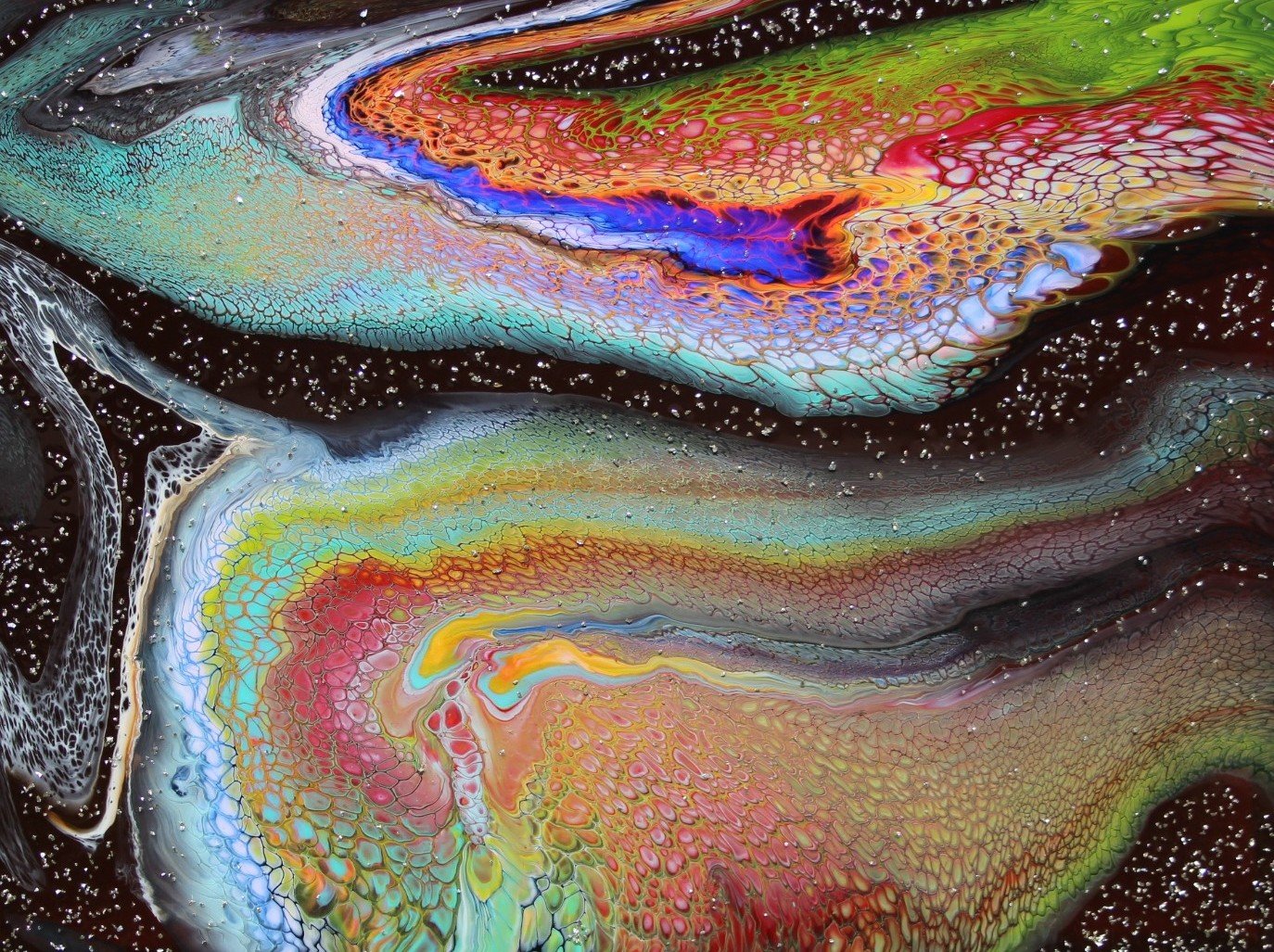
The Beauty of Universe, 2025, Mixed media, 60 × 80 × 4
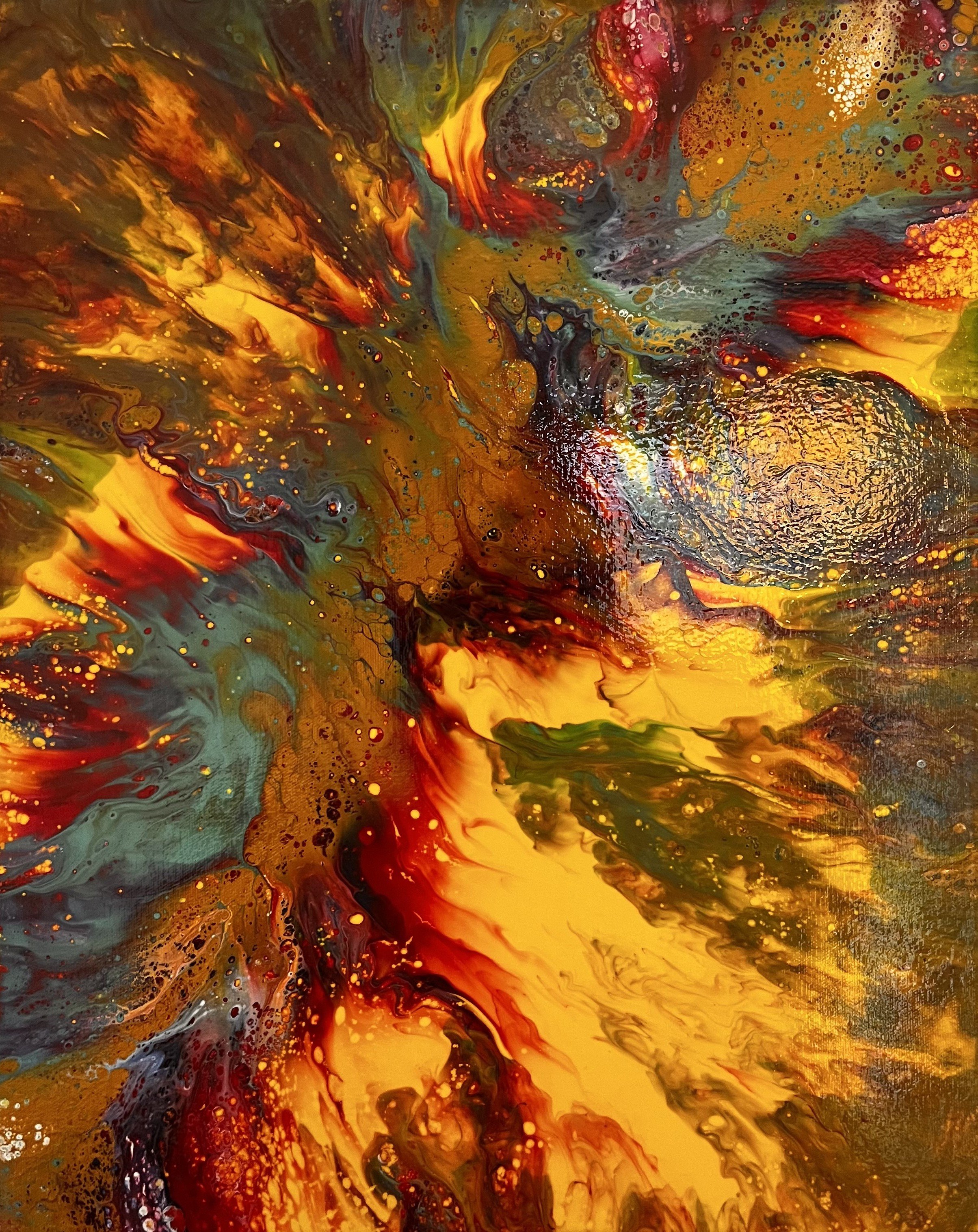
Solar Storm 2023 Mixed media 40 × 50 × 4
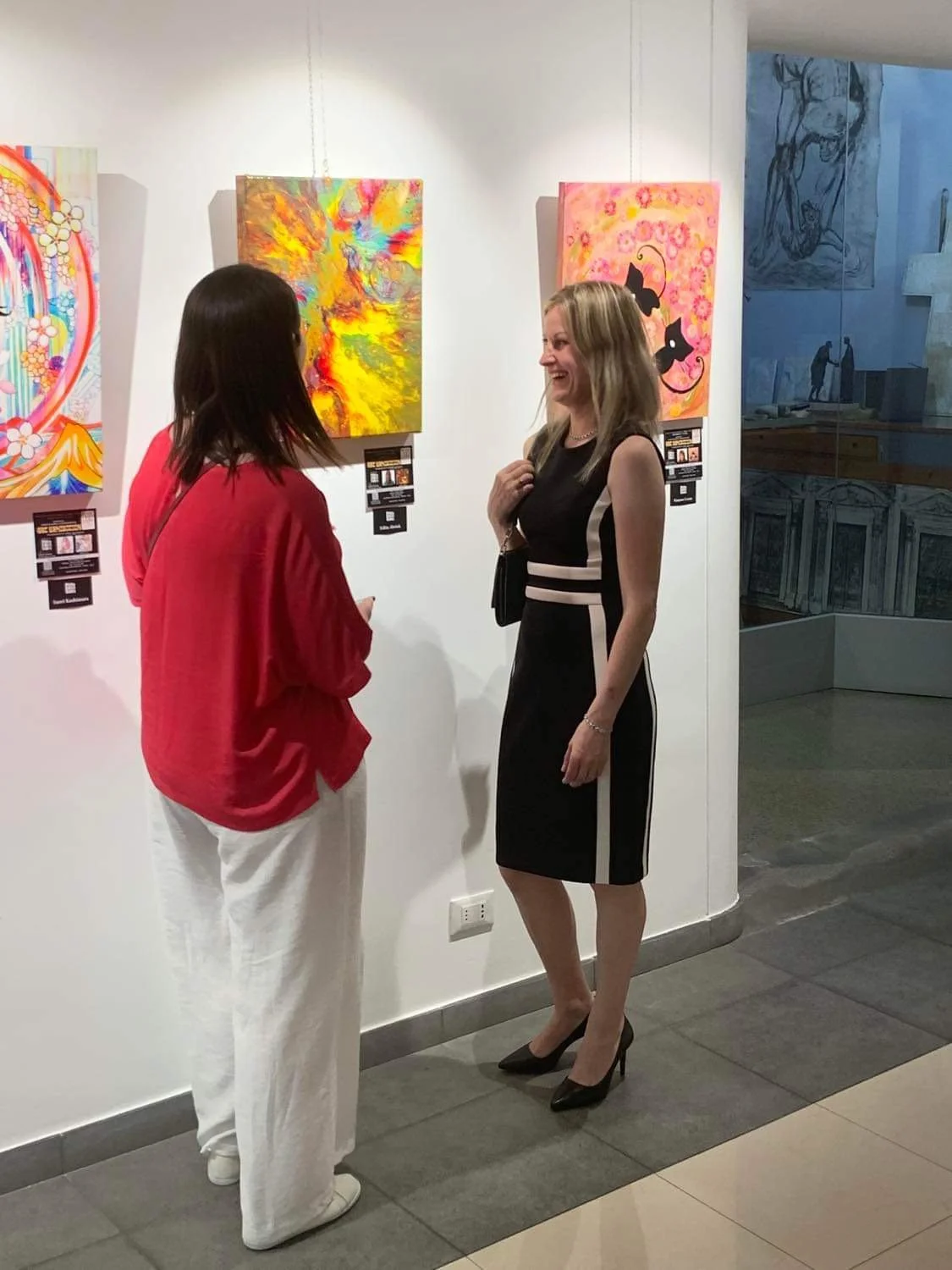
Exhibition at Venanzo Crocetti Museum Rome, Italy – Group Exhibition (Presented by First Wish Art Gallery)
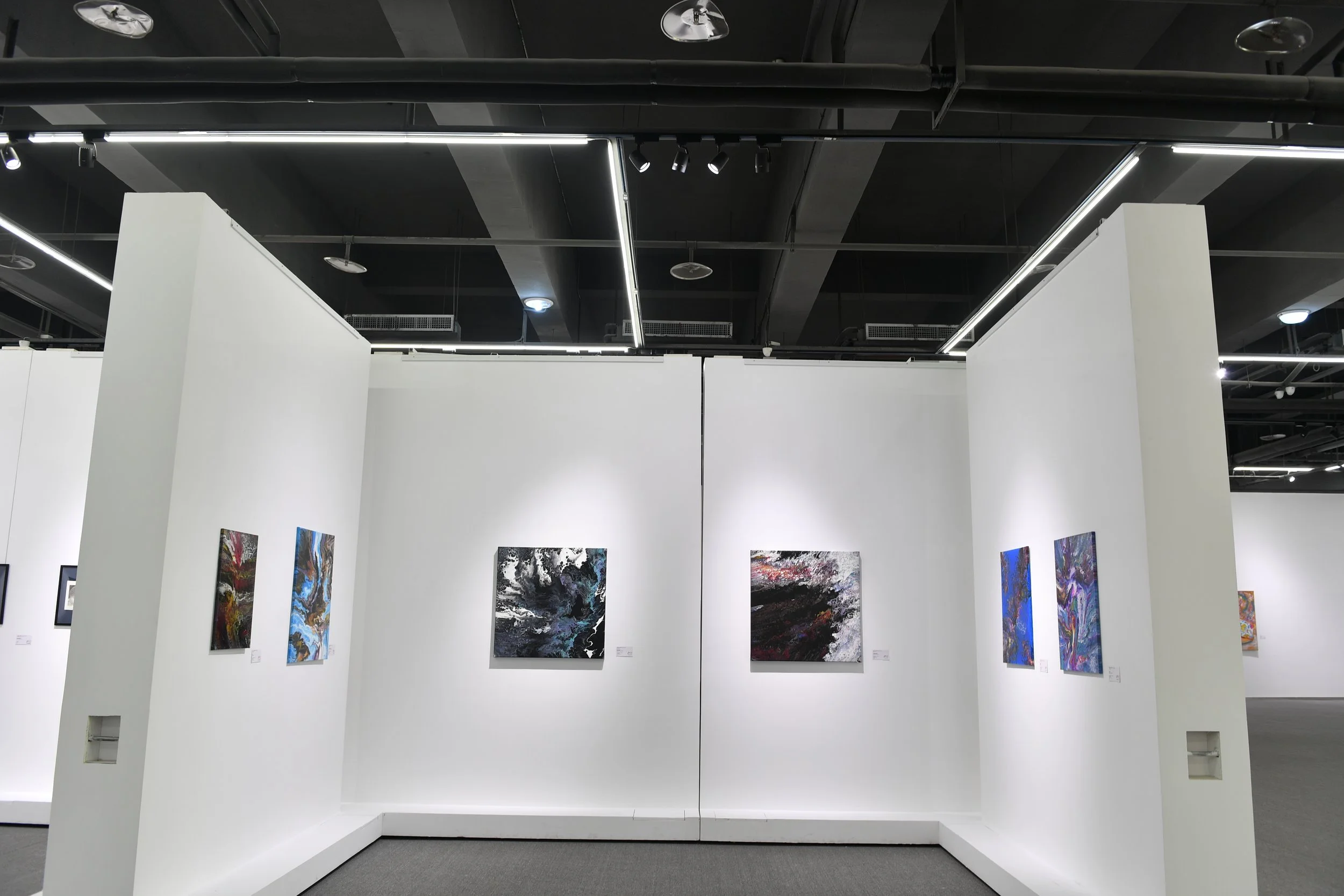
Exhibition at Chongqing Hong Art Museum, China – International Group Exhibition (Presented by Pashmin Art Consortia)