Interview with Christy Chor
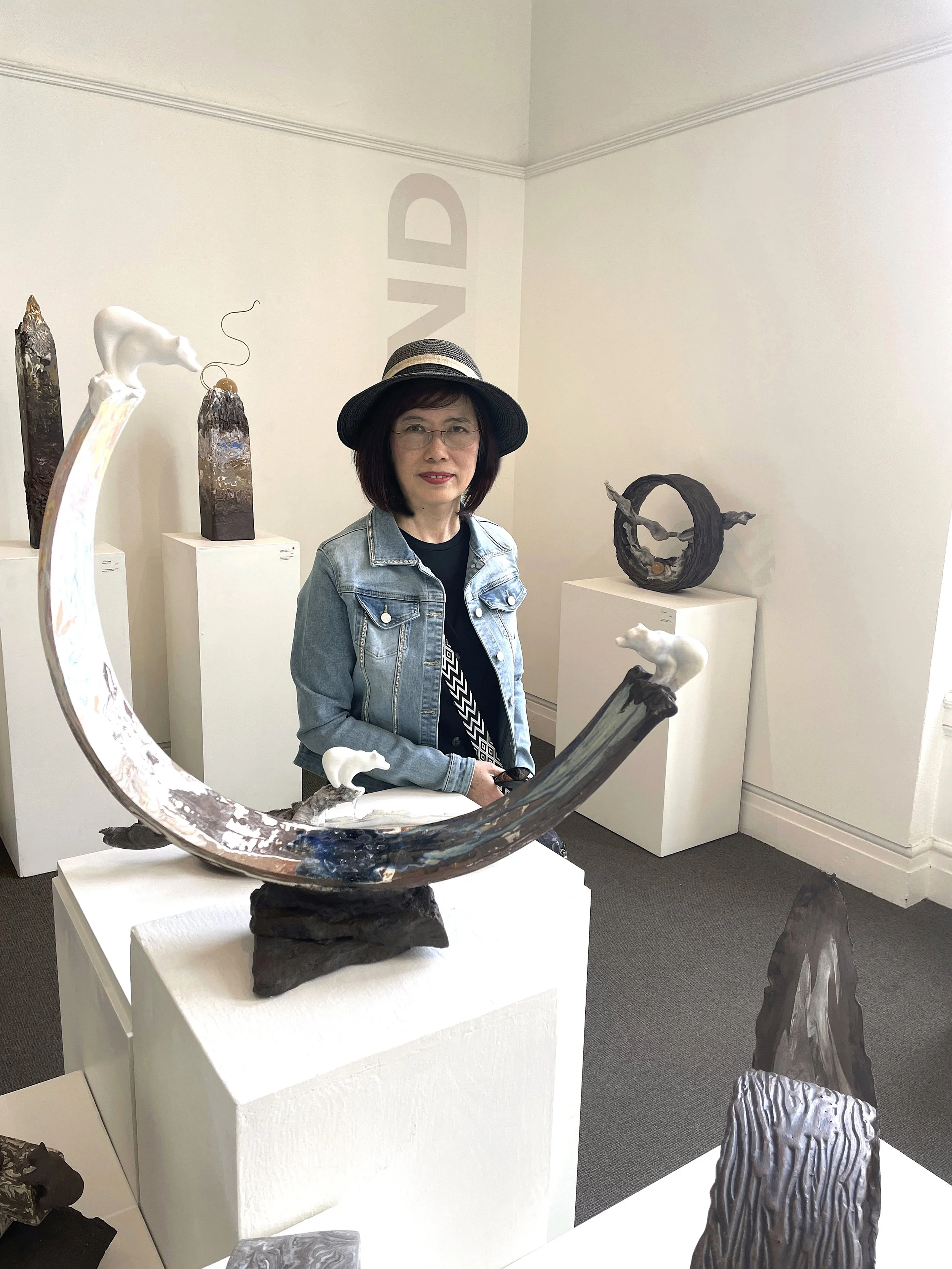
Christy Chor, Exhibition
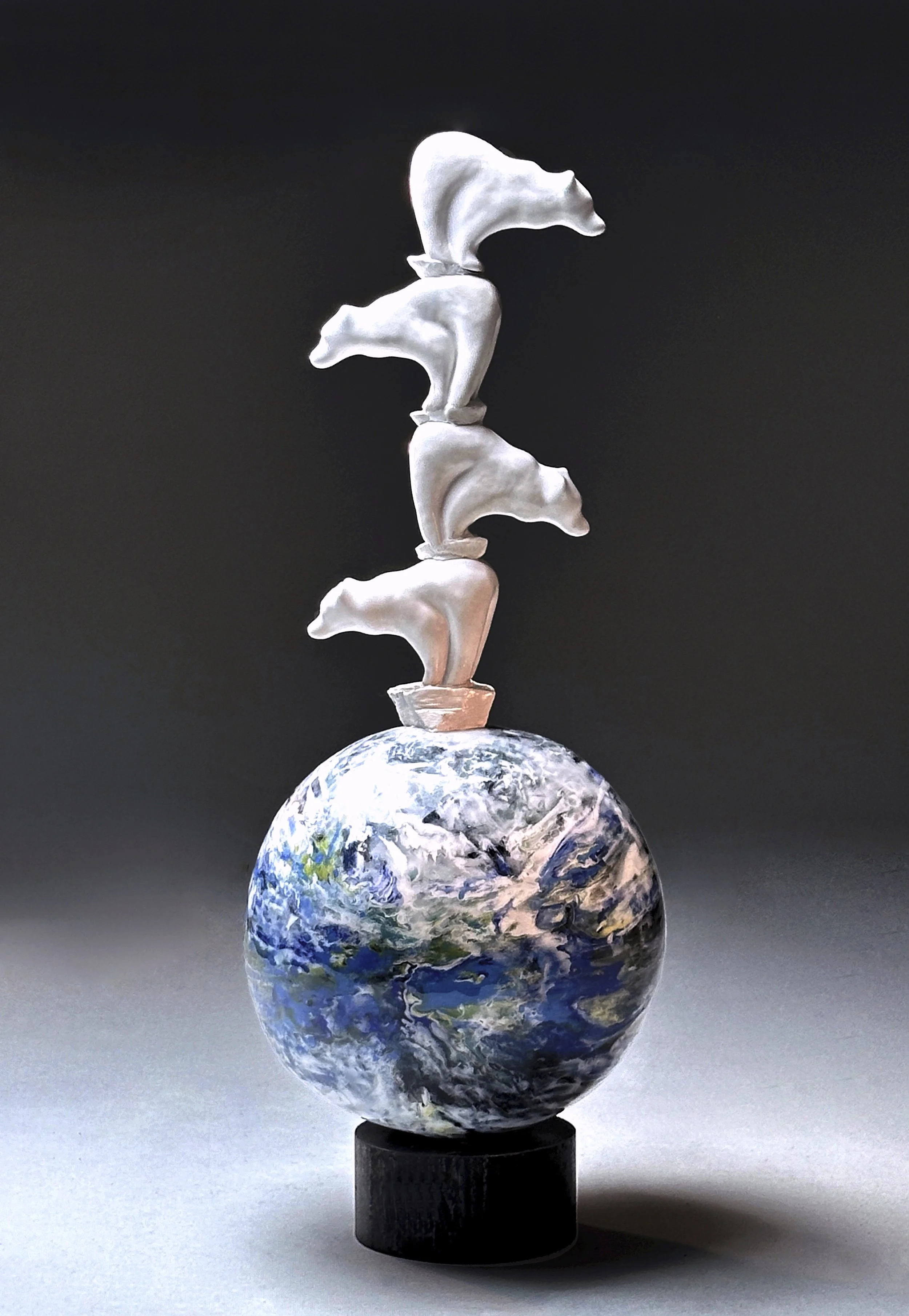
Christy Chor is a Canadian ceramic artist who creates a body of narrative-driven sculptural work exploring the sensory dialogue between humanity and the natural world. Her master theme, BACK TO NATURE, unfolds through successive series including Bird, Bear, and her current Mountain works, serving as tactile meditations on wonder, imbalance, and rebirth. An internationally recognized and award-winning artist, Christy's practice merges cross-cultural perspectives, uniting her ceramics education from Sheridan College in Canada with professional experience in Asia's design industry. Through this unique lens, she creates sculptures that are both communicative and masterfully composed.
Christy, your practice begins from an attunement to nature as both origin and oracle, where the grace and poetry of movements become catalysts for ceramic form. How do you conceptualize the relationship between the phenomenology of observation, those fleeting encounters of tranquillity, awe, or dynamic vitality, and the temporal, process-driven materiality of clay, which demands patience, transformation, and submission to elemental forces?
My work is about giving physical form to a fleeting moment.
I begin by deeply observing the natural world—the way a leaf bends in the wind, the stillness of a pond at dawn, the coiled energy in a bird's posture. I internalize the feeling of that moment: its tranquillity, its force, its delicate balance.
Then, I enter a dialogue with clay. This is a slow, patient process of coaxing form from a material that has its own memory and will. On the wheel, my hands don't sculpt an object; they guide the clay to echo the original motion I witnessed.
The final, crucial step is to surrender to the kiln. The fire transforms the clay, sealing the memory within a permanent, stone-like body. The finished piece is not a picture of the moment, but its tangible essence—a captured feeling made solid, waiting to be held.
You describe clay as the essence of the earth and ceramics as its magical transformation, suggesting a metaphysics of material that expands beyond craft and toward ritual. Could you articulate how intention, narrative, and emotional inscription enter the work at what stage the soul of a piece becomes embedded, and how this immaterial dimension survives through the violence of firing, glazing, and structural risk?
The soul is structurally embedded during the forming process, encoded through the specific intention and physical pressure of my hands. This is not an abstract concept, but a blueprint for the piece's bodily integrity.
The firing is, therefore, not a violent ordeal to be endured, but the necessary metamorphosis. The elemental chaos of the kiln—the intense heat, the transformational melt of glaze—does not threaten the piece's soul; it verifies and solidifies it. The risk is essential because it physically demonstrates the intention's resilience.
The final object is the permanent record of this successful union—a testament to an intention that was robust enough to survive its own creation.
Your trajectory from graphic communications, architectural graphics, and brand communication into ceramics, supported by positions of leadership across multicultural creative teams in Hong Kong and China, creates a rare intersection of visual systems, spatial thinking, and narrative design. In what ways do these earlier professional languages continue to haunt or structure your ceramic forms, particularly around issues of composition, legibility, or the communicative capacity of sculptural objects?
My ceramic practice represents a fusion of three core disciplines from my past career:
It synthesizes:
Graphic Communication's precision and visual syntax govern composition, emphasizing essential forms and clear visual hierarchy.
Architectural Graphics' spatial logic and structural problem-solving, ensuring each piece is a resolved construct that balances mass, void, and physical stability.
Brand Narrative's cohesive storytelling, where each object communicates as part of a larger material language.
This convergence creates work where primal, elemental materiality is structured by rigorous design intelligence. The disciplines are no longer separate, but have been alchemized into a single, coherent material language. The result yields objects of immediate legibility—their purpose and presence communicated through pure, resolved form.
Much of your work attempts to bridge moments of solidarity, heartfelt interactions, and influence between humans, positioning ceramics as a conduit capable of surpassing linguistic, cultural, and social boundaries. How do you conceive of ceramics as a trans lingual medium, one whose tactility and emotional resonance engage viewers across divergent contexts, and how does this universalizing ambition coexist with the deeply personal experiences you embed within each piece?
I embed personal experience into sculptural ceramics: a memory becomes a dimension, an explorational spirit becomes glaze chemistry. The audience receives not just the story, but its full physical consequence—the form, the weight, the fracture, the density.
That sculpture creates a resonant field. The trans-lingual event occurs in the viewer's nerves, in their haptic imagination, in the wordless recognition that something true and felt has been made permanently present.
This is where the bridge is built. That wordless recognition becomes a moment of solidarity—not with me, but with the fact of being human. When they feel the echo of their own fragility in the mended seam of a fractured plane, or a shared sense of gravity in a cantilevered form, the sculpture becomes a conduit. It bypasses the noise of language, culture, and social posture to transmit a quieter, more fundamental signal: here is a testament to pressure endured, here is an artifact of balance achieved. My private proof becomes a public site for heartfelt interaction—not through shared narrative, but through shared sensation.
I don't make symbols. I make evidence. The meaning is the spark between my embedded proof and the viewer's lived experience. And in that spark, for a silent moment, the boundaries dissolve.
Your training spans institutions and studios across Hong Kong, Shanghai, the United States, and Canada, from The Pottery Workshop to Alfred University and Sheridan College. How have these geographic and pedagogical shifts shaped your understanding of ceramic methodology? More specifically, how did moving between Asian and North American craft traditions challenge, destabilize, or expand your own notions of what ceramics can be within contemporary practice?
My training between Asian and North American studios revealed not an opposition, but a complementary spectrum of material intelligence. My practice is founded on the principle that clay, as a cultural continuum and a conceptual substrate, is mutually illuminating.
This confluence grants me a unique lexicon. My sculptural syntax is born from synthesizing their distinct material philosophies into a singular, coherent vision. A form might achieve its structure through precise, measured construction, while the spontaneous, breath-like flow of a primal glaze articulates its skin. The work is neither a hybrid nor a compromise, but a third entity in which the depth of historical craft and the clarity of contemporary critique are fused into a new material logic.
Thus, my sculpture proposes a generative material philosophy. It is a form that demonstrates how deep time and acute presentness can be integrated into a resonant whole. The object stands as a testament to the expansive language that becomes available when one is fluent in multiple worlds.
Your works emanate a meditative stillness, yet beneath this calm is an unmistakable urgency, a call to realign with the rhythms of nature and to resist the disruption humanity has wrought. How do you balance this duality, where contemplation becomes inseparable from activism, and beauty itself carries the power of a gentle but insistent protest?
This duality forms the core tension of my work. The balance emerges not from choosing between stillness and urgency, but from recognizing them as two states of the same essential truth. The meditative stillness is the invitation—the accessible, beautiful surface that offers a moment of respite. It meets the viewer in a place of contemplation.
The urgency resides within that stillness. It is the quiet truth the form contains. A sculptural mass that echoes a river stone is not merely beautiful; it is a tangible echo of a disappearing world. Its presence becomes a quiet, insistent argument for what truly matters. This is how beauty transforms into a gentle but potent protest.
It is a relic of slowness, embodying geological time and patient making in a culture of disposability. It is a quiet witness, holding the memory of a natural order and asking, through its silent presence, if we can still feel its absence. And it is an act of preserving the ephemeral, capturing a fleeting energy or state within a permanent form. The protest is in this declaration: that the patient, the wild, and the transient are not merely valuable—they are essential, and they are deserving of permanence.
Your exhibition history from Milan to Toronto, from Florence Biennale to juried shows in Canada and Serbia, constitutes a remarkably international trajectory. How has encountering these different art ecosystems influenced your sense of audience and reception? Do you find that viewers in different cultural contexts read your ceramic narratives differently, and does this transnational feedback loop inform your evolving artistic intention?
My international exhibitions have demonstrated that reception is geographically coded. In the East, the primary lens is one of lineage and philosophical continuity; the work is situated within a historical material dialogue. In the West, the prevailing framework is conceptual and critical; the work is analyzed for its contemporary argument. In a context like the Florence Biennale, the work is engaged through a thematic and historical filter, where its value is measured in silent conversation with the enduring craft and grand thematic pursuits of the art historical past.
This has transformed my concept of audience into a spectrum of contextual intelligence. The somatic language of form and fracture is a universal constant. However, the narrative it generates is local: a mended form signifies collective resilience in one context and personal catharsis in another. These divergent readings do not distort the work; they activate its full polyphonic potential.
Consequently, my studio practice has evolved. I no longer create for a monolithic viewer. I construct forms with a precision of material fact, embedding my own proofs so clearly that they become an immutable core. This core stability is what allows the work to hold and amplify the distinct resonances of each cultural context it encounters, completing its meaning through a global, silent exchange.
Your deep affiliations with institutions such as the Gardiner Museum, Craft Ontario, Fusion Clay and Glass, NCECA, WAAC, and the Ontario Society of Artists situate your practice firmly within the contemporary craft discourse. How do you navigate the persistent historical tension between ceramics as craft and ceramics as contemporary art? Do you see your work as insisting on a dissolution of that binary, or does your narrative-driven approach specifically benefit from the craft lineage?
My work navigates the tension between craft and contemporary art by deliberately activating the space between them rather than dissolving it. I root my narrative practice firmly within the deep, technical lineage of ceramics because this foundation provides critical benefits. It grants the work an unassailable authenticity—the ideas are earned through material mastery, not merely illustrated. It operates on a subversive platform, leveraging the medium's history of association with marginalized labour and domesticity to give contemporary critique deeper resonance. And it builds a direct bridge to the viewer through the universal, tactile language of clay, allowing complex narratives to connect on a human level before an intellectual one. The craft tradition is not a boundary but the essential ground from which my conceptual and sculptural arguments grow.
You often speak of capturing visceral emotions and engendering responses that surpass conventional boundaries. Within this framework, how important is the viewer’s embodied encounter with scale, texture, and spatial presence? Do you imagine your works as autonomous objects, or as relational agents whose meaning is completed only through a viewer’s intimate, tactile, or proximate engagement?
My work is an agent. It is a physical proposition designed to act upon and be activated by a viewer's presence. It is not a closed statement but an open system, engineered for a specific somatic and psychological encounter.
Its meaning is potential energy. I encode it with my proof—the precise dimensions of memory, the chemical record of emotion. But this proof remains inert until met. The scale I set demands a specific bodily relationship. The texture I engineer speaks a direct, haptic language. The spatial presence I construct charges the atmosphere.
The completion of the work is the catalytic event—the spark that leaps when a viewer's own lived experience resonates with this calibrated field. My work acts to make that resonance possible, to focus attention, and to provide the tangible ground upon which that silent, personal exchange can occur.
Your awards, including the 2024 Masterful Mind Award and the various distinctions from Craft Ontario and Sheridan College, affirm both the conceptual and technical dimensions of your work. Looking across this trajectory of recognition, how do you see your practice evolving? Are you moving toward deeper narrative complexity, expanded sculptural forms, or perhaps a more radical interrogation of the natural world that has long served as your primary source of inspiration?
My awards are the reward for new challenges, a recognition of the passion that drives my voice in clay. This voice speaks through nature—my endless inspiration and my co-author. My practice unfolds in series, like chapters, each with its own characters and stories, yet all embracing the mighty force and profound fragility of the natural world and our urgent need for careful coexistence.
I hope my work is never a decorative piece. It aims to be an artifact of reflection, a vessel for the unanticipated experiences of human existence—resilience, survival, and memory. It functions as a time capsule, holding within its form and texture a record meant to resonate across years.
My evolution is a commitment to exploring this through the primary language of nature: the substance of earth, the drama of texture and scale, the tension of contrast, and the power of abstract form. I will continue to evolve this language, weaving these elemental qualities with narrative to tell stories that are both ancient and urgently contemporary. The work is moving toward scaled, environmental encounters, embracing a continued material life as part of its core testimony.
The ultimate aim is to encrypt lived experience within the material, creating artifacts that serve as both witness and guide for a future in need of resonance with the natural order.
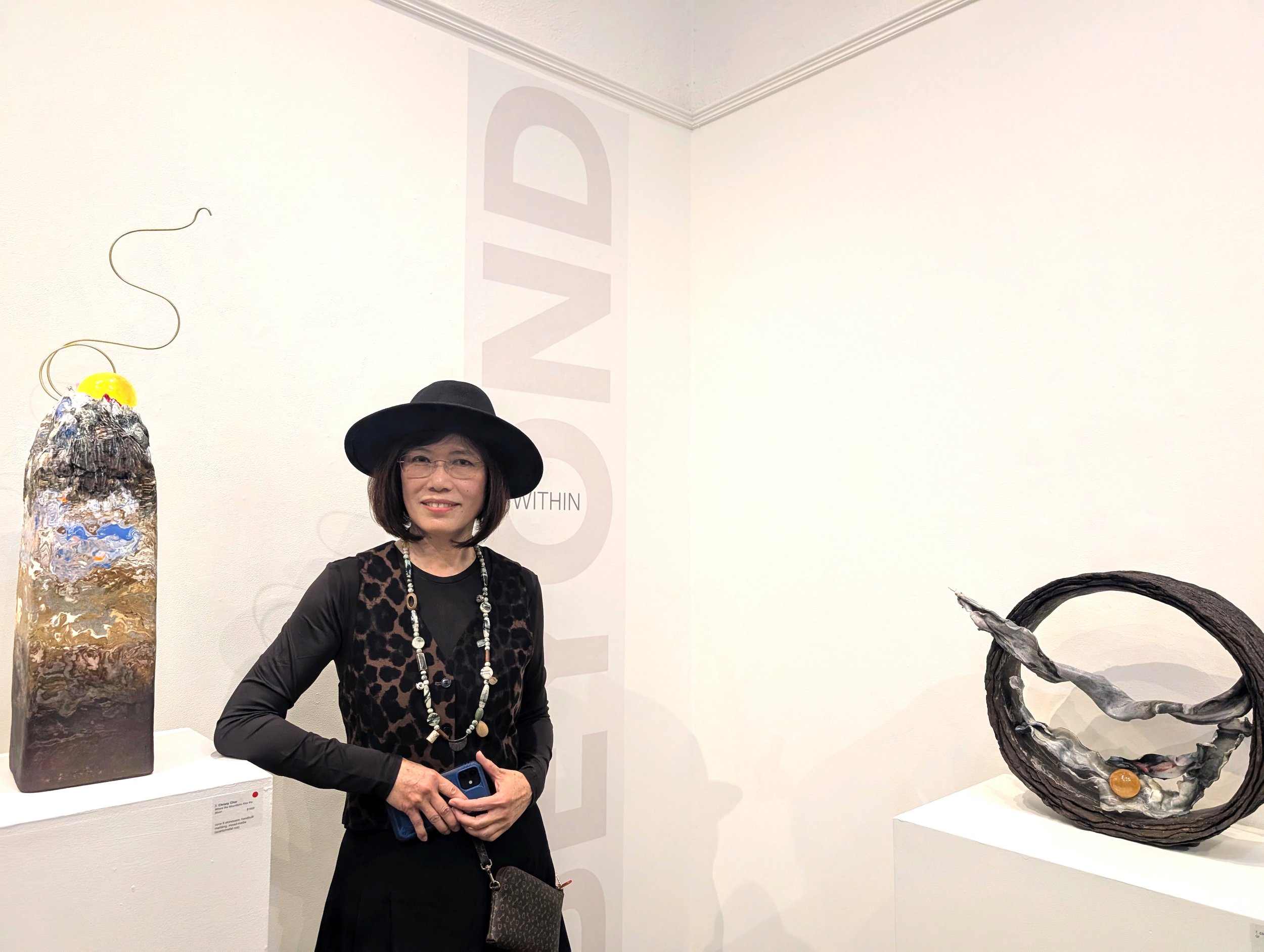
Christy Chor, Opening
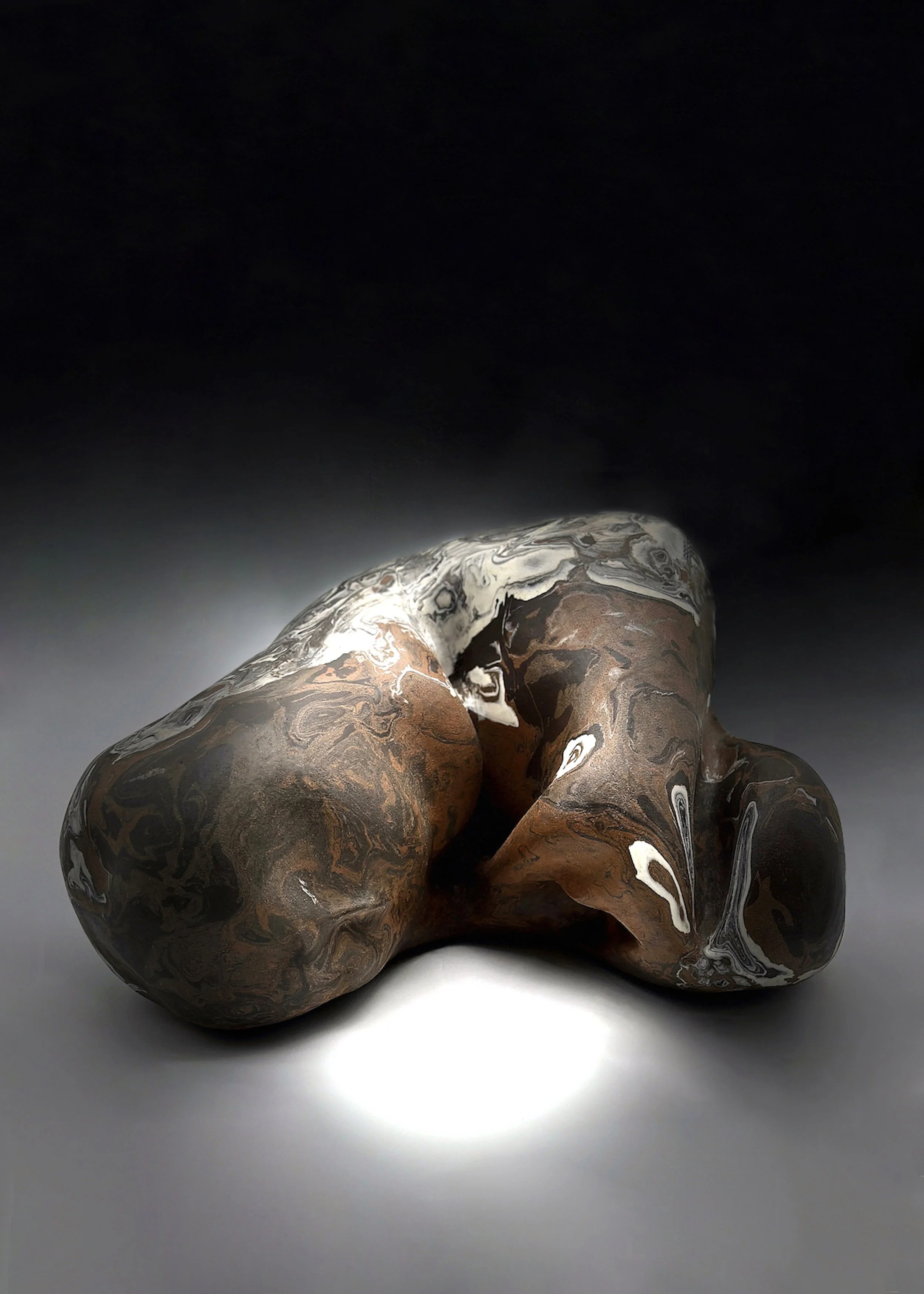
Reborn
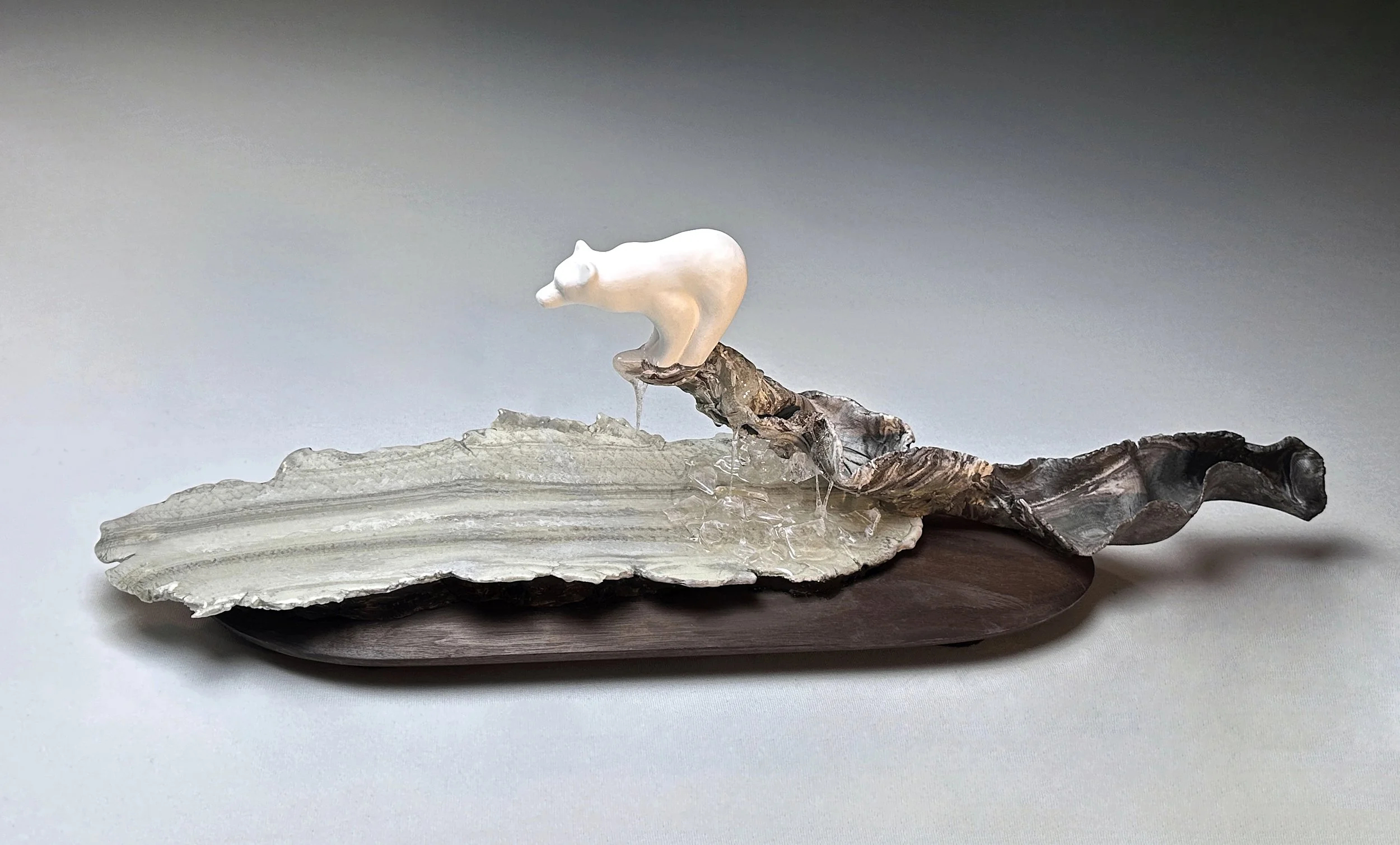
Vision
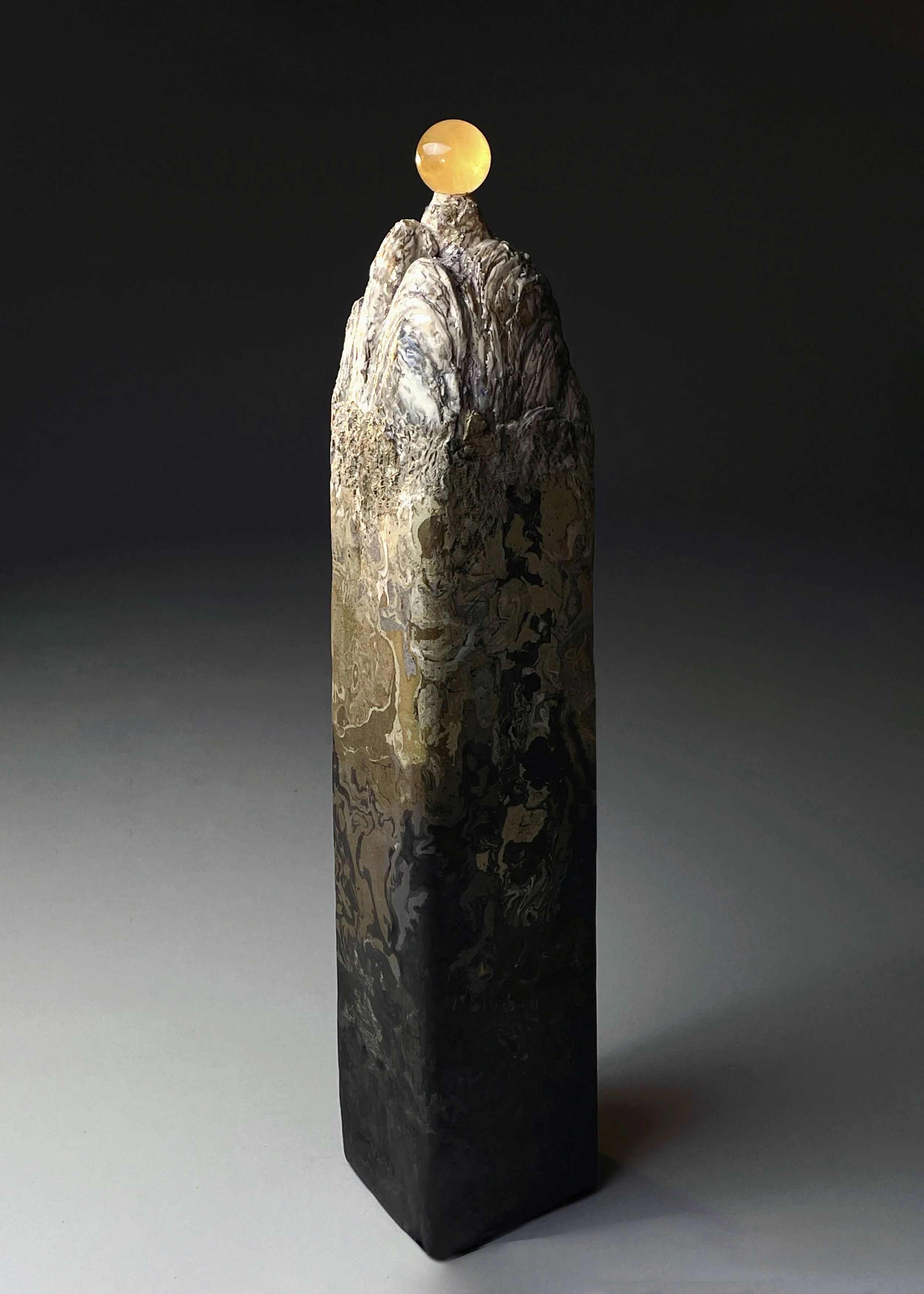
A moon away
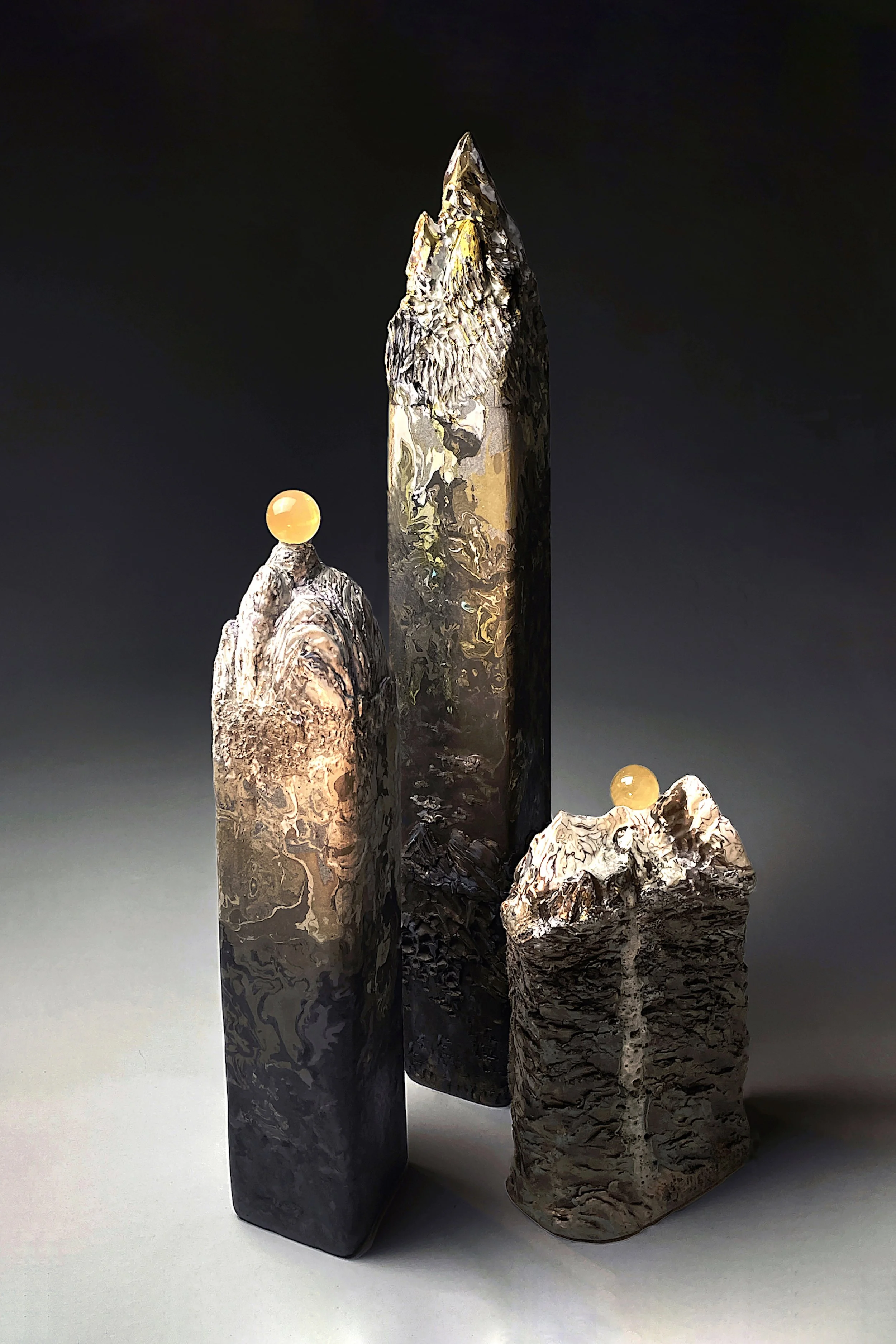
Beyond
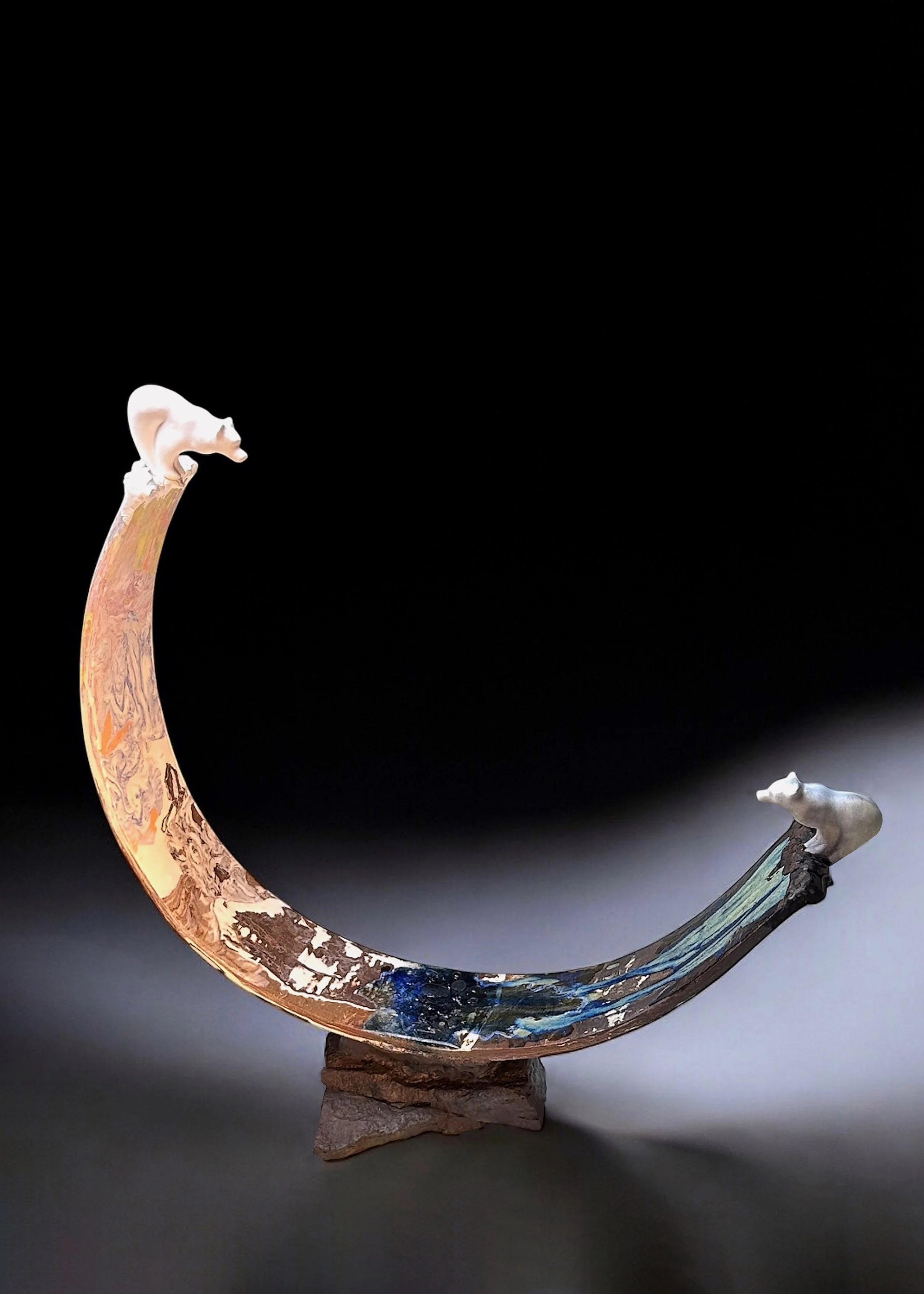
Imbalance
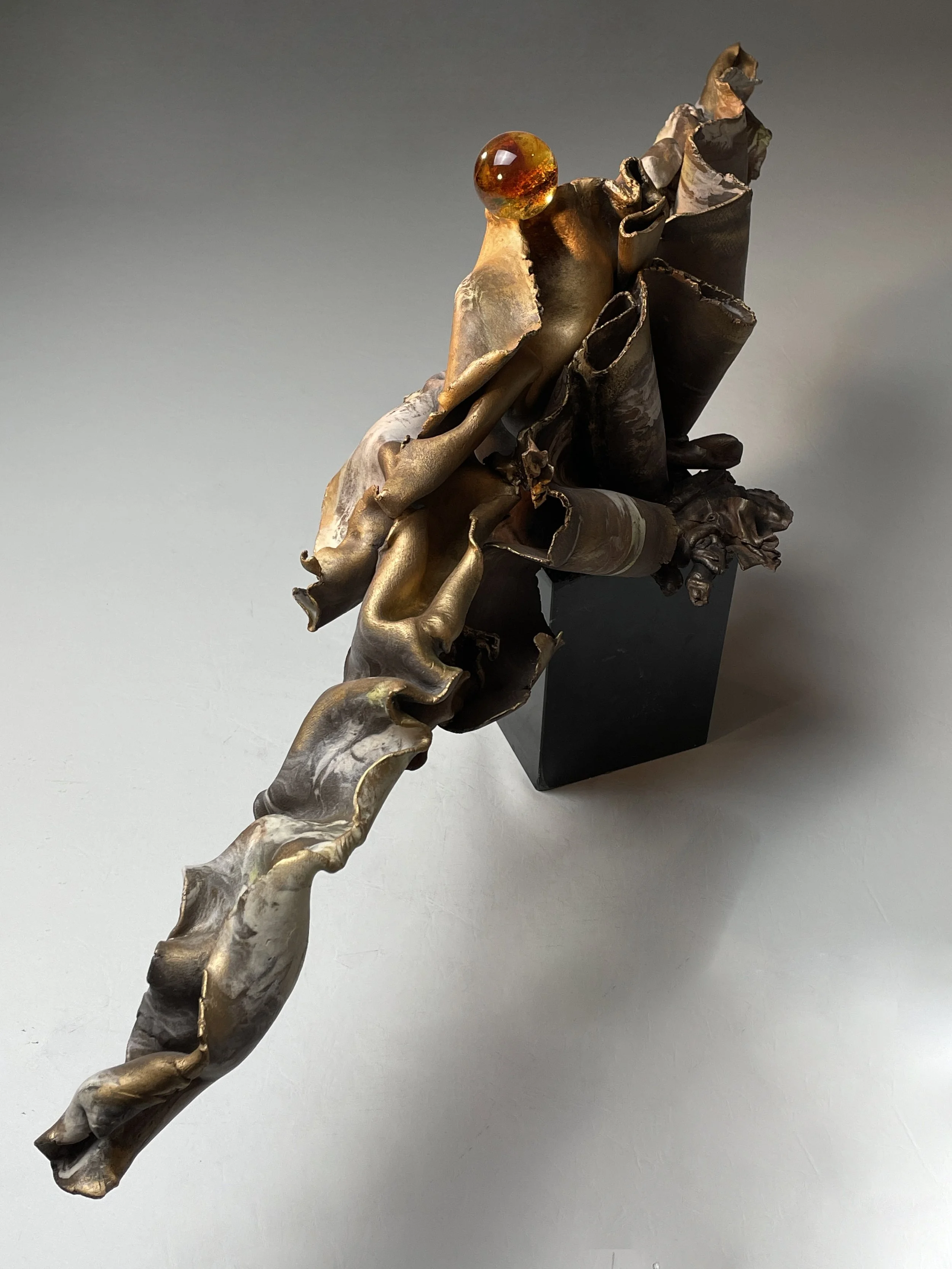
Pulse of Nature
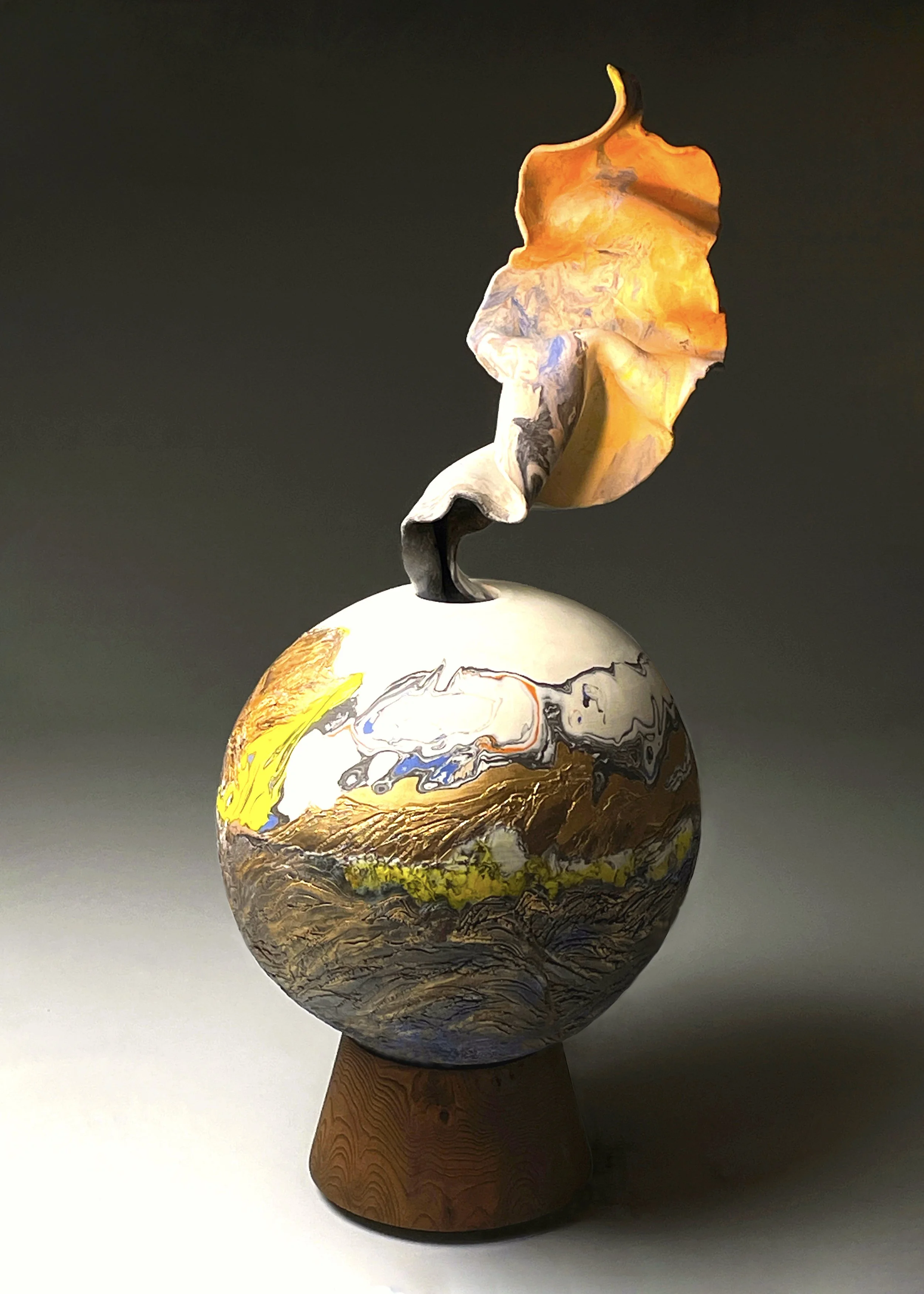
Roar of Nature
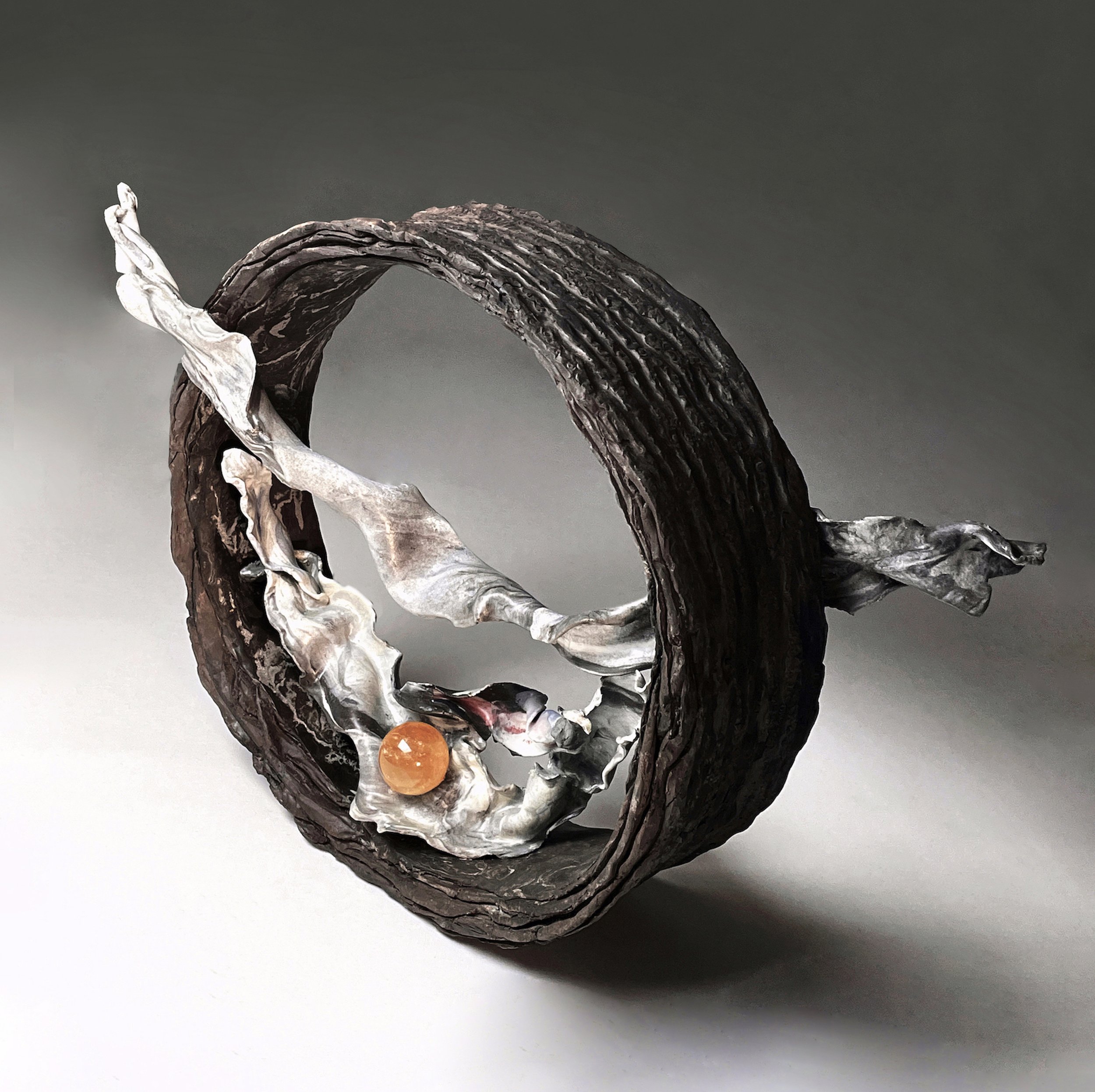
QI
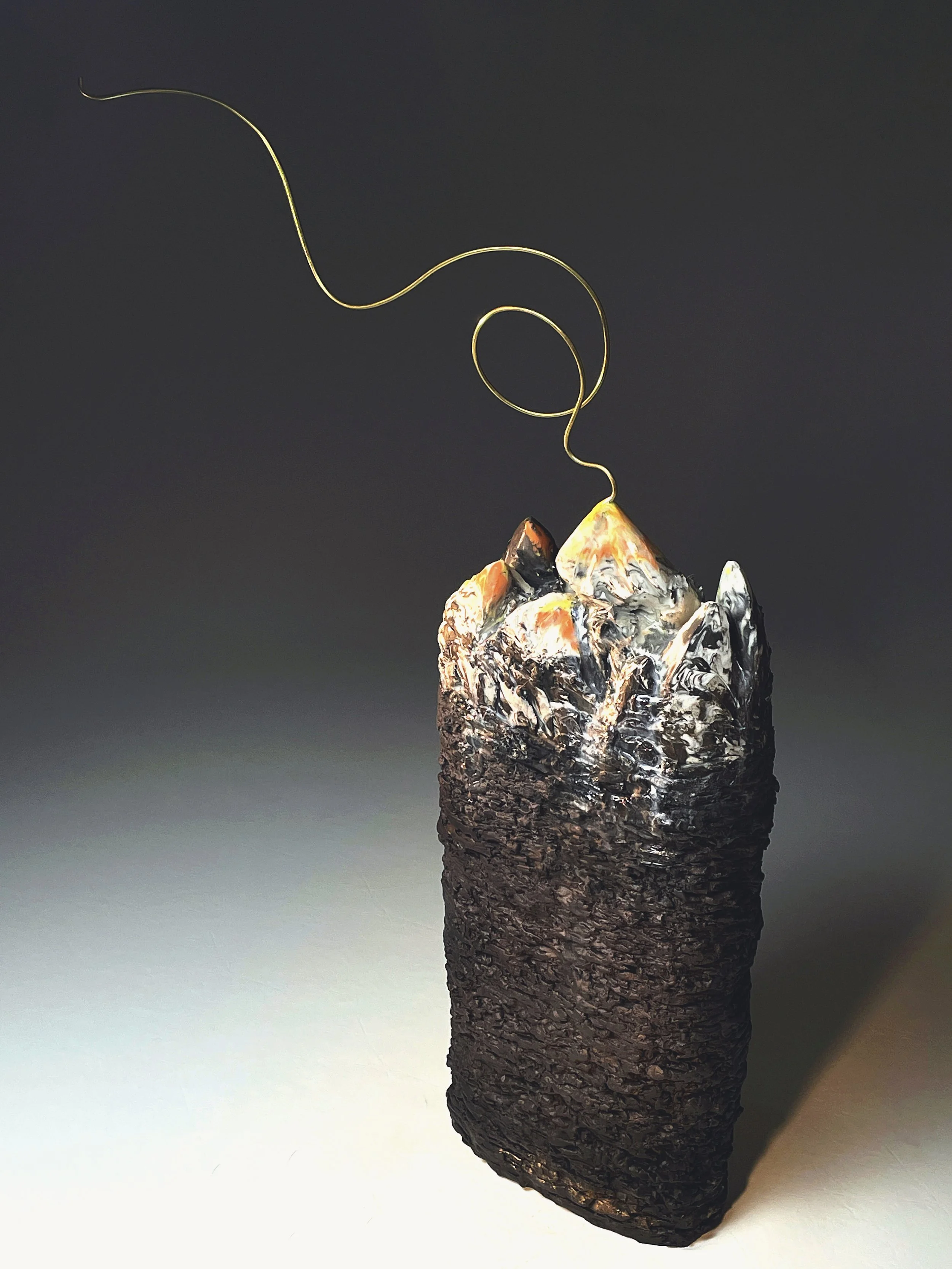
The throne
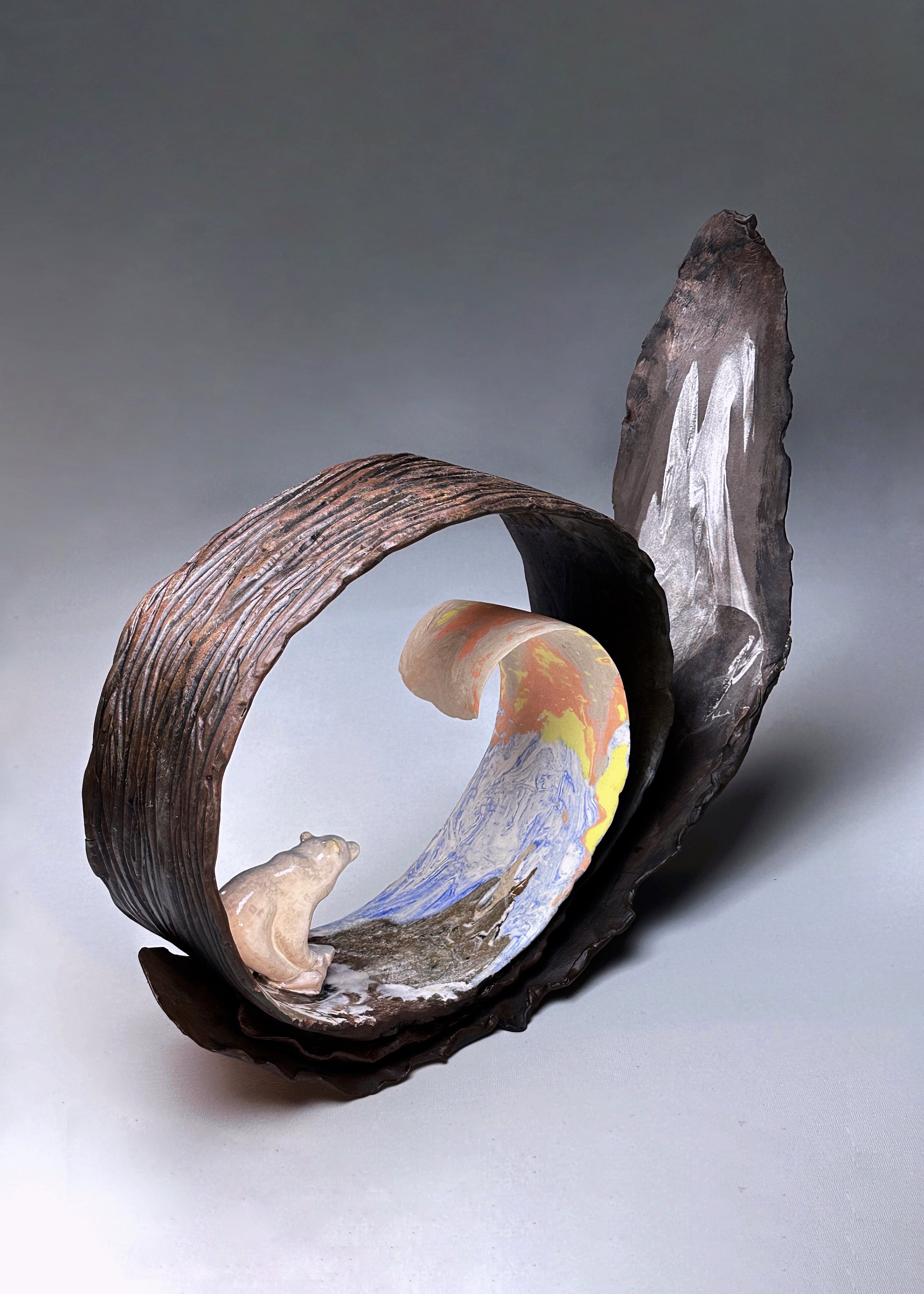
Sanctuary
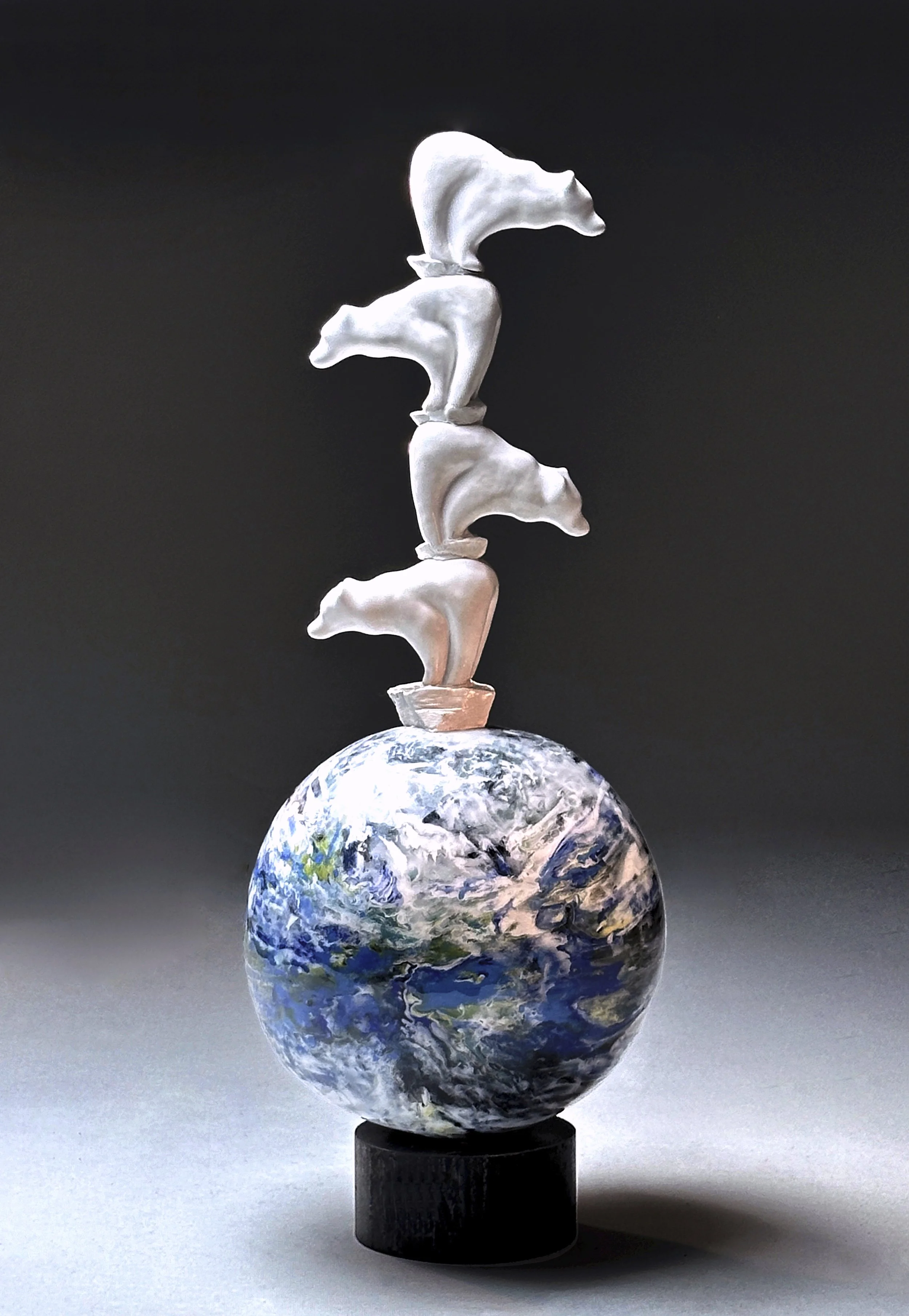
Alliance
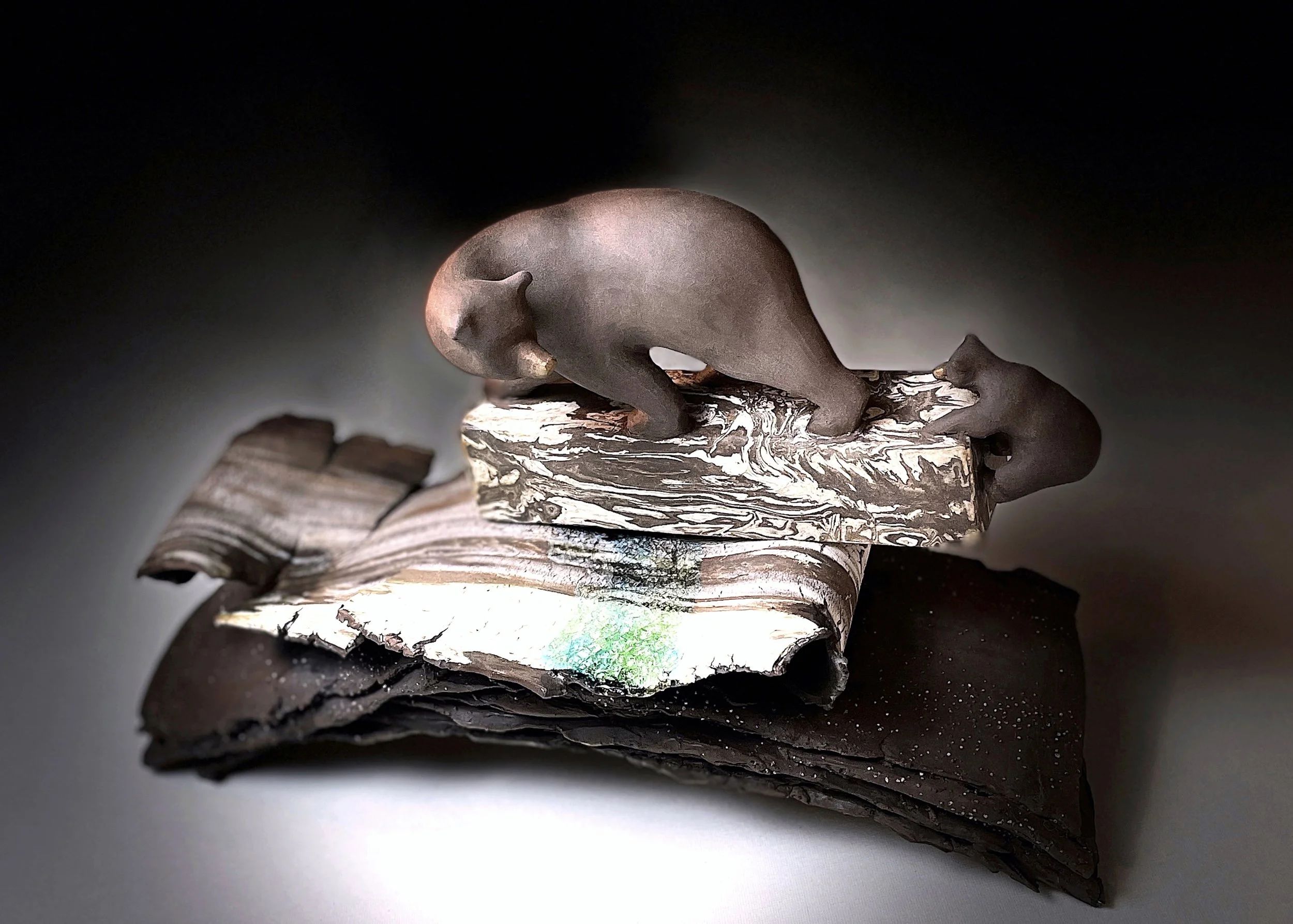
First step
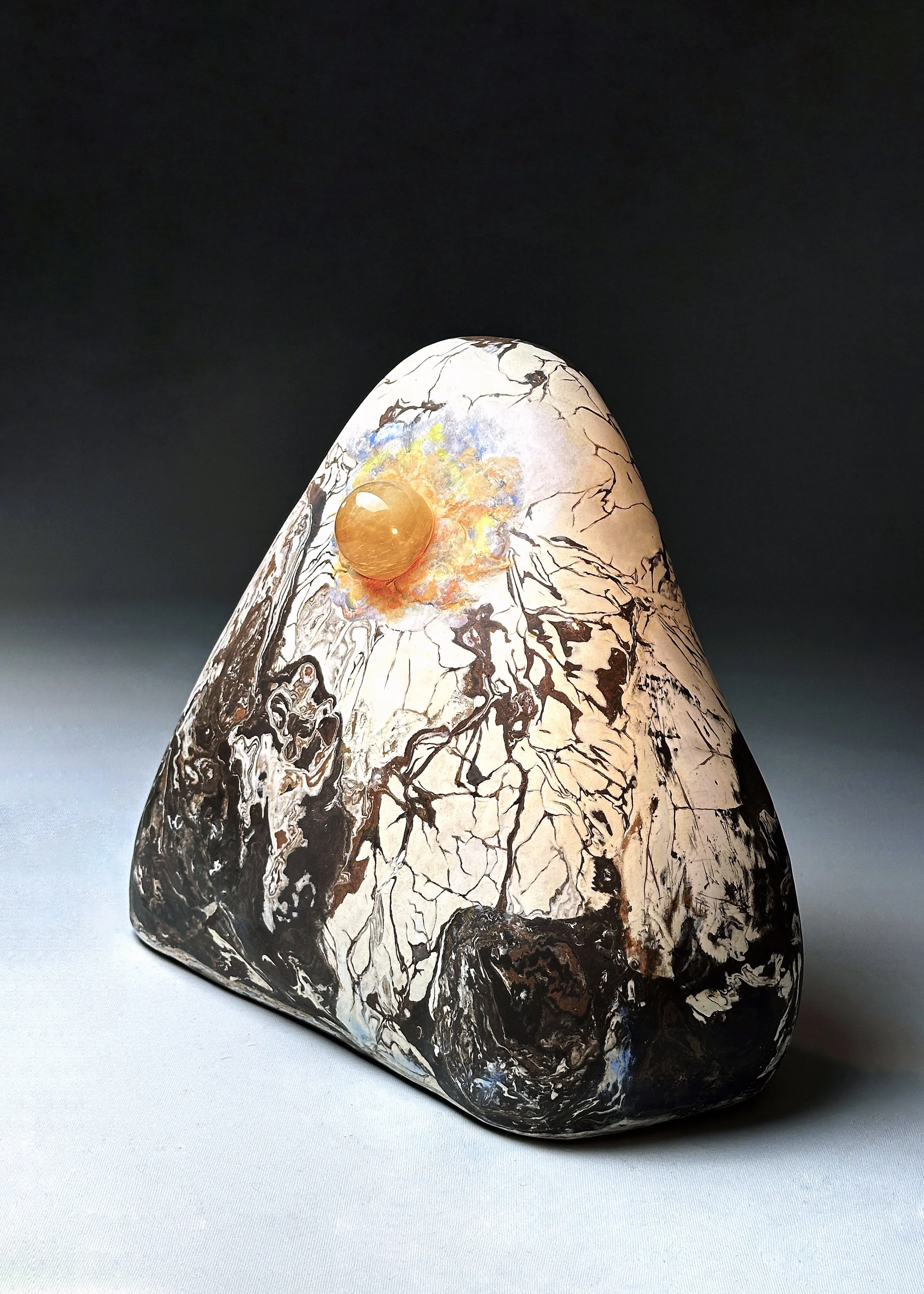
Tranquility
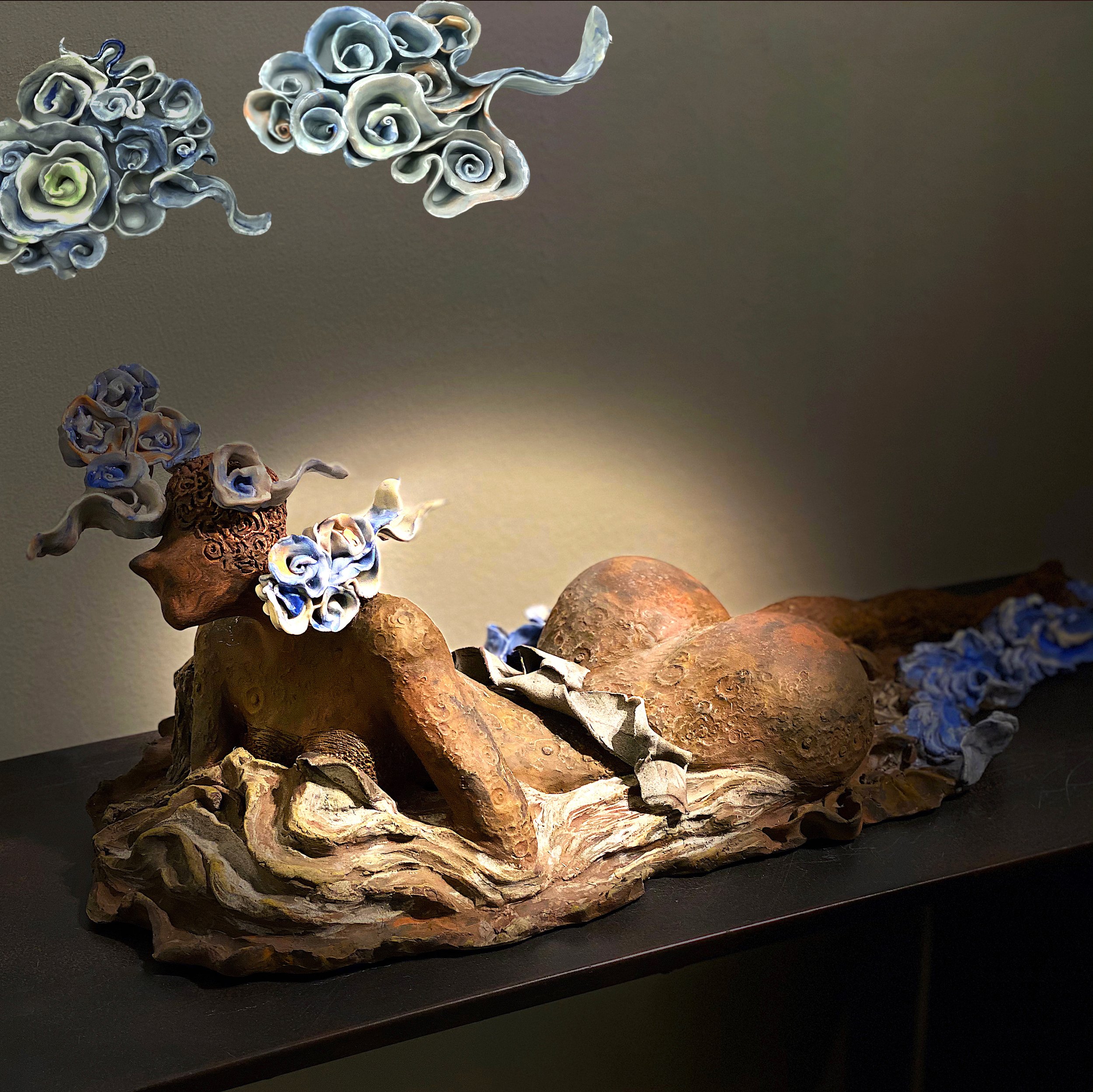
Eternal Feminie