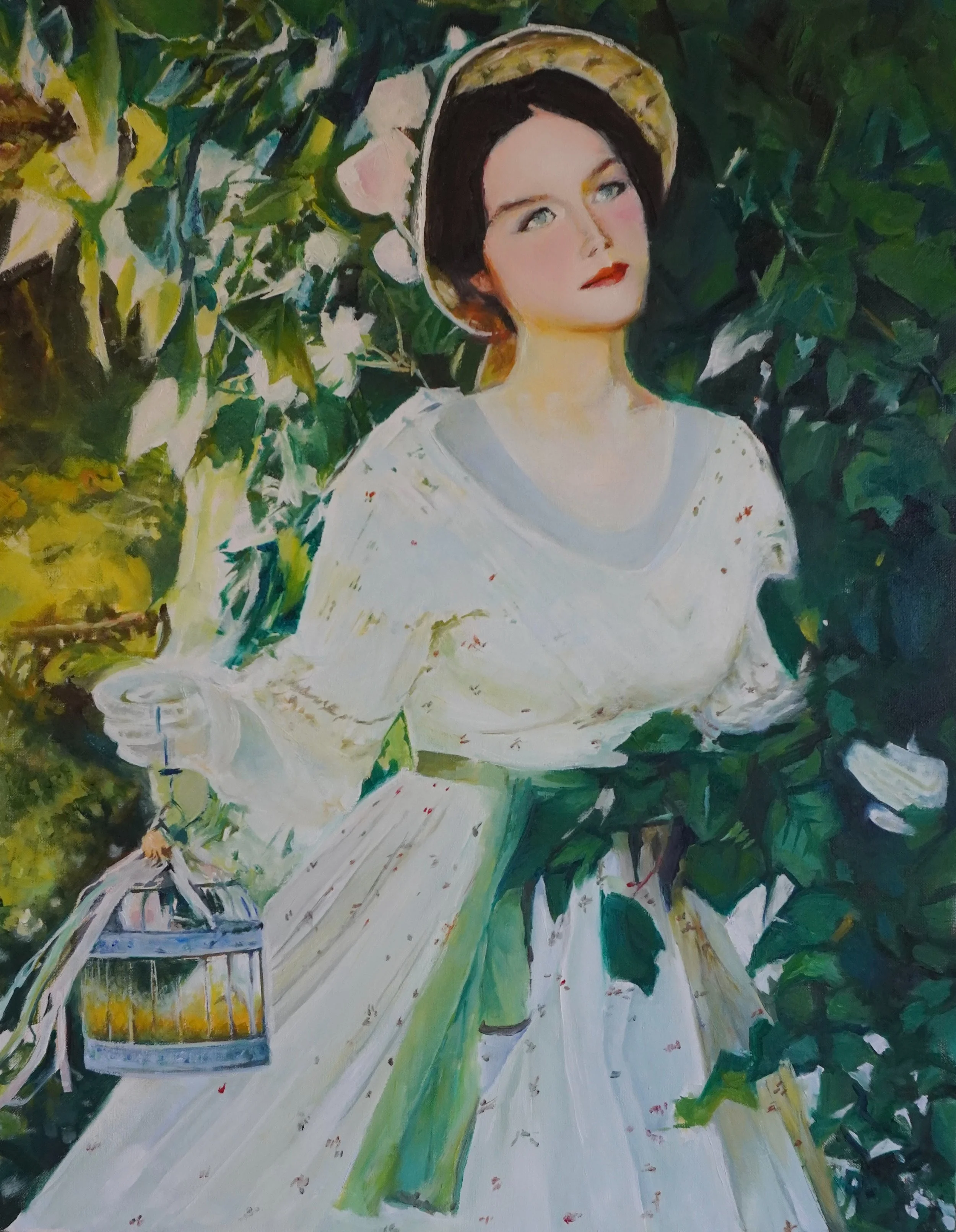
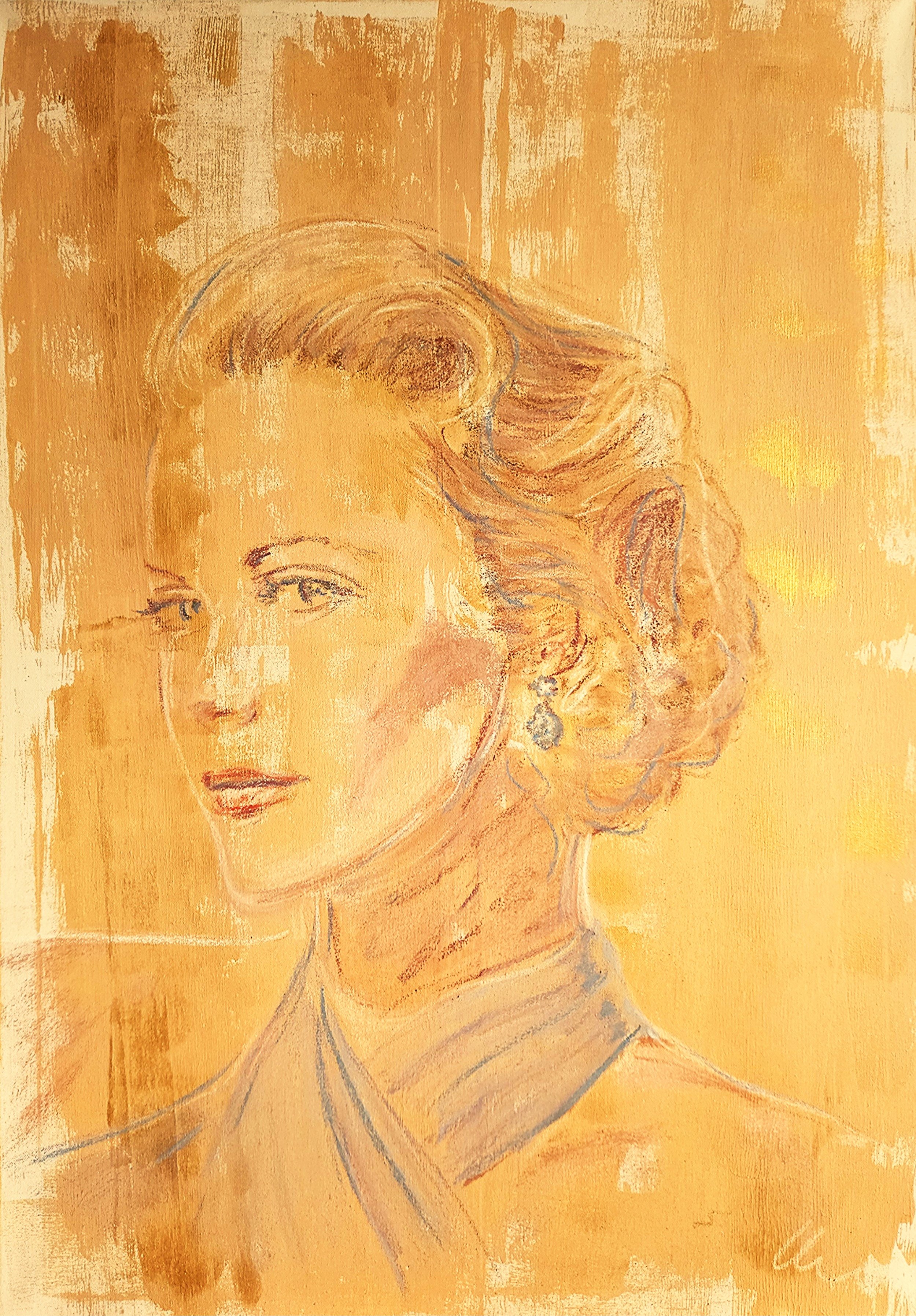
Interview with Carola Helwing
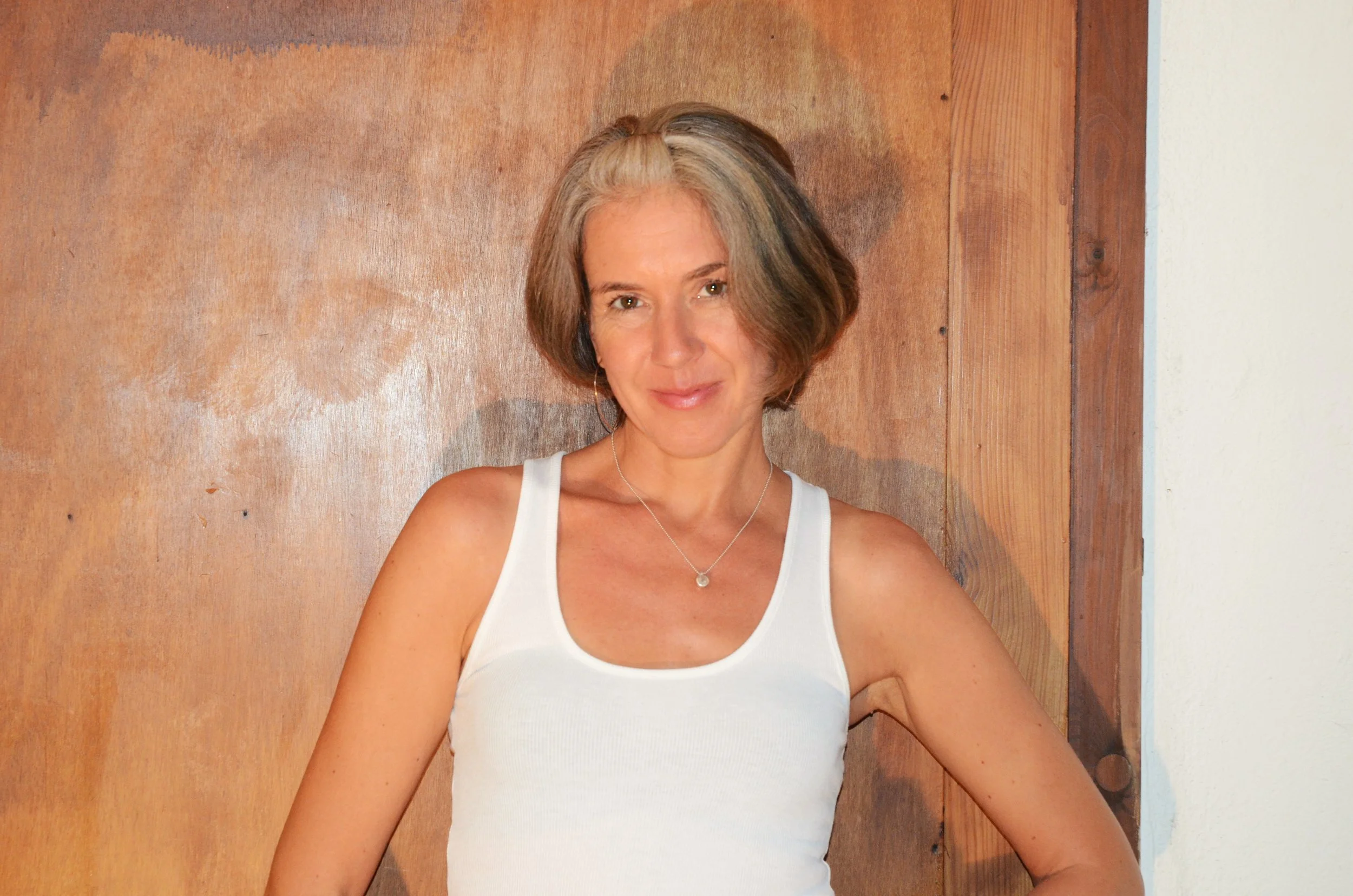
Carola Helwing is a german painter based in Frankfurt/ Main, Germany.
The passion for creativity and espacially painting reaches back to her childhood and as well as dancing it accompanies her through her whole life.
With her background of art and dance education she focuses on dance and movement as a main theme in her artworks. It’s her aim to catch the power and beauty of momentum to translate it onto canvas and make the grace and strength as well as the eternity of dance itself captable for the viewer.
Another focus of her artwork lies on icon-portraits. Carola captures the uniqueness of these persons in her artwork and lets their power and personality shine in a modern context.
Beneath drawing and painting Carola also deals with photography and its variety and possibilities to create new perspectives. It‘s an invitation to the viewers to see the world trough her lense and to gain a different approach to certain topics.
Carola’s work has been awarded with several international art-prizes and can be seen in galleries around the world, both in digital format and in physical form.
Carola, can you walk us through the moment when dance shifted from being only an embodied practice into a pictorial problem for you, and how that shift altered your understanding of what a painting can hold, not as a depiction of movement but as a sustained field in which time, breath, and muscular intention remain perceptible after the body has left the stage?
I started dealing with the dance- and movement-theme in my art during my training as a dance teacher. It gave me the opportunity to approach the topic in a different way and to process my experiences. When you experience something yourself—in my case, dance training and exploring dance and its many facets—you gain a different perspective. I know how my body feels in motion, I know the emotions associated with it. I embody it and now seek a new way to represent all of this as its essence in my artworks. And all these embodied feelings and emotions and experiences are timeless. They are stored in every cell of your body and your consciousness. Once you experienced dance, you can access it at any time, whether you are still dancing or not. And that doesn’t just apply to dancing.
When you begin from a photograph or a performance that has moved you, what criteria determine the specific instant you select, and how do you resist the photograph’s tendency to immobilize experience so that the resulting image retains the instability, velocity, and emotional remainder that exceed the camera’s frame?
I choose the moment that speaks to me emotionally.
The one that captures my attention and reflects what resonates most with me.
Capturing precisely that moment with the camera and conveying what makes that moment special in the photograph is a challenge. Such a shot is the foundation for me to translate all the feelings and emotions it evokes into my images. I have the opportunity to set my own focus, expand and vary the momentum of the photograph, and trust my process to see where the image will lead me.
Your process describes a reliance on mood, music, and flow alongside discipline and routine. How do you conceptualize this oscillation between structured training and improvisatory openness as a governing logic of the work itself, and in what ways does that tension become legible in composition, mark, and the distribution of force across the canvas?
I think this tension between discipline and flow is evident throughout the entire work process. I have an idea of what I want to put on the canvas, an idea of how and where my focus should lie. And as I paint, the direction it all takes becomes clearer. It's a process, malleable, not a rigid framework. And that's the beauty of this process: allowing such changes and trusting yourself and your intuition.
In translating dance into paint, you often speak of the “right pose” and the careful orchestration of color, light, and shadow. How do these formal decisions function as more than expressive tools, becoming instead a kind of visual syntax capable of articulating strength and fragility simultaneously without reducing either to a stable emblem?
From my perspective, strength and fragility in dance cannot be considered or exist separately. They are mutually dependent and, for me, constitute the essence of the piece. My aim is to highlight precisely this. The arrangement of the individual elements is not predetermined. There is a framework, and the rest develops organically. You can't simply say, "Use this color or that color," or "Place the shadow like this." No, it's a development based on various means of expression. In this sense, their interplay creates their own unique visual syntax.
Classical ballet and contemporary dance propose different relationships to gravity, control, and virtuosity. When these traditions converge in your imagery, how do you decide whether a work will foreground discipline, momentum, suspension, or collapse, and what conceptual stakes emerge when you render bodily labor as an image that must appear effortless to communicate its power?
The effortless nature of the performance, coupled with the exertion, is, in my view, an essential characteristic of dance. The viewer is meant to enjoy the performance; they shouldn't notice or be able to see the discipline the dancer entails or the sacrifices they make. At least, that's how it is in classical ballet. In that sense, it's also what I depict in my paintings. When I dance or watch dancers, I'm captivated by their presence, their lightness, and simultaneously by the multifaceted emotions they embody. Therefore, I try to translate precisely this onto the canvas. The focus I choose varies depending on my state of mind. It has a lot to do with my own mood. Do I feel vulnerable? Do I feel strong? Do I feel both?
You have described your studio as a space of calm, rhythm, and repeated return, where you work on the floor and on the wall, step back, and reassess. How do you understand the studio as an active component of the work, almost an architecture of attention, shaping the temporality of looking and the decisions that determine when an image is resolved or left deliberately open?
The environment in which I work plays a significant role in the creative process. For me, it's essential that several components, such as sufficient time, physical space, and a specific atmosphere, come together. Of course, I could create my paintings in a different environment, but it probably wouldn't be the same. I need to feel comfortable and undisturbed. The opportunity to let a painting take effect, to allow it to rest, and then to revisit it the next day, to modify it, to expand upon it—that's crucial for me. So yes, the environment is an integral part of the process, or rather, it creates the conditions for it.
You speak of wanting the viewer not only to see but to feel the grace and strength, even the “eternity,” of dance. What does eternity mean to you in the context of an image that necessarily arrests motion, and how do you differentiate between timelessness as a formal achievement and timelessness as an idealizing promise that contemporary art discourse often interrogates?
From my perspective, the great advantage of art lies in its potential to capture the fleeting nature of the world and reproduce that very moment long afterward. A moment is preserved, only to unfold further, independent of time and space, granting access to the viewer. That is eternity for me. A theme may depict a specific moment, but this depiction transcends this moment entirely. It thus creates a new quality beyond time and space. The relevance and significance attributed to this depend on the value we place on it. Do I always have to consider a painting within its historical context? Are there themes that resonate with generation after generation, irrespective of this context? And isn't it ultimately the viewer who allows a work of art to acquire meaning? Take classical ballet: why do certain pieces still fascinate us today, even though their origins lie far in the past? Is it the universal themes? Is it their timelessness? What do we see in these pieces today that moves us? That, for me, is a piece of eternity. Something that lights up, independent of physical and temporary space.
In your dance paintings, how do you approach embodiment as a philosophical question rather than a representational one, particularly when the body is at once a site of discipline, vulnerability, aspiration, and projection, and when the viewer’s own body becomes implicated through kinesthetic empathy and perceptual identification?
In my paintings, I want to connect the reality of the body with the ideals of art. For me the reality of the body encompasses not only anatomy but also all the emotions stored within it. I try to make this essence visible and the viewer decides, consciously or unconsciously, whith which he resonates. As the viewer, do I see a dancer and does her grace speak to me? Do I have access through my own experiences with movement, experiences that evoke a memory or connect to a personal theme? Do I focus on the emotion rather than on the body? What touches me and why? Do I see embodiment as a symbolic representation? These questions are essential to my approach to embodiment in a philosophical sense.
Color in your work appears to operate as both atmosphere and argument, intensifying the emotional charge of a moment while structuring how the viewer reads volume, tension, and presence. How do you think about color as a form of thinking in paint, and what methods help you test whether a palette produces complexity rather than a single, predetermined effect?
Color is an essential component of a work of art for me. In painting, color allows to exert influence and determine the direction and effect of a piece. In my work, the use of color develops as a process. I have an initial idea, but what actually happens on the canvas, which colors I ultimately choose, is not definitively predetermined. It depends on the mood I want to create and how the artwork unfolds. It's much more intuitive, less methodical.
Your icon portraits seek to make visible the unique character of singular personalities, yet portraiture is historically entangled with typology, mythmaking, and the production of public image. How do you position your portraits within that history, and what distinguishes your approach from the reiteration of celebrity aura, allowing instead for ambiguity, interiority, or contradiction?
Portrait painting truly has a very long history and has always held a special appeal for artists and viewers alike. For me it's a way to approach people through artistic expression.
If I am interested in a personality and fascinated by the story, I try to clarify this in my artworks. I don't want to create a mere, simplistic depiction, but rather try to give space to the seemingly ambivalent aspects in my portrayals. What is typical of the myth surrounding this person, and which perhaps tragic aspects are revealed? In this respect, I hope that I succeed in giving the viewer the necessary space to develop their own understanding of this person.
When you paint “outstanding persons,” how do you negotiate authorship and agency in the image: what belongs to the sitter’s established persona, what belongs to your interpretive gaze, and how do you prevent the painting from becoming mere confirmation of an existing narrative, opening space for a more complex encounter with power and vulnerability?
I choose my subjects—in this case, the people I want to portray—based on how much they and their stories resonate with me. These are individuals who have accompanied and shaped me in one way or another throughout my own life, for example, through their music. What exactly has shaped me, and in what way? What was most important to me? Furthermore, I'm interested in the person behind the story, the aspects beyond fame and glamour. It's my perspective on these individuals, intertwined with my own story, that defines my artworks.
Photography, for you, offers the possibility of new perspectives and an invitation to see differently. How do you understand perspective here as more than optical framing, perhaps as an ethical position toward the world, and how does the act of photographing shape what you later consider worthy of translation into paint as opposed to remaining a photographic thought?
I find it exciting in photography to use the opportunity to question the supposed reality of things as we commonly perceive them. It's not just about a particular section of the image, but about what new image emerges from it. In this way, a different kind of reality is created. It should challenge the viewer, encourage them to see and think "outside the box," or at least to allow for the possibility of a different perspective. And this way of thinking and observing also helps me in my further process. Questioning something, allowing other ways of perceiving things, and asking myself: what do I see? What do I want to see? And what do I ultimately want to show? What is my truth?
Materially, your use of acrylics and pastels implies a dialogue between opacity and residue, coverage and trace. How do you work with surface as a register of effort, revision, and intensity, and how do your materials allow you to suggest both the density of physical labor and the fleetingness of a gesture that cannot be fully retained?
The material properties of acrylic paints and pastels allow me to create precisely the kind of visual effect I envision. Depending on what and how much I want to emphasize, the paint will be highly opaque on the canvas or appear translucent. This depends on the subject matter, my intention, and evolves during the painting process.
You describe creativity as a way to make the world brighter in uncertain times. How do you articulate the critical stakes of that brightness without collapsing into consolation, and what does it mean for beauty and strength to function as serious positions within contemporary art rather than as decorative outcomes?
From my perspective, we always have a choice in how we want to look at things. Do I focus on the negative? Or do I try to focus on the positive? Do I contribute to all the negativity, the bad news, and demonstrate once again how crisis-ridden our world is right now? Or do I allow myself to hold on to the positive despite all these circumstances? Isn't that just as important? Even if it might seem trivial how one can create "beautiful art" in these times, I think it's immensely important, because it gives people the opportunity to make their own choices. I can't choose many things. But perhaps I can decide what I want to surround myself with. What I want to engage with. Not to block out all the injustices and crises and remain in a bubble, but to consciously choose something different, precisely because things are the way they are.
Given your background in art education, special education, and dance instruction, you have long worked with attention, perception, and the diverse ways bodies and minds process experience. How does this pedagogical knowledge inform your ethics of address as an artist, shaping how you imagine viewers encountering your work through different sensory, cognitive, and emotional pathways, and how you build images that invite depth rather than quick consumption?
That's a fascinating question. Every person is unique and has its own way of experiencing the world. Some people absorb things more intellectually, others emotionally. I don't predefine a specific target audience, but basically offer people my perspective and give them the opportunity to engage with it. What resonates with someone is entirely individual, and that's what makes it so exciting. Everyone perceives different things in a painting. Everyone evaluates it subjectively. How deeply someone wants to engage with a work of art and its subject matter depends on the individual and the own story. My paintings aren't cluttered, but rather very focused and convey an emotional connection, fort hat they invite the viewer to linger and engage with them and to form an own opinion.
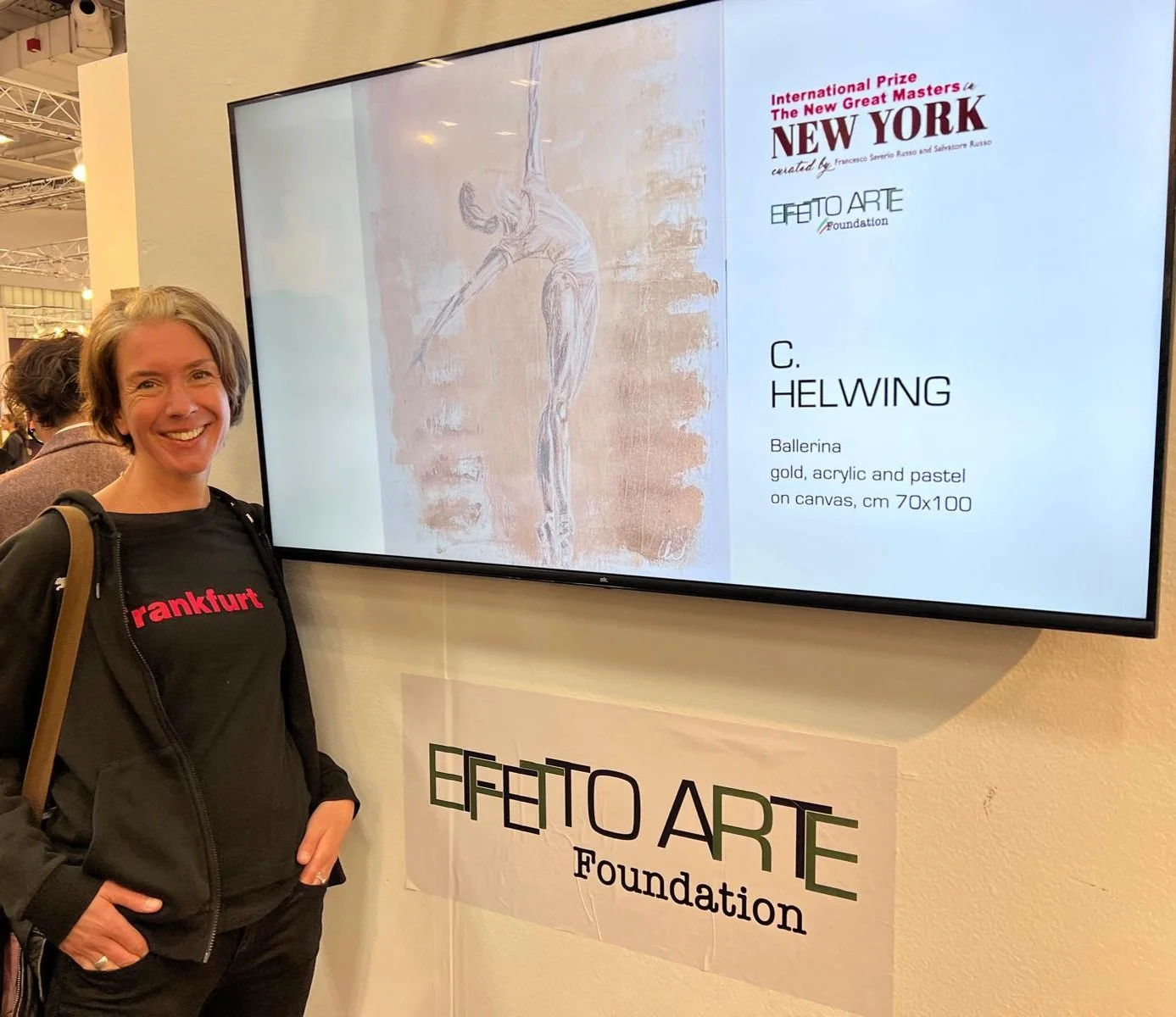
art expo NY
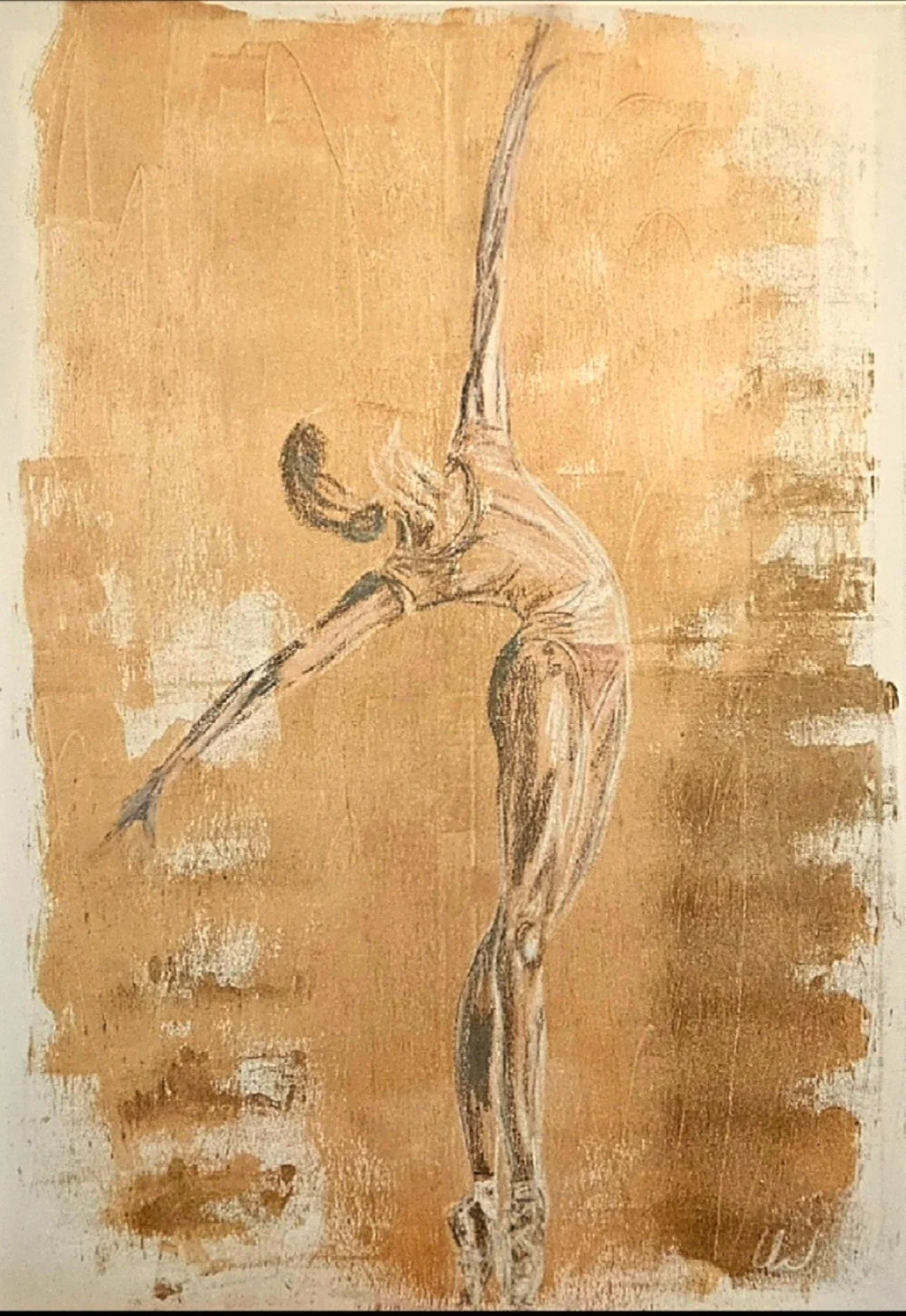
Ballerina gold
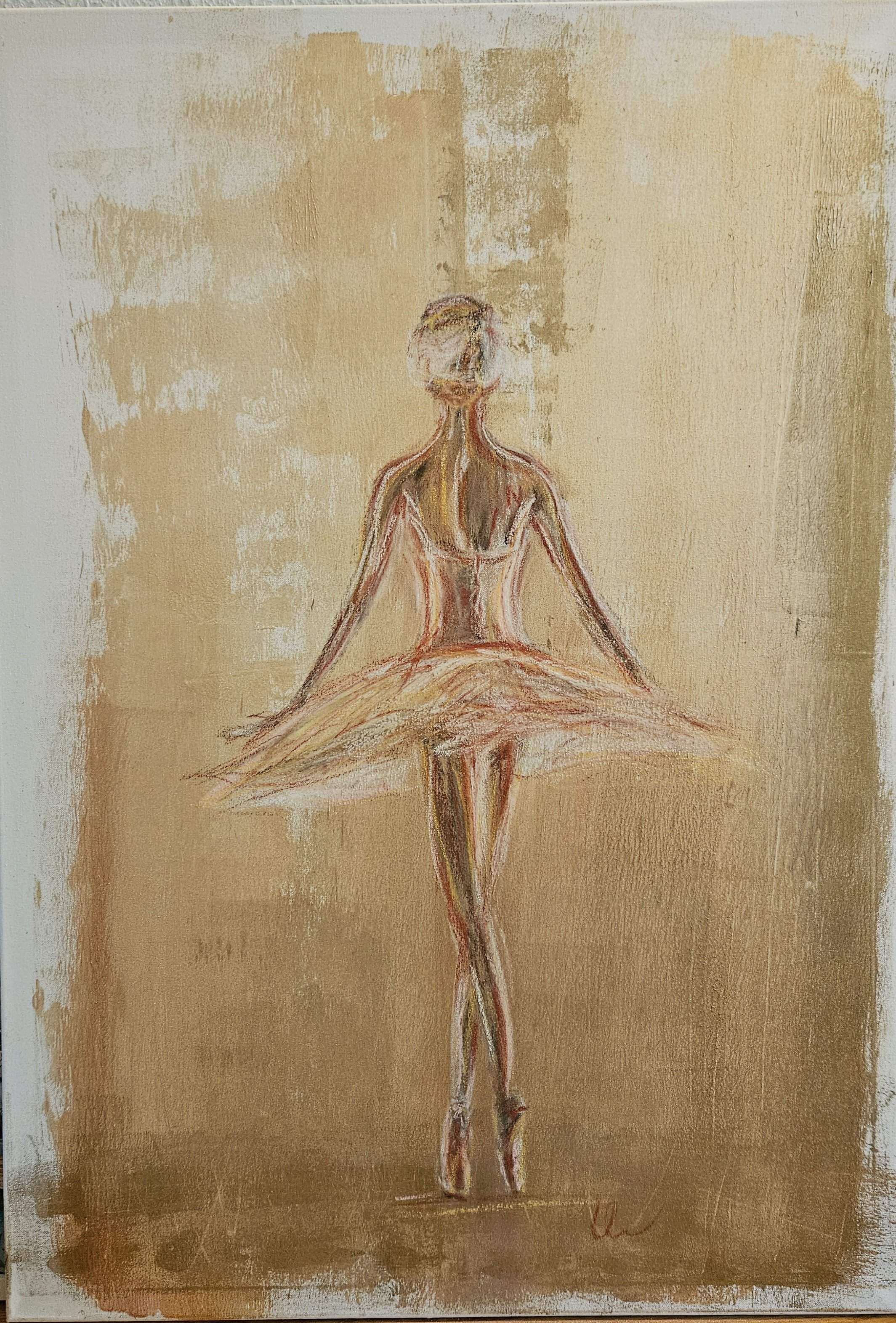
Ballerina golden Swan
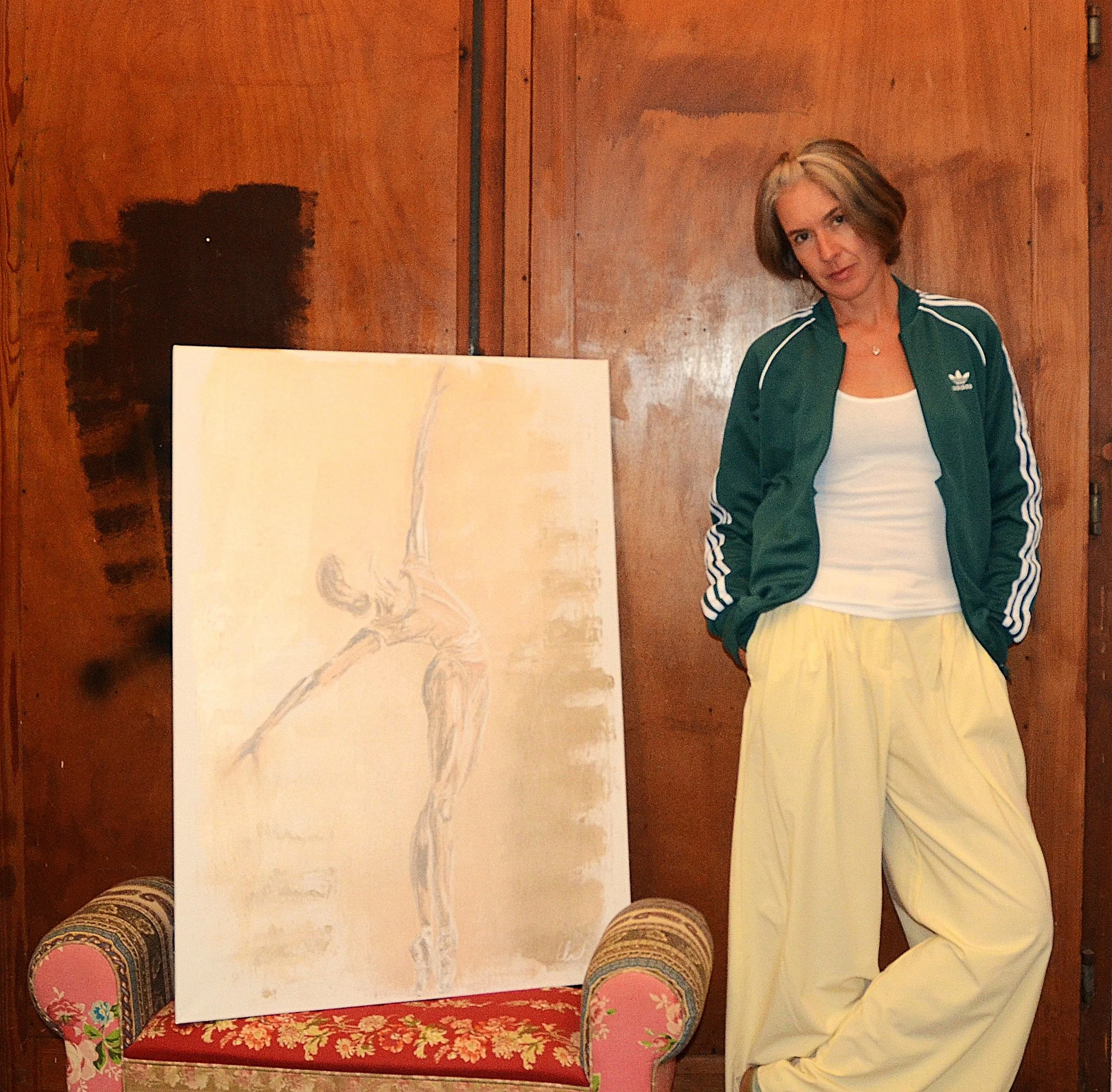
Carola Helwing
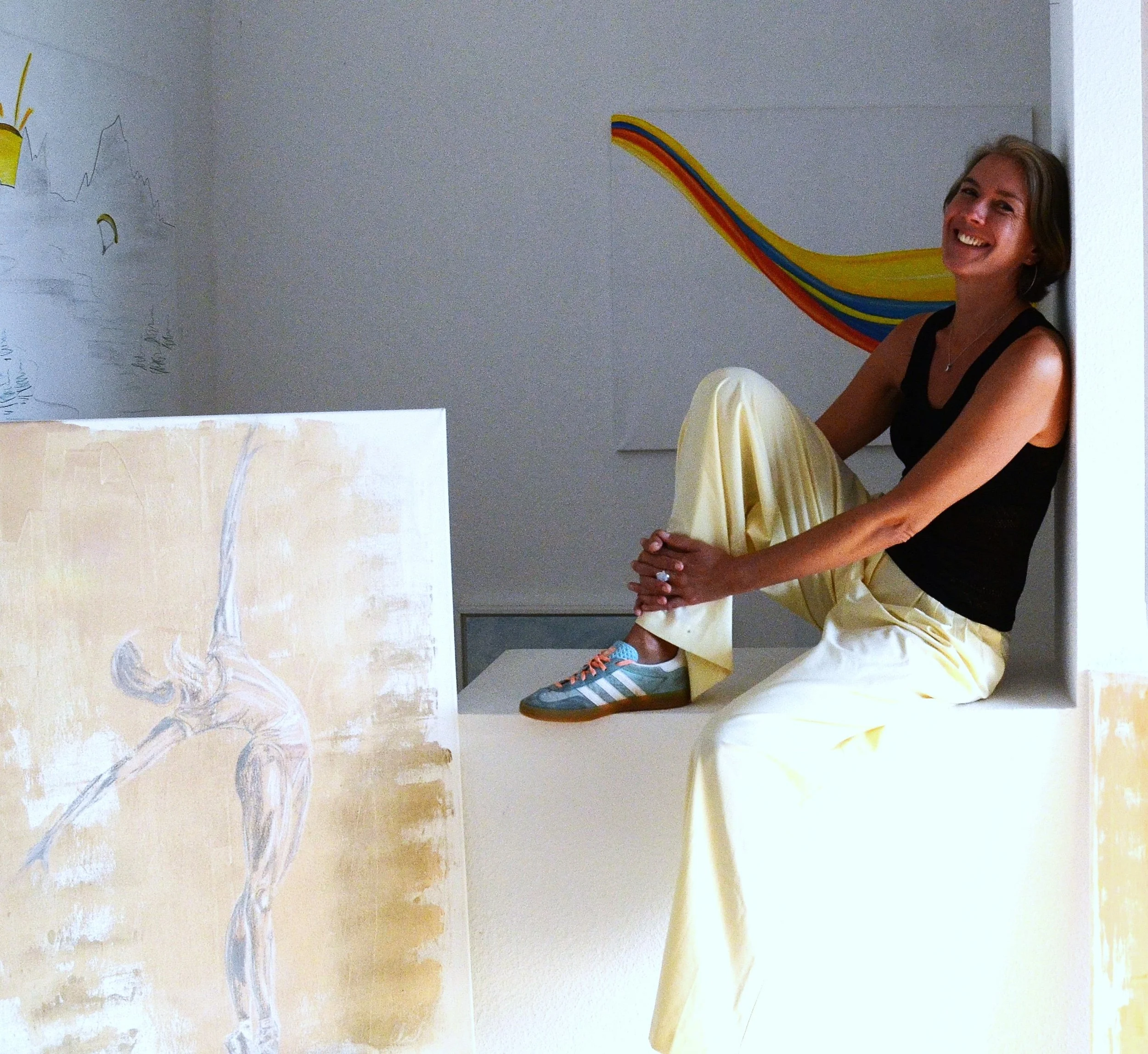
Carola in her artwork-space
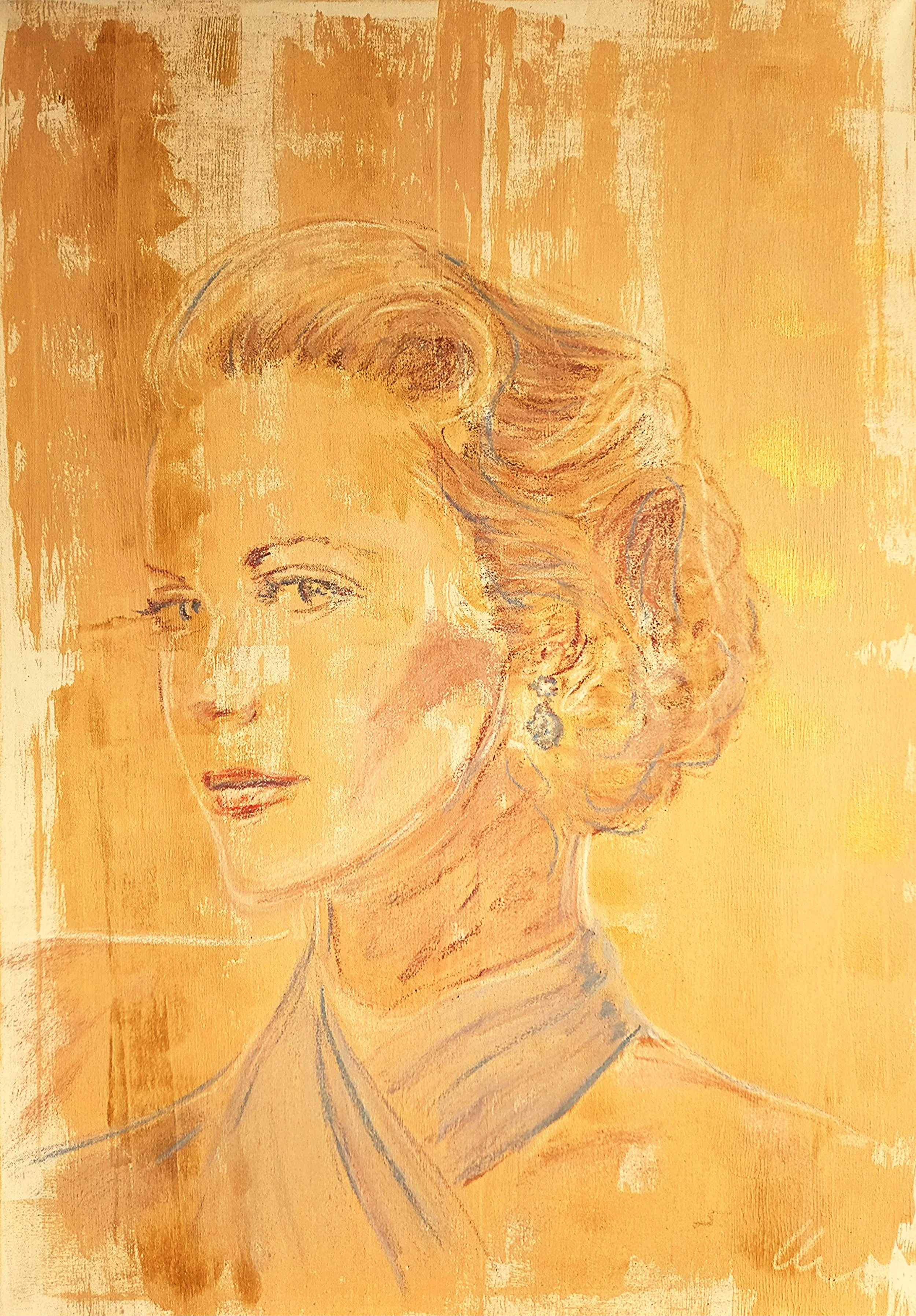
Grace
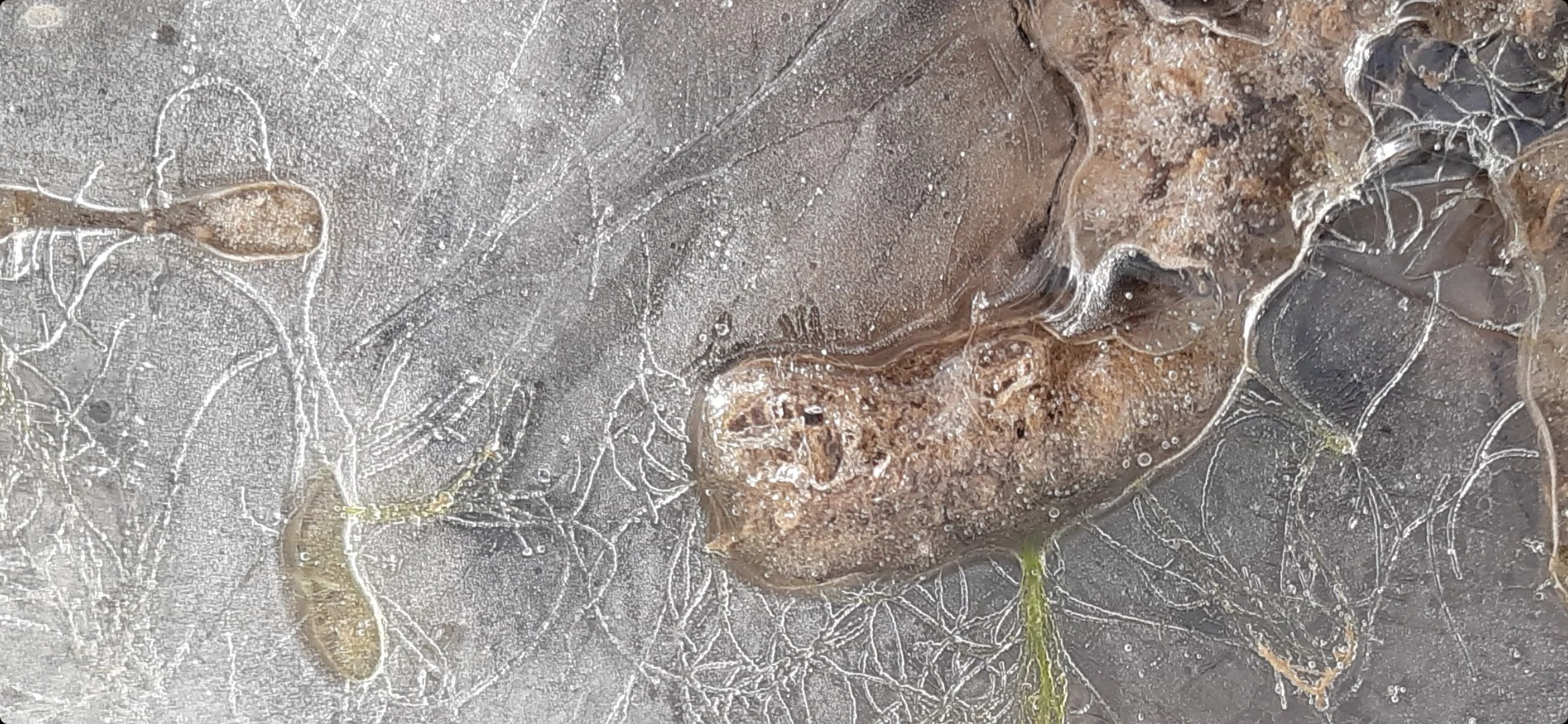
Ice-Dragon
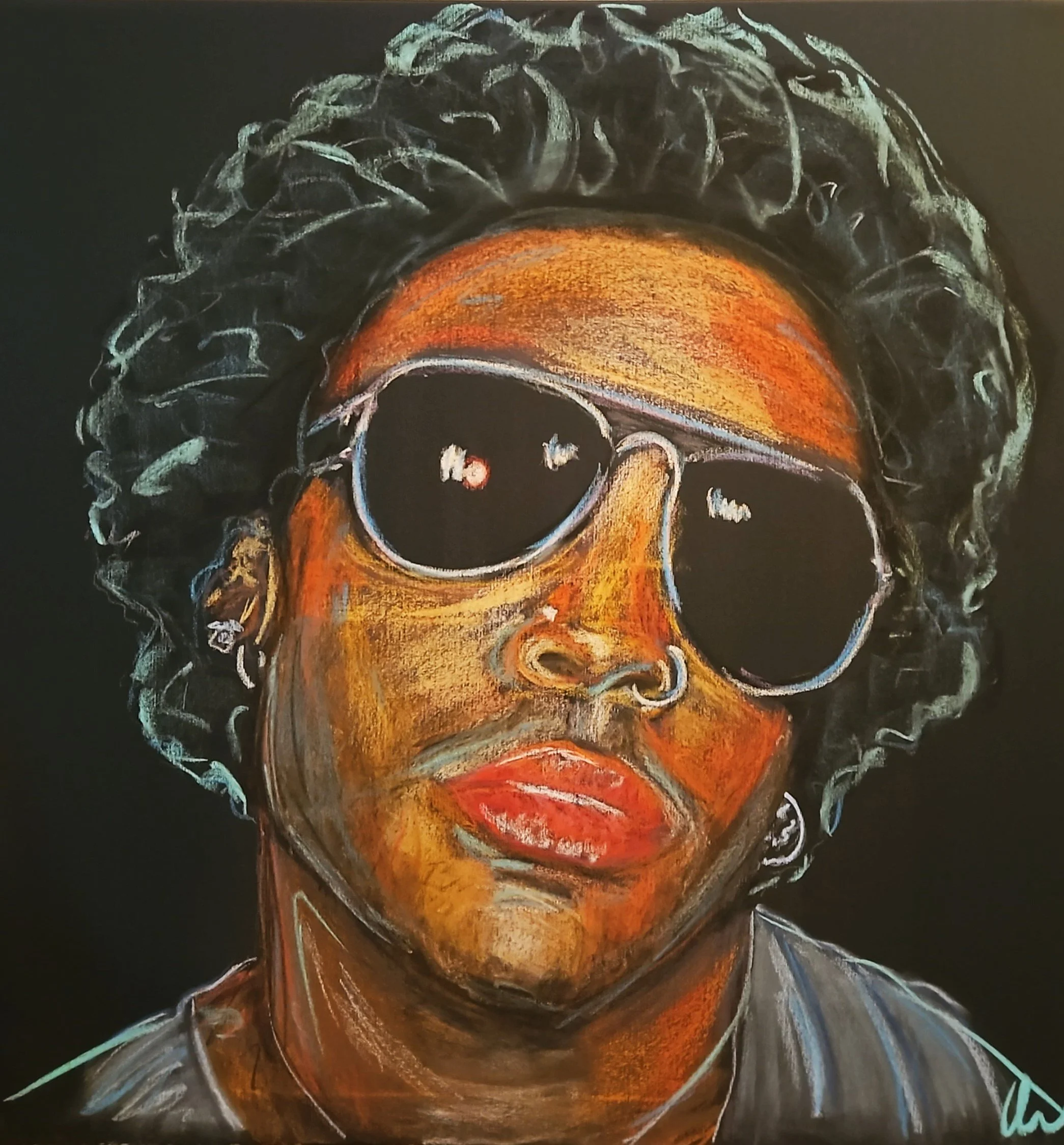
Lenny
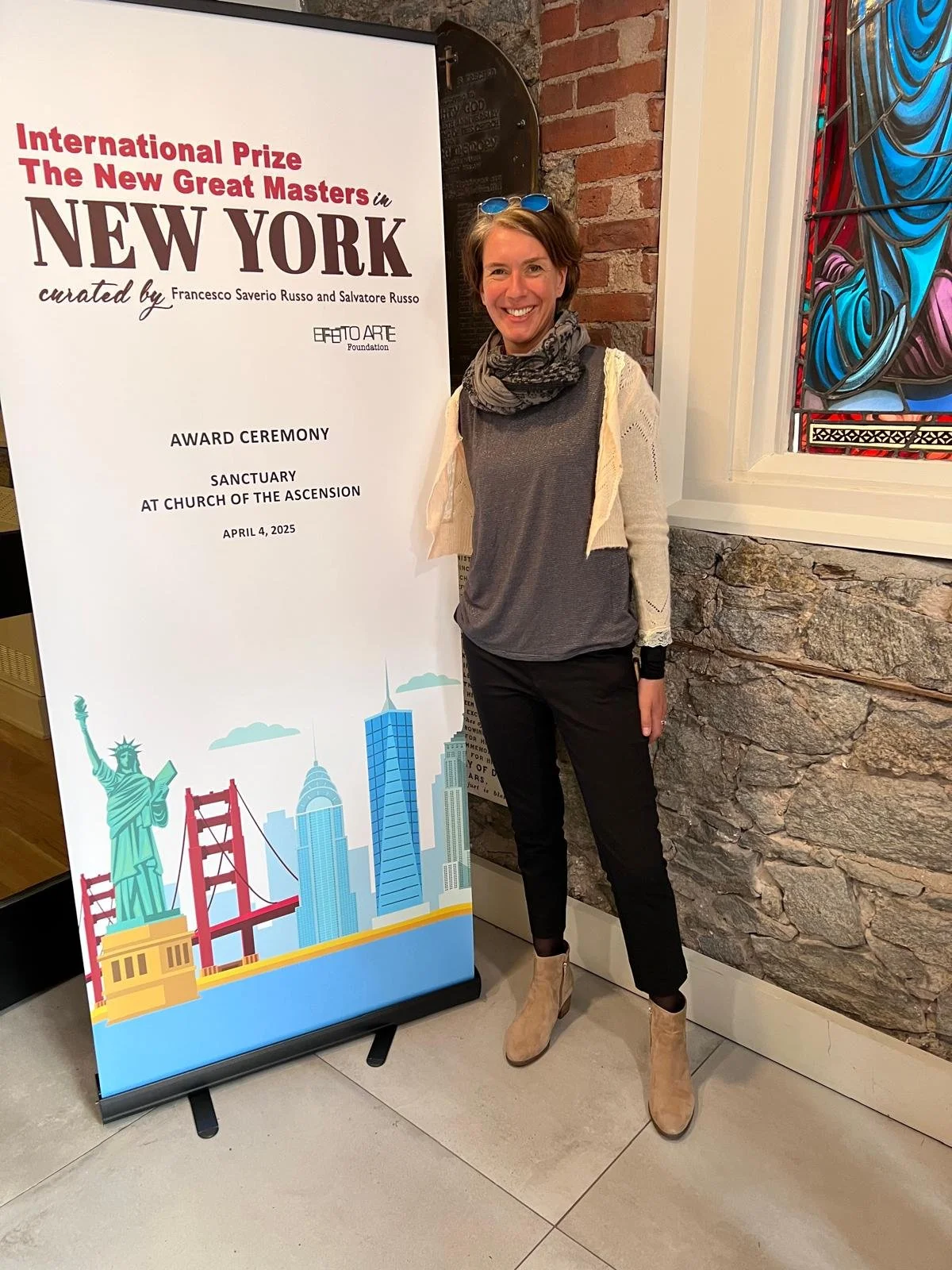
NY
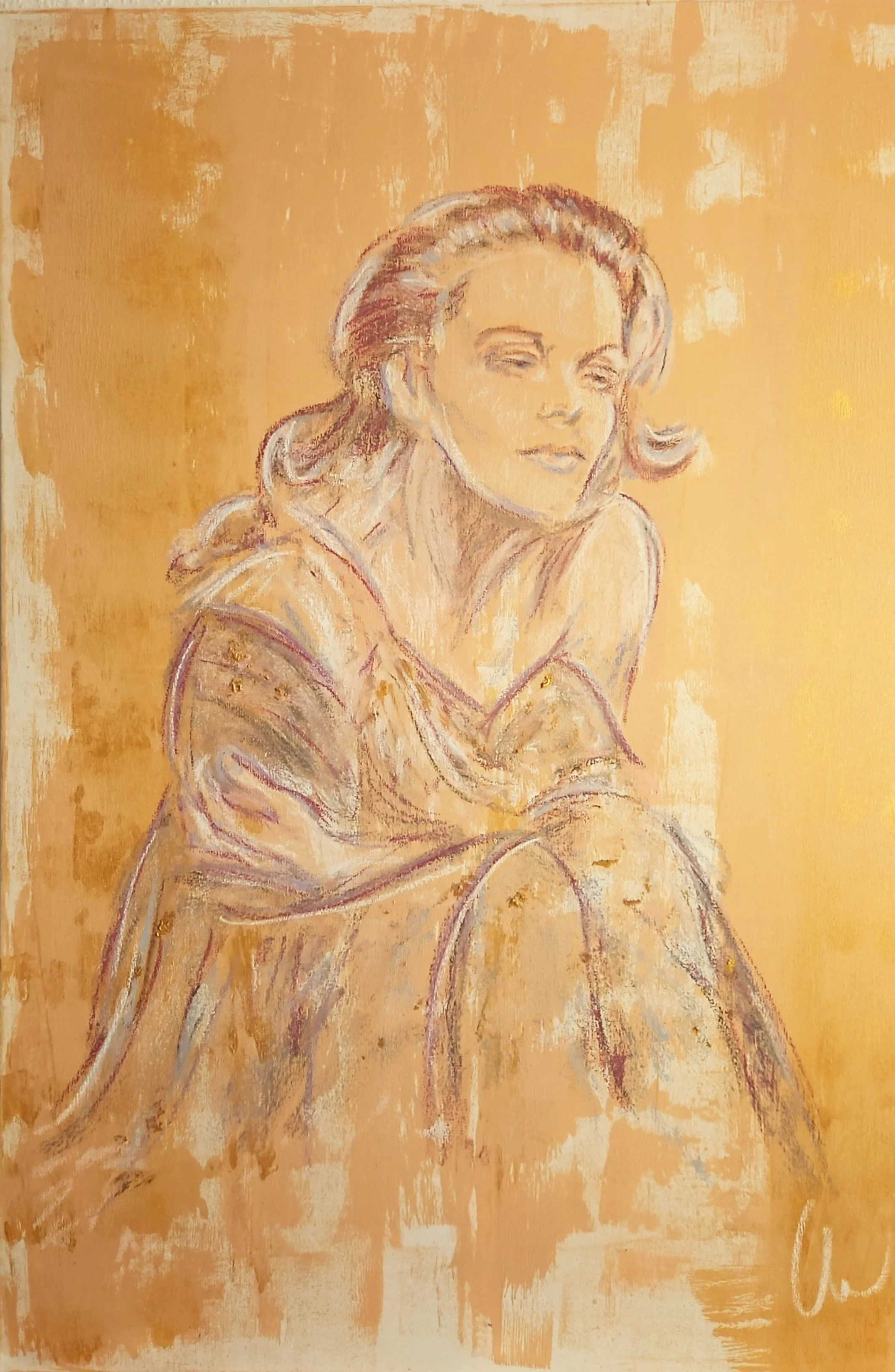
Romy
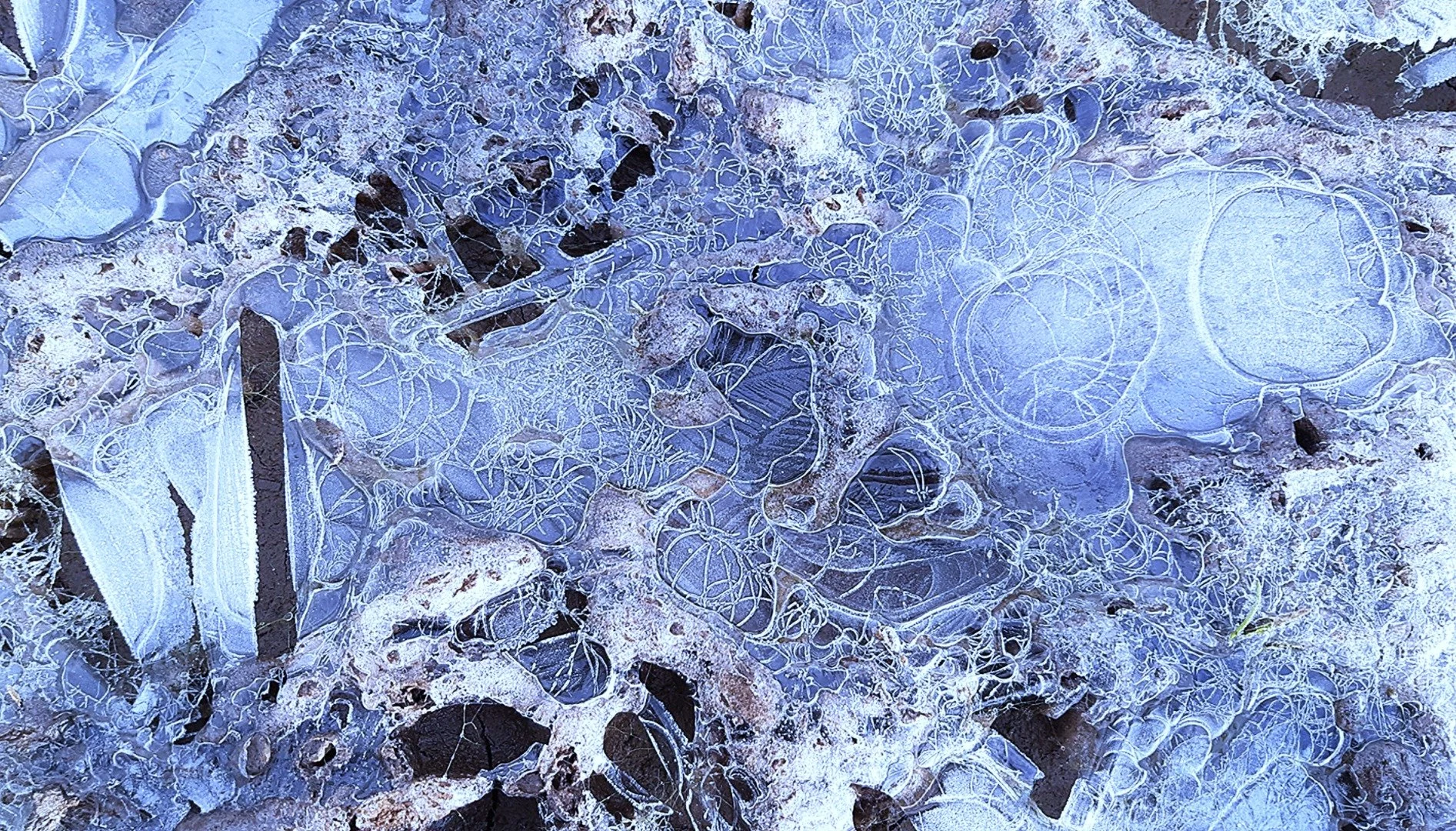
Structures
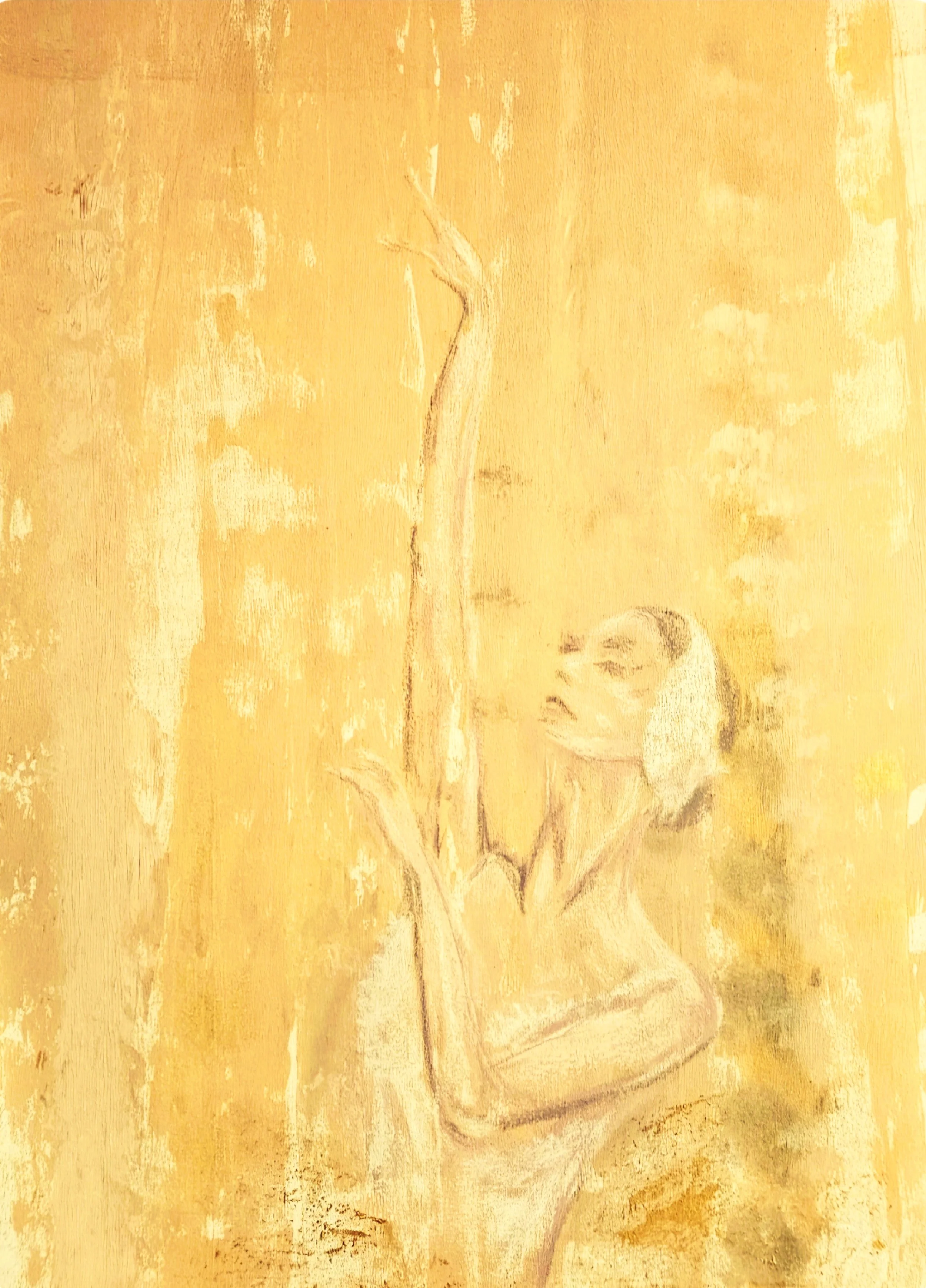
The Swan
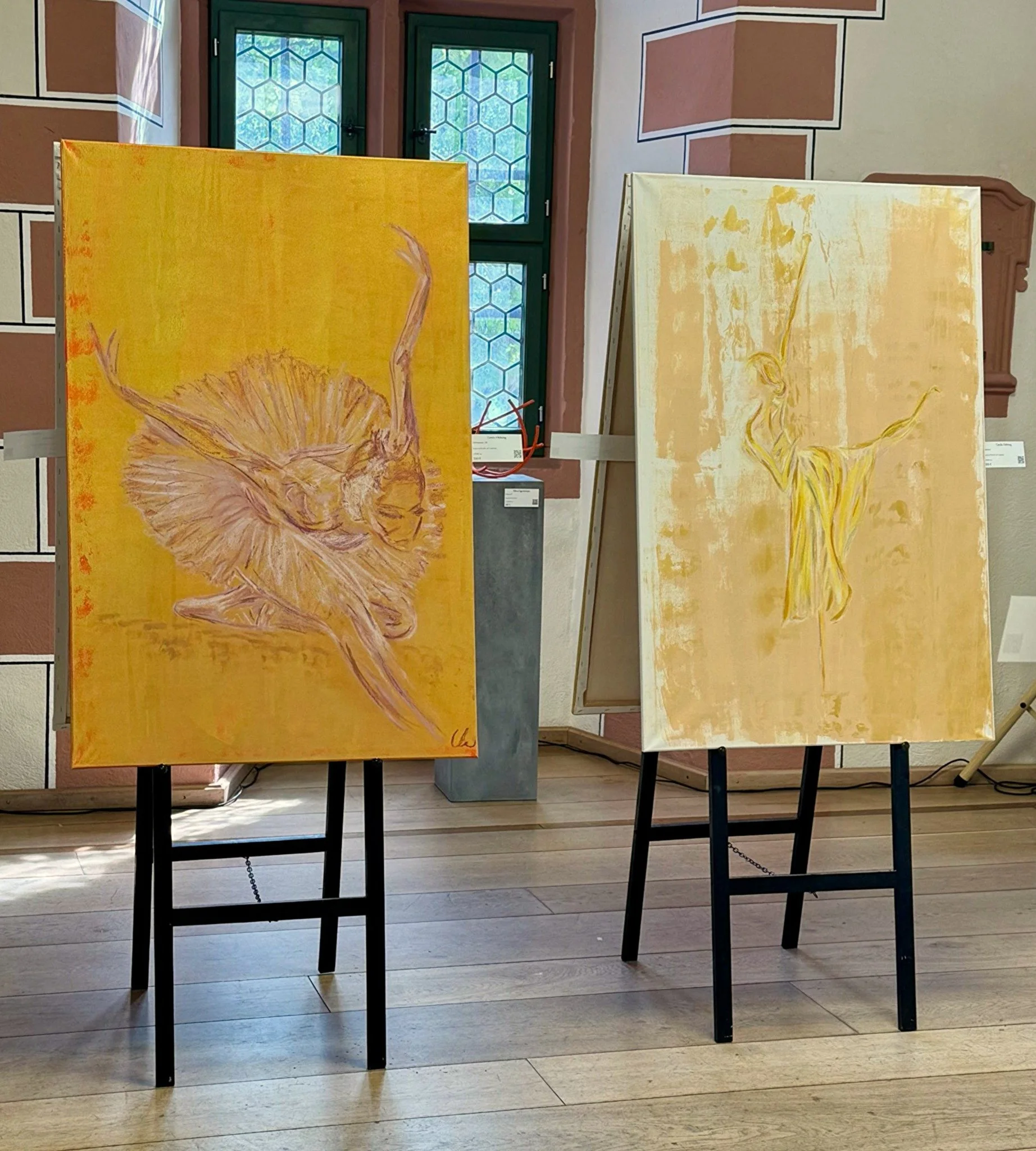
Zeitlos - exhibition
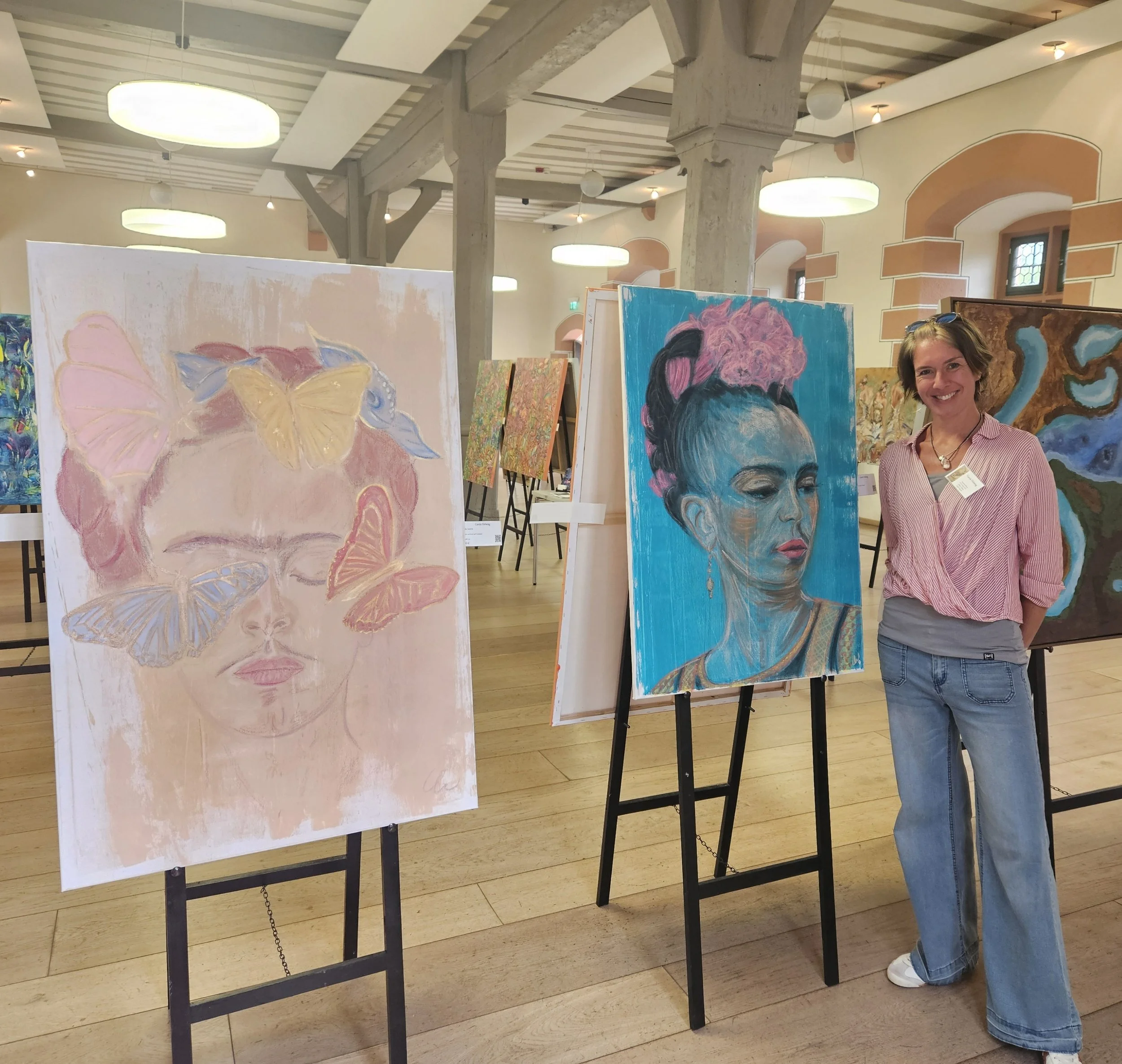
Zeitlos