Interview with Angélique Véré
https://sites.google.com/site/angeliquecreationsartistiques/home
Your artistic practice began in 2000 following your eldest son’s disability diagnosis. How did caregiving shape your need to create, and how has your understanding of art’s emotional purpose evolved through that experience?
The news of my son’s diagnosis triggered intense emotions in me. Drawing, and later painting from my photographs, helps me relax and release those emotions by depicting what I find beautiful and moving in life. This practice gives me a sense of balance when facing life’s difficulties and helps soften them.
At first, I created childhood-themed drawings for my son. In 2003 and 2004, I attended weekly visual arts classes for two years at a cultural center run by my local municipality. I then continued working independently, drawing inspiration from photographs taken during nature walks with my son and family vacations. I chose watercolor because it is non-toxic and safer for both human health and the planet. I particularly enjoy blending colors.
In 2012, I officially registered with the MDA, INSEE, and ADAGP to protect my works and enable me to sell them. I later began pairing them with poetic prose to further express the feelings conveyed through the visual imagery.
In 2015, I also created several allegorical works in charcoal and red chalk, along with a number of large-format oil paintings measuring 50 × 70 cm. I produced several works for my son’s youth chaplaincy group for young people with disabilities, Les Amis de Jésus, including works for his First Communion and Confirmation, the group’s logo, and a photography and poetry composition for December 8, the Festival of Lights in Lyon.
Since 2026, I have been exploring lyrical abstract watercolor because my eyesight has deteriorated, making it tiring to concentrate on fine details.
You describe “the little joys of life” as your central theme, while your biography also reflects uncertainty, sacrifice, and sustained responsibility. How do joy and hardship coexist within your work, and what distinguishes genuine attentiveness to joy from simple optimism?
While caring for my son, who has autism spectrum disorder as one of the symptoms of his BBSOAS, I learned to focus on the positive aspects of his progress and not give undue importance to the negative effects of his condition. This allows me to preserve my energy and emotional strength so that I can continue supporting him.
I am fortunate that he has a cheerful, warm, and affectionate personality, and that he willingly participates in everything we suggest to stimulate and relax him. He also enjoys spending time walking in nature. His presence inspires kindness, attentiveness, mutual support, compassion, and human warmth in others. I often explain his condition to help raise awareness of BBSOAS.
This has led to meaningful encounters, new leisure activities, sports, and accessible vacations adapted to his needs. This is what I have sought to convey through my work: the positive aspects of life that help balance its difficulties.
In your artistic duos, watercolor paintings or photographs are placed in dialogue with poetry. How do you determine whether an image requires language, and what can the combined form express that neither image nor poem could communicate independently?
I wanted to express an emotion or a reflection on life through writing, and I often found that one of my paintings or photographs corresponded closely with my prose. The two could be brought together because they conveyed the same emotion, while the text provided further insight into my visual work. For this reason, the MDA and INSEE classify me as a visual artist and author. My visual and written pairings complement one another and form a unified whole.
Your work frequently returns to natural motifs such as butterflies, birds, flowers, forests, snow, lakes, and waterfalls. What symbolic or emotional roles do these elements assume, and how do you prevent familiar subjects from becoming merely decorative?
I originally earned a secondary school diploma in natural sciences, and I have always cared deeply about ecology, animals, nature, and the planet. As a child, I was cared for by a nanny in the countryside. During my teenage years, I spent vacations with my grandparents, who were farmers. I enjoyed helping them care for the animals and harvest the crops. I also loved driving the tractor and gathering blackberries, chestnuts, mushrooms, and other natural produce.
I enjoy walking through nature and observing it, photographing it, experiencing it, listening to it, touching it, smelling it, and tasting it. All my senses come alive whenever I explore the natural world with Charly or with my family during the children’s school vacations.
Having moved through several regions of France in response to your husband’s professional relocations, you have encountered landscapes ranging from Brittany and Normandy to the area near Lyon. How have these geographical transitions influenced your visual memory, photographic observation, and sense of belonging?
Exploring new regions in depth over several years has stimulated my artistic creativity by introducing me to new landscapes, animals, plant life, climates, activities, and people, some of whom have become lasting friends.
You work across watercolor, photography, drawing, acrylic, oil painting, floral art, poetry, and music. How does each medium alter your way of thinking, and what prompts you to choose one form over another for a particular experience or idea?
I begin by taking photographs of subjects that move me emotionally. I then select certain images to develop into drawings and paintings, which I later pair with poetry. I brought these visual and literary pairings together in an art book titled Angélique’s Dreams. Since 2026, I have also used these pairings to create songs with artificial intelligence. Every stage of my creative process centers on the emotions I experience.
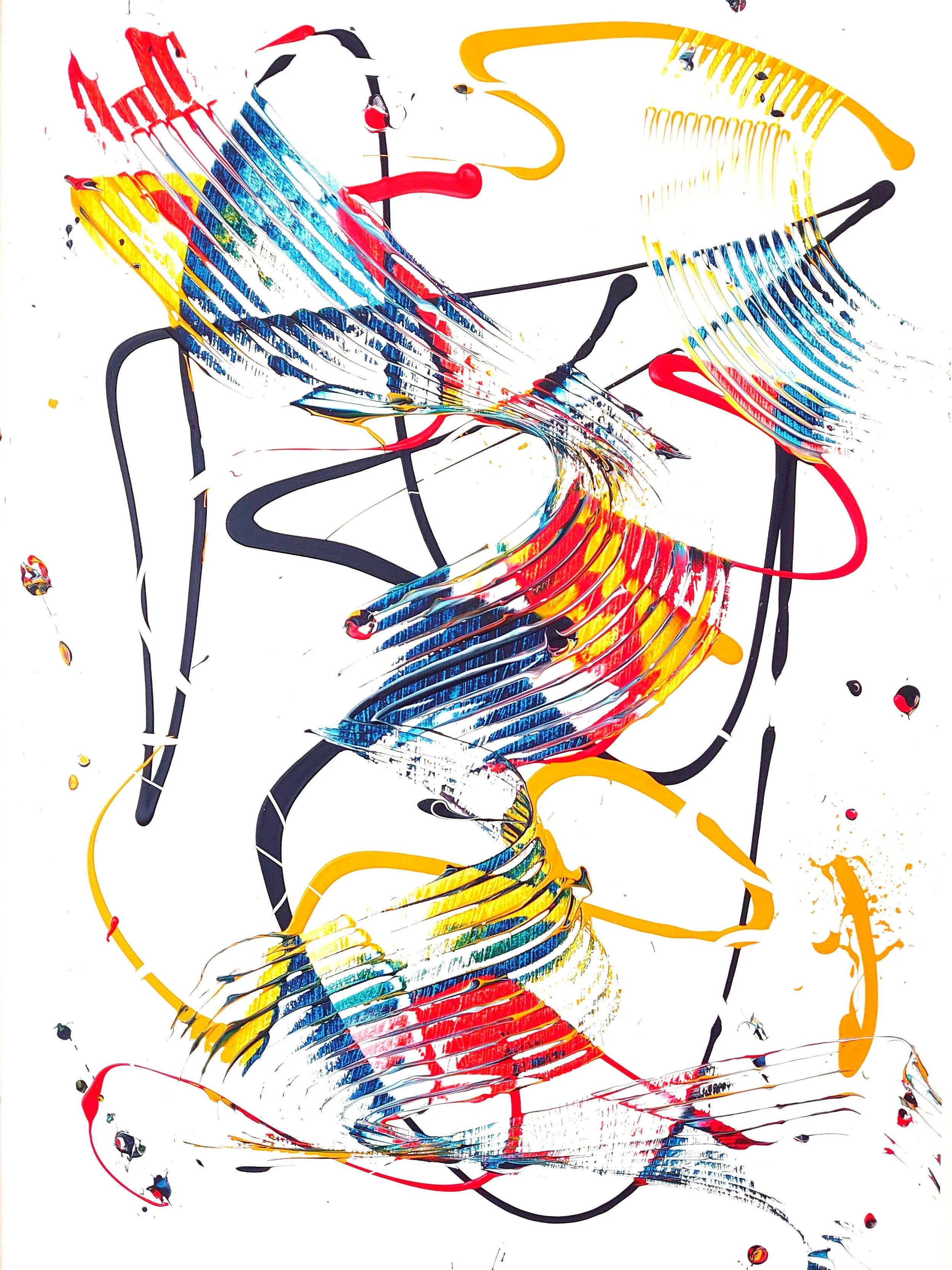
Since May 2026, you have begun creating abstract watercolors, including Feminine Energy and Fleur de roses. What led you away from recognizable imagery toward abstraction, and how has this shift changed your understanding of color, gesture, and emotional expression?
I began exploring lyrical abstract watercolor by eliminating details and outlines because of my declining eyesight and visual fatigue. The blending of colors has always inspired me because of its visual softness.
Since January 2026, you have also used your poetic duos to co-create AI-generated songs. How do you negotiate authorship, intention, and creative control when translating intimate visual and poetic material through artificial intelligence and music?
I aim to deepen the emotional dimension of my visual and literary pairings by adding subtle layers of sound through musical choices that resonate with me. I have also received training in violin and music theory.
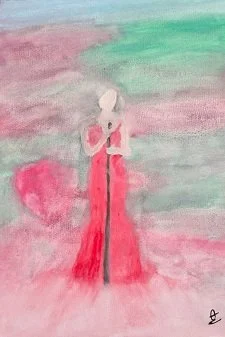
Aquarelle abstraite A3, Energie féminine 2026
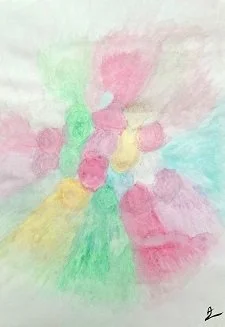
Aquarelle abstraite A3, Fleurs de Roses 2026
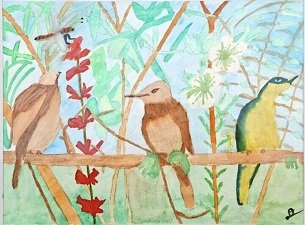
Aquarelle A3, Le Chant des Oiseaux 2022
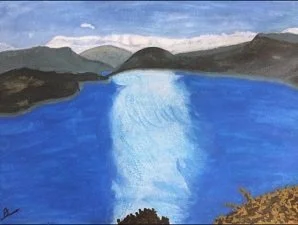
Aquarelle A3, Le lac de Serre-Ponçon 2019
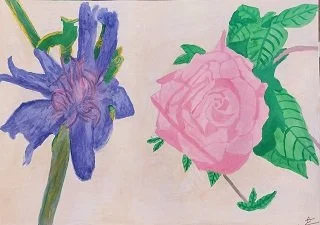
Aquarelle A3, Fleurs d'été 2025
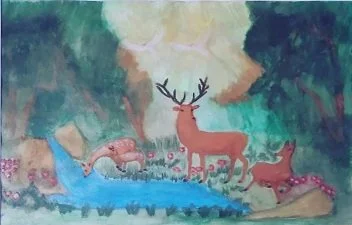
Aquarelle A3, Les animaux de la forêt 2021
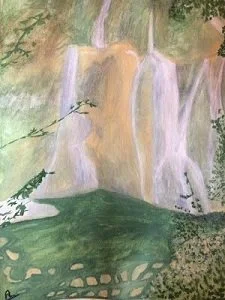
Aquarelle A3, La cascade de Glandieu 2019
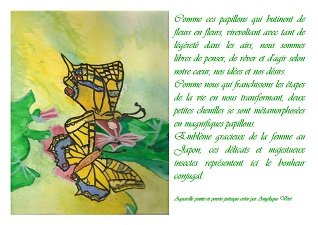
Aquarelle A4-poésie, Les papillons 2012
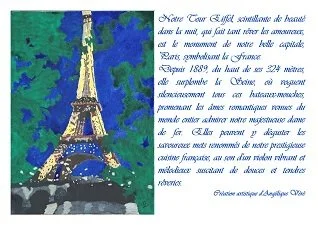
Aquarelle A4-poésie, La Tour Eiffel 2014
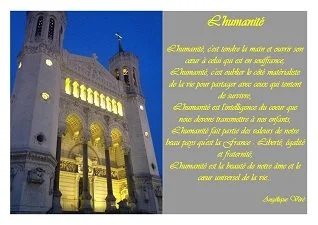
Photo A4-poésie, L'humanité 2016
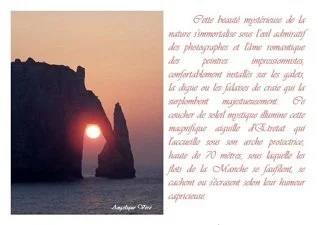
Photo A4-poésie, Etretat 2012
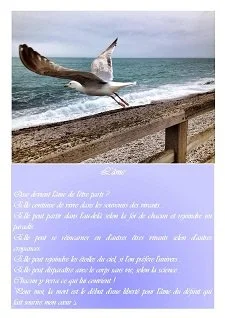
Photo A4-poésie, L'âme 2021
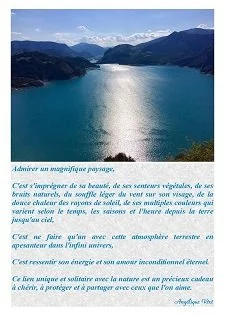
Photo A4-poésie, Symbiose 2020
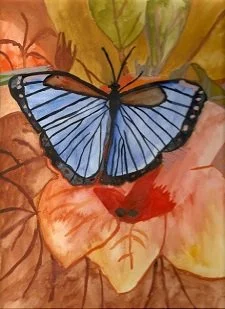
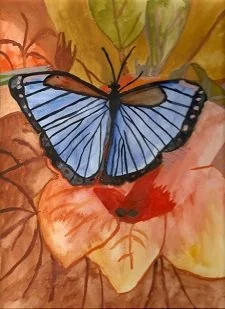
Aquarelle A4, Le papillon 2011
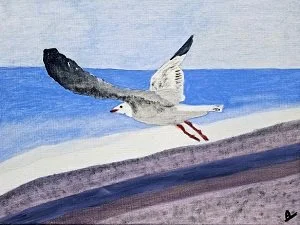
Peinture à l'huile sur toile A3, Le goëland 2017