Petra Dippold-Goetz
Born near Nuremberg, Germany, Petra Dippold-Goetz has developed a contemporary artistic practice grounded in the belief that painting possesses both aesthetic and ethical significance. Her work brings together gestural abstraction, assemblage, and material experimentation in an ongoing exploration of transformation, freedom, and environmental responsibility. Working primarily with acrylic and oil while incorporating reclaimed materials such as sand, wood, plastic, burlap, industrial fragments, and discarded objects, she investigates the relationship between humanity and the natural world through a visual language that is at once intuitive, tactile, and reflective. Across paintings, mixed-media works, and assemblages, she consistently returns to questions of fragility and resilience, beauty and destruction, memory and renewal, allowing each work to become both an autonomous artistic object and a meditation on the conditions of contemporary life.
The philosophical foundation of her practice is closely aligned with Friedrich Schiller's statement that "Art is a daughter of freedom," a quotation that appears repeatedly throughout her writings and publications. For Dippold-Goetz, artistic freedom is inseparable from responsibility. Painting is not conceived as an escape from reality but as a means of engaging with it. Her works celebrate the vitality and beauty of the natural world while simultaneously confronting the ecological crises, patterns of consumption, and social responsibilities that increasingly define the twenty-first century. Rather than treating aesthetics and ethics as separate concerns, her practice seeks a balance in which visual pleasure and critical reflection reinforce one another.
Growing up near Nuremberg placed Dippold-Goetz within one of Germany's most historically significant artistic landscapes. The city remains inseparable from the legacy of Albrecht Dürer, whose presence continues to shape its cultural identity. She has often recalled the celebrations marking the five-hundredth anniversary of Dürer's birth in 1971 as an early experience that impressed upon her the enduring importance of artistic achievement and cultural memory. Although she would later follow a very different artistic path, this environment nurtured an appreciation for the visual arts long before she considered becoming a professional artist herself.
Painting accompanied her from an early age. While still at school, one of her teachers recognized her ability and encouraged her to continue developing as a painter. Despite this encouragement, practical considerations prevailed. Rather than pursuing art professionally, she followed a more conventional educational direction, as her parents hoped she would choose a reliable profession. The decision postponed, but never extinguished, her creative ambitions. Throughout the following years, painting remained a constant presence in her life a deeply personal activity pursued alongside other responsibilities rather than as a public vocation.
Her artistic education therefore began long before formal study. Visits to museums throughout Europe became an important part of her visual formation, allowing her to encounter major works of art directly and to develop an increasingly sophisticated understanding of different artistic traditions. Her earliest admiration centred on the Impressionists, particularly Claude Monet, whose paintings revealed the expressive potential of colour, atmosphere, and changing light. Rather than functioning as documentary representations of nature, these works demonstrated how painting could evoke sensory experience and emotional response simultaneously.
As her interests evolved, she became increasingly drawn toward twentieth-century abstraction, especially European Informal Art. Artists such as Emil Schumacher revealed the expressive possibilities of gesture, texture, and material presence. Anselm Kiefer demonstrated how painting could carry historical and philosophical weight through its physical construction, while Alberto Burri's radical use of unconventional materials suggested entirely new relationships between painting, sculpture, and the material world. Jackson Pollock's physical engagement with the canvas and Franz Kline's powerful gestural vocabulary further expanded her understanding of abstraction as an active process rather than a predetermined image. These encounters gradually shifted her own artistic concerns away from representation toward materiality, intuition, and emotional immediacy.
Although these artists influenced her thinking, Dippold-Goetz did not seek to imitate any individual predecessor. Instead, their work offered permission to develop a language of her own one in which gesture could coexist with environmental awareness, abstraction with social reflection, and painterly freedom with ethical purpose. Their example demonstrated that painting could become a place where materials themselves participate in meaning rather than merely serving as vehicles for representation.
The decisive transformation in her own artistic life occurred during the winter of 2014. One evening, she discovered a dead white dove lying in the snow of her garden. The image a fragile white bird surrounded by blood and scattered feathers against the stark whiteness of winter left a profound emotional impression. Rather than allowing the experience to fade into memory, she responded immediately through artistic creation. Returning indoors, she produced three assemblages incorporating the remains of the bird.
This act marked far more than the completion of three individual works. It represented the moment in which painting ceased to be solely a private passion and became the central means through which she wished to engage with the world. She has repeatedly identified this experience as the beginning of her artistic career, describing it as the moment she understood that art would become the language through which she could communicate emotion, experience, concern, and hope.
The symbolic significance of this event has continued to reverberate throughout her subsequent practice. The white dove functions not only as a memory but also as an enduring metaphor encompassing vulnerability, freedom, mortality, ecological fragility, and transformation. Although the image itself rarely appears literally in later works, its emotional resonance informs much of her artistic thinking. The encounter established themes that continue to occupy her work: the relationship between beauty and loss, the possibility of renewal following destruction, and the ethical responsibilities that arise from witnessing the vulnerability of the natural world.
Determined to pursue this new direction seriously, Dippold-Goetz enrolled at the Academy of Faber-Castell in Nuremberg later that same year. Between 2014 and 2018 she undertook formal studies in Fine Arts, combining practical training with sustained experimentation across a wide range of techniques and materials. Academic instruction strengthened her technical understanding while simultaneously encouraging the intuitive processes that would become central to her mature work.
Rather than restricting herself to conventional painterly methods, she explored increasingly diverse material possibilities, allowing the physical characteristics of each medium to influence both composition and meaning. During these years she refined her command of acrylic and oil painting while beginning to integrate sand, wood, plastic, textiles, industrial remnants, and found objects into increasingly complex surfaces. This openness to experimentation enabled her to move beyond traditional distinctions between painting, collage, assemblage, and object art.
The Academy also provided an environment in which instinct and discipline could develop together rather than existing in opposition. While technical knowledge expanded her capabilities, Dippold-Goetz never abandoned the intuitive impulses that had first led her toward artistic expression. Instead, formal education gave those instincts greater precision and confidence. The resulting practice balances spontaneity with control, allowing each work to emerge through a dialogue between conscious decision-making and emotional responsiveness.
This duality continues to define her creative process. Dippold-Goetz rarely begins with rigid compositional plans. Instead, paintings evolve gradually through direct engagement with colour, gesture, texture, and material. One layer suggests the next. Surfaces accumulate rather than being designed in advance. The physical act of making becomes inseparable from discovery, allowing unexpected relationships between materials to emerge naturally over time. Rather than illustrating predetermined ideas, each work develops through an evolving conversation between intention and accident.
Her paintings therefore retain an immediacy that reflects both physical gesture and emotional presence. Broad sweeps of acrylic may coexist with delicate passages of oil. Thick accumulations of sand interrupt luminous colour fields. Pieces of wood or recycled plastic disrupt otherwise painterly surfaces, introducing tactile rhythms that challenge conventional expectations of abstraction. These materials never function merely as decorative additions. Each carries traces of previous histories, inviting viewers to consider the lives objects have already lived before entering the space of art.
This sensitivity to material memory distinguishes much of Dippold-Goetz's work. Objects discarded through everyday consumption become active participants within new visual structures. Plastic, packaging, burlap, industrial fragments, and found materials retain visible evidence of previous use while acquiring fresh symbolic significance through artistic transformation. Rather than concealing their origins, she often allows these histories to remain legible, encouraging reflection upon cycles of production, consumption, waste, and renewal.
Her increasing engagement with reclaimed materials naturally developed into an extensive exploration of what she identifies as Trash Art. Within this body of work, discarded matter becomes both medium and message. Waste is not simply represented; it is physically present. Through artistic intervention, materials commonly regarded as worthless acquire new aesthetic and conceptual value. This process does not romanticize refuse but instead encourages viewers to reconsider the systems that produce it.
The transformation of discarded objects into works of art reflects one of the central ideas running throughout Dippold-Goetz's practice: that destruction and renewal are not mutually exclusive but exist in continuous dialogue. Materials that appear exhausted or abandoned remain capable of carrying memory, beauty, and meaning. Their physical reinvention mirrors broader possibilities for ecological awareness, suggesting that acts of recovery and reconsideration may begin with changes in perception as much as with changes in behaviour.
Her commitment to these ideas extends beyond the studio through regular participation in Trash Art festivals across Europe. These events have provided opportunities not only to exhibit her work but also to engage directly with broader audiences through workshops devoted to transforming waste into artistic material. Such educational activities reflect an understanding of artistic practice that reaches beyond individual production toward collective awareness. By encouraging participants to discover creative possibilities within discarded materials, she invites reconsideration of established assumptions concerning value, beauty, and environmental responsibility.
This educational dimension remains entirely consistent with the broader aims of her artistic philosophy. She has frequently stated that she hopes her work will encourage viewers to pause, reflect, and question contemporary patterns of consumption and environmental destruction. Her paintings do not propose simple solutions. Instead, they seek to create spaces in which emotional experience and critical awareness become inseparable, allowing aesthetic engagement to generate deeper reflection.
Yet ecological concern represents only one dimension of Dippold-Goetz's work. Equally important is her persistent celebration of life, beauty, and artistic freedom. Alongside paintings addressing environmental degradation stand works animated by luminous colour, energetic gesture, and an evident delight in the expressive possibilities of painting itself. This balance prevents her work from becoming didactic. Celebration and warning coexist throughout her practice, each strengthening the other rather than competing for attention.
Throughout the evolution of her practice, Dippold-Goetz has resisted remaining within a single stylistic framework. Instead, her work reveals a sustained process of development in which one period gradually gives rise to another while preserving underlying conceptual continuities. The progression of her oeuvre reflects neither abrupt stylistic change nor deliberate reinvention, but an ongoing dialogue with colour, gesture, material, and experience. Each body of work expands questions already present in earlier paintings, allowing her artistic language to mature organically over time.
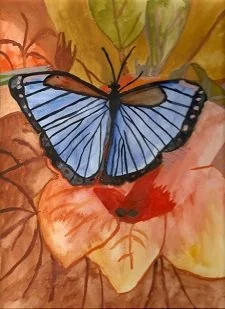
Her earliest paintings demonstrate an immediate and intuitive engagement with the natural world. Water, sky, light, movement, and atmosphere become recurring points of departure, not through literal representation but through the expressive possibilities of paint itself. Works such as Nel blu, Il gioco delle onde, Suono delle onde, and Nel giardino di Monet reveal an artist responding instinctively to nature's rhythms. Blues, greens, whites, and luminous passages of colour evoke fluidity and movement rather than describing specific places. The influence of Impressionism remains perceptible, particularly in the sensitivity to changing light, yet these paintings already move beyond observation toward emotional interpretation. Nature functions less as subject than as catalyst, allowing colour and gesture to convey sensations that resist verbal description.
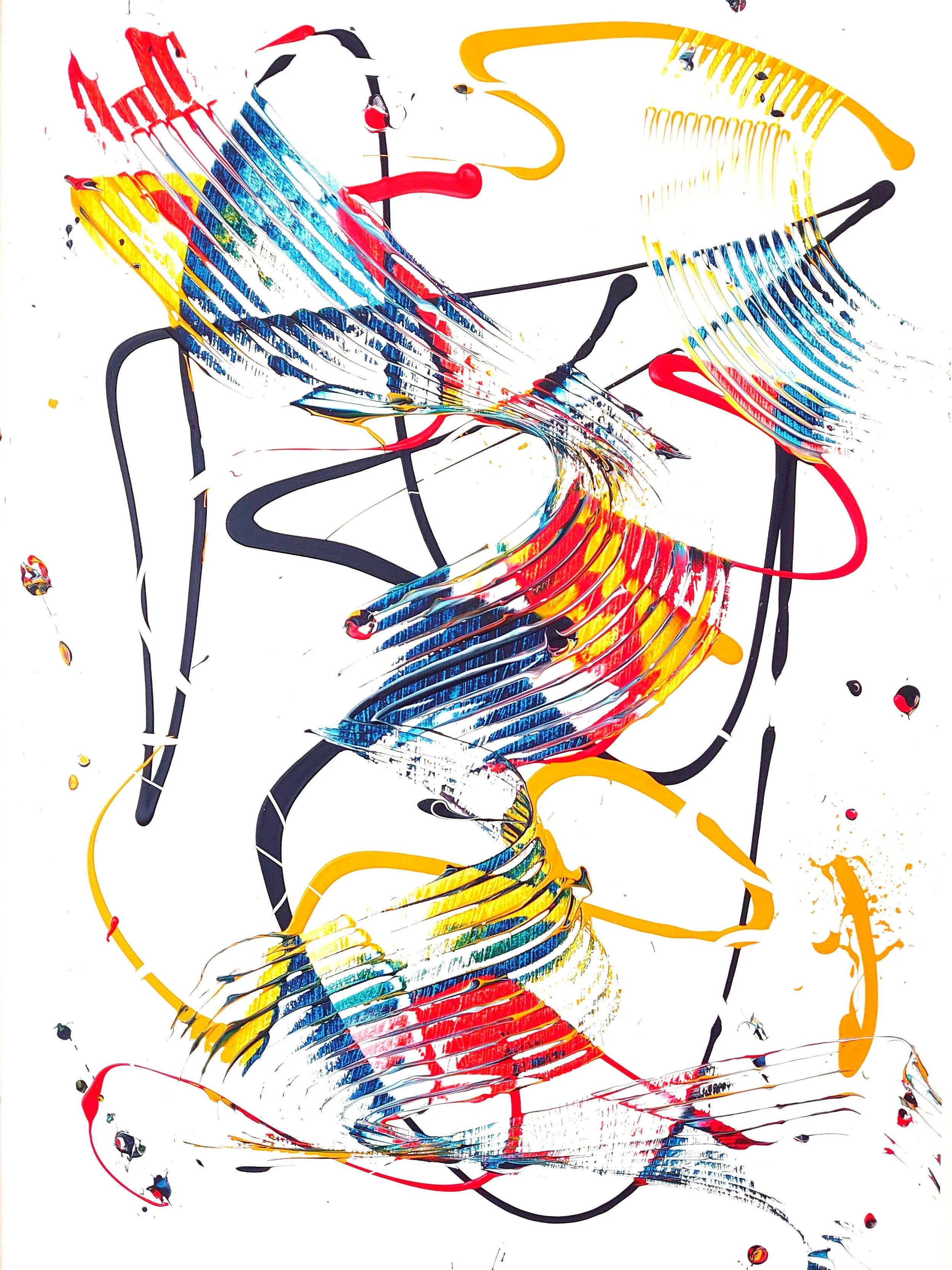
As her confidence in abstraction increased, representation gradually gave way to a freer pictorial vocabulary. Colour assumed greater autonomy, liberated from descriptive obligation and allowed to exist for its own expressive potential. Paint splashes, sweeping gestures, spontaneous marks, and expansive white spaces entered into increasingly dynamic relationships across the canvas. Rather than depicting external reality, these works sought to make visible emotional states and intuitive responses. Titles including Capriccioso, Uccello blu, La danza delle balene, and Il cammino verso la luce suggest poetic points of departure while leaving visual interpretation open. Music, movement, and rhythm became increasingly significant metaphors within her work, reflected in paintings such as La musica di mare, Leonard Bernstein Conducting, and First Sunbeam in the Morning, where painterly gesture unfolds almost like choreography across the surface.
Although these paintings celebrate spontaneity, they also reveal increasing structural sophistication. Dippold-Goetz allows intuitive movement to coexist with careful compositional balance, creating works that feel both immediate and considered. Colour fields expand and contract, energetic gestures are offset by quieter passages, and moments of visual intensity alternate with areas of calm reflection. This equilibrium between freedom and restraint would become one of the defining characteristics of her mature practice.
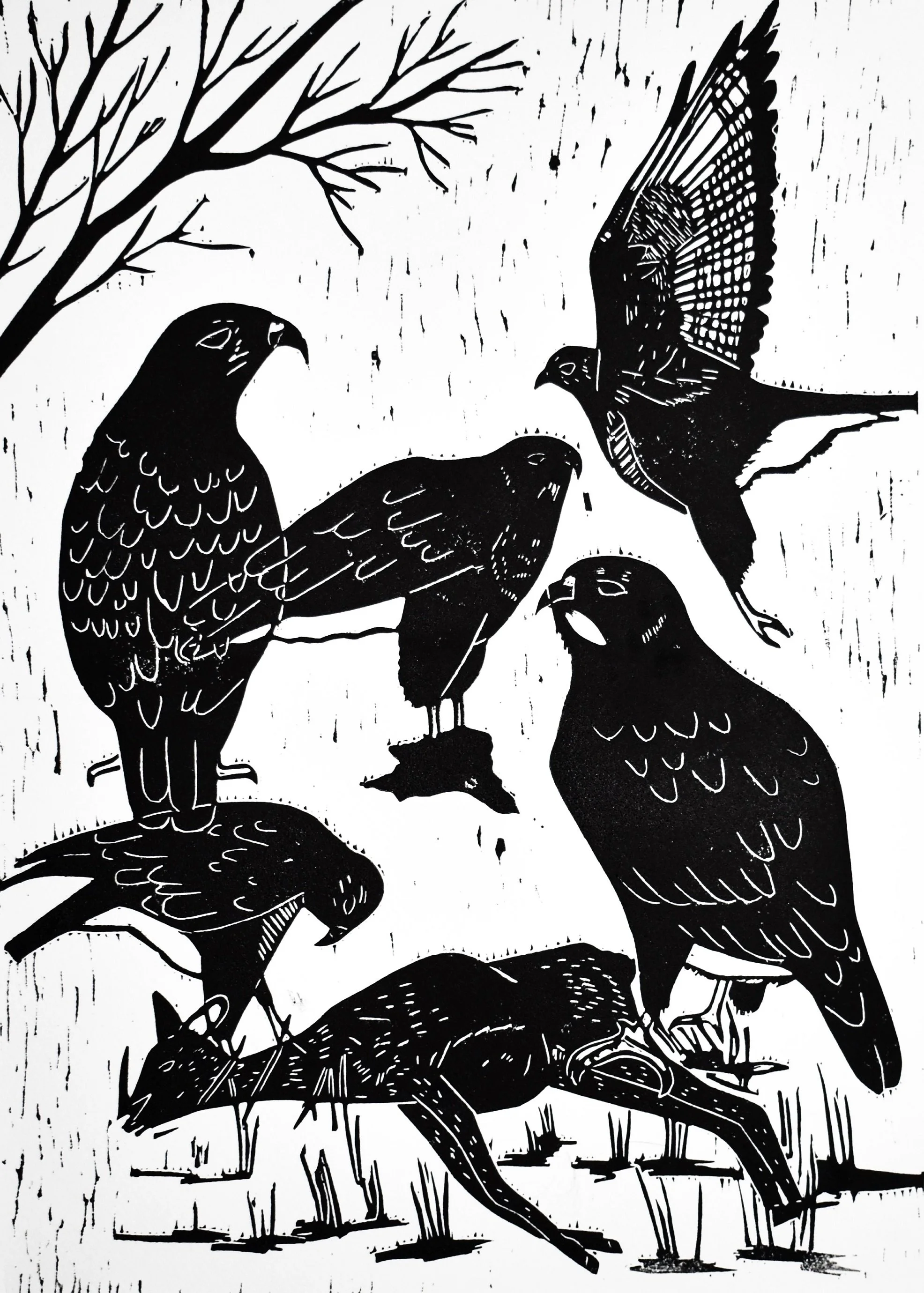
The subsequent emergence of her black-and-white works marked another significant stage in her artistic development. By reducing her palette, Dippold-Goetz shifted attention toward materiality, texture, and structural relationships. The absence of colour intensified the physical presence of each mark, inviting closer engagement with the surface itself. Works such as The Empty Face, Orchidea nera, and Born Free explore themes of memory, absence, and transformation through dramatic contrasts and layered textures. Black ceases to function merely as darkness; instead, it becomes a space of revelation, depth, and possibility. White introduces light not as illumination alone but as silence, pause, and openness. Together they establish an austere yet emotionally resonant visual language that demonstrates her ability to achieve expressive richness through apparent reduction.
Her exploration of gold introduced another distinct phase. Gold appears not as ornament but as symbol, carrying associations with light, spirituality, continuity, and transcendence. Paintings including Heart of Gold, Alpha & Omega, and Una luce d'oro investigate these ideas through restrained yet luminous compositions. Rather than dominating the surface, gold often emerges gradually from darker grounds, suggesting revelation rather than display. Within these works, light becomes both material and metaphor, reinforcing the recurring dialogue between fragility and hope that characterises her broader practice.
Another important body of work developed through the Scheggiato series, in which fragmentation itself became a central artistic concern. Broken forms, fractured surfaces, and interrupted structures no longer signify destruction alone but also resilience and reconstruction. Rather than concealing rupture, these paintings acknowledge it openly, presenting fracture as an integral stage within processes of renewal. Fragments become building blocks for new visual relationships, reflecting Dippold-Goetz's enduring conviction that transformation frequently emerges from states of apparent disintegration.
Her ongoing engagement with Trash Art extends these ideas into an even more materially complex territory. Works such as Chemical Flood, Mare vanitatis, Nailed It, Caruso, On the Other Side of the Moon, and Your Sky is Full of Stars demonstrate how discarded materials may function simultaneously as physical substance and conceptual statement. Plastic waste, industrial remnants, packaging, burlap, sand, and other found materials become inseparable from the meaning of the finished work. Rather than disguising their origins, Dippold-Goetz often allows evidence of previous use to remain visible, preserving the histories embedded within the materials themselves.
This strategy fundamentally alters the relationship between image and object. The paintings become repositories of memory as much as pictorial compositions. Materials associated with neglect, consumption, and disposal acquire renewed significance through careful artistic transformation. The resulting works invite viewers to reconsider assumptions about permanence, usefulness, and value while simultaneously demonstrating that beauty may emerge from unexpected sources.
Although environmental awareness remains central to these works, they avoid moral simplification. Dippold-Goetz rarely employs direct illustration or explicit narrative. Instead, meaning emerges through material presence itself. A fragment of plastic, a weathered piece of wood, a section of burlap or industrial debris retains its own visual authority while participating within a broader abstract composition. This openness allows viewers to approach the work from multiple perspectives, whether aesthetic, ecological, emotional, or philosophical.
Her paintings repeatedly return to the question of transformation. Nothing within her practice remains fixed. Objects change function. Colours alter emotional meaning through context. Surfaces accumulate histories. Fragments become wholes. Materials associated with waste become carriers of memory and beauty. This sustained concern with transformation reflects both artistic process and broader philosophical outlook, suggesting that renewal remains possible even within conditions marked by loss or deterioration.
Dippold-Goetz has often described her work as emotional, intuitive, evocative, and passionate. These qualities are evident not only in her painterly gestures but also in the diversity of subjects she addresses. Some paintings exist simply to celebrate the joy of colour, movement, artistic creation, and the beauty of the natural world. Others confront pressing environmental concerns, warning of ecological destruction, species extinction, pollution, and unsustainable patterns of consumption. Rather than separating these concerns into distinct categories, she allows them to exist together within the same body of work, reflecting the complexity of contemporary experience itself.
This duality is perhaps one of the defining characteristics of her artistic practice. Hope and anxiety, celebration and critique, coexist without contradiction. A painting inspired by marine life may simultaneously evoke delight in nature's beauty and concern for its vulnerability. Brilliant colours may carry undertones of fragility. Textured surfaces constructed from discarded materials remind viewers that aesthetic pleasure and environmental responsibility need not exist in opposition. Through this balance, Dippold-Goetz avoids reducing ecological engagement to visual protest alone. Instead, she proposes that appreciation for beauty itself may become an important foundation for environmental care.
The ethical dimension of her work is rooted in a deeply personal conviction. She has consistently stated that humanity's most important responsibility is to preserve the planet for future generations. This belief informs her use of materials, choice of subjects, and broader artistic philosophy. Rather than presenting herself simply as a painter, she understands artistic practice as a means of participating in wider cultural conversations concerning ecological awareness, sustainability, and social responsibility. In this sense, her paintings function not as conclusions but as invitations to dialogue.
Her growing exhibition history reflects the increasing visibility of this practice within international contemporary art contexts. Since first exhibiting publicly, Dippold-Goetz has presented her work throughout Europe, Asia, and North America, participating in exhibitions that range from gallery presentations and museum projects to international art fairs and thematic festivals.
Beginning with Art Austria in Vienna in 2019, her work soon appeared in Salzburg, Venice, Hamburg, Manchester, Barcelona, Rome, Florence, Madrid, Basel, Paris, New York, Milan, Tokyo, Graz, Burgenland, Soria, Erlangen, Monaco, Matera, Bad Staffelstein, and other cultural centres. These exhibitions demonstrate not only geographical expansion but also the adaptability of her work across diverse curatorial contexts. Whether presented within exhibitions devoted to abstraction, environmental practice, contemporary mixed media, or international art fairs, her paintings maintain a coherent artistic identity while engaging audiences from varied cultural backgrounds.
Italy has assumed particular importance within this trajectory. Her sustained collaboration with Galleria Dantebus has resulted in repeated exhibitions in both Rome and Florence, establishing an ongoing relationship with one of the institutions most closely associated with her recent career. This collaboration culminated in the 2026 solo exhibition Arte senza Confini at Galleria Dantebus Margutta in Rome, representing an important milestone in the public presentation of her work.
That same year marked another significant achievement with the publication of her monograph I colori della libertà by Dantebus Edizioni. More than simply documenting individual artworks, the publication reflects the continuity of her artistic development and the central ideas that have shaped her practice since 2014. Presented in Florence, the monograph represents a substantial consolidation of more than a decade of artistic investigation, bringing together the various phases of her work within a single published volume. Alongside the exhibition catalogue Arte senza Confini, it establishes an enduring record of her evolving artistic language.
Alongside these institutional collaborations, Dippold-Goetz has maintained a consistent presence at international contemporary art fairs, where her work has been presented to increasingly diverse audiences. Participation in ArtExpo New York, Focus Art Fair Paris at the Carrousel du Louvre, Art Shopping Paris, art3f Barcelona, art3f Monaco, the Tokyo Tower Art Fair, Moon Art Fair Hamburg, the Milan International Art Fair Expo, and numerous European exhibitions has placed her practice within an international network of artists working across painting, mixed media, and contemporary material practices. While each exhibition represents a distinct moment within her professional development, taken together they reveal the steady expansion of a practice that has found resonance across different artistic and cultural contexts.
Her participation in the Ubuntu Trash Art Festival on multiple occasions occupies a particularly meaningful place within this exhibition history. Unlike conventional exhibitions, these festivals directly reflect the environmental concerns that underpin much of her work. They bring together artistic production, ecological awareness, and public engagement, allowing Dippold-Goetz not only to present completed works but also to demonstrate the creative potential of discarded materials through workshops. In these settings, her philosophy of transformation becomes tangible. Participants are encouraged to reconsider the value of waste, to recognise aesthetic possibilities within overlooked objects, and to understand artistic practice as an active contribution to conversations surrounding sustainability and environmental stewardship.
This educational dimension complements her studio practice without diminishing its artistic autonomy. Dippold-Goetz does not regard environmental engagement as separate from artistic creation; rather, the two develop together. The workshop environment extends the same principles that shape her paintings: observation, transformation, experimentation, and renewed perception. Materials commonly regarded as refuse become starting points for creativity, reinforcing one of the central ideas that runs throughout her oeuvre that value is rarely fixed and that transformation begins with the willingness to see familiar things differently.
Recognition of her work has grown alongside this expanding exhibition history. Between 2022 and 2026 she received a succession of international awards acknowledging different aspects of her artistic practice. These include Faces of Peace and Voices of Tomorrow from Contemporary Art Curator Magazine in 2022; the Collectors Art Prize and Harmony for Humanity – The Global Consciousness Art Prize in 2023; Global Art Virtuoso in 2024; Art Legends of our Time, the Premio Internazionale Artista d'Europa, and the EL GRECO Premio de las Bellas Artes in 2025; and the Olympus Arts Awards in Milan in 2026.
Viewed collectively, these recognitions trace the increasing visibility of Dippold-Goetz's work within international contemporary art platforms. Rather than marking isolated achievements, they reflect the growing consistency with which her practice has been presented, discussed, and acknowledged across different artistic communities. Importantly, the awards correspond not only to her technical accomplishment as a painter but also to the continuing relevance of the environmental and humanistic questions that shape her work.
Her artistic development has likewise been documented through an expanding body of publications. Since appearing in ARTiST Portfolio Magazine in 2019, her work has been featured in interviews, reviews, exhibition catalogues, newspapers, online journals, and contemporary art magazines. Publications including Spotlight Contemporary Art Magazine, Contemporary Art Curator Magazine, Contemporary Art Collectors, Artist Close Up Contemporary Art Magazine, Art Anthology VII, Fine Arts News, HIER-Magazin, La Toscana Nuova, and the Erlanger Nachrichten have documented different stages of her career while examining the evolution of her artistic concerns.
These publications reveal an increasing critical interest in the relationship between abstraction, material experimentation, and ecological reflection within her work. Writers have repeatedly observed the way discarded materials function not simply as unconventional media but as conceptual elements carrying histories of production, consumption, neglect, and renewal. Others have emphasised the emotional immediacy of her gestural painting, the balance between expressive freedom and formal structure, or the recurring dialogue between beauty and environmental responsibility. Although these interpretations differ in emphasis, together they demonstrate the richness of a practice capable of supporting multiple readings without becoming confined to a single critical framework.
The publication of I colori della libertà in 2026 represents the most comprehensive presentation of her work to date. Published by Dantebus Edizioni, the monograph brings together reproductions of her paintings alongside texts reflecting on the evolution of her artistic language. It documents the progression from the earliest nature-inspired works through increasingly abstract compositions, the black-and-white series, explorations of gold, the Scheggiato works, Trash Art, and the more recent paintings characterised by a renewed chromatic harmony. Rather than presenting these developments as disconnected stylistic phases, the publication reveals the continuity of the questions that have guided her practice from the outset.
Throughout these successive bodies of work, one principle remains constant: Dippold-Goetz allows artistic language to evolve without abandoning its ethical foundations. Her paintings continually change in appearance, yet they remain connected by an enduring concern with transformation. Materials change their function. Colour acquires new symbolic meanings. Fragments become structures. Moments of rupture give rise to renewal. This willingness to embrace change while preserving conceptual continuity distinguishes her practice and gives coherence to an oeuvre that encompasses painting, assemblage, collage, and mixed media without being limited by any one category.
Equally significant is her refusal to separate intuition from intellectual inquiry. Her paintings originate in instinctive gesture and emotional responsiveness, yet they are sustained by careful reflection upon broader cultural and environmental realities. She frequently allows chance to influence composition, permitting materials to suggest new directions during the creative process. At the same time, the works remain grounded in a clearly articulated ethical position concerning humanity's relationship with the natural world. The result is a practice in which spontaneity and deliberation function not as opposites but as complementary forces.
The physical qualities of her paintings reinforce this balance. Surfaces are often richly textured, inviting close observation. Layers of acrylic and oil interact with sand, wood, recycled plastics, burlap, industrial remnants, and found objects, producing works that reward prolonged looking. Light behaves differently across these varied materials, creating subtle shifts between matte and reflective surfaces, dense accumulations and open passages, rough textures and smooth expanses of colour. These tactile qualities encourage viewers to engage with the paintings not only visually but also imaginatively, becoming aware of the material histories embedded within each composition.
This emphasis on materiality reflects one of the distinguishing features of Dippold-Goetz's artistic language. Her paintings are never merely images; they are constructed objects whose physical presence contributes directly to their meaning. The incorporation of reclaimed materials establishes a dialogue between art and everyday life, between artistic transformation and environmental reality. The works remind viewers that painting remains capable of absorbing the complexity of the contemporary world without relinquishing its autonomy as an aesthetic practice.
Running throughout her oeuvre is a sustained meditation on freedom. For Dippold-Goetz, freedom is not understood as limitless individual expression but as a condition that carries corresponding responsibilities. This understanding informs her repeated engagement with Friedrich Schiller's proposition that art is a daughter of freedom. The phrase has become more than a literary reference; it functions as a guiding principle through which she understands the role of artistic creation. Freedom enables art to question, to challenge, to celebrate, and to imagine alternatives. Yet it also requires attentiveness to the world from which art emerges. Her paintings therefore seek not only to express personal experience but also to cultivate awareness of ecological fragility, human interdependence, and the possibility of renewal.
This conception of artistic responsibility also explains the balance that characterises her work. Even when addressing environmental destruction or species extinction, her paintings rarely surrender to despair. Hope remains present not as optimism detached from reality, but as a belief in transformation. The repeated recovery of discarded materials into meaningful artistic forms serves as a visual metaphor for this conviction. What appears exhausted may acquire new life. What has been overlooked may reveal unexpected beauty. What has been discarded may become the foundation for renewed understanding.
For Dippold-Goetz, painting is therefore both deeply personal and fundamentally outward-looking. It begins with individual experience the emotional response to a landscape, an encounter with a dead bird, the tactile qualities of a piece of weathered wood or discarded plastic but continually expands toward broader questions concerning memory, ecology, freedom, and collective responsibility. Her work demonstrates how abstraction can remain emotionally immediate while addressing issues of urgent contemporary relevance without becoming illustrative or didactic.
From the formative experience that redirected her life in 2014 to the publication of her first monograph and the continuing expansion of her international exhibition history, Petra Dippold-Goetz has developed a practice distinguished by consistency of purpose and openness to transformation. Her paintings, assemblages, and mixed-media works continue to evolve formally while remaining anchored in the convictions that first inspired her to pursue art as a vocation. Across changing materials, series, and exhibitions, she has maintained a commitment to creating works that encourage viewers to look more closely not only at the surfaces before them, but also at the relationships between humanity, nature, memory, and responsibility.
Within the broader context of contemporary art, Dippold-Goetz's work demonstrates that abstraction and material experimentation remain vital means of engaging with the complexities of the present. Through colour, gesture, texture, and reclaimed matter, she constructs spaces in which beauty and critical reflection coexist. Her paintings neither prescribe solutions nor retreat from difficult realities. Instead, they invite sustained contemplation, proposing that acts of seeing, remembering, and transforming are themselves meaningful forms of engagement. Guided by the conviction that art is indeed "a daughter of freedom," Petra Dippold-Goetz continues to develop a body of work in which creative freedom and ethical awareness are inseparable, each enriching the other through a sustained commitment to artistic inquiry and environmental consciousness.
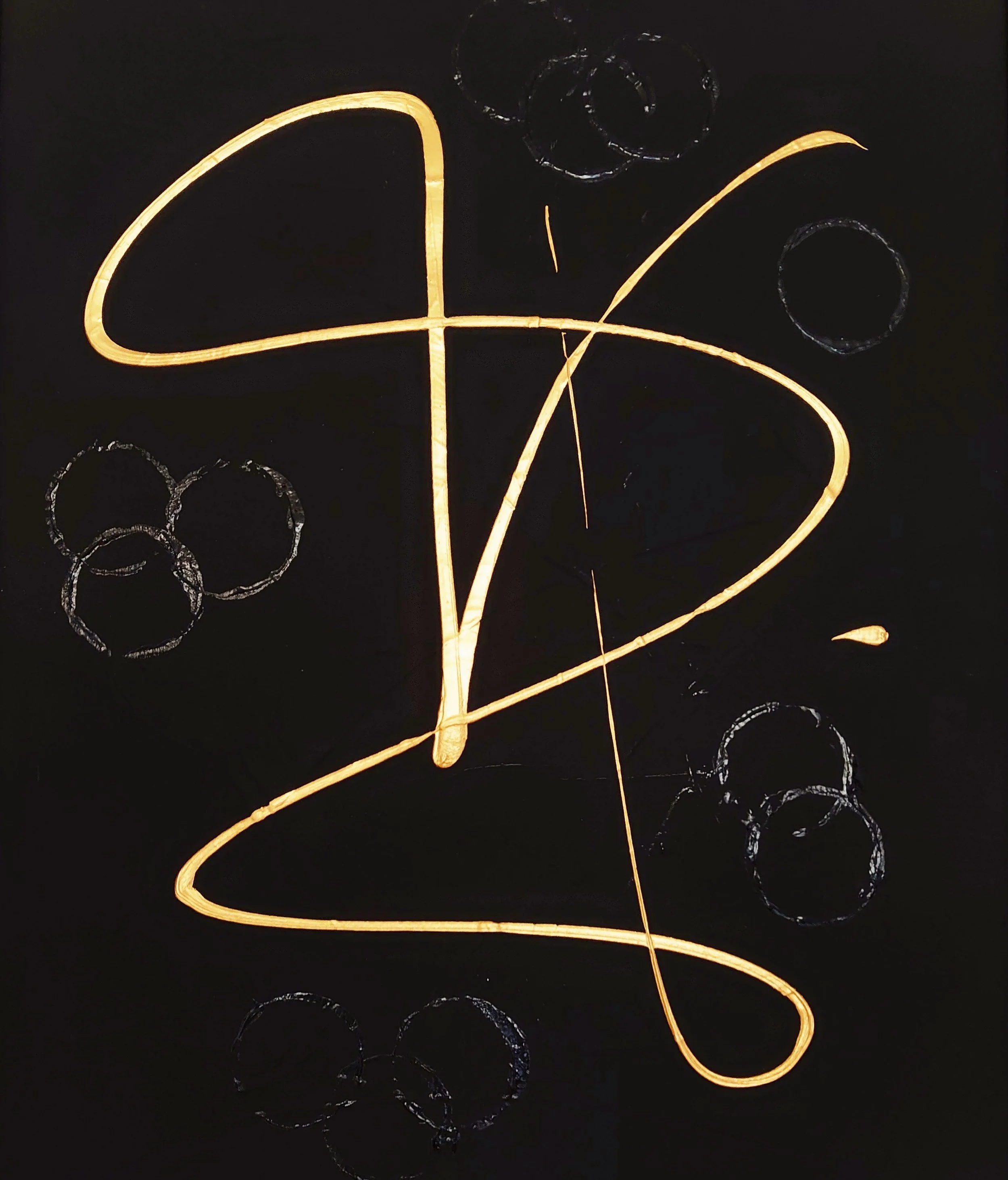
Alpha & Omega, 2020, acrylic on paper, 60x50cm
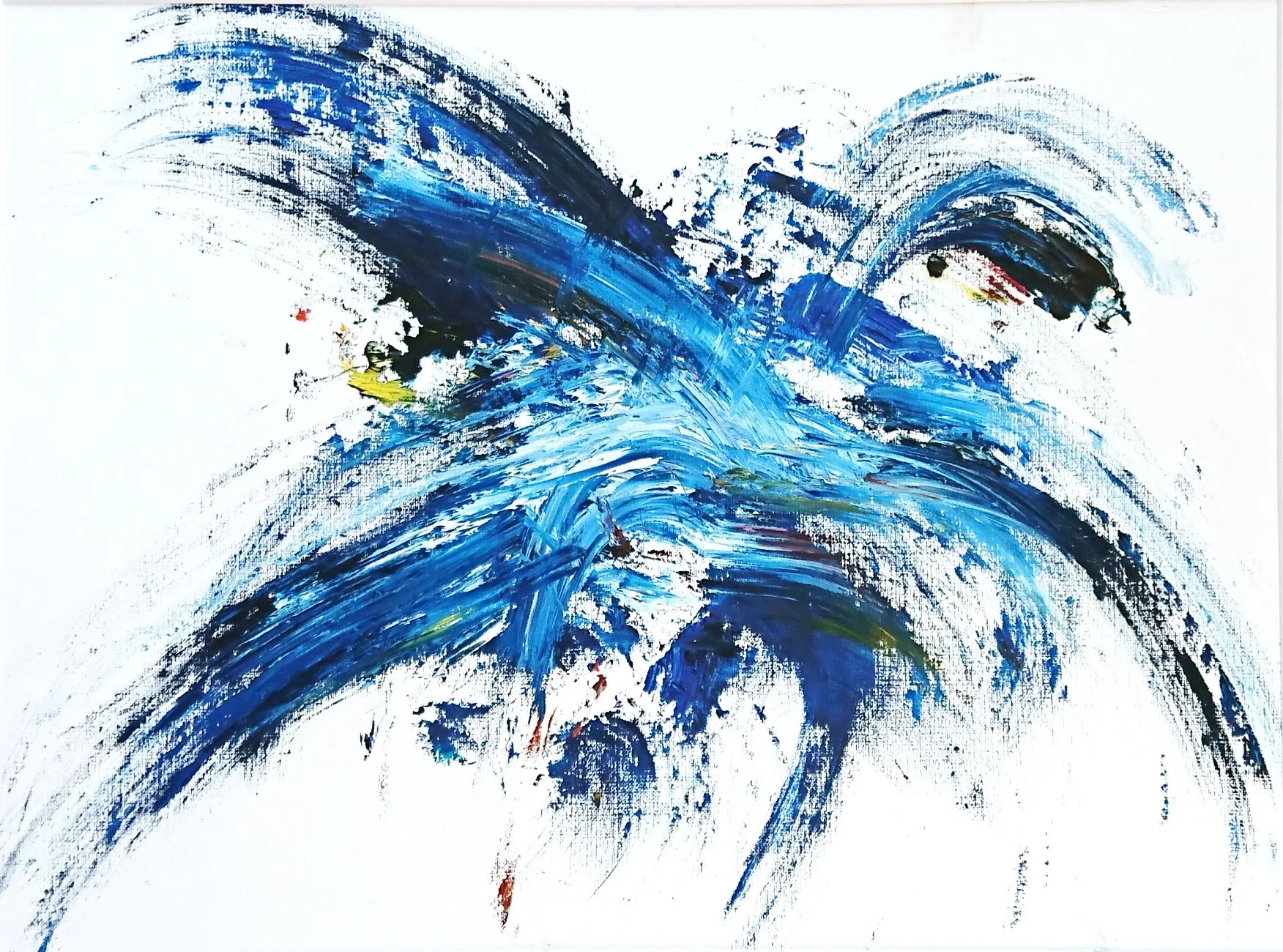
Blue bird, 2018, oil on paper, 40x50cm
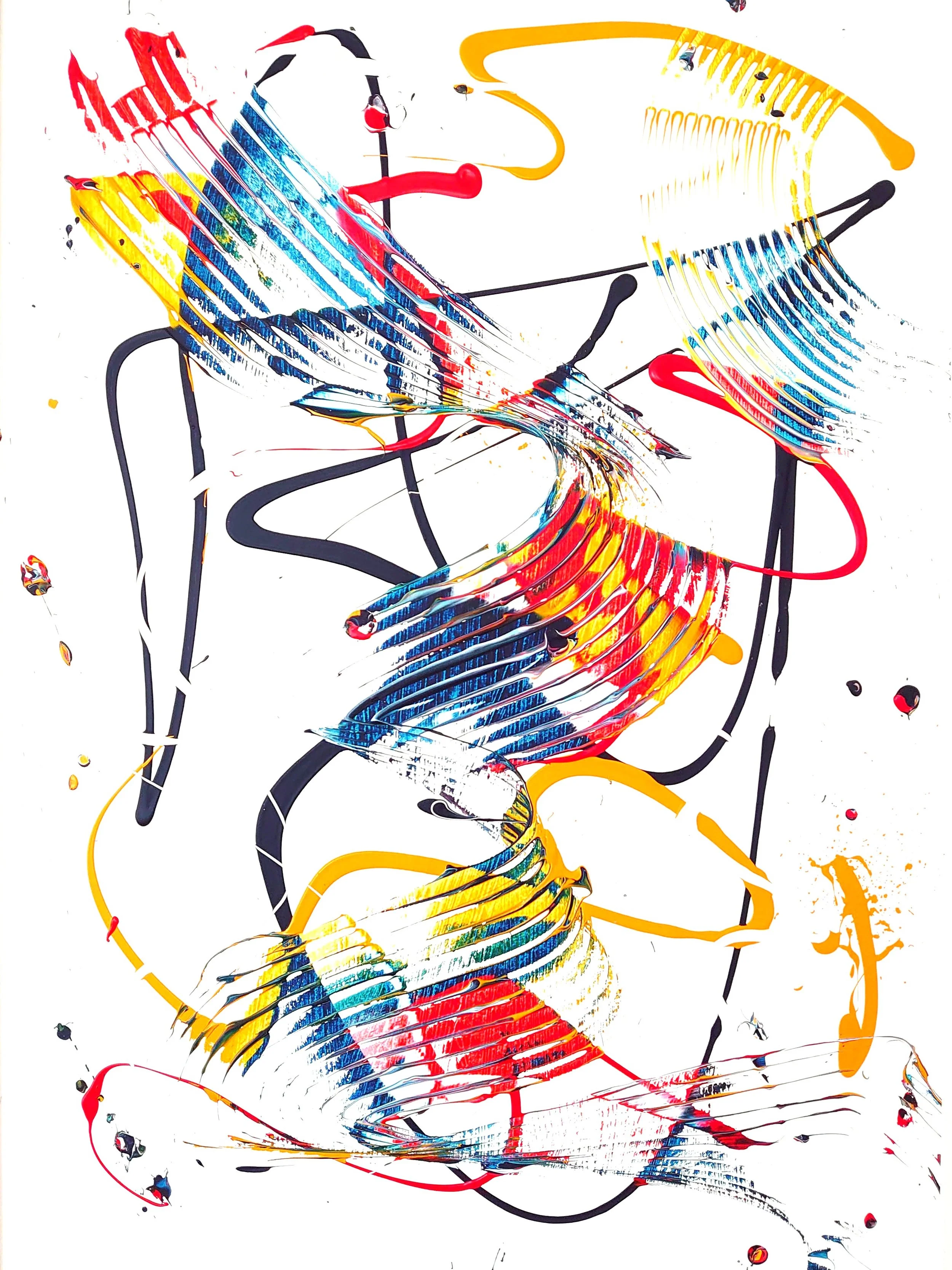
Capriccioso, 2019 acrylic on cardboard, 70x100cm
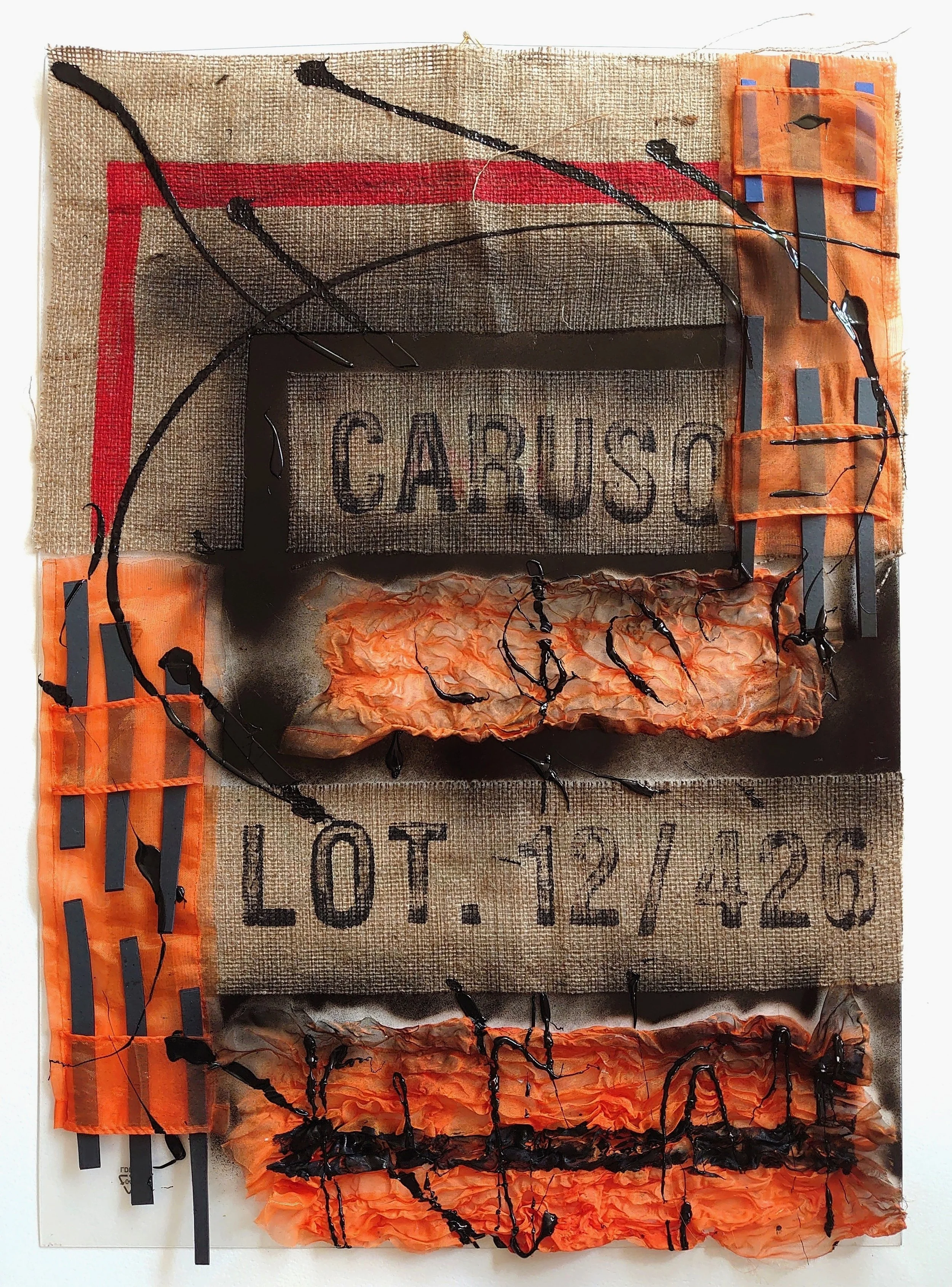
Caruso, 2018, assembly, 75x55cm
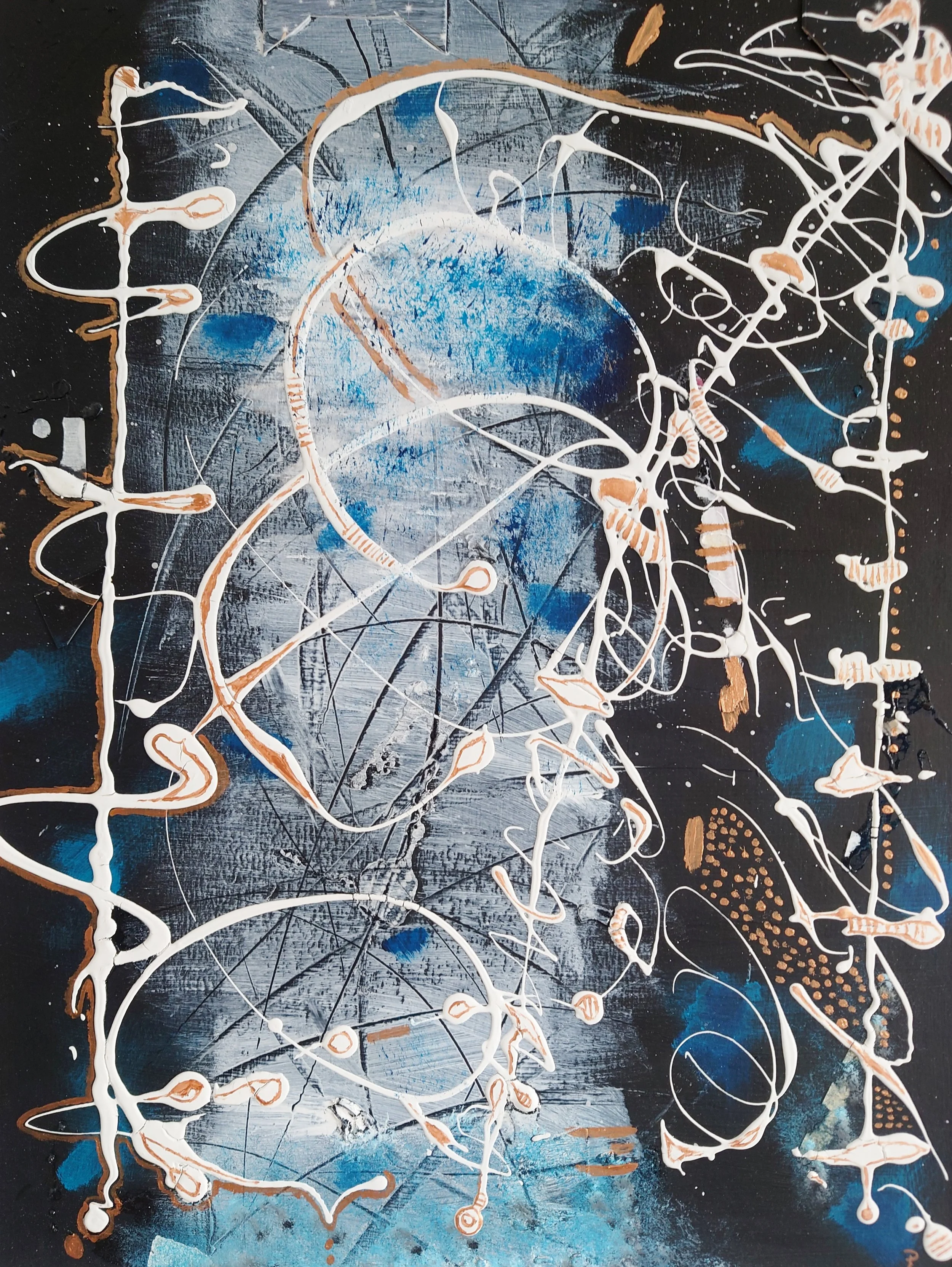
Il cammino verso la luce, 2020, acrylic on paper, 70x50cm
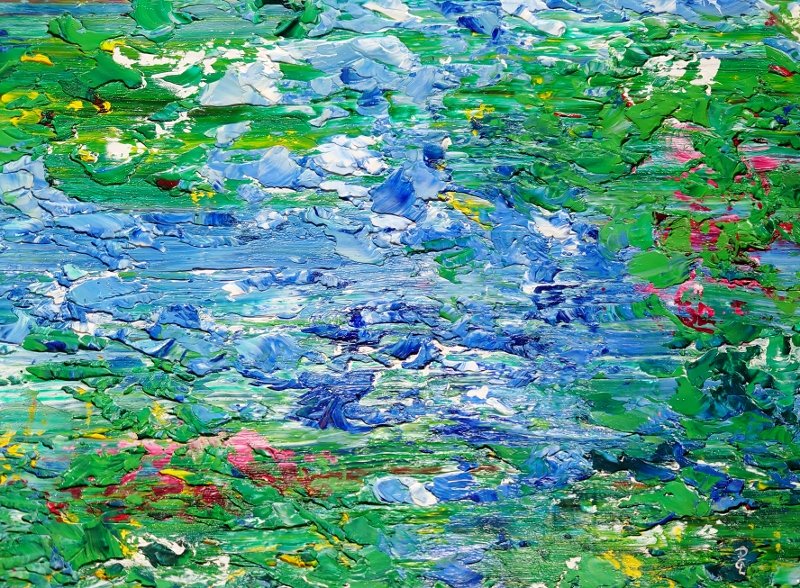
In Monet's garden, 2016, oil on paper, 40x50cm
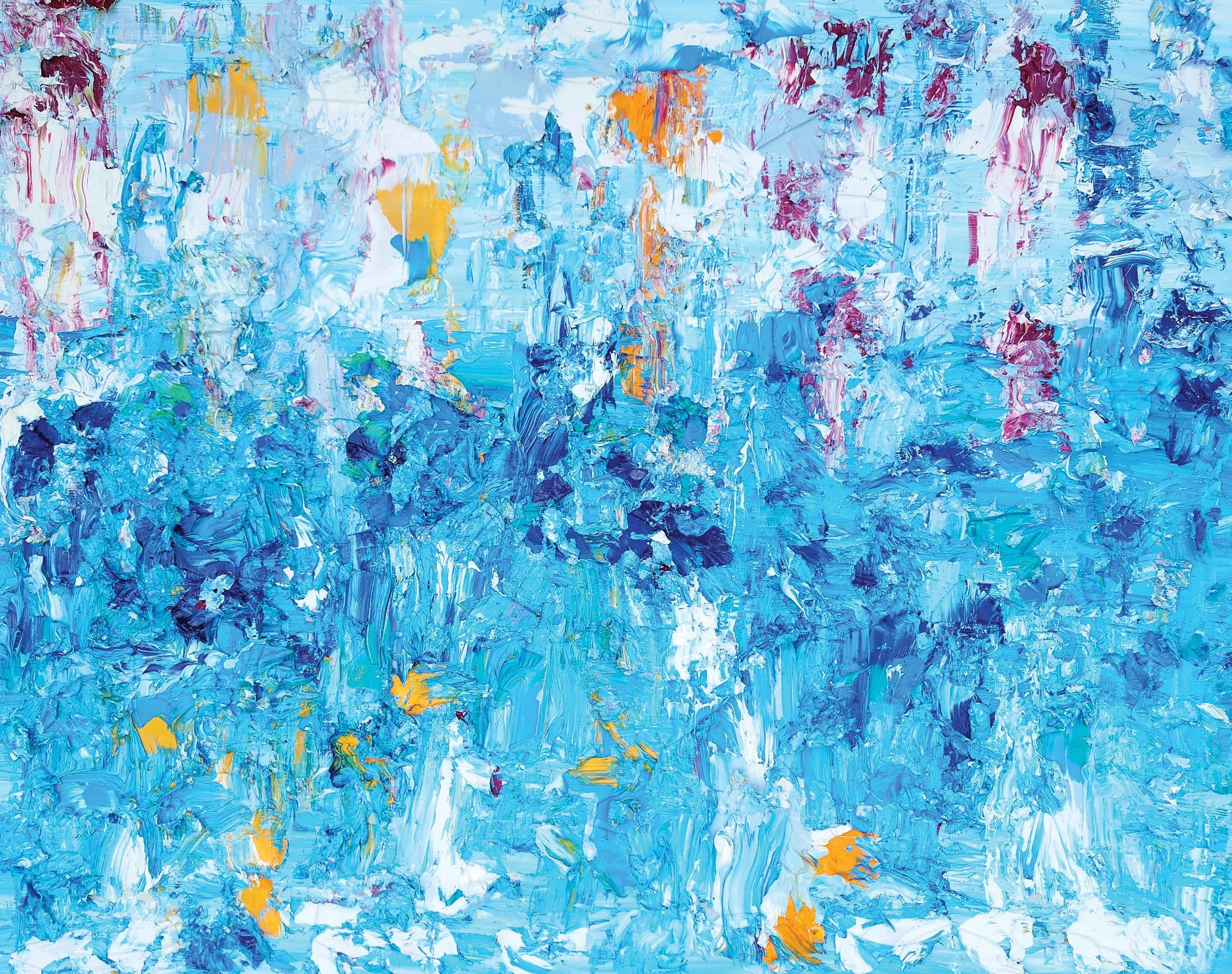
La musica del mare, 2021, oil on canvas, 80x100cm
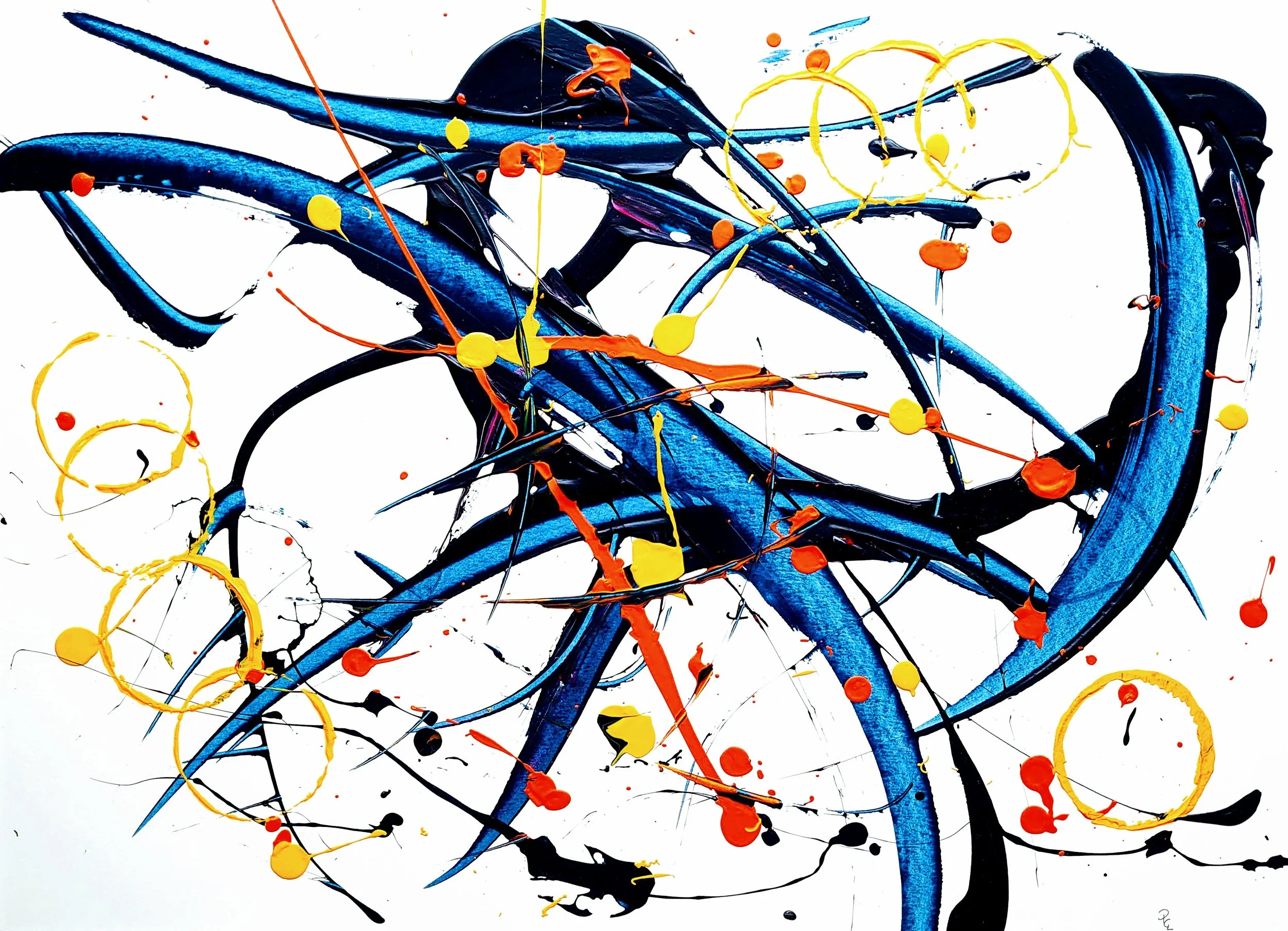
Leonard Bernstein conducting, 2019, acrylic on paper, 50x70cm
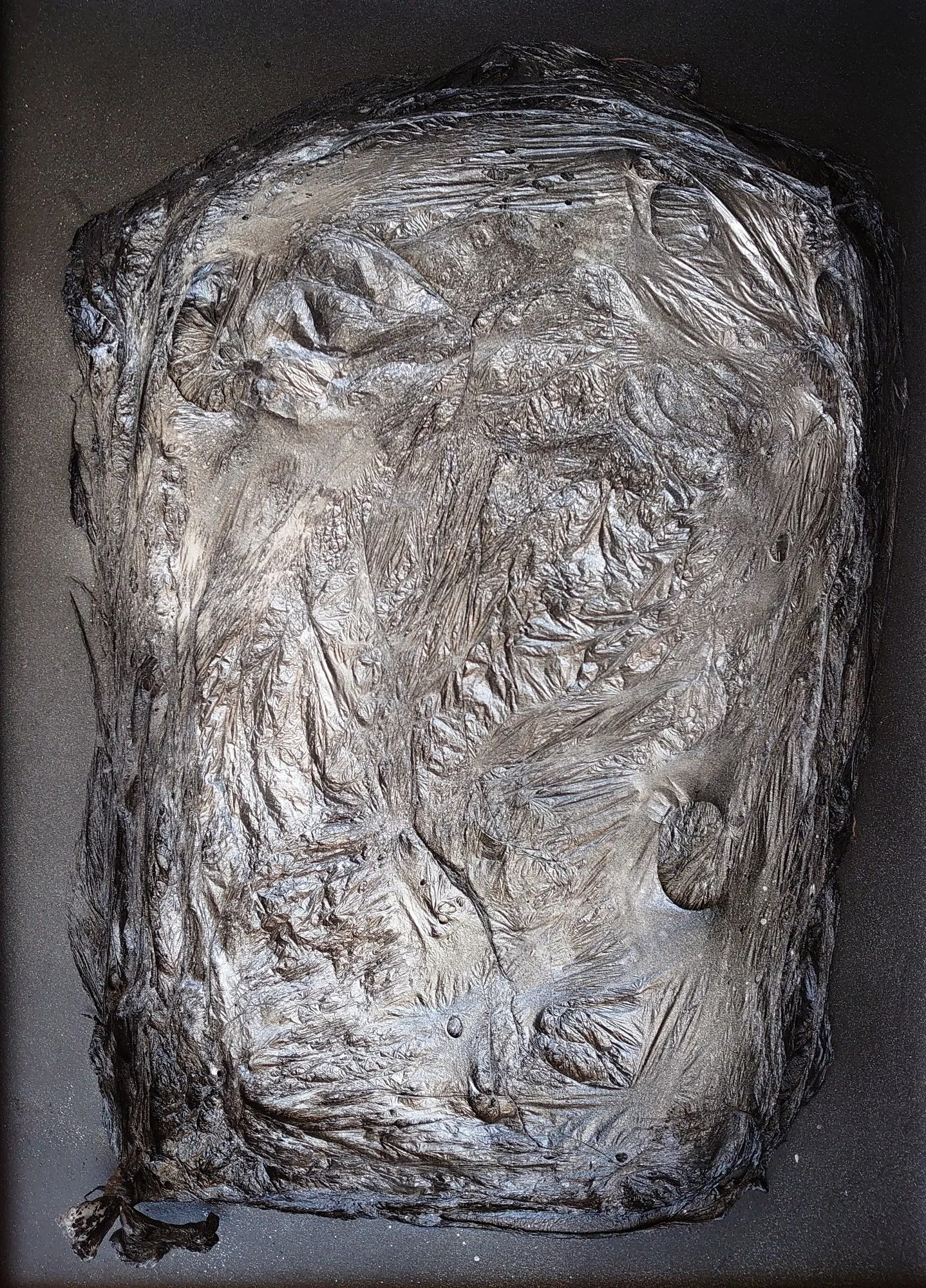
On the other Side of the Moon, 2020, assembly, 70x50cm
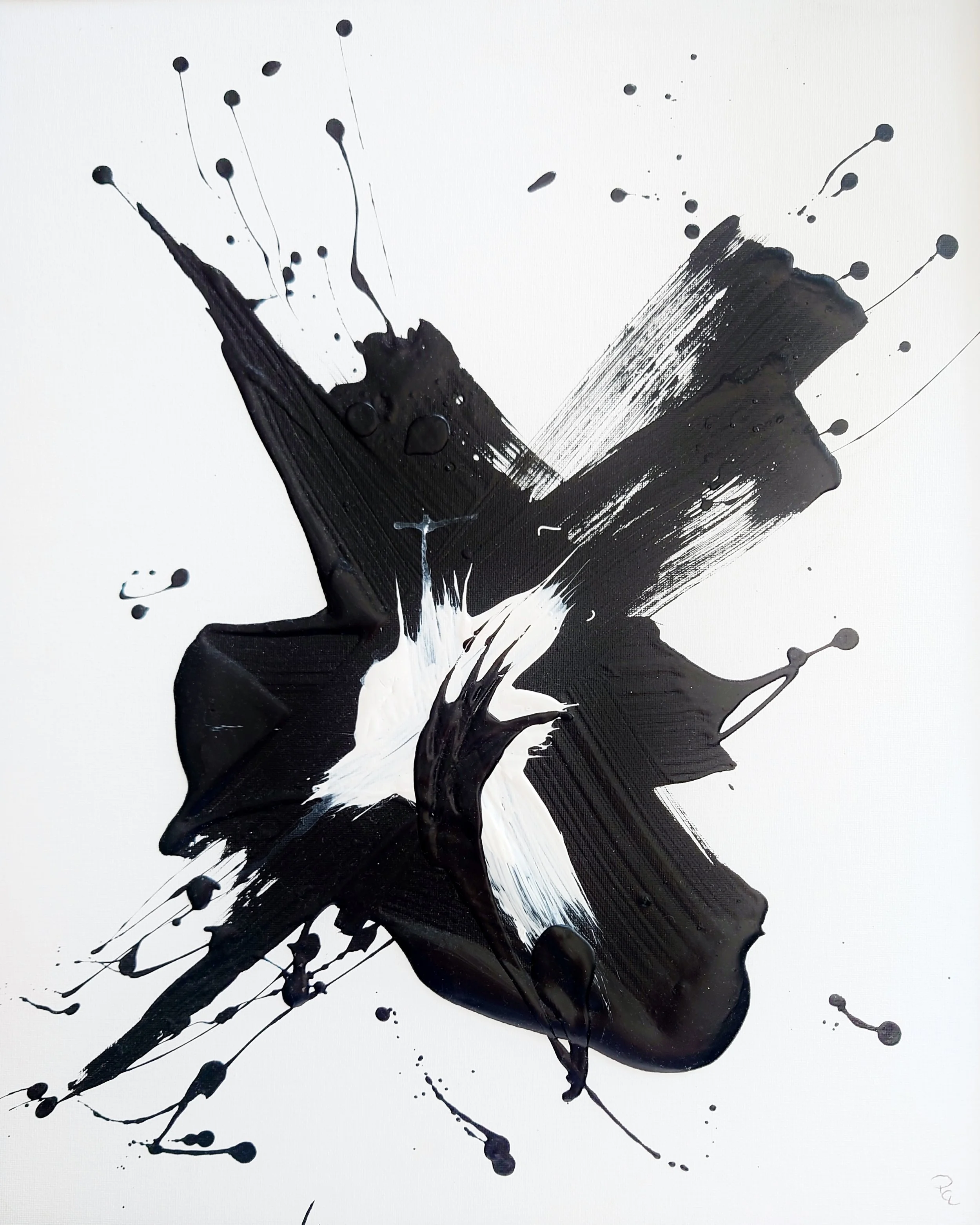
Orchidea nera, 2021, acrylic on paper, 40x50cm