Britta Ortiz
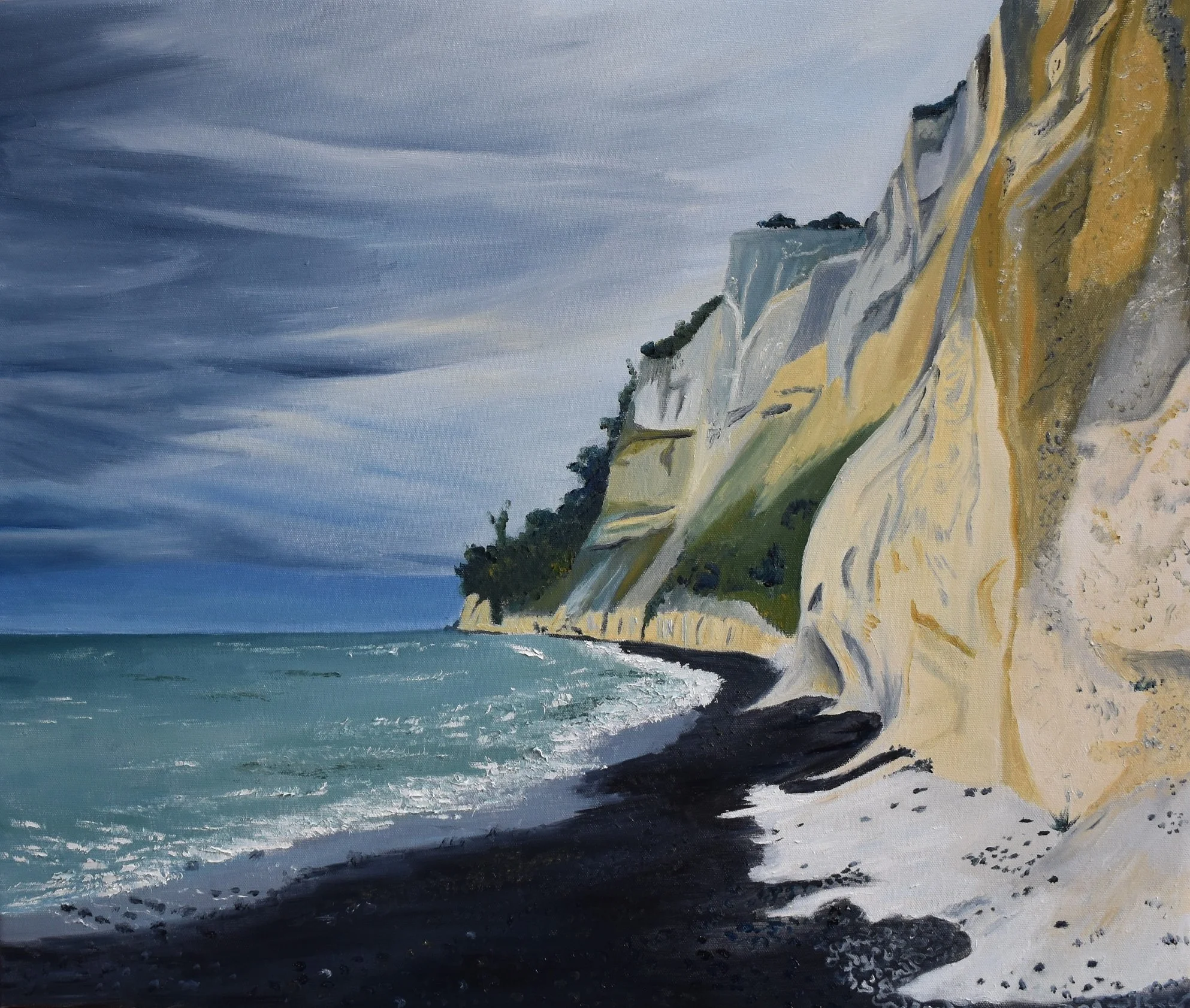
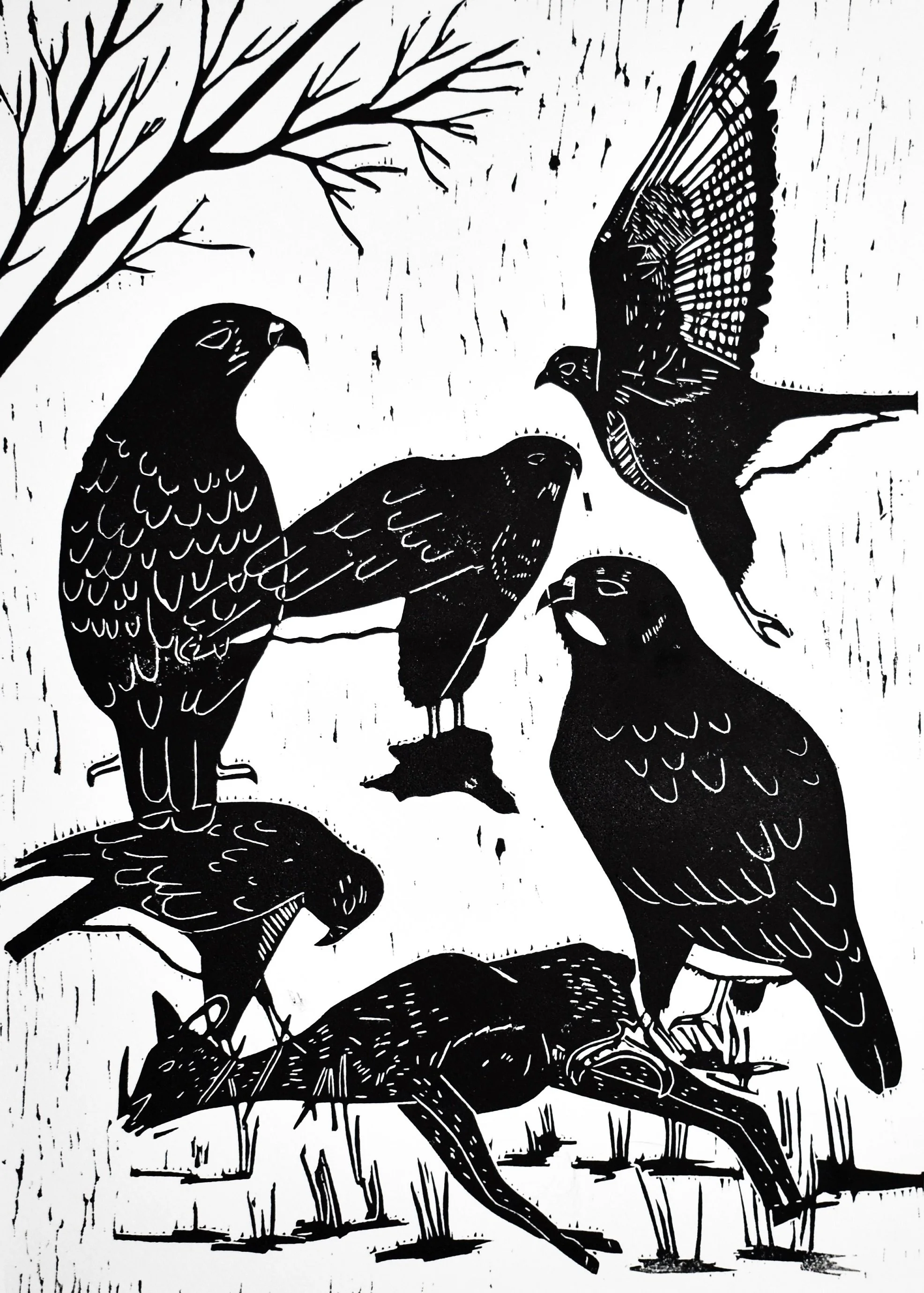
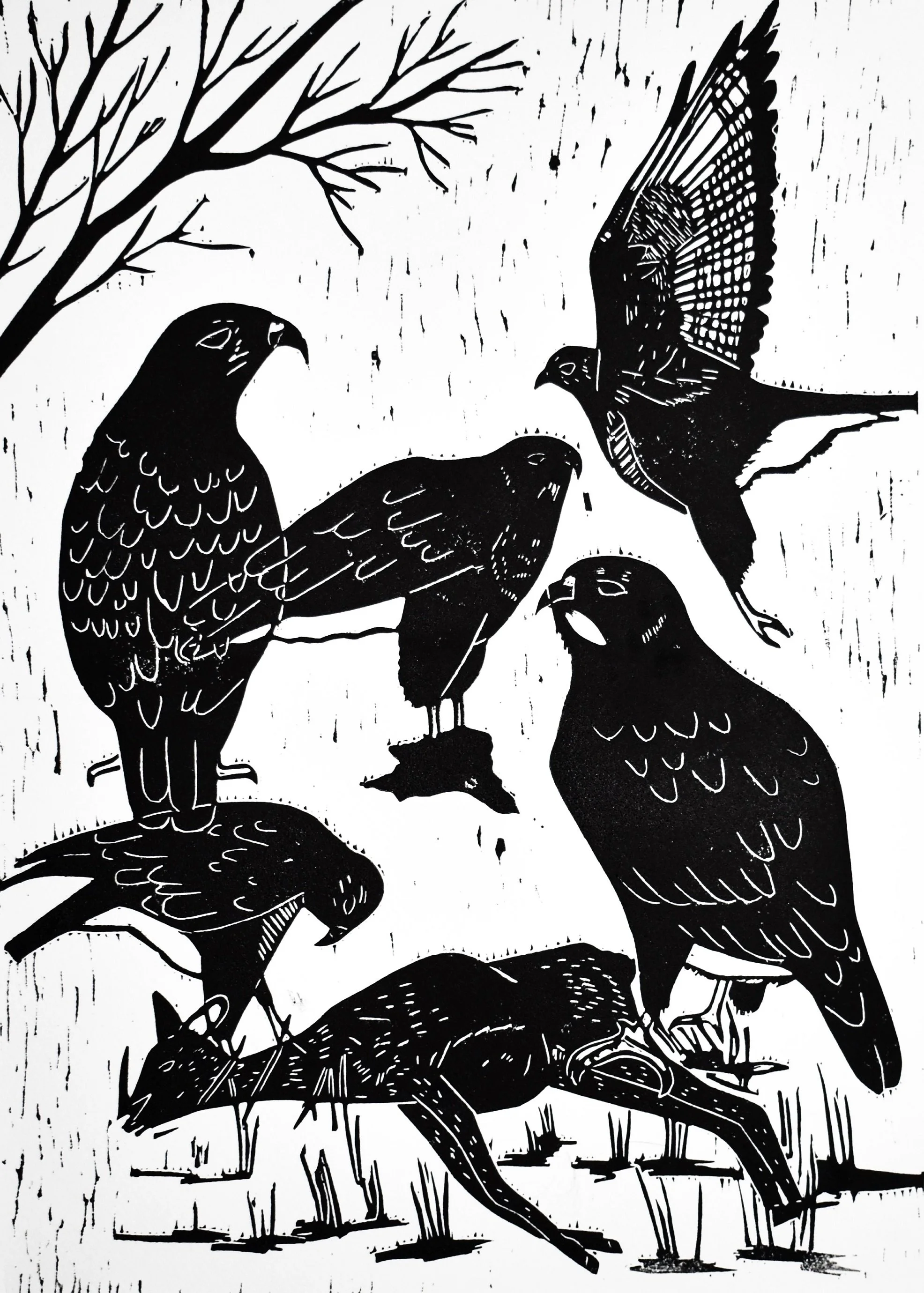
Britta Ortiz’s artistic practice emerges from a sustained inquiry into the conditions of life: its vulnerability, resilience, beauty, violence, interdependence, and inevitable end. Working across graphic art, oil painting, ceramics, watercolor, weaving, photography, and other forms, she approaches art as both a necessity and a method of reflection. Her work is grounded in close observation of the world around her, but observation is never an end in itself. A bird of prey feeding on a dead animal, insects gathering around a decomposing body, a child absorbed by a mobile phone, or trees moving in the wind can become the starting point for a broader consideration of mortality, responsibility, social behavior, and the place of human beings within the natural world.
Ortiz has made art since childhood, although her path did not follow the conventional trajectory of formal academy training. Her artistic curiosity was first encouraged by teachers who recognized her desire to express herself visually. One of the earliest works to affect her deeply was Edvard Munch’s The Scream, encountered as a small black-and-white reproduction in a school art book. Despite the limitations of the image, she experienced the painting as intensely expressive, sensing the force of the scream through its simplified forms. Several years later, while preparing a school assignment on Vincent van Gogh, she copied his paintings and drawings by hand and read extensively about his life and correspondence. Van Gogh’s descriptions of color, including his use of heightened intensity to strengthen emotional and visual effect, left a lasting impression. Munch’s simplification of form and Van Gogh’s use of color and line helped establish two principles that continue to inform Ortiz’s work: that a motif does not need to be rendered naturalistically to communicate clearly, and that reduction can intensify rather than diminish expression.
Although Ortiz dreamed of attending an art academy, her parents urged her toward an academic profession. She chose medicine, later studying psychology and earning a master’s degree in health anthropology. These fields did not replace art. Instead, they became part of the intellectual and experiential foundation from which her artistic practice developed. Medicine brought her into contact with people from across society, often during periods of illness, crisis, fear, and extreme vulnerability. Psychology led her to reconsider ideas of objectivity, perception, identity, and the ways individuals interpret their experiences. Health anthropology expanded her understanding of cultural contexts, human relationships, and the many systems through which people understand life, suffering, illness, and death.
Ortiz continues to identify primarily as a doctor, yet her medical and artistic practices are closely intertwined. Both require observation, patience, reflection, and a willingness to remain attentive to complexity. Her professional work has frequently involved the development and implementation of preventive health projects, processes that depend on gathering knowledge, evaluating circumstances, and constructing an approach from a reliable foundation. Her artworks often develop through a comparable method. An experience, observation, question, or concern initiates a period of thought. She gathers visual material, makes photographs, prepares sketches, studies individual elements, and considers how they might be composed. Knowledge and reflection gradually produce the structure of the work.
Her medical experience has also made mortality concrete. Death is not an abstract idea encountered only through fiction, news, or distant events. It has been present throughout her life. Her father worked not only as a carpenter but also as an undertaker, and her work as a doctor repeatedly revealed how little distance separates life from death. Serious illness does not belong exclusively to old age. Accidents can transform a life within moments. Children, young adults, and people who appear healthy can suddenly be confronted with conditions that alter or end their lives. For Ortiz, this awareness does not lead to a rejection of life. It intensifies her attachment to it.
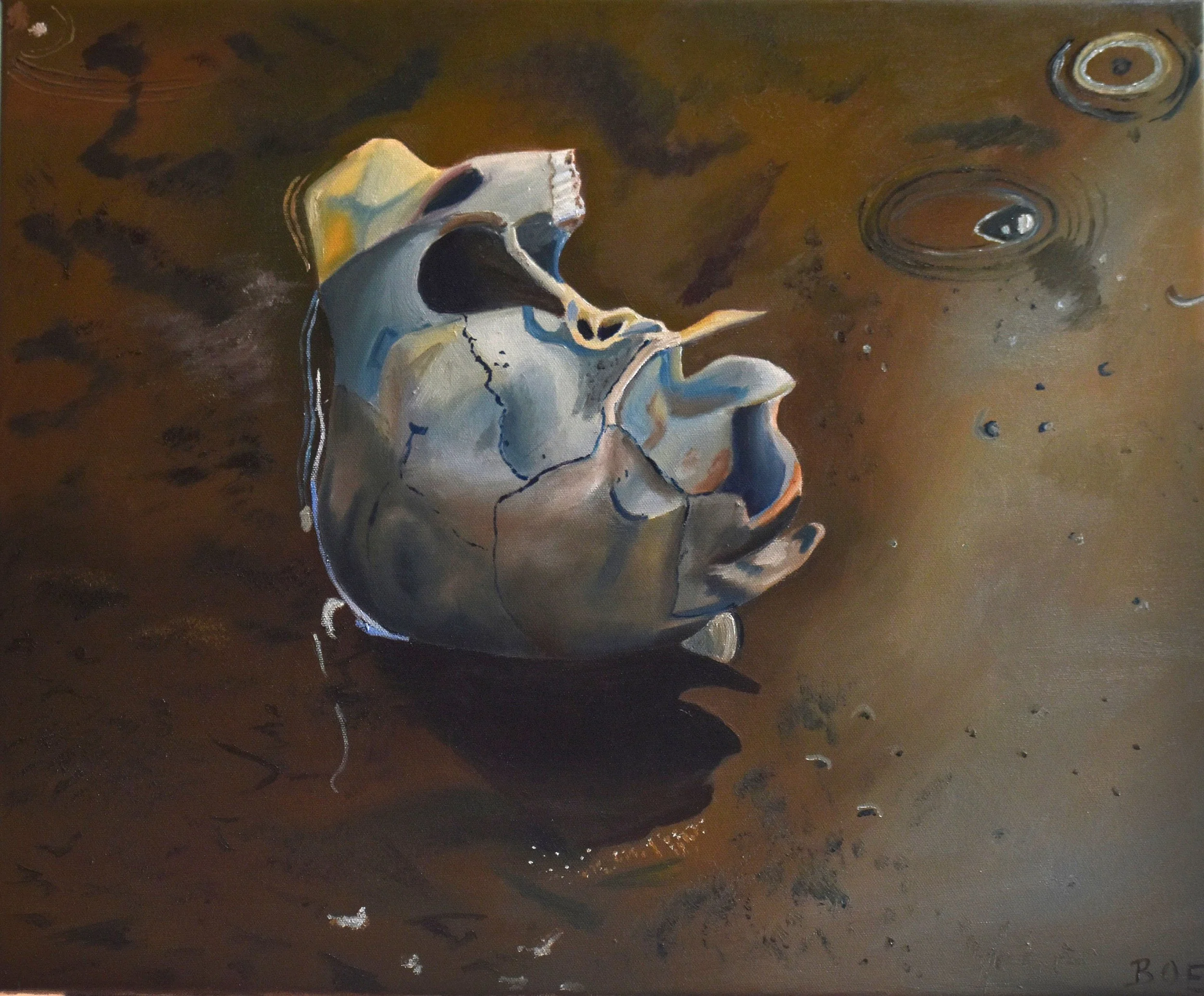
Life is therefore understood in her work as a gift that cannot be taken for granted. Birth and death form the two defining limits of existence, and the life lived between them acquires value because it is finite. At the same time, death is not represented solely as loss. It is also a biological condition of continued life. Animals, humans, and plants consist of proteins, minerals, and other materials that return to ecological systems after death. Predators consume prey. Humans slaughter and eat animals. Bodies that die naturally enter processes of decomposition in which insects, snails, microorganisms, and other organisms participate. Matter is redistributed, absorbed, and transformed.
This cyclical understanding of existence is central to Ortiz’s work. Every living being depends on other forms of life, directly or indirectly. Birth, survival, decay, and regeneration are not separate events but interconnected processes. A dead animal becomes nourishment for numerous other beings, which will themselves eventually become part of the same cycle. The individual life ends, but its material components continue within larger biological systems.
From this perspective, the desire for eternal life appears both impossible and ethically troubling. If human beings continued to live indefinitely while children were still born, the earth would become unsustainably populated. If birth ceased in order to make immortality possible, society would become a world without children and young people. The fear of death may be understandable, but the consequences of eliminating death would undermine the conditions that allow life to continue. Ortiz’s work does not attempt to make death less final. Instead, it places mortality within a system of interdependence that includes both loss and renewal.
Time in her practice is therefore cyclical, but not merely circular. Generations are born, live, die, and contribute materially and intellectually to those that follow. The cycle also moves forward. Human beings inherit knowledge from their ancestors, and some animals likewise transmit learned behavior between generations. Societies develop through accumulated experience, even as historical patterns repeat. Nations rise, dominate, decline, and are replaced by others. Cultures may imagine themselves more advanced than earlier civilizations, yet the complexity of societies created thousands of years ago challenges simple assumptions about linear progress.
This tension between repetition and change informs Ortiz’s reflections on history. Human societies possess the capacity to learn, but they repeatedly fail to prevent violence, domination, and destruction. History demonstrates how a small number of individuals can cause suffering and death on an enormous scale when others obey, participate, remain passive, or surrender their ethical judgment. Ortiz is disturbed by the ability of political leaders to mobilize thousands or millions of people toward violence for personal power, ideology, revenge, or territorial ambition. She regards violence not as strength but as a failure of language, responsibility, and ethical self-control.
Unlike conflict among animals, which often concerns survival, territory, food, or reproduction, human violence can be organized around abstract claims, political ambitions, or systems of power. Animals may fight to reproduce or protect access to resources. Human beings develop methods of torture, mechanized warfare, and large-scale destruction directed against members of their own species. For Ortiz, this difference complicates claims of human superiority. Intelligence does not necessarily produce wisdom, restraint, or moral behavior.
Her work does not usually depict human violence directly. Instead, she often works through animals, insects, plants, and natural processes. This allows her to address difficult questions without illustrating a single political event or reducing the work to a fixed message. An animal image can carry several meanings simultaneously. It can remain rooted in observed behavior while also prompting reflection on vulnerability, predation, fear, social organization, survival, or human conduct. The use of animals and natural elements can make the work accessible across cultural contexts because viewers are not required to identify with a particular nationality, social group, or historical narrative before engaging with the image.
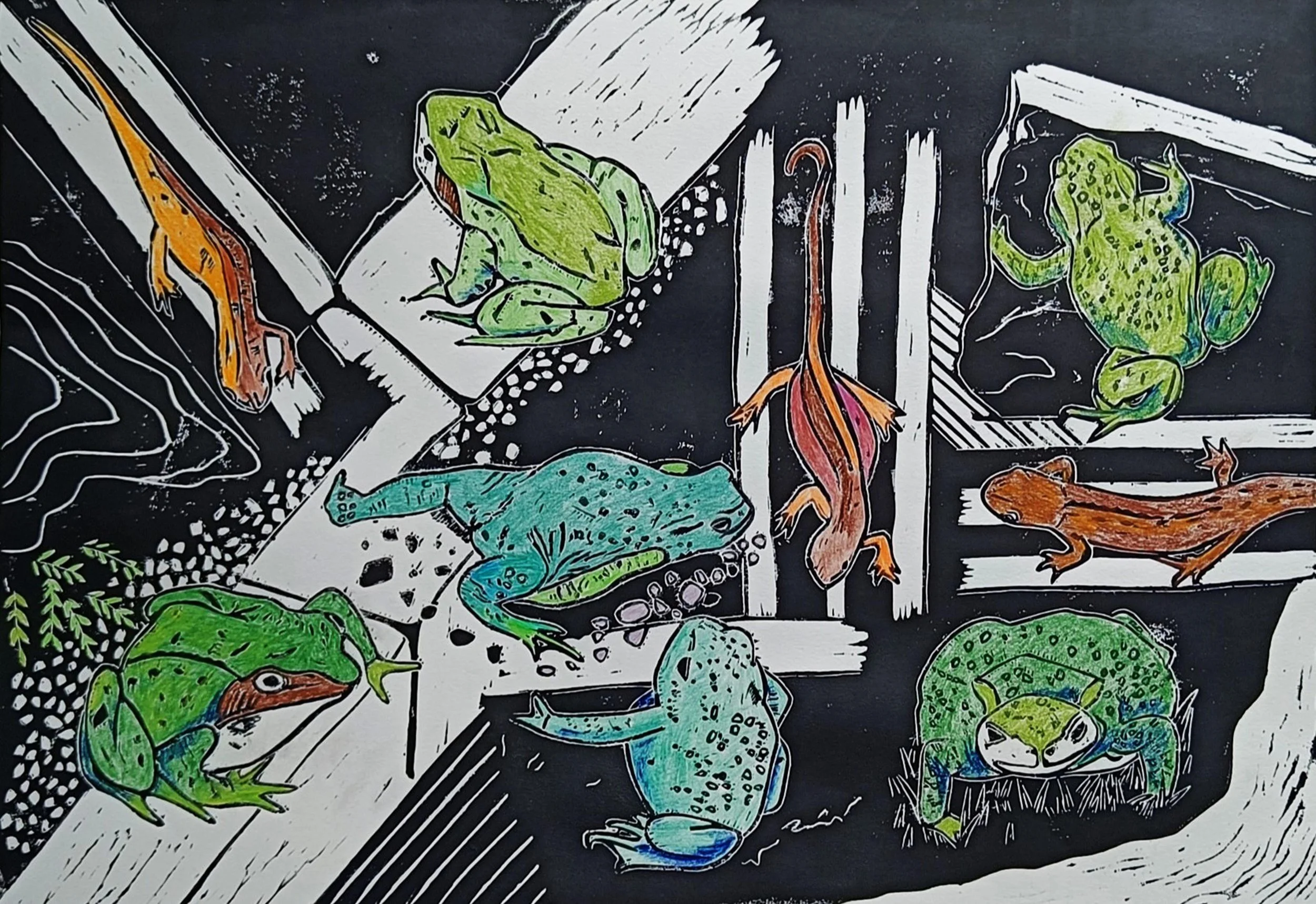
Ortiz’s images begin with what she has experienced through her own senses. Living in the Danish countryside, surrounded by fields and trees, she encounters pheasants, hares, deer, birds of prey, toads, lizards, spiders, insects, and many other creatures. She photographs these encounters both to preserve the memory of an experience and to study the visual structures of animals, plants, and landscapes. She does not use photographs found online or in magazines as sources. The photograph functions as a record of direct contact, a way of holding an observation long enough for it to be reconsidered, transformed, and incorporated into a work.
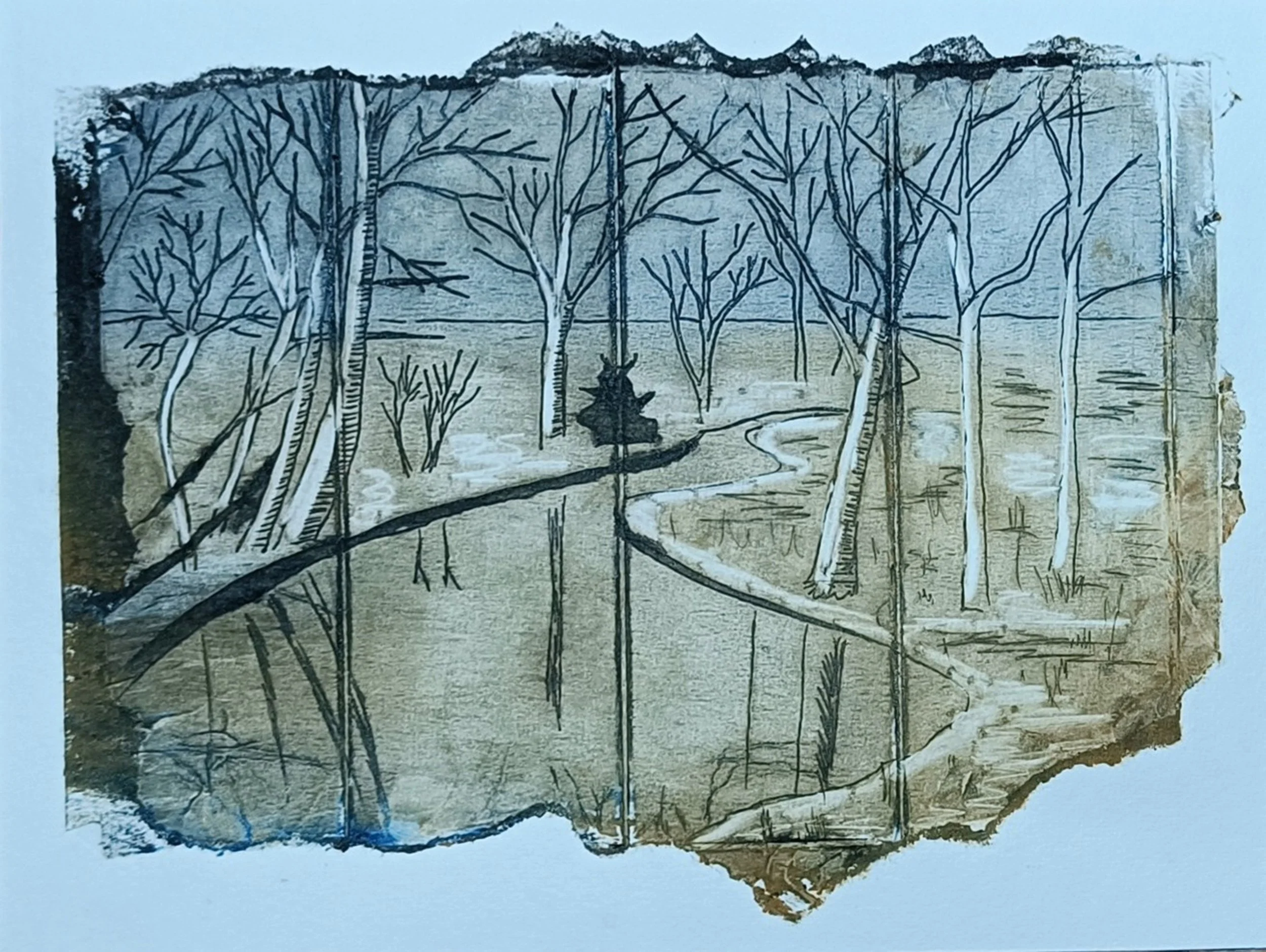
Nature is both subject and context. It provides calm after periods of professional intensity, but it also unsettles human assumptions of control. The changing seasons, the emergence of spring foliage, heavy snow, strong wind, and the movement of animals all reveal forces that do not conform to human schedules. The countryside is never static. It changes with weather, light, growth, migration, reproduction, illness, and death. What may appear peaceful contains constant risk. Small animals live with the presence of predators. Food is uncertain. Shelter can disappear. Death is never entirely distant.
One work developed from the theme of an uncertain world after the COVID-19 pandemic and Russia’s invasion of Ukraine. Rather than represent either event directly, Ortiz turned to chickens and foxes. For people living in Denmark, long periods of political stability and relative safety can create the impression that security is normal. Animals live with a different degree of exposure. Danger remains present even when it is not immediately visible. By using animals, Ortiz was able to consider uncertainty as a general condition rather than as a temporary exception.
Her attention to the natural world has also increased her awareness of environmental recovery. During her childhood, birds of prey were rarely seen in Denmark. Their return has become visible evidence that protective action can have meaningful consequences. She now encounters them frequently while walking or looking through the windows of her home. These observations reinforce her conviction that individual and collective actions matter. Human beings cannot control the earth, but they can alter the conditions under which other forms of life survive. Destruction is possible, but so is restoration.
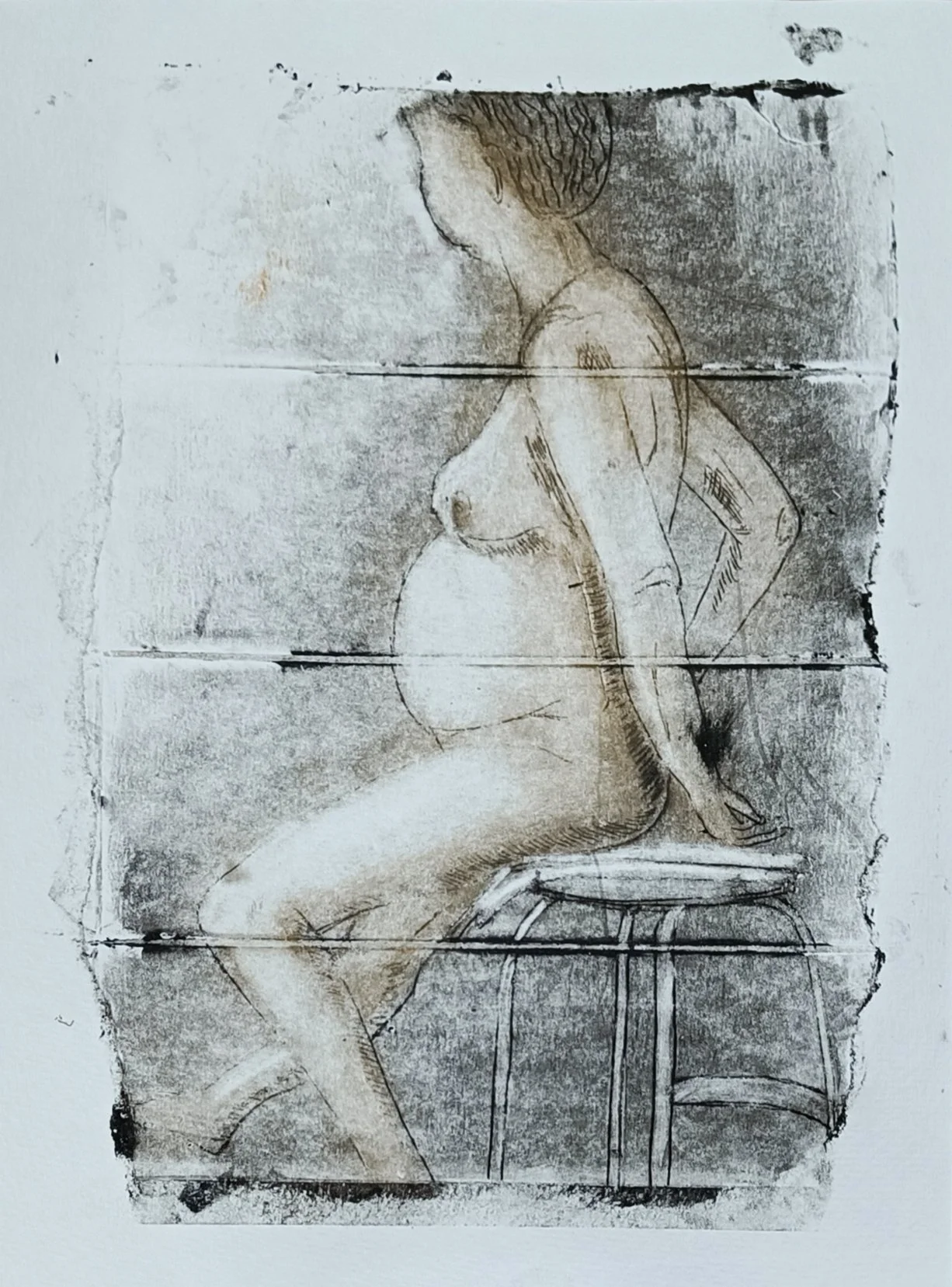
This understanding shapes the ethical orientation of her practice. Ortiz does not believe that a single artwork can determine how a viewer should think or feel. She hopes, however, that a work can create an emotional or reflective response. The nature of that response belongs to the viewer. Every person approaches an image through a different history, body of knowledge, language, memory, and point of view. Even when several artists draw the same model in a croquis session, the resulting drawings differ because perception is never neutral. Each artist selects, emphasizes, omits, and interprets.
Her understanding of perception has been informed by psychology and social constructionism. Just as a table appears different depending on whether it is viewed from above or from the side, an event or image changes according to the observer’s position. No description contains the whole object. Language, memory, and prior experience shape interpretation. Ortiz therefore leaves parts of a work open. Too much detail can obscure what matters, while excessive reduction can cause the central idea to disappear. Her task is to establish a balance between clarity and ambiguity, giving the viewer enough information to enter the work without eliminating the possibility of personal interpretation.
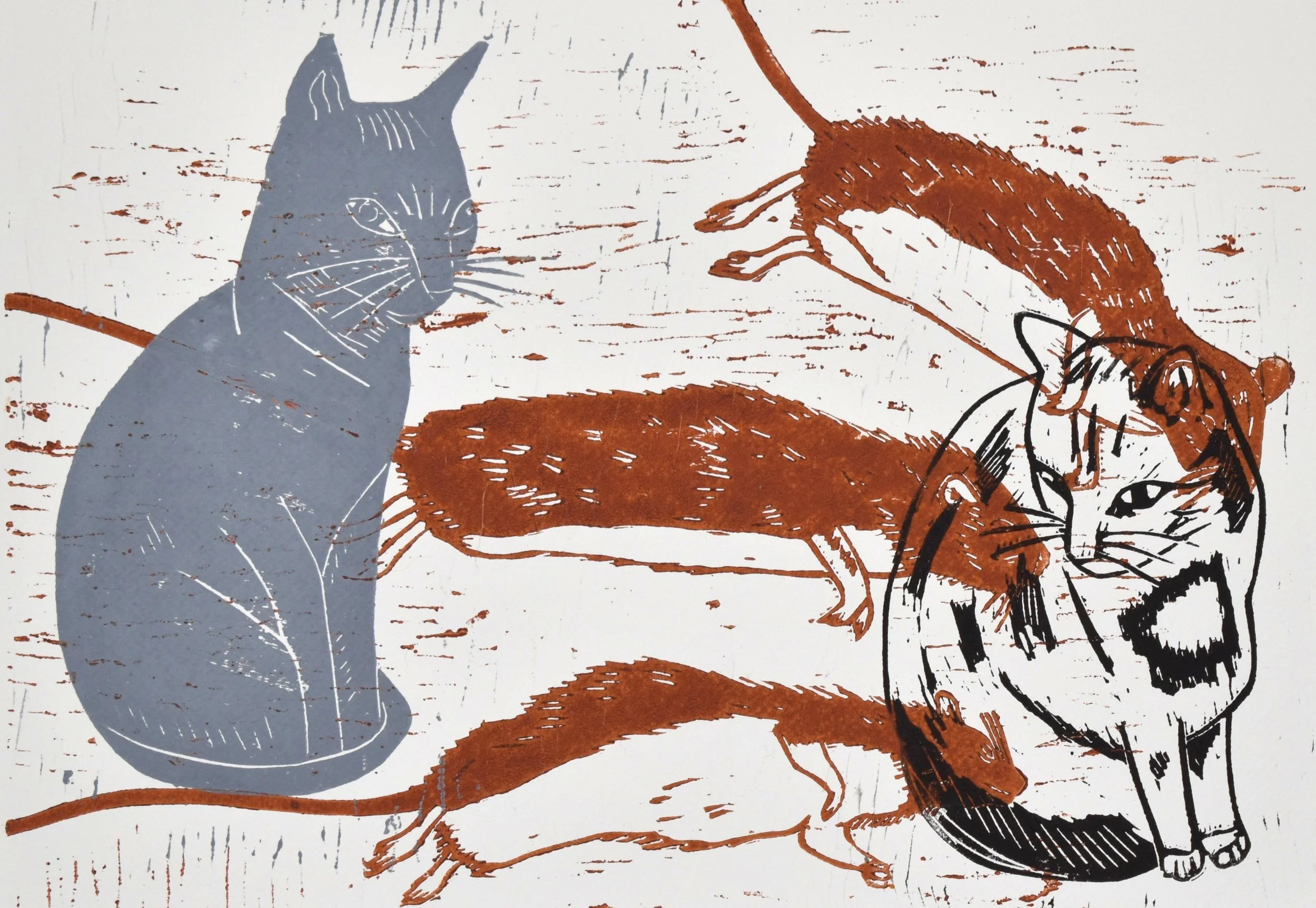
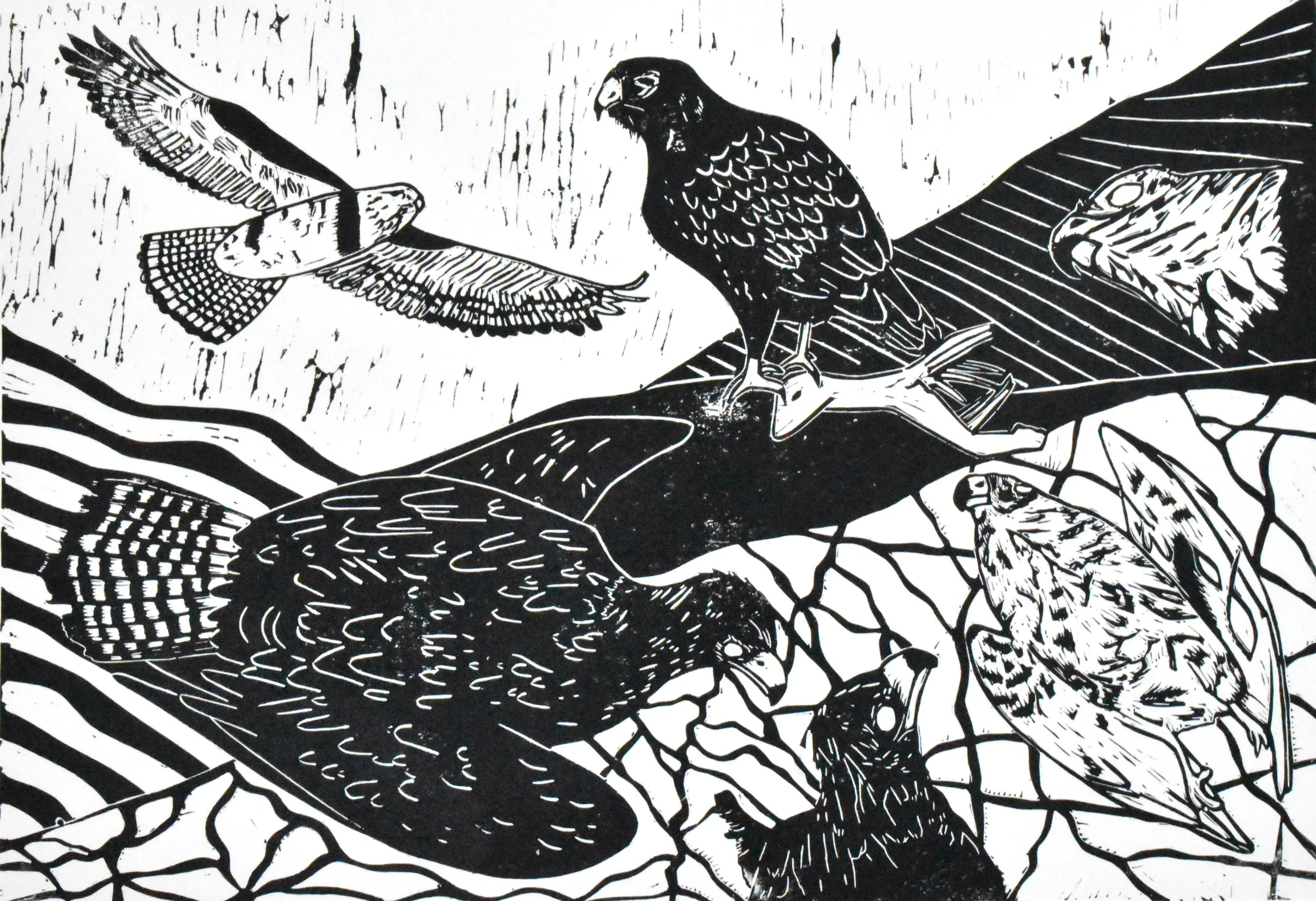
This balance is especially important in her linocuts. Graphic processes require deliberate decisions about what must remain and what can be removed. Ortiz does not consider the limitations of linoleum a disadvantage. She understands them as a structure that supports visual concentration. A bird does not require every feather to be represented. A tree does not require every branch. The human brain recognizes forms through selected features and relationships. Simplification can direct attention toward gesture, contrast, movement, vulnerability, or tension.
The process of producing a linocut begins long before cutting. Ortiz develops sketches, often combining several smaller studies into a larger composition. She determines how the image will be transferred to the linoleum in reverse and considers the relationships between positive and negative space. In multicolor works, she decides whether each color will be printed from a separate plate, whether the image will be produced as a reduction print, or whether both approaches will be combined. Once cutting begins, every mark has consequences. Material can be removed but not restored. The choice of knife, the width and direction of each cut, and the amount of surface retained all contribute to the final expression. The print stage then reveals whether the decisions made in advance have produced the intended result.
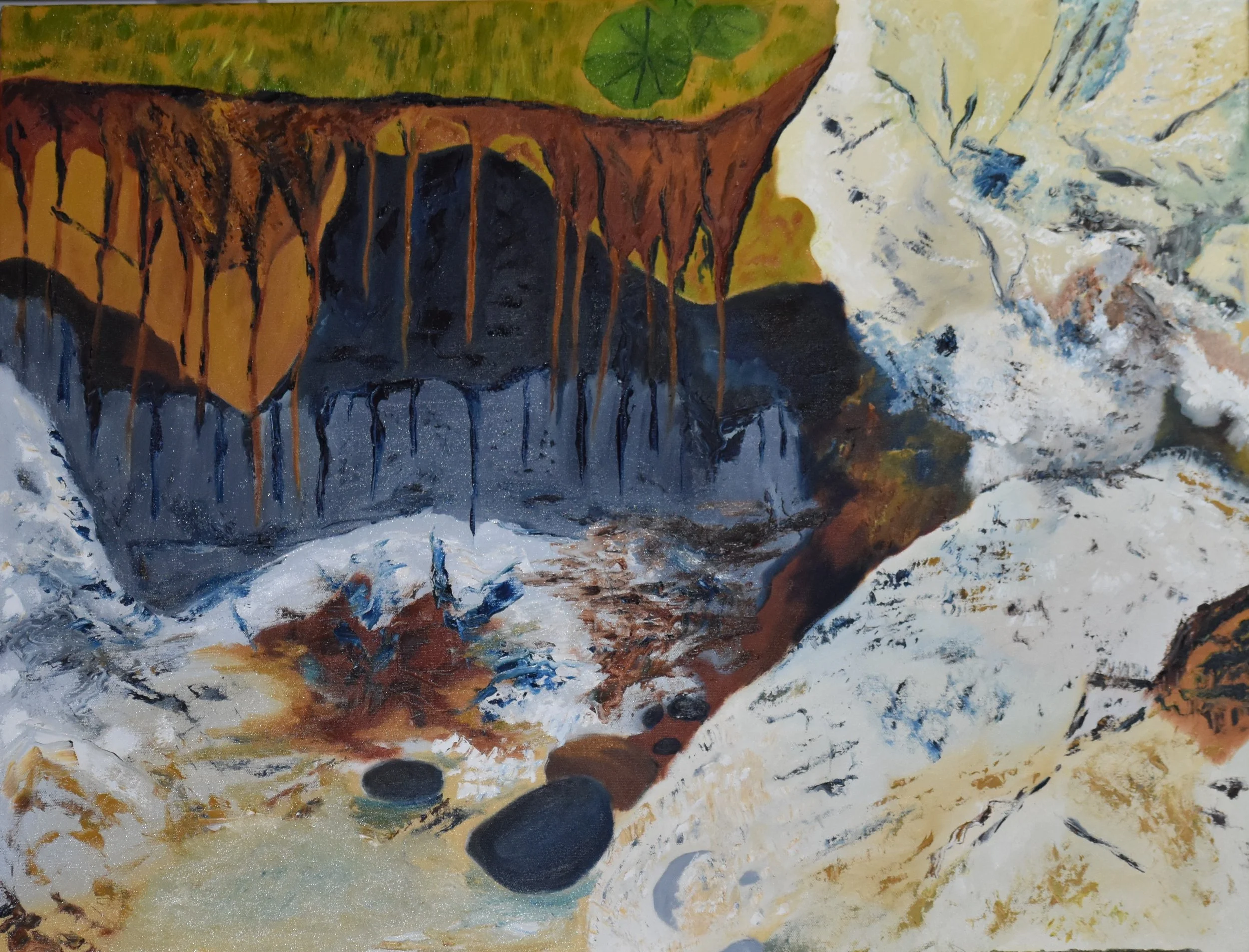
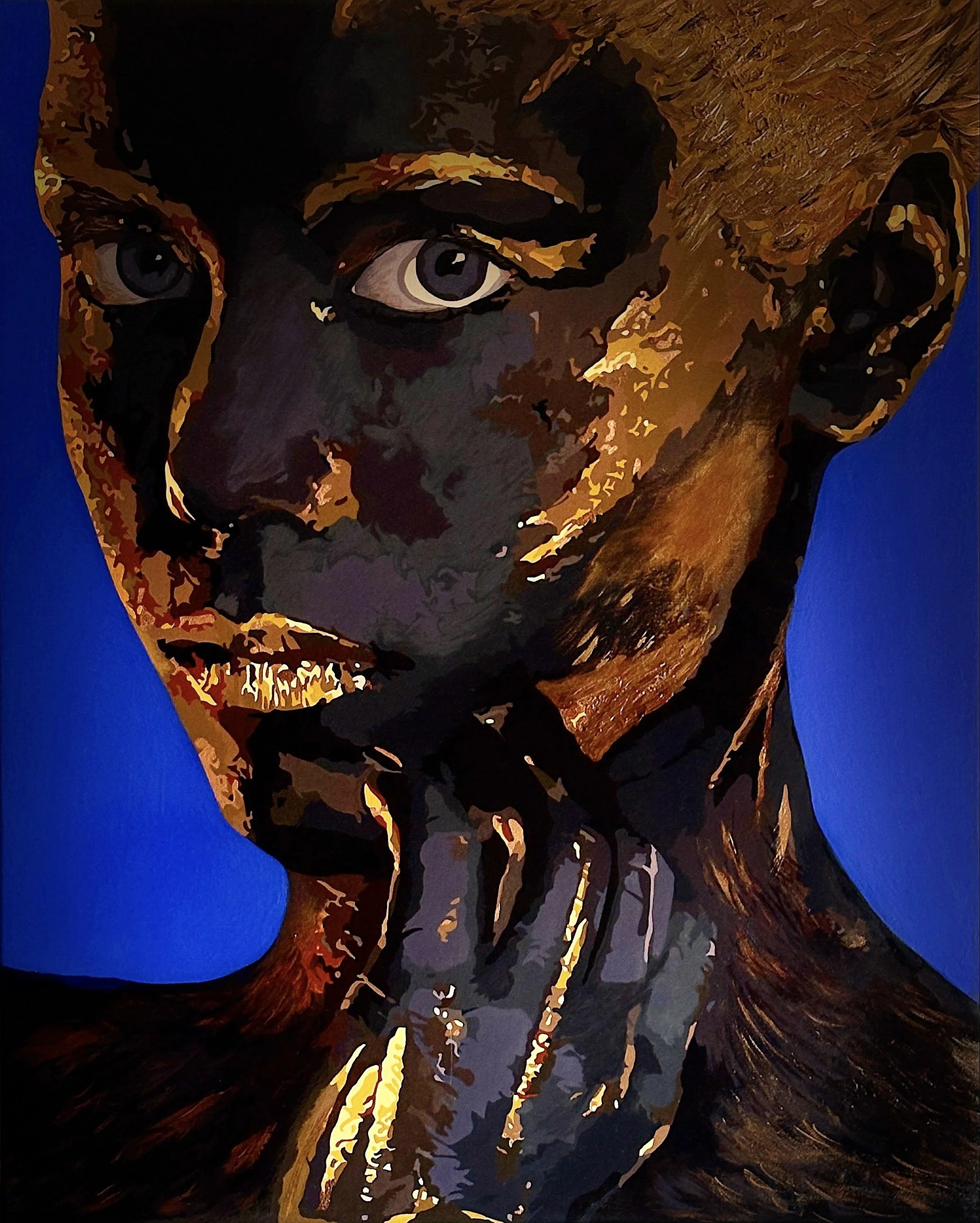
Oil painting offers a different relationship to time and revision. Ortiz sketches loosely on the canvas and builds the image gradually. Paint can be covered, altered, or reworked. She values oil paint for its texture and visual depth, but also because its slow drying time interrupts continuous activity. It requires pauses. These intervals allow her to step away, observe the developing image, and reconsider its direction. She describes this as a dialogue with the unfinished painting. The work communicates through imbalance, unresolved relationships, or unexpected possibilities. When something fails, she does not simply continue according to the original plan. She looks for the change the painting requires.
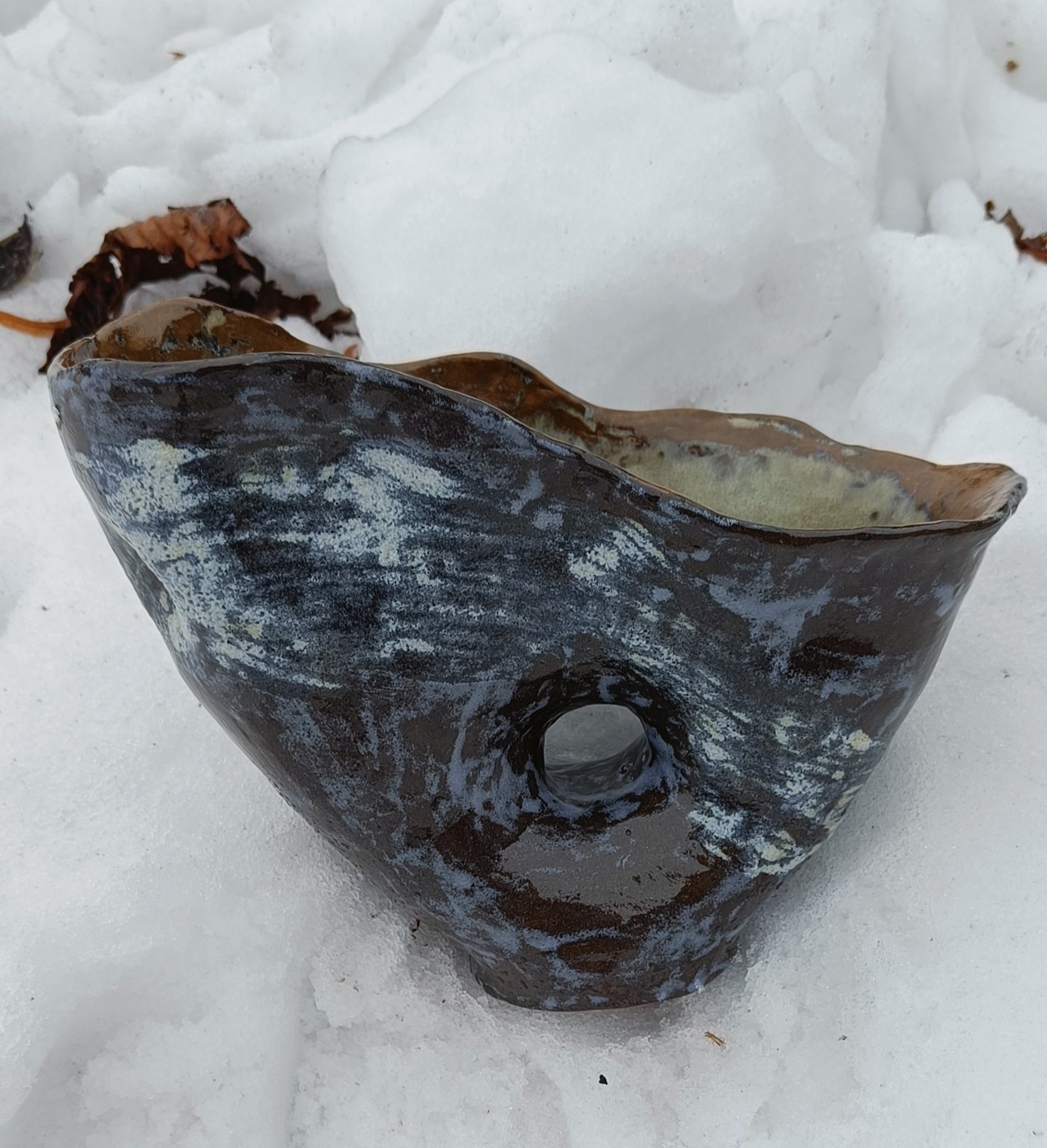
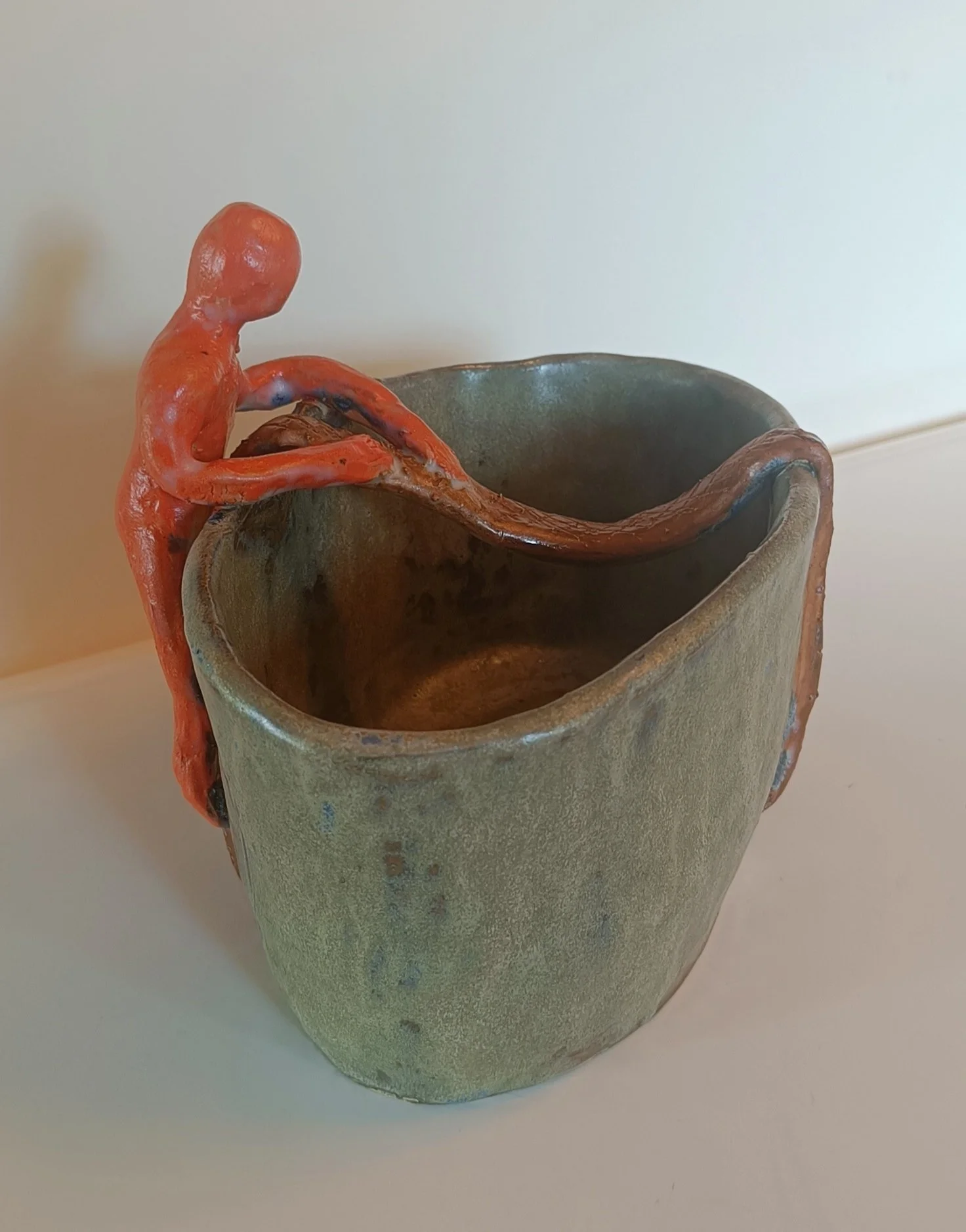
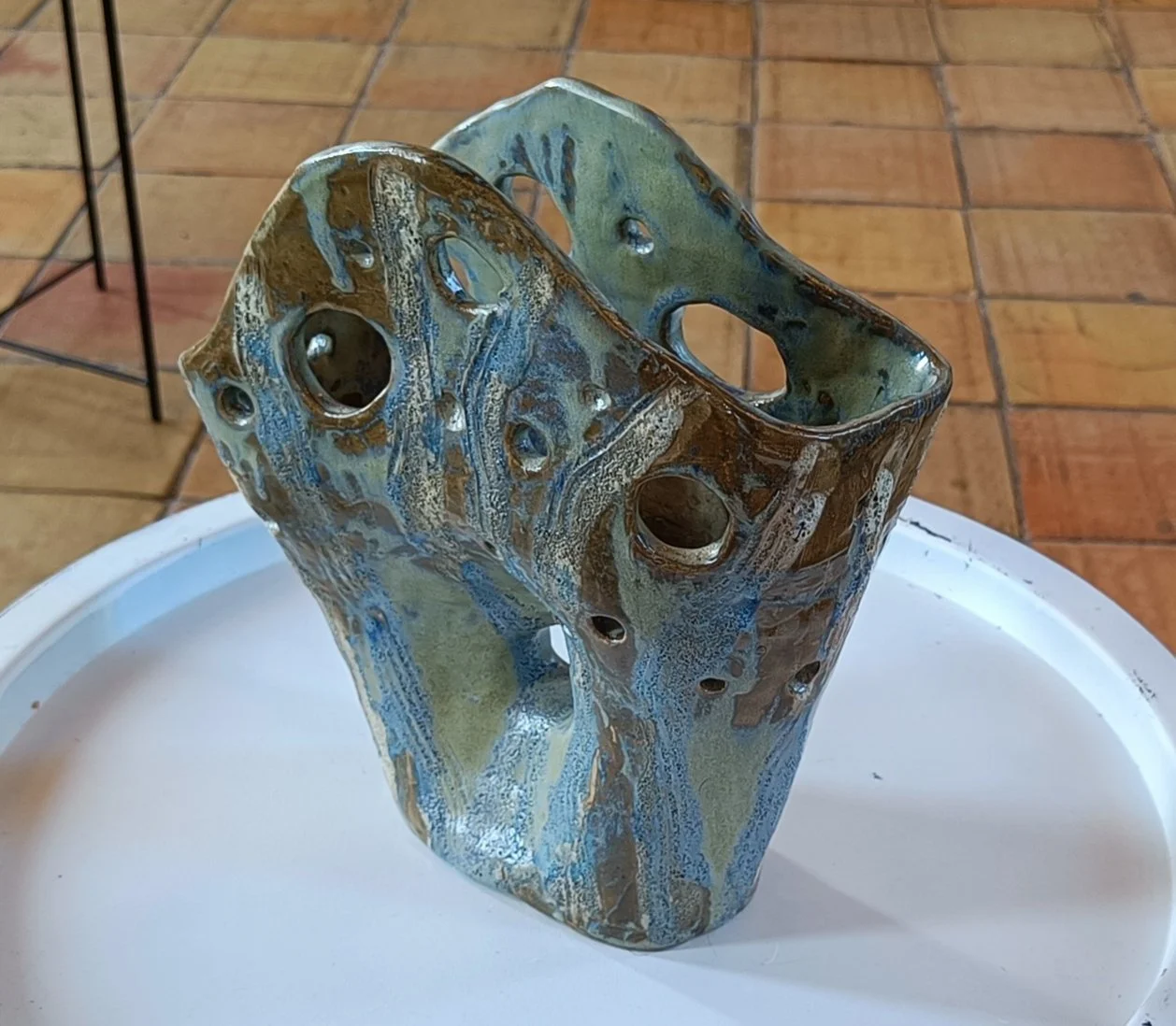
Ceramics introduces three-dimensional form, physical weight, surface, heat, and chemical transformation. Ortiz may begin with a clear idea, but the object often changes as she works. New possibilities arise through touch, proportion, construction, glaze, and firing. Unlike a graphic image, a ceramic object occupies space and must be encountered from multiple angles. Its final appearance is also affected by processes that cannot be controlled completely. Glazes transform in the kiln, and firing produces results that continue to teach her about materials. She is drawn to ceramics because it is slow, sensual, and inexhaustible. It is a field in which learning never ends.
This commitment to learning connects every aspect of her practice. Ortiz is not interested in repeating a successful formula or producing a consistent type of work in response to demand. She moves between materials because each medium offers a different way of thinking. Experiences gained in one area can change her approach to another. Periods of concentrated work with one or several materials are often followed by a desire to return to a medium she has not used for some time. When she returns, she finds that her understanding has developed indirectly through the work completed elsewhere.
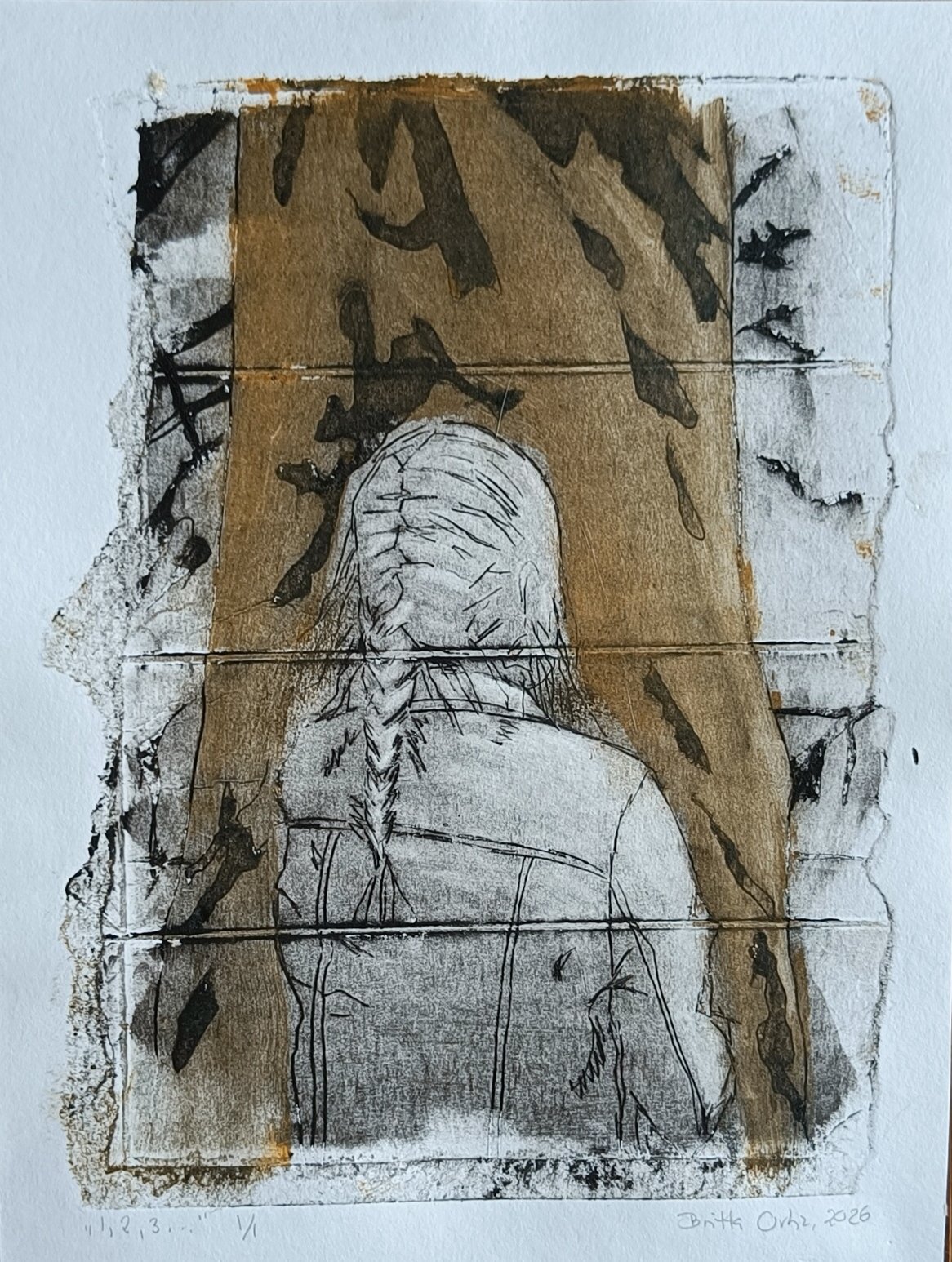
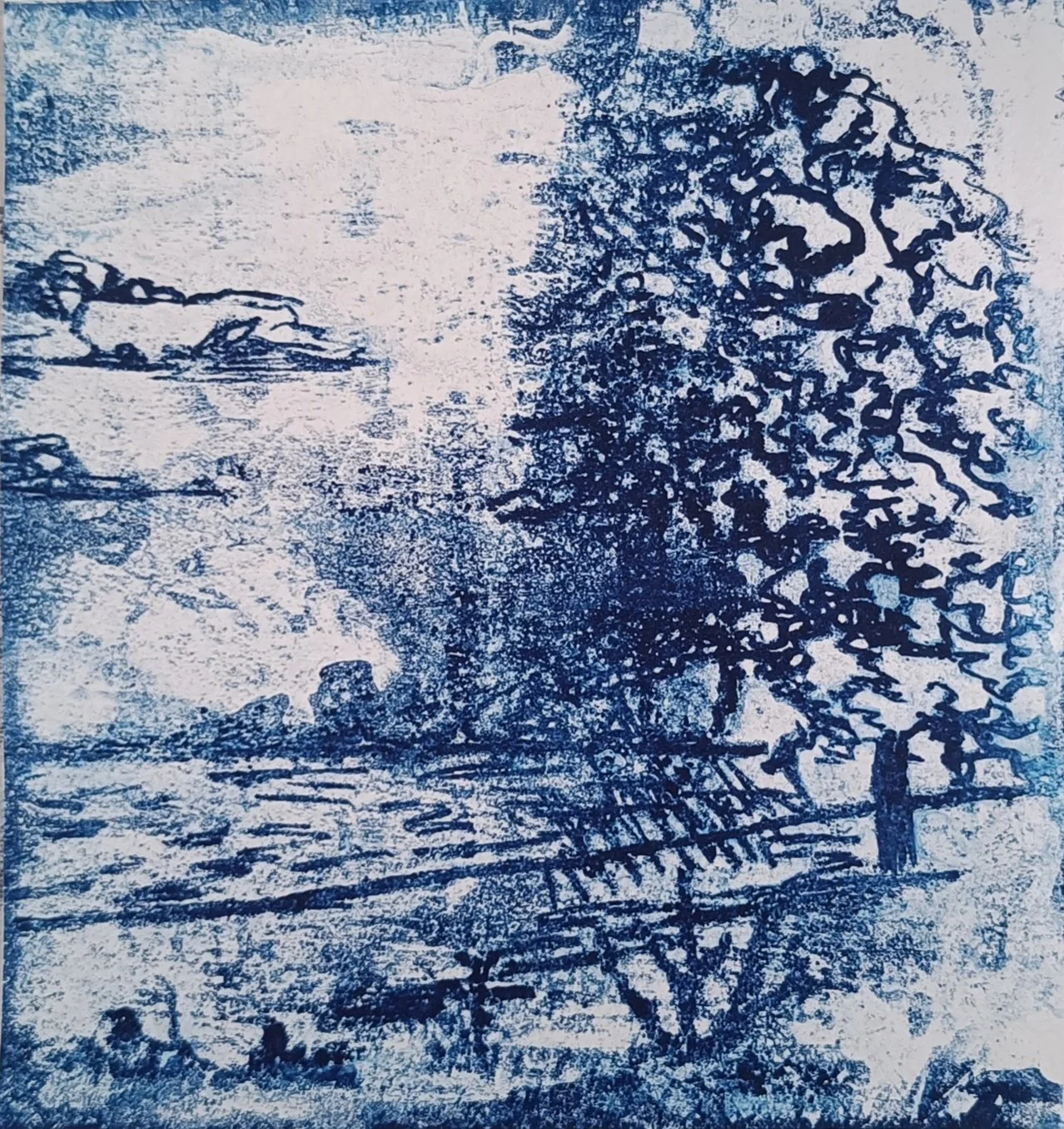
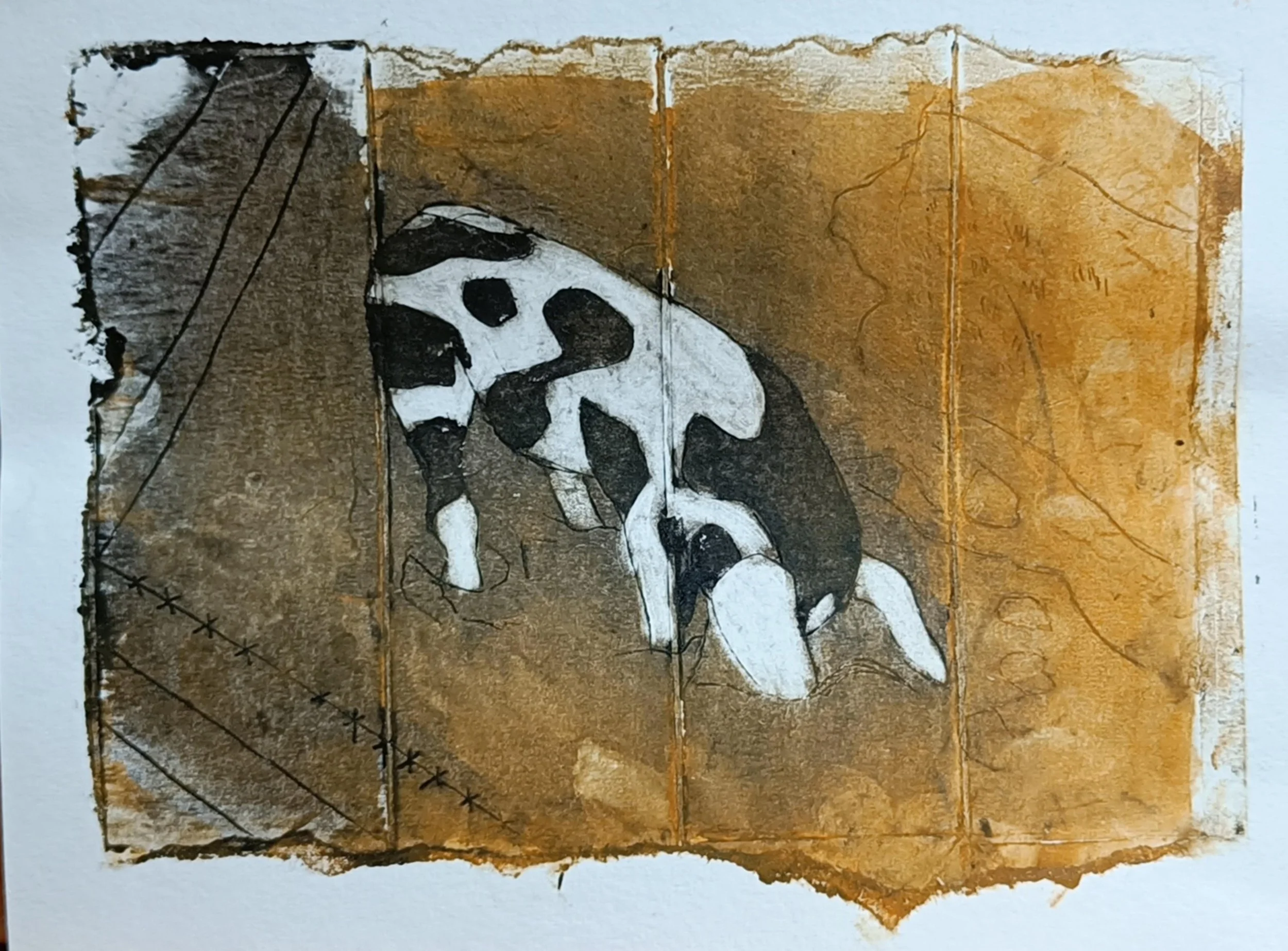
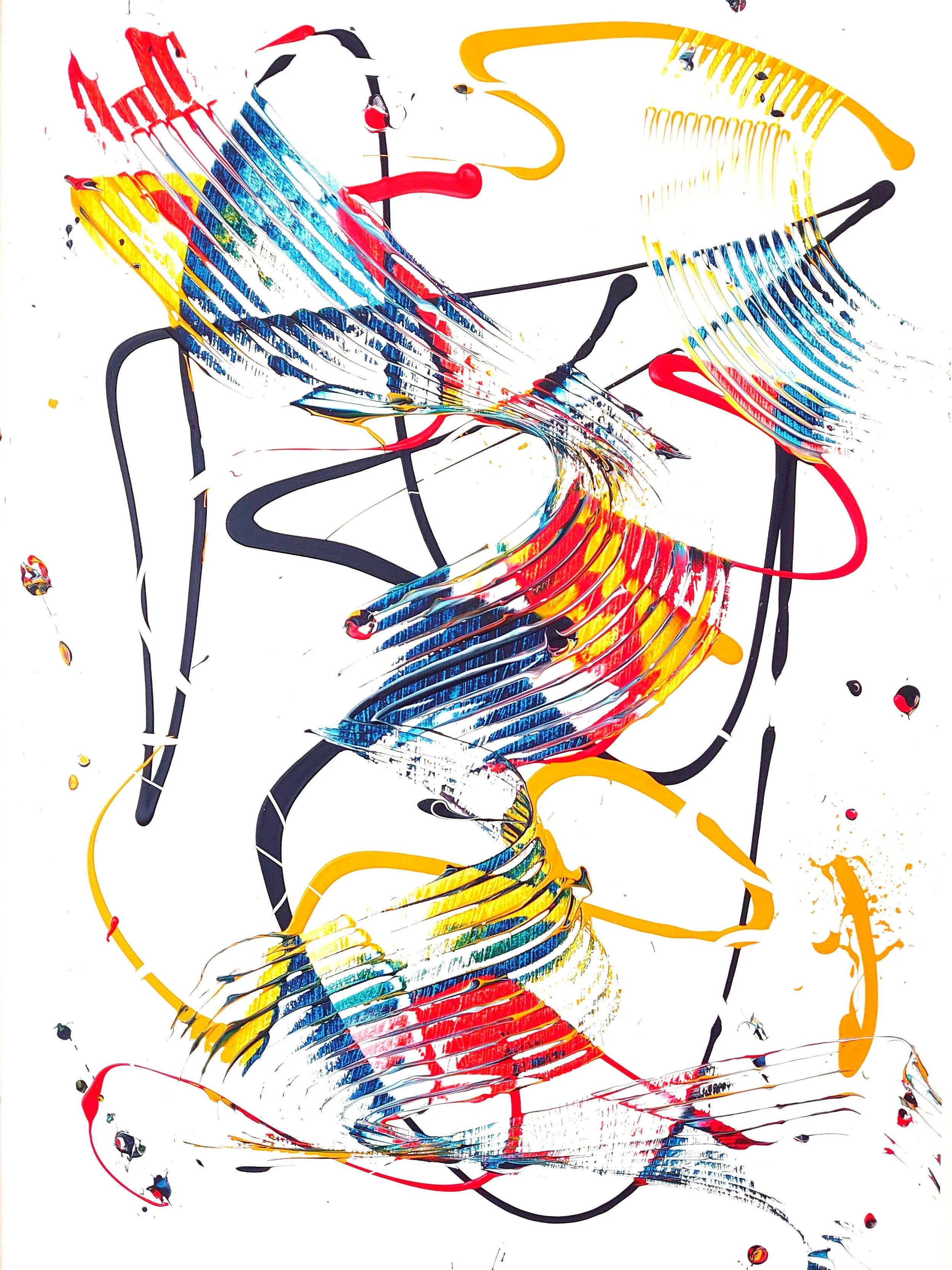
In recent years, she has explored Tetra Pak printing, gelli plate printing, and kitchen lithography, testing the possibilities and constraints of each process. These experiments do not necessarily represent a change in subject. They allow familiar concerns to be articulated through different material languages. The exploration of technique is itself a journey, one that can redirect her practice without requiring her to abandon the questions that continue to occupy her.
She is also collaborating with a friend on a book about croquis drawing that will combine factual information with the more poetic dimensions of the creative process. Croquis is especially relevant to her understanding of perception because it makes difference immediately visible. Artists working from the same body and the same pose produce images that reflect distinct ways of seeing. The exercise demonstrates that representation is never a transparent copy of reality. It is a record of attention.
Ortiz began exhibiting publicly in 2010 and has since participated in exhibitions in Denmark and internationally, including presentations in Germany, Austria, Italy, England, and the United States. Her work has appeared in art books and magazines, and she has contributed to artist communities as a cofounder and chair of artist associations. Yet public visibility has not changed the fundamental reason she makes art. She does not work toward fame, market recognition, or stylistic predictability. Her medical career has given her the financial independence to make work without determining in advance whether it can be sold. This freedom allows her to follow subjects, emotions, and materials according to internal necessity rather than external demand.
She does not accept commissions easily and does not produce works simply because they resemble earlier pieces. Repetition for commercial consistency would conflict with the exploratory basis of her practice. The need to make a work must arise from an experience, idea, or question that she feels compelled to pursue. Art increases her quality of life because it provides a space in which intellectual inquiry, sensory attention, technical learning, and emotional experience can coexist.
Her professional and artistic lives also maintain a necessary balance. During medical school, when art disappeared from her daily routine, she experienced restlessness and a profound sense of absence. Returning to art restored an internal equilibrium. At the same time, she needs sustained intellectual challenge, research, and professional engagement. Medicine, psychology, health anthropology, and art do not represent opposing identities. Together they provide different ways of approaching the world.
Ortiz’s work remains attentive to the difference between what human beings can change and what they must accept. Mortality cannot be abolished, but violence can be resisted. The past cannot be undone, but individuals can reconsider their relationship to it and learn from experience. Human beings cannot possess every ability, but they can recognize and develop their own capacities. Crises may produce suffering, yet they can also become sources of understanding. Such observations do not minimize brutality or excuse those who cause harm. Rather, they insist on the importance of ethical judgment, self-knowledge, and personal responsibility.
For Ortiz, responsibility begins in ordinary relationships. History may be shaped by powerful individuals, but large-scale violence also depends on the actions or silence of others. Each person must decide where their ethical limits lie and remain accountable to them. Powerlessness is not absolute. People can reject violence, help those who are vulnerable, protect animals, preserve natural environments, welcome those fleeing war, or attend the funeral of a stranger so that another human being is not buried without witnesses. These gestures do not erase suffering, but they affirm the social and ethical bonds through which life becomes bearable.
Her work asks viewers to recognize that human beings are neither separate from nature nor exempt from its conditions. They are animals among animals, dependent on the same materials, cycles, and ecological relationships. Human intelligence has produced knowledge, medicine, culture, and art, but it has also produced war, exploitation, and methods of destruction. Ortiz’s practice occupies this contradiction without resolving it. She depicts beauty without denying brutality, death without rejecting life, and vulnerability without overlooking resilience.
Art, in this context, is not an illustration of settled conclusions. It is a space in which questions can remain active. Through making, Ortiz clarifies what she is trying to say. Reflection occurs before the work begins, through the long physical process of producing it, and again when the title is chosen. The finished artwork carries traces of these decisions while leaving room for responses she cannot predict.
Her central conviction is that life should be valued precisely because it is finite and shared. Human survival depends on other humans, animals, plants, and ecological systems, while the earth itself does not depend on human existence. To believe otherwise is a form of arrogance. Ortiz’s work returns repeatedly to the need for humility, attention, and care. It asks what becomes visible when human beings stop imagining themselves as masters of the world and begin to understand themselves as participants in it.
Within this framework, the cycle of life is not a distant philosophical abstraction. It is present in the fields and trees outside her home, in the body of a patient, in the feeding of a bird, in the decomposition of an animal, in the birth of a child, and in the material transformation of clay, ink, paint, and fiber. Her practice gives visual form to the knowledge that life and death are inseparable, that perception is always situated, and that every action enters a network of consequences.
Ortiz does not ask viewers to arrive at a single interpretation. She asks them to look, feel, wonder, and reflect. A viewer may encounter beauty, discomfort, recognition, uncertainty, or resistance. Any of these responses can open a path toward greater attention. For her, the work succeeds when it interrupts indifference and returns the viewer to the world with a renewed awareness of its complexity.