Alisa Chernova
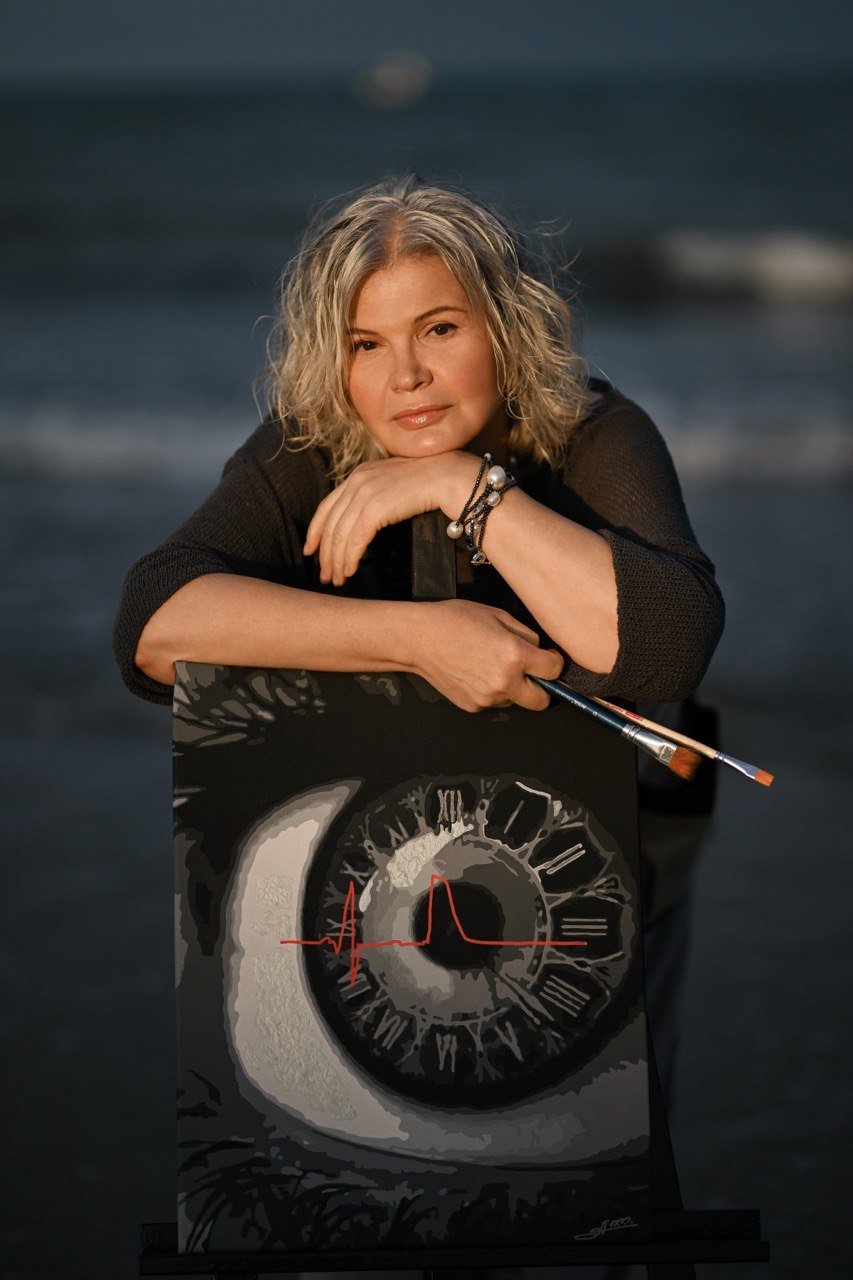
Alisa Chernova is a contemporary self-taught artist whose practice examines the psychological dimensions of human experience through painting and mixed media. Working primarily with acrylic paint, collage, textured pastes, paper, vintage printed matter, and layered surfaces, she develops symbolic visual narratives centered on memory, identity, perception, vulnerability, transformation, and the unstable relationship between conscious intention and unconscious influence. Her work begins from the premise that much of human experience remains difficult to articulate verbally. Emotions, memories, internal conflicts, bodily sensations, and patterns of thought often precede language or resist its explanatory structures. Painting offers Chernova a means of approaching these states without reducing them to definitions. Rather than illustrating emotions or assigning them fixed meanings, she constructs visual conditions in which psychological experience can emerge through form, texture, rhythm, fragmentation, contrast, and ambiguity.
Born in Ukraine in 1963 and now based in Marbella, Spain, Chernova came to art through adult experience rather than through childhood training or a conventional art academy. She has a higher medical education and holds the degree of Candidate of Medical Sciences, equivalent to a PhD. For many years, she worked as a psychotherapist, Gestalt therapist, and art therapist. This professional background brought her into sustained contact with the complexity of individual experience and with the limits of verbal communication. Through listening to personal histories and observing the ways emotions become embodied, displaced, concealed, or transformed, she became increasingly attentive to the invisible structures that shape behavior and perception. Painting developed as a natural extension of this attention. For more than a decade, she has cultivated a visual language through continuous practice, experimentation, independent study, and master classes with academic teachers in art studios in Spain.
Her medical training continues to inform the way she approaches an image. Medicine taught her to observe carefully, compare details, question appearances, and search for causes rather than respond only to visible effects. In the studio, this mode of attention becomes a form of visual inquiry. A painting may begin with the examination of an emotion, a recurring psychological pattern, a memory, or an unresolved question that has not yet found an adequate form. The initial idea is not treated as a conclusion to be represented. It is treated as a field of investigation. Through sketching, layering, revision, and material experimentation, Chernova searches for a structure capable of sustaining the tension within the subject.
At the same time, her practice depends on the point at which analytical control begins to soften. Clinical knowledge provides clarity, discipline, and an awareness of psychological complexity, but it does not determine the final image. Intuition introduces uncertainty, movement, and risk. Meaning develops through the interaction between these positions: observation and instinct, structure and interruption, knowledge and not knowing. The painting becomes fully active when the original concept is no longer simply being executed and the materials begin to generate their own demands. Images shift, surfaces accumulate, fragments are covered or exposed, and relationships between forms emerge through repeated revision. Chernova understands this process not as a loss of direction but as a necessary opening through which unexpected meanings can appear.
Her work is grounded in psychology, philosophy, psychoanalytic thought, Gestalt principles, art therapy, and the study of human behavior. These fields shape her sensitivity to emotional and perceptual processes, but they do not function as systems that the paintings are intended to explain. Chernova does not use the canvas to diagram psychological theories or present diagnoses. She works with states rather than categories, and with vulnerable areas of experience rather than therapeutic methodologies. Her paintings remain autonomous works of contemporary art, governed by their own formal logic, internal tension, and material structure.
This distinction is central to her practice. Although art therapy forms part of her professional background, she does not transfer it directly into painting as a method, nor does she position her work as an instrument of correction, treatment, or healing. The emotional force of the paintings does not arise from a prescribed therapeutic scenario. It develops through composition, color, texture, density, silence, and ambiguity. The work does not guide the viewer toward a particular response, provide a solution, or interpret an emotion on the viewer’s behalf. Instead, it preserves an open space in which recognition may occur without being required. A viewer may encounter a personal memory, an internal contradiction, a moment of unease, or an unexpected sense of stillness. Another viewer may respond primarily to the formal organization of the image. Both encounters remain valid because the painting does not close itself around a single explanation.
Chernova conceives of painting as a form of dialogue, but not as a message transmitted from artist to audience. A painting is an interlocutor with its own presence and duration. It establishes a tone, a pause, or an unresolved tension, creating the conditions for an exchange that cannot be fully controlled by either the artist or the viewer. This conception places particular responsibility on the artist. Chernova seeks honesty in gesture and form while resisting the temptation to manipulate emotion through overly explicit imagery. She avoids directing interpretation or converting psychological complexity into an easily consumed narrative. For her, the work must preserve inner freedom on both sides of the encounter. Its meaning remains available to change as it is seen at different moments, in different contexts, and through different personal histories.
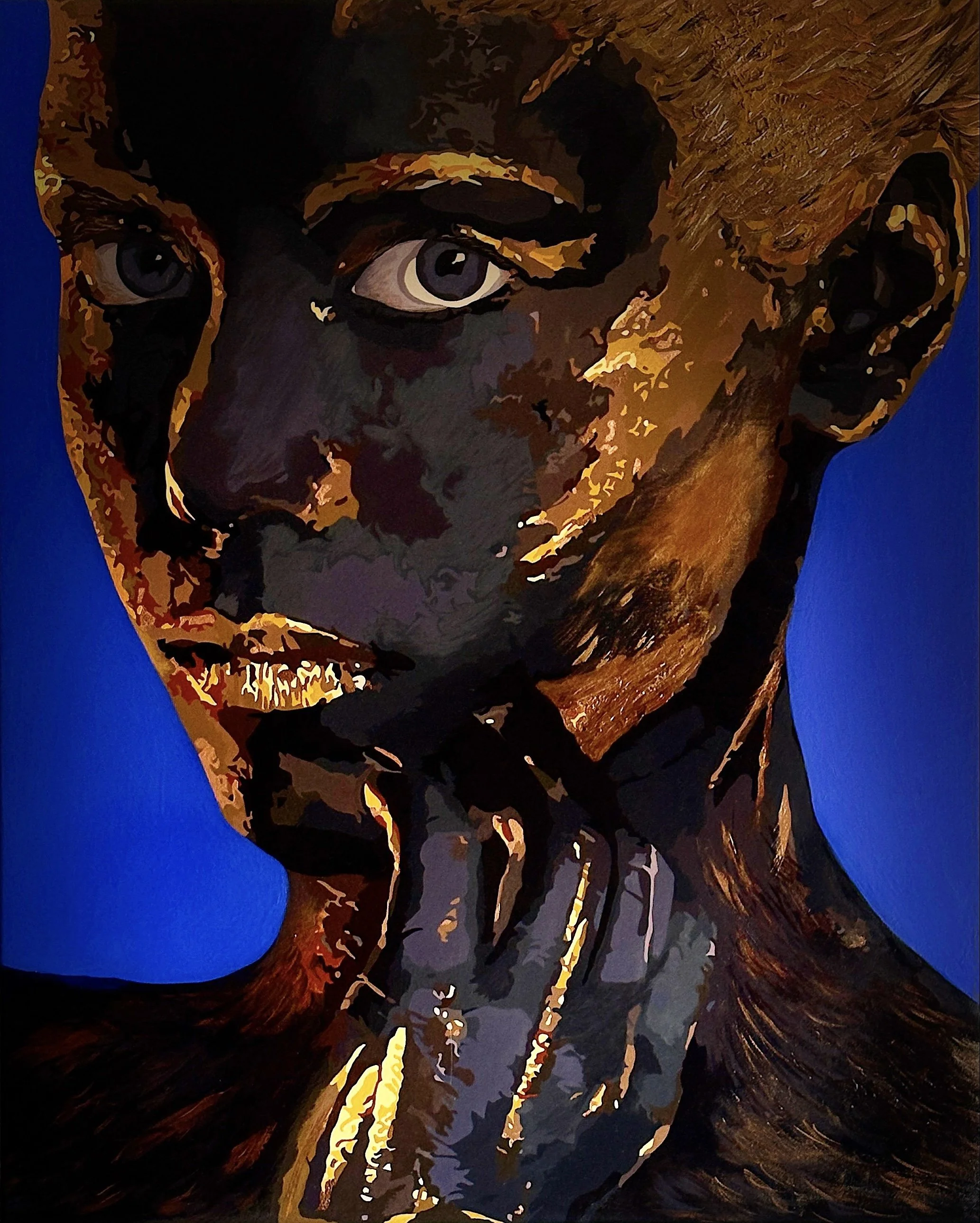
Her compositions frequently operate through symbolic figuration, contrasts of light and shadow, fragmented surfaces, layered materials, and shifts between density and emptiness. These elements enable her to address emotional experience indirectly. Silence, fragmentation, and ambiguity are not absences to be resolved but active formal strategies. A partial figure, interrupted contour, obscured face, or fractured surface can suggest the instability of perception without defining its cause. Areas of visual density may hold accumulated tension, while quieter passages slow the eye and create room for reflection. Repetition encourages the viewer to move across the composition rather than settle immediately on a single focal point. Layers reveal themselves gradually, requiring sustained attention and allowing the work to unfold over time.
This construction of visual tempo is especially significant within a culture of rapid image consumption. Chernova does not intend her paintings to be grasped in a single glance. She builds compositions that resist instant recognition and reward return. The eye may first register a figure, contrast, or dominant surface, then become aware of smaller fragments, interruptions, and material transitions. A detail that initially appears secondary may later alter the understanding of the entire image. Through this gradual movement, looking becomes a process rather than an act of immediate identification. The viewer is asked to remain with uncertainty, to notice changes in attention, and to experience the painting before attempting to explain it.
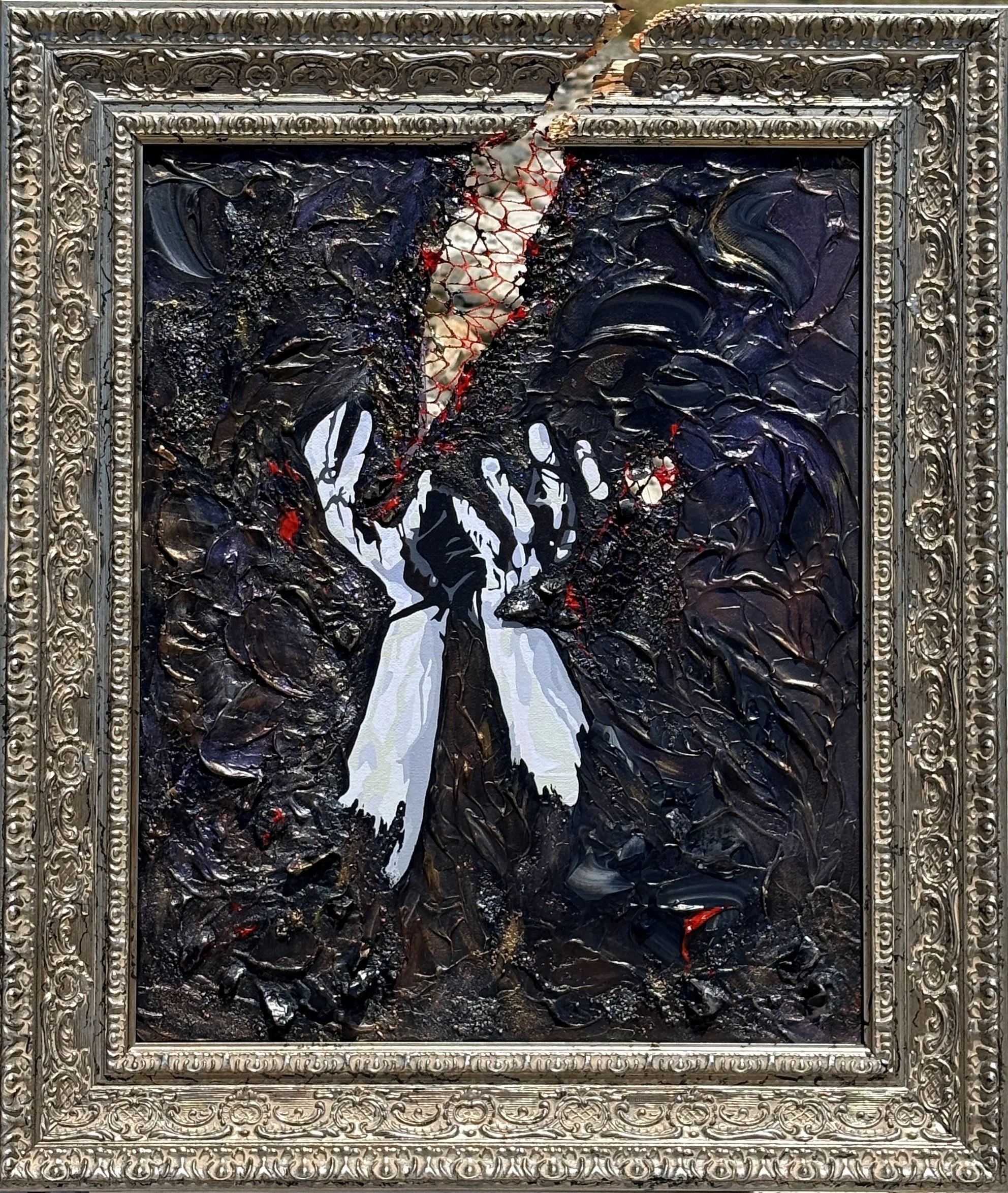
Collage plays an essential conceptual and material role in this process. Chernova incorporates paper, found fragments, and vintage printed matter into painted and textured surfaces, bringing different temporal registers into a single composition. These materials carry traces of prior contexts, even when their original meanings are obscured through cutting, layering, partial concealment, or painterly intervention. Collage enables her to approach memory not as a stable archive but as a changing construction. Like recollection, the surface is assembled from fragments, omissions, repetitions, and revisions. Elements may remain visible, become partially buried, or reappear through abrasion and transparency. The resulting image does not reconstruct a complete past. It demonstrates how experience is continually reorganized by perception in the present.
This understanding of memory connects closely to Chernova’s investigation of identity. Her work asks how a sense of self is formed through emotional experience, inherited narratives, remembered events, fantasies, fears, and unconscious patterns. Identity does not appear in her paintings as a fixed essence waiting to be uncovered. It is approached as an ongoing internal dialogue, marked by contradiction and change. The self may seek coherence while remaining composed of multiple, sometimes incompatible fragments. Vulnerability emerges at the point where familiar structures become unstable and where certainty gives way to questioning.
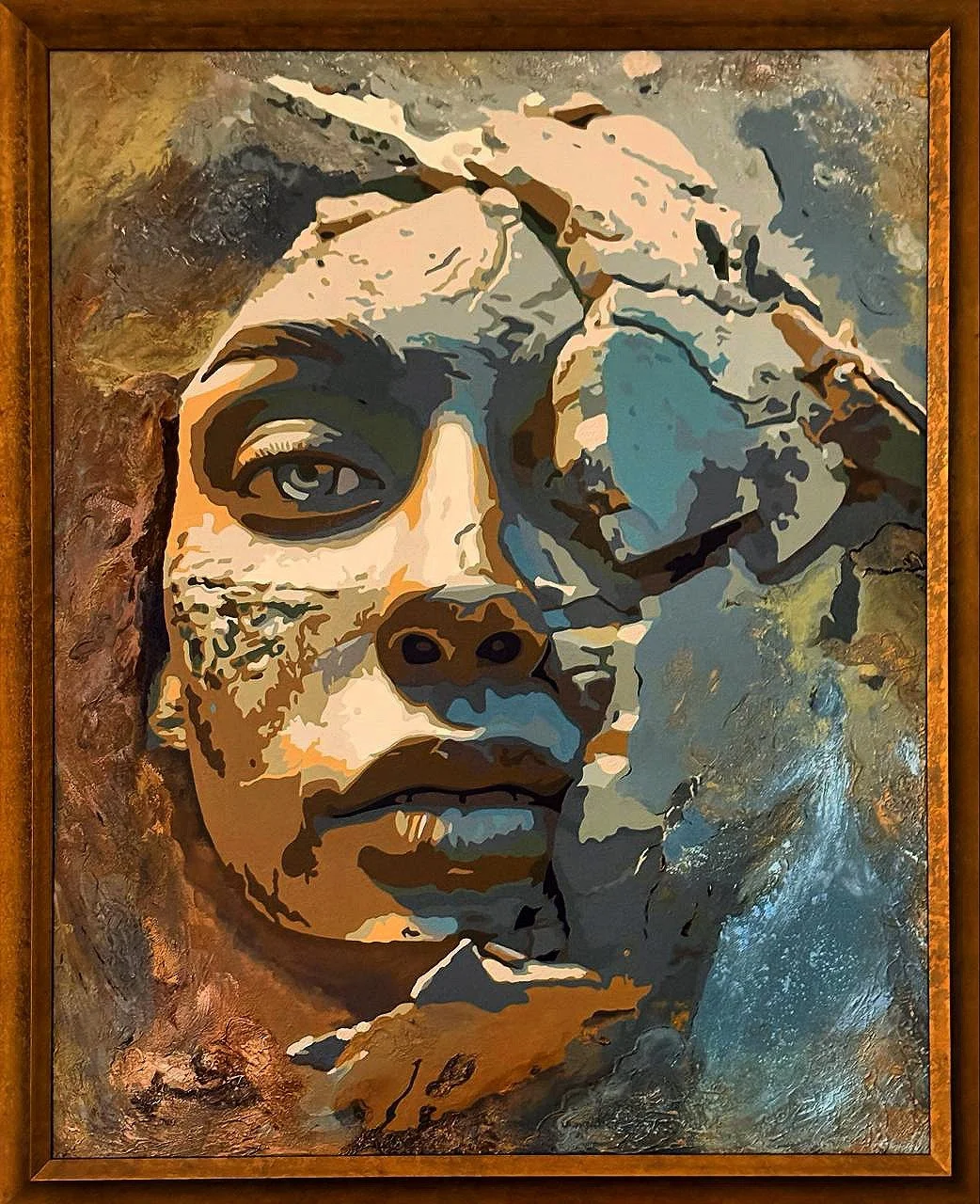
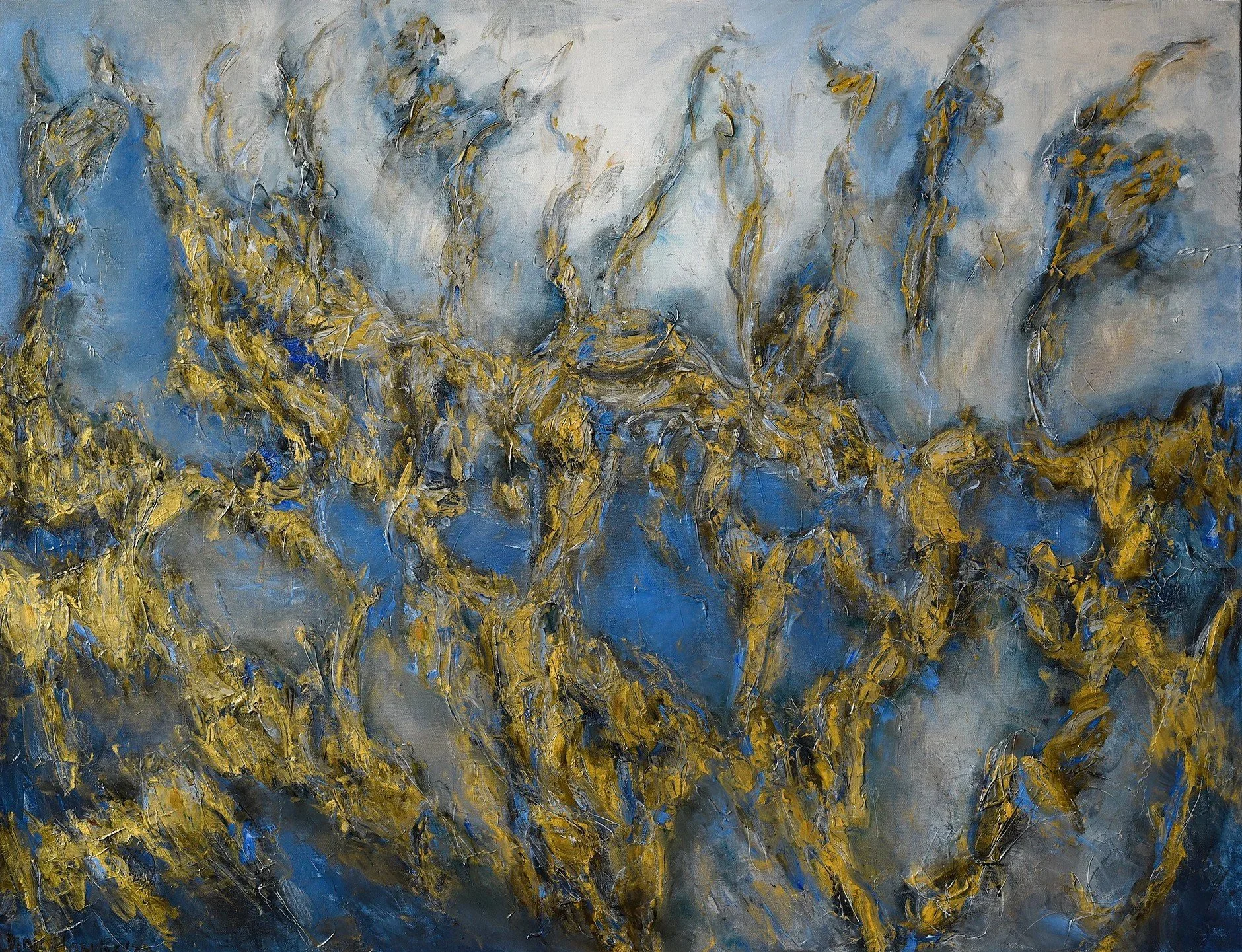
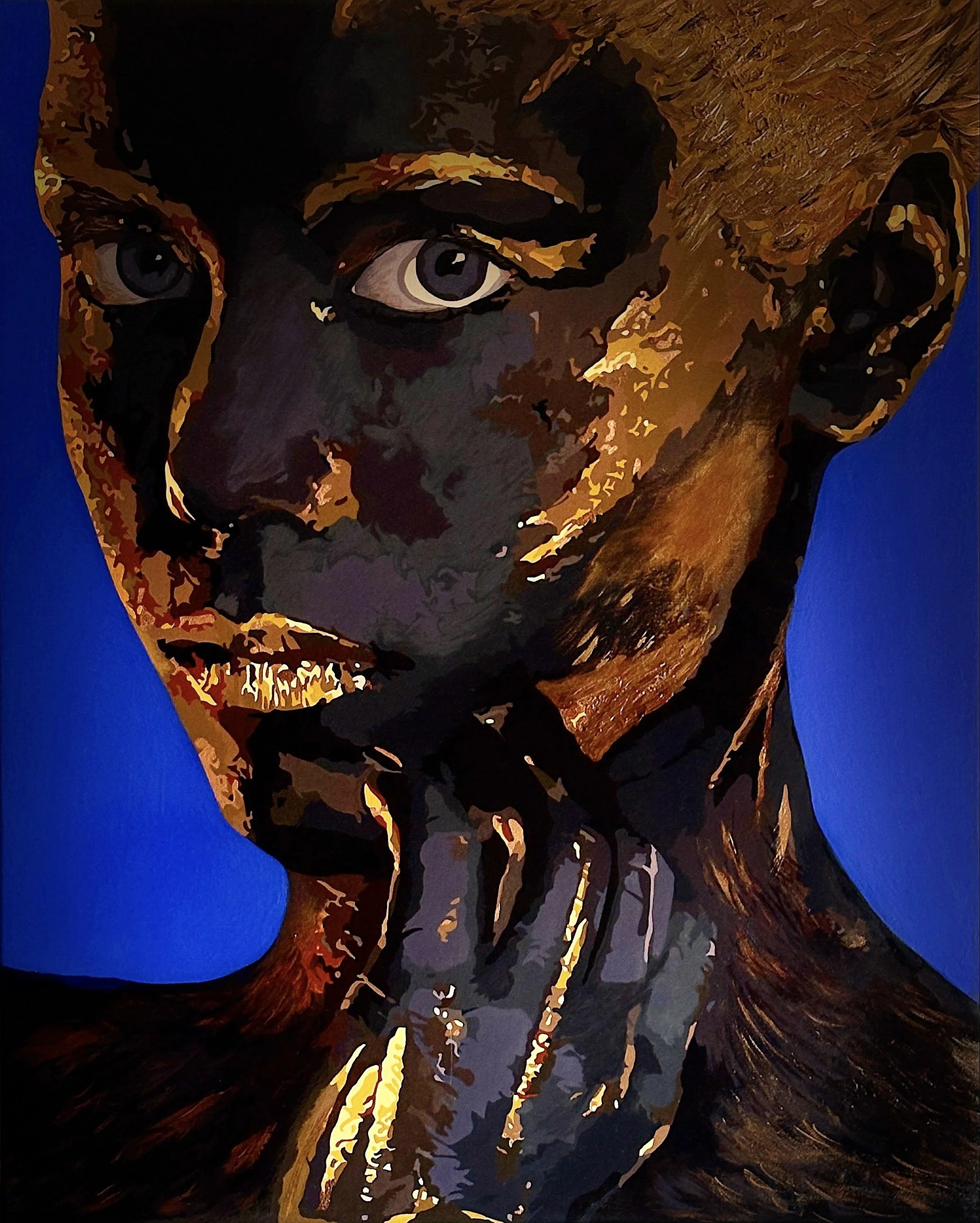
The painting Who Am I? Monologue with Myself gives focused form to this inquiry. The title frames identity as an extended conversation rather than a problem with a definitive solution. The work explores the fragile balance between selfhood and illusion, bringing the viewer into contact with uncertainty as a constitutive part of personal experience. Its imagery suggests a self that is present yet not fully accessible, visible through a surface that also conceals and interrupts. Cracks and divisions function not simply as signs of damage but as structures through which perception is reorganized. The work does not answer the question posed by its title. It sustains the question and allows it to deepen through the act of looking.
The painting belongs to Chernova’s long-term conceptual project In the Company of Sigmund Freud, a series that engages psychoanalytic ideas without translating them literally. The project developed from her interest in Freud’s proposition that people may find reality unsatisfactory and therefore inhabit fantasies of fulfilled desires, with unresolved psychic conflicts potentially manifesting through symptoms. Chernova approaches this idea as a point of departure rather than a doctrine to be illustrated. She is interested in the moment when fantasy, desire, bodily impulse, and emotional tension have not yet entered language but are already active within experience.
Within the series, psychological states are translated through ruptures, shifts, layers, pauses, distortions, and symbolic relationships. The composition functions less as an explanation than as a process. Forms appear to move toward coherence and then resist it. A figure may be recognizable yet unsettled by the surrounding surface. Color may create emotional pressure without assigning a single psychological meaning. The image holds movement and resistance simultaneously, suggesting the presence of an impulse that cannot be fully named. For Chernova, it is important that the viewer does not merely understand the subject intellectually but encounters it through sensation, intuition, and personal memory.
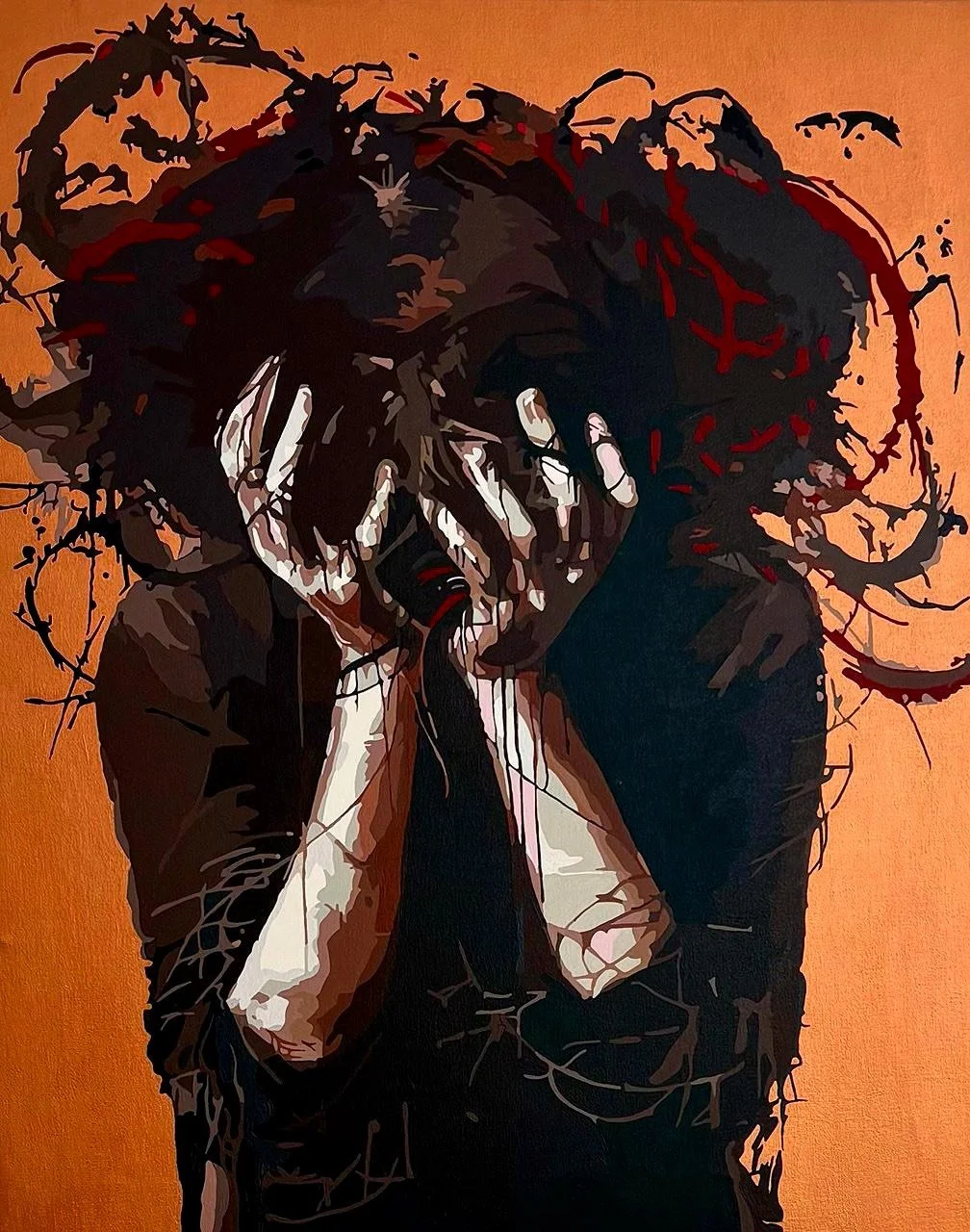
Works including Depression, Deep Depression, Anxiety, and Despair address distinct emotional states while resisting a clinical or sequential reading. They do not propose a diagnostic progression. Each painting develops its own atmosphere and internal structure, examining how psychic pressure may affect the body, narrow perception, interrupt communication, or alter one’s relation to time. The figures and surfaces do not stand as universal illustrations of particular conditions. They create visual spaces in which emotional intensity can be recognized without being simplified.
Despair occupies a particularly important place in Chernova’s artistic development. The work emerged from a period of personal rupture following her departure from her homeland because of the war in Donbas. The displacement involved the loss of home, profession, community, and familiar cultural surroundings, followed by the difficulty of adapting to another country, language, and way of life. Painting became a means of giving form to feelings of loss, fear, isolation, uncertainty, and diminished control. Chernova has described Despair as reflecting both the depth of the state she experienced and the recognition that a way out might still be possible.
The painting therefore holds collapse and continuation within the same emotional field. It does not convert hardship into a simple narrative of recovery, nor does it present suffering as a source of automatic transformation. Instead, it records the unstable moment in which despair is fully present while the possibility of change has not disappeared. The work became a milestone in Chernova’s transition from medical professional and therapist toward a sustained artistic practice. Its importance lies not only in its autobiographical origin but also in the way it established a visual approach that would continue throughout In the Company of Sigmund Freud: a commitment to confronting difficult emotional states without explanation, consolation, or spectacle.
Across her practice, Chernova repeatedly examines the fragile boundary between what individuals believe they control and the forces that quietly shape decisions, emotions, and perceptions. Control appears as both a practical necessity and a psychological illusion. People construct narratives, routines, fantasies, and defenses in order to create stability, yet experience continually exceeds these structures. Memory alters the past as it is recalled. Emotion influences judgment before it is consciously recognized. Desire may contradict stated intention. The body may register a conflict that language has not acknowledged. Chernova’s paintings do not attempt to expose a hidden truth behind these processes. They investigate the tension produced when conscious control encounters its limits.
This concern also informs the developing project Illusion of Control. Like In the Company of Sigmund Freud, the series is structured around an extended conceptual inquiry rather than isolated images. Chernova’s early work concentrated more directly on individual emotional states. Over time, her practice evolved toward coherent bodies of work that connect identity, memory, perception, fantasy, and psychological influence through increasingly layered mixed-media methods. The series format allows her to return to a question from different positions, testing how shifts in surface, composition, symbolism, and material density can transform its emotional and philosophical implications.
The studio is essential to this sustained process. Working from her home studio in Marbella, Chernova treats the space as both a protected psychological environment and a site of disciplined labor. It provides the quiet necessary for attention, doubt, error, and gradual discovery. Solitude allows her to slow down and remain with an uncertain image without pressure to resolve it prematurely. Silence is not an escape from the world but a condition in which subtle internal movements become perceptible.
The studio is also governed by regularity. Chernova works with respect for routine, concentration, and the demands of painting itself. Her visual language does not emerge from inspiration alone but from repeated engagement with materials and from the willingness to revise. This balance between freedom and discipline parallels the larger structure of her practice. Intuition requires a stable framework in which it can operate, while discipline must remain open enough to accommodate change. Clarity appears gradually through consistency.
Music sometimes accompanies this process, particularly the work of Bach or jazz, depending on the emotional atmosphere of the day. Sound does not replace silence but establishes a rhythm that can support concentration. Travel also contributes to her artistic reflection. Chernova values solitary journeys, quiet towns, mountain roads, stormy coastlines, and encounters with unfamiliar places as opportunities for mental recalibration. These experiences are not primarily sources of imagery to be documented. They create distance from habitual thought and allow ideas to develop indirectly.
An encounter with Mikalojus Čiurlionis’s painting Rex in Kaunas, Lithuania, was especially meaningful. Chernova responded to its combination of mysticism, philosophical inquiry, visible authority, and implied control. The image of a monarch whose apparent power is overshadowed by another force resonated with her own investigations into autonomy, emotional repression, solitude, and the hidden influences that shape experience. The significance of this encounter lies not in stylistic imitation but in the recognition of a shared concern with symbolic form as a means of approaching questions that cannot be resolved through direct representation.
As Chernova’s work moves from the intimacy of the studio into exhibitions, fairs, publications, and digital platforms, its context changes. She does not regard this movement as a loss of meaning because meaning, in her view, is never completely fixed. The psychological tension from which a work develops remains embedded in its formal and material structure, but each setting brings it into contact with different viewers and conditions of attention. A painting shown in a gallery, reproduced in a publication, presented at an international fair, or displayed on a public digital screen enters a new field of relationships.
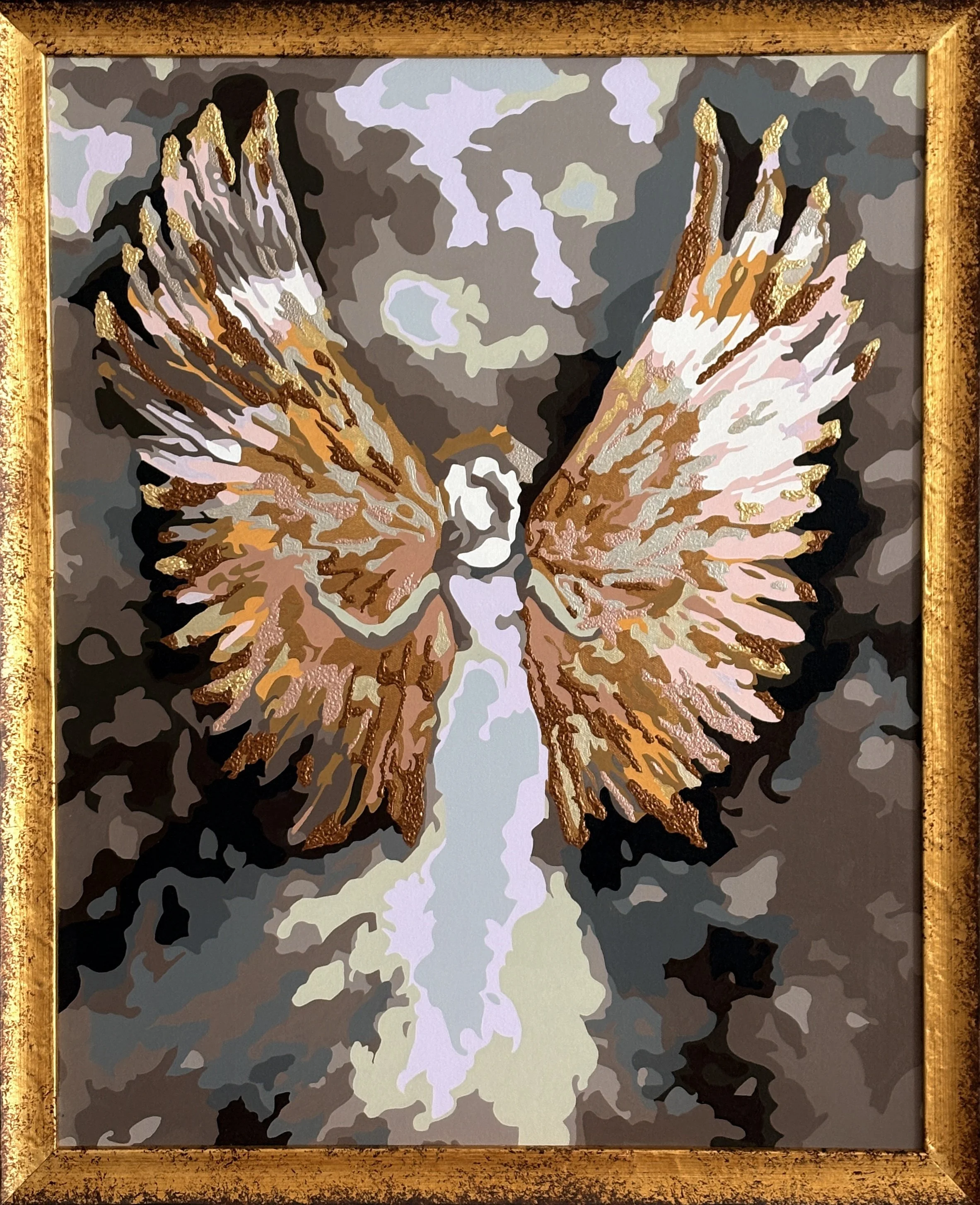
Chernova’s work has been exhibited internationally in Spain, Greece, Italy, France, the Netherlands, the United Kingdom, Sweden, Switzerland, Monaco, Japan, South Korea, Canada, and the United States. In 2025, Guardian Angel and Who Am I? Monologue with Myself were presented on digital screens in Times Square, New York. Her exhibitions and fair presentations have included MORPHOS Art Fair in Venice, Chania Art Fair, Tokyo International Art Fair, Red Dot Miami during Art Basel Week, and projects organized by The Holy Art in cities including London, Paris, Amsterdam, Los Angeles, Tokyo, Seoul, Athens, Toronto, and New York. Her work has also been included in publications and interviews addressing her artistic development, psychological framework, and mixed-media practice. Her paintings are held in private collections in Spain, Ukraine, and Poland.
For Chernova, public presentation expands the work’s field of encounter without requiring her to control its reception. A psychologically charged image may operate differently in a mediated or highly visible environment, but it can retain its capacity to interrupt habitual perception. What matters is not that every viewer reaches the same interpretation, but that the work preserves its internal energy and remains capable of provoking recognition, uncertainty, discomfort, or reflection. The transition from private experience to public image allows an individual point of origin to become a meeting place for other experiences.
Chernova understands contemporary painting as a space capable of holding emotional complexity without resolving it. Painting does not need to provide comfort, diagnosis, or instruction. It can remain beside contradiction, vulnerability, anxiety, grief, fantasy, and doubt without reducing them to conclusions. In this sense, the painting resembles a mirror, but not one that returns a stable or flattering image. It reflects indirectly, through distortion, fragmentation, material resistance, and symbolic displacement. The viewer may recognize something of the self while also confronting what remains inaccessible.
Her aim is not to solve the emotional states she addresses but to make them perceptible. By giving visual form to what is often hidden, unspoken, or not yet available to language, she creates a sustained encounter between psychological inquiry and painting. Each work develops as an autonomous structure, yet it remains open to the memories and projections of those who approach it. Questions of identity, control, perception, and transformation are not answered but held in suspension. Through this openness, Chernova’s practice proposes painting as a place where inner experience can be observed without being mastered, where ambiguity can be preserved, and where the difficult work of looking may become a quiet form of dialogue.