Interview with Sandra Slaughter
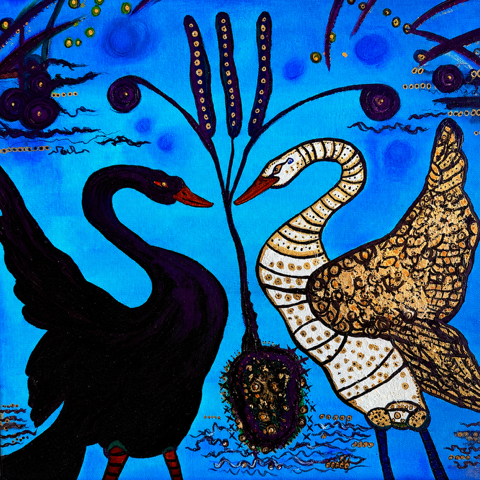
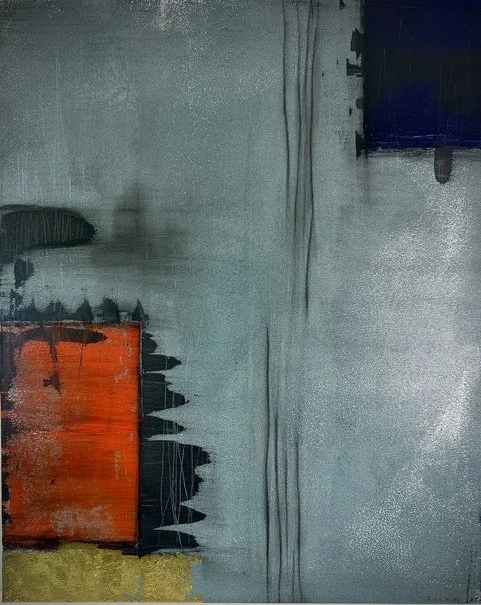
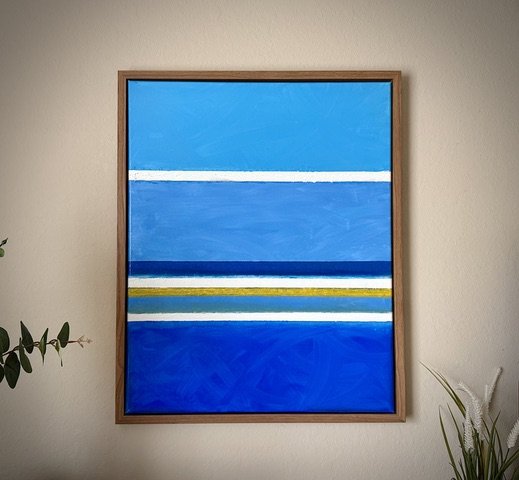
Sandra Slaughter is a German-American abstract expressionist painter whose work explores emotion, memory, grief, motherhood, and personal transformation. She creates paintings that serve as visual reflections of the inner world of us and the complexities of our human experience.
A lifelong painter, Sandra’s artistic practice deepened following the passing of her brother. This profound loss combined with the transformative experience of motherhood became a catalyst for a more emotionally driven body of work. Drawing from personal history and psychological depth, she translates complex emotions into abstract compositions that balance vulnerability, resilience and renewal.
Her paintings invite viewers into an intuitive and emotional dialogue. Her work creates space for reflection - allowing personal memories and subconscious connections to emerge through symbolism.
Sandra’s practice examines the ways in which life’s challenges shape identity and personal change. Through her work she reminds viewers that even after dark days - meaning, connection, and beauty can be found again through inner transformation that builds resilience and a new version of ourselves.
Your work is rooted in both your German upbringing and your life in the United States. How has living between these cultures shaped your understanding of emotion, silence, and visual communication?
My roots from Germany and later building my life in the United States made me conscious of the different ways we communicate emotion - not only through language but what we choose not to say.
My upbringing was shaped by certain emotional restraint due to a dysfunctional home environment. There were patterns, unprocessed inner wounds and generational pain that were left unspoken.
I learned that silence is not empty, it echoes a whole range of emotions, dark and bright ones.
Painting became a place where I could communicate something psychologically complex without having to explain or resolve it.
You describe your paintings as psychological spaces in which memory, intuition, and symbolism become visible. How do you begin constructing such a space, and at what point does its emotional direction become clear to you?
I rarely begin with a complete image or predetermined narrative.
I usually begin with an emotional impulse like a memory or something that inspired me from a moment in a movie and let my intuition guide me.
The death of your brother marked a turning point in your practice, while motherhood broadened your emotional range. How did these experiences alter the way you approach vulnerability, resilience, and transformation in painting?
My brother’s passing changed my understanding of permanence.
Grief made it impossible for me to continue only formally or aesthetically.
I had a deep inner need to release the pain on canvas in symbolic ways.
Motherhood opened another dimension. It made me think more deeply about what we leave behind - not only what we consciously give to our children but what passes through families invisibly.
My own family history contains trauma and difficult experiences surrounding my father that affected more than one generation.
Becoming a mother forced me to examine what I did not want to pass on and more importantly what I wanted to transform rather than continue.
Your work merges intuition with storytelling, although abstraction resists fixed narratives. How do you create a sense of story without limiting the viewer to a single interpretation?
I think of storytelling in my paintings as emotional rather than literal. I am not illustrating an event. I’m creating conditions in which something can be felt.
There may be a specific experience behind a painting.
I want the personal story to function as an entry point rather than a conclusion.
Color, movement, texture, and form serve as carriers of emotion throughout your paintings. How do you determine the visual qualities that can most effectively embody a particular memory or psychological state?
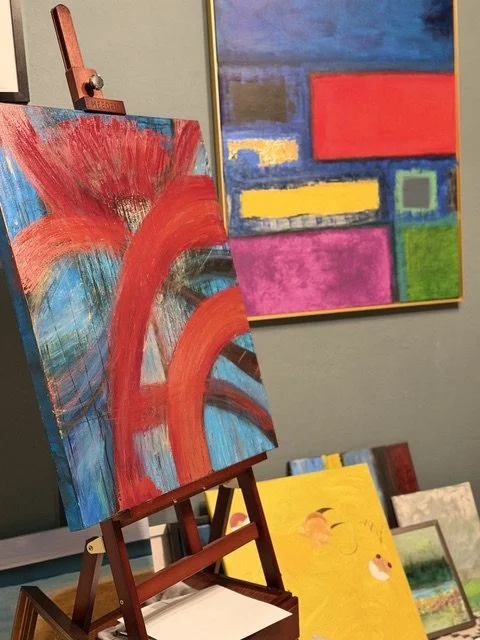
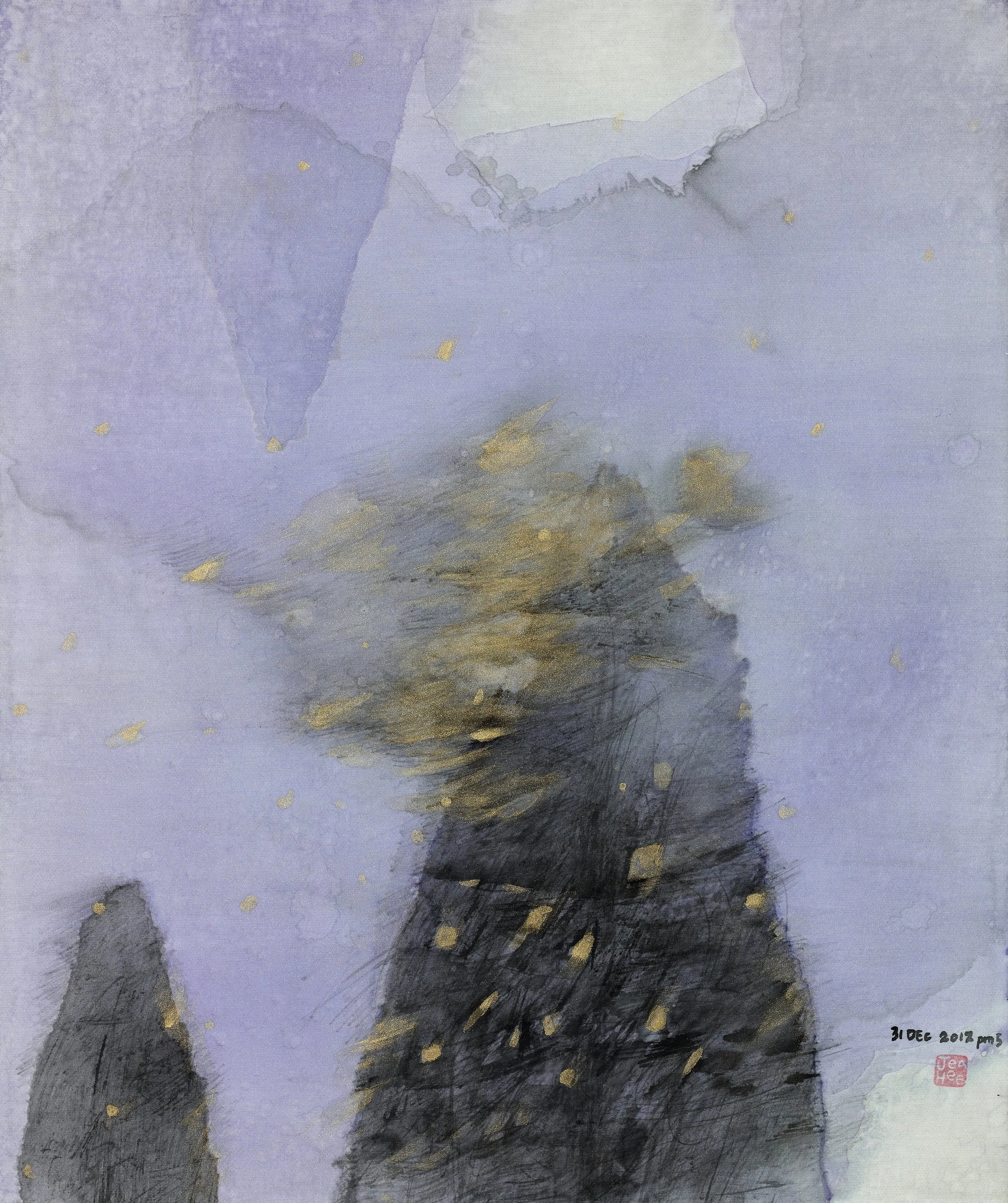
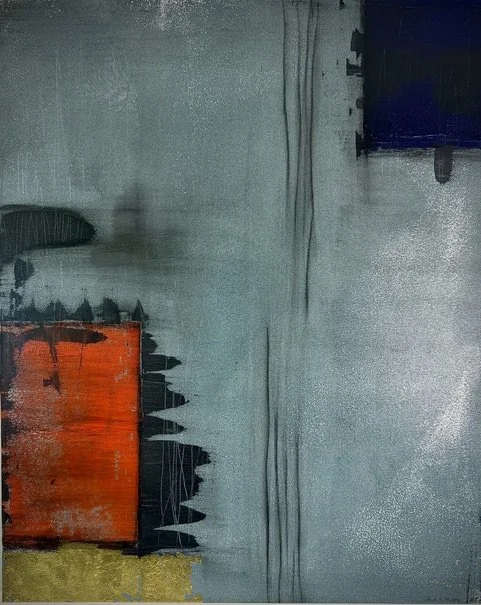
Much of that process is intuitive. Colors carry emotional associations, movement can suggest resistance, instability, release or transformation. Texture can behave almost like memory itself— something buried, scraped away, resurfacing, partially obscured.
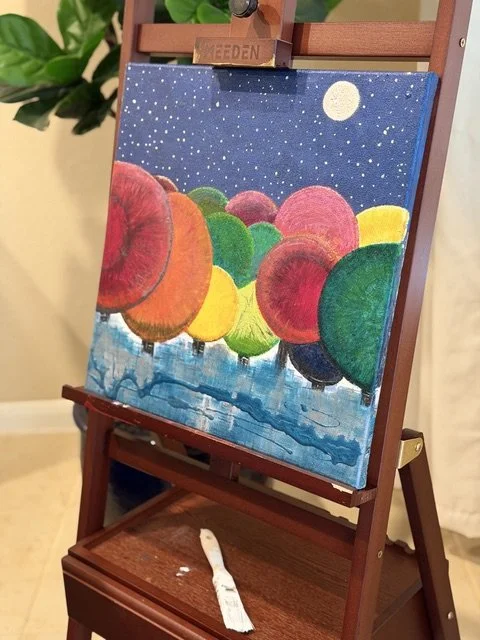
I often work through accumulation and removal. I add, cover, reveal, interrupt and return. Sometimes a painting I started is being put aside, I start with a new canvas and return to the other work after some time has passed and look at it through a different lens - connecting the work to a life theme and produce a collection.
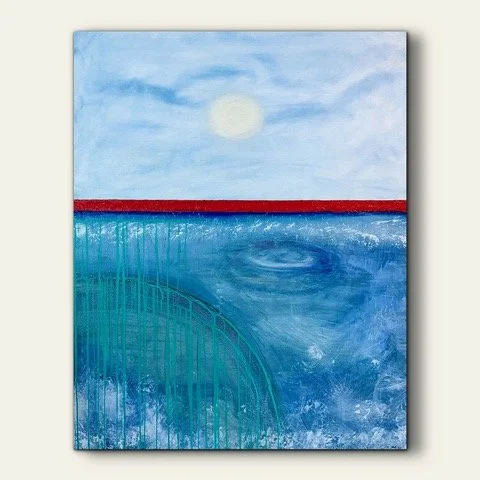
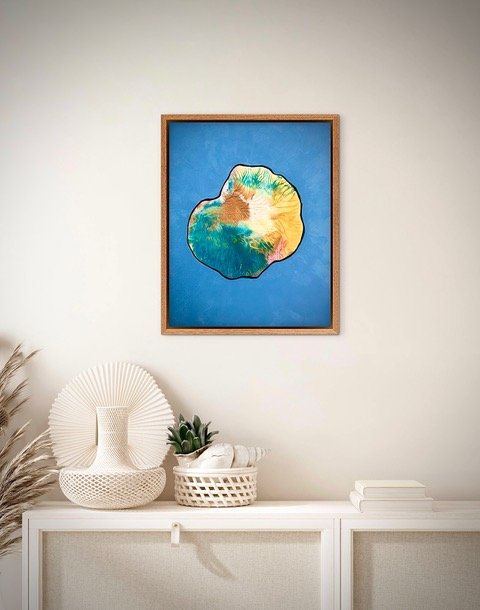
Landscapes and water recur in works such as “Die Wiesen”, “In the Moors”, “Old Friend”, “Heart of the Sea”, “Blue Lagoon”,and “In the Stream of Time”. What makes the natural world such a powerful structure for exploring memory, time, and inner experience?
Nature gives me a language for things that are otherwise difficult to describe. Water especially contains many of the contradictions that interest me. It can be peaceful and threatening, transparent and unknowable, destructive and restorative. It moves continuously while still carrying traces of what has passed through it.
Landscape is also deeply connected to memory for me. A place can hold an entire period of one’s life. Returning to a landscape, physically or through a painting—can collapse time. Suddenly childhood, loss, the present moment and imagination coexist.
I don’t necessarily paint landscapes as geographical locations. They become internal landscapes. A moor, meadow, ocean or stream can become a psychological structure through which I explore belonging, disappearance, memory and time.
My painting “In The Moors” was inspired by Emily Brontë’s novel and (2026 that was upcoming) movie adaptation of the “Wuthering Heights” dramatic love story. It sold on the day of the movie release in February which was a happy milestone in my art journey.
Your paintings often balance light and shadow, grief and hope, vulnerability and endurance. How do you preserve the tension between these emotional opposites without allowing one to resolve or overpower the other?
Because I don’t experience those things as true opposites. Grief can exist because there was love. Vulnerability can contain extraordinary strength. Darkness can make us more conscious of light without disappearing when the light arrives.
I am suspicious of resolution when it becomes too easy. Life rarely gives us clean emotional conclusions, and I don’t want the paintings to pretend otherwise. I allow contradictory passages to remain beside one another.
For me, hope is most meaningful when it does not deny darkness. It exists alongside it.
You have said that silence can carry meaning and that imagination can become a refuge for emotional complexity. How do silence, absence, and what remains unpainted function within your compositions?
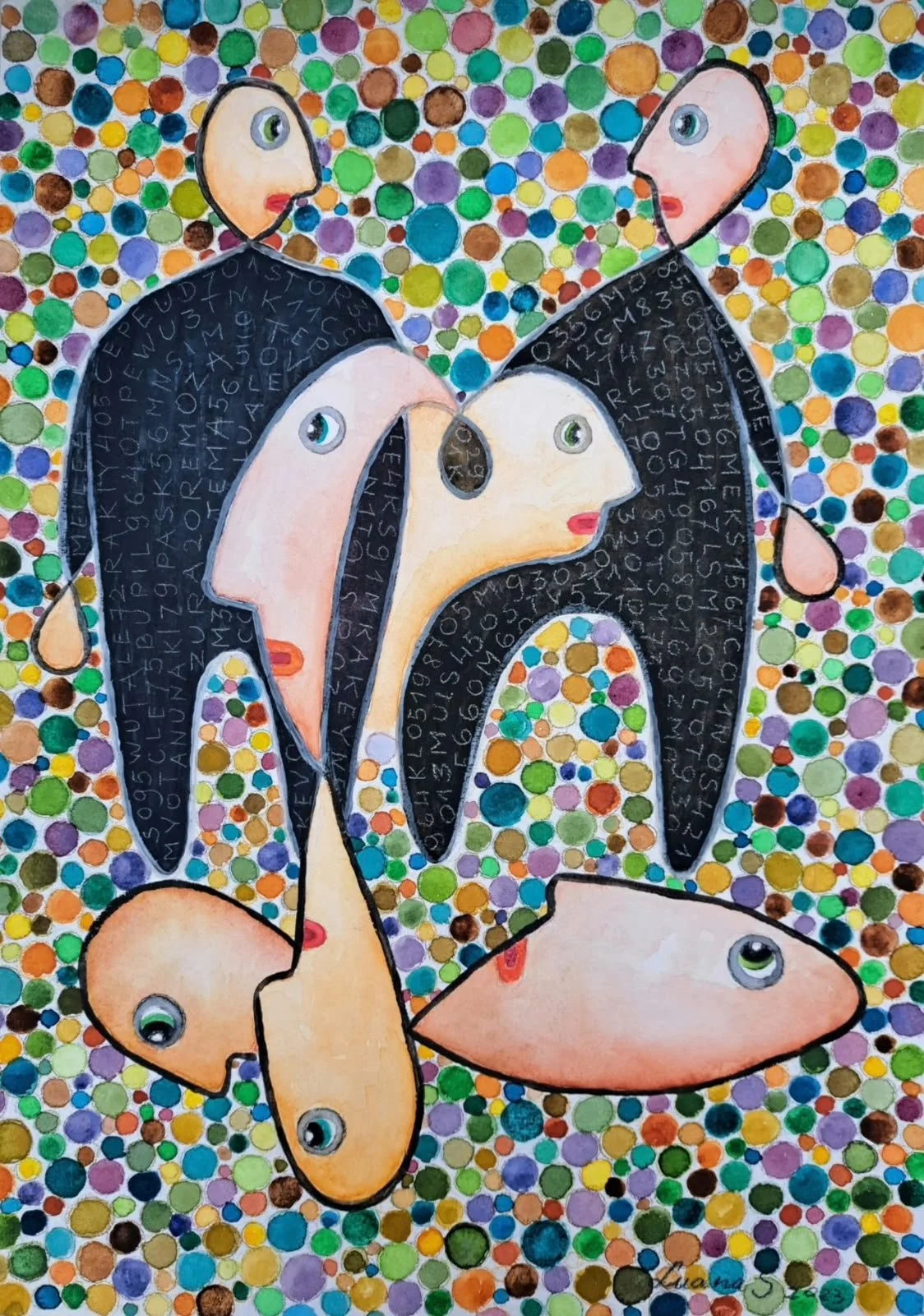
Silence is personal to me because I come from a family in which quiet moments could function as both protection and burden. There were painful realities connected to my father and patterns of generational trauma that were difficult to speak about. As a child, imagination became an escape from reality, a place where an internal world could exist when the external world felt emotionally complicated or unsafe. I think that experience fundamentally shaped the artist I became.
In my paintings, absence therefore has presence. An blank passage is not necessarily empty. Something may have been removed, buried or deliberately left unresolved. I am interested in what happens when the viewer senses that something exists beyond what is immediately visible.
I no longer think silence always needs to be preserved. Some silences protect us; others protect the very patterns that need to be confronted. Art has given me a way to distinguish between the two. I can acknowledge darkness without allowing it to define the entirety of the story.
What remains unpainted is therefore as important as what appears on the canvas. It creates space for memories, inspiration and ultimately for the viewer.
You invite viewers to recognize their own stories within your layers of color and movement. How do you balance the deeply personal origins of a painting with your desire to create an open emotional experience for others?
The origins can be personal, but I don’t believe the viewer needs to know every biographical detail in order to experience the work.
In fact, transformation happens when something private becomes capable of carrying a more universal emotional truth. Family trauma, grief, longing, belonging, fear, love, memory. These experiences take different forms in different lives, but the emotions surrounding them are recognizable.
My responsibility is not to tell the viewer what happened to me and then instruct them how to feel about it. My responsibility is to transform experience into a visual language spacious enough for another person to enter.
When someone stands before a painting and recognizes something from their own life that I could never have anticipated, the painting has moved beyond autobiography. That is very important to me.
Your statement that “what will remain are the memories, music, art and love” suggests a philosophy of both impermanence and continuity. How is this idea guiding the future development of your abstract symbolic language?
I am becoming increasingly interested in what survives - not materially, but emotionally. We inherit stories, behaviors, silences, gestures, images and memories, sometimes without knowing their origins. Some things deserve to be carried forward. Others need to be transformed.That distinction has become increasingly important in my work.
I want my visual language to become more distilled and more courageous. I am interested in allowing symbols to carry multiple generations of meaning: something can simultaneously refer to a childhood memory, a loss, a family history and an imagined future.
Perhaps that is also what I mean when I say that what remains are memories, music, art and love. We cannot control permanence. But we can decide what we create from what we have inherited.
For me, painting is part of that decision. It is a way of taking what was once private, painful or denied, and transforming it into something that can move beyond my own lifetime.