Interview with Jaehee Yoo
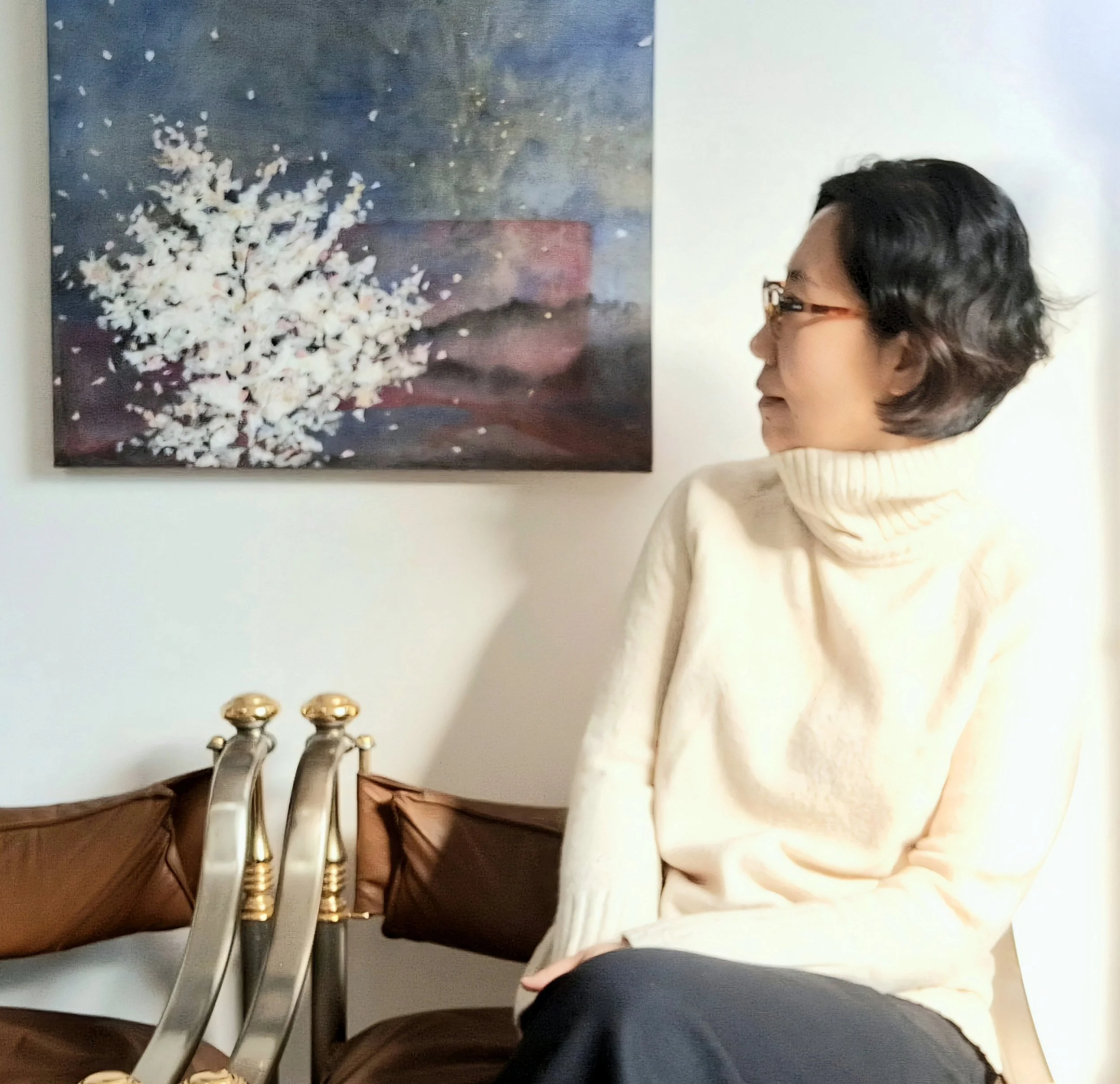
www.instagram.com/jaeheeyoo78/
Jaehee Yoo is a South Korean contemporary artist whose practice brings the material traditions of East Asian painting into dialogue with a contemporary exploration of memory, place, and human relationships.
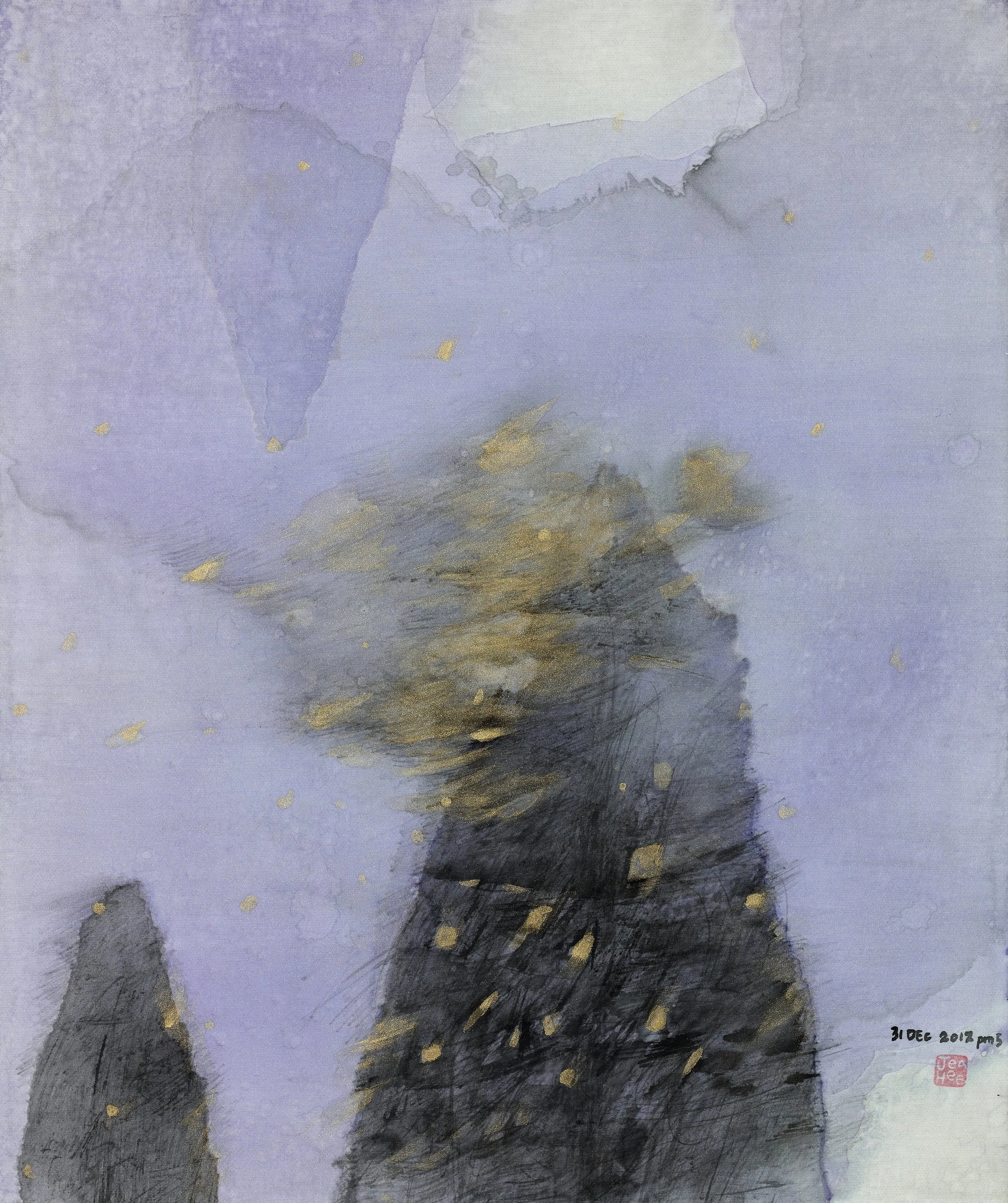
Working primarily with silk, ink, pigment, and gold, Yoo creates atmospheric paintings in which delicate lines, translucent layers, and areas of unpainted space move between figuration and abstraction. Rather than representing emotion or landscape directly, she is interested in the traces that remain through lived experience—how memory is formed through our relationships with people, places, and time.
Walking, breathing, and attentive observation are integral to her practice. Her paintings often emerge through a process of balancing intention with receptivity, allowing the behavior of ink on silk, bodily rhythm, and chance to participate in the formation of the image. Through this process, landscape becomes not simply an external view but a psychological space where inner and outer worlds meet.
Yoo studied traditional Korean painting and Oriental art history at Ewha Women’s University in Seoul. Her work has been presented internationally in Seoul, London, Barcelona, Miami, New York, and Zurich, and has been provided by private collectors internationally.
Your work is rooted in the belief that an image can reveal a person's inner self. How do you distinguish between an image that merely represents emotion and one that genuinely exposes an interior truth?
I do not try to express my inner self through painting. Instead, I try to create the conditions in which something deeper can reveal itself.
During the process, I gradually lose my control, listening instead to the rhythm of my body, the behavior of ink on silk, and the unexpected possibilities that arise through the materials themselves. In that state of attentive waiting, traces of memories or emotions that I was not consciously aware of often emerge. For me, an interior truth is therefore not something I deliberately express; it is something I discover through the act of painting.
I am less interested in illustrating feelings than in what remains after an emotion has passed—the silence, resonance, and traces it leaves behind. My paintings do not seek emotional intensity for their own sake. They seek the quiet presence that endures beyond it.
When I speak of the inner self, I do not mean a hidden or fixed identity waiting to be uncovered. I understand the self as something continuously formed through time, memory, encounters with places, and relationships with others. It is always becoming rather than simply existing. The image reveals this changing self, not a permanent one.
I have been inspired by artists such as Jackson Pollock and James McNeill Whistler, although my work follows a different path. Pollock showed me that painting could become a living process rather than the execution of a preconceived image, while Whistler showed me how rhythm and atmosphere could transform a landscape into a psychological field.
Rather than using images to reveal my inner self, I try to create the conditions in which something within me that has not yet been named can quietly reveal itself.
You have described the line as a form of breath meditation, while your bamboo pen creates marks that are immediate and irreversible. How do bodily rhythm, concentration, and emotional pressure shape the character of each line?
For me, a line is a place where decision and receptivity meet. The moment a bamboo pen touches the silk, there is little room for hesitation. The mark is immediate and difficult to reverse, so each line requires decisiveness and concentration. Yet paradoxically, the most truthful lines do not appear when I try to control everything. Although my hand makes the mark, I also must remain receptive to my breathing, the rhythm of my body, the surface of the silk, and the unpredictable movement of the ink. Each line therefore contains both my intention and something beyond my control.
Emotion enters the line indirectly. Rather than translating an intense feeling into a gesture, I wait for the subtle tension or trembling that remains in the body after the emotion itself has passed. A line therefore carries more than an immediate gesture; it contains the accumulated time and bodily state that preceded it. I think of my lines less as expressions of emotion than as records of moments when body, consciousness, and material briefly enter the same rhythm. A single line can hold time, breath, and an inner movement that is difficult to articulate in words.
My drawing does not really begin in the studio. It begins with walking. As I walk, the body develops a rhythm, and that rhythm becomes breath. I become attentive to light, air, sound, and the movement of people around me, but I do not immediately try to turn these experiences into images. They remain in the body and later reappear in the studio through the speed and spacing of a line, its pressure, hesitation, or pause.
For this reason, walking, breathing, meditation, drawing, and painting are not separate activities for me. The breath that begins with the rhythm of walking continues into the drawn line, and the line in turn expands into the duration of a painting.
Walking is the first drawing. Drawing is the continuation of walking. Painting is the memory of that movement.
Over time, this process has become a kind of ritual of attention. Walking, breathing, waiting, drawing, and painting are different stages of the same creative practice. I repeat them not to force an image into existence, but to become receptive to the moment when an image arrives.
Perhaps, then, I am not simply drawing a line. I am continuing the rhythm of breath that began with walking.
Your encounter at age sixteen with an image of Avalokiteshvara painted in ink and gold on silk was pivotal to your artistic development. What qualities of that experience remain present in the way you approach luminosity, contemplation, and the spiritual potential of an image today?
My encounter with the image of Avalokiteshvara at the age of sixteen was, before it was a religious experience, my first profound experience of painting itself. I remember standing in front of it for a long time, simply looking. In retrospect, I think this was my first experience of contemplation through painting.
What remains most vividly in my memory is not the figure of Avalokiteshvara, nor even the silk, ink, or gold as materials. What I remember is silence. The gold seemed to emerge quietly from the darkness, almost like a candle burning in a dark room, and for a moment I felt that time had slowed down. What remained with me was not the image itself, but the time it created.
This experience still shapes the way I use gold today. I do not use it primarily as a symbol of sacredness or grandeur. I think of it more as a quiet presence—what I sometimes call a “golden silence.” Because silk and gold respond subtly to changing light, the image never appears entirely fixed.
A collector who lives with one of my paintings once told me that its light seems to change at dusk and again at night. Sometimes they dim most of the lights in the room and simply sit with the painting in the semi-darkness. They told me that its quiet presence gives them a sense of calm. Their observation helped me understand something about my work that I had perhaps known intuitively but had never articulated: the gold does not ask to be admired for its brilliance. It creates silence that allows the gaze to remain.
For me, waiting and contemplation are closely connected. The quiet glow of gold creates a space of waiting, and within that stillness, contemplation becomes possible.
The gold does not illuminate the image. It slows time.
For me, the spiritual potential of an image does not lie in religious symbolism. It lies in its ability to slow us down, hold our attention, and create a space in which we may encounter something beyond our immediate thoughts.
Perhaps what has remained with me since that first encounter is the realization that painting can become a place of quiet attention. Since then, I have continued searching for images that do not demand belief but invite presence.
At sixteen, I discovered that a painting could make me stop and look. Perhaps I have been trying to understand that experience ever since.
The Memory Diaries transform experiences such as walking beside the Han River, watching a bamboo forest at dawn, or spending time with your cat into ambiguous visual fields. How do you decide which details should remain recognizable and which should dissolve into abstraction?
I do not consciously decide which details should remain recognizable, and which should disappear into abstraction. For me, it is less choice between figuration and abstraction than a question of what remains after I have lived in relation to a place.
When I stand beside the Han River, for example, I do not try to paint the river itself. I am more attentive to the movement of air against my body, changes in light and temperature, surrounding sounds and movement, and the shifting rhythm of my own consciousness. I may begin with a specific place, but gradually what matters is no longer the place as an object before me. It is the rhythm and atmosphere that have formed through my relationship with it.
When a form disappears during the painting process, it is not because it was unimportant. It disappears because the image no longer needs it. Certain lines, traces, intervals, or sensations of space continue to remain. What survives is not necessarily what I saw most clearly, but what continued to live within the relationship I had with that place.
In this sense, abstraction is not a process of removing form for its own sake. The image gradually let’s go of what has become unnecessary until only the traces of a lived relationship remain. I do not determine in advance what should be preserved or erased.
Memory is not the subject of my work. It is the trace left by a lived relationship. I do not summon memory to reconstruct the past. Memory is what remains after time has been lived with a person, a place, or another presence.
Painting, then, is not the representation of an already existing landscape, but a way of recording what remains from that relationship.
Landscape begins to emerge when description becomes unnecessary.
Seoul appears in your paintings through fleeting light, density, movement, solitude, and silence rather than through identifiable landmarks. How has living continuously in the city changed your understanding of landscape as both an external environment and an internal condition?
Seoul was not always a psychological landscape for me. In fact, while I was making these works, I was hardly conscious that I was painting Seoul at all. I was simply following traces of places and moments I had lived through—the light, people, movement, and sensations that remained with me.
I first became aware of this while preparing for an exhibition. When I brought together works made at different times and saw them sharing the same space, something began to emerge between them that I had not recognized in the individual paintings. It was not Seoul defined by landmarks, streets, or the Han River, but a psychological landscape formed through accumulated light, density, movement, solitude, and silence.
I walked through Seoul, waited in it, encountered and parted from people, and returned to the same places through different seasons and times of day. The city has continually changed, and I have changed within it. As these experiences accumulated, the boundary between the external city and my internal world became increasingly difficult to separate. The rhythms and light of the city entered my memory, while my memories and emotions, in turn, changed the way I perceived the city.
For me, landscape gradually became a place where the external and the internal meet. It is neither a representation of the outside world nor simply a projection of my inner state. It emerges somewhere between the two, through the relationship between me and the world.
Looking back, Seoul was never simply a subject in my paintings. It was the place where I first came to understand that landscape is formed not through visual representation alone, but through a lived relationship with place.
Seoul was not simply a city for me. It was the first place that taught me how a landscape comes into being.
Your academic background combines traditional Korean painting with the study of Oriental art history. How has this dual training influenced the balance between intuitive creation and intellectual reflection within your practice?
For me, traditional Korean painting and Oriental art history were never two separate fields. Traditional Korean painting trained my hand, while art history trained my way of seeing.
Through Korean painting, I learned not only how to work with ink, silk, brush, and line, but also how to understand materials through the body. The way ink spreads and penetrates the surface, the way a line changes with pressure and breath, and the impossibility of fully controlling the materials became embodied with knowledge through years of repetition. Even now, this knowledge often operates before conscious thought when I work.
Studying art history, on the other hand, taught me how to look at images and how to question them. It made me consider how an image emerges from a particular time and way of thinking, how traditions continue and transform, and how an image can contain meanings beyond what is immediately visible.
But when I begin painting, I do not allow this knowledge or theory to lead the work. Intuition always comes first, and reflection follows. This is the fundamental principle of my creative practice.
My work begins through an intuitive and material process. My hand moves, ink enters the silk, and unexpected traces appear. Sometimes I do not fully understand why I have drawn a particular line or allowed a certain image to remain. I try not to explain these decisions too quickly.
Reflection comes later. When I step away from the work and look at it again, the way of seeing I developed through art history, and philosophy helps me understand what the painting has already discovered. Knowledge does not tell the painting where it should go; rather, it helps me understand where the painting has already arrived.
Intuition and intellectual reflection therefore do not compete with one another. They form a continuous cycle. Intuition begins the work, and reflection helps me understand the journey. That understanding, in turn, deepens the intuition that guides the next work.
Your paintings frequently bring together opposing states, including intimacy and distance, beauty and sorrow, control and chance, and presence and disappearance. Do you understand these tensions as reflections of personal experience, Buddhist concepts of impermanence, or a broader condition of contemporary life?
I do not consciously begin painting with ideas such as intimacy and distance, beauty and sorrow, control and chance, or presence and disappearance. My work always begins with personal experience—with relationships, encounters with places, moments of closeness and separation, and the ways emotions and memories change over time.
Looking back, however, I recognize that seemingly opposing states often coexist in my paintings. Figures may be intimate yet never touch. A moment may be beautiful while carrying a sense of sorrow. Chance enters the process, but never entirely escapes my control. An image may be clearly present and yet seem as though it could disappear at any moment.
I do not see these tensions as conflicts that need to be resolved. Rather, tension is a sign that a relationship is still alive.
Relationships are never fixed. Distance can exist within intimacy; the possibility of separation is already present within an encounter; and disappearance begins at the very moment something comes into presence. Opposing states do not cancel each other out. There are different possibilities that can coexist within the same relationship.
Perhaps this is why my paintings so often take place in-between—between intimacy and distance, control and chance, presence and absence.
I am not interested in resolving oppositions. I am interested in inhabiting the space between them.
Buddhist thought is not the subject of my work. I do not paint in order to illustrate Buddhist philosophy. Rather, over time it has become part of the way I understand the world, other people, and relationships. The idea that nothing is fixed—that things arise, change, and disappear according to conditions and time—has gradually become less a religious concept for me than a way of understanding lived experience.
This also resonates with contemporary life. We are constantly connected and yet often isolated, trying to hold onto things while everything around us changes rapidly. I am not interested in treating these conditions as problems to be solved. What matters to me is remaining within that uncertainty long enough to see what it reveals.
Ultimately, the oppositions in my paintings are extensions of relationship itself. As long as a relationship remains alive, its tensions continue to shift.
In works centered on lovers, figures may share a space while remaining psychologically separate. How do composition, emptiness, and the physical interval between figures allow you to express what cannot be communicated through gesture or narrative?
I do not paint relationships themselves. I paint the space in which a relationship can emerge.
The distance between two figures in my paintings is not there simply to separate them. I think of that interval as the very space that makes a relationship possible. If two figures were to completely merge, there would no longer be the same tension, waiting, or movement of the gaze between them.
I also do not think of emptiness as simply empty space. In painting, what we call empty space is also space that has not yet been painted. While I am working, there are moments when an unpainted area begins to feel more powerful than the image, I have already created. I become aware that adding something might diminish what is already present there.
For me, that space is alive. Breath moves through it, gazes cross it, and silence remains within it. Emotions and durations that cannot be communicated through gestures or facial expression can exist there. Emptiness is not empty because something is missing; it remains open because something can still happen there.
In my paintings of lovers, the figures are often close but do not touch. The distance between them may suggest separation, yet it can also hold the possibility of reunion. I therefore do not see this interval as a symbol of disconnection. It is an open space in which separation and reunion, intimacy and distance, what has been spoken and what remains unspoken can coexist.
I do not want to complete the story of a relationship through the gestures of the figures. Instead, I want the viewer's gaze to remain in the space between them, where the narrative has been suspended. We do not know exactly what has happened or what will happen next. It is precisely because the relationship remains unresolved so that it can continue to live within the painting.
I am not interested in painting the figures alone; I want to leave within the painting what has not yet been said between them.
I believe a relationship begins not with contact, but with the space that remains open between two beings. Perhaps the most powerful presence in these paintings is not always the figures themselves, but the space that remains between them. It is there that the relationship continues to become.
You describe nature as a meaningful presence within today’s digitized world, while also considering human experience in relation to the vastness of space and time. How do the South Korean landscape and its remembered textures help you address the tension between technological speed and contemplative attention?
I do not think of nature as the opposite of the city. The landscape of Seoul, where I have lived for most of my life, is itself an environment shaped by nature, architecture, time, and countless human relationships. Walking beside the Han River, spending time in a bamboo forest, or moving through the streets of the city are not entirely separate experiences for me. What matters is not whether a place is defined as natural or urban, but how I inhabit it and learn to pay attention to it.
Walking is perhaps the most fundamental way in which this relationship begins. As I walk, the pace of my body slows, and my breathing and gaze begin to follow that rhythm. Changes in light, the movement of air, the trembling of leaves, distant sounds, or the presence of other people—things I might otherwise pass without noticing—gradually become perceptible.
Walking teaches me how to pay attention.
This experience is closely connected to the way I paint. Working with ink on silk requires time: waiting for the ink to enter the surface, drawing a line and pausing to look, allowing an image to emerge and sometimes disappearing again. In this sense, my painting may move in the opposite direction from the accelerating production and consumption of images in the digital age.
I do not, however, see technology or speed as something to reject. They are part of the conditions in which we live. But perhaps precisely because so much now passes before us so quickly, slowness, stillness, and sustained attention have become increasingly meaningful.
Even among younger generations in Korea who have grown up immersed in digital environments, I notice an increasing interest in meditation, temple stays, breathing, and silence. To me, this suggests not simply a return to the past, but a contemporary desire to recover attention from a world that constantly disperses it.
Perhaps slow painting can offer something small within this condition. A painting cannot change the speed of the world, but it may allow one person's time to move differently for a while.
In an age that values speed, I believe painting can remain a place where attention is restored.
If someone pauses before an image, stays with it for a while, and becomes aware again of their own breathing and sense of time, that is enough for me.
Perhaps painting's quiet resistance today is simply to give us back the time to look slowly.
Following exhibitions in Seoul, London, Barcelona, Miami, and New York, how have encounters with viewers from different cultural contexts affected your understanding of whether highly personal memories can become a shared visual language, and where do you hope this inquiry will lead your practice next?
Memory is deeply personal. Even when two people experience the same place or moment, what remains in memory is never the same. I do not believe that my memories can simply be transferred to another person. But while memories are personal, the experience of forming them through relationships can be universal.
Through exhibiting in different cities, I have been interested to see that viewers do not necessarily look for my story in the paintings. Instead, they often bring their own. Someone may recognize a place I never intended or tell me that a painting has reminded them of a relationship, a moment, or a memory from long ago. These encounters have made me realize that personal memory becomes shared not because we remember the same things, but because an image can create a space into which another person's memory may enter.
For me, this relationship is not limited to people. In fact, I sometimes feel that memories formed through my relationship with a place can be even more powerful than those formed through relationships with people. Perhaps it is because the relationship between a place and me belongs uniquely to the two of us.
When I remember the streets of Paris, for example, I am not simply remembering Paris. Those streets still hold the twenty-four-year-old version of myself who once walked through them. When I return to them in memory, I encounter not only the place, but also a former self who no longer exists in quite the same way yet remains inseparable from my experience of it.
This is why place is never simply a background in my work. A place becomes meaningful through the time we spend within it, the attention we give it, and the relationship we form with it. Over time, that relationship becomes memory, and memory changes the way the place continues to exist within us.
Perhaps this is also where something intensely personal can become shared. The places themselves may be different for each of us, but we all carry places that hold earlier versions of ourselves.
As my work continues, I want to explore this relationship with places more deeply—not by representing new locations, but by spending time within them and allowing a relationship to form. I am interested in what remains after that encounter, and in how a place gradually becomes an inner landscape through lived time and memory.
Ultimately, I do not want my paintings to explain my memories to the viewer. I want to leave enough silence, ambiguity, and openness for another memory to enter.
Painting becomes meaningful when it no longer speaks only about my memories but creates a place where others may encounter their own.
Empathy is not something I can create or demand. It belongs to each viewer and to what they bring with them.
I can only leave the space open for that encounter to occur.
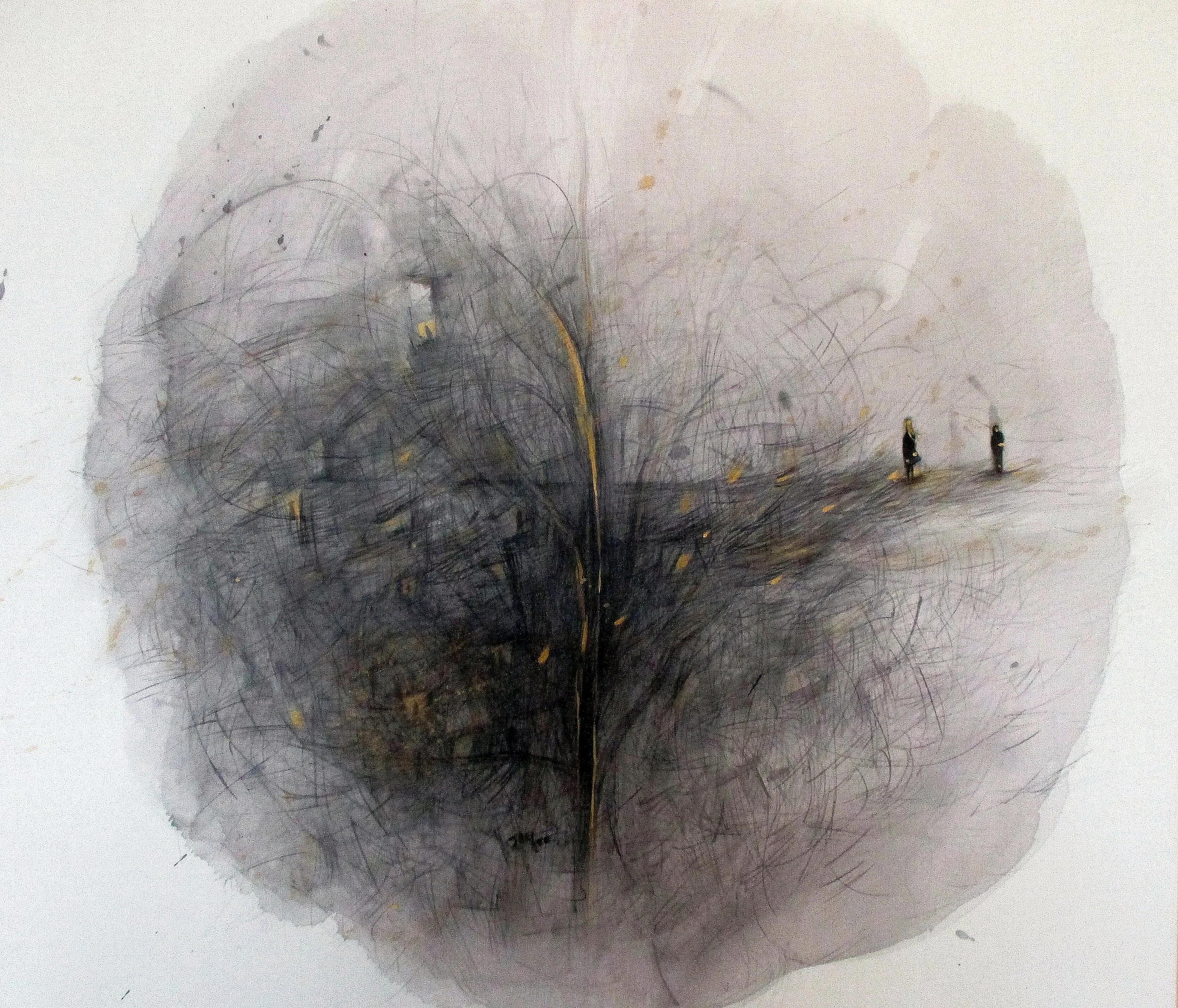
A chance reunion1, 2026. Indian ink, gold on silk, 55x65cm

A chance reunion2, 2026. Indian ink, gold on silk, 55x65cm

Duck boat Lover, 2024. Indian ink, gold on silk, 50x50cm
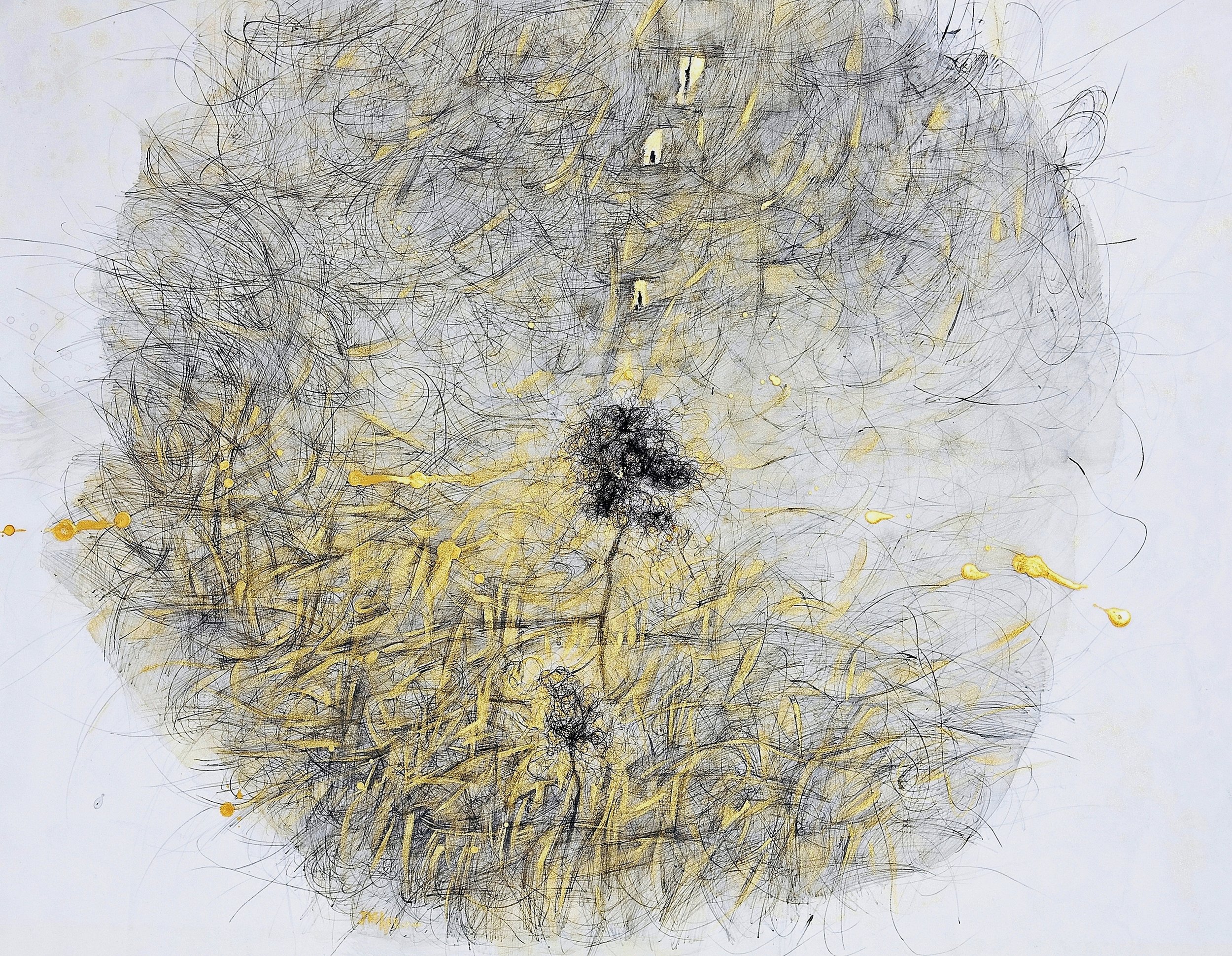
Dandelion Lover,2026. Indian ink, gold on silk, 90x90cm

Winter city, 2025. Indian ink, gold on silk, 58x68cm
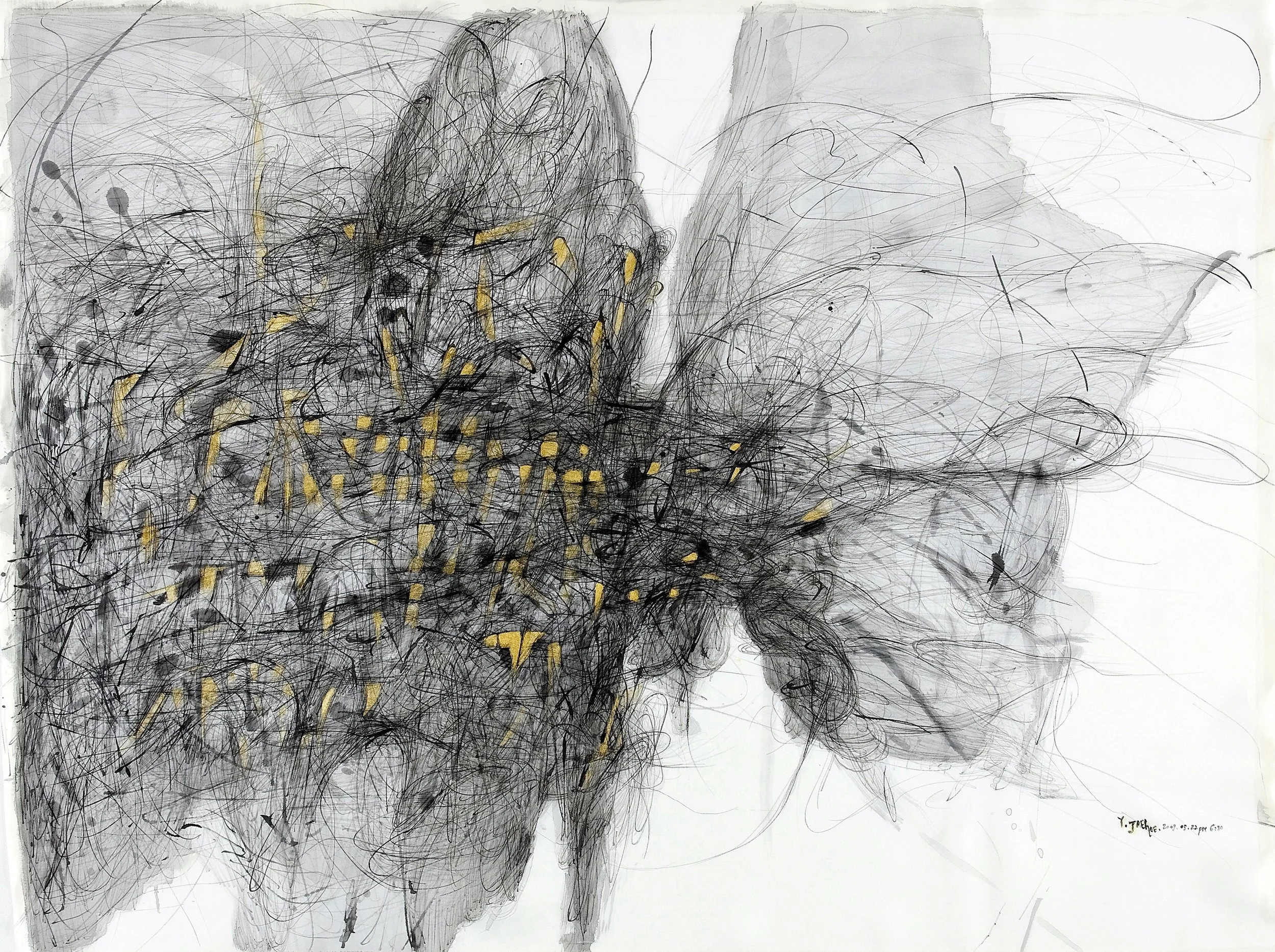
Night city, 2021. Indian ink, gold on silk, 80x104cm
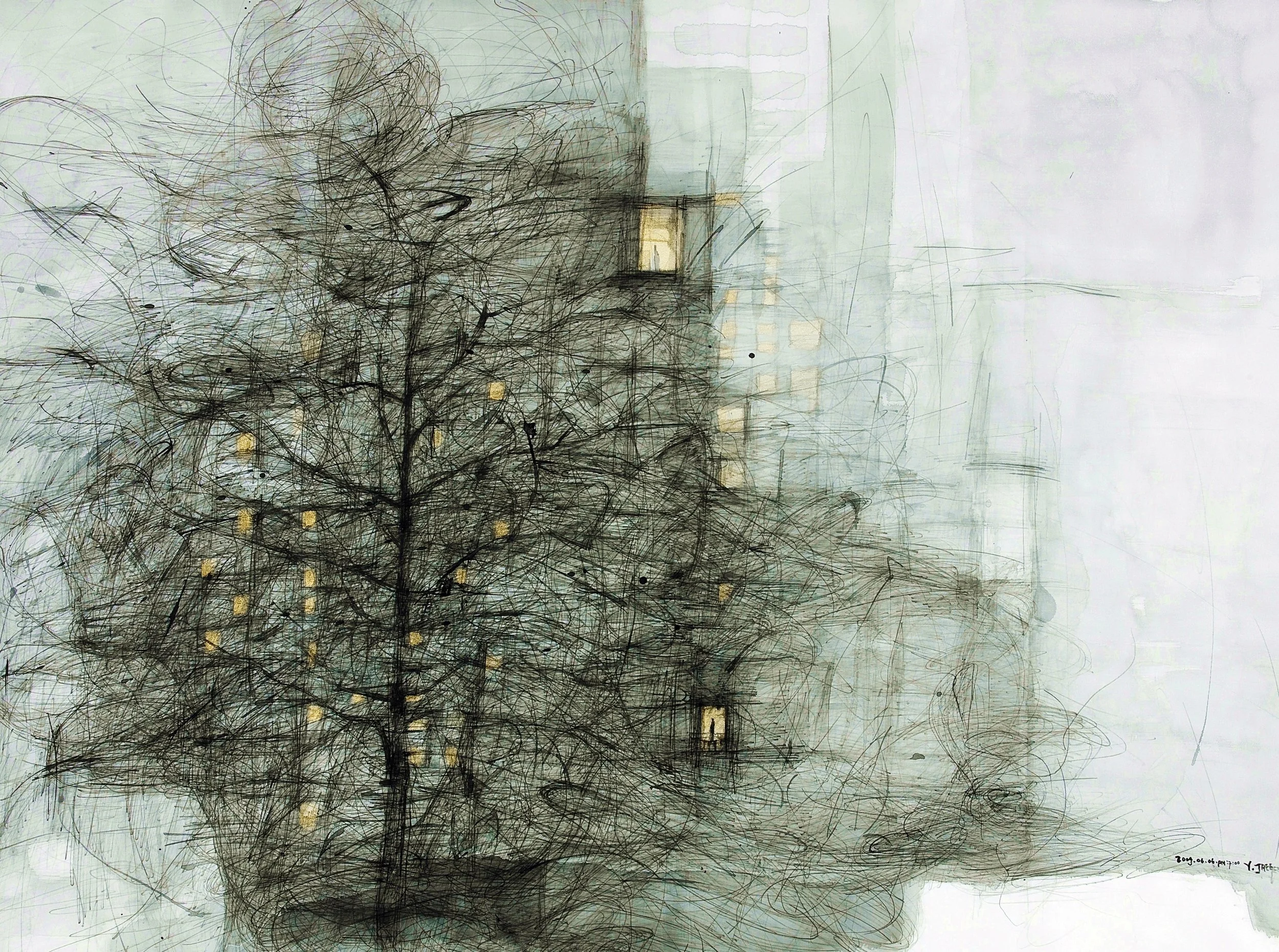
Night Seoul, 2020. Indian ink, gold on silk, 80x100cm
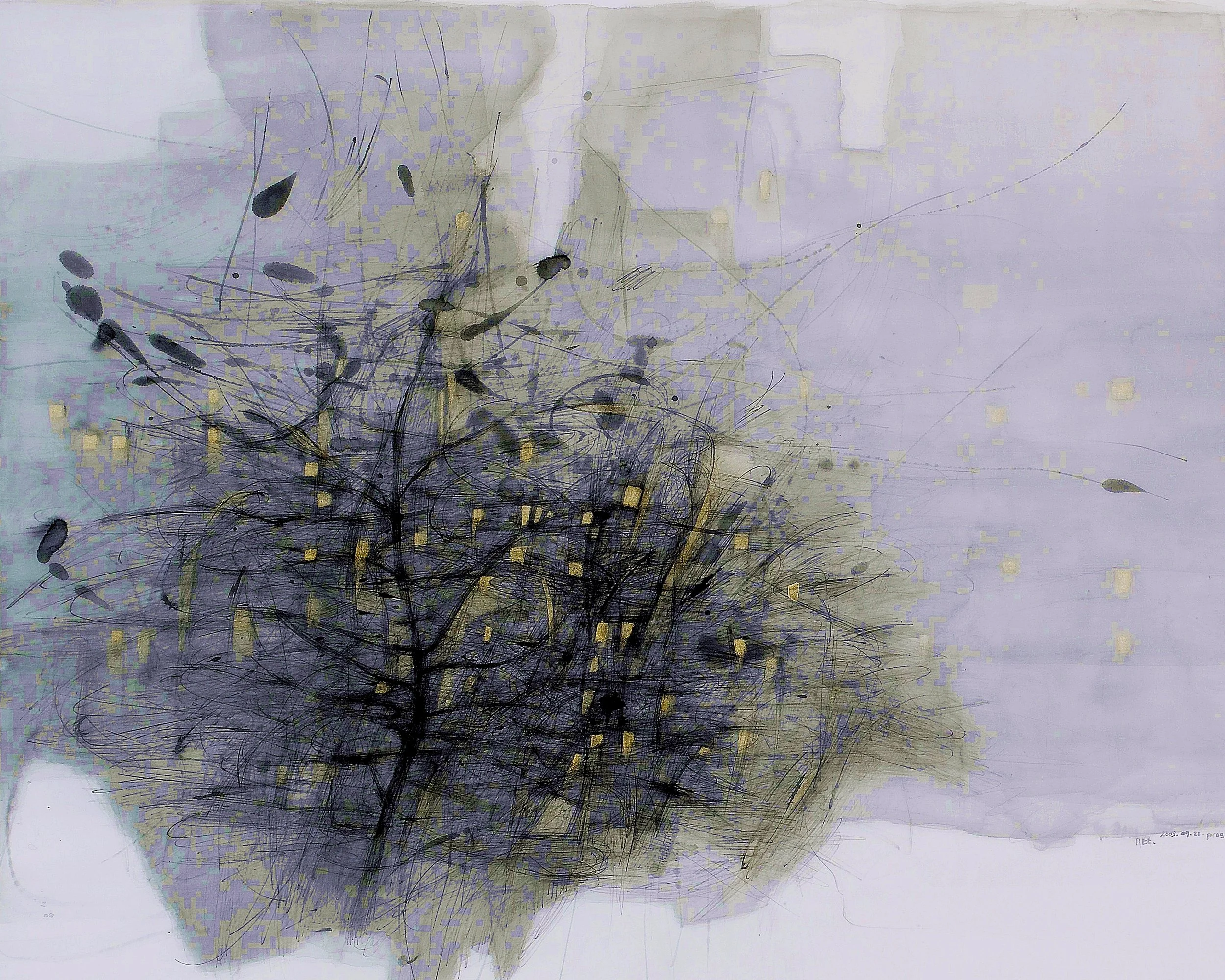
Winter tree, 2010. Indian ink, gold on silk, 80x110cm
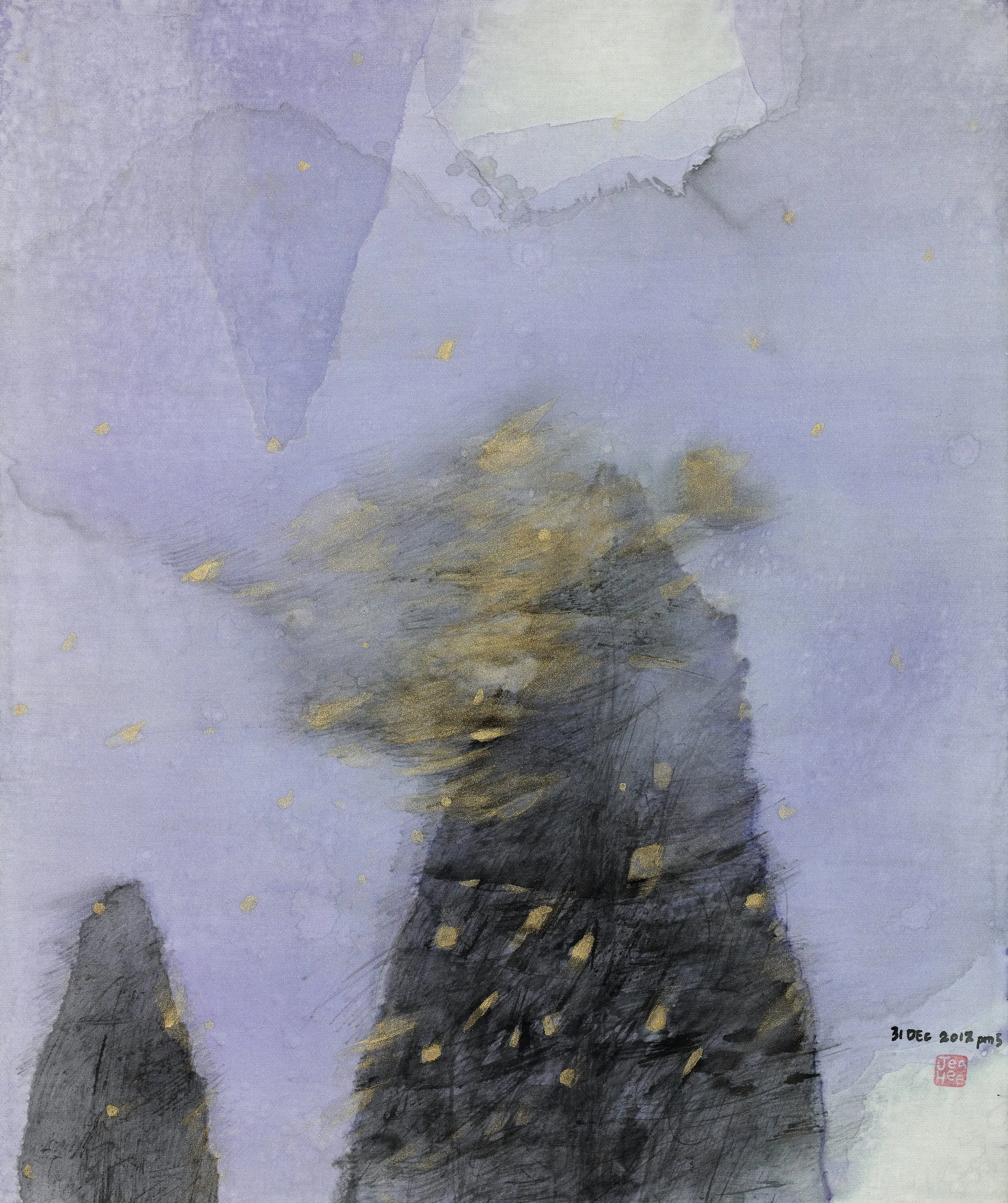
Solitude, 2024. Indian ink, gold on silk, 44x36cm

Alone Tree, 2021. 85x115cm Indian ink, gold on silk, 85x115cm
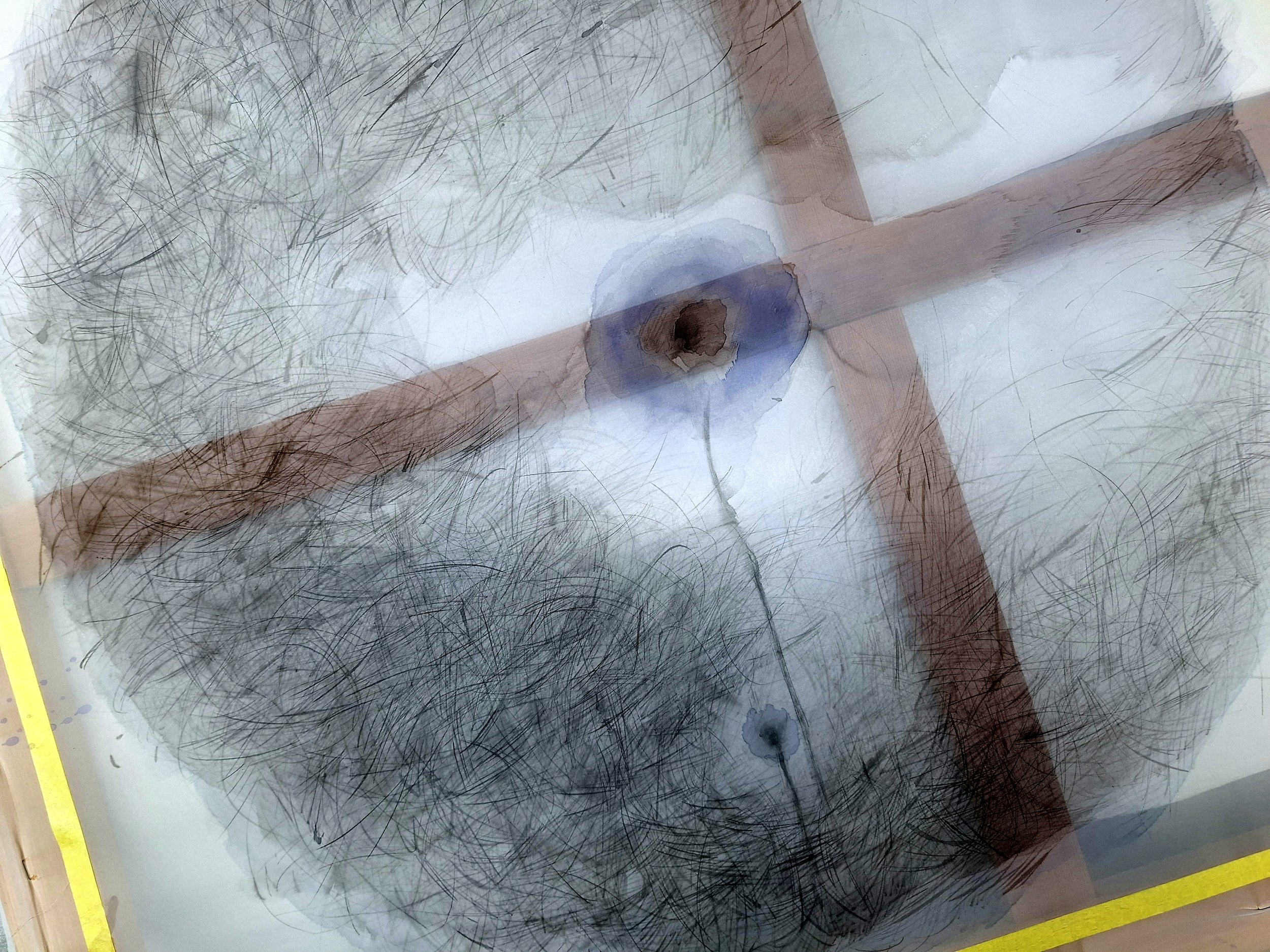
Alone Tree, 2021. 85x115cm Indian ink, gold on silk, 85x115cm
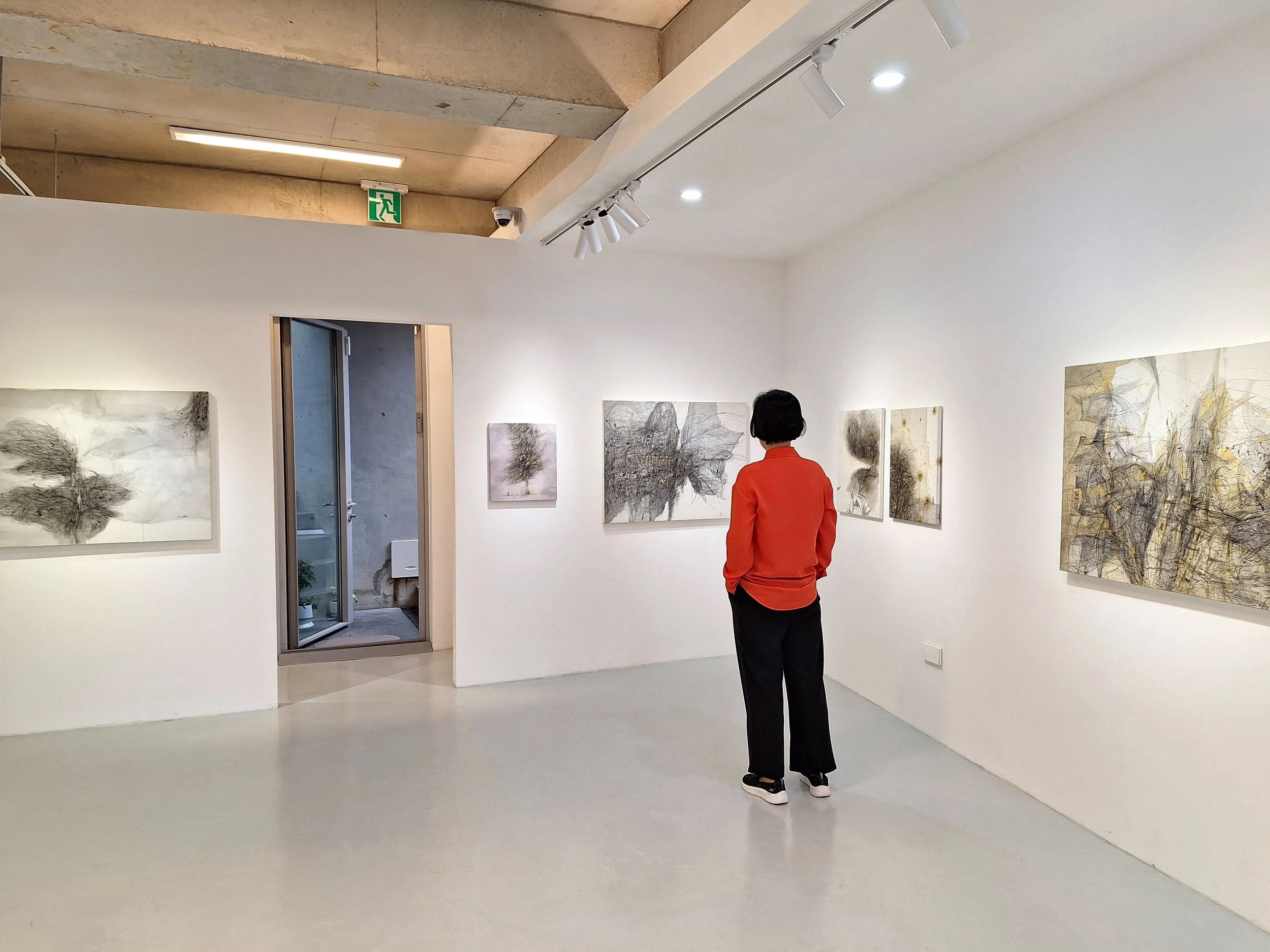
Show Jaehee Yoo
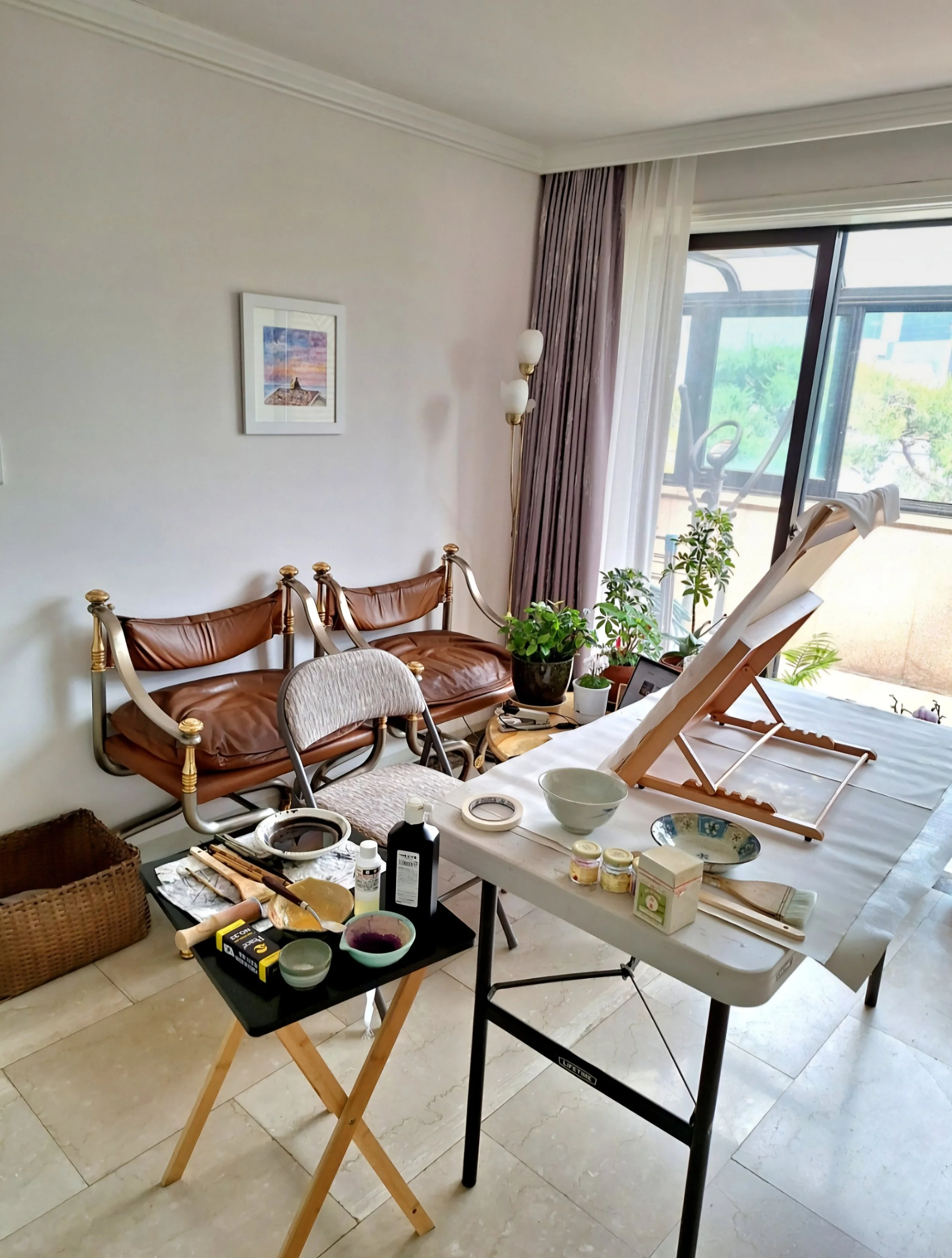
Atelier Jaehee Yoo
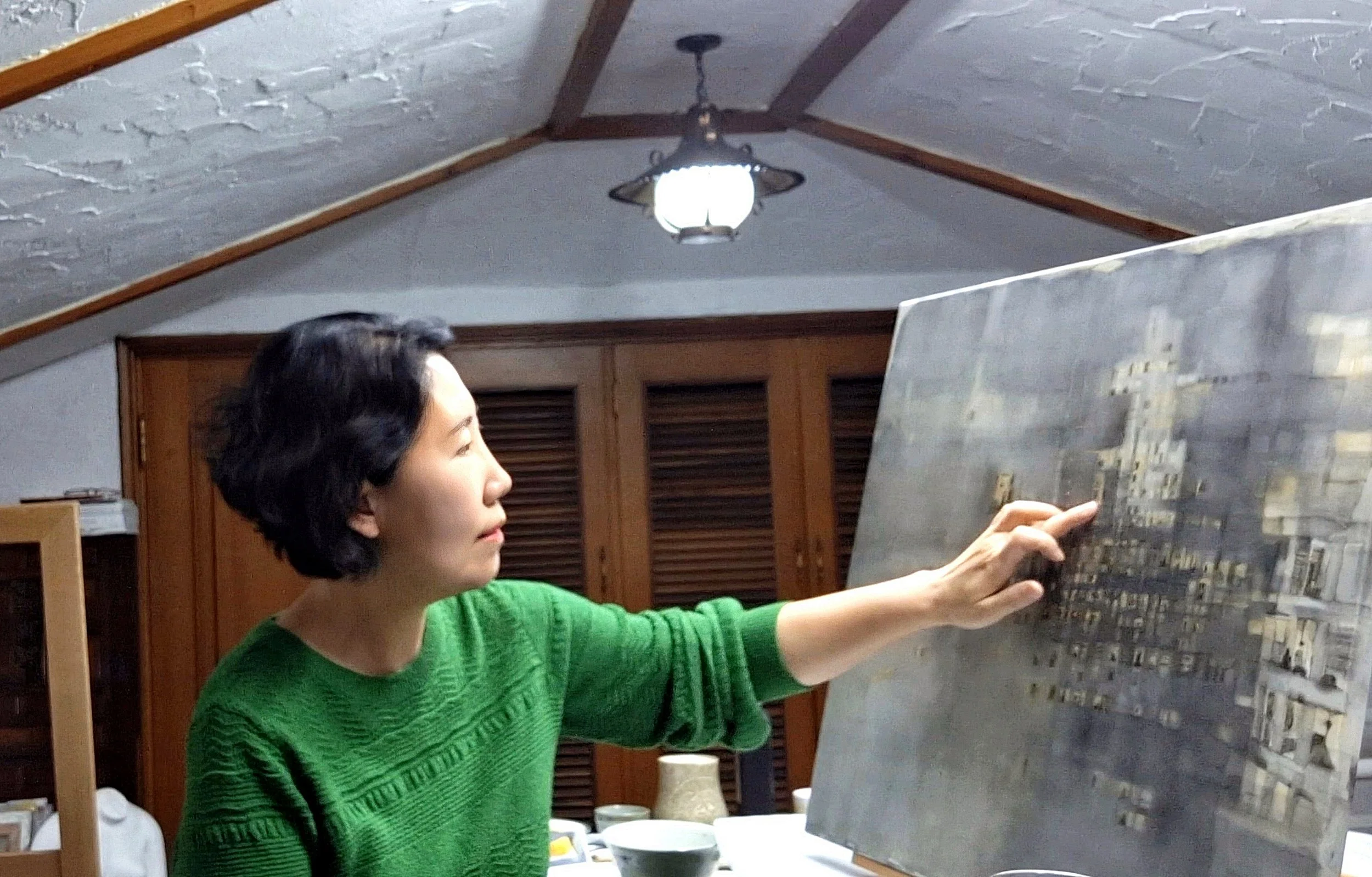
Jaehee Yoo in Studio