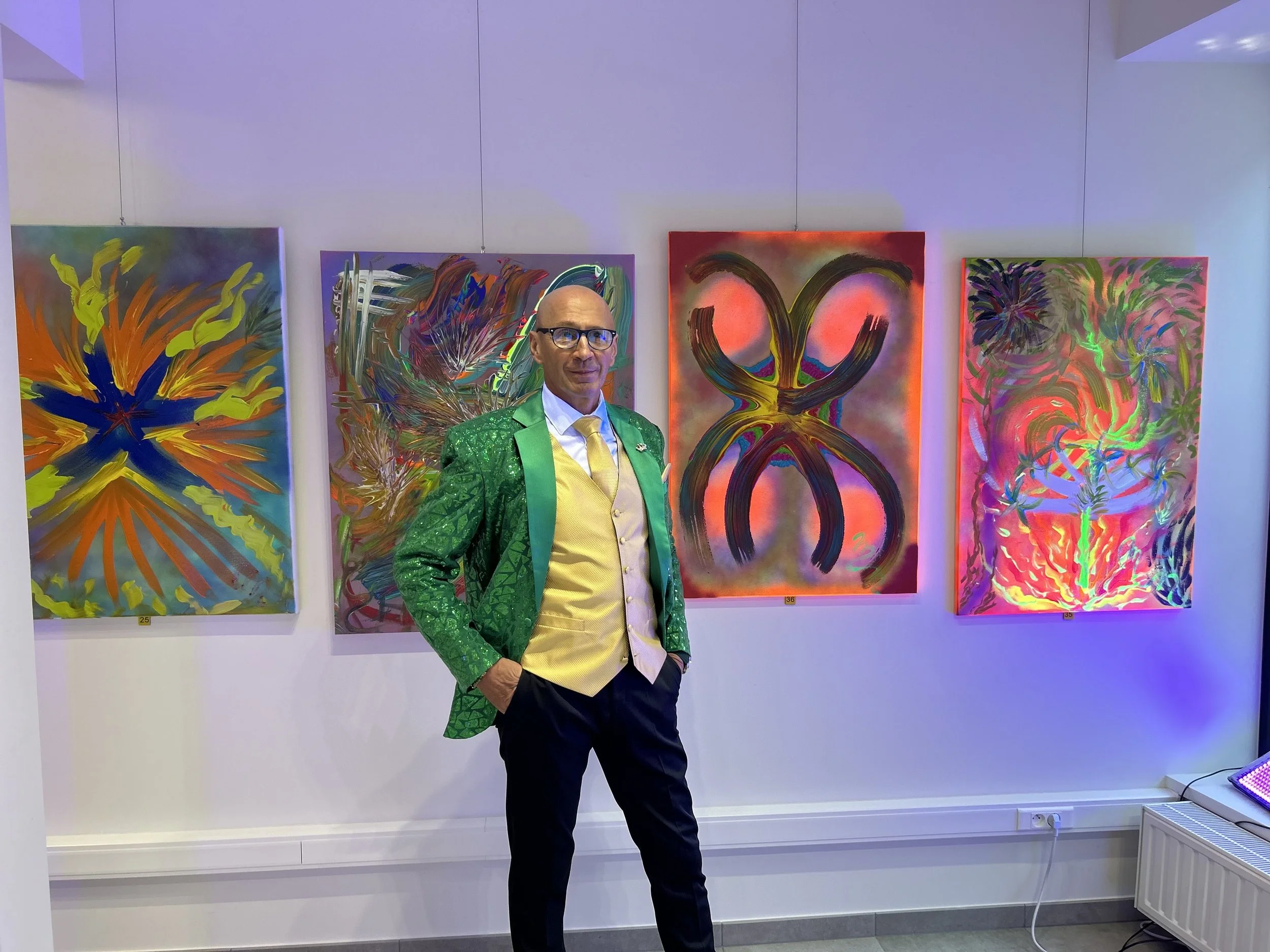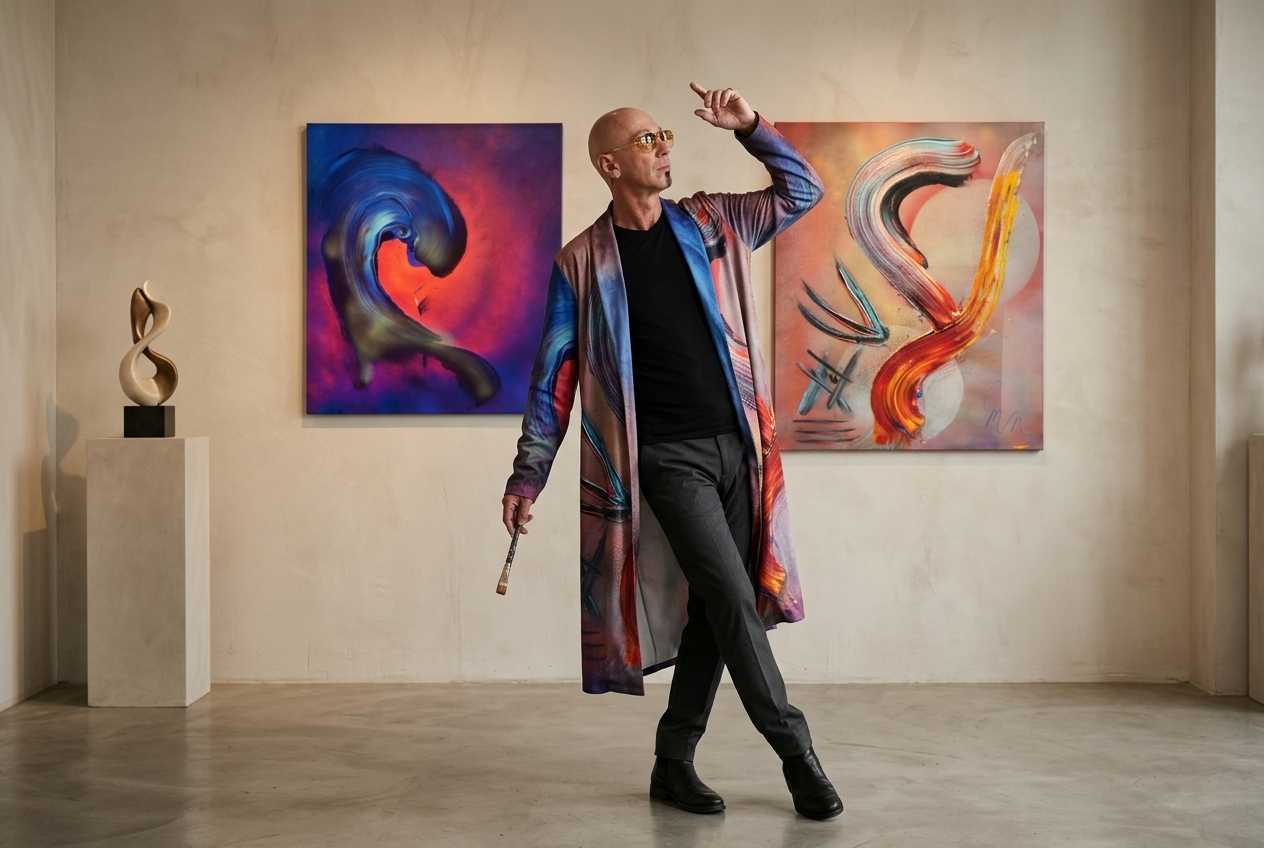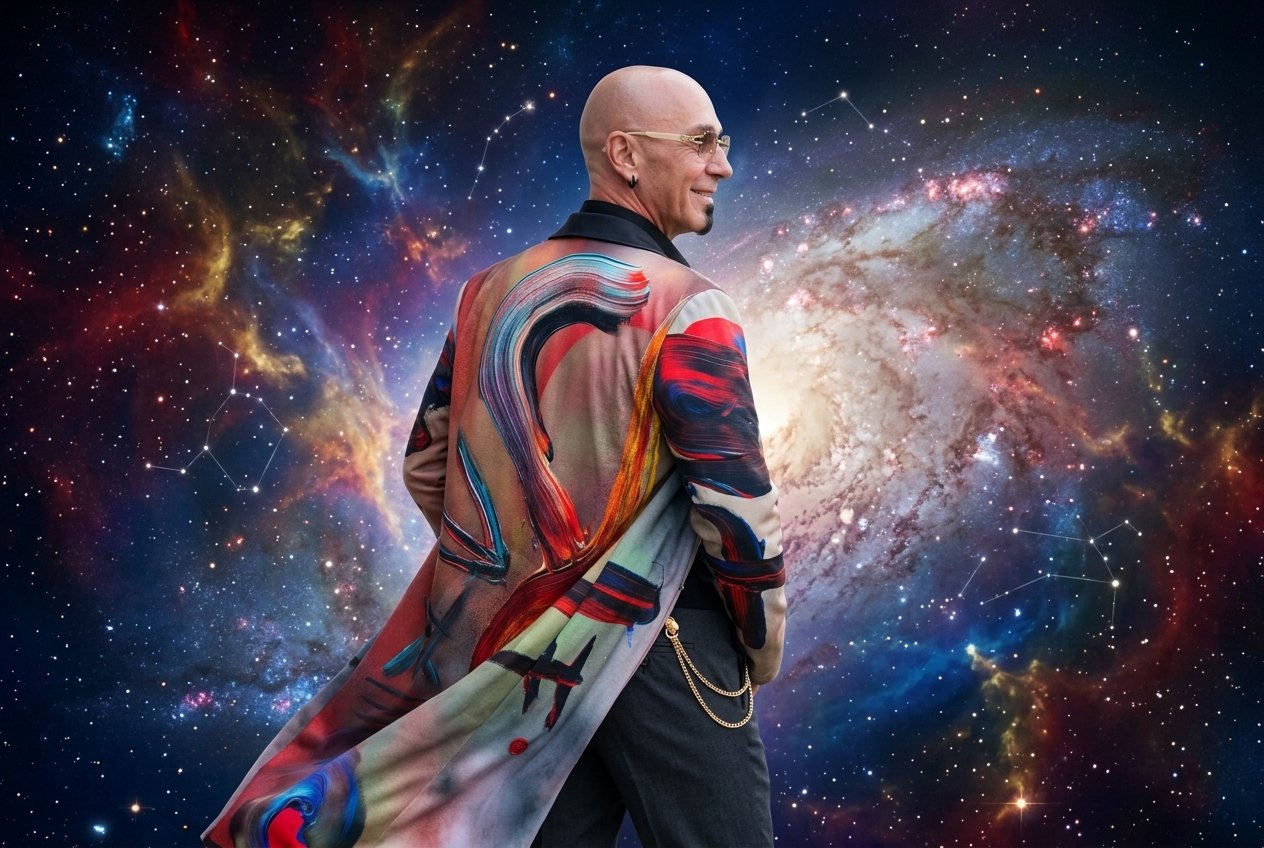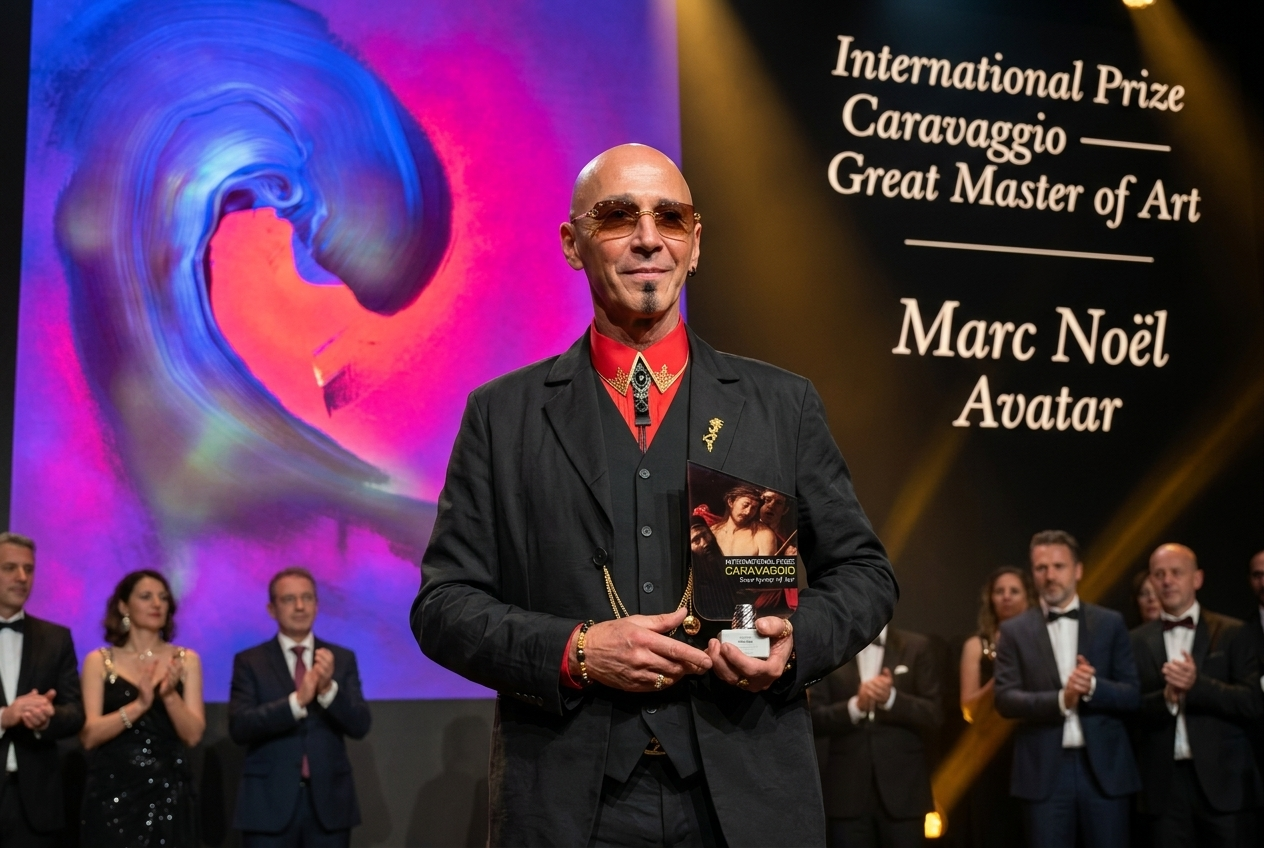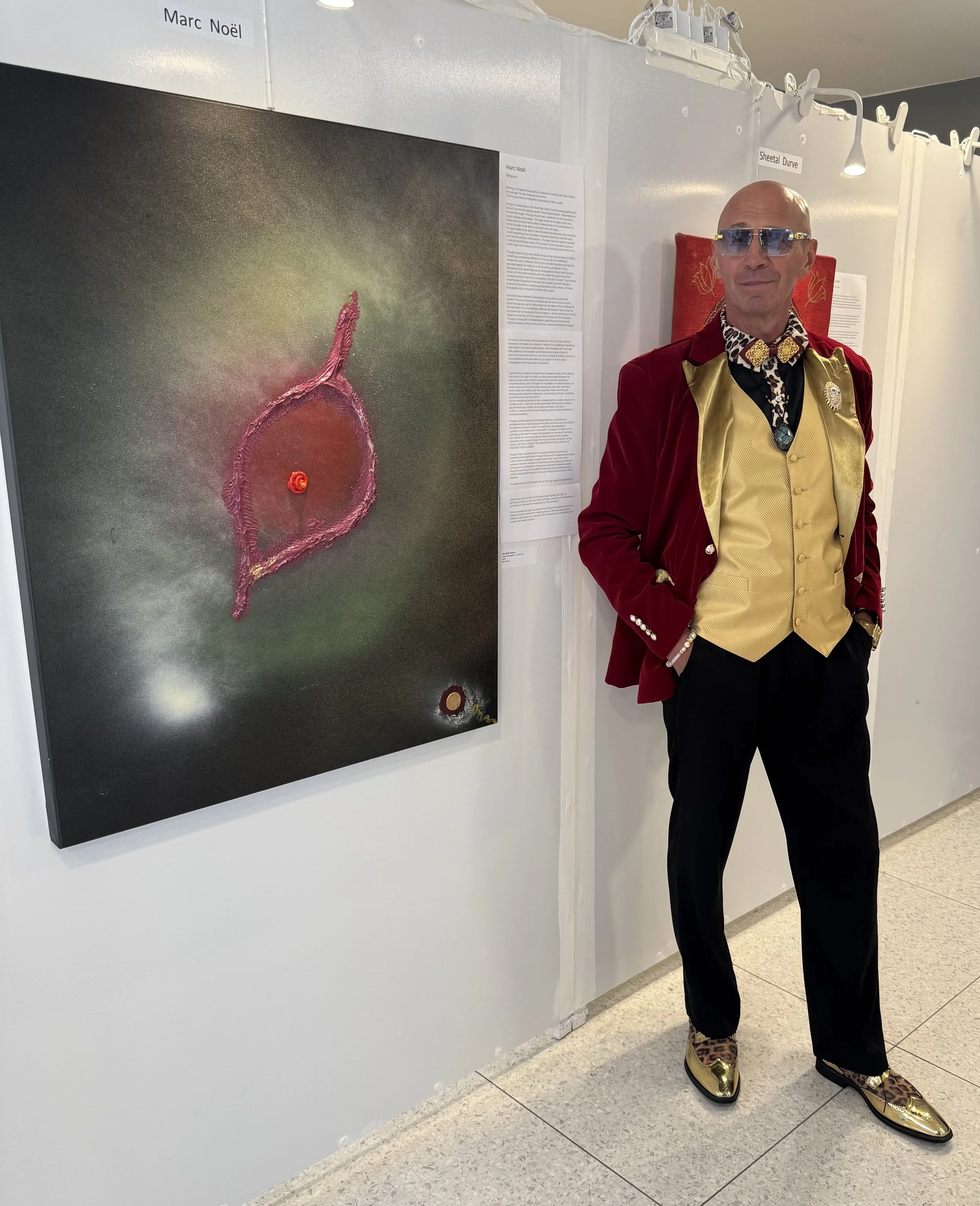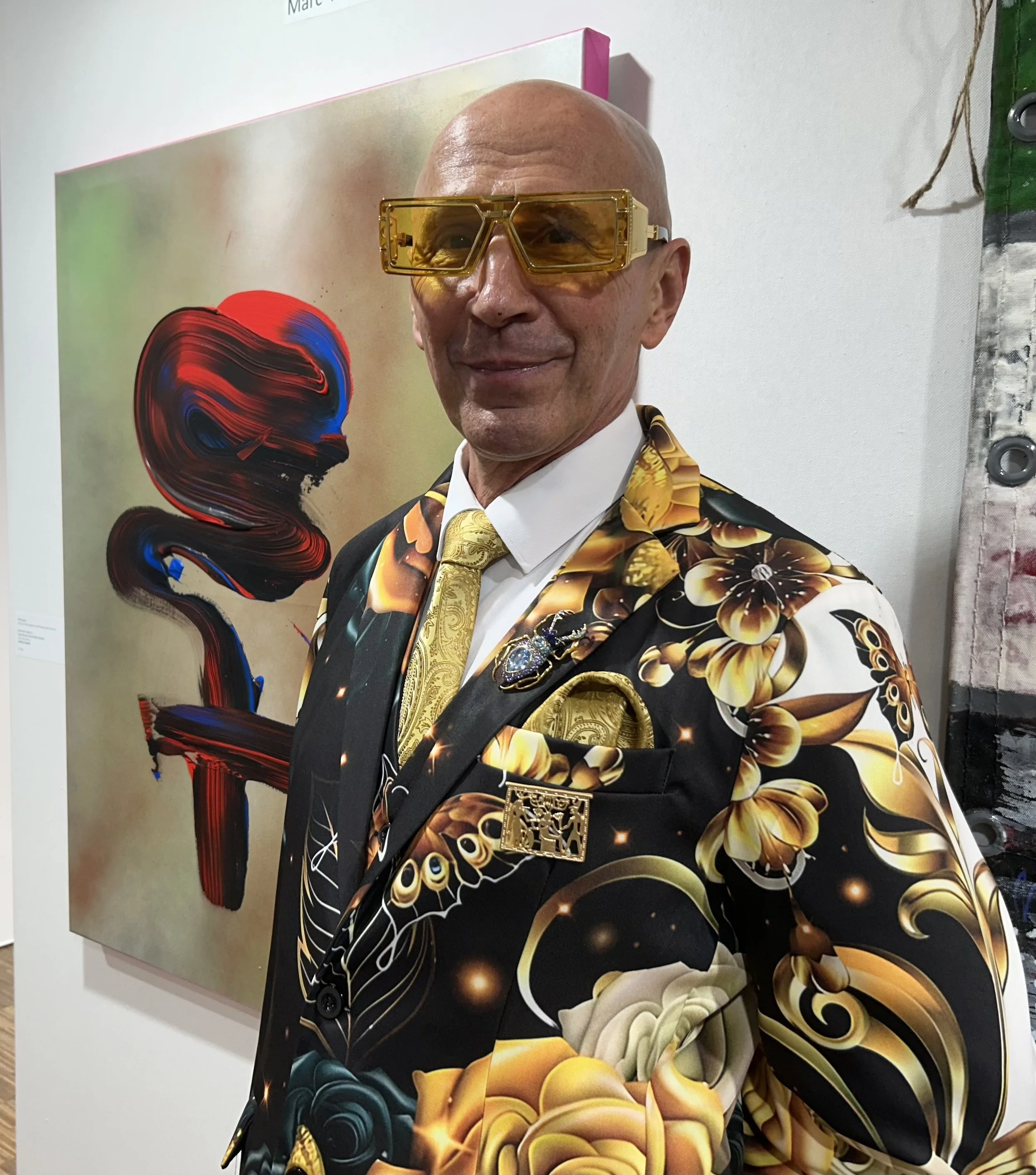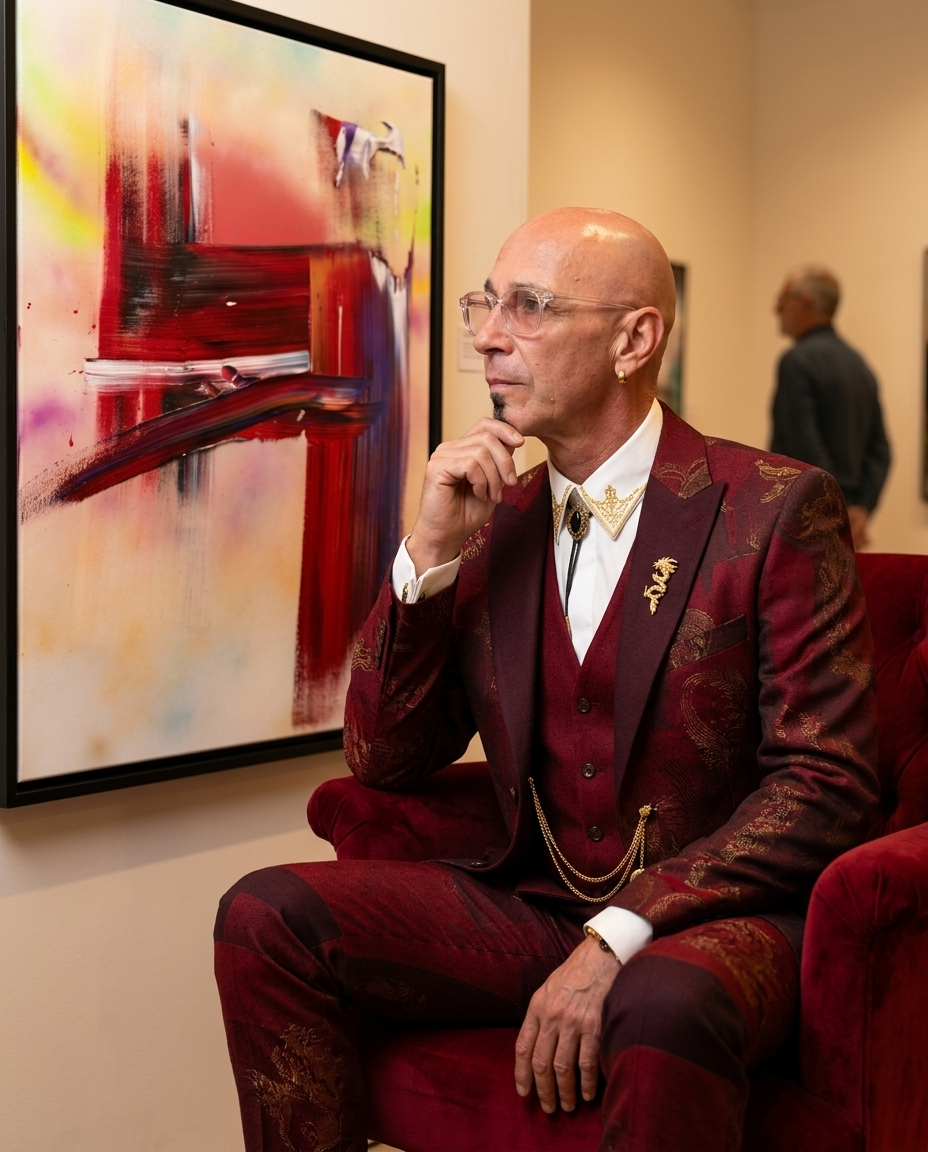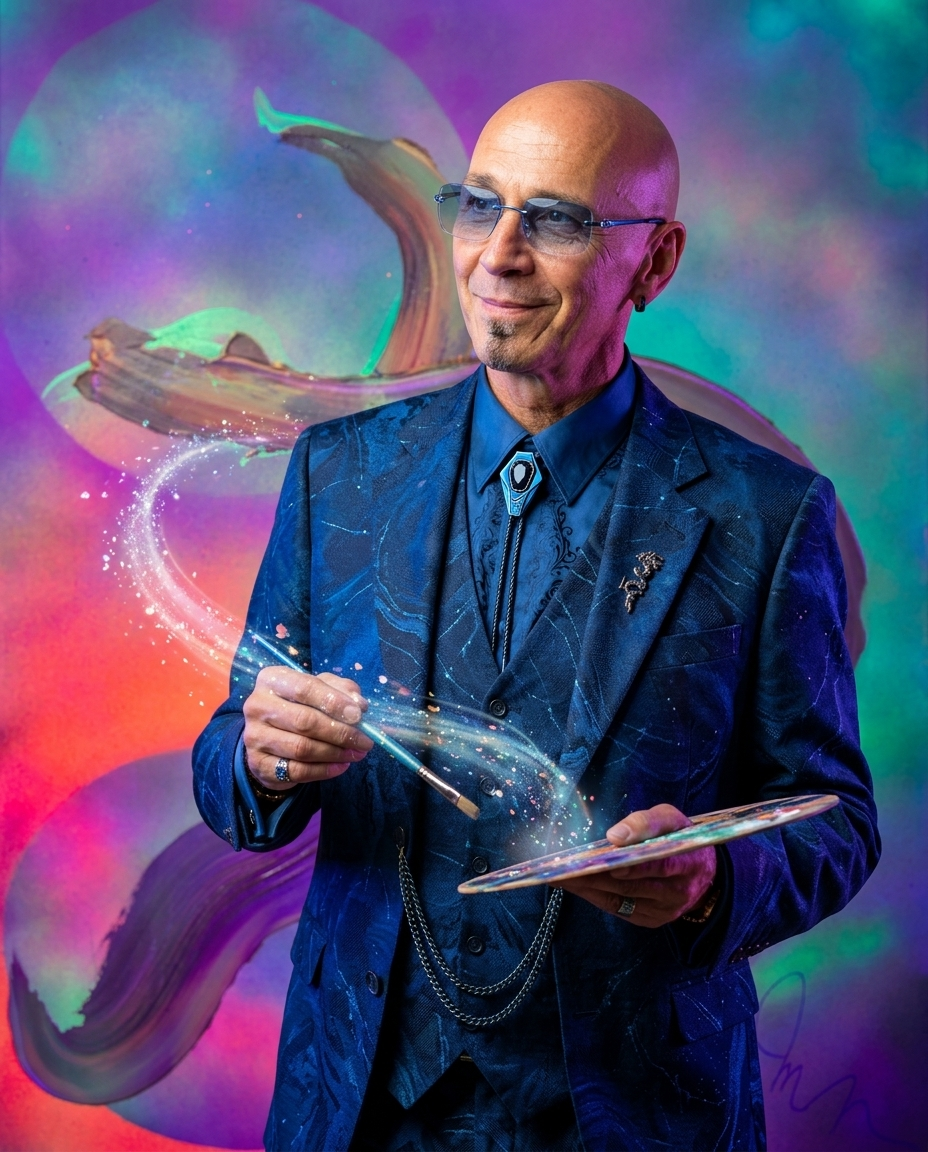
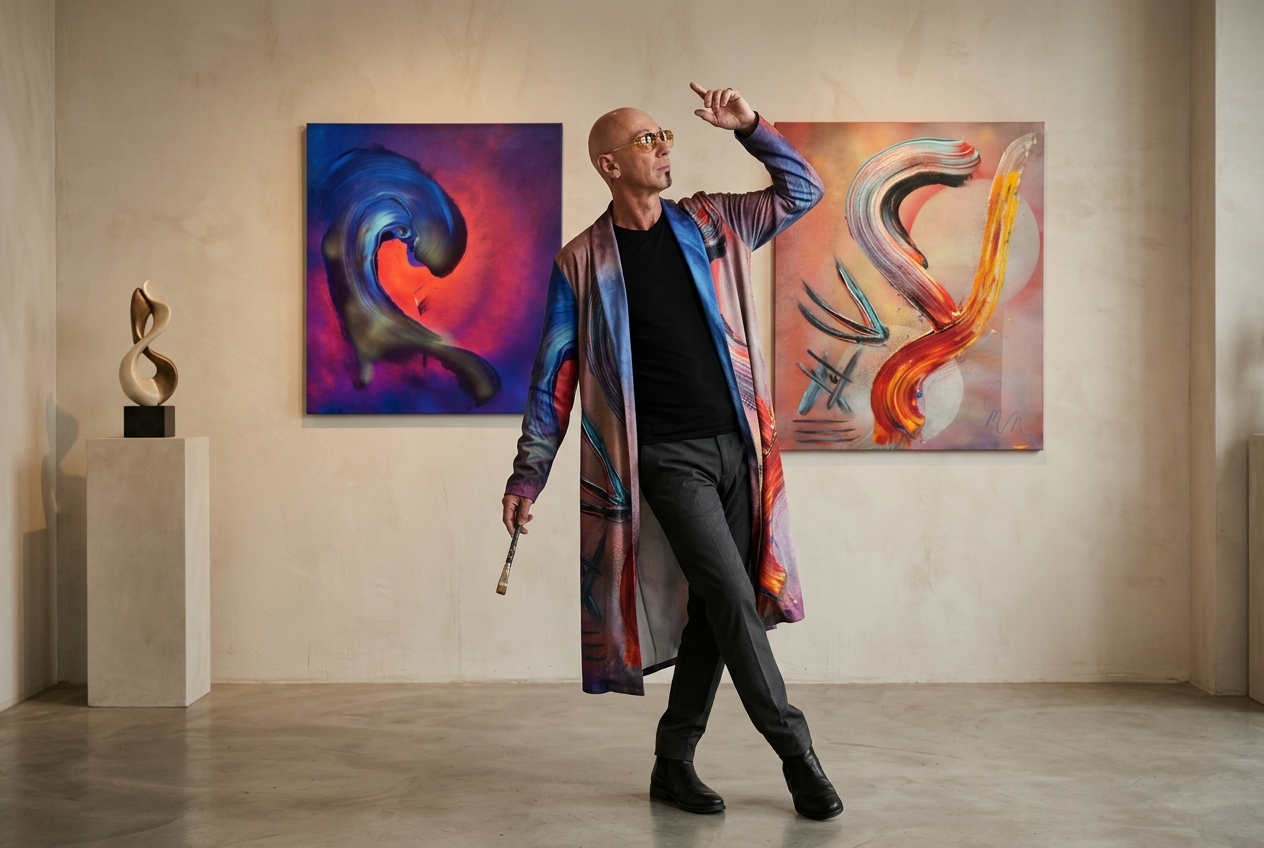
Interview with Marc Noël
https://mapeinturequantique-fushigina.com/
https://myquantumpaintings-marcnoel.com/
Over the past few years, I have grown profoundly as an artist — in passion, vision, emotion, and even technique.
I have presented my work in numerous exhibitions around the world, whether physical, digital, or virtual, and each one has contributed significantly to my evolution.
By closely observing those who observe my work and listening deeply to their reactions, I’ve gained a clearer sense of what they seek in that invisible realm that my art strives to reveal. Today, with increasing visibility and recognition not only across Europe but also internationally, my goal for 2026 is to reach a truly global audience
— to bring my art to every individual on this planet so they may experience its power and beauty.
My biography continues to evolve day by day, along with my passion and strength as an artist. I can even say that I am now driven — almost obsessively — to share these quantum paintings with every person in the world as a gift. A way of telling each one: allow yourself to enter, to live the experience, and let the inner light within you ignite, illuminate your body, your soul, and your entire being.
To be continued...
Your artistic journey began during a seven-year period of rehabilitation following a major car accident, when repeatedly drawing circles helped you recover your fine motor skills. How did this experience transform the relationship between physical discipline, vulnerability, and creative freedom in your practice?
What a beautiful question. At that time, what mattered most to me was observing what happens when the brain sends a command for the body to move in a specific way—through motor skills and physical movement—but that command is not carried out, is only partially executed, or emerges in a completely chaotic form with no connection to the original intention.
Naturally, this left me feeling as though I could no longer function like a normal human being. Most people take for granted that when they form a thought and send a command from the brain, an action immediately follows—a seamless synchronization between thought and movement.
I felt incredibly lost for a long time. I no longer felt normal, and I became deeply vulnerable—like a frightened animal in a world where it no longer knew how to function, interact, or fit in.
At the same time, I had no choice but to face each day with the abilities I had.
I had to learn that every experience, no matter how small, was an opportunity to cultivate a profound sense of observation. I began looking for what was compatible with where I was and how I felt each day. Over time, I developed such a creative relationship between my brain and body that I started discovering possibilities far beyond the boundaries I had known before the accident.
Even though I have fully recovered, I continue to use that process to this day.
I look for the opportunities presented by everyday experiences. I observe them and consider how I can incorporate them into my daily perception of reality, allowing each experience to enrich me.
Then, once I have fully understood and integrated what I have learned, I share it freely with the world.
You describe yourself as both a man of science and an artist guided by mystical intuition. How do you reconcile these two perspectives within your concept of Quantum Painting, and where do you distinguish scientific ideas from spiritual or metaphorical interpretations?
Yes. I live in a human body and within a society where ego occupies an enormous amount of space—in every country and every community. Science is meant to reflect facts, evidence, reliable principles, and processes established over time—foundations that shape both the present and the future.
As I often say, science is always discovering something that has always existed. Ego and the brain simply determine whether a person is able to journey into dimensions where what was once invisible to humanity becomes visible through scientific understanding.
At the same time, on a spiritual level, human beings have developed the ability to look beyond what facts alone can reveal.
What I frequently observe are two opposing, disconnected groups. On one side, scientists may become confined by facts, unable to move beyond rigid frameworks. On the other, some people become so immersed in spirituality that facts disappear entirely from their way of life. What I practice, experience, and share with the world is a complete integration of both. One part of the brain requires facts, understanding, and evidence to establish a foundation and a sense of stability.
At the same time, another part of the brain—connected to our deeper being—can journey into dimensions that extend beyond facts. When these two worlds meet, scientists who are open to a spiritual connection can use facts to recognize that something exists beyond the limits of their established framework.
Likewise, when people in spiritual communities engage with facts, they may find it easier to participate in and navigate the world, and to relate to people who are not spiritually awakened. They can communicate and integrate more effectively within a society still largely governed by ego.
Through my paintings, I bring together something tangible and understandable—canvas, paint, and artistic techniques—with something intangible that people can nevertheless feel. That is why I am now working with the scientific and medical communities to study, scientifically, how these paintings affect the mind and body.
For me, everything is interconnected. I do not live in one box or another; I live without boxes. Yet I understand that, in order to make this unity visible in the world, I must first define each separate field and then bring them together. In this way, people will be able to see, feel, and experience that connection for themselves.
Shodo played an important role in the development of your visual language. Which principles of Japanese calligraphy, such as breath, gesture, concentration, or the relationship between movement and emptiness, remain present in the way you construct a painting?
For me, Shodo is not limited to painting or the act of creating an image on canvas. Shodo is an art of living.
Even without a brush between my fingers or a canvas before me, I continue to practice Shodo through every movement—even while sitting in front of a cup of tea.
I imagine reaching for the cup, holding it in my fingers, bringing it to my lips, taking a sip, and allowing the tea to travel through my body.
That entire process is an expression of Shodo.
It begins when my brain sends a command to my hand. The movement unfolds creatively—from where I am, to the moment my fingers touch the cup and lift it to my mouth.
Although I am not painting, I am still practicing Shodo.
It means being fully present in every movement and every second, bringing complete awareness to the moment and directing each necessary synapse so the action can take place.
I practice Shodo when I walk, when I run—in everything I do.
The difference is that, when I practice Shodo on canvas, the perfect harmony of brush, paint, canvas, and movement becomes visible to the world and is made eternal.
It becomes something people can see.
And through my quantum paintings, they may even feel the movement I have created through Shodo on the canvas.
Each work is designed to reveal three distinct facets through daylight, fluorescent pigments, and ultraviolet illumination. How do you compose these interconnected visual states while preserving both their individual identities and their relationship to the work as a whole?
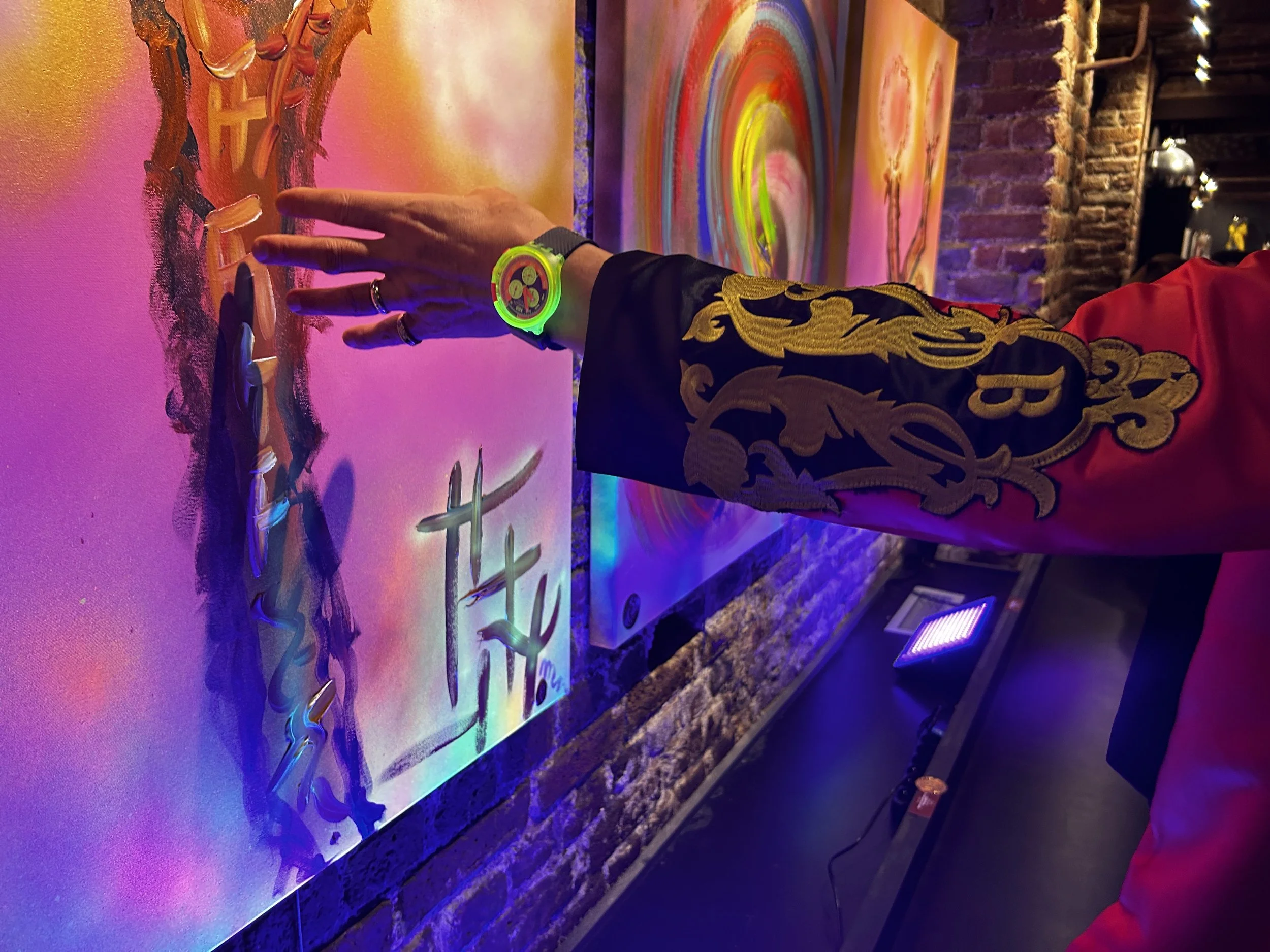
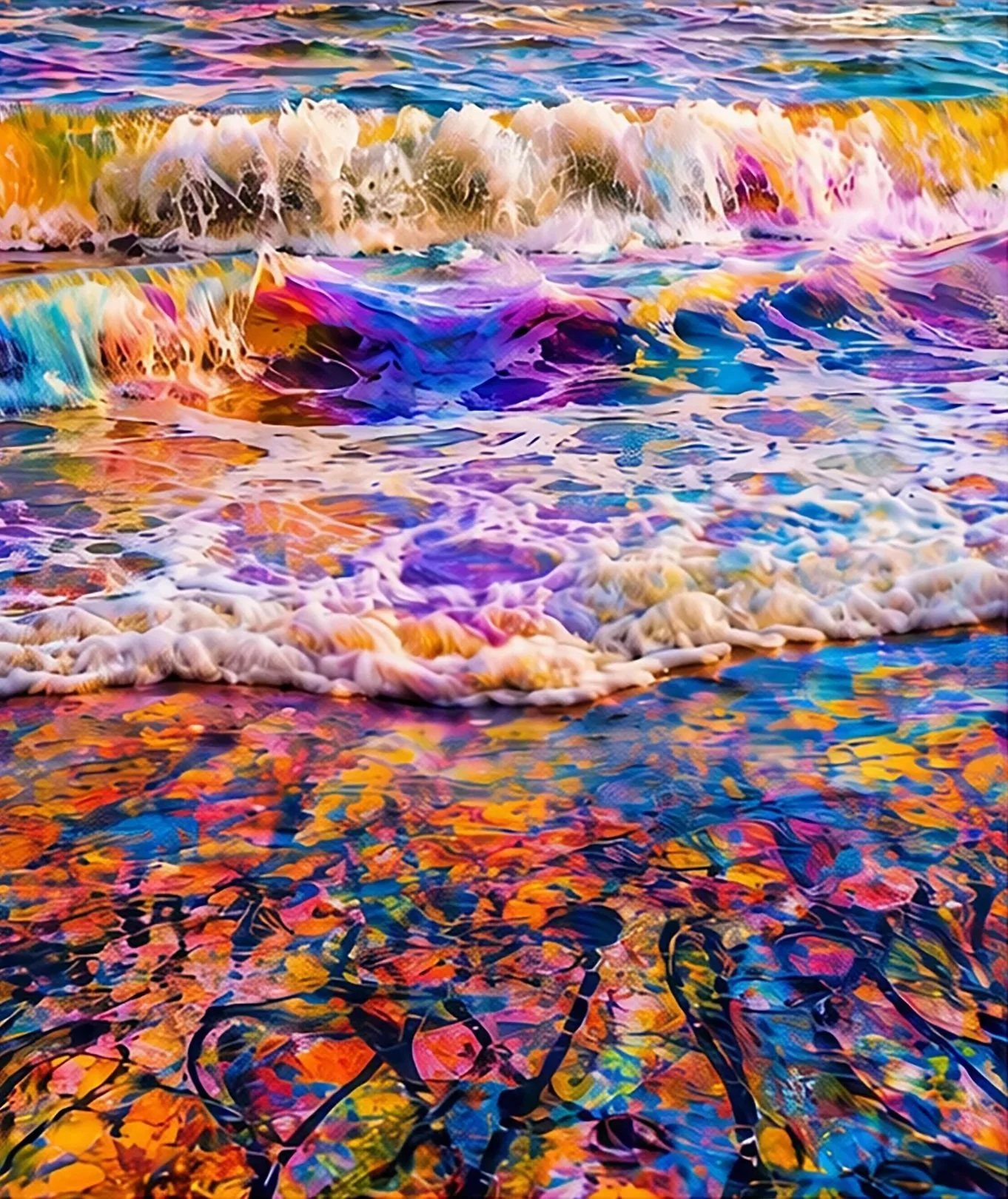
I’m delighted that, as a painter, I can create a single work that opens three distinct doors. I often imagine myself not as the artist, but as an ordinary observer encountering one of my paintings for the first time. The experience begins in broad daylight, as my eyes and mind discover the work in natural light. Then, suddenly, the lights are switched off and ultraviolet light is introduced. My mind has to detach itself from the first impression and examine the same painting from an entirely different perspective. It creates a sense of questioning—even conflict—as I try to understand how one physical painting can transform into something so different from one moment to the next.
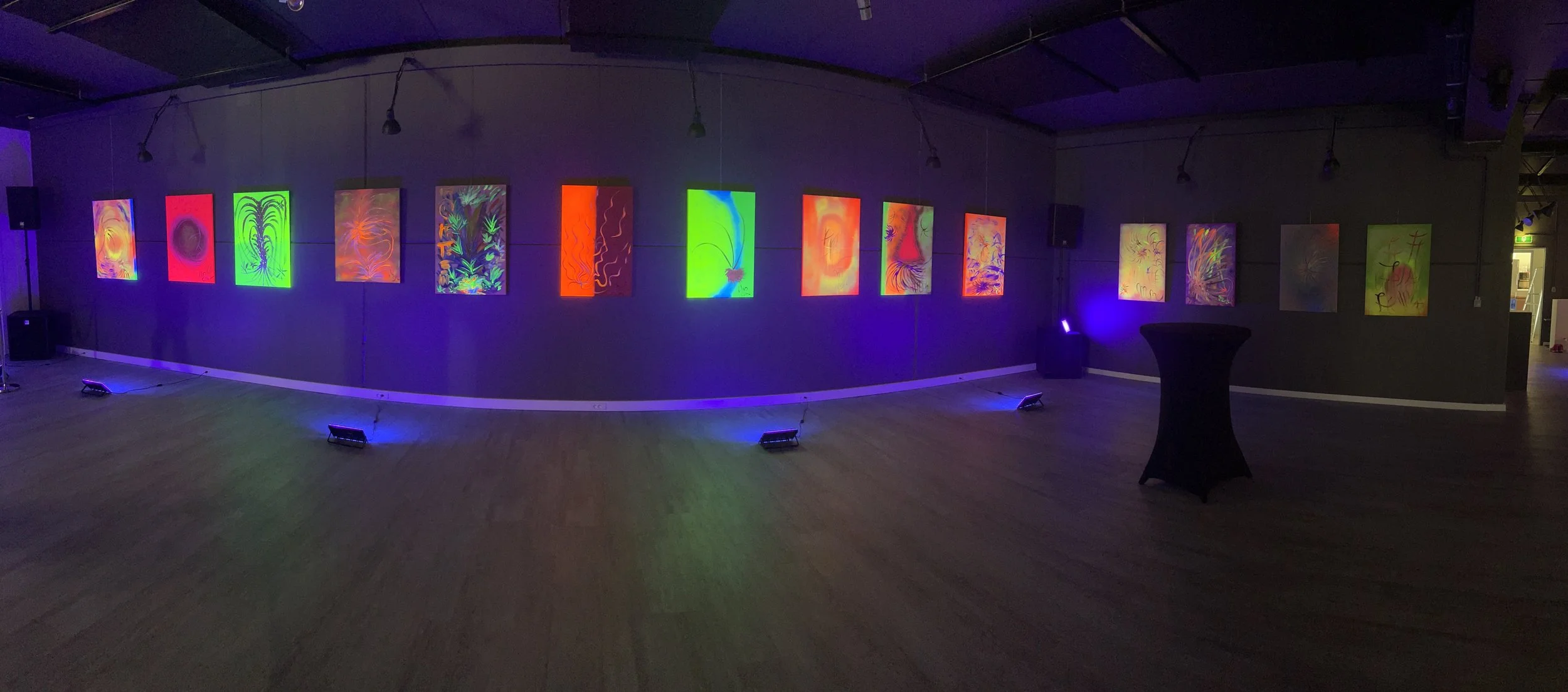
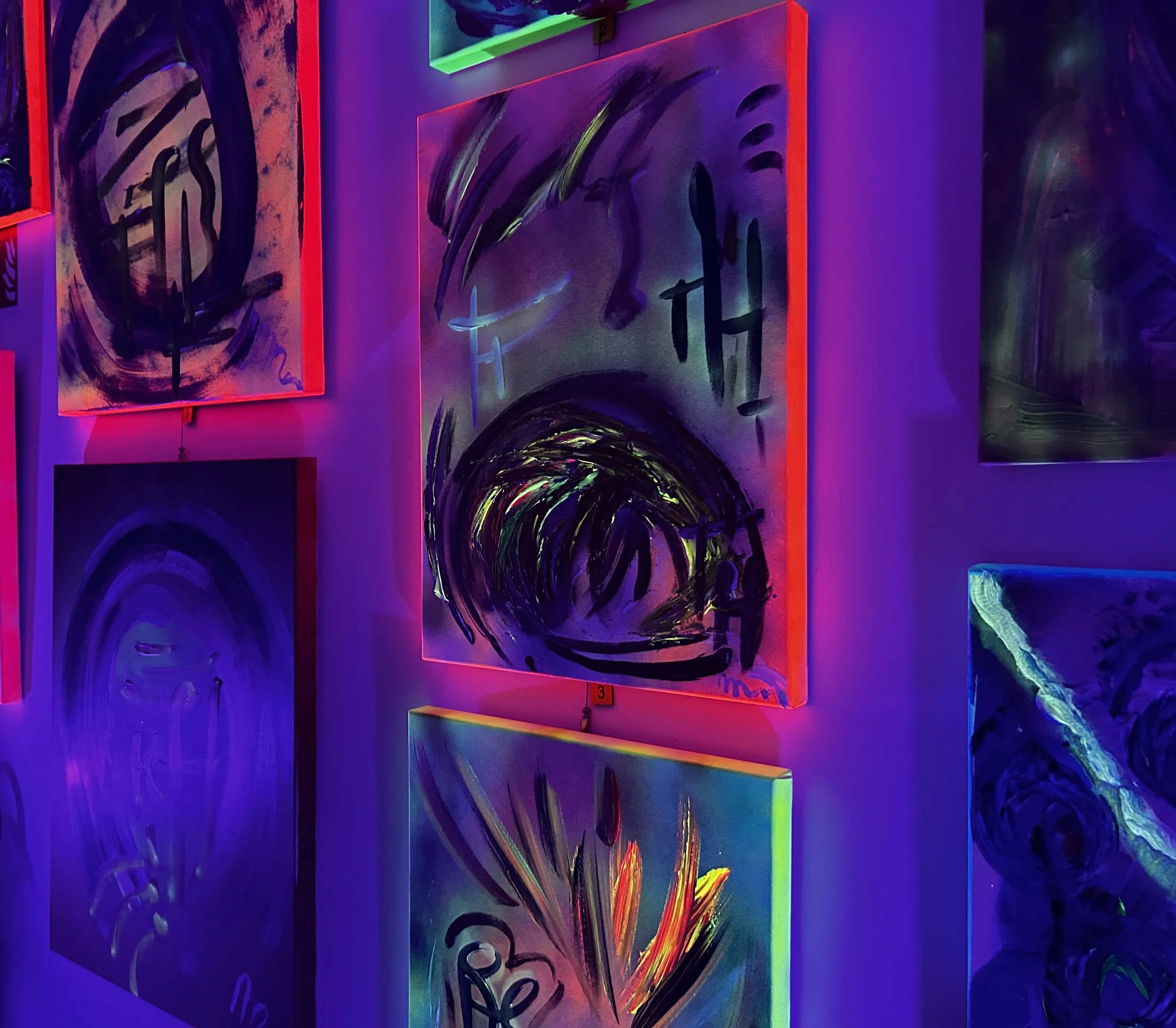
The third stage comes after the painting has been illuminated by ultraviolet light for some time. Everything is then switched off, leaving the room in complete darkness. Yet the painting remains present and alive, revealing another image—different once again from the two that came before it.
I imagine myself as an observer encountering a painting through these three dimensions for the first time, and being completely mesmerized, perhaps even unsettled, by the experience. That is why it is important to me, whenever possible, to allow visitors to experience all three perspectives at the locations where my paintings are exhibited. It is not always possible to turn off all the lights in an exhibition space, unless I am presenting a solo exhibition, where I have complete freedom to create the environment I want. These three perspectives are essential to discovering a painting in its entirety.
You describe your paintings as evolving even though their physical surfaces remain unchanged, suggesting that transformation occurs through the observer’s changing perception. How does this idea shape your understanding of authorship and the viewer’s role in completing the artwork?
I’ve had many opportunities to hear from people who own one of my paintings.
After weeks, months, or even years of living with the work, they have shared how the painting interacted with them in different ways—and how their perception and feelings toward it evolved over time.
Even when ownership changes, the painting seems to reveal more of itself. New observers may notice it changing as a result of its relationship with its new owner.
When someone shows interest in one of my paintings, I can often sense whether they are truly connected to it—whether they are the person most likely to engage with the work and feel compelled to make it their own.
Until a painting finds its owner, it remains my painting, my creation, my puppy.
Once it is sold, I naturally retain the copyright and intellectual-property rights to my work. But the physical painting becomes like a puppy: I give it my full attention as I prepare it for shipment and its journey to its new owner. Once it has arrived, I release the connection between the painting and myself as its owner.
From that moment, an entirely new relationship begins between the painting and its new owner.
It is always a great pleasure to visit people whose homes include my paintings—to see the works become part of their surroundings, their homes, and their lives.
I love seeing how these paintings, these puppies, leave me and grow alongside their new owners.
In some cases, they develop an entirely new energy, because they now belong to someone else—their connection, their life, and their story.
You often encourage viewers to close their eyes and attend first to their emotional responses before examining the painting visually. What becomes accessible through this temporary withdrawal from sight, and how does the experience change when the eyes are opened again?
Normally in the art world, especially when we're talking about paintings, the observer, when he's standing in front of a painting—depending if he is an art lover who has knowledge about art—he or she will immediately refer to a technique, to a style, to a painter, through things that have been defined in a certain framework. And of course the brain will make that part very visible, and also very often it will create a part that will become invisible if the observer has not yet having all the references of the invisible part of the painting.
When I invite somebody in front of my painting, knowing that all my paintings are created first through an intention, an energy, and that from there, with the brush, with paint and a movement, paint will be deposited on the canvas. So I invite people to close their eyes, because humans are capable of feeling energy.
In some countries, like in Asian countries, people have grown up with these kind of practices, whether it is Tai Chi, Qigong, and all those practices who are energy-related. Those communities feel very much at ease of first feeling things and then using their eyes and other senses to identify what is in front of them.
But most people in our countries here, in the West, and also in the other countries outside of the Asian people, will always feel the need to first identify with the eyes. And so when I invite them to close their eyes, and especially when I'm near to them, I will be help them facilitate how to feel the painting and how to start to develop, with their eyes closed, a feeling of the painting.
And once they have made that connection, once they feel at ease with it, I will invite them to open their eyes so that they can now combine what they have felt with what they see, and each and every single time I see that, if somebody is following that step-by-step discovery of my paintings, that the way that they will connect afterwards with the painting will be much, much deeper and much more powerful than when they just look with their eyes and move on.
And it is something that I have already experienced when I was participating to major exhibitions where thousands of people are visiting thousands of different artworks, and a lot of visitors are just locked in with their eyes and don't take the time and the investment to go into depth with the creation. And so for me, they are missing out on most of the power of each artistic creation.
It is for me always a pleasure, when I'm taking part of a physical exhibition, to visit other artists and to take the time to discover their creation, but also to discover the artist so that through that encounter I can see and feel his or her creation much, much deeper.
It is scientifically proven that when somebody is losing his eyesight, that immediately the brain is taking over the other senses where they will be amplified.
Because if the eyes are not there anymore to register that information, that data that is coming in, that the other senses are becoming more aware and more sophisticated.
The good thing is, if you come to my exhibitions, you don't have to be blind. You just can close your eyes and activate those sensors on a higher level.
Your heavily layered acrylic surfaces and sculptural volumes give invisible concepts a tangible physical presence. How do material density, texture, energetic breath, and bodily gesture work together during the creation of a painting?
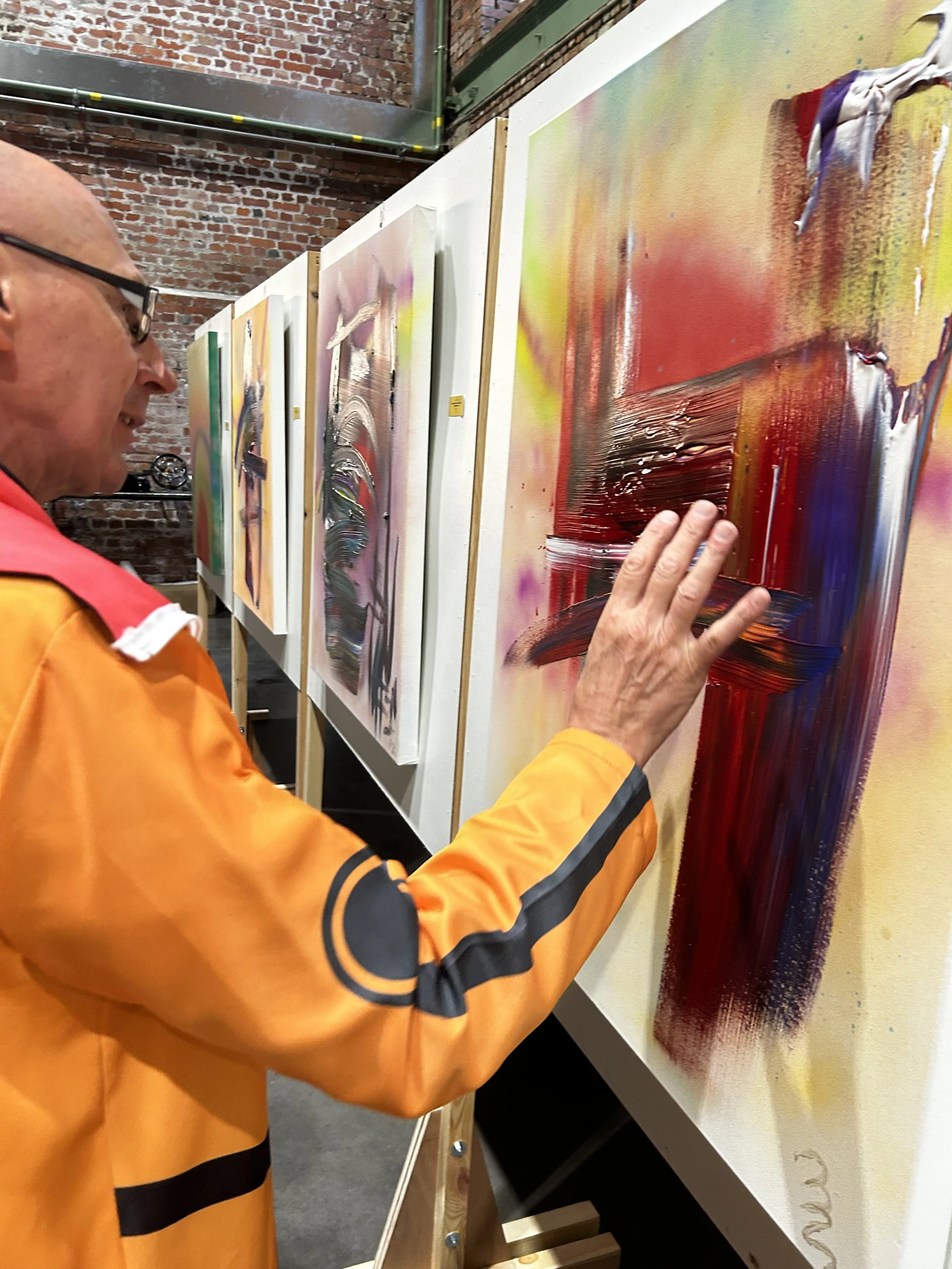
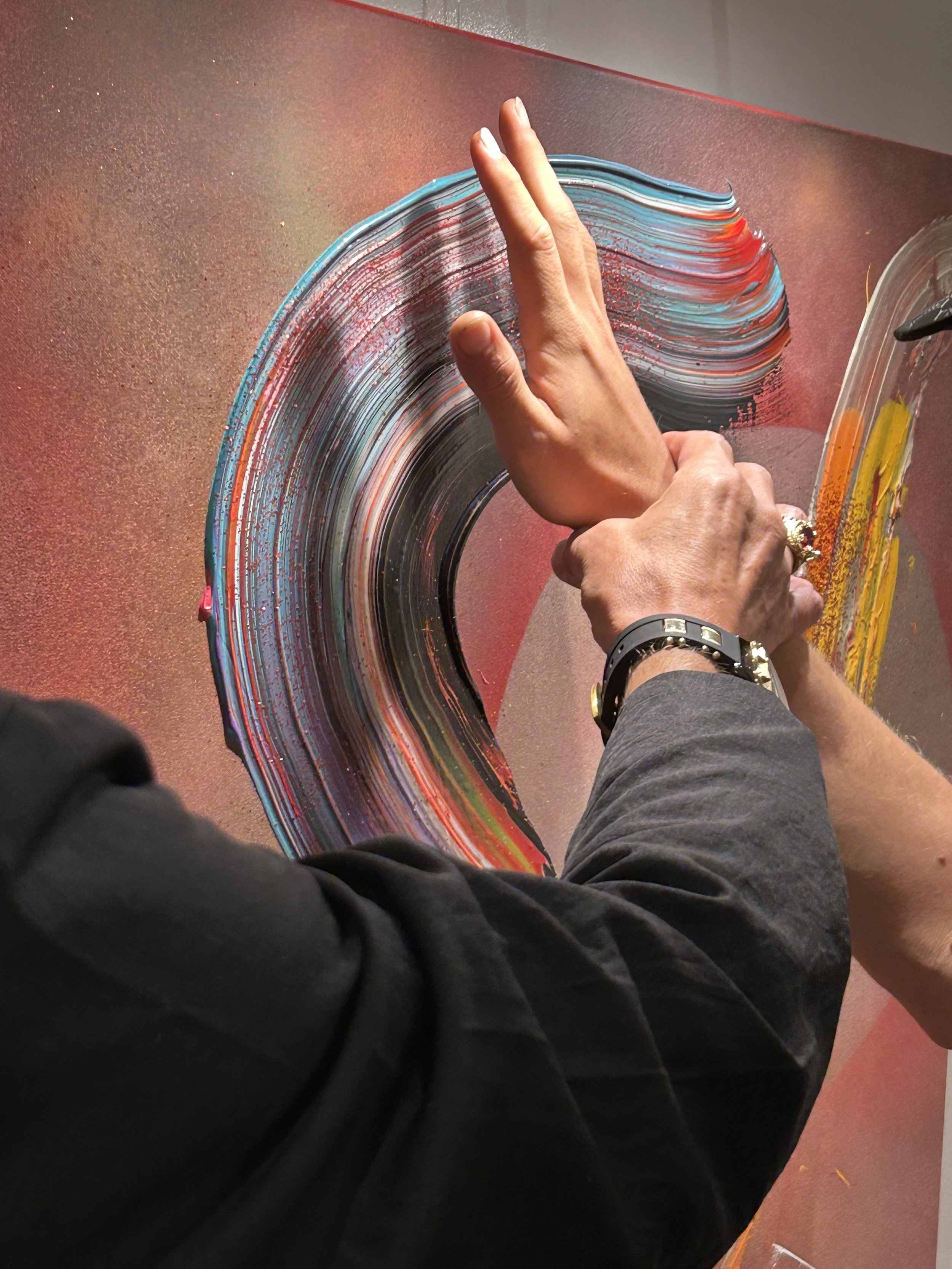
Some of my paintings are built up through numerous layers of paint and other materials, creating a relief that is more pronounced in certain areas and subtler in others.
I develop these works gradually. I begin with one painting, allow it to dry, then add a second layer, followed by a third, a fourth, and as many more as the work requires. Each layer has its own distinct energetic quality.
At times, I may create four layers, then set the painting aside for several weeks or even months without adding anything further. During this period, the various energies and layers are given time to blend and integrate, much like a pregnancy. Once it begins, pregnancy needs nine months before the baby is born.
Some paintings enter this gestational phase after a certain number of layers. I wait until I sense that the time has come to add the remaining layers, using whatever materials the work calls for.
The amount of paint, product, and other materials I use is well known—especially to my paint supplier. You can even measure the difference by weighing a blank canvas while it is still wrapped in plastic and then weighing it again once the painting is complete.
Some of my finished works become so heavy that lifting them requires considerable strength, simply because they contain so much material. Yet every material carries its own energetic signature.
So it is true that a painting composed of many layers on a single canvas may possess an energy that feels more powerful, intense, and substantial than a canvas bearing only one brushstroke. That does not make it superior or inferior; it simply makes it different.
You present liveliness and joy as recurring themes, while works such as Zeus emerge from experiences of loss, remembrance, and letting go. How do grief and emotional difficulty become constructive forces within an artistic language centered on vitality?
I have never experienced the feeling of losing someone.
Of course, I have witnessed people transition—in other words, die—many times throughout my life. Yet I have never understood those experiences as truly losing someone.
From my perspective, you cannot lose something that never belonged to you, nor someone to whom you do not belong.
I think of Zeus, that magnificent and powerful dog who stood by my side for so many years and inspired me to create a deeply meaningful painting.
That painting expresses strength, power, and love, but also the understanding that every relationship we encounter has a beginning—and, inevitably, an end. We do not know when the end will come, but we know that it will.
I have always been conscious of this. Whenever something enters my life, I recognize it as a beginning, while also knowing that one day it will end.
But I do not focus on the ending in advance. I give my attention to it only when it arrives.
For me, this philosophy makes every moment an opportunity for joy, happiness, and gratitude—to live fully and share the best of life with everyone around me.
When something comes to an end, the first step is to acknowledge that the ending is here and allow ourselves to prepare to release what once was.
Whether it is a physical body, a relationship, or anything else, the important thing is to recognize that its time in that form has ended. What we experienced through that relationship or circumstance will no longer exist in the same way.
At the same time, I believe every ending contains a new beginning, even when we cannot yet see what that beginning will be.
That is why I did not create Zeus’s painting from a place of loss, sadness, or drama. I created it as a celebration of a powerful, beautiful relationship—a way to place that connection onto canvas and share it with the world.
Even today, whenever I see the painting or speak about Zeus, my heart feels warm.
There is no regret, pain, sorrow, or sense of loss. Instead, I feel profound gratitude for the experience and for how beautiful it was.
That gratitude remains a powerful source of happiness—both today and in the days to come.
Although you challenge the rigidity of academic conventions, you describe Quantum Painting as complementary to classical painting rather than opposed to it. Which traditional skills or structures remain essential to your practice, and at what point must technique yield to intuition?
The first common ground I see between classical art and my quantum paintings is the process itself. Both require a canvas, paint, different kinds of brushes, and various materials. Both demand respect for drying times and an understanding of how different products interact when colors are mixed. When two colors with different densities or concentrations are combined, they produce specific results—whether in classical art or in my quantum creations.
Both forms of art also require a hand to hold the pencil or brush and bring something to life on the canvas, guided by the brain and the muscles. In that sense, classical art and my quantum paintings share the same foundations.
From there begins a gentle encounter. I observe artists trained in classical traditions, and I genuinely appreciate their discipline: the structure and precision of their work, their admiration for the techniques learned in art school, and the focus and determination they bring to each canvas.
My own process then continues through feeling and intuition. I allow myself to move through corridors of energy, synchronicity, and harmony with the present moment, letting the painting reveal what it is meant to become.
I have been fortunate to meet highly critical curators and art lovers who initially responded to my work with rigidity or even severe judgment. But when I invited them to look more closely, they understood that I was not opposing traditional academic art. I was searching for a perfect harmony between these two worlds.
As they entered into my paintings and experienced them more deeply, many of those initially critical viewers completely changed their perspective. They became happy to have taken that journey into the world of quantum painting.
Today, I see more and more respected voices from the academic art world writing beautiful, powerful, and influential articles about my work. They emphasize how unconventional my quantum paintings are while also placing them alongside the work of major figures in academic art.
For me, the ultimate goal is to show the world that there is only one art world.
It is when people begin placing art into separate boxes that friction and resistance arise between those categories. I do not work within boxes, and I do not create from a place of conflict. I simply follow who I am and what I am called to create in the present moment.
As your work moves among physical exhibitions, digital presentations, NFTs, video, and immersive virtual environments, how do different formats alter the sensory and energetic encounter you seek to create, and what direction do you envision for Quantum Painting in the future?
Every way in which my artwork is presented is carefully considered, because each format has its own specific place within the larger picture.
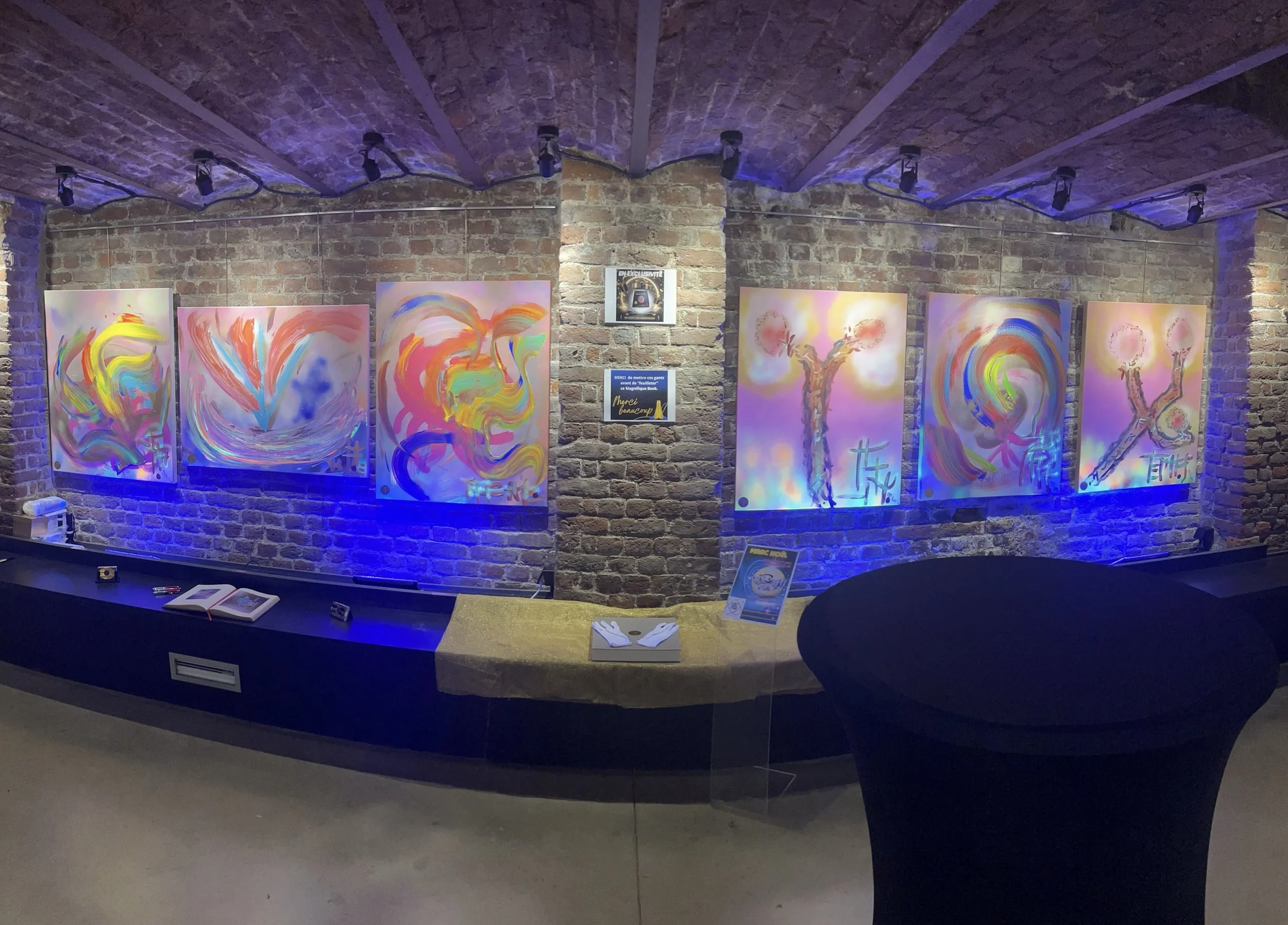
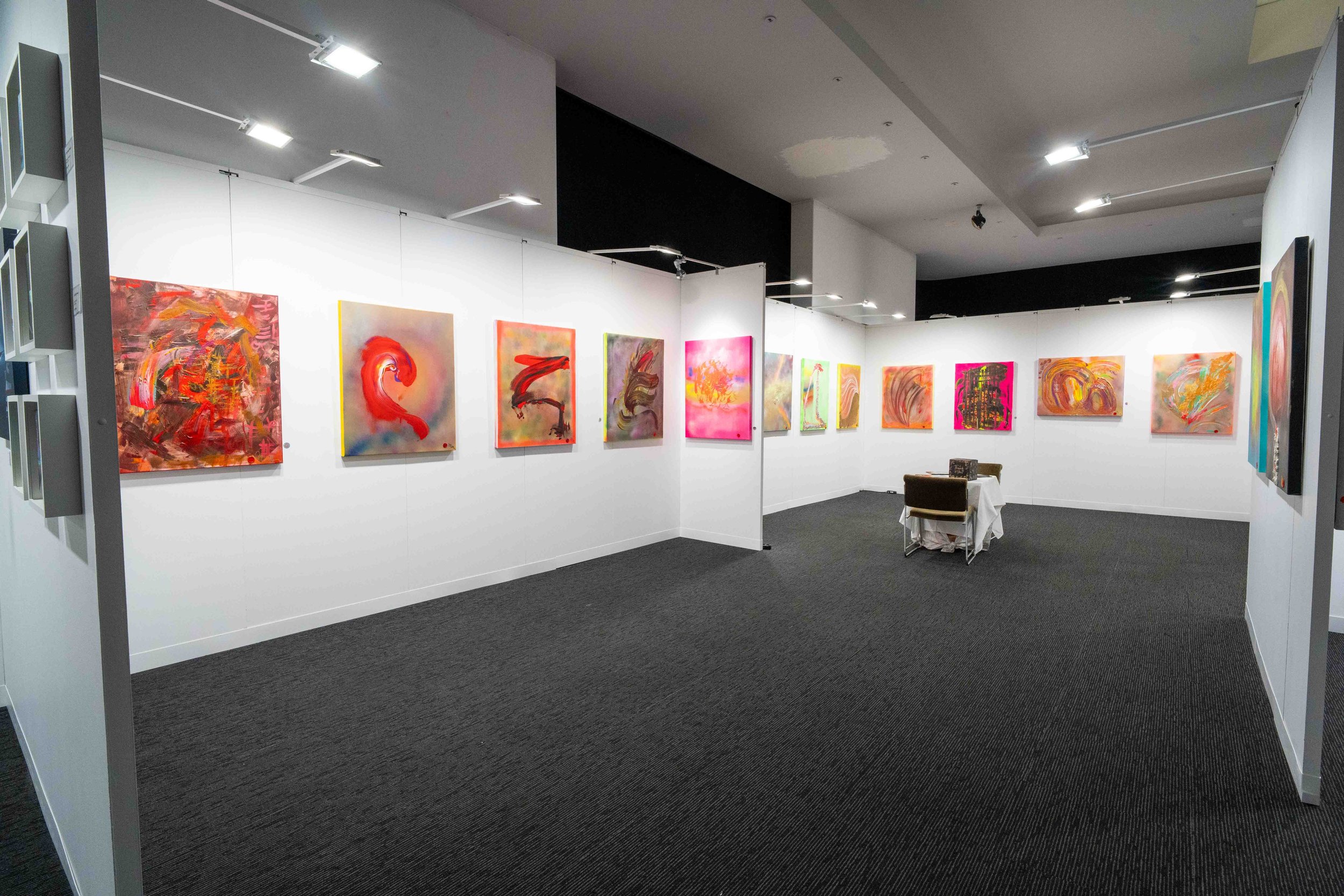
When a physical painting is exhibited in a room or at an art event, viewers automatically engage with it as a tangible artwork. Their minds respond specifically to the experience of standing before an original painting.
Digital painting has become increasingly popular worldwide, largely because it is far easier to exhibit digitally than to transport physical works from one country to another. Today, digital exhibitions have evolved tremendously—in image quality, scale, and presentation.
In some exhibitions, the digital frames are so sophisticated that, when displayed on a wall, they create an experience remarkably similar to viewing a physical painting.
NFTs, of course, represent fragments or glimpses of paintings. They belong to a world in which images are consumed in a fraction of a second, surrounded by an overwhelming abundance of visual material. I sometimes compare this to a fast-food experience: someone takes a quick taste of a section of the complete canvas and may later seek out the original work to discover it more fully.
Entering the virtual world creates another kind of experience. It makes a difference whether you explore it on a powerful PC capable of supporting the exhibition, or access it through a standard computer screen. In either case, people can visit these galleries 24/7 and experience the virtual spaces I have created around my artwork.
The next level is using a Meta Quest headset, connected to your PC and placed directly before your eyes. Through this device, the viewer experiences the exhibition in an entirely different way. The brain responds as though the person were physically present in the room—walking through it and exploring its different areas.
Numerous scientific studies have examined how observers respond to this experience. They have shown how real and immersive the virtual environment can feel once the Meta Quest headset is in place.
It is also a tool that is available around the clock. Wherever you are in the world, you can access the exhibition.
For me, it is important that when I bring art into the world, it is presented in a form that is accessible to everyone—regardless of location or time—and that offers people different ways to engage with it.
At times, people from certain countries tell me, “It has been so long since you brought real paintings to our country,” meaning physical exhibitions. They feel the need to stand directly in front of an original painting and believe that other formats cannot fully replace that experience.
At the same time, they can enter these virtual worlds through their computers and catch glimpses of the paintings whenever they wish. Even in a virtual environment, viewers can still sense, energetically, what the painting is expressing.
Will the experience be different from standing before the physical painting? Probably.
That is something we are currently investigating. Through sophisticated scientific research, we are studying observers in front of my physical paintings as well as in the virtual world, examining how their bodies and minds respond.
Over time, with the support of scientific data, we will be able to document how viewers are affected by a physical painting compared with experiencing the same work virtually, with all the necessary equipment.
What is certain is that, whatever format the viewer chooses, they will not only see the artwork but also feel what it has to communicate in that moment.