Interview with Tessy Willems
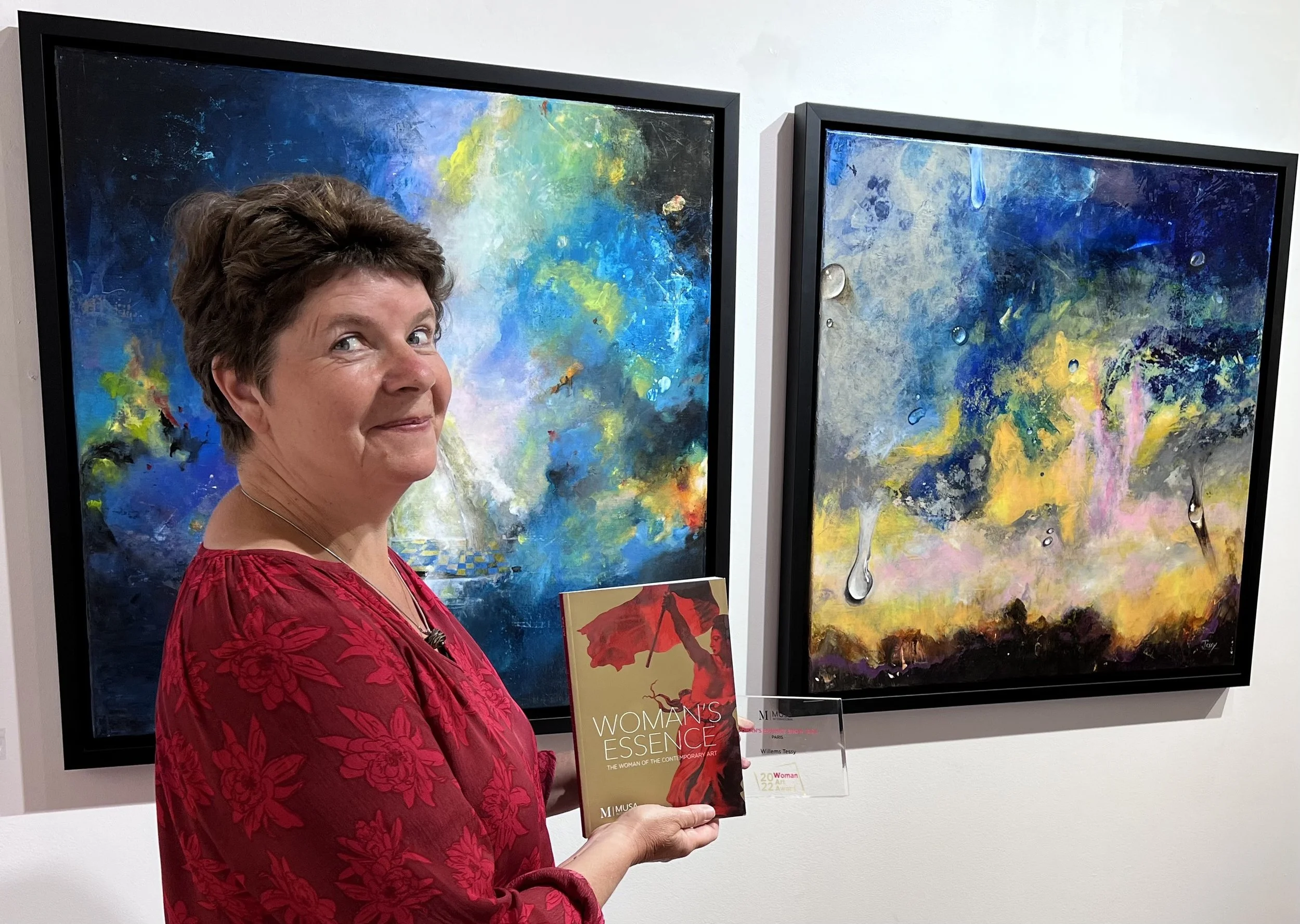
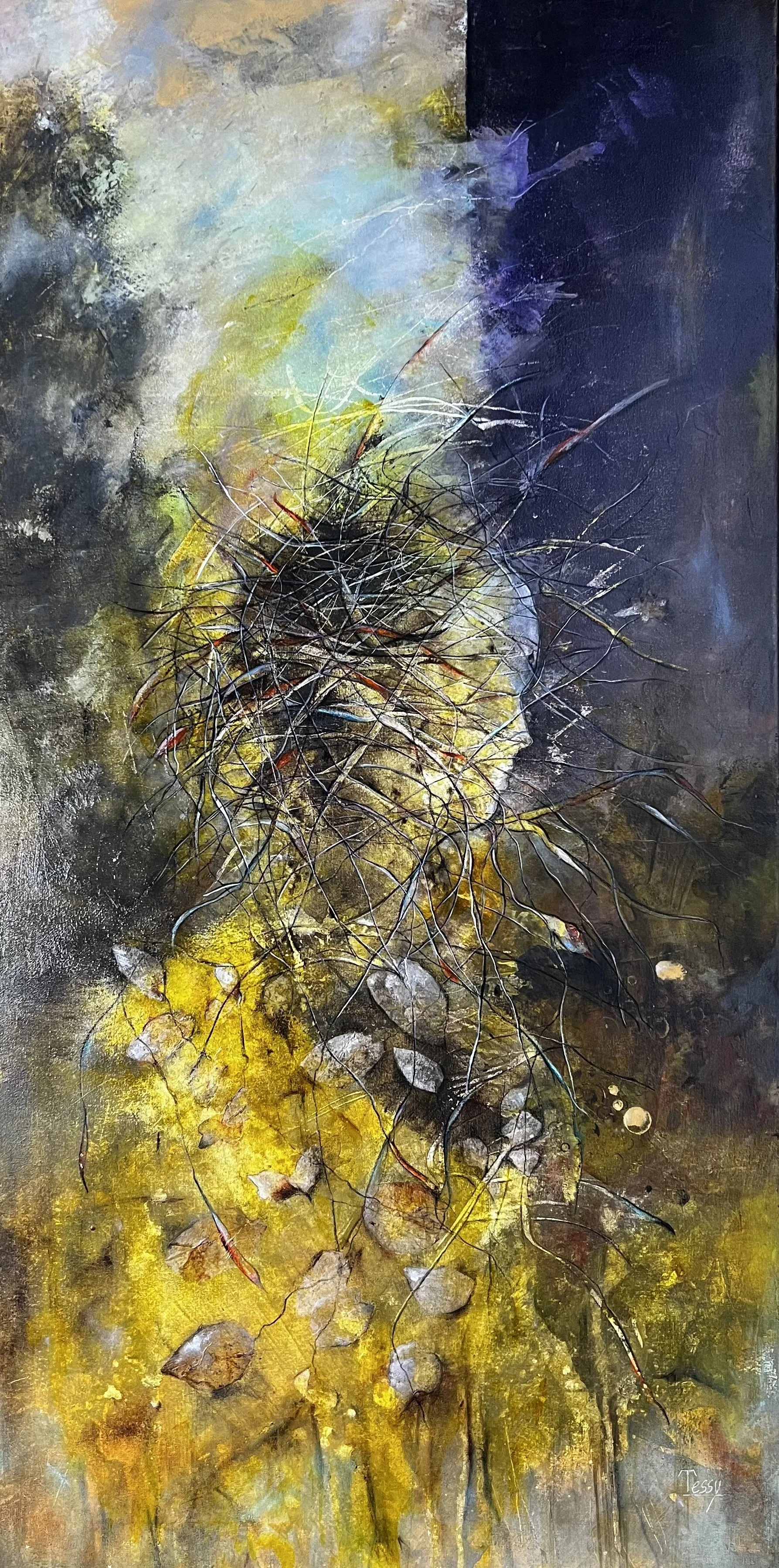
Tessy Willems is a Belgian contemporary artist whose distinctive paintings inhabit the delicate space between abstraction and figuration. Working primarily in acrylic on canvas and panel, she builds her compositions through layers of colour, blending, erasing and reworking, allowing images to emerge gradually from the interplay of intuition and intention.
Her artistic language is rooted in imagination, visual storytelling and a fascination with the emotional resonance of colour. Earthy tones meet deep, intense blues and vibrant accents, creating a distinctive world of depth, movement and quiet tension. Within these often abstract landscapes, figurative elements appear like fragments of memories or glimpses of another reality.
Willems does not simply paint what she sees; she paints how she experiences and remembers it. Her work moves freely between the tangible and the imagined, inviting the viewer to look beyond the visible and discover their own associations.
A former visual arts teacher, Willems now works from her studio, where experimentation, intuition and curiosity guide her process. Her work has received international recognition, including the Woman Art Award in Paris, exhibitions during the 59th and 60th Venice Biennales, the ART MUST HAVE Collectors Selection in Rome, and the XV Art&Design Biennale in Florence.
Through her paintings, Willems creates spaces where reality softens, imagination takes over, and moments of wonder, warmth and boundless possibility can emerge.
Your earliest drawings and paintings were made on cake boxes, which allowed you to begin again whenever an image felt unresolved. How did this childhood freedom to revise, discard, and reconstruct shape your present approach to layering and reworking a composition?
I think that freedom I had as a child is still very much present in the way I paint today. The cake boxes gave me permission to experiment without fear: if something didn’t work, I could simply start again. Today, working with professional and more precious materials, I am naturally more inclined to stay with a painting and keep searching rather than abandon it.
I have learned to trust the process. When a composition feels unresolved, I keep adding, removing, layering or transforming elements until the visual story, composition and colours begin to speak to each other. Sometimes a painting seems to lead me in a completely different direction from where I intended to go.
Over the years, this has given me the confidence to take more risks. I no longer feel the need to know exactly where a painting will end up. In fact, some of the most interesting and surprising results have emerged precisely because I was willing to keep searching, to make changes and to see where the painting itself would take me.
You have described your practice as painting not what you see, but how you see it. What kinds of memories, emotions, or imaginative associations transform an observed subject into your particular balance of abstraction and figurative detail.
For me, a painting often begins with something quite abstract. I start by searching for a certain atmosphere through colour, shapes and textures, rather than trying to reproduce a particular scene. It is almost as if I am creating an emotional landscape first, and only afterwards allowing certain figurative elements to emerge.
These elements are often images or small details that have caught my attention. They may trigger a memory, an emotion or simply a story that I begin to imagine around them. I then use them as fragments within the painting, without necessarily explaining exactly what they mean.
I actually enjoy leaving that space open. I want the viewer to be drawn into the painting and to discover their own associations, emotions or stories in it. Perhaps that is why I prefer not to paint a scene where everything is immediately clear. For me, a painting becomes more interesting when it leaves room for imagination — when the viewer can complete the story in their own way.
Having studied both Plastic Arts and Applied Graphics, how do the principles of visual storytelling, composition, and graphic structure continue to inform the way viewers navigate your paintings?
My studies in both Plastic Arts and Applied Graphics have stayed with me in a very natural way, they created an ongoing dialogue in my work between structure and freedom, between what is carefully composed and what is allowed to happen intuitively.
I am very conscious of how the eye moves through a painting. Graphic elements, geometric shapes, lines or repeating structures can give the viewer a kind of starting point but I rarely want that structure to remain completely rigid. I like to let it gradually dissolve, overlap or disappear into more fluid, painterly areas. In that transition, the viewer’s eye is invited to change its rhythm: sometimes following a clear line, sometimes wandering more freely through colour, texture and atmosphere.
My background in graphics also influences the physical way I work. Techniques I encountered during my studies, such as etching and working with lines, have found their way into my paintings. I sometimes scratch the surface, creating traces that add texture and a sense of history to the work.
I don't see graphic structure as a set of rules that has to be followed. For me, it is another tool for creating tension and movement. I use it when I feel it can enrich the painting, but I am equally interested in breaking that structure and allowing something unexpected to emerge.
Your transition from teaching to working full time in the studio marked a significant change in your professional life. How did leaving the classroom affect your artistic confidence, creative discipline, and understanding of what art can communicate?
Leaving teaching was, in many ways, a process of getting my energy back. The education system had taken up a great deal of my time and energy, often through administrative responsibilities whose purpose I did not always understand. Stepping away gave me the space to focus again on what really mattered to me: painting.
At the same time, I had to find my own rhythm without the clear structure of a teaching job, which took some adjustment. But that freedom also gave me a new sense of confidence and made me more willing to experiment and trust my intuition. It taught me that art does not always need to communicate a clearly defined message; sometimes it can speak through atmosphere, emotion and suggestion, leaving the viewer free to discover their own story.
Earthy tones and intense shades of blue have become distinctive elements of your visual language. What emotional or symbolic roles do these colors play, and how do you use their contrast to create depth, movement, and atmosphere?
For me, colour is one of the most powerful ways to evoke emotion and atmosphere. Its effect can also be very personal, as colours can trigger different memories and associations in each of us. I often use earthy tones to create a sense of warmth, comfort, stability and belonging, while blue connects more naturally with the sky and the sea. It can suggest calmness and trust, but also distance or coolness. Intense blues can bring in a sense of mystery, melancholy or even wonder. I enjoy playing with these contrasts because they give me a whole range of possibilities to communicate without having to explain. Colour, for me, is not just part of the composition — it is part of the story.
Your mixed media process brings together acrylic paint, colored inks, water-soluble wax pastels, pencils, and monotype. How do you determine the sequence of these materials, and at what point does each layer begin to reveal the direction of the finished work?
My process is quite spontaneous, and I enjoy letting the different materials interact with each other rather than following a fixed recipe. The first layers are particularly important because they often set the direction for everything that follows. Acrylic paint is usually a good starting point because it dries quickly and allows me to build up new layers and combine it with other media.
I use water-soluble inks and pencils for finer lines and details, while textures and additional layers of paint create depth and contrast. I don't always know where the painting will end up, and that uncertainty is part of what I enjoy. Mixed media gives me the freedom to experiment and to break down the boundaries between different artistic techniques. In that sense, not much has changed since childhood: I still like to play, explore and see what happens when different materials come together.
Your works often hover between reality and reverie, combining recognizable fragments with open, abstract spaces. How do you decide how much figurative information to provide while still allowing viewers to become lost in their own interpretations?
For me, the balance between figurative elements and abstraction is about giving the viewer just enough to become curious, without revealing the whole story. A recognizable object can offer a point of reference, but when I place it in an abstract or unexpected environment, its everyday meaning can change. It becomes more like a symbol, inviting the viewer to wonder what it might mean within a larger, undiscovered story.
I like that tension between something familiar and something mysterious. But I also realise that asking the viewer to look beyond what is immediately recognizable requires a certain effort. That is why I try to first make them stop and look, using visual depth, contrasts and the interaction between carefully worked-out details and rougher, more spontaneous surfaces. Once their curiosity is triggered, I hope the painting gives them enough freedom to wander into their own imagination and create a story of their own.
Your work has appeared in exhibitions concerned with reversal, interconnected life, nature, and the relationship between light and darkness. How have these curatorial contexts influenced the way you understand recurring ideas of hope, transformation, and connection within your practice?
These different exhibition contexts have made me more aware of ideas that were already present in my work, often without me consciously defining them. Themes such as reversal, interconnectedness, nature, and the relationship between light and darkness have encouraged me to look at my paintings from different perspectives and to recognise connections between them.
I am particularly drawn to the idea that opposites can exist together: light and darkness, fragility and strength, structure and freedom, reality and imagination. For me, transformation often happens somewhere in between these opposites. Something can change, disappear or be reinterpreted, while still leaving traces of what it once was.
Perhaps that is also where hope comes in. I don't see hope as something obvious or literal, but as a possibility — the sense that something can change, connect or take a different direction. These curatorial themes have therefore not so much changed what I paint, but have helped me understand and articulate some of the deeper ideas that naturally find their way into my work.
Social media and new digital technologies have profoundly changed the way artists connect with audiences, collectors and the international art world. How has your experience with social media shaped your career, and what is your view on developments such as NFTs and AI-generated art?
Social media have certainly made the art world smaller, because they allow artists, collectors and organisations from all over the world to connect and discover each other almost instantly. They offer wonderful opportunities, but unfortunately they also attract more and more dubious approaches. It has therefore become increasingly important to distinguish genuine opportunities from the rest. Many of these approaches seem to be linked to NFTs. Personally, I don't really see the added value for my work, so I prefer to leave that path unexplored.
AI is different. I believe it will inevitably become part of the art world. I sometimes shudder at the amount of cheap and soulless AI-generated imagery around us, but I have also seen work created with AI that I found genuinely fascinating. So I don't reject it. As with any new medium, I think time will separate what is superficial from what has real artistic value. For me, however, the human story and imagination behind the work will always remain essential.
As your work reaches increasingly varied international audiences, from intimate art routes to the Venice and Florence biennales, what new conceptual, material, or spatial directions would you now like to explore?
I see myself continuing to experiment and evolve, always looking for the next story I can tell . A story that might offer hope or hold up a mirror to the viewer.
In the coming years, I would like to push my work further into larger formats and explore more spatial possibilities. I am curious about combining new materials and textures.
Human contact will remain very important to me. I don't want my work to exist only in the studio or in large international exhibitions. Smaller exhibitions, art routes and events offer something very different: the opportunity to meet people personally, to talk about the work and, most importantly, to discover how it affects them. I really value those direct encounters and would like to continue combining them with larger international exhibitions and biennales.
I want to keep expanding my horizons while staying connected to the people and the world around me. I hope my work can connect with people deeply enough that they want to give it a lasting place in their lives and collections. That would allow me to keep experimenting, taking risks and giving form to the stories that are still waiting to be told.
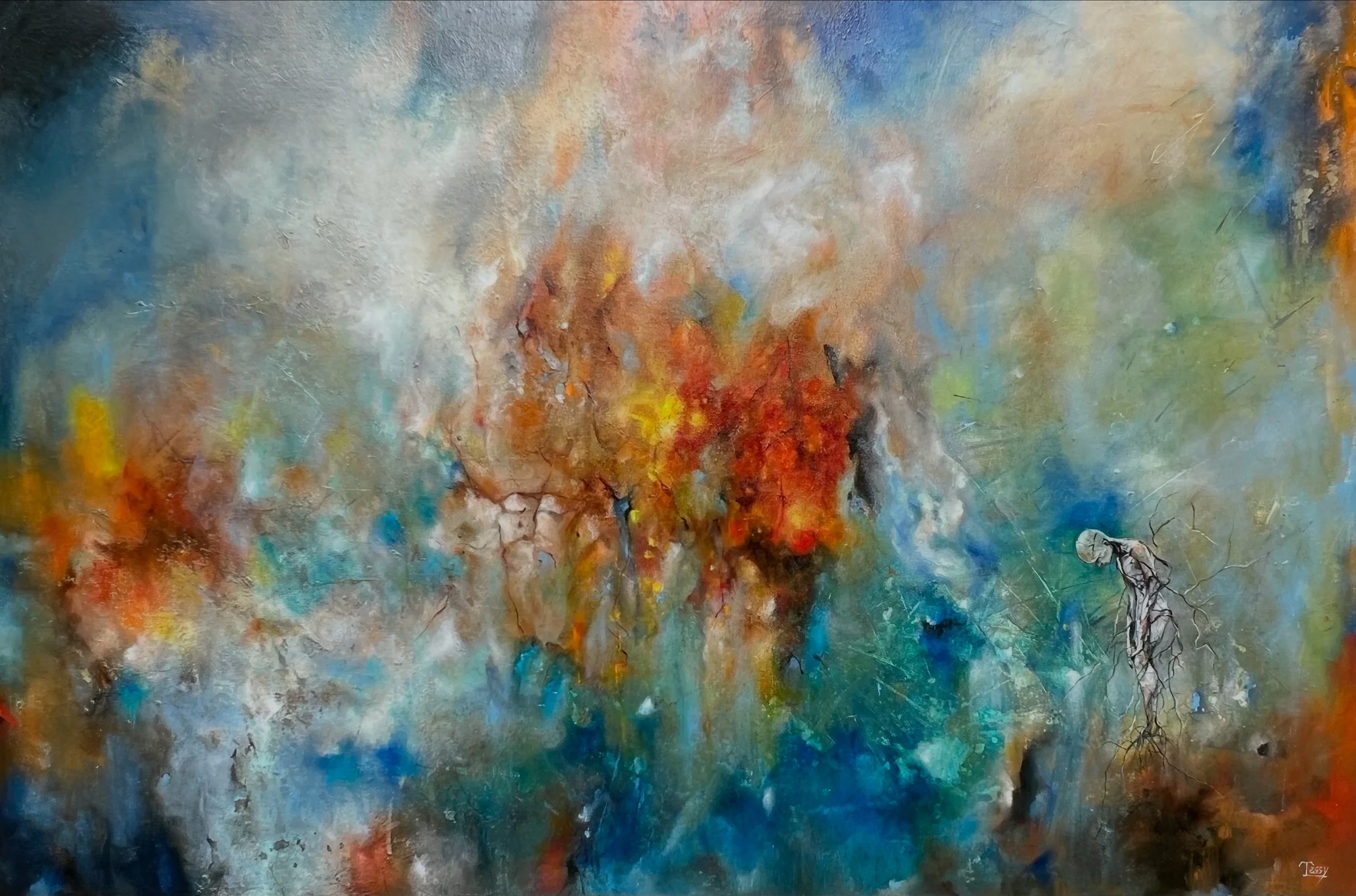
Echoes of humanity - 120x80cm
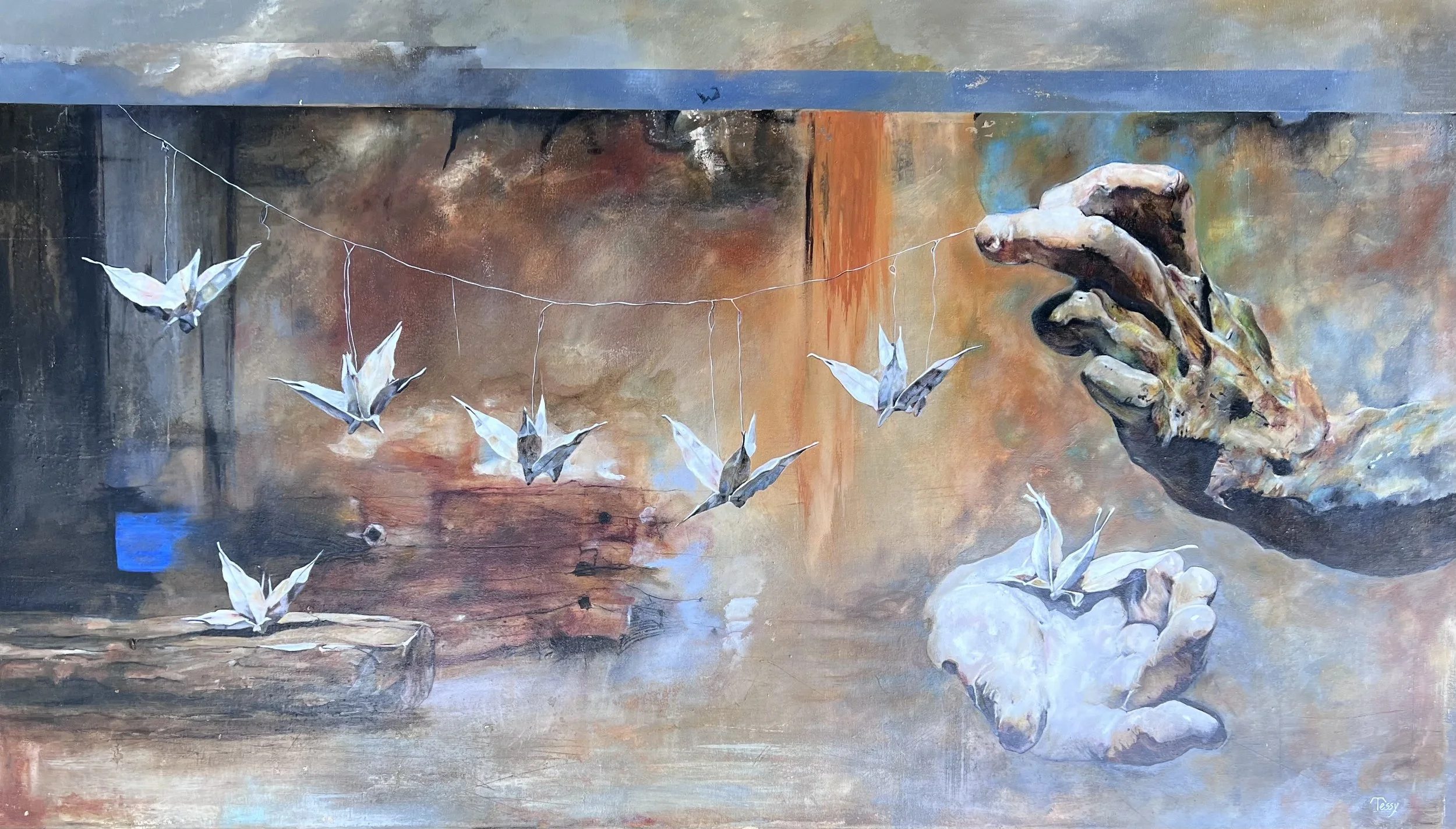
Held by threads - 140x80cm
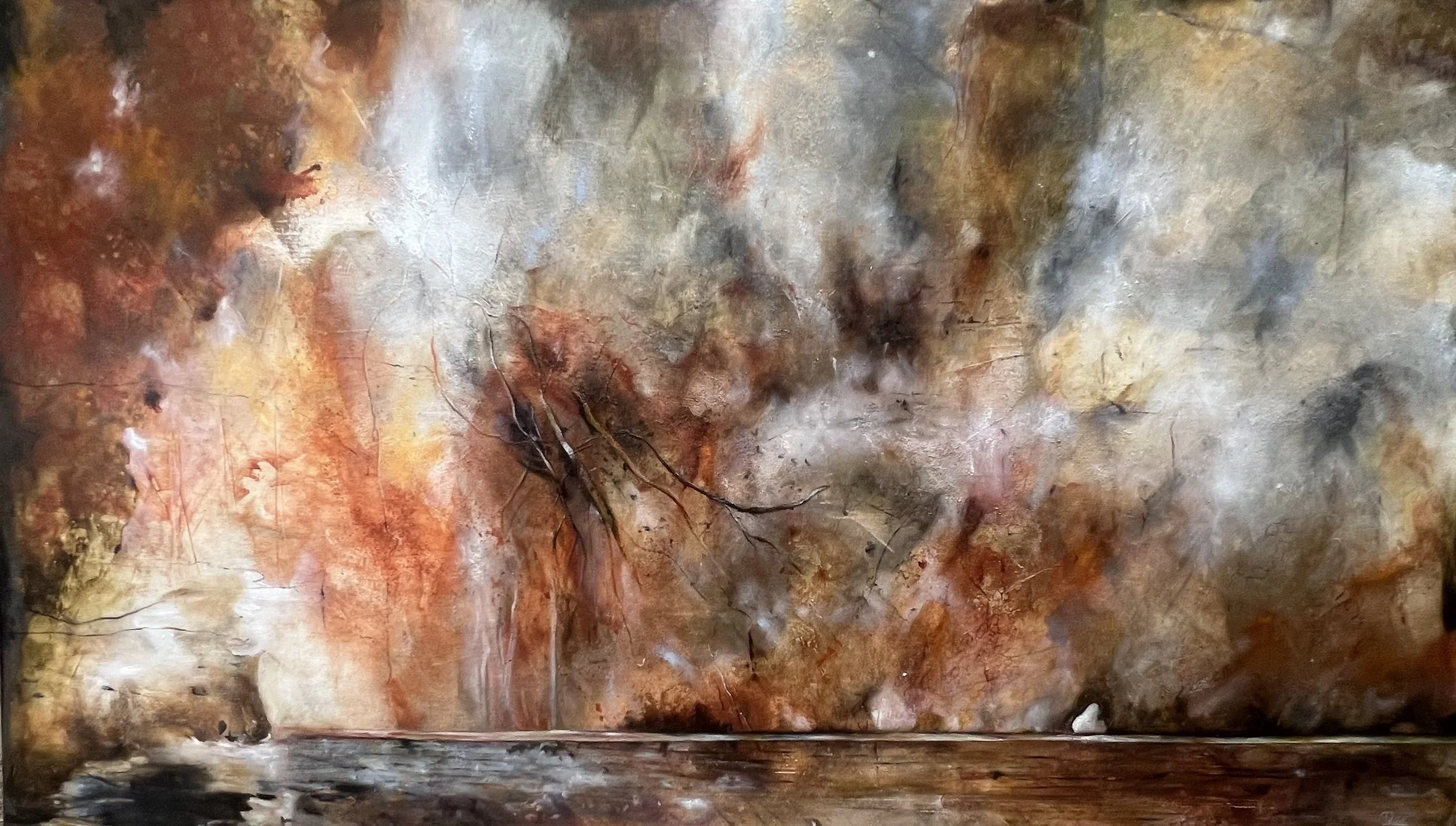
A line on the bar - 140x80cm
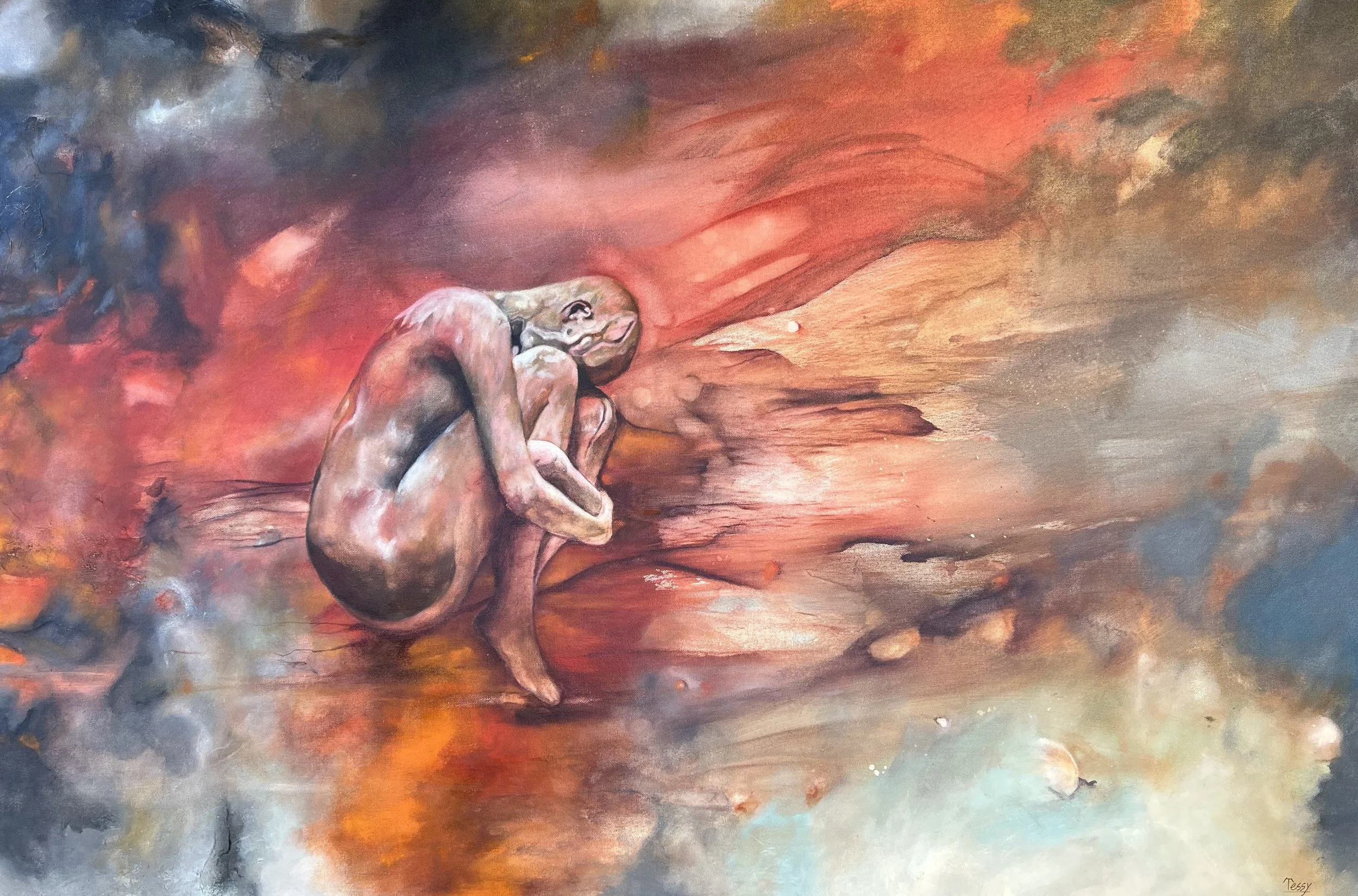
Before the first word - 120x80cm
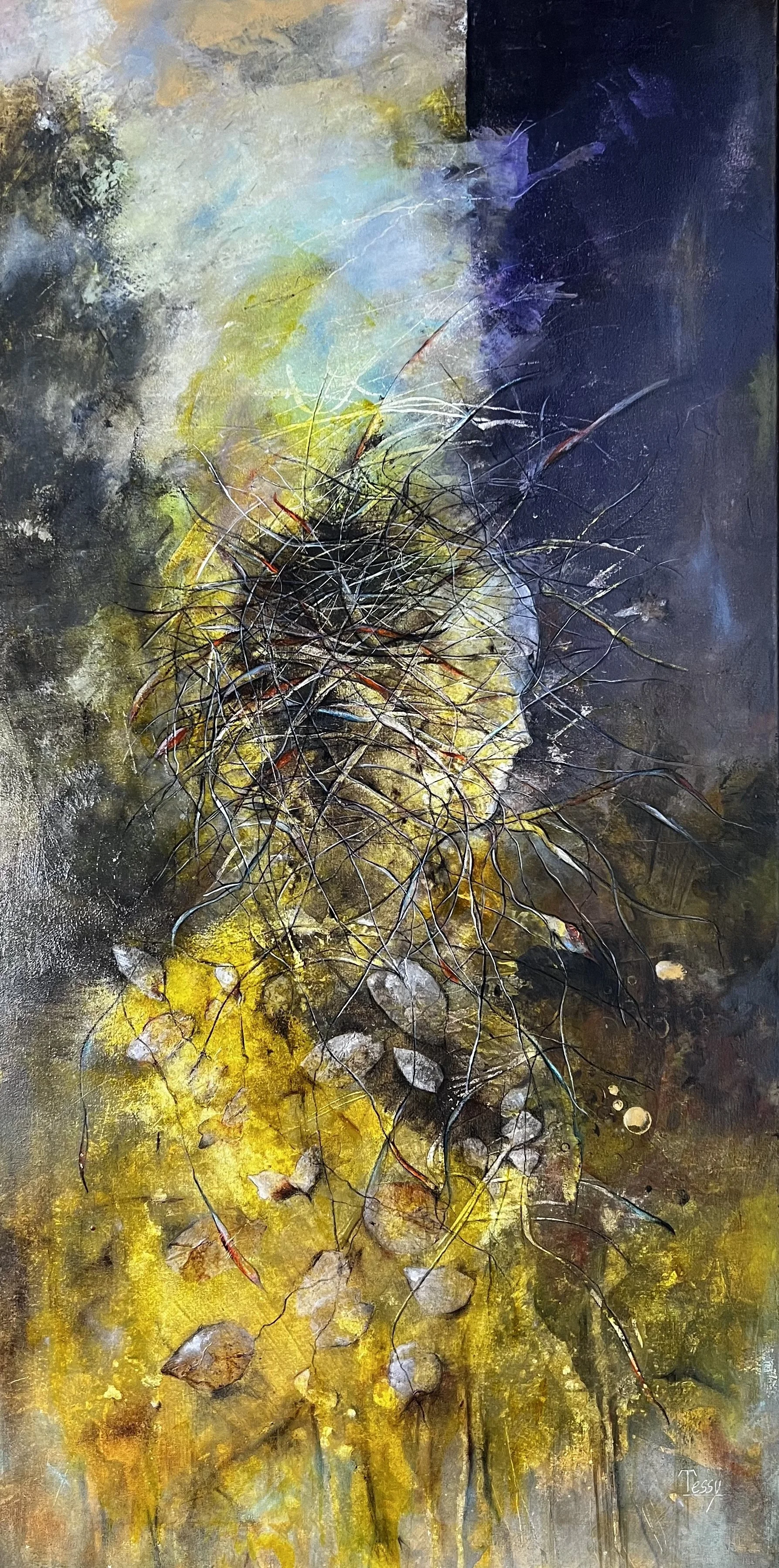
Hidden thoughts - 50x100cm
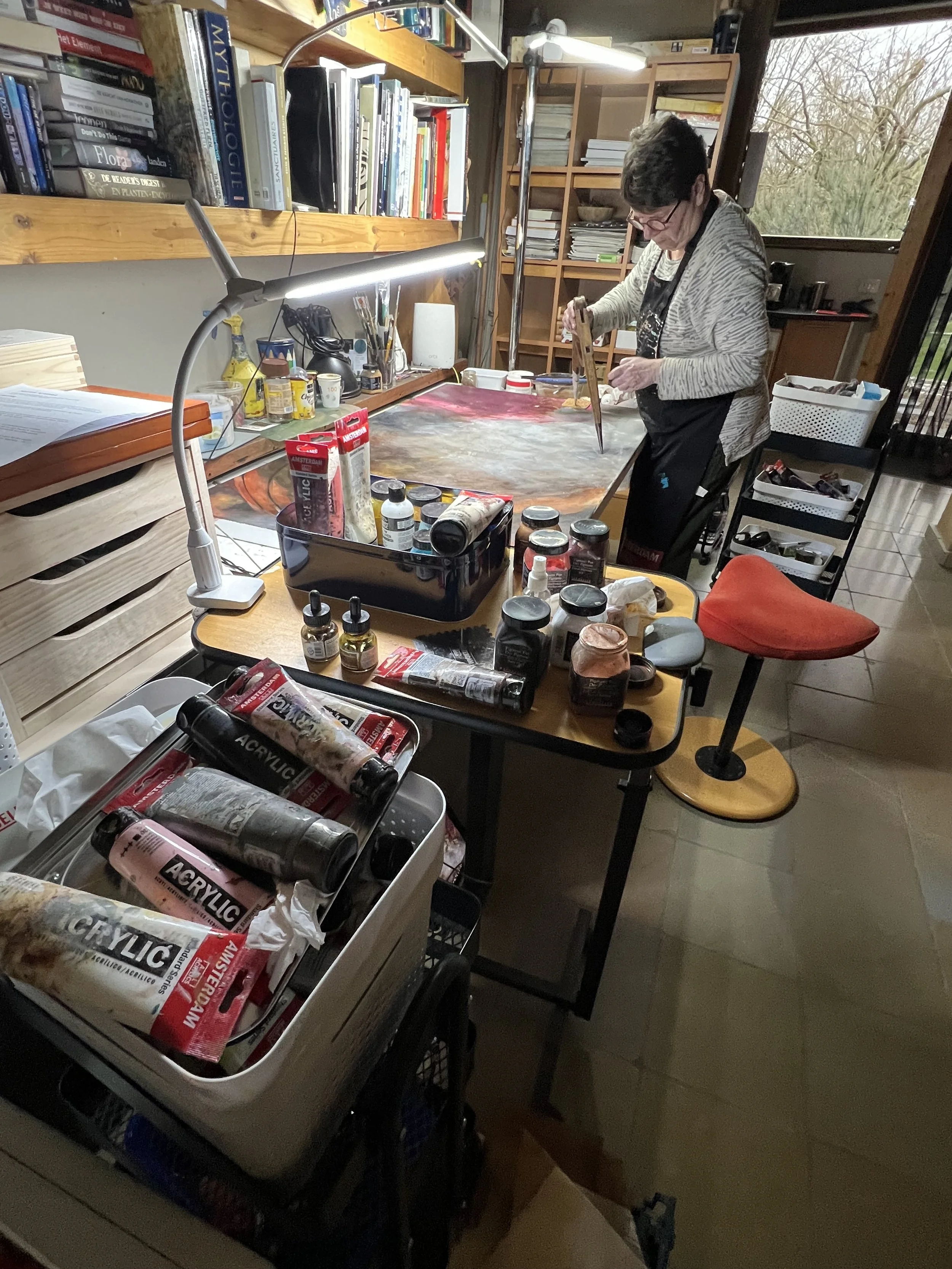
Art-studio ARTesstyk
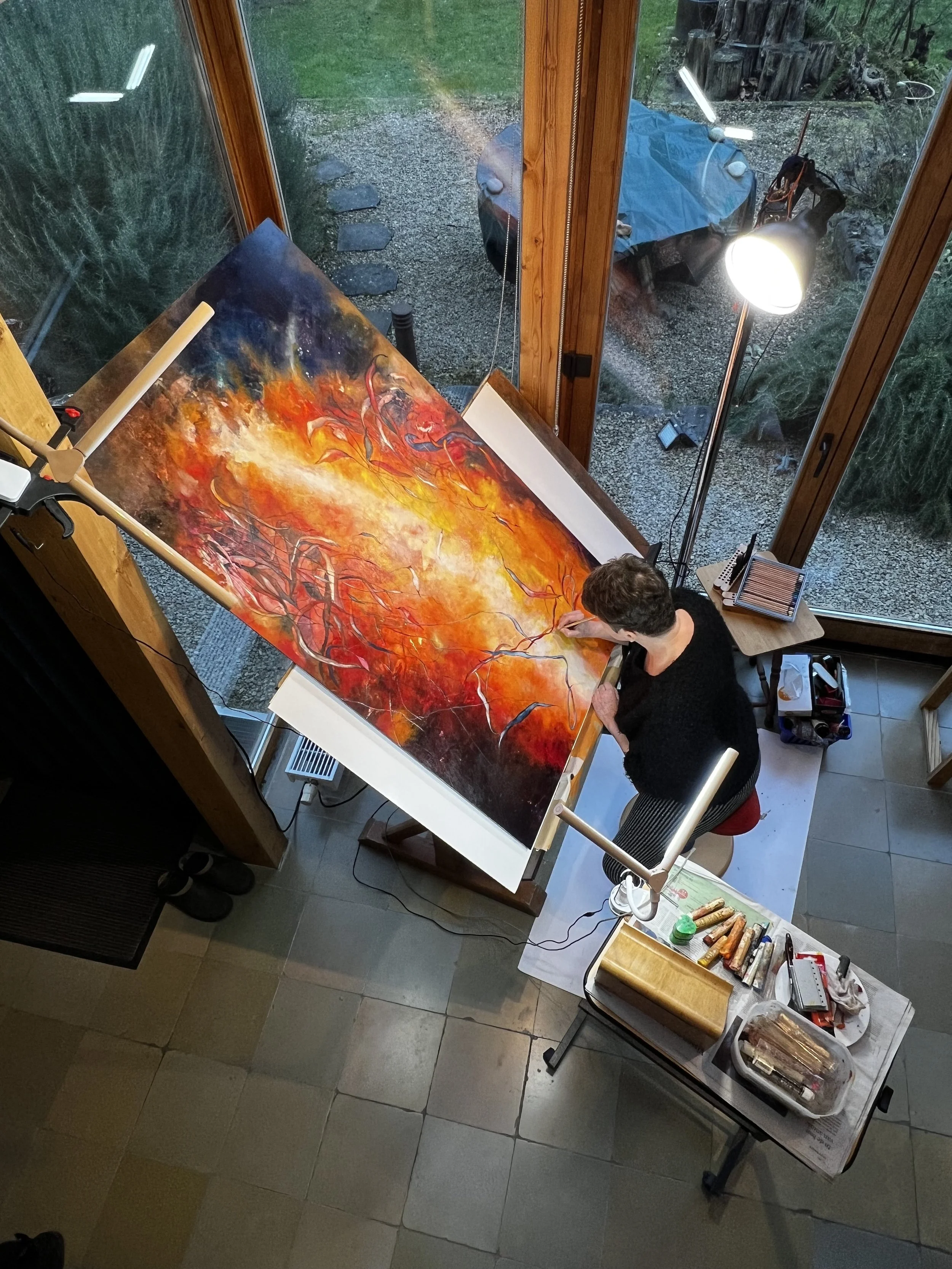
Art-studio ARTesstyk
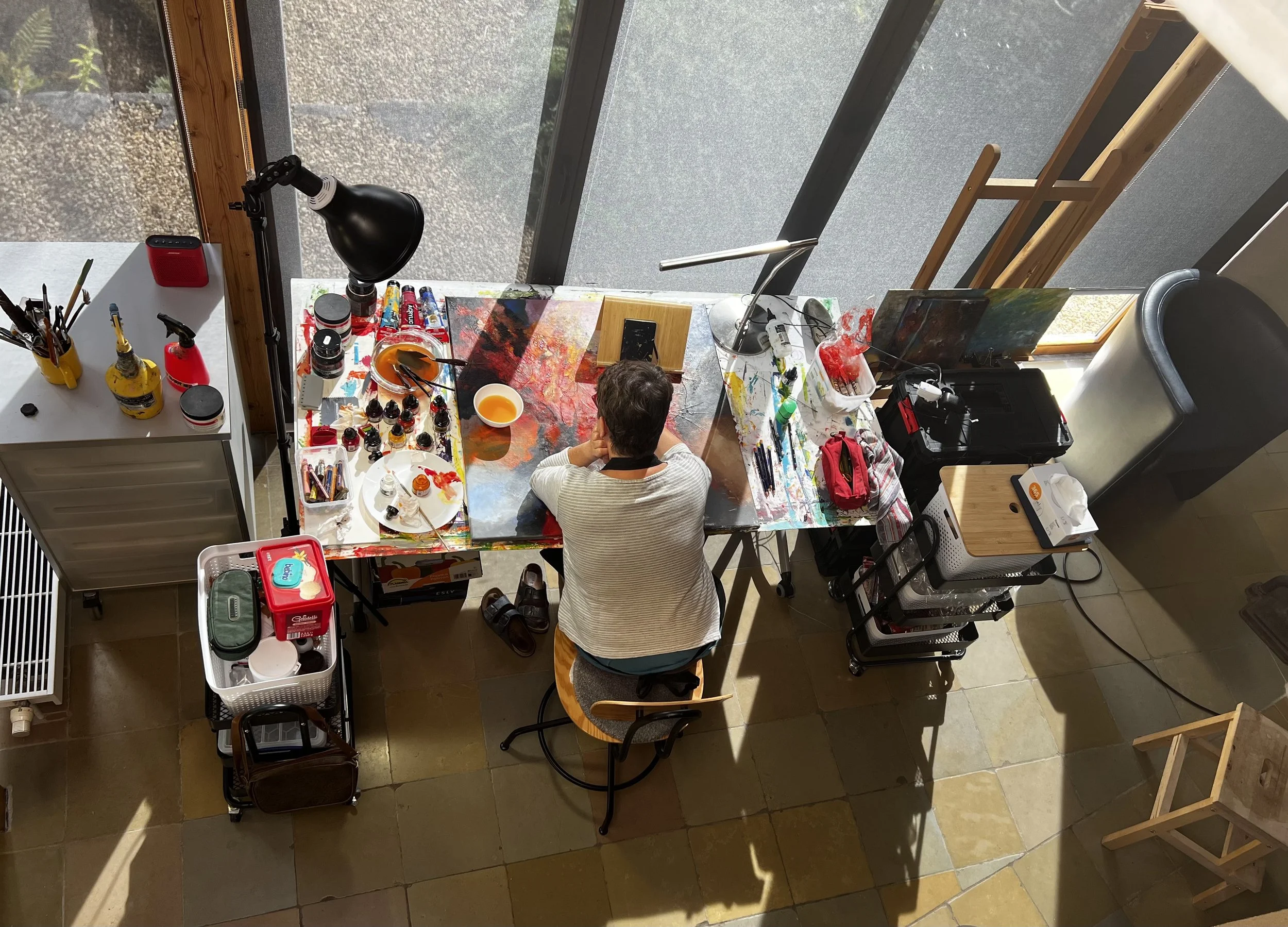
Art-studio ARTesstyk
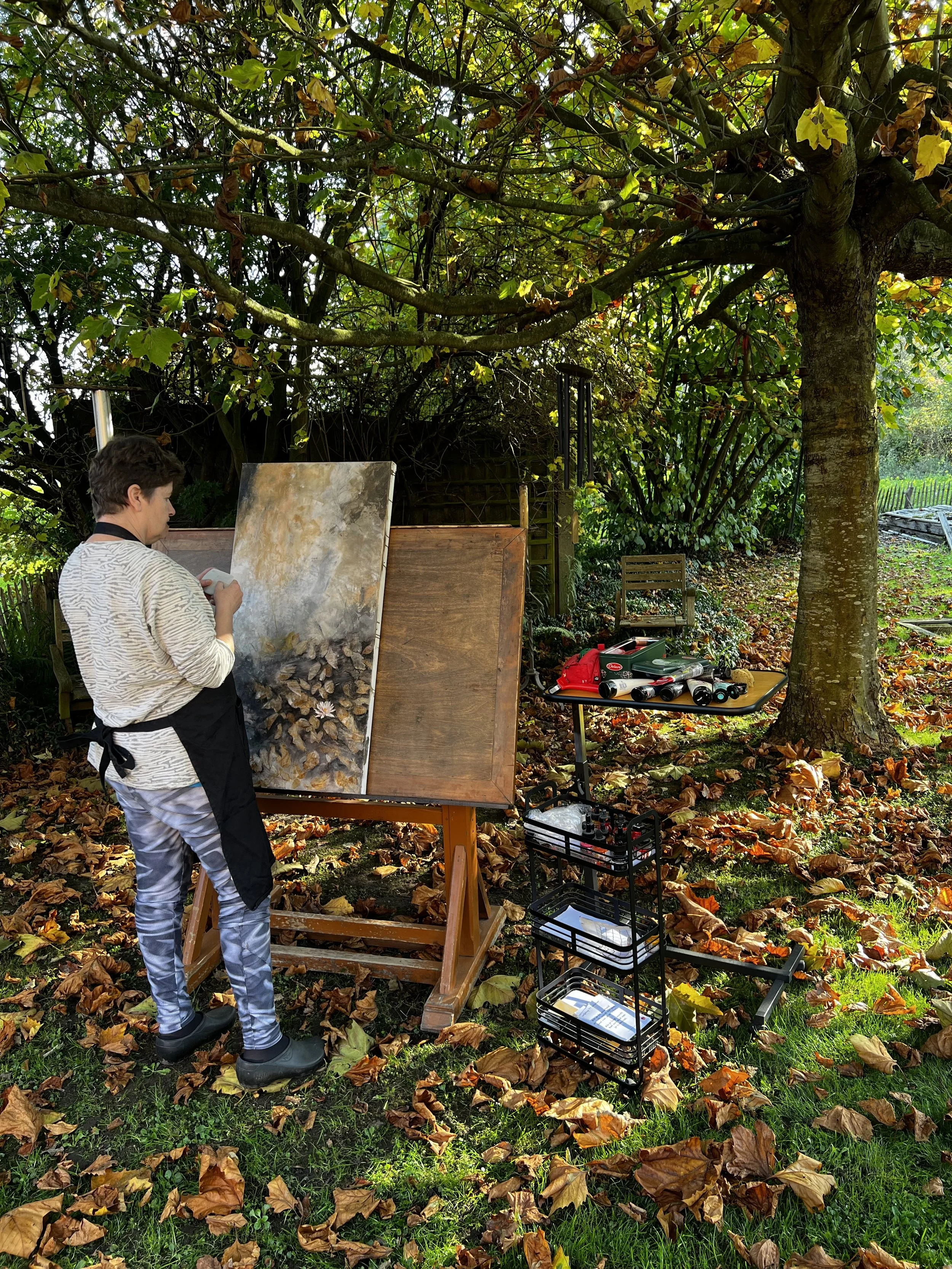
At the garden of ARTesstyk
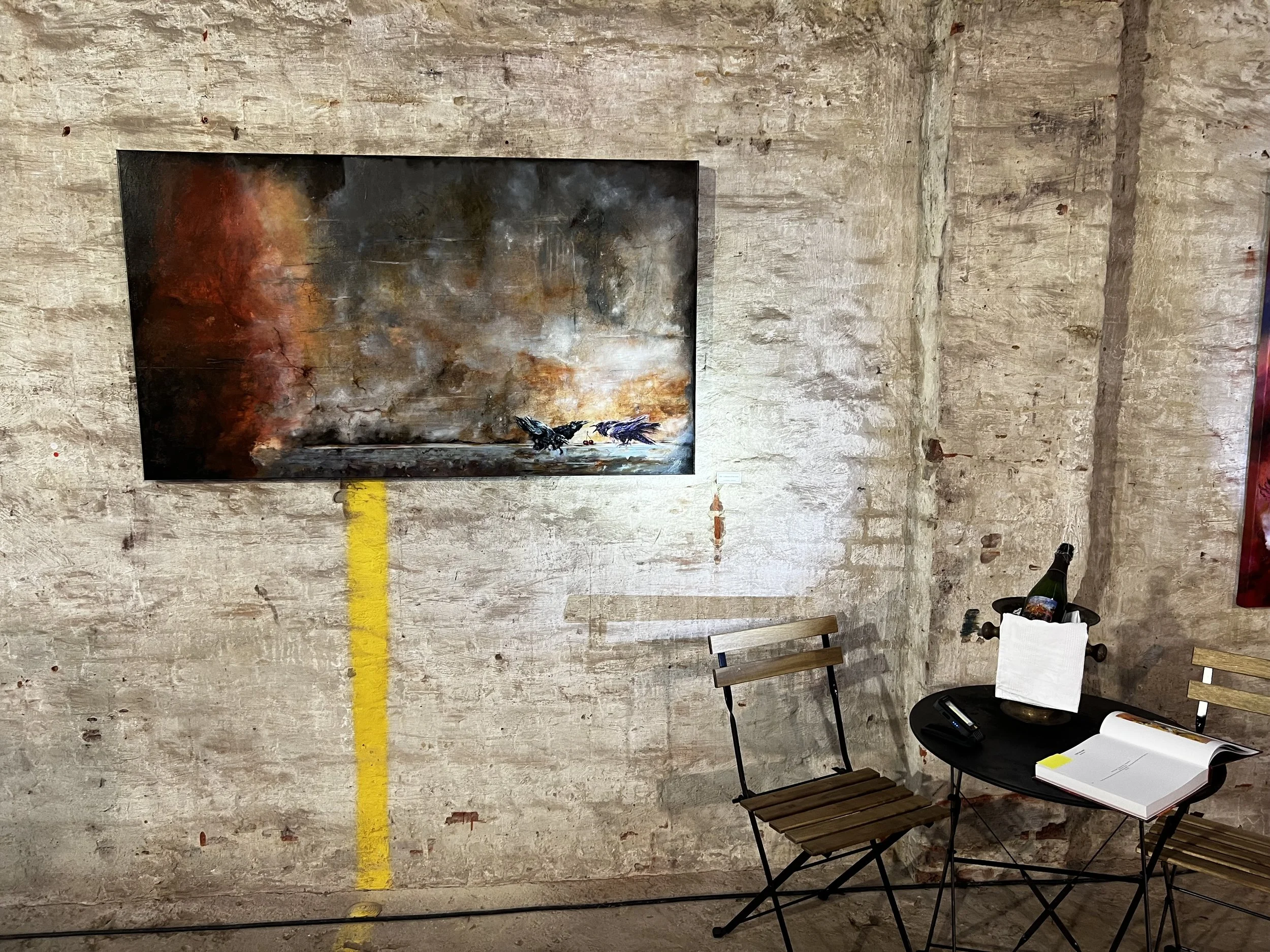
OO-art Kortemark 2025
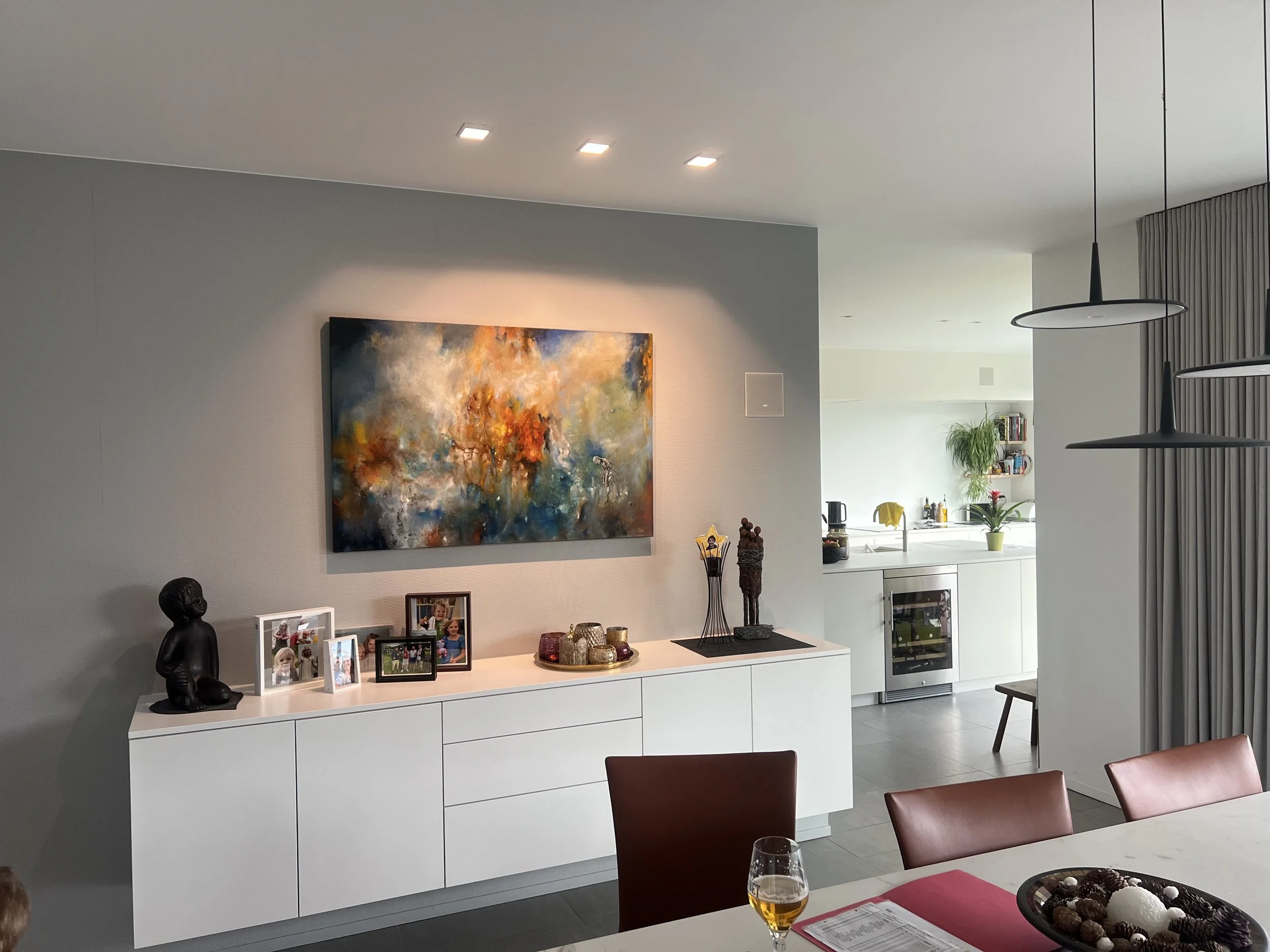
Echoes of humanity at art lover
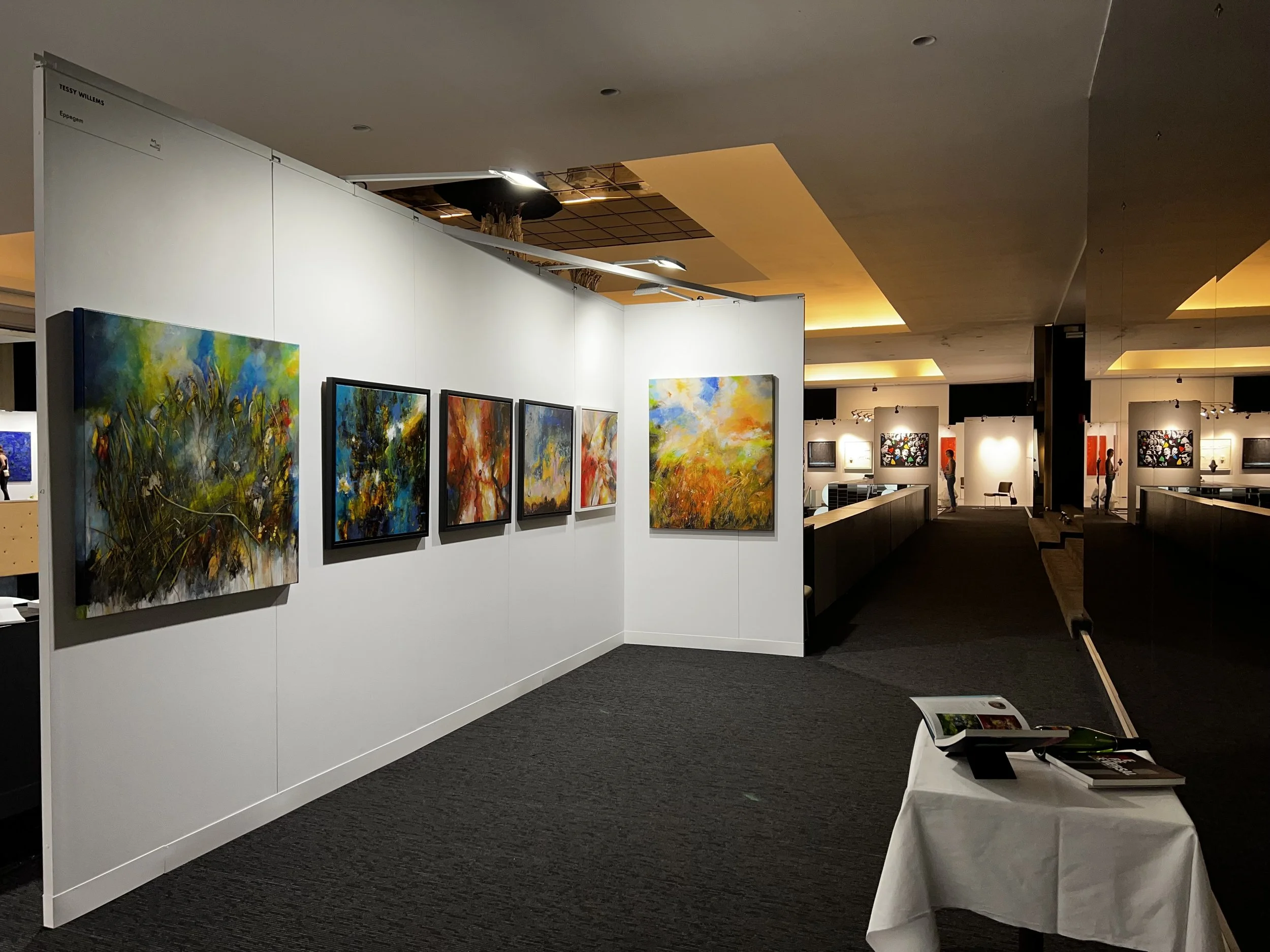
Art(ist)Meeting Knokke 2023
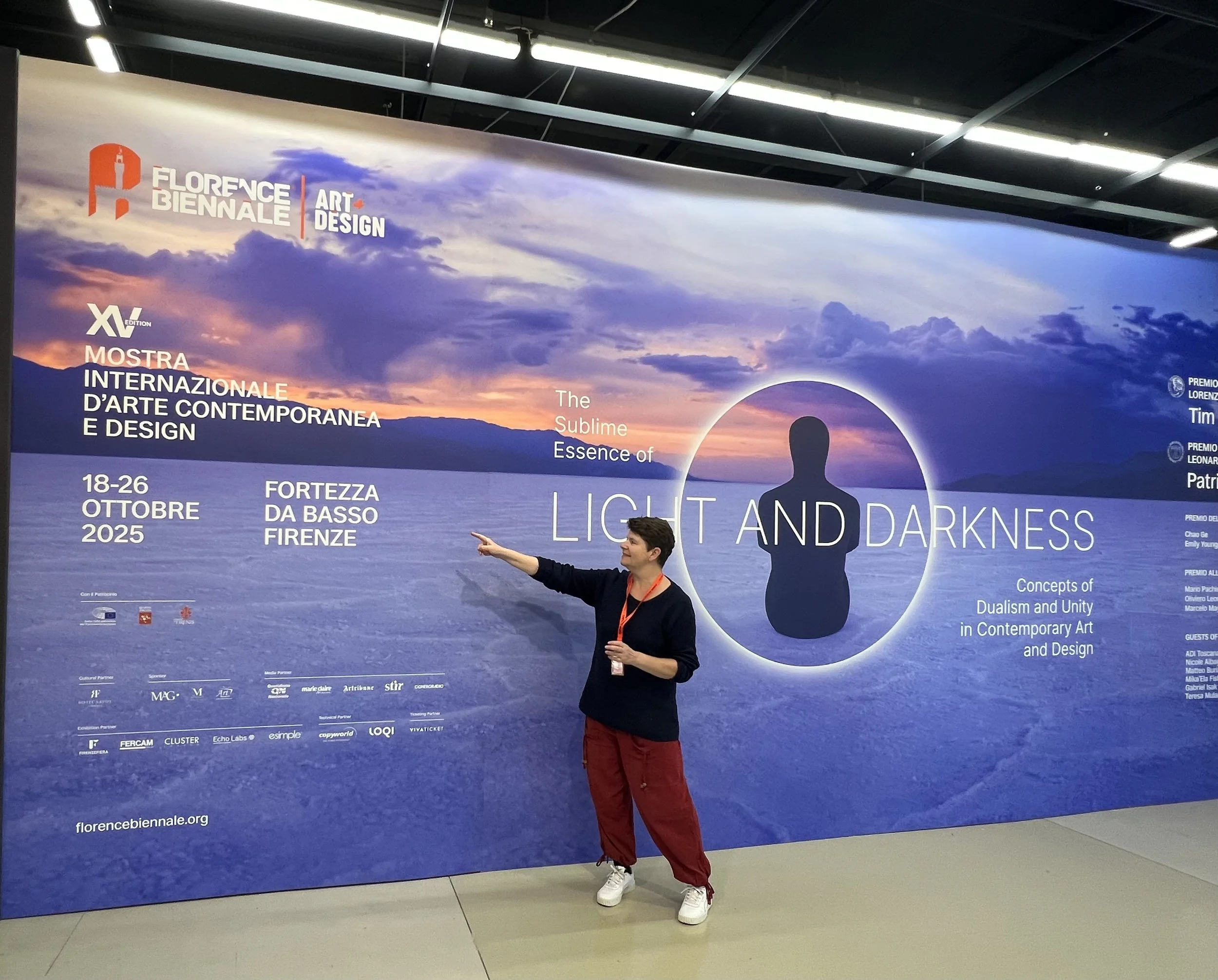
XV Florence Biennale Art & Design 2025
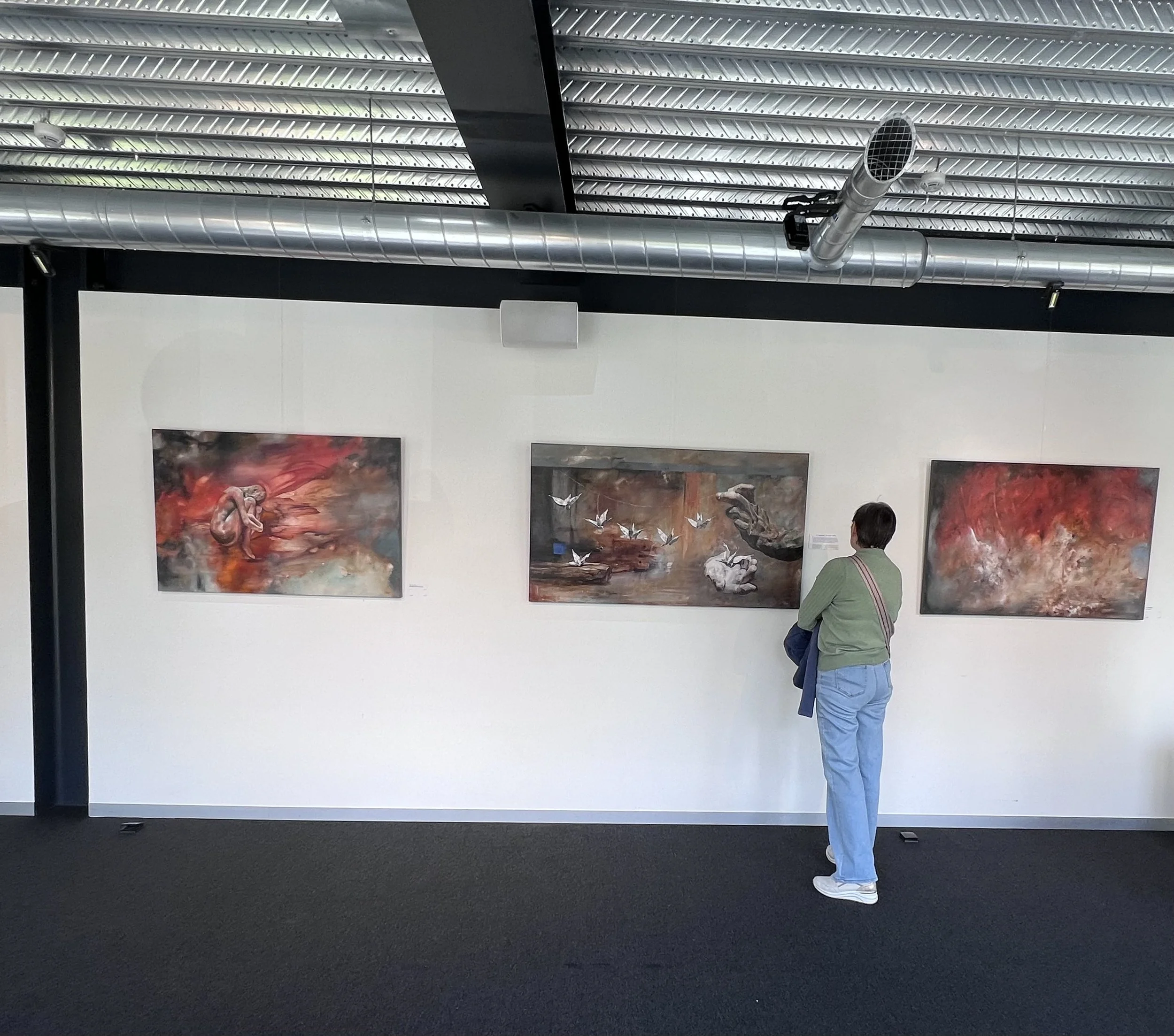
ART-Z Brussels 2026