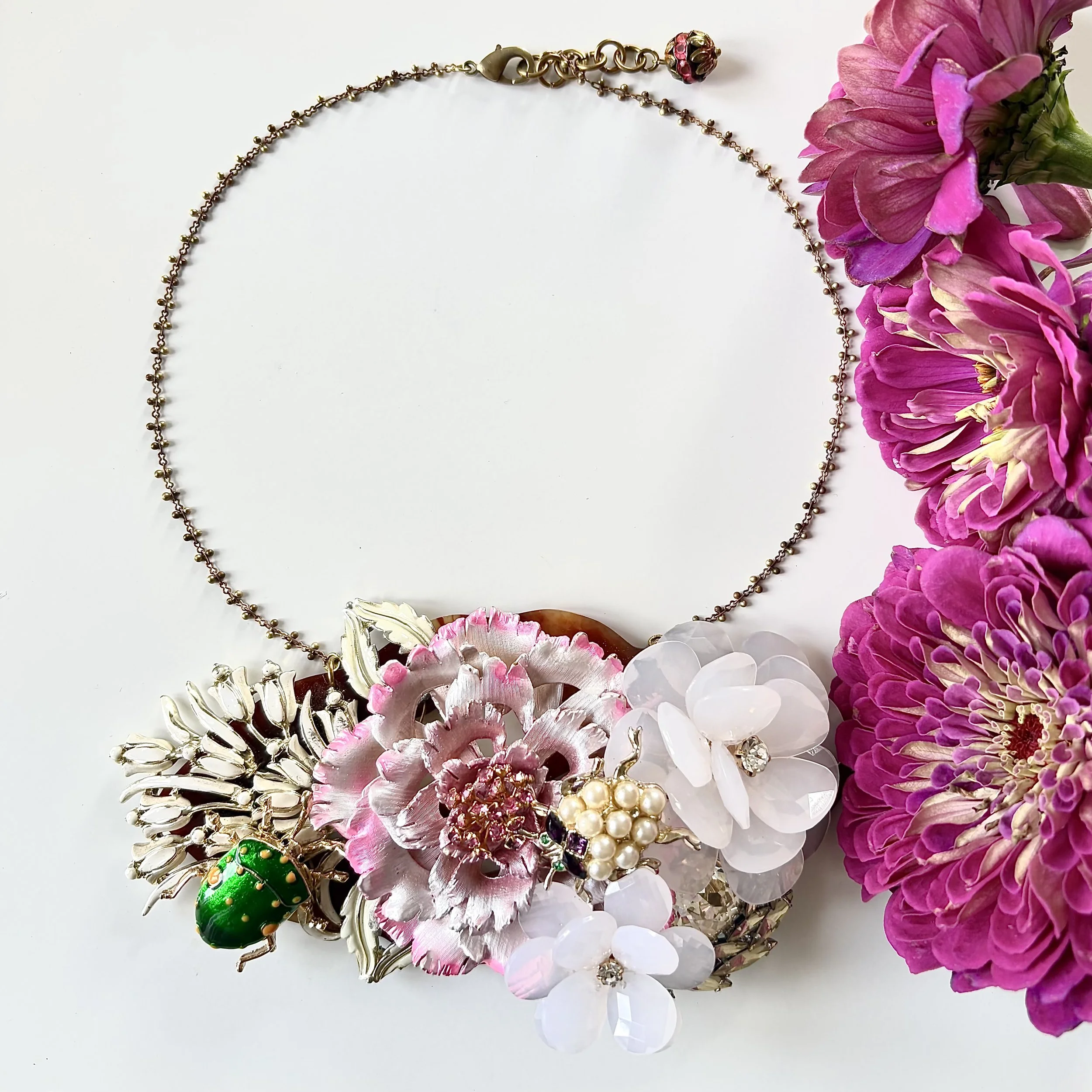
Interview with Izumi Tahara
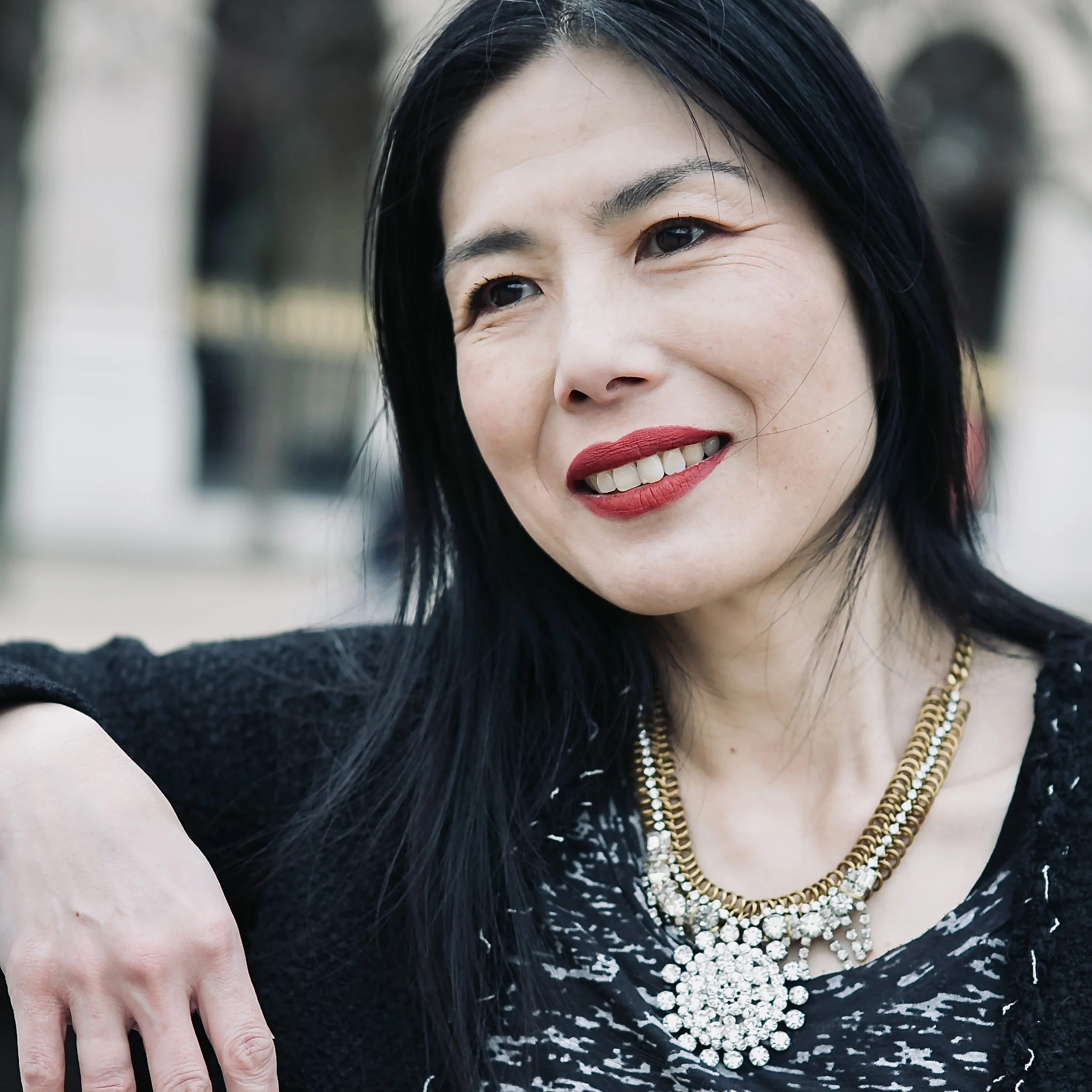
https://fuchsiabyizumitahara.com/
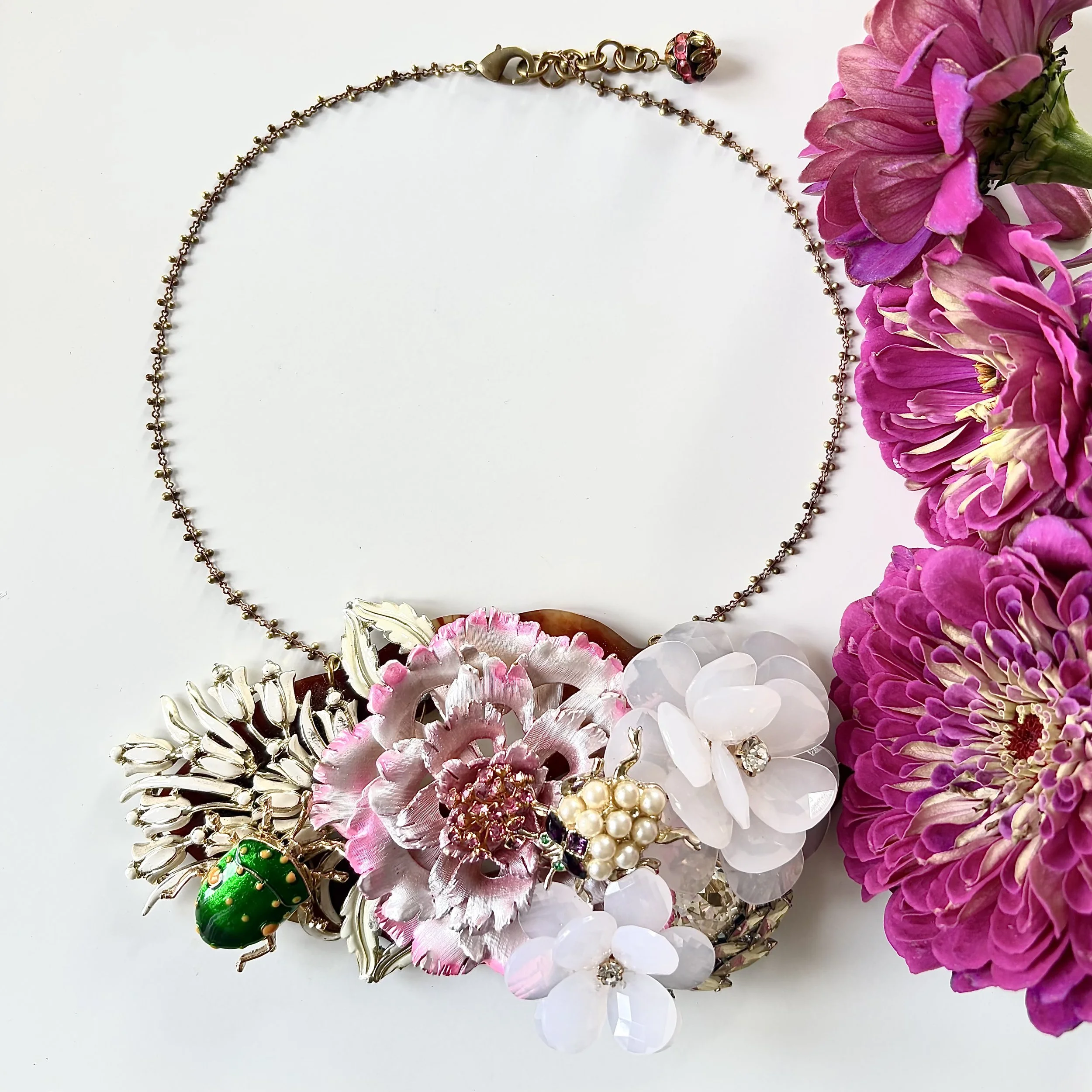
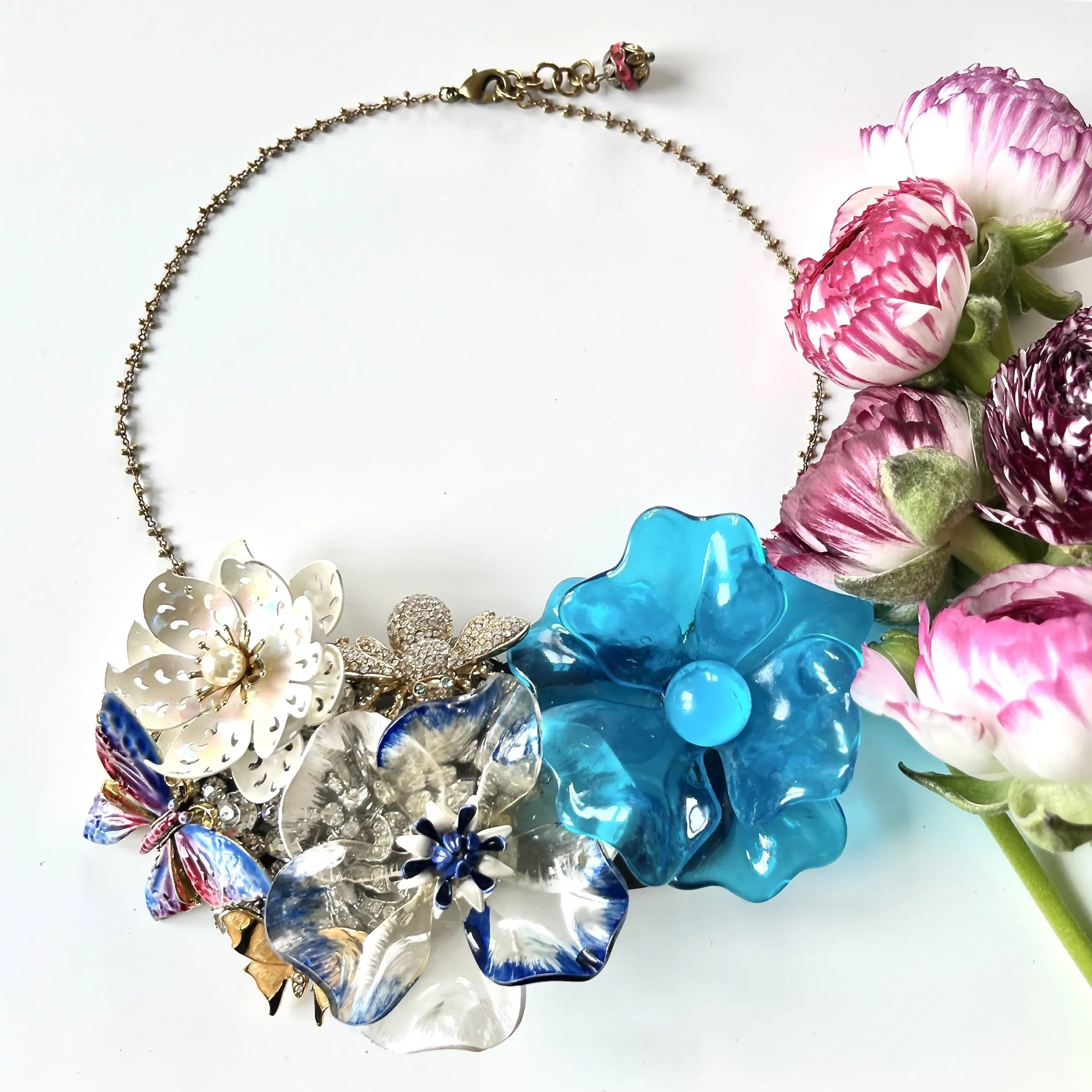
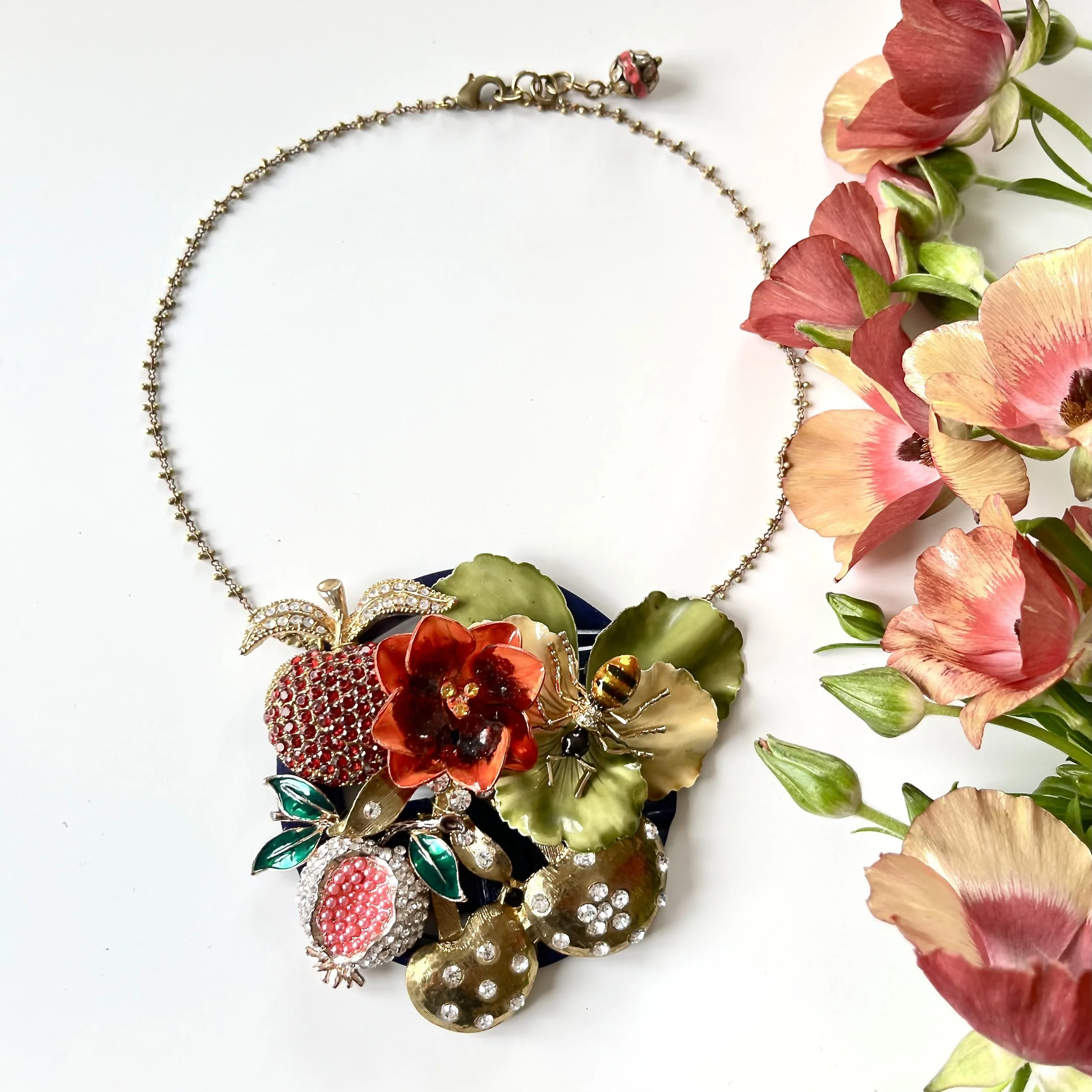
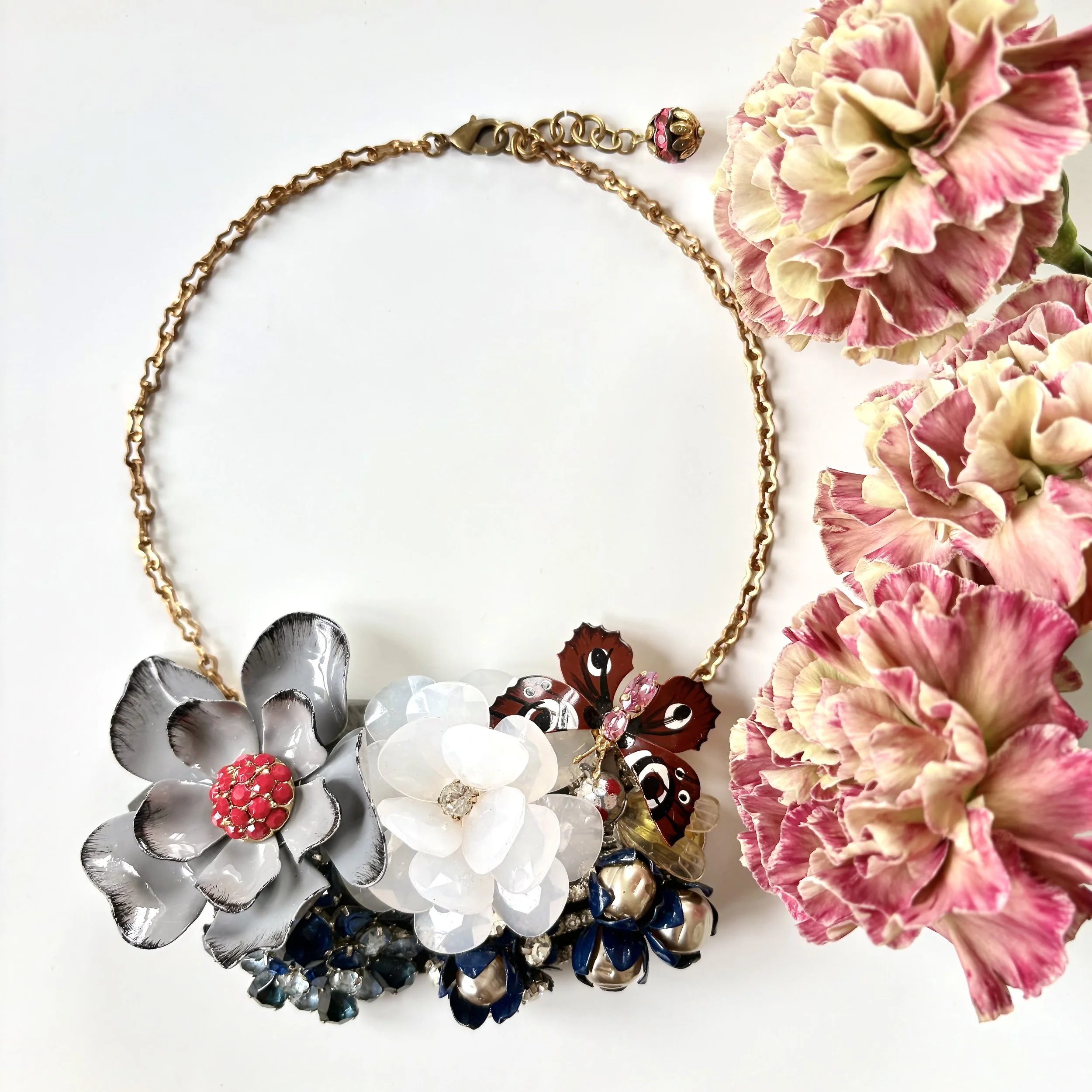
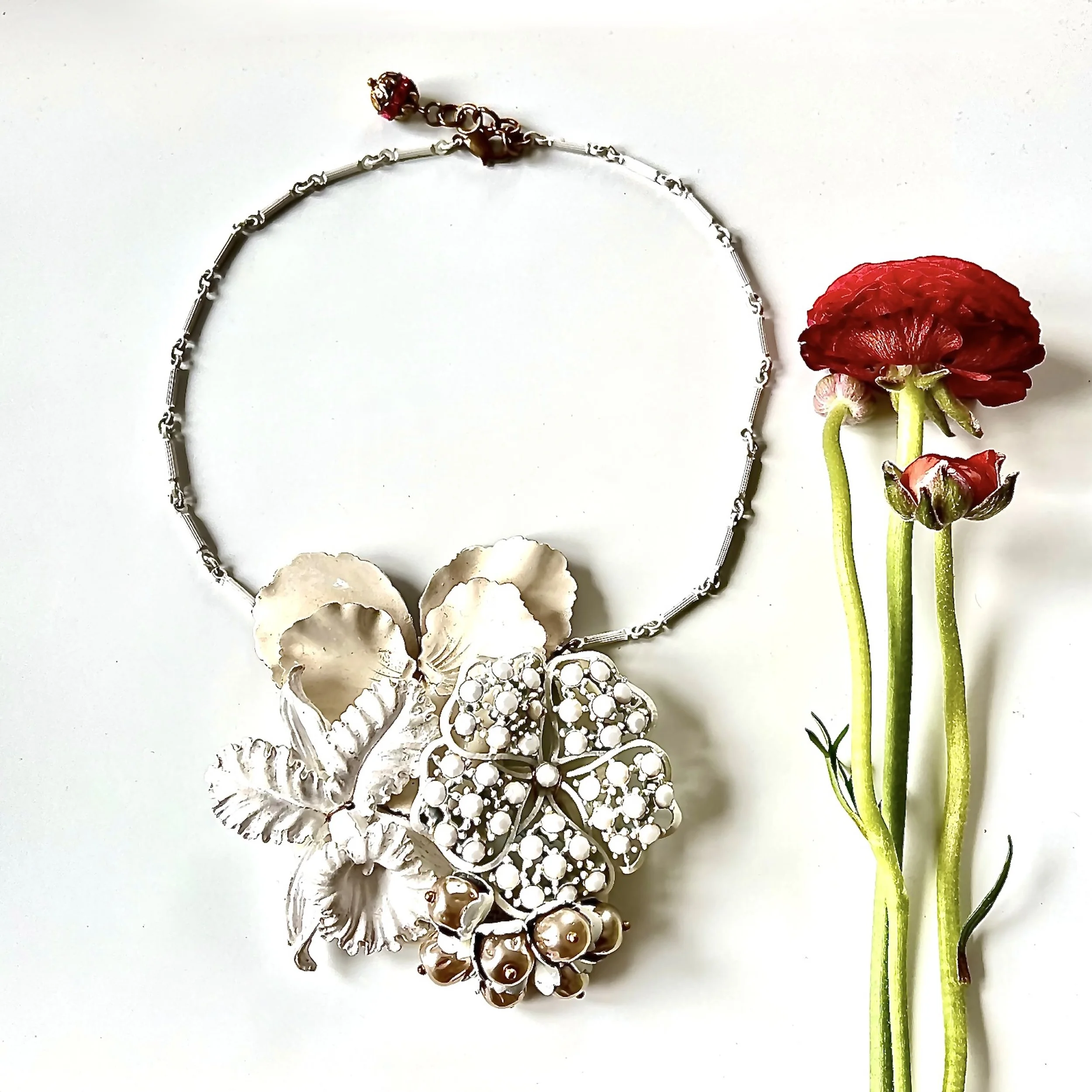
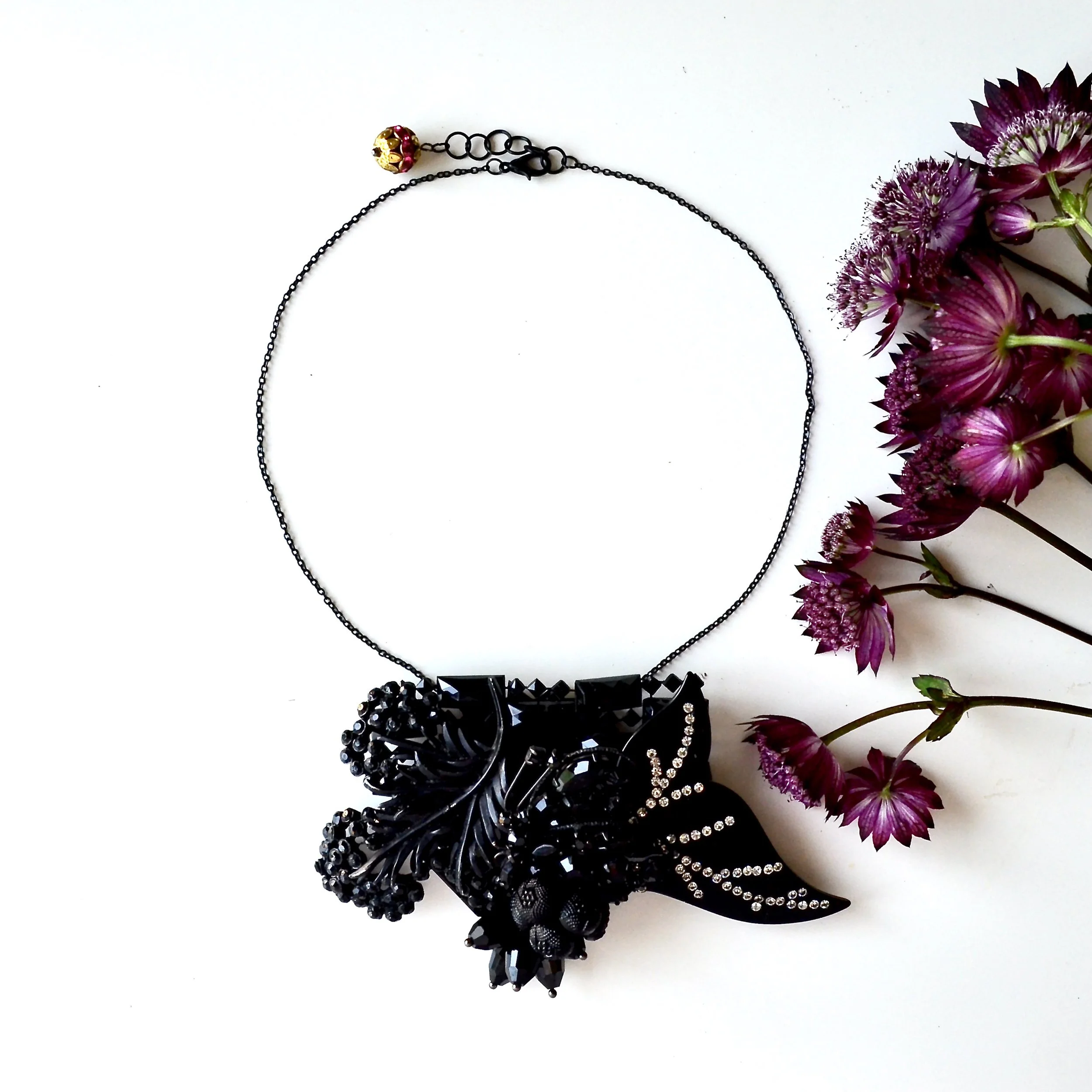
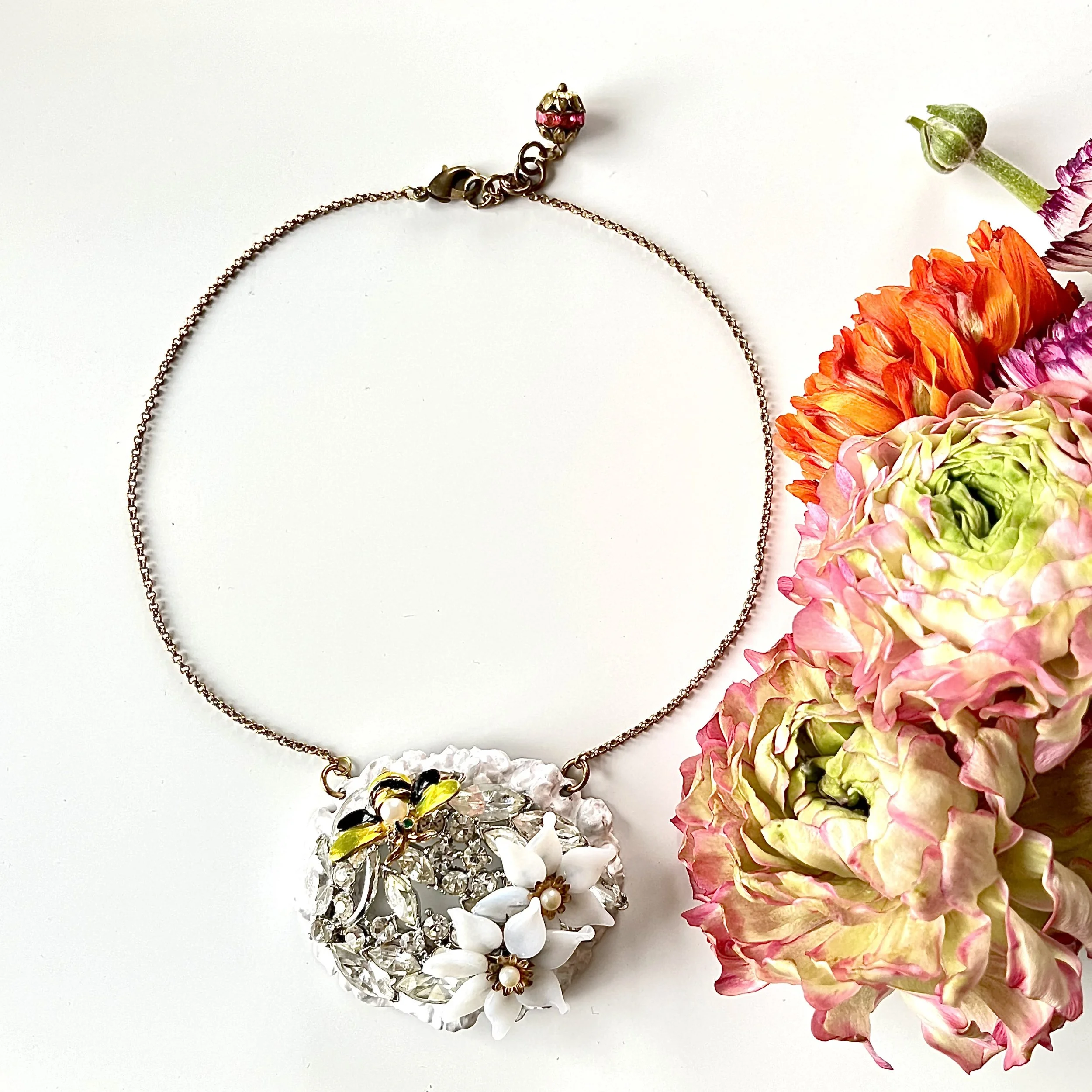
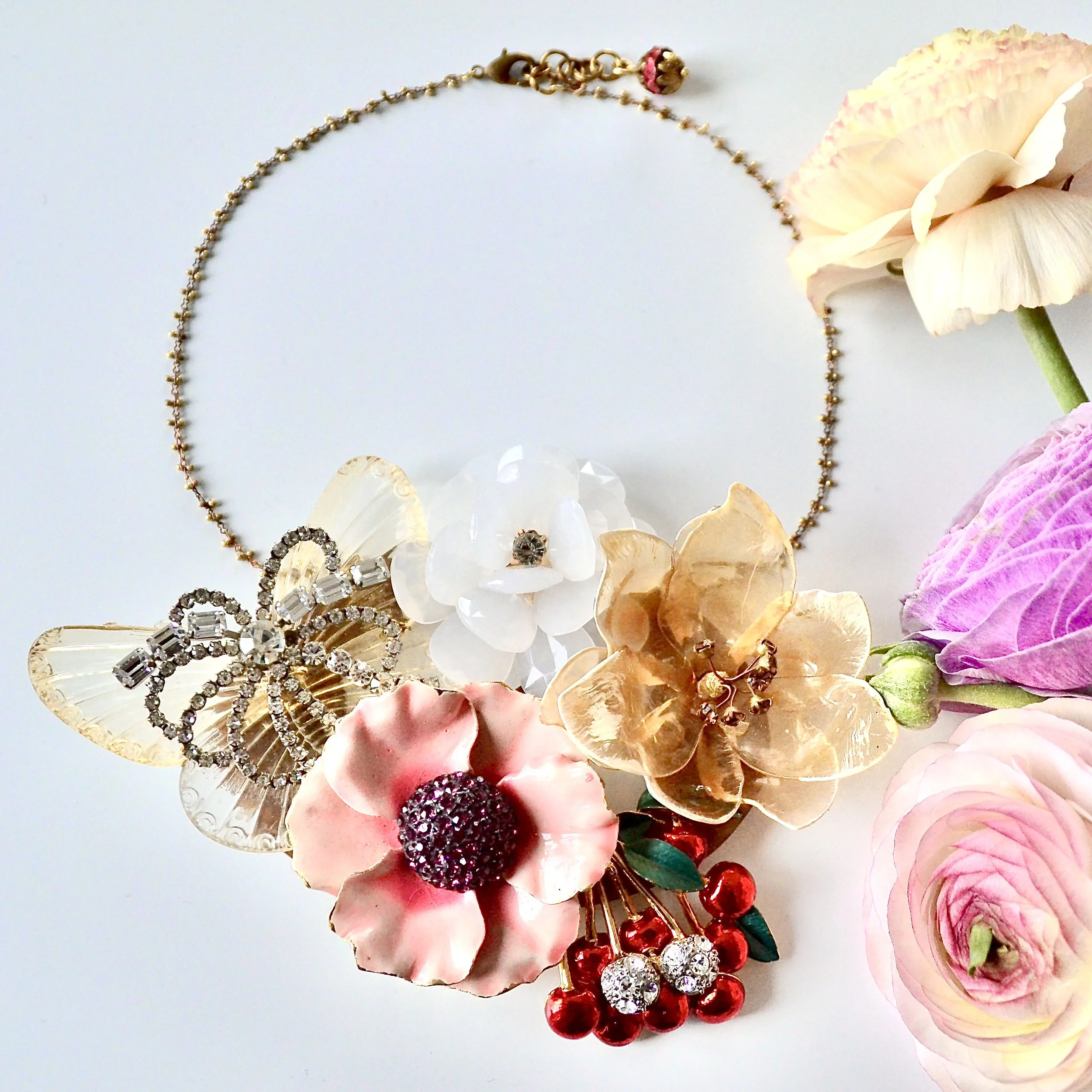
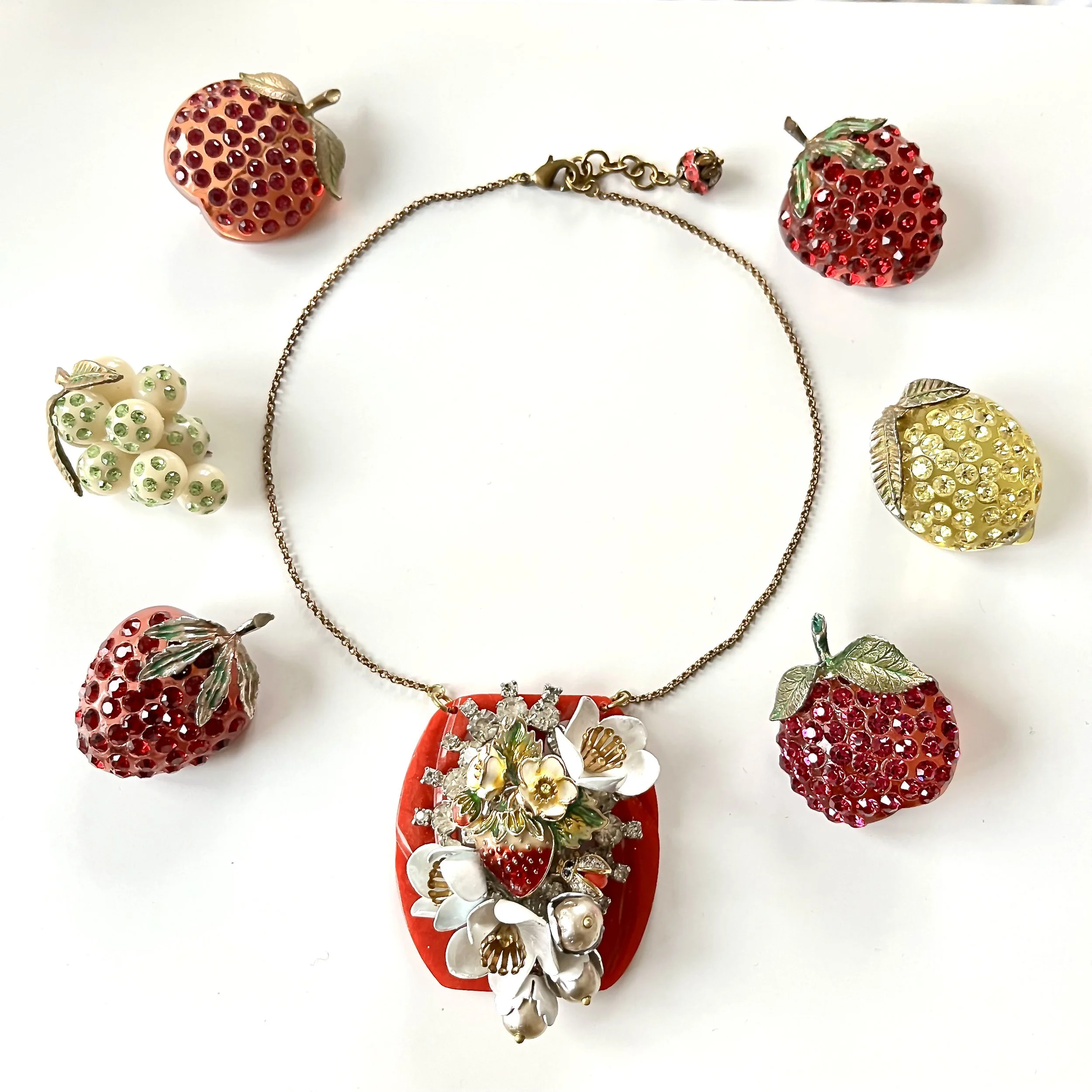
Izumi, your jewelry constructs a highly recognizable universe filled with floral symphonies, insects, shimmering fragments, and unexpected material encounters. When you begin a new piece, how do you conceptualize this universe? Do you see it as a living ecosystem where each element, such as vintage rhinestones, enamel petals, or forgotten brooches, carries its own role and character, and how do you choreograph these actors into a coherent visual narrative?
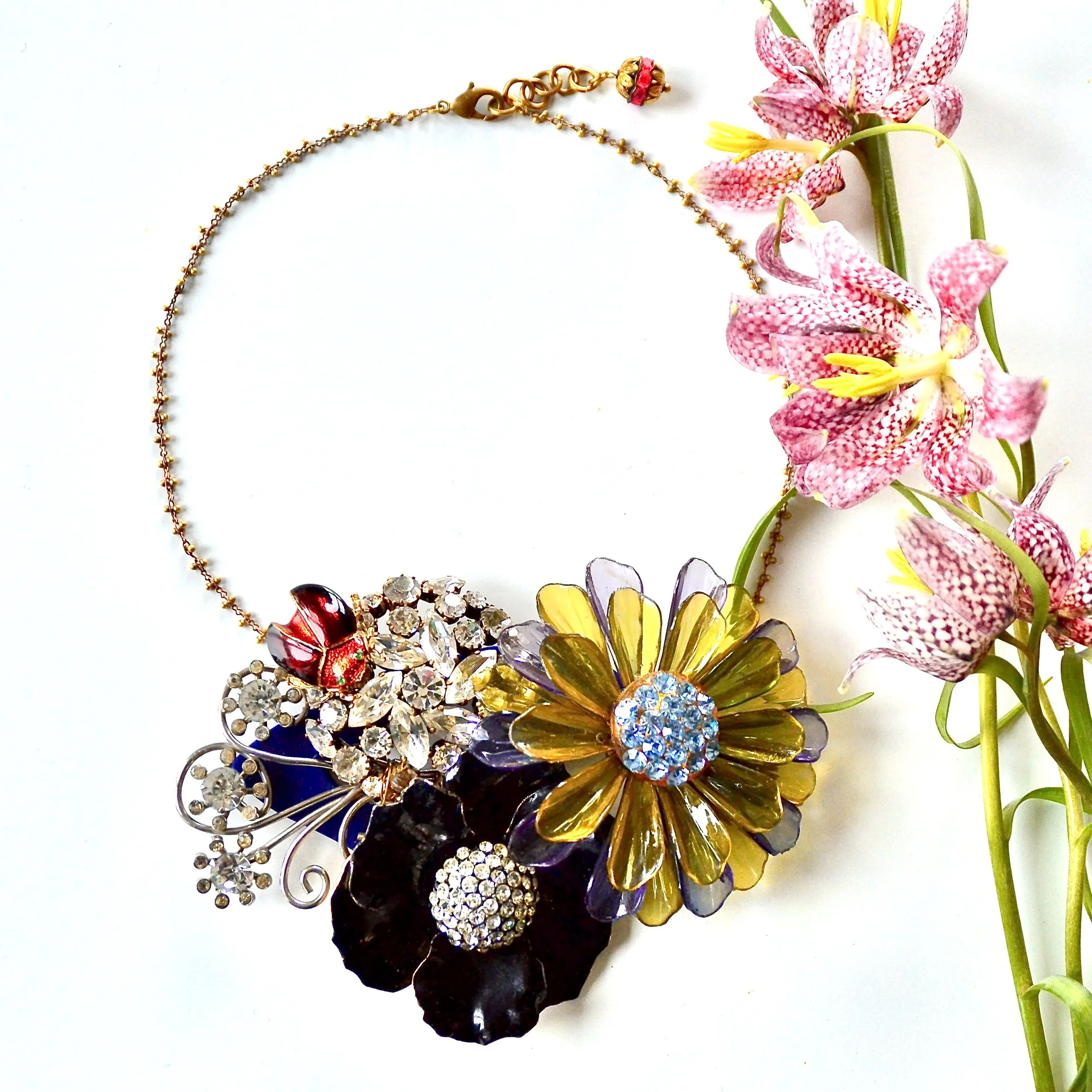
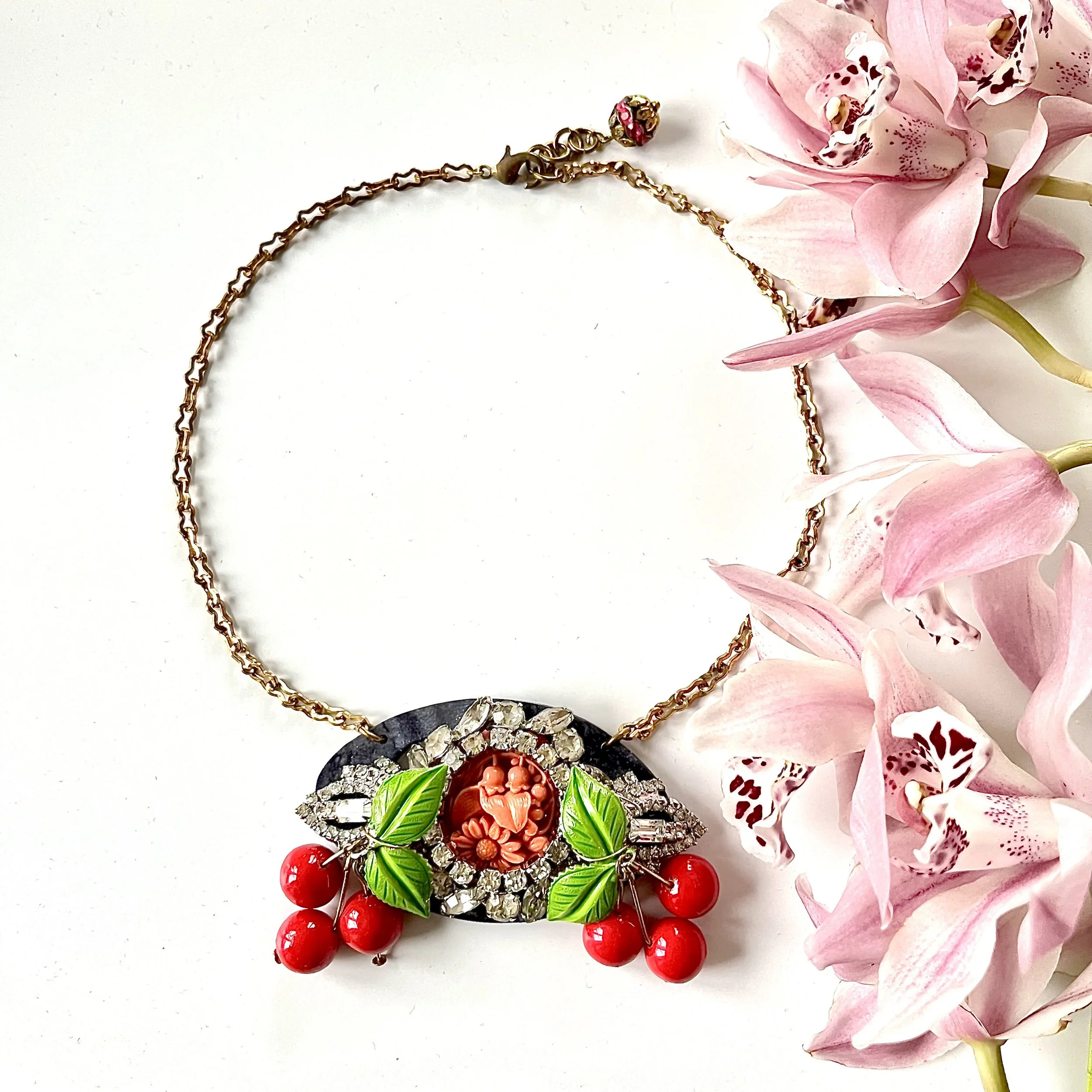
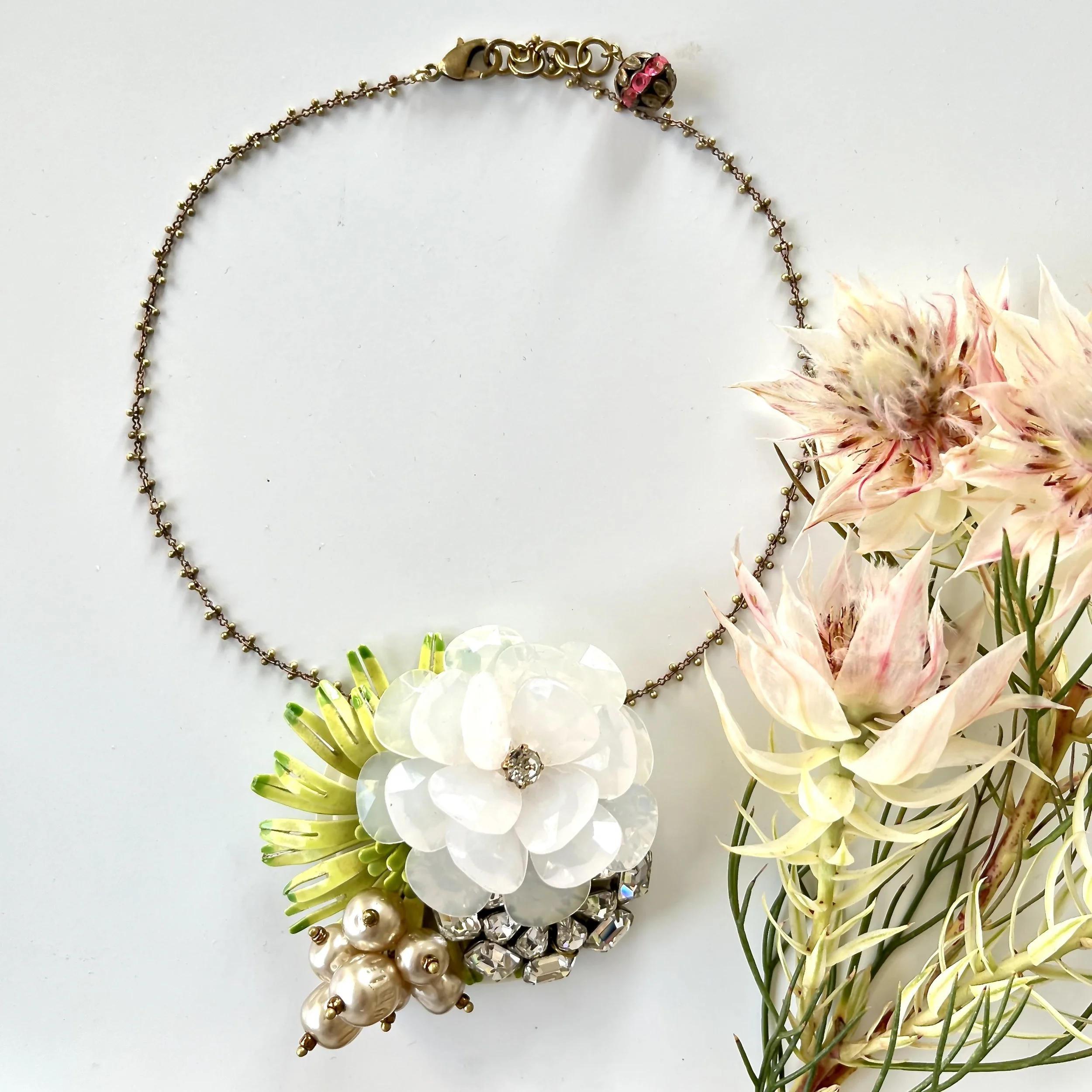
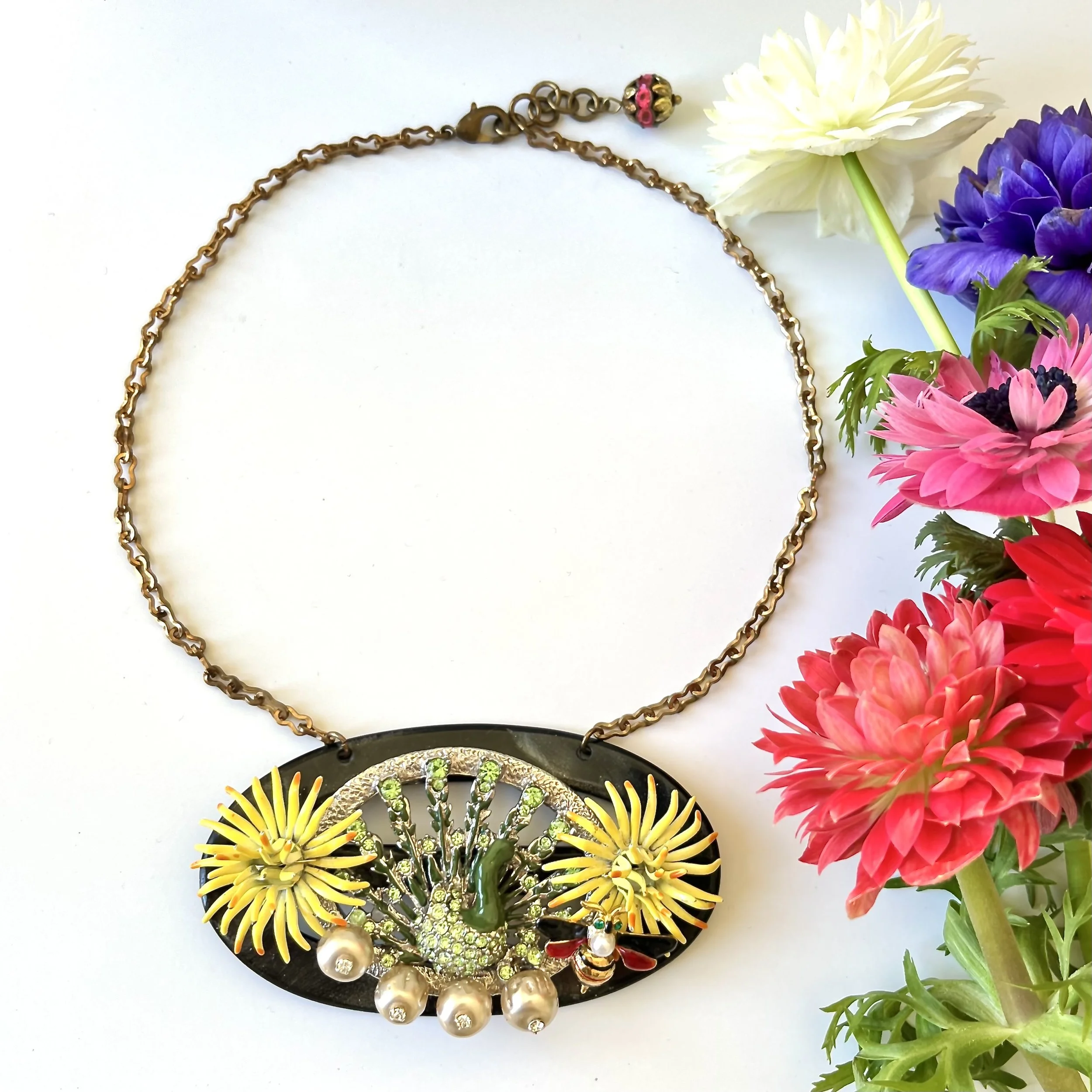
When I begin a new piece, I always start by looking at my beloved vintage jewelry. From my own collection, I choose one piece that feels as though it is speaking to me. This piece becomes the centre of the world I want to create, and I begin to imagine what kind of universe could grow around it.
From there, I start searching for elements that resonate with this central piece. Sometimes they come from parts of my collection that I have never used before, and sometimes I find new fragments that touch my heart and feel destined to be part of the work.
The theme slowly expands through this process, and it often transforms as I continue to create. I feel that each element enhances the others, and together they construct a new, independent world of jewelry.
Your inspirations are often described as multifaceted, spanning haute couture masters such as Parurier, the delicacy of nature, and the poetic nostalgia embedded in vintage materials. How do these sources of inspiration interact within you? Do they emerge as distinct impulses, or do they merge into a single intuitive aesthetic language that guides your artistic decisions?
My inspirations naturally exist very close to each other, rather than as completely separate sources. Fashion, jewelry, and flowers are all elements I deeply love, and they exist naturally in my daily life.
When I create, I think about shaping what I love into the form that feels most true to me. Of course, I consider technical aspects, such as how to construct and secure each element, because without that, the work cannot exist physically.
However, at the very beginning of the process, my decisions are guided more by intuition than by logic. I often feel my way forward by thinking, “This might be beautiful if I try it this way.”
In that sense, all of my influences merge into a single, intuitive aesthetic language that feels natural to me, rather than something I consciously analyse.
Much of your work reflects a profound respect for vintage costume jewelry, not only as raw material but as cultural memory. When handling old pieces that carry traces of another era, another hand, another life, how conscious are you of their past? In what ways does honoring this history influence the transformation you perform during your creation process?
When I work with vintage jewelry, I always feel a deep respect for its past. I often imagine who might have worn it, how it was made, and what kind of life it might have lived before coming into my hands.
That said, my own process is very intuitive. I don’t overthink each piece for a long time. Instead, I rely on an immediate, almost instinctive feeling of whether certain elements can create a harmonious relationship together. I choose them by sensing whether they can “breathe” beautifully in the same world.
Rather than being bound by their history, I hope that by bringing these pieces into my work, I can give them a new stage ― a chance to exist again in a different light.
Your creation process often resembles a dialogue between the materials former identity and the new world you are constructing. Do you allow the vintage components to guide you, shaping the composition based on their natural forms and energies, or do you begin with a conceptual vision that you then sculpt the materials to fulfill?
My process usually begins in a very open way, without strict sketches or fixed design drawings. Instead, I spend time looking at the materials and letting my thoughts drift. Through a process of adding and subtracting, the form slowly begins to emerge.
Often, the colors, textures, and atmosphere of the materials suggest a theme to me. From there, I begin searching for parts that resonate with that feeling, combining and adjusting them until the piece naturally finds its own balance.
For me, the process feels like a quiet negotiation between what I want to express and what the materials are realistically able to become.
The universe you create under the name Izumi Tahara feels simultaneously nostalgic and innovative, a world where memory and modernity coexist. How do you balance the retro charm of your vintage fragments with the contemporary boldness of your compositions, and how does that balance express the deeper identity of your artistic practice?
I feel most comfortable working in a quiet, personal balance rather than aiming for something overly grand or conceptual. What I care about most is the balance between past and present in a very intimate way.
In Japanese, there is a phrase “onko-chishin”, which means learning from the past in order to create something new. I feel very close to this idea. I respect the time, hands, and stories contained within vintage pieces, and I try to let them breathe in a new form without erasing their history.
Another concept that is important to me is “ichigo-ichie”―the idea that each encounter happens only once and can never be repeated. In my work, every combination of materials feels like that kind of moment: a unique meeting that can only occur at that exact time. I try to treat that moment with care and appreciation.
Through these values, my work becomes a quiet space where memory and the present moment can coexist.
Nature appears as a recurring source of inspiration in your work, flowers, insects, delicate leaves, and other organic motifs. What draws you to nature as a symbolic vocabulary? Do you see these elements as metaphors for renewal, metamorphosis, and the very act of giving new life to forgotten jewelry?
While flowers and insects can certainly be read symbolically, my connection to them begins from something very direct and personal. am simply deeply drawn to them. I truly love flowers, and they have always been a part of my inner landscape.
For example, I am very inspired by 17th-century Flemish still-life paintings with flowers, where the blossoms are rendered with breathtaking realism and delicate beauty, and even butterflies and insects are painted with almost living precision. Every time I see such works, I feel quietly moved and filled with inspiration.
For me, using vintage jewelry and old elements to express the world I love feels like a gentle act of revival. If my work can give forgotten materials a new moment to shine, I feel that is something very beautiful.
Your respect for vintage costume jewelry extends beyond aesthetic appreciation into sustainability and ethics. In a fashion world often driven by rapid consumption, how do you position your practice as a form of resistance? What message do you hope your upcycled creations send about value, longevity, and conscious beauty?
While sustainability and ethical perspectives can certainly be an important part of contemporary practice, my own work doesn’t begin as a protest or a political message. I don’t create with slogans in mind.
Instead, I feel closely connected to the spirit of “onko-chishin” ― learning from the past in order to create something new. Respecting objects and treating things with care is something I was taught from childhood, and that sensibility naturally flows into my way of working.
When I use vintage jewelry and forgotten fragments, it feels less like resistance and more like a quiet gesture of appreciation.
If my work carries any message, I hope it gently suggests that beauty can live in longevity, in memory, and in cherishing things rather than discarding them too quickly.
The creation process behind your pieces appears both meticulous and intuitive. Can you describe the moment when disparate vintage components suddenly click together and reveal the final structure of a piece? How do you know when a composition is complete, especially when working with materials that are singular and irreplaceable?
The moment when everything “clicks” usually comes after I have layered many different elements together. I naturally love to build things up ― if I can make a piece more decorative, I want to explore that possibility. In that sense, I am a bit of a maximalist at heart.
But even when I enjoy “adding,” there is always a point where the composition cannot accept anything more. Sometimes it is a visual feeling ― the colors and shapes have reached a harmonious balance. Other times it is very physical: when I hold the piece in my hand and feel that adding more would make it too heavy or disrupt its comfort.
I think I recognize completion when the overall harmony finally settles, when the richness and the balance meet. That is the moment I feel, “Yes, this piece has found its final form.”
The immersive universe of your jewelry invites viewers into a narrative experience rather than a simple aesthetic encounter. To what extent do you think of your pieces as storytellers? Are there recurring themes or emotional atmospheres that you intentionally cultivate as part of the identity of Izumi Tahara?
I often incorporate flowers, plants, and insects because I feel a deep affection for the quiet beauty of nature. In a way, my pieces are an homage to that world ― to the small, fleeting moments that often pass unnoticed yet stay with us over time.
Sometimes this creates a sense of nostalgia. For example, walking through a park in the early morning and seeing dew resting on petals ― that kind of delicate encounter can stay in the memory for years. When I work with vintage components, I imagine how these fragments of the past might spark similar memories in someone else.
So if my jewelry tells a story, it may be the story of these subtle, intimate moments: the beauty we once saw, the emotions we carry quietly within us, and the way nature connects us to our own memories.
Your inspirations, your respect for vintage, your creative gestures, and your distinctive design universe combine to produce pieces that feel like personal talismans. Do you imagine how your jewelry will live in the hands of its future wearer? How do you envision the relationship between your artistic intention and the meanings that each individual might project onto the final piece?
I like to imagine that my pieces will go on to live their own lives once they leave my hands. I create each work with care and intention, but I don’t expect the meaning to stay fixed. Jewelry is something that becomes complete only when it is worn, and I love the idea that each wearer will add their own memories, emotions, and associations to it.
My respect for vintage materials also plays a part in this―each element already carries a history, even if I don’t know its full story. When I combine these pieces into something new, I feel as though I’m creating a fresh chapter. From there, the future wearer becomes the one who continues the story.
If someone feels that a piece becomes a personal talisman for them, or if it reminds them of something beautiful or nostalgic, then that makes me very happy. My intention is to offer a small world through my work, but I’m always open to whatever meaning each person brings to it.