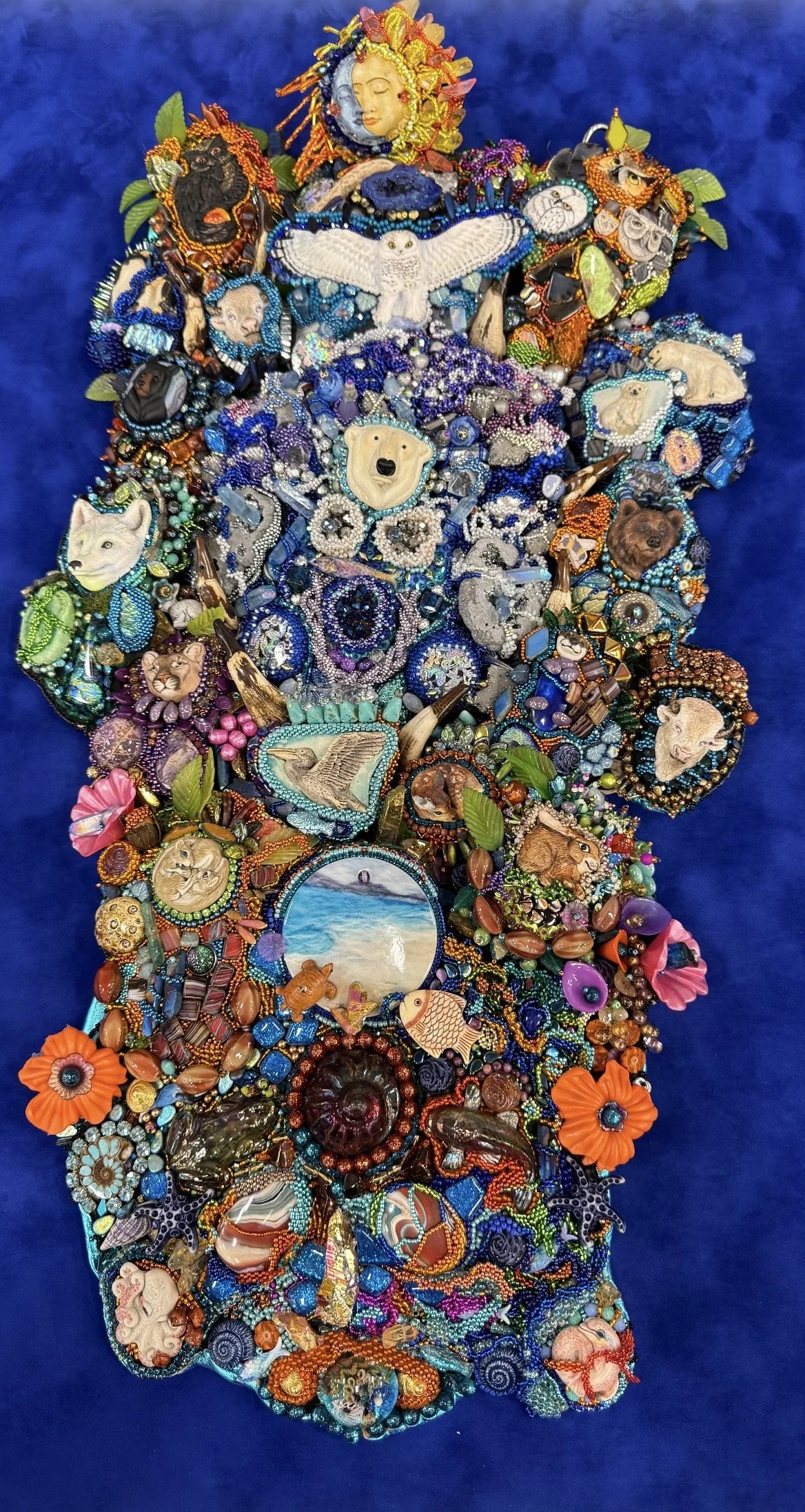
Interview with Betty Cox
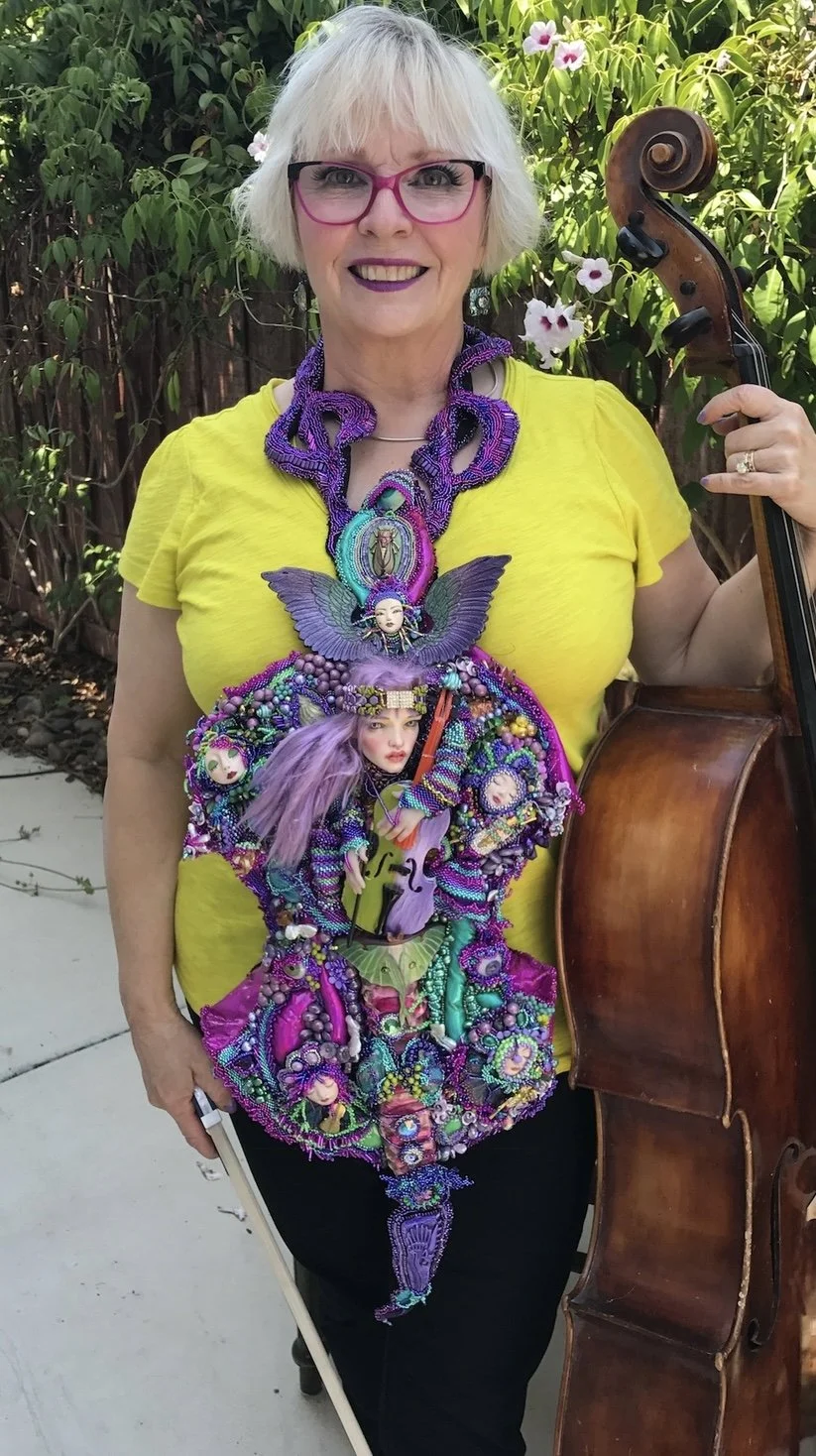
Your career has moved from professional cellist to nurse and certified nurse midwife, and then to bead embroidery and mixed media. How have the disciplines of musical performance and clinical care shaped your patience, precision, emotional awareness, and approach to making art?
I’ve always been artistic growing up either from learning clarinet to eventually practicing my heart out at the cello. I was always competitive and had to be the best in everything I participated in as a musician. The discipline of the arts as a youngster eventually lead me to going back to college and studying along with determination and perseverance led me to become an RN and later a Certified Nurse Midwife. This all leads to creativity later when I eventually applied beading techniques and perfected them to my own style. It takes lots of practice.
You have compared the act of creating a beadwork piece to performing music, with the finished object functioning as the completed performance. How do rhythm, repetition, tempo, and improvisation enter your process as you build a composition bead by bead?
I have often felt a let down once a big piece has been created, because the process is finished. It’s the actual process of creating is like the performance, so the process of practicing and refining is similar to the actual process of creating the artwork.
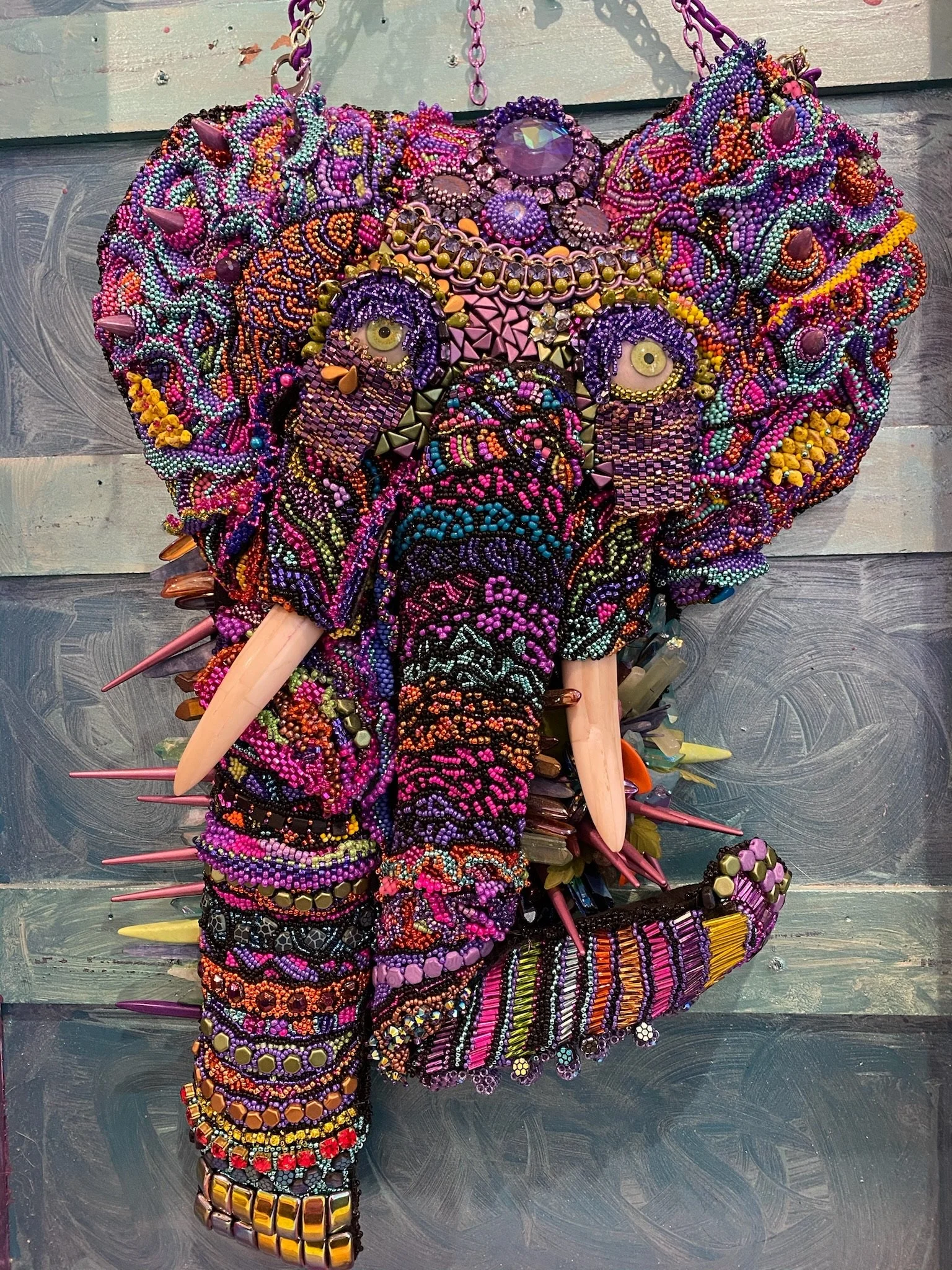
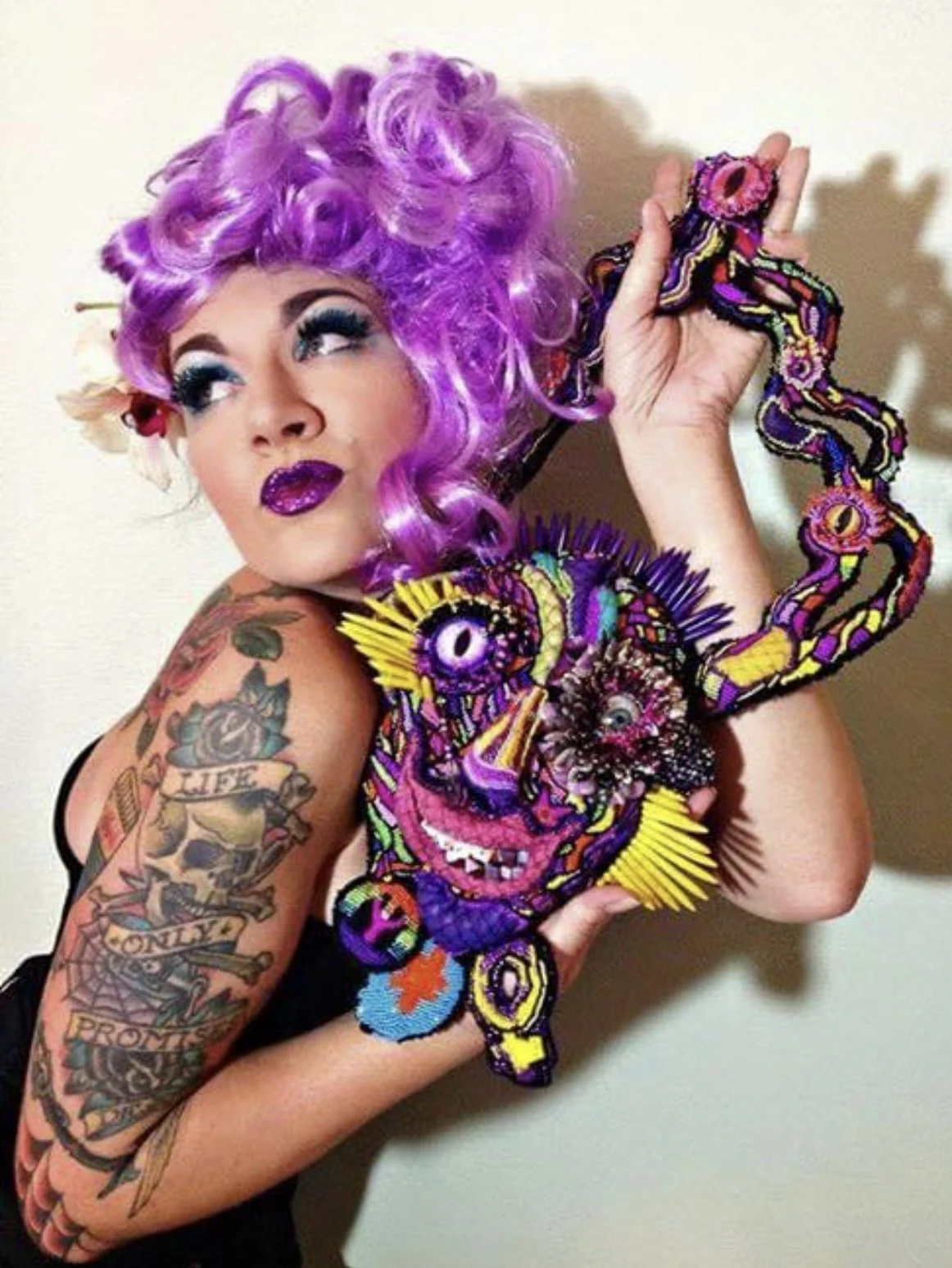
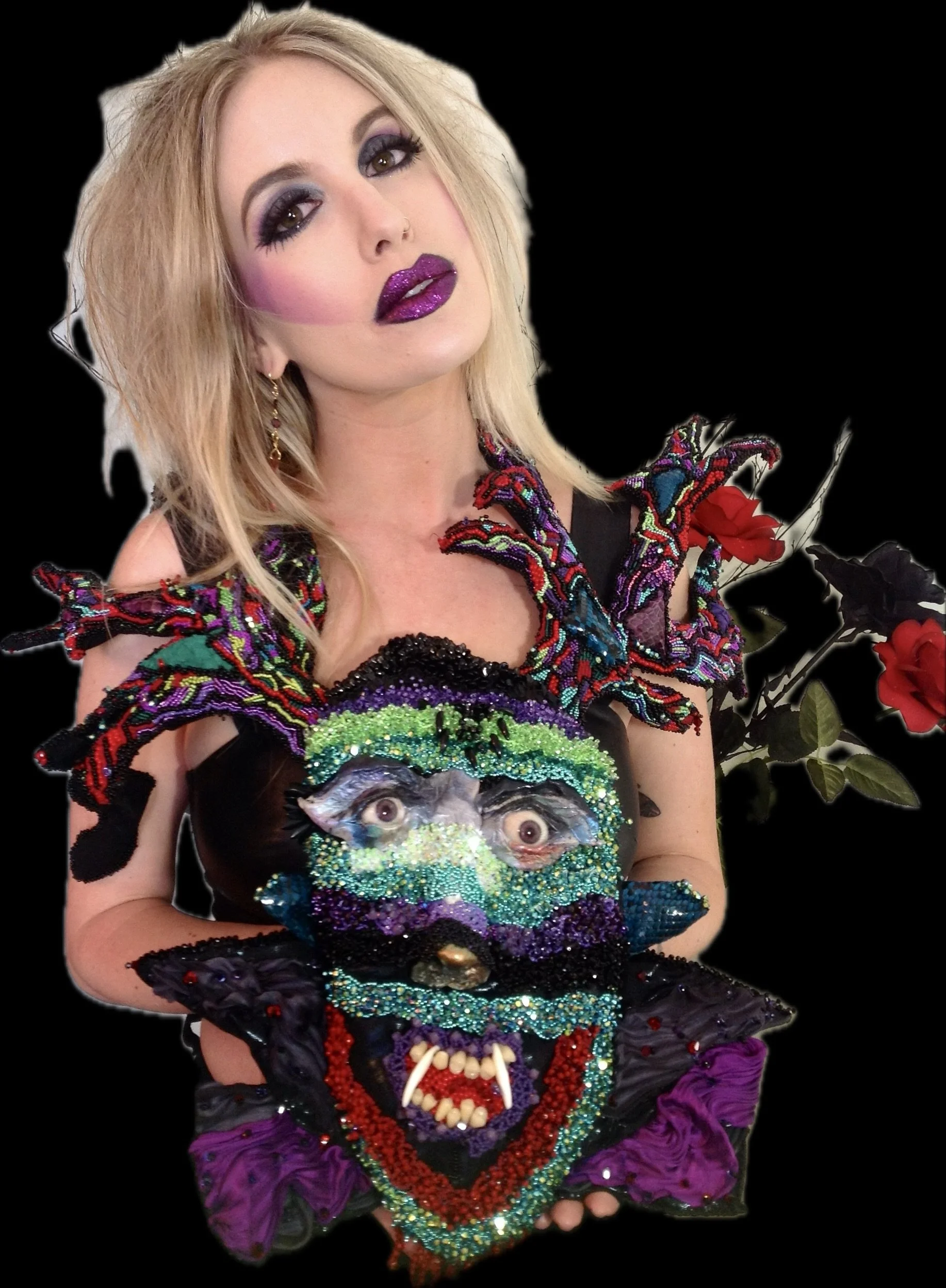
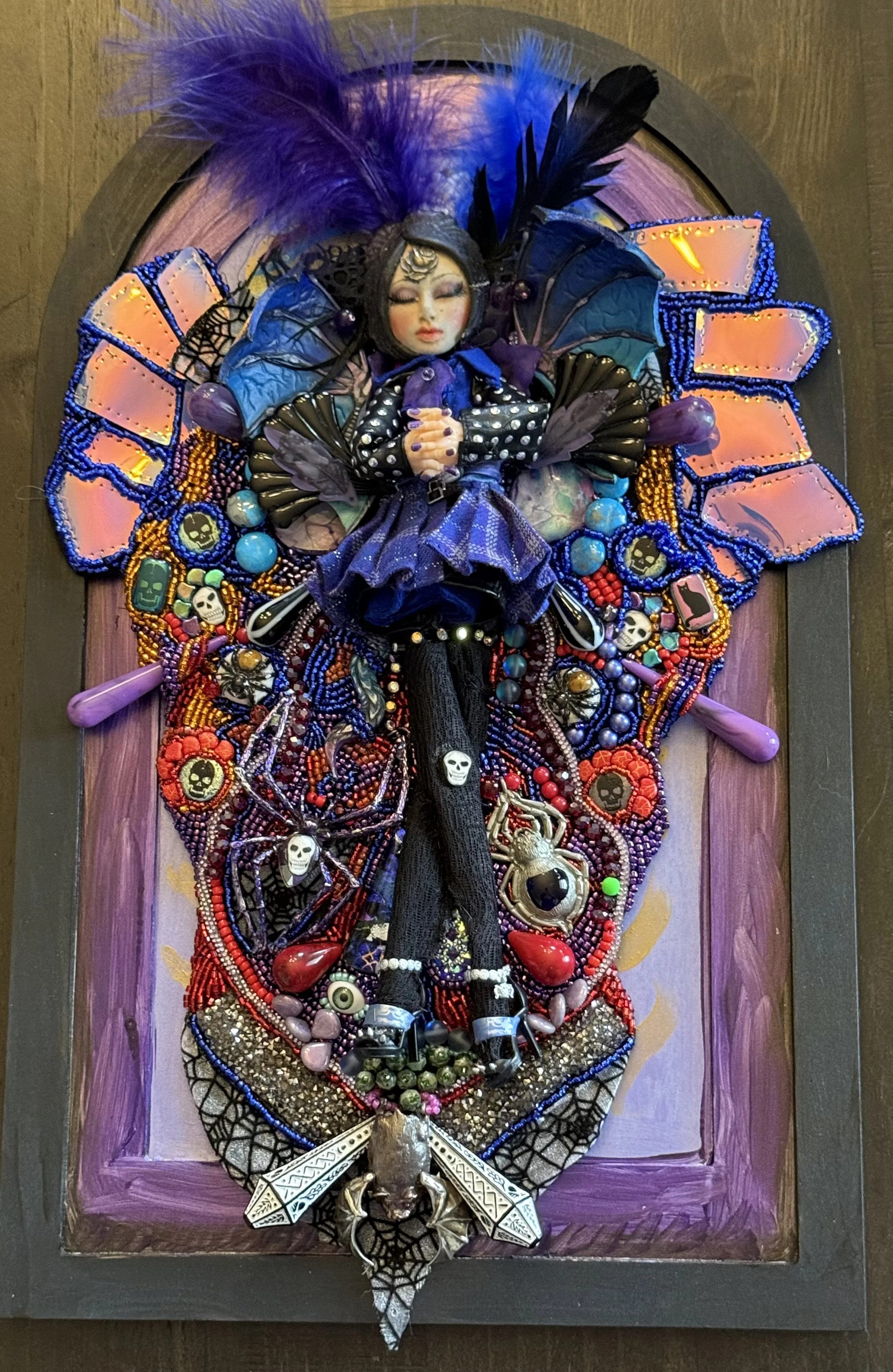
Faces, animal eyes, prosthetic eyeballs, and teeth frequently become focal points in your work. What draws you to these bodily and sometimes unsettling objects, and how do they help you explore the boundary between humor, beauty, vulnerability, and the macabre?
I often have a theme and sometimes I have a vision but it can be frightening to realize that my creation isn’t what I thought it would turn out to be. Whether there is a dark theme or an emotional theme …, I often think about what focal point I have and how can I project my message. I do enjoy freaking people out…, it’s like a tease. My macabre pieces are so enjoyable to create.
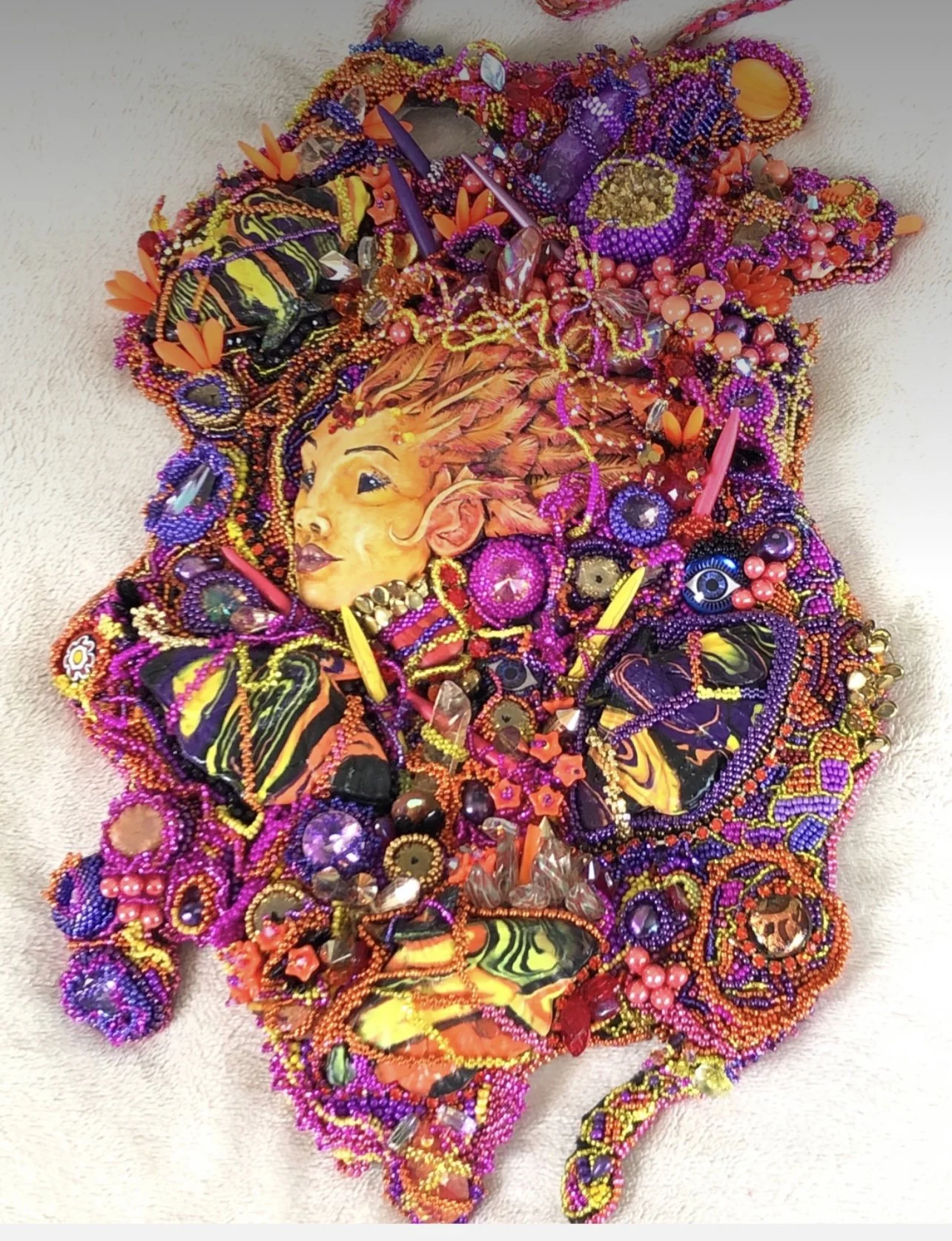
You often begin with a single focal element and allow color, texture, and additional materials to guide the work without a predetermined conclusion. How do you recognize when a piece has found its direction, and at what point do you know that it is complete?
I often sit on a piece and sometimes look in my bead stash for something to be added to my piece. But, it’s the placement, the added materials or components that often finalize a piece. It’s a process of knowing that I’ve added or utilized to the best of my ability that my work is complete.
Your work has been described as Venetian, Mardi Gras-like, whimsical, recognizable, and macabre. How do you balance visual abundance and theatricality with the personal messages embedded within each piece?
I often think about a piece with a theme or focal and spend time looking for what I have and that can be time consuming. There generally is a lot of planning but once I start the beading process it takes a form and I follow it.
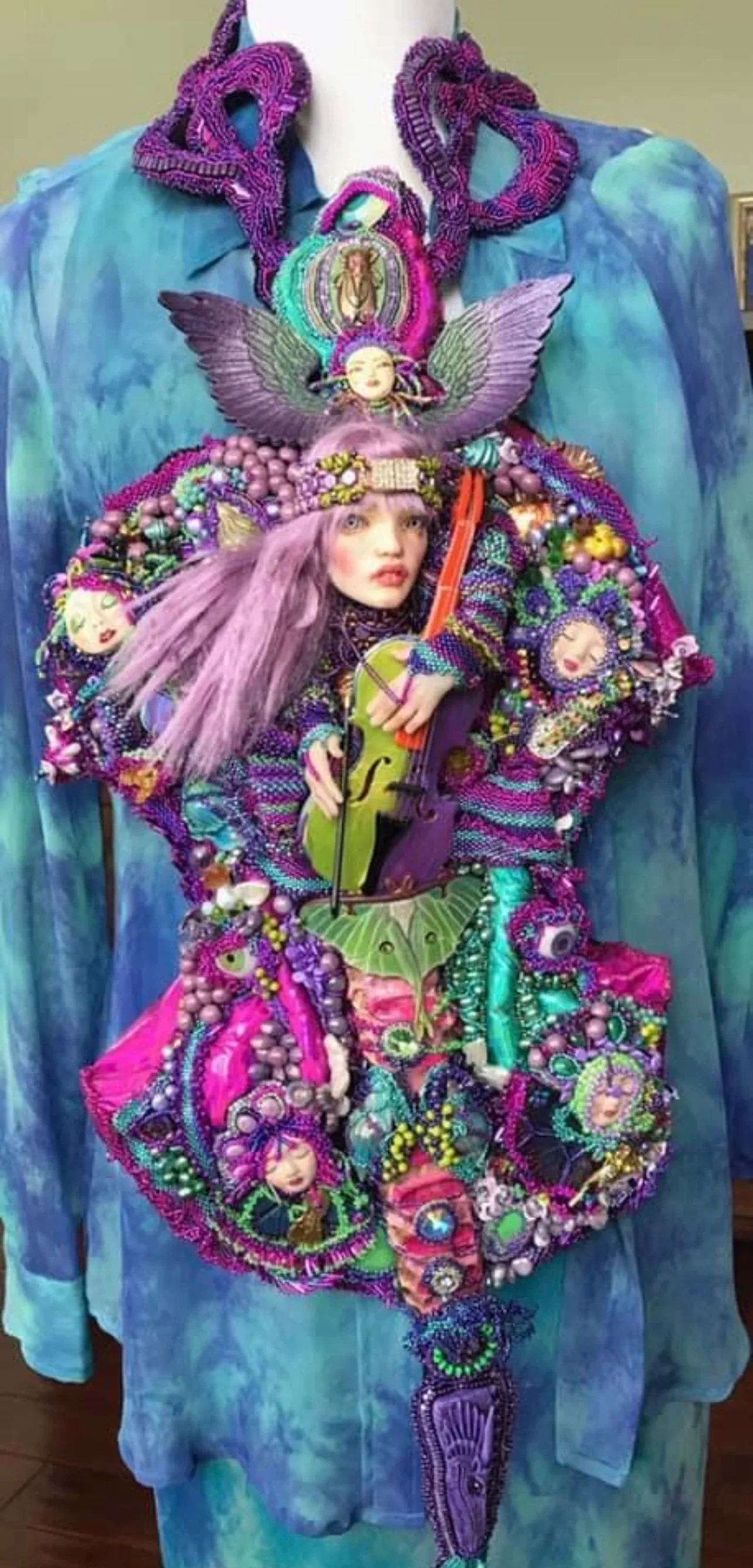
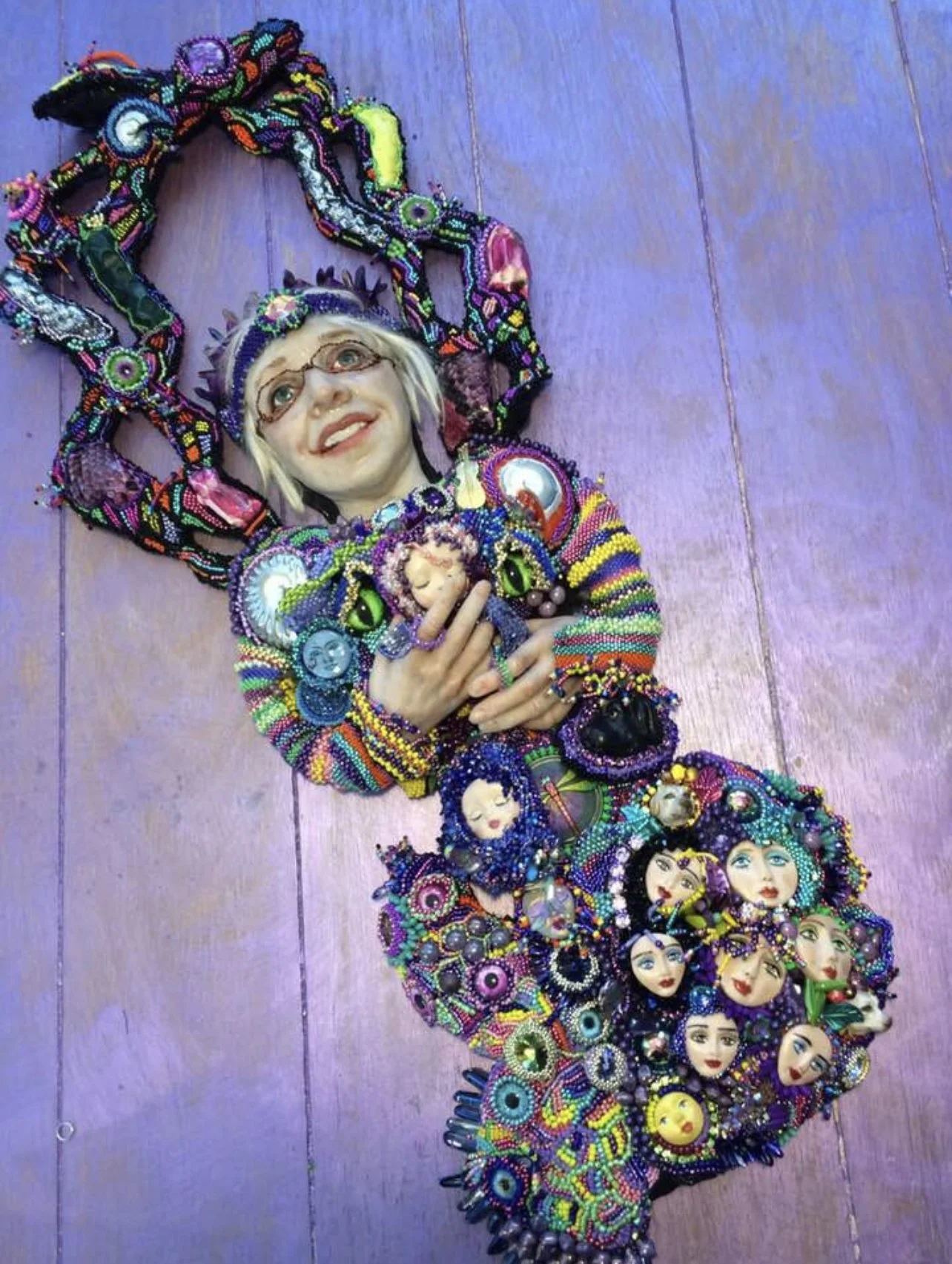
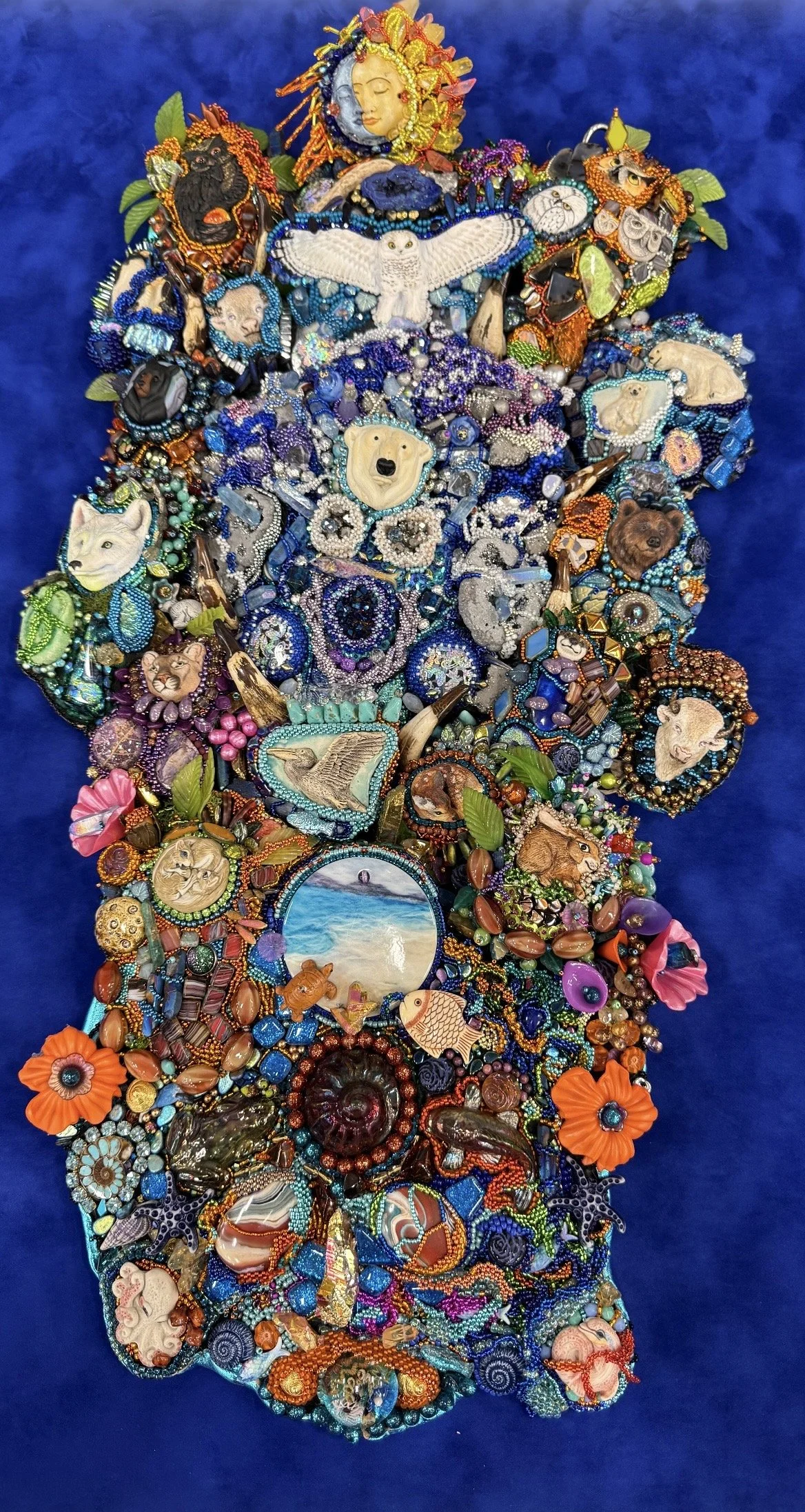
In A Cellist’s Dream World and My Life as a Midwife, you transform chapters of your professional and personal history into bead embroidery. How do you translate memory, identity, and lived experience into material choices, imagery, and compositional structure?
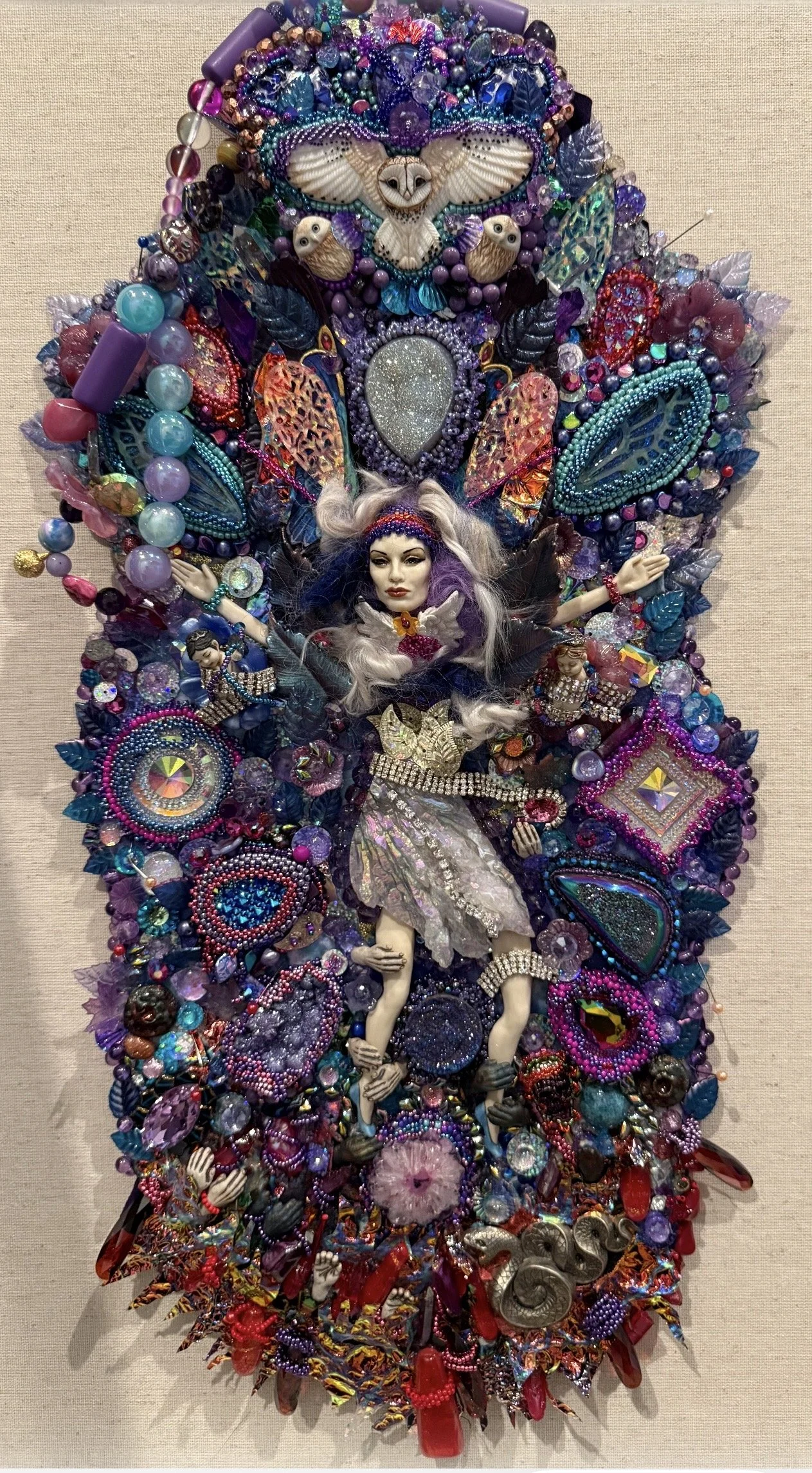
A clay form of my face was given to me by a Ukrainian artist. The details of her work inspired me. My Life as the Midwife was actually going to be a mermaid.., but once I started beading and I’m inclined to use faces.., those represented my patients .., I open up to what this piece could be. As an artist…, I’m drawn to eyes, faces and it seemed natural to create myself. It sounds kind of narcissistic but in actuality the thought of caring for women and delivering babies was my career and it seemed natural to go that direction.
You recall rejecting an educational environment in which every student was expected to draw in the same way, recognizing even then that you needed creative independence. How has that early resistance to conformity continued to inform your attraction to unconventional materials and nontraditional forms?
Looking back at that class, 7th grade, I was already drawing, painting things at home but I thought that this art class was too basic!! I understand it to be necessary but I really needed my own self expression. I was already in band playing the clarinet , cello came soon after, but I guess I’m rebellious at heart. I’ve been told I’m a good compromiser and adapt to change when it comes to helping or caring for people.
Your large-scale works employ techniques such as backstitch, peyote stitch, and right-angle weave, combining meticulous craftsmanship with an expressive desire to have “a lot to say.” How do scale and technical complexity expand the emotional or conceptual possibilities of bead embroidery for you?
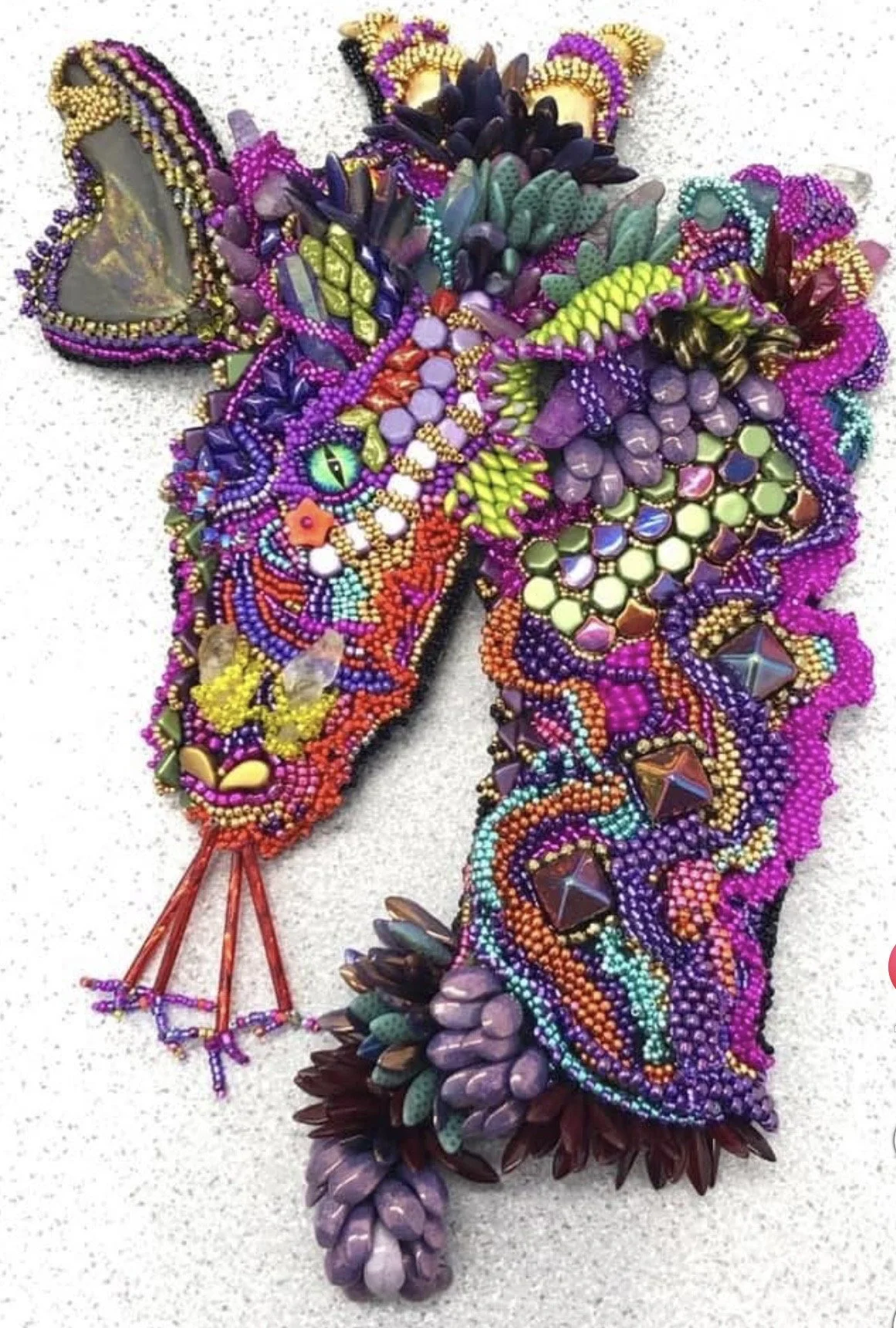
There is alot that one can do with peyote and freeform peyote stitching. Color is one of my fortes too. So all of it is fun so I’m often not aware of the scale of my beaded art pieces. My handwriting is big thus my art pieces are big!
Some of your works function as jewelry or wearable art, while others approach sculptural embroidery or painting on a surface. How does the relationship between the artwork and the human body change the way you conceive its meaning, movement, and encounter with an audience?
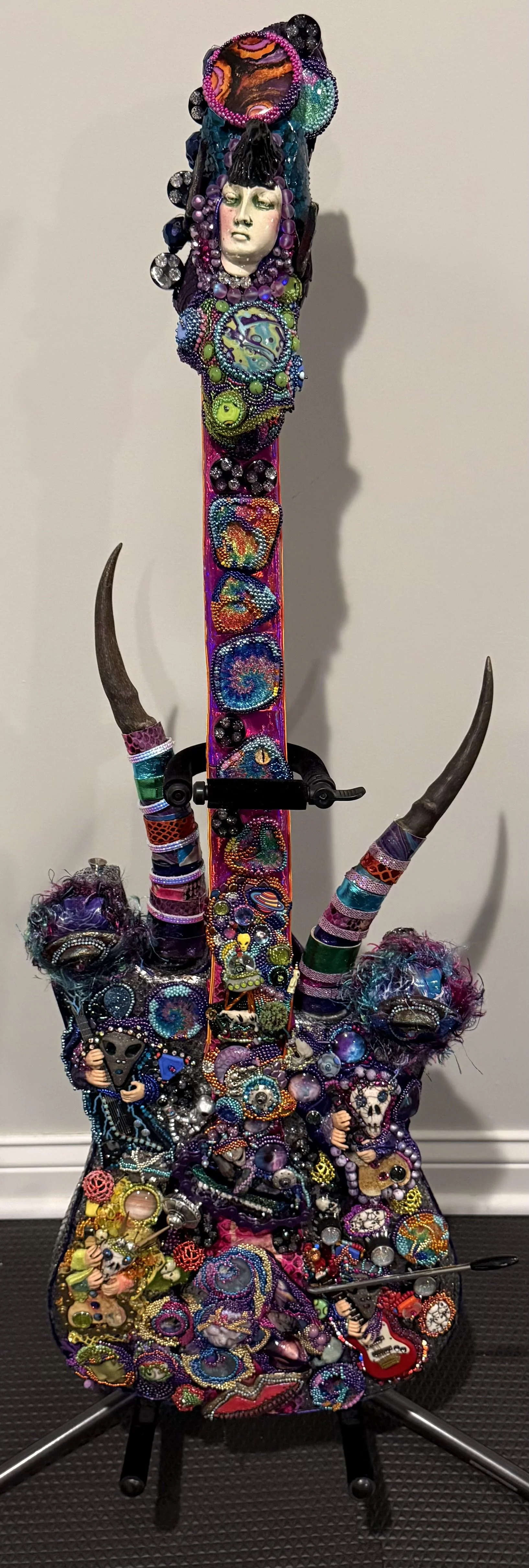
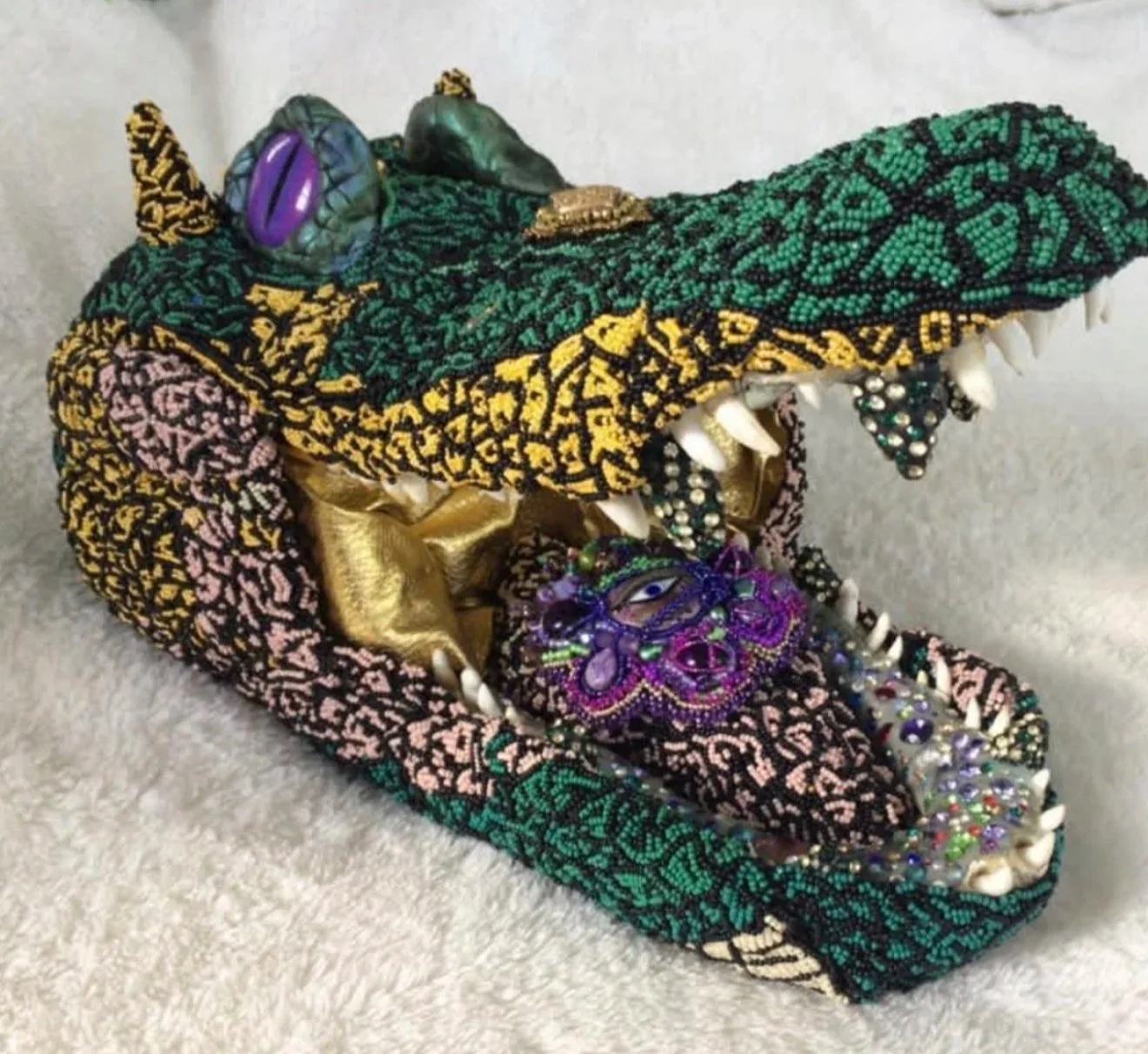
There are various artists that do unbelievable structural bead art.., such as an actual standing sculptured piece. I on the other hand often I often create with some dimension so my work is generally not flat. But, a part of me would like to expand into a real 3-D piece. It helps to bead over a structure so the piece is already 3-D . An example Is my Allie’s Feast, my beaded alligator skull.
Since retiring from midwifery, you have devoted yourself more fully to creating, exhibiting, traveling, and teaching. What new materials, techniques, or conceptual directions do you hope to explore as your practice continues to develop?
To be honest, I feel like I’ve covered a lot of my career themes, but I’ve been using more and more mixed media in my work and I plan on a collaboration with another artist.