
Interview with Vigdis Elisabeth Feldt
Your motto, “It’s about observing and creating,” connects attentive seeing with artistic action. How does sustained observation transform an ordinary encounter with nature or human behavior into the beginning of a painting?
My slogan is related to my work as an artist; It is all about seeing, realizing and communication. Naturally creativity is a part of the process.
Giving myself the time to enjoy, sink into a room of a physical landscape, and then , stay in this landscape, gives me the opportunity to see detail and enjoy what I see.
Then. What do I want to make? I have to decide. Figures in a park, f. instance, trees and a lake, houses behind? I mostly use my own taken photos as an inspiration for my next picture.
How do I approach the motive on the canvas? I know I can draw nearly naturalistic, but when I paint, my pictures become more expressive. Due to my way of using the brush, mostly.
In fact, I use a method, that is marking the Golden Ratio points, then, the foreground , the middle ground, the center of the canvas and the background.
Then I use two crayons to sketch up the motives, for instance yellow and blue. Then my brushes are taken into use; I start with one colour and add more and more colours as the motives get painted.
From the start I have an ambition to create something beautiful, significant, thought provoking, perhaps also attracting attention to a phenomenon.?
I love to communicate with the motive on the canvas, and the audience or the individual that looks at my picture.
Whatever eventually comes forth, the work finished for the viewer to get ideas from, might be understood totally differently than was intended when I drew my first figurations. What came forth was dependent on my techne, what I thought was important, my patience with the details.
Even though I tried to be accurate, it was always something else, than the motive I originally took my inspiration from, that emerged.
Something else came forth. What this was and is, the title of the picture can indicate. but that something inside me, can be a mystery, unconscious elements in the creating process; upbringing, learning , dreams, urges, longings, even colours undefined effects on the nerve system and much more.
The finished work has gone through a journey, from an intention, an idea to a totally new project.
Indeed, I am not a copyist , but a fabulator, meditator, storyteller, an inventor, who is trying to pain; what I saw or what I realized.
From an aesthetic point of view, most of what I see is the beauty of the creation, scenes I want to paint, express, enjoy once more, make a manifestation of something beautiful I saw. Stick to this idea on the beauty of life, rejoice in this memory many times.
The idea of describing cruelty, to send out a cry for help to the ones who are victims is essentiel The picture and its figures thus obtain a political mission.
I do rarely make pictures showing cruelty or abuses, but a few of them I have created. I could not ignore these sides of life. I use pictures from newspapers and media and interpret them on the canvas to protest against any violation of every human`s rights. The titles of these two pictures are; “The Russian Tragedy”, and “Victims of the Syrian War”.
Further on, my appreciation and recognition of the colour palette of nature, is a gift mostly inherited from my familie`s genes. My uncle , Leif Feldt, 1923-1943, was a very good painter. Unfortunately he suffered from tuberculosis and died very young.
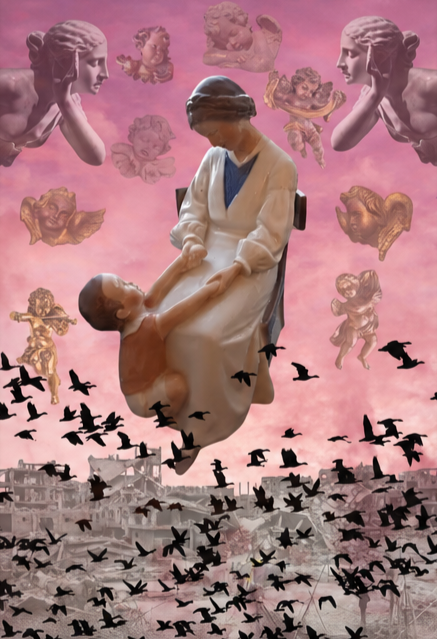
“Dreaming of Motherhood” is the only picture I have painted in non realistic surrealistic colours. The picture is a surrealistic dream.
The colours I use from the start in the picture construction, is essential because the colours decide the light effect in the picture story. Colours in nature are a part of my perception and emotional approach to life, also affecting my state of mind. Consequently colour choice is an essential decision from the work's beginning.
You grew up surrounded by books, paintings, and accomplished choral singing. In what ways did the structure, rhythm, harmony, and emotional force of music shape your understanding of color and composition?
The pictorial expressions and musical works are both built on rhythms, harmony, disharmony and emotional force, and perhaps a crescendo. The music I have been listening through the years, both Handel`s Messìas, Beethoven's 9th Symphony, Mozart, Vivaldi, Ella Fitzerald, Stephen Foster`s Potpourrie, Pat Boone, Beatles, and Pink Floyd, among many, many others, have contributed to my esthetical tastes.
Music and paintings mirror their times. Both are effected by a society's economic structures and cultural classes. My ancestors were mostly farmers, trailers, clerks, and handicraft people.
They were connected to and performing the music of the Salvation Army, chorus activities and our local high quality theatre, performing musicals and operettas. My parents chorus was the theatre chorus between 1943 and 1960 approx.
Madame Butterfly, La Boheme, Summer in Tyrol, The Golden Gate, The Exit from Seraillet, where the operettas they set chorus sound to.
In my childhood home , structure, esthetics, decent work contributions were essential brickstones in building up a family life and the Norwegian State, and also creating an inspired and prosperous environment.
In spite of performing music, related to emotions, I am endowed with a logical mind, which comes forth in the construction of my pictures, but also a mind that can be stunned by and sink into the beauty of a musical piece, and naturally some paintings.
My pictures never express the great dramas with contrasting colours that disturb the viewer`s emotional balance. They might express sorrow, pain, and catastrophes, but in a reflective and depicting way.
The understanding of colour and composition is connected to Emmanuel Kant's theory on tastes. “Tastes cannot be discussed.” They are a part of one`s genetic inheritance.
Naturally also the physical environment is having an effect on how I am experiencing life.
The light in western Norway has got a special intencity, effecting the colour on every surface there is. The colours used by my uncle , Leif Feldt, in his painting, belong to my favourite.
I gather, I am a good observer endowed with a logical mind. I draw what I see, and follow the already stated construction principles. What comes forth after that , is “something” that is not controlled by my logical sense.
Light filtering through plants, reflecting on surfaces, and revealing the transparency of water recurs throughout your work. What does light allow you to express that form or narrative alone cannot communicate?
On Light.
Without light , there is no life. Life vibrates, light might have different , varying rhythms. A white beam consists of 6 colours, red, orange, yellow, blue indigo and violet. These colours vibrated in nature,and hopefully also in my pictures.
Sceneries of highlight dominates most of my pictures. Clair/obscure effects, dark foreground and bright background , are used in just a few of my works. The third alternative, tenebrozo, dark background, just a few representations of light indications on human figures or other shapes, has never occurred, till now.
Primitive light, raise and recessed areas in portraits are marked, but not with strong light and shadow contrasts. Neither are other objects on the canvas. But these variations of light make the icons three dimensional and alive.
A black and white picture without shadow indications makes the work lose its depths. The same happens to pictures made with only flat colour effects. Light and shadow in combination makes the picture live.
My pictures are filled with light, they represent what I saw and see.
As already concluded, it is all about seeing, realizing and communication. I communicate with my own mind when I paint, and mostly I want to share this experience with others.
You describe your visual language as a combination of impressionism, expressionism, realism, and elements of surrealism. How do you balance direct observation with emotional interpretation and imaginative transformation within a single work?
First I observe a motive and draw it. Thereafter I communicate with the drawn sketch, while performing. In this process, meditative moods occur, also emotions within me, might be stirred.
Eventually, what the finished work expresses is “something” I do not calculate from the start. The work has turned into something else.
The receivers of the story, my picture, might have another interpretation, understanding, or experience of my artwork, when they look at it.
A title to a work, might anyhow give the receiver a clue to what I was trying to express, when I painted it.
But interpretations should be a free activity.
Your paintings often celebrate the beauty of creation, yet you also address suffering and the negative dimensions of life. How do you decide when beauty should offer consolation and when a painting must confront discomfort or injustice?
Injustice, any violation upsets me. Looking through the internet news , crime against humanity comes forth, also the demolishing of nature, cultural inheritages, nature catastrophes, famines. The indifference that might occur frightens me . This indifference might be due to an individual experience of having no effect on the world economy. Some people stop protesting against violations. Some individuals are also easily seduced by corrupt leaders. They might lack education or correct information.
Actually, most of the world is in despair of how greediness, arrogance, corruption, and egoism lead the largest, most influential countries to violate nations. Religious argumentations and manipulations might deprive individuals of logical or humanitarian ways of thinking.
This is frightening, since these dominant states or state leaders might try to prevent free speech, also in so-called democratic societies, intending to create a new world order. Sensory, administrating and controlling public media, preventing the free and independent research and free press. Gather money for themselves, accumulate money means, create a secret police, throw people out of countries. Keep the ones who suit their interests. (culture and income).
These leaders might start wars, even genocide operations.
Some victims of these wars are kids.
Looking into the eyes of a toddler, having lost any experience of love, comfort, communication, development, not to mention natural rights such as clean water, nourishing food, decent housing, a future with functional and joycreating activities. Education, future work, arenas for communication and cultural public activities. The teaching and practicing of public enlightenment. In short a sustainable economic and cultural policy.
All these premises for a happy life are demolished. This fact makes me furious and in dispair, particularly when I see into the eyes of the victims.
Therefore I managed to make only two pictures on the matter. The other pictures are made to comfort myself and to remind me of the beauty of the created. To create a hope for the humiliated, persecuted, tormented and tortured.
Till now, I have not managed more.
I do not use dark colours to depict lamentation, f. instance, while referring to the paintings from Syria and Russia. My series on erotic communication has balancing colours inspired by photos from The Milky way scenario, since I think that erotic communication might be compared to flying.
“Dreaming of Motherhood” is a surrealistic dream. The colours selected were an experiment, but it fitted into the concept, so I kept them.
The body language and the expressions in the eyes of the involved persons, tell the story.
Human relationships and communication are central to your practice. How do you translate experiences such as connection, misunderstanding, vulnerability, or empathy into visual elements like gesture, spatial distance, color, and atmosphere?
Teaching and learning from your teachers and your own classes.
The humans are playing creatures. This fact has more or less tried to be introduced to the public schools for at least 100 years. More or less successfully. Physical training such as sports and dance increases the oxygen level to blood in the veins giving energy to the brain cells.
Singing does the same.
Sessions of these activities make it easier to be receptive towards new learning.
Writing a text with your hands is a long learning process. Motoric learning takes its time. But if you offer a child a big piece of paper to sketch on; with crayons, finger paint or for instance: gras. After the rhythm of a relaxing piece of Vivaldi, or the Music of a Hard Rock Band, the child will start enjoying the rhythms, the melody, the accords, the light in the colours they use. I really enjoy the activity. Then later they can paint big letters, big faces, big houses. Big and colourful. And another factor, he will not have tension in his body. Preventing him from other, further learning processes.
Progressions after that. This is a pedagogical matter, which I perform. The fact is; teaching students how to play on paper surfaces, while creating a work, leaves us time to communicate and continue to more complex levels in the creation of the work or a new work.
I do scratching myself, when I want to get new ideas on exposing too.
Then I use the golden ratio, iconography, my own way of setting up a motive. But the fact is, I have always learned from my pupils. ... .And from my very clever teachers at teachers college.
Your education in arts and crafts emphasized encouraging students to experience joy through creative activity. How has your background as a teacher influenced your own creative process and your understanding of art as a shared human capacity?
First I would advise a young artist to be alone, with their thoughts and with their work. Use music and crayons to make your body, your instrument, free and in motion. Then, whatever medium
you work with, use the tools you find necessary, for instance the golden ratio to ease the construction work.
Be meek towards others, but be proud of your gifts as a creative person. Do not let anyone steal your joy of being the master of your tools and the master of your works. But learn from others.
The golden rule, what you want others to do for you, you should do to them. Respect other people in your life, also their artistic language. See the other human beings, use time to socialize and discuss with others topics like sociology, anthropology, psychology, religion, human rights, environmental challenges, Learn from others, listen and speak. Also through art.
You spent seven years at the Free Artists Academy and later studied media, iconography, advertising, and image interpretation. How did these experiences sharpen your awareness of the ways images communicate meaning, shape values, or influence society?
I studied at the University of Bergen , department Stavanger, before I was invited by Hanalore Lengauer to join the free artists Academy. My correctors were Arne Hoffmann, architect, Kjell Phar Iversen, famous neoimpressionist, and Roland Lengauer, expressive sculptor, highly respected for his works.
Life is about communication. With words, movements , with music and written signs and drawings. The stone age people told us; I lived here, by pressing their hand covered with red clay, animal blood, or plant extracts towards the rocky cave walls.They also made beautiful drawings of hunting scenes, a kind of prayer to the holy spirits to provide them with animals to eat. A magical scenery, they hoped would become a reality.
The Egyptian Faraoh, writing his stories on frescoes in his temples. His artisans figured him from the side, his people should not look directly at him. He was a god. The pictures of agricultural workers in a set body position, always in the same figuration, for many, perhaps 1000 of years. Society should be presented as an agricultural, static one.
Through history, the economic and cultural background decided who was permitted to draw a painting, who could order a painting for his walls, and which motives were allowed.
After the Church meeting in Nikea in 325 a.d. of Christ all human sculptures should be totally covered with textiles. The individual inhabitant in the Roman Empire should not know of antique sciences such as mathematics, philosophy, written language and how the body was built. The church was responsible for the subduance of free thought to maintain total power together with The Roman emperor, and also the Military Services.
A significant change did not occur till the pre- Renaissance ca. 1480, when Brunneleschi, a clock maker, totally solved the problem of the Central perspective.
Then the development of art, changings in the power constellation;, culture, economy, mm, changes in who could afford to buy art increased. A very exciting history, leading up to the 1880s. when suddenly sons and daughters of mostly bourgeoisie families joined together in workshops and started to recreate the arts. Naturalisme, Realisme and Expressionisme styles emerged.
Then; through the twentieth century the artworld continued to experiment and find ways to express and innovate itself.
I am quite a conservative artist, nearly totally expressive in my joyous interpretation of mostly the beauty of the created. But , perhaps something else comes forth, something that perhaps makes my pictures worth looking at.
Who has mostly affected me?
Nicholas Astrup, among many others. Let me mention , before I proceed to answer the interview question 9, Vassily Kadinsky, Hundertwasser, Munch, The Norwegian female painters, Harriet Backer and Kitty Kielland. Also the woven works of Frida Hansen, the international Jugend Style weaver and designer, 1880ies artists. David Hockney is one of the postmodern artists I appreciate highly. 1970ies and till 2026.
You have identified Nikolai Astrup as a favorite painter, and your own practice shares his attentiveness to Norwegian nature, light, and lived environment. What aspects of Astrup’s work resonate most deeply with you, and how have you developed those concerns in your own distinct visual language?
First I have to mention that I had been painting for many years before I became aware of N.A. `s paintings. I found his works in the library, while searching for some motives for my Painting School pupils.
Why is the art of Nicolas Astrup. resonating within me?
Because both he and I are expressionists, naturalists and a bit impressionistic and naivistic in our expressions.
We both make sceneries of nature`s beauty. We both love to describe human beings enjoying nature. Both of us use colourful and distinct brush strokes. Our pictures are mostly highlight sceneries. A few of them are constructed with the clair - obscure effect.
Nicolas Astrup (N A) lived most of his life in a small village, called Jølster. in Sognefjorden. His father worked as a reverend there.
His home village consisted of the fjord, the plains, the forests , the agricultural areas, the high mountains. He could not see the open sea, a fact that differs his choice of landscapes from mine..
I was born in Stavanger, also a western area in Norway, but further south of Sognefjorden. Stavanger was an average sized town , originally living from fishing and shipping industries. Now the oil city of Norway.
I lived and live near the harbour, but have access to the most beautiful mountains and fjord areas. But along the western coastline, long beaches and flat rural landscapes, with a high skyline appear.
If I am to compare our topic choices, we both love colour and light, both in painting interactions among humans and nature. Such as Nicolas Astrup`s The celebration party, where N A with love paints his wife Angel, in a white and blue Jugend dress, together with their family, in the garden of the parsonage.
Some of my pictures, such as “Summer afternoon “ by the Beach in Vadla, Jøsenfjorden. “Going fishing”, my mother, father and sister, dragging out the rowing boat for an afternoon tour on the fjord. Both works tell of solidarity and love.
A nature description work, “Mars Morning” is depicting a willow tree with catkins, its branches stretch towards the white mountain tops, the coming spring light, At the foot of the tree, the snow still covering the fjordedge, meeting the ice covering fjord with lanes of ice-blue water appearing. Chill and cold temperatures, but the light awakens hopes for the new spring.
I have made many letters interpreting light`s effect on water and sky, but since I live near the sea, my landscapes are often more open than his.
Interiors, such as one of N A `s charming works from his and angels farmhouse parlor, appeal enormously to me. Wooden walls, woven textiles with old Norwegian patterns worked into them. Furniture executed by artisans in natural tree materials Brass candlesticks on the table, also big green plants put into terracotta pots on the table, too..
Towards the garden small square windows letting the light in.
What comes through to me, In N A lifework, is the word respect, respect for life, for the people who create a decent life for themselves and their families.
N.A. interprets the beauty of the created, what humans can create and the creating nature. The plains filled with spring flowers, his farm garden bursting with fruits, vegetables and flowers. His children playing among the fruit trees. His wife being embraced by their kids, sitting on the hillside outside their home, in the summer afternoon, during harvesting times.
To conclude it once more, both Nicolai Astrup and I are happy to show the holiness and the beauty in sceneries connected to nature and everyday life.
Through the years N A gave successful exhibitions, was granted scholarships, and went abroad to study the arts. His wife followed him on a journey to The USA. While working in Jølster, he gathered his artist friends on his and Angels farm in Jølster. They were well provided for and enjoyed life. Celebrated life.
N A did not live to become an old man, He was contracted with tuberculosis in his childhood, which reduced his capacities for studying for longer periods in a row.
His fathers wish for him was to study at the university, which was impossible for NA to follow.
Instead N A became an excellent painter, showing living conditions and the beauty of life in the countryside between 1900 and 1926.
A life work of his I am happy to enjoy.
You hope that your future paintings will engage with policies that support clean water, food, housing, education, sustainable work, cultural exchange, and a dignified life for everyone. How might you translate these broad social commitments into specific images without reducing painting to illustration or political messaging?
In one work of art you can not approach every topic there is in this world.
I can show the beauty and splendor of life, I can show everyday life, and I can protest against violations against human beings, animals, nature, demolishing of cultural memories, by making pictures showing the abuses. That I do.
Every deprivation of human rights is a catastrophe.
I can protest against genocides going on in the Middle East, by deprivations of health care, food and water supplies, in short to starve out a nation in order to kill most of the people living there. Protest against tribes killing each other in Africa, stealing of land from other nations, stealing other peoples natural resources.
The world has never been in full balance, but now we can see abuses and breaking of Human Rights so clearly. Due to the internet.
People tortured, raped, and mistreated in front of journalists` cameras. Fascistic leaderships killing , depriving human beings of every human right, every dignity crushed and no one interfering. Why don`t they or we? Because the great masses know that these “people” are leaders of nations and are supported by economic and cultural interests who want to control free speech, the free thought, the free research. Also dismantle democratic tools, rights, social support , high or meaningful education for everyone, good healthcare, and mm.
These nations and their leaders have great armies, security police, to protect their interests. Naturally they also own their own News Stations, who can produce false and or insufficient information. Create attitudes, hatred, racism. Prevent people from getting enough training in how to get sufficient information and knowhow in searching knowledge on what is happening in society.
Who are these people ? The invaders of other peoples land? The abusers of any human right law and bill? Enterprise leaders who profit from wars going on? Creators of a new economic and cultural world order? Big nations who need other nations' resources to survive?
Money and resources for themself and the others shall be obedient followers. The new truths shall come forth. Resources shall be controlled and applied by an elite group.
These scenarios have to be prevented. These leaders must go. They and their supporting followers. A democratic system must be reestablished. Perhaps a New International Brain Trust to reorganize the democratic ideals into new settled laws should be established, stating that every human being is endowed with the same right to pursue the dream of personal freedom, search for a decent life for himself and for his fellow creatures.
Artists have the possibility to protest against abuses of any kind. I have protested against the killings in war. My pictures of landscape sceneries advocate the protection of nature. Some of my pictures tell of communication between or among humans. See yourself and see others.
Hopefully, artists can create a protective wave leading to changes how we treat each other, and how we are willing to see others than ourselves only. A picture can also lead to communication, which most of the time is inspiring and meaningful.
Vigdis Elisabeth Feldt.
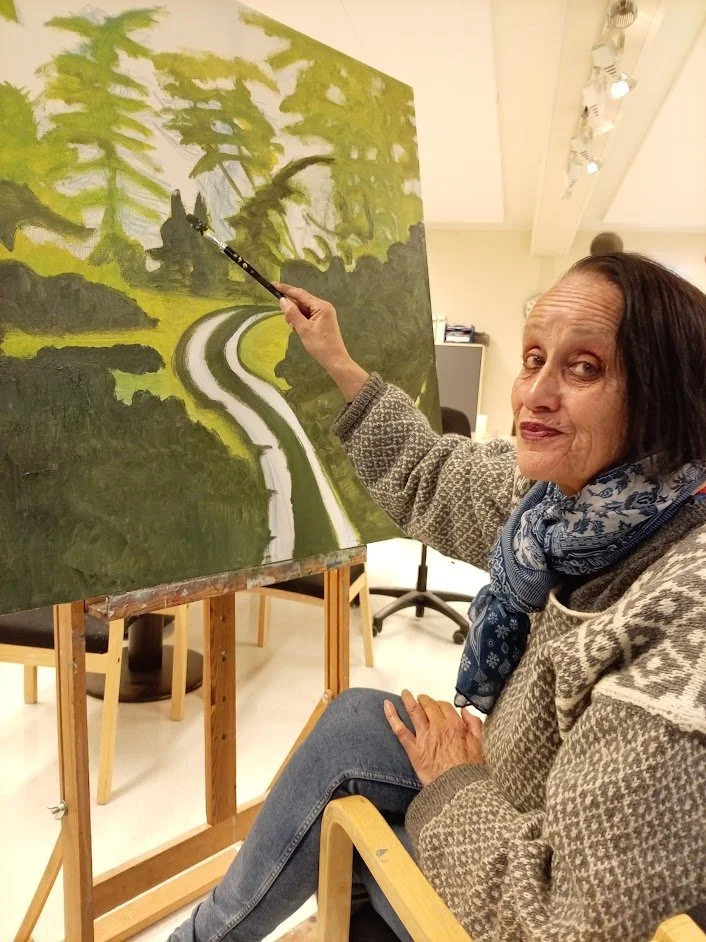
Vigdis Elisabeth Feldt - Artist in work
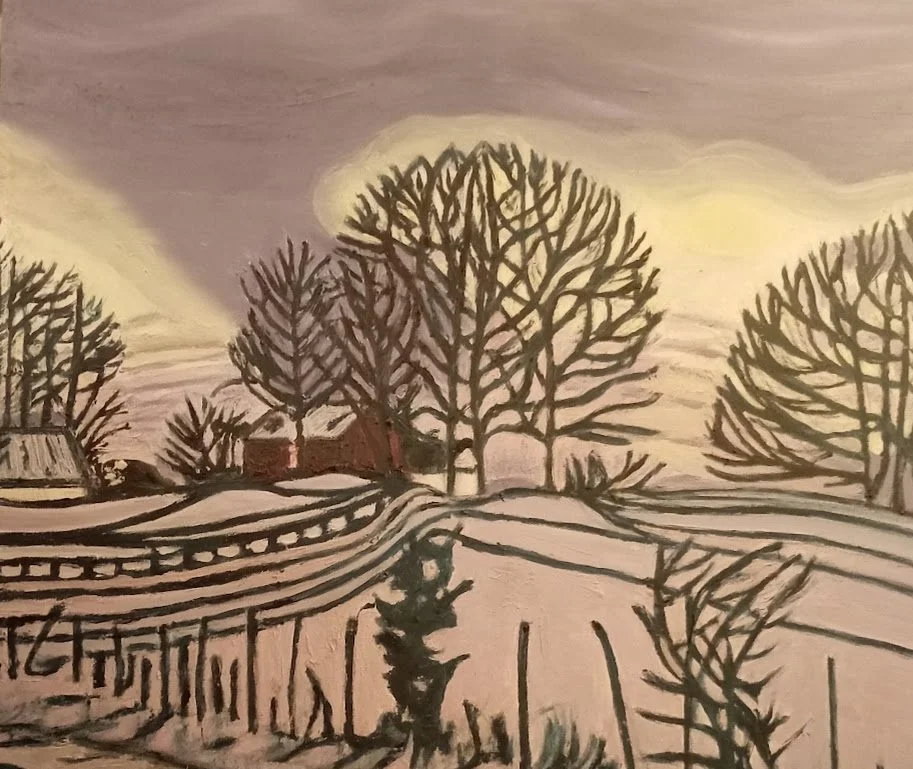
Last Winter Day in Hellvik - 80x80 cm - Oil on canvas - 2026 - VEF

Spring at Breidablikk Park - 100x40 cm - Oil on canvas - 2019 - VEF

The Boy and the Buck - 80x80 cm - Oil on canvas - 2021 - VEF

The Russian Tragedy - 80x80 cm - Oil on canvas - 2026 - VEF

Towards Soria Moria - 100x100 cm - Oil on canvas - 2020 - VEF
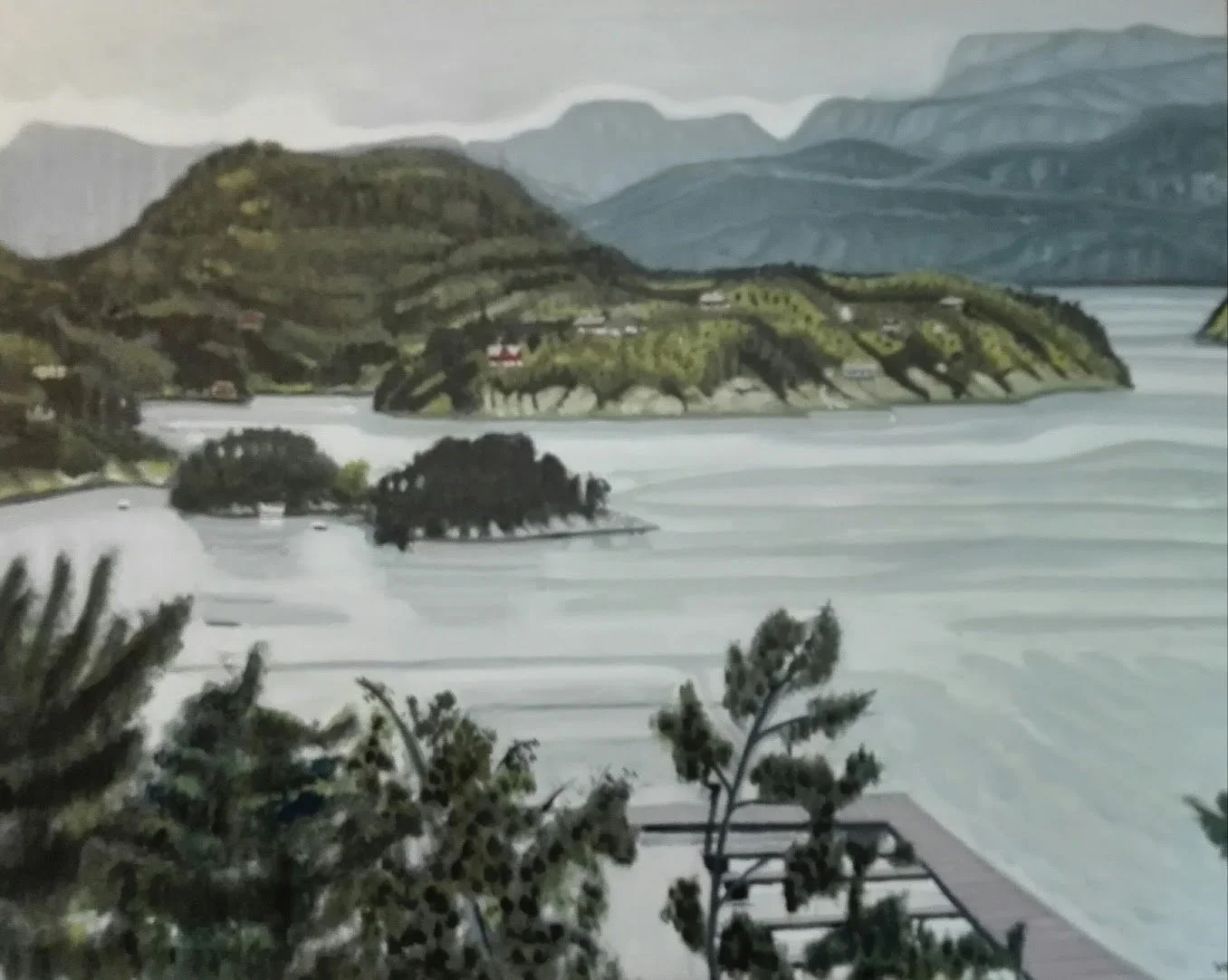
Towards Aadnoy - 100x100 cm - Oil on canvas - 2017 - VEF

Victims of the Middle East - 100x100 cm - Oil on canvas - 2020 - VEF

Abiding on a Moonbeam - 100x100 cm - 2020 - VEF

Autumn by Bredevannet - 100x80 cm - Oil on canvas - 2020-VEF

Evening Walk on Viste Beach - 100x80 cm - Oil on canvas - 2016 - VEF

Father`s Pride - 100x100 cm - Oil on canvas - 2020 - VEF
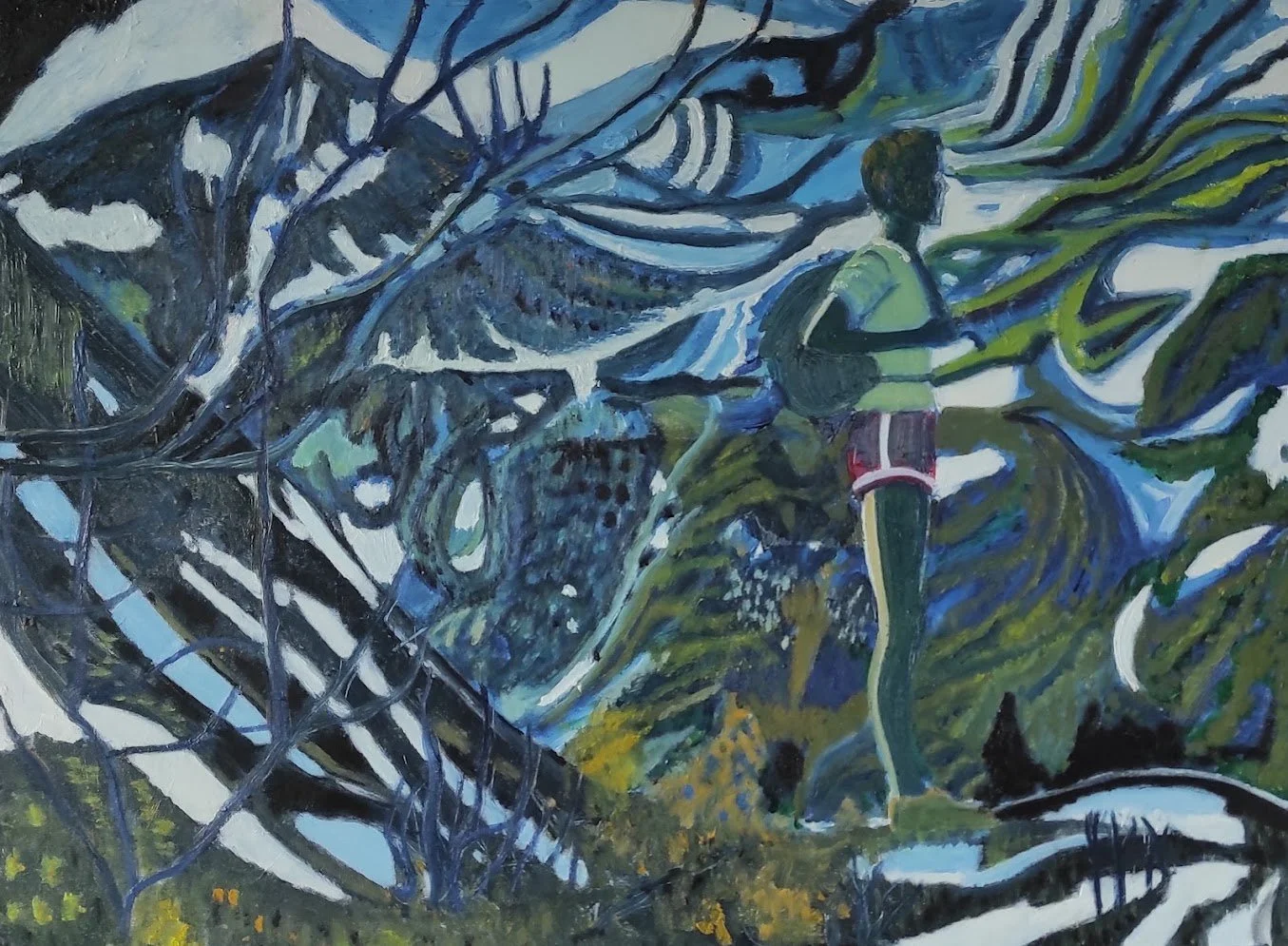
Juvenile Witsun Holiday in the mountains - 80x60 cm - Oil on canvas - 2021 - VEF
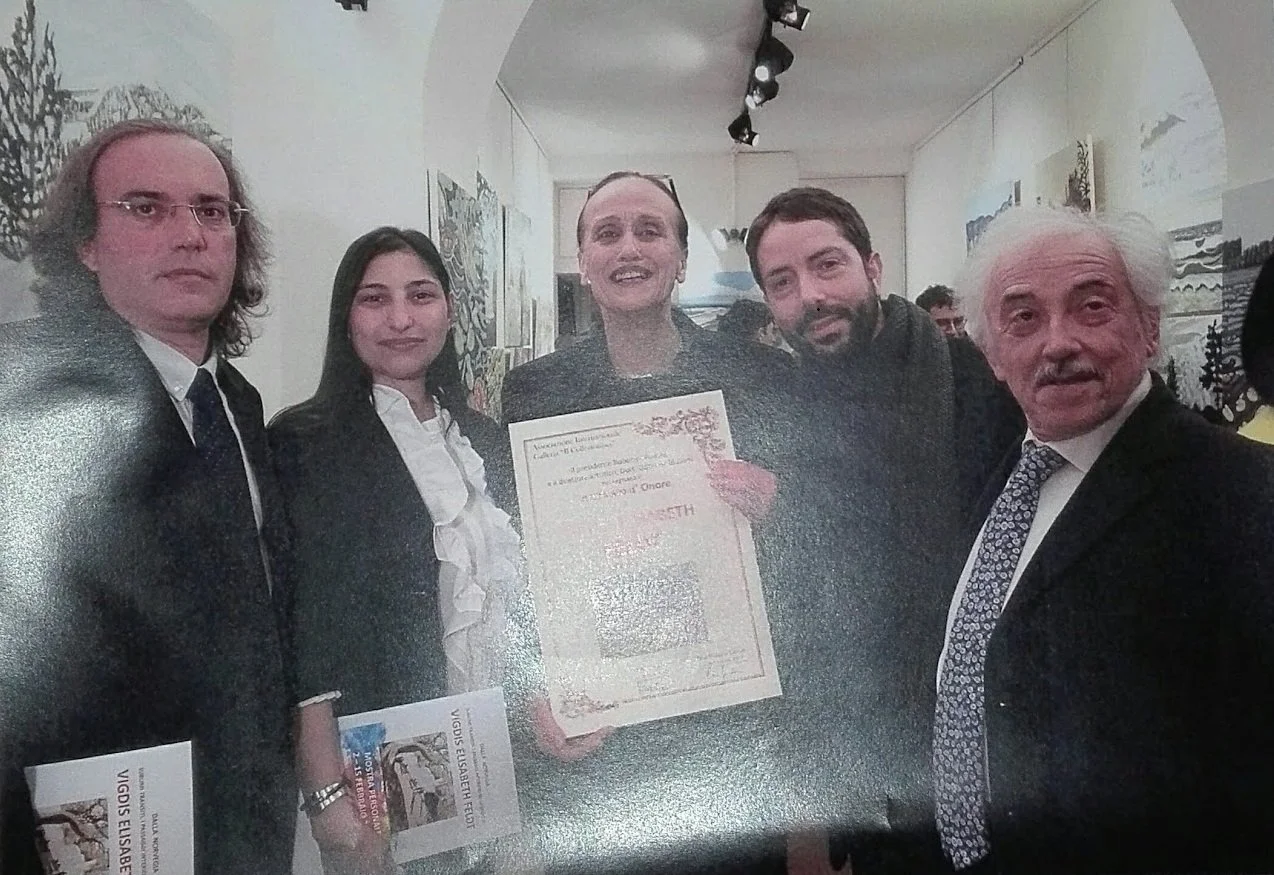
Utstilling i Italia - Galleria il Collezionista 2018