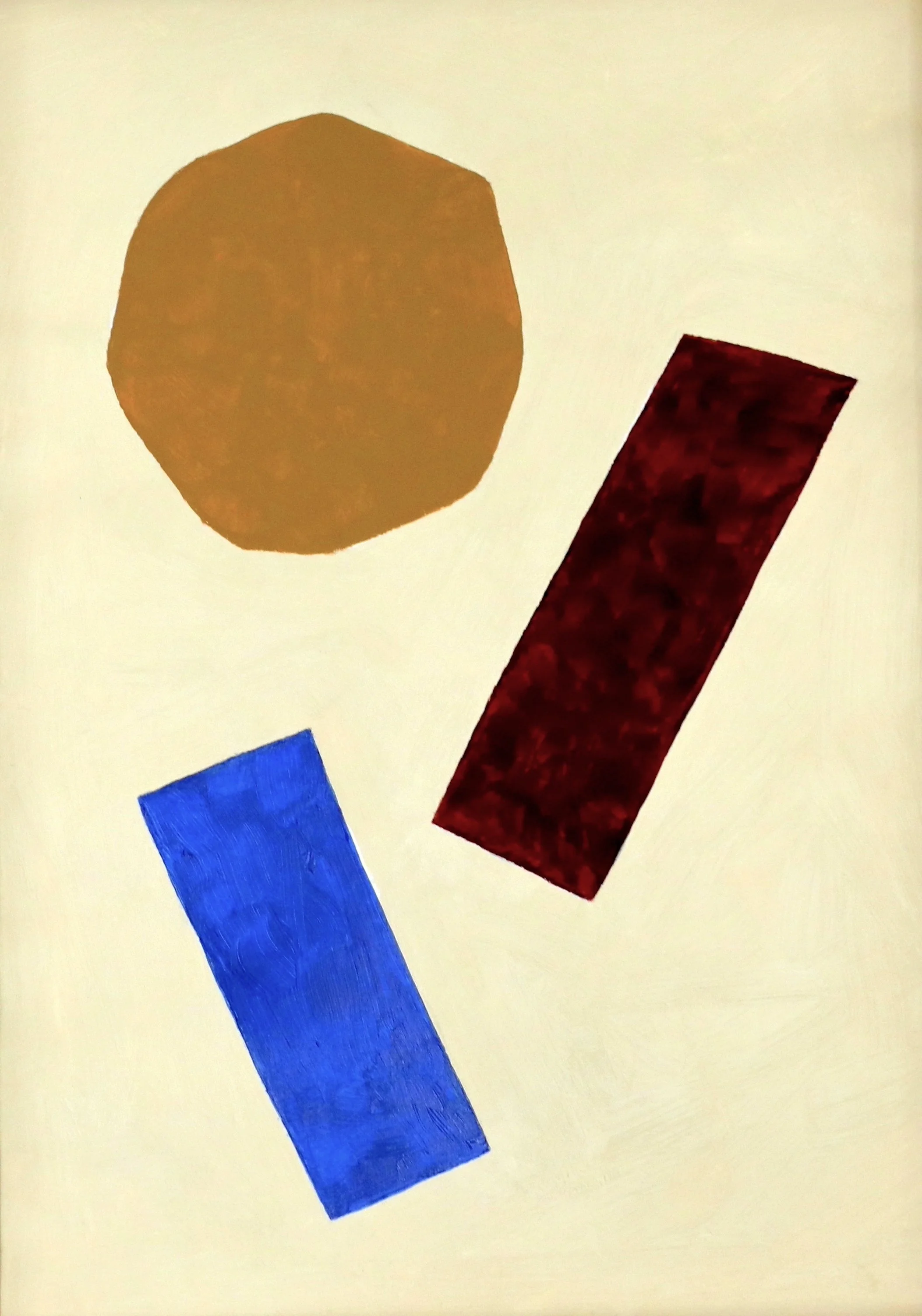
Anthony Emerton
https://www.instagram.com/anthony17417
Anthony Emerton’s recent abstract paintings announce themselves quietly. They do not seek attention through spectacle, scale, or narrative excess. Instead, they establish a field of disciplined presence, one in which form, color, and interval operate with the calm authority of something thought through, lived with, and finally distilled. The works produced from 2021 to the present mark not a rupture but a crystallization. They are the outcome of a long artistic life shaped by sculpture, performance, illness, withdrawal, and return. What emerges in these small acrylics on paper is not reduction for its own sake, but an ethical position. The paintings insist that meaning is not generated by accumulation, but by care, repetition, and the patient negotiation of limits.
Born in London in 1952, Emerton belongs to a generation for whom formal inquiry was inseparable from existential commitment. His education, beginning at St Martin’s School of Art in the early 1970s and continuing through Leeds Polytechnic, positioned him within a culture that valued process, experimentation, and the critical dismantling of traditional hierarchies between media. Early work in performance art, followed by a decisive turn toward sculpture, placed the body and space at the center of his thinking. Sculpture was not simply an object practice for Emerton. It was a way of understanding how form occupies the world, how weight, balance, and resistance articulate meaning through physical presence.
This sculptural intelligence never disappears, even as Emerton’s practice migrates into painting. His MFA studies at the University of California, Santa Barbara, in the late 1980s and the subsequent recognition through a Pollock Krasner award situate him firmly within a lineage of artists concerned with material rigor and formal autonomy. Yet his career trajectory was interrupted by illness, leading to a withdrawal from public exhibition and a long period of private exploration. This absence from the institutional art world is not incidental. It informs the moral tone of the work produced decades later. The paintings since 2021 do not perform confidence. They embody it quietly, through consistency.
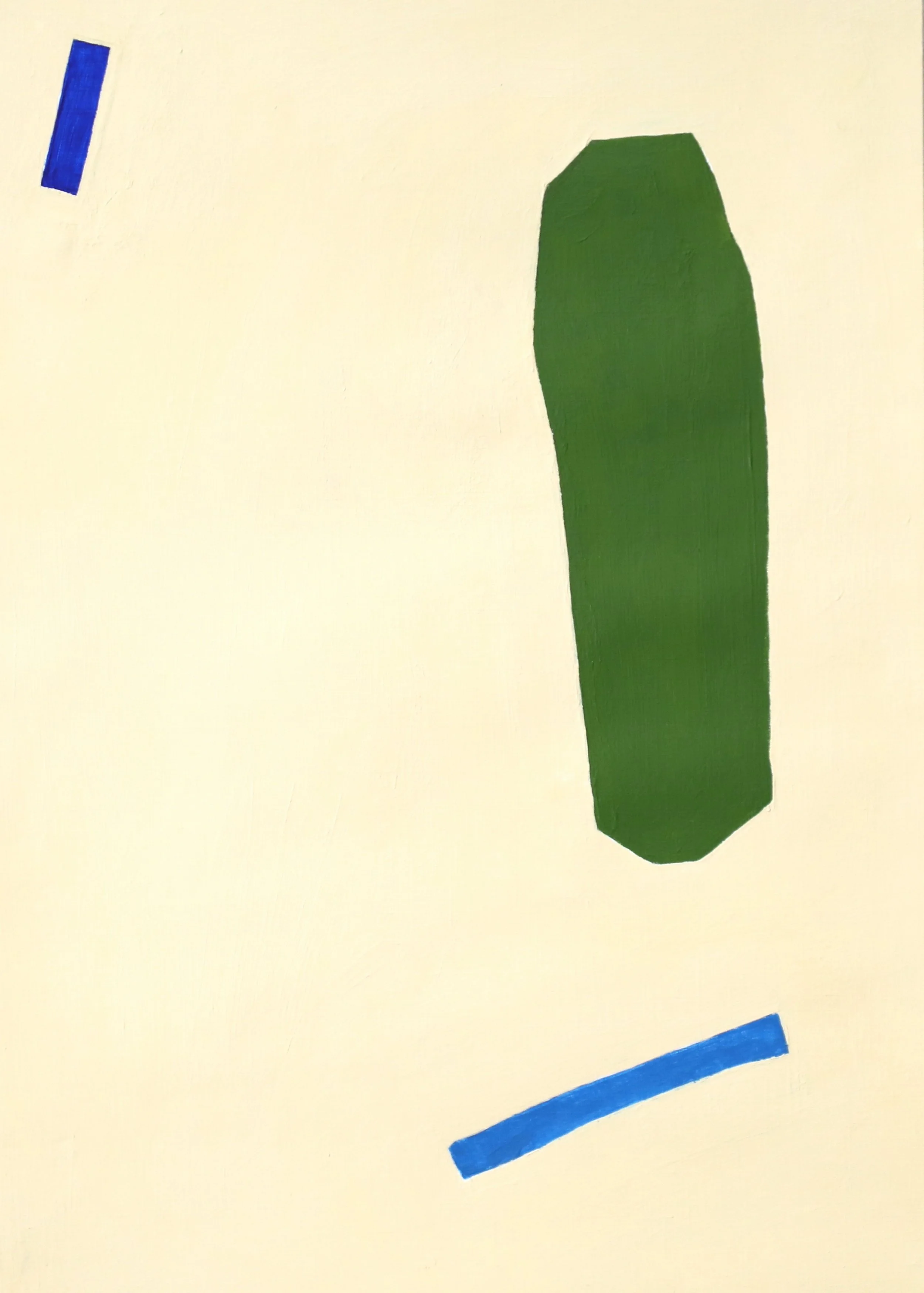
The recent works are all variations on a strict formal schema. Each painting contains a circular or amorphous shape and two linear elements. These components are invariant in principle but infinitely mutable in relation. Emerton imposes this structure not as a conceptual game, but as a framework within which intuition can operate meaningfully. The discipline recalls musical composition, where a limited set of notes yields endless variation through rhythm, spacing, and emphasis. In Emerton’s hands, the circle is never purely geometric. It wavers, thickens, softens, sometimes approaching the solidity of a stone, at other times dissolving into a misted presence. The lines likewise resist mechanical regularity. They bend, tilt, hover, sometimes asserting themselves as barriers, sometimes as pathways.
What distinguishes these paintings is not the novelty of their elements, but the quality of attention with which they are composed. Emerton begins with small preparatory drawings in colored pencil, working through compositional problems before committing to acrylic. This methodical approach does not result in stiffness. On the contrary, it allows the final painting to feel inevitable, as though it could not have been otherwise. Color is not applied decoratively. It is structural. The relationship between hues establishes tension, repose, and hierarchy within the field.
In works such as Prussian Blue F from 2024, the deep blue linear form carries a weight that anchors the composition, while the surrounding pale ground creates a sense of suspended gravity. The blue is not uniform. Its surface bears traces of movement, subtle modulations that recall the physical act of painting. The amorphous shape, rendered in a muted ochre, functions as a counterweight, absorbing the intensity of the blue without neutralizing it. The painting reads as a negotiation between density and openness, between assertion and receptivity.
Yellow ZG from the same year offers a different register. Here, the yellow linear element introduces a luminous tension, its brightness offset by darker blues and earthy forms. The yellow is not cheerful in any simplistic sense. It vibrates with a controlled intensity, suggesting both illumination and fragility. The spatial relationships feel provisional, as though the elements have paused mid movement. This sense of arrested motion is a recurring quality in Emerton’s work. The paintings do not depict action, but they are charged with potential.
Blue ZT and Blue ZW further elaborate this investigation of blue as both material and concept. In these works, blue oscillates between solidity and atmosphere. The linear forms cut across the field with deliberate asymmetry, refusing central alignment. The circular shapes, meanwhile, assert themselves as zones of gravity, pulling the viewer’s eye into their interior. The compositions recall the artist’s sculptural background, where balance is achieved not through symmetry but through the careful distribution of mass.
By 2025, works such as Blue ZZW and Orange H demonstrate a subtle shift. The palette becomes warmer, the forms slightly more assertive. Orange H introduces an earthy orange shape whose surface retains visible brushwork, emphasizing the hand of the artist. The two linear elements in this painting do not frame the central form so much as converse with it, creating a triangulated space that feels both stable and dynamic. The painting suggests a dialogue rather than a hierarchy.
Orange N continues this exploration, but with a heightened sense of compression. The central form appears more compact, almost compressed by the surrounding lines. This tension can be read formally, but it also carries an affective charge. Without resorting to autobiographical symbolism, the painting communicates a sense of containment and resilience. The form holds its ground.
The earlier works White K and White M from 2021 are particularly instructive, as they mark the beginning of this sustained inquiry. In White K, the pale ground dominates, with the shapes emerging gently, almost tentatively. The white is not empty. It is active, a field against which the colored elements test their presence. White M pushes this further, allowing the white ground to function as a luminous space of possibility. These paintings establish the ethical foundation of the series. They do not rush to fill the surface. They allow space to speak.
Yellow ZX from 2025 reintroduces a brighter chromatic accent, but within a composition that feels assured. The yellow line does not dominate. It punctuates. The surrounding forms accommodate it without yielding. This balance between assertion and restraint is one of Emerton’s most significant achievements. In a cultural moment often characterized by excess and immediacy, these paintings insist on deliberation.
The importance of Emerton’s work for contemporary society lies precisely in this insistence. His paintings model a way of thinking that values limits not as constraints but as conditions for freedom. By committing to a narrow set of elements, he demonstrates how depth can be achieved through repetition and variation. This has ethical implications beyond the realm of art. It suggests a mode of engagement with the world that resists distraction, that finds meaning in sustained attention.
Philosophically, Emerton’s practice aligns with a tradition that understands abstraction not as withdrawal from reality, but as a means of engaging its underlying structures. His work does not represent external objects, but it addresses fundamental relationships: between part and whole, figure and ground, movement and stillness. These are not merely formal concerns. They mirror human experience. The circle and the lines can be read as metaphors for self and other, for boundaries and connections. Yet Emerton never forces such readings. The paintings remain open, inviting contemplation rather than interpretation.
In considering Emerton’s place within art history, it is instructive to compare his work with that of Piet Mondrian. Like Mondrian, Emerton employs a limited vocabulary and a commitment to compositional rigor. However, where Mondrian sought a universal harmony through strict geometry, Emerton embraces irregularity and softness. His forms are not idealized. They are contingent, responsive. This difference is crucial. It situates Emerton within a contemporary sensibility that acknowledges instability as a condition of existence. His paintings do not propose an ideal order. They explore how order can be negotiated within uncertainty.
This negotiation is deeply informed by Emerton’s life experience. His periods of illness and withdrawal from public artistic life are not narrated explicitly in the work, but they resonate in its tone. There is a humility in these paintings, a refusal to overstate. At the same time, there is confidence. The consistency of the series, the coherence of the visual language, testify to an artist who knows precisely what he is doing.
The recent exhibitions across Europe and the United States have brought this body of work into dialogue with a broader contemporary context. Shown in art fairs and galleries from Vienna to New York, the paintings hold their own amidst a diverse field. Their modest scale does not diminish their impact. On the contrary, it draws viewers in, requiring a closer, slower engagement. In an era dominated by large scale spectacle, this intimacy is a form of resistance.
Emerton’s transition to larger canvases in recent years suggests an expansion rather than a departure. The principles established in the A3 works translate naturally to canvas, where the increased scale allows the relationships between elements to breathe differently. Yet the core remains the same. The discipline persists.
Ultimately, the significance of Anthony Emerton’s work lies in its demonstration that abstraction can still be a site of ethical and philosophical inquiry. His paintings do not seek to shock or to seduce. They invite reflection. They propose that meaning emerges through sustained attention to form, color, and relation. In doing so, they reaffirm the relevance of abstraction in a contemporary world saturated with images yet starved of contemplation.
Emerton’s recent chapter, from 2021 to the present, stands as a testament to the power of coherence. It shows that an artist, returning after years of private exploration, can produce work that is both deeply personal and broadly resonant. These paintings do not announce a conclusion. They mark a continuation, a steady unfolding of a language that has found its necessary form. In their quiet insistence, they offer something rare. A space to think, to feel, and to remain with complexity without the demand for resolution.
To situate Anthony Emerton within a longer historical arc, one master from the past offers a particularly resonant point of comparison: Paul Klee. This comparison is not one of surface resemblance or stylistic imitation, but of structural affinity and philosophical orientation. Both artists understand abstraction not as a withdrawal from the world, but as a method for thinking within it. Both approach form as something alive, provisional, and ethically charged. And both construct visual languages that emerge from discipline rather than impulse, where freedom is earned through constraint.
Paul Klee famously described art as a means of making the invisible visible. His work proceeds through systems, signs, and carefully calibrated relationships that resist fixed interpretation. Emerton’s recent paintings operate in a comparable register. The circle or amorphous shape and the two lines that recur throughout his work function less as motifs than as instruments. They are tools for probing relationships between stability and movement, presence and absence, containment and openness. Like Klee, Emerton does not impose meaning from above. He allows meaning to arise from the internal logic of the work itself.
Yet there is a crucial difference that marks Emerton’s place in contemporary art history. Klee’s work emerges from a modernist moment still invested in the utopian promise of form. Even when playful or ironic, Klee’s paintings retain a belief in art as a mediator between inner life and universal order. Emerton, by contrast, works from within a post-utopian condition. His paintings do not aspire to harmony as an end state. They explore balance as something temporary, negotiated, and always subject to revision. This distinction situates Emerton firmly in the contemporary moment, where certainty is no longer assumed and coherence must be continually rebuilt.
Culturally, this makes Emerton’s work important in ways that extend beyond formal innovation. His practice models a way of engaging with complexity without resorting to noise or spectacle. In a society characterized by acceleration, fragmentation, and visual overload, Emerton’s paintings insist on slowness and restraint. They ask the viewer to look carefully, to register subtle shifts in color and position, to attend to what changes from one work to the next. This is not a nostalgic return to modernist purity, but a recalibration of attention. The paintings suggest that meaning is not lost in repetition, but deepened through it.
Philosophically, Emerton’s practice aligns with traditions that understand freedom as something exercised within limits. His self imposed parameters echo ethical philosophies that privilege responsibility over excess. By restricting his formal vocabulary, Emerton creates a space in which choice becomes meaningful. Each decision regarding placement, scale, and color carries weight precisely because it occurs within a narrow field of possibility. This approach stands in quiet opposition to a cultural logic that equates freedom with endless options. Emerton’s work proposes instead that freedom emerges from commitment.
The importance of this position for contemporary art history lies in its refusal of extremes. Emerton does not embrace expressive chaos, nor does he retreat into cold formalism. His paintings occupy a middle ground where emotion is present but disciplined, where structure is firm but never rigid. This balance recalls Klee’s ability to infuse systematic thinking with poetic sensitivity, while also responding to contemporary conditions shaped by precarity, interruption, and recovery.
Emerton’s long trajectory, including periods of illness and withdrawal, further intensifies the ethical dimension of his work. The paintings produced since 2021 are not the result of a linear career progression, but of return. They embody continuity reclaimed rather than uninterrupted development. In this sense, they speak powerfully to a broader social condition in which many lives and careers are marked by rupture. Emerton’s work demonstrates that sustained artistic inquiry is still possible after interruption, and that coherence can be rebuilt without denial of fragility.
For contemporary art history, Emerton’s contribution lies in reaffirming abstraction as a living language. His paintings neither quote the past nor reject it. They absorb lessons from modernist masters like Klee while rearticulating them under present conditions. The result is a body of work that is modest in scale but expansive in implication. It shows that abstraction can still function as a site of philosophical reflection, cultural resistance, and ethical clarity.
In a time when art is often asked to be immediately legible or overtly political, Emerton’s paintings offer a different kind of importance. They cultivate attention. They propose that society needs spaces where complexity can be held without simplification. By doing so, they secure Emerton a meaningful place within the ongoing history of abstraction, not as a revivalist, but as an artist who understands that the most radical gesture today may be the quiet insistence on form, relation, and thought sustained over time.
The recent work of Anthony Emerton affirms the enduring relevance of abstraction as a site of thought, ethics, and lived experience. The paintings produced since 2021 do not function as a late stylistic turn or a retreat into formalism, but as the consolidation of a language patiently earned. They stand as the outcome of a long engagement with form across media, across decades, and across interruption. What gives these works their quiet authority is not innovation in the sense of rupture, but coherence sustained over time.
Emerton’s disciplined vocabulary of a circular or amorphous form and two linear elements might at first appear reductive, yet it is precisely this restraint that allows the work to open outward. Each painting becomes an event of decision-making, where small shifts in proportion, placement, and color generate distinct emotional and spatial registers. The repetition of structure does not lead to sameness. It produces difference through attentiveness. In this way, the paintings enact a philosophy of continuity, one that values persistence over novelty and depth over display.
The significance of this body of work for society lies in its refusal of urgency. Emerton’s paintings do not demand immediate comprehension or emotional response. They ask instead for presence. In a cultural climate dominated by speed and distraction, this demand is quietly radical. The works cultivate a mode of looking that is slower, more reflective, and more embodied. They remind the viewer that attention itself is a form of care, and that care is a prerequisite for meaning.
For contemporary art history, Emerton’s practice occupies an important position between inherited modernist discipline and contemporary vulnerability. His paintings neither idealize order nor surrender to fragmentation. They demonstrate how structure can remain meaningful without claiming universality, and how abstraction can remain human without resorting to expressionism. This balance situates Emerton within a lineage of artists who understand form as an ethical choice rather than a stylistic one.
The small scale of the A3 works is particularly telling. These paintings resist monumentality. They do not seek to overwhelm the viewer, but to engage them at a human scale. This choice reinforces the intimacy of the encounter and underscores the seriousness of the inquiry. The works ask to be approached, not consumed. As Emerton moves into larger canvases, the integrity of this approach remains intact, suggesting an expansion of space rather than a change of intention.
Emerton’s recent paintings offer a vision of artistic practice grounded in responsibility. Responsibility to form, to process, and to the conditions under which art is made and received. They demonstrate that an artist’s relevance does not depend on constant visibility or stylistic reinvention, but on fidelity to a set of questions pursued with honesty and rigor. In their measured compositions and nuanced color relationships, these works hold complexity without dramatization. They do not resolve tension, but they make it legible.
Anthony Emerton’s contribution in this chapter of his career is therefore both personal and collective. It affirms that abstraction remains capable of carrying philosophical weight and cultural meaning. It shows that coherence can be rebuilt after interruption, and that discipline can coexist with sensitivity. In doing so, his work quietly asserts its place within contemporary art, not as an echo of the past, but as a sustained, thoughtful presence attuned to the conditions of the present and open to the possibilities of what comes next.
By Marta Puig
Editor Contemporary Art Curator Magazine
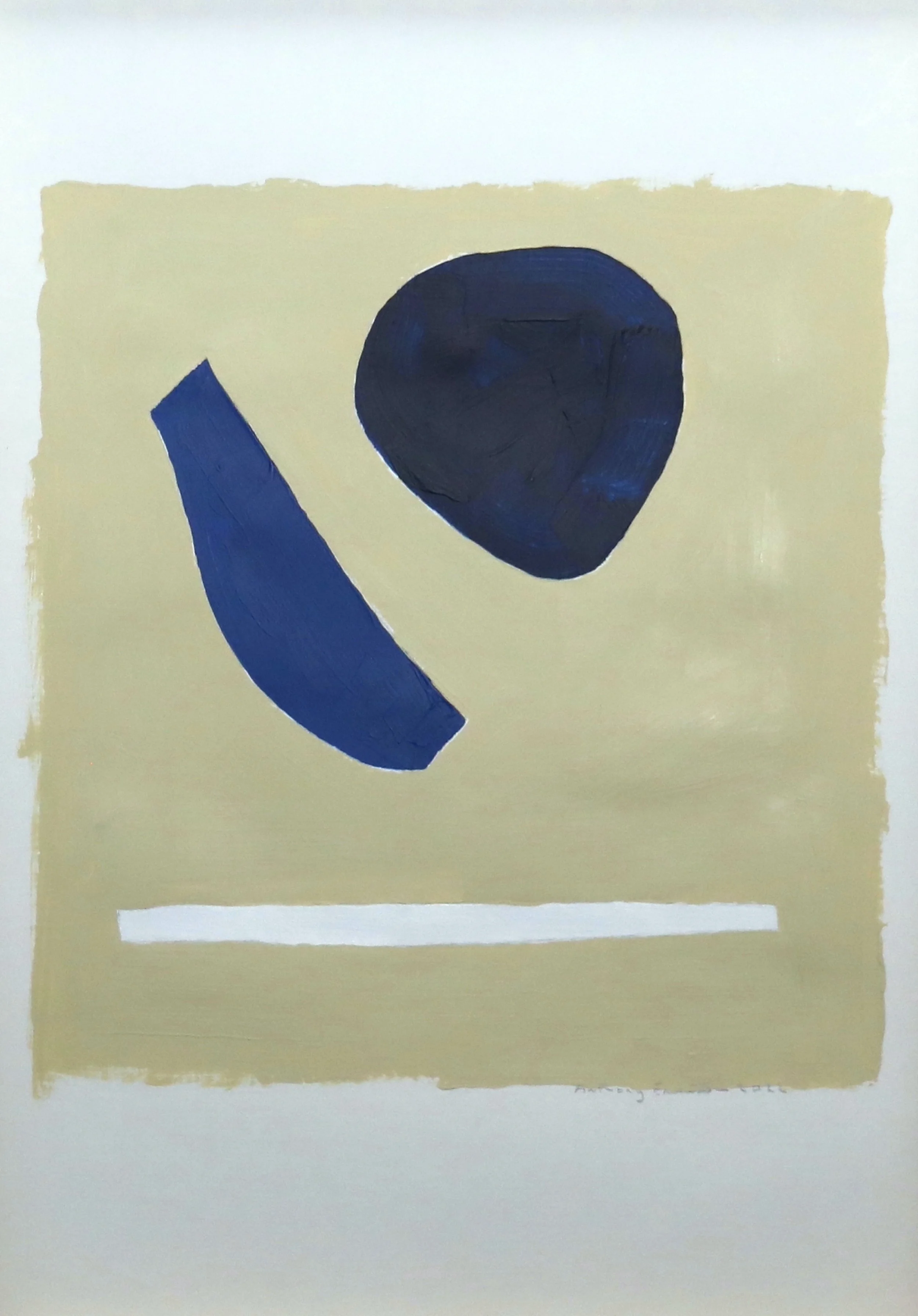
White M, 2021. acrylic on paper 42 x 29.7 cm
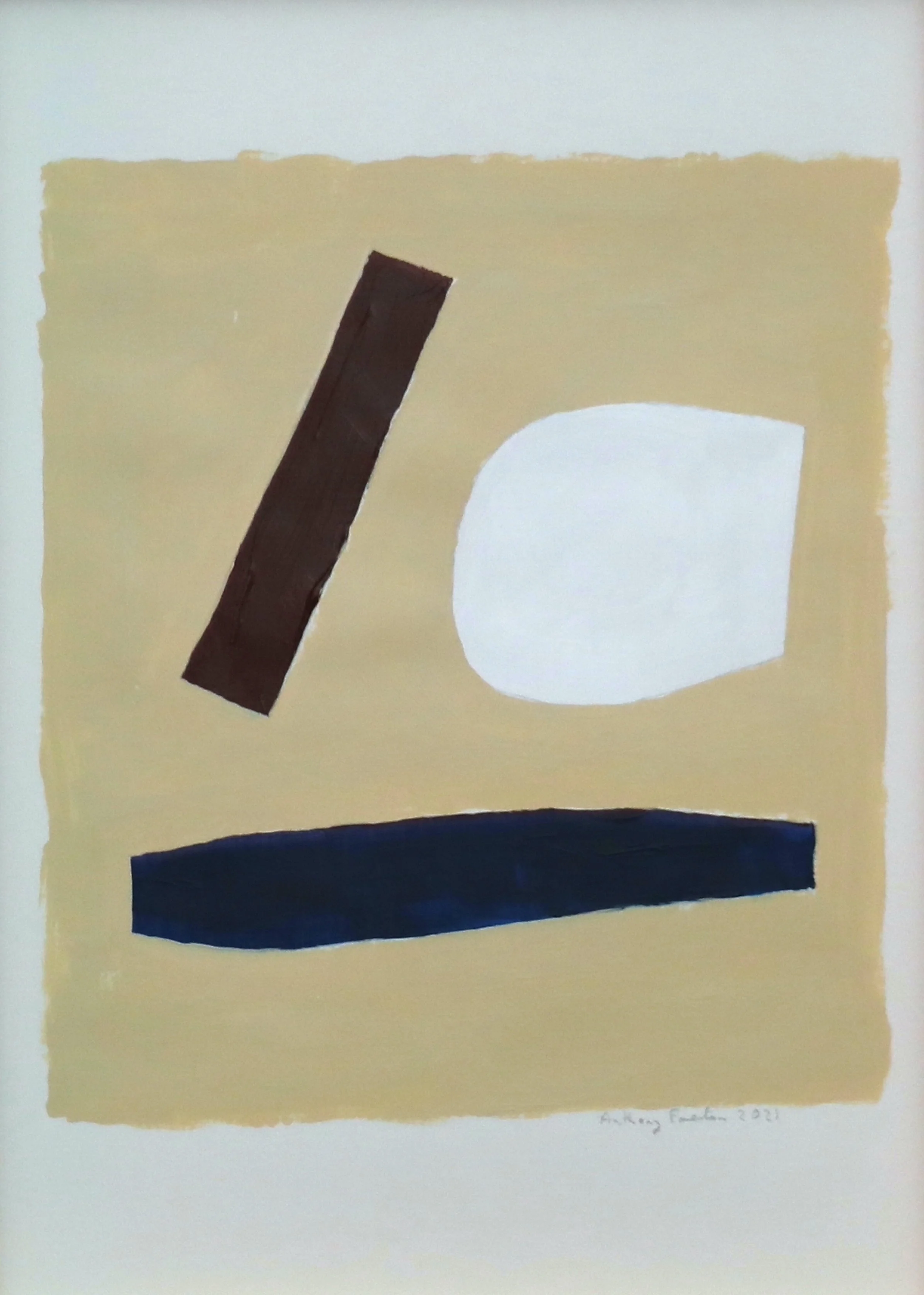
White K, 2021. acrylic on paper, 42 x 29.7cm
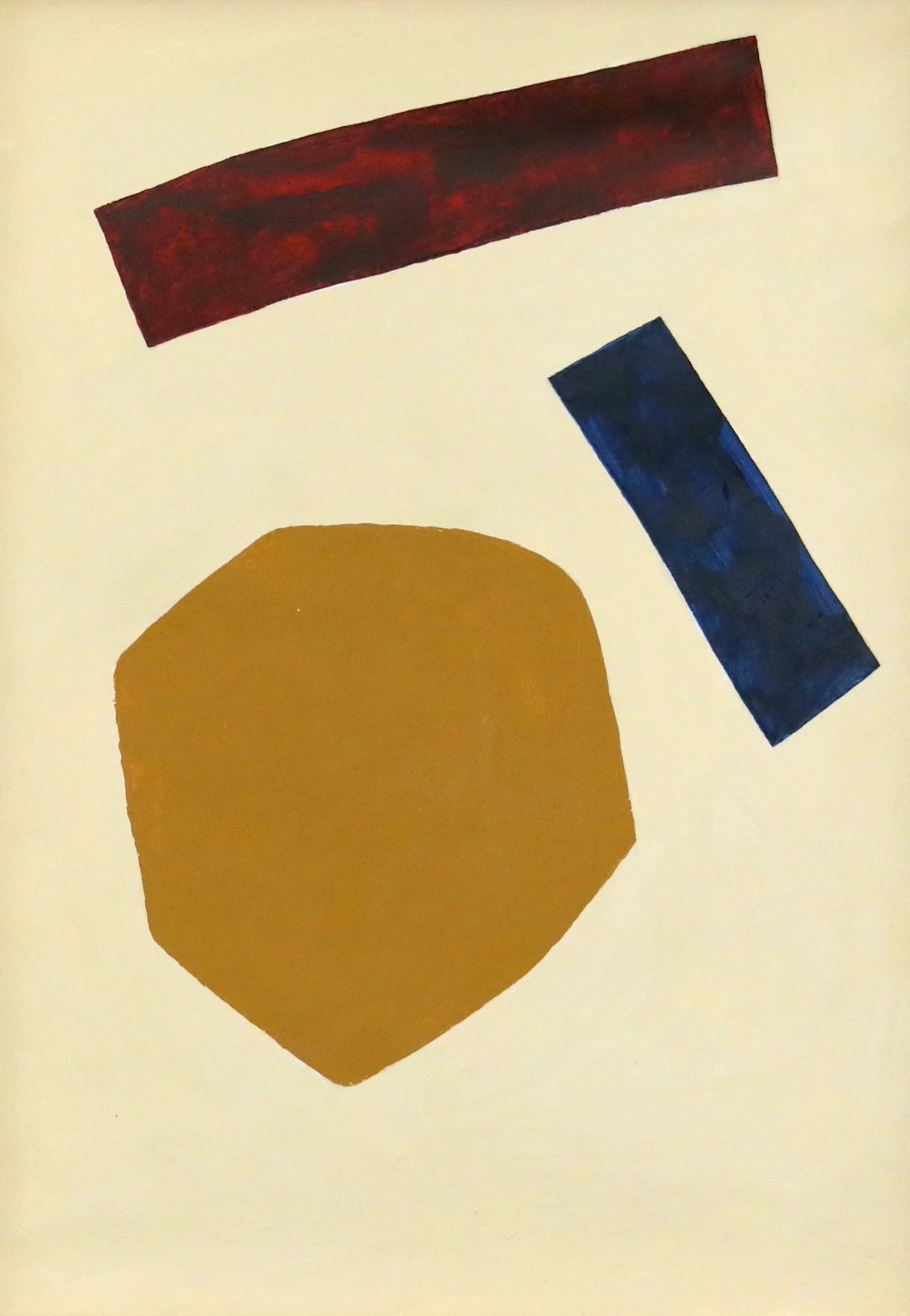
Prussian Blue F, 2024. Acrylic on paper, 42 x 29.7cm
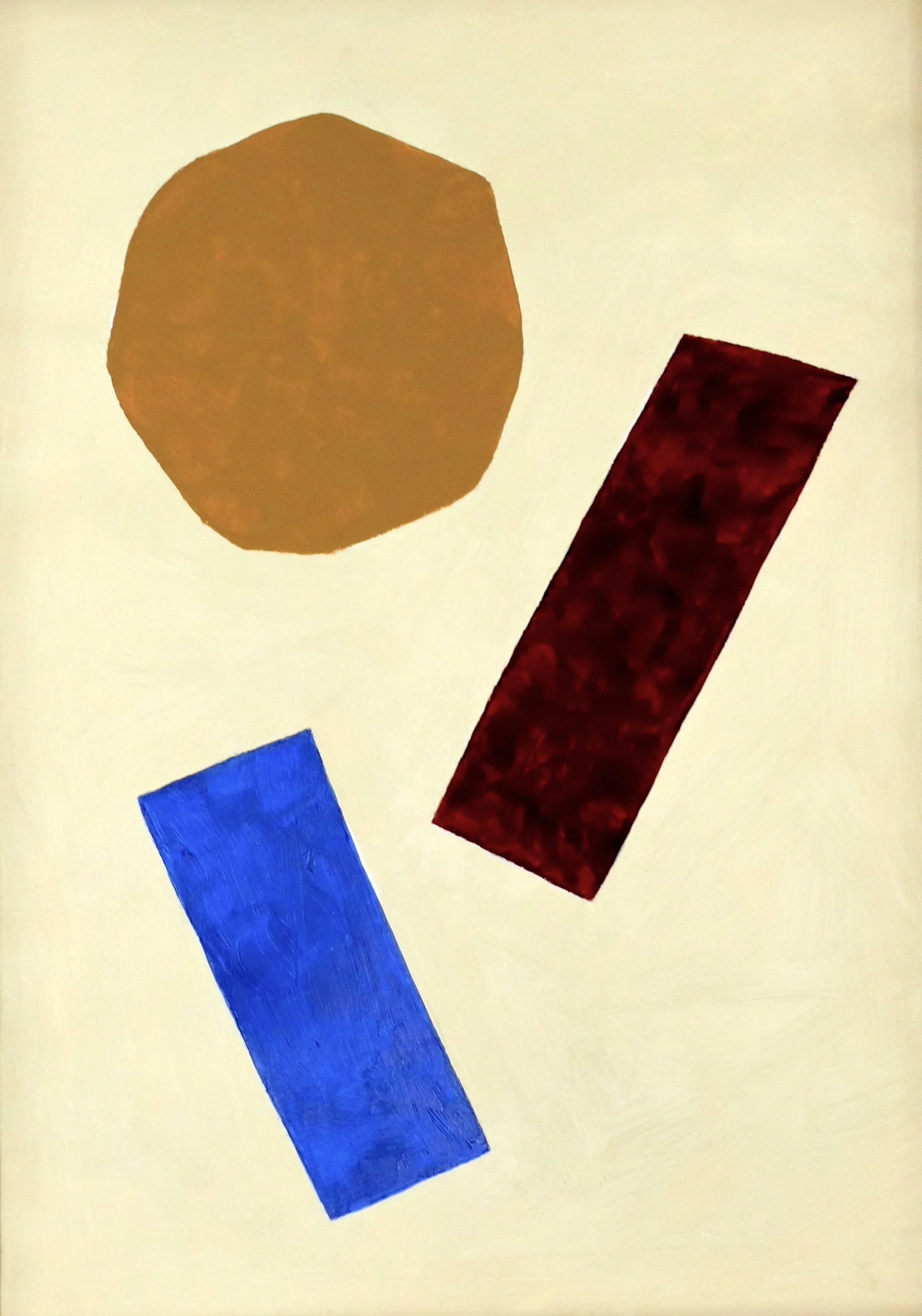
Blue ZT, 2024. acrylic on paper, 42 x 29.7cm
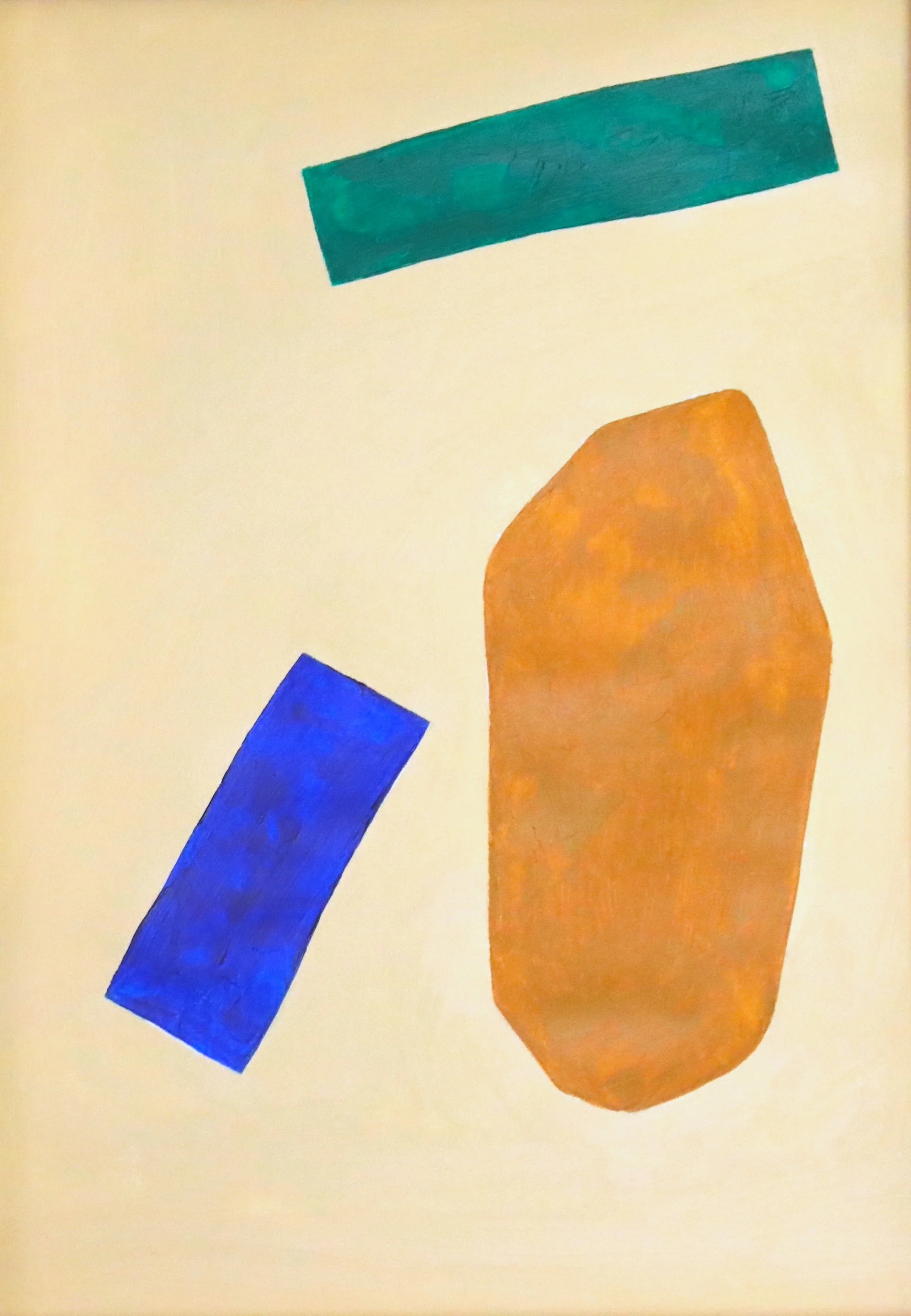
Blue ZW, 2024, acrylic on paper, 42 x 29.7cm
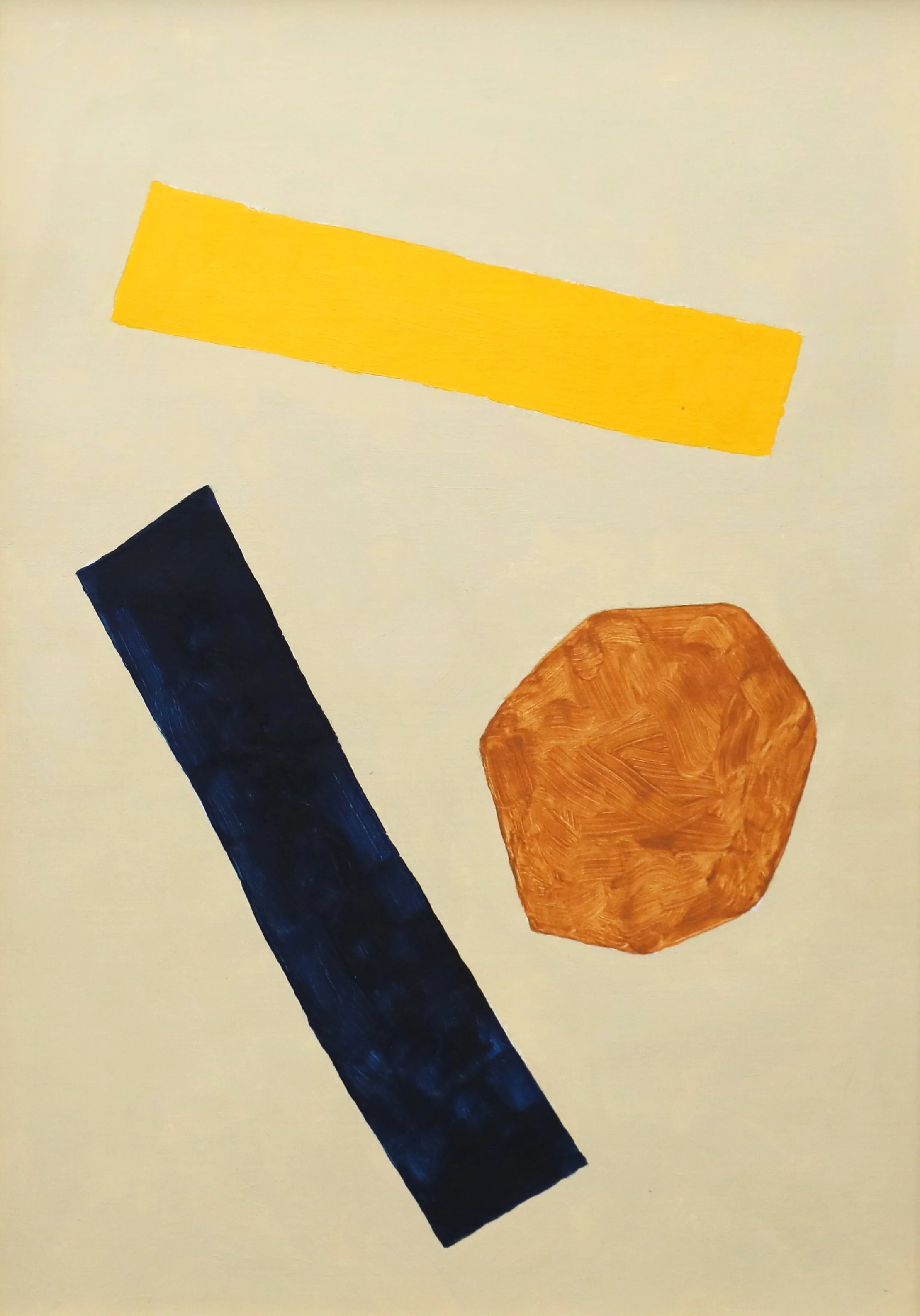
Yellow ZG, 2024, acrylic paper 42 x 29.7cm
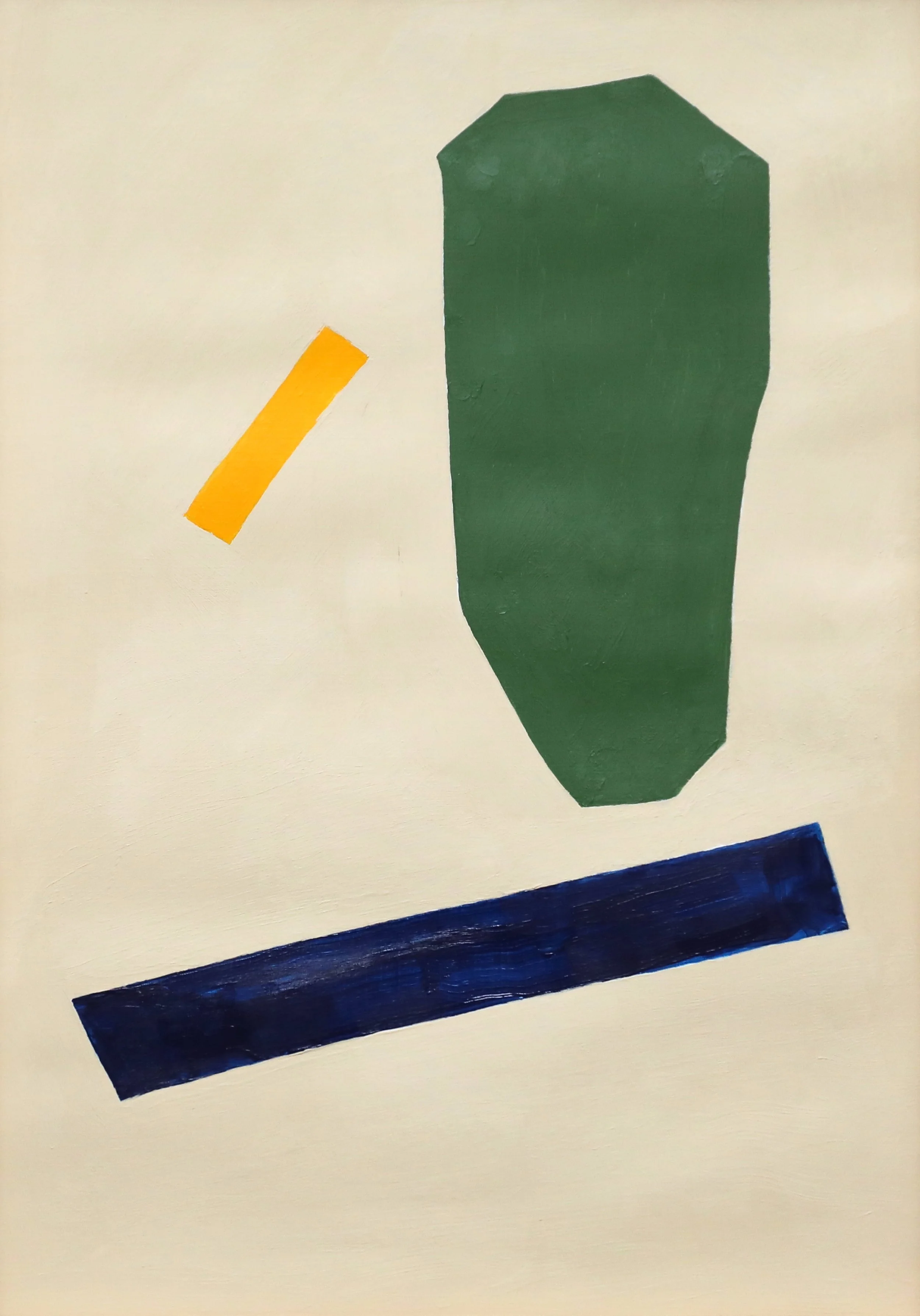
Yellow ZX, 2025, acrylic on paper, 42 x 29.7cm
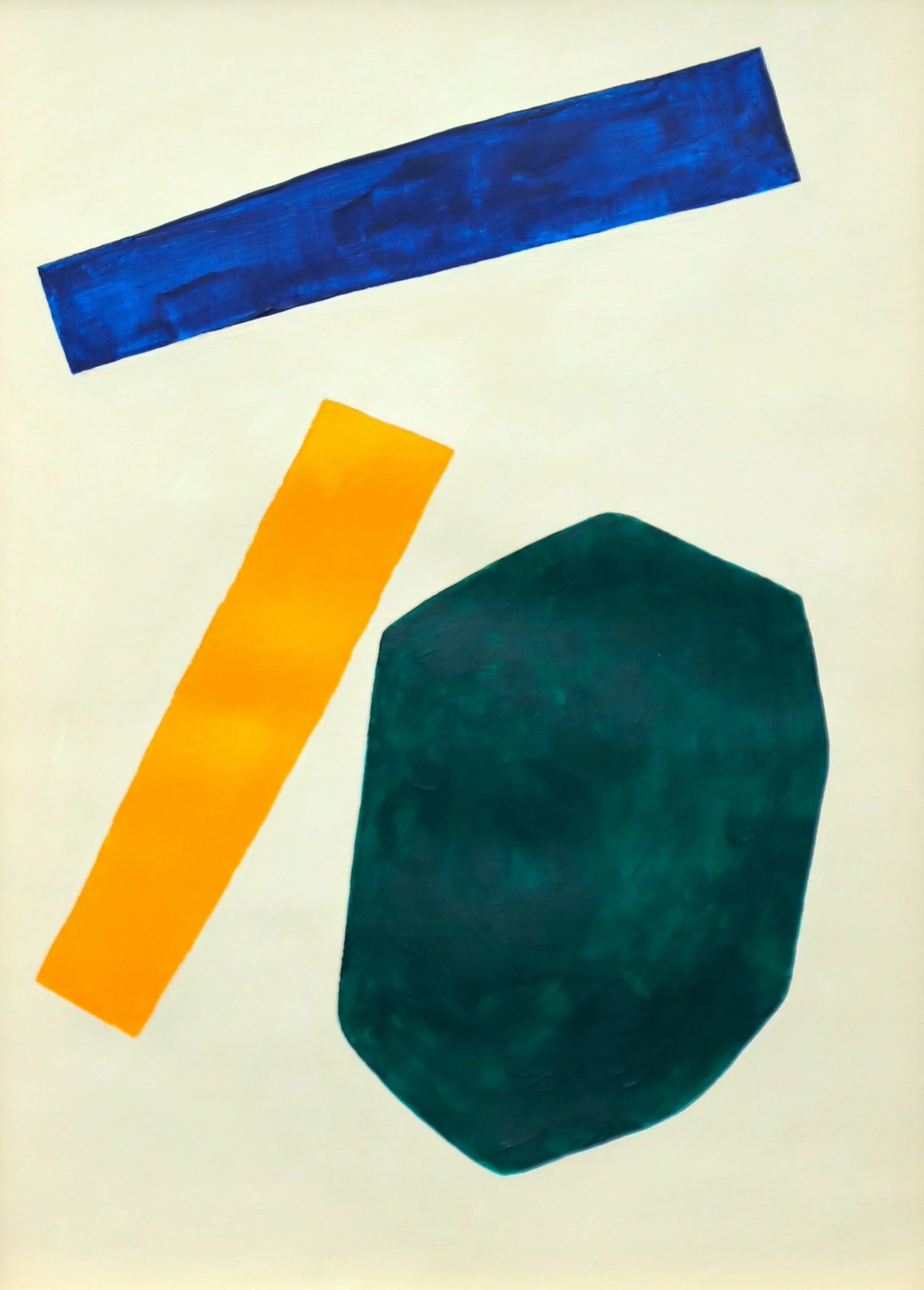
Orange N, 2025. acrylic on paper, 42 x 29.7cm
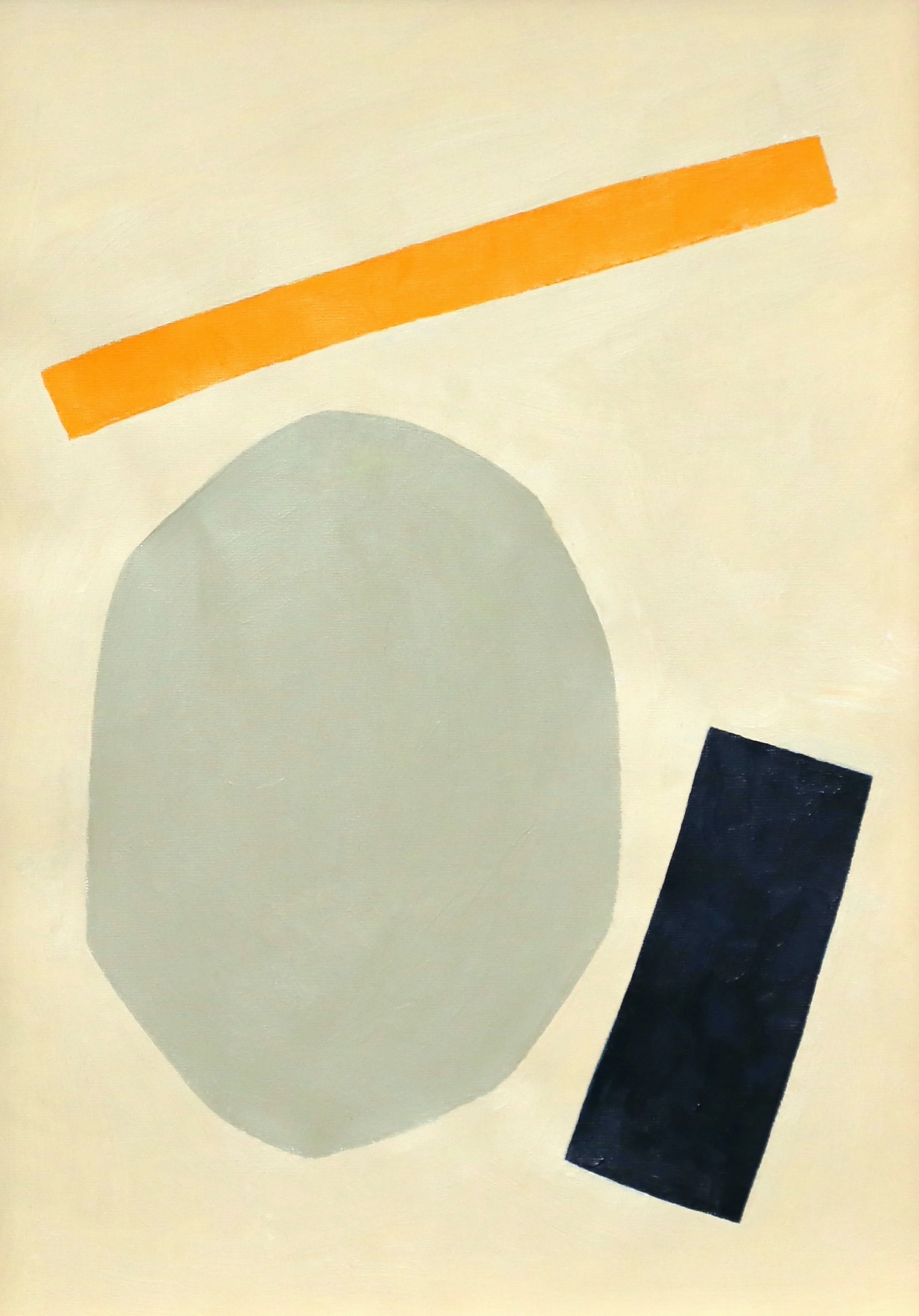
Orange H, 2025. acrylic on paper, 42 x 29.7cm