All in Interview

Interview with Cecilia Arrospide

My first experience with art was at home. My mother was a fine artist, and apart from watching her paint, I shared with her books on artists she had.  At school, I also was good in art classes because I had the ability to draw. I believe art is in my bones, I come from a family of artists, my first atistic vocation was iterature, but afterwrads I stared painting and never left it.  I went deeply into this great and profound world, and I am passionate about it.

Interview with Edward Bakst

Can you share your journey towards becoming a successful artist? Were there any pivotal moments or challenges that shaped your career?

For me, life in general offered both challenges as well as inspiration motivating my strive forth, inspiring ideas and need for expressing and sharing my personal and emotional expressions. I deem that growing under Communism sparked strong rebellious reactions against feeling of oppression and lack of freedom of speech. My artwork of that period was very defiant. Yet, once a wave of antisemitism swept my former country, these feelings intensified. A new sense of pride in who I am arouse. It further intensified when I found myself being chased by many of my own classmates, now former friends, whose eyes and minds were soiled by governmental propaganda. Rebelling against being seen as less equal, I chose to resign my citizenship, becoming a political refugee, departing as both stateless as well as a persona non grata.

Interview with Simon Hafele

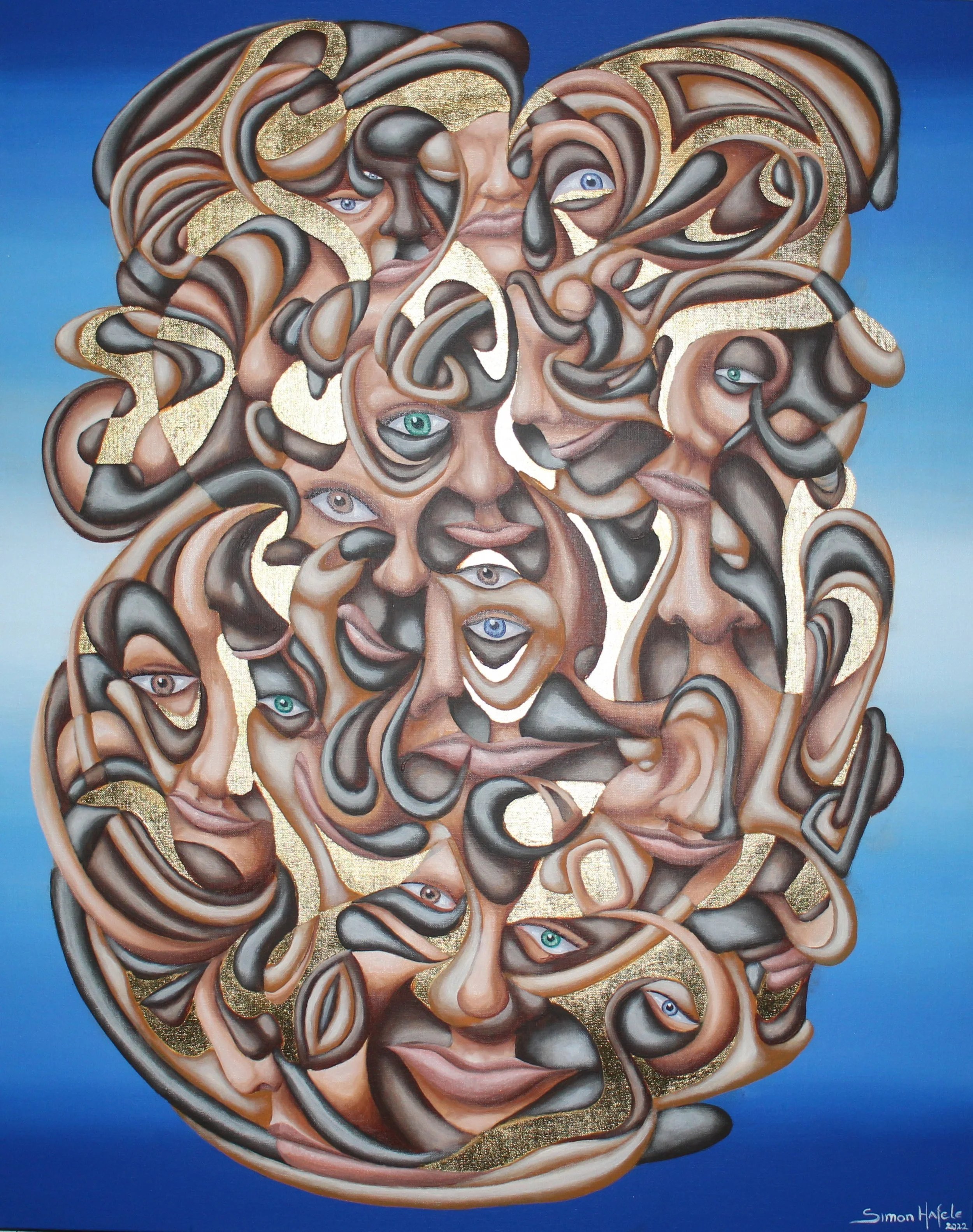
Reflecting on the evolution of my artistic style, the trajectory of my work can be traced back to the initial inklings seen in the graduation poster I designed for the Elbigenalp carving school. The naivety of my 18-year-old self manifested in those early creations. Subsequent journeys to India acted as a catalyst, lifting the fog and providing clarity to my artistic vision. Over the years, my perspective has matured, resulting in refined brushstrokes and a clearer view of my artistic intent. While adhering to my fundamental approach in art, I have delved deeper into areas of interest, such as sacred geometry, Fibonacci sequences, and the philosophical and mythological underpinnings of symbols. These elements seamlessly integrate into my art, reinforcing my thematic focus on love, mysticism, and the supernatural—embodied by the motto "die to live."

INTERVIEW WITH Simon Darling

My journey into the world of art is intricately woven with the influence of my mom and her innate creativity. From the very beginning, she provided a nurturing environment that encouraged exploration, imagination, and self-expression.
My mom, herself a creative soul, instilled in me a deep appreciation for the arts. Our home was filled with colors, textures, and a constant flow of creative energy. Whether it was her own artistic endeavors or exposing me to various forms of art, she cultivated an environment that fueled my curiosity and sparked my initial interest in the world of creativity.

Interview with IRIS

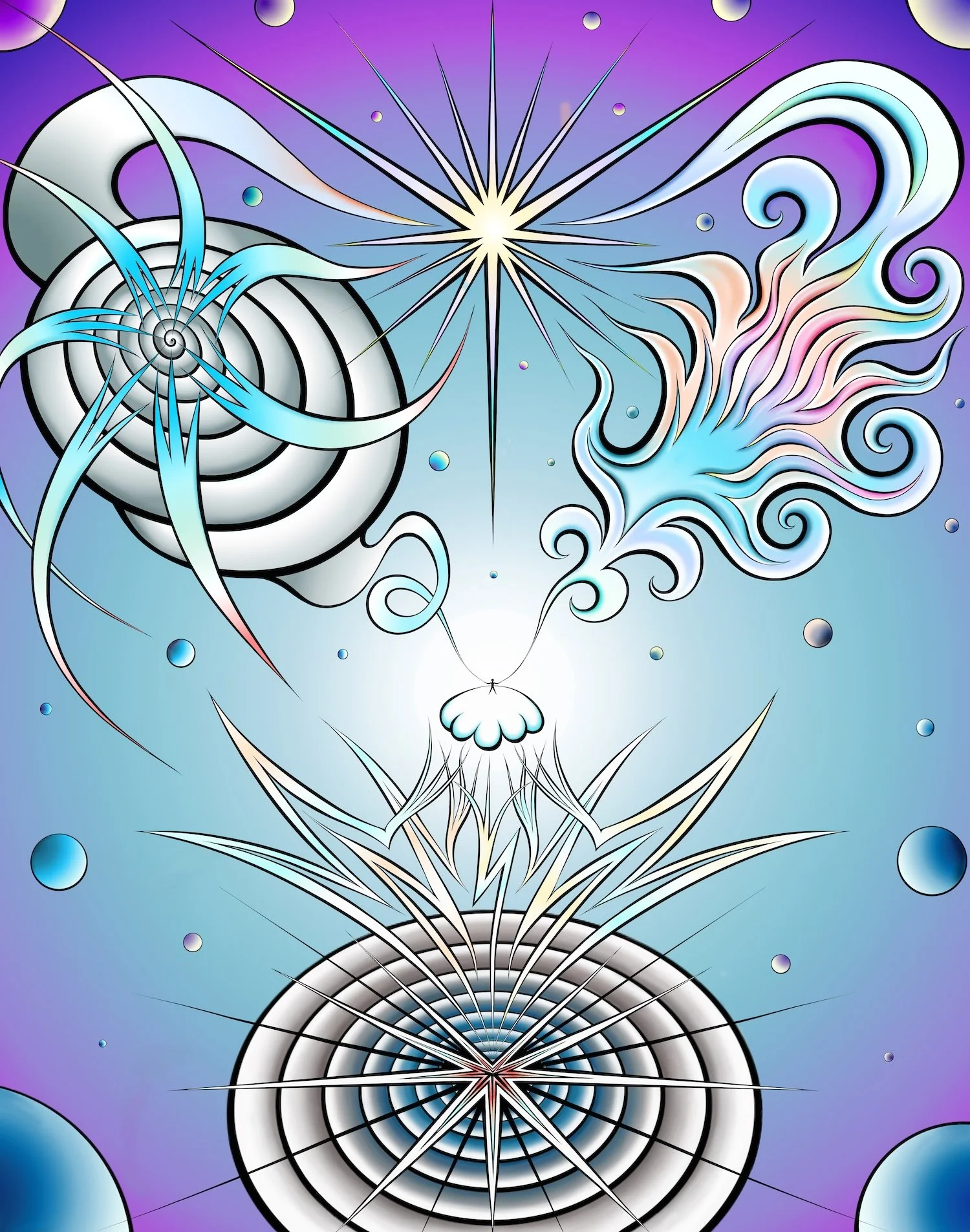
What has always fascinated me in my experiments with water is the elegance of the organic forms that form on the surfaces where I let the water flow over. This unique elegance is given by the accuracy of the contours and the uniqueness and complexity of the composition. Where water leaves its mark, something magical always happens. This happens even when I experiment with just a few splashes of water. No experiment is the same, each time there is something new that captivates. Over time, I have also used other liquid substances in their simple form or mixed with other substances in powder form like: melted wax, honey, milk, ink, melted sugar, oil, wine, liquid soap, fruit juices, water with flour, water with sand, water with ground coffee, very salty water, melted chocolate and many others.

Interview with Marcello Muiesan

How has your experience in different fields like football, military service, and the culinary influenced your approach to painting and graphic design?

My experience across varied fields such as football, military service, and culinary arts has profoundly influenced my approach to painting and graphic design. Working in diverse fields, even those unrelated to my primary occupation has significantly broadened my perspective. This has facilitated meaningful connections with individuals from disparate backgrounds and cultivated a meticulous eye for detail, crucial in driving my creativity. Furthermore, this multifaceted experience has allowed me to perceive the world from different vantage points, enabling me to capture its intrinsic beauty in my artistic pursuits.

Interview with Emiko Aida

Emiko Aida was born in Tokyo, Japan and graduated from MA, Fine Art, The Tokyo University of Arts / MA Printmaking, Royal College of Art, UK. She is currently a painter, printmaker and mixed media artist living in London, UK.  Her work is exhibited in the U.K., the U.S.A., Italy, China and Japan and in many private, public and corporate collections including the New York Public Library, USA, Guangdong Museum of Art, China, Ashmolean Museum, Oxford, UK and Victoria and Albert Museum, London, UK. She is a member of Royal Society of Painter–Printmakers, U.K.

Interview with Karine Grazia

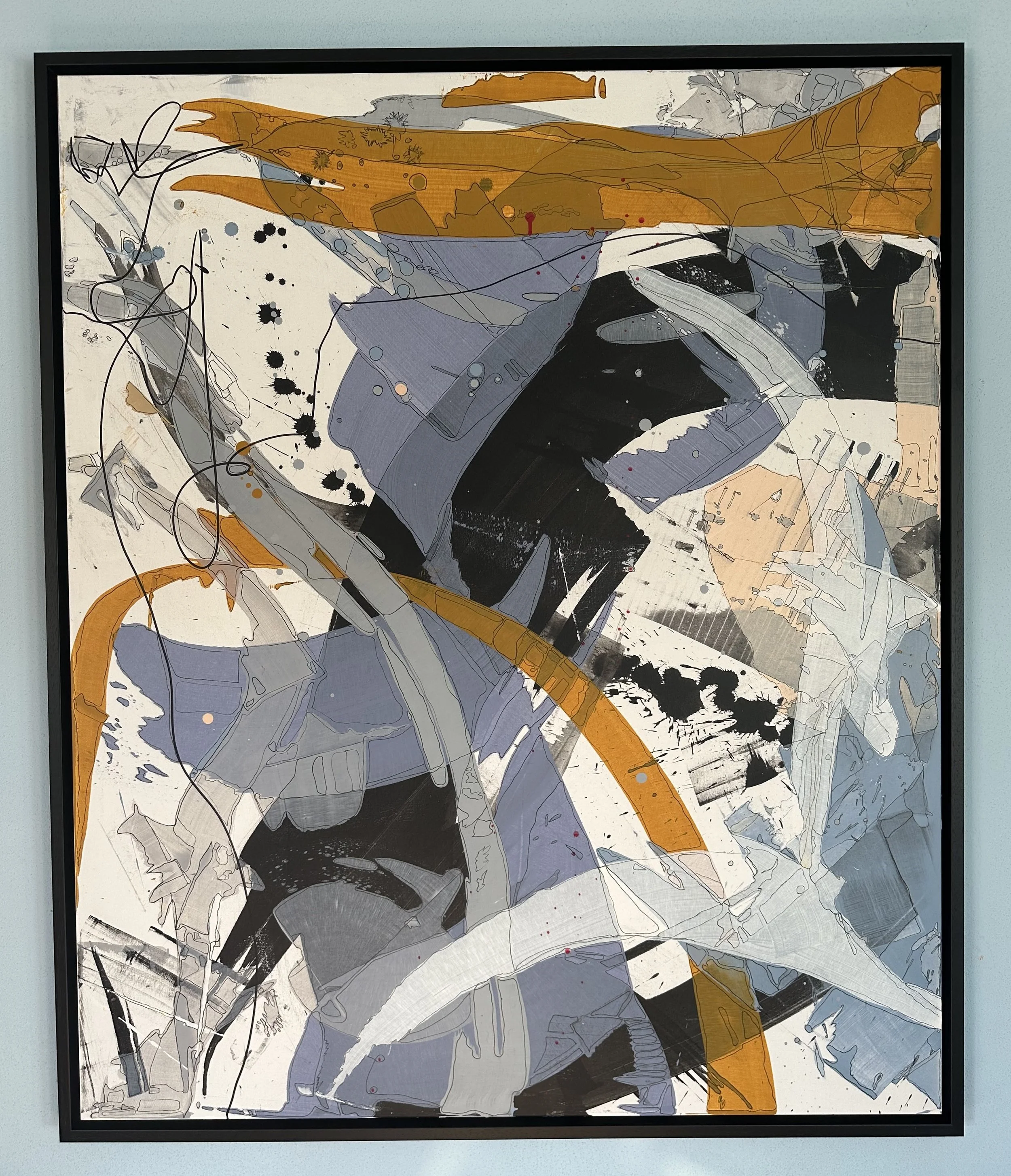
Karine Grazia (b.1986) is a freelance artist who lives and works in Italy and Estonia. In 2011 she graduated with a degree in interior architecture. Karine paints abstracts with acrylics. When creating her work, it is important for her to take into account the interior where the order goes. She desires to create an ideal environment, where people would feel comfortable. A picture on the wall can create a completely new feeling in the room. Since she has studied interior architecture, this is where it is possible to combine the two parts. The result is exactly what she wants to achieve through art.

Interview with Merle Luhaäär

Merle Luhaäär is an internationally exhibiting experimental mixed media artist. She has graduated from Royal College of Art (2019, London, UK) with MA in fine arts and received her BA in fine arts at Kingston University London. Her art practice is underpinned by an interest in relationship between individual and society, micro- and macrocosm and relativity of reality. Themes are explored through variety of mixed mediums of painting, print, photography, installation, sculpture and moving image.

Interview with Eva Moosbrugger

Your work blurs the lines between art, architecture, craft, and design. How do you navigate these overlapping domains in your creative process?

For me, the artificial separation of art, architecture, craft and design does not exist. My work includes objects from functional vessel to abstract sculpture, from the tiny to the 3 tonne steel sculpture, from the curious to the spiritual. I let myself drift by following my artistic intention and sometimes create a work of art that is also suitable for everyday use, or a design object with artistic properties. That's why it's sometimes difficult to categorise them clearly.

Interview with Maria Petrovskaya

Maria Petrovskaya is a NYC-based artist and curator. She is a graduate of the School of Visual Arts (NYC). Her works in painting and sculpture explore the human body, movement, color, the subconscious, and the surreal.

Her art and curatorial projects featuring emerging contemporary artists were listed as must-see by the Art Newspaper, LA Weekly, Hyperallergic, L’Officiel, and Whitewall Magazine, among others.

Interview with Britta Ortiz

How did your early artistic influences, especially your visual arts teacher in fifth grade and your high school mentor, shape your approach to art and creativity?

My mother painted and drew when I was a child. My parents also encouraged my older sister, who is five years older than me, to do the same. Year after year, oil and watercolor paints were on my wish list for Christmas and birthdays. However, I never received any of the items as a gift. I was also not allowed to use my mother's oil paints. I never found out why. It has therefore been decisive for me that I met some teachers in primary and secondary school who saw that I longed to express myself artistically and supported it. The two of them led me into the world of art and gave me the belief that I had some talent in that field.

Interview with Karen Kanas

I am very connected to each piece I paint and it's a very personal experience. I believe painting is as honest as I can be with myself. There are no work arounds, it's me facing the canvas and the truist I can be with myself. If I'm struggling with a piece where I need to determine how to get through the process, that is always a learning experience for me and it is a different journey with each piece, a different connection. The personal insight I gain is that yes, I may have struggled, but I figured out how to make the piece come together and work.

Interview with Gunilla Klemendz

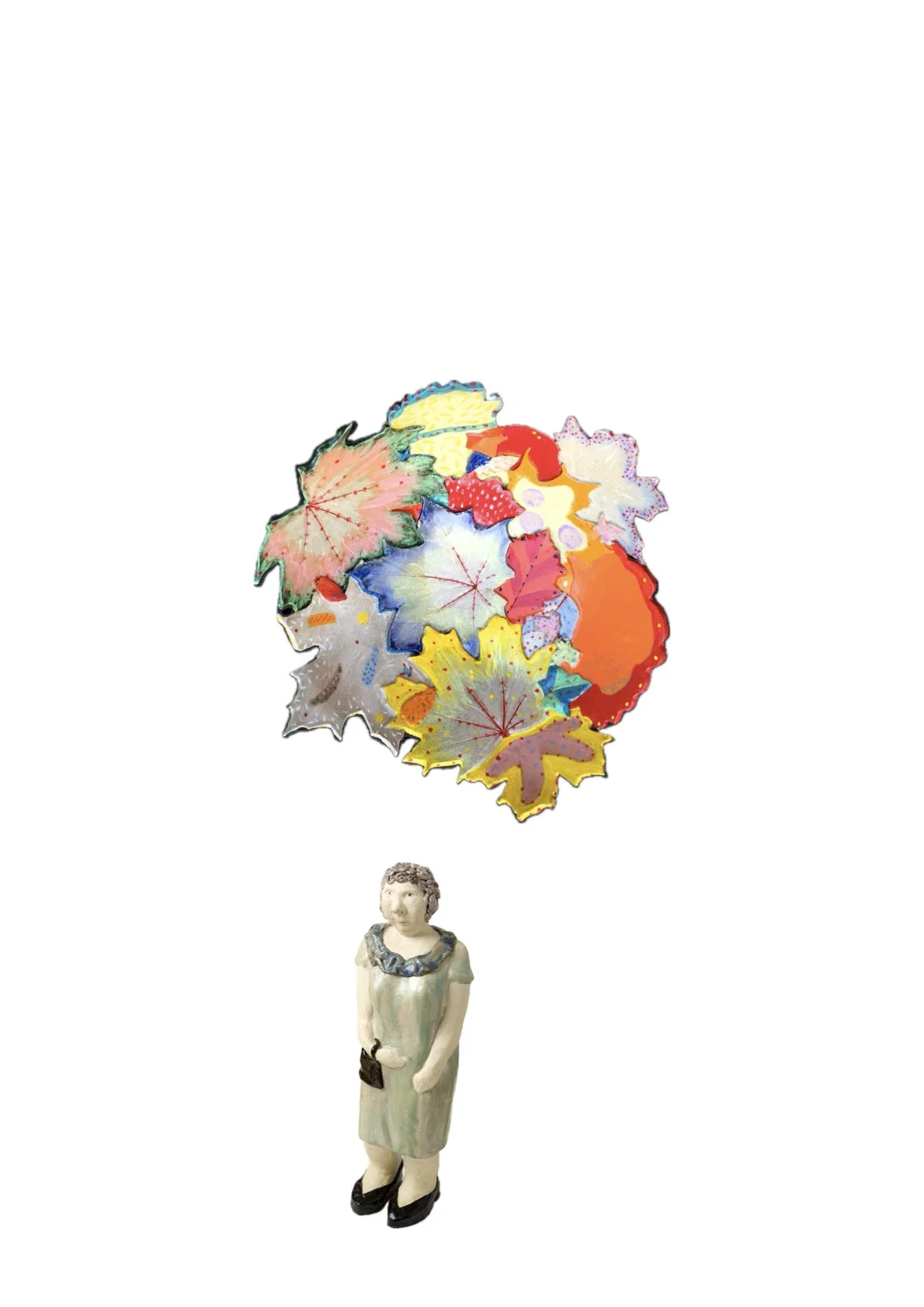
I move at the border between reality and fantasy in my art, using strong colors typical of the Swedish region of Skane. Ever since I was a child, I've had an interest in drawing and painting. This interest has grown into a deep passion for sculpturing and I've been working with stoneware for the last 20 years. The creative process fills me with true happiness, something I hope is reflected in my art.

Interview with Christopher Fowler

In your professional journey, what have been some of the most significant challenges you've faced, and how have you adapted your approach or technique in response to these challenges?

I feel a bit sheepish in admitting it, but, instead, I’ve been surprised, even amazed, at the success I've had. 

There are, of course, the technical challenges from continuing to work in film—finding film suppliers and processors.  For a time, I figured I would be compelled to switch over to digital photography despite my preference for the film image, but, although I still consider myself one of the dinosaurs who sees the asteroid coming, I no longer think film photography will die out before I do…

Interview with Pu Wei

The Paintbrush artist Pu Wei, a native of Kunming, Yunnan, China, is well-known as an “innovative color of Surupa painting” artist in China. She was reported in Chinese influential art webs, magazines and newspapers, TV, and CNC world news, and participated in international art exhibitions in New York, London, Paris, Strasbourg, Miami, San Diego, Dubai, Tokyo, Italy, Spain, Portugal, Switzerland, etc. and won many international art awards.

Interview with Jeff Kaufman

What were the biggest challenges you faced when you first started out as an artist in NYC and LA, especially coming from a family with no background in art, theatre, film, or politics?

My biggest challenge was my own ignorance. There was a lot I needed to learn about the world, and about myself. Growing up, I had a passion for politics, art, and classic movies, but I struggled in school and didn’t know what to do with those interests. I think for every artist it’s vital to see a path that connects where you are to where you want to be. That can come from knowing art history (personal stories, not just chronology), exploring the contemporary art world, and being part of a community.

Interview with Miro Frei

Miro Frei was born 1974 in the small town Aarau in Switzerland where he also grew up. He studied history, geography and German studies at the University of Zurich. He had been working as an artist since 2004. In 2007 he exhibited his paintings at the Kraftwerk gallery in Berlin. In 2009 he was asked to participate in the Florence Biennale. Frei’s installation „Dada is growing up” in 2014 at the artclub in Cologne received a lot of attention. Also in 2014, he exhibited his paintings in a show of the art scene Berlin at the Petrus Church in Berlin Lichterfelde. After the Florence Biennale 2013 he decided to exhibit at the Artifact gallery in Lower East Side. In January 2022 he exhibited at the Kunsthalle Bern. In 2023, he graduated from the F+F School of Art and Design with a degree in art. Further expositions in Berlin, Innsbruck, Zurich and near Zurich.