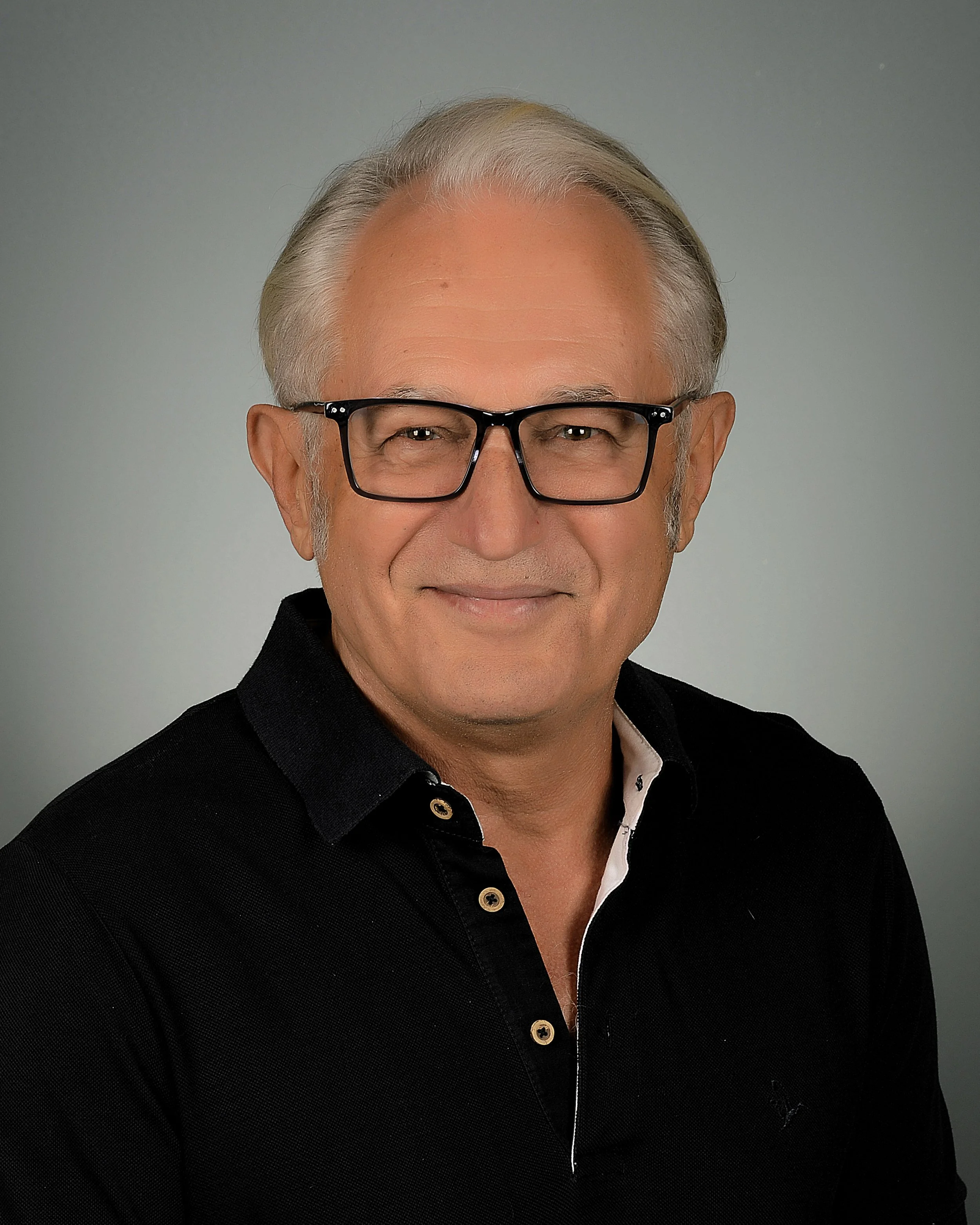
Kenan K. (Koçak)
Biography
Born on August 11, 1956, in Çorum, Turkey, he embarked on his artistic journey with oil painting in June 2006. For two years, he honed his skills under the guidance of Hızır Teppeev at an atelier in Ankara, dedicating his weekends to perfecting his craft.
Currently, he works as a freelance artist in a charming, restored atelier that was once a house built in 1926. Located in Edremit, Balıkesir, Turkey, this space became his creative sanctuary in September 2010. Here, amidst a setting rich with history, he continues to explore and express his artistic vision.
Artist Statement
When I started painting as a hobby in my fifties, it was as if the soul of a twelve-year-old boy had come out of the shelter where he had been staying for years. We decided to walk the path of art together, hand in hand if possible.
I realised that art allows me to touch the lives of people I have never met or who do not know me, if they let me. This is a profound, unique, and inspiring feeling for me.
The main purpose or reason for all these studies and efforts comes from the desire to make a more or less positive contribution to life and all living things, based on "Constructive Freedom".
Pouring my soul into the work, mastery of techniques, craftsmanship, familiarity with materials and their interactions, and the ability to use the appropriate tools where needed are essential and indispensable requirements for me.
In terms of technique, I try to explore my inner world for the harmony of means and ends, using experimentation through the door of intuition...
Every work has its own way, and there is no ready-made recipe or fixed order for all. Since artworks have their own ways of coming to fruition, they become separate and independent entities when they are completed and/or finished. So, it may be desirable to allow them to express themselves. The more you get into them, the more they will communicate.
Finally, please let the works of art speak in silence and be ready to explore their adventurous music...
Every artist has a distinctive way of seeing the world. What do you believe makes your artistic vision truly your own?
I could have answered your question in a few words, but I would rather take this opportunity to share "A Brief Story of the Beginning." The one-word answer will come at the end of the section.
A Brief Story of the Beginning:
“The storyteller says:
Though its attribution to Tolstoy is disputed, the saying holds: “"There are only two plots in all of literature: a person goes on a journey, or a stranger comes to town."
This story, too, begins with a stranger coming to town. But the lights he sees in the distance are not the lights of a city after all; they belong to the boats in the bay. He does not need long to understand this as he makes his way down toward the sea. Silence reigns everywhere. Were it not for the dry twigs and leaves crackling beneath his feet, he might well believe that time had stopped. A night bird's song keeps him company as he walks, as though eager to spread its joy. By the time he reaches the shore, the first light of morning is rising over the distant hills.
The stranger knows what water is, and yet, for some reason, he has never stepped into it. He takes off his shoes then and there and dips one foot into the sea. A shiver of cold runs through him. Just then an old fisherman, returning early from his outing, holds up a large fish and says — as if to himself, or simply thinking aloud — "This is the sea! Sometimes you catch big fish, sometimes small ones." Having struggled to haul his boat ashore, he passes the stranger and this time speaks to him directly, as though sharing a secret: "Once you go into this water, you can never come back out." Then he walks on.
The stranger stands there, caught between conflicting feelings and unsure what to do, when Orhan Veli's lines from "Towards Freedom" come to mind. By sheer coincidence, the music of Timur Selçuk drifts peacefully from a boat that has spent the night at sea. (With respect to Orhan Veli and Timur Selçuk)
“Heeey…
What are you waiting for? Throw yourself into the sea!
Never mind if someone is waiting back there;
Don't you see? Freedom is all around you.
Be the sail, the oar, the rudder, the fish, the water;
Go as far as you can…”
He takes off his clothes and walks slowly toward the sea. He realizes that if he does not struggle, he will not sink. With a happiness he cannot quite name, he stretches out on the calm, sheet-like surface of the water. Dawn is breaking; the night bird keeps singing; Timur Selçuk's song plays on; and, amid the riot of color in the sky, a few stray stars linger faintly in the distance. He realizes that the shiver spreading to his very bones comes this time from a sense of freedom — and there he remains…
"Art is freedom!"
Prelude:
There is a prelude to this scene as well.
In June 2006, in a rather small kitchen, in the middle of an intimate family dinner, Jülide (water color Artist) turns to the man as though the thought has just occurred to her and says, "You said you were interested in painting as a hobby. There is a very good painter in Ankara. He teaches in his studio as well. I'll introduce you. You could have a look."
In that moment the man realizes that the fantasy he retreats into when work becomes stifling — painting flowers and other things in the countryside, brush in hand — is about to become real, and that he is being drawn out of his comfort zone. He feels the need to maneuver. "The last time I painted was in the third year of middle school. I spent a week on it, and the art teacher did not like it at all. Since that day, for nearly forty years, I have not picked up a pencil or a brush," he says.
That weekend, in Hızır Teppeev's studio, he repeats the same words to Hızır*. Smiling, Hızır says in his distinctive Turkish, "That is a good thing for you. You are like a blank page." They buy the necessary materials together and agree to meet the following Saturday.
When they meet again, Hızır has prepared a composition for him in a corner of the studio. He places a blank canvas before him, gently hands him a drawing pencil, and says, "Draw!"
"Draw?" The night before, he had read a fifty- or sixty-page book titled How to Paint in Oils to prepare himself, but the "draw" part was nowhere in it.
Perhaps, when you have become an expert in one field, it is a little harder to accept being a beginner in another. For ten or fifteen minutes he pretends to study the composition as though he were looking at a canvas. In truth, he is close to the exit. The door stands half-open, and he is weighing whether to stay and continue or simply leave. But he knows that if he runs away now, he will carry that escape with him for the rest of his life — and he cannot bring himself to accept that. In the end, he frames the composition with his fingers, as he has seen people do on television, and makes a few marks. Then, together with Hızır, he completes the painting.
Through this first painting he learns nearly fifteen things, beginning with the fact that every object has its own light, its own shadow, and its own reflection. At the end of the day's work, Hızır shows him how to clean the brushes and says, "Respect your brushes!"
We already have a traditional understanding of respect for living beings — for people, cats, dogs, plants, and trees — as well as for the earth and the water. But this broader approach opens a different perspective: respect for inanimate things as well. In its widest sense, it is respect for nature, and for the tools and materials we use. Once you begin to feel this, you may also notice more clearly the quiet weight in the way a stone simply stands there.
"Art is respect…"
*(Hızır Teppeev was a Balkar Turk and a Russian State Artist. We were the same age, and he was also a very good teacher. Sadly, we lost him on 3 May 2016. With deep respect…)
The Final Scene:
This time the stranger really does come to a city. As he walks around, a line written on a wall in an auto repair district catches his eye:
"What's gone is gone! The day it left, it was over!"
Perhaps, if one looked into its background, a dramatic love story might emerge. But the stranger sees it through the lens of the impermanence of titles and positions, and thinks that it may signal not an ending but a new beginning.
A twelve-year-old child then appears from within him. Since he can no longer, in any practical sense, return to that age, he takes the invisible child by the hand, and the two of them begin walking together.
In the old house he has moved into and begun using as a studio, his next-door neighbor is Fatma Teyze. At least twenty years his senior, Fatma Teyze means a woman of great character, sharp intelligence, a life full of hardship, and bright blue eyes. She never rings the bell; she knocks on the door.
One winter morning, while he is painting, there is a knock at the door. When he opens it, Fatma Teyze is standing there with a deep enamel pot, its lid on. He lifts the lid to find a glass of steaming hot milk inside. Fatma Teyze keeps it brief: "You must be cold. This will warm you up!" (With respect and gratitude to Fatma Teyze…)
Left alone with a glass of hot milk in his hand, he remembers the neighborhoods of his childhood: the aunts and uncles who quietly watched over the children playing in the streets; the genuine bonds between people; the smell of bread drifting from the stone oven; and the games they played in the alleyways alongside cats and dogs. In the midst of this deeply moving nostalgia, he realizes that he has not, in fact, arrived in a city at all. He has set out on an inward journey.
"Art is an inward journey!"
My one-word answer, in the truest sense of the word, is "innocence."
Looking back at 2026, what has been the most meaningful moment or turning point in your artistic journey?
In an interview I gave to Contemporary Art Curator Magazine last year, I described my way of working like this:
"Perhaps the critical point here is the silent dialogue with the work. Suppose you have a very good friend, or friends, near or far, always ready to help when they sense that you need them. You do not need to call them. They simply make suggestions, without insisting, and leave what happens next to your decisions. They always speak affirmatively: 'Do this, do that!' — and never say, 'Don't.' Apart from everything else, this feels to me like a stunning form of communication, and it gives me the wonderful feeling of being cared for."
Afterward, I noticed an interesting change in myself this year. It was as though these external, supportive energies had quietly withdrawn, and their voices could no longer be heard. Perhaps I should never have spoken about them. I have no idea what the general rules around such things might be. I am only trying to reason through what has happened. Perhaps even now I should not be explaining it. Anyway…
In one of my recent works, drawing on my experience to date, I found myself at an impasse, and the painting stopped progressing. ["Network (Nature)"] On the one hand it looked finished; on the other, it was plainly unfinished. In the past I would have pushed ahead with different techniques and found some way to bring it to a conclusion. This time, however, I liked its proportions and its inner dynamics, and I knew that if they were disturbed I might never be able to recapture them. So I set the painting aside and left it to time.
A vivid shade of green that I had used in another work seemed suited to this one as well. I added that color and completed the painting.
The main turning point for me was recognizing that it was time for a long pause — of unknown duration — and that the intervening time would be better spent reorganizing myself.
Great art often communicates what words cannot. What do you hope people experience or discover when encountering your work?
In essence, this is something each viewer can decide for themselves. Yet in the foreword to the catalogue for my 2024 solo exhibition in Istanbul, Cognitive Dissonance, I wrote:
"Your inner dialogues, which may arise through the relationship between values and depend on your desires, will constitute the most valuable part of the exhibition — even if no one hears or knows of them. Your critical opinions are very valuable. Please share…"
So, if they wish, the personal and inward interactions viewers have with the works may, depending on what they trigger, serve the same purpose as the silvering behind a mirror.
As the art world continues to evolve, what do you believe gives an artwork lasting significance beyond trends and recognition?
I understand "lasting significance" as a value and importance inherent in itself.
In other fields, different physical and chemical tests may be used. The acid test, or the touchstone used in jewelry to determine the purity and grade of gold and silver, may be a good example. Unfortunately, this analogy does not always hold for art — or for painting in particular — because the reference points and the forces at play are rhizomatic, multiple and layered, whether or not they are widely accepted. As a result, the touchstone — or touchstones — for painting are highly variable. Perhaps the only valid touchstone is time itself.
As you pointed out, it seems that a work of art can reveal its own value only when it is stripped bare of trends, fashion, social media influence, marketing dynamics, and other such forces. I can make a few general observations — for instance, about how deep a work reaches and how far its reach extends. But translating these ideas into practical terms is not so easy.
The considered and realistic assessments of genuine experts in the relevant time and context may also shed light on the matter. Yet, with all due respect to them, I believe one must look carefully at who is an expert and who is merely playing the role of one. I feel this subject is beyond me.
What does being recognized among WORLD ARTISTS DEFINING OUR TIME 2026 mean to you personally and professionally?
When you make a painting, the desire for it to be seen, communicated, and shared emerges with great force. I believe that being selected alongside artists of considerable individual merit is an important source of motivation.
When future generations look back at your work, what would you most like them to remember?
I cannot predict in advance what times future generations will live in, or under what circumstances. To be honest, it would be enough for me if they took the time to look at my work. What follows, I believe, will depend on the relationship they form with the work and the way they engage with it.
And so, not to sidestep your question, my answer — though it is not easy to elaborate on — is "aesthetics." I wish them goodness and beauty.
Stay well, with love…
orukk.com
kenank.art
Instagram: @kenank_art
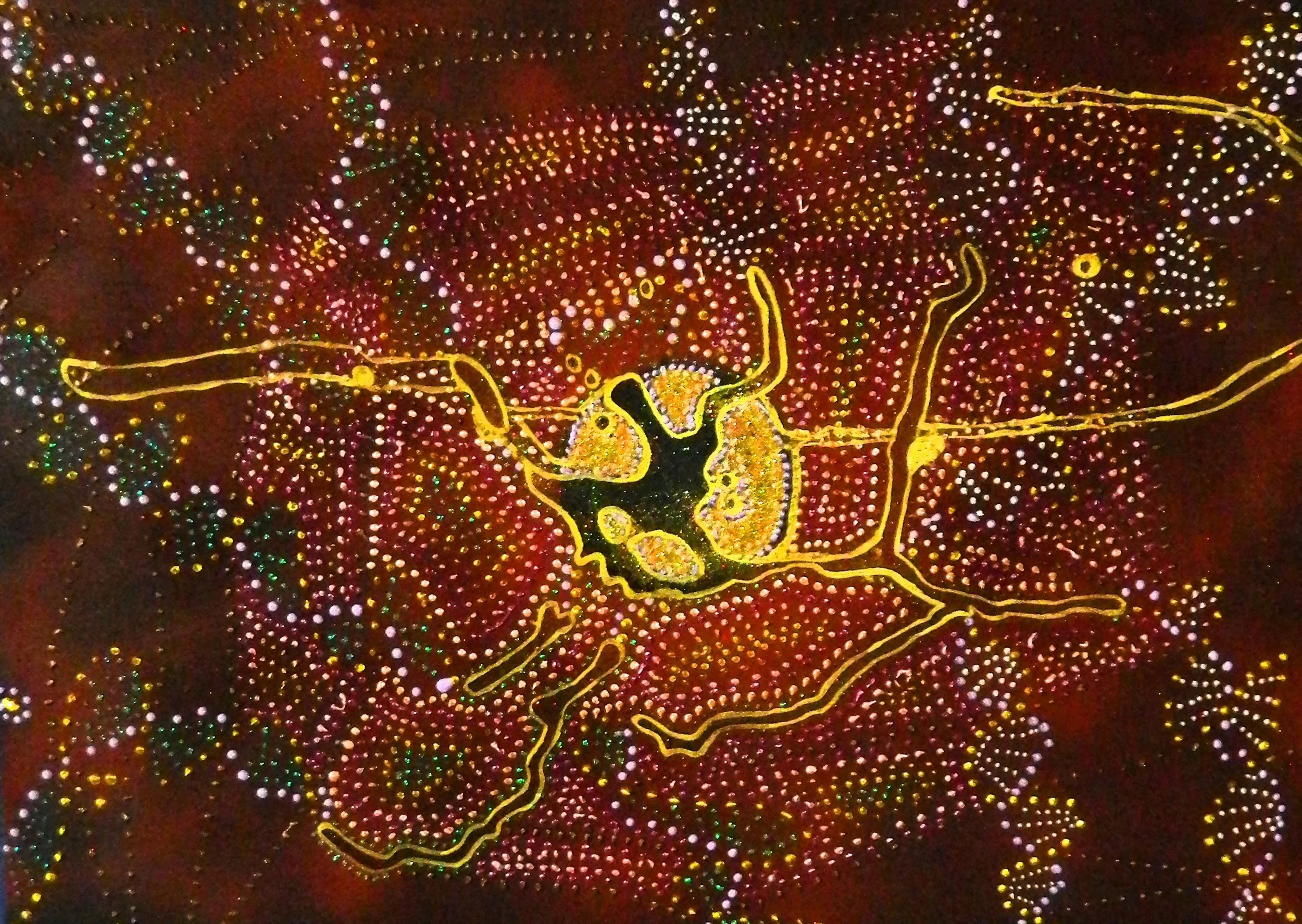
DNA Substance 20, 2026, Mixed media on plywood,50x70 cm
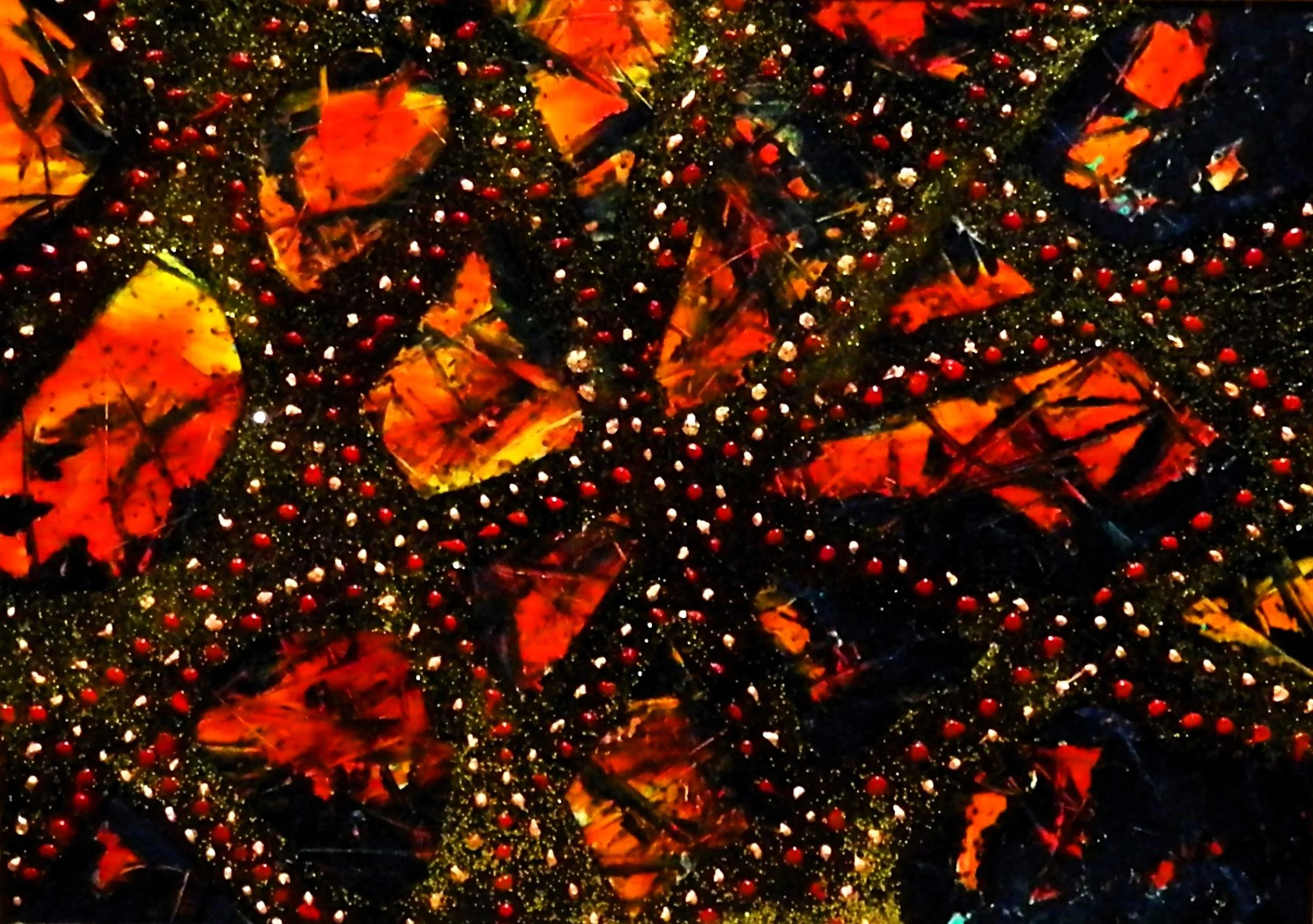
Embers, 2025 (Re-visited), Mixed media on canvas, 50x70 cm
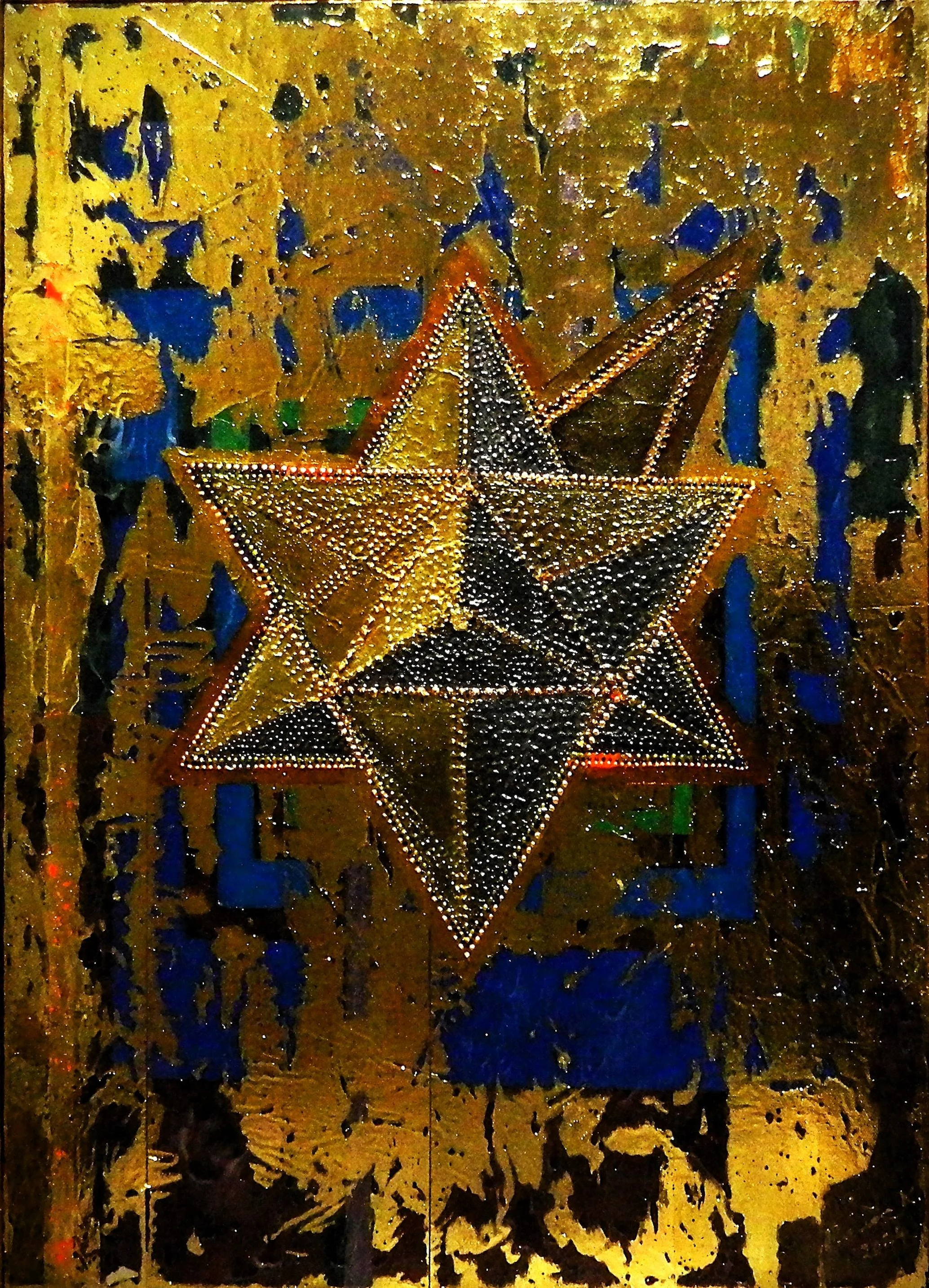
Secret Geometry, 2025 (Re-visited), Mixed media on canvas, 50x70 cm

Rising from the Ashes, 2026, Mixed media on plywood, 70x50 cm
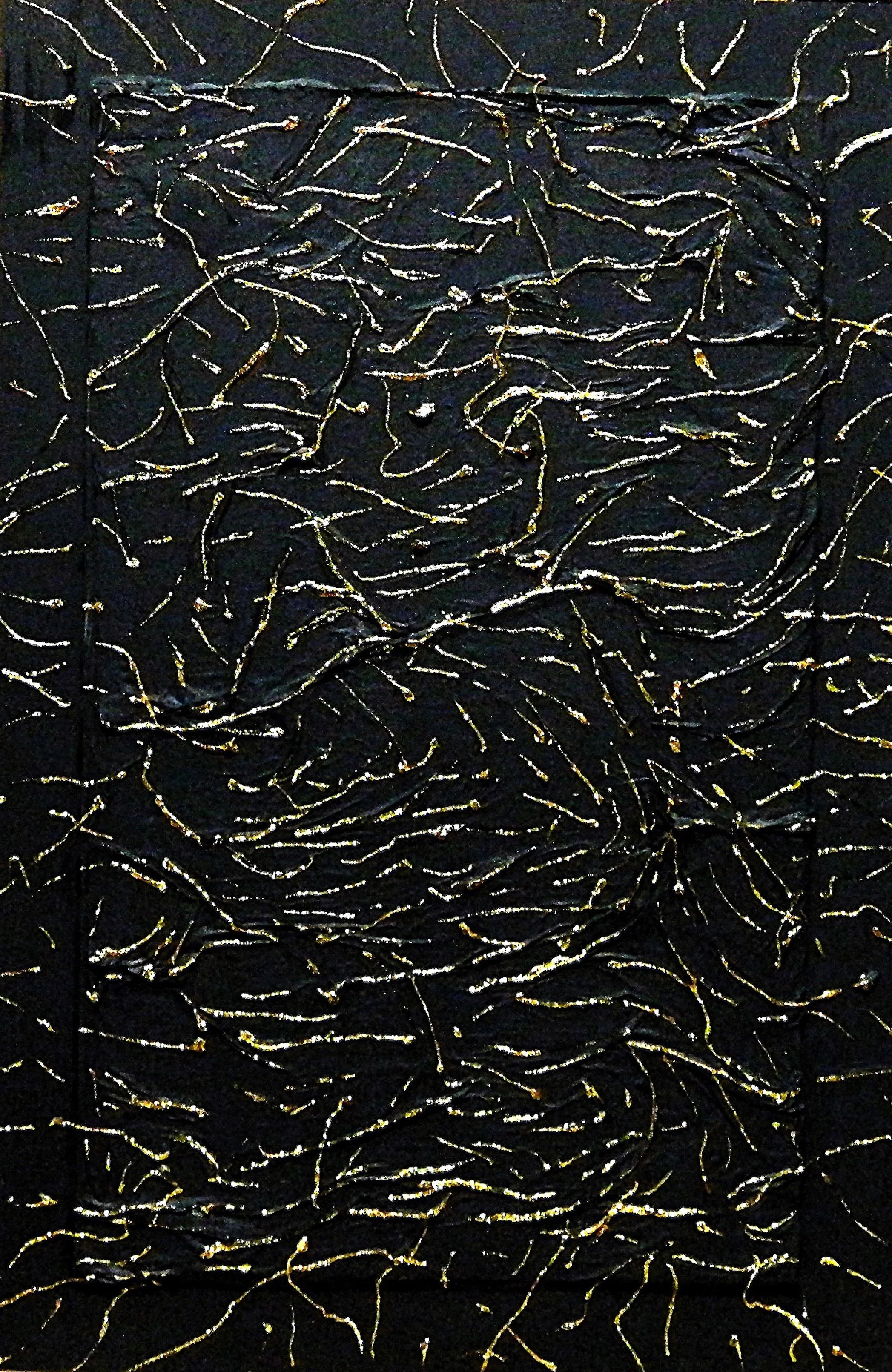
Internal Waves, 2026, Mixed media on plywood, 40x60 cm

The Secrets behind the Veils, 2026 (Re-visited), Mixed media on canvas, 50x70 cm
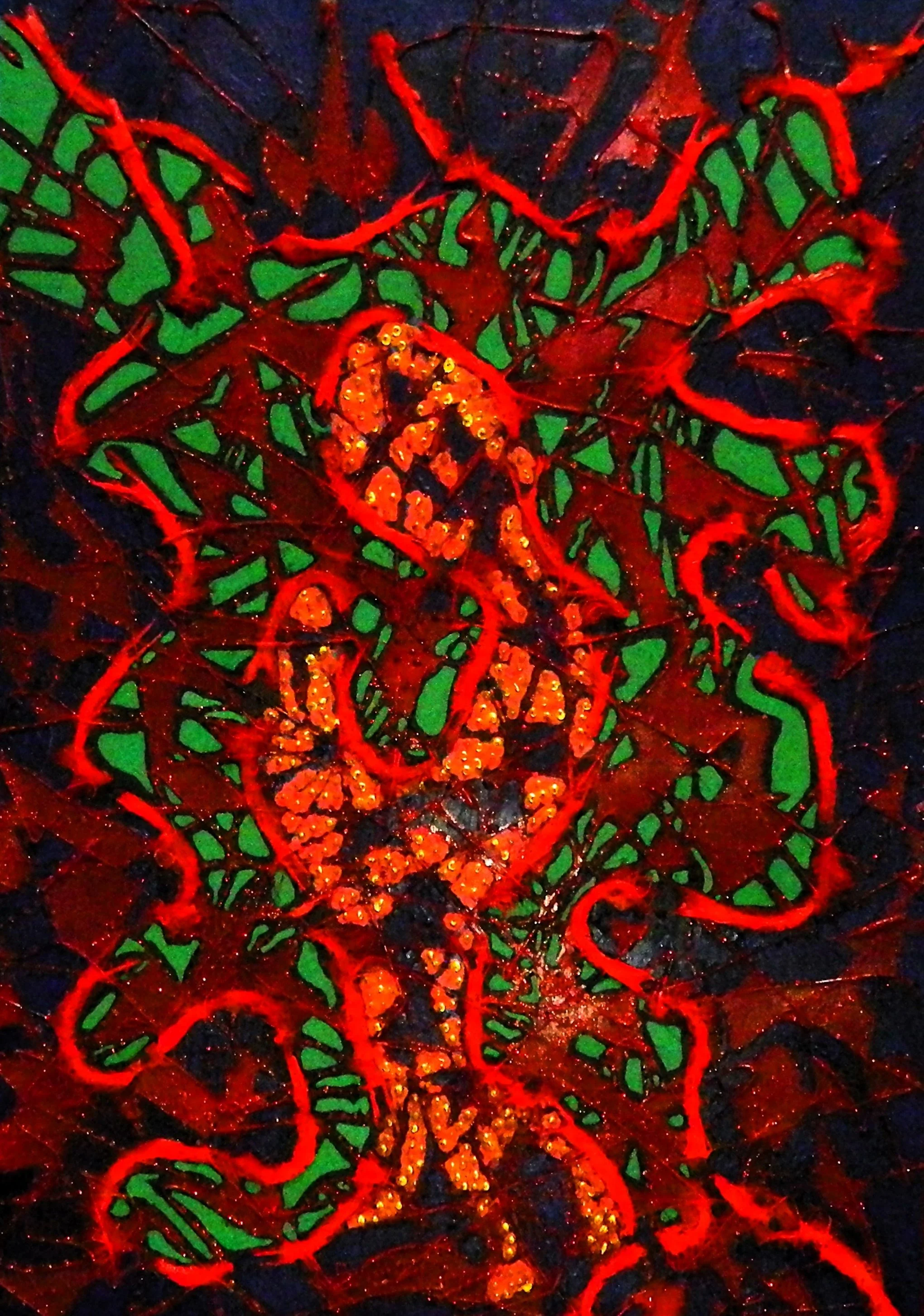
Obsession, 2026, Mixed media on plywood,50x70 cm

Network (Nature), 2026, Mixed media on plywood, 50x70 cm
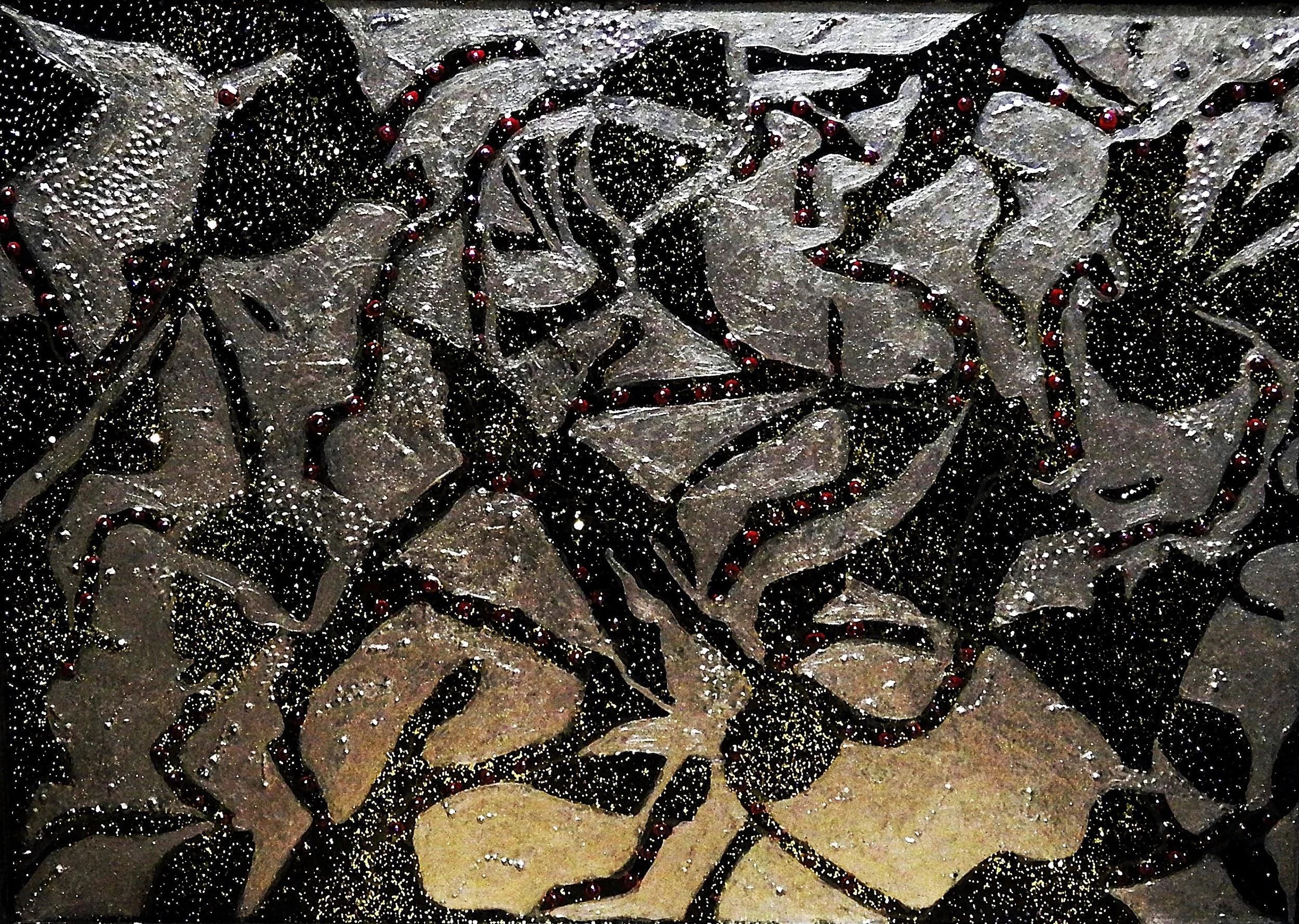
Night Chats, 2026 (Re-visited), Mixed media on canvas, 70x50 cm

Pearls of the Monkey Kingdom, 2026, Mixed media on plywood, 50x70 cm