Interview with Paulo Ossiao
Paulo Ossião
Born in Lisbon in 1952.
Solo Exhibitions
1984
A Galeria, Cascais.
1985
Galeria Igoper, Lisbon; Club Jardins da Arrábida, Porto; Galeria Grade, Aveiro; Atrium da Imprensa, Lisbon.
1986
Galeria do Hotel Albatroz, Cascais; Galeria R 75, Lisbon; Atrium da Imprensa, Lisbon.
1987
Galeria de Arte do Casino Estoril, Estoril.
1988
Biblioteca Nacional, Lisbon.
1989
Galeria A Janela Verde, Lisbon; Galeria Holly, Lisbon.
1990
Galeria de Arte do Casino Estoril, Estoril; Galeria Santiago, Almada.
1991
Galeria R 75, Lisbon; Galeria de Arte do Casino Estoril, Estoril.
1992
Galeria Holly, Lisbon; Galeria Neupergama, Torres Novas; Galeria Arte Vária, Coimbra.
1993
Galeria A Janela Verde, Lisbon; Galeria Triângulo 48, Restelo.
1994
Palácio Beau Séjour, Lisbon; Galeria São Francisco, Lisbon; Loios Galeria, Porto.
1995
Galeria Arte Vária, Coimbra; Galeria de Arte do Casino Estoril, Estoril; Museu da Água, Lisbon; Galeria A Janela Verde, Lisbon.
1996
Galeria São Francisco, Lisbon; Galeria Holly, Lisbon.
1997
Galeria São Francisco, Lisbon; Galeria Arte Vária, Coimbra.
1998
Almadarte, Costa da Caparica; Galeria de Arte do Casino Estoril, Estoril; Galeria Verney, Oeiras.
1999
Galeria de Arte do Casino Estoril, Estoril; Galeria A Janela Verde, Lisbon; Galeria Arte Vária, Coimbra.
2000
Galeria Santiago, Palmela; Galveias Galeria de Arte, Lisbon; Galeria Almadarte, Costa da Caparica.
2001
Galeria Magia Imagem, Lisbon; Palácio das Necessidades, Lisbon; Galeria A Janela Verde, Lisbon.
2002
Galeria Santiago, Palmela; Livraria Barata, Lisbon.
2003
Galeria Magia Imagem, Lisbon; Galeria Galveias, Lisbon.
2004
Galeria A Janela Verde, Lisbon; Galeria Santiago, Palmela; Galeria Palpura, Lisbon.
2005
Galeria Livraria Barata, Lisbon.
2006
Galeria A Janela Verde, Lisbon; Galeria Mouraria, Funchal; Galeria Palpura, Lisbon.
2007
Galeria de Arte do Casino Estoril, Estoril; Galeria São Francisco, Lisbon.
2008
Galeria Magia Imagem, Lisbon; Galeria A Janela Verde, Lisbon.
2009
Galeria de Arte do Casino Estoril, Estoril; Galeria Galveias, Lisbon.
2010
Galeria de Arte do Casino Estoril, Estoril.
2011
Galeria Palpura; Galeria de Arte do Casino Estoril, Estoril.
2013
Galeria de Arte do Casino Estoril, Estoril.
2014
Galeria Ap’Arte, Porto; Galeria São Francisco, Lisbon; Casa Museu Roque Gameiro, Amadora.
2015
Galeria de Arte do Casino Estoril, Estoril; Casa da Cultura da Ericeira.
2016
Galeria São Francisco, Lisbon.
2017
Palácio Nacional de Mafra; Galeria Ap’Arte, Porto.
2018
Centro de Exposições de Odivelas; Galeria de Arte do Casino Estoril, Estoril.
2019
Edifício Embaixada, Lisbon; ISPA, Lisbon; Galeria de Exposições Augusto Cabrita, Seixal.
2020
Casa da Cultura, Ericeira; Galeria de Arte do Casino Estoril, Estoril.
2021
Galeria CNAP, Lisbon.
2022
Galeria Municipal Artur Bual, Amadora; Galeria Ap’Arte, Porto; Galeria CNAP, Lisbon, with painter Alfredo Luz.
2023
Galeria de Arte do Casino Estoril, Estoril; Oficinas de Formação e Animação, Aljustrel Municipal Council.
2024
Galeria CNAP, Lisbon; MAC, Movimento Arte Contemporânea.
Selected Group Exhibitions
1981
Palácio Foz; Museu Regional de Sintra; Galeria de Arte do Casino Estoril, Estoril.
1982
Galeria de Arte do Casino Estoril, Estoril.
1983
Museu Regional de Sintra; Galeria Grade, Aveiro; Galeria de Arte do Casino Estoril, Estoril.
1984
Palácio Foz; Galeria Grade, Aveiro; Galeria de Arte do Casino Estoril, Estoril.
1985
Rio de Janeiro; Galeria de Arte do Casino Estoril, Estoril; Galeria Grade, Aveiro; Twenty Portuguese Painters, Madrid.
1986
Leiria; Galeria de Arte do Casino Estoril, Estoril.
1987
Conference of World Capitals, Ottawa, Canada; Brussels; Galeria de Arte do Casino Estoril, Estoril.
1988
Galeria Ditec, Lisbon; Galeria de Arte do Casino Estoril, Estoril; Multiface, Lisbon; Prague; Fórum de Arte Picoas; Brussels; Fórum Artejo, Jerónimos, Lisbon; Galeria Artela, Lisbon; Paris Autumn Salon.
1989
Fórum de Arte das Picoas; Galeria de Arte do Casino Estoril, Estoril; The Hague; Antwerp.
1990
AIP, Porto; Antwerp; Luxembourg; Galeria de Arte do Casino Estoril, Estoril.
1991
The 20th Century in the Visual Arts, Palácio Galveias, Lisbon; Galeria de Arte do Casino Estoril, Estoril; Bank of Ireland, Dublin and Belfast.
1992
Tribute to Tomás de Melo, Galeria de Arte do Casino Estoril, Estoril.
1993
Livraria Barata, Lisbon; Galeria São Francisco, Lisbon; Young Art, Galeria de Arte do Casino Estoril, Estoril.
1994
Galeria Forma, Braga; Livraria Barata, Lisbon; Galeria São Francisco, Lisbon; Galeria de Arte do Casino Estoril, Estoril.
1995
Galeria Neupergama, Torres Novas; Galeria de Arte do Casino Estoril, Estoril; Galeria São Francisco, Lisbon.
1996
Livraria Barata, Lisbon; Galeria de Arte do Casino Estoril, Estoril.
1997
Galeria Convosco, Lisbon; Marca Madeira.
1999
Galeria de Arte do Casino Estoril, Estoril.
2000
Portuguese Contemporary Art, Pricewaterhouse; FIL, Lisbon; Marca Madeira.
2001
On the Edge of Europe, University of Galway, Ireland; Coimbra and Its Painters, Museu Nacional de Machado de Castro.
2002
Galeria São Francisco, Lisbon.
2003
Galeria Palpura, Lisbon; Galeria Santiago.
2004
Galeria Santiago; Galeria Palpura; Galeria Magia Imagem.
2006
Casino Estoril Autumn Salon.
2007
Futurart, Brussels.
2008
Europart Catalogue, Geneva, Switzerland; Casino Estoril Autumn Salon.
2009
Forty Years of Galeria São Francisco; Casino Estoril Autumn Salon.
2010
Animals Are People Too, Casino Estoril; Tribute to Nadir Afonso.
2011
Artists for Oeiras, Palácio do Egipto, Oeiras; Local Artists, Galeria de Arte do Casino Estoril, Estoril.
2012
Autumn Salon, Tribute to Jorge Amado, Casino Estoril.
2013
Local Artists II, Estoril; The Magic of Spring, Galeria São Francisco, Lisbon; Porto group exhibition, Euroarte, Porto.
2014
Mare Nostrum, Casino Estoril.
2017–2018
Galeria Ap’Arte, Porto.
2019
Vila Nova de Gaia Biennial; International Watercolor Festival, Fabriano, Italy; Artbox Gallery, Miami.
2020
Artbox Gallery, Zurich.
2021
Casino Estoril Autumn Salon; GIMHAE Biennial, South Korea.
2022–2024
Casino Estoril Autumn Salon; Beja Biennial; Vila Nova de Gaia Biennial.
2024
Galeria CNAP, Lisbon; Galeria Ap’Arte, Porto; Portuguese Naval Academy.
Publications and Artistic Practice
Several screen prints based on Paulo Ossião’s works have been published, and he has illustrated several books of poetry. He also published Olhares, a book of charcoal and watercolor drawings.
Throughout his career, he has created sculptures in bronze and other materials, which he regularly exhibits alongside his paintings.
Represented in Collections
Paulo Ossião’s work is represented in the following public and institutional collections:
Lisbon Municipal Council; Sintra Municipal Council; Aveiro Municipal Council; Amadora Municipal Council; Sesimbra Municipal Council; Manuel Cargaleiro Foundation; Oeiras Municipal Council; Viana do Castelo Municipal Council; Seixal Municipal Council; Moita Municipal Council; Torres Vedras Municipal Council; Ponte de Sor Municipal Library; Cascais Municipal Council; Portuguese Maritime Museum; Museu Martins Correia, Golegã; Museum of Lisbon.
His work is also held in numerous private collections in Portugal and abroad, as well as in public and private corporate collections.
Titles, Honors, and Awards
1981
Honorable Mention for Olissiponense Merit, Palácio Foz; First Prize for Watercolor, Rotary Club of Sintra; Honorable Mention at the Second Casino Estoril Autumn Salon.
1982
Honorable Mention at the Third Casino Estoril Autumn Salon.
1983
First Prize for Watercolor, Rotary Club of Sintra; Honorable Mention at the Fourth Casino Estoril Autumn Salon.
1984
Honorable Mention at the Fifth Casino Estoril Autumn Salon.
1985
Honorable Mention at the Sixth Casino Estoril Autumn Salon.
1986–1993
Member of the European Watercolor Institute.
1987
Oeiras Municipal Council Prize; Northeast Trás-os-Montes Regional Tourism Prize; First Prize for Watercolor, Rotary Club of Sintra.
1990
Carlos Botelho Prize, Lisbon Municipal Council.
2021
Painting Prize from the Portuguese Naval Academy.
2024
Appointed Official Naval Painter.
You have described watercolor as a medium that demands special sensitivity, particularly in the interaction among white paper, water, pigment, and transparency. How do these elements guide your decisions as an image gradually emerges?
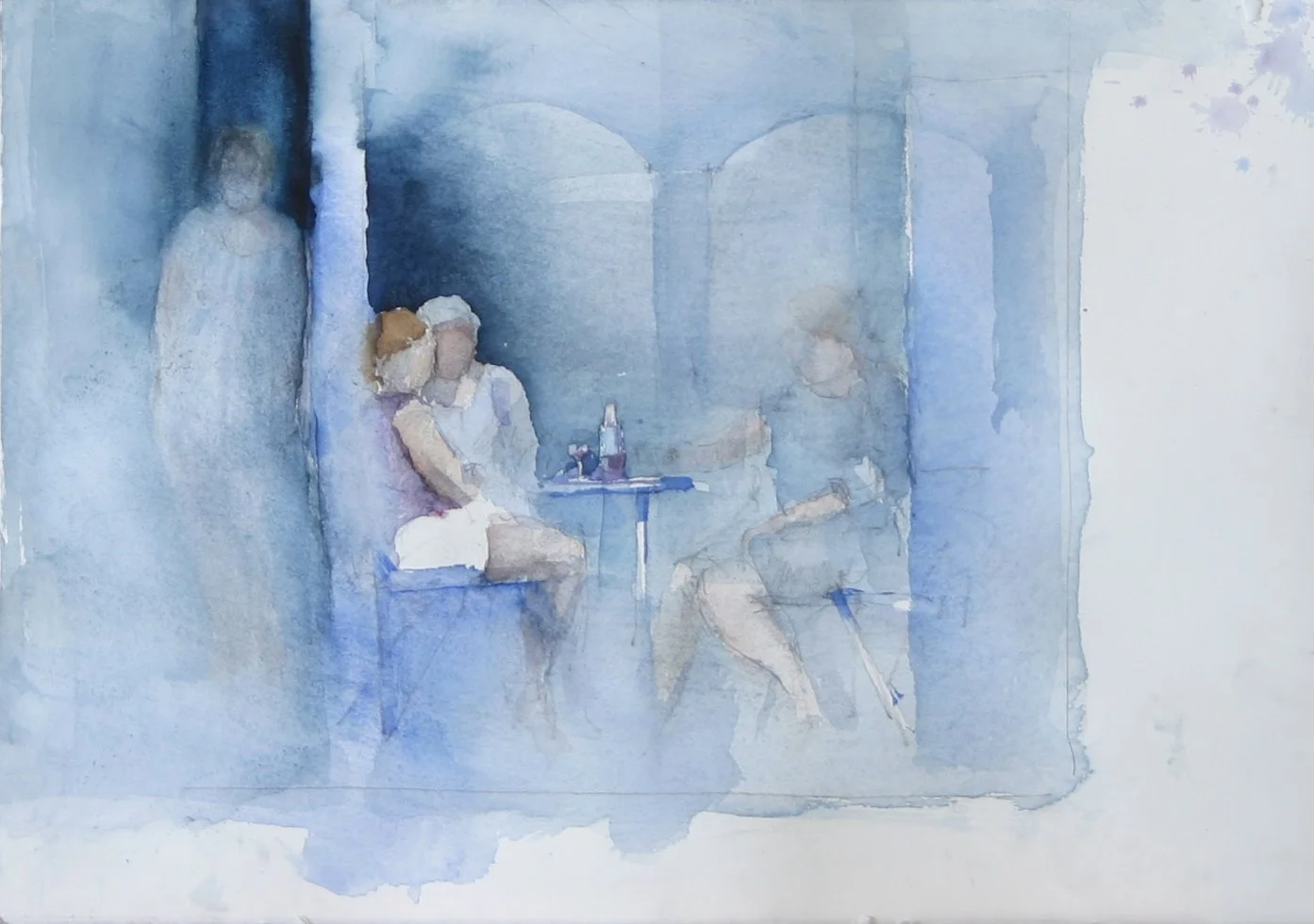
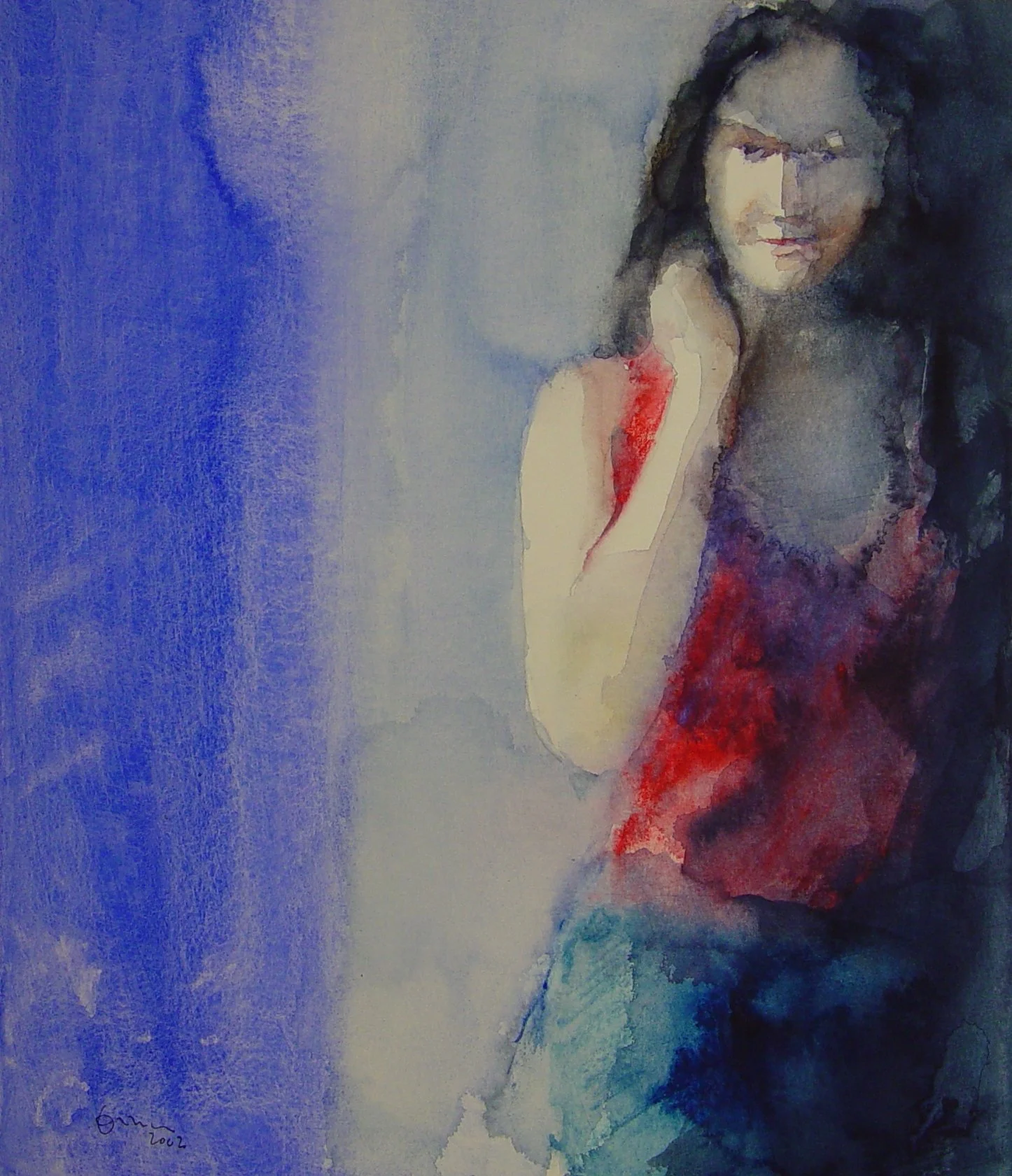
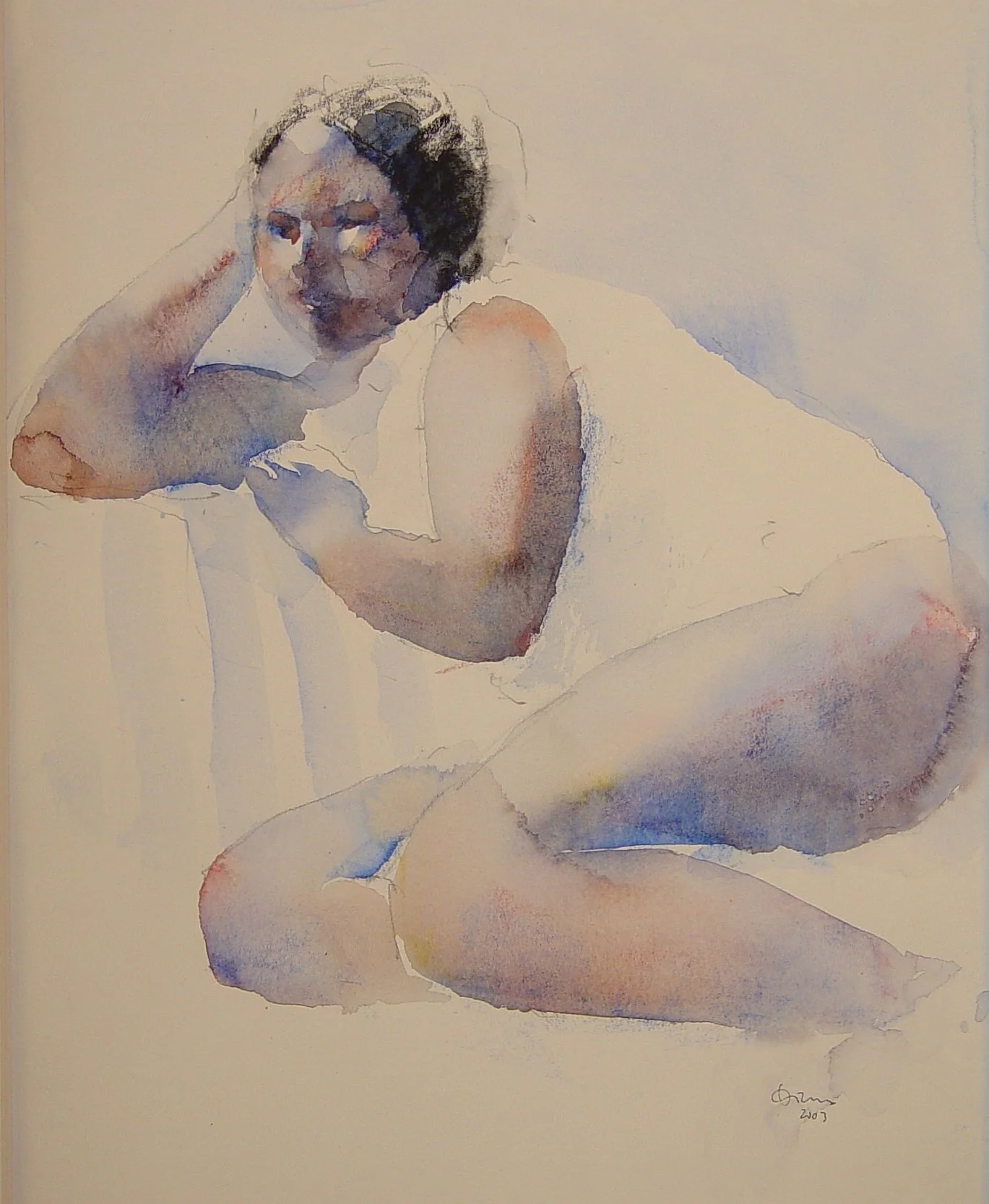
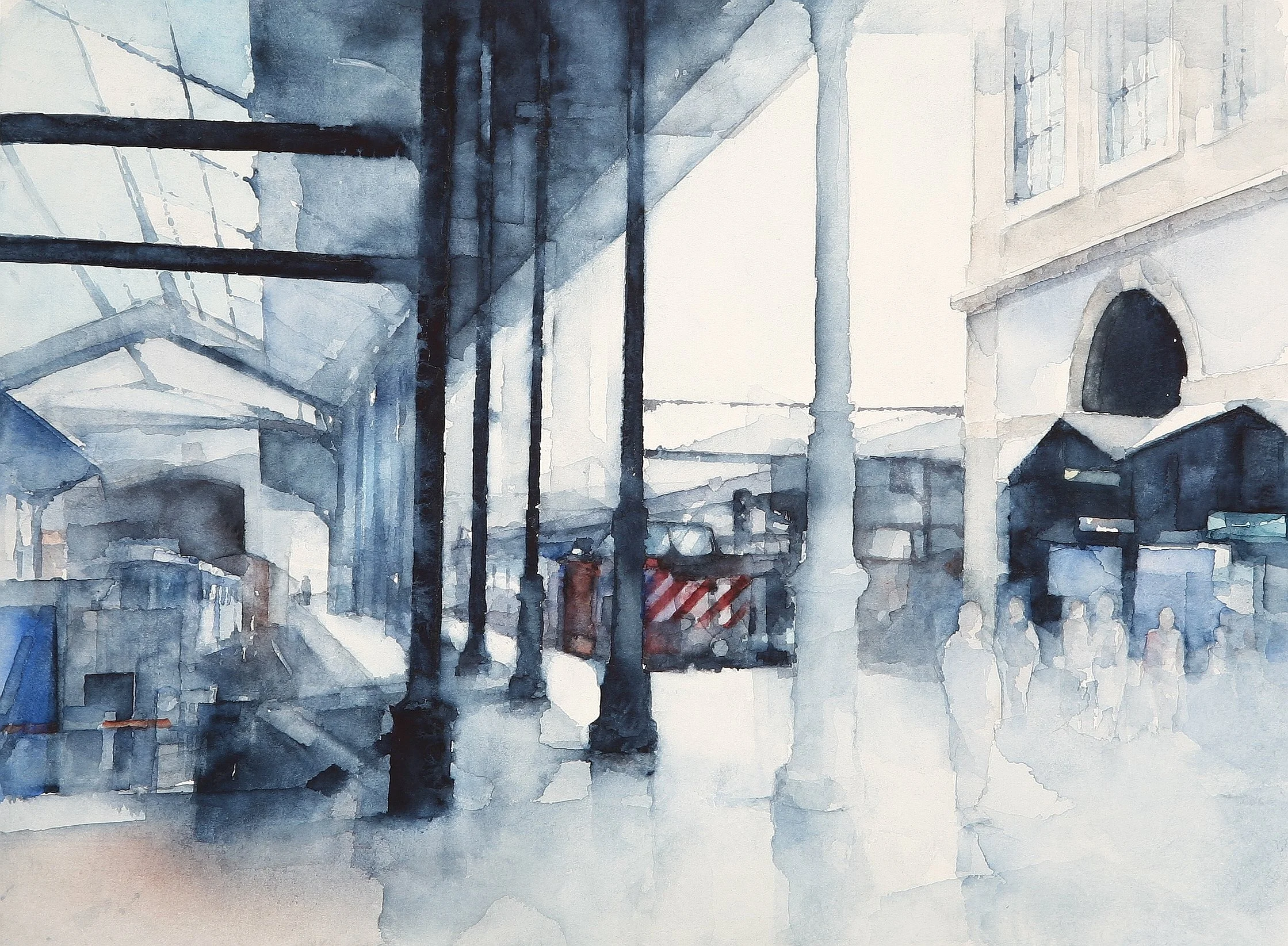
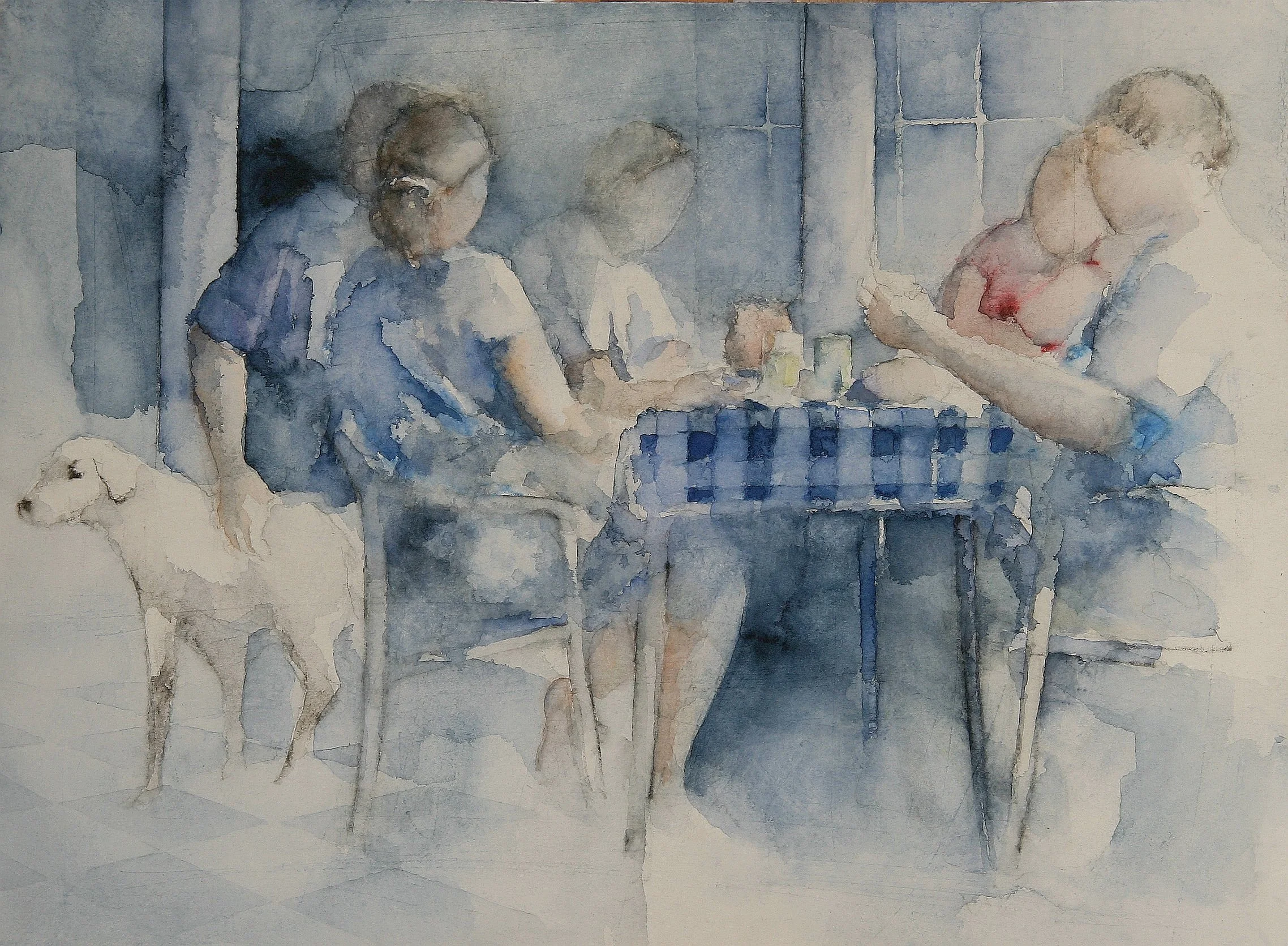
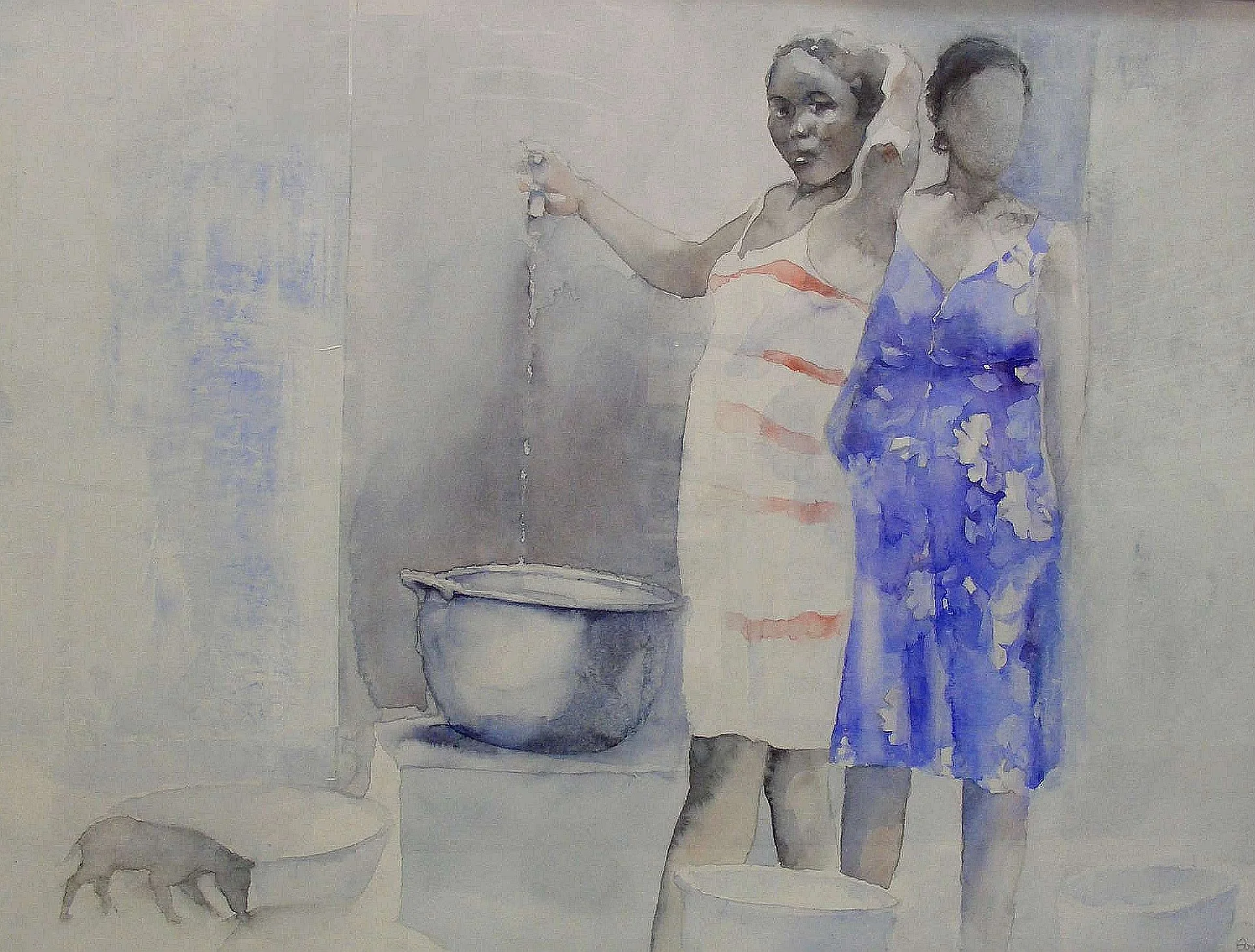
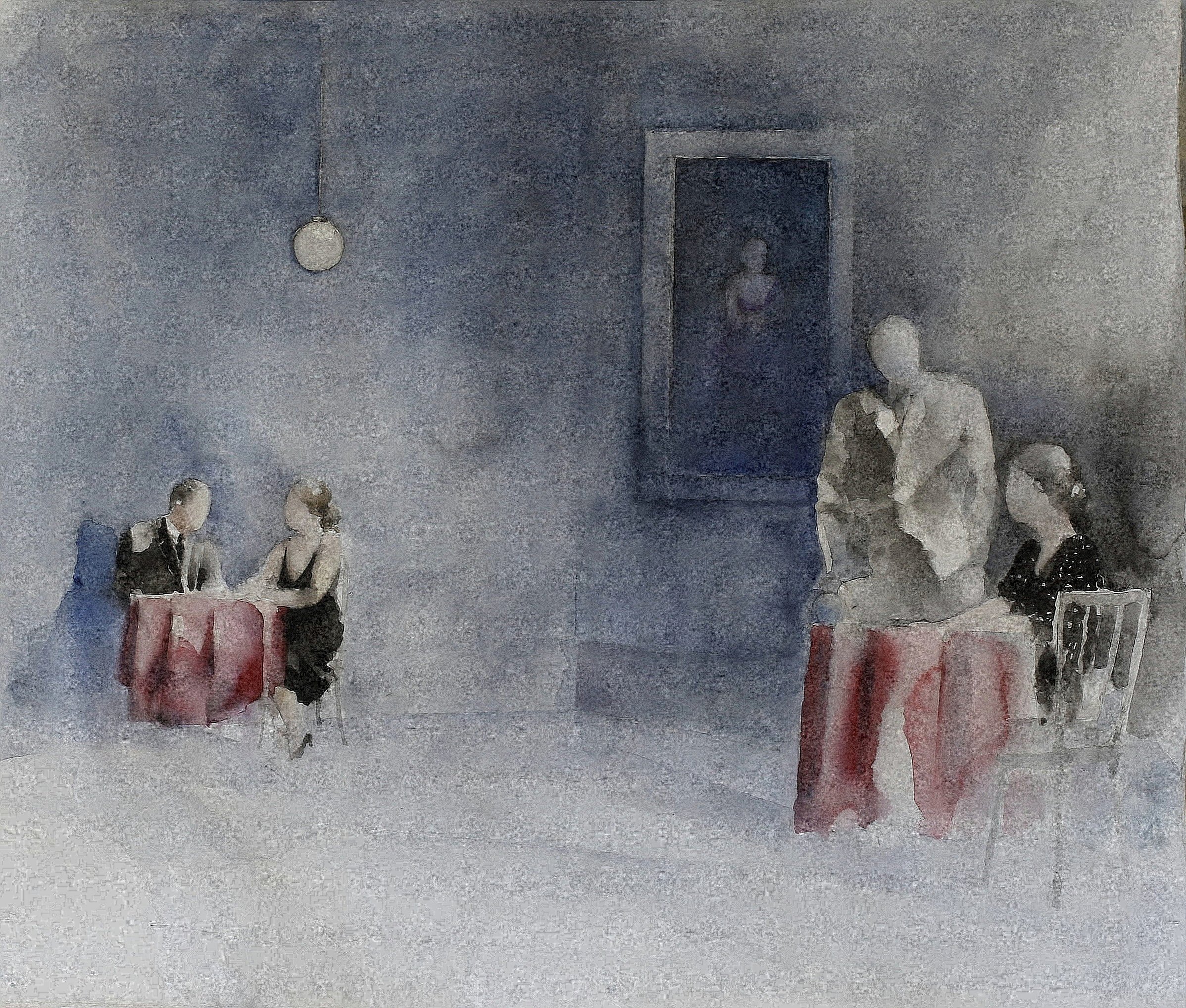
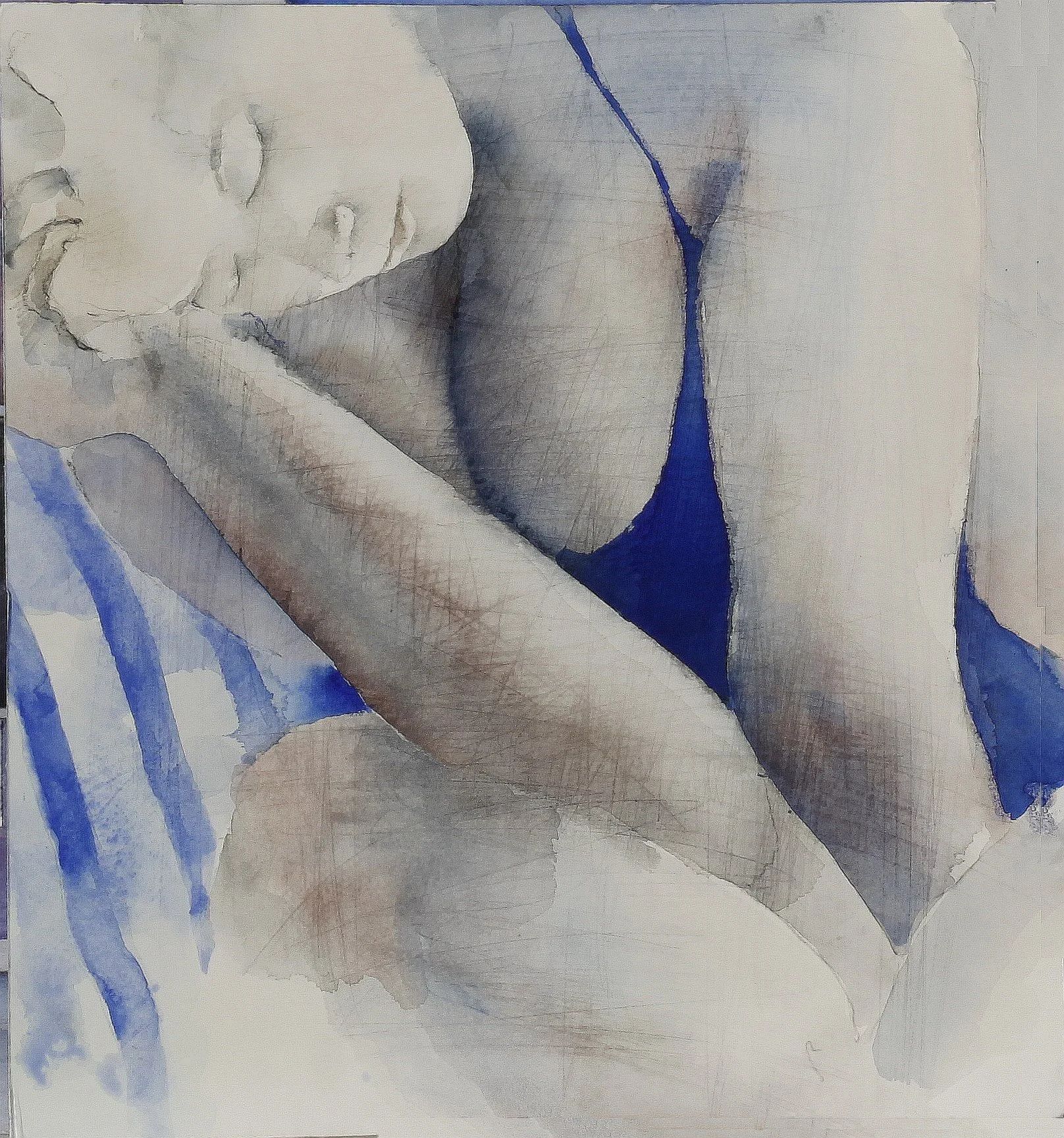
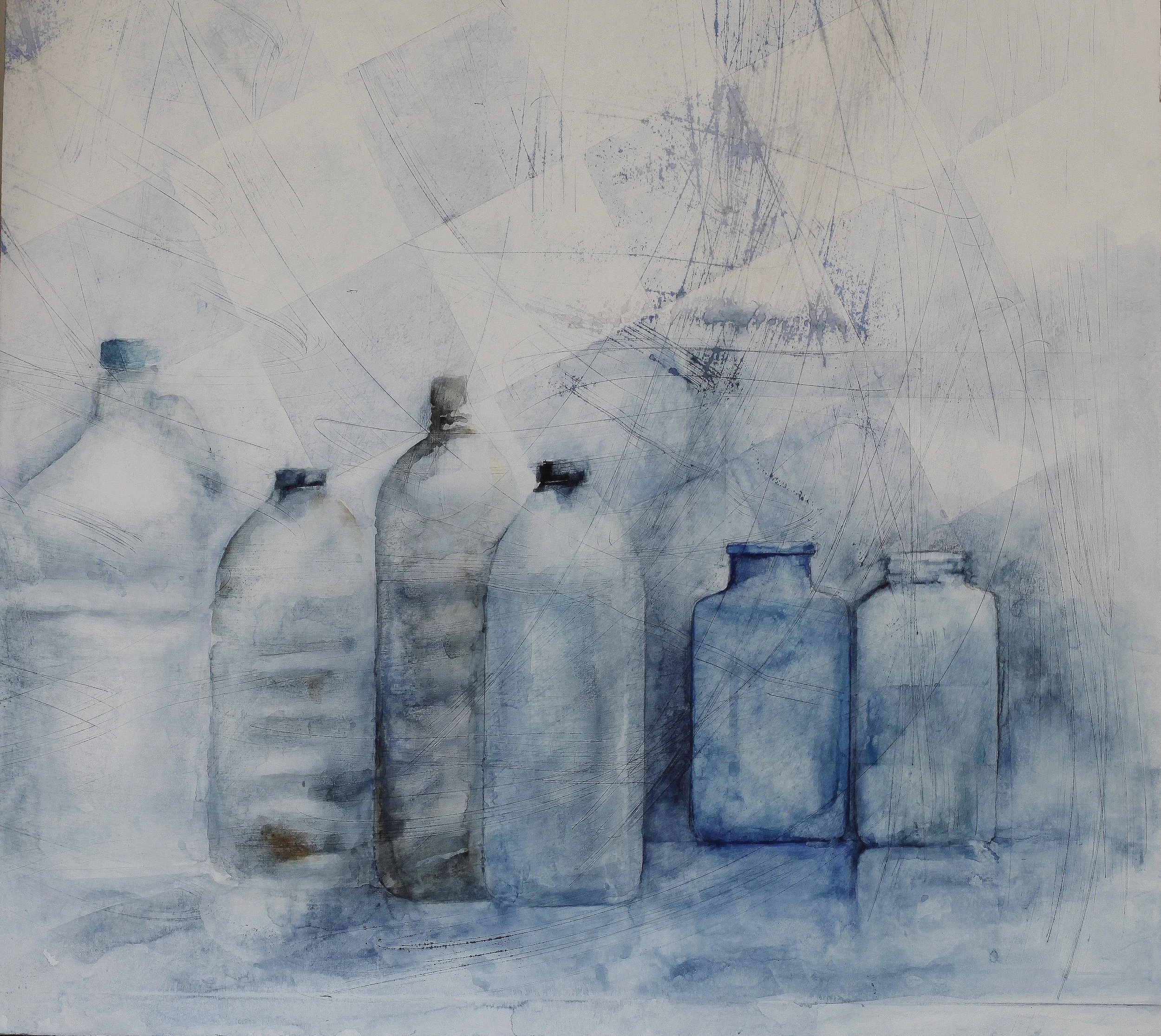
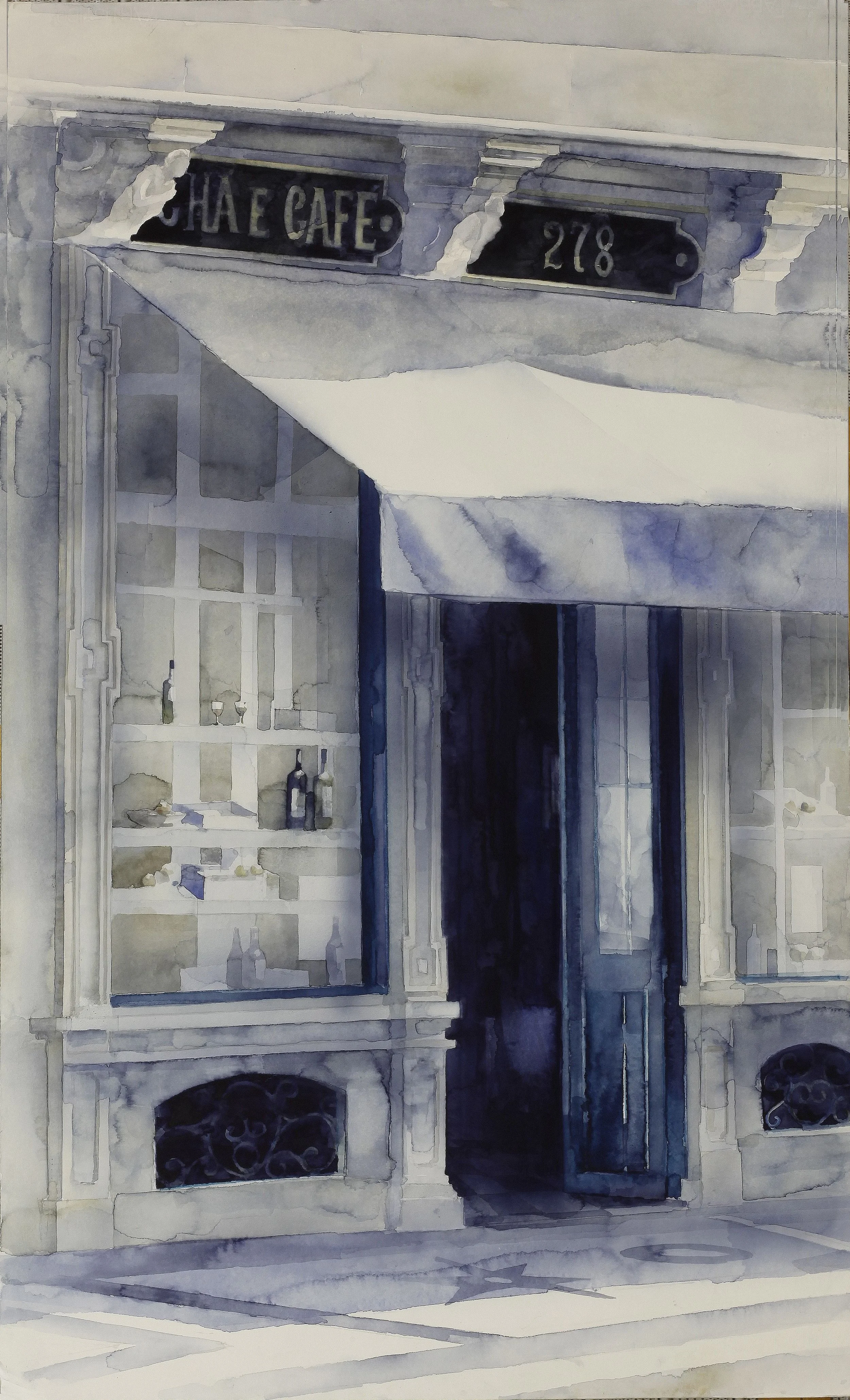
On the white paper, I gradually dilute some colors. With the freely flowing water, I try to somehow convey what I feel or an idea through various experiments, some more or less successful, through this medium of painting. Working with watercolor has certain requirements in its application, ranging from reserving white spaces to exploring transparencies in their infinite possibilities.
In fact, being a technique whose main element is water, a difficult control sometimes results in diverse or unexpected outcomes in this challenge that is drawing, form, and color. Water allows us to navigate this parallel world where we can imagine anything, a world of mist on the paper.
Your paintings often appear to operate at what you call “the limit of gesture,” where control meets the unpredictable movement of water. How do you negotiate this tension between technical mastery and surrender during the painting process?
A painting should be like reading a book where we discover a story or the description of a particular feeling, the discovery of new sensations, or even the revelation of a secret or enigma.
In this experience, with more or less water, more or less paint, the brush, that indispensable tool, carries the feeling of a particular thought or idea and thus transmits it freely. This medium of painting is thus inherently unstable due to the way the water and paint are applied.
Lisbon’s streets, trams, architecture, and distinctive light recur throughout your work. How has your perception of the city changed across more than four decades of painting it, and how have those changes entered your visual language?
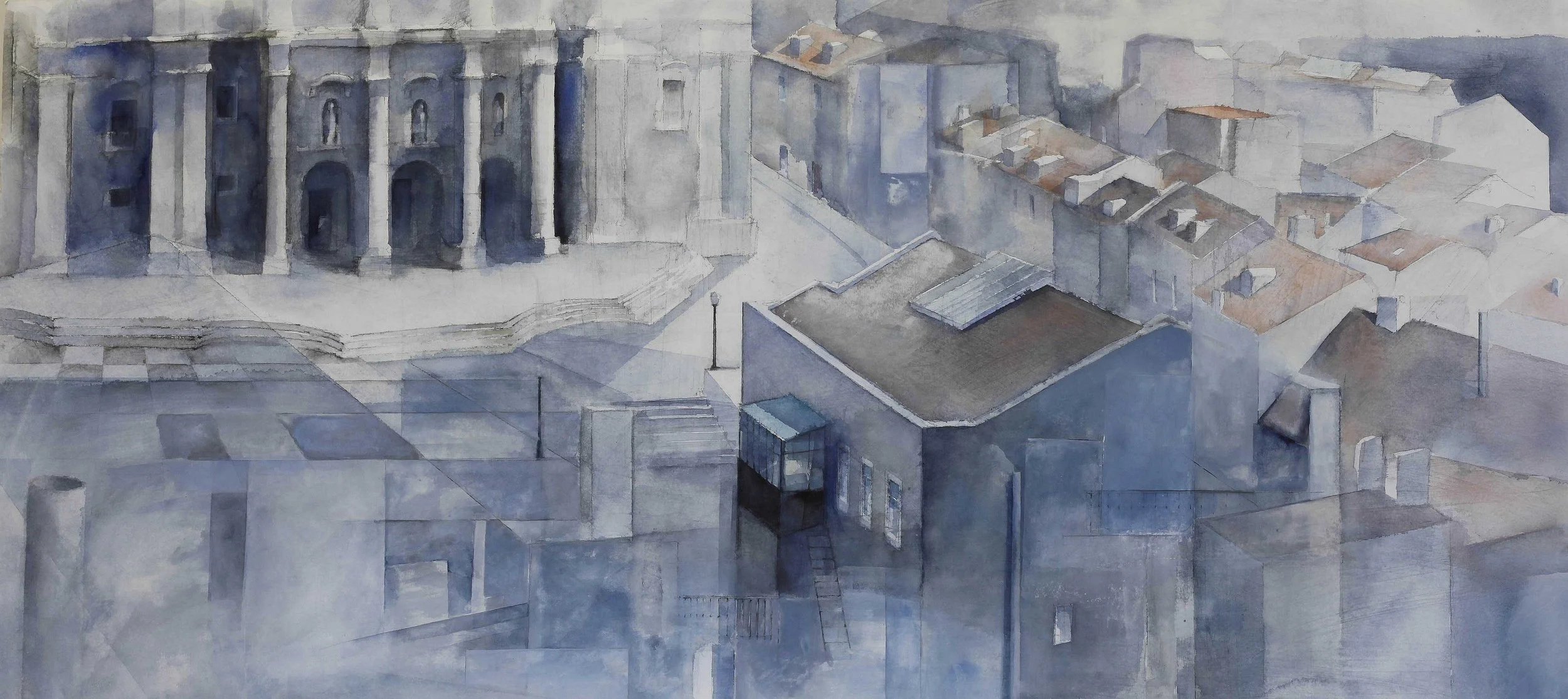
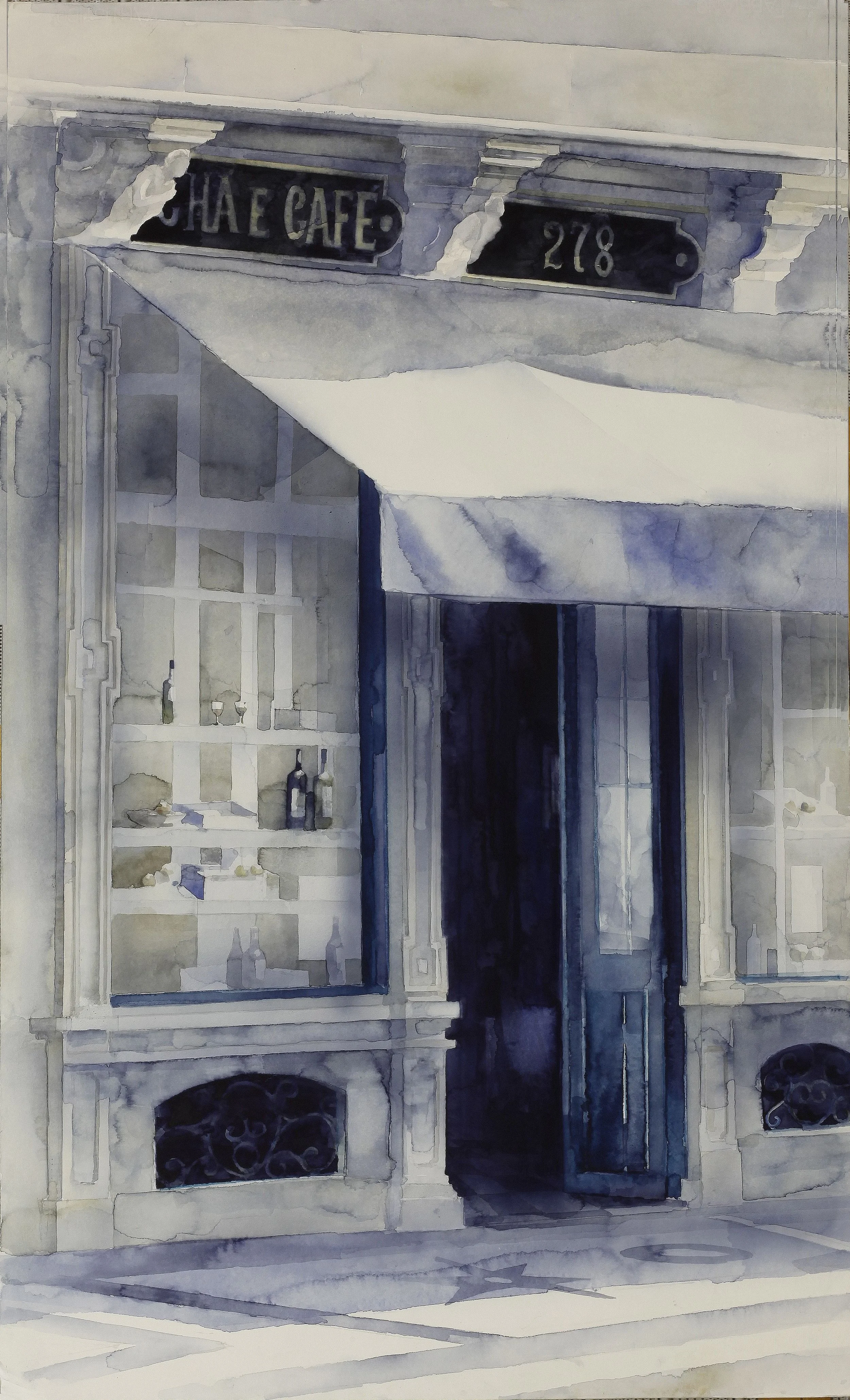
I shared my youth with Lisbon, in this city I hold my main points of reference, and naturally, the most varied experiences. Thus, it is the city that speaks to my ear, that shows me every day the immense light bathing the Tagus River, that brings back memories of past moments.
Like other cities, time also changes, and so I have different perspectives on it. Particularly because it is a relatively old city, it has a very curious and interesting history; over the centuries it has acquired its own personality, which I intend to describe, in the best way possible, through this style of painting.
Blue has become an unmistakable presence in your work, particularly in your landscapes and maritime subjects. What emotional, atmospheric, or symbolic meanings has this color acquired within your practice?
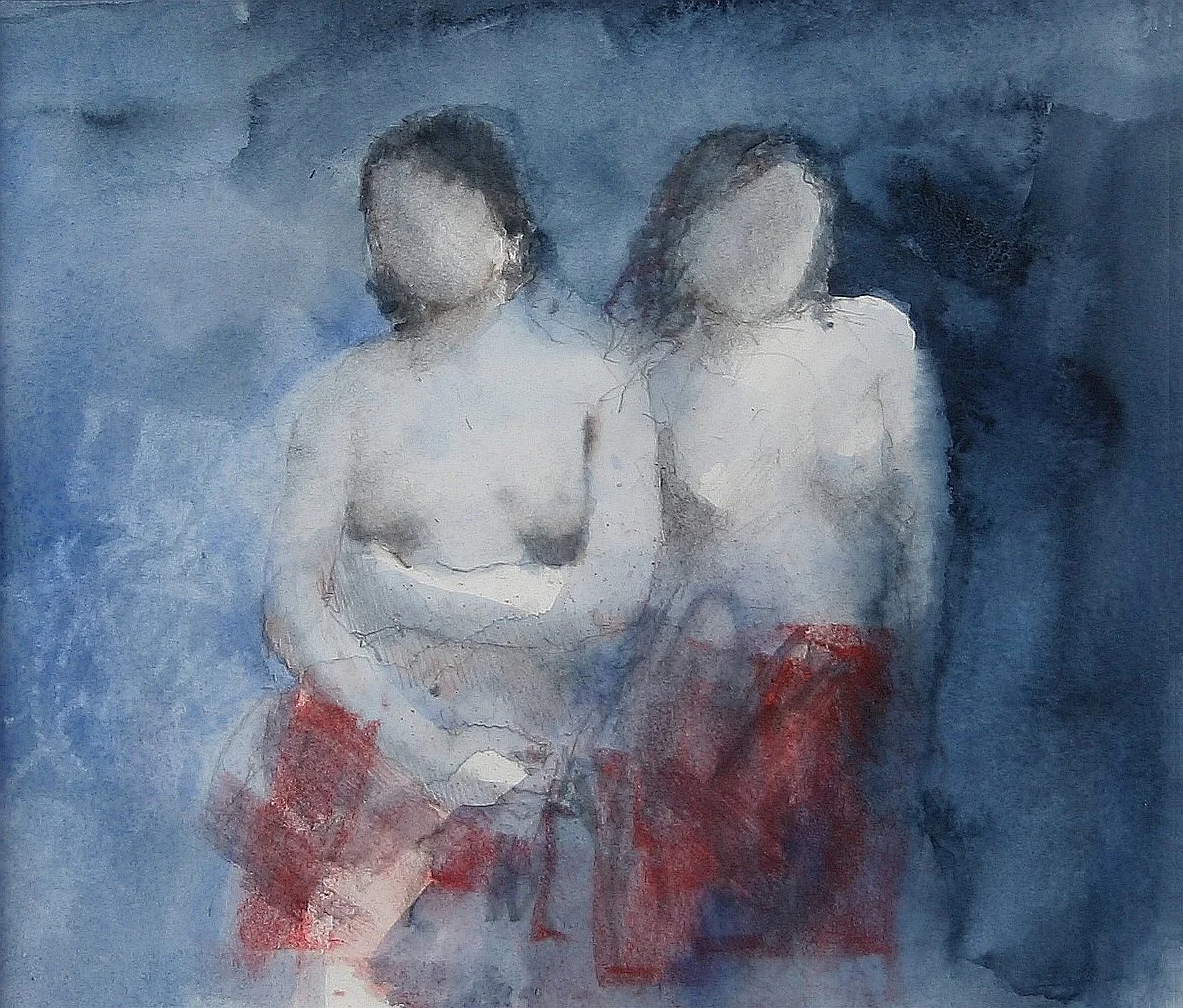
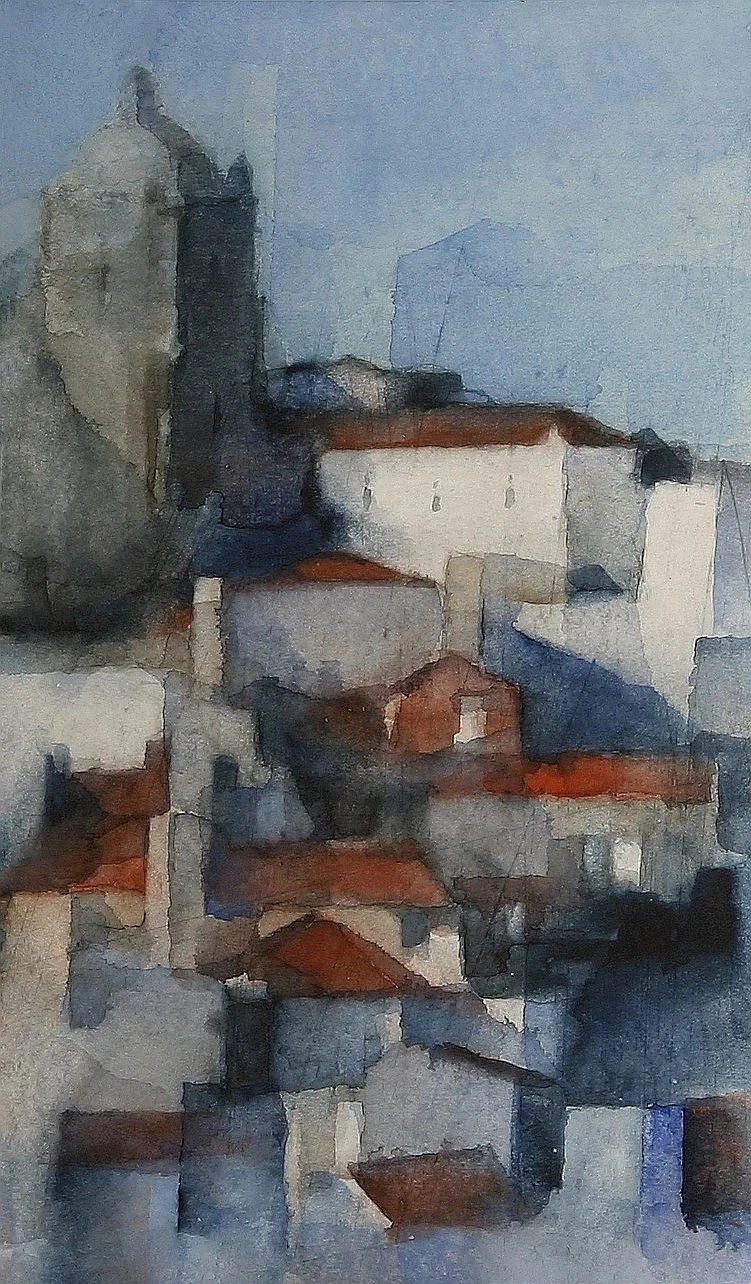
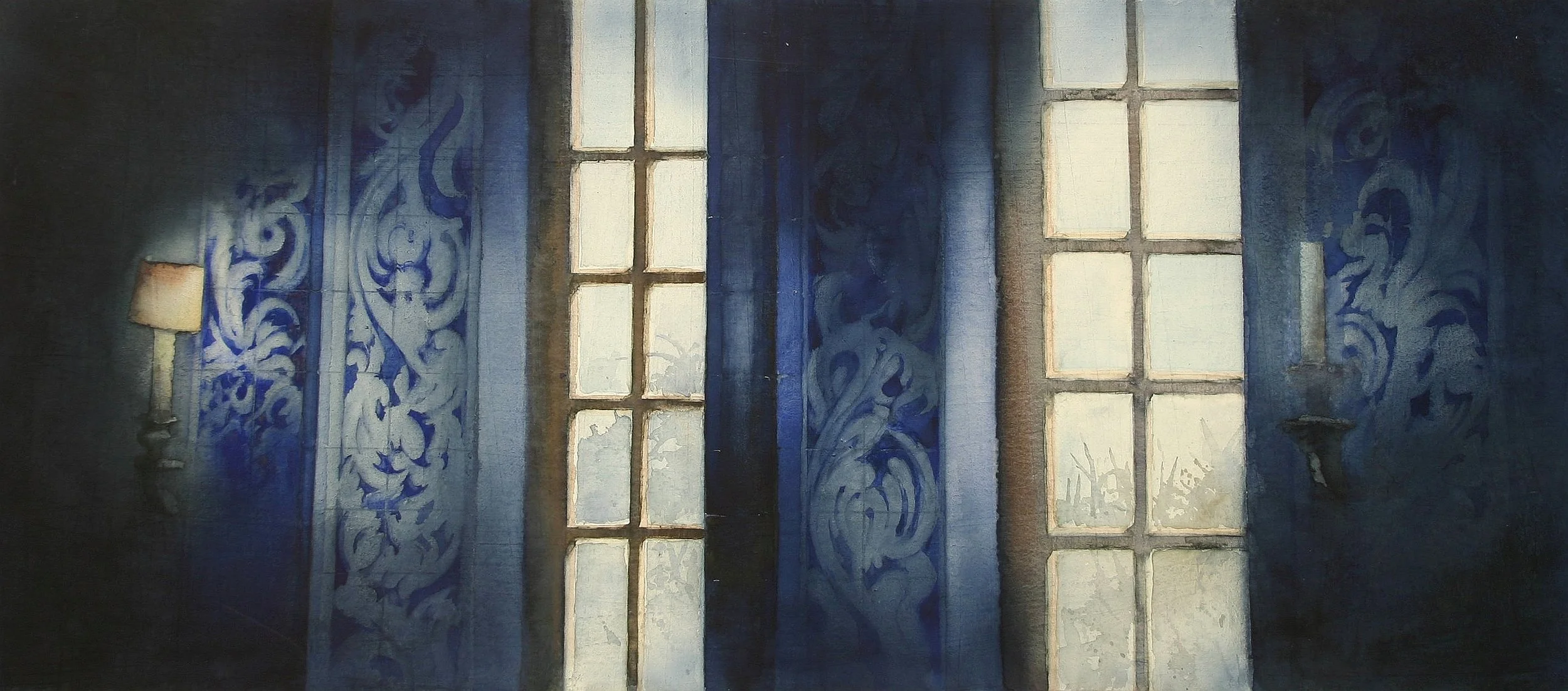
Perhaps I find it easier to express myself using the color blue when I want to create contrasts of light or shadow. In fact, in my way of interpreting different environments, I primarily see the blue hue in its various variations. We also see that diluting any other color with blue results in very natural and always different shades, especially when using prussian blue, indigo blue, cerulean, cobalt, or ultramarine.
You write of “horizons of mystery” and silhouettes that can only be guessed at. What interests you about withholding visual information, and how do suggestion and absence invite the viewer to participate in completing an image?
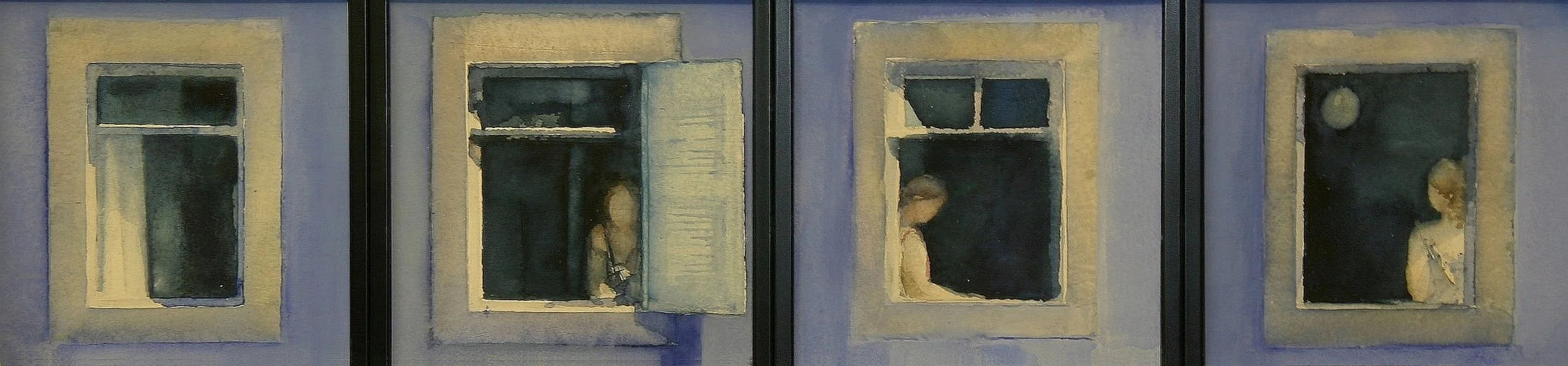
Especially in this medium of painting, watercolor, with its characteristics, the different tones that define almost unexpected transparencies, I truly allow myself to convey to each observer a different interpretation, a particular identification for each gaze.
In 2024, the Portuguese Navy appointed you “Painter of the Navy,” recognizing your sustained engagement with the sea and maritime culture. How has this distinction affected your understanding of the relationship between artistic interpretation, national identity, and maritime history?
Having regularly participated in exhibitions organized by the "Academia de Marinha," an organization dedicated to the Historical Heritage of the Portuguese Navy, I was awarded the title of "Painter of the Navy," a distinction that greatly honors my work, since it has always dealt with themes related to the sea and maritime motifs, a subject to which I have dedicated myself with great pleasure on several occasions.
I am particularly interested in the history of the Portuguese Navy throughout the centuries, and therefore I have a special pleasure, if not an obligation, to evoke it through my way of seeing and my way of painting, as I feel this connection naturally.
From a young age I lived near the Tagus, the great river that bathes Lisbon, where I used to sail and where I acquired a special fondness for boats and all things related to them. This is also true of my experience in this country that shapes the Atlantic coast and defines the border with the great sea.
Although watercolor remains central to your practice, you have also worked in bronze sculpture, ceramics, tile painting, pastel, charcoal, and screen printing. What becomes possible in these more tactile or materially resistant forms that watercolor cannot provide?
The art of watercolor painting has always drawn special attention to me. Time seems to stand still when I observe the watercolors of various painters. So I wondered how, or if, I could handle this technique as well as they do. That's how I ventured into this interesting and unknown challenge.
The different techniques I dedicate myself to are mainly extensions of the themes of my watercolors, and for example, in sculptures, the figures I paint are in their third dimension. In terms of sculpture, being a work of a different kind, it doesn't require the concentration I need in painting, especially since watercolor demands a certain speed in controlling the paints on the paper.
I find experimentation with different materials interesting; tile (“azulejos”) can also be considered on the same level as any other painting, although with different characteristics, of course, because I had the opportunity to spend time with a ceramist who showed me and allowed me to learn about some of the special characteristics of this different technique.
Perhaps more difficult is the coexistence of oil paint with watercolors, but I have also done several experiments with oils. I feel that there is never enough time to dedicate myself entirely to it, but above all, watercolor painting occupies me primarily.
Your book Olhares combines drawings and watercolors, while your illustrations for poetry collections place visual art in conversation with language. How does responding to a poem differ from developing an independent image, and what do poetry and watercolor share as forms of suggestion?
From a small collection of drawings and watercolors that I once set aside, I had the idea to create a book with a sequence of images depicting various stories that I called "olhares" To make the edition more appealing, I used a series of original watercolors on parchment for the covers.
Naturally, since colors and forms, and painting in general, are a description of the life story that surrounds us, it is also a poetic form in the imagination, in the feeling of each "gaze".
The colors, the different tones, and the different connections and contrasts, are in themselves the poetry that provides us with sensations, the world of the senses that we discover in painting, like the wordplay that poetry offers us, like, in a certain way, the movement in the gestural domain of watercolor.
Between 2003 and 2009, you taught watercolor workshops, and you have also created works collaboratively with participants from organizations supporting people with disabilities. How have teaching and socially engaged collaboration influenced your ideas about authorship, technique, and artistic accessibility?
Conducting the various workshops I ran was one of the most interesting phases of my work. The interaction and dialogue with so many people interested in this art form provided me with a more open and enriching experience. I felt I had transmitted some knowledge, and it was also a learning experience through observing the different ways of feeling of the participants, who were always diverse.
My work was directly put to the test there, and it provided me with a new connection in terms of close contact with diverse opinions. I also had the opportunity to work on an initiative to support people with significant disabilities, especially intellectual disabilities, and I created a series of works with them, always using watercolor painting, which had a very positive outcome for everyone.
It was a set of works that I partially retouched in my studio, resulting in a very original collection of watercolors. At the time, an exhibition was even organized, which provided funding that opened doors for new users for the institution that carried out the initiative.
After decades of exhibitions in Portugal and abroad, how do you continue to challenge the familiarity of watercolor, and which conceptual, material, or thematic directions do you now wish to pursue?
“Challenge” has always been the word that defines my way of being. From my first experiences, today the challenge is even greater, since there are goals to achieve, and each work is a search for a different interpretation, a new way of approaching, even if sometimes the same themes, always following this method of watercolor painting.
There is always a discovery and new lessons that experience offers us, so it is difficult to define a path that emerges almost by chance. The search for new ways of seeing is the inspiration I feel in every work I create.