
Jeong-Ah Zhang
Jeong-Ah Zhang (born July 3, 1966) is a South Korean contemporary artist whose multidisciplinary practice is centered on painting while also encompassing photography, sculpture, mixed media, and digitally mediated works. Born and raised in Seoul, where she continues to live and work between Seoul and Daejeon, Zhang has developed a body of work distinguished by its sustained engagement with philosophical inquiry, symbolic imagery, and the relationship between visible and invisible realities. Although her visual language has often been associated with surrealism, her practice is grounded less in dreams or the unconscious than in an exploration of consciousness, perception, existence, and the metaphysical dimensions of human experience. Over more than twenty-five years of professional practice, she has established an international exhibition history spanning Asia, Europe, North America, and the Middle East, accompanied by numerous awards, publications, and critical recognition.
The foundations of Zhang's artistic outlook were established early in life. A quiet and introspective child, she developed habits of observation, reading, and sustained reflection that would remain central to her creative practice. While reserved by temperament, she excelled academically and served as class president during her later elementary school years. Rather than seeking constant social interaction, she found in solitude a space for imagination and philosophical questioning.
Drawing emerged as her earliest form of expression. From the age of six or seven she filled pages with crayon drawings, developing her abilities largely through observation and self-directed practice rather than formal instruction. During middle school she represented her school in the National Middle and High School Art Competition in South Korea, where she received a major prize, and by high school she had become widely recognized among her peers for her exceptional drawing ability. These early achievements revealed both technical aptitude and a capacity for sustained independent study that would characterize her later artistic development.
A formative experience during childhood became a lasting point of reference in Zhang's philosophical outlook. At around eight years old, she underwent what she later described as an experience of magical realism, during which ordinary distinctions between reality and the virtual, time and space, appeared to dissolve into a multidimensional awareness of existence. Rather than fading into memory, the experience remained central to her understanding of consciousness and perception, eventually informing works such as A Nap (2010), in which she sought not to illustrate a childhood memory but to visualize the coexistence of different dimensions of lived experience.
Zhang studied Fine Arts at Ewha Womans University in Seoul, earning a bachelor's degree while simultaneously cultivating interests that extended beyond painting. Literature, philosophy, and dramatic writing became increasingly important alongside visual practice. Influenced by the plays of Eugène Ionesco and Samuel Beckett, she began writing plays as a means of exploring existential questions. Despite having no formal literary training, she received the Ewha Womans University Literature Award in the Play Literature category for three consecutive years. The awards affirmed both her literary ability and intellectual independence, while the accompanying prize money helped support her education and contributed to medical expenses during her father's illness.
After graduation, recommendations from members of the literary award jury led Zhang to join a prominent theatre company in Seoul, where she worked for several years as a principal assistant director. Although this period preceded her professional career as a visual artist, it proved fundamental to the formation of her artistic outlook. Theatre deepened her understanding of presence, temporality, embodiment, and the relationship between visible performance and invisible meaning. Working behind the scenes strengthened her preference for careful observation over public visibility, reinforcing a contemplative approach that would later define her visual practice.
During these years she also received repeated offers to pursue acting for stage and film, which she consistently declined. Public recognition did not correspond to the creative life she envisioned. Instead, she remained committed to observation, reflection, and philosophical inquiry. Questions concerning life, death, creation, extinction, and transcendence became increasingly central to her thinking, and at one stage she seriously considered entering monastic life in order to devote herself more fully to philosophical and spiritual contemplation. Although she ultimately chose another path, the seriousness of that consideration reflects the depth of her engagement with existential inquiry.
A decisive turning point followed when Zhang chose extended independent travel over graduate study. Rather than pursuing a conventional academic career, she sought direct experience as a form of education. During her late twenties and early thirties she traveled alone through approximately thirty countries, journeys that became among the most formative experiences of her intellectual and artistic life.
For Zhang, travel was never simply geographical. Moving across cultures challenged fixed understandings of place, time, and identity, reinforcing the multidimensional awareness first encountered during childhood. The experience encouraged an increasingly expansive understanding of interconnectedness, revealing relationships between inner and outer worlds that would later become central to her paintings, photographs, and sculptures. Rather than collecting destinations, she accumulated experiences that deepened her awareness of how perception shapes reality.
These journeys also included moments of genuine danger, including an experience in which she narrowly escaped death. Confronting mortality transformed philosophical questions into lived experience. Rather than remaining abstract concerns, life and death became immediate realities that reshaped her understanding of existence. Zhang has described this period as marking a transition from seeing herself as a potential victim to recognizing herself as a survivor.
During these years she immersed herself in Martin Heidegger's Being and Time, finding in its examination of existence an intellectual framework that resonated with questions she had long carried. Together with sustained reflection informed by Buddhist philosophy, these experiences strengthened her capacity to examine consciousness while reconnecting her with the childhood awareness that had quietly shaped her inner life for decades.
Gradually these experiences crystallized into the philosophical foundations of her artistic practice. Drawing on aspects of Buddhist philosophy, Taoist thought, and broader reflections on immanence and transcendence, Zhang developed an approach that regards consciousness not as an isolated psychological phenomenon but as part of an interconnected reality. She approaches Buddhist concepts from a personal and secular perspective rather than as religious doctrine, finding within them a philosophical language through which to reflect upon impermanence, interdependence, and the nature of existence.
She has remarked that "My life is my experiences, which are, in turn, the evidence of my life," a statement that encapsulates her understanding of lived experience as the foundation of artistic inquiry. Rather than treating visible and invisible worlds as opposing conditions, she regards them as complementary dimensions of reality. Questions surrounding being and non-being, presence and absence, memory and perception have consequently become enduring concerns throughout her work.
Central to this philosophy is her understanding of breath. Breath functions not simply as a physiological process but as the threshold between conscious and subconscious awareness, material and immaterial existence, life and death. It becomes an invisible rhythm linking human experience with the larger order of nature and the cosmos. This conception distinguishes her work from conventional interpretations of surrealism. While historical Surrealism frequently explored dreams and the unconscious, Zhang employs symbolic imagery as a vehicle for philosophical reflection, using visual metaphor to question the assumptions through which reality is ordinarily perceived.
Her understanding of emptiness likewise reflects Eastern philosophical traditions rather than notions of absence or negation. She has frequently distinguished Buddhist conceptions of emptiness as openness and interconnectedness from Western understandings of lack or void, while also referring to the Taoist observation that the usefulness of a vessel lies in its empty interior. Within her practice, emptiness becomes an active condition through which perception may be expanded rather than diminished.
These ideas shape her conception of artistic experience. Zhang does not seek to illustrate philosophical theories or provide symbolic puzzles with fixed solutions. Instead, her works create visual situations in which viewers become aware of their own processes of perception. Silence occupies an equally important place within this approach. She has often suggested that art begins where language reaches its limits, using metaphor and symbolic imagery to address experiences that cannot be fully expressed through words. Her paintings therefore remain deliberately open, encouraging sustained contemplation rather than predetermined interpretation.
Although painting remains the central medium of Zhang's practice, she has consistently employed photography, sculpture, mixed media, and digitally mediated processes whenever they offer a more appropriate means of investigating particular philosophical questions. Rather than approaching these media as separate disciplines, she regards them as complementary visual languages through which different aspects of the same inquiry can be explored. Sculpture enables her to examine the physical relationship between presence and absence, photography addresses memory and perception through the lens of time, and digital processes extend questions concerning transformation, multiplicity, and the instability of appearances. Painting, however, remains the medium to which she continually returns because it offers the contemplative pace and material intimacy most closely aligned with her way of thinking.
Her working process combines careful preparation with intuitive development. Projects often begin with sustained philosophical reflection before gradually taking visual form. Ideas may mature over months or even years, allowing each work to develop according to its own internal rhythm rather than external expectations. Zhang has consistently emphasized that artistic inquiry cannot be measured by speed or productivity. Instead, concentration, patience, and sustained observation form the basis of her practice, allowing conceptual and formal decisions to evolve together.
This approach is reflected in her meticulous handling of materials. Intricate brushwork, layered surfaces, subtle chromatic transitions, photographic elements, and mixed-media techniques are employed not as demonstrations of technical virtuosity but to create visual depth that corresponds to conceptual complexity. Texture, transparency, and spatial ambiguity become integral to the work's philosophical concerns, reinforcing the contemplative quality that characterizes her oeuvre.
Nature occupies a central place within Zhang's symbolic vocabulary. Water, mountains, trees, light, sky, and celestial imagery recur throughout her work, not as descriptive landscape motifs but as metaphors for transformation, continuity, and interconnected existence. Water frequently represents the movement of consciousness and time, while mountains and trees suggest endurance within continual change. Celestial forms introduce a cosmic perspective that situates individual human experience within a broader universe. These recurring motifs reflect her conviction that humanity, nature, and the cosmos participate in a single continuous process rather than existing as separate domains.
The interdisciplinary series The Visible World and The Invisible World (2001), combining sculpture and photography, marked one of the earliest mature expressions of these concerns. Human figures appear veiled, enclosed, seated, or standing in carefully constructed arrangements that hover between physical presence and spectral absence. Rather than portraying identifiable individuals, the figures function as meditations on the coexistence of being and non-being. Through the dialogue between sculpture and photography, Zhang questions the reliability of visual certainty itself, suggesting that material perception represents only one dimension of reality.
Photography subsequently became an increasingly important extension of these investigations. In Silence and I (2006), the photographic image becomes a meditation on identity, stillness, and presence. The human figure is rendered less as an individual subject than as an atmosphere suspended between appearance and disappearance. Rather than documenting external reality, the work proposes photography as a medium through which perception itself may be examined.
Walking Through Time V (2011) develops similar concerns through an exploration of temporality. Blurred figures move through layered spaces where past, present, and future appear to coexist, dissolving conventional chronology into simultaneous experience. The photograph does not simply record movement but visualizes time as a fluid field shaped by consciousness.
Painting provides the most comprehensive expression of Zhang's philosophical inquiry. Across works including A Flux of Lightness and Darkness (2010), A Nap (2010), The Persistence of Consciousness (2011), A Layer – Phenomenal World (2013), Repetition of The Phenomenon (2014), The Sound Hears the Sound (2015), River of the Plan (2017), A Quiet Conversation (2017), One Day in the Windy Dawn (2019), Transparent Time Scale, 6 Buttons and Multi-dimensional Structure, Mirage of Consciousness, A Low Voice, Things, The Spirit of the Fragrance, A Quiet Meal, and The No-Boundary Moment, she has developed a symbolic vocabulary through which recurring philosophical questions are explored with increasing refinement.
These paintings do not function as narrative illustrations. Instead, they establish environments in which symbolic figures, architectural structures, rivers, trees, birds, mirrors, stairways, doors, celestial bodies, shadows, and shifting landscapes interact according to an internal logic shaped by philosophical reflection rather than ordinary causality. Familiar spaces are transformed into liminal environments where boundaries between material and immaterial experience become fluid.
A Nap occupies a particularly significant position because it returns directly to the formative childhood experience that shaped Zhang's understanding of multidimensional reality. The sleeping figure, accompanied by a white-clad dancer and symbolic gestures extending across the composition, becomes less an image of sleep than a meditation on consciousness, memory, protection, and the permeability of different states of existence.
Similarly, Repetition of The Phenomenon examines transition through the repeated image of a young boy riding a bicycle through an apparently endless sequence of doorways. Architectural repetition transforms perspective into a metaphor for time, memory, and continual transformation, while carefully balanced light and shadow reinforce the sense that reality unfolds across multiple dimensions rather than along a single linear path.
Other paintings approach related concerns through distinct visual strategies. A Flux of Lightness and Darkness considers coexistence rather than opposition, presenting light and shadow as complementary conditions. A Layer – Phenomenal World employs architectural motifs to destabilize conventional perceptions of space and chronology, while The Persistence of Consciousness emphasizes transformation by allowing the human figure to dissolve into water, light, and shadow. The Sound Hears the Sound extends Zhang's meditation on breath by visualizing vibration and resonance as expressions of invisible awareness.
Throughout these works, human figures rarely function as portraits of specific individuals. Instead, they serve as archetypal presences through which broader questions concerning consciousness, memory, and existence can be explored. Their identities remain intentionally open, encouraging viewers to encounter them as mirrors for reflection rather than as narrative characters.
Architectural elements reinforce this symbolic structure. Doors, stairways, corridors, windows, bridges, and mirrors recur as metaphors for movement between different modes of perception. These structures organize not only pictorial space but also psychological and philosophical experience, suggesting that every threshold represents both a physical and an existential passage.
River of the Plan (2017) demonstrates the complexity of this symbolic language through a landscape in which familiar natural elements are reorganized into an enigmatic visual structure. A grassy plain is traversed by a river resembling the sky, while a fish and a nude figure carrying an umbrella occupy the composition in ways that resist straightforward interpretation. Rather than illustrating fantasy for its own sake, the work invites viewers to consider relationships among seemingly disparate elements.
A Quiet Meal similarly transforms an ordinary domestic setting into a meditation on interior life. A solitary figure seated before a flaming dish beneath a burning light bulb occupies a carefully balanced space in which familiar objects acquire metaphysical significance. Fire functions simultaneously as nourishment, transformation, and impermanence, while the restrained composition encourages reflection on solitude, ritual, and inward experience.
Other works broaden this vocabulary in different ways. Transparent Time Scale considers memory as an accumulated field in which past and present coexist rather than remain separated chronologically. 6 Buttons and Multi-dimensional Structure explores interconnected systems through geometric relationships suggesting unseen dimensions beyond immediate perception. Mirage of Consciousness questions the stability of reality by allowing forms to emerge and dissolve, while A Low Voice demonstrates how attentiveness and restraint may convey profound emotional and philosophical resonance.
Photography continues these investigations from complementary perspectives. Breath, Air and Shadow (2020) transforms a silhouetted figure into an almost immaterial presence suspended between light and darkness, visualizing breath as the invisible rhythm connecting consciousness with existence. Likewise, Dazzling of The Shade (2020) explores the reciprocal relationship between light and shadow, reinforcing Zhang's broader understanding of complementary rather than opposing forces.
Works integrating photography with digital processes, including Energy for Diversity (2019) and The Root of All Beings (2019), further extend these concerns. Layered imagery dissolves into luminous abstraction, suggesting multiplicity, transformation, and interconnectedness without privileging either analogue or digital methods. Digital intervention becomes another means of examining unstable perception rather than an end in itself.
Across these varied works, recurring motifs including birds, masks, hands, dancers, bare trees, floating forms, and fragments of the human body operate not as fixed symbols but as elements within an evolving visual language. Their meaning emerges through relationships established within each composition rather than through predetermined interpretation.
Breath remains the conceptual thread connecting these diverse investigations. As both a biological necessity and a philosophical principle, it symbolizes the invisible continuity linking consciousness with the larger rhythms of existence. Through this recurring idea, Zhang has maintained a remarkable conceptual coherence across more than two decades of multidisciplinary practice.
Her paintings are distinguished by precise draftsmanship, carefully modulated colour relationships, layered surfaces, and compositions that balance realism with symbolic ambiguity. Rather than pursuing stylistic novelty for its own sake, Zhang consistently adapts formal decisions to the conceptual requirements of each work. Detailed passages coexist with deliberately indeterminate spaces, allowing certainty and uncertainty, materiality and imagination, to operate simultaneously within the same pictorial field. This sustained integration of philosophical reflection and visual form has become one of the defining characteristics of her artistic practice.
Zhang's professional career formally began in 1999, when, at the age of thirty-three, she entered the contemporary art world after years devoted to literature, theatre, independent travel, and philosophical study. This relatively late beginning gave her practice a conceptual maturity that distinguished it from the outset. Her debut was marked by recognition in one of South Korea's major art competitions, establishing the foundation for a career that has since spanned more than twenty-five years.
Between 2000 and 2007 she received twelve awards in Korean art competitions, affirming the strength of her early work within the national context. This period was followed by her selection as one of the Korea Selected Artists by Art & Criticism magazine for three consecutive years, from 2009 to 2011, recognition that further consolidated her position within the Korean contemporary art community.
As her reputation grew, Zhang's exhibition activity expanded internationally. She has presented five solo exhibitions, including exhibitions at Gallery SkyYeon in Seoul (2011), United Gallery in Seoul (2013), Able Fine Art New York Gallery in Seoul with In the World, But Beyond the World (2016), Amsterdam Whitney Gallery in New York (2018), and Biafarin in Toronto with Molecular Structure of Time, Pixels of Empty Space (2022). These exhibitions trace the continued development of a practice that has remained remarkably consistent in its philosophical concerns while evolving formally across different bodies of work.
Alongside these solo presentations, Zhang has participated in 123 group exhibitions, museum exhibitions, biennials, juried exhibitions, international art fairs, and digital exhibitions, including 41 domestic exhibitions and 82 international exhibitions. Her work has been exhibited throughout Asia, Europe, North America, and the Middle East, including South Korea, the United States, Canada, France, Italy, Spain, Germany, Switzerland, the Netherlands, the United Kingdom, Japan, the United Arab Emirates, and numerous additional international locations.
Participation in events including ARTEXPO New York, LA Art Show, Red Dot Miami, Spectrum Miami, EuropArtFair, FRAME Art Fair Paris, Venezia Art Expo, World Art Dubai, and ART BASEL (2026) introduced her work to increasingly diverse audiences while demonstrating the broad international reach of a practice that has remained conceptually unified despite its multidisciplinary character. Held recently in Basel, Switzerland, ART BASEL (2026) is Zhang’s most recent exhibition, in which she participated at the earnest request of Art Screen TV.
International recognition has accompanied this sustained exhibition history. Beginning with distinctions such as the International Artist Spotlight presented by ArtTour International Magazine in 2017, Zhang has received numerous awards and honours from organizations including Fondazione Effetto Arte, Contemporary Art Curator Magazine, Contemporary Art Station, ArtTour International, Biafarin, Artavita, Galleria Il Collezionista, and other international cultural institutions.
Her work has been associated with awards carrying the names of Leonardo da Vinci, Michelangelo, Raffaello, Caravaggio, Donatello, Paris, Barcelona, Venice, Naples, New York, Washington, Los Angeles, and the French Riviera. Considered collectively, these distinctions reflect sustained international engagement over many years rather than a single moment of recognition.
Among these honours, the Future of Art Global Masterpiece Award, presented in 2024 for The No-Boundary Moment, acknowledges a painting that brings together many of the central concerns developed throughout Zhang's career. The work considers the dissolution of conceptual boundaries between self and other, presence and absence, and the visible and invisible through carefully balanced symbolic relationships that encourage contemplation rather than definitive interpretation.
Zhang's work has also appeared in an extensive range of international publications, exhibition catalogues, artist directories, annual surveys, magazines, and critical essays. She has been featured in more than one hundred publications, including ART International Contemporary Magazine, ArtTour International Magazine, SPOTLIGHT Contemporary Art Magazine, Contemporary Art Curator Magazine, ARTISTONISH, Observica, Contemporary Celebrity Masters, The Great Masters of Contemporary Art, and numerous exhibition catalogues devoted to contemporary artistic practice.
She was selected as the cover artist for the 2024 Global Art Virtuoso: Elite Artistic Career Achievement Award publication and for the 2026 edition of Collectors Art Prize – Art Legends of Our Time, reflecting the continued visibility of her work within international publishing.
Critical writing on Zhang's practice has consistently emphasized the close relationship between her philosophical concerns and her visual language. Rather than treating philosophy as an external framework applied to finished artworks, critics have noted that questions of consciousness, existence, memory, impermanence, and interconnectedness are embedded within the formal organization of her paintings through recurring motifs, spatial structures, symbolic imagery, and carefully sustained ambiguity.
Several writers have observed that her works encourage viewers to participate actively in the construction of meaning rather than receiving predetermined interpretations. Thomas Lioutas, writing for ArtTour International Magazine in 2017, described her paintings as complex visual structures that reward sustained attention and establish an interpretive dialogue between artwork and viewer. Ruthie Tucker, Executive Director and Curator of Amsterdam Whitney Gallery, highlighted the psychological intensity of Zhang's figurative works, noting the relationship between physical presence and emotional depth achieved through restrained realism, tonal subtlety, and dramatic illumination.
Dr. Salvatore Russo likewise characterized Zhang's visual language as a form of symbolic surrealism distinguished by multiple interpretive layers and enigmatic imagery. Other critics have concentrated more directly on the philosophical dimensions of her practice. Tiarra Tompkins, writing in connection with the ATIM Collector's Choice Award, discussed works including Transparent Time Scale, Things, and The Spirit of the Fragrance as meditations on experiences that exist just beyond ordinary consciousness. Dr. Gabriele Giuliani similarly emphasized the emotional and existential depth of Zhang's work, identifying life, death, serenity, and inner awareness as recurring themes that give the paintings their distinctive character.
Essays published by Contemporary Art Curator and Contemporary Art Collectors in 2024 further situated Zhang's practice within contemporary discussions of metaphysical and philosophical art. These texts emphasized the consistency with which she has examined consciousness, time, memory, breath, interconnectedness, and the invisible structures underlying lived experience throughout her career.
Although comparisons have occasionally been drawn to René Magritte or Salvador Dalí because of her symbolic imagery and surreal visual vocabulary, these references have generally served only as points of orientation. Zhang's own work departs from historical Surrealism through its sustained grounding in philosophical reflection rather than dream imagery or psychoanalytic inquiry. Her symbolic language develops from observation, introspection, and lived experience, employing metaphor to explore consciousness rather than the unconscious.
This philosophical continuity extends across all of the media in which she works. Painting remains the primary vehicle through which her ideas are articulated, while photography, sculpture, mixed media, and digital processes function as complementary modes of investigation. Each medium contributes to the same overarching inquiry into perception, existence, and the relationship between material and immaterial realities.
Her artistic process reinforces this unity. Rather than responding to changing artistic fashions or external expectations, Zhang has consistently approached artistic production as the continuation of sustained philosophical reflection. Individual works often evolve over extended periods, allowing conceptual ideas and formal decisions to mature together. The resulting paintings reveal careful attention to composition, layered surfaces, symbolic precision, and restrained colour relationships while preserving openness to multiple interpretations.
Throughout her career, Zhang has remained committed to a coherent body of work grounded in recurring questions concerning consciousness, perception, memory, breath, time, emptiness, life, death, and interconnected existence. This sustained concentration has enabled increasingly nuanced investigations of these themes without narrowing the range of her artistic expression. Instead, each successive body of work extends an ongoing dialogue that has remained remarkably consistent while continuing to evolve formally and conceptually.
Zhang has consistently maintained that the meaning of an artwork is not fixed by the artist's intention alone. Although her paintings emerge from specific philosophical reflections and personal experiences, she regards the encounter between the artwork and the viewer as an essential part of the work itself. Meaning is therefore neither prescribed nor closed, but continually renewed through individual perception. The symbolic openness of her imagery is not intended to obscure interpretation but to create conditions in which reflection, uncertainty, and contemplation become active components of viewing.
This understanding also shapes her conception of artistic achievement. Despite extensive international recognition, Zhang has repeatedly emphasized that exhibitions, awards, publications, and professional visibility remain secondary to the continuing process of inquiry that motivates her practice. For her, artistic development depends upon sustained curiosity, attentive observation, intellectual openness, and the willingness to remain receptive to experiences that reshape perception. External recognition may acknowledge completed works, but it cannot substitute for the inner process through which those works emerge.
This position has contributed to the remarkable coherence of Zhang's oeuvre. Rather than pursuing stylistic shifts in response to changing artistic trends or market expectations, she has developed a practice that returns repeatedly to a consistent group of philosophical concerns while allowing each new work to approach them from a different perspective. Questions of consciousness, perception, memory, time, breath, life and death, visible and invisible realities, and the interconnectedness of existence recur throughout her work, not as repeated subjects but as evolving lines of inquiry. The continuity of these concerns provides a conceptual framework that unites paintings, photographs, sculptures, and interdisciplinary projects produced over more than two decades.
Equally significant is the relationship between visual form and philosophical thought that distinguishes her practice. Zhang does not employ symbolism as a system of fixed meanings, nor does she seek to illustrate philosophical concepts directly. Instead, symbolic imagery functions as a means of opening perceptual possibilities. Architectural spaces, rivers, trees, mirrors, birds, stairways, doors, celestial forms, and human figures appear not as isolated motifs but as interconnected elements within carefully constructed visual environments. Their significance emerges through their relationships within each composition, encouraging sustained observation rather than immediate explanation.
The formal restraint of Zhang's work reinforces this approach. Her compositions balance precision with ambiguity, realism with symbolic transformation, and careful structure with intuitive development. Layered surfaces, subtle tonal transitions, measured colour relationships, and controlled spatial complexity invite prolonged attention, allowing meaning to unfold gradually rather than through direct narrative. In this respect, the contemplative quality of the work is inseparable from its formal organization.
The same balance characterizes her multidisciplinary practice. While painting remains the principal medium through which her ideas are most fully realized, photography, sculpture, mixed media, and digitally mediated works are not secondary pursuits but integral components of a unified artistic investigation. Each medium offers distinct possibilities for examining presence and absence, materiality and immateriality, memory and perception, while contributing to the broader philosophical continuity that defines her work.
Throughout her career, Zhang has demonstrated an enduring commitment to intellectual independence. Her practice has been shaped not only by formal artistic training but also by literature, theatre, philosophy, extensive travel, and sustained personal reflection. These experiences have informed an artistic language that resists simple categorization, drawing together visual symbolism, existential inquiry, and contemplative observation without reducing them to a single philosophical system or artistic movement.
Although her work has frequently been discussed in relation to surrealism because of its dreamlike imagery and symbolic vocabulary, Zhang's practice is ultimately distinguished by a different set of concerns. Rather than exploring the unconscious through automatic processes or dream logic, she investigates consciousness as lived experience. The symbolic environments she constructs are intended less as representations of imagined worlds than as visual frameworks through which viewers may reconsider ordinary assumptions about perception, reality, and existence.
Across more than twenty-five years of sustained artistic production, Jeong-Ah Zhang has developed a body of work in which visual expression and philosophical reflection remain inseparable. Her paintings, photographs, sculptures, and interdisciplinary works do not seek to resolve the paradoxes they present. Instead, they create spaces in which apparent oppositionspresence and absence, materiality and immateriality, memory and immediacy, creation and extinction, and the visible and the invisible, creation and extinction, the visible and the invisible can be contemplated as mutually dependent aspects of a larger, interconnected reality.
Grounded in a lifetime shaped by introspection, literary achievement, theatrical experience, independent travel, philosophical inquiry, and sustained artistic practice, Zhang has established a distinctive position within contemporary art. Her work demonstrates how symbolic imagery can function not as illustration or decoration, but as a means of examining fundamental questions concerning human existence. Through carefully constructed compositions that privilege metaphor over declaration and experience over explanation, she encourages viewers to slow their attention, inhabit ambiguity, and consider realities that extend beyond immediate perception.
Rather than offering definitive answers, Zhang's work proposes contemplation as an active mode of seeing. By bringing together rigorous formal control and sustained philosophical inquiry, she has developed an oeuvre in which each work contributes to an ongoing investigation of consciousness, time, interconnectedness, and the unseen dimensions of experience. This enduring commitment to reflection, together with the consistency of her artistic vision across multiple media, has established her practice as a distinctive contribution to contemporary art, one that continues to explore the relationship between the visible world and the invisible structures through which it is understood.

6 buttons and Multi-dimensional structure. 2024. Acrylic on Canvas. 53 X 73 cm

A Layer - Phenomenal World. 2013. Oil and Acrylic on Canvas. 53 X 73 cm
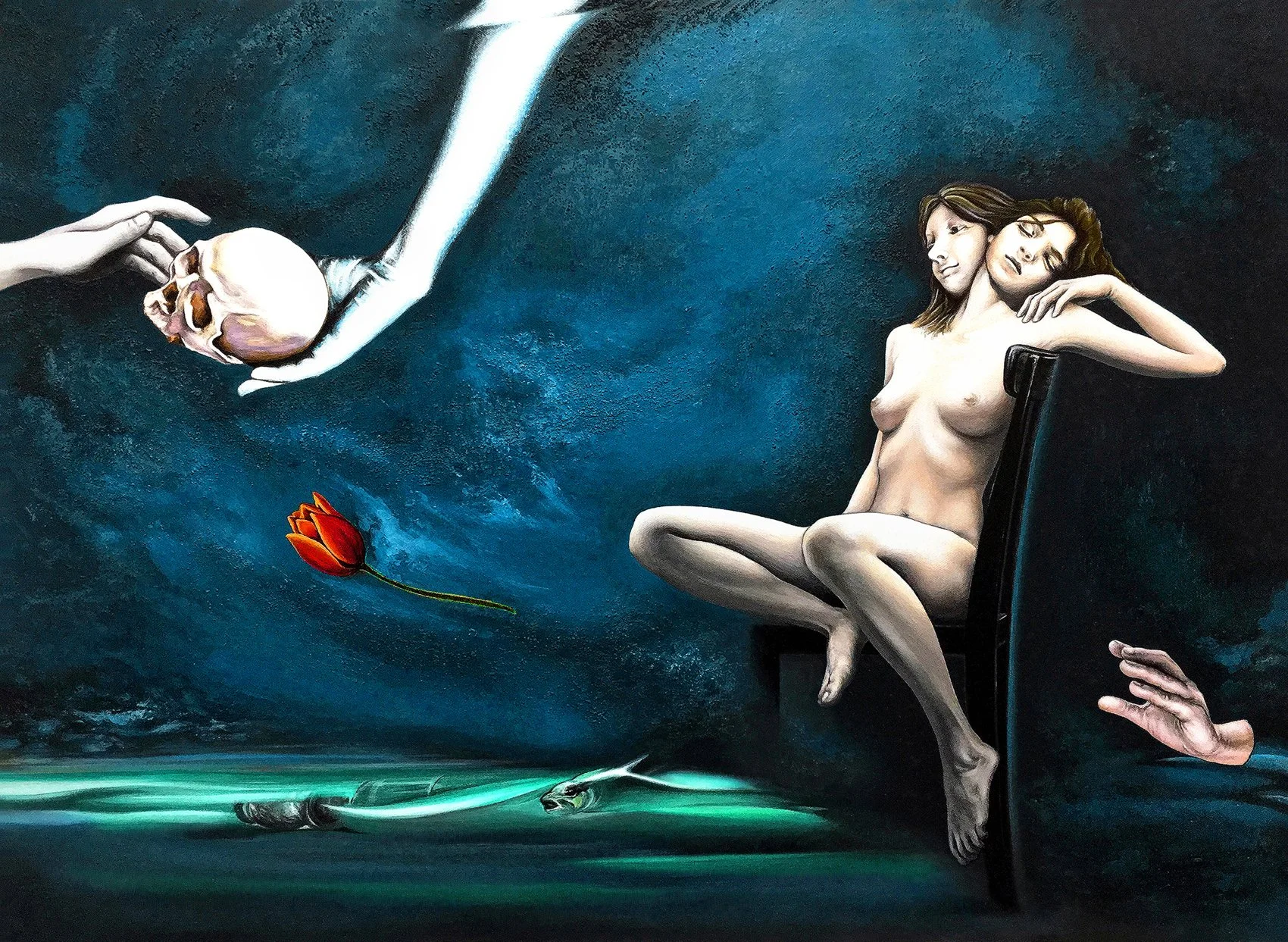
A Low Voice. 2018. Acrylic on Canvas. 53 X 73 cm

A Nap. 2010. Acrylic on Canvas. 82 X 117 cm

A Quiet Meal. 2016. Acrylic on Canvas. 65 X 91 cm

Breath, Air and Shadow. 2020. Photography. 31 X 42 cm

Dazzling of The Shade. 2020. Photo and Digital painting on Canvas. 102 X 97 cm
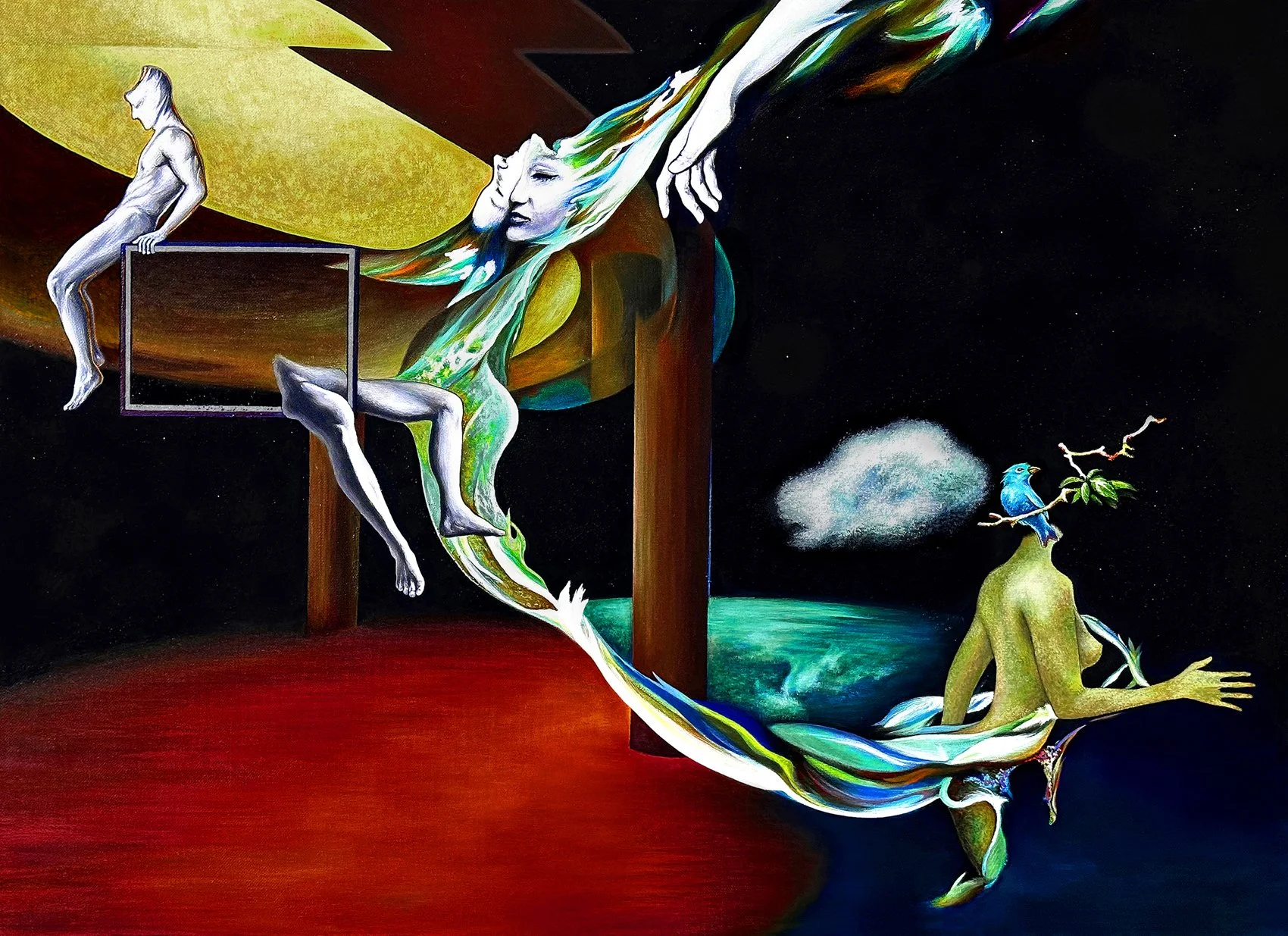
Everywhere But Nowhere. 2023. Acrylic on Canvas. 53 x 73 cm
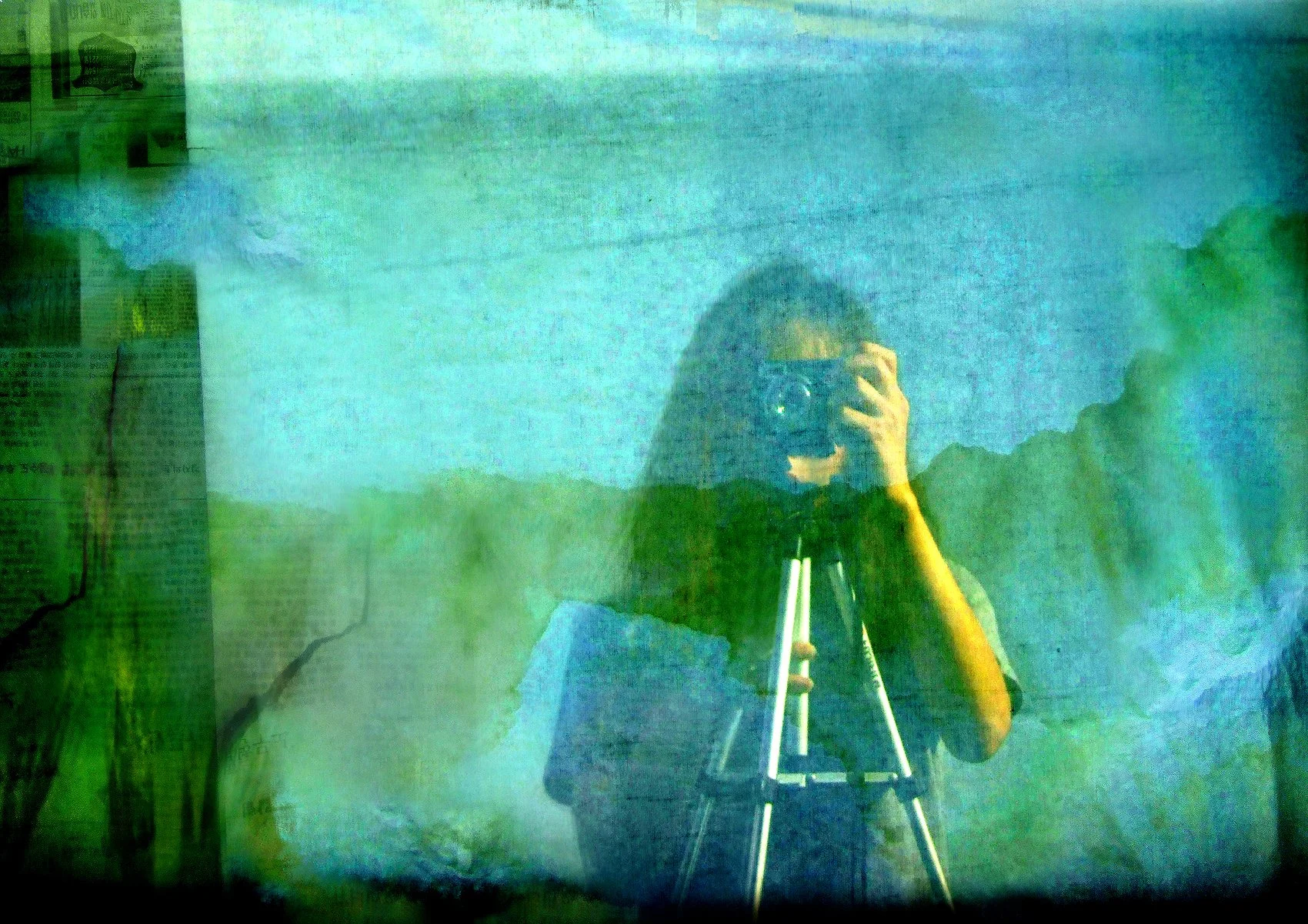
Silence and I. 2006. Photography. 60 X 84 cm

The No-Boundary Moment. 2021. Acrylic on Canvas. 53 X 73 cm

The Sound Hears The Sound. 2015. Acrylic on Canvas. 53 X 66 cm

The Spirit of the Fragrance. 2021. Acrylic on Canvas. 53 X 73 cm

The Visible World and The Invisible World, No01. 2001. Sculpture and Photography
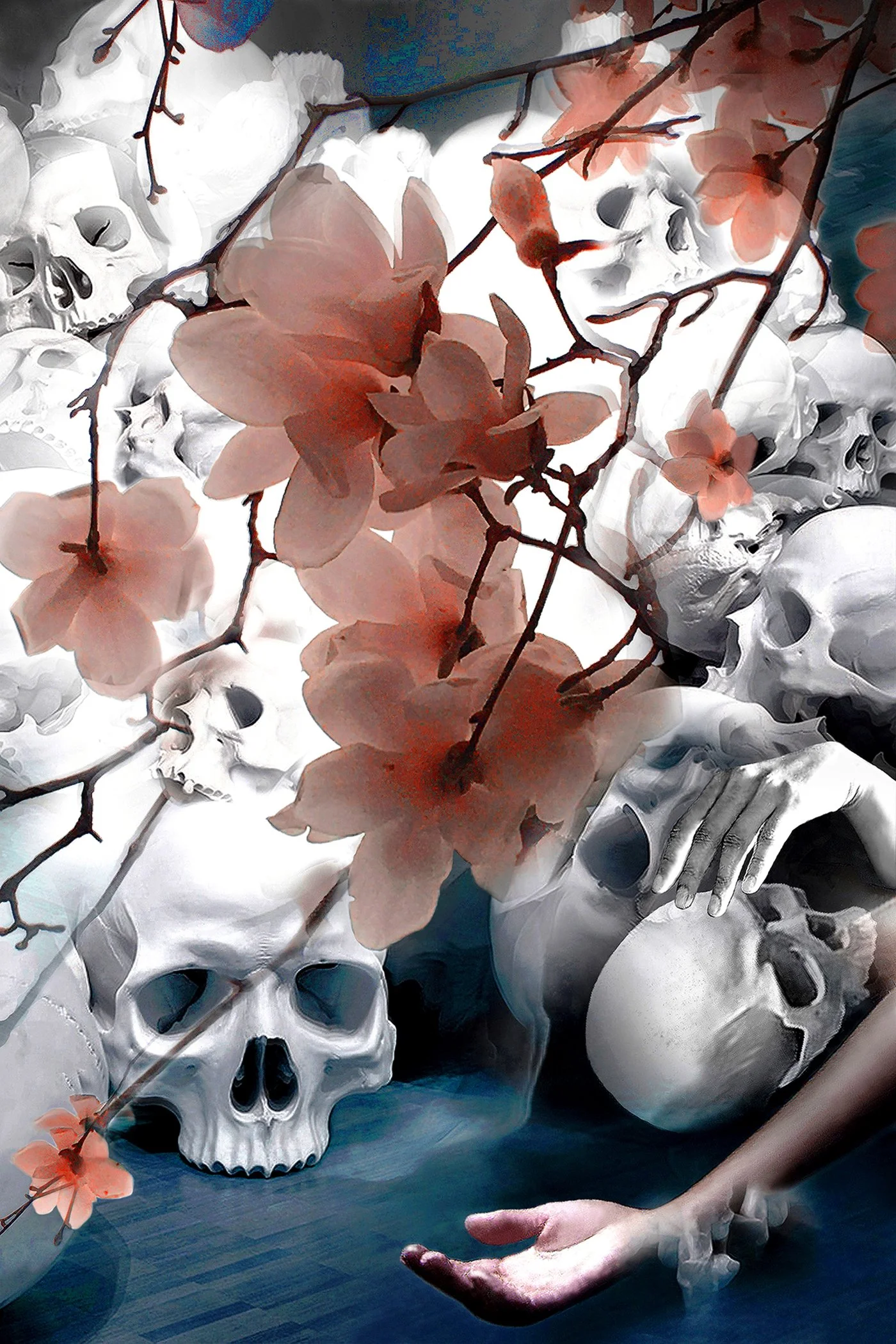
Transparent Time Scale. 2021. Mixed Media on Canvas. 91 X 61 cm