Interview with Katarzyna Pander-Liszka
You describe painting as a way to “restore presence” in a culture shaped by simulation, distraction, and rapidly expiring stimuli. How do you translate this philosophical commitment to attentiveness into specific decisions concerning composition, material, rhythm, and scale?
For me, “restoring presence” is not a theory, but something very concrete. I want a painting to hold someone’s attention for longer than just a few seconds. I want it to resist the instinct to simply swipe past it and move on to the next image.
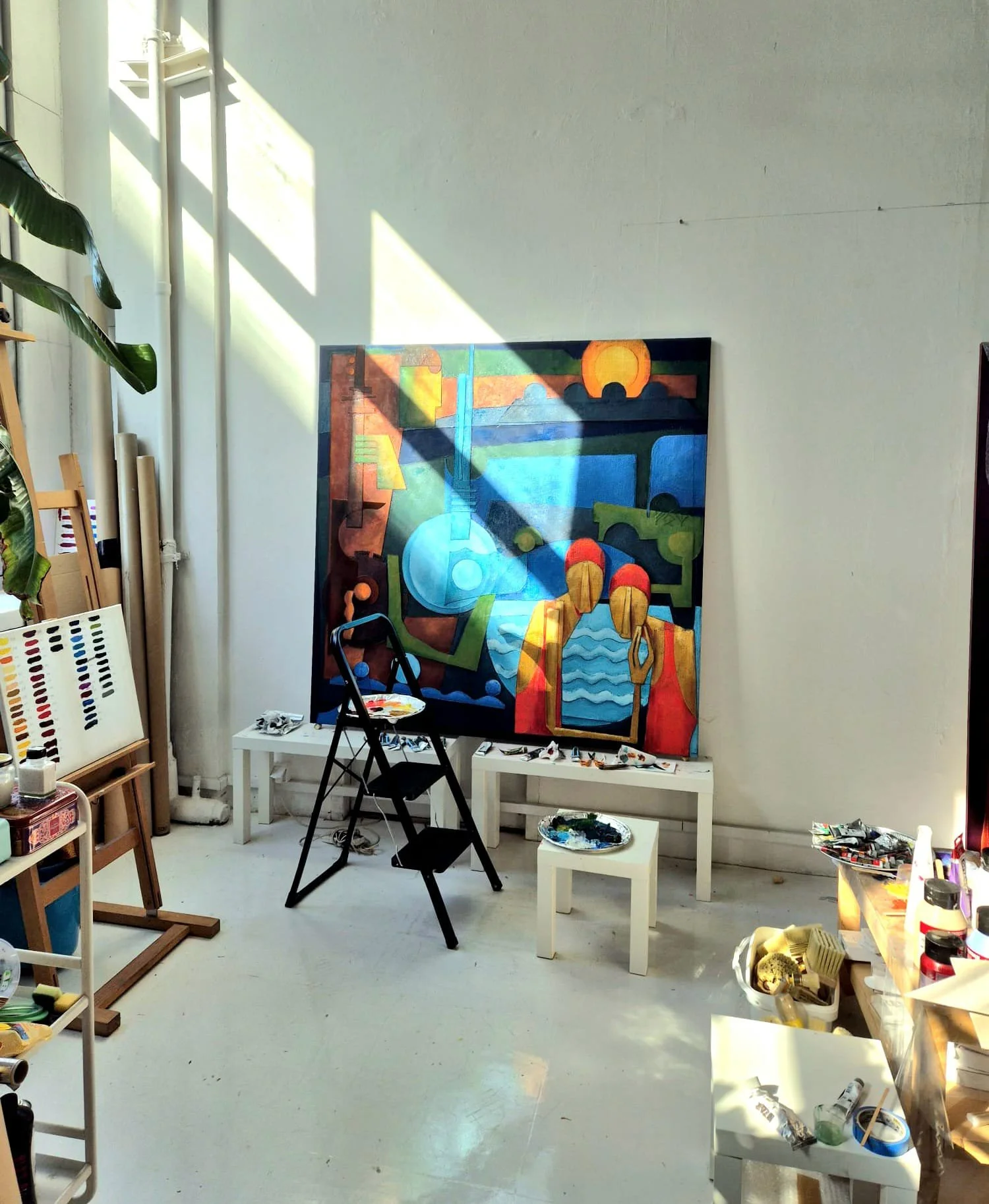
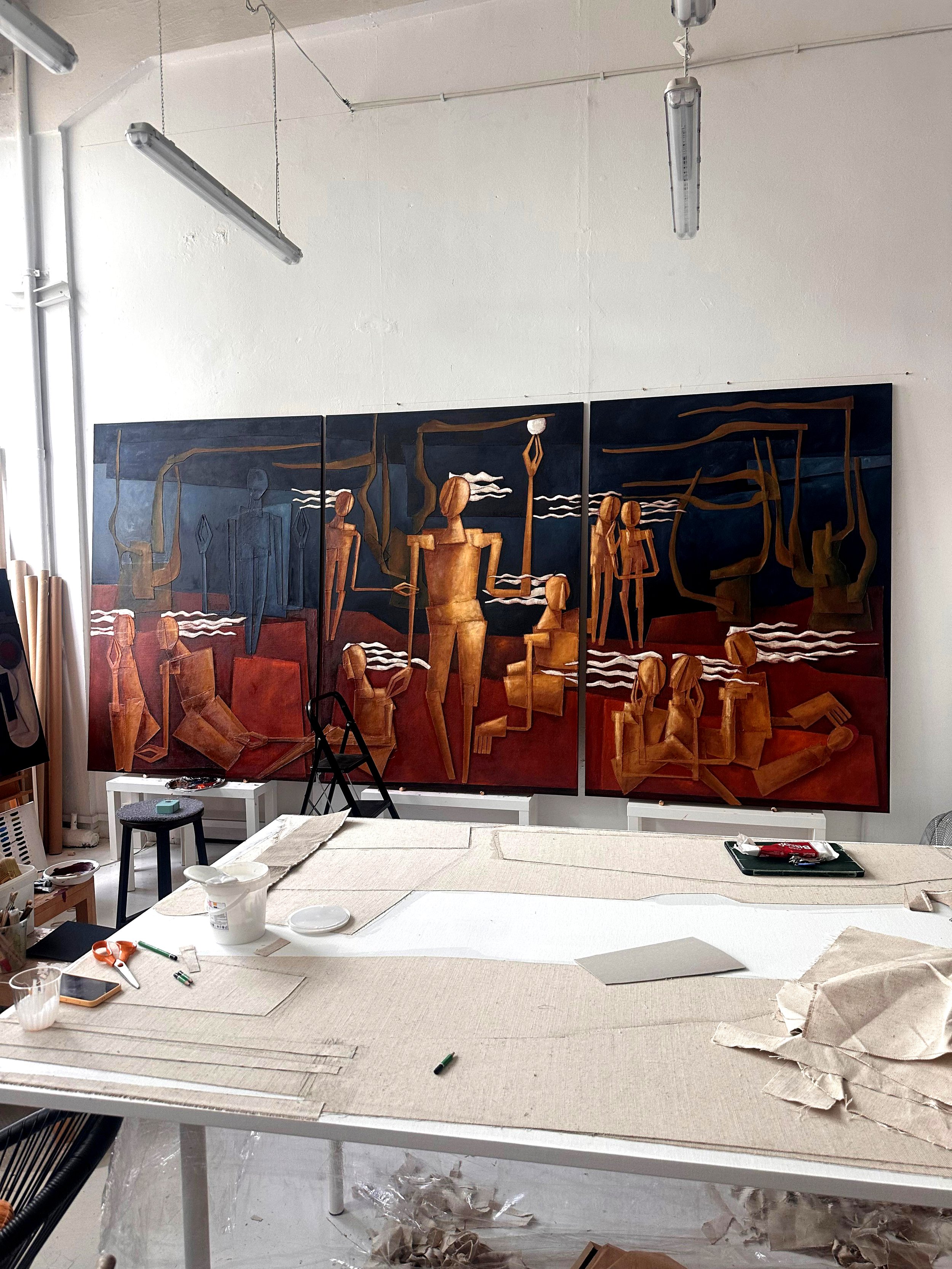
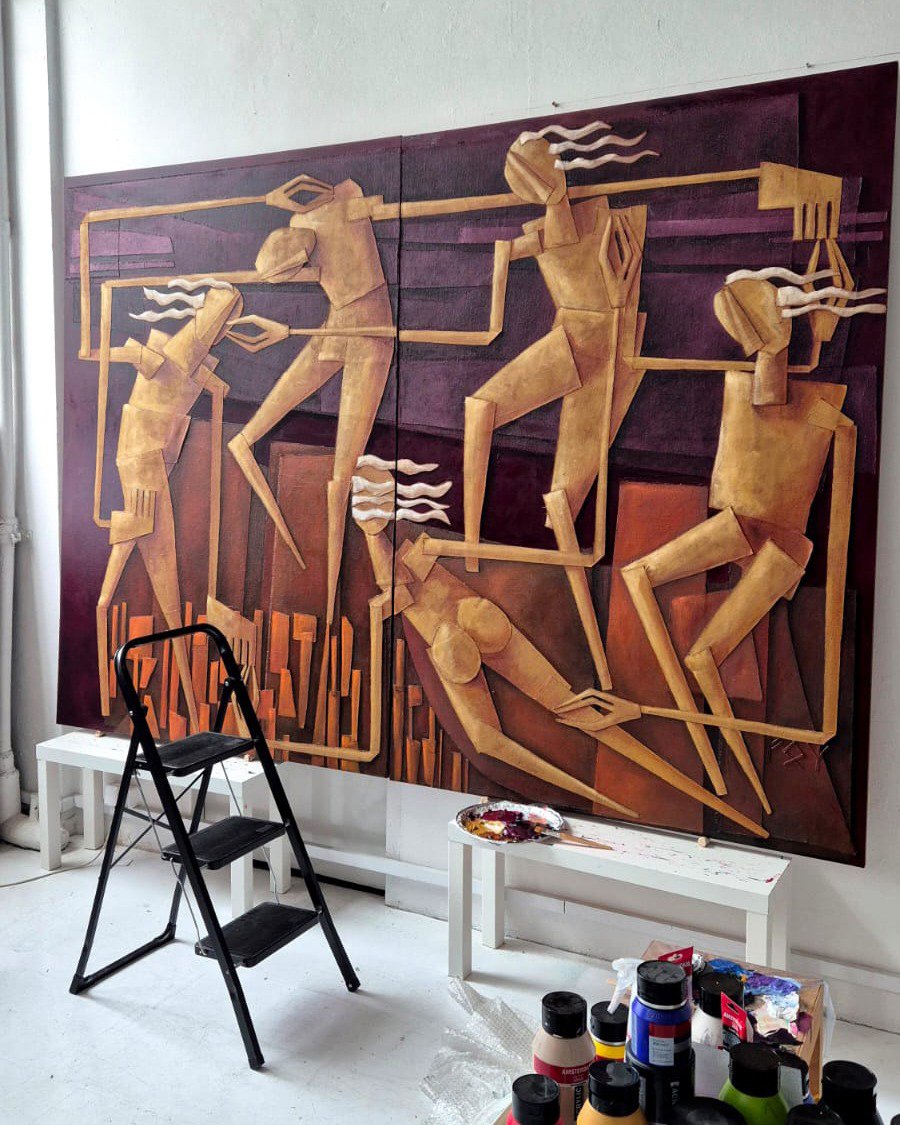
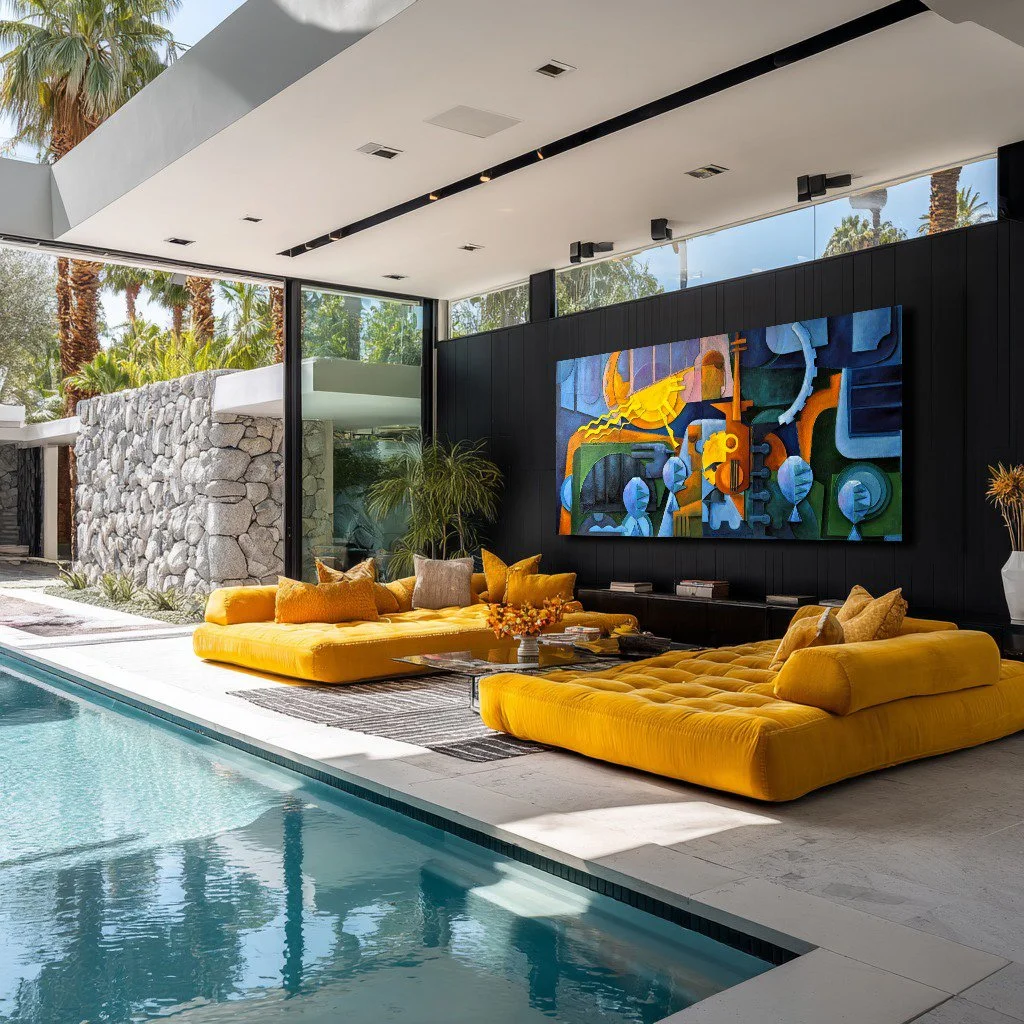
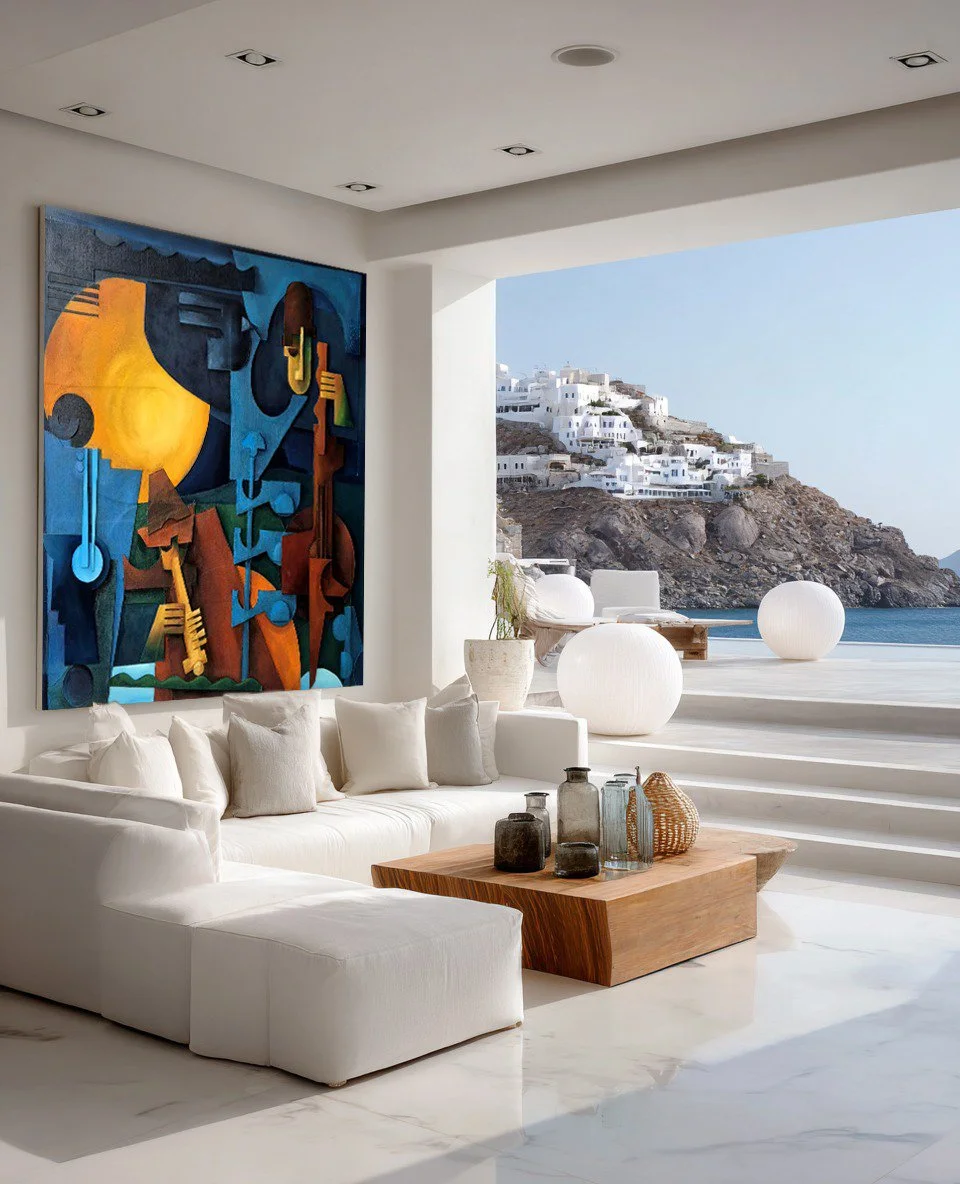
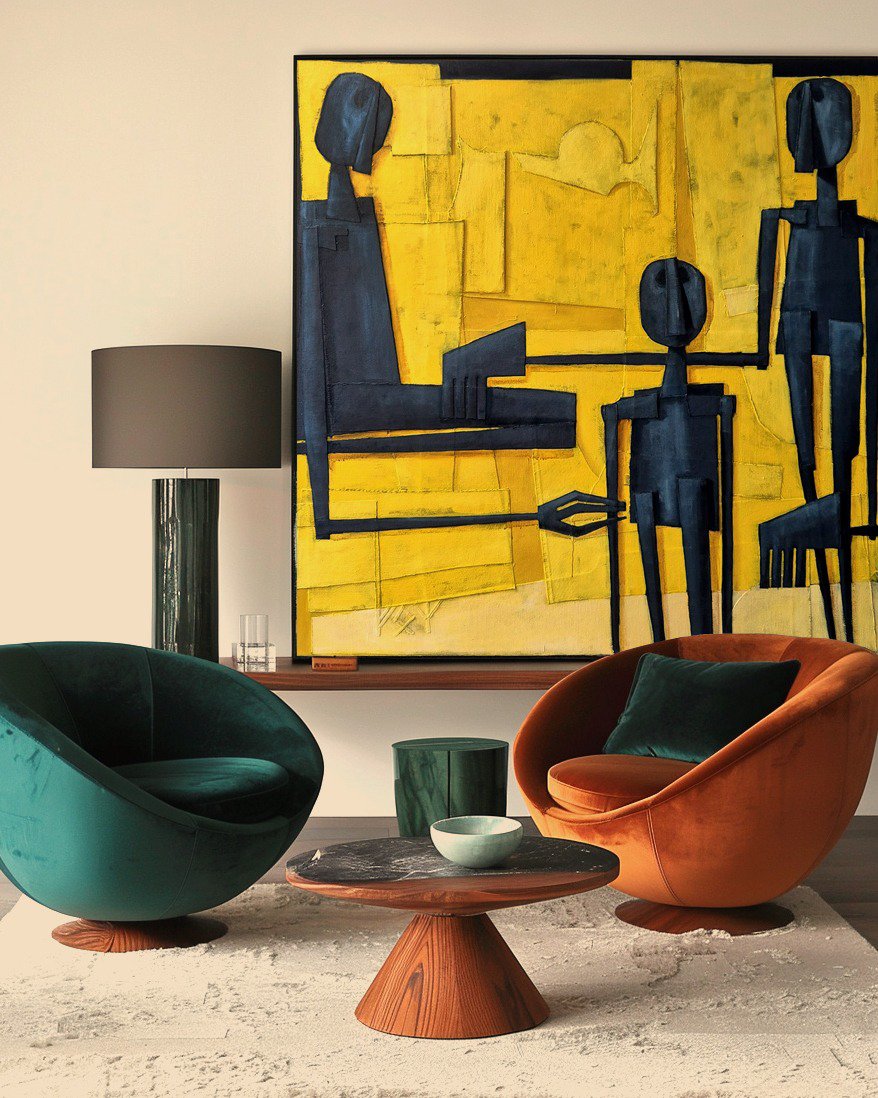
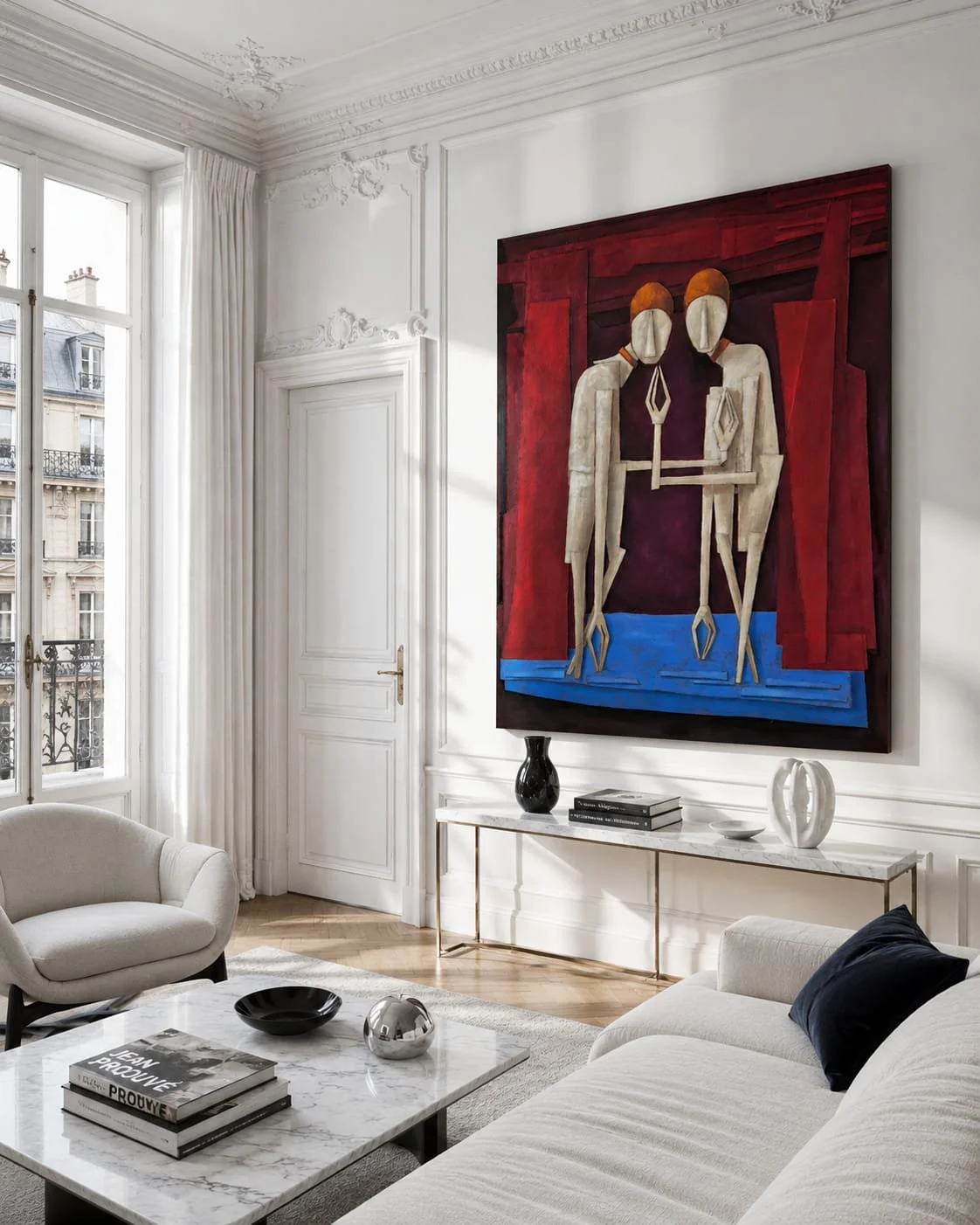
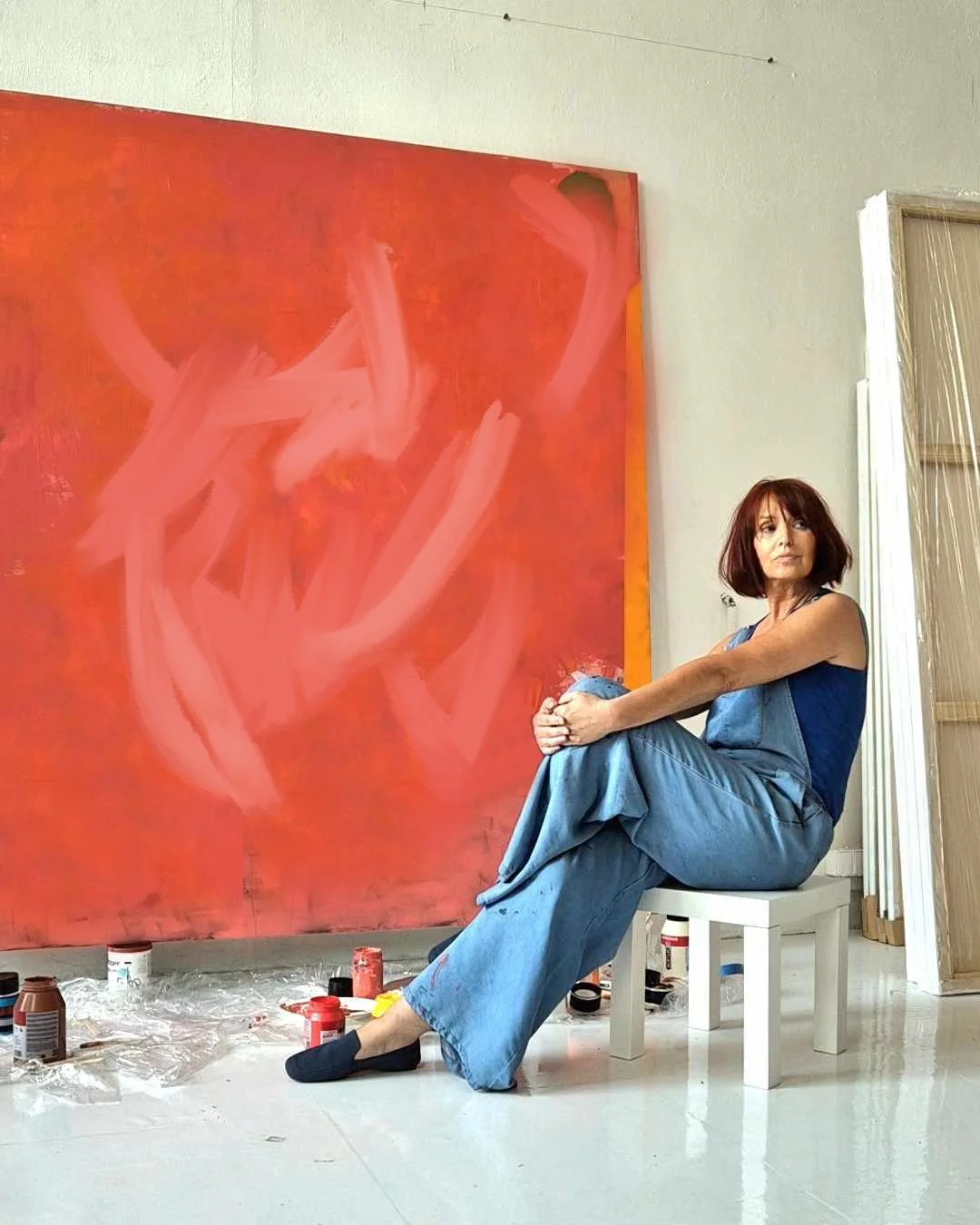
That is one of the reasons I work on a large scale. A painting that is two meters high begins to function almost like another person in the room. The viewer is no longer simply looking at an image, but in a sense physically encountering it.
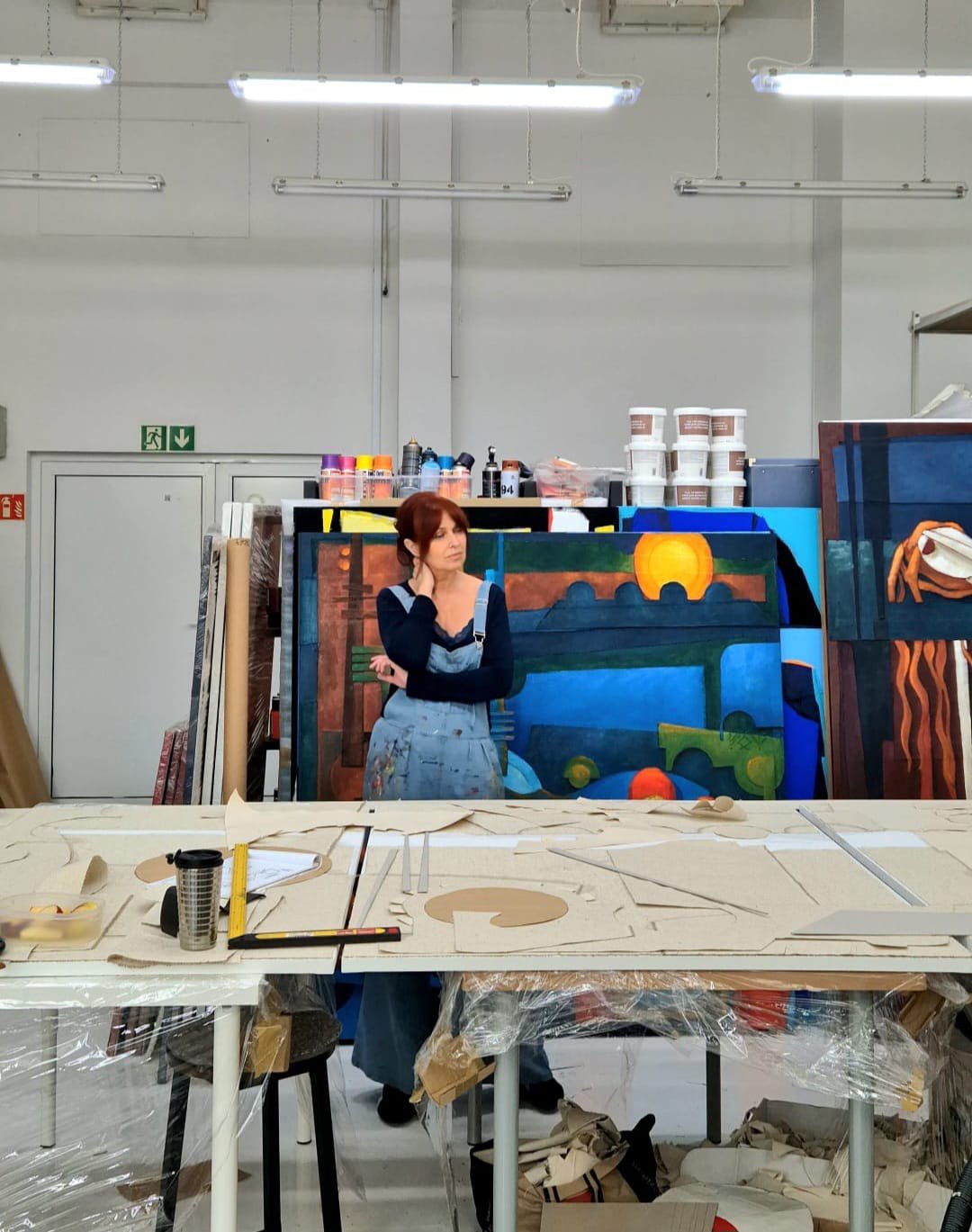
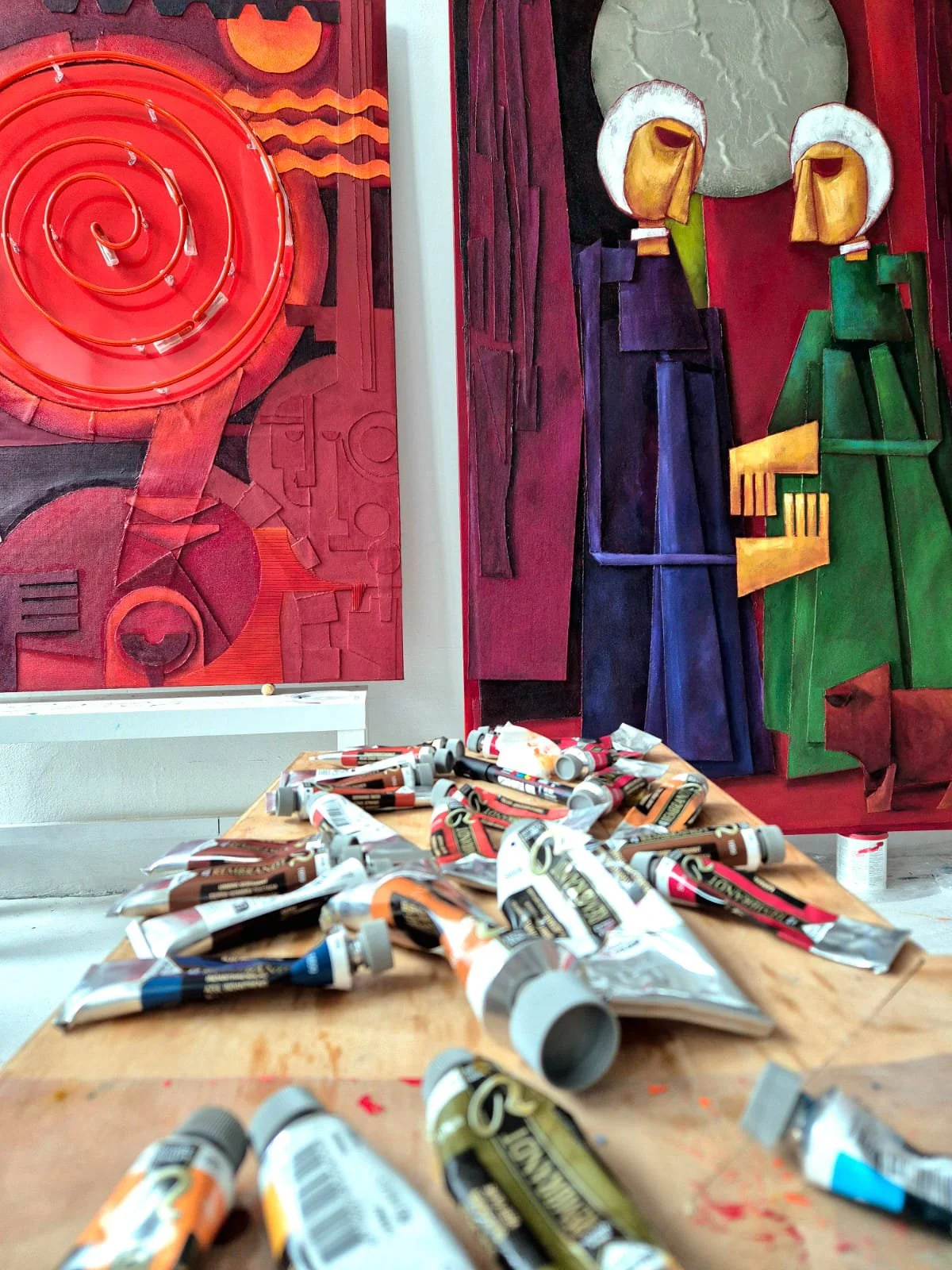
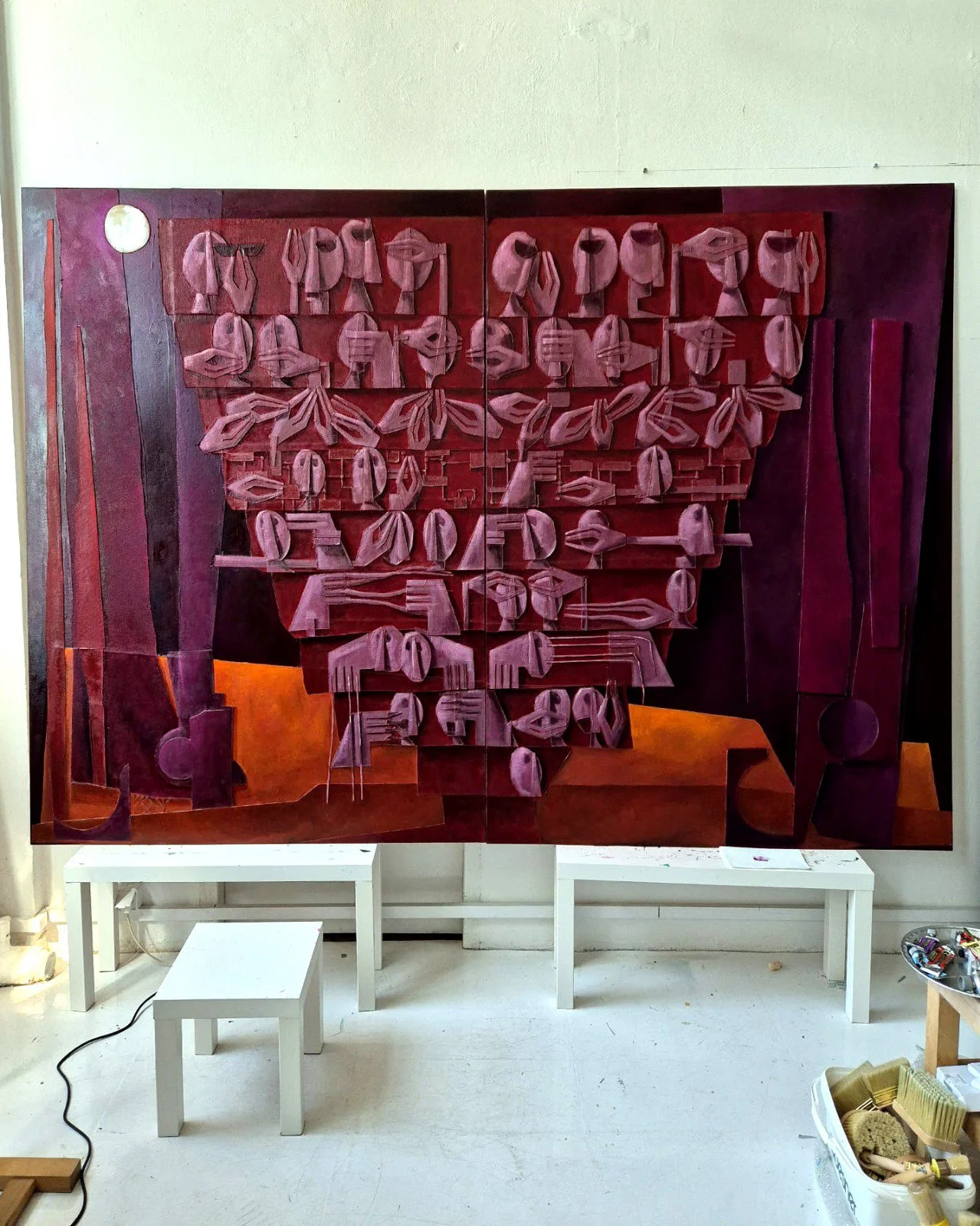
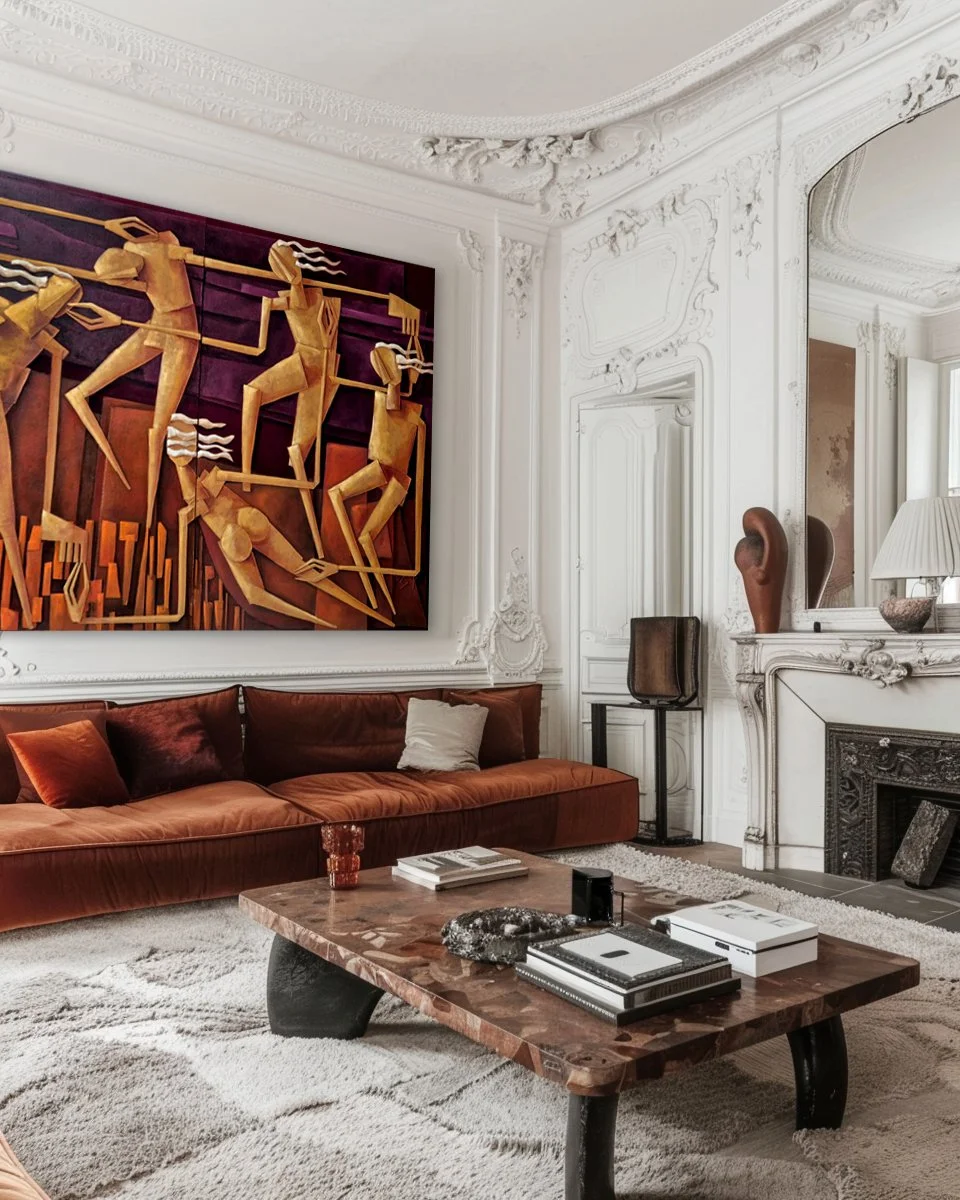
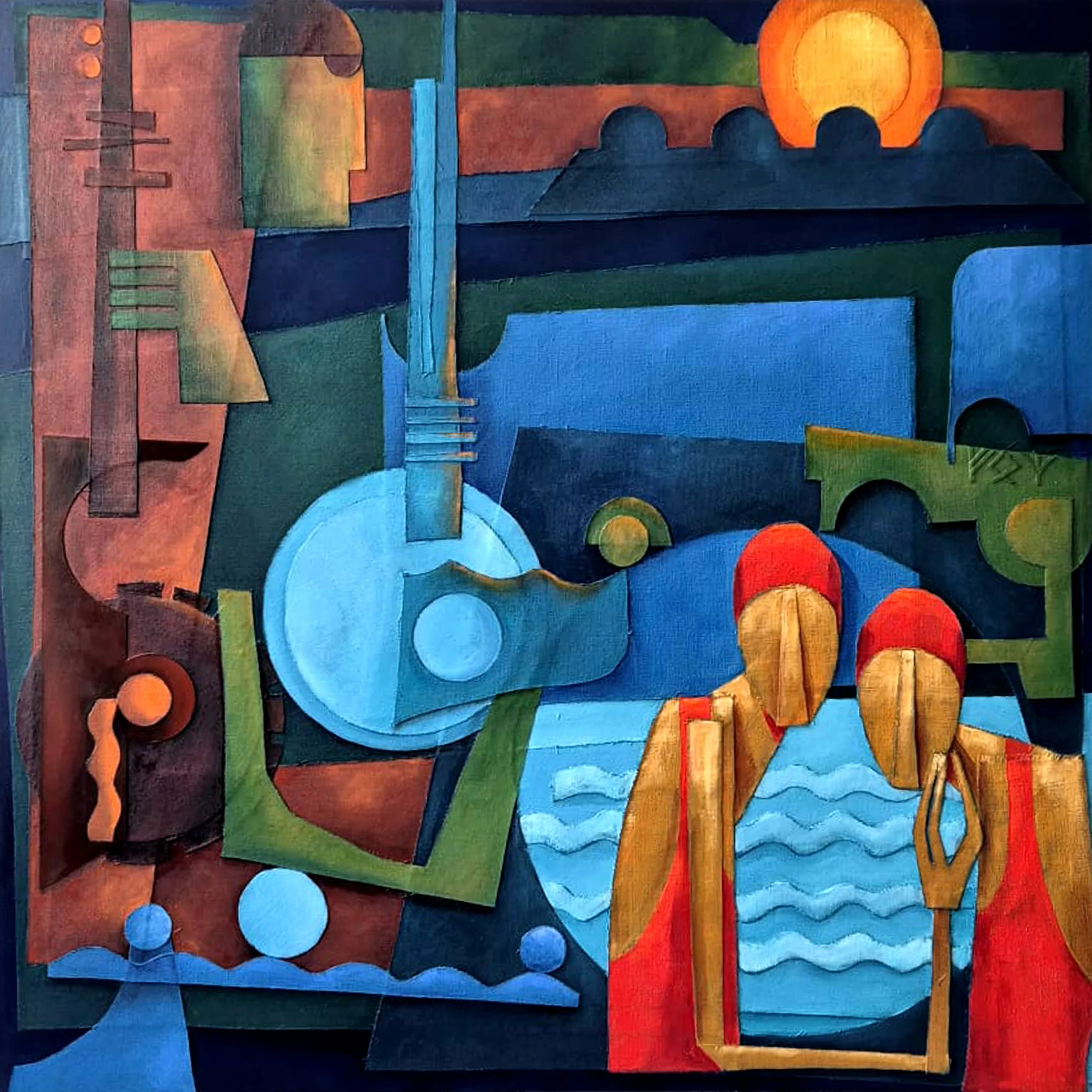
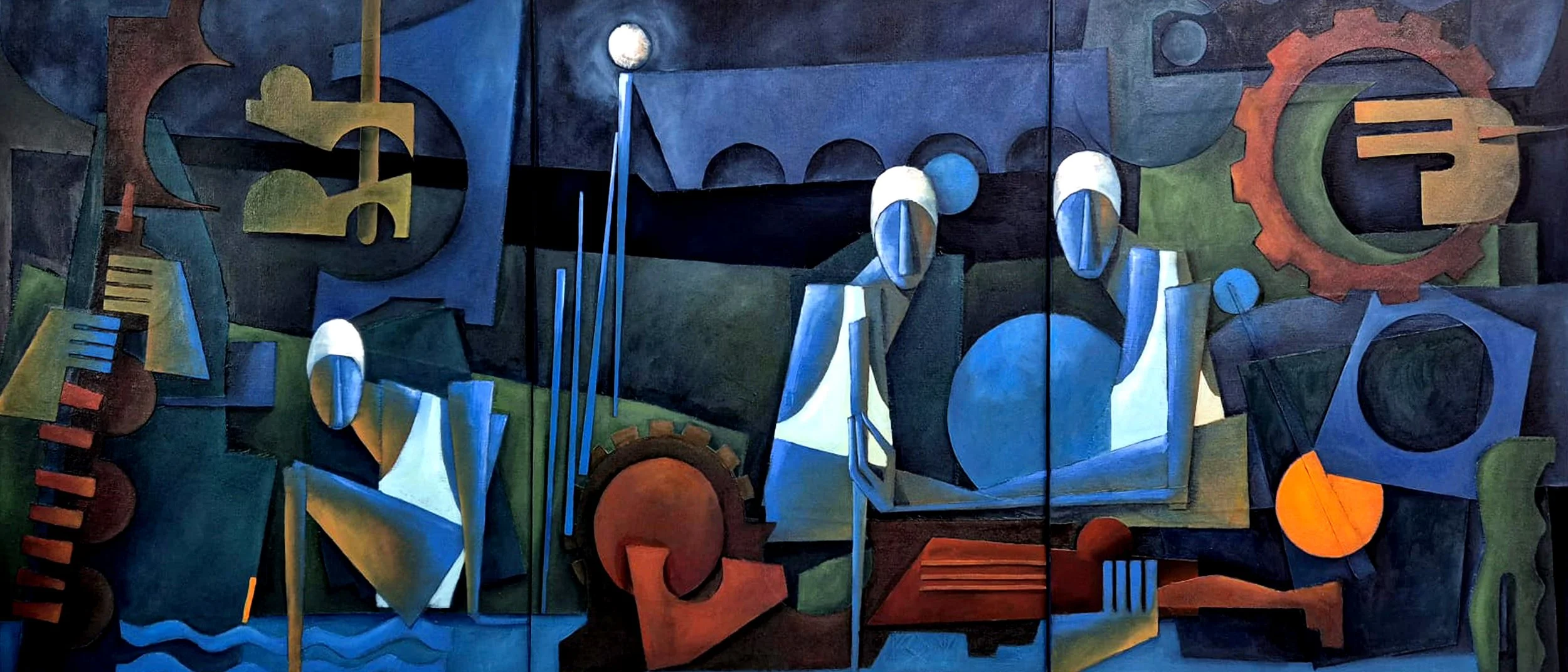
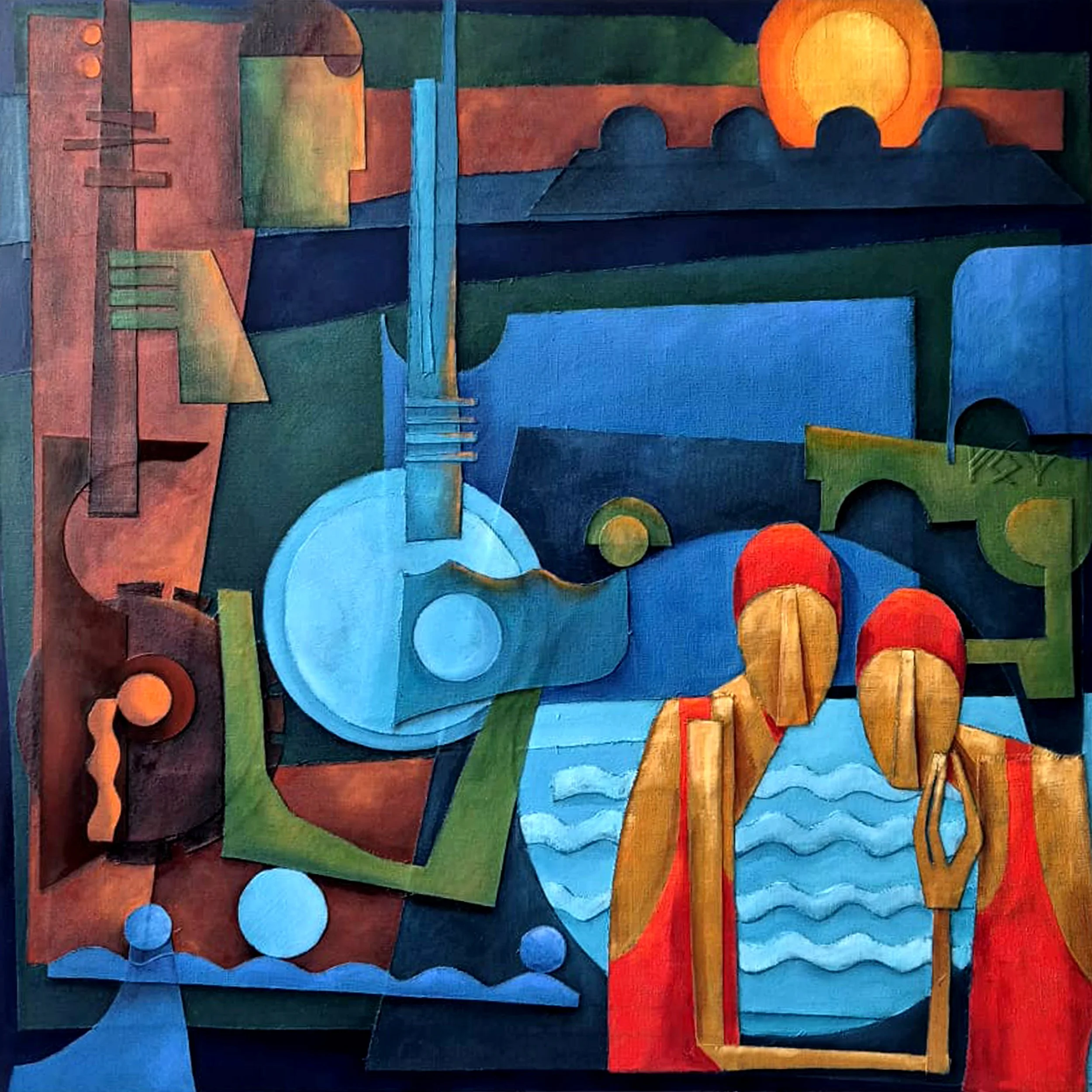
Material is equally important. I build the surface using textiles, cardboard and multiple layers, and only then begin working with oil paint. As a result, the painting is not flat. It has its own structure, shadows, softer areas and rougher ones. Light changes the work depending on where the viewer is standing.
I also build the composition in a way that does not reveal everything immediately. I like the eye to travel across the painting, to stop, return, and discover something more. In a world where most images are viewed for only a few seconds on a screen, I want to create the opposite experience — a physical experience of looking.
Your figures are contemplative forms rather than narrative protagonists, and their extended hands suggest connection, affirmation, and healing. How did this recurring gesture enter your visual language, and what kind of encounter do you hope it creates between the depicted body and the viewer?
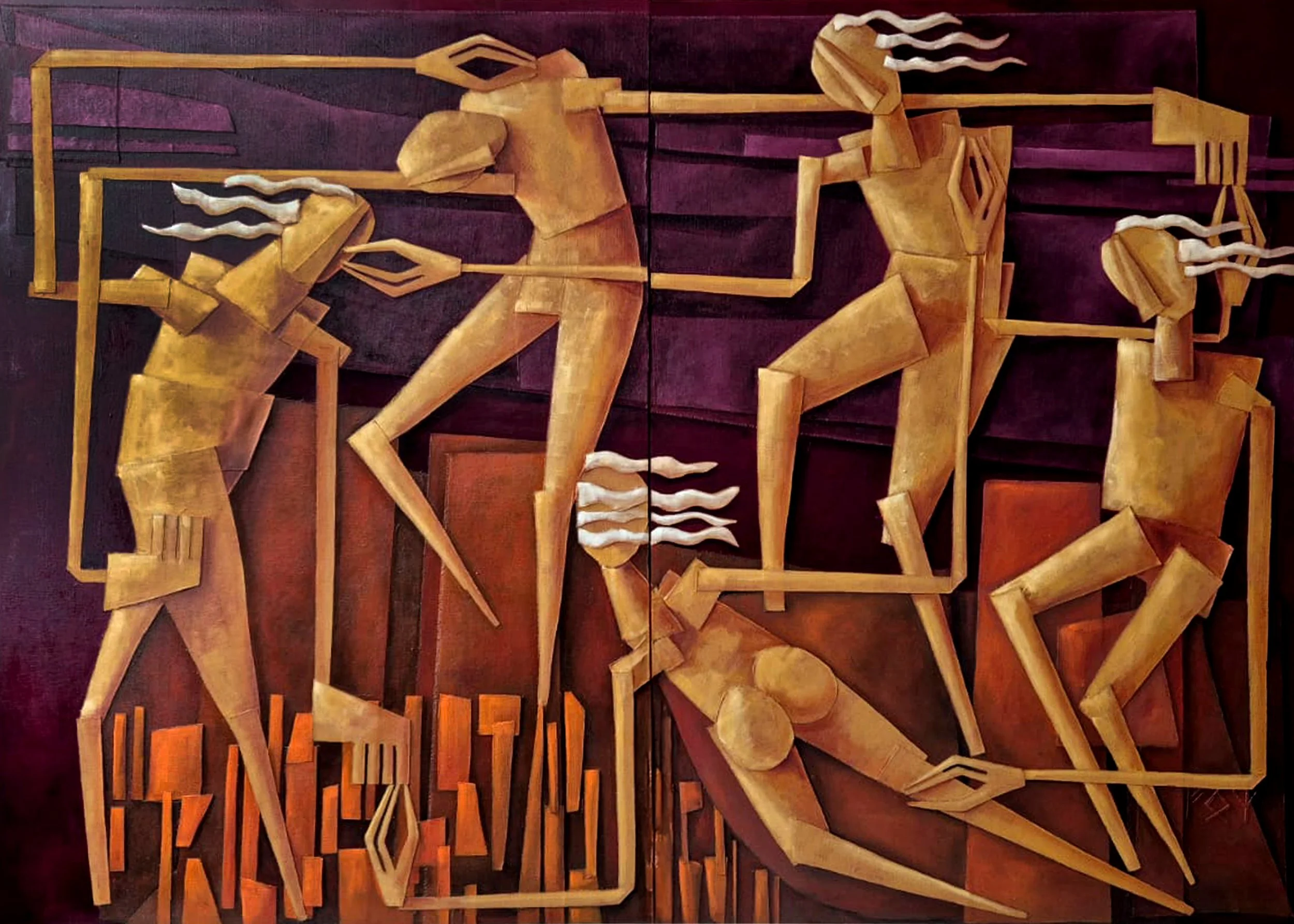
Hands appeared in my work quite naturally. I have always been fascinated by how much can be expressed through a gesture, without words and without relying on facial expression. A hand can seek contact, stop someone, protect, reject, or simply reach toward another person.
I do not think of this gesture as a symbol of healing. For me, it is primarily a sign of relationship and physical presence. Touch is one of the most fundamental forms of human contact, and at the same time something we experience less and less in a world where so many relationships have moved onto screens.
That is why my figures often do not tell a specific story. I do not need the viewer to know who they are, where they are, or what happened a moment before. I prefer to leave space for their own feelings and associations. The extended hand then becomes a point of contact between the figure and the person standing in front of the painting. A gesture that can be read differently, and very personally, by each viewer.
Your transition from interior design to independent artistic practice appears to have deepened your understanding of geometry, color, and spatial relationships. In what ways does your experience designing inhabited spaces continue to shape the layered, relief-like environments of your paintings?
Designing interiors taught me, above all, to think of an image not as a flat surface, but as a space. When designing an interior, you have to consider proportion, rhythm, relationships between elements, color, and the way a person moves through a space. That way of looking has stayed with me.
In my paintings, I also build space through layers. Textiles, cardboard, and relief create a kind of structure that I later develop with paint. I often think about individual parts of the composition in a similar way to how I once thought about elements of an interior. Each one has its own place, visual weight, and relationship with everything around it.
Design also taught me to use geometry and color very consciously. At the same time, painting gives me much more freedom. An interior has to serve the person who inhabits it. A painting has no such obligation. It can disrupt proportions, introduce unexpected combinations, and create its own space without having to follow any practical function.
Collage has remained a foundation of your practice, from your studies in traditional techniques in Italy and the United States to your current large-scale assemblages. How has your understanding of the fragment evolved, and what does assembling separate materials allow you to express about memory, identity, or human connection?
Collage taught me to see a fragment not as something incomplete, but as an element that can acquire a new meaning in a different context. At first, I was fascinated simply by the possibility of combining things that had not belonged together before. Over time, the fragment became something more. It became a way of building an image and speaking about the human experience.
Today I work with textiles, cardboard, and other materials, first building them into a relief-like structure and then combining them with oil painting. Each fragment retains something of its original nature, but once it is joined with others, it begins to function differently. This is also very close to the way I think about memory and identity. A person, too, is made up of many layers, experiences, relationships, and memories that gradually form a whole.
Human relationships work in a similar way. We meet other people as individuals already shaped by their own histories, and yet we are still able to create new bonds and new meanings together. Assemblage allows me to express this not through a literal narrative, but through the very way the painting is constructed.
You have worked with silk, epoxy resin, cotton canvas, textiles, cardboard, and sculptural forms. What have these materially distinct processes taught you about the relationship between artistic intention, physical limitation, and the unexpected behavior of a medium?
Working with such different materials has taught me, above all, that a material can never be completely controlled. Each one has its own properties, limitations, and, in a sense, its own character. You can begin with a very precise idea, but during the process you have to observe what is happening and sometimes change your original plan.
Silk taught me lightness and a different way of working with color. Epoxy resin required a completely different mindset, with more discipline and greater awareness of the process. Textiles and cardboard, on the other hand, gave me the possibility to physically build the painting, layer by layer, almost like an object. That material quality turned out to be closest to what I had been looking for.
Over time, I stopped treating the limitations of a material as an obstacle. Very often, they lead me to solutions I would never have invented on my own. I still begin a work with a clear intention, but I do not want to control every centimeter of the painting. The material also has something to say, and I have learned to leave space for that.
You have spoken of the fascination you feel when a carefully planned composition begins to develop a life of its own. How do you recognize the moment when control should give way to chance, and how does that negotiation influence the emotional character of the finished work?
I cannot point to one specific moment. It is more a matter of intuition. At some point, I see that the painting begins to suggest something I had not planned before. It may be an accidental shift of material, a different arrangement of color, a shadow, or a form that suddenly becomes more interesting than my original idea.
In the past, I tried to correct such situations and return to the plan. Today, I am more willing to follow them. Of course, only up to a certain point, because chance cannot replace the artist’s decision. For me, the most interesting things happen somewhere between control and accepting that the painting does not have to end exactly where I expected it to at the beginning.
I think this makes the finished work less predictable. It contains something that could not have been fully designed in advance.
Color in your practice is described both as a carrier of creative energy and as an instrument of quiet, contemplative dialogue. How do you reconcile color’s immediate sensory intensity with your desire to create spaces of stillness, listening, and spiritual clarity?
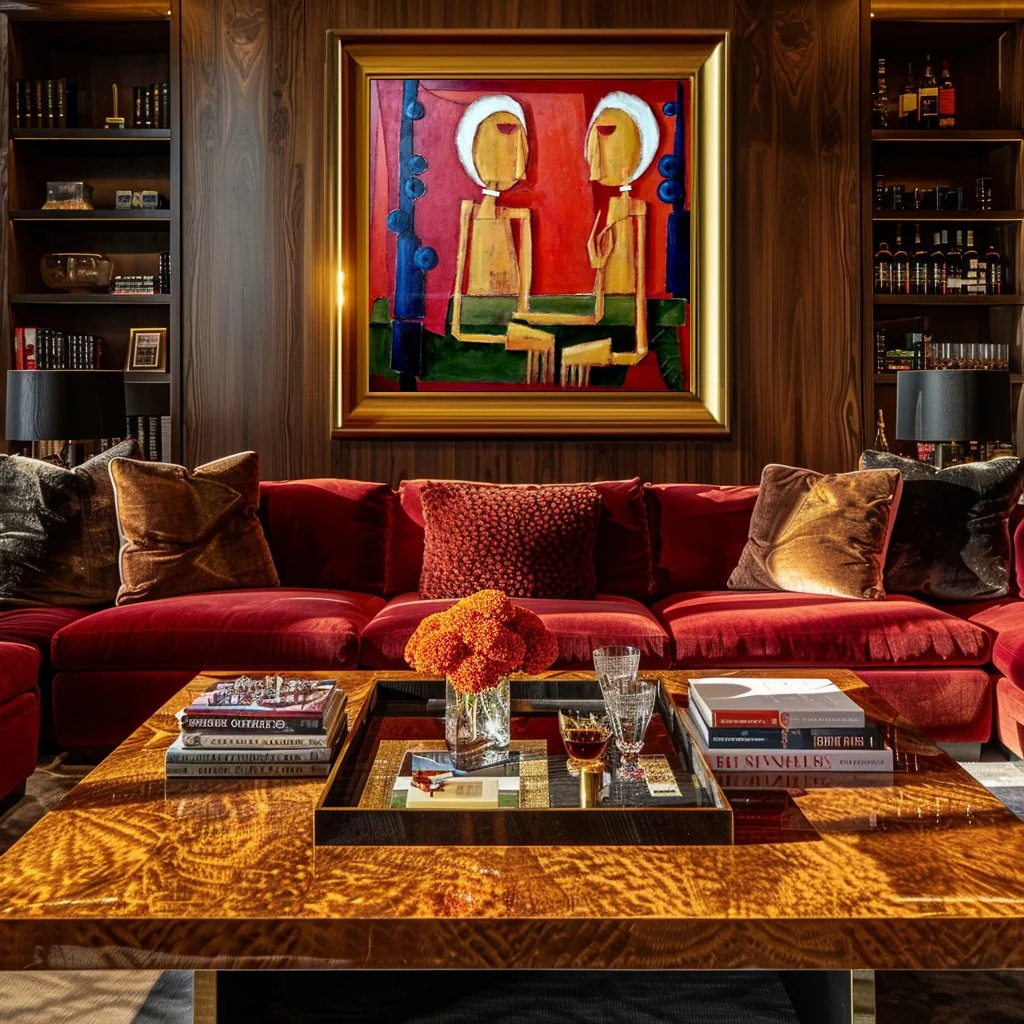
Color is one of the most direct ways for me to build emotion. It works faster than form, because the viewer responds to it almost immediately. That is why I use it very consciously. Sometimes it is meant to bring energy, and at other times to create calm or a sense of focus.
I am not looking for silence in a literal sense, nor for what might be called “spiritual clarity.” I am more interested in balance. An intense color does not have to create chaos. It can be strong and still remain controlled through composition, rhythm, and the relationships between individual colors.
I like it when a painting works on a sensory level first, and only later opens itself to a quieter, more personal interpretation.
Geometric abstraction in your work generates both harmony and tension, while your compositions frequently retain references to the body and human touch. How do geometry and figuration interact within your paintings, and what becomes possible when disciplined structure encounters emotional vulnerability?
Geometry gives me structure. It organizes the painting, creates rhythm, and allows me to build relationships between individual elements. I like its discipline because it gives me a point of reference even when the composition itself becomes more free.
At the same time, there is the body, the gesture, the hand, something very human and not entirely predictable. This prevents the painting from becoming pure abstraction or a cold arrangement of forms. Geometry gives it construction, while figuration brings in emotion and human presence.
Your experience leading a collage studio and mentoring young art enthusiasts placed teaching alongside your own artistic development. How did explaining techniques and guiding other people’s creative processes affect the way you understood your materials, methods, and responsibilities as an artist?
Leading a collage studio was a very important experience for me, because when you explain something to others, you begin to understand your own way of working more clearly. You have to put into words things you previously did intuitively, explain why one material behaves differently from another, and show that technique is only a tool, not an end in itself.
I also learned a great deal from watching how differently people approached the same materials. It reminded me that there is no single correct path, and that creativity often begins when a person stops simply following instructions.
I think it also taught me a greater sense of responsibility. The point was never to make someone work the way I do, but to help them find their own way of seeing and develop confidence in their own decisions.
Having moved through design, traditional collage, silk painting, epoxy resin, layered assemblage, and sculptural experimentation, which unresolved questions now feel most urgent in your practice, and how might they guide the next stage of your work?
Today, I do not feel the need to search for another technique simply for the sake of trying something new. I am more interested in seeing how far I can develop the visual language I have already created.
I increasingly think about the boundary between painting and object. My works have long moved beyond the flat surface. They have relief, their own physical structure, and they respond strongly to light. I want to see what happens when I push this direction even further, while still keeping painting at the core.