Interview with Beverley-Jane Stewart
https://www.beverleyjanestewart.com/
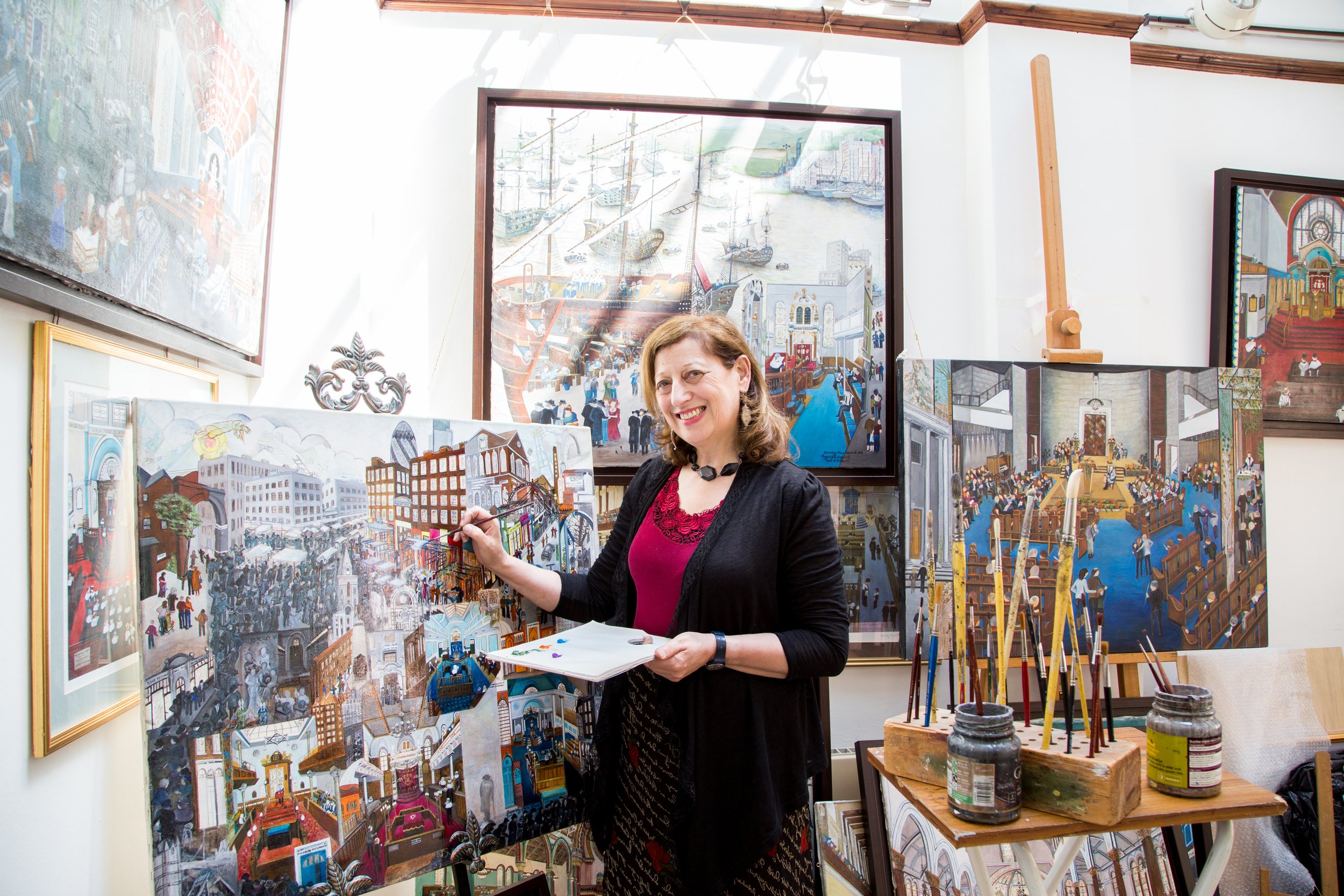
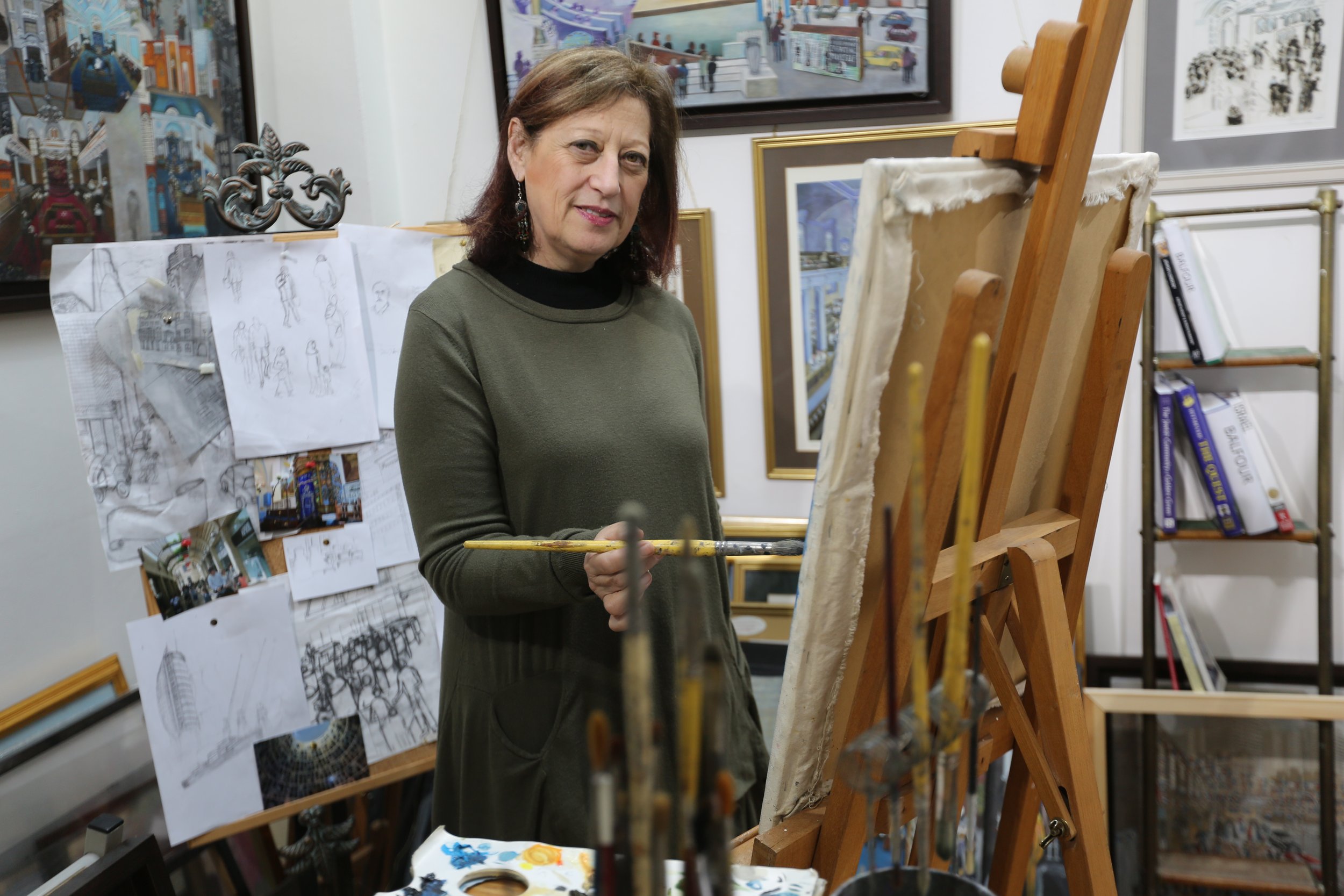
Beverley-Jane Stewart is a British narrative artist and printmaker whose work explores history, identity, migration and cultural heritage. Drawing particularly on her Jewish-European roots, she creates richly layered works that bring together past and present, often using architecture, community and personal memory as a means of telling wider social and historical stories.
Working across printmaking, oil painting and mixed media, Beverley-Jane combines different techniques and materials to create distinctive, multi-layered narratives within her work.
Her work has been exhibited in the UK and internationally, including at the Jerusalem Biennale, Aziz Foundation’s Ramadan Lights London programme, and the Romanian Embassy. Through painting and printmaking, she describes herself as a “visual writer”, using art to explore how history continues to shape identity, place and belonging.
Your practice began in abstract art before developing into narrative art and visual storytelling. How does abstraction continue to shape the structure, rhythm, and emotional atmosphere of your historically grounded compositions?
Although my work has become increasingly narrative and historically grounded, abstraction has never really left my practice. It remains the underlying structure of a painting – in the balance of shapes, colour, movement and the way I lead the eye through the composition.
This can be seen particularly in my synagogue paintings. In works such the Romanian Routes collection I created for the EU festival of Culture in Romania. The architecture provides a strong framework, but I am not trying simply to reproduce reality. I use perspective, pattern, repeated forms and groups of figures to create a rhythm across the surface. Different moments and memories can occupy the same space, so the composition becomes layered rather than conventionally realistic.
Your childhood position in the women’s gallery of the synagogue gave you an elevated view of worship, architecture, movement, and light. How has this perspective influenced both the visual organization of your work and your understanding of gender, visibility, and participation within religious space?
As a child I sat with my mother in the women’s gallery at Brixton Synagogue, looking down at the service below. That view stayed with me and became the foundation of my first synagogue which takes an abstract view from my own childhood seat.
If you look closely at the work, the perspective is not fixed. It changes across the picture, sometimes you feel you are sitting, sometimes standing, sometimes looking down from above. I deliberately shift the viewpoints to recreate the experience of looking around the synagogue and taking in different things at different moments.
Being in the women’s gallery also meant being both part of the service and slightly apart from it. I think that has influenced my work too – I am often both participant and observer, looking at who is present, where they are positioned and how they belong within a space.
You describe yourself as a “visual writer” who combines historical research with imaginative interpretation. How do you determine where documentary responsibility ends and artistic invention begins when representing real communities, memories, and traumatic histories?
Coming from an immigrant background myself, I feel an empathy not only with historical events, but with the people who experienced them – displacement, belonging and the search for a new home. My grandparents came to Britain from Romania and Poland, so that history feels personal to me.
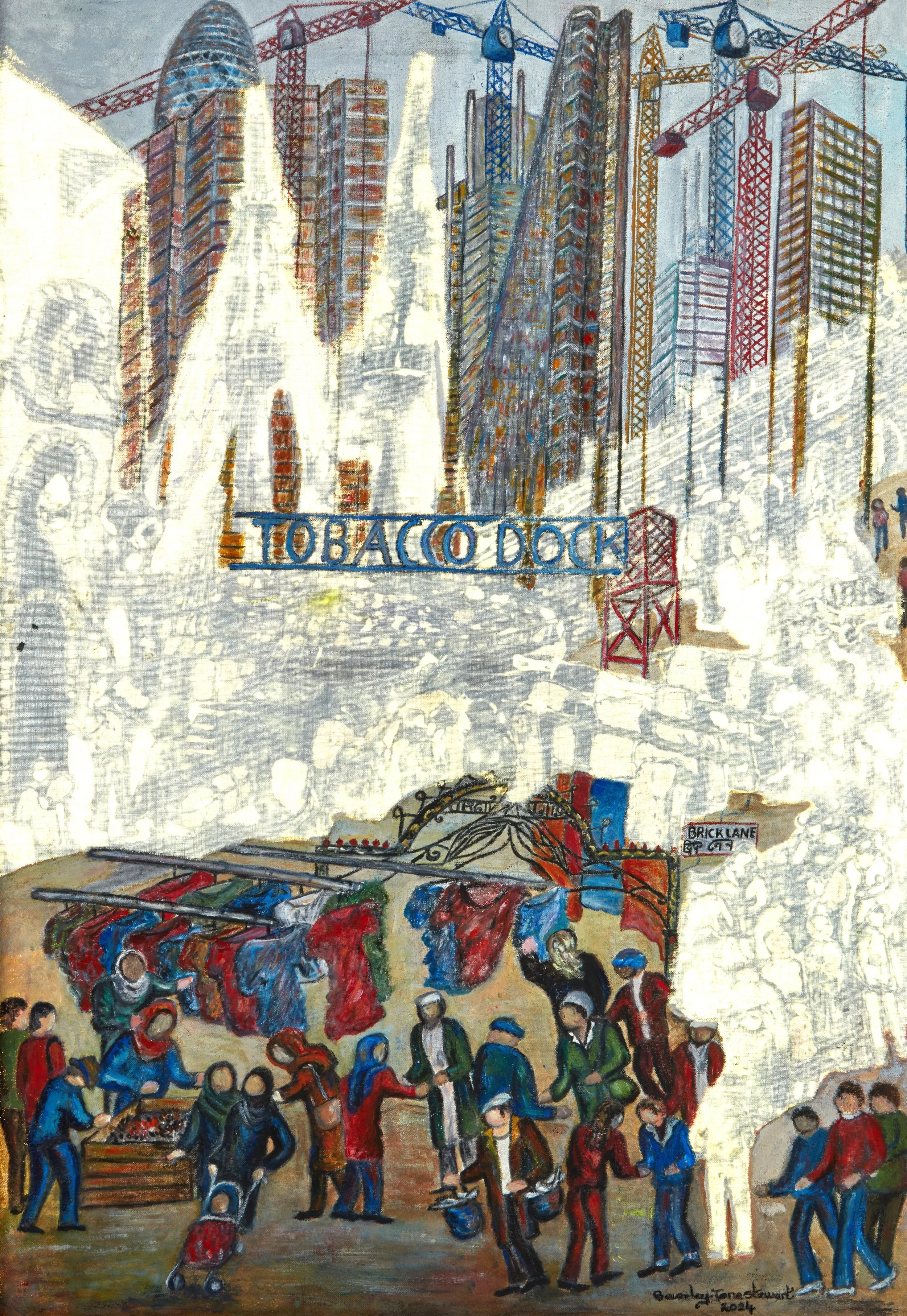
Research gives me the facts, but as a visual writer I also want to capture the emotions behind them. Works such as Bradford and the Wool Industry and The Story of the East End of London bring together different communities, faiths and periods within the same evolving urban landscape.
I find that fascinating. We often think of ownership and the identity of a place as fixed, but it is actually very fluid. Communities arrive, move on and share spaces, and my work tries to show those different histories coexisting within one image.
Your grandparents’ migration from Romania and Poland initially led you to examine Jewish-European identity, while your teaching experience encouraged a broader engagement with London’s diverse communities. How did this movement from personal ancestry toward shared experiences of migration transform the ethical and conceptual scope of your practice?
My Romanian collection began as a very personal journey, tracing my grandparents’ roots, but it made me think much more widely about migration and what people carry with them, culture, memory, loss and identity.
During Romanian Heritage – A Journey in Time, I also became increasingly interested in printmaking and mixed media as a physical way of representing that complexity. I etched and burnt into wood, worked with Perspex, old photographs, print and paint, allowing the materials themselves to suggest different layers of time.
It made me realise that although I had started by telling my family’s story, many of the feelings within it, leaving somewhere behind, adapting and trying to belong, were stories I recognised in the other communities around me.
Places of worship and docks recur in your work as sites of arrival, departure, belonging, labor, and social transition. What do these architectural environments reveal about cultural identity that the human figure alone cannot communicate?
I am fascinated by the question: do people make places, or do places make people? Places of worship and docks carry the evidence of the communities that have passed through them, arrival, work, worship, belonging and change. This is why architectural detail is so important in my work.
Yet, if you look across my work, the people often have little or no facial detail. That is deliberate. I want them to be part of the movement and memory of the place rather than individual portraits. The buildings are highly specific; the people can almost become any of us.
For me, my paintings try to capture how the architecture remains and changes while generations move through it. Each leaves something behind and each changes its meaning.
In works concerning discrimination and displacement, your figures sometimes become faceless. How do you negotiate the tension between using anonymity to express collective vulnerability and preserving the individuality of the people and communities represented?
My figures have always been faceless. Interestingly, when I paint a community, people often tell me they recognise particular individuals, even without faces.
For me, people are both individual and collective at the same time. Leaving the face undefined allows a figure to have their own presence while also being understood through the group to which they belong.
I am fascinated by the dynamics of groups in a space and how much we understand through dress, poise, gesture and position. Is someone leaning into the group or turning away? Are they leading, watching or standing at the edge? Their relationship to others becomes part of how we understand them.
In Beyond the Ashes, destroyed religious buildings become witnesses to war, persecution, and communal rupture, yet the series also proposes the possibility of renewal. How do you create a credible visual language of hope without diminishing the gravity of destruction and historical loss?
Beyond the Ashes has been shown internationally and is coming to Berlin in December 2026. This is a collection of etchings of abandoned and damaged buildings, there are fewer people, sometimes none at all, yet their absence becomes very present. The buildings and traces they leave behind tell us about the people who were once there.
The work began with abandoned synagogues and communities destroyed or dispersed through the Holocaust, but developed to look more widely at communities that have become victims of conflict, including through damaged religious buildings in Iraq, Syria and Lebanon.
I wanted the work to remain sombre. The monochrome, texture and empty spaces don't soften the destruction. But even within these damaged buildings there are traces of what existed before. For me, that is where hope lies, not in diminishing the loss, but in recognising that individual and communal identity can survive beyond physical destruction.
Your recent works contrast translucent dyed images associated with concealed histories against opaque oil paint representing contemporary modernity. How do material qualities such as transparency, density, burning, engraving, and layering become metaphors for memory, erasure, and cultural survival?
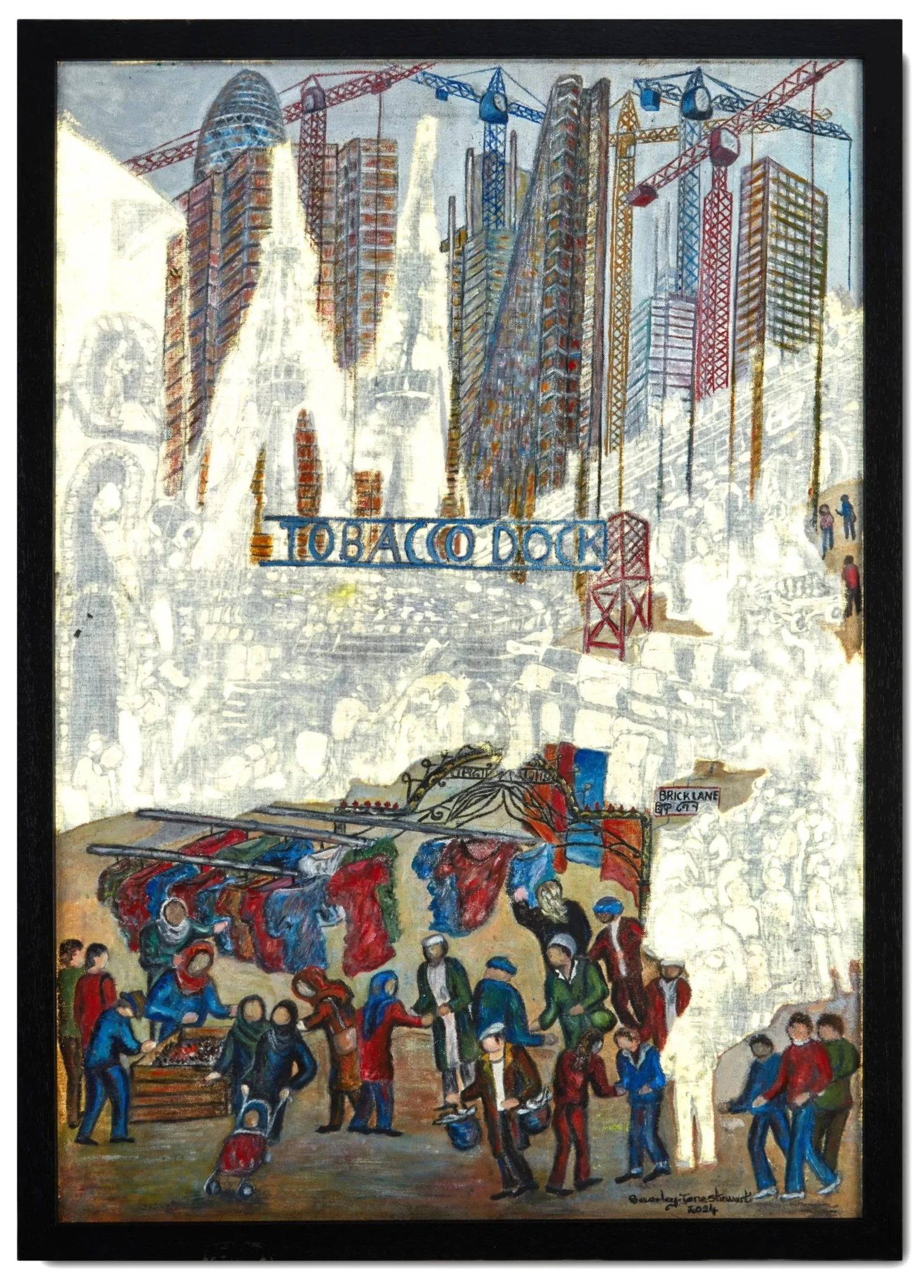
I am currently building a collection centred on the River Thames in London called The Narrative of Immigration, using relief printing, etching, dyed fabric and oil paint to explore the different histories of the Docklands. Rebirth: Docklands has already been exhibited in Oxford, and The Wentworth Buildings were shown at Woolwich Contemporary Print Fair.
What has been particularly interesting is the response when I share the making process on Instagram. These experimental pieces, where I print, burn, dye, cut and combine materials, have attracted some of the strongest interest. People seem to enjoy seeing an image develop and discovering how each layer changes what came before.
Shadows of the East End is a good example. Printed and dyed fabric sits over a light box; when the light comes on, the history beneath becomes more visible. The process is therefore part of the meaning of the work, physically revealing a history that was always there.
The guiding question, “If I am only for myself, what am I?” suggests that art carries a responsibility beyond personal expression. How does this principle shape your approach to interfaith dialogue, cultural inclusivity, and the representation of experiences outside your own heritage?
The quotation comes from Ethics of the Fathers: “If I am not for myself, who is for me? And if I am only for myself, what am I?” It is a Jewish teaching, but for me it speaks very directly about our responsibility to look beyond ourselves.
That has become increasingly important in my work. In the recent Shared Light interfaith exhibition, I showed three works exploring communities in Bradford, London and Manchester and how different faiths and immigrant communities have arrived, evolved and co-existed. Making Waves, where I am currently exhibiting a print about immigration, continues that conversation.
My Jewish heritage is my starting point, but particularly in difficult and complex times, I feel a responsibility to look outwards too, to be curious about other communities and to use art to explore what we share without suggesting that all our experiences are the same.
As your current work examines Britain’s changing demographics through docklands, immigrant histories, and contemporary architecture, which overlooked narratives or communities do you hope to investigate next, and how might new materials or printmaking processes support that direction?
I don't think I have finished with the stories of immigrant Britain yet. My ongoing collaboration with social historian Dr. Pam Fox has become an important strand of my practice, creating covers and illustrations for books including The Jewish Community of Golders Green, Jews by the Seaside and Noshtalgia: The Bloom’s Story.
Dr. Fox is now working on the history of the Grodzinski family of bakers, who began in the East End in 1891. What makes these stories particularly special is that they are not simply history, the people in them have families living today. There is a responsibility in telling their stories, but also something very exciting about connecting those individual lives to the wider community and places around them.
A book cover also takes me back, in some ways, to abstraction. You have to take a complex history and find one image that captures its essence, while the illustrations inside can tell individual stories in more detail. I have used printmaking and mixed media increasingly in the previous covers and I am still experimenting with how those processes might become part of this next project. So, for now, this remains a work in progress.
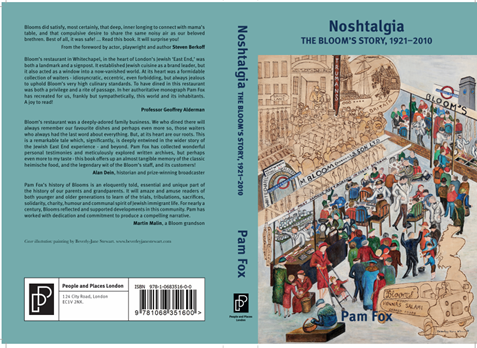
Blooms Cover 2025
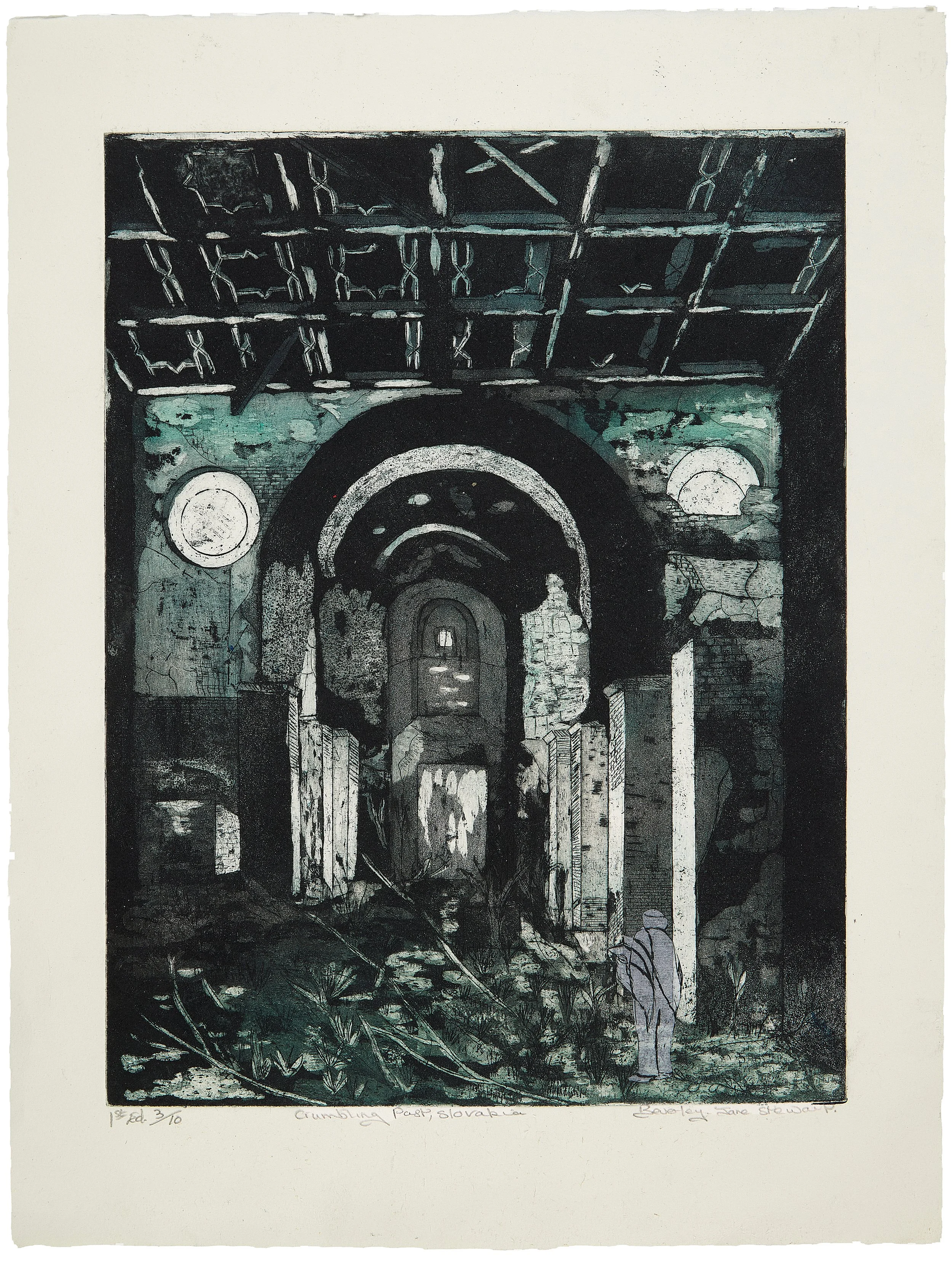
Crumbling Past
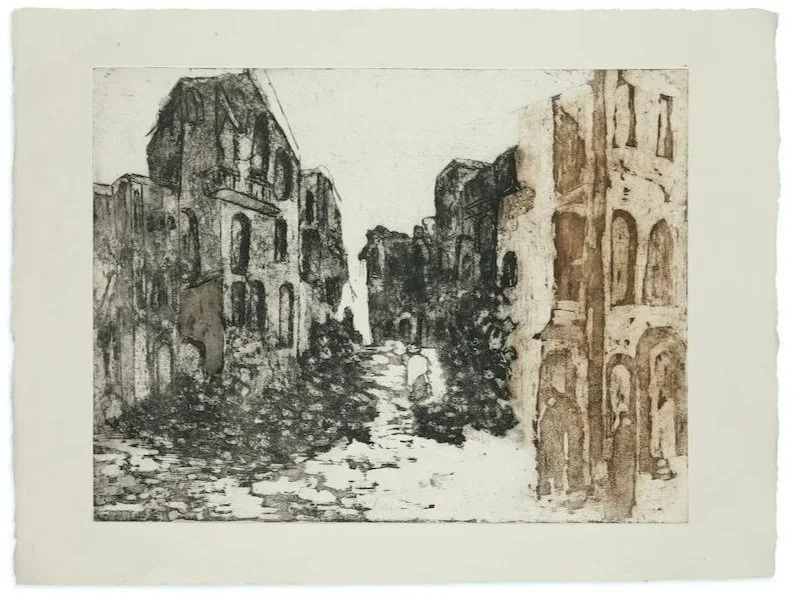
History in Shadows 37.5 x 47 cms
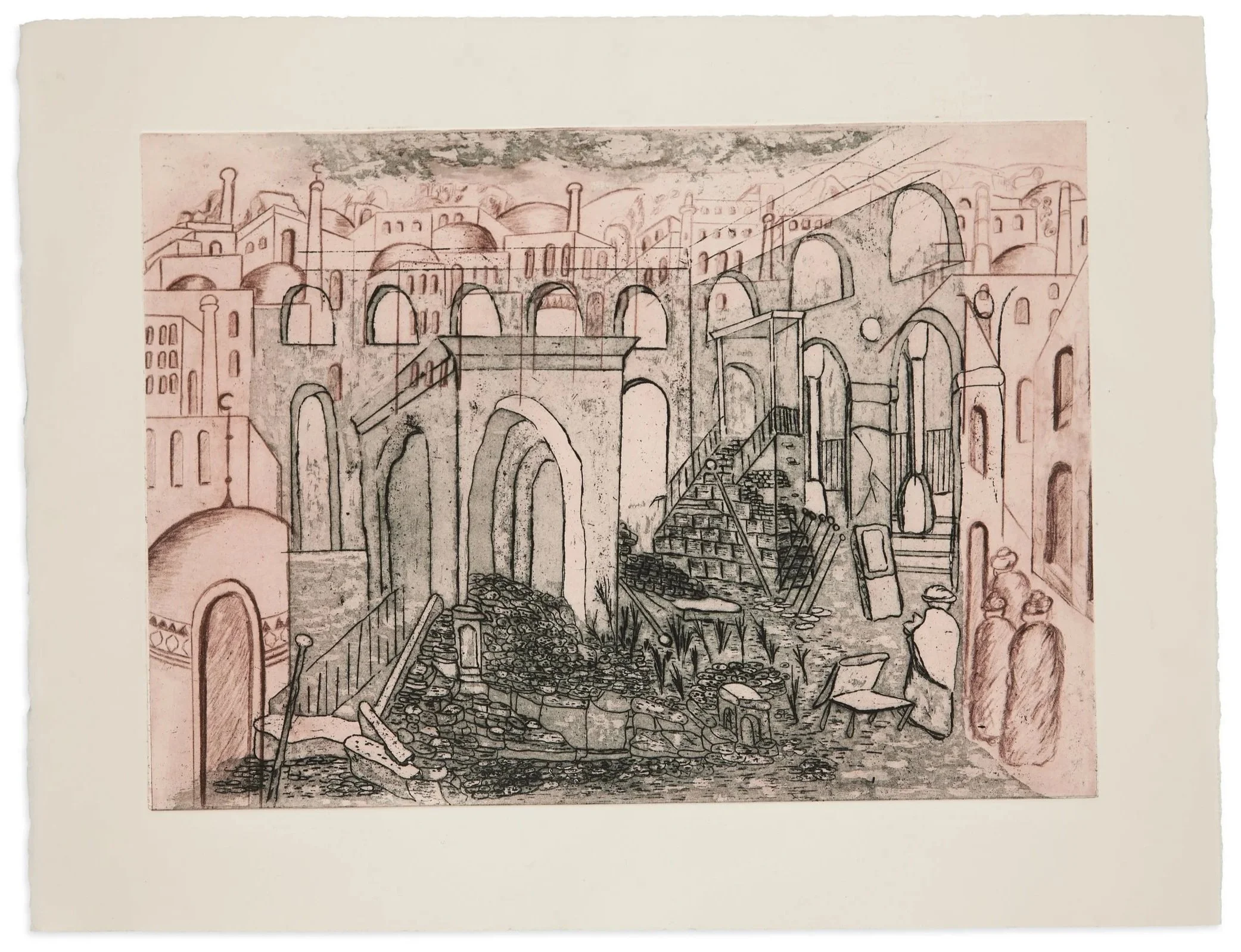
Lost Times 37 x 47 cms
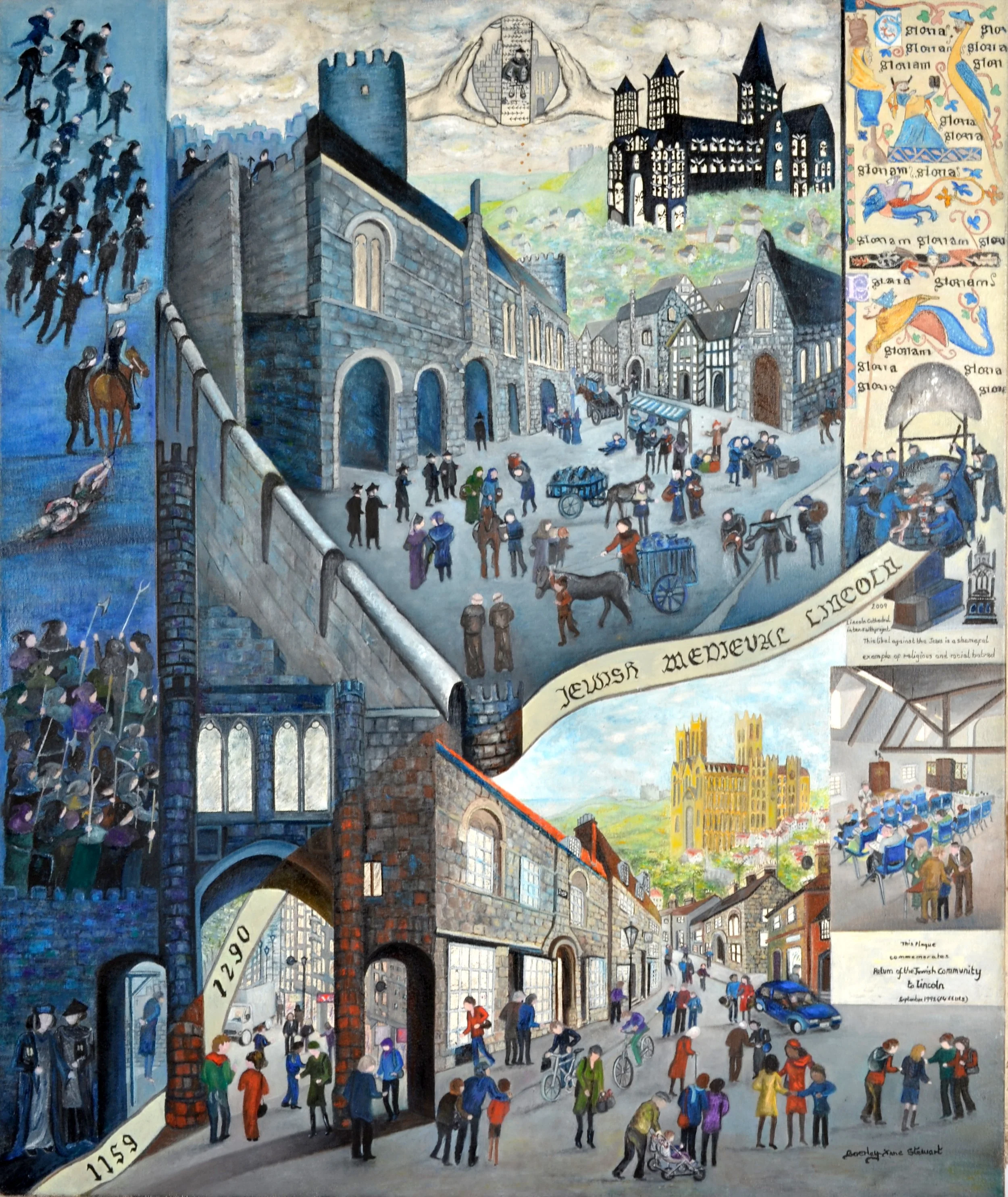
Medieval Lincoln
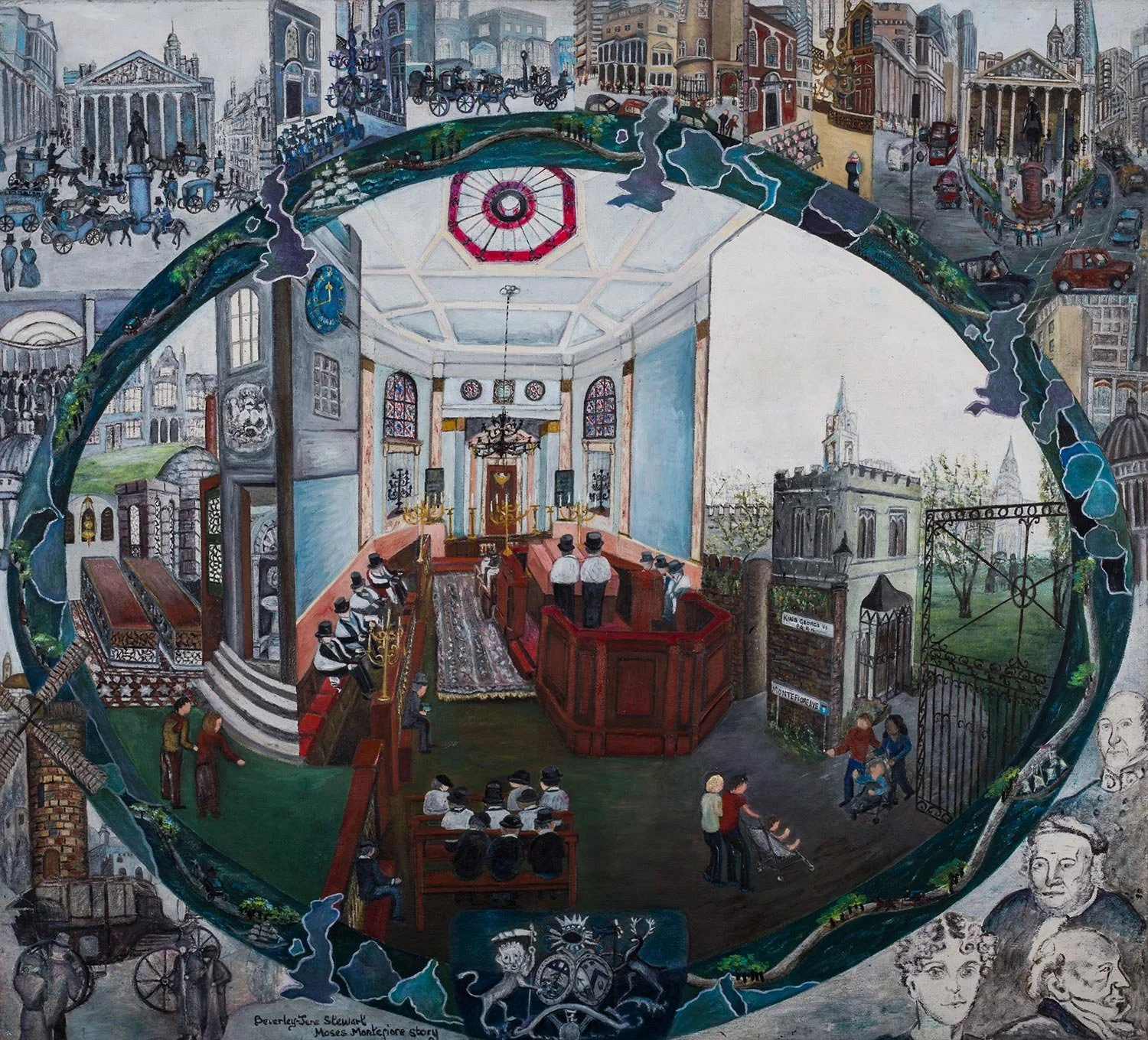
Moses Montefiori
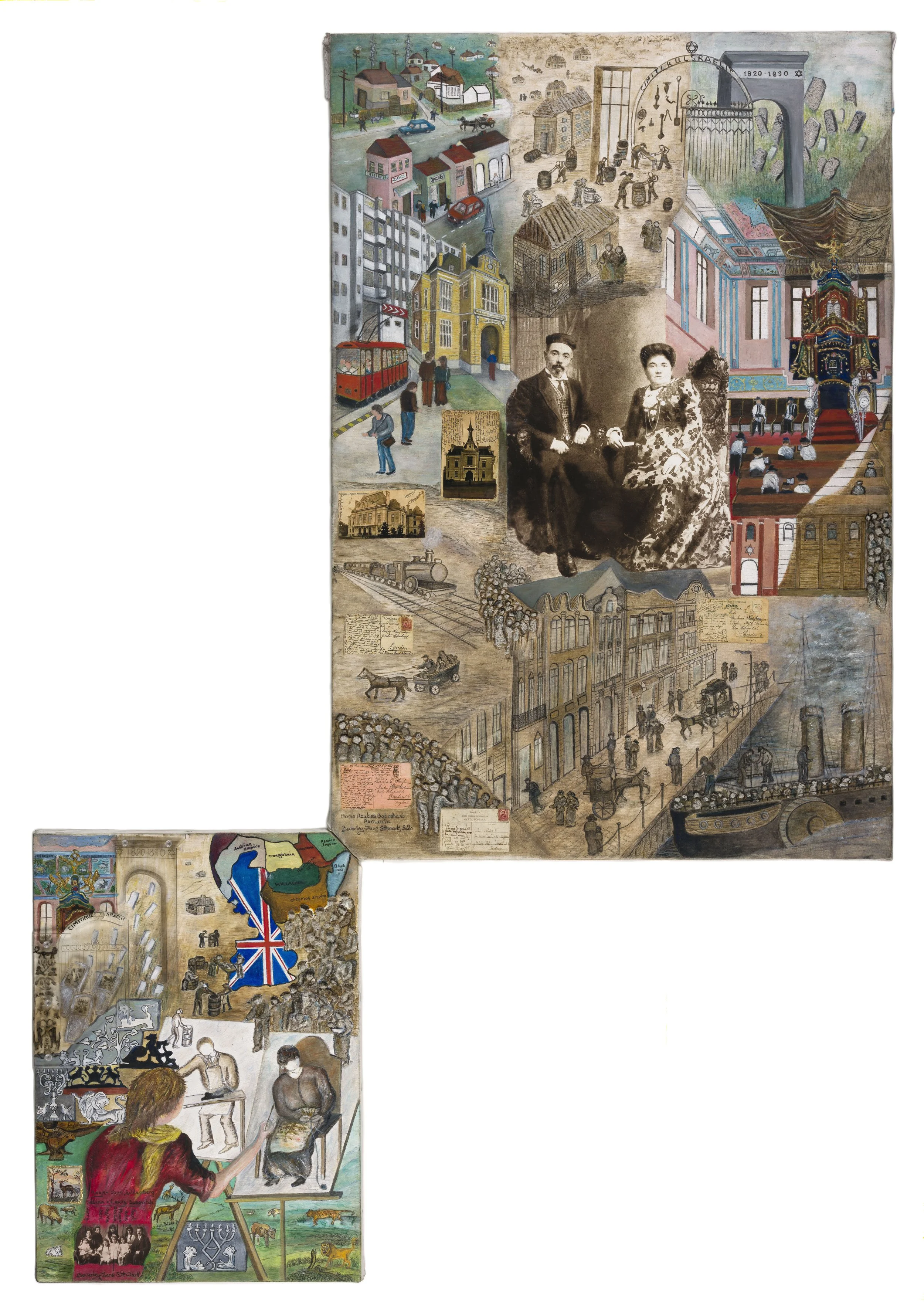
Romanian Routes
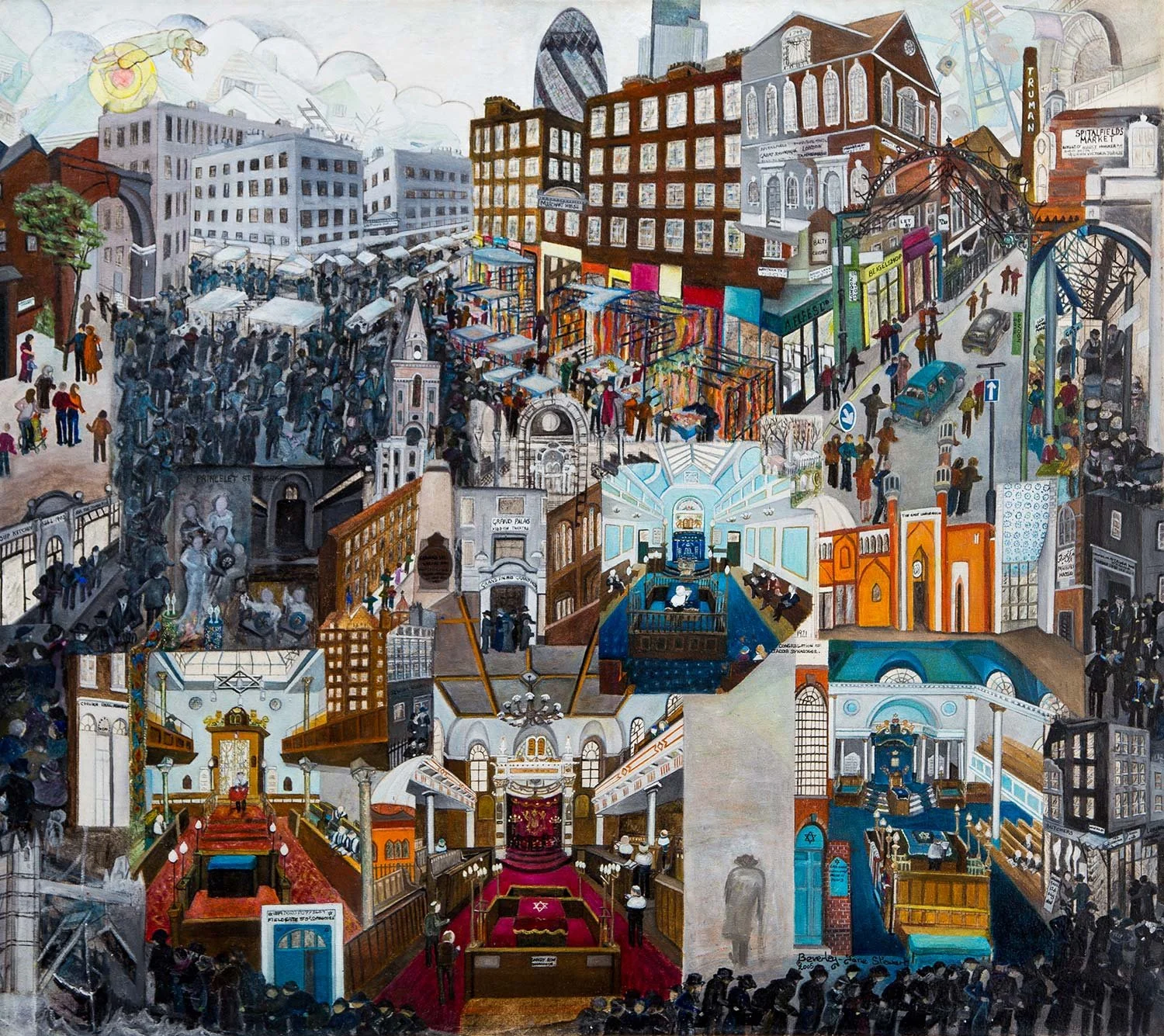
Story of the East End
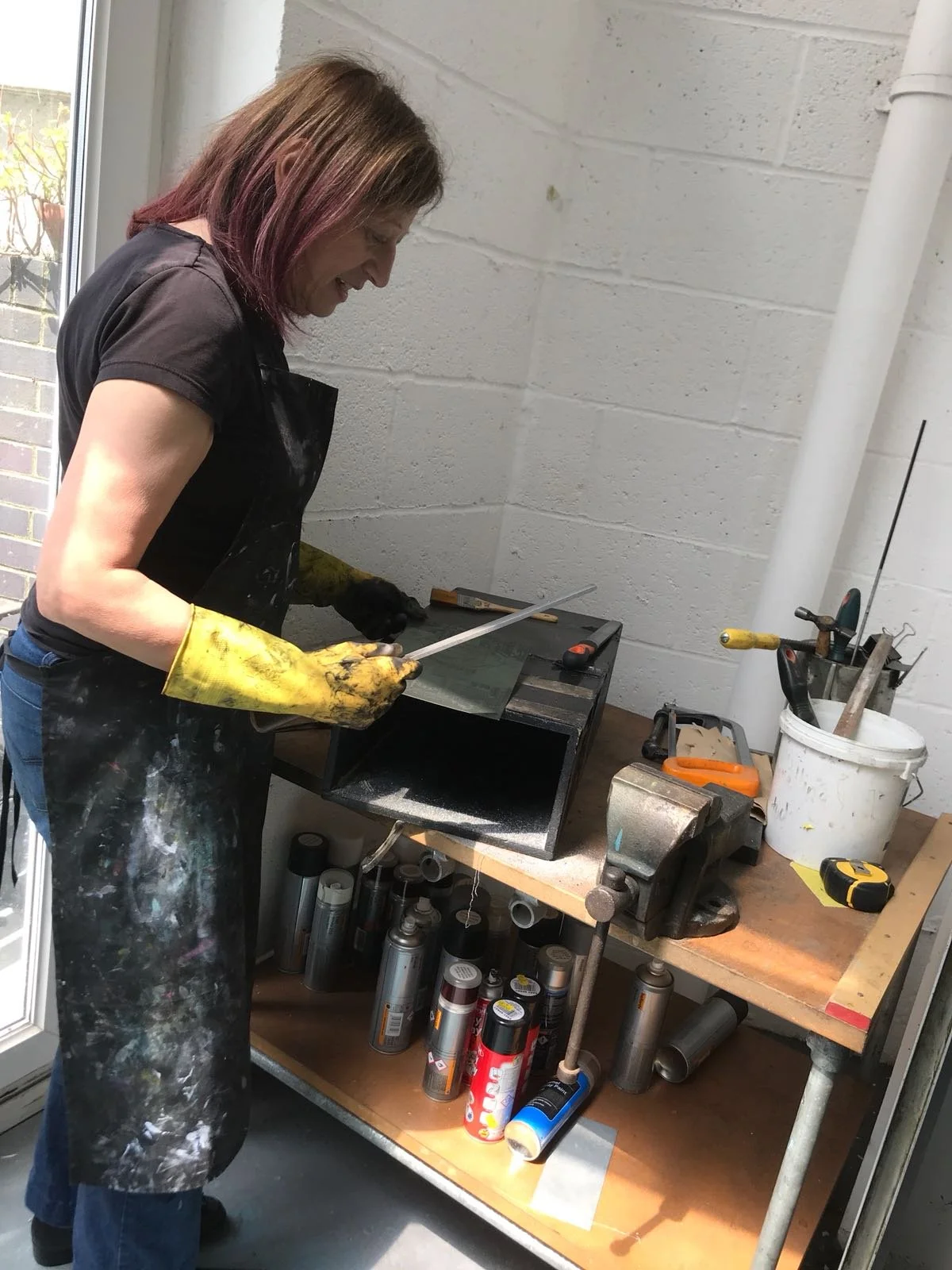
Work in progress 1
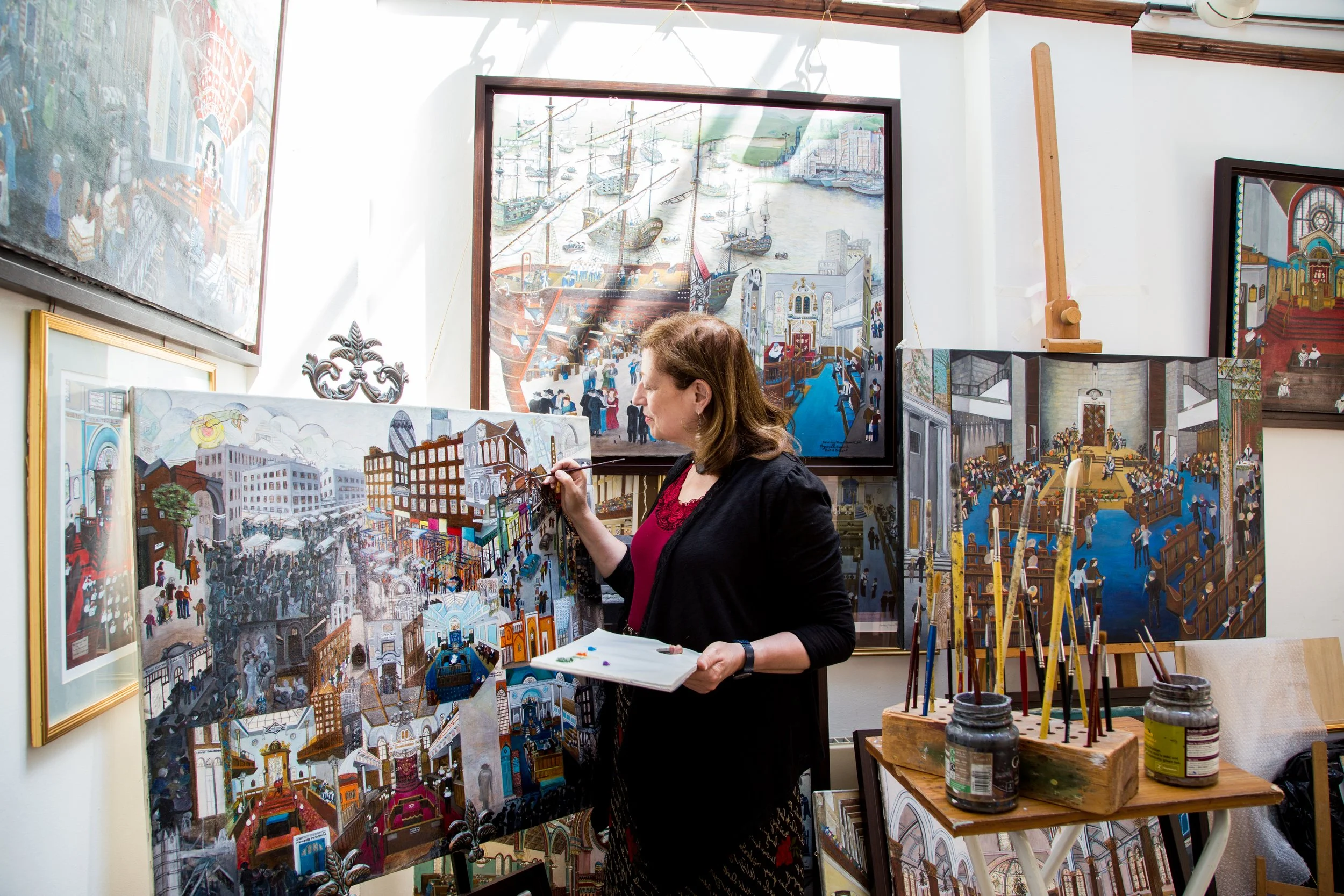
Work in progress 2